

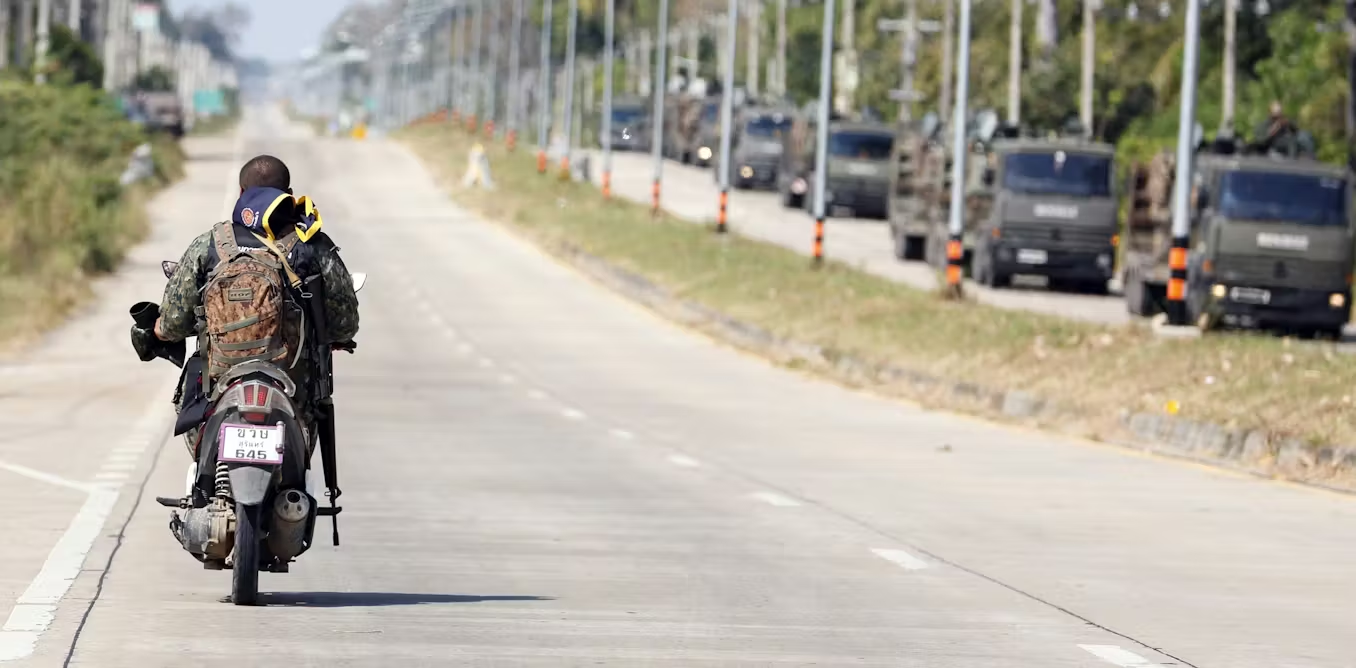
The border conflict between Thailand and Cambodia, which had previously flared up in July, resumed on December 7. More than 20 people, including four Thai and 11 Cambodian civilians, have reportedly been killed in the resumed hostilities since then. Half a million more people have been evacuated from border areas across both countries.
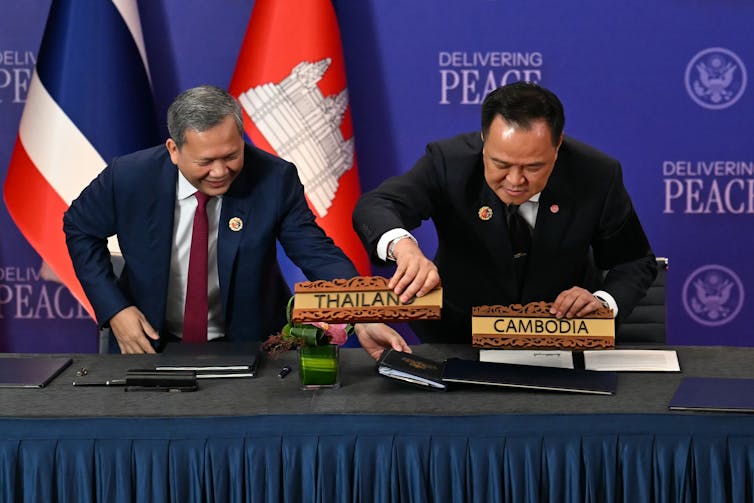
This comes less than two months after the Thai prime minister, Anutin Charnvirakul, and his Cambodian counterpart, Hun Manet, signed a peace deal on the sidelines of a meeting for the Association of Southeast Asian Nations in Malaysia. The US president, Donald Trump, who helped broker the end of the conflict, called the deal “historic”. So, why are the two countries fighting again?
For Anutin, the peace deal presented a clear domestic challenge as the border conflict had led to an outpouring of ultra-nationalist sentiment. He had recently replaced Paetongtarn Shinawatra as prime minister, after Shinawatra was removed from the premiership for being too conciliatory towards Cambodia.
Anutin rose to power in early September with the support of the progressive People’s party. He agreed to lead a minority government and call a snap election within four months of taking office. Since then, he has worked to maximise his party’s electoral fortunes by courting the powerful military and the more conservative segments of the Thai electorate.

PorcupenWorks / Shutterstock
As both of these groups have been buoyed by the conflict, Anutin could not afford to show weakness. He learned that in November when he had to apologise for publicly admitting that Thailand, like Cambodia, had encroached on its neighbour’s territory.
Within weeks of taking power, Anutin upped the nationalist ante by announcing he would put two bilateral memoranda of understanding on the border conflict from the early 2000s to a popular vote. The memoranda commit both countries to working together on demarcating their disputed land and maritime borders. Polling showed that many Thais would back a referendum to suspend them.
Then, on November 10, Anutin fuelled the nationalist fire further by suspending the implementation of the peace deal. He accused Cambodia of laying new land mines in the disputed border area after several Thai soldiers were injured during a routine patrol.
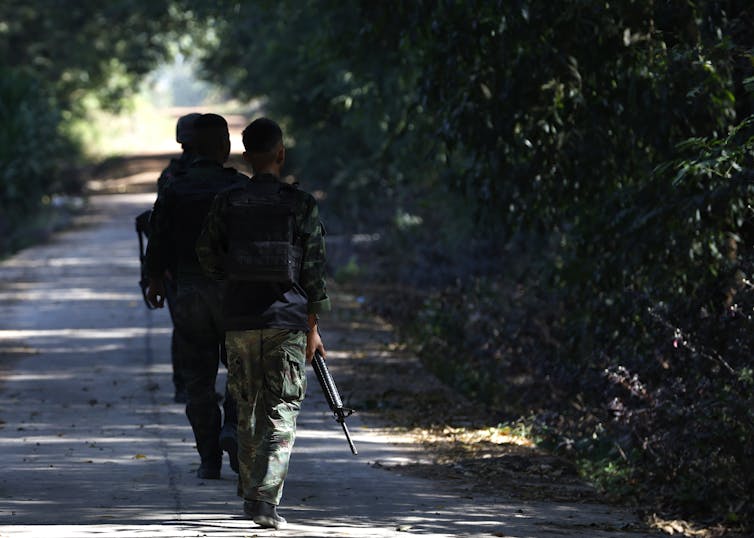
The human tragedy and some compelling evidence aside, this was an opportune moment for Anutin to bolster his nationalist credentials and curry favour with the military. He visited the injured soldiers, wept at their hospital beds, and authorised the military to use their full force to protect Thailand’s sovereignty.
Thailand’s military has never been under full civilian control. However, Anutin’s willingness to let the armed forces deal with the border conflict without exploring further diplomatic options played to a longstanding Thai narrative that depicts the military as the selfless guarantor of the nation. This allowed Anutin to tap into their soaring domestic popularity.
Rungroj Yongrit / EPA
Anutin’s recent mishandling of floods in the southern province of Hat Yai, along with a fresh controversy linking him and other senior government figures to alleged transnational scam criminal Benjamin Mauerberger, added to these domestic calculations.
Anutin’s popularity dropped significantly in the wake of the floods, while his alleged links to Mauerbeger attracted much criticism and undermined his anti-corruption narrative. The escalating border tensions have provided a temporary domestic distraction. But on December 11, just five days into the renewed fighting, Anutin dissolved parliament.
The dissolution was not expected until the end of January, but Anutin faced a possible no-confidence vote over disagreements with the People’s party as to how Thailand’s 2017 military-drafted constitution should be amended. Leading a minority government, Anutin was unlikely to survive the no-confidence vote, so he pulled the plug preemptively.
Cambodia’s distraction tactics
As for Cambodia, Hun Manet is also not immune to domestic pressures. He is dealing with slowing economic growth that is at odds with his developmentalist agenda.
The border conflict has contributed to this but so have US tariffs and decreased investments from China, Cambodia’s largest trading partner and foreign investor. For now, Hun Manet can leverage the rally-around-the-flag effect of the border conflict to distract people from these issues.
Cambodia’s global reputation has also suffered due to its ever-expanding network of scam centres. Recent US and UK sanctions against Chen Zhi, a leading scam industry figure with close links to senior figures within the ruling Cambodian People’s party, have shone more negative light on the regime and have added to the country’s economic woes.
Mohd Rasfan / EPA
They have also threatened Hun Manet’s domestic anti-corruption narrative. Against this backdrop, Hun Manet may seek to leverage the renewed conflict to repair some of this damage. Cambodia has benefited from internationalising the conflict before.
As a smaller and militarily weaker country, Cambodia has always favoured international mediation of its border disputes with Thailand. This tactic has often paid off. Various rulings by the International Court of Justice have affirmed Cambodia’s ownership of the ancient Preah Vihear temple and its surrounding areas, a site of frequent border clashes with Thailand.
Anutin’s house dissolution complicates the escalating border conflict. As Anutin assumes limited caretaker duties, Thailand prepares for a possibly chaotic snap election within two months. This not only creates a temporary power vacuum that does not bode well for peace, but also provides further incentives for Anutin and conservative-leaning parties to use the conflict as an election mobilisation strategy.
Meanwhile, the Thai military has freedom to deal with the conflict as they see fit. As the humanitarian, economic and reputational costs mount, both countries and their people will lose out from the escalating conflict.



