Connect with us
DAPA Banner

NewsBeat

Why emotional resilience should be at the heart of climate change education

Published

on

Why emotional resilience should be at the heart of climate change education

The mental health effects of climate change are receiving growing attention, including how children and young people are uniquely affected. Supporting young people to build and sustain good mental health and wellbeing, and to feel prepared for life and work in an uncertain world, has never been more urgent. However, action is still lagging behind need – including in education.

My colleagues and I at the Compass Project, coordinated by the Climate Cares Centre at the University of Oxford and Imperial College London, are exploring how combining climate change education with consideration of mental health and wellbeing can better equip young people for their futures.

We wanted to know how students and educators experience climate change education now, and what they want to see change. Through focus groups and a survey, we heard from over 200 students aged 16-29 and their educators in schools, further education and sixth form colleges and universities in England. They told us why and how emotional resilience – the social and emotional skills to build and sustain good mental health and wellbeing in the face of challenges – should be part of climate change education.

Status quo: disconnected and disempowered

For many young people, climate change education is disconnected from solutions, and from what they see as helpful to everyday life and enjoy learning about. Students report lacking agency, meaning they don’t feel they have the ability to make change. These are not only barriers to meaningful climate change education. Our study highlights this is also driving both distress and disengagement, and missing opportunities to protect and promote mental health and wellbeing.

Advertisement

Students described a wide range of emotions associated with climate change, including worry, fear, guilt, anger and powerlessness. We heard that education can exacerbate these feelings. One university student said:

[My education] increases my worry because despite being a biology course, and many of my modules being based around ecosystems, the environment, animal behaviour, climate change is not a central theme or something brought up regularly in my learning.

What surprised me was just how much students spoke of climate denial and disengagement, mental health stigma, and stigma around engaging with climate action. Students highlighted these as barriers to discussion and community building. One said:

There seems to be a passive feeling amongst my age cohort and, despite most accepting the truth of climate change, they feel removed and disempowered. This is obviously quite demoralising.

Educators spoke of feeling unsupported and lacking time and resources when it came to teaching about climate change and navigating diverse emotional responses. “We want to teach about climate change,” one said, “but there’s anxiety for the educator to say, what if I set some sort of chain reaction of concern amongst these children, how do I deal with that?”

Such experiences have been reflected through a film by the Climate Majority Project, highlighting the emotional reality of climate change education through the eyes of a teacher.

Advertisement

The Hardest Lesson, a film by the Climate Majority Project.

Change is possible, and already underway

Students and educators had clear, aligned, views on action to better prepare young people for a climate-changed future. This included strengthening connection with nature and curriculum reform to include psychologically informed climate change education in every subject.

Students wanted support to cope with their emotions, and opportunities to take part in meaningful and collective climate action. More time, funding, training and support for educators underpins these actions. A school student said:

It gets to a point where it’s like, this statistic, this statistic. These animals are dying. This country’s just had a flood. If you give [young people] concrete ways, more opportunities to do things that genuinely would help a lot of people, and it also does help the environment, but it takes away that powerlessness and frustration and fear.

Many initiatives are already putting these actions into practice, alongside a growing bank of resources on how to do so.

Advertisement

I was struck by examples students and educators gave of initiatives that did anecdotally support climate change education and build emotional resilience, but hadn’t been designed this way. Inter-school climate action competitions built community, agency and joy. General peer support systems for university assignments led to discussions about climate emotions.

Insufficient attention on the links between climate change education and mental health and wellbeing may mean wider, perhaps unintended, benefits of what schools, colleges and universities are already doing are missed. Particularly given scarce resources and overburdened educators, learning about and investing in how to enable these positive ripple effects – and consistently embed such practices across the education system – is a crucial opportunity.

The transformational societal changes that the climate crisis demands can only take place by considering the emotions, thoughts and beliefs that shape our actions, including support to minimise burnout. Our actions, in turn, shape our emotions and can influence our health and wellbeing. Recognising and resourcing these connections in education systems is critical to truly equip young people for life and work in a changing climate.


Advertisement

Source link

Continue Reading
Click to comment

You must be logged in to post a comment Login

Leave a Reply

NewsBeat

Brit quits Dubai after 18 years and says the war isn’t the main reason

Published

on

Manchester Evening News

Jeremy Savory, also known as the Millionaire Migrant, has left Dubai after 18 years citing school holiday changes as a major reason alongside geopolitical concerns in the Middle East

A British man has shared his reasons for leaving Dubai – and it’s not due to the conflict in the Middle East. Jeremy Savory, known on the internet as the Millionaire Migrant, swapped life in Southwest London for Dubai at the age of 28. Over the past twenty years, he claims to have visited over 100 countries and established a property empire while residing in the Gulf city.

However, in a YouTube video, he disclosed that he has now departed from the region, reports the Mirror. This comes as warfare persists in the Middle East, with US President Donald Trump accusing Iran of being “afraid” of peace negotiations. The United Arab Emirates, on the other hand, stated it continues to intercept Israeli drones flying over its airspace.

Advertisement

Jeremy has advised those living in Dubai to ensure they stay “ahead of any geopolitical turmoil” in the area. In a video, he stated: “You’ll have seen in the news, a lot of scary stuff, particularly on Saturday morning, we had already decided to make a move on Friday.”

Jeremy, who assists affluent businesspeople in relocating, says a significant factor in his decision to move was the rescheduling of the school holidays by a week. He elaborated: “I love a holiday as much as the next man and I couldn’t wait to have an extra week’s holiday, there’s no way I’m staying in a house with two hyperactive little boys.”

He revealed his family are considering relocating to a country in Eastern Europe or Central Asia. He added: “If we were to set roots down, the tax situation, there’s a lot of countries that people don’t talk about much, [like] Paraguay, Andorra, Cyprus, yeah, people often talk about Cyprus.

“Albania is quite attractive, Poland, Japan has an incentive for you for residing there tax free and the wife’s favourite place is Japan. What a place to live with your kids, it would be fantastic.”

Jeremy told viewers he had a family holiday arranged and was concerned he “wouldn’t be able to catch a plane” because of the conflict. He said: “They said, ‘No, you either come or push it to another time of year’, which was not really a convenient time for us.”

The businessman explained his mum is also having to relocate from the UAE. He said it’s “not the best place” because she is deaf so couldn’t hear the explosions. He does, however, maintain an optimistic view for Dubai, believing many people will come back once the conflict subsides. He compared the current situation to the 2008 financial crisis, when there was a “mini exodus” of residents departing.

Advertisement

However, he maintains “everything will get back to normal at some point” with many people ultimately returning. Earlier this week, Trump claimed there had been “very good and productive conversations” about ending the war in the Middle East. Tehran refuted the allegations, with one military official stating the Americans had been “negotiating with themselves”. Foreign Minister Abbas Araghchi even dismissed the concept of peace talks, rejecting Trump’s 15-point plan.

He stated: “Trump’s words are lies and should not be paid attention to.” The politician informed state media that “different ideas” had been presented to the nation’s leadership. In other news, two individuals were reportedly killed in Abu Dhabi after being struck by debris falling from a missile post-interception. Three additional people were injured during the incident, according to the Abu Dhabi Media Office.

The UK Foreign Office currently advises against all non-essential travel to the United Arab Emirates. It said: “Regional escalation poses significant security risks and has led to travel disruption. Stay away from areas around security or military facilities and US or Israeli facilities and institutions. Iran continues to strike civilian infrastructure across the region such as ports, hotels, roads, bridges, energy facilities, financial institutions, oil production sites, water systems, and airports.”

Advertisement

If you do have to travel to the UAE, it recomends travelling during daylight hours. It added: “Always let friends or family know where you are and when you are travelling, and keep your mobile phone with you and charged. If you are away from your home or hotel, and an attack occurs or you receive an alert from the official UAE warning system, seek shelter in the closest building immediately.”

Source link

Continue Reading

NewsBeat

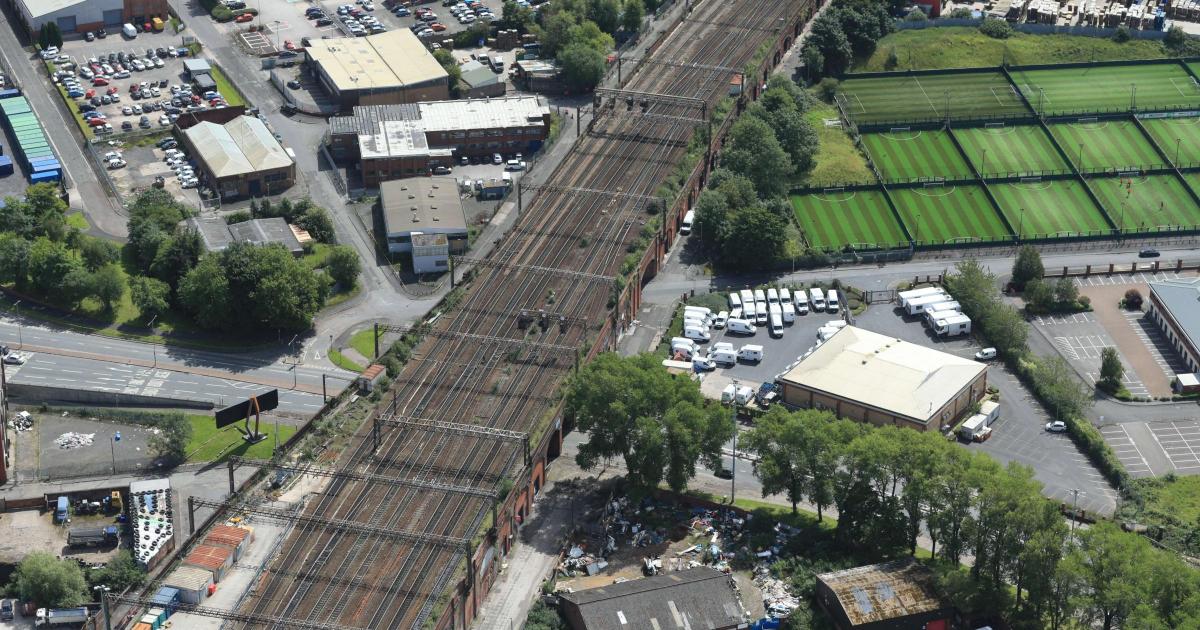
LIVE: Major rail disruption in Manchester until 9.30am

Published

on

LIVE: Major rail disruption in Manchester until 9.30am

As a subscriber, you are shown 80% less display advertising when reading our
articles.

Those ads you do see are predominantly from local businesses promoting local
services
.

These adverts enable local businesses to get in front of their target audience – the local
community
.

It is important that we continue to promote these adverts as our local businesses need
as much support as possible during these challenging times.

Advertisement

Source link

Advertisement
Continue Reading

NewsBeat

Is X (twitter) down? 1,000s report issues with feed and app

Published

on

Is X (twitter) down? 1,000s report issues with feed and app

More than 10,000 issues have been reported on Downdetector as of 7.15am, with the main problems being the X app and the timeline/feed, according to users.

One person, posting on Downdetector, said: “I thought something happened to my account lol as I could see people’s posts but then when I clicked on the posts it says nothing to show here yet.”

Another added: “Here we go again!”

Advertisement

A third person commented: “My morning doomscrolling!!”

What is Downdetector?

Downdetector is an online website that allows users of popular services including X ( Twitter ), Instagram, Facebook, Virgin Media and more to report if they are having trouble with the services.

The site only reports an incident when the number of problem reports is significantly higher than the typical volume for that time of day.

Advertisement

Describing itself on its website, Downdetector is “where people go when services don’t work.”

The website monitors disruptions to various key services including the internet, web hosting platforms, banks, social media and more.

You can see the full methodology and learn more about how Downdetector collects status information and detects problems via its website.

In short, users can get involved by submitting any issue reports on the platform.

Advertisement

Problem indicators are also collected from social media and other factors on the web, Downdetector explained.

These reports are then validated and analysed in real-time.

An incident is then detected if the number of reports is significantly higher than the typical average for that particular service.

When a user goes to investigate the issue, they can see what the most reported problems are currently and check if their areas are in one of the outage hotspots.

Advertisement

Have you experienced issues with X this morning? Let us know in our poll above or in the comments below.

Source link

Advertisement
Continue Reading

NewsBeat

What relegation would mean for Tottenham: player exits, Mauricio Pochettino and the disaster scenario of going down

Published

on

What relegation would mean for Tottenham: player exits, Mauricio Pochettino and the disaster scenario of going down

According to a UEFA report published in February, Spurs posted a pre-tax loss of £129m last year, the third-largest in Europe. Under EFL rules, which would apply to Spurs if they are relegated, Championship clubs are permitted to lose a maximum of £39m over a rolling three-year period. Some belt-tightening would be required.

Source link

Continue Reading

NewsBeat

Major Cambridgeshire A1134 road shuts for hours due to ‘police incident’

Published

on

Cambridgeshire Live

The road has reportedly been closed since midnight

A major Cambridgeshire road has been closed for several hours due to a ‘police incident’. The A1134 Newmarket Road in Cambridge has been closed in both directions since around midnight.

Advertisement

Traffic monitoring site INRIX is reporting the closure from Elizabeth Way and East Road to Cheddars Lane near Tesco and Aldi. The route is also reportedly closed to pedestrians.

The closure is in a busy part of Cambridge city centre. It is near to multiple supermarkets, as well as a retail park.

A spokesperson for the force said at 4.30am this morning (March 26): “Please be aware we are dealing with an incident on Newmarket Road. Road closures are in place on Newmarket Road to Elizabeth Way, Coldhams Lane and River Lane, which are likely to result in long delays. Please avoid the area and find alternative routes. Routes will also be closed to pedestrians.”

Source link

Advertisement
Continue Reading

NewsBeat

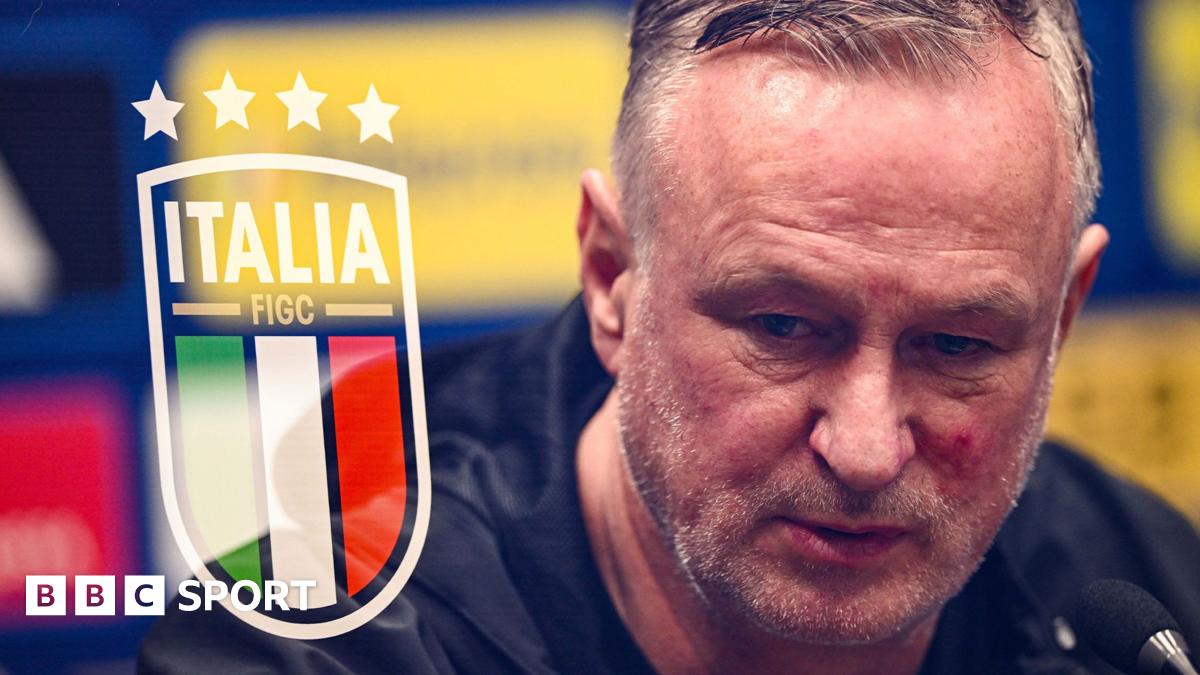
Italy v Northern Ireland: World Cup play-off preview

Published

on

Northern Ireland manager Michael O'Neill

As a player, Gattuso did not sleep before big games. It’s similar as a manager but he now has the aid of sleeping pills from his doctor.

Otherwise, he says, “at 4.30 or 5am I wake up and I’m wide-eyed like a bat”.

Gattuso is carrying the weight of a nation on his shoulders. It’s a big responsibility.

The former AC Milan midfielder stepped into the role to replace Luciano Spalletti in June, and has won five of his six matches.

Advertisement

“I’ve been coaching for a number of years now, but certainly this game is the most important fixture of my coaching career so far,” said Gattuso.

“I’m prepared and, believe me, I’m not thinking about things going badly, I’m thinking positively.

“I want to think big, and we certainly will compete and we’ll see how things come out.”

He has admiration from O’Neill, who in 2012 was tasked with a similar job of trying to lift a Northern Ireland side at a low point.

Advertisement

Four years later they qualified for the Euros.

“The pressure of managing Italy is a lot different from the pressure of managing Northern Ireland,” O’Neill said.

“I have admiration for him coming in and taking the job at the time that he did, after the previous manager leaving after two games and then having to try to reverse a poor result in the first game for Italy away in Norway.

“I have great admiration for what he did as a player and, obviously, the job he’s done as a coach as well.”

Advertisement

Source link

Continue Reading

NewsBeat

Pilot uttered four chilling last words before crash killed all 170 on board

Published

on

Daily Record

WARNING: DISTRESSING CONTENT The terrible crash led to the deaths of all 170 people on board, and the frantic final moments in the cockpit were recorded in precise detail, including some of the pilots’ final words

One of the most chilling facts about aviation disasters is that, due to the fact that cabins and cockpits are meticulously monitored, the panicked last moments of those involved are recorded in precise detail.

Advertisement

Such is the case with the final seconds of Pulkovo Aviation Enterprise Flight 612, a flight which tragically crashed mid-journey on its way from southern Russia to St Petersburg in August 2006.

Horrifyingly, not one of its 160 passengers and 10 crew members ever reached their destination.

Things starting to go wrong when, around 30 minutes into the flight, the plane hit a severe thunderstorm. In a desperate attempt at reaching safety, the pilot requested permission to climb to 39,000 feet in order to avoid the turbulence.

Clearance was granted and the aircraft reported reaching cruising altitude shortly before 3:35pm.

Seconds later, the situation inside the cockpit began to unravel.

The autopilot was disengaged at 3:35:02pm. Almost immediately, the stall warning activated. The aircraft’s angle of attack surged to 46 degrees while its forward airspeed dropped to zero.

The jet entered a deep stall — a perilous aerodynamic condition from which recovery becomes increasingly difficult at high altitude.

Advertisement

In the cockpit voice recording, the rising panic is unmistakable. As the aircraft was battered by the storm, the captain can be heard turning to his co-pilot and asking: “Can we move a little away from the thunderstorm, Igor?”

Several crew members can then be heard asking the pilot to descend, only for him to ignore them and call them “idiots.”

He can then be shouting orders at the others in and around the cock pit, demanding they stay calm. Clearly realising the gravity of the situation, another voice can be heard saying “We are really going down.”

Advertisement

A person described as a trainee pilot in the official transcript then utters the following chilling words “I don’t want to die, I don’t want to die… Don’t kill us, please.”

According to Anatoli Samoshin, Vice Flight Operations Director at Pulkovo Aviation Enterprise, “At an altitude of 37,000 feet, the aircraft sent three SOS signals, dropped sharply in altitude and sent another SOS at 9,800 feet.” After that, there were no further communications.

Two of the aircraft’s three engines flamed out during the stall. Air traffic controllers were aware the plane was descending, but the crew were unable to regain control.

At 15:38:29, just minutes after the first signs of trouble, the Tu-154 slammed into the ground near the village of Sukha Balka in eastern Ukraine, about 45 kilometres northwest of Donetsk.

Advertisement

Witnesses on the ground later reported seeing the aircraft fall from the sky before bursting into flames on impact. The debris field stretched roughly 400 metres.

Investigators later concluded that the crash was caused by the aircraft being flown manually at excessive angles of attack, leading to a stall and subsequent flat spin.

The final report also cited inadequate training and poor crew resource management as factors that allowed the emergency to escalate into a fatal loss of control.

Source link

Advertisement
Continue Reading

NewsBeat

Taxi drivers living in ‘fear’ as dozens see windows smashed and money stolen

Published

on

Cambridgeshire Live

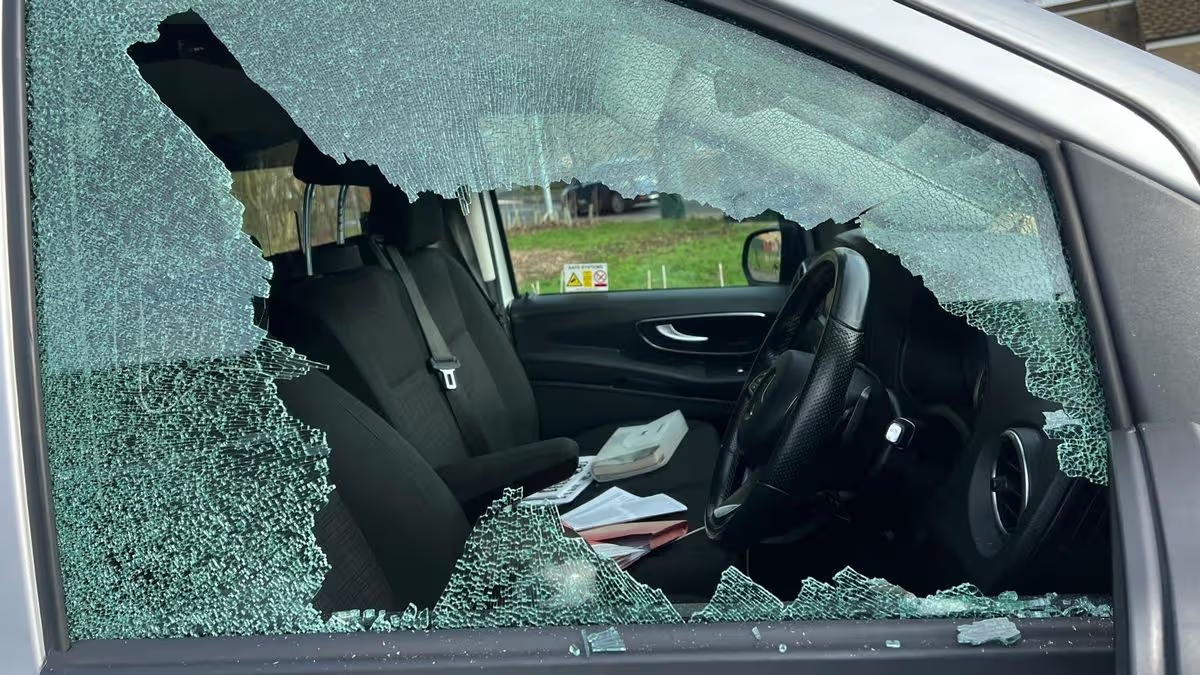
Taxi drivers across Cambridge have said they are living in “fear” after several break-ins over the last few months. Maninder Singh, the General Secretary of the Cambridge Taxi Driver Association, said more than 40 taxi drivers have had windows smashed and belongings stolen since the start of February.

Mr Singh said taxi drivers in the city are under constant stress due to the break-ins. He said: “I’ve spoken to a lot of drivers and they’ve said they can’t go to sleep at night because they are constantly worrying about their cars. They are scared to leave their cars and that’s a burden on the driver.

“They don’t just use these cars for work. They are for private use as well such as the school run, shopping, taking their children to clubs. Their lives are being impacted but they are stuck. They can’t do anything about it.”

One taxi driver, who asked to remain anonymous, said he left his car for a few minutes to get something from a shop before being told his taxi’s window had been smashed and the vehicle broken into.

Advertisement

He said: “I was just standing there. I didn’t know what to do. I called someone and they couldn’t fix the glass for another three days so I couldn’t work. It cost me £240 for the window and all they took was around £30 and some change.”

The driver also has a contract to take special needs school children to and from school. He lost around £500 after he was unable to work for a few days after the incident.

Advertisement

He said: “I had to tell the mums and dads that I couldn’t pick the kids up and they had to find someone else to do it. For the children, they don’t like being with different drivers. It disrupted their day.”

The driver said the situation has made him ‘angry’. He continued: “I think if the guy had knocked on my window and asked for the money in my car, I would have given it to him. That would’ve saved me a lot of hassle. To the police, it’s a petty theft. But the money I’ve lost out on in terms of trade, that’s part of my mortgage payment.”

Cambridgeshire Police has confirmed the force is investigating the incidents and enquiries are ongoing to identify those responsible. Police have received reports about break-ins across the city, including on Graham Road, Garden Walk, Coldham’s Lane, and Coleridge Road.

Mr Singha added the trade is “already struggling financially” because of inflation and these break-ins are only adding to drivers’ stress, as “they can’t make a living”. Some drivers have lost around £1,000 from missing out on weekend trade and having to pay to fix their car, he said.

Many taxi drivers believe they are being targeted because it is “very easy to identify” taxis by signs they are required to have on their vehicles. Mr Singh said he believes that people breaking into taxis search them for items to steal and if they don’t find anything, they look for other taxis to target.

Drivers have said they understand why taxis have to have signs on the vehicle but believe it is “ridiculously unfair” for drivers to be ‘penalised’ if they take them off their vehicles when not at work. Mr Singh said drivers feel like they have to choose between having their cars broken into or having points added to their private hire driver licence.

Cllr Natalie Warren Green, Lead Cabinet Member for Licensing for South Cambridgeshire District Council, said: “The requirement for taxis to securely display their ID plates and Council and Operator signage has been part of our Taxi Licensing Policy for several years. We are aware that Police are investigating a recent general rise in vehicle break‑ins, including incidents involving taxis.

“As this is an active investigation, it would be inappropriate to speculate on the causes but we would urge everyone to follow the Police’s advice and ensure they do not leave personal belongings on show in cars when they are unattended.”

Source link

Advertisement
Continue Reading

NewsBeat

Office building in Leigh set to become education centre for students who find attending school difficult

Published

on

Manchester Evening News

The centre, for up to 20 youngsters, would aim to ‘reintegrate pupils back into education, employment, or training’

A former office building is set to be used as an education centre for children who find it difficult to attend mainstream schools.

Advertisement

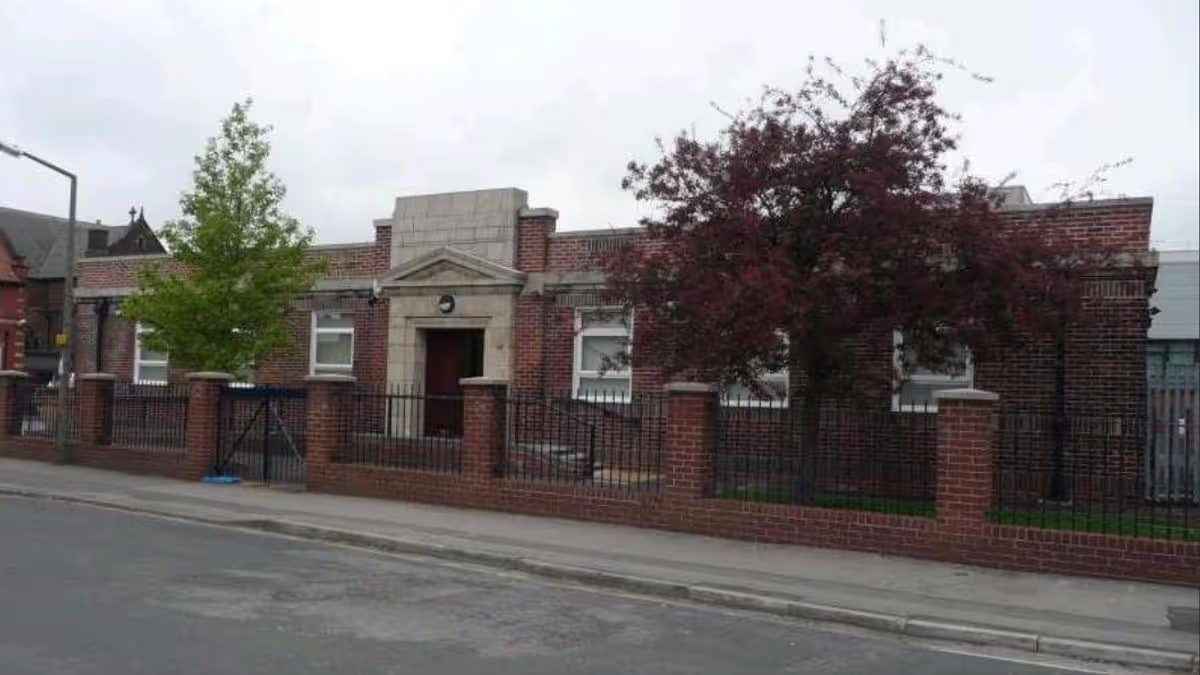
Crown House, Walmesley Road, Leigh is the subject of plans submitted to the council in the past week by Intervention Academy, an Atherton-based education provider who aim to reintegrate pupils back into education, employment, or training.

They plan to educate and support up to 20 children at Crown House. A supporting letter from Lisa Alston and Yvonne Miller, directors at Intervention Academy has been published on Wigan council’s planning portal.

Get MEN Premium now for just £1 HERE – or get involved in our WhatsApp group by clicking HERE. And don’t miss out on our brilliant selection of newsletters HERE.

It said: “We are an alternative provision, providing part-time, alternative education to students who find attending their usual school full-time difficult.

Advertisement

“There will be a maximum of 20 students attending on any one day and a maximum of eight full-time staff. “We currently only have five students per day and have three members of staff, which includes the directors.”

Intervention Academy opened premises at Church Street in Atherton in September, 2024.

At that time director Yvonne Miller, said: “We want to create a supportive and inclusive environment that empowers children to reach their potential academically, socially, and emotionally.

“Our dedicated team will work closely with each student to develop a bespoke learning plan that aligns with their individual needs and goals.

Advertisement

“Whether a student excels in hands-on activities, creative arts, or needs support to become more independent, we are committed to creating a tailored educational experience that empowers them to thrive.”

The change of use application for Crown House states that ‘we are proposing no changes, internally or externally, to the building’.

Previous marketing for Crown House describes it as an ‘extensive, detached and single storey office building’ of approximately 0.28 acres, which includes car parking for 15-20 vehicles.

It is next to Sacred Heart RC church and Sacred Heart Catholic school and opposite Leigh St Mary’s CE primary.

Advertisement

Planners at the council will decide on the proposals in the coming weeks.

Source link

Continue Reading

NewsBeat

Influencer arrested for ‘staging own kidnapping’ to boost her follower numbers

Published

on

Daily Mirror

Monniky Fraga, who claimed she and her husband Lucas were ambushed by three armed men outside their home, has now been arrested for allegedly trying to stage her own kidnapping

An influencer has been arrested over claims she staged her own kidnapping – all to boost her followers online.

Advertisement

Monniky Fraga, 27, claimed she and her husband Lucas were ambushed by three armed men outside their home in Igarassu, Brazil, last April. But now, almost a year since the incident, she has been arrested in a dawn raid by cops – who have said her husband, who was beaten and robbed, was unaware of the plot.

At the time, Fraga told her 48,000-plus followers it was a terrifying ordeal. In a video she said the gang threatened to torture them unless a ransom was paid and that Lucas was assaulted as they handed over their belongings. The pair were allegedly dragged to a wooded area, held for hours and only freed once cash was handed over.

Police now believe she staged the kidnapping to gain media attention. She secured coverage in several outlets to tell her story. Detective Cley Anderson told local media: “As the investigation progressed, it found indications that the alleged kidnap-for-ransom was in fact nothing more than a plot between the supposed victim and one of the perpetrators.”

Advertisement

Thirty police officers took part in the operation, dubbed ‘Smokescreen of Likes’. Officers said three people, in addition to Fraga, were involved in the fake kidnapping.

Detective Anderson said: “The investigation suggests she not only knew about it, but agreed things in advance and stayed in contact with one of those involved afterwards.”

In a bizarre twist, Fraga’s husband, Lucas – who was also kidnapped, assaulted and robbed – was reportedly unaware of the plot. Detective Anderson said her husband knew nothing of the plot: “At all times, he has maintained that he genuinely believed it was a real kidnapping.”

Advertisement

Fraga’s lawyers have requested she be released from custody and placed under house arrest, citing that she has young children. She maintains she was genuinely kidnapped.

She is expected to face charges of blackmail, perverting the course of justice and wasting police time. At the time in an online video she said: “I spent hours in the woods.

She add: “I didn’t know if I’d make it back. There was a river there, and the whole time I thought they were going to kill me and throw me in here, and I’d never see anyone again.

“All I could think about was my children. They beat up Lucas. They were after some gold chains I had posted about. And I said, ‘Those gold chains weren’t mine’.”

Advertisement

Source link

Continue Reading

Trending

Copyright © 2025