News Beat
Why it’s a make-or-break year for Keir Starmer – and what next for the world’s biggest stories | World News

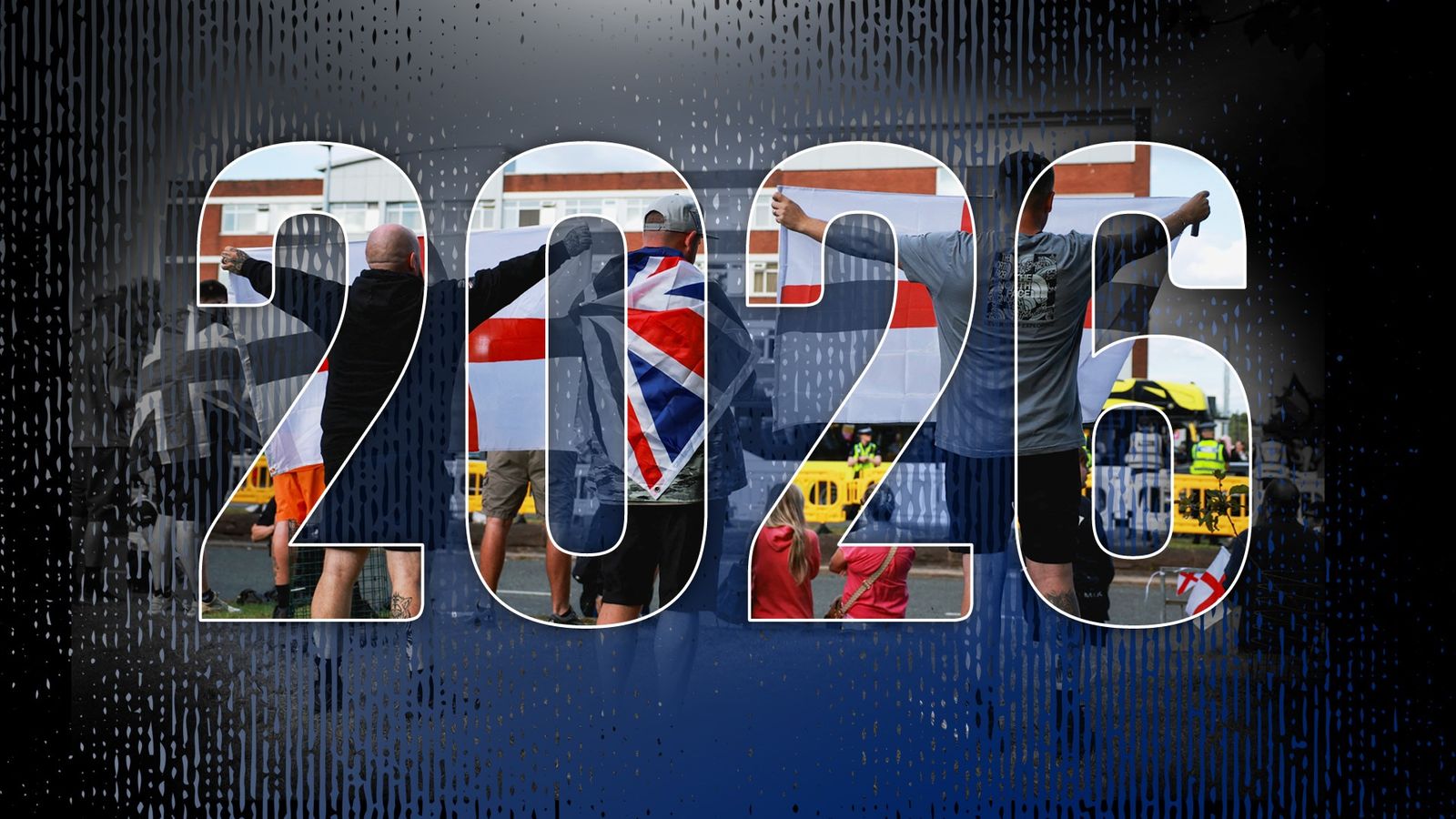
From a make-or-break year for Sir Keir Starmer, to the war in Ukraine and the surging influence of China, 2026 is shaping up to be just as newsworthy as 2025.
As always, our correspondents are on the ground covering the major stories so that you get the full story, first.
Here’s what they think you can expect from the next 12 months.
Amanda Akass, political correspondent, on the prime minister’s future
2026 is already shaping up to be a make-or-break year for Sir Keir Starmer.
The moment of maximum jeopardy will come during May’s elections: catastrophic losses could lead to an open revolt against the PM.
It’s entirely possible the Welsh Labour government will be defeated by Plaid Cymru – losing power in Cardiff for the first time. And with Labour’s resurgence in Scotland fading fast, it looks like the SNP will hold on in Holyrood.
Depending on the scale of Reform UK’s success in the local elections, Kemi Badenoch may also face a leadership challenge.
The issue of illegal migration will continue to dominate political debate. The PM is hoping tougher policies and new action from French police will start to stop the boats. If not, the pressure will only intensify.
Promised attempts to finally deliver on welfare reform will be another moment of peril, with reviews into personal independence payments and youth unemployment due to report back.
Starmer will continue to stay busy on the international stage, with ongoing efforts to forge a closer relationship with the EU, bolster support for Ukraine, and also move closer to China – with a controversial visit to Beijing expected.
Finally, the long-awaited assisted dying bill is due to become law in 2026 – though with so much opposition in the Lords, the bill may run out of parliamentary time.
Dominic Waghorn, international affairs editor, on NATO and Russia
World politics in 2026 will be dominated by one of the biggest crises in transatlantic relations since World War Two as a chasm opens between Europe and America under Donald Trump.
The US president apparently believes European civilisation is in danger because of mass migration, multicultural woke politics and European weakness.
The recent White House national security strategy is an implicitly racist document insinuating that European NATO countries cannot be relied on if their non-white majorities are eclipsed.
At the same time, the Trump administration is looking increasingly susceptible to being seduced by Russia with the offer of closer business and trade ties.
No American-Russian rapprochement in modern history has ended well, but Trump is seeking one nonetheless.
European allies worry that his administration will push for a quick and easy peace in the Ukraine war, which as a result will not prove a lasting one.
One pressing question for the year ahead is can European leaders find a way of living with an unreliable partner in Washington who does not share their values, whatever they claim to the contrary, or is some kind of deeper split increasingly inevitable?
Lisa Holland, communities correspondent, on the migration debate
It’s been coming for a couple of years but in many ways the genie is out of the bottle on migration – in other words people feel more emboldened to make their voice heard.
Whether they actually feel listened to is a different issue. And I would say largely not.
So for the coming year I think protests outside hotels housing asylum seekers will continue and the voice of those with legitimate concerns will sound loudly.
Because it feels like there’s a lack of belief that things will change against a backdrop of several years of spiralling migration levels.
UK net migration saw a dip during the pandemic but then surged to record highs, driven largely by non-EU workers and students, before falling sharply by late 2025 due to new visa restrictions.
The issue isn’t just small boat arrivals – legal net migration has given a sense that migration has been out of control.
But protests outside hotels housing asylum seekers have been a lightening rod for that sentiment – they’ve been somewhere to go for people to make a stand not just about small boats but the wider issues.
The public has seen successive plans to control migration fail. The Conservatives’ idea to send asylum seekers to Rwanda came to nothing and Labour’s so-called “one in one out” scheme has resulted in just a few asylum seekers being returned to France.
The home secretary has laid out bold plans to control immigration. The challenge for 2026 is proving they will work.
Helen-Ann Smith, Asia correspondent, on China and Trump
2026 is a year when we can expect to see a continuing surge in Chinese confidence and assertiveness which may well have major implications for global order.
Indeed, Xi Jinping and, by extension, China are ending the year looking stronger than they have for some time.
The re-emergence of Donald Trump was always going to be a challenge for China; his unpredictability and the presence of long-standing China hawks on his top team no doubt caused some initial anxiety.
But on the whole the challenges have been deftly handled.
For instance, sky-high tariffs on Chinese goods have been reduced, in part, because China refused to yield and was willing to play a very powerful card it has at its disposal: squeezing the global supply of crucial rare earth metals.
Trump is even expected to visit Beijing in April.
Meanwhile, China is also successfully taking advantage of a world that Trump is changing. It has welcomed with open arms nations disillusioned by tariffs, and is enthusiastically filling funding gaps left by the withdrawal of US aid.
Expect this drum beat of diplomacy to continue.
This confidence is also underpinned by enormous successes in the field of science and technology. The development of high-tech industries has been repeatedly pushed as a key strategy for China’s development in the coming years, and in the field of AI it is making rapid gains.
China heads into 2026 feeling very buoyed by how this has all gone, and you can expect it to feed a renewed bullishness, particularly over issues it cares deeply about.
Watch, for instance, whether it will start to leverage more pressure on the US to row back its allegiance to Taiwan.
Mickey Carroll, science and technology reporter, on the rise of AI
If 2025 was the year AI went mainstream, 2026 could be the year it gets smarter.
One of OpenAI’s co-founders, Ilya Sutskever, recently predicted that big AI companies will go back to the drawing board and start researching again in 2026.
Their AIs have definitely become more powerful, but they’re not as intelligent as these companies want them to be.
So, instead of continuing to scale and make the models bigger and bigger, Sutskever told tech podcaster Dwarkesh Patel that companies will start looking for new ideas again.
They’ll return to the research phase, instead of staying in the scaling phase.
Others in the industry, like data company SAS and investors at FTV Capital, say 2026 will be the year AI meets reality. We’ll start seeing just how compatible our power grids, infrastructure, and regulations are for the scale of AI that is coming.
Nearly 100 new data centres are expected to be built in the UK over the next five years, all taking power from the national energy grid, which has long been in need of reform.
The government is also relying on an evolving strategy that targets specific problems as they come up, rather than having a single AI bill, like in the EU. Although it is seen as a pro-innovation strategy, it risks leaving companies in the dark about how to operate in the UK.
And I thought I’d ask the expert itself; ChatGPT reckons 2026 will be the year of the AI agent, when AI will become targeted and able to do our daily tasks.
Ivor Bennett, Moscow correspondent, on the Ukraine war and Russia
2026 looks set to be a pivotal year for the war in Ukraine as diplomatic and domestic pressures build.
The EU’s loan agreement has solved Ukraine’s financial constraints, but it still faces a manpower shortage. For Russia, the cost of war is climbing too amid falling oil revenues, slowing growth, and rising taxes.
Analysts believe Moscow can sustain its war effort through 2026 under current economic conditions, but there could be a political dimension too.
On 11 January, the war will have lasted longer than the Soviet Union’s victorious fight against Nazi Germany. But where Stalin went from Moscow to Berlin, Vladimir Putin is yet to take the Donbas.
It’s an unfavourable comparison which could make some question whether it’s been worth it.
Russia will also hold its first parliamentary election since launching its invasion.
The result is a foregone conclusion but the war, if it’s still being waged, will nevertheless come under scrutiny. It could be the point Putin wants to have declared victory by.
Complete control of the Donbas appears to be the bare minimum for a “win”.
But despite all the diplomacy, a compromise on territory appears no closer. Nor does an agreement on security guarantees.
Whether that changes depends on the pressures at home, and those applied by Donald Trump, assuming he retains the patience to push for peace.