

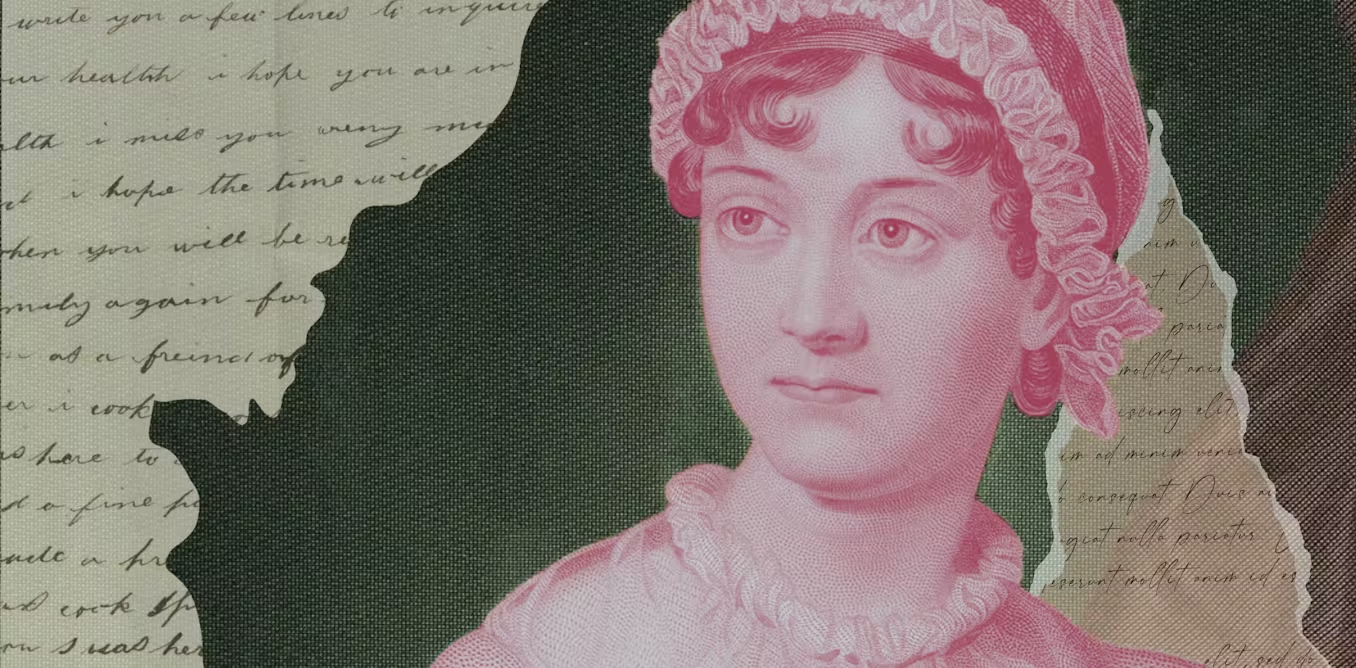
When Jane Austen died in July 1817, aged just 41, she was buried in Winchester Cathedral. I moved to the city in 2025. As a lecturer in English literature, I have long researched and taught Austen’s novels, so I was keen to visit her final resting place.
Austen’s grave bears the words: “The benevolence of her heart, the sweetness of her temper, and the extraordinary endowments of her mind obtained the regard of all who knew her and the warmest love of her intimate connections.”
I was surprised that the epitaph makes no mention of her writing. I was also amazed to discover a basket by her graveside which was overflowing with handwritten letters addressed to Austen.
A quick glance through this correspondence showed me that the penfriends both appreciated her work and sought her advice on their love life. I found it fascinating that people would seek relationship guidance from a woman who not only had died over 200 years ago, but had herself never been married.
While her novels themselves stress the importance of marriage for a young lady at that time, Austen was only engaged to be married for one night, as she retracted her acceptance within 24 hours.
Reading the letters that had been left by Austen’s grave almost felt like an intrusion. Many were very personal and addressed her as a long-lost friend. Some of the letters were poetical and attempted to write in Austen’s own style.
This article is part of a series commemorating the 250th anniversary of Jane Austen’s birth. Despite having published only six books, she is one of the best-known authors in history. These articles explore the legacy and life of this incredible writer.
One letter stated:
I can’t believe I’m right here, in front of you. In this moment I’m thinking about the 10-year-old me, when I discovered books were my passion. You were one of the first authors I started reading and you made me fall in love with books, especially Pride and Prejudice. The wish I want to express now is to become like the girls you described. Each of them gave a contribution to creating my current personality. I just wanted you to know that you have been my comfort place when life was bad to me.
Another poignant letter reflected that: “Long is the reading. Long is the journey in this life.”
Perhaps the very attributes that were emphasised on Austen’s gravestone inspired her readers to seek this “intimate connection” with her, by writing letters which appealed to the “extraordinary endowments of her mind”. The fact that Austen apparently had a “sweetness of temper” and the “warmest love” may have suggested to her fans that she would be a suitable shoulder to cry on – someone who could offer solace and guidance when times were hard.

Naomi Walker, CC BY-SA
Looking through the letters in the cathedral reminded me of reading the surviving correspondence between Austen and her friends and family. She often gave relationship advice in her letters to her nieces, so perhaps it was not so surprising after all that readers would seek similar guidance from her about their own lives.
Austen advised her niece, Fanny Knight, in a letter dated November 30 1814, regarding a marriage proposal that: “I dare not say, ‘determine to accept him.’ The risk is too great for you, unless your own Sentiments prompt it.”
She also pointed out that “I am at present more impressed with the possible Evil that may arise to You from engaging yourself to him – in word or mind – than with anything else.”
Austen proves herself to be a worthy aunt with this straight-talking and forthright relationship advice. With some modernising of the langauge, she could even be mistaken for a present-day agony aunt – her words of wisdom are just as pertinent today as they were then.
The fact that letters are placed by Austen’s resting place in Winchester Cathedral not only establishes a connection between the author and the place where she briefly lived but also shows a continued link between Austen and her readers. In an increasingly technological world, I find this very reassuring as it emphasises the continued power and impact of literature in our lives.

Looking for something good? Cut through the noise with a carefully curated selection of the latest releases, live events and exhibitions, straight to your inbox every fortnight, on Fridays. Sign up here.



