
News Beat
Will Anyone Prove Trump Wrong And Counter His Steamroller Moves?

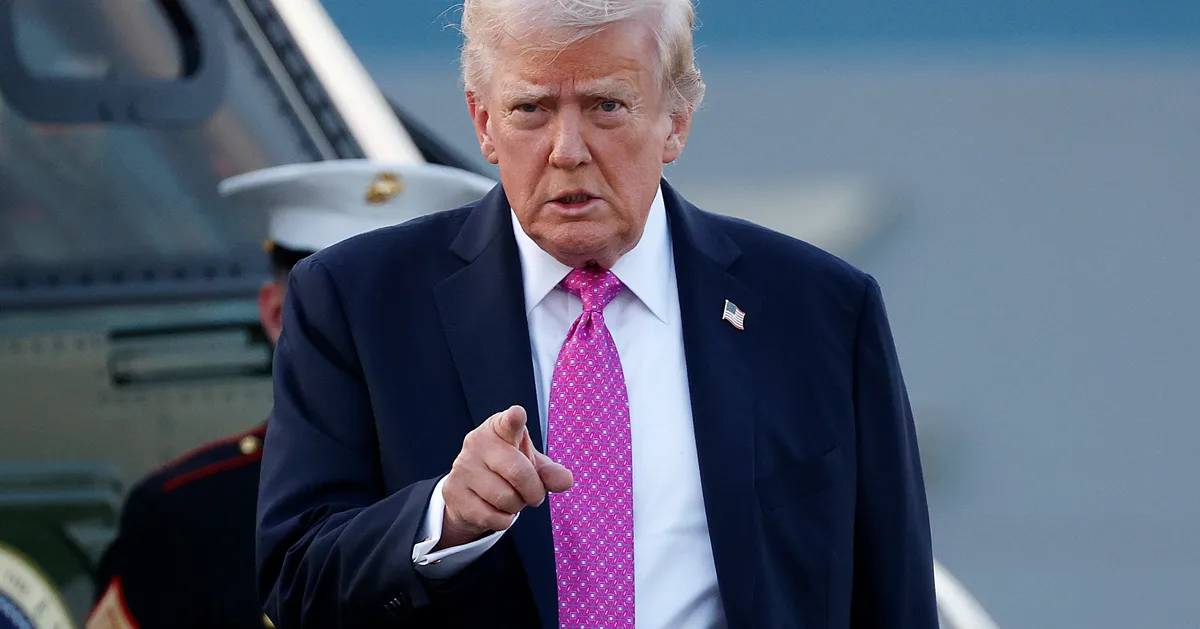
Donald Trump outdid himself this week.
After initiating military strikes against Venezuela and capturing its president Nicolas Maduro, he declared he would “run” the country – and send in America’s oil companies.
While there were some murmurings of dissent over this aggression, his western allies effectively looked the other way, shirking questions over whether this was a breach of international law.
But Trump wasn’t finished. He then began to renew his threats against Colombia, Cuba, Mexico and Iran – as well as the Danish territory of Greenland.
Attacking the latter would effectively tear the North Atlantic Treaty Organisation (Nato) apart, considering both the US and Denmark are members.
He told the New York Times he could be left with a “choice” between sticking with Nato or grabbing Greenland.
As the White House’s deputy chief of staff Stephen Miller said this week: “Nobody is going to fight the US militarily over the future of Greenland.”
European leaders did pipe up a little in defence the Arctic island, writing a joint statement reminding the US that its future can be decided only by Greenland and Denmark.
But evidently, that’s not enough. The president does not care. He has pressed on, insisting the US “needs” the territory.
The 80-year pact among western leaders after World War 2 to commit to a shared idea of defence, democracy and law has gone out the window.
And European leaders fear the repercussions that could follow if they challenge the most powerful man in the world for upending the rules-based order.
Does this mean it is now Trump’s world, and we’re just living in it?
Associate fellow of the Russia and Eurasia Programme. Keir Giles told HuffPost UK that at the moment it certainly looked like it – “who is going to stop him?”
He pointed out that the States is widely seen as the main enforcer of international law, and so America has been able to pick and choose which elements it wants to uphold – or now let it collapse altogether.
He did suggest Europe might be less powerful than it thinks – but that the continent should have a strategy that goes beyond “pandering” to the White House.
Evidently, the softly-softly approach is barely registering with Trump, as seen from the UK prime minister’s interactions with him this week.
Keir Starmer has tried to become a Trump whisperer over the last 18 months, but he could not even get the US president on the phone in the immediate aftermath of his military strikes on Venezuela.
It seemed that it was only after the UK and France promised to send their troops to Ukraine in the even of a peace deal and Britain helped the US seize a Russian tanker linked to Venezuelan oil in the North Atlantic that Trump picked up the phone on Wednesday.
And, judging by the short readout from No.10, Starmer made no progress on persuading Trump to climbdown on his Greenland ambitions.
Surprisingly, they had a second conversation on Thursday.
“The leaders discussed Euro-Atlantic security and agreed on the need to deter an increasingly aggressive Russia in the High North,” according to Downing Street. “European allies had stepped up in recent months to defend Euro-Atlantic interests, but more could be done to protect the area, the prime minister said.”
Trump’s comments’s response to those words from Starmer were notably absent.

So there are growing calls for European leaders to grow a backbone, especially if Trump moves to annex Greenland.
As EU correspondent Ole Ryborg wrote for Danish media outlet, DR: “What the Europeans have not tried yet is to act against the US. The political will has not been there.”
He suggested if Europe banded together against the US, it could use its “large arsenal of very powerful weapons” to knock Trump off course.
The specialist noted how the continent could start an economic conflict, too, by halting the export of the specific technology that the US buys in Europe, which could block the entire US AI sector.
The EU could stop using American cryptocurrency, impose personal sanctions on Americans or implement an entry ban on US politicians.
The bloc could consider freezeing financial assets, too, limiting the new purchase of American government bonds, restricting US companies and services and disrupting the US-EU medicine trade.
“Putin has been emboldened by president Trump’s recent aggressive posturing”
– CEO of Hope for Ukraine and humanitarian expert, Yuriy Boyechko
Even closing US military bases in Europe would send a statement to the White House.
It’s certainly in Europe’s interests to stop Trump sooner rather than later – and not just because of Greenland.
That’s because Trump’s moves appear to have given Russia a boost.
On Thursday, Russia targeted western Ukraine, Lviv, with an intermediate range ballistic missile which travelled approximately 1,622km to its target.
The CEO of Hope for Ukraine and humanitarian expert, Yuriy Boyechko, told HuffPost UK this “escalation appears fueled by a perception of Western disunity”.
He added: “Specifically, Putin has been emboldened by president Trump’s recent aggressive posturing, including his dismissal of Nato’s traditional role and his alarming renewed threats to use military force to acquire Greenland.
“By eyeing the territory of a Nato ally while signaling that the US commitment to the alliance is fluid, the current administration has created a vacuum that the Kremlin is eager to fill, actively testing the threshold of global stability in a world where the old rules no longer seem to apply.”
Giles also noted that Europe needs to get its act together and appreciate the impact of Trump’s moves, dispelling the “assumption that wars only happen to other people”.
He called out Britain in particular, claiming “the UK government is doggedly resisting taking an interest in national defence” while the very real threat of Russian war looms.
While Vladimir Putin’s nose was put out of joint this week after Trump seized part of his shadow fleet, Giles said the Russian president probably “doesn’t want to interrupt his enemy while he is making a mistake” and rearranging the world order to Russia’s liking – especially when it jeopardises Nato.
Russia is already testing the so-called grey zone between war and peace, too.
The Daily Mail reported this week that Russia could cripple Britain by cutting just 60 undersea cables carrying 99% of all UK data, while its shadow fleet has been accused of trying to sabotage telecommunication cables.
Allies on the continent evidently can no longer ignore Trump’s posturing – but it remains to be seen whether any of them will put their heads above the parapet and risk the Republican’s wrath.



