One train journey takes a staggering 167 hours to complete, with the railway spanning eight time zones to make it the longest in the world
The longest direct train journey in the world stretches a staggering 5,771 miles and takes almost a week to complete. Passengers on board the train undertake a mammoth journey through eight time zones.
Advertisement
The Trans-Siberian Railroad claims the title of the longest single rail system in the world. It connects east and west Russia, running from Moscow to Vladivostok.
To travel the length of the railway, it takes approximately 167 hours and requires no passenger changes. Heading east from Moscow, the train crosses the country to the Pacific Ocean.
There are even non-stop train options, so all passengers remain on board throughout the seven days. If you prefer to get off and explore the local surroundings, passengers can opt for the stopping service.
However, this takes between 14 and 20 days to complete. The Trans-Siberian railway runs through cities such as Moscow, Yaroslavl, Chelyabinsk, Omsk, Novosibirsk, Krasnoyarsk, Irkutsk, Ulan-Ude, Chita, Khabarovsk, and Vladivostok.
Advertisement
There’s also the Trans-Manchurian line, which runs through northern China to Beijing, and the Trans-Mongolian, which heads to Beijing but passes through Ulan Bator.
A famous train on the Trans-Siberian railway is Rossiya (the Russia), which has second-class sleepers, third-class open-plan sleeper bunks, and a restaurant car.
Passengers can pay for four tickets to ensure sole occupancy of a four-berth compartment, even if they’re the only ones travelling. The bunks convert to seats during the day, with toilets and washrooms at the ends of the corridors.
Advertisement
Many tourists who travelled the route chose not to start or end their journey in Russia. Tourists once began in London and made their way to Moscow before boarding the Trans-Siberian Railroad.
Once in Vladivostok, tourists could then head to Korea, Japan, or China without taking a plane. National Geographic also ran tours along the route, offering tourists the chance to travel on “one of the world’s most legendary railways.”
They described the journey: “Set out on an epic train journey across one-third of the world, travelling from Vladivostok, Russia to the heart of Moscow along the legendary Trans-Siberian Railway.
“From the Mongolian steppe to Lake Baikal’s remote shores to the snow-capped Ural Mountains, trace the history of tsars, exiles, and Mongols in the comfort of our luxury train, the Golden Eagle Trans-Siberian Express. Encounter remote cultures and the unique architecture of Siberia’s wooden cottages and Moscow’s onion domes.”
Advertisement
Tours like these have been halted, yet the train is reportedly still being used by Russians. The UK Government warn against all travel to Russia.
Official advice from the Foreign, Commonwealth & Development Office says: “FCDO advises against all travel to Russia due to the risks and threats from its continuing invasion of Ukraine, including security incidents, such as drone attacks, and Russian air defence activity, lack of flights to return to the UK and limited ability for the UK government to provide support.”
Backstreet Boys star Brian Littrell has sparked major backlash online after confronting an alleged trespasser on his private beach.
Advertisement
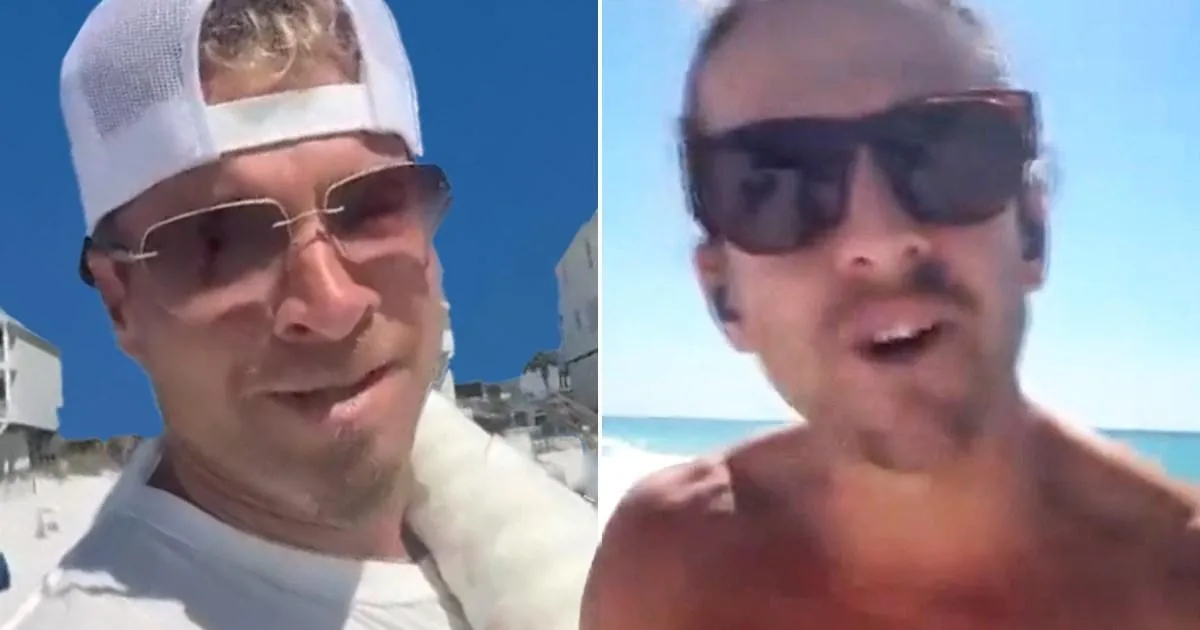
The 51-year-old singer – who rose to fame alongside Nick Carter, Howie Dorough, AJ McLean, and Kevin Richardson – got into a heated exchange with a sunbather outside of his multimillion-dollar mansion in Santa Rosa Beach, Florida.
Littrell stormed across the sand where beachgoer Kyle Gallagher was sitting, filming him from behind as he relaxed on his towel by the water.
Initially unaware of the Everybody hitmaker’s presence, Gallagher was scrolling on his phone and wearing headphones but jumped up startled when he realised he was being recorded.
What followed was an intense argument, during which many social media users believed Littrell used a homophobic slur, something he was forced to deny.
Advertisement
‘You cannot be putting s**t in my face, bro,’ Gallagher began, reaching out and attempting to shove the phone down, to which Littrell warned him: ‘Don’t test me.’
Backstreet Boys singer Brian Littrell got into a heated argument with a beachgoer outside his Florida mansion (Picture: Walton County Sheriff’s Office)
Gallagher quickly got to his feet, instructing Littrell to ‘get out of my f***ing face’, causing him to get defensive.
‘You can’t grab my phone, dog,’ Littrell told him, leading to Gallagher starting to film in retaliation.
‘I’m on the wet sand right now, bro,’ Gallagher retorted, saying Littrell ‘came in [his] face out of nowhere’ and saying to his camera: ‘Look at this gay s**t.’
Advertisement
As the row continued, Gallagher informed Littrell that he had ‘lived across the street for 20 years’, so he is ‘never going to be left alone’ out there.
‘I will,’ stated Littrell. ‘No, you will not,’ Gallagher laughed.
Littrell turned his camera around and said: ‘This is what I deal with. This is what I deal with. People like this.’
Kyle Gallagher was caught off guard by Littrell filming him (Picture: Walton County Sheriff’s Office)
‘You came and shoved your phone in my face, bro. You’re lucky I didn’t knock you the f**k out,’ Gallagher shouted, becoming more irate.
Littrell also asked the local, ‘You wanna be gay?’ and called him a ‘p***y’.
Advertisement
The quarrel carried on, with Gallagher reminding Littrell that the beach had ‘public access’ and that he was ‘done for’.
‘I can’t wait ’til this gets out,’ Littrell smiled to his phone.
Having been mocked by Gallagher, who said any case would ‘get thrown out’, Littrell had attempted to press criminal charges; deputies visited Gallagher’s home the next day, where he reiterated that he was caught off guard by the phone being so close to his face, saying he felt threatened and only reached out as a reflex.
Consequently, Walton County authorities decided to drop the matter, concluding that his so-called video evidence did not show enough criminal intent to warrant pressing charges. The case was closed.
Advertisement
The sunbather got out his own phone, with him and Littrell hurling insults at one another for several minutes (Picture: Walton County Sheriff’s Office)
This led to Littrell suing the county last month, alleging that they had not protected him against trespassers.
However, a judge also dismissed this, to which Littrell’s attorney, Peter Ticktin, said: ‘Littrell was assaulted by a hostile beach protester. A report was made to the feckless sheriff’s office.
‘The assault was awful enough, but the fact that the sheriff’s office is not enforcing the law makes our whole community one of greater danger.’
Meanwhile, the footage is now doing the rounds online, with Ticktin issuing a fresh statement to The Independent: ‘Mr Littrell and his family purchased what they saw as their dream home, only to discover an ongoing pattern of trespassing and harassment targeting private property owners along their and their neighbours’ stretch of beach.
‘These actions are not about public access; public beaches exist on both sides of the neighbourhood and remain open and uncrowded.
Advertisement
‘Instead, certain individuals appear intent on challenging the very concept of private property rights.’
Littrell rose to fame in the early 90s as part of the group with Howie Dorough, Kevin Richardson, Nick Carter, and AJ McLean (Picture: Nicholas Hunt/Getty Images for 103.5 KTU)
He also stressed that, despite claims of what people online heard, Littrell did not use a homophobic slur in the clip.
‘It is deeply troubling that these incidents have been allowed to escalate due to a lack of enforcement by the local sheriff’s office. Homeowners are entitled to safety and privacy on their own property, and Mr Littrell is no exception.’
Still, the video certainly hasn’t gained Littrell any new fans, with many criticising him for claiming to ‘own that part of the beach’.
@FFAFamily wrote on X that Littrell himself ‘is the problem’, adding: ‘He may own up by his house but definitely not by the water!’
Advertisement
@shermjanae called him a ‘whole Karen’, while @AncientArgonaut wrote: ‘So basically it’s a public beach and Brian felt the need to come down and harass the beach goer by shoving a phone in his face. For the crime of being near his house. He thinks it’s his beach. Prosecutor could see exactly what this was.’
@trishhyland said the incident was a ‘waste of police time’ after Littrell called 911, with @elina_vibes echoing: ‘Glad the prosecutors saw it for what it was—just a messy misunderstanding and not some criminal battery case.’
Since purchasing his Florida mansion in 2023, he’s been battling for ‘privacy’ on the public beach (Picture: Christopher Polk/Penske Media via Getty Images)
The quest for privacy has been an ongoing battle for Littrell and his family – wife Leighanne, 56, and their son, Baylee, 23 – with his family previously claiming the alleged trespassing has caused ’emotional distress’.
‘It’s scary to have to be in this small community with a lot of angry people, honestly, and then making us out to be these monsters that we’re not,’ Leighanne told Fox News. ‘We love this town, but now we don’t know where to eat because of who hates us.’
Their legal team has continued arguing that the beach is Littrell’s ‘backyard’, after he purchased the property in 2023 for $3.8million (£2.9m), records show.
Advertisement
As for the truth, Visit South Walton reports that public access to privately owned beaches is allowed up to 20 feet landward from the wet/dry sand line.
This area is known as the Transitory Zone, which the public is encouraged to enjoy at their leisure.
Sunbathing is also permitted in those areas from 9am to 4pm.
Got a story?
Advertisement
If you’ve got a celebrity story, video or pictures get in touch with the Metro.co.uk entertainment team by emailing us celebtips@metro.co.uk, calling 020 3615 2145 or by visiting our Submit Stuff page – we’d love to hear from you.
The head of Myanmar’s ruling military junta, who overthrew the previous government five years ago, has been elected president after winning a parliamentary vote.
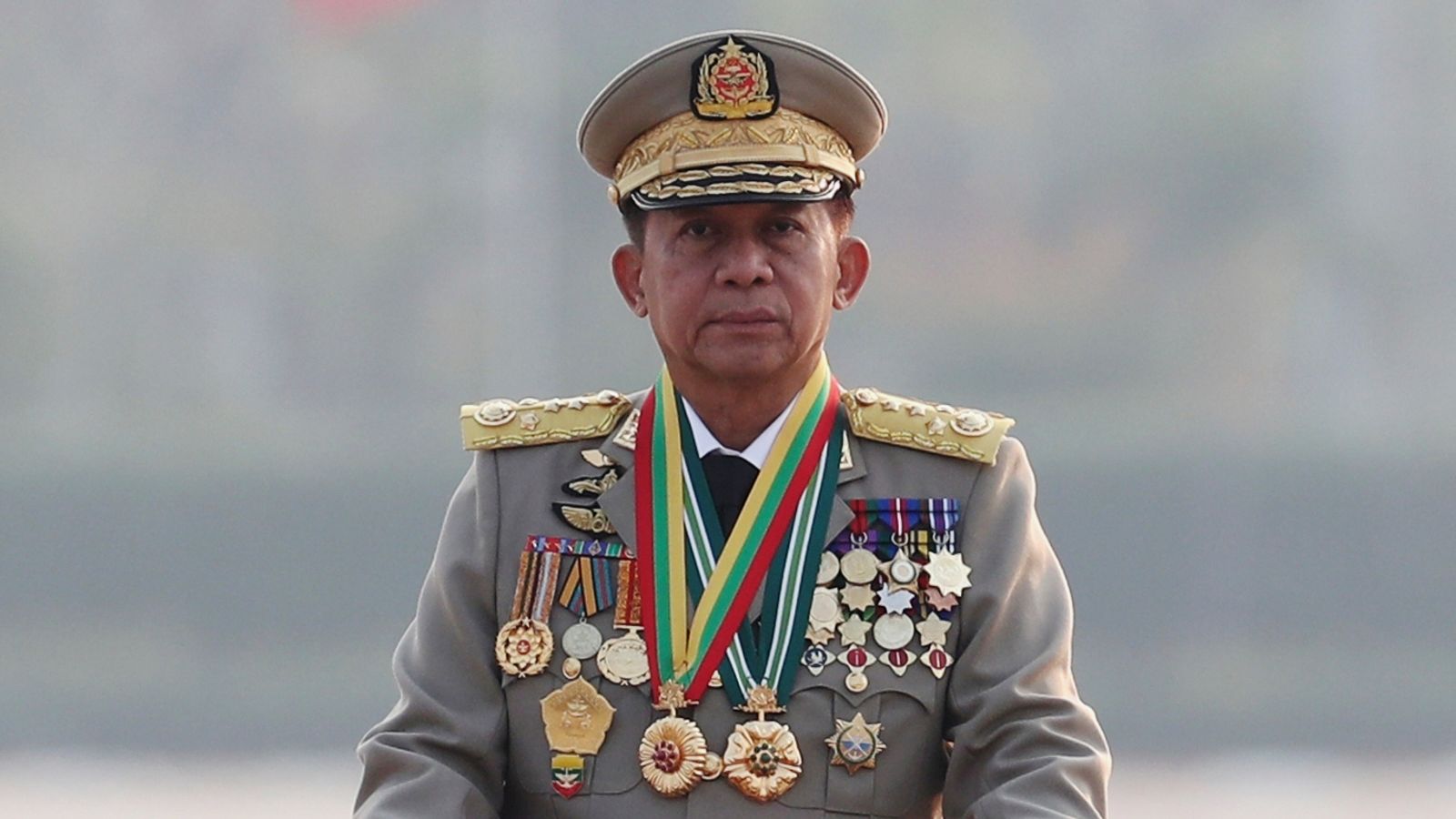
Min Aung Hlaing, 69, who is a senior general, won 429 out of the 584 votes in Friday’s ballot, Aung Lin Dwe, speaker of both the upper and lower house, said.
The run-off, which was broadcast live, was held in the newly renovated parliament building in the capital, Naypyidaw, which was damaged in last year’s earthquake.
His victory was expected as the chamber is dominated by the pro-military Union Solidarity and Development Party (USDP) and members appointed by the armed forces.
Advertisement
It follows a landslide victory for the army-backed USDP in a general election held in December and January.
Image: General Min Aung Hlaing (L) handing a flag to newly appointed Commander-in-Chief General Ye Win Oo. Pic: Reuters
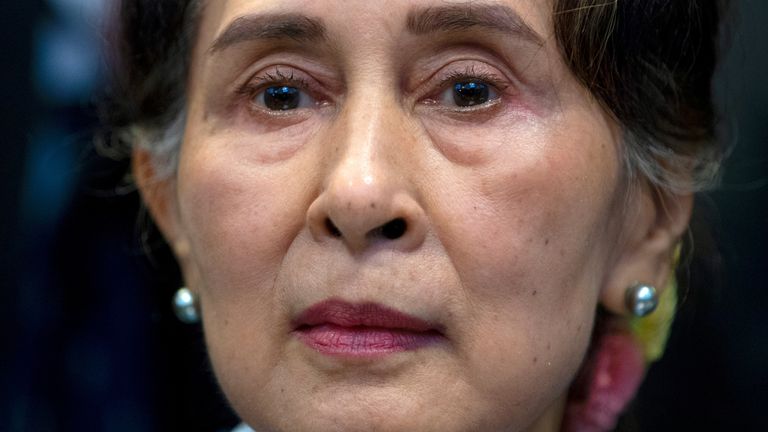
Image: Aung San Suu Kyi in 2019. File pic: AP
Critics and Western governments dismissed those polls as a sham to continue military rule behind a facade of democracy.
Min Aung Hlaing has led the nation since orchestrating a coup against the government of Aung San Suu Kyi in 2021, leading to a civil war.
The Nobel Peace Prize winner was arrested, sparking widespread protests that turned into nationwide armed resistance against the junta.
Advertisement
Ms Suu Kyi, 80, is serving a 27-year prison term on charges widely viewed as politically motivated.
The general, who has led the armed forces since 2011, has long coveted the presidency, according to independent Myanmar analyst Aung Kyaw Soe, who said “it appears his dreams are now becoming a reality”.
Image: A protest against the military coup in 2021. File pic: Reuters
On Monday, Min Aung Hlaing stood down as commander-in-chief because the country’s constitution prohibits the president from simultaneously holding the top military position.
As he was nominated in parliament as a presidential candidate, he proposed Ye Win Oo, a former intelligence chief seen as a fierce loyalist, as his successor to lead the military.
Earlier this week, some anti-junta groups – including those containing remnants of Ms Suu Kyi’s party and longstanding ethnic minority armies – joined forces in a new combined front to take on the military.
The Steering Council for the Emergence of a Federal Democratic Union said on Monday that they wanted to “completely dismantle all forms of dictatorship” and “collectively initiate a new political landscape”.
Resistance groups could face intensified military pressure as well as increased scrutiny from neighbouring countries that may seek to bolster their relationship with Min Aung Hlaing’s new administration, analysts said.
The military handover and Min Aung Hlaing’s rise to the presidency are seen by analysts as a strategic pivot to consolidate his power as head of a nominally civilian government and earn international legitimacy, while protecting the interests of an armed forces that has run the country directly for five of the past six decades.
The Station Singers’ Spring concert will take place on Saturday, April 18, at 7pm at St Mary’s Church in Richmond, where they will perform a selection of popular pieces from well-known shows, stage productions, and films.
Kay Bromhead has taken over as musical director after serving as deputy conductor since 2016.
“The choir continues to thrive.
Advertisement
“Supporting local causes is very important to the Station Singers and we hope that you will join us for an evening of wonderful music.”
The concert will support Richmondshire Museum, which is raising funds for building improvements aimed at reducing long-term energy costs.
The choir hopes to raise funds through ticket sales, a raffle, and a bucket collection during the event.
Ms Bromhead brings a wealth of experience, having worked with Harrogate schools, Catterick WAGS, a male voice choir, and the Richmond Operatic Society.
Advertisement
The choir will be accompanied on the night by Brett Overin.
Tickets are available online for £11 at www.ticketsource.co.uk/the-station-singers or for £12 at the door.
Entry is free for under-18s who are accompanied by an adult, and refreshments will be available to buy.
The BBC sci-fi series first arrived on screens almost 63 years ago, spanning around 900 episodes, 41 seasons, 15 (main) Doctors, and a 2005 reboot.
With such a wealth of content, there have been several early stories from the Classic Who era (1963-1989) which have been lost to time and wiped from the records.
In fact, over 90 episodes from the 253 which aired in the first six years are unaccounted for.
Advertisement
However, last month it was revealed that, in the first major recovery in over a decade, two more long-lost episodes have been found.
Get personalised updates on Doctor Who
Wake up to find news on your TV shows in your inbox every morning with Metro’s TV Newsletter.
Sign up to our newsletter and then select your show in the link we’ll send you so we can get TV news tailored to you.
Advertisement
The two episodes in question – season three episode one, The Nightmare Begins, and episode three, Devil’s Planet – aired in November 1965, to launch William Hartnell’s third season with companion Steven Taylor (Peter Purves).
Nearly all of this William Hartnell adventure had been lost to time (Picture: BBC)
This story centred around the Doctor’s arch-nemesis – The Daleks (Picture: BBC)
A clip released earlier this week from one of the episodes, The Nightmare Begins, shows the Doctor attempting to get to a city in a jungle before being held at gunpoint.
The intervening second episode, Day of Armageddon, was also recovered in 2004 by a former BBC engineer.
All in all, the revived trio are part of a 12-part ‘dark and gritty’ Dalek storyline written by Terry Nation, with nine segments still wiped from history.
Advertisement
As for where these gold-dust episodes were found, they were sitting in a cardboard box filled with a ‘ramshackle’ collection of vintage films discovered by charitable trust Film is Fabulous! (FIF), according to the BBC.
The episodes were only ever aired in the UK in the 60s, making them a true rare find and exciting addition to the Whoniverse.
Purves, 87, was invited to the Phoenix Cinema in Leicester, where the joyous finds were revealed, leading him to declare: ‘My flabber has never been so gasted.’
Purves, now 87, was surprised by the findings
BBC Archives are working to restore the original 16mm telerecordings, ensuring fans can enjoy a little extra treat with their Easter Eggs this April,’ Director of BBC Archives, Noreen Adams, shared in a statement.
Explaining the recovery process, FIF trustee chair Professor Justin Smith, explained: ‘We travel all over the country to recover film collections from private hands.
Advertisement
‘A lot of the films had suffered water damage, and the cans had corroded. These are gems in what was an eclectic and ramshackle collection, a lot of which hadn’t been looked after as well as the Doctor Who had.
‘The collector did recognise what he had, but how he acquired them has been lost to time.’
There are still over 90 lost episodes (Picture: BBC)
Meanwhile, discussing his memories of the lost episodes, Purves added: ‘I’m not sure I even saw those programmes go out originally – I remember the stories, but having seen them, the pictures are unfamiliar to me.
‘I didn’t remember the first one when I was still almost comatose following the injury I received fighting in Troy in the wonderful Mythmakers – which of course is missing.’
The last time Doctor Who episodes were recovered was in 2013, through a Nigerian TV station housing nine missing instalments from two Patrick Troughton stories, The Enemy of the World and The Web of Fear.
Advertisement
The BBC has been maintaining the legacy of Classic Who on iPlayer in recent years, with the vast corpus available on iPlayer.
This is the biggest discovery in over a decade (Picture: BBC)
It has even launched a colourisation project with the iconic 1963 tale, The Daleks, being released with colour just a few years ago. This was followed by Patrick Troughton’s The War Games.
The original series of Doctor Who aired from 1963 to 1989, before being rebooted in 2005. The most recent season, starring Ncuti Gatwa as the 15th Doctor, aired last year.
During the finale of his second season, the character regenerated and appeared to be replaced by Billie Piper, who played Rose Tyler, the Doctor’s first companion when the series was rebooted over two decades ago.
The finale also saw Jodie Whittaker, the 13th Doctor, make a guest appearance while Gatwa’s Doctor appeared to be travelling through alternate universes.
Advertisement
The Nightmare Begins and Devil’s Planet are available to stream on BBC iPlayer now.
A version of this article was originally published on March 13, 2026.
Got a story?
If you’ve got a celebrity story, video or pictures get in touch with the Metro.co.uk entertainment team by emailing us celebtips@metro.co.uk, calling 020 3615 2145 or by visiting our Submit Stuff page – we’d love to hear from you.
Three teenagers have been arrested on suspicion of murder after a 14-year-old boy was shot dead in south-east London.
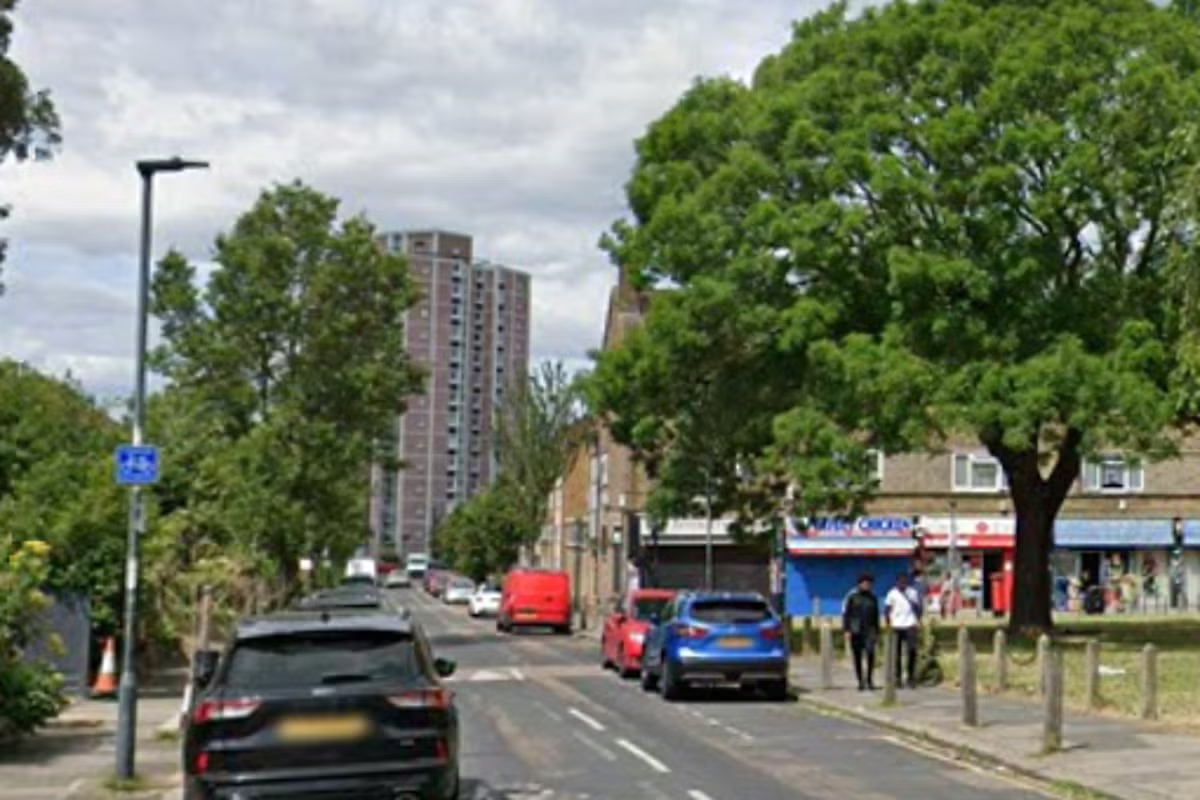
Officers received reports of a shooting on Lord Warwick Street, Woolwich, at about 3.40pm on Thursday, the Metropolitan Police said.
Two boys, aged 14 and 16, and an 18-year-old man have been arrested on suspicion of murder.
The force had said in an earlier press release that the victim was a man, but on Friday confirmed he was a 14-year-old boy.
Advertisement
Detective Chief Inspector Lucie Card said: “Our thoughts remain with the boy’s family and loved ones.
“We are aware of the concern that this incident will cause the local community.
“We have already made three arrests and our investigation continues at pace. An increased police presence remains in the area.
“I would appeal for anyone who was in the area at the time, who has CCTV or dashcam footage of the incident or has information that could help my officers to come forward.”
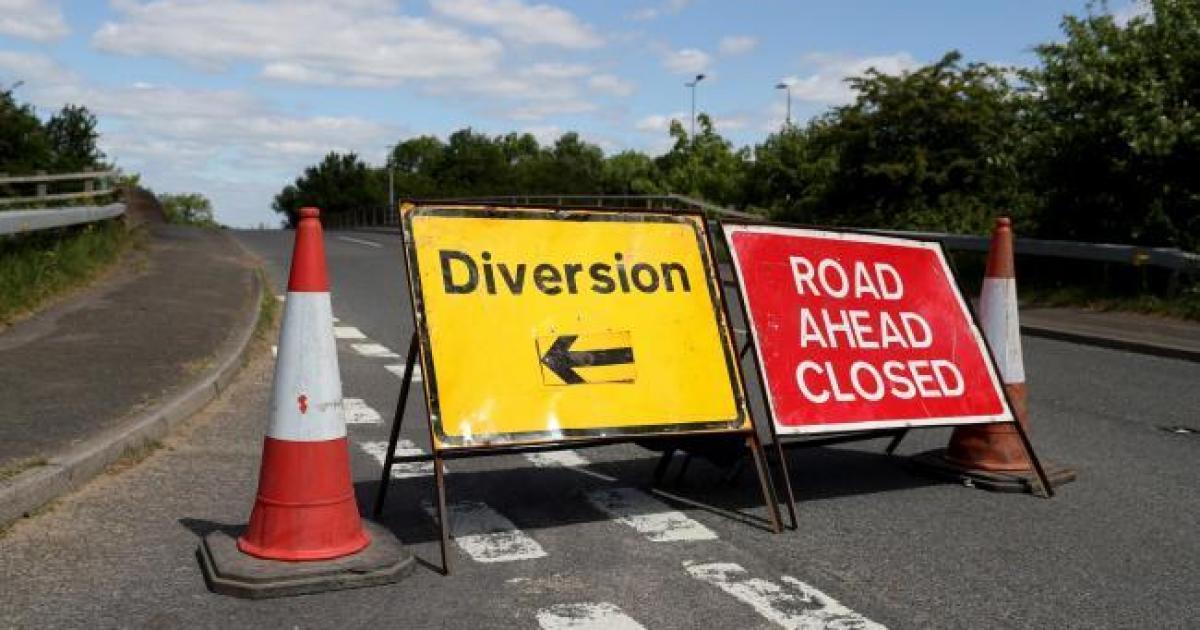
The authority has published notice of its intention to make a Temporary Prohibition of Driving Order covering parts of Robert Street and Granville Road in Grangetown.
Works are being, or are proposed to be, carried out on or near the affected lengths of road.
If the order is confirmed, all vehicles will be prohibited from proceeding along Robert Street from its junction with Alexandra Road in a southerly direction for 70 metres.
Advertisement
Granville Road would also be closed from its junction with Robert Street through to its junction with Evans Street in Grangetown.
Access will, however, be maintained to residents’ properties within the closure area, and local diversions are set to be put in place to route traffic around the works.
For more notices affecting YOUR area, visit our Public Notice Portal – Public Notices from The Northern Echo (publicnoticeportal.uk).
The order is due to come into operation on April 27 and would remain in force for up to 18 months.
The council says it is envisaged that the works themselves will be completed within nine weeks.
The notice is issued by B Archer, chief executive of Redcar and Cleveland Borough Council, from Redcar and Cleveland House, Kirkleatham Street, Redcar, TS10 1RT.
NEW YORK (AP) — After Pam Bondi became U.S. attorney general last year, conservative influencers, online sleuths and others who wanted the government to disclose all it knew about Jeffrey Epstein thought they might have a champion in the Department of Justice.
So did Jess Michaels, one of the legions of women who have said they were sexually assaulted by the late financier and convicted sex offender with a roster of powerful friends in business, politics and beyond.
“I thought, ‘Well, maybe a woman stepping into this role will finally, finally get the truth,’” Michaels recalled Thursday, after President Donald Trump announced Bondi was out of the nation’s top law enforcement job.
“She had this opportunity to be a hero and to really do right by survivors of sexual violence and trafficking,” Michaels said, “and she chose not to.”
Advertisement
The furor over the “Epstein files,” as the trove of investigative records came to be known, wasn’t the only controversy of Bondi’s tenure. But the arc — first raising expectations for a big reveal, then declaring there was nothing to see, and ultimately a forced, flawed document dump — was a stubbornly problematic storyline that ran through her time as attorney general.
Bondi rejected criticism of her handling of the matter, and Trump on Thursday praised her as “a Great American Patriot and a loyal friend.”
Michaels and other Epstein victims watched it all with shaken trust that Bondi’s departure alone won’t likely rebuild.
“This is not about a single person,” accuser Annie Farmer said Thursday. “It is about a government and judicial system that has repeatedly failed Epstein survivors.”
Advertisement
Here’s a glance at Bondi’s part in the Epstein saga:
February 2025: The binders
Freshly confirmed as attorney general for a president who had suggested on the campaign trail that he’d open more government documents on Epstein, Bondi whetted appetites by declaring on Fox News that “you’re going to see some Epstein information released.” And when a host asked about “releasing “the list of Jeffrey Epstein’s clients” — a long-rumored, never-seen sex trafficking roster — she replied that it was “sitting on my desk right now.”
A day later, conservative commentators and content creators were brought to the White House to get DOJ binders emblazoned with “The Epstein Files: Phase 1” and “Declassified.”
The attempt to showcase transparency soon backfired, once it emerged that the contents largely were already public. Bondi demanded that the FBI give her “the full and complete Epstein files,” and she later said that she’d unearthed a “truckload” of previously withheld material and that “everything is going to come out to the public.”
Advertisement
July 2025: The walkback
After months of anticipation, the Justice Department said it wouldn’t release any more Epstein material. A court had sealed much of it to protect victims, and “only a fraction” would have come out if Epstein had gone to trial, the agency said in an unsigned memo. It added that authorities hadn’t found evidence that merited new charges or investigations and that “perpetuating unfounded theories about Epstein” wouldn’t help victims get justice.
And, it said, there was no “client list.” As for Bondi’s prior comment that it was on her desk, officials said she had meant the overall case file.
Conservative influencers, among others, blasted the turnabout and questioned Bondi’s capability. But Trump stood by her, scolding a journalist for attempting to ask her a question about Epstein at a White House Cabinet meeting.
Amid a drumbeat of disclosures that begin to exact consequences for some powerful people — particularly Andrew Mountbatten-Windsor, Britain’s former Prince Andrew — Congress passed legislation to force the Justice Department to disclose its investigative files on Epstein. Trump signed it into law, casting the quest for Epstein information as a Democratic-led distraction from the Republican agenda.
Meanwhile, at his urging, Bondi announced that the U.S. attorney in Manhattan would investigate Epstein’s ties to some of the Republican president’s political foes, including Democratic former President Bill Clinton. None has been accused of misconduct by Epstein’s accusers; nor has Trump, another former Epstein friend. Both Clinton and Trump have said they knew nothing about Epstein’s misconduct and cut ties with him many years ago.
December 2025: The first batch
At the statutory deadline for making the Epstein files public, the Justice Department released only some of them. While the records included some material the public hadn’t previously seen, including some candid photos of Clinton, the documents didn’t break major ground and included little about Trump.
But Democrats cried cover-up, bill sponsor Rep. Thomas Massie, R-Ky., accused the Justice Department of breaking the law by missing the deadline and redacting too much, and some Epstein accusers also questioned the extensive redactions.
January 2026: The big release
The Justice Department began releasing a huge cache of additional Epstein documents, videos and photos, though others remained under wraps.
The records pulled back a curtain on favor-trading and frank communications in a chummy elite that looked past Epstein’s 2008 guilty plea to solicitating prostitution from an underage girl in Florida. Some high-flying Epstein friends resigned or lost jobs in corporate America, academia, big law firms, the British, Slovakian and Norwegian governments and beyond.
But the documents disclosed highly personal information about some victims while redacting the names of Epstein correspondents in, for example, emails that appeared to refer to the sexual abuse of underage girls.
Advertisement
Gloria Allred, an attorney for numerous Epstein victims, said Thursday that Bondi betrayed them by failing to protect personal information in the files.
“She has destroyed the trust in the DOJ that victims had a right to expect, and her termination may be the only type of justice that survivors will receive from the DOJ,” Allred said by email.
February 2026: The hearing
At a congressional hearing, a combative Bondi tried to quell the Epstein files controversy. She defended how the Justice Department dealt with it, lobbed personal insults at Democrats and lauded Trump over, among other things, the performance of the stock market.
Bondi said she was deeply sorry for what Epstein victims suffered. But she declined a request from Rep. Pramila Jayapal, D-Wash., to face and apologize to them for the Justice Department’s actions, and Bondi dismissed Massie’s critiques of the release of victims’ personal information.
Advertisement
March 2026: The subpoena
The House Committee on Oversight and Government Reform subpoenaed Bondi to answer questions on April 14 about the Justice Department’s handling of the Epstein investigation and file release. With five Republicans joining Democrats to support the subpoena, it reflected widespread discontent, including in the GOP base, over Bondi’s management of the matter.
The future
For now, Deputy Attorney General Todd Blanche will be the acting attorney general.
“We can only hope. But given that they worked together, I don’t have great expectations,” she said.
Advertisement
The Associated Press generally does not identify people who say they have been sexually assaulted unless they come forward publicly, as Michaels has done.
Robert Glassman, an attorney for a woman who testified as “Jane” in the 2021 criminal trial of Epstein confidante Ghislaine Maxwell, noted that agency leaders come and go.
“For victims of sexual abuse, what matters is whether the institutions meant to protect them actually do their job,” he said.
Jonathan Gill was remanded into custody at Cloverhill Prison, with the next court hearing for extradition to be held on April 21
A man has appeared before the High Court as he faces extradition over the murder of Robbie Lawlor in Belfast.
Advertisement
Jonathan Gill, 44, with an address at Malahide Road, Clontarf, appeared before Judge Barry O’Donnell on the foot of a warrant in Northern Ireland for him to be charged with the murder of Lawlor, which occurred in the Ardoyne area of Belfast on April 4, 2020.
He is also to be charged with possession of a 9mm pistol on a date unknown between April 2nd and April 5th 2020.
Det Sgt Lambe told the court that he arrested the man, whom he identified as the man sitting in court wearing a black top and shorts.
Advertisement
He said he introduced himself to Mr Gill by telling him his name and rank and informed him that he was aware of a trade and cooperation agreement calling for his arrest.
He told Mr. Gill that he would explain the details of this to him at the garda station. He then arrested Mr Gill on the foot of a UK warrant at 4:50pm.
Det Sgt Lambe said he cautioned Mr Gill and said he was not obliged to say anything but that anything he would say could be taken and used in evidence. Mr Gill made no reply, he said.
He then conveyed Mr Gill to Clontarf Garda Station where he was shown a copy of the arrest warrant. Mr Gill confirmed to Det Sgt Lambe that his name is Jonathan Gill, AKA Jack Gill and that his date of birth is the 29th of August 1981.
He informed Mr Gill of his rights to consent or not to surrender to the warrant and to avail of professional legal advice and representation.
Det Sgt Lambe said at the conclusion of reading over the summary he asked Mr Gill if he knew about the offences, to which he replied “No.”
The Judge informed Mr Gill in court again of his rights – that he can surrender to the UK, can avail of professional legal advice, the services of an interpreter, and to obtain legal advice in the UK. He asked Mr Gill if he understood those rights to which he responded in court: “Yeah.”
Advertisement
The Judge remanded Mr Gill into custody, with a date of April 21 set for the next hearing. Mr Gill can make a bail application, the court heard, of which the Minister for Justice is to be informed.
Mr Gill was remanded into custody at Cloverhill Prison, with the next court hearing for extradition to be held on April 21 before the same court.
DUBAI, United Arab Emirates (AP) — Iran fired on targets Friday across the Middle East, damaging a desalination plant and setting a refinery ablaze in Kuwait, while American and Israeli airstrikes hit the Islamic Republic as the war neared the end of its fifth week.
Tehran has kept the pressure on Israel and its Gulf Arab neighbors, despite U.S. and Israeli insistence that Iran’s military capabilities have been all but destroyed. In a sign that part of Iran’s theocracy could be willing to negotiate, the country’s former top diplomat published a proposal for ending the conflict in an influential American magazine.
Iran’s attacks on Gulf energy infrastructure and its tight grip on the Strait of Hormuz, through which a fifth of the world’s oil and natural gas transits in peacetime, have roiled stock markets, sent oil prices skyrocketing, and threatened to raise the cost of many basic goods, including food.
Iran’s ability to wreak havoc in the global economy has proved a major strategic advantage, and world leaders have struggled to figure out how to reopen the waterway. The U.N. Security Council was expected to look at a new proposal.
Advertisement
Iran’s former top diplomat suggests terms to end the war
Former Iranian Foreign Minister Mohammad Javad Zarif — a diplomat with long experience negotiating with the West who remains close to a pragmatic wing of Iran’s leadership — wrote on Friday that the time has come to end the suffering.
“Prolonged hostility will cause a greater loss of precious lives and irreplaceable resources without actually altering the existing stalemate,” Zarif, who helped negotiate Iran’s 2015 nuclear deal with world powers, wrote in Foreign Affairs magazine.
The U.S. has presented Iran with a 15-point plan for a ceasefire that includes reopening the Strait of Hormuz, dismantling Iran’s nuclear facilities and limiting its missile production in exchange for sanctions relief. But no signs of progress were apparent in the diplomatic effort.
Iran’s initial five-point counterproposal aired by hard-line state television included recognizing Iran’s sovereignty over the strait, the removal of U.S. bases from the region, compensation for war damage, and a guarantee against further aggression — all things likely unpalatable to the Trump administration.
Advertisement
Zarif’s proposal included elements of both of the plans.
Iran “should offer to place limits on its nuclear program and to reopen the Strait of Hormuz in exchange for an end to all sanctions — a deal Washington wouldn’t take before but might accept now,” he wrote.
Tehran and Washington were in talks about Iran’s nuclear program when the U.S. and Israel began bombing on Feb. 28 — the second time under President Donald Trump that the U.S. has attacked while in negotiations.
It’s not clear how much to read into Zarif’s proposal. While he has no official position in Iran’s government, he helped get reformist President Masoud Pezeshkian elected and would likely not have published such a piece without at least some authorization from senior leaders.
Advertisement
But it also remains clear who in Iran has the authority to negotiate since many leaders have been killed in the war. Immediately after the piece came out, Zarif wrote he had been “torn” about it — a sign he may already face pressure at home.
What’s more, it’s not clear how Trump will respond. He has vacillated between saying the U.S. is negotiating an end to the war and threatening to expand it. Thousands of U.S. Marines and paratroopers have been ordered to the region, raising speculation that there could be a ground offensive.
Iran targets a desalination plant and a refinery
Kuwait’s Mina al-Ahmadi oil refinery came under Iranian attack, and the state-run Kuwait Petroleum Corp. said firefighters were working to control several blazes.
Kuwait also said that an Iranian attack caused “material damage” to a desalination plant. Such plants are responsible for most of the drinking water for Gulf states, and they have become a major target in the war.
Advertisement
Sirens also sounded in Bahrain, Saudi Arabia said it had destroyed several Iranian drones, and Israel reported incoming missiles.
Authorities in the United Arab Emirates shut down a gas field after a missile interception reportedly rained debris on it and started a fire.
Activists reported strikes around Tehran and the central city of Isfahan, but it wasn’t immediately clear what was hit. A day earlier, Iran said the U.S. hit a major bridge, which was still under construction, killing eight people.
More than 1,900 people have been killed in Iran during the war. In a review released Friday, the Armed Conflict Location and Event Data, a U.S-based group, said they found that civilian casualties were clustered around strikes on security and state-linked sites “rather than indiscriminate bombardment” of urban areas.
Advertisement
More than two dozen people have died in Gulf states and the occupied West Bank, while 13 U.S. service members have been killed, while 19 have been reported dead in Israel.
More than 1,300 people have been killed and more than 1 million displaced in Lebanon, where Israel has launched a ground invasion in its fight with the pro-Iranian Hezbollah militant group. Ten Israeli soldiers have also died there.
UN Security Council to take up Strait of Hormuz security question
Spot prices of Brent crude, the international standard, were around $109 Friday, up more than 50% since the start of the war, when Iran began restricting traffic through the Strait of Hormuz.
The U.N. Security Council was expected to vote Saturday on a proposal from Bahrain that would authorize defensive action to ensure vessels can safely transit the waterway. Bahrain’s initial draft would have allowed countries to “use all necessary means” to secure the strait, but Russia, China and France — who have veto power on the Council — expressed opposition to approving the use of force.
Advertisement
Following meetings in Seoul between South Korean President Lee Jae Myung and French President Emmanuel Macron, the two leaders said they resolved to “cooperate to ensure safe passage” through the strait but did not offer specifics.
___
Rising reported from Bangkok. AP journalists Sylvie Corbet in Paris, Sarah El Deeb in Beirut, Tong-hyung Kim in Seoul, South Korea, and Edith M. Lederer at the United Nations contributed to this report.
We asked you to vote for your favourite chippy, so we headed out to give it a go!
11:20, 03 Apr 2026Updated 11:20, 03 Apr 2026
Mick Conlon’s Fish and Chip Shop Review
Nothing beats a good chippy, and with today being Good Friday, we asked our readers to let us know where their go-to spot is in Belfast for the best fish and chips.
We were inundated with suggestions and we whittled it down to the top 10 which we then put to a reader’s vote, and there was one chippy that came out on top and that was Mick Conlon Fish & Chips, on the Grosvenor Road, so we had to head in and give it a go.
Advertisement
One of the reasons I love this job is that it allows me to venture outside of my usual food catchment areas and try new spots that aren’t right on my doorstep.
When I arrived this spot looked like any traditional chippy which is what I absolutely love. For me, I can tell when somewhere is trying too hard that it won’t quite be the same.
We got a bit of everything when I went in just to get a good idea of how it really was. We went for a fish supper, of course, a chicken goujon meal and a battered chicken burger meal, which I think really covers a lot of the classics, and I knew when I struggled to carry the bag that the portions were going to be pretty filling.
Advertisement
I couldn’t start anywhere else other than the fish supper with this one. The portion sizes were huge, and the fish was bigger than my head. It was cooked very well, and the taste was absolutely spot on. It was exactly what we wanted from a good fish supper.
The next on the list had to be the chicken burger that came with all the trimmings, and it was a struggle to even hold, which I won’t complain about. This was fantastic and was truly a classic chippy chicken burger in all regards.
Advertisement
The goujons were spot on and there were no changes with the portion sizes again. We loved these and they were definitely delicious.
You might have noticed I haven’t spoken about one of the main features of a chippy yet, the chips. That is simply because they deserve their own section. They were absolutely incredible, fluffy and crispy, I couldn’t get enough of them!
The price is something that we all have to consider when picking somewhere and this spot is really reasonable in that regards. So we had a fish supper, goujon meal and a chicken burger meal which came with 2 drinks. This came to a grand total of £21.17 and for the portion sizes this was quite a good price in my opinion.
Advertisement
This spot came with something extra, not quite in the bag, but with a side of personality thrown in for good measure. The staff in here were a proper laugh and kept me entertained to no end while I waited which I think I loved more than the food, and that’s saying something because this was a truly brilliant chippy.
So I can see why our readers love this spot. It was an all round great chippy with all the classics on offer, while also serving a community with more than food. The customers came in and left with a smile and good chat while they waited which shows that this seems to be more than a chippy for the people around it. It is absolutely not fine dining, but we can all get bored with that, can’t we?
So if you’re looking for your next chippy, think about trying this place and you won’t be disappointed.
If your mouth isn’t already watering have a look at our video from my visit:


















































You must be logged in to post a comment Login