An alleged murderer told the court he “highly regret[s] his actions” on the night Zahwa Mukhtar died but had no intention to harm her and didn’t think she was injured.
Duane Owusu delivered a fatal blow to Zahwa’s neck that led to her falling backwards and hitting her head on the ground in Chadwell Heath Lane, Romford.
Moments before, the 27-year-old was allegedly pushed from a parked Mercedes when events continued to escalate inside the car.
Zahwa Mukhtar murder trial continues
Giving evidence at his trial on Thursday, Owusu denied hitting Zahwa with his fist and said he “shoved her” so she didn’t stop him from getting back into the car.
Advertisement
He said: “I had no reason to cause her serious harm. I was basically looking after her the whole night, stopping all the fights, making sure that she was alright. I just wanted her out of the car to deescalate the situation.”
He later added: “I’m not going to punch a woman…Because I wanted her out of the car, I just shoved her out the way. If I had punched her that would have caused some sort of injury. That’s not what my intention was.”
The incident was captured on CCTV outside a care home in the early hours of Saturday 16 August last year. It shows two kicks aimed towards Zahwa’s face while she’s on the ground near the rear passenger side door, where she’d been sitting on the defendant’s lap in the overcrowded car.
Henrietta Paget KC, prosecuting, summarised what Owusu had told jurors earlier.
Advertisement
She said: “I was getting my other leg out of the car. I tried to sweep her leg out of the way to create distance from the car because I felt like I couldn’t close the car door, and I didn’t want the car door to hit her leg, and I didn’t want us driving off and the wheel going over her feet.”
Later addressing what Ms Paget suggested was a “savage attempt to stamp her face”, Owusu said: “100 per cent not” and claimed he only wanted to “push her legs out the way”.
How the night allegedly began for Zahwa
Owusu and his group had come from a house rave and Zahwa was socialising in Stoke Newington Road, north London, when the two parties crossed paths.
When he left the rave, Owusu was “tipsy and lively” but wasn’t drunk. He told the court he’d taken a swig of white rum before going in, a quarter of an ecstasy pill and had smoked cannabis earlier in the day.
Advertisement
“I was happy,” he said and called himself a “people [person]”.
“I just talk to random people if I’m in a good mood,” he explained when shown footage of himself.
The 36-year-old first encountered Zahwa while trying to deescalate a tense situation between one of his group and another man, Owusu told jurors.
He said: “This is when I remember seeing Ms Mukhtar, she’s holding on to my arm saying, ‘Brother, please stop. These guys, they’re going to stab you. These guys are going to stab you’. At that point when she was saying that, I was thinking, why is she saying that? Who is this? I don’t even know her.”
Advertisement
Alleged tension
The court heard evidence earlier in the trial about Zahwa’s interactions with the group and her suddenly jumping into the car.
Owusu said Zahwa had asked the driver if she could “chill” with the group, some of whom were going back to Dagenham to continue the party at one of their homes. He denied having a sexual interest in the victim.
He said: “I didn’t have an issue with her coming so I said to come and sit in the back.”
But once inside the car, Owusu described several fights between Zahwa and two other women, Paige Allen and Abigail Winter, beyond hair pulling, and which he had to break up.
Advertisement
“Little girly stuff,” he said, but blows were allegedly thrown, which escalated at a petrol station. The defendant said Abigail had dragged Zahwa to the ground and both women attacked the victim.
He led Zahwa away because she was angry and had tried to both calm her down and protect her, Owusu said. The two women didn’t want her back in the car, but “I couldn’t just leave her there like that,” Owusu stated.
The situation changed
The court then heard Zahwa’s demeanour changed. “She started being abusive and biting her nails, threatening to stab people,” Ms Paget said.
With Zahwa on his lap, the defendant could see she took out her phone and began scrolling through contacts, which worried him.
Advertisement
He said: “I was thinking, I hope she’s not trying to ring someone and escalate the situation saying she’s been attacked by two girls. I was just thinking the worst at that point.”
Then she began filming the women. Answering what was so bad about Zahwa doing this, Owusu said he believed it could provoke further conflict.
He said: “It felt awkward. It felt weird. You just said you’re going to stab them, you’re going to kill them, and then you’re going to take a video of them. I thought that was a bit weird.”
After he asked the driver to “Please stop the car,” Owusu claimed he “snatched the phone” and threw it out as bait to get Zahwa out. His intention was to book her an Uber, he told the court.
Advertisement
“At what stage did you call her a ‘dumb bitch’?” Ms Paget asked.
“I don’t remember saying that,” the defendant replied.
“I highly regret my actions”
Owusu told jurors Zahwa fell from the car when he loosened her grip from his gilet attempting to get her off his lap. He denied throwing her from the vehicle.
The defendant also said he didn’t see Zahwa on the ground after the incident, but had heard one of the other women saying that she was.
Advertisement
He said: “I highly regret my actions that night. I feel bad that I showed a lack of interest because at that point then, I was still concerned with her getting back in the car. I didn’t want problems to escalate.”
Until he was arrested, Owusu didn’t know Zahwa had died, he told the court. He’d been informed about the heavy police presence outside his home and conversations being had with neighbours, which led him to assume the worst.
He said: “I was just trying to recollect how I pushed her. Starting to think, did she hurt herself? Did something happen after we left her there? I was just praying, I hope it’s not nothing too serious.”
Michael Borrelli KC, defending, explained Owusu’s searched the internet for information that weekend, such as ‘Incident Chadwell Heath girl found unconscious’, to no avail.
Advertisement
He said: “I was just so depressed, I was scared, I was praying. I remember being that stressed on the phone and the emotions I was going through at that moment that I completely slept the whole day until the next day.”
Mr Borrelli asked: “At any point during that incident outside the care home did you deliberately hurt Ms Mukhtar?”
“No,” he said.
Owusu, of Althorne Way, Dagenham, denies murder and manslaughter.
There are now so many ways to get and track your fluids – from customisable Stanley tumblers to in-home IV services to apps that remind you to chug a few extra ounces every hour – that it’s easy to worry you’re not getting enough.
But is it possible to be too hydrated? And what happens if you are?
“[Drinking too much water] is a real thing,” Muñoz, who is also an associate professor of health sciences at University of Hartford, said. “[It doesn’t happen] as often as you would think, relative to somebody who is underhydrated – that’s definitely a more common scenario – but it’s something we need to pay attention to.”
The main issue with ingesting too much water or other fluids is that it can dilute the electrolyte content of our blood. Electrolytes (in this case we’re mostly talking about sodium, but also potassium, magnesium, chloride and calcium) must remain “in balance in order to maintain healthy blood, heart rhythm, muscle function and other important functions.”
“If they get too dilute, we start to have some pretty severe ramifications, largely related to our nervous system … [including] brain swelling, coma, [and then] death … and pretty quick,” Muñoz warned.
Advertisement
This happened to a woman in Los Angeles in 2007.
“It was pretty soon after the first Nintendo Wii came out and one of the radio stations had some competition – I think it was called like ‘Pee for a Wii’ or ‘Wee for a Wii’ – and unfortunately they didn’t consult anybody before they did this,” Muñoz said. “Whoever could drink the most amount of water in one day won the Nintendo Wii and a woman died.”
However, Muñoz noted that overhydration is less common in the general population and typically more worrisome for athletes.
“[It’s happened to some athletes and] it’s scary. It happens quickly and it’s not always easily detectable. So, a lot of times, unfortunately, they keep drinking water thinking that they collapsed due to dehydration,” she said.
Advertisement
It’s also a risk for recreational exercisers, like marathon or triathlon participants.
“[These people] might not actually be working out as intensely as they might suspect, and they haven’t really done a lot of homework into an individualised hydration plan, so they just assume, like, the more water the better,” Muñoz said.
“They’re actually not sweating that much, you know, or they’re not losing as much salt as they think, so they start chugging water and that’s a lot of times when this happens, unfortunately.”
So how much should we be drinking to reach a hydration sweet spot?
Advertisement
Muñoz said that most people need between 2 and 4 litres of water a day depending on body size, activity level, and other personal factors, like how much someone sweats, but checking in with your doctor or a medical professional about your specific needs is always a good idea.
She also noted that it’s possible to achieve proper hydration by drinking fluids other than plain water – including coffee, tea, sports drinks, juice and seltzer – and through the foods we eat.
One good way to tell if you’re properly hydrated is easy and free: take a look at the colour of your urine.
“I’m not saying that that’s a perfect marker, but it’s a very easily accessible one and it actually gives us a lot of good information,” Muñoz said. “We’re normally looking for, like, a light yellow colour – like lemonade or a straw kind of colour.”
Advertisement
Despite what you might think, completely clear urine is not necessarily a good thing because it can mean you’re overhydrated.
“That’s one of those things that I still have a lot of people tell me,” she said. “People who are well educated in biology will tell me, like, ‘My urine was clear today, so that’s good, right?’ I’m like, ‘No, no, no, no, no.’ You know, there is such a thing as drinking too much water.”
Have a question or need some help with something you’ve been doing wrong? Email us at AmIDoingItWrong@HuffPost.com, and we might investigate the topic in an upcoming episode.
Andy Burnham remains a likely candidate to replace Keir Starmer if the Prime Minister leaves office before the next election. Tom Scotson goes in search of the people, ideas and forces shaping what would be his third leadership campaign
Advertisement
Last October, Andy Burnham was a badly damaged figure. A series of high-profile interventions in the run-up to and during Labour’s conference – widely interpreted as a soft coup – had misfired.
Keir Starmer’s allies mocked the so-called ‘King of the North’ as a presumptuous, vainglorious blowhard, a risk to the UK’s financial credibility and a political dead-end for Labour.
At this low point, an old friend offered some comradely advice to the Greater Manchester mayor. “Remember what Lenin said in 1917 as he waited for a train in Switzerland,” David Blunkett recalls telling Burnham. “Timing is everything in politics.”
The timing – six months on – looks rather different. Labour is braced for heavy losses in elections in Scotland, Wales and England’s local councils. And while the Iran conflict is dampening speculation around Starmer for the moment, it is likely to reignite soon enough.
Advertisement
And while Angela Rayner has ensured she remains part of that conversation in recent weeks, many MPs believe that only one figure can save them. As one ally puts it, “It’s Andy Burnham or bust.”
Supporters believe he continues to hone his strengths (communication), jettison past mistakes (support for the Iraq war), and is building a coherent political philosophy (Manchesterism).
Quitting Westminster for the mayoralty is cited as the best move Burnham made to rebuild his profile. It is now, ironically, a major obstacle between him and the job of prime minister.
Advertisement
Ahead of the Gorton and Denton by-election, Burnham put his hat in the ring to stand as a candidate but was rejected by the party’s National Executive Committee (NEC) officers by eight votes to one, with only deputy leader Lucy Powell on side. The House understands that, despite boldly resolving to apply to stand, Burnham made little to no effort ahead of the vote to lobby any of the NEC officers who declined to back him.
Polling by Britain Elects suggests Burnham would have won the parliamentary seat comfortably.
Insiders working on the campaign say internal figures were even more positive, with one believing he would win with almost 60 per cent of the vote, as voters saw him as the obvious ‘Stop Reform’ candidate.
It is a thesis now safe from contact with reality. But Gorton is unlikely to be the last Labour-held seat to become free this Parliament.
Advertisement
To find out whether the twice-failed leadership hopeful has what it takes to return and topple a sitting Prime Minister, The House spoke to a wide range of Labour sources, Burnham allies and close friends.
Burnham, a local journalist for a short while, sees policy through the lens of how it will land in the press. “It is all media,” says a senior former aide, who helped run one of his failed leadership campaigns.
They added: “He was always very good at ‘the story’: where can I go, or what can I go and do, so that I get noticed?”
Burnham read English literature at the University of Cambridge after devouring the collective works of Philip Larkin and Shakespeare. Despite this, his friends are unsure if he continues to read for pleasure anymore.
“I can’t see Andy reading Jane Austen,” says a long-standing ally and Labour MP. “It would be interesting to know why he did English. Usually, lads would do history or PPE at Oxford. Maybe it would be the Morrissey type thing, the Oscar Wilde’s, that more romantic side of things.”
Advertisement
A minister adds dryly: “He travels lightly: both intellectually and politically.”
Nonetheless, he has a deep love for romantic poetry and Irish history. Steve Rotheram, Burnham’s best friend in politics, recalls the Manchester mayor chatting away with Michael D Higgins – the former Irish President and poet – about poets and ancient philosophers.
Burnham is a Roman Catholic. His Irish ancestry has been researched by Liverpool Central Library. “He does feel firmly attached,” says Rotheram of his Irish genealogy, “but he’s also one of those people who… is very patriotic as well.
“Andy’s always nailed his colours firmly to the mast. I think he’s a royalist, he loves the country.”
Advertisement
Burnham begins his mornings running regularly while listening to music on a predictably ‘Madchester’ playlist featuring The Stone Roses – his favourite band – as well as Joy Division, Oasis and New Order.
He works on his box over breakfast while preparing for a full day of meetings and events, which stretch into the afternoon and evening. Accompanied by his political aide Kevin Lee, Burnham drives around Greater Manchester in a run-down Volkswagen usually littered with disposable coffee cups.
You won’t find many of these speeches published because most of them are written and delivered from a set of notes that he’s made – they are his thoughts
Advertisement
Working late makes family life more difficult, but friends say he and his Dutch wife Marie-France van Heel remain close. The couple, who first met at university, live with their children and dog Axel in Leigh. Even at home, however, Burnham is said to chase colleagues and advisers over the weekend with questions arising from new academic reports and what he is reading in the papers. This is in contrast to the disengaged attitude the Prime Minister is accused of adopting.
Burnham has long traded on being a lifelong Evertonian. “You’d always see him in animated conversation with the doorkeepers, and then when you eavesdropped, it was always about football,” says an MP. He had a season ticket at Goodison Park in the Gwladys Street end and renewed his ticket when the club moved to the Hill Dickinson stadium at the start of the season.
The mayor of Manchester is also a real ale enthusiast. Another MP friend reports that, although “not a piss artist”, Burnham does enjoy a drink: “You could see him drink eight or 10 pints without appearing to be pissed.”
Outside of his day-to-day schedule, his inner circle, like all metro mayors, remains small. Lee, Burnham’s political secretary, is a Manchester United season ticket holder who has been working for him for 16 years.
Advertisement
Amy Davies now runs his office and his diary. Kate Green, Greater Manchester’s deputy mayor for policing and crime, is also a close associate of Burnham’s, having left Parliament in 2022 to join ‘Team Andy’.
The list of those in Burnham’s orbit but outside the inner circle makes for more interesting reading. It includes around 14 experts working on policy to flesh out his own political offer.
A close confidant of his remains Neal Lawson, director of centre-left pressure group Compass, who continues to introduce the Manchester mayor to more left-wing voices. Lawson and Burnham first met playing for the Labour football team Demon Eyes; the Compass director was goalie, Burnham up front.
Other influential voices close to Team Andy include Mathew Lawrence of Common Wealth, Zoë Billingham from IPPR North and Andrew Carter, CEO of Centre for Cities.
Advertisement
Lawrence has recently been tasked, alongside the Mainstream group, with fleshing out Manchesterism. His phrase “the Privatisation Premium” was used in a recent speech of Burnham’s – which the mayor continues to write himself, often in bullet point form.
“You won’t find many of these speeches published because most of them are written and delivered from a set of notes that he’s made – they are his thoughts,” Lawson says.
Lawrence is in the middle of writing a separate upcoming paper, which will flesh out Manchesterism in more detail. It will attempt to connect the affordability crisis and related pressure on public spending to the structural retreat of investment in energy, housing and water.
A sympathetic minister tells The House: “What we are building is a movement, so it doesn’t matter about the individual, it’s who can drive it.”
Advertisement
Aides of Burnham say civil servants attend his events and snoop at his press conferences as he critiques Whitehall and lays the foundations of his political position.
Critics of Manchesterism – which, paradoxically, were once associated with free trade and laissez-faire economics – believe it lacks any meaning apart from nationalisation.
His supporters contend that the framework is meaningful while reflecting his pragmatism and keen eye for the most useful political fights. Capping bus fares across Greater Manchester to £2 is a perfect example, they say, as it brings in a visible change to the daily lives of so many.
“‘Transport is number one, transport is key,’ he would say as the gamechanger for Greater Manchester,” another former long-serving aide of Burnham tells The House.
Advertisement
He surrounded himself with a bunch of yes people, which is a challenge in itself
But there are long-running criticisms of Burnham, including from allies. The most notable is his tendency to be indecisive at key moments. Former colleagues point to his failed leadership campaigns as evidence.
During the 2010 leadership race, Burnham’s campaign was split over whether to take money from Unite, then run by Len McCluskey. One person who was working on Burnham’s campaign recalls: “We had a very, very polite but nonetheless heated discussion. He believed the right-wing press during the leadership camp would assert the fact that they’re in the pocket of [Unite]. My contention was I couldn’t give a monkey’s – the membership of the Labour Party [is] what matters.”
Advertisement
In the run-up to the 2015 leadership election, there was still considerable discontent despite being a leading contender.
“He surrounded himself with a bunch of yes people, which is a challenge in itself,” one former aide tells The House. A crucial downfall of the campaign was when he could not decide whether to rebel after the then-acting leader Harriet Harman urged colleagues to abstain on a controversial welfare bill.
Jeremy Corbyn was one of the 48 rebels who voted against the bill, which is commonly thought to be a major factor in his subsequent victory. The former aide says: “Classic Andy, he found a reasoned amendment which didn’t mean anything to anyone, while Corbyn was explicitly against it.”
Allies acknowledge he has made mistakes yet believe he is now more comfortable in his own skin.
Advertisement
“He doesn’t have to think about slicing and dicing for particular audiences in particular ways,” Lawson says. “I don’t think it’s enormously calculated. I think it’s quite authentic and quite genuine.”
Nonetheless, Burnham still faces one problem which could be insurmountable: returning to Westminster.
It’s time to dust off your biggest and comfiest pants, cook up some blue soup and warm up your pipes for a Céline Dion sing-a-long because a very special anniversary is just around the corner.
This month marks 25 years since Bridget Jones made her big screen debut, diary in hand, introducing the world to one of 21st century British cinema’s most iconic and beloved characters.
Bridget Jones’s Diary has gone on to become one of the most enduring and game-changing romantic comedies of its time, going on to gross hundreds of millions of dollars at the box office, spawn three sequels and even earn its leading lady Renée Zellweger her first Oscar nominations (she’s since gone on to win two, as it goes).
A quarter-century later, you might think you know Bridget inside and out (and love her “just as she is”), but we bet there’s still plenty about the enduring movie classic that you still don’t know.
Advertisement
To commemorate its 25th anniversary, here are 25 behind-the-scenes facts you probably never knew about how Bridget Jones’s Diary was made…
Alright, we’re starting with a pretty obvious one here, but for those who didn’t know, both the original novel Bridget Jones’s Diary and the movie were inspired by Jane Austen’s Pride And Prejudice
Bridget Jones creator Helen Fielding said back in 2001: “Jane Austen’s plots are very good and have been market researched over a number of centuries so I decided simply to steal one of them.”
“I thought she wouldn’t mind,” Helen quipped. “And anyway, she’s dead.”
Advertisement
Because of the book’s ties to Pride And Prejudice, the Bridget Jones team were always adamant that Mark Darcy should be played by Colin Firth, who previously appeared in the BBC’s much-loved adaptation of the Jane Austen book
“Colin always had to be Mark Darcy,” producer Eric Fellner put it around the film’s release. “As the story unfolds, and the audience comes to understand Mark Darcy, he transforms from a seemingly snobby and cold intellectual into a thoughtful and sensitive man.”
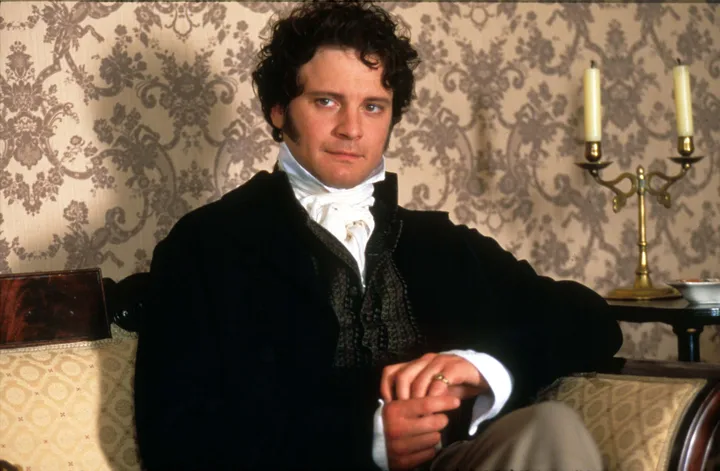
Colin Firth as Mr Darcy years before he’d play his character’s namesake in Bridget Jones’s Diary
There is another Pride & Prejudice reference hidden in Bridget Jones’s Diary that we’re only clocking now 25 years later
The publishing house where Bridget Jones works is called Pemberley Press, a subtle nod to Mr Darcy’s estate in the Austen classic.
When Bridget walks in on the woman that Daniel Cleaver has been cheating on her with, she’s covering herself with a Pemberley Press portfolio, sporting an image of a stately home not unlike Darcy’s.
Advertisement
There are more Pride & Prejudice references than you might realise in Bridget Jones’s Diary
When it came to casting the role of Bridget Jones, Renée Zellweger wasn’t actually the first choice
In fact, the role first went to Toni Collette, who turned it down because she was appearing in a Broadway play at the time filming was due to get underway.
She told Watch What Happens Live in 2023: “I have no regrets – life happens as it’s meant to.”
The casting process apparently took around two years before producers found their Bridget in Renée Zellweger.
Of course, the decision to cast an American actor as such an iconic Londoner wasn’t exactly met with unanimous praise, but Renée pulled it out of the bag and won over her detractors in the end.
Advertisement
Toni Collette was originally picked to play Bridget Jones before Renée Zellweger was cast
To help perfect her British twang to play Bridget Jones, Renée Zellweger worked with the famous dialect coach Barbara Berkery
Right before Renée worked with Barbar Berkery, the dialect coach had helped Gwyneth Paltrow on her way to winning an Oscar for Shakespeare In Love.
Before that, she’d also coached Gwynnie while she was playing a Londoner in the 90s classic Sliding Doors.
It’s fair to say that Hugh Grant wasn’t initially convinced by Renée Zellweger’s Bridget Jones accent…
After the suggestion that she “loosen it up a bit”, Hugh claimed that Renée’s next attempt was more “Princess Margaret having a stroke – but a week later, it was bang on”.
Renée Zellweger and Hugh Grant in character as Bridget Jones and Daniel Cleaver
Alex Bailey/Miramax/Universal/Kobal/Shutterstock
To help retain her accent, Renée Zellweger continued speaking in Bridget Jones’ voice even between takes
Sally Phillips once told Lorraine: “I’d made quite good friends with her during the filming [but] I realised towards the end, when she suddenly lost a stone in the last week, and started talking in a Texan accent at the wrap party, I’d made friends with Bridget, not Renée.”
It’s well-documented that Renée Zellweger intentionally gained weight to help her play Bridget Jones, which she did by increasing her food intake and not exercising
Advertisement
For the second Bridget Jones film, Renée opted for prosthetics rather than gaining the weight back, and by the third and fourth films, it was decided that the actor and her on-screen counterpart should be the same size.
As well as her accent and weight gain, Renée Zellweger also got into the Bridget Jones mindset by working a brief internship at a publishing house
Like her character, Renée Zellweger did some work at a publishing house to help her prepare for Bridget Jones’s Diary
Paul Chedlow/Miramax/Universal/Kobal/Shutterstock
“A young work experience woman came into the office and introduced herself as Bridget and we were all a bit bemused by the fact that Bridget seemed to have really nice clothes (not smart, just a lot better than our outfits) and a transatlantic accent,” Mary Mount – who was working as an editorial assistant at Picador at the time – recalled last year. “I thought she looked vaguely familiar but in that way that you can’t really place.”
One of the future Oscar winner’s tasks was cutting out any press clippings about Picardo at the time.
Advertisement
Unfortunately, the big story surrounding Picador at the time was the fact that a Bridget Jones movie was in the works, meaning “her job was literally to cut out nasty articles about herself”.
“She kept her cool,” said Camilla Elworthy, who oversaw Renée during her work experience. “But [she] did scribble ‘rubbish’ in the margins of one piece.”
As for the rest of the Bridget Jones’s Diary cast, Hugh Grant actually turned down the part of Daniel Cleaver on several occasions
Colin Firth, Renée Zellweger and Hugh Grant in promotional material for Bridget Jones’s Diary
Miramax/Universal/Kobal/Shutterstock
“The only reason for that was because I didn’t feel they had the script quite right for a long time,” he admitted in the lead-up to its release. “And I kept saying, it’s not working. Just get Richard Curtis to come in and help rewrite it.”
Advertisement
Hugh had already worked with Richard Curtis on Four Weddings And A Funeral and Notting Hill, with the two later reuniting on Love Actually and the second Bridget Jones movie.
“As soon as Richard came on board, I signed on the dotted line,” the Bafta winner added. “So, that’s all it was.”
Bridget Jones’s Diary was filmmaker Sharon Maguire’s feature-length directing debut, although she did already have a connection to the source material
Sharon was close friends with Helen Fielding, and was heavily rumoured to be have been the inspiration for “Shazzer”, the character played on screen by Sally Phillips.
Advertisement
“I’m delighted to be in the book, especially as Shazzer is so much wittier than me,” Sharon once told The Telegraph. “The only thing is that you go to parties and you worry that people will expect you to be funnier than you really are.”
“Helen was just writing about our lives – hilariously,” she later told the LA Times in 2016, adding: “Thirtysomethings had come out of long relationships in their 20s and realised they hadn’t ended up married or with children. We were in our 30s, behaving like we were 17-year-olds and having a great time but still floundering around asking questions about relationships, careers, biological clocks.”
Sally Phillips has played “Shazzer” in all four Bridget Jones movies
Miramax/Universal/Kobal/Shutterstock
Salman Rushdie’s Bridget Jones’s Diary cameo came about he, too, was a friend of Helen Fielding
“For me, it was very simple,” he told Texas Monthly in 2001. “Helen Fielding, the author of the book, is an old pal of mine, and she asked if I’d come along and make a fool of myself, and I said, ‘Why not?’.”
Advertisement
As for sharing the screen with the movie’s leading lady, the author added: “Renée was wonderful, I thought, and at the premiere we had a little joke. I told her that my performance is what held the film together – and she agreed. She thought it was a pivotal role.”
The exterior of Bridget Jones’ flat was a pub just off Borough market
The Globe Tavern, to be exact, which was already notable as it’s rumoured to be the location where the Great Train Robbery of 1963 was planned.
Advertisement
All those wintery scenes at Bridget Jones’ parents’ home were actually shot at the height of summer
Because of this, several locations in Snowshill, Worcestershire had to be covered in fake snow to make the setting more believable.
Bridget Jones’s Diary might put you in a wintery mood but it was actually shot at the height of summer
Miramax/Universal/Kobal/Shutterstock
As a result – Colin Firth didn’t exactly have the best time filming in his infamous Bridget Jones reindeer jumper…
Colin told Entertainment Weekly in 2020: “The set was lit at about 140 degrees Fahrenheit; it melted candles and desiccated the turkey curry. I almost tore the jumper to pieces pulling it off between takes – I probably lost about 15 pounds. I had little love for it by the end.”
Advertisement
…not that it actually is a reindeer, mind you
“We sent out the knitting challenge to approximately 20 or 30 knitters,” Sharon Morgan also told Entertainment Weekly for the same piece. “At first, none of the designs worked. They were lovely, but they just weren’t funny. So eventually we decided it had to be a moose, not a reindeer.”
“I never noticed it was a moose,” Colin added.
Not a reindeer jumper but a moose, apparently
Daniel Cleaver and Mark Darcy’s fight sequence is one of Bridget Jones’s Diary’s stand-out scenes – but it could have looked very different
“There had been an earlier idea to make the fight look sexy,” Colin told the LA Times. “We were going to be buff and our shirts were going to be ripped off.
Advertisement
“I looked at myself and said, ‘You’re certainly never going to get that type with me’.”
Colin Firth and Hugh Grant decided between them to keep their Bridget Jones fight a little more… well… British
Colin Firth and Hugh Grant’s characters have it out in Bridget Jones’s Diary
Alex Bailey/Miramax/Universal/Kobal/Shutterstock
“We both realised that the last time we fought was when we were 10. A playground fight,” Colin quipped. “So, we made a decision largely based on logic and common sense to make it more playful.”
He pointed out the characters are “two very ineffectual, frightened, angry yuppies going at each other – pulling hair and wanting to run away at the same time”, which needed to come across on screen.
Advertisement
During a video interview with Vanity Fair, Hugh later claimed: “The big fight was to stop stuntmen getting involved. They always want to come in and choreograph the whole thing and say, ‘mate, it’d be great if you swing a right hook and his head’ll go back’.
“I just thought, ‘yeah, in action films, cowboy films, whatever, that’s great, but these are two middle-class Englishmen, and they don’t fight like that’. I’ve seen them fight, and it’s shit.
“So, we managed to ban the stuntman. I think the last thing he contributed was probably the dustbin lid, and after that, it’s just me and Colin messing about.”
Stuntmen were used for one crucial part of the fight, though
Advertisement
That’d be the bit where Mark and Daniel fly through the front window of a Greek restaurant, which they thought they’d better leave to the pros.
By contrast, Bridget Jones’ infamous fireman’s pole scene was meticulously planned to ensure Renée Zellweger’s safety
Renée Zellweger as Bridget Jones throwing herself into her new job at Sit Up Britain
“Renée did it on wires – it was her backside that came down,” stunt performer Dani Biernet told Time Out in 2017. “But I did all the lining up and the wide shots without a wire.”
Another of Bridget Jones’ more surprising physical moments required a stunt double, too
Dani also had to step in to play Bridget during the moment when she drunkenly tumbles out of a black cab.
Advertisement
“When I first did it they were all like, ‘Bloody hell, did that hurt?’. But as a stunt person, you learn how to fall,” she said.
“I remember doing it about six times and, to be fair, by take five you’re a bit bruised. But that’s part of the job.”
No, Renée Zellweger didn’t really have to smoke all those cigarettes on the set of Bridget Jones’s Diary
Advertisement
While it was once commented that Bridget “smokes like a chimney, drinks like a fish and dresses like her mother”, fortunately Renée didn’t quite need to copy her character’s habits.
Instead, the cigarettes she was supplied to play Bridget were herbal, rather than tobacco-based.
You might not realise it but Bridget Jones’s Diary has a different ending depending on where in the world you’re watching
Renée Zellweger’s Bridget Jones and Colin Firth’s Mark Darcy get their happy ending in the first movie
Alex Bailey/Miramax/Universal/Kobal/Shutterstock
Here in the UK, after Bridget and Mark’s big kiss, the credits roll and we’re treated to scenes of different characters being interviewed about their love story, while Robbie Williams’ rendition of Have You Met Miss Jones? plays.
Advertisement
Across the pond, though, the credits are interspersed with “home video footage” of Bridget and Mark as kids, recreating the paddling pool scene we hear so much about over the course of the film.
As for the fate of Bridget Jones’ iconic ‘big pants’…
“I heard some rumour that Hugh Grant kept the pants – the big pants,” Renée Zellweger told British Vogue while promoting the fourth Bridget Jones movie in 2024.
“But I don’t know if that’s true,” she quickly clarified. “We’ll have to ask him.”
Advertisement
Bridget Jones’s Diary is currently available to stream on Now.
As well as co-creating Big Mistakes and writing select episodes, Dan also takes the lead as a priest who lands both himself and his sister in hot water when some petty thievery grabs the attention of a criminal organisation.
He’s joined by an impressive cast of recognisable faces in Big Mistakes, many of whom you’re sure to recognise from their TV, movie and stage careers.
Advertisement
For those who’ve already been enjoying the new show, here’s your quick guide to where you’ve seen the cast before…
Dan Levy
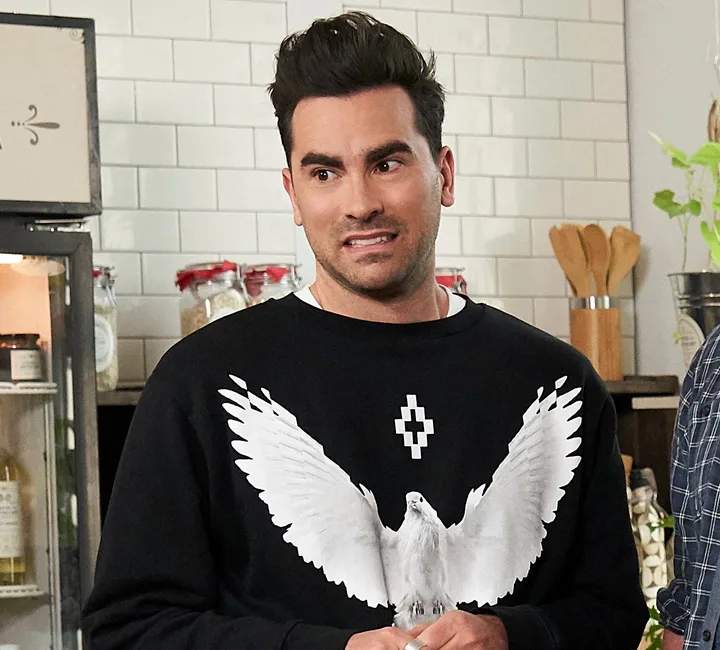
Dan Levy as David Rose in Schitt’s Creek
CBC/ITV/Kobal/Shutterstock
As mentioned above, Dan Levy was a co-creator and star of the beloved sitcom Schitt’s Creek, in which he starred as David Rose alongside his famous dad, Eugene Levy.
The Canadian star initially got his start in TV presenting rather than acting, working on the likes of MTV Live, The Hills’ “after show”, the Canadian version of Great British Bake Off and the cooking show Dismantled.
Advertisement
Since Schitt’s Creek, his acting work has included Modern Family, Sex Education, The Idol and Curb Your Enthusiasm.
He’s also acted in films like Disney’s Haunted Mansion, the Christmas comedy Happiest Season and the dark comedy Good Grief, the first offering to come from Dan’s deal with Netflix.
Taylor Ortega
Taylor Ortega as Joan in Ghosts
Dan’s on-screen sister in Big Mistakes is played by Taylor Ortega, who Succession fans might remember for her one-episode stint as Greta, before she was cast in the US remake of the British comedy Ghosts.
You could have also seen her in Love Life, Welcome To Flatch or Netflix’s The Four Seasons, as well as films like Another Simple Favour or Wine Club.
Advertisement
Meanwhile, if you were a Kim Possible fan back in the day, you might be interested to hear that she played Shego in Disney’s 2019 live-action movie based on the classic cartoon.
Laurie Metcalf
Laurie Metcalf in the 2017 film Lady Bird
Universal Pictures/Kobal/Shutterstock
Laurie Metcalf won three Emmys for her work in the sitcom Roseanne, but you might also recognise her for her Oscar-nominated performance as the mum character in Lady Bird.
Over the years, she’s also made memorable appearances as a murderous supermarket shopper in the iconic Desperate Housewives episode Bang, Sheldon’s mother in The Big Bang Theory, Augusta Gein in Monster and exhausted tour manager Weed in Hacks (for which she won her fourth Emmy).
Advertisement
Her film work includes everything from Uncle Buck, Toy Story and Leaving Las Vegas to Scream 2 and Runaway Bride.
We’d be remiss not to mention her stage career, too, as Laurie is a six-time Tony nominee (and two-time winner), treading the boards as everyone from Misery’s Annie Wilkes (opposite Bruce Willis’ Paul Sheldon), A Doll House’s Nora Helmer and Hillary Clinton.
Elizabeth Perkins
Elizabeth Perkins as Celia in Weeds
Monty Brinton/Showtime/Kobal/Shutterstock
With a screen career spanning 40 years, it’s tough to know exactly where to start with Elizabeth Perkins.
Advertisement
Over the decades, she’s appeared in films like The Flintstones, Miracle On 34th Street, Finding Nemo and, more recently, Spider-Man: Across The Spider-Verse and The Housemaid.
She’s perhaps best known for her TV work, though, which includes playing Celia in Weeds, Janet Malone in This Is Us, Birdie in Glow and Jackie O’Neill in Sharp Objects, which earned her a Critics’ Choice Award nomination.
Abby Quinn
Abby Quinn in Knock At The Cabin
Horror fans might be familiar with Abby’s performances in the likes of Knock At The Cabin, I’m Thinking Of Ending Things or Hell Of A Summer.
Abby has also had minor roles in Greta Gerwig’s Little Women adaptation, the sinister Black Mirror episode Arkangel, the Breaking Bad spin-off Better Call Saul and the 21st century revival of the sitcom Mad About You.
Advertisement
Mark Ivanir
Between 2015 and 2018, Mark Ivanir had a recurring role in the thriller Homeland, playing Ivan Krupin, an SVR agent.
His other notable TV roles have included the Netflix political drama Zero Day, the dark comedy Barry and Amazon Prime’s original series Transparent.
As for his film work, he has appeared in Schindler’s List, The Terminal and the critically-panned musical Emilia Perez.
Jack Innanen
Advertisement
A comedian as well as an actor, Jack Innanen rose to prominence in the early 2020s thanks to his viral TikTok videos, landing him roles in the Canadian series The Dessert and The Office Movers.
Boran Kuzum in the Netflix series Kimler Geldi, Kimler Geçti
Originally hailing from Turkey, Boran Kuzum’s work primarily consists of shows and films in his home country including Wounded Love, Bihter: A Forbidden Passion and Magnificent Century: Kösem.
Before being cast in Big Mistakes, he also played a pivotal role in another Netflix series, Kimler Geldi, Kimler Geçti (known in English-speaking territories as Thank You, Next).
Joe Barbara
Advertisement
Joe Barbara voiced Ray Boccino in the fourth Grand Theft Auto video game
Joe Barbara’s career began in the late 1990s, with roles in US soaps like Another World (which he appeared in over a four-year period) and All My Children.
More recently, he’s acted in FBI, Blue Bloods and lent his voice to the Grand Theft Auto games series, playing crime boss Ray Boccino.
Josh Fadem
Josh Fadem in Better Call Saul
Comedian, writer and actor Josh Fadem’s stand-out work has included playing Phil Busby in the 2017 revival of Twin Peaks, Pat Stanley in On Becoming A God In Central Florida, Simon Barrons in 30 Rock and Joey Dixon in Better Call Saul.
He also repeatedly portrayed Sean Penn in the sketch comedy series The Midnight Show and Adolf Hitler in The Crossroads Of History, in addition to roles in Reservation Dogs, Tulsa King, Minx and Adventure Time.
Jacob Gutierrez
Advertisement
Jacob Gutierrez in A Crime To Remember
Playing Tareq in Big Mistakes is definitely Jacob Guttierez’s biggest TV role to date, but he has appeared in the TV series A Crime To Remember, Bull and Dear Edward in recent years.
He’s also acted in short films, including A Night Off and It’s Not You, It’s Her.
A child psychiatrist has opened up about a pattern she sees routinely where a neurodivergent child will struggle at school, and the adults around them mistake their symptoms for poor behaviour or a bad attitude.
Dr Anya Ciobanca, consultant child and adolescent psychiatrist at The ADHD Centre, says children who appear disengaged, inconsistent or emotionally volatile at school may be experiencing something far more complex than just a bad attitude.
“Behaviour is never the whole story,” she says. “When we approach a child with curiosity rather than judgement, everything changes.”
Conditions such as attention deficit hyperactivity disorder (ADHD) can go undiagnosed for years because there are often misunderstandings over symptoms. For example, people might think kids who have it are just hyperactive, but there are also more subtle signs that can show up, like day-dreaming or emotional dysregulation.
Experts previously told HuffPost UK this happens largely because there’s a gender divide in how ADHD symptoms are expressed (girls tend to demonstrate more inattentive symptoms), and social expectations on girls can lead to them keeping quiet, carrying on, and developing sophisticated masking strategies (sometimes at detriment to their mental health).
“There is a version of ADHD that looks, from the outside, like daydreaming or simply not caring,” says Dr Ciobanca. “But internally, that child may be working extraordinarily hard just to keep up. The effort of masking is immense, and it has a cost.”
In classrooms, children are often doing the best they can with a nervous system that’s working against them, but there are certain signs they might be fighting a hidden battle and need more support.
Advertisement
5 signs a child may be struggling with ADHD at school
Avoidance of school or specific lessons – this might look like persistent reluctance or distress around certain subjects or transitions.
Difficulty starting or completing work – this is often mistaken for laziness, says Dr Ciobanca, but rooted in overwhelm or difficulties with executive function.
Emotional outbursts or withdrawal – this can look like frustration, tears or shutting down, particularly after school (also known as after-school restraint collapse).
Chronic tiredness or physical complaints of headaches, which can be linked to anxiety or sensory overload.
Low self-esteem, negative self-talk, and appearing to cope at school (masking) while falling apart at home.
One child Dr Chiobanca worked with had been labelled by her school as inconsistent and difficult to motivate. But in reality, she was overwhelmed and had developed a profound sense of shame around her difficulties.
Girls with undiagnosed ADHD are “more likely to blame themselves, turning their anger and pain inward”, according to the Child Mind Institute, which noted they’re also more likely to experience depression, anxiety and eating disorders than those without ADHD.
“Once we understood the underlying picture – the interaction between her ADHD, her anxiety and her environment – we could make meaningful changes,” says the psychiatrist. “She no longer had to spend every day just fighting to survive it. That freed up an enormous amount of energy for actually learning.”
With one in 20 children thought to have ADHD, Dr Ciobanca wants to see earlier intervention, more flexible teaching, and emotional wellbeing placed at the centre of education rather than its margins.
Advertisement
“Too much support comes too late. We cannot expect children to learn well when they do not feel safe,” she adds.
Advice for parents
If you think your child might be neurodivergent (research suggests around 15-20% of people are), it’s worth exploring this subtly with your child. Dr Chiobanca advises parents to ask their children: “What’s the hardest part of your day?” as this can reveal more than questions about effort or behaviour.
It’s also worth speaking to your child’s school – specifically their class teacher or SENCO (a special educational needs coordinator) – if you notice a pattern of distress or avoidance. Months of avoidance or emotional dysregulation are a signal worth acting on, she notes.
Advertisement
The psychiatrist also urges parents to separate the behaviour from the child, as “struggling children often already feel like failures; they need to know you’re on their side”.
While NHS waiting times for diagnosis can stretch for months, it might also be worth considering a professional assessment. “ADHD and anxiety remain significantly underdiagnosed, particularly in girls,” says Dr Ciobanca.
Yet when children feel safe and understood, “they are far more able to learn and grow,” she adds. “That is the kind of education system worth working towards.”
‘This election is between the Green Party and the Reform Party’, said a smug Zack Polanski in south-east London this week. ‘It is a straight-up battle between hope and hate.’
The Green leader was launching his party’s local-elections campaign in Deptford. Naturally, he wasn’t even two minutes into his speech before Lebanon came up.
Forget council tax and bin collections, there he was waffling about the need for Britain to cut off our trade ties with Israel, over its ongoing war on the jihadist scum of Hezbollah.
Advertisement
We all know why. This monomaniacal obsession with the Jewish State reminds us that if any party is the party of hate here, it isn’t Reform UK – it is Zack Polanski’s Greens.
Yes, you can oppose the actions of the State of Israel without being an anti-Semitic bigot – though why you’d want to chide a nation for trying to defeat a Jew-killing terror army just over its northern border is beyond me.
Still, if you think this new and insurgent Green Party is merely ‘critical’ of Israel, you haven’t been paying attention.
Advertisement
The Greens’ by-election victory in Gorton and Denton was a foul taste of things to come. When Hannah Spencer wasn’t accusing Reform of ‘dividing people’, she was pushing leaflets through letterboxes railing against Israel in Urdu.
Since then, the Greens – against their best intentions, I’m sure – have further cemented their position as the go-to party for the nation’s cranks, sectarians and anti-Semites.
Green activists have been caught on WhatsApp groups calling Jewish people ‘an abomination’, and insisting that the alleged anti-Semitic firebombing of Jewish-operated ambulances in Golders Green was an inside job.
Advertisement
The party is still mulling over a policy that would declare ‘Zionism is racism’ – Jews, it seems, being the only people on Earth who aren’t entitled to their own homeland. (A vote on it has been delayed, following outcry from Jewish and even anti-Zionist Greens who see it as too extreme.)
This is not normal. And yet it is now baked into much of the commentary that this ‘progressive’ party – like Corbyn’s Labour before it – has become a magnet for anti-Semites.
When Channel 4 News interviewed Polanski this week, you could see this is all now just taken as a given. ‘You’ve got a load of new candidates, are you sure they haven’t been making anti-Semitic comments or doing anything absurd or illegal?’, asked Krishnan Guru-Murthy, rather breezily.
Advertisement
Depressingly, the Greens have plenty of form on this front. At the last General Election, long before our Zack hypnotised the membership and became party leader, 20 Green candidates were exposed for making despicable comments about Jews and Israel, from calling October 7 a ‘false flag’ operation to praising a ‘pro-Palestine’ demo that disrupted a Holocaust remembrance march… at Auschwitz.
A few bad apples? Well, if so, those rotten Granny Smiths include co-deputy leader, Mothin Ali. On 8 October 2023, the day after Hamas barbarians murdered and raped their way through southern Israel, he made a video saying ‘Palestinians have the right to resist occupying forces’.
Advertisement
Ali also led a smear campaign against Zecharia Deutsch – a Jewish chaplain at Leeds University who was called up to serve in the Israel Defence Forces after October 7. Ali called him an ‘animal’, falsely claiming he had deliberately tried to kill women and children in Gaza. Deutsch’s family was bombarded with death threats and forced into hiding.
Tell me who the hateful ones are here, Zack? Reform MPs have been hit with confected race rows and demands for sackings simply for clumsily suggesting there might be too much ‘diversity’ in adverts, or allegedly saying something puerile at school 50 years ago. Meanwhile, Ali’s exploits have provoked only cursory coverage and commentary.
Even less known is that Ali’s wife wears a full niqab – you know, those medieval garments that cage Muslim women so as to protect their ‘modesty’ and men from their urges. Remember when Jacob Rees-Mogg was hauled over the coals because he, as a Catholic, is opposed to abortion? How backward and anti-women, the media cried. At least his wife is able to go out with more than her eyes on show.
Advertisement
The Greens are as dumb as they are dangerous, combining a platitudinous ‘Live, Laugh, Love’ progressivism with an alarmingly chilled-out attitude to ethno-religious bigotry. Meanwhile, their madcap policies seem almost designed to inflame the very tensions in society they claim to oppose.
They want to ‘see a world without borders’, for one thing. That’s not some right-wing hack’s fever-dreamed summary, it’s a direct quote from Green policy documents. The party would abolish immigration detention, allow even failed asylum seekers to stay, treat all migrants as citizens instantly, including giving them the vote. Migrants would be able to get visas upon arrival, while all existing language and income requirements would be removed. According to Marley Morris, from the centre-left IPPR think-tank, a Polanski premiership would ‘radically increase migration to Britain… there would basically be no restrictions at all’.
Migration is already at unprecedented levels, turning a long-curdling crisis of integration into a veritable tinder box. But the Greens have memed themselves into believing that it is ‘hateful’ to notice the siloed communities, the strained public services, the knackered economy propped up by cheap imported labour. All of this is just an elaborate fiction, cooked up to keep our eyes off those dastardly billionaires.
Advertisement
For all the talk of Polanski’s ‘populism’, all this puts his party on a collision course with the public. Mass and illegal migration is often talked about as if it’s a 50-50 issue, cleaving society in two. In truth, the public are all but united in horror at our broken borders. Around 70 per cent say immigration is too high, including more than half of ethnic minorities. If you ask about specific numbers, only 15 per cent of voters support net migration being over 100,000 a year, and it hasn’t been that low since 1998 (with the exception of 2020, the year the world locked down).
So who is being hateful and divisive? The party that wants to bring migration policy in line with the demands of the democratic majority, escape the Balkanisation of state multiculturalism and take a firm line on the Islamists and sectarians who are menacing Jews? Or the party that will seemingly tolerate Jew-haters in its coalition, so long as they help to usher in its demented post-borders utopia?
Advertisement
The Greens may still be enjoying the warm bath of media adulation, but the public can see right through them.
Tom Slater is editor of spiked. Follow him on X: @Tom_Slater_.
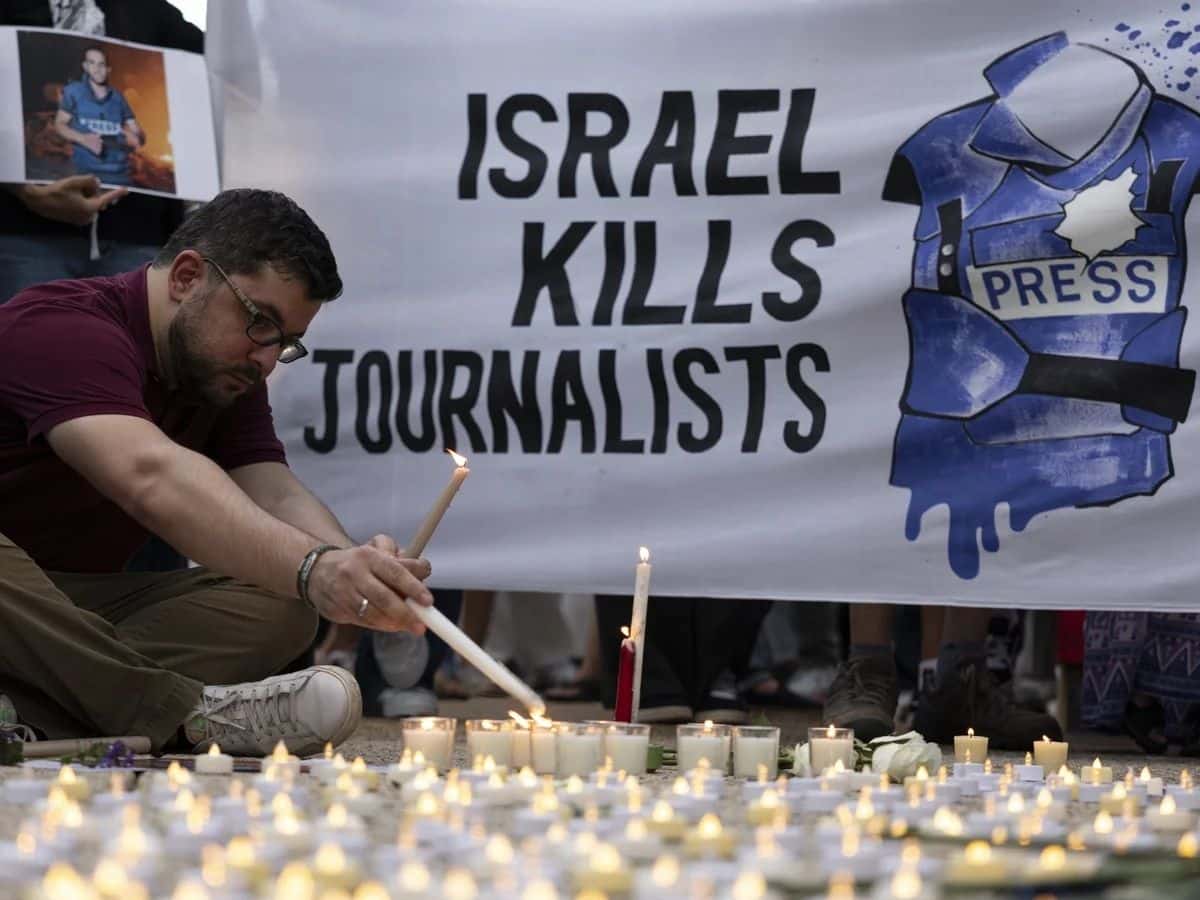
On 8 April, 2026, the Israel killed another three journalists. It has now murdered at least 260 since October 2023, more than any other country in the world.
254 dead in just one day as Israel targets Lebanese civilians, including two journalists
Wednesday was the deadliest day of “Israeli” attacks on Lebanon, so far. Israeli occupation forces (IOF) killed more than 300, and wounded 1150, after launching a massive wave of airstrikes. More than 100 homes and apartments in 21 towns were targeted, in just 10 minutes, while rescue services worked to remove debris. They continue to search for the many missing civilians stlll buried under the rubble.
Among the dead were two Lebanese journalists. Suzan Khalil, was presenter on al Manar TV, and al Nour Radio. Ghada Dayekh worked for Sawt al Farah Radio. She was killed when an airstrike targeted her apartment in Tyre, Lebanon, with no prior warning.
The Lebanese Red Cross transported more than 80 units of blood to hospitals in Beirut and Sidon as an initial response. But calls were later put out for more blood donations, due to a shortage.
Advertisement
Palestinian journalist Mohammed Wishah also killed after intentional targeting of his vehicle in Gaza
On the same day, Al-Jazeera Mubasher correspondent Mohammed Wishah was also assassinated by the IOF. His vehicle burst into flames after being targeted by an Israeli airstrike in Sheikh Ajleen, West of Gaza city.
In a statement, the Islamic Resistance Movement (Hamas) said:
The racist occupation entity repeatedly demonstrates its complete disregard for international laws and the laws of war, and its persistent threat to regional and international peace and security.
Hamas added that a “firm stance” was needed from the international community to “hold it accountable and ensure it does not enjoy impunity.”
Israel’s special treatment on the international stage by its many allies continues to ensure there is no accountability. Countries such as the UK claim their support for the terrorist state remains “unshakeable“.
Advertisement
Gaza is the deadliest place in the world to be a journalist, as the Israeli occupation has a systematic policy of intentionally targeting and silencing the truth about its war crimes and crimes against humanity.
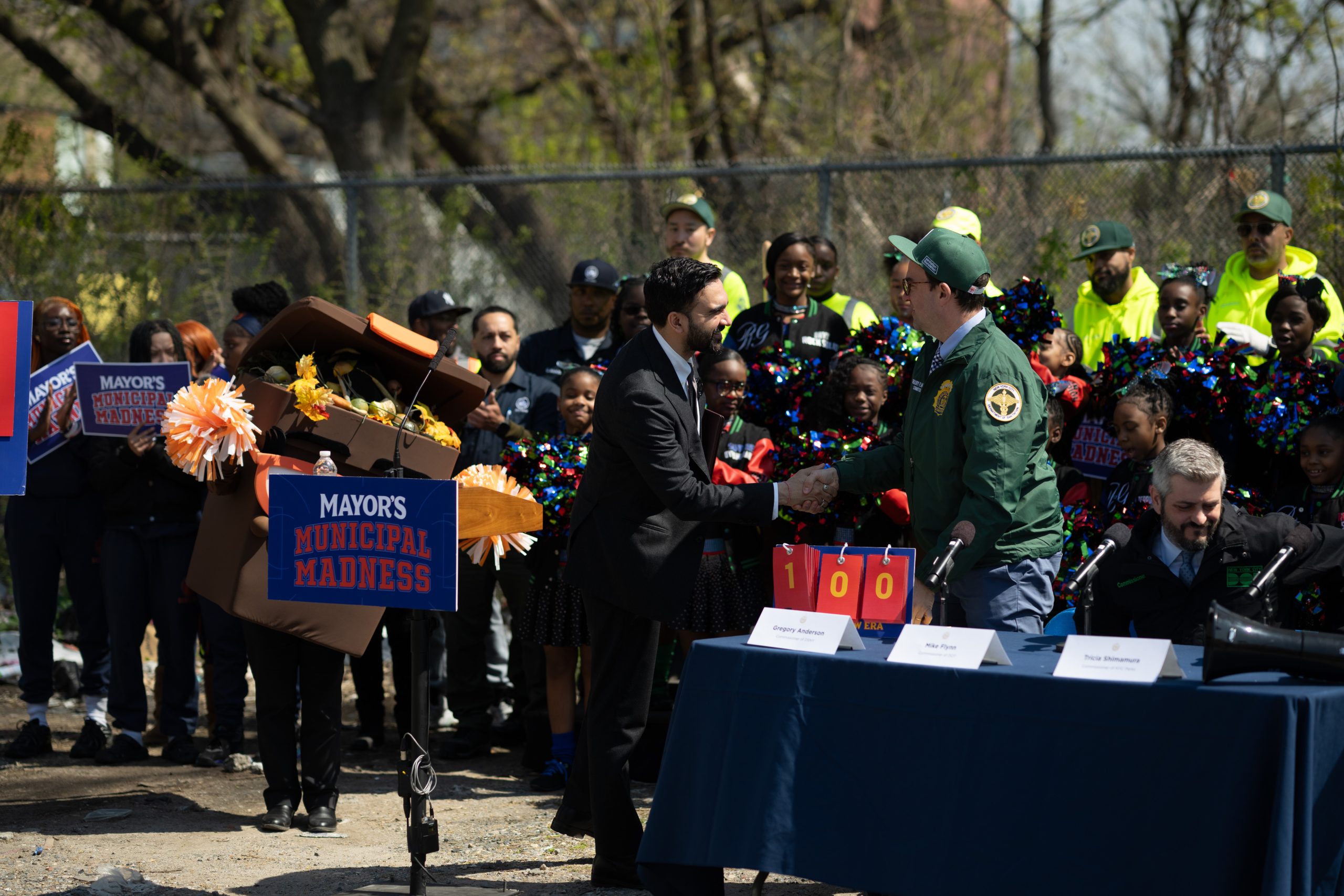
IT’S ZO TIME: Mayor Zohran Mamdani crisscrossed the city on his 100th day in office, relishing a milestone in a mayoralty that for much of last year seemed like an impossibility.
He started the day in Queens at a graduation ceremony for Department of Correction recruits, hopped over to the Bronx to celebrate trash cleanup efforts with a youth cheerleading squad and a garbage-can mascot, and then scooted to Harlem to perform home lead inspections.
But Day 100 was also marked by a budding scandal. POLITICO reported today that Mamdani’s Department of Probation commissioner allegedly had a prior romantic relationship with the agency’s general counsel, and the chief investigator who reported it to the city’s watchdog says she was fired the next day for blowing the whistle, according to court documents.
“I take any allegations of misconduct incredibly seriously,” Mamdani said this morning, with cheerleaders behind him. “New Yorkers should rest assured that there is an investigation.”
Advertisement
In April 2025, New Yorkers were still confused whether the “ZM” they intended to vote for went by Zellnor or Zohran: “A woman came up to me at a forum and said she was so excited to vote for me, and then referred to me as Zellnor Mamdani,” Mamdani told Playbook last year. (The other ZM in question is past mayoral hopeful and current state Sen. Zellnor Myrie.)
Now in City Hall, the festival of 100 days is in full swing. The mayor has been on a media tour of sorts leading up to today, doling out interviews to the The New York Times, POLITICO, City & State, THE CITY — and even a 20-minute sit-down with Al Jazeera — as he reflects on the milestone.
“The first feeling is that of gratitude that I get to have 100 days as mayor,” Mamdani told us. “This is truly the dream of a lifetime, to have this position and to be trusted by New Yorkers to deliver on it.”
The ritual significance of 100 Days — highlighted by Mamdani’s advance team, which places a flippable day-counter in the background of his press conferences — has also led to some blunt evaluations.
Advertisement
The New York Post — which seemingly was not given an interview — marked the day with a laundry list of ways the mayor has backtracked on the lefty (and lofty) promises he made on the trail. The tabloid even got the president to weigh in on Mamdani’s milestone: “Gotta lower taxes or everyone’s leaving. It’s very simple,” President Donald Trump said.
The New York Times more soberly analyzed the status of Mamdani’s campaign promises: free buses? (stalled); rent freeze? (TBD); free child care? (on track); Department of Community Safety? (try Office of Community Safety); city-owned grocery stores? (unstarted); taxing the rich? (stalled); fighting for an expanded rental assistance program? (reversed). We’re also tacking on one more to the list: relinquishing mayoral control of city schools (abandoned).
But, according to his own accounting, the mayor still has lots of time to fulfill his biggest promises — frozen rent, free buses and free child care — possibly even until 2034. Earlier this week, we asked him if he thinks he has one or two terms to complete those three goals.
“Inshallah, it’s two terms,” he said. — Jason Beeferman
Advertisement
From the Capitol
LETTER TO CMS: The Centers for Medicare & Medicaid Services admitted Friday that its analysis of fraud in New York’s Medicaid program included errors, according to reports from the Associated Press.
The admission comes in response to a 78-page letter Gov. Kathy Hochul’s administration sent to the federal agency criticizing its miscalculation of state Medicaid data.
State officials rejected claims from CMS Administrator Dr. Mehmet Oz that the state’s $124 billion Medicaid program is riddled with fraud, waste, and abuse. In a lengthy response shared with Playbook last night, the state Department of Health accused the federal government of conflating increasing Medicaid costs as proof of foul play.
The dispute reflects a broader tension over how aggressively the federal government should police state Medicaid programs as costs rise. CMS has flagged several high-cost areas — including personal care, behavioral health and transportation — as particularly susceptible to fraud. But the agency’s glaring miscalculation in New York represents a hit to the Trump administration’s “fraud-busting” campaign.
Advertisement
“CMS wildly overstates utilization in areas like personal care. CMS also appears to conflate critical investments with fraud, misconstruing New York’s historic commitment to expanding access to behavioral health,” state Health Department spokesperson Cadence Acquaviva said in a statement to Playbook.
100-FOOT RULE REPEAL: Hochul is signing a chapter amendment today to delay implementation of the so-called 100-foot rule repeal for a year.
For decades, New York required ratepayers to subsidize gas hookups for new residential buildings. If a new building was within 100 feet of a gas main line, utilities would connect the building and pass the cost onto other consumers.
“I have made affordability a top priority and doing away with this 40-year-old subsidy that has outlived its purpose will help with that,” Hochul said in a statement last December when she signed the legislation.
Repealing the 100-foot rule was a priority for environmental advocates last session. The provision was originally included in the NY HEAT Act, legislation that aimed to transition the state off of gas infrastructure. That bill would have amended gas utilities’ “obligation to service” and put a 6 percent income cap on utility bills for low-income customers. But when it became clear the bill would not become law, advocates spun out the 100-foot rule provision as a standalone bill that had the support to make it across the finish line. — Mona Zhang
FROM CITY HALL
MORE DOIMAGE CONTROL: Mamdani is scrambling to shore up support for a key appointment whose fate rests with the New York City Council — another twist in the mounting tensions between the mayor and the body of lawmakers meant to be a check on his power, POLITICO Pro reports this afternoon.
Advertisement
Mamdani’s team has been working behind the scenes to set up one-on-one meetings between Council members and his pick to lead the Department of Investigation, Nadia Shihata, according to four people with knowledge of the outreach granted anonymity to discuss private conversations.
The hope is the meetings will assuage lawmakers’ concerns about her past political support for the mayor and a longstanding social relationship with Mamdani’s top legal adviser.
The administration’s overtures — which come just days before lawmakers are set to vote on the nomination next week — indicated to at least one Council member that the mayor and his staff are worried about Shihata’s path to confirmation for the DOI commissioner post.
“Otherwise they don’t call,” said Council member Gale Brewer, who was among at least four lawmakers who received offers to meet with Shihata.
Advertisement
The sudden obstacle for Shihata’s nomination lands in Mamdani’s lap amid a broader and increasingly pitched budget feud between Mamdani and Council Speaker Julie Menin, as the mayor grapples with a $5.4 billion funding gap with few palatable options to close it.
The revelations about the tug-of-war over Shihata also come as POLITICO’s scoop about the DOI probe into Mamdani’s Department of Probation commissioner put a damper over what the mayor had hoped would be a celebratory weekend to mark his 100th day in office.
THE ADAMS OF ALBANIA: Former Mayor Eric Adams is now a citizen of Albania.
Advertisement
His spokesperson Todd Shapiro confirmed the former mayor received an “honorary Albanian citizenship” and said the mayor thanks the country’s prime minister, Edi Rama, for the distinction.
“The decision by the Republic of Albania to grant Mayor Adams citizenship reflects that enduring relationship and mutual respect,” Shapiro said. “Leaders around the world — including mayors and presidents — have historically been recognized with honorary or dual citizenships as a symbol of international partnership and shared values.”
Adams was indicted on foreign bribery charges — which he denies — during his time as mayor, but the charges were dismissed after Trump’s Department of Justice intervened.
In an interview with Fox News that aired last week, Adams reflected on his life as a private citizen and said there’s “a great world out there waiting for me.”
Advertisement
“Because of my time as mayor, I spent a lot of time inviting foreign dignitaries to the city,” he said. “Now all of that has turned into some good communications and relationships.” — Jason Beeferman
FROM THE CAMPAIGN TRAIL
YOU’VE GOT A FRIEND IN ME: Rev. Al Sharpton isn’t ruling out an endorsement for Jack Schlossberg in the crowded Democratic primary for NY-12.
Schlossberg and Sharpton met for breakfast last week where they talked about the Kennedy family, politics and faith — but not an endorsement, Page Six reported.
“I told him that what Trump is doing is trying to overturn everything his grandfather, President John Kennedy started in the early 1960s,” Sharpton wrote on social media. “It’s in Jack’s blood to fight this backlash.”
Advertisement
Playbook caught up briefly yesterday with Sharpton on the second day of his National Action Network conference, where he reemphasized that Schlossberg didn’t ask for an endorsement in the race and their meeting was to get to know each other.
When asked if he would endorse Schlossberg, Sharpton said it isn’t off the table.
“I like guys that show up,” Sharpton said. “None of his opponents have.”
“You are doing so much more than anyone that I know to advance the cause of civil rights,” Schlossberg said as he stood on stage next to the reverend. “You’ve been doing it my whole lifetime. You did it a whole lifetime before I was born, and you’re still doing it. It just gives us all — young people especially — someone to look up to, an example to learn from.”
A Sharpton endorsement would be a prominent boost for Schlossberg, who already has former Speaker Nancy Pelosi’s backing — and could help further legitimize his candidacy beyond his celebrity. Some have criticized his lack of political experience compared to opponents like state Assemblymembers Micah Lasher and Alex Bores. Despite that, sparse polling has shown Schlossberg with a lead. — Madison Fernandez
IN OTHER NEWS
— LANDER SAYS NO TO ISRAELI AID: Congressional candidate Brad Lander now says he opposes all aid to Israel, including for its missile defense system, as he seeks to represent NY-10. (The Forward)
— GREEN COSTS BITE: New York City business leaders are urging the state to scale back parts of its climate law, saying compliance costs are becoming unsustainable. (CBS News)
Advertisement
— ICE COLD: A Poughkeepsie landlord is facing charges after threatening tenants with immigration enforcement officials. (Times Union)
— REP. ENGEL PASSES: Eliot Engel, who represented areas of the Bronx and Westchester in Congress for over 30 years, has passed away at age 79. (LoHud)
Missed this morning’s New York Playbook? We forgive you. Read it here.
In this week’s dispatches from the American kleptocracy, a senior US ‘department of war’ official made up to a 4,800% return on a private investment in Elon Musk’s xAI. The official’s job, you ask? Why, overseeing the Pentagon’s use of AI, of course.
What a normal thing to write about a functioning and definitely-not-at-all corrupt democracy.
Emil Michael’s official title is ‘under secretary for research and engineering’ at the Pentagon. He manages negotiations with AI tech firms, and has recently been pushing for greater use of the technology in America’s wars.
Speaking at Elon Musk’s Stargate base, US secretary of war Pete Hegseth described Michael:
Advertisement
Our under secretary of war for research and engineering, Emil Michael, right here in the front row, is the war department’s single chief technology officer. One CTO for the entire enterprise.
That ‘one CTO’ bit makes the upcoming string of events all the more egregious.
Pentagon — The timeline
In March 2025, shortly before joining the war department, Michael declared a private investment in xAI worth between $500,000 and $1m. He reported that he owned the shares via the venture capital fund KQ Partners.
Over the next 10 months, the US war department made two deals with xAI. Likewise, in July the Pentagon named xAI’s ‘Grok’ chatbot as one of its four commercial providers to aid the department in the use of AI. Grok itself is more well known for the recent scandal in which it generated non-consensual nude images on Twitter.
However, on 18 December, the Office of Government Ethics (OGE) issued Michael a divestiture certificate. Essentially, this recognised his xAI stock as a conflict of interest, and told him to sell it off.
Advertisement
Early the next week, on 22 December, the Pentagon announced that:
Today, the War Department officially entered into an agreement with xAI, paving the way for the deployment of its advanced capabilities on GenAI.mil. This move builds on the rapid deployment of cutting‑edge AI across the Department’s 3 million military and civilian personnel.
According to the OGE, Michael then sold his xAI holdings on 9 January, for between $5m and $25m. Unfortunately, the OGE documents only provide rough valuations, rather than exact figures — or details where exactly the holdings ended up.
‘In full compliance’
Whilst enriching oneself through advocating a technology you have huge investment within government is a blatant example of corruption in and of itself, there’s a further kicker. As the Guardian pointed out:
xAI, which is the company behind Musk’s Grok chatbot, is not publicly traded, so it is unclear how Michael obtained his position, how it was priced or to whom he sold it.
Musk and Michael appeared to be on friendly terms, with Musk going so far as to give Michael his seal of approval as Trump’s potential transport secretary.
Advertisement
It should also be noted that federal law nominally forbids a US official from using their position for financial gain. Predictably, the Pentagon insisted that Michael was “in full compliance” with ethics laws, adding:
The Department of War maintains a rigorous, multi-layered ethics framework that includes financial disclosure reviews, divestitures where appropriate, and screening to prevent conflicts of interest.
In practice, of course, Trump himself has shown that politicians are free to ignore the stipulation against corruption as they see fit. The man did bean adverts out of the White House, for God’s sake. Likewise, as Forbes recently reported:
Trump added $1.4 billion over the past year, leveraging the presidency for profit. His cryptocurrency ventures, stalled out before the election, exploded after his victory, adding an estimated $1.8 billion to his fortune overall. Another $500 million came in court, where Trump’s legal team succeeded in eliminating a half-billion judgement against him. His once-dormant licensing business surged $400 million, as foreign developers clamored to do business with an American president.
It’s utterly unsurprising that, if you take a man with no morality, put him in the most powerful position on earth, and show him there will be no consequences for his actions, he’ll steal all that he can get his hands on.
Meanwhile, his ultra-rich underlings have also followed suit, using their newfound political power for personal gain. But sure, a $24m return on investment is probably just what “full compliance” looks like now.
The US is bringing in automatic draft registration for military-aged men. The move is cross-party and predates the paused illegal war on Iran. Yet it shows that the US political elite remains committed to warfare on a massive scale in the future.
Young, eligible men will be automatically registered for the military draft pool starting in December as part of a measure tucked into the annual defense policy bill Congress signed into law late last year.
Men ages 18 to 26 must already register for selective service in case a draft is required. The last time a draft was in effect was February 1973, during the Vietnam War.
US politicians passed the Selective Service System (SSS) bill in 2024. And a recent amendment means automatic registration will begin in December.
SSS is an independent Federal agency established to ensure the availability of personnel to support the United States in times of national emergency. The Agency’s mission is to provide manpower to DoD when conscription is authorized by Congress and the President and to operate a system of alternative service for conscientious objectors.
By maintaining a robust registration system and ensuring preparedness, SSS plays a critical role in supporting America’s national security needs.
US — Failure to register
Registering does not mean joining the military. But federal law requires:
all male citizens of the United States, and male immigrants residing in the country, ages 18-25, to register with SSS.
Failure to register can result on punishment by the American government:
Advertisement
such as ineligibility for employment in the Executive branch of the Federal government; Federally-funded job training; and state-based student aid and employment in many jurisdictions. Additionally, naturalization to become a U.S. citizen may be delayed up to five years if a person fails to register.
The US used the ‘draft’ — mandatory conscription to the military — in the World Wars and Vietnam. Both main US parties backed the SSS legislation, passing it with “bipartisan support”. The US military is currently an all-volunteer force, albeit one which relies on a so-called poverty draft. And the current US commander-in-chief has developed a taste for foreign wars, despite claiming otherwise.
Trump’s wars
US president Donald Trump, who came to power as an ‘anti-war’ candidate has entangled the US in an illegal war of choice war with Iran. His official foreign-military policy stance described in the 2025 National Security Strategy seemed to mark a degree of withdrawal from world affairs. Direct involvement in a war like Iran did not seem to be on the agenda.
To quote the NSS directly:
Advertisement
We want to prevent an adversarial power from dominating the Middle East, its oil and gas supplies, and the chokepoints through which they pass while avoiding the “forever wars” that bogged us down in that region at great cost.
US-Israel attacked Iran first on 28 February without provocation. Iran was offeringunprecedented concessions in negotiations at the time. The Pentagon has sincestated there was no imminent threat from Iran. And the UN’s atomic watchdog, the IAEA, has said there isno evidence Iran was developing a nuclear weapon.
The US has achieved none ofits original war aims. Iranpredictably closed the Strait of Hormuz, a vital oil channel, once attacked — creating a global energy crisis. Far from being defeated, Iran hassaid the war will continue until “the enemy’s inevitable and permanent humiliation, disgrace, regret, and surrender”. Trump came to power on an anti-war ‘America First’ ticket. He now faces worldwide humiliation.
This bill shows that a commitment to war is built into American politics across all major parties. Whoever is in power — imperialist liberals like Barack Obama or hard-right demagogues like Donald Trump — the US is still at its very core a violent imperial power.




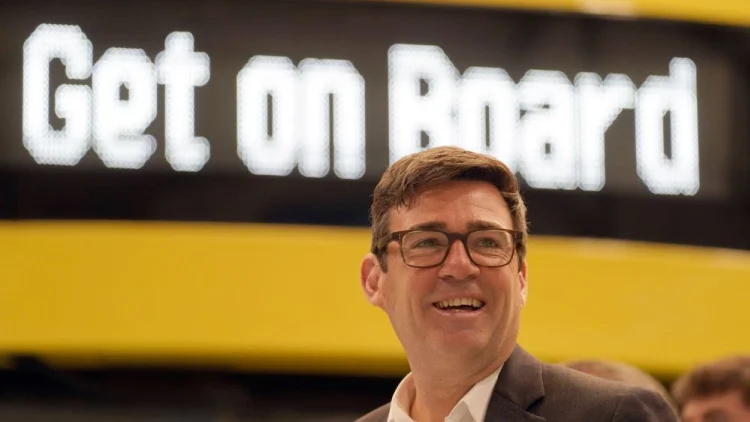
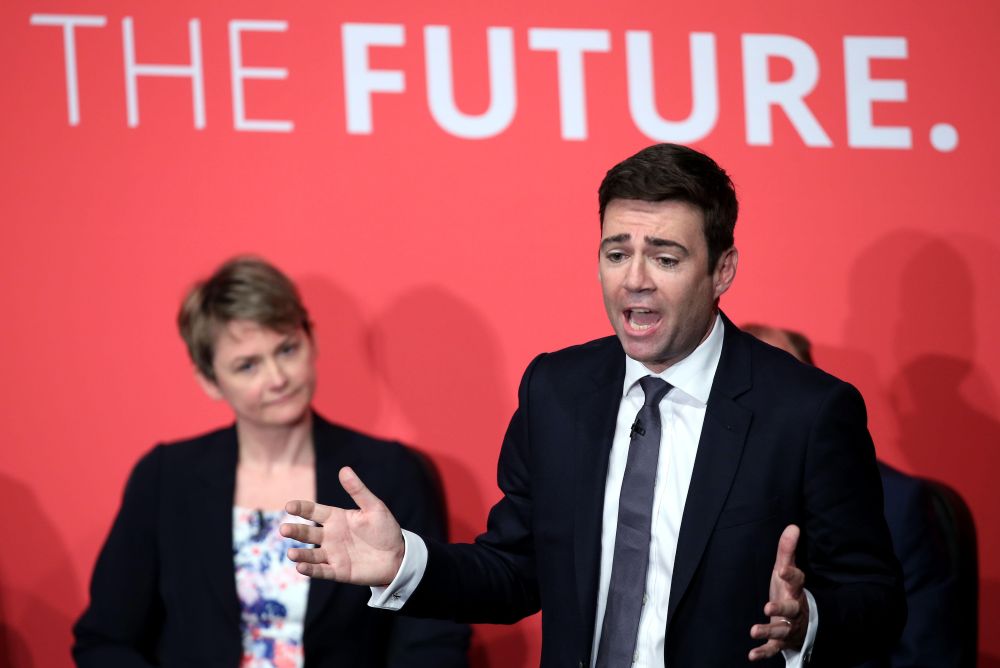
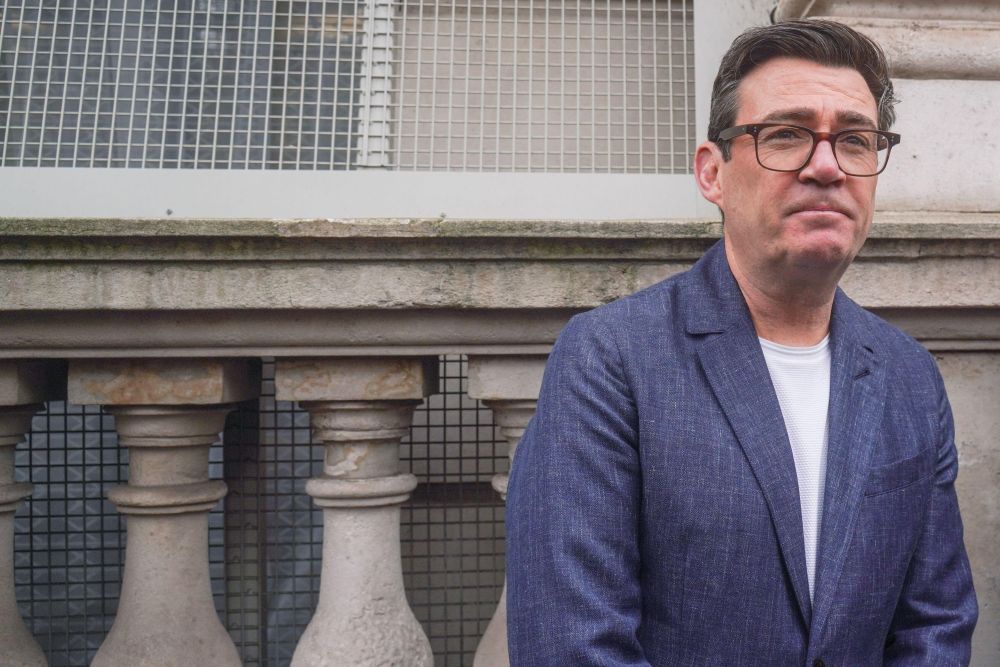 Burnham, a local journalist for a short while, sees policy through the lens of how it will land in the press. “It is all media,” says a senior former aide, who helped run one of his failed leadership campaigns.

















































You must be logged in to post a comment Login