Connect with us

Politics

Amanda Seyfried Reveals How She Feels About Wicked Auditions Now

Published

on

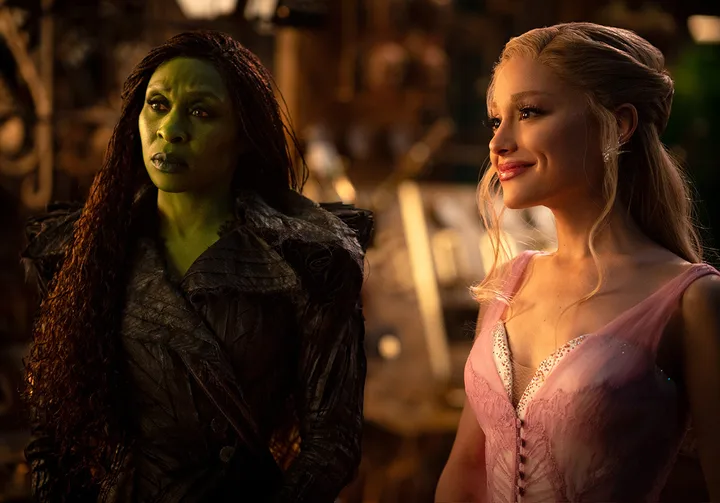
Wicked stars Cynthia Erivo and Ariana Grande in the second musical movie

Amanda Seyfried has suggested she didn’t feel wholly “appreciated” after auditioning numerous times to play Glinda in Wicked.

In a new interview with Radio Times, promoting her new religious musical The Testament Of Ann Lee, the Oscar nominee was asked about Wicked, and whether she was “over” auditioning six times for the role that eventually went to Ariana Grande.

“Everything happens for a reason,” she responded.

The Mamma Mia! star has been transparent about the hard work that went into auditioning for the role of Oz’s iconic good witch, and admitted there was one thing about the process that left a sour taste in her mouth.

Advertisement

“I wasn’t sad I didn’t get it, but I guess I wish it had been communicated to me in a better way. I don’t like to be in the dark about things,” she continued. “I like to feel appreciated.”

Wicked stars Cynthia Erivo and Ariana Grande in the second musical movie

Amanda had previously told Backstage’s In the Envelope podcast that she had auditioned six times for Jon M Chu’s musical adaptation.

“I loved it. I was busy. I barely had time to do it, but I made it work. I worked my ass off for years and years and years on that music. I’m competitive… with myself in a really healthy way,” she explained.

Despite feeling underappreciated when auditioning for the role, it didn’t stop her family from loving the film and Ariana’s performance.

“It’s an extravaganza, which is what [Ariana] does really well. And [my kids] have been playing the soundtrack nonstop. And everything is as it’s meant to be for sure,” she told People last year.

Advertisement

Amanda first revealed she auditioned to play Glinda in 2022, telling Backstage that she had her sights set on musicals after disliking how she sounded in 2013’s Les Misérables.

“I think it taught me how far I’ve come as a singer, which I really wanted to prove. Because ever since Les Mis’ I was like, ‘I need to be better. I need to do better’. So whatever comes next in terms of musicals, I’m finally prepared,” she said.

While she may not have travelled to Oz with Wicked, she has been critically praised for her role as Ann Lee, the real-life originator of the Shakers’ religious movement in Mona Fastvold’s The Testament Of Ann Lee.

The Testament Of Ann Lee is out in UK cinemas now.

Advertisement

Source link

Continue Reading
Click to comment

Leave a Reply

Your email address will not be published. Required fields are marked *

Politics

Alignment with EU law is easier said than done

Published

on

Alignment with EU law is easier said than done

Joël Reland outlines the key trends in UK-EU regulatory alignment and divergence over the last five years, as exlpored in our new report ‘UK-EU alignment and divergence: the road ahead‘.

After finalising the Trade and Cooperation Agreement on Christmas Eve 2020, Prime Minister Boris Johnson celebrated having “taken back control of every jot and tittle of our regulation”, promising to “set our own standards, to innovate in the way that we want”. Fast forward to early 2026, and Prime Minister Keir Starmer now argues that “if it’s in our national interest to have even closer alignment with the single market, then we should consider that.”

How to make sense of such a shift, from regulatory freedom to cleaving closer to the EU’s rulebook? Our new report seeks to answer that question by charting the UK’s regulatory journey over the past five years. It shows that – with the notable exceptions of financial services and AI – the UK has struggled to makes use of its “Brexit freedoms” to regulate differently.

On tech, early plans to radically reform data protection rules (GDPR) were dropped, while the UK has developed new rules on digital markets and online safety which greatly resemble EU acts introduced a couple of years earlier. On environmental, product and labour standards, EU-era legislation has barely been reformed, even though rules on habitats protections, vacuum power levels and working hours were major targets for Brexiters.

Advertisement

What explains this lack of divergence? Much is down to economics. Though the UK might be able to create ‘nimbler’ regulation than the EU, this nevertheless imposes new administrative costs on businesses which serve both Great Britain and the EU and/or Northern Ireland (which remains aligned to most EU goods law) – as they will need to conform with different rulebooks depending on which market they are dealing with.

Then there is the politics. Voters demonstrate little appetite for lower labour, social or environmental protections. The revealed preference of successive governments has been to strengthen regulation in those areas when given the chance – for instance banning single-use vapes, setting a 2030 phase-out date for petrol and diesel cars, and introducing stronger rights for trade unions and zero-hour contract workers. It has taken Brexit it to show us how European our regulatory instincts are.

But, while the UK has done little to diverge from the EU, the same is not true in reverse. The first von der Leyen Commission was a very active legislator – establishing swathes of new laws (in particular on climate, environmental and product standards) which were not replicated in Great Britain. The result of this ‘passive divergence’ is the gradual emergence of new technical barriers to GB-EU and GB-NI trade due to do differences in their respective rulebooks.

This is the backdrop against which the current government is now seeking greater ‘alignment’ with the EU – i.e. replicating EU rules in UK law in order to reduce trade barriers. As the Chancellor recently put it, “economic gravity is reality, and almost half of our trade is the EU”, promising to look at “what sectors we could have alignment in”, beyond the handful of agreements already in train (on ‘SPS’, electricity and carbon pricing).

Advertisement

But this alignment journey looks far from plain sailing. The report considers the challenges which Labour will face in delivering on its ambitions.

A first set are institutional. Despite the government giving itself new powers to voluntarily align with EU product regulations – in order to minimise new passive divergence – ministers are yet to use them, as Whitehall seems to lack the capacity to unilaterally replicate all but a miniscule proportion of relevant EU legislation.

Meanwhile, dynamic alignment (negotiated agreements where the UK is formally subject to EU law as it evolves) requires the UK to regularly transpose EU law onto its statute book. We are yet to see how the government plans to manage that process (a bill is forthcoming shortly), but the experience of Norway shows that this can be both practically challenging and politically controversial.

Then there are democratic issues. Under dynamic alignment, the UK will be subject to EU law over which it has no voting rights – so how will the government try and maximise its notional ‘decision-shaping’ powers to influence EU legislative processes?

Advertisement

It seems likely that government will try to implement as much alignment as possible via secondary legislation – to expedite processes and minimise parliamentary oversight. This means MPs will have very little power to scrutinise EU legislation being adopted, or to influence where the government chooses to align, especially as there is no longer a dedicated EU committee in the Commons. Post-Brexit control of lawmaking is being centralised not in Parliament, but in the hands of the executive.

The devolved governments, too, have little ability to shape Westminster’s decisions on alignment, even though much of it falls into their areas of competence (such as environment and agriculture). For the time being, they have made little fuss about this, mainly because they are in favour of closer EU alignment, but this could change should they feel systematically excluded from decision-making, or if there is political capital to be made from pushing Westminster to go further and faster.

Which brings us, finally, to the question of whether Labour will be successful in delivering further alignment with the EU, beyond the set of negotiations currently in train. The chief problem is that the EU will not allow the UK to continuously ‘cherry pick’ further privileged access to its single market unless it is willing to accept conditions like free movement of people and EU budget payments. Even then, the Commission might be reluctant to enter talks if it fears the next UK Prime Minister will rip up whatever is agreed.

If one clear conclusion can be drawn, it is that the UK’s relationship with the EU is far from settled – and nor is it likely to be any time soon. It took Switzerland half a century to reach the model of relationship which is today looked upon with such envy by many in the Labour Party. And, as Ulf Sverdrup and Nick Sitter write in their chapter on Norway’s EU relationship, ‘alignment with the EU is a continuous, demanding process of adaptation that requires constant political attention and administrative capacity’.

Advertisement

Ironically, Brexit means the UK has to spend more time thinking about EU regulation now than it did as a member state.

By Joël Reland, Senior Researcher, UK in a Changing Europe.

Source link

Advertisement
Continue Reading

Politics

Starmer just cursed Labour’s Gorton & Denton candidate

Published

on

Starmer just cursed Labour's Gorton & Denton candidate

Keir Starmer is the most unpopular prime minister the UK has ever suffered through. As such, he’s now said to have a ‘reverse Midas’ touch, in that everything he touches turns to shit. This was most notable in Starmer’s support of Digital ID:

Now, Starmer has travelled to Manchester to offer his support to Gorton & Denton candidate Angeliki Stogia.

Will this boost her chances, or is it the kiss of death?

Advertisement

Dead campaign walking

For those who don’t know, the ‘kiss of death’ is when a Mafia boss marks a lower mobster for execution by planting lips on them. Probably this only happens in movies, but still, it’s a useful image.

Advertisement

Here’s what the Guardian’s Pippa Crerar said above about Starmer’s visit:

Keir Starmer has visited Gorton & Denton ahead of Thursday’s crucial by-election, saying contest is a “straight fight” between Labour and Reform.

It’s quite unusual for PMs – particularly ones with as low approval ratings as this one – to campaign in by-elections.

But it’s in line with growing confidence within Labour – despite Greens making inroads into their vote – that it could win the seat. Party insiders claim that ‘don’t knows’ are splitting for them.

However, the visit also ties Starmer more closely to the result, especially in a tight race. We’ll know within days whether it was a smart move – or not.

Advertisement

If it was a “smart move”, it will be Starmer’s first since he took office.

If it was a bad move, it will be far from his worst move over the past week.

Economist Ashok Kumar had this to say:

He added:

This trip is about manufacturing a “they must be confident” narrative. Reporters are parroting it despite the polling and canvass returns saying the opposite. It’s a last-minute media push designed to spook voters into thinking Labour are strong. That’s not confidence. It’s desperation.

Philip Proudfoot documented several instances of mainstream journalists parroting the Labour line:

We actually documented another instance of the Guardian’s Pippa Crerar working hand in glove with Labour this week:

Anti-Midas

Joe Guinan has documented other examples of Starmer’s “reverse Midas touch”. The most recent was in relation to the Cabinet Office chaos he’s overseen:

Advertisement

The following is from a May 2025 by-election:

Starmer has only become more unpopular since then, so it’s hard to imagine things going differently in Gorton & Denton. Well, besides Labour losing votes to both the Greens and Reform that is.

Advertisement

No one’s PM

Some people struggle to understand how Starmer could be the most unpopular PM ever given options like Margaret Thatcher and Tony Blair. The answer is that some voters liked those politicians and believed in their political projects. No one likes Starmer, and he doesn’t have a coherent political project to get behind.

As such, while the hatred against Thatcher and Blair was intense, it’s more widespread with Starmer.

A good example of Starmer’s failure is that despite being a boring man with a sensible haircut, he’s completely failed to win the admiration of arch-centrists like Tim Walker:

This is why we can’t imagine Starmer’s trip to Gorton & Denton having any impact.

Well, any positive impact, anyway.

It’s obviously going to piss off all the people who hate him, which is everyone.

Featured image via X

Advertisement

Source link

Advertisement
Continue Reading

Politics

Matthew Jeffery: A tribute to Simon Richards

Published

on

Matthew Jeffery: A tribute to Simon Richards

Matthew Jeffery is one of Britain’s most experienced global talent and recruitment leaders, with more than 25 years advising boards and C-suite executives on workforce strategy, skills, and productivity.

A life lived in defence of freedom, friendship and conviction.

The passing of Simon Richards, former Chief Executive of The Freedom Association and Chairman of Better Off Out, marks the loss of a man whose life was guided by principle, kindness and an enduring belief in freedom.

Simon was never drawn to politics for recognition or personal advancement. Instead, he devoted decades to ideas he believed strengthened democratic life: freedom of speech, national sovereignty, individual responsibility and respectful debate. For those who knew him, these were not abstract political concepts, but values he lived by every day.

Advertisement

A Lifelong Commitment to Liberty

Simon’s connection with The Freedom Association began when he was still young, inspired by its mission to defend liberty and democratic accountability. What began as early enthusiasm grew into a lifelong vocation. Over many years, he helped guide the organisation through changing political landscapes, ensuring it remained a home for open discussion and principled advocacy.

He worked tirelessly behind the scenes, creating forums where people could meet, argue, laugh and learn from one another. Simon believed politics worked best when it brought people together rather than pushed them into opposing camps. His calm temperament and genuine curiosity allowed conversations to flourish even among those who disagreed.

Many recall that he created something rare in modern politics: a broad “umbrella” under which people of centre-right and freedom-minded views could collaborate beyond party loyalties. He valued shared principles more than tribal divisions, and his approach helped make political engagement feel welcoming rather than exclusionary.

Advertisement

Champion of Sovereignty and Democratic Debate

As Chairman of Better Off Out, Simon became one of the early and steady voices advocating for Britain’s democratic independence. Long before the issue dominated national conversation, he travelled the country speaking thoughtfully and patiently to audiences large and small.

His style was never confrontational. He preferred persuasion to rhetoric and dialogue to division. Even political opponents recognised the sincerity and courtesy with which he advanced his arguments.

A Thatcherite in Principle and Practice

Advertisement

Simon was a sincere admirer of Margaret Thatcher and the values she represented: enterprise, responsibility and freedom under the rule of law. His support extended beyond admiration into action. He was a committed backer and friend of the project to establish the Margaret Thatcher statue in Grantham, recognising it as an important tribute to a figure who shaped modern Britain.

After stepping down as Chief Executive of The Freedom Association in 2020, Simon did not retreat from public life. Instead, he continued quietly supporting causes aligned with his beliefs, including advising and encouraging initiatives such as the Margaret Thatcher Centre. Characteristically, he remained active not for prominence, but out of loyalty to ideas and to the people working to preserve them.

The Man Behind the Politics

Those closest to Simon remember not only his convictions but his warmth. He was unfailingly courteous, thoughtful and generous with his time, particularly with younger activists finding their way into public life. He listened carefully, disagreed respectfully and never allowed politics to overshadow personal decency.

Advertisement

In an era often defined by sharp division, Simon represented a gentler tradition of political engagement, one grounded in civility, friendship and mutual respect.

A Lasting Legacy

Simon Richards leaves behind a legacy measured not simply in campaigns or institutions, but in people. He helped build communities of thought, encouraged cooperation across boundaries and showed that firm beliefs could coexist with kindness and humility.

His influence will endure in the organisations he strengthened, the causes he supported and the many individuals who found encouragement under the inclusive political spaces he helped create.

Advertisement

He will be remembered not only as a committed defender of freedom, but as a good man who made public life a little more thoughtful, a little more welcoming and a great deal more humane.

Rest in peace, Simon. Your quiet dedication and generous spirit will long be remembered.

Source link

Advertisement
Continue Reading

Politics

Jack Whitehall Shares Brit Awards Joke That Upset Jared Leto

Published

on

Jared Leto on stage at last year's Brit Awards

But it seems not everyone has been such a fan of his irreverent presenting style.

In the run-up to this year’s Brits, the comic paid a visit to the Radio 2 breakfast show, where Scott Mills asked if there’ve been any celebrities to have “taken one of the jokes really badly”.

“One guy… didn’t like his intro,” Jack responded. “And then, during the show, when I was up on stage hosting, one of the producers found him by the autocue, with his publicist, changing my script – actually deleting the intro and typing in his own one.”

“I’m like Ron Burgundy, I would have just read it, but someone found him,” Jack added.

Advertisement

Asked to name and shame, Jack then revealed he was talking about Jared Leto, claiming the Oscar-winning 30 Seconds To Mars frontman “wanted me to introduce him as the biggest rock star on the planet”.

“I wasn’t on board with that,” the British comedian recalled. “I wanted to introduce him as ‘the hipster Jesus’. And that was deleted.”

HuffPost UK has contacted Jared Leto’s team for comment.

Jared Leto on stage at last year's Brit Awards
Jared Leto on stage at last year’s Brit Awards

James Veysey/Shutterstock

During Jack’s tenure as Brits host, Jared has attended the ceremony twice, first in 2019 and later in 2025, where he presented the British Artist Of The Year award to the night’s big winner, Charli XCX.

Advertisement

Last year, dance act Becky Hill hit back after taking issue with Jack’s introduction for her at the Brits, accusing him of making a classist remark about her.

Meanwhile, he sparked Ofcom complaints back in 2019 after making an inappropriate joke about Little Mix while introducing their performance.

The 2026 Brit Awards will take place in Manchester on Saturday 28 February.

Advertisement

Source link

Continue Reading

Politics

Brandon To: The Hong Kong litmus test for Conservative immigration policy

Published

on

Brandon To: The Hong Kong litmus test for Conservative immigration policy

Brandon To is a Politics graduate from UCL and a Hong Kong BN(O) immigrant settled in Harrow.

A few days ago I organised a community forum in Parliament. Over 60 local constituents met our MP to discuss the proposed changes to settlement rules and how it affects Hong Kongers.

The discussion was not about open borders. It was not about special treatment. It was about something more fundamental:

What kind of immigrants does Britain actually want?

Advertisement

For years, our national debate has swung between two extremes. On one side, an open-door policy that forces Britain to accept everyone, including poorly integrated immigrants. On the other, a rising frustration that sees all immigration as inherently destabilising.

Conservatives should reject both.

If we believe in social cohesion and responsibility, our immigration policy must be selective, with benchmarks for integration and contribution.

And judged against that, Hong Kongers are not the problem, but rather the model immigrants that Britain should welcome.

Advertisement

Since the BN(O) route opened in 2020, Hong Kong arrivals have shown high employment rates, low (to almost none) welfare dependence, low crime involvement and rapid civic participation. Many have joined churches. Others have volunteered locally. I personally joined the Harrow Litter Pickers shortly after arriving because I see Harrow as my home now.

We do not march demanding Britain change for us. We adapt to Britain.

Yet the Government’s proposed changes risk unintentionally penalising Hong Kongers.

While the government claims that Hong Kongers remain on their 5-year to ILR route, the devil lies between the lines. Changes to income thresholds (from none to £12,570) and eligibility criteria (from B1 to B2 English) when many Hong Kong families are almost reaching settlement status are essentially punishing immigrants who followed the rules in good faith.

Advertisement

Salary is one proxy for economic integration, but it’s not the only one. The BN(O) route was never designed as a low-wage labour scheme. Many Hong Kong arrivals came with life savings, have invested in property, started small businesses, or are supporting children in British schools as full-fee payers. Others are elderly retirees with independent means. Some mothers have stepped back from employment due to caring responsibilities — a choice that British society has never treated as non-contribution when made by citizens.

A rigid income threshold risks mistaking administrative simplicity for serious policy design. It may filter out precisely the kinds of law-abiding, asset-holding households that Britain strives to welcome.

This is not a plea for leniency. It is a plea for predictability. That Hong Kong families will not be punished alongside other poorly integrated immigrants.

However, there seems to be a lack of such rhetoric in the party that introduced the BN(O) scheme back in 2020.

Advertisement

In the current political climate, many Conservative MPs are understandably cautious. With Reform polling strongly in parts of the country, any public support for a migrant group, risks being caricatured as weakness. But a confident Conservative Party should be able to distinguish between blanket hostility and selective endorsement.

Reform’s instinct is blunt opposition to migration in all forms. Labour’s approach is bureaucratic rigidity that fails to recognise contribution.The Conservative approach should be different: firm control overall, but clear differentiation between those who integrate and those who do not.

There are already colleagues who understand this.

I have had the privilege of meeting Sir Iain Duncan Smith (MP for Chingford and Woodford Green) and Dr Neil Shastri-Hurst (MP for Solihull West and Shirley), both of whom have been consistent voices of support for Hong Kongers. Their backing has never been rooted in sentimentality. It is rooted in principle: that Britain should stand by those who integrate, contribute and align with our values.

Advertisement

They understand that support for Hong Kongers is not a contradiction of conservative immigration policy, but rather an expression of it.

Kemi Badenoch has similarly indicated that routes such as BN(O) should remain protected. That instinct is correct. It reflects a broader truth: firmness on illegal or non-integrating migration must sit alongside clarity about the types of migrants Britain actively welcomes.

If we fail to make those distinctions, we leave the field to those who argue all migration is harmful, or to those who refuse to recognise legitimate public concern. But if we have the confidence to say that some migration strengthens Britain, and to defend that position, we reclaim the intellectual ground. Hong Kongers are not asking for special treatment. We are asking for consistency with the very principles Conservatives claim to uphold.

If the Party believes in contribution and integration, then Hong Kongers are not liabilities. We are the case study.

Advertisement

The question is whether the Conservative Party has the confidence to say so?

Source link

Advertisement
Continue Reading

Politics

The House Article | Wales must not be railroaded into accepting the assisted dying bill

Published

on

Wales must not be railroaded into accepting the assisted dying bill


3 min read

No matter what one feels about the principle of legalising assisted dying, the opinion of the Senedd can’t just be ignored.

Advertisement

This week, we will see the Welsh Senedd vote on the Legislative Consent Motion for the Assisted Dying Bill. It is a bill that changes the criminal law but predominantly focuses on establishing a system for doctors to provide lethal substances to terminally ill patients as a matter of healthcare, changing the relationship between patients, doctors and the NHS.

This means a vote on something that would normally be under the Welsh government’s control, and which has been under Welsh control for almost three decades.

Under a Labour government, I never thought I’d see Wales being railroaded into such a profound change without the consent of the Senedd. A change like this would never happen for a government policy, so why should we let it happen by stealth through a Private Members’ Bill?

The Senedd has already voted against the principle of assisted dying (19 in favour, 26 against) once. Yet the Bill was introduced, extending measures to Wales. Amendments to give Welsh ministers a genuine choice on whether to implement an assisted dying service were stripped out; as it stands, the criminal law will be repealed, leaving Wales in legal limbo, and putting pressure on Wales to catch up with England.

Advertisement

These concerns are particularly acute for me as a Welsh MP and as Chair of the Welsh Affairs Select Committee. No matter what one feels about the principle, Wales, devolution, and the opinion of the Senedd cannot be disregarded just because it is convenient for Westminster’s Private Members’ Bill process.

As both the Senedd’s Legislation, Justice and Constitution Committee and Health and Social Care Committee have pointed out, there are serious concerns about the practical readiness of the Welsh NHS, including the risk of diverting funding from palliative and end-of-life care, workforce shortages, training demands, and the availability of Welsh-language provision. A decision in this area has significant ramifications for the delivery of broader health and social care policy.

What message have we sent the Welsh people, Welsh voters, ahead of the Senedd elections in May? We cannot send a message that we simply don’t care what they think, that their opinion doesn’t matter, and that it will be imposed on them anyway.

Advertisement

Devolution matters. The voice of Wales matters. 

If Welsh members exercise their right and vote against this week, Westminster must listen – it cannot be right that they are forced to implement a policy that they do not agree with.

To railroad the NHS in Wales into delivering a service that Wales doesn’t believe in would be against everything that we stand for.

When we look at other jurisdictions that have approved similar legislation, many have found themselves on a slippery slope when it comes to scope. A badly-drafted law being imposed on a devolved nation in this way isn’t right, particularly given that it is a Private Members’ Bill that has been brought forward with the bare minimum of scrutiny or preparation. 

Advertisement

Normally, a government bill would include significant preparatory work, pre-legislative scrutiny, impact assessments, and indeed consideration as to the impact on the devolved nations, and careful intergovernmental work. This Bill hasn’t had that, and we run the real risk of putting in place an unworkable and unsafe law that will be damaging to some of the most vulnerable people in our society. 

Wales deserves better than being railroaded into a life-or-death policy change that it has voted against. 


Ruth Jones is Labour MP for Newport West and Islwyn

Advertisement

Source link

Continue Reading

Politics

The BAFTA’s racism scandal shows who Britain is

Published

on

The BAFTA's racism scandal shows who Britain is

Scandal broke at the 2026 British Academy Film Awards (BAFTAS) as actors Michael B Jordan and Delroy Lindo during the presentation for Best Visual Effects award to Avatar: Fire and Ash were heckled by Tourettes campaigner John Davidson in which Davidson was heard calling both actors the n-word, with a hard r.

Whether many of us would like to admit it or not, we live in a highly contradictory society. The story that a country like Britain often tells itself (particularly from the right wing but also in some liberal circles) is that racism isn’t significant in our so-called progressive liberal society. Every so often cracks in those sentiments expose what has for a long time been part of the underbelly of British culture.

Criticism of the BBC

Across social media there has been a mixture of shock, disgust and an outpouring of sympathy towards Jordan and Lindo. There were criticisms aimed at the BBC who aired the slur being yelling out in their delayed broadcast, but edited out Akinola Davies Jr saying ‘free Palestine’:

And, one cultural critic did what many refused and failed to do, summed up both the reality of Tourettes and the painful experience suffered by Michael B. Jordan, Delroy Lindo, and Black people in audiences both in the studio and at home:

Advertisement

The full tweet above reads:

Too many people are looking at the MBJ Delroy Lindo instance in pure black and white thinking and acting like they know anything about Tourettes disability. They both showed grace at such an unfortunate moment which should be a reminder that black creatives no matter how successful they get can still face these type of slurs or remarks anywhere, but there needs to be a space to have these conversations with nuance and seek to learn disabilities that most of us do not know about let alone understand. If anything the organisers are to blame for not giving a thorough statement and providing more context to the artists that go on stage in case things like this happen to them.

The BBC’s pro genocide and pro racist agenda is too clear today, they had time to clip out Free Palestine but not literal slurs, and there’s been no apologies, why should Black people turn the other cheek?

Contextual understanding

However, beyond these criticisms was a much deeper and broader debate about where the line between neurological disorder and racism begins and ends. There were some people online who argued that John Davidson’s outbursts should be understood properly in the context of a disability that he cannot control and that it wasn’t a product of racism as argued here:

This was reinforced by the BAFTAS host Alan Cumming who took an opportunity at the show to tell the audience about Davidson’s tourettes and to thank the audience for “their understanding and helping create a respectful space for everyone.” These sentiments largely failed to land with many Black audiences who have argued that Black people should not have to deal with racist abuse under any circumstances. Moreover many found the defense of Davidson as yet another chapter in the act of diminishing the seriousness of anti-Black racism:

What tourettes can tell us about racism in British society

While arguments about the need to understand Tourette’s syndrome have validity, this incident is very revealing about the presence of racism in our culture. Tourette’s syndrome is defined as a motor disorder characterised by involuntary tics. It is very likely that John Davidson’s Tourette’s is classified as coprolalia which is expressed in the form of tics that are involuntarily obscene, derogatory and offensive. While I accept that Tourette’s syndrome itself is not intrinsically racist in any neurological way, what was expressed came from something environmental. At the end of the day John Davidson saw two Black men and his Tourette’s syndrome drew upon the association of the term ‘n****r’ and Black people.

It is not known if Davidson is racist or not and it probably doesn’t matter, because his Tourettes drew on a social artifact to express itself as a racist outburst. What John Davidson’s Tourette’s syndrome tells us is that racism exists very much in our society and culture and if it didn’t then Davidson would have likely said something else that would not be rooted in an anti-Black racism.

 Featured image via the Canary

Advertisement

Source link

Continue Reading

Politics

The redistricting fight shifts to the courtroom

Published

on

The redistricting fight shifts to the courtroom

The fight over this year’s House map is barreling through the nation’s courtrooms.

High-stakes legal cases that could determine the majority loom in nearly a dozen states, with just months to go until the November election. The wave of court cases follows a 2025 that was marked by fiercely political showdowns, with high-profile walkouts, rare Republican defections President Donald Trump and a hugely expensive ballot initiative in California.

And in addition to the state-by-state fights, one case before the Supreme Court — Louisiana v. Callais — has the ability to blow up the entire map.

“There was a lot of political action in ’25, and that’s turning to the courthouse now, this year,” said Justin Levitt, a former adviser to President Joe Biden on democracy and voting rights and a law professor at Loyola Marymount University. “It’s not just the Supreme Court. These are fights about individual state practices all over the place.”

Advertisement

In Missouri, for example, there are multiple lawsuits — and a ballot measure effort — to try and halt the GOP-led redraw there. In Florida, Democrats are already trying to get ahead of Gov. Ron DeSantis’ planned April redraw with a lawsuit that argues he lacks the authority to call for it. Cases in Utah, New York and Wisconsin that could shift seats are still playing out even as voters gear up for primaries.

In Maryland, the National Republican Congressional Committee has retained a lawyer to handle any potential redistricting challenges there, according to two people familiar with the hiring granted anonymity to discuss it. In Virginia, the state Supreme Court is expected to decide whether the Democratic remapping effort — which still needs to go before voters — is legal, with state Democratic officials vowing to challenge decisions from lower state courts that freeze the gerrymandering push.

Waiting for the court process to play out means organizations dedicated to redistricting are navigating both political and legal challenges simultaneously — and that voters and election officials have no real idea what district lines they may be asked to use, in some cases, in a manner of weeks.

“That’s something we’re used to at this point,” said John Bisognano, president of the National Democratic Redistricting Committee. “Running full steam on the political side or campaign side while waiting for court rulings or engaging court processes has been an ever-present reality for us.”

Advertisement

That isn’t to say there weren’t any major court decisions in 2025, nor that there will be no political fighting this year. Already, Maryland Gov. Wes Moore and House Minority Leader Hakeem Jeffries have been ramping up pressure on state Senate Leader Bill Ferguson, a fellow Democrat who opposes the effort. Florida lawmakers have squabbled over what timing is best to take up the issue, and Virginia may see an expensive ballot measure fight play out over its map.

By far the biggest legal fight is Louisiana v. Callais, the Supreme Court case which centers around Section 2 of the Voting Rights Act. That case could upend the House map by eliminating a legal interpretation of Section 2 — which broadly outlaws discrimination based on race in elections — that has resulted in states drawing districts where minority voters make up at least half the population.

The end of Section 2 would give red states, especially in the South, the ability to draw out more than a dozen Democratic-held seats, an analysis from liberal groups last year found.

While many legal scholars, including Levitt, expect the decision to come at the end of the term in June — which could prevent any redraws from taking place before the midterms — the Supreme Court could hand down its ruling whenever it wants, and some states are prepared to quickly redraw.

Advertisement

A June decision would likely “radically reshape, not just congressional, but local and state maps for ’27 and ’28,” Levitt said.

“A really really big decision upends every map across the country,” he said, cautioning that he doesn’t expect a ruling to go there. “I think it’s entirely possible that the court here says, ‘you know what, never mind,’ it looks over the edge of the cliff and says, ‘oh, that’s really scary.’”

The court’s next scheduled opinion days are Tuesday and Wednesday of this week.

There are several other major decisions pending in other courts. In Virginia, Republicans have won victories in two cases in front of the same Tazewell County judge, although many in the state expect the state Supreme Court to have the final word on if the voter referendum on April 21 will go ahead.

Advertisement

In Utah, a federal panel ruled on Monday that it would not block the new court-ordered map, which gave one blue-leaning seat to Democrats last year. Republicans may appeal, but the decision — and a recent state Supreme Court ruling rejecting another GOP appeal — could lock the lines in place for 2026. And in New York, two state courts have sided with Democrats hoping to draw one more blue-leaning seat in a surprise win, but Republicans have vowed to appeal to the U.S. Supreme Court.

It’s not uncommon for redistricting to end up before judges, but the unusual mid-cycle battle has added fuel to a fire that was already burning.

“Redistricting cycles have phases. Map drawing, then litigation, then sometimes more mapdrawing. This mid-decade cycle is no different,” said Adam Kincaid, the president of the National Republican Redistricting Trust, who redrew the Texas map last year that was ultimately upheld by the Supreme Court. “There will be several legal fights in the months ahead.”

But with the map still uncertain just months away from November — and as primary season begins — the lengthy legal process complicates how election workers can prepare ballots, and can lead to confusion for voters.

Advertisement

“These things take a real toll on election officials and voters,” David Becker, founder of the Center for Election Innovation and Research, said of mid-decade redistricting. “These things make it very difficult for election officials to manage the workload with less resources than they’ve ever had.”

A version of this article first appeared in POLITICO Pro’s Morning Score. Want to receive the newsletter every weekday? Subscribe to POLITICO Pro. You’ll also receive daily policy news and other intelligence you need to act on the day’s biggest stories.

Source link

Advertisement
Continue Reading

Politics

What Your Sleeping Position Says About Your Relationship

Published

on

What Your Sleeping Position Says About Your Relationship

From the “flamingo” position, which has been linked to hypermobility, to sleeping on your left side (which may be the best option), how you sleep matters.

And according to research conducted at the Edinburgh International Science Festival, how partners (literally) lie together might reveal how they feel about their relationship.

Professor Richard Wiseman asked 1,000 partnered people to describe their ideal sleeping position, their personality, and their relationship satisfaction.

“One of the most important differences involved touching”, he said: couples who stayed in physical contact throughout the night were more likely to say they were in a happy relationship.

Advertisement

Which sleeping positions were most popular?

Among those Professor Wiseman surveyed, the most popular couple’s sleeping positions were:

Then, there was the question of distance.

12% of couples slept less than 2.54cm (an inch) apart, and 2% spent the night over 76.2cm (30 inches) apart.

Advertisement

What did couples’ sleeping positions say about their relationship satisfaction?

In this research, the further apart a couple slept, the less likely they were to report high relationship satisfaction.

86% of those who slept less than 2.54cm apart said they were happy in their relationship, with that figure dipping to 66% for those who slept over 76.2cm apart.

“One of the most important differences involved touching, with 94% of couples who spent the night in contact with one another were happy with their relationship, compared to just 68% of those that didn’t touch,” Professor Wiseman said.

Advertisement

The survey also suggested that more extroverted people tended to sleep closer to their partners, while creative people were more likely to sleep on their left side.

“This is the first survey to examine couples’ sleeping positions, and the results allow people to gain an insight into someone’s personality and relationship by simply asking them about their favourite sleeping position,” Professor Wiseman said.

Source link

Advertisement
Continue Reading

Politics

Labour Favoured To Win Next UK Election, Bookie Odds Show

Published

on

Labour Favoured To Win Next UK Election, Bookie Odds Show

Labour has been installed as the bookies’ favourites to win the next general election after 18 months out in the cold.

Keir Starmer’s party has been trailing in both the opinion polls and the betting odds for most of the prime minister’s time in office, but it looks like Labour are finally enjoying a stroke of luck.

Star Sports have narrowed Labour’s odds of winning the most seats at the next general election to13/8 from 15/8 last week.

Meanwhile Nigel Farage’s Reform UK has gone the other way as the party’s odds drifted from 13/8 to 15/8.

Advertisement

William Kedjanyi, political betting analyst at Star Sports, said Labour have been going up in the market after ex-Reform MP Rupert Lowe unveiled his rival party: Restore Britain.

The right-wing party appears to have threatened Reform’s success, with 10/1 odds compared to 20/1 last week.

They’re getting closer to the Greens, who sit at 17/2 and the Conservatives at 6/1 as betters try to predict who will be most popular at the next general election.

Kedjanyi said: “It’s been 18 months since we saw Labour as favourites to win most seats at the next General Election, but Keir Starmer’s party have been in the ascendency in the market, shortening into 13/8 from 15/8 in the past week to supplant Reform at the head of the betting.

Advertisement

“That change has largely been driven by the introduction of Restore Britain to the growing number of political parties set to contest the next General Election, and they look likely to eat into the Reform vote.

“As a result, Nigel Farage’s party has drifted out to 15/8 from 13/8 and now have ground to make up on Starmer’s Labour in the betting.”

The odds looking at who might be the next permanent prime minister after Starmer also favour Labour, with former deputy PM Angela Rayner leading with 7/2 odds and health secretary Wes Streeting just behind her on 6/1.

Farage comes in third on 7/1 closely followed by energy secretary Ed Miliband on 8/1.

Advertisement

The bookmakers’ update will come as a relief to Labour, as the party has been struggled to connect with disillusioned voters frustrated with a series of government scandals and Starmer’s policy U-turns.

However, pollsters at YouGov have still put Labour on 19% in the opinion polls, trailing behind Reform who sit comfortably in the lead on 24%.

The Conservatives are snapping at Labour’s heels on 18% while the Greens are on 17% and the Lib Dems are on 13%.

Advertisement

Source link

Continue Reading

Trending

Copyright © 2025