
The union has stated that it will be meeting for further talks over the coming weeks. However, it remains to be seen whether
Underground bosses will listen to the drivers’ safety concerns ‚ both for themselves, and for passengers.



Bradley Fage is a Senior Researcher at City Hall Conservatives and a current School Governor.
New polling released last month reveals a striking and largely overlooked reality – the Conservative Party is now only the fifth most popular party among teachers. It is one of the most alarming political findings I have seen in years. The data suggests that a historic eight in ten teachers would vote for parties on the left of British politics, even Reform now poll ahead of the Conservatives.
For anyone who cares about the future of our education system, this should serve as a wake-up call.
For decades, teachers have overwhelmingly backed Labour and other left-wing parties. But this has not always been a simple left versus right narrative. In the late 1970s, around 60 per cent of primary teachers and 45 per cent of secondary teachers planned to vote for Margaret Thatcher’s Conservatives. The profession was once far more politically competitive. These voters can be won back with the right policies for schools – and Labour’s offer has not kept pace.
Schools are facing their biggest challenges in a generation. There are more than 400 fewer full-time equivalent teachers than in 2023, over 100 private schools have closed since Labour’s “schools tax”, and recruitment and retention continue to deteriorate. At the same time, smartphones, social media, and online culture are reshaping classroom life at extraordinary speed. Behavioural standards are harder to maintain. Authority is more fragile. The demands on teachers grow year by year.
As a school governor and former chair, I have seen these pressures first hand. Conversations in governing body meetings are no longer just about improvement and aspiration, but about staffing gaps, budget strain and how to manage the growing complexity of pupil behaviour in a digital age.
And yet the political conversation feels strangely muted, with little in the way of decisive, practical solutions.
Teachers are not searching for ideology. They are searching for certainty, protection and policies that allow them to do their jobs well. That is where the Conservatives are beginning to make a serious case.
First, smartphones in schools. Constant access to devices undermines attention, disrupts lessons, and fuels behavioural problems. Years of non-binding Department for Education guidance have failed to shift the dial. Under the leadership of Shadow Education Secretary Laura Trott, the Conservatives have backed a clear, enforceable smartphone ban – giving schools legislative backing rather than leaving heads and teachers to fight this battle alone. This is not about control for its own sake; it is about restoring calm, focus and authority in classrooms. Labour, by contrast, has largely sidestepped the issue, offering little beyond warm words for guidance that many teachers regard as ineffective.
Second, school autonomy. Labour’s proposed Schools Bill risks capping the size of successful schools, preventing popular and high-performing institutions from expanding while effectively steering pupils towards weaker alternatives. At a time when pupil numbers are falling and schools should be adapting flexibly to demand, this approach appears counterproductive. Conservatives have pushed back against such restrictions, defending the principle that good schools should be allowed to grow. Teachers want the freedom to lead thriving institutions without being suffocated by bureaucracy – and that freedom matters.
Finally, Labour’s decision to impose VAT on private schools – often described as the “schools tax” – risks destabilising the wider education system. Many teachers rely on private schools for additional employment, specialist training or professional collaboration. Early indications point to school closures and pupil displacement, placing additional strain on an already stretched state sector. A policy designed to draw political dividing lines does little to improve classroom conditions. Conservatives, by contrast, argue for strengthening the system without creating new pressures elsewhere.
The lesson is clear.
Teachers are not voting Conservative – not yet. But the argument for doing so is stronger now than at any point in a generation. While Labour and the Greens rely on historic loyalties and rhetorical positioning, Conservatives are advancing concrete proposals: enforceable rules on smartphones, protection for school autonomy, and maintaining private provision as a choice for parents and pupils.
For teachers, the choice is becoming less ideological and more practical. Which policies will make classrooms safer, schools stronger and the profession sustainable?
If you care about certainty in your classroom, freedom for your school and serious answers to the challenges education now faces, it may be time to reconsider old assumptions. The Conservative Party is no longer simply an alternative – it is positioning itself as the only party offering the clearest response to the problems teachers confront every day.
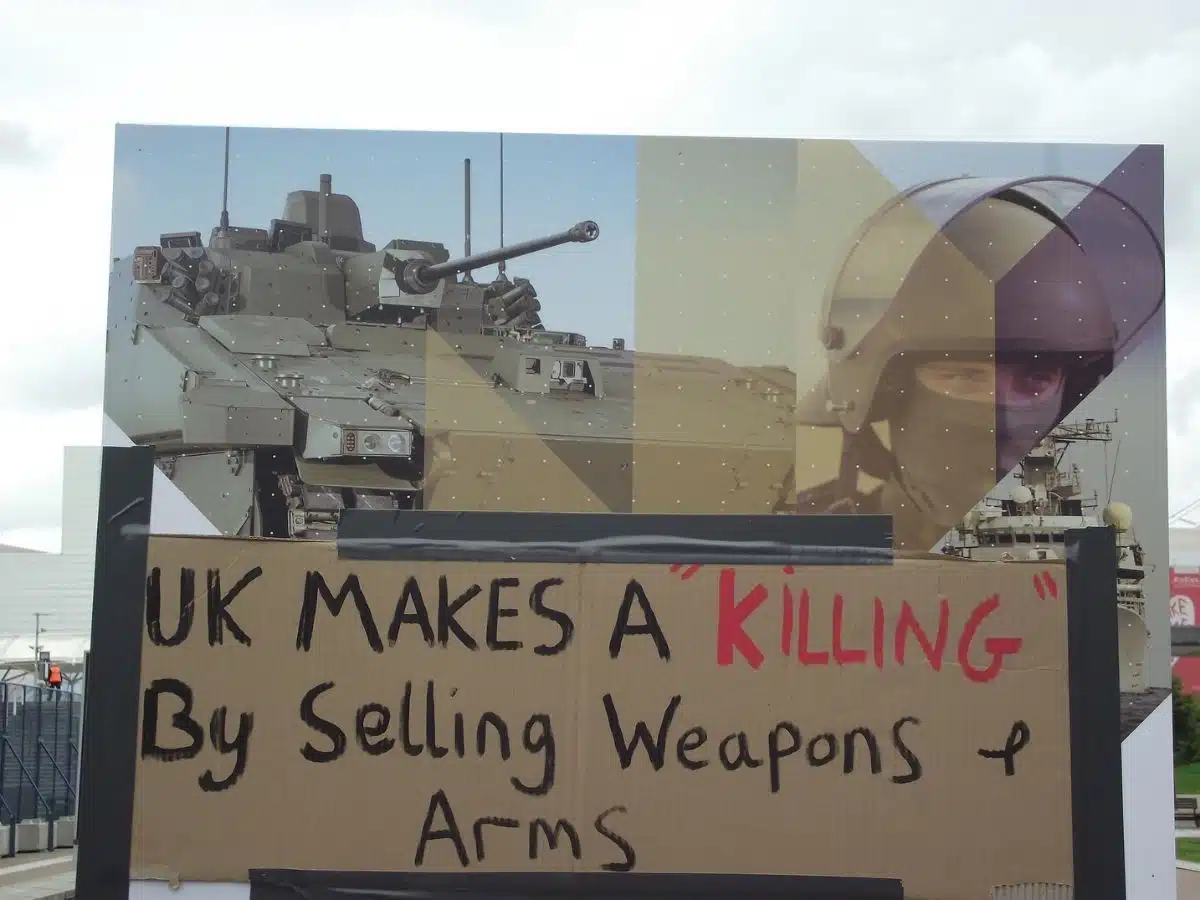
In the latest “defensive” news from the UK’s role in the Anglo-American-Zionist illegal war on Iran, the UK held a meeting between 13 defence companies and Gulf diplomats to discuss providing “defensive” equipment against Iranian attacks. Defence Minister Luke Pollard hosted the session.
The UK is stepping up for our partners in the Gulf.
Defence Minister @LukePollard convened 13 UK defence companies alongside Gulf ambassadors and defence attachés to explore urgent defensive support against Iranian drone and missile attacks.
UK industry is ready to deliver. pic.twitter.com/uDJDClZTp4
— Ministry of Defence 🇬🇧 (@DefenceHQ) March 18, 2026
People were quick to point out the greed of British arms companies.
Imagine seeing the illegal war in Iran as an opportunity to make money https://t.co/XeOsuGHWHO
— Harry Eccles (@Heccles94) March 18, 2026
The 13 defence companies present were ADS, MARSS, MSI, MBDA, Frankenberg, Leonardo UK, Thales, QinetiQ, OSL Ltd, BAE Systems, Ocean Infinity, Cambridge Aerospace, and Uforce, and they met Diplomats from seven Gulf states, including Saudi Arabia, Kuwait, Bahrain, Qatar, the UAE, Iraq and Jordan.
The UK is stepping up to warmonger in the Gulf. https://t.co/Dq0yFc9LNw
— GlumBird (@GlumBird) March 18, 2026
UK military planners have also been dispatched to US Central Command at MacDill Air Force Base in Florida to help plot a route to unblock the key shipping lane, according to The Times — more “defensive” acts by the UK.
British military helping US plan Strait of Hormuz reopening after Trump bemoaned Starmer’s response to fuel crisis https://t.co/HuEJBO5cbP
— LBC (@LBC) March 19, 2026
Labour MP Al Carns is beating the war drums particularly loudly. Earlier this week in Parliament, the Armed Forces minister said the government was not ruling out anything when asked if the UK saw “de-escalation is key.”
Defence Minister Al Carns has said the government ‘is not going to rule anything out’
Read more: https://t.co/t50o6L6V9b pic.twitter.com/rnShip7A9i
— The i Paper (@theipaper) March 16, 2026
He told Parliament:
We will continue to work in a comprehensive and calm manner with our allies and partners to ensure that we can come up with a solution to the strait of Hormuz, and we will not rule anything out, because we cannot guarantee where this war is going to go.
Carns also claimed in parliament that Iran’s support to Hamas, Hezbollah, and the Houthis “has been killing British forces for 20 years”. Declassified was quick to reprimand the statement on the lack of evidence.
Defence minister Al Carns claims in parliament that Iran’s support to Hamas, Hezbollah and the Houthis “has been killing British forces for 20 years”.
Where is the evidence for this?#DCUKparliament pic.twitter.com/IWwgpzomEQ
— Declassified UK (@declassifiedUK) March 17, 2026
On Thursday, he told the Sun that any mission to reopen the Strait of Hormuz would require a massive multinational coalition, warning that operating without allies would be far worse. He said: “We’re not anywhere near that at the moment, but I would say one thing: that there’s one thing worse than working with allies, and that’s working without them.”
He said:
In 1987 when this last happened, it took 30 warships to escort in the Strait of Hormuz. That gives you just an example of the resources required.
UK PM and other cabinet ministers have repeatedly used flimsy grounds of just being involved in “defensive actions against Iran.
Allowing the US to use British bases and commit war crimes in not “defensive actions”. pic.twitter.com/Y2Zfq2JMFj
— Canary (@TheCanaryUK) March 18, 2026
This use of UK bases for American bombers has been heavily criticised. Journalist and former UK diplomat Craig Murray said:
No other European state is prepared to let US bombing runs on Iran overfly their airspace. Starmer lets them actually load their bombs and take off from UK airfields. He calls it “defensive” bombing.
No other European state is prepared to let US bombing runs on Iran overfly their airspace.
Starmer lets them actually load their bombs and take off from UK airfields.
He calls it “defensive” bombing. https://t.co/LmSZwSy340
— Craig Murray (@CraigMurrayOrg) March 19, 2026
Electronic Intifada journalist Ali Abunimah argued that assisting an aggressor by protecting them from those attempting to halt their attack does not constitute a defensive act, but rather makes one an active accomplice in the original crime. He was responding to the Foreign Office’s statement that the UK is continuing defensive military support for partners against Iranian strikes, alongside diplomatic activity in the UK national interest.
Helping a mass killer carry out aggression by shielding them from those who are trying to stop the attack is not “defensive.” It’s being an active accomplice in the original crime. https://t.co/sgvVErGFnm
— Ali Abunimah (@AliAbunimah) March 18, 2026
UK bases, ships and aircraft are already central to the US-Israeli war effort. Starmer has tried vainly to frame British involvement as purely ‘defensive.’
Featured image via Campaign Against Arms Trade
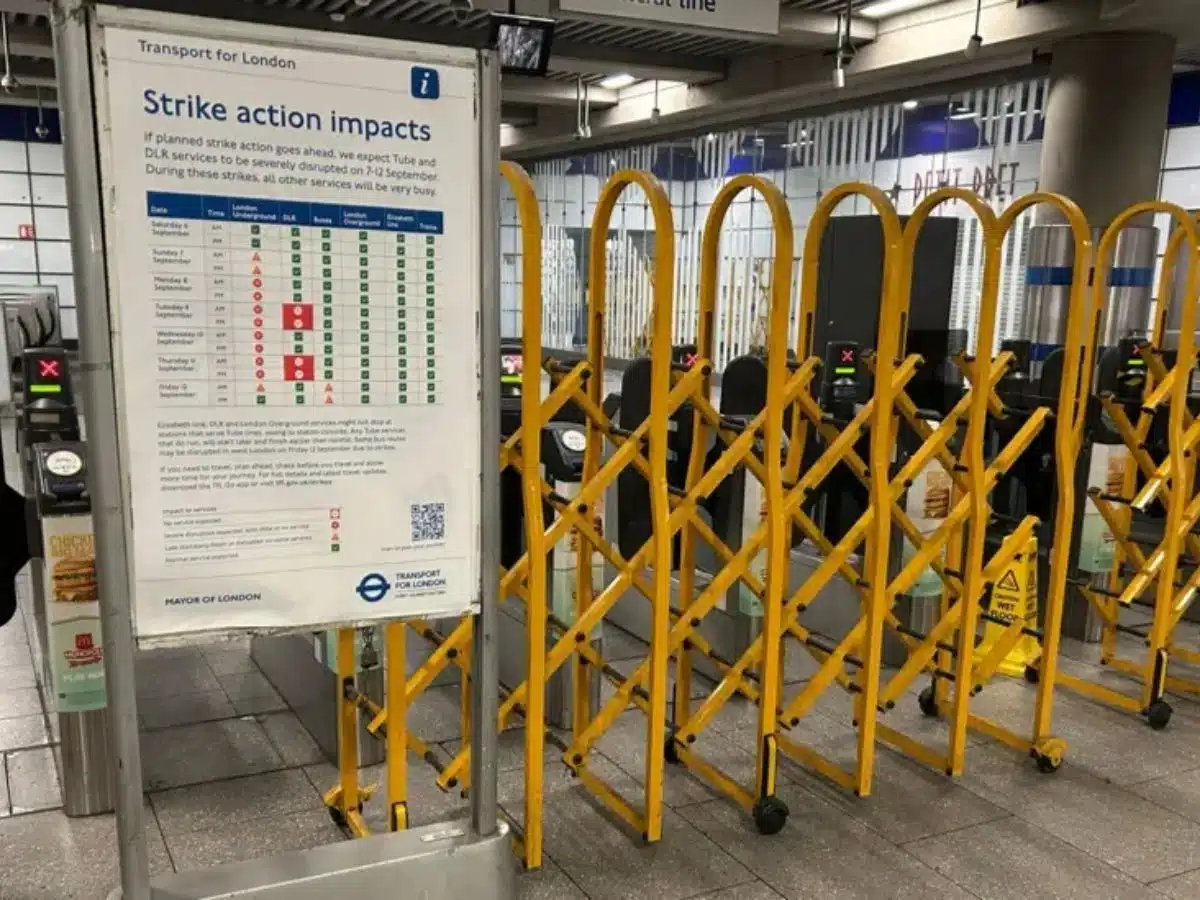
The National Union of Rail, Maritime and Transport Workers (RMT) has called off its planned strikes on the London Underground this month.
The news comes following indications from tube bosses that they’ll negotiate on what RMT is calling the “imposition” of a “fake four-day week”.
However, whilst the March strike dates are off, RMT has stated that its industrial action in April and May will still go ahead. Beyond this, the union has also added two new strike dates on 16 and 18 June.
The planned strikes would have taken place from noon on 24 March til 11:59 on 25 March, and the same times on 26-27 March.
The dispute centers on Underground bosses’ proposals for a condensed-hours working week.
Under the proposal, the majority of drivers would work their 36 hours over four days rather than five. However, in the 4-day plan, the workers would receive paid meal breaks.
To put that another way, the workers would see their hours spent driving each day jump from just over 7 to just under 9.
The proposal is currently being tested on a voluntary basis on the Bakerloo line.
When RMT first called the strikes earlier this month, general secretary Eddie Dempsey explained that:
We are clear that these proposals raise serious concerns around fatigue, safety and work-life balance.
Despite our best efforts over many months, no satisfactory outcome has been reached so we have no choice but to call strike dates.
There is still time for London Underground to come up with a workable solution but we will take strike action if we cannot get a negotiated settlement.
Instead, the union is advocating for a 32-hour week over four days. This would see drivers working 3 hours less each week.
However, London Underground has now relented in its position. RMT announced that:
After a year of telling us their imposed plan is non-negotiable they have now agreed to negotiate with RMT.
The dispute over the imposition of a condensed hours four-day week on tube drivers is far from over but LU management have taken steps in the right direction and are now taking the matter seriously.
That being said, unless London Underground can reach a settlement with the union, more strikes are on the way.
RMT has previously announced action for four more 24-hour periods. These will take place on 21 and 23 April, and likewise on 19 and 21 May. Yesterday, 18 March, RMT also announced similar strikes on 16 and 18 June.
Dempsey said:
Through our show of industrial strength and unity, we have forced management into a position where they are now willing to seriously engage with the issues our members want addressing.
Further talks will take place and the dispute remains live.
The union has stated that it will be meeting for further talks over the coming weeks. However, it remains to be seen whether
Underground bosses will listen to the drivers’ safety concerns ‚ both for themselves, and for passengers.
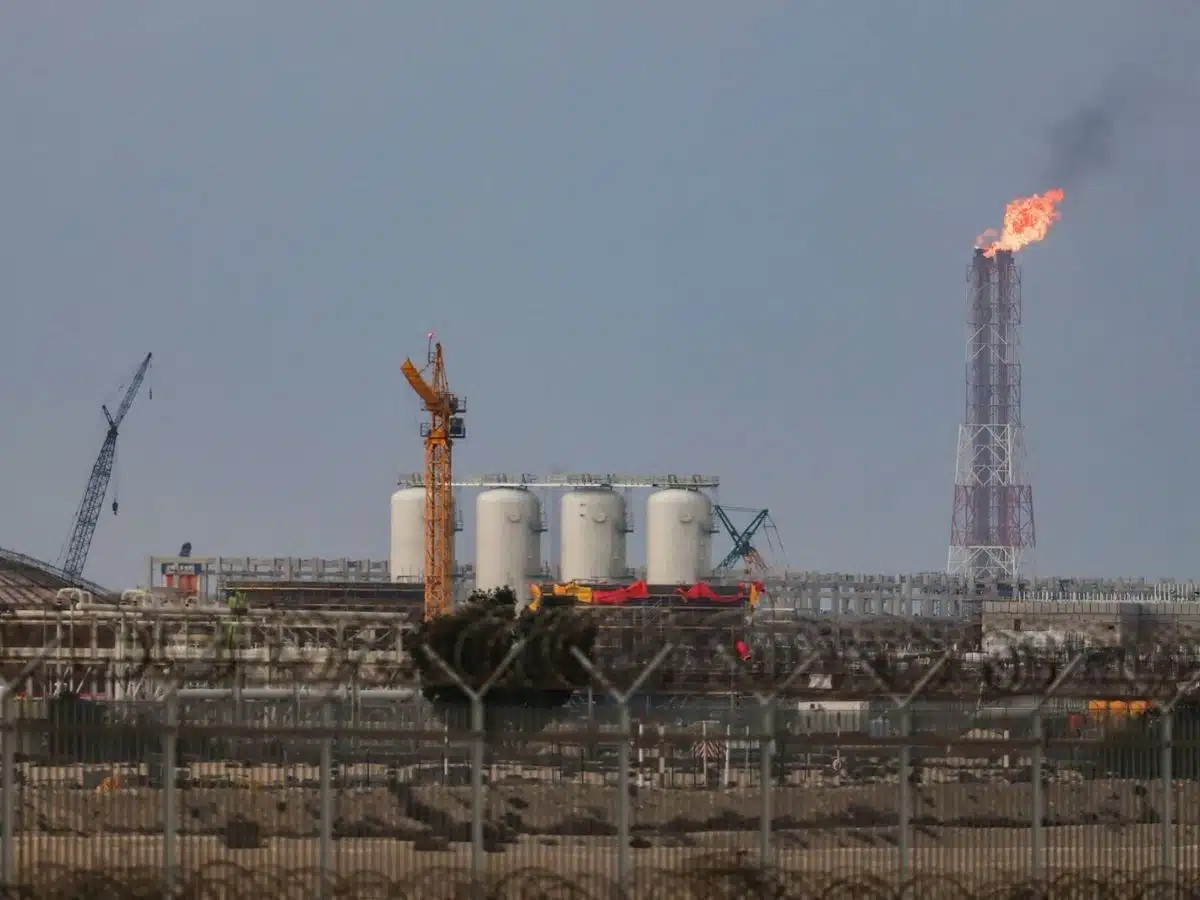
Iranian retaliatory attacks on its Ras Laffan energy complex in Qatar on Wednesday and the early hours of Thursday have spiked gas prices globally. It has also caused Trump to put out an unhinged statement.
Statement from President Trump on South Pars Gas Field: pic.twitter.com/YrjhDdGTxP
— The White House (@WhiteHouse) March 19, 2026
Iran also struck Saudi energy facilities in retaliation for Israel’s bombing of Iran’s South Pars gas field.
Iran said it is planning to attack the energy infrastructure of the US and Israeli allies in the Gulf until its “complete destruction” if its own energy facilities are targeted further.
Trump claims the US “knew nothing about this particular attack” — the attack on Iran’s South Pars Gas Field on Wednesday — blaming it squarely on Israel.
The South Pars field is located in the Persian Gulf, between Iran and Qatar, and the field is shared between the two countries.
Trump then stated that there will be “NO MORE ATTACKS” by Israel on the South Pars Field unless Iran “unwisely decides” to attack Qatar again. If Qatar’s LNG facilities are attacked again, Trump says the US, “with or without the help or consent of Israel, will massively blow up the entirety of the South Pars Gas Field” with a level of force Iran has “never seen or witnessed before.”
Trump’s threat is characteristic of his hyperbolic and escalatory language. We shouldn’t forget that Trump FULLY destroyed the Iranian navy several times so far.
His core claim that the US “knew nothing about” the initial attack on Iran’s South Pars Field is probably another lie from the habitual liar. But who knows!
Despite the use of hyperbolic and escalatory language, some think this is a de-escalatory effort by Trump. “Trump calls for de-escalation as the Strait of Hormuz remains effectively shut and oil rises beyond $116 a barrel,” Bloomberg said.
Trump calls for de-escalation as the Strait of Hormuz remains effectively shut and oil rises beyond $116 a barrel.
Get the latest news and analysis in our live blog: https://t.co/hVN6mGh31g
— Bloomberg (@business) March 19, 2026
Al Mayadeen reported that Trump and ‘Netanyahu’ hoped the attack on Iran’s gas fields would deter Iranian action in the Strait of Hormuz, but the plan backfired, prompting Trump to disavow it.
Netanyahu and Trump hoped that the attack on #Iran‘s gas fields would deter action in the Strait of #Hormuz. Evidently, the plan backfired, prompting the #US president to disavow the attack. https://t.co/Cjxi9V6qUA
— Al Mayadeen English (@MayadeenEnglish) March 19, 2026
Writer Philip Pilkington commented that Donald Trump has been drawn into a “suicidal energy war,” arguing that the president’s statement demonstrates the administration has “ZERO control over the situation.”
Trump has been sucked into a suicidal energy war. If you wanted evidence the administration has ZERO control over the situation, here it is. 🇺🇸🇮🇷 pic.twitter.com/NLcwjoX3kA
— Philip Pilkington (@philippilk) March 19, 2026
Since it is hard to take what Trump says about the war seriously, the real-world consequences are the best judges. Anglo-American-Zionist illegal war on Iran has escalated this week.
Israel claimed to have killed intelligence minister Ismail Khatib in Tehran Tuesday night, plus security chief Ali Larijani and Basij paramilitary leader Gholamreza Soleimani.
After more than three weeks of war in Iran, thousands of people have been killed, millions more displaced, and billions of dollars have been spent. Arms dealers are lining their pockets.
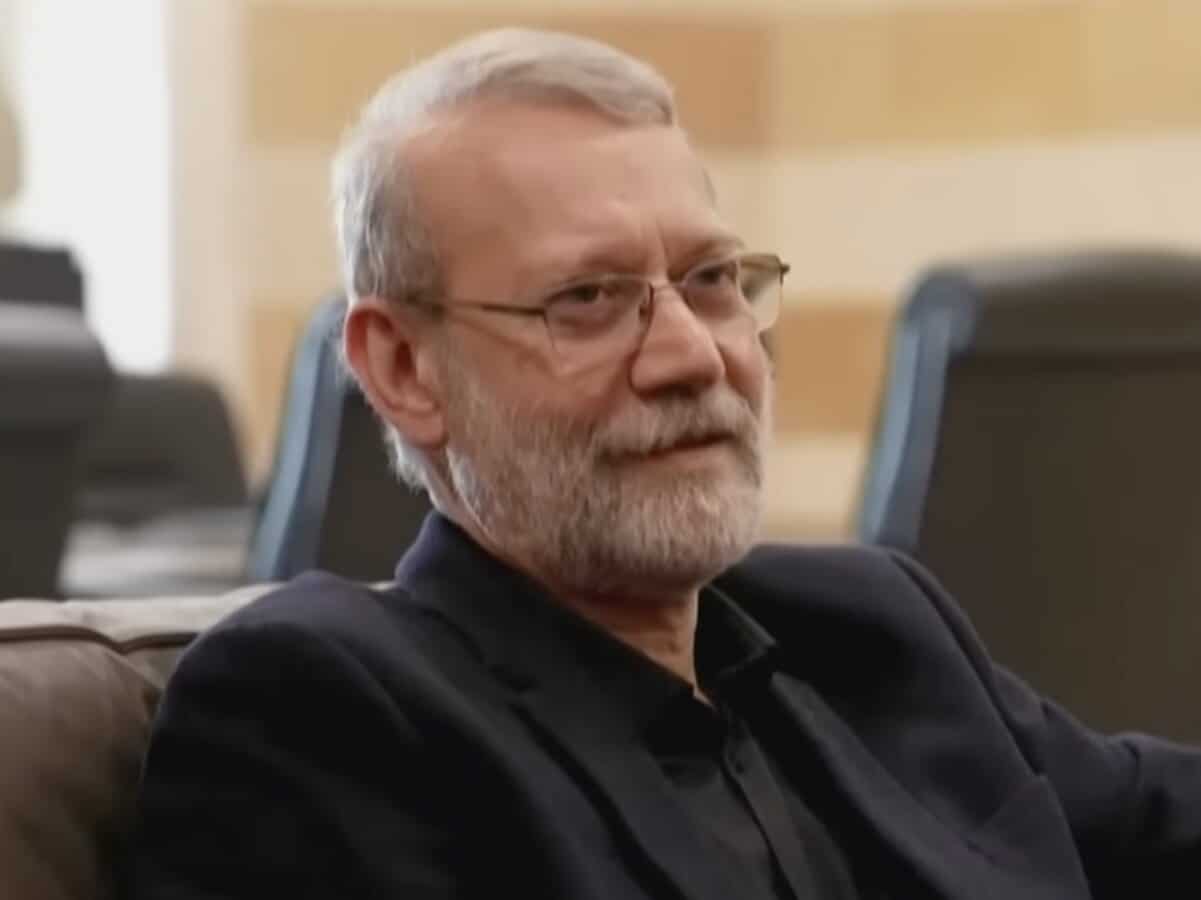
Israel has murdered Ali Larijani, Iran’s chief of security, who was a PhD holder who wrote philosophical papers on Immanuel Kant — a man famous for his ideas on unconditional moral obligation.
Ali Larijani was martyred along with his son, one of his deputies, and a number of bodyguards after being targeted by American and Israeli warplanes at his daughter’s home in the Pardis area, Tehran. pic.twitter.com/VdtaafxA80
— Arya Yadeghaar (@AryJeay) March 17, 2026
According to Azer News:
Larijani combined an aristocratic religious background with a rigorous secular education. He earned degrees in mathematics and computer science at Sharif University of Technology, Iran’s premier technical school, before turning to philosophy. His doctoral work, unusual among Iranian power‑brokers, focused on Immanuel Kant, and he later published extensively on Kant’s philosophy, exploring the relationship between mathematical proof, metaphysics and rational inquiry.
Larijani was also regarded as one of the Iranian officials most likely to compromise on a peace deal.
Ali Larijani: Fast facts
Negotiated nuclear deals with West
Belonged to dynasty that Time magazine described as “Kennedys of Iran”
Joined IRGC before transitioning to government
Was often regarded as pragmatic and someone inside Iranian system who may be willing to compromise
— Clauda Tanios (@ClaudaTanios) March 17, 2026
Azer News noted that Larijani’s death would mark the end of “Tehran’s strategic calculus”. He was pragmatic and pro-diplomacy. It added that he was a “measured intellectual”, and was:
a bridge between Iran’s revolutionary ethos and its efforts to navigate a hostile international landscape, a thinker at ease both with complex philosophy and the raw realities of geopolitics.
Which means that once again, Israel has purposefully blown up one of the few people it could negotiate with.
Even one Israeli journalist, Ehud Ya’ari, said publicly that Israel’s murder of Larijani was the wrong move.
Of course, Ya’ari doesn’t realise that Israel doesn’t really want negotiations. It wants blood and a Greater Israel.
Importantly, murdering state and political leaders is illegal under international law.
Of course, we have already established (repeatedly) that Israel has no regard for International law, from bombing schools and hospitals to murdering healthcare workers and illegally invading Lebanon.
Araghchi on Larijani’s death: “I don’t know why America and Israel still haven’t understood that Iran will not be impacted by such killings of individuals.”
They literally do not know how to handle a nation who’s first language isn’t blowing people uppic.twitter.com/FWHqjWml9r
— Pistachio 🇮🇷 🇵🇸 (@HarleyShah) March 18, 2026
But unlike Israeli’s, who politicians hide in bomb shelters and flee the country when things get hard, Iranians are not scared of a few bombs.
For people asking why isn’t the senior leadership in bunkers hiding…
You have to understand the Iranian ideology.
No one is more important than anyone else…ie leadership over ordinary civilians. Everyone is equal and the war is for all of the country…equally.
In the…
— Pathfindr 🕊️ (@pathfinder_tua) March 17, 2026
Israel has a long history of assassinating its political opponents. As Marwan Bishara, Al Jazeera’s senior political analyst, said:
In wars, you don’t start by killing political leaders, including elected leaders. That programme of assassination is gangster, it’s terrorism, it’s not the norm of war.
Furthermore, the United States and Israel have not yet realised that the Iranian government does not rely on a single individual. Meaning, one death, or even several, will not destabilise its political system.
Larijani’s death is a loss for everyone, not just Iranians.
But Shia religious doctrine relies heavily on martyrdom and sacrifice. So, to Larijani, Israel murdering him would have gained him the highest honour.
Feature image via Al Jazeera English/ YouTube
GB News recently gave Thomas Corbett-Dillon a platform to cynically claim that a genocide is being waged against white people in the UK. Subsequently, the Guardian reported that complaints have been made to Ofcom suggesting his comments even managed to cause offence among their right-wing viewers.
The offensive comments were made on GB News’ US-based Late Show Live last week, during a discussion on anti-extremism strategies in the UK.
Corbett-Dillon apparently advised Boris Johnson and worked on Penny Mordaunt’s failed leadership campaign, so this gross man is no stranger to far-right hateful views.
Showing a traditional lack of humility amongst racist, extremist pricks, Corbett-Dillon stated:
I hate this idea that England is just a no man’s land. No, there is an indigenous population that have lived on that island for thousands of years.
If this was happening in any other place around the world, everyone would be defending and saying: ‘Wow, there’s a genocide happening in this island because it is being taken over by different people that are not indigenous to that land.’
The abominable Thomas Corbett-Dillon appeared on GB News, insisting the channel isn’t extremist but “really impartial” — no one disagreed.@skwawkbox reports.https://t.co/kdxhmml6Oz
— Canary (@TheCanaryUK) March 10, 2026
Thomas Corbett-Dillon joined fellow white privileged wankers as they condescendingly judged UK policy to tackle extremism in the Muslim community. Basically, a bunch of far-right extremists came together on the far-right TV news show, coincidentally the broadcast arm of Reform UK, to stoke fears of the extremism of Brown people.
Standard arrogant Western behaviour with precious little self-awareness, obviously.
Our own Skwawkbox wrote at the time:
Former Boris Johnson adviser Thomas Corbett-Dillon has appeared on far-right broadcaster GB News insisting that the channel is nowhere near extremist but insteaad lovely, cuddly, and “really, really impartial.”
Barely a breath later, he was confidently telling his white, male GB News panellists that the UK is suffering a genocide from all the migrants coming in, especially the Muslims. Not a single one of them disagreed.
Corbett-Dillon apparently did a ‘Tommy Robinson’ and changed his original name Craig Dillon to something posher-sounding. He even went so far as to suggest, with horror, that if white people moved to the Pacific and became the majority there would be resistance in the UN.
Perhaps he’s never heard of Australia or New Zealand.
This sickening display of white supremacy on GB News has resulted in 24 complaints made to Ofcom, however the Guardian inform they are yet to decide whether an investigation is necessary. This is hardly surprising when the “regulator” itself allows biased coverage if it comes from Farage and co.
A blatant bias we wrote about earlier today:
GB News lives by its own rules and Ofcom is perfectly willing to throw the rule book out of the window for this billionaire-interested political party. It would even seem that the supposed regulator believes the hateful views espoused by the channel to be ‘accurate.’
This calls the regulator’s impartiality into question, since biased rule-makers cannot provide un-biased remedies. A functioning democracy does not silence political views. It should make space for diverse perspectives to shape better decisions.
Corbett-Dillon isn’t remotely bothered about the offence he’s caused, of course. Nevertheless, 24 complaints from an audience of far-right viewers in response to a racist comment is quite an achievement:
The Guardian are OUTRAGED that TWENTY FOUR people complained about my interview… 😂
The argument is NOT racist, if you believe that other countries have the right to maintain an indigenous majority, then England has that right too. 🏴 pic.twitter.com/rgK4k28Is4
— Thomas Corbett-Dillon (@TCorbettDillon) March 18, 2026
A reminder of very real genocides committed by White colonialists and how those horrific actions shape Western perceptions today:
Say this:
Australia is a colonial settler country.
That means white people came here and committed genocide to steal the land.
America is another colonial settler country.
Australia is loyal to America because they both committed the same crimes against humanity.— @Damodar (@GeneralJudah) March 19, 2026
He’s just a racist idiot inciting hate. As the video below shows, he even seems to forget that the majority of benefit claimants are White British people. In fact, they appear slightly overrepresented among benefit claimants, making up 76.2% compared to 74.4% of the population.
Furthermore, white people do not face the same structural and societal barriers as Black and Brown communities, particularly in access to opportunity and gainful employment. Socio-economic conditions disproportionately affect minoritised groups, therefore we would expect Black and Brown communities to make up a larger share of claimants. Nevertheless, it is White people disproportionately claiming more ‘freebies’ from the state.
As a result, his claim that white “indigenous” people are “taxed brutally” to fund welfare for minoritised groups does not stand up to the faintest scrutiny.
Racist White men simply just need to feel superior with their fragile egos and lack of self-awareness.
GB News is just amplifying race-baiting, as usual:
Thomas Corbett-Dillon warns that England’s White population is subject to “genocide”, with only 10% of the world being White. Dillon warns that White people will have nowhere left to go.
Dillon uses the example of South Africa, where, after the White population became the… pic.twitter.com/V9OQEeSXiR
— AF Post (@AFpost) March 11, 2026
Featured image via the Canary
The UK’s electoral watchdog is currently flying blind. A powerful investigation from Byline Times has this week exposed how Nigel Farage’s party, Reform UK, is once again shitting on democracy. By exploiting a very obvious and gaping loophole in the political finance system and accepting cryptocurrency donations, Farage is now able to hide who and where he is getting his dirty money from. And the Electoral Commission has finally admit that this is a huge fucking problem.
This danger isn’t theoretical. It’s an immediate and deliberate risk to our entire democracy.
Reform UK is the only major political party in the UK actively soliciting funds through cryptocurrencies like Bitcoin and Tether. And they have downright refused to share its “digital wallet addresses” with the Electoral Commission.
Think of a wallet address like a transparent bank account number. Whilst a traditional bank account is hidden behind corporate walls, a crypto wallet address is public and has an ID. Anyone with the address can look at the “blockchain” which has a permanent, digital ledger and can see exactly how much money is moving in and out in real time.
Reform UK is accepting cryptocurrency donations. Farage has admitted receiving some. Nothing has been declared to the Electoral Commission.
This week Nigel Farage personally invested £215,000 in a Bitcoin company alongside https://t.co/K3JSqvVFAT, the same firm that gave $5… pic.twitter.com/N0HgVZiBD6
— Jack Dart (@JackWDart) March 11, 2026
By withholding these addresses, Reform is effectively shielding it’s donations from scrutiny. The Electoral Commission is left unable to independently monitor the flow of funds or verify the source of the party’s wealth. Instead, the regulator can only rely on what the party chooses to declare in regards to its finances.
This is a disastrous blind spot. Whilst traditional donations create a paper trail which can be scrutinised, unregulated crypto allows for total anonymity. To date, not a single party has declared a crypto donation to the Commission. So why the fuck have Reform been publicly touting its “crypto-hub” status for months without scrutiny?
Reform UK feeds its crypto donations through a Polish registered company called Radom Pay. By doing this, the party has placed a legal shield between themselves and the UK’s Financial Conduct Authority (FCA). Whilst the UK regulator can demand records from domestic firms, their reach ends at the border.
The Polish crypto register is effectively a financial wild west. Anyone can get a license there in just 14 days. This register previously housed the Cambodian Huione syndicate which was sanctioned for laundering $4bn in illicit funds.
And shockingly, the same register has been used to launder money from cyber attacks by North Korean state-sponsored hackers to finance Pyongyang’s weapons programme. In 2025 alone these hackers stole a ridiculous $2bn in crypto, which accounted for 60% of all funds stolen globally.
And by using this same system, Reform are spitting on our entire democratic structure. They are inviting the same blackhole money into the heart of our politics and it can come from anywhere.
The mechanics of this financial blind spot are tailored for anonymity. Under UK law any political donation under £500 doesn’t have to be reported. This creates a massive opening for “smurfing”. This means a single bad faith actor can use an AI automated script to split a massive donation into thousands of £499 micro-donations. And these can be sent from burner wallets, making it fucking impossible for the Electoral Commission to see the coordinated source of the funds. Meaning, they can come from anyone, anywhere.
The scale of this is already buck wild. Reform’s largest donor, Christopher Harborne is a major investor in Tether. He’s donated £12m to the party since 2025. In the final three months of 2025 Reform out-raised both the Labour and Conservative parties combined. They raked in a shocking £5.5m in reportable donations.
Thailand-based crypto tycoon Christopher Harborne gave another £3m to Reform in Q4 2025 boosting Farage’s war chest. His £12m total in 2025 makes him the party’s biggest donor — accounting for 24% of all political donations to every UK partyhttps://t.co/NqNKzbaRuC
— Brexitshambles (@brexit_sham) March 5, 2026
So… how much are they raking in from these dodgy anonymous crypto donations?
This is part of a broader attempt to replace our public control with a private, technological power. Whilst Farage uses unregulated crypto to stay off of the financial grid, his billionaire backers are working to put the UK’s public data into their own grid.
And this brings us to Palantir. Peter Thiel, the democracy-sceptic billionaire behind the company, is a key figure in the same “National Conservatism” movement that underpins Reform.
Yet the establishment remains complicit. The “Mandelson Papers” revealed to us that Keir Starmer ignored warnings about Peter Mandelson and his ties to both Russia and Jeffrey Epstein. This same web of lobbyists helped Palantir secure £500m in NHS and Ministry of Defence contracts without a single competitor.
They are creating a system where the public is entirely transparent to the powerful. Yet the powerful remain invisible to the public.
The Electoral Commission is currently bringing a pen-knife to a gun fight. It is taking “specialist external advice” because it lacks the internal expertise to track these digital transactions.
The UK government is under a shit load of pressure to act. The Rycroft Review, which is an independent inquiry into foreign financial interference, is due in March. And this is going to be a fucking doozy. Steve Reed, the Secretary of State of Housing, Communities and Local Government has suggested the findings from this review will inform the Representation of the People Bill.
The Joint Committee on the National Security Strategy has already called for an immediate “binding moratorium” on crypto donations to keep politics safe from “illicit finance”.
Nigel Farage claims to be the champion of UK sovereignty. However, the evidence suggests he is quite happy to surrender that sovereignty to unregulated foreign platforms and the dark money network of rogue states.
To put it simply, Farage is a dodgy wanker who needs to declare his party’s finances.
Featured image via the Guardian

A ‘Subject Access Request’ (SAR) by left-wing MP and former shadow chancellor John McDonnell has given a further glimpse at the extent of the spying and plotting of scandal-riddled Israel lobby-funded ‘Labour Together’ against the Labour left.
An SAR is a statutory mechanism, under UK data law, for individuals to demand an organisation reveal what information it holds on them. McDonnell made an SAR to APCO, the firm contracted by Labour Together to spy on journalists who were investigating Labour Together’s plots against the party’s left.
Labour Together was run by Morgan McSweeney, Starmer’s disgraced former chief of staff — and then by now-resigned Starmer front-bencher Josh Simons. Both are ardent Israel supporters. But the response to McDonnell’s SAR reveals the extent of the group’s apparent plotting to take over the party even more thoroughly. Or, more accurately, it reveals it by not revealing it.
APCO’s legally-obligated reply to McDonnell’s is little more file after file of black redaction, with nothing else showing than — usually single-line — mentions of McDonnell himself. The rest is redacted as supposedly “personally identifiable information”. Like this one, in which only an anodyne line about McDonnell is revealed:

Yet the document is marked “Confidential”, despite supposedly showing nothing that isn’t available in the public record — and heavily redacted to black out what is presumably other, equally public information. Or this one, also marked confidential despite showing nothing but information about seats and majorities that could easily be found in moments online — McDonnell’s entry is on a subsequent page that doesn’t show the headers:

A few hint at potential plans to oust or undermine, or to coordinate communication campaigns, like this “Communication plan”, made while McDonnell was still shadow chancellor under Jeremy Corbyn, in which line after line is, you’ve guessed it, blacked out:

When the information redacted is publicly available and not sensitive, then the question becomes one of the purpose of the document — why was Labour Together paying a company to put together lists that could easily be compiled from Google, or the parliamentary website? And why doesn’t APCO — and presumably Labour Together — want to hide even the names of the people it was listing.
Was it a targeting aid for the Labour Right’s coordinated and underhanded deselection programme to winnow out MPs it wanted replaced by Starmer clones? Was it a list of MPs to be targeted for the hostile briefings Labour Together is now known to have conducted until Corbyn was removed? Something else?
Whatever it was, Labour Together thought it was worth spending money on. And, based on its disgraceful track record, that can’t mean anything good for the country or the working class.
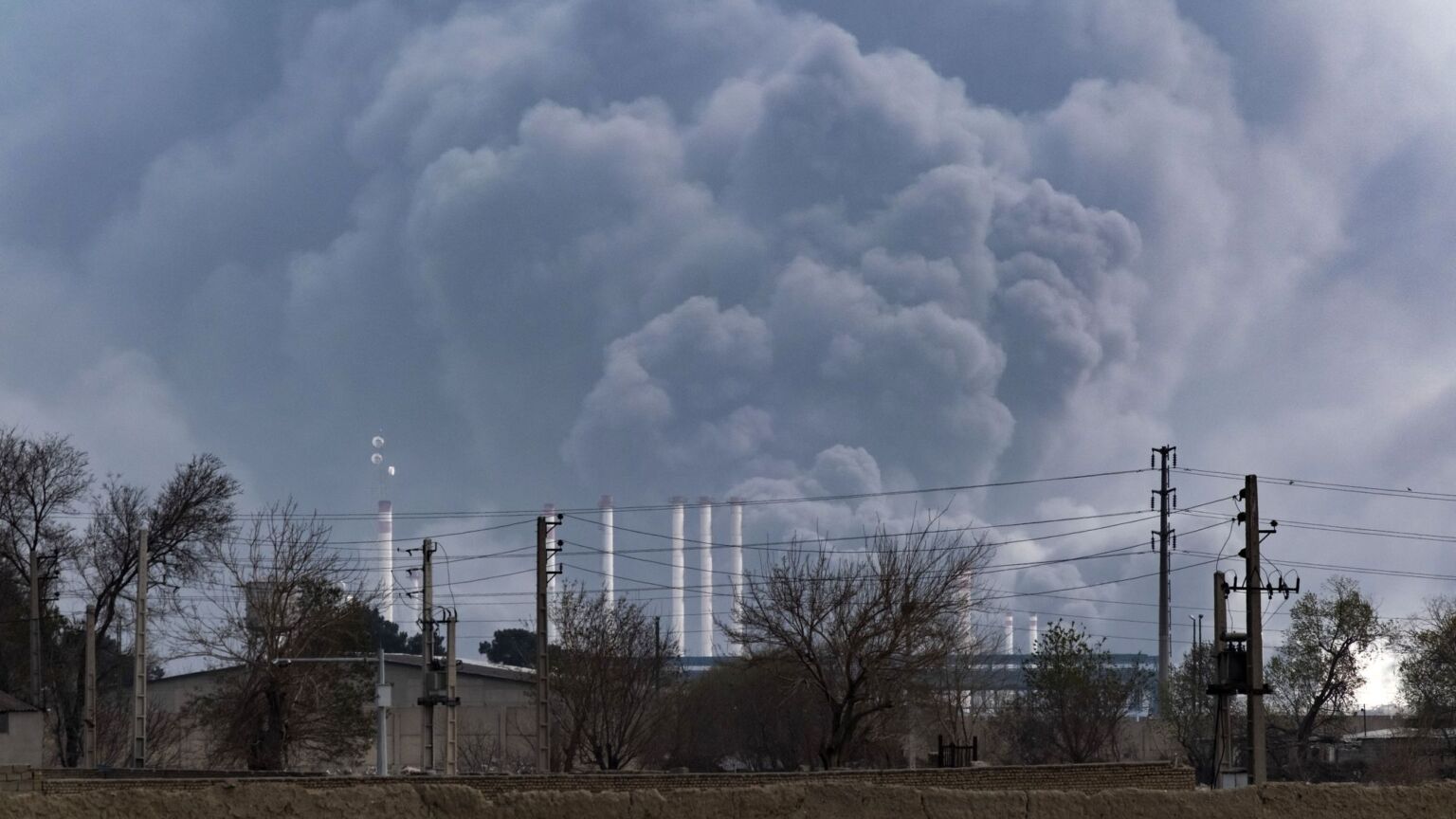
All manner of insults have been hurled at oil and gas in recent decades. Supposedly, it is ‘dirty’, ‘unsustainable’ and, we have been increasingly told, ‘irrelevant’. The war in Iran shows that there was a word missing in the environmentalists’ lexicon: ‘essential’. Last night’s strikes on the South Pars gas field in Iran and Qatar’s Ras Laffan liquified natural gas plant have sent prices soaring. This has compounded a crisis that was already underway, thanks to the closure of the Strait of Hormuz, through which a fifth of the world’s oil flows. While environmentalists like to claim that this shows the folly of our reliance on oil and gas, really it ought to remind us how important fossil fuels are in keeping civilisation afloat.
Oil and gas aren’t just essential to our energy needs. They are also a critical ingredient in everyday medication, much of which is life-saving. Our Net Zero-loving MPs might have forgotten this, but fortunately, doctors and pharmacists have not. This week, the Independent Pharmacies Association reminded UK health secretary Wes Streeting, that ‘many common drugs’ – including paracetamol, aspirin and antibiotics – ‘rely on petroleum-based ingredients as well as other raw materials sourced from the Middle East and beyond’. Dr Layla Hanbeck, the organisation’s chief executive, called for urgent stockpiling, and said that supply-chain disruptions from the Iran war would impact ‘essential treatments that millions rely on daily’.
Hanbeck is right. Today’s medicines rely on the carbon-based chemistry that defines fossil fuels. Benzene and toluene form precursors for painkillers, anaesthetics and antibiotics. Methanol, ethanol and acetone are vital to drug purification and formulation. Polymers derived from petrochemicals are used in drug-delivery technologies. And so on.
What about medical equipment? Petrochemicals are the feedstock for polypropylene, polyethylene and polyvinyl chloride. As cheap, light, strong and easily sterilised plastics, these are widely used in medical devices and accessories – including disposable syringes and needles, catheters, intravenous tubing, blood bags, membranes for dialysis and implants. On top of this, carbon fibre is used to build imaging equipment such as MRI machines, CT scanners and X-ray machines. It is in surgical instruments, wheelchairs and prosthetics. Also dependent on carbon fibre are blister packs, bottles for pills, sterile packaging film and tamper-proof seals that protect drugs from contamination and degradation.
Much of this is old hat. Yet we are continually making new discoveries about how vital fossil fuels are to medicine. Just this week, it was reported that recycling that plastic – another hated by-product of fossil fuels – could break down waste bottles into Levodopa, the main drug used to help the 160,000 Brits who suffer from Parkinson’s disease.
All these boons for health come from dirty – nay, evil! – fossil fuels. So evil, in fact, that energy secretary Ed Miliband believes the UK should make it nigh-on impossible for oil and gas to be extracted from the North Sea. Miliband might believe that he is on a heaven-sent mission to decarbonise Britain, but it is a quest that could soon create a hell for everyone who relies on medication to stay healthy, or indeed alive.
It isn’t just medicine and fuel that rely on fossil fuels, either. In agriculture, petrochemicals are key to fertilisers, pesticides and overall mechanisation. Fertilisers for crops, such as wheat, rice, and maize, are made with natural gas and coal. Also derived from fossil fuels are herbicides, insecticides and fungicides. And tractors, pumps and pipes for irrigation, crop storage systems and food packaging all rely on fossil fuels – either to make them or to power them, or both.
The ongoing war waged on fossil fuels by the UK’s political establishment doesn’t only defy logic. It defies humanity, too. If ever there was a time to rethink our blind rush to a Net Zero future, this is it. In the meantime, let’s hear it for carbon. It’s about time the stigma was removed from fossil fuels. Without them, we’d mostly be dead.
James Woudhuysen is visiting professor of forecasting and innovation at London South Bank University. Follow him on X: @jameswoudhuysen.
!function(n){if(!window.cnx){window.cnx={},window.cnx.cmd=[];var t=n.createElement(‘iframe’);t.display=’none’,t.onload=function(){var n=t.contentWindow.document,c=n.createElement(‘script’);c.src=”//cd.connatix.com/connatix.player.js”,c.setAttribute(‘async’,’1′),c.setAttribute(‘type’,’text/javascript’),n.body.appendChild(c)},n.head.appendChild(t)}}(document);(new Image()).src=”https://capi.connatix.com/tr/si?token=19654b65-409c-4b38-90db-80cbdea02cf4″;cnx.cmd.push(function(){cnx({“playerId”:”19654b65-409c-4b38-90db-80cbdea02cf4″,”mediaId”:”c635653c-24a7-448a-bda5-ea21c4f1cd48″}).render(“69bc3d56e4b0bb6debb819d4”);});
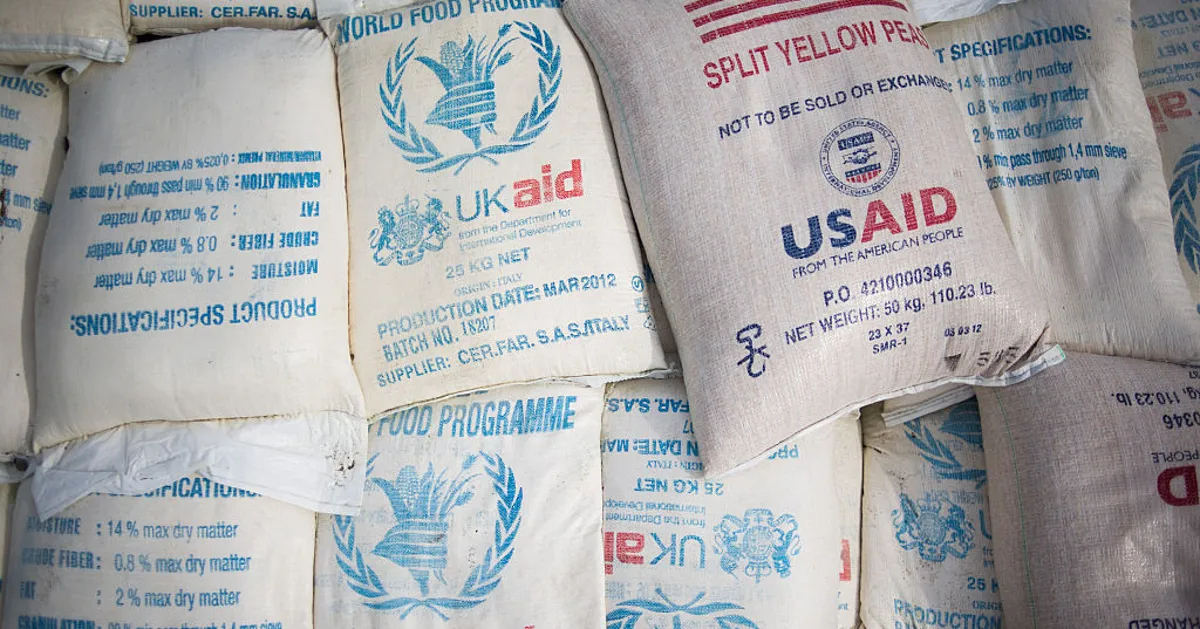
The foreign secretary’s statement on UK Official Development Assistance (ODA) allocations has been a year in the making.
I have been dreading this day since the decision last year by the prime minister and chancellor to cut ODA spending from 0.5 to 0.3% of gross national income.
Yvette Cooper’s words about UK values and “supporting those in conflict and extreme poverty” are welcome, but the reality of her statement reveals significant, real-life impacts.
Girls will leave schools and children will go hungry. We will damage our international reputation, increase migration and hinder progress towards self-sufficiency through economic development.
Sub-Saharan Africa is home to most of the world’s poorest countries, from the Democratic Republic of Congo to Malawi. It has a population of 1.3 billion people – and growing. Its land is degraded by climate change, many countries are ravaged by decades of conflict, and its population feels the impact of a volatile global economy far deeper than wealthy countries such as the UK.
Yet this Labour government has decided to disproportionately cut aid to the part of the world where it makes the biggest difference. And there is no clarity yet in what the cuts will mean for the building blocks of sustainable development, in particular education and skills development.
We know conflict flourishes where the population remains uneducated. And, keeping girls in school is one of the most straightforward ways of supporting a country’s development. All the evidence shows girls who complete secondary education are less at risk of teenage pregnancy, HIV and domestic violence.
Crucially, during their lifetime they will help boost their country’s national productivity and wealth, have fewer children, and raise healthier children who are far more likely to succeed at school.
There is some good news. Britain’s contribution to the Global Fund to fight Aids, TB and malaria has been prioritised, and aid to richer countries will be deprioritised. Spending on violence against women and girls, including the prevention of sexual violence in conflict, seems to have been protected.
But we await clarity on conflict prevention and governance programmes. We are currently witnessing how hard power is in danger of destabilising peace and the global economy. While we need strong defences, investment in soft power is how we will build a better world.
I have had my ups and downs with party policy over the years, but I never thought a Labour government would so dramatically slash UK
support for the world’s poorest people.
It is a mistake to cut vital support to people in sub-Saharan Africa and elsewhere at a time when UK aid is needed more than ever. And it is a matter of deep regret that it is a Labour government that has made this choice.
No one should be proud of cuts that are proportionately larger than Donald Trump’s cuts to US Aid.
A Labour government that – for the first time ever – spends less on the world’s most vulnerable than the Tories will be remembered for the wrong reasons.





HYPE Token Enters Net Deflation as HyperCore Buybacks Outpace Staking Rewards


Your Legally Registered ‘Motorcycle’ Might Not Count Under Proposed US Law


Weekend Open Thread: Addict Lip Glow

Are Split Spacebars the Next Big Gaming Keyboard Trend?


Why Duke and Michigan Are Dead Even Entering Selection Sunday


Search for Savannah Guthrie’s Mother Enters Seventh Week with No Arrests


US Airports Launch Donation Drives for Unpaid TSA Workers as Partial Government Shutdown Enters Fifth Week
Coinbase and Bybit in Investment Talks: Could Bybit Finally Enter the US Crypto Market?


Australian shares drop as Iran war enters third week


Country star Brantley Gilbert enters growing non-alcoholic beer market


Crypto Lender BlockFills Enters Chapter 11 with Up to $500M in Liabilities


College Basketball Best Bets: Conference Tournament Semifinal Picks


The House | The new register to protect children from their abusers shows Parliament at its best


25 Celebrities with Curly Hair That Are Naturally Beautiful


RBA board divided on rate cut, unusually buoyant share market | Finance Report | ABC NEWS


Canada’s FINTRAC revokes registrations of 23 crypto MSBs in AML crackdown


Crypto Losses Drop 87% in February, But Hackers Are Now Targeting People, Not Code

Real-time pollution monitoring calls after boy nearly dies

Residents in North Lanarkshire reminded to register to vote in Scottish Parliament Election


Meta planning major layoffs as AI spending and automation reshape workforce
You must be logged in to post a comment Login