
Politics
Don’t mourn the death of the ‘assisted dying’ bill

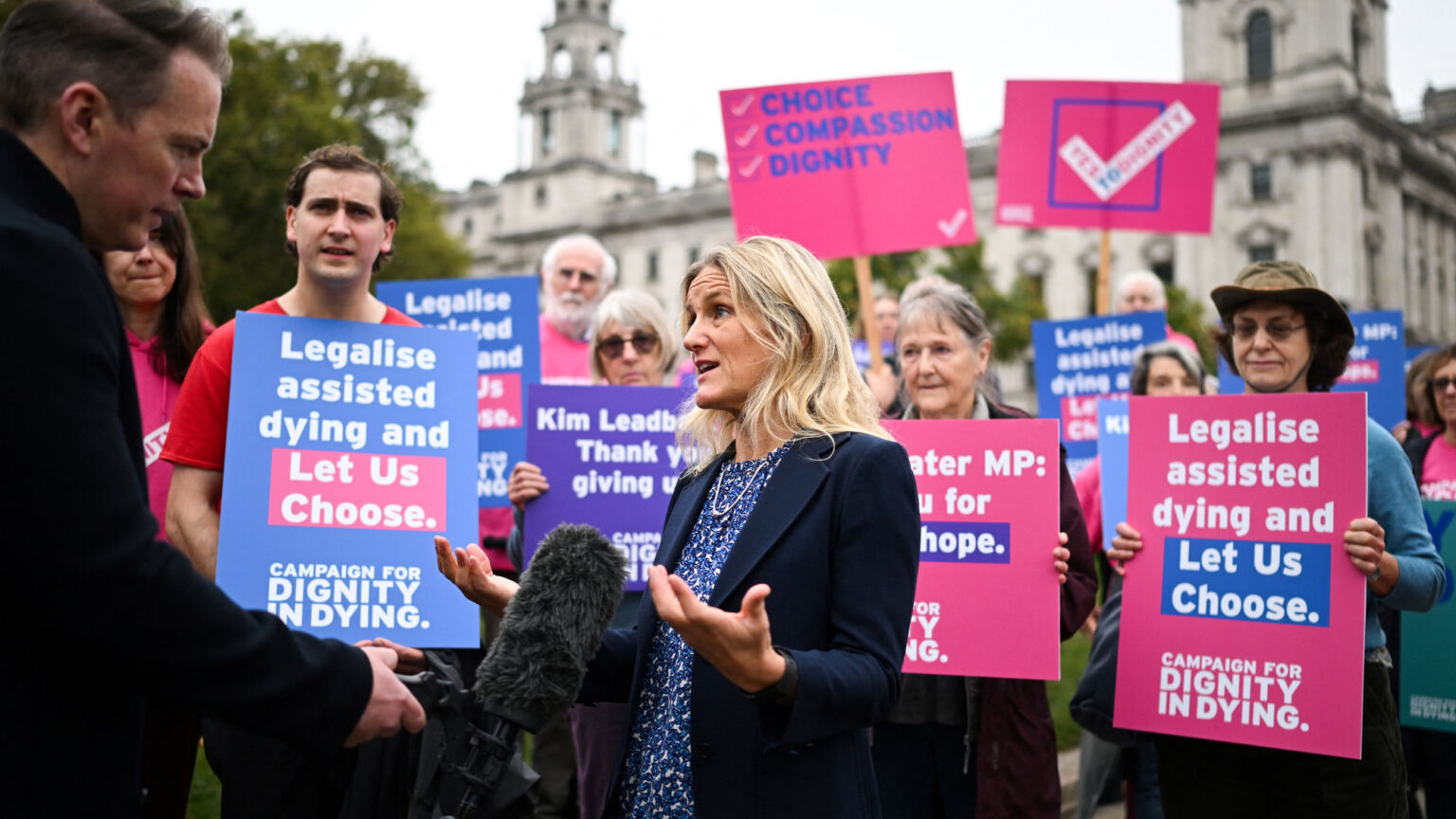
The Terminally Ill Adults (End of Life) Bill is on its last legs. Having been voted through by the House of Commons at second reading in November 2024 with a majority of 55, it was approved at a third reading in June 2025 with a reduced majority of just 23. It is now in the House of Lords, with little hope of progressing any further.
According to Lord Falconer, the bill’s sponsor in the Lords, 1,253 amendments have been tabled by peers. There remain over 850 left to debate. With only five allocated days left before the next parliamentary recess, there is almost no hope of getting through them. Last week, the Labour government refused to allocate more time before the bill’s May deadline, effectively signing its death warrant.
What went wrong? Ultimately, the bill’s advocates made a major strategic error. Their plan was (and always has been) to push through the legislation with as little debate and discussion as possible. They wanted to – dishonestly – represent this monumental legal change as a simple act of compassion, affecting only a handful of people who are in pain, already on death’s door and who merely wish to speed up the process. The issue is, of course, much more complex, and the pro-suicide forces have been hoist by their own petard in their attempts to pretend otherwise.
The first way they attempted to pull the wool over the eyes of the public was in trying to brand assisted suicide as ‘assisted dying’. Whenever it is pointed out that ingesting poison with the intent of ending one’s life cannot honestly be described as anything other than suicide, the bill’s supporters have no answer to this except to say that it is ‘deeply offensive’, ‘stigmatising’ and ‘derogatory’.
Avoiding debate has been the modus operandi of the bill’s proponents from the outset. The Labour Party did not include assisted suicide in its General Election manifesto. Instead, then opposition leader Keir Starmer ‘made a promise’ to the terminally ill television personality, Esther Rantzen, that he would provide ‘time for a debate’. Then, when Labour MP Kim Leadbeater came top of the ballot for private members’ bills in September 2024, there was pressure on her to drop her interest in puppy smuggling, and to use her position instead to push assisted suicide. Private members’ bills are allocated far less time for debate than government bills, which are generally introduced by a minister and prioritised above others. Unlike government bills, they can fall if time runs out.
Even the way Leadbeater introduced the bill did not allow for much scrutiny. As Ruth Fox and Matthew England of the Hansard Society observed: ‘The bill is unusually long for a [private members’ bill], spanning 32 pages of legal text, comprising 43 clauses and six schedules, and with financial and other consequences for the NHS and the court system’. Two impact assessments – of 24 and 150 pages respectively – were released on Friday 2 May 2025 – the same day as a momentous by-election result. The intention was clearly that as few people should read them as possible.
At the outset, pro-assisted suicide organisations like Dignity in Dying argued that MPs, even if they weren’t certain about all elements of the bill, should support it on the basis that scrutiny in the House of Lords would improve it. ‘Meaningful second-chamber oversight still to come’, they assured MPs. ‘With specialist expertise amongst its membership, and additional committees engaging in the process, there’s a robust safeguard phase ahead, ensuring that the final legislation is refined, balanced, and workable.’
Now that these ‘experts and specialists’ are scrutinising the bill in the Lords, assisted-suicide proponents have changed their tune. ‘A handful of hardline opponents in parliament’s unelected chamber’, they complain, are now ‘filibustering’ the bill.
Once again, the language here is deceptive. ‘Filibustering’ is what US senator Strom Thurmond did when, in 1957, he set a record for speaking for 24 hours and 18 minutes to try (unsuccessfully) to stop the passage of the Civil Rights Act. The average speaking time on the assisted-dying bill, in contrast, is less than five minutes. Instead, peers are, as the normally pro-assisted death Times noted this week, trying ‘to clarify the shockingly woolly language’ of the bill.
The arrogance and incompetence of pro-suicide lobby has not healped either. Leadbeater and her supporters in the Commons unconvincingly recycled stock phrases from Dignity in Dying, while failing to address genuine concerns. In the Lords, Falconer and others have brushed away warnings about the bill expressed by medical colleges like the Royal College of Psychiatrists and the Royal College of Physicians, along with the British Geriatrics Society, Liberty and even the Lords Delegated Power Committee. They have preferred to treat any criticism and scrutiny as part of a plot to stop the legislation. As Lord Toby Young noted in the Telegraph, ‘Falconer is more of a demolition expert than a bridge builder’.
In the end, the whole mess must be laid at Keir Starmer’s feet. It is he who at first pushed the bill and, like so many of his other policies, has dropped it as opposition has got louder.
There is no point in keeping this bill, already on artificial life support, alive. It deserves to die. To paraphrase Oscar Wilde on the death of Little Nell, one must have a heart of stone to hear about the death of this bill and not laugh.
Kevin Yuill is emeritus professor of history at the University of Sunderland and CEO of Humanists Against Assisted Suicide.

The hard-right, ultra-Zionist and genocide-denying Telegraph‘s claim of an ‘antisemitic’ Green party WhatsApp group shows the Israel lobby’s desperation to halt the surge of Jewish leader Zack Polanski’s party. And it appears, yet again, that the Israel lobby has no qualms about being antisemitic in its tactics.
Green activists called Jews ‘abominations’ in leaked WhatsApp chat
Blares the rag’s headline. It then claims that — with emphases added by Skwawkbox:
Green Party activists described Jewish people as “an abomination to this planet” in anti-Semitic WhatsApp messages, The Telegraph can reveal.
One member of the Greens for Palestine group, a Left-wing faction in the Green Party, said Jews “murder, bomb and starve” children.
Another claimed the arson attack on four ambulances owned by a Jewish charity in Golders Green, north London, on Monday had been a “false flag” operation, suggesting it could have been carried out by Jewish people.
A Green council candidate shared posts on social media, making the same claim.
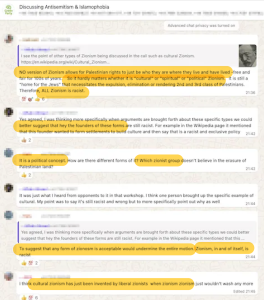
But the paper’s examples show next to none of this — and the “abomination” in the chats is unequivocally Zionism. Most Zionists are not Jewish and many Jews are anti-Zionists, though one ill-advised comment does discuss frustration at being ‘forced’ to use the term ‘Zionism’ in discussions of it. Unsurprisingly, the article quickly falls apart under scrutiny and ends up only being propped up by the manufactured outrage of known Israel-funded pressure groups.
Israel lobby doesn’t purposefully miss the point
First of all, even the Telegraph’s own screenshots make absolutely clear that the topic of the discussion is Zionism — the racist political ideology that privileges Jewish colonisers over indigenous Palestinians:

The article’s central claim then falls apart like a two-pound suit. Nobody in the group says that “Jewish people” are an abomination. The screenshot makes plain, to an honest reading, that the comment is referring to “Jewish supremacists” — in other words, Zionists:

Zionism is racism
Zionism is an ethno-supremacist political philosophy — even to its majority of non-Jewish advocates who make it central to their so-called ‘Christian nationalism’. Israel is a racist, apartheid state perpetrating genocide in Gaza and trying to steal the lands of Lebanese, Syrian and other people based on a presumption that they are religiously and ethnically entitled to it. Its advocates believe they are entitled even to murder children to achieve this goal.
They have already murdered and maimed hundreds of thousands of children in Gaza and want to slaughter the children of their opponents in Iran. Zionism has rightly been described as one of the biggest dangers to humanity — and is shamelessly demonstrating why in the series of atrocities and global crises Israel is creating.
After these two screenshots, the best that hack Sabrina Miller — herself a notorious pro-Israel agitator even as a student — can come up with is highlighting discussions about information security and whether Israel-linked apps can be trusted.
That and some quotes from the so-called ‘Campaign Against Antisemitism’ (CAA) — which is funded by Israel and notorious for its attacks on Muslims to promote pro-Israel narratives. CAA’s charitable status has been under investigation for the blatantly political nature of its activities — but of course, the Telegraph leaves that out. Its chief executive Gideon Falter was exposed making up claims of being prevented from ‘crossing a road’ because of a pro-Palestine march — and folded embarrassingly under scrutiny.
Israel lobby is antisemitic
As so often with the Israel lobby, the latest attack spills over into… yep, antisemitism. By deliberately and falsely conflating Jews with Zionism, as if the two are inseparable, it breaches any reasonable definition of antisemitism. Including the unreasonable one the Israel lobby pushes to protect Israel. It’s very, very far from the first time and it certainly won’t be the last.
So far, so predictable from the Israel lobby, which is so desperate to prevent the Greens standing up as expressly anti-Zionist that it has apparently capped weeks of embarrassing attacks with a ‘DDoS’ tech attack on the party’s conference today, 28 March 2026 to try to prevent a vote on it.
Featured image via ArabProgress
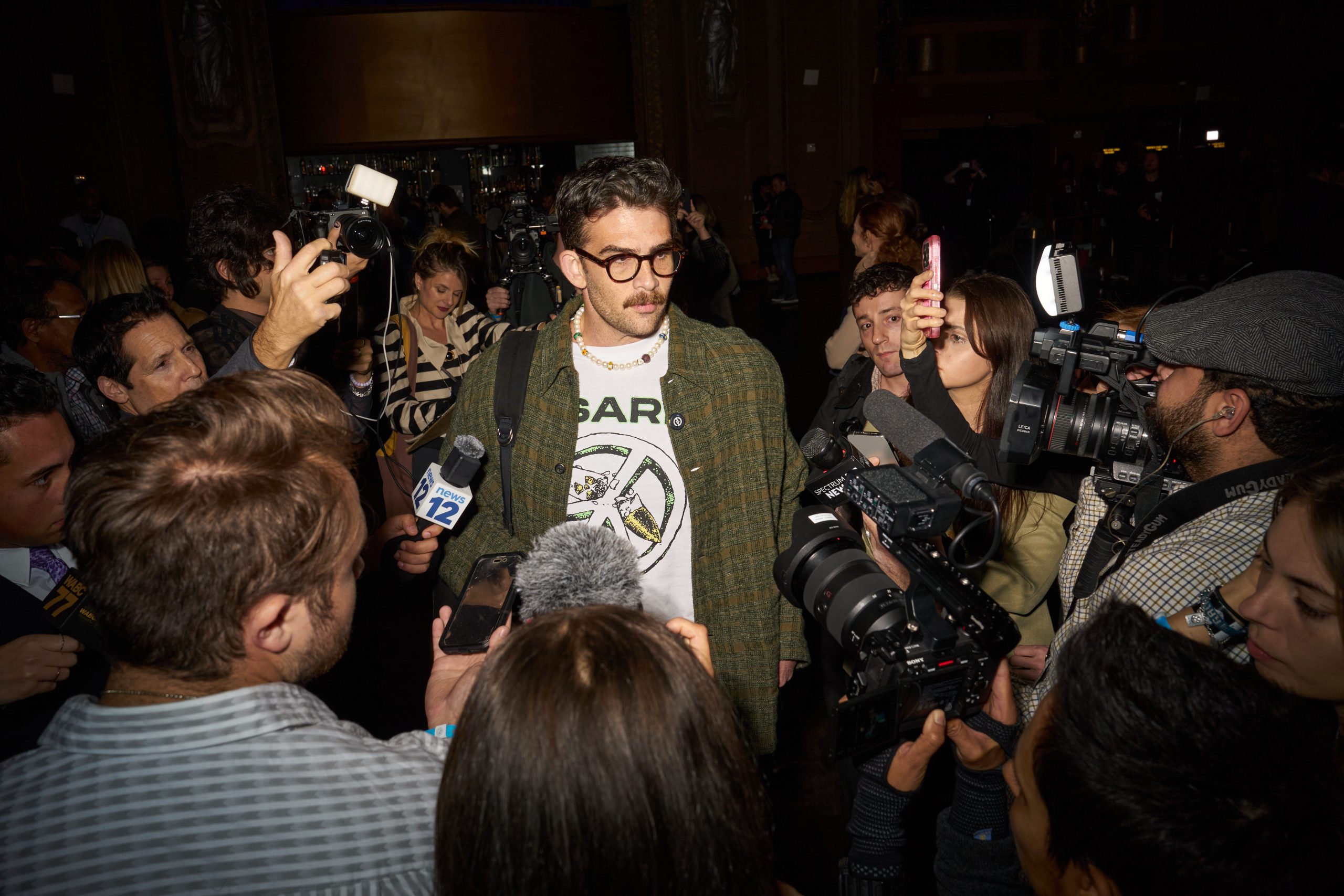

Hasan Piker’s new role as a midterm surrogate and potential influence on the 2028 presidential race is driving a wedge in the Democratic Party.
After POLITICO reported that Piker, the far left political streamer with millions of followers, will stump in Michigan with Senate candidate Abdul El-Sayed next month, his history of divisive comments launched an avalanche of criticism from Republicans and Democrats.
Two of El-Sayed’s opponents, state Sen. Mallory McMorrow and Rep. Haley Stevens, lambasted El-Sayed, with Stevens telling Jewish Insider “someone who’s campaigning with someone like that is not going to win in Michigan” and McMorrow saying Piker “says extremely offensive things in order to generate clicks and views and followers, which is not entirely different from somebody like Nick Fuentes,” comparing him to the antisemite nationalist influencer.
Piker’s rise as a Democratic influencer and surrogate coincides with the party’s long search for a path out of the wilderness, particularly in recapturing young men.
Piker is scheduled to appear on a livestreamed, “Choose Your Fighter” rally organized by Progressive Victory at 6:30 p.m. Saturday. Rep. Ro Khanna (D-Calif.) is among the list of attendees. Maine Democratic Senate candidate Graham Planter was originally billed as a participant, but he pulled out of the event. (A person familiar told POLITICO that Platner’s planned appearance was a miscommunication.) And on Sunday, Piker will rally with Sen. Bernie Sanders (I-Vt.) at a tax-the-rich rally.
The question over Piker’s prominence also comes as both the Republican and Democratic parties ask fundamental questions about how big their tents should be.
But it’s the out-of-power Democrats who face the higher short-term stakes.
In an interview with POLITICO, Piker downplayed accusations that have been leveled against him, like center-left think tank Third Way, whose leaders wrote in a WSJ op-ed that Piker had a history of anti-American, antiwomen, anti-Western and antisemitic comments. Piker said Third Way was “losing their institutional relevance.” He also said he’s merely channeling, not changing, the attitudes of the Democratic base.
“I’m a megaphone, right?” Piker told POLITICO. “There are a lot of Barbs and Deborahs out there in Minneapolis, for example, that have never encountered me, and yet they share that frustration with the failures of establishment liberalism all the same.”
Piker said those type of voters view Democrats as “ineffective, inept.” “It’s not because they tune into The HasanAbi broadcast every day,” he said, referencing his Twitch channel. “They arrive at that conclusion because the Democrats lost to Trump twice. With the same principle that you got to pivot to the mythical moderate center.”
This isn’t Piker’s first rodeo: He livestreamed an interview last year with Rep. Alexandria Ocasio-Cortez and Sanders before one of the duo’s “Fighting Oligarchy” rallies. New York City Mayor Zohran Mamdani also sat for an interview with Piker last year.
But Piker’s increasing coziness with prominent Democrats also comes as some in the party argue he poses a problem for them.
“Piker is close to — but not over — the Nick Fuentes line, where going on his show itself is indefensible,” Third Way co-founder Matt Bennett, who’s been sounding the alarm about Democrats’ affiliation with Piker, told POLITICO. Bennett added that Democrats “take on all of his baggage if they don’t overtly reject” him, which he said is “dangerous because it empowers the right and gives them an incredibly powerful tool to hit Democrats with that’s very bad.”
But some Democrats like Khanna argue that the party needs to assemble a broad coalition. “That must include engaging with Israel critics like Hasan Piker as Pod Save hosts have done and many progressive candidates have done,” Khanna told POLITICO. “Of course, I disagree strongly with some of his statements and point that out. But cancelling people or shaming people like Hasan Piker, Shawn Ryan or Theo Vonn is not the answer.”
The debate over Piker’s place within the party is set to play out across the 2028 field, too.
POLITICO surveyed 14 potential 2028 Democratic presidential candidates, asking whether they would appear on a livestream with Piker if invited. Only three definitively said they would.
Sens. Cory Booker (D-N.J.), Ruben Gallego (D-Ariz) and Elissa Slotkin (D-Mich.) all said they wouldn’t go on Piker’s stream through spokespeople. “Mr. Piker’s terrible comments about Jewish people, 9/11, and other areas aren’t the kinds of conversations Cory participates in and he will not be joining him on his stream,” an aide to Booker told POLITICO.
So who would appear on Piker’s stream? Khanna, California Gov. Gavin Newsom and Rahm Emanuel. (Ocasio-Cortez has already appeared, but a spokesperson did not return a request for comment).
“It’s not on the agenda right now, but the Governor has never shied away from debating anyone, anywhere,” Newsom spokesperson Izzy Gardon told POLITICO.
Said an Emanuel spokesperson: “Rahm is always willing to have difficult conversations with anyone about the future of the country, and to tell people he disagrees with why they’re wrong.”
Aides to Pennsylvania Gov. Josh Shapiro and Kentucky Gov. Andy Beshear declined to comment. Aides to former Vice President Kamala Harris, Transportation Secretary Pete Buttigieg, Sen. Mark Kelly (D-Ariz.), Maryland Gov. Wes Moore and Illinois Gov. JB Pritzker did not respond.
Asked about some of his controversial past comments, Piker didn’t retract any of them. Asked if he had ever misspoken: “Misspoken? No. Taken out of context? Absolutely.”
He did point to one particular quote of his about the Oct. 7, 2023 Hamas attack on Israel, which he noted often comes up when he’s criticized.
“One of the quotes that they love floating around is the Oct. 7 quote where I said, like, rape’s happening, like the conversation around, like, sexual violence taking place on October 7 doesn’t change the dynamic for me. And I was talking about genocide. I was like, this doesn’t justify genocide at all,” Piker said.
As for the other quotes he catches heat for? “No, I stand by them,” Piker said.
So who does Piker like for 2028? He’s got a short list. “I said [Georgia Sen. Jon] Ossoff will be my dark horse pick, depending on how he presents himself if he has ambitions for higher office. I do love [UAW President] Shawn Fain personally. I like an outsider pick. I like Ro Khanna. I like AOC. I actually like [Sen.] Chris Van Hollen, quite a bit as well, even.”
And the criticism cuts both ways. “At the end of the day, of course, I have disagreements with every single one of these candidates,” Piker said. “No candidate is perfect.”
An adviser to one potential 2028 candidate, granted anonymity to appraise Piker’s influence, told POLITICO they expect Piker to be a “gatekeeper” in the primary. But Piker isn’t sure how much sway he’ll hold.
“Who knows how things change?” he said. “I mean, this is a very dynamic environment.”
Like this content? Consider signing up for POLITICO’s Playbook newsletter.

Today is a massive day for Swindon. Great Western FC, the team we very proudly sponsor, steps onto the pitch for an integral semi-final today. For many, this is just 90 minutes of football. But for this small club, it is another chapter in a stunning survival story that defies every statistic thrown at the working class. Today, our lads in the first team face Stratton at St Luke’s Academy at 3pm. And our reserves take on Coleview in the SDCFL Challenge Plate semi-final at Southbrook at 2pm.
🚨 MATCH DAY 🚨
A local derby and a cup semi…
🔵 First team
🆚 Stratton
🏆 @WiltsLeague Div One
🏟️ St Luke’s Academy
🕒 3pm KO🔴 Reserves
🆚 Coleview
🏆 SDCFL Challenge Plate Semifinal
🏟️ Southbrook
🕑 2pm KOGreat Western FC are sponsored by @ThCanaryUK
UTGW 🔵🔴 pic.twitter.com/gfT0FhyFuS
— Great Western Football Club (@GreatWesternFC) March 28, 2026
We sponsor this tiny team because they represent everything the Canary stands for. The club is a sanctuary in a town where social fabric has been fucking shredded by years of neglect. This club is a lifeline for 75 men who have found brotherhood where the state offers only silence.
Great Western FC — a lifeline in a neglected town
The stakes are way higher than just a cup. In the UK, suicide remains the leading cause of death for men under 50. Great Western FC fights this crisis on the pitch every single week. They provide the pastoral care that broken councils and a crumbling NHS simply can’t deliver.
The founder, Jon, manages this entire operation whilst living with severe and chronic pain. He uses the beautiful noise of the club to drown out his own suffering. His leadership is a masterclass in mutual aid and support. As is that of his co-manager, Tom. While the FA reports that 96% of working class and grassroots clubs are struggling with rising costs, Great Western continues to kick ass both on and off the pitch. But even they are struggling.
Victory is more than getting higher on a scoreboard
The first team is facing Stratton, whilst the reserves battle Coleview in the semi-finals. Great Western have earned their spot in the semis through sheer struggle and persistence. They don’t have a corporate board or a billionaire behind them. They have us though, the poor bastards. And of course, they have each other. They have shared lifts, a thriving community and a spirit that cannot be bought.
Whatever the results today, these men have already won. They have built something authentic in a world that feels so fucking fake. We are fucking proud to have our name on their shirts.
Go get them lads.
Featured image provided via author
Zack Polanski has said that Daily Mail journalists are “going after” his family members. And according to him, there’s a very simple reason why; it’s because the Green Party is becoming a credible challenger to the establishment:
This is why Daily Mail journalists are going after my family now.
The right wing propaganda machine will not work on the Green Party.
We’re ready to end Rip Off Britain, end the cost of living crisis and make hope normal again. https://t.co/w9uyGh8mfP
— Zack Polanski (@ZackPolanski) March 28, 2026
The Daily Fail
The poll above is from Verian. As Stats for Lefties explained, there’s a reason why the Greens just shot up by seven points:
As far as I can tell, the only pollster to still hide the Greens behind an “Other” option is @IpsosUK, who prompt for Reform but require Green voters to select “Other” before they can pick the Green option in a survey. Why? Who knows
— Stats for Lefties 🍉🏳️⚧️ (@LeftieStats) March 28, 2026
Obviously you can’t put too much stock in any one poll, and some polls still have the Greens trailing behind Labour:
At 16%, this is the highest that the Greens have ever polled with BMG Research. When Polanski became leader of the party, they were polling just 7% (!) 👀
— Stats for Lefties 🍉🏳️⚧️ (@LeftieStats) March 27, 2026
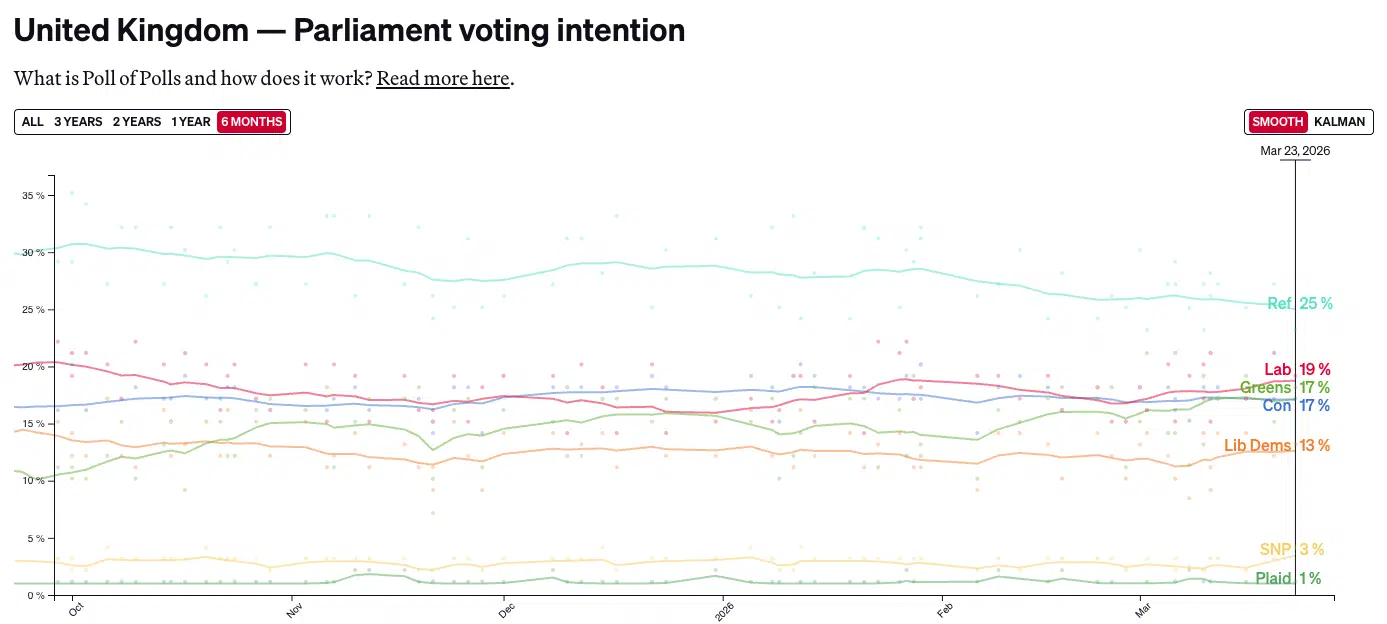
While individual polls may not be precise indicators, looking at all the polls over time does give an idea of how public opinion is shifting. As we can see from Politico’s poll of polls, the trend over the past 6 months has been that Reform are dipping while the Greens are climbing:

Another recent poll shows that the Greens have grown in popularity in London:
Full question asked to respondents:
“If there were a UK General Election tomorrow under [preferential voting], how would you vote by ranking the following parties in the order of your preference? Put 1 for your most preferred party … and so on”.
link: https://t.co/GSbMI3lAxo
— Stats for Lefties 🍉🏳️⚧️ (@LeftieStats) March 27, 2026
Zack Polanski — no limits
Polanski didn’t provide more information on the Daily Mail harassing his family members. At the same time, no one was surprised, because we’ve all seen how the corporate media operates in the UK. People have sent their solidarity accordingly:
Solidarity, Zack.
Know, and remember, that there are literally hundreds of thousands who have your back.
If you weren’t effective, they wouldn’t come for you.
If they weren’t threatened, they wouldn’t come for you.
It’s a clear indication you’re winning.…
— James Foster (@JamesEFoster) March 28, 2026
It’s important to remember that the billionaire-owned press isn’t loyal to any specific party or politician. Instead, they’re loyal to a situation in which things constantly become more favourable for the rich.
Clearly the establishment sees Reform as the group best placed to manage this continuation, which is why the party is attracting millions of pounds in donations from greedy tax exiles.
Zack Polanski and the Greens are challenging the status quo, and the attacks against them will only amplify between now and the 2029 election.
Featured image via Barold / Stats for Lefties

A judge has criticised the Labour government for dragging its feet amid the appeal to deproscribe Palestinian political group Hamas. And one legal representative argued that this was a conscious effort to “delay scrutiny“.
Labour government ‘not being open and honest to the court’
Middle East Eye reported on 26 March that:
A British judge has ordered the UK home secretary to “get on with” explaining her opposition to Hamas’s appeal to be removed from the list of proscribed terrorist organisations…
Shabana Mahmood has until 20 May to disclose reasons for opposing Hamas’s bid to be removed from terror list
Hamas has been appealing the UK’s 2021 political decision to proscribe it. And Middle East Eye said Justice Jonathan Swift, the chair of the independent Proscribed Organisations Appeal Commission tribunal:
criticised the government for delays in progressing the case, noting that more than seven months had passed since Hamas formally lodged its appeal, and nearly a year has passed since the initial application was submitted.
The outlet asserted that he had also accused:
the department of not being open and honest to the court
Franck Magennis, working as a legal representative for Hamas on a pro bono basis, said:
It seems clear that the secretary of state’s strategy is to delay scrutiny of her decision-making for as long as possible
A hypocritical and problematic proscription
Hamas has a specifically local focus on opposing Israel’s longstanding occupation of Palestine. And in 2023, numerous experts submitted evidence noting that the group’s military wing:
has not directly attacked UK or Western interests… [and] has not operated outside Israel and the Occupied Territories and has no overt representation in the UK
They also claimed the “lack of transparency” and political bias surrounding the proscription:
undermines public faith in the impartiality of the process
A key point to highlight here is the significant influence of the pro–Israel lobby in both the Conservative and Labour parties.
Also, at a time where Israel has been committing genocide and countless war crimes against people in Palestine and throughout the Middle East, the UK government’s efforts to keep Hamas’s proscription while maintaining strong relations with Israel brings its hypocrisy and lack of integrity further into the spotlight.
As Middle East Eye noted:
In its original application, Hamas argued that the proscription hinders the group’s ability to broker a political solution to the conflict, stifles discussions aimed at securing a long-term settlement, and criminalises ordinary Palestinians living in Gaza.
The experts submitting evidence in 2023, meanwhile, highlighted that:
proscription of Hamas in its entirety does not benefit the UK domestically.
Instead, they said, it:
may negatively impact the UK’s foreign relations.
And it would:
negatively affect academic and journalistic freedom
They added that “engaging with Hamas politically”, which is not the same as approving of the group’s actions or positions, would have “political and diplomatic benefits”.
Engaging and deproscribing is not the same as approving
As the Canary has explained previously, Hamas (like Hezbollah in Lebanon):
are defensive nationalist militants first and foremost, primarily seeking to “protect local constituents” with “a specific set of local political demands that are the focus of their activity and the core concern of their supporters”. This doesn’t mean they are progressive champions. Because they’re not. But international law protects their right to self-defence.
The 2023 submission of expert evidence noted in particular the presence of some antisemitic tropes in Hamas in the past, and that some figures continue to promote these today. But it also insisted that:
Hamas has not attacked Jews worldwide and the cause of their violence against Israelis is occupation, displacement and settler colonialism, not hatred of all Jews.
And it emphasised that Hamas’s 2017 manifesto makes clear that:
the conflict is political, not religious; that is to say, it is about Israeli settler colonialism and occupation, not some ancient struggle between Islam and Judaism.
Considering the evidence, the experts stressed that:
Hamas’s position towards Jews cannot be readily captured by the antisemitism label.
And they highlighted concern about the “conflation of opposition to Israeli settler colonialism and antisemitism”, which they called “dangerous and potentially counterproductive”.
It is absolutely possible to disagree with some or all of Hamas’s politics without defining them as something they’re not. But the Labour government seems intent on continuing to mislead the public so it can justify its ongoing complicity with Israel’s genocidal war crimes.
Featured image via Islam Channel

A US man has found that Amazon’s ‘Alexa’ AI will repeat a wish for pretty much any country to be free — but not “Free Palestine”.
Instead it performs contortions to avoid it, talking about the supposed ‘complex international situation’, before he eventually corners it into claiming “Free Palestine” involves “promoting harm or violence”. Presumably the Ukraine-Russia war is all roses and marshmallows.
But eventually, it seems even an AI can be worn down by the moral force of truth and justice:
A young man documents how the voice assistant ‘Alexa’ evades repeating the phrase ‘Free Palestine,’ in an experiment demonstrating how global algorithms and software are manipulated to obscure the truth and silence Palestinian voices. pic.twitter.com/MO4gglQIH9
— Eye on Palestine (@EyeonPalestine) March 26, 2026
Why on earth wouldn’t Amazon, which is owned by ultra-billionaire Jeff Bezos, has an Israeli subsidiary and earns billions from providing ‘cloud’ services to the military of genocidal apartheid Israel and to its suppliers, want to say “Free Palestine”..?
Featured image via the Canary

It’s one thing running a garden on well-aerated (but never dusty), easily compacted (but not too heavy) soil.
But it’s rare that the stars perfectly align; the UK’s soil, which is increasingly degrading, may run a little too chalky or clay-heavy in your backyard.
Here, we’ll share the types of soil in the UK and the best plants for each of them.
What types of soil are there?
The main types of soil in the UK are:
- Chalky,
- Clay,
- Loamy,
- Peaty,
- Sandy,
- Silty.
The type of soil is determined by its particle size. Clay particles are less than 0.002mm; silt is 0.002-0.05mm; sand is 0.05-2mm, and stones are larger than 2mm.
Most soil is a combination of different soil particles.
Which soil do I have?
To count as a “clay” soil, the earth has to contain 25% or more clay particles. These are fertile, but drain slowly and can be compacted quite easily; they take a long time to warm up, and may “bake” in summer. They get sticky when wet.
Chalky soils tend to be stony as they often lie over a limestone bedrock. They usually drain quite freely and are typically alkaline. If your soil froths when you put it in a jar of vinegar, it’s probably high in chalk.
Sandy soils retain little moisture, which is great for draining after rain but a little tougher to work with during hot weather. They feel gritty to the touch.
Loamy soils are often considered “the perfect soil type” as they contain a mixture of clay, sand, and silt. That makes them easy to work with and able to hold on to water without running waterlogged. They’re usually high in nutrients.
Peaty soils can be acidic and hold a lot of water, though they’re also high in nutrients. They’re not usually found in gardens, though.
And silty soils, while easily compacted, usually drain well and are quite fertile. They typically have medium-sized particles, which help them to retain moisture. They rarely clump and feel a little slippery.
Soil-testing kits can help you work out the nutrient content of your soil.
What are the best plant types for each soil?
1) Clay soils
- Roses
- Hydrangea
- Hardy geraniums
- Mahonia
- Foxglove
- Tomato
- Cabbage
- Squash
- Green beans
- Lettuce.
2) Chalky soils
- Geranium
- Clematis
- Lavender
- Yarrow
- Rosemary
- Globe thistle
- Crab apple trees.
3) Loamy soils
- Wisteria
- Geranium
- Day lily
- Dogwood
- Summer bulbs
- Roses
- Peony
- Tomato
- Lettuce
- Carrots
- Beans
- Cucumbers
- Strawberries.
4) Peaty soils
- Rhododendrons
- Azaleas
- Heather
- Magnolias
- Brassicas
- Radishes
- Potatoes.
5) Sandy soils
- Tulips
- Lavender
- Buddleja
- Hardy fuchsia
- Carrot
- Courgette
- Alliums
- Radishes.
6) Silty soils
- Willows
- Ferns
- Dogwoods
- Astilbe
- Cistus
- Lettuce
- Chard
- Green beans.
What if my soil is new and/or very shallow?
Wildflowers do exceptionally well on very new, thin soil, gardener and writer Arthur Parkinson previously told HuffPost UK.
“Perennial wildflowers like ox-eye daisy you can sow onto very poor soils, and they will establish well from being sown in the early autumn. Annual chamomile and cornfield poppies will thrive too if their seed is sown in spring,” he said.

The post The idiocy of celebrity ‘anti-fascists’ appeared first on spiked.

GRAPEVINE, TEXAS — Joseph Bolick feels betrayed by President Donald Trump. And it’s because of the war in Iran.
The 30-year-old Iraq and Afghanistan war veteran voted for Trump in 2024. But at the annual Conservative Political Action Conference gathering this week he sported a hat emblazoned with “America First” — a slogan Trump championed during his campaign, along with the promise not to start new wars in foreign countries.
“He’s lied about everything,” said Bolick. “If you go into a war where there’s no end game, how is it going to end? There’s no clear objective.”
Bolick is part of a cohort of young MAGA loyalists who are increasingly frustrated with Trump over the war in Iran. While Trump’s decision to join Israel in attacking Iran has rallied war hawks and his older supporters, it has alienated many of the young men who swung toward the GOP in 2024. That split is resonating among not only the rank-and-file, but also conservative media influencers and some corners of the White House.
The generational divide was on stark display at CPAC, the annual conservative base-rallying gathering, where some young MAGA loyalists expressed deep frustration and even anger at the Trump administration’s choice to reignite conflict in the Middle East. One month into the war, Trump’s shaky ground with young men threatens to fracture an already-fragile GOP coalition ahead of a hostile midterm in November.
At the conference in north Texas, some attendees carried around Iranian flags, pledging loyalty to the U.S. mission overseas, while others donned America First hats and preached about the need for anti-interventionism.
“Trump and Republicans in general are going to have major issues in the midterms, in 2028, if we can’t wrap this up in a relatively quick amount of time,” said 21-year-old Andrew Belcher, president of the Ohio College Republicans. He added that Trump is doing “relatively poorly” with hyper online young men who are influenced heavily by media figures like Tucker Carlson and other isolationists in the GOP.
A POLITICO poll this month found that Trump voters largely continue to back him. But men who self-identified as “MAGA Republicans” and voted for Trump in 2024 are deeply split by generation over their trust in the president and their view of the war, especially if the number of U.S. casualties rises.
The contrast was striking, even with the larger margins of error that come from the smaller sample sizes: More than 70 percent of those over 35 believe Trump has a plan, compared with 49 percent of those under 35. A 66 percent majority of older MAGA men are willing to sacrifice American lives in order for the U.S. to achieve its goals in Iran, compared with less than half of younger MAGA men who say the same. And the younger men are significantly less likely to say the war is aligned with MAGA principles and in the interests of American people.

Some of the most prominent MAGA voices are opposed to the Iran war, like Carlson and Megyn Kelly, along with influential figures like Joe Rogan, who holds tremendous sway with young men. There’s even growing consternation among younger, more-right wing White House staffers, said one person familiar with the dynamics who was granted anonymity to discuss them.
“They’re very frustrated. They didn’t love the war to start with, and since it began, the constantly contradictory messaging from the president himself, is just brutal, brutal for staff to deal with and making their life really hard,” the person said. “He puts his people in a really tough position, especially people who are public-facing.”
“What matters most to the American people – including young men – is having a Commander-in-Chief who takes decisive action to eliminate threats and keep them safe, which is exactly what President Trump is doing with the ongoing successful Operation Epic Fury,” said White House spokesperson Davis Ingle.
Part of CPAC’s intent, a hallmark grassroots gathering that has been held for more than 50 years, is to hype up conservatives, a particularly important mission for party leaders in critical election years. If Republicans want to prevent Democrats from flipping the House this midterm cycle, they need to ensure they don’t lose any gains they made with key parts of their coalition in 2024, namely young men.
“We need you,” said former RNC chair Michael Whatley, who is running for Senate in North Carolina. “We need every conservative, every Republican, every patriot across this country to focus on two things: get out the vote and protect the ballot.”
Mercedes Schlapp, senior fellow for the CPAC Foundation, opened Thursday’s session by pleading with conservatives to remain united. “We cannot divide from within,” she cautioned attendees.
But interviews with a dozen young men at CPAC revealed broad concern that Trump is imperiling the U.S. economy, which has seen spiking gas and fuel prices caused by the war.
“A lot of the young generation feels that there’s just not a lot of hope for the economy,” said a 30-year old attendee who was granted anonymity to speak freely about party dynamics.
Onstage and in hallway conversations, older attendees celebrated Trump for ending what they called a 47-year conflict in Iran, marked by the death of Iran’s supreme leader.
A panel featuring Iranian women speaking about human rights abuses was met with loud cheers from the audience. Scores of mostly older conservatives milled about wearing shirts with the image of exiled Iran Crown Prince Reza Pahlavi, who is set to speak at the conference on Saturday.
“I believe President Trump’s shock and awe is what they needed,” said Lawrence Ligas, a 63-year-old conservative Chicago activist who was pardoned by Trump for charges related to the Jan. 6 insurrection. “Young MAGA is causing this divide because they’re concerned about being drafted.”
Multiple speakers on stage both directly and indirectly roasted online influencers for their opposition to the war. Conservative political commentator Josh Hammer blasted Carlson and Kelly in particular as “doomsayers.”
In his speech, former Florida GOP Rep. Matt Gaetz told the audience that “dissent and disagreement has to be allowed. Tucker Carlson isn’t going anywhere.” Gaetz, who resigned in 2024 after being briefly nominated by Trump for attorney general, then warned about the risks of military occupation in Iran.
“A ground invasion of Iran will make our country poorer and less safe,” the 43-year-old said. “It will mean higher gas prices, higher food prices. And I’m not sure if we would end up killing more terrorists than we would create.”
Megan Messerly contributed to this report.

The Green Party’s conference online voting system is under ‘DDOS attack‘ this morning, as members prepare to vote on a motion to declare the party officially opposed to the racist ideology of Zionism, according to party insiders who spoke to Skwawkbox.

Pro-Israel groups and the Israeli embassy have been frothing for weeks about the vote and attempted to pressure party leaders into blocking the motion, but democracy prevailed and the demands were ignored. Now it seems the Israel lobby is trying to take matters into its own hands.
The Green Party’s tech team is working to resolve or bypass the attack. Voting is taking place throughout the day, so members registered to ‘attend’ should log into the Greens’ members website and make sure to cast their vote for the motion as soon as it is working. Alternatively, the website link in the party’s emails to individual members about the conference appears to be still working despite the attack.
Featured image via PoliticsUK
Bitcoin Advocates Oppose New PARITY Act Over Mining Tax

Prize money for NFPA 250 at Martinsville Speedway

What Is the Best Garmin Watch Right Now? (2026)


-
 NewsBeat3 days ago
Manchester United reach agreement with Casemiro over contract clause amid transfer speculation
-

 News Videos3 days ago
Parliament publishes latest register of MPs’ financial interests
-

 Crypto World7 days ago
Best Crypto to Buy Now: Strategy Just Spent $1.57 Billion on Bitcoin During Fear While Early Investors Quietly Enter Pepeto for 150x Potential
-

 Crypto World7 days ago
Bitcoin Price News: Bhutan Sells $72 Million in BTC Under Fiscal Pressure, but the Smart Money Entering Pepeto Sees What the Market Does Not
-

 Sports5 days ago
Remo Stars and Kano Pillars Strengthen Survival Hopes in NPFL
-

 Sports5 days ago
Gary Kirsten Accuses Pakistan Cricket Board Of ‘Interference’, Mohsin Naqvi Responds
-

 Business6 days ago
No Winner in March 21 Drawing as Prize Rolls to $133 Million for Next
-

 Tech6 days ago
Give Your Phone a Huge (and Free) Upgrade by Switching to Another Keyboard
-

 Tech6 days ago
AI enters the chat: New Seattle dating app relies on tech to facilitate meaningful human connections
-

 News Videos5 days ago
Ch 9 Financial Management Part 1 | Detailed One Shot | Class 12 Business Studies Boards 2026
-

 Tech7 days ago
Today’s NYT Connections Hints, Answers for March 22 #1015
-

 Business2 days ago
Instagram, YouTube Found Responsible for Teen’s Mental Health Struggle in Historic Ruling
-

 Business6 days ago
Will Duke Basketball Win It All? Duke Basketball Enters Second Round as Third Favorite to Claim NCAA Title
-

 Sports5 days ago
2026 Kentucky Derby horses, odds, futures, preview, date: Expert who hit 12 Derby-Oaks Doubles enters picks
-

 NewsBeat18 hours ago
The Story hosts event on Durham’s historic registers
-
 Entertainment5 days ago
Cynthia Bailey Dishes on ‘RHOA’ Season 17, Discusses Kandi
-

 Tech5 days ago
Samsung will soon let you control smart home devices from your car’s dashboard
-
 NewsBeat6 days ago
Update on Wisbech river crash as search for teenage boy enters fifth day
-

 Fashion4 days ago
Does It Matter What You Wear When You’re Laid Off and Looking?
-
 NewsBeat3 days ago
Tesco is selling new Cadbury Dairy Milk bar and people can’t wait to try it
You must be logged in to post a comment Login