
Politics
FIFA refusal to sanction Israel flouts international law


FIFA has announced that no action will be taken against the Israeli Football Association (IFA) over the participation of clubs based in illegal settlements in Israel’s leagues.
In March 2024, the Palestinian Football Association (PFA) called for the exclusion of settlement clubs. There are at least six clubs based in the Occupied Palestinian Territories (OPT) currently playing in Israeli leagues.
However, in its response on 19 March 2026, the football governing body said FIFA would not take action, declaring that the “legal status of the West Bank remains an unresolved and highly complex matter under public international law”.
This is in contradiction with Article 64.2 of FIFA’s statutes, which states that:
Member associations and their clubs may not play on the territory of another member association without the latter’s approval.
FIFA’s pattern of hypocrisy
Steve Cockburn, Head of Economic and Social Justice at Amnesty International, said:
By refusing to take action against clubs based in Israeli settlements, FIFA has failed to enforce its own rules and is blatantly flouting international law. FIFA had a clear opportunity to stand up for Palestinians’ rights and international law – with this decision it has shamefully chosen to abandon both.
The International Court of Justice has unambiguously declared that Israel’s occupation of Palestinian territory is unlawful, that settlements in the Occupied Palestinian Territory (OPT) are illegal and that Israel’s presence in the OPT must rapidly end. FIFA’s own statutes are clear that its members cannot play games in the territory of another association without permission.
By continuing to condone the presence of clubs based in illegal settlements in the OPT in Israel’s league, the Israeli Football Association is indirectly legitimizing Israel’s unlawful occupation and its severe human rights violations against Palestinians, including the crime against humanity of apartheid. FIFA must not continue to ignore the International Court of Justice’s 2024 Advisory Opinion. FIFA has an unequivocal responsibility to act. It must also ensure full transparency and publish the legal advice FIFA received on this matter and provide the full rationale for its unjust decision.
Other human rights organisations have previously put pressure on FIFA to act in accordance with its own statutes.
The governing body has been swift to act in suspending the participation of other nations, like Russia, from international sporting events. Israel remains an exception to the rule.
Fines without Exclusions
In the same complaint submitted in March 2024, the PFA called for sanctions against the IFA over anti-Palestinian racism in Israeli football.
FIFA’s disciplinary committee have now fined the IFA 150,000 Swiss francs ($190,700) for “multiple breaches” of its anti-discrimination obligations. The Canary’s Alaa Shamali called the penalties “shockingly light.”
FIFA and UEFA have both provided funding for the IFA, meaning they may also be contributing to the expansion of illegal settlements, and therefore Israel’s human rights violations.
Featured image via the Canary

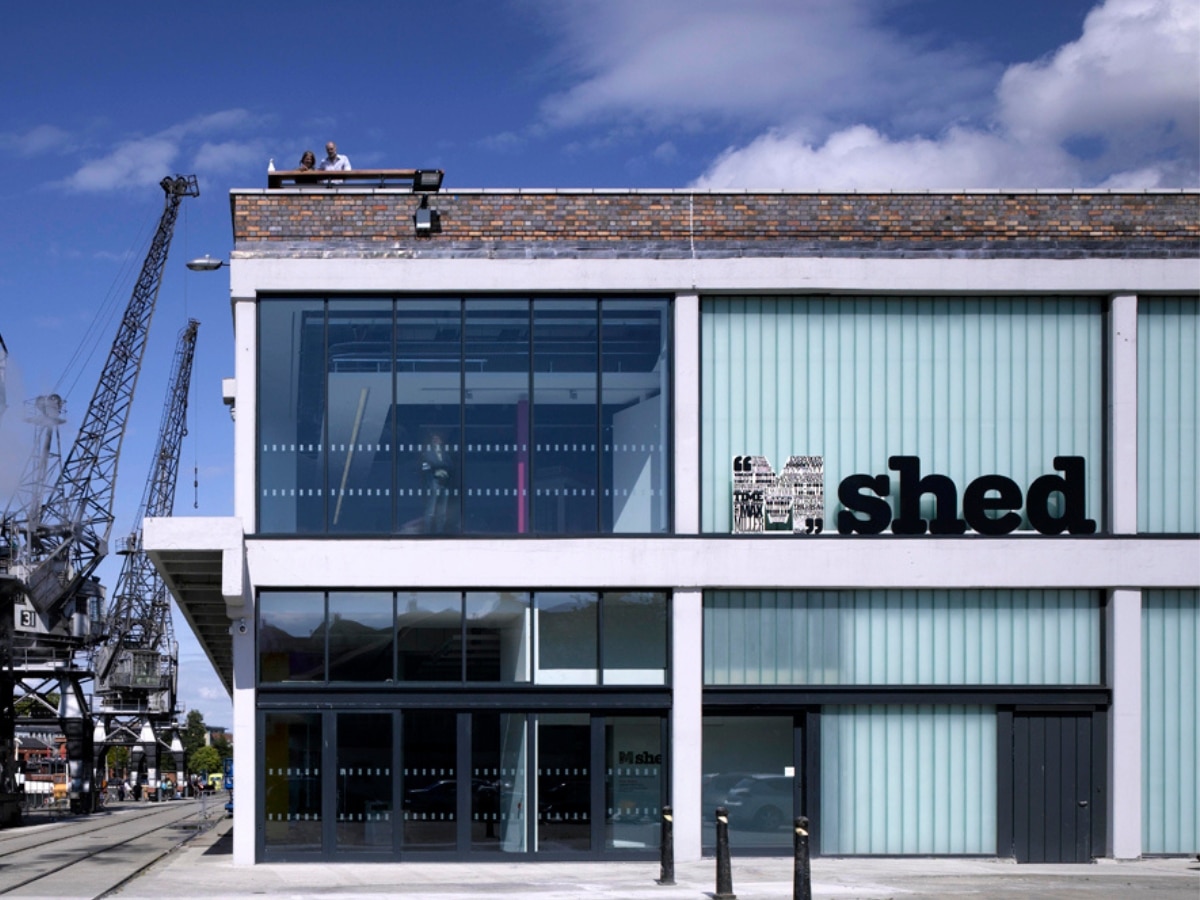
The eighth edition of the Bristol Radical History Festival is just a month away. The event takes place over two days: at the M Shed on Saturday 25 April, before it moves on to The Cube Microplex on Sunday 26 April.
The two days will encompass talks, panel discussions, films, history walks, an exhibition and more.
One of the four themes of this year’s event is Propaganda. This is, of course, not a new phenomenon. From the Bayeux Tapestry to social media, one could argue that only the technology has changed to mould and shape public opinion.
The Saturday at the festival will see Steve Poole from Bristol UWE tell us how state propaganda played a crucial role in staving off the threat of revolution in Britain in the 1790s. Meanwhile Riley Linebaugh will bring things forward into the 20th Century and focus on the ways the UK government covered its back when the colonial administrations in East Africa systematically destroyed and removed documents from colonies in the run up to independence.
Dr Lucy Goodison and Colin Thomas will visit more recent history. Specifically, the 1970s when successive governments tried to stymie BBC criticism of policy, especially in relation to Ireland. Both Goodison and Thomas worked for the corporation at the time and give us the lowdown on what happened and how BBC journalists fought back.
And Nicholas Jones (a former BBC correspondent) and ex Head of Channel 4 News Dorothy Byrne will talk about propaganda in the media in today’s news and the increasing presence of journalistic self-censorship.
From history to the present day
Finally, Ghada Dimashk and Barney Cullum will bring us right up to date. They’ll look at how, in the recent Gaza conflict, citizens became the primary producers of historic record, though via social media that is ultimately controlled by US tech giants, and how ordinary Palestinian archivists have managed to preserve endangered digital records.
All of these events take place on the first day of the festival, Saturday 25 April, at the M Shed.
The Bristol Radical History Festival, like all Bristol Radical History Group events, is free and is organised by local people from Bristol. It doesn’t have funding from universities, political parties, business or local government.
To break even we rely on our members giving their labour for free and sales from our publications.
And most importantly: whether you are an academic or curious first timer, a lifelong Bristolian or just down for the day, all are welcome.
For more information and the full programme of the Radical History Festival go to the website at brh.org.uk
Featured image via the Canary

The UK’s online gambling black market has grown to 5% of all activity, up from 3.3% in 2021, according to PwC research published by the Betting and Gaming Council
Unlicensed operators sidestep UK consumer protection rules and can shift domains faster than enforcement reacts. The UK Government has also warned that offshore sites allow self-excluded players back in through GAMSTOP workarounds.
In that environment, the standard for publishing responsible UK casino advice has to be higher. Gambling.com positions itself not as a bonus aggregator, but as an information hub for players who want to verify a site before depositing.
A reviews hub built on process, not promotion
Gambling.com publishes detailed UK casino reviews using a structured 10-step evaluation model. Reviews are based on hands-on testing and analysis by casino experts, not operator-supplied copy.
Licensing is the first filter. If a casino isn’t licensed for the UK market, the review does not proceed and the site is not recommended. In a climate where offshore operators compete on bigger bonuses and fewer restrictions, that gate matters more than any star rating.
Casinos that meet the licensing standard are assessed across weighted categories including security, fair play testing, responsible gambling tools, bonus terms, game variety and customer support. These combine into an overall score out of 10. The site also publishes an explicit independence statement confirming that higher ratings cannot be bought.
The result is a transparent model readers can scrutinise. Even if someone disagrees with category weightings, they can see how a rating was reached.
Evidence you can verify
The review process focuses on areas where weaker review sites fall short.
Financial safety and payout practices: Evaluations cover licensing credentials, security protocols, payment methods and processing times. UK guides include concrete data such as average RTP figures and withdrawal timeframes, presented as measurable information rather than promotional claims.
Bonus analysis: Wagering requirements, expiry periods, maximum bet limits and game restrictions are examined in detail. The aim is to determine whether terms are fair and clearly explained, not simply headline-grabbing.
Game libraries and software quality: Reviews document slot inventories, table game depth, live dealer coverage and provider partnerships, focusing on actual content rather than vague volume claims.
Customer support testing: Reviewers contact support anonymously to assess response times, resolution quality and escalation processes. Clear complaint procedures are treated as a core trust signal.
Real player feedback informs the model
In addition to expert testing, Gambling.com incorporates on-site user reviews and moderated user-testing sessions. Player feedback helps refine evaluation criteria, particularly around payout disputes, complaint handling and customer service behaviour under pressure.
These are often the areas where risk becomes visible – not in feature lists, but in how an operator responds when something goes wrong.
Responsible gambling beyond a checkbox
Responsible gambling is treated as a core part of coverage rather than a footer disclaimer. Gambling.com maintains a dedicated section offering advice and linking to independent resources and professional support where needed.
This includes the NODS-SA, a clinically validated self-assessment tool developed to help individuals identify potential gambling problems via the National Council on Problem Gambling.
Global scale, UK focus
Operating across 23 countries and 10 languages, Gambling.com combines international reach with market-specific knowledge. UK players receive gambling guides aligned with UKGC requirements, locally relevant payment coverage and gambling news tracking regulatory and casino industry developments.
Alongside reviews, the site publishes strategy guides that explain RTP, bonus mechanics, and game rules. That positions Gambling.com as both a comparison resource and an educational platform.
The bottom line for UK casino players
When regulated markets face pressure from offshore competition, the safest starting point is a platform that verifies licensing before recommending any site and publishes the framework behind its ratings.
Gambling.com’s value is not simply that it asks for trust – it shows how its conclusions are reached and allows readers to assess the evidence for themselves.
For users aged 18+ only, T&Cs apply. Gambling can be addictive, always play responsibly and only bet what you can afford to lose. Gambling sites have a number of tools to assist you to stay in control, including deposit limits and time outs. If you think you have a problem, advice and support is available for you now from BeGambleAware or Gamcare.

Strictly Come Dancing professional Nadiya Bychkova has issued an intriguing statement amid rumours that she will not be returning to the show for this year’s series.
Earlier this month, Nadiya was one of five Strictly dancers reported to be facing the axe ahead of the 2026 series, alongside Luba Mushtuk, Gorka Marquez, Michelle Tsiakkas and Karen Hauer.
On Wednesday morning, the Ukrainian performer shared a post on Instagram, confirming that her role at Strictly will be changing, without sharing any additional specifics about what she meant.
“After nine wonderful years, this part of my journey with Strictly Come Dancing is evolving,” she began.
“There is something truly special about being part of a programme that plays such a big part in so many people’s lives and I want to thank all those who have sent beautiful messages over the last few weeks and those who have voted, shouted, supported, celebrated and cheered during every series.
“I also want to take a moment to appreciate all those who have helped me along the way: my partners, my fellow professionals, the judges and brilliant people behind the scenes.”
Nadiya continued: “I joined the show as an athlete and a double world champion. Along the way I have learned so much about myself and other people. I have grown, not only professionally, but personally and creatively.
“Strictly has allowed me to discover new sides of myself, develop new skills, and evolve as an artist in ways I will always be grateful for.”

“This isn’t the end,” she insisted. “I look forward to being part of the Strictly world for many years to come in ways I am beginning to explore.
“I’ve changed a lot since I first stepped onto that dance floor, not just as a performer, but as a person and I can honestly say I’ve never felt more like myself. I’m excited to have time to focus on new projects, and to spend more precious time with my beautiful daughter. Life feels full of possibilities.”
Nadiya concluded: “I danced before Strictly, I loved dancing on the show and I plan to keep dancing for many years to come. Thank you for all the love and support along the way.”
Since the initial reports about a Strictly mass exodus emerged, Karen has confirmed she has left the show after 14 seasons, while Michelle also appeared to suggest that reports about her being dropped from the show’s resident troupe of dancers were accurate.
The BBC also recently dismissed reports that Janette Manrara and Fleur East had been “axed” as the hosts of companion show It Takes Two.
Politics
Politics Home | Labour MPs Told To Block Amendments Giving Victims Right To Free Court Transcripts


The government is ordering its MPs to vote against changes that would enable victims to access court transcripts for free. (Alamy)

2 min read
Labour MPs have been told to vote down House of Lords amendments to the Victims and Courts bill which would allow people to have free access to transcripts of court proceedings in which they are the victims.
Three clauses were added to the legislation by the House of Lords, including “a clause that would enable victims to have access to free transcripts of court proceedings”. MPs are set to vote on them on Wednesday afternoon.
Costs for victims requesting transcripts of trials, including those who are victims of rape or sexual assault, can run into the tens of thousands, which critics say leaves many unable to pay the fees and therefore unable to access transcripts of trials in which they are the victim.
Last year, the government accepted an Independent Sentencing Review (ISR) recommendation to make permanent a pilot allowing victims of rape and sexual offences to apply for a transcript of the sentencing remarks free of charge, when the defendant has been found guilty.
PoliticsHome understands that while the government remains fully committed to implementing the ISR recommendation, it considers amendments tabled by peers to go far beyond that commitment.
In the letter to Labour MPs ahead of votes on Wednesday, seen by PoliticsHome, minister Alex Davies-Jones cites government concerns around preparedness and the affordability of what the amendment seeks to introduce, as well as warnings that it could affect reporting restrictions on trials.
A Ministry of Justice (MoJ) spokesperson told PoliticsHome: “No victim should ever be in the dark about decisions reached in their case.
“That’s why the government is working hard to improve victims’ access to information, and we remain committed to providing all victims with free Crown Court sentencing remarks on request by Spring 2027.
“We will carefully consider the implications of these amendments and set out next steps in due course.”
However, PoliticsHome understands that the instruction to oppose the amendments caused upset among some Labour MPs, with some having meetings with the MoJ to discuss the government’s position.
The push to make transcripts free was the subject of a Westminster Hall debate on Monday, after a petition seeking to “make all court and tribunal transcripts available free of charge” reached over 200,000 signatures.
Last year, now Victim’s Commissioner for England and Wales, Claire Waxman, told the BBC that victims being unable to access transcripts acted as a “real block to recovery”, and that victims had told her transcripts “should come as a part of them being able to see justice being done”.
“It’s really difficult for them to understand why there was an acquittal, especially if they haven’t come back into the court process, which many of them won’t have done,” said Waxman.


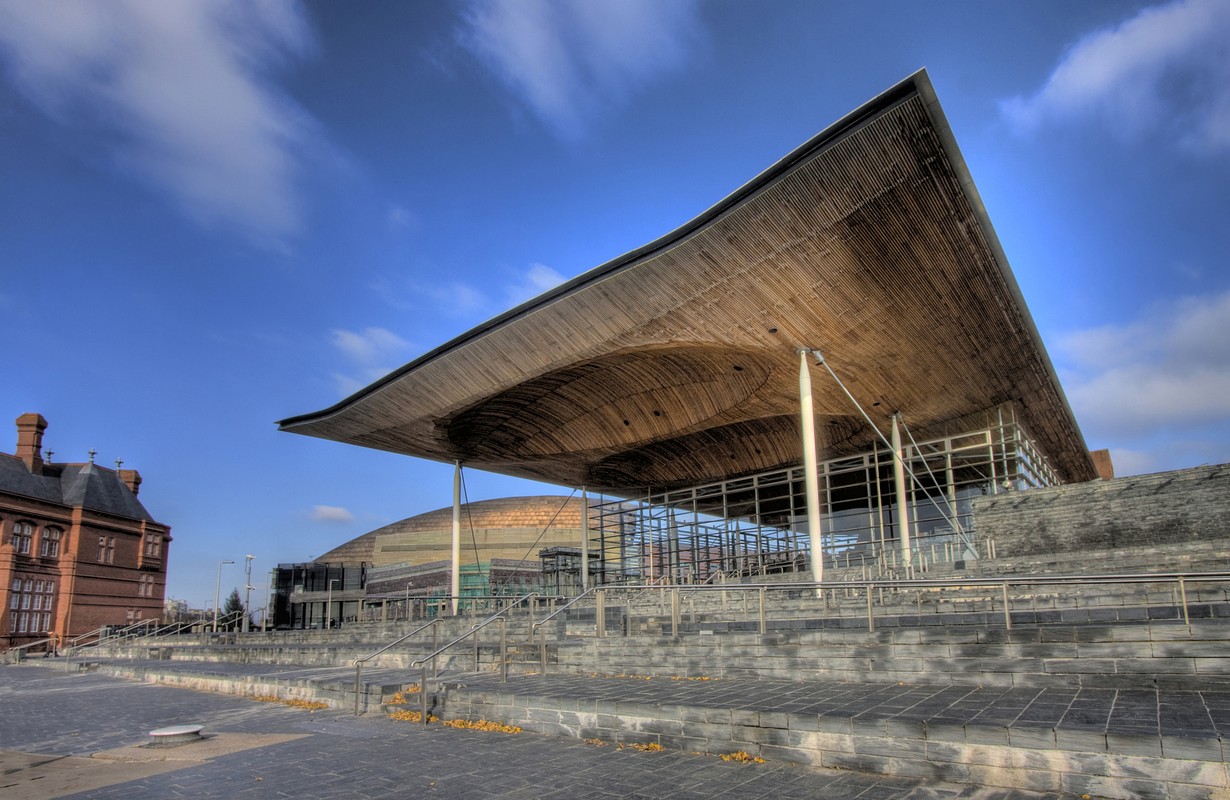
Wales can proudly claim to be one of the world’s leaders on recycling. With a crucial Senedd election just around the corner, there is a real opportunity not just to defend this strong environmental record, but to build on it.
Yesterday’s passing of the Deposit Return Scheme (DRS) regulations in the Senedd is a major moment for the UK-wide DRS. It confirms that October 2027 will be the date the scheme becomes operational across all four nations.
But it’s still not plain sailing. While the regulations passing give us much-needed certainty, the continued inclusion of glass creates complexity, confusion and a risk of fraud. There is still time for the next Welsh government to make the tweaks that will make it a success.
Building a well-designed and fully interoperable DRS
We at Suntory Beverage and Food GB&I (SBF GB&I) – the makers of Lucozade and Ribena – recognise that drinks containers can often be found littered in communities and the environment. That’s why we see a well-functioning DRS as the most effective route to tackling that challenge at source – creating a clear incentive for containers to be returned and recycled.
The evidence from across Europe is clear. Where DRS is already in place, collection rates for drinks containers often exceed 90 per cent,1 compared to an estimated 70 per cent in the UK today. It dramatically increases high-quality recycling, tackles litter at source and supports the transition to a circular economy.
Getting the scheme right
The progress made by the Welsh government towards a DRS launch date of October 2027 is welcome, but we can’t look past the misalignment still present that will undermine this generational circular economy opportunity.
With glass bottles still in scope and reuse expectations distracting from day-one delivery, the next Welsh government must focus on making the scheme work for citizens, businesses and the environment.
The post-election priority for all parties must be to amend the regulations to align the Welsh DRS with the rest of the UK. For industry to be able to deliver an effective scheme on day one, the new administration must:
- Remove glass bottles from the DRS scope
- Delay the inclusion of reuse requirements until the scheme is operational and a full impact and environmental assessment has been carried out.
Industry stands ready to deliver a circular economy
This is not just a matter of public policy; it’s a vital way to boost the UK domestic supply of recycled plastic and reduce carbon emissions. It’s also a core part of our own long-term sustainability ambition.
Through our Growing for Good vision, we’re committed to delivering positive change by supporting communities and reducing our environmental impact. Our global ambition is to achieve 100 per cent sustainable* plastic bottles by 2030 and net-zero across our value chain by 2050.
We’ve already invested more than £11m to make our packaging more circular and moved Ribena and Lucozade Sport bottles to 100 per cent recycled PET. In addition, we’ve committed £6.5m towards internal DRS readiness and helping set up the UK Deposit Management Organisation – Exchange for Change. Industry is playing its part; now the political parties of Wales can play theirs.
Let’s make it happen
The next five years will shape Wales’ next chapter on recycling. By making two seemingly small, yet consequential, tweaks to the regulations in the next Senedd, we can deliver the straightforward and effective Deposit Return Scheme that will revolutionise the circular economy in the UK.
*recycled or plant-based materials
References


(UK MoD)
4 min read
Last month, the UK Commando Force rolled into Speaker’s Court at Westminster (by invitation!). More than a display of military hardware it was an opportunity to discuss one of the UK’s most strategic challenges and opportunities: the High North and Arctic.
The strong cross-party attendance spoke volumes. Phil Bricknell MP, Liz Saville Roberts MP, Vikki Slade MP, The Rt Hon Mark Francois MP, and Speaker Sir Lindsay Hoyle were just some of those who joined us to explore why this frozen frontier matters to Britain’s future. Their presence reflected growing parliamentary awareness that the High North is central to UK and Nato security, and how, as part of the Hybrid Royal Navy, the UK Commando Force is rising to meet that challenge.
Why the High North matters
For an island nation built on maritime trade, the Arctic and High North is vital. This is the only place where Russia, through its formidable Northern Fleet, can directly threaten the lifelines that sustain and protect us: food, energy, undersea data cables, and the sea lines of communication that connect the US to Europe.
It is the gateway to the Atlantic and the Northern Sea Route. And it is where Russia bases some of its most strategic military capabilities. Our national prosperity and defence depend directly on what happens here.
Climate change is accelerating competition. New sea routes are opening and military activity is increasing. As this environment becomes more contested and Russian aggression continues, the ability to defend and deter in the High North has become essential to wider Euro-Atlantic security.
Nato expects its leading members to bring credible capability and leadership to this region. Through our deep relationship with Norway, strengthened by the 2025 Lunna House Agreement and our longstanding leadership of the Joint Expeditionary Force (JEF), the UK has longstanding experience here.
The Alliance and our allies want us to exert that leadership to strengthen deterrence and counter hybrid threats.
Rapid Modernisation
Five years into its transformation programme, the UK Commando Force is highly modernised, specialising in warfighting, crisis response and maritime special operations. Building on lessons from contemporary conflict, we integrate dispersed and highly trained commando teams with advanced targeting sensors, uncrewed systems, and electronic warfare to enable precision strikes, not least from Royal Navy platforms like the Carrier Strike Group. We practised exactly this with our allies during Exercise TALISMAN SABRE in Australia last summer.
We are a key element of the UK and Nato’s Special Operations Forces. Operating both on land and sea we’re conducting deterrence operations now and ready to respond rapidly in crisis and conflict to counter threats and set the tactical conditions for larger conventional forces to bring their strength to bear. For ministers, this provides something rare and invaluable: strategic flexibility, military optionality across the spectrum of competition to conflict, and affordability.
High Value and Affordable
Arctic warfighting readiness cannot be generated overnight. Operating at -30C, across frozen terrain, in conditions that degrade people and equipment requires years of specialist training. We are the only UK brigade capable of it and one of very few in Nato. It is a point of national comparative advantage.
The Commando Force’s persistent presence in the High North is greatly valued by the US and our regional allies. We are the tip of the spear for the First Sea Lord’s ATLANTIC BASTION, SHIELD and STRIKE operations – constructs which tie land, sea, air, space, and cyber capabilities together and put the UK at the centre of a sophisticated defence and system that allows allies to persistently work together. It is driving defence industrial cooperation, technological innovation, and opportunity for our economy.
Ready now
We maintain a very high readiness posture, continuously tested through Arctic deployments and global crisis response tasks. The force deploys quickly, integrates seamlessly with allies, and operates independently when required.
Strategic Awareness
In an era of instability and acute power competition, our Westminster visit underscores Parliament’s recognition of the importance of the High North to both our defence and strategic interests. It is the gateway to our own backyard, and our partners welcome our leadership there. The UK Commando Force is rising to the challenge and in the past month alone, we have been visited in Norway by the Foreign and Defence Secretaries, Minister of State for the Armed Forces, and over thirty of the UK and Nato’s most senior military officers.
The ice may be shifting, but Britain’s commitment to the Arctic and delivering against Nato’s commitments there remains rock solid.
Brigadier Jaimie Norman DSO OBE Royal Marines, Commander 3 Commando Brigade
Politics
The House | “A read worthy of its subject”: Sir David Natzler reviews ‘Walter Bagehot: Life and legacy’


1831: Walter Bagehot | Image by: History and Art Collection / Alamy
4 min read
Marking the bicentenary of his birth, the authors have delivered a balanced and lively examination of the life of the English journalist and constitutional authority
Last month was not only the 200th birthday of University College London but also of one of its distinguished early graduates: Walter Bagehot. Editor of The Economist at the age of 32, author of a seminal work on the British constitution and perhaps our first and finest financial journalist. His birthday has produced this endearing and lively tribute by former House of Commons Library stalwarts Janet Seaton and Barry Winetrobe. Now settled in England’s smallest town, Langport in Somerset – Walter’s hometown – they are justifiably keen to see him properly remembered, although not always admired. Their turn of phrase matches his. It is a fitting tribute, but not an encomium. At the outset they deal with one puzzle head on: how to pronounce his name; it is Badge-ut.
Bagehot has had surprising admirers: from Woodrow Wilson, who as a Princeton academic visited his grave while on a cycling tour of Britain – alas, no photos survive – to the editor of 15 volumes of his collected writings, the late Norman St John-Stevas, who left his collection of Bagehot bric-a-brac to Langport. (There is no proper picture in the book of St John-Stevas, but curiously there is a picture of Pope Paul VI, who admitted to St John- Stevas that he had never heard of Bagehot and mispronounced his name. One can hardly blame the pontiff.)

Bagehot’s reputation as a constitutional expert rests mainly on his 1867 book The English Constitution (meaning the British constitution). An academic or thoroughly researched work it is certainly not, but it is a shrewd and sardonic description from a London perspective of the role of the monarchy and legislature and how the whole machinery is (or was) organised by the cabinet as the effective organ of management. Bagehot was candid and quotable about the monarchy in particular and the importance of royal weddings. He loved a turn of phrase more than profound analysis. But I suspect he was the first constitutional commentator to publish a truly readable book – a long way from Erskine May.
He loved a turn of phrase more than profound analysis
Bagehot was quintessentially a man of business who commented on politics and economics from a position of mid-Victorian consensus. A scion of the firm of Bagehot and Stuckey (who controlled the Parrett river trade of west Somerset and the big West of England banking house of Stuckeys), he wrote influential articles on banking controversies in The Economist while still a salaried employee of, and substantial shareholder in, Stuckeys Bank. He also produced Bagehot’s Rule on the lending duties of a central bank in a banking crisis, which central bankers still quote, even if they do not rely on.
Bagehot lived the life and died the death of a character from a Trollope novel, or at some moments from the provincial settings of George Eliot. He came from sound Unitarian stock: married the daughter of the founder of The Economist; enjoyed hunting; had an enormous and concealing beard; was a poor orator; and employed William Morris and William de Morgan to do up his house. He stood for Parliament once, possibly to please his mother, but was defeated. Some of his opinions, such as on social Darwinism and on a racial hierarchy, are now simply noxious.
The third and final section of this work looks at the ways in which he has been commemorated, including a fine stained-glass window in the church at Langport, which I finally managed to visit. This thorough and very balanced book can itself now be added to their list of commemorations, and I can wholeheartedly recommend it as a read worthy of its subject.
Sir David Natzler was clerk of the Commons 2014-19, honorary senior research fellow at the UCL Constitution Unit, and co-editor of the 25th edition of Erskine May
Walter Bagehot: Life and legacy
By: Janet Seaton & Barry Winetrobe
Publisher: Langport & District History Society

If you fall into the camp of people who like to stick a classic episode of Friends on while you’re cooking dinner, trying out some new self-care or just catching up on life admin, the last couple of months will no doubt have been a little more difficult than normal.
After seven years, the award-winning sitcom left Netflix UK at the end of December (yes, right before our usual New Year’s Day rewatch of The One With All The Resolutions).
Since then, anyone hoping for a nostalgic trip to Central Park has had to embark on a quest to dig out their old DVD boxset from the 2000s, or schedule an appointment to watch them when they’ve been airing on Comedy Central.
Fortunately, there’s now less than 24 hours to go until Friends is available to stream in the UK again – albeit with a new home.
Thursday 26 March will mark the UK launch of the platform HBO Max, which has been the US streaming home of Friends since the service premiered across the pond in 2020 (notably, HBO Max was also responsible for the show’s much-hyped reunion special, which aired in 2021 after numerous delays due to the Covid pandemic).
Existing Now customers will be given immediate access to an ad-supported version of HBO Max, while new users will have four different payment options if they want to use the service.
HBO Max will give its users on-demand access to some of HBO’s most popular original series ever, including Sex And The City, The Sopranos, Succession and Game Of Thrones.
It will also mean British viewers are able to stream The Pitt for the first time.
The Pitt has been a huge hit with American audiences since it premiered on HBO Max last year, cleaning up at the Golden Globes, Emmys, Actor Awards and Critics’ Choice Awards.
Other exciting additions to HBO Max include the award-winning comedy Hacks, which will premiere its last season later this year, and the third and final iteration of The Comeback, starring Friends alum Lisa Kudrow as the iconic anti-heroine Valerie Cherish.

Harrison Layden-Fritz is a Conservative campaigner and political writer. A centre-right free marketeer, he is passionate about restoring opportunity for the next generation and the renewal of Conservatism.
On the 28th of February, forty-seven years after the Iranian Revolution named America as its ultimate enemy, the tension finally ignited. British political conversation should have turned immediately to our energy exposure, fractured supply chains and the fragility of a regional order on which our trade, aviation and financial networks depend. Instead, a chorus rose from the Left about tax exiles in Dubai.
Set aside that those caught in the region were tourists, not expats. For those who have built their lives in the Gulf, there has been no rush for the exit doors. The reasons people build lives abroad do not dissolve with a short-term conflict. What matters most is that the Left’s mobilisation of anti-expat rhetoric was not just a distraction. It was a symptom. A political class still navigating by the stars of a vanished world, reaching instinctively for the wrong argument because it has never developed the right ones.
That is the defining problem of British politics today. Not any single crisis, but the absence of a doctrine equal to the age we are entering.
The world that no longer exists
The post-Cold War settlement rested on assumptions that have now collapsed. That interdependence was inherently stabilising. That open markets were self-correcting. That multilateral institutions would contain conflict. That Britain could safely thread its prosperity through global systems without maintaining the sovereign capacity to act independently of them.
For a generation those assumptions felt like realism. With the benefit of hindsight, they were a prolonged act of strategic optimism, sustained long past the point the evidence supported them.
The 2008 financial crisis showed that global capital markets transmit catastrophic risk faster than any institution can contain it. Covid proved that supply chains built for efficiency rather than resilience fail precisely when most needed. Russia’s invasion of Ukraine confirmed that territorial aggression in Europe was not a historical relic. And now the Gulf, long treated as a stable hub for trade, travel and finance, cannot invest its way out of the dynamics of its neighbourhood.
These are not separate shocks. They are expressions of a single reality. The liberal international order is not fraying at the edges. It is being actively dismantled at its centre. What is emerging in its place is a multipolar world defined not by shared rules but by competing power, in which interdependence is weaponised as readily as it is celebrated. The nations that prosper will be those that recover genuine agency over their own affairs. Britain has not yet reckoned with what that demands.
The response from European capitals has been no more reassuring. Where clarity and resolve were demanded, the continent offered process, statement and hesitation. This is not a failure of individual leadership. It is the terminal expression of a worldview: that institutions, dialogue and interdependence are sufficient answers to the exercise of raw power. They are not. The neoliberal order has no doctrine for the world now emerging. It has only the memory of the one that has gone before.
The cost of outsourced sovereignty
Strategic complacency has a price, and we are beginning to pay it.
Our energy policy was built on the assumption of stable global supply. Our defence industrial base was hollowed out on the assumption that large-scale conflict was obsolete. Our financial architecture was integrated into global markets on the assumption they would remain open and predictable. Our foreign policy was conducted through multilateral institutions on the assumption those institutions retained coherence and authority.
Every one of those assumptions is now in question. Energy prices lurch widely with every global shock. Supply chains fracture under geopolitical pressure. Our defence posture has struggled to respond at pace to a transformed threat environment. Our diplomatic leverage is constrained by dependencies we were warned about and chose to ignore.
This is not a counsel of despair. It is an honest account of where we stand. And honesty is the beginning of strategy.
Strategic autonomy
Britain is a resource-light island nation. Global trade accounts for more than sixty percent of our GDP. We cannot turn inward and we should not try. The question has never been whether to engage with the world. It is on what terms.
For thirty years we have participated in the global system as though participation itself were a form of power. It is not. In a multipolar world, genuine power rests on the capacity to act independently when necessary and to choose your dependencies rather than inherit them by default. That is what I mean by strategic autonomy. It is the organising principle Britain’s foreign and economic policy has lacked for a generation. Not isolation. Not nostalgia. The disciplined, clear-eyed reconstruction of Britain’s capacity to determine its own course.
That means energy we control, not energy we import at the mercy of hostile states. It means a defence posture built around sovereign industrial capacity and genuine deterrence, not the performance of it. It means domestic capital markets capable of backing British growth rather than a financial architecture totally dependent on footloose foreign flows. It means alliances chosen and maintained on the basis of shared strategic reality, not institutional habit. And it means treating Brexit for what it should always have been: not a cultural statement but a strategic unbinding, the removal of external constraint so that Britain can once again choose, adapt and act in its own interests. That window is already being closed.
None of this is cost-free, and intellectual honesty demands we say so. Strategic autonomy requires hard arguments that British politics has ducked for too long. We cannot build a resilient economy while the number of people out of work due to long-term sickness has risen by approximately forty percent since 2019. We cannot embrace the advantages of AI and automation while carrying some of the highest industrial electricity prices among developed nations. We cannot unleash the entrepreneurial talent of future generations while piling an ever-higher burden of an ageing population onto their shoulders. These are not peripheral concerns. They are the foundations the doctrine must be built on.
Nor can we claim genuine strategic autonomy while remaining judicially subordinate to bodies whose authority we have never meaningfully chosen. Britain was a pioneer of human rights and the rule of law long before the ICC, ICJ or ECHR existed. The United States enshrined such principles in the UN Charter but never felt the need to subject itself to foreign judicial oversight. It trusted its own processes. To those who decry any attempt to reassert British self-determination, the question is simple: do you not trust us? Strategic autonomy means retaining the sovereign right to act in our national interest, on defence, borders and security, without being vetoed by institutions of contested legitimacy. If we are to lead within NATO as American engagement recedes, we need armed forces and a defence industrial base capable of delivering on our commitments, and the legal clarity to act without paralysis, as Starmer’s failure on Iran made plain.
In the end, strategic autonomy is not the easy path. But it is the right one.
Taken together, these are not a list of policies. They are the load-bearing walls of a new British settlement, one built for a world of permanent competition rather than assumed stability.
The Conservative case
There is nothing inevitable about which party writes this doctrine, especially given the hard choices involved. But there is a natural home for it.
Strategic autonomy is a Conservative idea at its core. The same instinct that drives Conservative thinking on personal responsibility and self-determination applies equally to nations. Dependence, whether of individuals on the state or of Britain on systems we do not control, is a vulnerability to be reduced, not a comfort to be managed. Ownership of your own condition, with all the accountability that entails, is the foundation of genuine strength.
The Conservative Party’s greatest governing achievements were built on exactly this clarity. The willingness to see the world as it is, name what that demands, and act before events make the choice for you. That clarity has been absent. For fourteen years the party administered an inherited settlement, trusting that Britain’s natural entrepreneurialism would endure in spite of an unreformed state, and that the world would not punish a lack of strategic foresight. It placed its faith in stability continuing. Stability did not continue.
The pressure points, the Gulf, Eastern Europe, the Indo-Pacific, the contest over technology and critical supply chains, will not resolve themselves. They will intensify. The political force that develops a coherent doctrine before it is forced to by events will own the serious ground of British politics for a generation.
That is the opportunity now. Not to manage the consequences of a changed world, but to think clearly about what governing in it requires. To develop the doctrine before the crisis demands it. To lead the argument rather than react to its conclusions.
The age of strategic reliance is over.
The question is whether British Conservatism has the clarity to say so, and the courage to resolve it.

Martin Clunes is standing by his work in the 5’s Power: The Downfall Of Huw Edwards, after it faced criticism from its subject.
The Wuthering Heights star takes the lead in the feature-length drama, which aired on Tuesday night, telling the story of the ex-BBC News presenter’s very public fall from grace.
On the morning the drama aired, Clunes made an appearance on Good Morning Britain, where he was asked how he felt about Edwards’ recent comments slamming the TV movie.
“I appreciate he’s upset by the fact that we’ve made this programme,” the Bafta winner said.
“But [Edwards] would have reported on other [people’s] downfalls and other people’s disgraces [when he was working for BBC News].”

He added later in the conversation: “If anybody thinks it’s too soon, don’t watch it.
“I don’t think it’s too soon – I don’t know what the timetable is for these things.”
A 5 spokesperson responded to Edwards’ comments earlier this week saying: “Power: The Downfall of Huw Edwards is based on extensive interviews with the victim, his family, the journalists who revealed his story, text exchanges between the victim and Edwards, and court reporting.
“It has been produced in accordance with Ofcom’s Broadcasting Code. All allegations made in the film were put to Huw Edwards via his solicitors six weeks before transmission.”
Like Clunes, the broadcaster’s chief content officer brushed off the suggestion it was “too soon” for a TV drama about the Edwards scandal, insisting: “If you want to reach as many people as possible and highlight how grooming works and the insidiousness of grooming, drama is [the] most powerful way to do it.”
He also said that Power offered “a different side of the story”, while the show itself shone a light on the more “serious issue” of “the grooming of young men and abuse of power”.
Clunes has received widespread praise for his leading performance in the drama, although the response to the show itself has been decidedly more mixed.
Power: The Downfall Of Huw Edwards is now streaming on 5’s catch-up service.

IPL vs NFL, NBA and EPL: How India’s T20 powerhouse stacks up globally | Business

When Satellite Data Becomes a Weapon

Crypto Gold Live Trading 25 March | Market Trader | #goldtrading #cryptotrading #bitcoin


-
 Crypto World5 days ago
NIO (NIO) Stock Plunges 6.5% as Shelf Registration Sparks Dilution Worries
-

 Fashion5 days ago
Weekend Open Thread: Adidas – Corporette.com
-

 Politics5 days ago
Jenni Murray, Long-Serving Woman’s Hour Presenter, Dies Aged 75
-

 Crypto World4 days ago
Best Crypto to Buy Now: Strategy Just Spent $1.57 Billion on Bitcoin During Fear While Early Investors Quietly Enter Pepeto for 150x Potential
-

 News Videos7 days ago
RBA board divided on rate cut, unusually buoyant share market | Finance Report | ABC NEWS
-

 Crypto World4 days ago
Bitcoin Price News: Bhutan Sells $72 Million in BTC Under Fiscal Pressure, but the Smart Money Entering Pepeto Sees What the Market Does Not
-
 NewsBeat4 hours ago
Manchester United reach agreement with Casemiro over contract clause amid transfer speculation
-

 Tech5 days ago
inKONBINI Lets You Spend Summer Days Behind the Register
-

 Crypto World7 days ago
Canada’s FINTRAC revokes registrations of 23 crypto MSBs in AML crackdown
-

 Sports2 days ago
Remo Stars and Kano Pillars Strengthen Survival Hopes in NPFL
-
 NewsBeat7 days ago
Residents in North Lanarkshire reminded to register to vote in Scottish Parliament Election
-

 News Videos7 days ago
PARLIAMENT OF MALAWI – PAC MEETING WITH REGISTRAR OF FINANCIAL ON AMARYLLIS HOTEL – INQUIRY LIVE
-

 Politics6 days ago
Gender equality discussions at UN face pushbacks and US resistance
-

 Business3 days ago
No Winner in March 21 Drawing as Prize Rolls to $133 Million for Next
-

 Business7 days ago
Who Was Alex Pretti? 5 Key Facts About the ICU Nurse Killed by Federal Agents in Minneapolis
-

 Sports2 days ago
Gary Kirsten Accuses Pakistan Cricket Board Of ‘Interference’, Mohsin Naqvi Responds
-

 Tech3 days ago
Give Your Phone a Huge (and Free) Upgrade by Switching to Another Keyboard
-

 Tech7 days ago
Inventec’s bizarre VeilBook laptop hides its touchpad under a sliding keyboard just to give cooling fans a little breathing room
-

 Sports5 days ago
2026 Kentucky Derby horses, odds, futures, preview, date: Expert who nailed 12 Derby-Oaks Doubles enters picks
-
Sports6 days ago
Vikings Free Agency Enters Phase 2 with Key Questions
You must be logged in to post a comment Login