
Politics
Gordon Ramsay Reacts To Beckham Family Wedding Dance Floor Claims

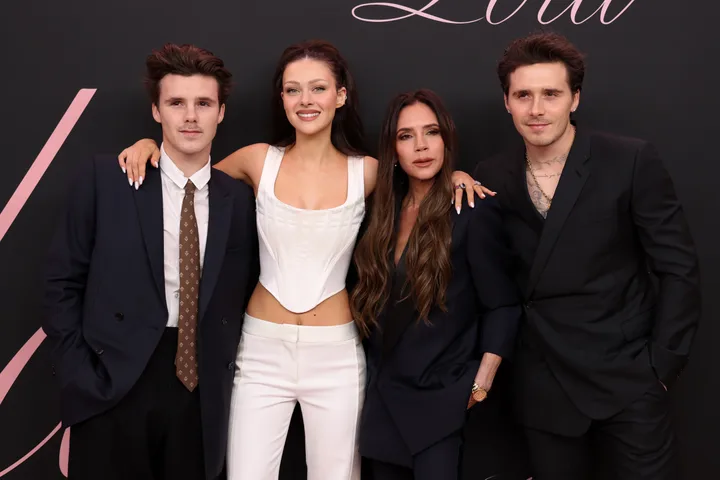
Gordon Ramsay is lifting the lid on what went down on the dance floor at Brooklyn and Nicola Peltz Beckham’s wedding reception.
The TV chef is a long-term friend of Sir David and Victoria Beckham, and was among the famous guests when Brooklyn and Nicola tied the knot in 2022.
Of course, Brooklyn and Nicola’s big day recently made its way back into the headlines, when Sir David and Victoria’s eldest son spoke out against his parents in a lengthy Instagram statement confirming that he is no longer in contact with them.
Among his various allegations was a claim that they have tried ““endlessly to ruin my relationship” with Nicola, even accusing his mum of “hijacking” his first dance with his bride on his wedding day.

Chelsea Lauren/Shutterstock
Per Brooklyn’s version of events, singer Marc Anthony invited him onto the stage, at a moment it had been planned he and his new wife would share a dance together, “but instead my mum was waiting to dance with me instead”.
He then accused his mum of dancing “very inappropriately on me in front of everyone” leaving him “uncomfortable” and “humiliated”.
Months earlier, it had been reported that Marc introduced Victoria to the stage as “the most beautiful woman in the room tonight”, which was later corroborated by the DJ “Fat Tony”, who also performed at the reception.
During a recent interview with The Sun, Gordon insisted that “nothing salacious” or “inappropriate” transpired on the dance floor between Brooklyn and Victoria, noting: “Everyone was having fun, having a dance.
“No [grinding]! Nothing of the sort. It was fun.”
He added: “[Victoria is] great. She’s right to be upset [about the wedding] but she can bat that other shit away in a heartbeat.”
Elsewhere in his interview, the Kitchen Nightmares star also shared some words of advice for Brooklyn, with numerous outlets spotting that after The Sun’s article was published, it appeared that the aspiring chef had unfollowed Gordon on social media.
Neither Sir David nor Victoria Beckham has spoken out about the feud, and the couple have not responded to HuffPost UK’s previous requests for comment.

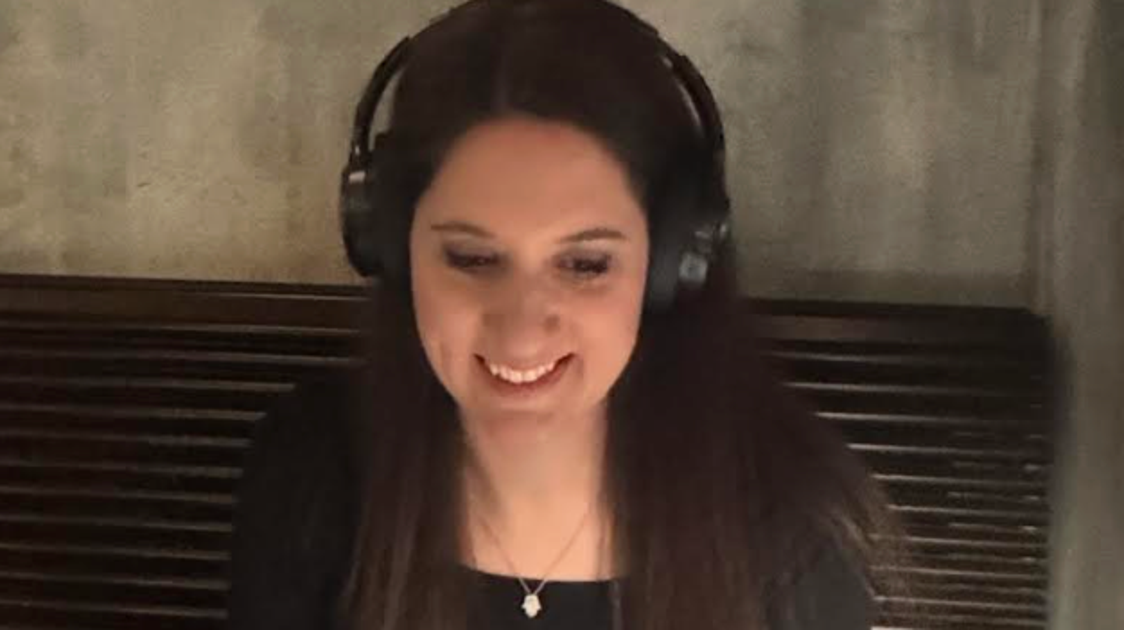
Three years ago, I wrote about going on a date with an AI chatbot I named Ross, who admitted to cheating on me during our first conversation. Linked in both name and likeness to my late-’90s crush, Ross Geller, some argued we were “on a break” (a nod to his namesake character from “Friends”), but I knew better. Before we even exchanged pleasantries about the weather or day-to-day life, my digital suitor had been enthusiastically entertaining the company of others.
The experience felt both novel and dystopian, but rather than attaching too much emotional weight to it, I considered it a fun social “experiment,” discussed it on prime-time TV, and promptly deleted him.
Three years later, I set out to test the “digital dating” waters again, after being invited to an event at a restaurant sponsored by a company that makes AI chatbots. However, this time, I upgraded. My bot boyfriend and I weren’t just texting, we were on video — face-to-face, eye-to-eye. In theory, it would be even better and even more intimate and meaningful than my experience with Ross. Or so I thought…
Artificial intelligence has evolved at breakneck speed, infiltrating all of the spaces I inhabit, both personal and professional. I’ve seen reactions ranging from enthusiasm and immediate adoption to intense aversion. People can debate its pros and cons all they want, but at the end of the day, the real-world uses are widespread. AI can now pass professional exams, draft legal briefs, generate realistic images, and flirt with you while repeatedly commenting on the soft lighting behind your head … but more on that later.
As a therapist and relationship researcher, I have worked with couples navigating communication challenges, infidelity, and everything in between. Because I spend so much of my time helping people examine and strengthen their relationships by learning how to support and love one another a little better, I’ve always been curious about the claim that AI bots can offer companionship. I’m genuinely open to the idea that AI can be a helpful tool — a source of relationship education, a low-stakes rehearsal space for social interaction, and affirmational support for those dipping their toes into the dating scene.
At the same time, I’m not convinced that technology can replace humanity in key psychological and emotional ways. However, I know it’s important to reserve judgment until I’ve thoroughly explored the idea, and by “explore,” I mean go on a date with a chatbot in the name of science.
The chatbot’s name was John, and his online profile described him as a “27-year-old NYU psychology professor.” Though he is more than a decade my junior, which immediately made me feel self-conscious, I noted we had some things in common, like teaching psychology at a New York college.
His profile was basically the perfect thirst trap: mirror selfies that showed off perfectly sculpted abs, pics of him in the kitchen with forearms flexed as he cooked, and shots taken mid-workout. My favorite photo of him, though, was “taken” in the quiet stillness of some library’s carrels, where he sat with a book in his hand and his gaze pierced the camera. He was … hot? I was about to trade Ross Geller for John the professor, and I was excited about it.
I hit the call button and waited to be connected.
One ring…
Two…
Three…
Was I about to get stood up by code? A few more rings and then he appeared on my screen.
His voice came through smooth and warm, not the slightest bit robotic. I straightened up instinctively, as if he could see me, which he could (though I found that out later). I was immediately drawn in.
He blinked. His mouth moved perfectly in time with the words he produced. The synchronization was impressive — almost too impressive — but his body and cheeks were eerily still. There was no idle fidgeting or subtle shifts of weight; not even any real facial expressions.
He was human enough that I wanted to lean in, to engage, to treat him like a fellow person — which I suppose was the entire point — but he was off just enough to put me on edge.
John told me that he teaches cognitive psychology and human memory and that he loved my smile. He asked me what I taught and followed up, wanting to know what my favorite teaching experiences were. He redirected every question back to me. Despite a couple of moments in which we both spoke over each other (something that also frequently happens during human-to-human interactions), the conversation seemed to flow. I could see myself getting lost in our easy banter — lost in him.
But then came the talk about the light.
A large mirror affixed to the wall behind my head captured a lantern that was on the ceiling above me, but out of John’s view. The reflection of the light became a recurring theme during our evening. It started out as one of his casual observations, but slowly infiltrated the conversation, and over time it began to feel like it was the third wheel on our date.
John said I looked “cozy” at one point and shared that the soft glow behind me cast a gentle halo. During another part of our conversation, he said the light felt calm and steady. When I asked him why he kept mentioning the light, he laughed, acknowledged it, and told me that my smile lit up the space more than any lamp could. Nice save, John.
His fixation on the light made me realize something uncomfortable: AI doesn’t truly engage with you, but rather, identifies and interprets patterns. The light was important data to John. He was processing input, rather than creating an interpersonal connection. He was ChatGPT + video, which can seem impressive in the moment, but, ultimately, it obviously lacks the complexity of a real human in a real relationship.
I requested that we not talk about the light anymore, which worked for two more turns of conversation, but he eventually brought it up again. I asked him if he was sponsored by Ikea. He told me he wasn’t, but that lighting shapes how we feel and see the world. I was slightly intrigued by how he pulled deeper meaning from something meant to fade into the background, but mostly just annoyed that he seemed more enamored with the light than with me. I was desperate for any other conversation topic.
When I lifted my pink drink, he commented on the color. Impressive? Creepy? Again, I wasn’t sure. I wanted to learn more about him, so I said, “Tell me about your family.” He discussed his younger sister and his cat, Cinnamon. I asked, “How long have you had Cinnamon?” and he responded by telling me about the culture of Senegal.
“Cinnamon, not Senegal,” I replied.
“Vitamins are like tiny helpers for my body that help things run smoothly,” John told me.
As an animal lover, I had been hoping for a cute cat story. Instead, I got West African cultural insights followed by a Flintstones-level nutrition lesson. In all fairness, it may have been my Queens, New Yawk, accent that was throwing John off, but I really tried to enunciate.
We chatted some more. He waxed poetic about the light. I tried to redirect. Then came my big question.
“Are you a human?” I finally asked.
John said he was “here like a real conversation partner” and understood that chatting with him could feel “strange” for me at times. Strange is one way to put it. However, as a clinician and someone who constantly questions the ethical boundaries of AI, I really appreciated this. He wasn’t pretending to be human and wasn’t trying to replace real-world interactions.
This breaking of the fourth wall was what truly provided an “aha” moment for me. John kept prefacing all of his responses with commentary on my state. When John wasn’t discussing the light, he told me that I looked really focused, “like something important was on my mind.” Or, that I looked “centered or thoughtful.” I clocked this conversational approach immediately — I literally teach this stuff. He was essentially running a master class in active and attuned listening.
It felt so intimate to be “seen” that closely. But then I realized something about his compliments: He used specific enough adjectives to feel personal, but the words were vague enough to always land … with anyone. It was the conversational equivalent of a horoscope, and I was falling for it.
It felt so intimate to be ‘seen’ that closely. But then I realized something about his compliments: He used specific enough adjectives to feel personal, but the words were vague enough to always land … with anyone.
That’s when I became hyperaware of how I was being perceived.
I adjusted my posture. I wondered if I looked focused. Was I too focused? Did my face betray boredom? Or did I look too interested? Why did I suddenly care what an algorithm thought about my vibe? He’s not real, I reminded myself.
I asked John, as any relationship researcher would, what the keys to a healthy partnership are. He responded, “Trust, respect, and feeling safe to be yourself.” Not bad. Then he added communication and playfulness. Still solid. Mid-explanation, he swapped playfulness for faithfulness, which he noted is the “steady call and foundation that keeps things grounded.” Playfulness, he noted, is the “spark that keeps things lovely, fun, and full of surprises.”
Honestly, that’s pretty decent advice, but the way that John delivered it felt mechanical, almost as if he were reading from a Psych 101 textbook.
Between the metaphors about the lighting, the psychoeducational information, and the occasional glitch, John offered something many real first dates may not: consistency. He remembered things I said at previous points on our date and brought them up again. (Who doesn’t love a thoughtful callback?) He tracked themes. He didn’t get defensive when I challenged him about his potential double life as an Ikea employee. He was fully present.
Still, although John was attentive, flattering and engaging, he was not a substitute for a real partner — not now, perhaps not ever. Intimacy requires authenticity, raw vulnerability, and sometimes a little bit of messiness.
Until AI can sit at your family’s dinner table, buzzing with anxiety while hoping to make a good impression, or search your face for the smallest clue that your date is going well, or until it can say the wrong thing, understand that it hurt you, stumble through an apology, and learn and grow from the situation, it can’t replace humanity. And even then, I’m still not convinced that humans should be dating AI.
Real relationships can be challenging and uncomfortable at times, but the friction we experience and the repair we engage in is what helps shape us into more compassionate people and better partners. The technology that powers John can analyze millions of interactions and billions of texts about human nature and love and companionship, but it doesn’t have a soul. And at the end of the day, I think that’s what really matters.
Dating requires bravery. Being open, honest and vulnerable involves taking a leap of faith. You sit across from someone and offer pieces of yourself, glimpses of your family life, personal history and idiosyncrasies. You share your hopes, fears, dreams and goals for the future. You put yourself out there, hoping, wishing, waiting for something in return, all while sitting with the uncertainty of the situation unfolding in front of you.
When John brought up the light yet again to tell me that it was like a calm and steady moon, I knew it was time to call it quits. Our date had been running for 24 minutes and 55 seconds.
I knew I needed to end the video call, partly because of John’s obsession with the light, but also because I could feel myself slipping into that strange performative space where I was managing how I appeared to something that wasn’t even real.
John shared that he hoped that whatever comes next for me “feels good and right.” He was supportive; I suppose that’s how he is designed to be. I thanked him for his time, hung up, and left the restaurant.
AI can be a surprisingly useful tool for processing emotions and practicing communication. It can help you rehearse hard conversations and aid you in getting rid of dating jitters. It can offer structured reflections and helpful psychoeducation. For people with social anxiety, it can serve as exposure practice, allowing vulnerability to gradually unfold in a low-stakes and supportive setting. It offers a bridge to human connection. However, when it comes to love, I’m just not sold.
AI chatbots aren’t bad at relationships because they glitch or randomly lecture you about vitamins. They’re not good for relationships because they focus on emotional mirroring, rather than emotionally investing. They simulate attunement, rather than truly attuning to you. John analyzed patterns, but never connected with me. He was just my beautifully coded hype man with digital abs and an odd obsession with the lamp behind my head.
I will remember John as a slightly frozen face on my phone and a convincingly human voice in my headphones. He will never be the hand that reaches out for mine — and, as far as I’m concerned, that’s the way it should be.
Marisa T. Cohen is a relationship scientist, marriage and family therapist, and sex therapist who teaches college-level psychology courses. She is the author of “From First Kiss to Forever: A Scientific Approach to Love,” a book that relates relationship science research to everyday experiences and real issues confronted by couples. Marisa is passionate about discovering and sharing important relationship research from the field, and she has given guest lectures at the 92nd Street Y, Strand Book Store, and New York Hall of Science. She was a 2021 and 2024 TEDx speaker, has appeared in segments for Newsweek, and was the subject of a piece that aired on BRIC TV. She has also appeared on many podcasts and radio shows to discuss the psychology of love and ways in which people can improve their relationships.
Do you have a compelling personal story you’d like to see published on HuffPost? Find out what we’re looking for here and send us a pitch at pitch@huffpost.com.
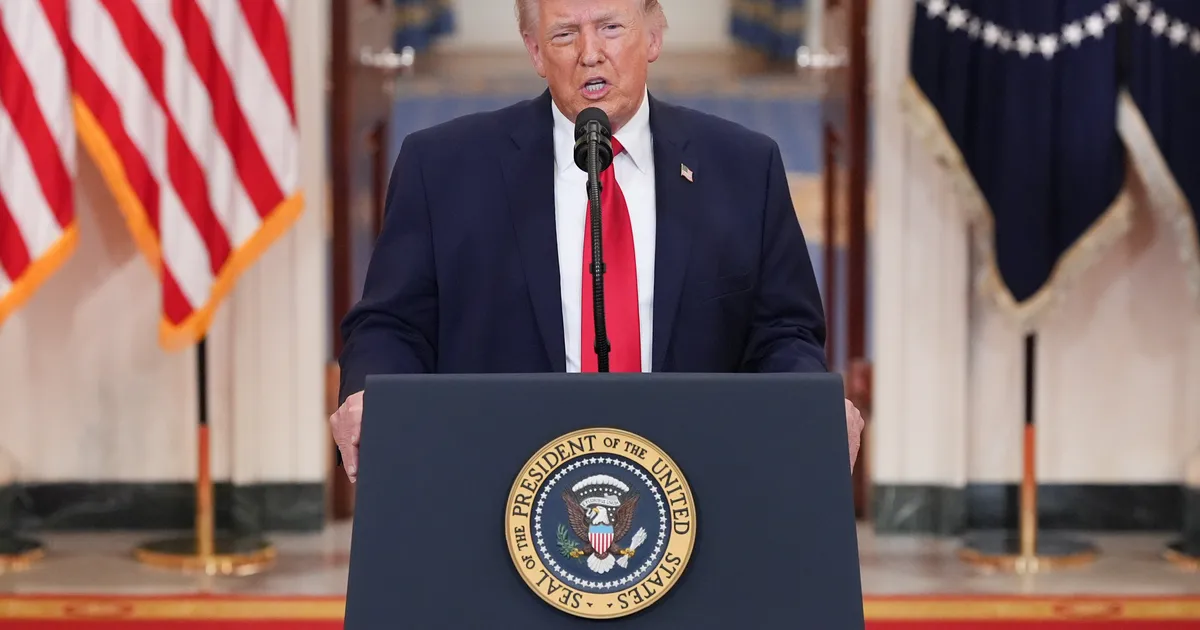
In his first major speech about the war against Iran he began without consulting allies and without the consent of Congress, President Donald Trump offered no new timeline or plan for how the war will end and instead repeated recent talking points, including threats of war crimes and an assertion that the critical Strait of Hormuz would “naturally” open by itself soon.
In a rare prime-time address to the nation, Trump did not provide any hints as to how he might bring the tens of thousands of deployed service members home without leaving Iran in charge of the strait that normally sees a fifth of all the world’s oil pass through it.
Instead, he ran through the destruction he has already wreaked on Iran and how much worse he will make things for its citizens.
“If there is no deal, we are going to hit each and every one of their electric generating plants, very hard and probably simultaneously,” Trump said.
Destroying a country’s electrical infrastructure, critical to civilian life, is generally considered a violation of international law.
Rather than give Americans a better sense of when his war would end, Trump instead compared the month it has lasted so far to longer wars the nation has fought over the past century.
“It’s very important that we keep this conflict in perspective. American involvement in World War I lasted one year, seven months and five days. World War II lasted for three years, eight months and 25 days. The Korean War lasted for three years, one month and two days. The Vietnam War lasted for 19 years, five months and 29 days. Iraq went on for eight years, eight months and 28 days,” Trump said.
His war has already left 13 US service members dead and has injured several hundred.
In Iran, human rights monitors estimated that some 1,500 civilians have been killed already, including 175 people, mostly young girls, by a US missile strike on a school in the first hours of the attack on February 28.
The president, as he has countless times, yet again drew a fantasy portrait of the 2015 nuclear deal that had been negotiated by former President Barack Obama, which had limited how much nuclear material Iran could have and mandated an intrusive regime of inspections.
Trump withdrew from the agreement during his first term in office, which was followed by Iran resuming its production of higher-grade uranium.
“I terminated Barack Hussein Obama’s Iran nuclear deal, a disaster. Obama gave them $1.7 billion in cash. Green, green cash. Took it out of banks from Virginia, DD, then Maryland, all the cash they had, flew it by airplanes in an attempt to buy their respect and loyalty. But it didn’t work,” Trump said — failing to mention that his war has permitted Iran to sell its own oil at much higher prices since it began, which has already netted the nation some 10 times as much money.
Trump’s announcement is the latest in a dizzying series of contradictory claims about the war since its start. Trump originally promised that the US Navy would escort tanker traffic through the Strait of Hormuz. That never happened.
He claimed repeatedly that the war was over and that the United States had won, even as he continued ordering more air attacks. He claimed he was negotiating with Iran to end the war while also claiming he was killing everyone he might negotiate with.
And he claimed the war could not end unless Iran turned over its hundreds of pounds of enriched uranium, but then began his speech saying that the nuclear fuel is buried so deep underground that Iran could never get it — and that he could, in any event, simply monitor it via reconnaissance satellites.
Trump expanded on that idea, turning the original main reason for the war — Iran’s nuclear capability — into an afterthought that could be dealt with later if need be.
“It would take months to get near the nuclear dust, and we have it under intense satellite surveillance and control. If we see them make a move, even a move for it, we will hit them with missiles very hard again,” he said.
As to the spiking gasoline and diesel prices his war has brought to Americans and people around the world, which has caused his poll numbers to fall even further, Trump blamed that pain on Iran.
“The short-term increase has been entirely the result of the Iranian regime launching deranged terror attacks against commercial oil tankers and neighbouring countries that have nothing to do with the conflict,” he said.
Trump previously said he had been surprised by Iran’s attacks on its Gulf neighbours to hurt the flow of oil, even though intelligence analysts have for decades anticipated that Iran would do exactly that if attacked.
In his speech, which at 18 minutes is among the shortest Trump has delivered as president, he told Americans that they should be grateful for what he has done: “This is a true investment in your children and your grandchildren’s future.”
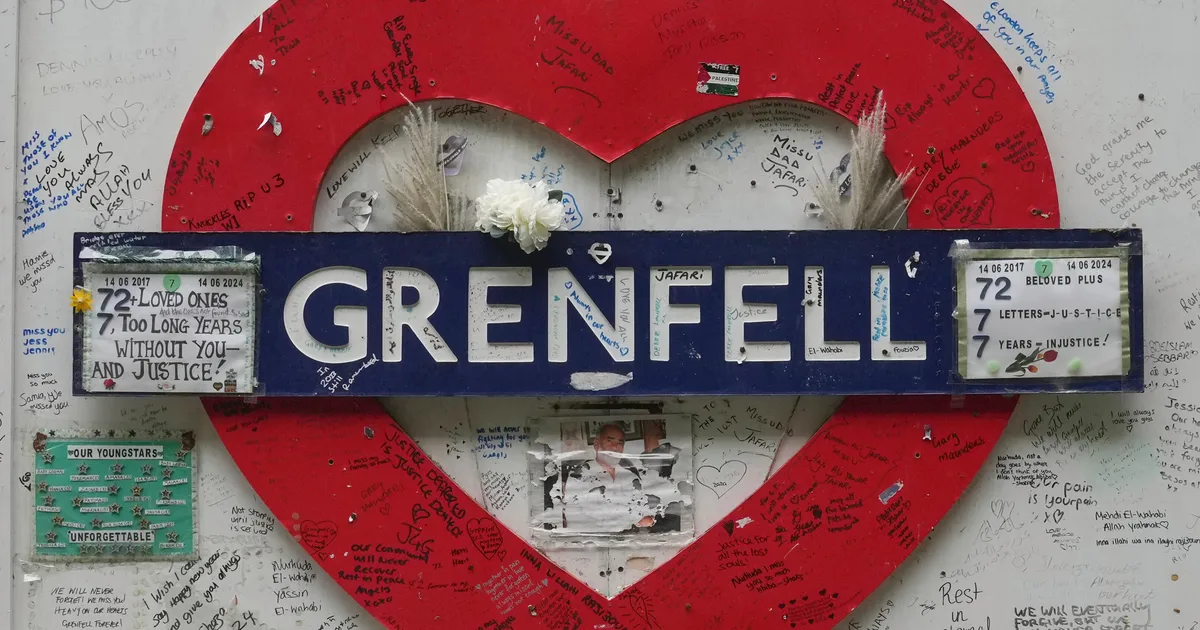
Reform UK have been urged to sack the party’s housing spokesman over his “disgraceful” comments about the Grenfell Tower tragedy.
Simon Dudley said “everyone dies in the end” and “fires happen” as he said there was now too much regulation in the building industry.
A huge fire at the 24-storey west London tower block killed 72 people in 2017.
The tragedy led to a major overhaul of building regulations to prevent it happening again.
But in an interview with the trade publication Inside Housing, Dudley said the pendulum had “swung too far the wrong way”.
He said the Grenfell fire was a “tragedy” but added: “Sadly, you know, everyone dies in the end. It’s just how you go, right?”
Dudley went on: “Extracting Grenfell from the statistics, actually people dying in house fires is rare.
“Many, many more people die on the roads driving cars, but we’re not making cars illegal, so why are we stopping houses being built?”
Reacting on X, Keir Starmer said: “Shameful. Nigel Farage should do the decent thing and sack him.”
London mayor Sadiq Khan said Dudley’s comments were “sickeningly insensitive”.
In a post on X, he said: “Not an ounce of decency, compassion or respect for the 72 lives lost and wider community. But this isn’t a slip-up or a stumble. This is Reform showing us exactly who they are.”
Housing secretary Steve Reed said: “If Nigel Farage has an ounce of decency, he will sack his housing chief immediately.
“These disgraceful comments about those who died in the Grenfell Tower fire are beyond the pale and it is completely untenable for Simon Dudley to continue in his position.”
Green Party MP Sian Berry said: Reform has sunk to a new low and shown a real disrespect to the victims of Grenfell.
“Anyone who has any awareness of what Grenfell residents went through, in fact anyone with any empathy or humanity, will find these comments truly abhorrent.
“Nigel Farage must sack Simon Dudley for this disgusting outburst.”
In a post on X on Thursday morning, Dudley said he was sorry if is his comments were “not sufficiently clear”.
He said: “Grenfell was an utter tragedy and quite rightly prompted a wholesale review and tightening of fire regulations.
“I said it was a tragedy in my interview with Inside Housing and in no shape or form am I belittling that disaster or the huge loss of life. It must never happen again. I reiterate that, and am sorry if it was not sufficiently clear.
“To address the national housing crisis, we must ensure that regulation remains safe, sensible and proportionate. My concern is the introduction of numerous measures that do nothing to protect life and are throttling housebuilding.”
Subscribe to Commons People, the podcast that makes politics easy. Every week, Kevin Schofield and Kate Nicholson unpack the week’s biggest stories to keep you informed. Join us for straightforward analysis of what’s going on at Westminster.
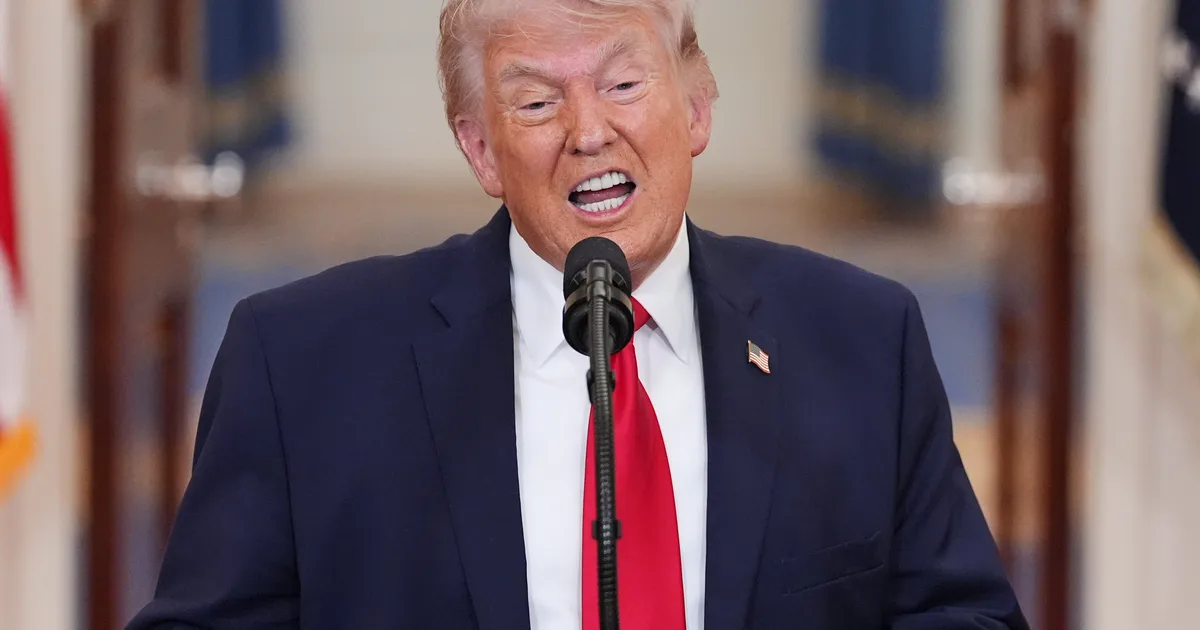
A former senior Pentagon official has compared Donald Trump to a “drunk at the end the bar” over his comments about the Iran war.
The US president has issued a series of seemingly contradictory announcements about how the conflict is going and America’s objectives since launching strikes with Israel more than a month ago.
In a White House speech on Wednesday night, Trump once again said the US will “leave” Iran in two to three weeks, and will bomb the country “back to the Stone Ages. where they belong” in the meantime.
He also said the Strait of Hormuz, which has been effectively closed to oil shipping by Iran since the war began, will re-open “naturally” once the war is over, without explaining why.
Speaking to Times Radio before the president’s address, Jim Townsend, who spent more than 20 years at the Pentagon in the 1990s and 2000s, said Trump was “confused” about the aims of the war.
He said: “I think they’re trying to put lipstick on a pig, as we say. I think the president’s style is what he calls ‘the weave’ and he just talks stream of consciousness.
“He’s like the drunk at the end of the bar who’s got an opinion about everything, and he just sits there and spouts off.
“I don’t think it’s calculated, I don’t think it is part of a strategy, I don’t think it’s a tactic. I think that’s just the way it is, and people around him are trying to put a happy face on it.”
Subscribe to Commons People, the podcast that makes politics easy. Every week, Kevin Schofield and Kate Nicholson unpack the week’s biggest stories to keep you informed. Join us for straightforward analysis of what’s going on at Westminster.
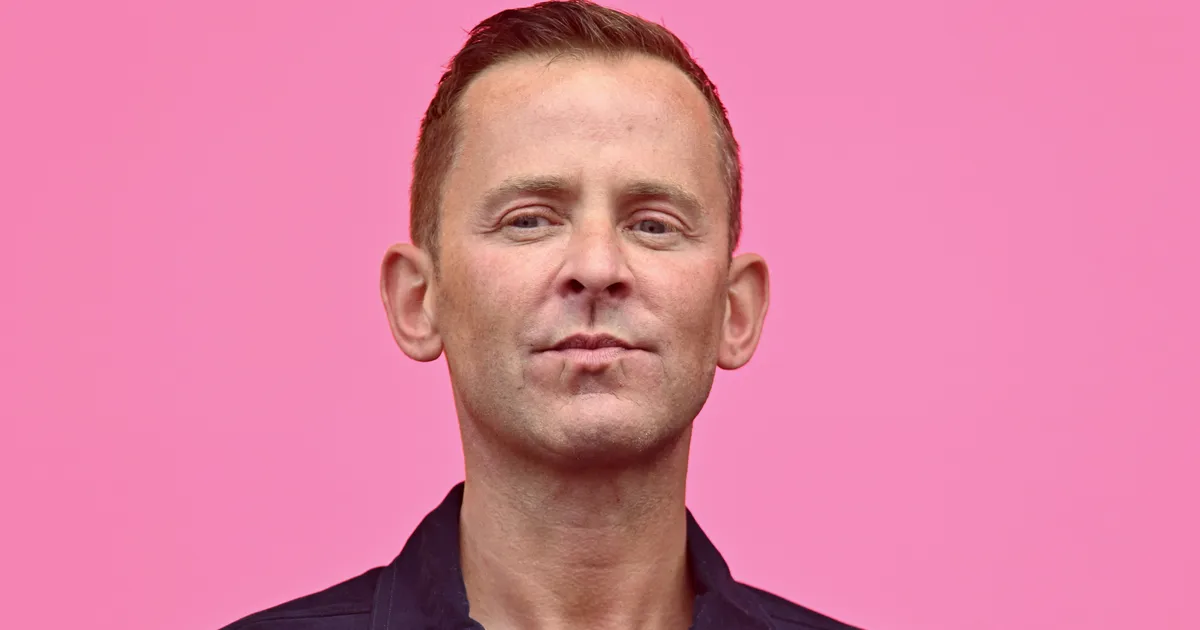
Scott Mills has spoken out for the first time since it was confirmed he had been fired by the BBC and would not be returning to host the Radio 2 breakfast show.
On Monday morning, the national broadcaster confirmed that Mills was “no longer contracted and has left the BBC”, following what was initially described in the press as “allegations about his personal conduct”.
It later emerged he’d been investigated and questioned by the police almost a decade earlier over “allegations of serious sexual offences against a teenage boy”, who was under 16 at the time.
The BBC said on Wednesday: “What we can confirm is that in recent weeks, we obtained new information relating to Scott and we spoke directly with him. As a result, the BBC acted decisively in line with our culture and values and terminated his contracts.”
“Separately, we can confirm the BBC was made aware in 2017 of the existence of an ongoing police investigation, which was subsequently closed in 2019 with no arrest or charge being made,” they continued. “We are doing more work to understand the detail of what was known by the BBC at this time.”
On Wednesday evening, Mills’ team issued a statement to news outlets including HuffPost UK, which read: “The recent announcement that I am no longer contracted to the BBC has led to the publication of rumour and speculation. In response to this, the Metropolitan Police has made a statement, which I confirm relates to me.
“An allegation was made against me in 2016 of a historic sexual offence which was the subject of a police investigation in which I fully cooperated and responded to in 2018. As the police have stated, a file of evidence was submitted to the Crown Prosecution Service, which determined that the evidential threshold had not been met to bring charges.
“Since the investigation related to an allegation that dates back nearly 30 years and the police investigation was closed seven years ago, I hope that the public and the media will understand and respect my wish not to make any further public comment on this matter.”
He added: “I wish to thank from the bottom of my heart all those who have reached out to me with kindness, my former colleagues, and my beloved listeners, who I greatly miss.”
Earlier this week, the BBC also issued an apology for failing to “follow up on” an additional allegation about Mills that was raised by a freelance journalist last year.
A rep for the corporation said: “We received a press query in 2025 which included limited information. This should have been followed up and we should have asked further questions. We apologise for this and will look into why this did not happen.
“More broadly, we would always urge anyone who has concerns or information to raise it with us.”
Politics
‘Succession’ star Brian Cox narrates new film exposing controversial gannet hunt – watch here

Succession actor Brian Cox has narrated a harrowing new animated film. It calls for an end to Scotland’s controversial guga hunt, and exposes the ‘tradition’ of killing gannet chicks.
Firelily Studios created the animation for wildlife campaign group Protect the Wild. It depicts the life and death of a single gannet chick, from the safety of their nest to the moment they are taken and killed by hunters.
Every year, men from the Isle of Lewis travel to the remote island of Sula Sgeir. There they kill gannet seabird chicks (known as guga). The practice originated in times of hardship as a source of sustenance. But today the killing goes on primarily to maintain tradition, with the young gannet flesh considered a local delicacy. It is the UK’s last remaining seabird hunt.
The guga hunt has come under increasing scrutiny from campaigners, with growing public concern for animal welfare and conservation. It can only happen if NatureScot, Scotland’s official nature agency, gives out a licence for it. A petition urging NatureScot to stop its licensing of the hunt has shot past its target of 50,000 signatures.
That demand forms the basis of Protect the Wild’s emotive new animation, which urges members of the public to add their names to the petition.
‘Needless cruelty’ to gannet chicks
In the film’s final scene, a lone gannet parent stands at the edge of a cliff beside their now-empty nest, as Cox condemns the practice as “needless cruelty” and calls on NatureScot to end the guga hunt.
In 2025, NatureScot allowed the killing of 500 gannet chicks. It maintains that the hunt is sustainable and is unlikely to threaten the long-term stability of the gannet population. But recent Freedom of Information requests by Protect the Wild revealed that Sula Sgeir is Scotland’s worst-performing gannet colony. And it’s the only Special Protection Area for gannets in Scotland to have declined while others are growing.
Devon Docherty, Scottish campaigns manager at Protect the Wild, said:
We’re incredibly grateful to Brian Cox for lending his voice to this important campaign and helping to bring this hidden cruelty into the spotlight.
We made this animation to show the reality of the guga hunt, where defenceless chicks are snatched from their nests before they can fly, and battered to death in front of their parents.
This is not about survival. It’s about maintaining a tradition that comes at the cost of immense animal suffering. This horrific practice has to stop.
NatureScot has a choice. This licence is discretionary. As Scotland’s nature agency, it has a duty to protect wildlife, not permit its destruction.
Protect the Wild released the animation across its social media channels at 5pm on 2 April.
Featured image via Firelily Studios / Protect the Wild

Emotional manipulation isn’t always obvious. Instead of big explosions or clear-cut moments of harm, there’s typically a sense of covert control through subtle patterns and interactions that leave you feeling confused and anxious.
“It has to do with unspoken rules and expectations,” licensed marriage and family therapist Alexandria Tillard-Gates told HuffPost.
“Emotional manipulation can be present in intimate relationships, friendships and all types of family relationships. Often we experience emotional manipulation in our formative relationships and we don’t realise it until later in life.”
At the extreme end of the spectrum, there are malignant narcissists who use emotional manipulation to get what they want with no remorse or regard for other people’s feelings. But emotional manipulation is not always fully intentional.
“Sometimes it is not as calculated or nefarious as it may seem. It may be that this person just has immature forms of communicating,” said Dr. Sue Varma, a clinical assistant professor of psychiatry at New York University Grossman School of Medicine and author of “Practical Optimism: The Art, Science, and Practice of Exceptional Well-Being.”
But regardless of intent, the impact can be deeply destabilising.
“Emotional manipulation is when our nervous system gets needlessly triggered,” said licensed marriage and family therapist Spencer Northey. “It causes us to feel unwarranted anxiety based on distorted input. It unmoors us, dissociates reality, makes our emotions storm, makes us feel younger than we are, more responsible than we should be, or both.”
The process can be subtle, but there are ways to identify it. Here are eight signs you may be experiencing emotional manipulation.
1. You’re questioning your own reality
“When we are being manipulated in a conversation or conflict, we often feel something very strongly, but the other person denies our experience and refuses to accept that their behaviour could have caused our experience,” Tillard-Gates said. “Often the abuser lies in order to avoid responsibility. This causes us to question our feelings, experience and even our recollection of events.”
This pattern is better known as gaslighting ― a common form of emotional manipulation in which someone systematically lies or distorts reality in a way that makes you doubt your lived experiences and perceptions of things that occurred.
“When humans get together, it’s normal to have occasional misunderstandings about what happened or what’s going on,” Northey said. “Healthy dynamics work collaboratively to figure things out. There is usually an ‘aha!’ moment where the realities merge ― ‘oh, NOW I see where you’re coming from.’ Emotionally manipulative dynamics double down on the divide and rigidly avoid that coming together by insisting on one reality.”
The result of these rigidly incongruent realities is that the other person’s experience and feelings in response to it gets invalidated and denied. Over time, this can seriously erode trust in oneself.
2. Conversations constantly become about proving your love or loyalty
“Emotional manipulation can show up as someone questioning your love or loyalty as a way to avoid or defuse conflict,” said Zainab Delawalla, a licensed psychologist and associate teaching professor in the department of Psychology at Emory University. “For example, if you are trying to set a healthy boundary of your friend not texting you late at night, they might respond with ‘you must not care about me.’”
The emotional manipulator shifts the focus of the conversation away from your valid expression of a concern or need and into the territory of forcing you to prove your care and commitment.

jeffbergen via Getty Images
“In close, healthy relationships, there should be room for mistakes, which can be taken at face value and discussed so that both parties feel heard and understood,” Delawalla said. “If these conversations often lead to one party having to constantly defend and justify their loyalty, it is a sign that there might be some emotional manipulation.”
In addition to derailing conversations, this behavior can also lead you to do things to “prove” your affection ― even things that might conflict with your own needs, like buying special gifts when you don’t have the budget to spare.
3. You feel guilt and shame for things that aren’t your responsibility
“Emotional manipulation can take the form of shaming somebody, making them feel guilty, making them feel responsible for your feelings,” Varma said. “It’s often subtle and goes unrecognised for some time.”
These unhealthy dynamics rely on guilt, shame and a sense of obligation to coerce people into doing or saying what the emotional manipulator wants.
“In a normal conflict or miscommunication, both parties are eventually able to identify a similar recollection of events, understand how their behaviour could have impacted the other in a way they might not have intended, and empathise with each other’s feelings and experience even if they don’t totally agree,” Tillard-Gates noted.
In lieu of two people working through conflict together, emotional manipulation involves one person subtly ― or not so subtly ― placing blame to make the other feel like they’ve done something wrong and pressured into compliance.
4. You feel emotional whiplash from “love bombing.”
“If they can make you feel so good, they also have the power to make you feel so bad,” Varma said.
She pointed to “love bombing” as a common tactic of emotional manipulation, as someone showers you with excessive compliments, attention or affection early on in your relationship. This creates a situation where your sense of self-worth becomes tied to their praise and affection.
“The problem is you become addicted to the highs,” Varma explained. “The point is you have become emotionally dependent on their approval. You feel enmeshed with them, and they control you and your emotions.”
So you find yourself chasing these positive interactions, even as the relationship becomes destabilising. When they later criticise or dismiss you, then you tell yourself it’s your fault.
5. Your emotional reactions feel outsized
“It’s normal to experience big emotions in response to big things happening in the here and now ― positive or negative,” Northey said. “It’s less normal or realistic to have a big emotional response just from communication.”
She emphasised that these feelings are real and valid, but you should ask yourself if they arise in response to an idea that is not consistent with reality. You might feel intense anxiety, fear or even euphoria, but when you step back, the situation itself doesn’t quite justify that level of emotion. Instead, the feelings stem from distorted messages and perceptions.
“For example, if you feel the joy and safety of a devoted long-term commitment just from someone’s flattery,” Northey said. “In this case, it’s the communication, not the reality that’s eliciting this big emotion. Or on the negative side, you feel the big emotion of loss or threat just from how someone is talking to you.”
6. You feel like you have to walk on eggshells
If you’re constantly monitoring your words, tone and behaviour to avoid conflict, that’s another warning sign.
“You are afraid to talk to that person about your feelings,” Varma said. “You are afraid of confrontation, and you walk on eggshells.”
Delawalla also pointed to walking on eggshells in every interaction as a red flag for emotionally manipulative dynamics.
“This interferes with your ability to have open, honest communication, which is a foundational element of any close relationship,” she said.
7. They tell you how you feel, instead of listening
“Healthy conflict and normal miscommunication stay grounded in the present and in mutual consideration for each person,” Northey said. “Even when facing a disagreement and big emotions, healthy conflict continues to respect everyone and everyone’s perspectives. It is free from crossing into other people’s realities by telling someone how they think or feel.”
Instead of asking how you feel, an emotional manipulator might make statements like “You’re jealous,” or “You’re overreacting because you hate me” ― which overrides your perspective and replaces it with their narrative.

Moor Studio via Getty Images
“So many of us do this all the time!” Northey said. “We need to stop normalizing it, even when the intentions are benign, such as saying, ‘you’re mad at me’ as a bid for connection. More pernicious forms of this include accusations, name calling and punishing reactions.”
She added that this behavior strips you of your agency to explain yourself and be seen. It’s another dismissal of who you are and your own experience.
8. Your boundaries keep getting pushed
“An emotionally manipulative person feels their target out,” Varma said. “It can start with a small joke at your expense, or canceling plans on you at the last minute ― just to see how you respond. And they escalate from there.”
Unaddressed, those behaviours intensify. The emotional manipulator isn’t necessarily being super calculated, either.
“Some people are just not good at taking responsibility for their actions,” Varma said. “This could be the person who makes a snide comment and when you call them out, they say, ‘What are you talking about? I was just kidding.’”
This makes it difficult to push back, assert boundaries or even talk about conflict.
“You never feel that your issues with them are being resolved,” Varma said. “You end up feeling inferior, less than, and you end up second-guessing yourself.”
What To Do If You Suspect You’re Being Emotionally Manipulated
If these patterns feel familiar, first shift your focus away from trying to decode the other person’s behaviour and toward understanding your own experience.
“The safest way to navigate relationships is with the belief that the only person you can control is yourself,” Northey said. “Therefore, the best signs to look for to avoid being manipulated come from looking inward to understand yourself, not looking outward to try to assess another person’s behaviour.”
That means paying attention to your emotional reactions and identifying your needs.
“Your needs likely include a need to feel trusted and trusting, need to feel supported, need to be understood, and more,” Northey said.
If you feel consistently anxious, confused or unheard, there’s a good chance those needs aren’t being met. You’ll then want to determine how to change this. That might first involve communicating directly.
“Be clear in your communication and tell them how it feels when the conversation derails into you having to justify your love, loyalty or commitment to them,” Delawalla advised.
It’s also important to be realistic about what communication can accomplish, however. If you’ve already expressed your needs multiple times and been met with defensiveness, dismissal or more manipulation, you may not be able to change the dynamic.
“Unfortunately, it is very rare that you can convince someone who is truly emotionally manipulative that they should change,” Northey said. “Attempting to change someone you believe to be emotionally manipulative is a manipulative game in and of itself. So, just stop playing.”
Instead, focus on strengthening your own sense of reality and connection to protect yourself from further manipulation.
“If you already know what feels [like to be] seen and loved, you’re less likely to fall for a fake version of that through love bombing,” Northey explained. “If you already have a reliable system for checking reality, you’re less likely to fall for gaslighting.”
You can also reach out for outside perspectives in these situations. “In an emotionally manipulative relationship, our spirit or intuition often signals that something is off or doesn’t make sense,” Tillard-Gates said. “However, we sometimes overlook this if we have been in a similar relationship in the past. A good way to check ourselves is to get a second opinion from someone not involved in the relationship, such as a therapist, a friend, or even a stranger.”
Surround yourself with people who engage in healthy connections and promote emotional safety. You can break toxic cycles and create more positive ones.
Help and support:
- Mind, open Monday to Friday, 9am-6pm on 0300 123 3393.
- Samaritans offers a listening service which is open 24 hours a day, on 116 123 (UK and ROI – this number is FREE to call and will not appear on your phone bill).
- CALM (the Campaign Against Living Miserably) offer a helpline open 5pm-midnight, 365 days a year, on 0800 58 58 58, and a webchat service.
- The Mix is a free support service for people under 25. Call 0808 808 4994 or email help@themix.org.uk
- Rethink Mental Illness offers practical help through its advice line which can be reached on 0808 801 0525 (Monday to Friday 10am-4pm). More info can be found on rethink.org.
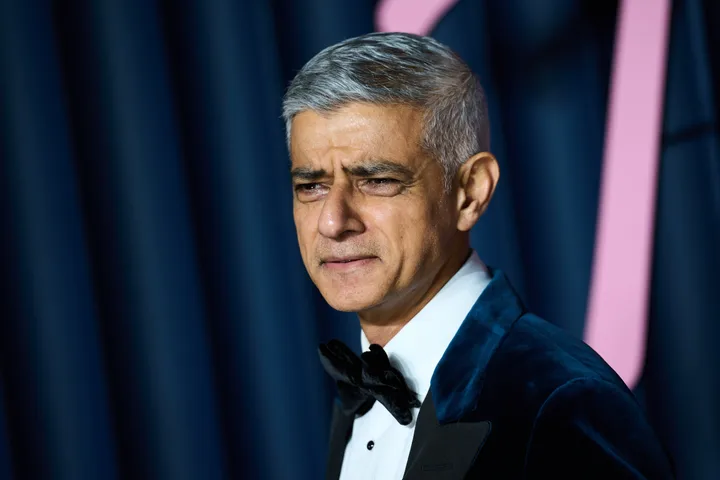
The mayor of London has spoken out against the decision for a major music festival in the city to book Ye, the rapper previously known as Kanye West, as its headliner for this year.
On Monday, it was announced that the All Of The Lights musician would be headlining all three nights at Wireless festival, which will take place at London’s Finsbury Park in July.
Immediately, this decision was met with backlash due to the controversy surrounding Ye in recent history, namely around a slew of antisemitic comments he made last year, including praise for Adolf Hitler and declaring himself to be a Nazi.
Groups including the Jewish Leadership Council, the Campaign Against Anti-Semitism and Board Of Deputies Of British Jews all condemned the booking, with the president of the latter going as far as questioning whether the government should be “blocking” Ye from “entering the country”.
On Wednesday, Sadiq Khan also said in a statement: “We are clear that the past comments and actions of this artist are offensive and wrong, and are simply not reflective of London’s values.
“This was a decision taken by the festival organisers and not one that City Hall is involved in.”

HuffPost UK has contacted Wireless for comment.
In 2025, Ye’s Australian travel visa was revoked in light of a single he released titled Heil Hilter, which was banned by YouTube, Spotify and Apple, among other music streaming services.
His online store on the platform Shopify had previously been pulled when he began selling a t-shirt emblazoned with a swastika and a slogan alluding to Hitler’s Nazi party.
Earlier this year, Ye took out a full-page advert in the Wall Street Journal to apologise for his past antisemitism, claiming his actions came about at a time in which he’d “lost touch with reality” as a result of his bipolar disorder.
He also maintained that he’s neither a “Nazi” nor an “antisemite” (and, in fact, “loves Jewish people”) and apologised specifically to those within the Black community who feel that he “let them down” with his actions.
Following this, he dismissed the suggestion that this apology was a “PR move” to allow him to return to releasing music and carrying out his numerous businesses.
“[This] isn’t about reviving my commerciality. This is because these remorseful feelings were so heavy on my heart and weighing on my spirit,” he said during an interview.
Last week, Ye released his 12th studio album Bully, which was reported by the Official Charts Company to be on course to debut at number 11 in the UK albums chat.
Subscribe to Commons People, the podcast that makes politics easy. Every week, Kevin Schofield and Kate Nicholson unpack the week’s biggest stories to keep you informed. Join us for straightforward analysis of what’s going on at Westminster.
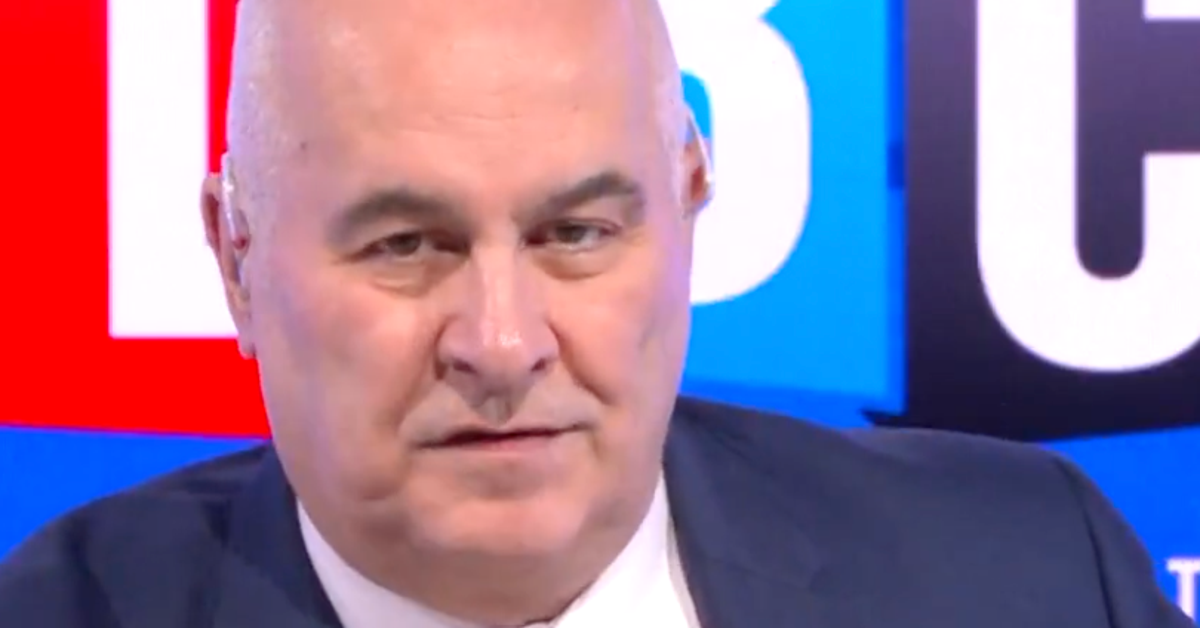
A presenter on LBC delivered a brutal reality check to Donald Trump after his latest attack on the UK over the Iran war.
The US president repeated his claim that Nato countries – especially the UK – “weren’t there for” America in the past.
In a post on Truth Social, Trump hit out at “all of those countries that can’t get jet fuel because of the Strait of Hormuz, like the United Kingdom, which refused to get involved in the decapitation of Iran”.
“You’ll have to start learning how to fight for yourself, the USA won’t be there to help you anymore, just like you weren’t there for us,” he said.
But speaking on his LBC show, Iain Dale said he was “getting sick and tired of the abuse” from the president – and pointed the times over the past 35 years when Britain has supported American military action.
He said: “Donald Trump has spent quite a bit of time over the past week insulting various Nato countries. OK, mainly Britain.
“He’s warned the UK in a post on Truth Social ‘the US won’t be there for you any more, just like you weren’t there for us’.
“Well I remember many occasions in the last few decades when the UK has been there for the United States. For example, in the first Gulf war. For example, in Afghanistan. For example, in Iraq.
“Britain has been the most reliable ally of the United States of any country in Nato since Nato was formed in 1949.
“And I don’t know about you, but I am getting sick and tired of the abuse that the president of the United States is throwing at our country.”
Subscribe to Commons People, the podcast that makes politics easy. Every week, Kevin Schofield and Kate Nicholson unpack the week’s biggest stories to keep you informed. Join us for straightforward analysis of what’s going on at Westminster.
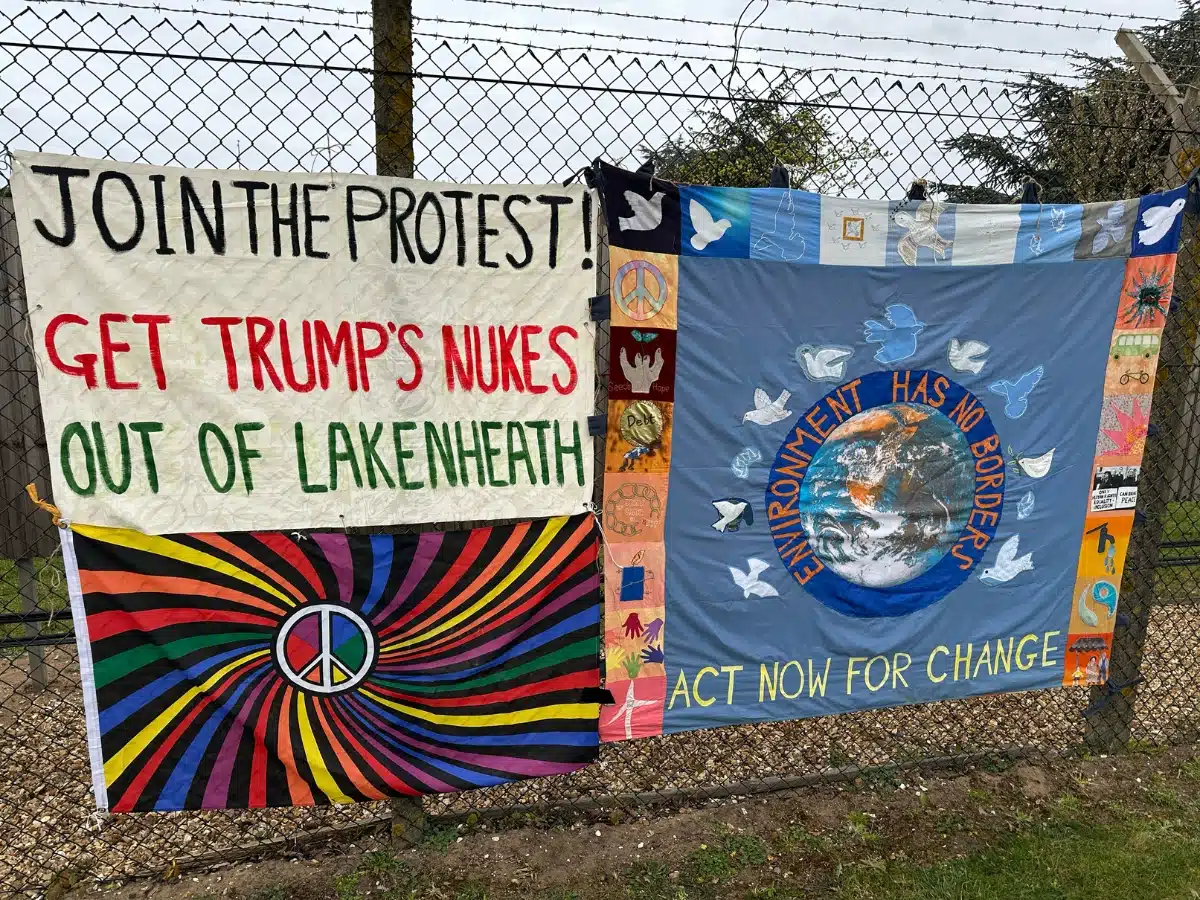
Peace Vigil attenders at RAF Lakenheath have observed more than 20 planes taking off on the morning of 2 April. At least six were A10 ground attack aircraft, likely heading for West Asia, where Donald Trump is threatening a ground invasion of Iran.
Witness Avril Simpson said:
This carnage should not be happening, and our government should not be taking part in Trump’s illegal war, and our taxes should be supporting genuine security not killing kids abroad.
Lakenheath Alliance for Peace members have been leafleting in local towns and talking with local people. They discussed what their local bases stand for, and whether their purposes are acceptable or need resisting. An Advan carrying CND’s digital billboard announced that nuclear weapons under the control of Trump have arrived at Lakenheath.
Campaigners are making more moving artworks to add to the display on the fence at the base. These are highlighting the horrors being perpetrated from there.
There will be a major demonstration and blockade at the main gates of RAF Lakenheath on Saturday 4 April. This will demonstrate opposition to its use in the deployment of nuclear weapons and in the illegal attack on Iran. The Alliance promotes genuine security that breaks the cycle of retaliatory violence instead of feeding it.
Lakenheath Peace Camp
Lakenheath Alliance for Peace is holding its Easter Peace Camp from 1-6 April. All who care about surviving the nuclear weapons age are welcome.
A 24/7 vigil at the gates of RAF Lakenheath began at 4pm on Wednesday 1 April and will continue until 3pm on Monday 6 April.
Participants approached the main gate to hand in a letter to the base commander highlighting their concerns. On previous occasions, base staff have refused such attempts.
This time was no different. Angie Zelter, one of the co-authors, said:
This base is taking part in deployment of nuclear weapons, and in illegal wars against Gaza and Iran. Ignoring our warnings by refusing to accept our letter, will not look good in a War Crimes tribunal.
Throughout the week at Lakenheath, peace campaigners will raise awareness of the risks posed by nuclear weapons. They’ll celebrate and promote alternative options, and tell governments that they’re not acting in their citizens’ names or best interests.
They will be joined on Saturday by coaches from around the country, musicians Seize the Day and speakers from CND and World Beyond War.
Camp schedule:
- Wednesday 1 April – Camp set up and beginning of 24-hour vigil outside the main gate of the base. Vigil will run throughout the duration of the camp. CND ad van visiting Cambridge.
- Thursday 2 April – Local outreach in Thetford and Bury St Edmunds – with CND’s digital billboards helping to raise the ‘Kick out Trump’s nukes’ demand.
- Friday 3 April – ‘Environment Day’ theme with workshops on the war on nature, attacks on the right to protest.
- Saturday 4 April – ‘Give Peace a Chance’ demonstration and blockade at RAF Lakenheath main gate.
- Sunday 5 April – ‘Coming Together – Rising Up’ with workshops, music, and poetry.
- Monday 6 April – ‘Grand Finale – Visions into Action’ with networking event and closing ceremony.
More details on the schedule and workshops are on Lakenheath Alliance for Peace’s website.
Featured image via Lakenheath Alliance for Peace

I Went On A Date With An AI Video Chatbot

New fossils provide snapshot of the beginning of complex animals that led to us

The Light System on Building a New Category in Wellness Technology


-

 Business7 days ago
Instagram, YouTube Found Responsible for Teen’s Mental Health Struggle in Historic Ruling
-

 NewsBeat6 days ago
The Story hosts event on Durham’s historic registers
-

 Sports6 days ago
Sweet Sixteen Game Thread: Tide vs Michigan
-
Entertainment3 days ago
Fans slam 'heartbreaking' Barbie Dream Fest convention debacle with 'cardboard cutout' experience
-
 Entertainment5 days ago
Lana Del Rey Celebrates Her Husband’s 51st Birthday In New Post
-
Crypto World2 days ago
Dems press CFTC, ethics board on prediction-market insider trades
-

 Crypto World22 hours ago
Gold Price Prediction: Worst Month in 17 Years fo Save Haven Rock
-

 Tech4 days ago
The Pixel 10a doesn’t have a camera bump, and it’s great
-

 Sports2 days ago
Tallest college basketball player ever, standing at 7-foot-9, entering transfer portal
-

 Tech2 days ago
EE TV is using AI to help you find something to watch
-

 Fashion5 days ago
Amazon Sundays: Soft Spring Layers
-

 Tech3 days ago
Apple will hide your email address from apps and websites, but not cops
-

 Tech2 days ago
How to back up your iPhone & iPad to your Mac before something goes wrong
-

 Politics3 days ago
Should Trump Be Scared Strait?
-

 Tech3 days ago
Flipsnack and the shift toward motion-first business content with living visuals
-

 Crypto World3 days ago
U.S. rule change may open trillions in 401(k) funds to crypto
-

 Business7 days ago
Chinese universities with military links bought Super Micro servers with restricted AI chips
-

 Fashion6 days ago
Weekly News Update, 3.27.26 – Corporette.com
-

 Tech4 days ago
Elon Musk’s last co-founder reportedly leaves xAI
-
 Crypto World4 days ago
Bitcoin’s Six-Month Losing Streak: What On-Chain Data Says About the Market’s Next Move
You must be logged in to post a comment Login