
Politics
Jacob Elordi: Wuthering Heights Sex Scenes Were Inspired By Novel’s ‘Depravity’


Jacob Elordi has opened up about the racy scenes we can expect from his new film Wuthering Heights.
Helmed by Saltburn director Emerald Fennell, the new movie is based on the iconic gothic novel and stars Jacob as Heathcliff, while fellow Australian actor Margot Robbie takes on the role of Cathy.
Ever since the film’s first test screening over the summer, much has been made of its more sexually-charged content, with its numerous steamy scenes being heavily referenced when the first reviews for Wuthering Heights were released earlier this week.
During a recent interview with USA Today, Jacob insisted that any sexual scenes that Emerald added to her version of the story are still “entirely in the spirit” of Emily Brontë’s original novel.
“Any image that comes from Emerald’s head is inspired by that depravity and love and obsession,” the Euphoria star noted.

“They’re all in the language of what Brontë was driving at with this book, so it was never really a shock or a reach.”
During the same interview, Margot spoke candidly about how different shooting a sex scene is to watching one on the big screen.
“[Viewers] forget how many people are on a film set – there are hundreds of people sometimes,” she pointed out.
“Even though something looks like, ‘Wow, that’s super-intimate! It’s just those two actors there!’ Three feet away, there’s Emerald with an iPad and watching the monitor.”
Meanwhile, Emerald added: “Things that are sexy often take us by surprise. Maybe some people would argue otherwise, but I’m not interested in anything being explicit. I’m interested in making people feel.”
Saltburn, Emerald’s last film, previously raised eyebrows due to some of its more X-rated scenes, including one grave-humping sequence, some infamous drain-slurping and, of course, a fully naked dance routine to a 2000s pop classic.
Wuthering Heights hits cinemas on Friday 13 February.


There’s no denying romantic heartbreak is tough (as anyone who’s been through a situationship will know).
But friendship breakups can sting too, says therapist Erin Pash.
“Romantic breakups come with a script: breakup songs, therapy language, social permission to fall apart. Friendship loss has almost none of that,” she said.
Here, we spoke to Pash about when she sees the most friendship breakups, why they sting so much, how to move on from them, and when self-reflection might be needed.
Most friendship breakups happen in people’s late 20s and midlife, said the therapist
When HuffPost UK asked Pash when she sees the most friendship breakups, she answered: “The late 20s/early 30s and midlife are the biggest hotspots”.
In your 30s, she explained, “life starts diverging fast – different relationship choices, kids or no kids, career paths, values. The friendship that worked at 22 doesn’t always survive who you’re becoming at 32”.
And at midlife, people might start reconsidering huge parts of their lives.
Maybe “someone gets sober, leaves a marriage, stops people-pleasing – and when you finally show up as your real self, some friendships can’t handle it.
“Both stages come down to the same thing: when you get clearer on who you are, relationships that required a smaller version of you start to crack.”
Why do friendship breakups hurt so much?
Part of the reason is that they’re not really as acknowledged as romantic separations, said Pash.
“There’s no ceremony, often no clean ending, and the world doesn’t really acknowledge the grief. But the intimacy in a close friendship can actually run deeper,” she said.
“Your best friend may have known you in ways a partner never did, without the performance of attraction or the weight of shared finances. When that’s gone, you lose both a person and the version of yourself they reflected back to you.”
How can I move on from a friendship breakup?
It’s important not to try to ignore your pain, the therapist advised.
“Give it real grief. Don’t minimise the loss just because it wasn’t romantic.”
Then, consider what it is that’s actually upsetting you about their absence.
“Did that friend make you laugh harder than anyone? Hold your history? Challenge you?
“Naming what you’ve lost helps you heal it with precision instead of just sitting with a vague ache. And resist the urge to immediately fill the void. Rushed replacements rarely fix the real wound.”
When should I begin self-reflecting?
It’s common to wonder what role you played in a friendship breakup. And provided you aren’t spiralling about whether the whole thing was your fault (Pash says that’s “just shame”), self-reflection can actually be healthy.
“Every ending has data in it,” the therapist stated.
“Ask: what patterns am I noticing? If the same dynamic keeps showing up across multiple friendships, that’s a signal worth paying attention to.
“Even simple journaling, like ‘What did I bring to this friendship that helped? What didn’t?’ can open real self-awareness without beating yourself up. The goal is growth, not guilt.”
Remember, she added, that friendship breakups can be healthy.
“Not every relationship is meant to last forever, and outgrowing a friendship isn’t a failure. It’s often a sign you’re evolving. The most honest thing you can do for yourself and someone else is stop maintaining a connection that’s become performative.
“Letting go with intention and care is an act of integrity, not abandonment.”

Lewisham Green Party today, Sunday 22 March, announces the defection of two Labour councillors, Cllr Tauseef Anwar and Cllr Rudi Schmidt, who join the more than 50 new Green councillors who have defected to the party in the past few months.
Lewisham Green Party just doubled its councillors
The Green Party are forecasted to make significant gains in the May elections, including in Lewisham, where the Greens are also running to win the directly elected mayor campaign.
Cllr Tauseef Anwar, first elected in 2018, is a ward councillor for Crofton Park in Lewisham. He previously served as the Civic Mayor and Speaker for four years, and he also moved a motion to make Lewisham the first council to declare a climate emergency. Cllr Anwar also represented Lewisham at COP26 and has 14 years of experience in running net-zero and carbon reduction businesses. He is the founder of ANZI (Association of Net Zero Installers) and also served as Vice President of the London Mayors’ Association for two years (2022–24).
Cllr Rudi Schmidt, elected in 2022, is a Councillor for Evelyn ward in North Lewisham. He previously served as the Chair of Overview and Scrutiny for two years and most recently as a Cabinet Adviser. He has spearheaded efforts to develop a stronger local economy, support cooperatives, and increase skills. Cllr Schmidt has years of professional experience in working with young people and currently works for a Lewisham charity and heritage institution
Lewisham Green Party’s council group leader and mayoral candidate Cllr Liam Shrivastava said:
The green wave continues. I am absolutely delighted to welcome Cllr Anwar and Cllr Schmidt to the Green Party. They are both supremely talented, hard-working councillors that bring a wealth of experience to the Lewisham Green Group. Their decision to leave behind the managed decline of Labour to join the Greens shows the people of Lewisham that we have the vision, credibility and commitment to make real change.
Labour ‘no longer aligns’ with people’s values
Cllr Rudi Schmidt said:
After years serving Evelyn residents, I can no longer represent a party that has stopped aligning with my values. The Labour government has failed our community through continued austerity, welfare cuts affecting disabled people, and its complicity on the genocide in Gaza.
There is another way – the Greens have a plan to address structural inequality, to build local homes with local jobs, to deliver a genuinely caring economy. And only the Greens will challenge the national government, and advocate for fairer, greener country for everyone.
Cllr Tauseef Anwar said:
My decision to leave Labour did not start today. It began when Keir Starmer justified Israel cutting power and water to civilians in Gaza. This is why I have decided to join the Green Party, the only party I believe is now offering a genuine, consistent progressive voice, standing firm on climate, justice, and human rights.
I look forward to supporting Liam Shrivastava’s campaign the be the next Mayor of Lewisham and seeing us win multiple councillors across Lewisham.
Featured image via the Canary
Convicted Labour paedophile Liron Velleman has escaped jail for sex offences with what he thought was a 13-year-old girl — but was in fact a police officer. This follows an established pattern: Labour supporters of Israel receiving a slap on the wrist for child sex offences. If even a slap on the wrist.
Labour — The long list
Former Hackney councillor Thomas Dewey received 150 hours of ‘community service’ for possession of sadistic child rape images. Sam Gould, a former aide to Starmer’s health secretary Wes Streeting, received a suspended sentence for flashing a child.
Some are awaiting trial. Starmeroid MP Dan Norris has been arrested — twice — for sex offences including rape and child-sex offences, including abduction. Former councillor Conor McGrath has been charged with possessing child-rape images after a ten-month police operation.
Some alleged Zionist paedophiles seem to escape altogether. Ivor Caplin is no longer even on bail after being caught — on camera — turning up to meet what he thought was a child for sex.
In Israel too
Not just in the UK — Zionist apples don’t fall far from the tree. Israeli cyber-spy boss Tom Alexandrovich was allowed to escape to Israel after meetings with US federal agencies. He had been caught in a paedophile sting.
As for Israeli minister Orit Strook, her husband and son were accused by Strook’s daughter Shoshana of repeatedly raping her as a child and filming it. Shoshana Strook was found dead — ‘suicide’ — weeks after warning her followers that if she was found dead it would not be suicide — and days after hiring lawyers. So far, unconfirmed reports say that Israeli police are not pursuing the case against the family.
And party boss Keir Starmer has a long record of protecting paedophiles and sex abusers — so much that women MPs complained that Labour is now called the ‘paedo party’ by the public. Just as paedophile Jimmy Savile was protected and escaped prosecution when Starmer ran the CPS ‘Mainstream’ press are finally waking up to it.

You may want to stand up and do a few stretches while reading this.
Research has already established that prolonged sitting is really harmful to our health. It’s linked to conditions like high blood pressure, heart disease and diabetes.
But what if it’s also the reason for your back pain or that pesky knee pain that pops up every time you try to jog?
While there are multiple causes of back and knee pain, sitting all day at a desk job may be a major factor, too. Here’s what to know:
Sitting all day can cause tight hip flexors
“A lot depends on how you sit, but essentially, prolonged sitting puts your iliopsoas, which is your primary hip flexor, into a shortened position,” said Dr. Michael Fredericson, a professor of sports medicine and the director of Stanford Lifestyle Medicine in California.
Your hip flexors are a group of muscles that allow you to raise your knee. You also use these muscles when you step up and bend forward.
“So if you’re staying in that position for seven, eight hours a day, then it becomes chronically tight into that position, and you get what we call passive muscle stiffness,” Fredericson said.
This isn’t only a problem for people who sit all day; it’s also common among runners and cyclists, said Brian Kracyla, a physical therapist and owner of Cloudline Physical Therapy in Philadelphia.
According to Melanie McNeal, physical and occupational therapy manager at Baylor College of Medicine in Texas, men are often affected.
“Most everyone has tight hip flexors, because we’re a society that does a lot of sitting, so it is a huge issue,” McNeal said. However, it tends to be even more prevalent in men “because males tend to be tighter than females on the whole”.

Luis Alvarez via Getty Images
Tight hip flexors can cause knee and back pain
Why does it matter if you have tight hip flexors? Well, it turns out this issue could be causing pain and mobility problems that you probably aren’t even connecting to tight hips.
One problem people with tight hips may experience is knee pain, McNeal said, “because if your hip flexor is tight … it compresses your kneecap, your patella, and that can cause knee pain, especially with activity like jogging or running or fast walking.”
If you have tight hip flexors, your stride length will be shorter when walking and running, Kracyla said. This contributes to the shuffling gait that’s often seen in older adults.
Having tight hip flexors can also lead to posture issues and back pain.
“You’re going to have a pelvic tilt in the front, which is going to increase the curve of your spine in the back,” Kracyla said, “and often that will manifest itself on our end with lumbar extension compensation, so you could feel more low-back stiffness with activity due to your tight hip flexors.”
“That’s why a lot of times when you stretch the hip flexors, people’s back pain feels better,” Fredericson said.
If you can’t avoid sitting all day, there is a better way to sit
A lot of people have desk jobs and long commutes that require them to sit for many hours of the day, and there is no way around that reality. While sitting all day long isn’t ideal for your hip mobility (and many other systems in your body), there’s a way to adjust.
The problem with sitting all day is the slouching and slumping that most of us do when we’re on our computers, tablets or phones, Fredericson said, “instead of actively using your core and postural muscles to keep your pelvis in a more neutral position.”
“When you’re slouched all day, those hip flexors are in this chronically shortened position, but if you look at people who maintain better posture, their pelvis is not … going into a posterior pelvic tilt. It’s staying in a more neutral position,” Fredericson added. This way, you’re engaging your muscles and participating in more “active sitting.”
Beyond maintaining good posture while sitting, it’s important to stand and move around for at least five minutes every half hour, according to Fredericson. This can look like going on a walk, heading downstairs for a snack, stretching or switching to your walking pad for a low-stakes call.
“Not only is that going to be good for your hip flexors and your flexibility, but it’s just good for your whole metabolic system,” Fredericson said. “We know the people who do that, their blood pressure is lower. They have less cardiovascular risk factors.”
Exercise can also help, but going to the gym after sitting for eight hours a day, five days a week, isn’t going to counteract your inactivity.
“You might get this false belief that you’re still staying in great shape because you go to that gym, but then you still sit all day — but it doesn’t really work like that,” Fredericson said.
This doesn’t mean your exercise regimen isn’t helpful. For optimal body function, you should practice good sitting posture, get up for movement breaks and follow an exercise regimen. Movement, in general, helps with everything.
“The more active we can be, the fewer problems we have,” McNeal said.
Treating tight hip flexors comes down to a multi-pronged approach, Kracyla added, including stretching, mobility work and strength training. According to the Hospital for Special Surgery, helpful stretches for tight hip flexors include the half-kneeling stretch and the 90/90 stretch. Child’s pose and low-lunge stretch can be beneficial, too.
It’s not enough to hold a stretch for 15 seconds and move on, though. McNeal said you should aim to hold each stretch for 30 seconds and repeat it three times.
If you notice pain or difficulty with movement or stretching, it’s worth talking to a doctor to see if you could benefit from additional support from a physical therapist.
“There is some nuance to it,” Kracyla said, before adding that it often requires a clinical eye to prescribe treatment.
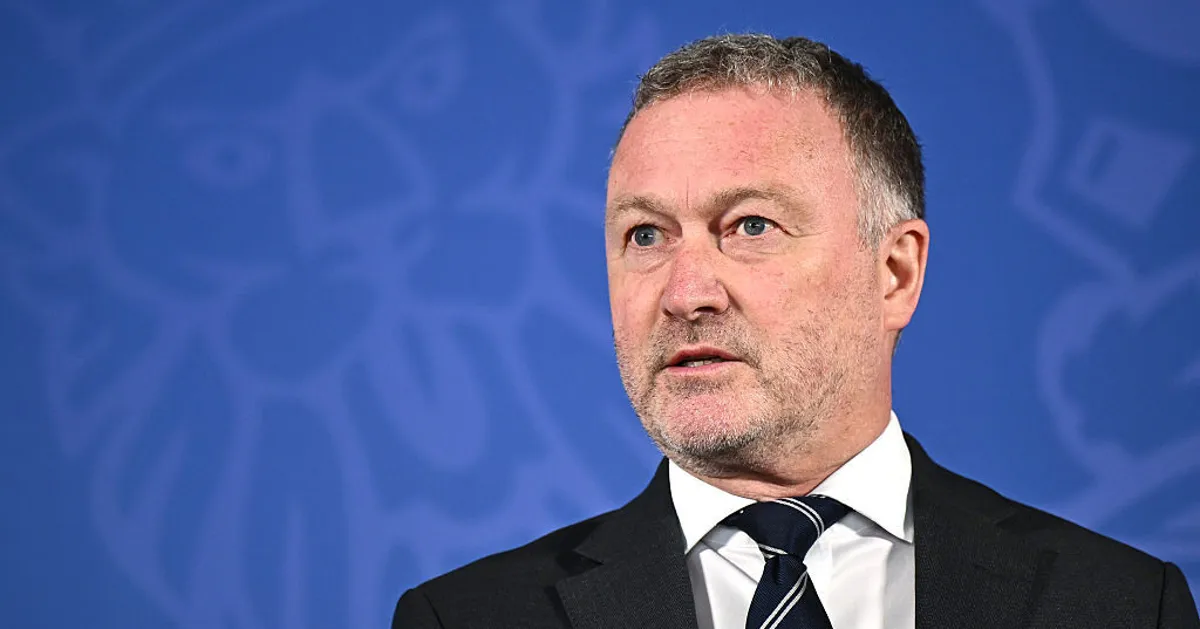
A cabinet minister has ruled out giving MPs a vote on UK military action in Iran.
Steve Reed said it would be “unprecedented” for the Commons to be given a say on operations “defending British people” in the area.
Opposition parties, and some Labour MPs, have demanded a vote in parliament after Keir Starmer gave the US the green light to use British bases for bombing raids to re-open the Strait of Hormuz.
On the BBC’s Sunday with Laura Kuenssberg, Reed was asked whether there would be a Commons vote.
He said: “It would be unprecedented to call a vote in parliament on defending British people and British assets. That is why we have security apparatus in place.
“The UK did not take part in the initial offensive action because we didn’t see there was a legal basis for the UK to participate.
“There is no precedent for a vote in parliament for defending British people.”
When it was pointed out to the minister that Keir Starmer had previously said MPs should be given a vote on any UK military action, he replied: “I don’t think at any point the prime minister has believed that there should be a vote on defending British people who are under attack from a hostile state.”
Green Party leader Zack Polanski accused Reed of “gaslighting the nation”.
He told HuffPost UK: “It’s very clearly not defensive action and their semantics this morning will never hide that a Labour government have learnt no lessons about getting involved in illegal Middle East wars that are truly deadly.
“The prime minister promised that military action would be subject to a binding vote in parliament and I’m sure he wouldn’t want to be telling lies to the whole country on such a crucial issue.
Meanwhile, Reed also rejected Israeli claims that Iranian missiles could reach London after Tehran unsuccessfully tried to hit Diego Garcia in the Indian Ocean.
He said: “There is no specific assessment that the Iranians are targeting the UK or even could, if they wanted to.
“We have the finest military in the world. We are perfectly capable of protecting this country.”
Politics
They once called him a ‘goose-stepping extremist.’ They’re now sitting out his comeback bid.
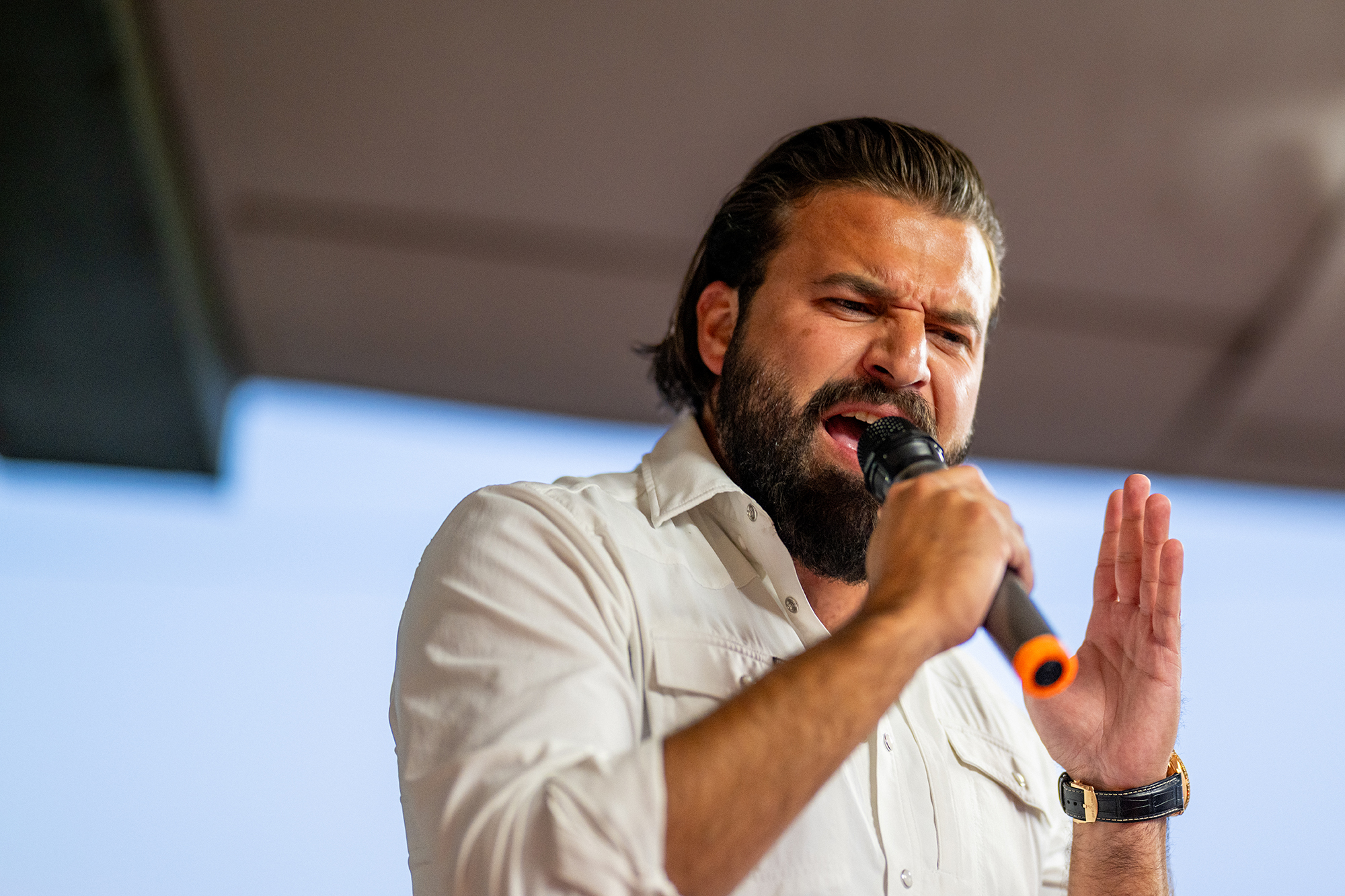
When Brandon Herrera ran for Congress in 2024, the Republican Jewish Coalition called him “a goose-stepping extremist” and spent big to take him down. Two years later, he’s the presumptive GOP nominee — and his former foes are staying home as the GOP establishment moves to embrace him.
Herrera, a gun shop owner and popular YouTuber known as “The AKGuy” running in Texas’ 23rd Congressional District, has faced widespread criticism for past videos in which he mimics a Nazi march to Nazi music, jokes about the Holocaust and boasts about his 1939 edition of “Mein Kampf.” His 2024 opponent, Rep. Tony Gonzales (R-Texas) called him a “known neo-Nazi,” a characterization Herrera disputes. Concern over Herrera’s comments were so severe that the American Israel Public Affairs Committee’s United Democracy Project spent more than $1 million two years ago and the Republican Jewish Coalition spent close to $400,000 to sink his campaign.
But now, a scandal forced Gonzales to drop out of the runoff, and Herrera is the GOP nominee in the sprawling, GOP-leaning Texas border district, which President Donald Trump carried by a 17-point margin in 2024.
And faced with the choice of a candidate they’ve long accused of antisemitism and a Democrat, these pro-Israel and Jewish groups are thus far choosing to sit on their hands.
AIPAC, which backs both Democratic and Republican pro-Israel candidates and usually focuses its efforts in primaries, has not endorsed in the race. AIPAC spokesperson Deryn Sousa said in a statement only that the group would “continue to assess where candidates across the country stand on issues that affect the U.S.-Israel partnership.”
And the RJC, which only supports Republican candidates, won’t get involved. “The RJC has a longstanding policy of speaking out against those who traffic in Nazi ideology, and this is another case,” said RJC political director and spokesperson Sam Markstein. “The RJC opposed Mr. Herrera in 2024, and he will not get our support now.”
But Markstein made clear it was likely they would sit the race out rather than oppose him in the general election. “We’ve never supported a Democrat, so that should tell you everything you need to know,” he said.
In the weeks since Herrera finished as the top vote-getter in Texas’ March 4 primary and Gonzales dropped out, the GOP establishment has largely embraced Herrera.
Last week, as lawmakers and donors socialized during a glitzy Mar-a-Lago fundraiser for the House Freedom Caucus, which backed him in the primary, Herrera made a triumphant appearance, according to an attendee granted anonymity to detail a private event and another attendee’s post on social media. Trump announced his endorsement on social media the same night.
“Brandon is strongly supported by many Highly Respected MAGA Warriors in Texas, and Republicans in the US House,” Trump wrote. “HE WILL NEVER LET YOU DOWN!”
Speaker Mike Johnson and House GOP leadership followed a week later, calling him an “America First grassroots leader” in a joint statement Thursday.
Trump’s endorsement brings “a little bit of comfort” to pro-Israel GOP donors who view Trump as a loyal ally, said Gabriel Groisman, a Florida-based GOP donor active in pro-Israel circles. “We trust the president and his team in their vetting of congressional candidates,” Groisman said. “But it doesn’t mean we don’t ask questions and we don’t dig further.”And Groisman said that the “ugly truth about politics” is Jewish Republican donors are now faced with the option of him or a Democrat, rather than another Republican. “So the question is whether it’s better to have him in [office], or not. That’s a very, very difficult question to answer.”
Herrera criticized AIPAC’s spending against him in 2024, calling it “Israel first bullshit.” “I’m not anti-Israel, I’m anti Israel buying American elections,” he wrote on social media.
He has also been critical of U.S. policy toward Israel, arguing American taxpayers should not have to pay for military aid to Israel. We shouldn’t be spending a cent of taxpayer dollars on anything that is not either an investment or right here in the United States,” he said in a speech, Israel National News reported. “I don’t hate my neighbor just because I don’t want to pay his power bill. If they want to buy rockets from us, let’s sell to them.”
Republicans’ embrace of Herrera shows how seriously the GOP values maintaining control of the House this cycle, even as some Republicans warn of growing antisemitism within their own ranks.
Herrera’s campaign has continued to publicly push back on criticisms of his social media history, which they contend are taken out of context from his “work as a historical firearms educator” and omitting extended clips that include “comments ridiculing and condemning Hitler’s book.”
“The accusations against Brandon were bizarre and false, manufactured by a desperate political opponent who misleadingly cut and pasted together disparate video clips,” Herrera campaign manager Kimmie Gonzalez said in a statement.
Groisman, the Florida-based donor, said Herrera’s allies are working to assuage concerns about his past statements through outreach to Jewish and pro-Israel donors in Texas and beyond.
“They’re trying to send them what he has actually said, versus what people say he said, which they seem to claim that there’s a big delta there,” Groisman said. “The concern is, are we, as a Republican Party, allowing in another potential Thomas Massie-type figure? Nobody knows the answer to that question.” Massie, a Republican member of the House from Kentucky, has been an outspoken critic of Trump and Israel.
Herrera’s campaign confirmed he is looking for dialogue with those same groups that have attacked him for years — including the RJC.
Katie Padilla Stout, the Democratic nominee in the district, has said that Herrera has “consistently been on the wrong side of history,” citing content from his YouTube videos that mocked veterans and another video in which he tested Nazi weaponry. Padilla Stout has started to make allegations of antisemitism core to her attacks on her Republican opponent, as outside Democratic groups — like the House Majority PAC — use his past videos as attacks.
“Given his documented history of apparent anti-semitism, it’s no surprise our campaign has received an outpouring of support from people from all across the district and from both sides of the aisle, including support from the Jewish community,” Padilla Stout’s campaign manager, Yolitzma Aguirre, said in a statement.
Some of the Republican officeholders who have warned loudly about growing antisemitism within their party dodged when asked about Herrera.
Sen. Lindsey Graham (R-S.C.) has vowed to take on any Republican congressional candidate who espoused antisemitism, but when asked about Herrera said “I don’t know what you’re talking about, in terms of what he said.”
Sen. Ted Cruz (R-Texas), who denounced podcaster Nick Fuentes as a “goose-stepping Nazi” during a speech last week, has stayed out of the primary, even as he endorsed in other U.S. House races in his state. He said questions about Herrera’s statements or actions should be directed to Herrera himself.
“I haven’t seen the video you’re discussing, and so you’re welcome to ask him those questions,” Cruz said in a brief interview last week.
When asked how he would advise Texas voters to cast their ballot in Herrera’s race, Cruz refused to answer. “Those are the exact same questions a Democrat tracker would ask,” Cruz said before walking away. His office declined to elaborate on his answers.
While Republicans circle the wagons or duck the topic, a Jewish Democratic group that rarely plays in districts like this is thinking about investing in trying to defeat Herrera.
The Jewish Democratic Council of America is considering getting involved in the heavily Republican district, which would deviate from their norm of engaging only in districts with significant Jewish voter populations.
“If there was ever a chance that a Democrat could win a seat like this, maybe it’s in these midterms,” said JDCA president Hailie Soifer. “So it is something we’re looking at. Certainly it is a priority for us to defeat Trump-endorsed neo-Nazis, like this candidate.”

When I was 14 years old, I wrote my first letter to My Future Husband. Over the course of six years, I wrote more than 100 similar letters, with the intent of one day sharing them with my God-ordained groom.
While perhaps an overachiever in this endeavour, I was certainly not alone. Many young women raised in evangelical Christianity in the 90s and 2000s were heavily influenced by “purity culture”, an evangelical movement promoting sexual abstinence until marriage, modesty and traditional gender roles.
Purity Culture mandated a shift away from casual dating and toward dating with the express intention of a swift and Christ-centred marriage, especially for girls.
I absorbed the high value placed on my role as a future bride, and I tasked myself with fulfilling that role as quickly and expertly as possible.
When I was a little girl, my grandmother sewed me a child-sized wedding dress. It was white with a train, lace trim, pearls and a veil with a blusher.
With the perfect costume, I spent hours playing Bride in the living room: walking down the aisle, standing by the hearth and kissing an imaginary man the way I secretly spied women kissing men on daytime soaps when my mum didn’t know I was looking.
I would run around in the back yard making up songs about being a woman, being a bride, having a wedding day. I even wore the dress as a Halloween costume a couple of times, much to my little brother’s dismay – what if people mistook him as the groom?!
It’s not out of the ordinary for a kid to engage in imaginary play, whether that’s dressing up as a princess or teaching math to a class of stuffed animals. But, for me, the fantasy was more than playing dress up. As the white polyblend zipped up over my shoulders, I felt I was accepting a mantle of great power.
In my imagination, being a bride was synonymous with being visible, honoured and adored. If I were a bride, I would have acrylic French tips like my mum, a 1.5-inch curling iron like my big sister and a man who would look at me the way Captain Von Trapp looks at Maria in the gazebo. (This is still the epitome of romance to me.)
On the wide spectrum of childhoods, I had a pretty good one. I had parents who loved me and did their best with the tools available to them. Some parts of my story are pretty standard-issue teen stuff. As a chubby preteen of the aughts, I shopped in the Dillard’s women’s section, mowed my unibrow with a disposable razor twice a week, and struggled against my naturally curly hair with a Wet 2 Straight hair straightener. I can still hear and smell the sizzle of the iron on my damp, Pantene-scented curls.
But other parts of my story, while also common, are less relatable to a lot of people. For instance, for the first 18 years of my life, I was at church no less than three days per week learning that it was my personal responsibility to rescue my non-Christian classmates from the jaws of hell due to an unseen spiritual war that was *literally* being waged all around me.
Still another part of my story is, thankfully, relatable to very few. When I was five years old, my little brother nearly died of liver failure, kickstarting a lifetime of physical, mental and emotional health crises that ricocheted throughout my family, shaped my childhood and still echo in the present.
I outgrew the little white dress, but not the fantasy of marriage. This fantasy was reinforced by religious teachings that emphasised the importance of marriage, purity and obedience to God and to one’s husband.
I was trying to manage many things that were fully out of my control, within the context of a high-control, patriarchal religion, which left me feeling powerless and afraid and in need of an escape. And in my world, marriage was power. Marriage was purpose. At least for girls, marriage was agency.
As far as fantasies go, this was an achievable one! Most of the adults I knew were married, so why not me? This was surely my calling. This would surely be the end to the chaos, the uncertainty, the victimhood.
So, when I was 14, I wrote my first letter to My Future Husband. It was intended to be read by the lucky man on our wedding night. Predictably, I waxed on about my virginal purity and the “special gift” I’d been saving for him. It is extremely cringeworthy.
The 14-year-old version of me then continued to write an obsessive amount of letters to her Future Husband over six years. Eventually, I stopped writing the letters, put them in storage, and largely forgot about them.
Until 16 years later when, married but no longer an Evangelical Christian, I started reading them out loud to my actual husband – along with an audience of strangers on the internet.

Photo Courtesy Of Abigail Freshley
At 30 – after a decade of faith deconstruction and much-needed therapy – I am married to a great man. Though the 14-year-old version of myself would be disappointed to know that my actual wedding night with my husband, Zach, was spent counting the cash from our wedding cards, eating some chocolate strawberries and promptly passing out.
No one’s hymen was broken. No purity was “given”. We simply snuggled into the deep, dreamless sleep of two people who loved each other deeply and had already shared a bed together for years.
When Zach and I found the letters in an old box of my things at my parents’ home, I knew we had to do something with them. After reading one or two on our own, I had the idea to record myself reading one of the letters to Zach for the first time and post it on TikTok.
So far, I’ve read 38 letters online, which has been equal parts excruciating and liberating. The content ranges from salacious gossip about my friends, to opining about my lonely condition as a single 15-year-old, to writing veritable fanfiction about a young couple at my church.
Inspired by a particular scene of Cory and Topanga from one of the later seasons of Boy Meets World, I imagined a young couple at my church to be poverty-stricken but in love – reduced to “eating chicken salad sandwiches on the floor of their living room”.
I finish my story with the declaration: “Fast forward 10 years … that will be us.” This had Zach and I both doubled over and gasping for air.
I figured the goofy letters might resonate with some folks online, but I had no idea how much. Countless women in the comments of my videos have shared similar stories and experiences. I was shocked to find out just how many people burn their old journals and husband letters.
Burning seems excessive to me, but hey – your letters, your choice to perform a sacramental bonfire, am I right?
Many followers have thanked me for the “bravery” of sharing a bit of my story. While I appreciate the sentiment, I don’t actually think reading the letters online is all that brave. I think the brave person in this story is the teenager who found a way to survive far more than she should have had to handle, and who survived deconstructing a belief system that supported her entire identity and worldview. The bravest thing I’ve ever done is heal.
And every time we share a letter online, a little bit more healing happens. We laugh until our stomachs hurt and we gasp at the melodramatic high school tales I’ve gifted myself from the past. The sweetest irony is that I originally meant these letters to be a way for me to connect with My Future Husband … and they are! Just not remotely in the way I imagined.
In retrospect, the letters were misguided, but this journey has given me deep compassion and empathy for the young woman who wrote them.
She grew from a teenage girl whose wildest fantasy for her future was having a husband to obey to a woman who knows that being a wife is the least interesting thing about her.
If you grew up anything like me, especially if you’re working to deconstruct your harmful internalised beliefs – I hope this series also reminds you that there’s so much more power, agency and purpose in life than being someone’s wife.
I initially shared my letters to My Future Husband online because I was hoping to make you laugh, but the best outcome I could hope for is to also help you heal.
Abigail Freshley is a writer, reader, podcast host and social media over-sharer based in Los Angeles. She reflects on her evangelical upbringing, love of books and obsession with her dog, Bonnie, on Instagram and TikTok.
Do you have a compelling personal story you’d like to see published on HuffPost? Find out what we’re looking for here and send us a pitch at pitch@huffpost.com.

A former senior US government official has said Donald Trump is “in a panic” because the Iran war is not progressing as he had hoped.
Karen von Hippel, who spent nearly six years as a senior adviser in the Department of State’s bureau on counter-terrorism, spoke out after Trump threatened to “obliterate” Iranian power plants if the Strait of Hormuz is not re-opened within 48 hours.
That came barely a day after he said America was preparing to “wind down” its operations in the region.
Speaking on the BBC’s Sunday with Laura Kuenssberg show, von Hippel cast doubt on whether the US president would actually go through with his latest threat.
She said: “It’s certainly not the first time we’ve heard him make ultimatums that he doesn’t act on. We’ve heard that throughout this entire term so far.
“I think he’s in a bit of a panic because he thought the war would go better than it has.
“Just as he said ‘we’re winding it down’, they’re sending thousands of Marines over and the Israelis say they’re going to ramp it up over the next few weeks, so it’s hard to know what’s going on.”
Around one-fifth of the world’s oil supply passes through the Strait of Hormuz, but Iran has been attacking tankers trying to use it since the war began three weeks ago.
That has led to a spike in the price of oil, triggering a potential global economic crisis as energy costs soar.
In a pist on Truth Social, Trump said: “If Iran doesn’t FULLY OPEN, WITHOUT THREAT, the Strait of Hormuz, within 48 HOURS from this exact point in time, the United States of America will hit and obliterate their various POWER PLANTS, STARTING WITH THE BIGGEST ONE FIRST!”
Communities secretary Steve Reed refused to be drawn on whether the UK government agreed with the president.
He told Sky News: “I think you need to ask President Trump about the things that President Trump is talking about.”

Therapist comment provided by licensed sexologist, relationship therapist, and author at Passionerad, Sofie Roos.
Here at HuffPost UK, we’ve written about the topics straight men and women, as well as virgins over the age of 30, bring up in sex therapy.
And this week, sexologist and therapist Sofie Roos has shared the concerns menopausal women most often bring to her.
1) Reduced sexual desire
“Almost all menopausal women I meet during sex therapy bring up their changed lust and/or decreased interest in sex,” Roos told us.
That’s partly because of the hormonal changes that happen during the life stage, including decreases in oestrogen and testosterone.
Then, there are factors like “stress, tiredness, worse sleep quality, and a changed life situation, such as children moving out,” which Roos says are common in menopause.
For some women, that makes “lust less intense, and it can feel difficult to get as turned on as before”. And for others, it can create a general loss of desire.
2) Vaginal dryness and discomfort
Vaginal dryness is a common symptom of menopause. It can make penetrative sex “uncomfortable and, for some, even painful,” the sexologist shared.
“Decreased oestrogen levels additionally affect vaginal tissue, [which] gets thinner and less elastic, which also can lead to discomfort.”
That can create a fear of sex, which, in turn, decreases drive further, she added.
3) Changes in body image and self-esteem
Often, menopause changes people’s body composition. Roos said that the people she speaks to about menopause often notice changes to their self-esteem and body image as a result.
This “tends to lead to women feeling less attractive and less sensual, which often negatively affects how we feel in intimate situations, leading to one avoiding sex.”
4) Difficulty getting aroused and orgasming
Hormone changes in menopause might mean some people take longer to “get going” in the bedroom, as their levels of sensitivity change.
Roos has noticed this among her clients. “Some women find themselves in a situation where it takes longer to get turned on, or that [orgasm] feels far away and hard to get, or that it’s less intense than previously,” she shared.
“These are also all normal effects of hormonal changes and reduced blood flow to the genital area, and while it’s completely natural, it can still feel extremely frustrating, especially if you don’t understand why it’s happening.”
5) Relationship changes
In Roos’ experience, “menopause often happens at the same time as other big life-changing moments.
“Couples who have been together for a long time often face intimacy issues, identity challenges are common, and on top of this, many families go from living with their kids to just being the parents left in the household – all things that already affect their [relationship to] sex.”
What advice does a sexologist have for women in menopause?
Roos said, “My best advice is to normalise what’s happening, and to openly talk about it with your partner”.
That way, you can largely skip past “shame, misunderstandings and pressure,” and help you to find new solutions.
“Sex during and after menopause tends to need new kinds of physical and emotional stimulation as well as more time than before, so be open to discovering new things and be responsive to how it feels,” she added.
That could mean exploring different kinds of emotional connection, extending foreplay, and/or giving new toys and positions a go.
“A great lube can be a real game changer when experiencing vaginal dryness, and a good vibrator can be what’s needed to be able to orgasm again,” the sexologist continued.
Then, there’s the “boring” stuff: investing in your relationship, eating healthily, and reducing stress where possible, while exercise “benefits blood flow to the vaginal area, but also improves mood, energy and sleep, which all boost your desire.
“Many women eventually realise that the menopause is a chance [to develop] a more relaxed, easy-going and interesting relationship with sex,” Roos ended.
“The sooner you start seeing the menopause as a chance to make the intimacy something new, the sooner you’ll be able to work [towards having] the best sex of your life after 50!”

We hope you love the products we recommend! All of them were independently selected by our editors. Just so you know, HuffPost UK may collect a share of sales or other compensation from the links on this page if you decide to shop from them. Oh, and FYI – prices are accurate and items in stock as of time of publication.
Spring is here at last – the birds are chirping, the bees are buzzing and the sun is just starting to peek through the clouds, teasing us with what’s to come during the summer.
But during this tricky, barely-warming-up time of year, getting your transitional dressing right can be such a pain. And that goes double for your fitness gear, which needs to see you through not just rain or shine, but sweat too.
Whether you’re prepping for April’s showers or May’s flowers, give these fashionable fitness ’fits a look in.
I’m Buying These 7-12% Yields With Discounts To NAV And Peers

Channel Nicole Kidman’s Sunglasses Style for $22 on Amazon

99% Will Never Own 5,000 XRP || XRP NEWS TODAY


-

 Tech7 days ago
Your Legally Registered ‘Motorcycle’ Might Not Count Under Proposed US Law
-

 Fashion2 days ago
Weekend Open Thread: Adidas – Corporette.com
-

 Politics2 days ago
Jenni Murray, Long-Serving Woman’s Hour Presenter, Dies Aged 75
-
 Tech5 days ago
Are Split Spacebars the Next Big Gaming Keyboard Trend?
-

 Crypto World15 hours ago
Best Crypto to Buy Now: Strategy Just Spent $1.57 Billion on Bitcoin During Fear While Early Investors Quietly Enter Pepeto for 150x Potential
-

 News Videos4 days ago
RBA board divided on rate cut, unusually buoyant share market | Finance Report | ABC NEWS
-

 Crypto World16 hours ago
Bitcoin Price News: Bhutan Sells $72 Million in BTC Under Fiscal Pressure, but the Smart Money Entering Pepeto Sees What the Market Does Not
-

 Business7 days ago
Search for Savannah Guthrie’s Mother Enters Seventh Week with No Arrests
-
 Crypto World2 days ago
NIO (NIO) Stock Plunges 6.5% as Shelf Registration Sparks Dilution Worries
-

 Business6 days ago
Australian shares drop as Iran war enters third week
-

 Crypto World6 days ago
Crypto Lender BlockFills Enters Chapter 11 with Up to $500M in Liabilities
-

 Politics4 days ago
The House | The new register to protect children from their abusers shows Parliament at its best
-

 Fashion6 days ago
25 Celebrities with Curly Hair That Are Naturally Beautiful
-

 Tech2 days ago
inKONBINI Lets You Spend Summer Days Behind the Register
-

 Crypto World4 days ago
Canada’s FINTRAC revokes registrations of 23 crypto MSBs in AML crackdown
-
 Politics5 days ago
Real-time pollution monitoring calls after boy nearly dies
-
 NewsBeat4 days ago
Residents in North Lanarkshire reminded to register to vote in Scottish Parliament Election
-

 Business6 days ago
Meta planning major layoffs as AI spending and automation reshape workforce
-

 News Videos4 days ago
PARLIAMENT OF MALAWI – PAC MEETING WITH REGISTRAR OF FINANCIAL ON AMARYLLIS HOTEL – INQUIRY LIVE
-
 Crypto World7 days ago
U.S. Oil Companies Post Record Profits as Oil Prices Break $100
You must be logged in to post a comment Login