
Politics
James Ford: The Night Czar is dead. But for London’s publicans the Night Mayor has only just begun


James Ford is a columnist for City AM and is a former adviser to Boris Johnson during his tenure as Mayor of London.
The Mayor of London’s dreaded Night Czar is no more. The post has been deleted. Permanently. This should come as no great surprise. The role was an unmitigated failure when occupied by Sadiq’s hapless appointee, Amy Lamé, and the post has sat vacant for more than a year following her resignation. We would probably raise a glass to celebrate this news, but sadly, all the clubs have closed down. (Thanks, Amy!)
Indeed, rejoicing that the Night Czar has gone the way of the Romanovs may be premature. On the recommendation of the Mayor’s Nightlife Taskforce (a committee of industry experts from across the nighttime economy) it is being replaced by a Nightlife Commission (a committee of…wait for it…industry experts from across the nighttime economy). Although the input of genuine business people with real frontline experience must surely be welcomed, it is not clear that City Hall is really taking the Commission, or the nighttime economy, seriously. The Commission has been allocated the rather miserly sum of £300,000 for its initial work, with the intention that it will ultimately become self-funded.
For comparison, £300,000 is what City Hall spent last year promoting al fresco dining. It is equivalent to the combined salary of just two of Sadiq’s nine deputy mayors. It is significantly less than the £958,000 that City Hall spent on providing stewards for the Notting Hill Carnival in 2025. Even more tellingly, £300,000 is slightly less than the total increase in business rates that would have been paid by the three London boozers (the Spread Eagle in Wandsworth, the Beaten Docket in Cricklewood, and the Dog & Bell in Deptford) worst hit by the government’s botched business rates hike prior to the recent screeching U-turn.
Given that the Nightlife Taskforce’s own report found that one in four working Londoners work in the evenings or at night and that the capital’s nighttime economy was worth more than £139bn in 2024, £300,000 now, and an uncertain future funded via GoFundMe and corporate sponsorship, does not really sound like it is going to move the dial much.
Whilst the capital’s overburdened boozers, bars and nightclubs should be concerned (and arguably insulted) that their future has been entrusted to an underfunded, underwhelming City Hall quango with a possibly short lifespan, this is sadly just one example of the indifference that Sadiq Khan’s City Hall has for the hospitality sector.
The sector has faced a torrid time during Khan’s tenure as Mayor. Data from the Night Time Industries Association found that more than 3,000 pubs, bars and nightclubs have closed in London since 2020. In 2024, research by Bonus Finder saw London ranked as the worst city in the UK for a night out because of the prohibitive cost of pints and hotel rooms and the dwindling number of licensed premises per 100,000 population. A further study found that just 24 per cent of all London bars, pubs and clubs were open past midnight on a Saturday night (compared to 44 per cent in Edinburgh and 38 per cent in Manchester). No surprise then that #LameLondon became a popular hashtag prior to Lamé’s departure because of public anger over the lack of late-night options in the capital. Even popular brewing brand Brewdog closed three of its London bars – in Camden, Shepherd’s Bush and Shoreditch – in July 2025. (And you know things must be bad if landlords even struggle to sell overpriced, trendy craft beers to hipsters in Shoreditch of all places).
What has London’s Mayor actually done to help the capital’s struggling hospitality sector during a decade at City Hall? He created the post of Night Czar…but gave it to a Labour Party crony. When clubs and venues continued to close at an accelerated rate, he gave that Night Czar a 40 per cent pay rise. It has taken him nearly a decade in office to get to the point where he has sourced industry recommendations on what the hospitality sector needs.
Was the Mayor one of the many voices that lobbied the Chancellor hard to reverse the business rates rise that licensed premises faced? Nope. Has he spoken out against the national insurance rises that are thought to have destroyed 100,000 jobs in the hospitality sector? Of course not. Is he a critic of the Employment Rights Act or the ‘banter ban’ contained within it? No, in fact he welcomed the legislation.
And it is not like Sadiq to stay quiet on issues of even peripheral relevance to Londoners. He was happy to fly to Los Angeles in 2022 to visit a cannabis farm to make the case for decriminalisation. He never shuts up about Brexit, even though it has been a decade since the referendum. He chose to use his annual keynote address to the City of London (arguably the biggest ‘state of the nation’ moment in the Mayor’s year) recently to warn of the possible dangers posed by AI in the future. But, on the fate of the capital’s historic pubs and the vital jobs they support, our mayor has been conspicuously silent. Other senior Labour figures have had the courage to speak out about the crisis engulfing licensed venues and directly challenge government policy – most notably Angela Rayner and Andy Burnham. But not London’s Mayor.
Where the Mayor has been busy on this issue it is to weaponise the crisis to his own advantage. He has been eager to use the travails of the hospitality sector to acquire new powers for himself. The devolution bill currently meandering its way through Parliament is set to grant City Hall sweeping new powers to call in strategic licensing applications and overrule decisions made by the boroughs. Worse still, he is one of many mayors set to impose a tourism tax on visitors to his city. This is set to clobber tourists visiting the capital to the tune of £350m a year.
All this is despite a lack of evidence that giving Sadiq Khan extra powers will make a positive difference. Afterall, City Hall was granted significant additional planning powers in 2010 but it has not prevented the collapse of housebuilding in London on the current mayor’s watch. And Sadiq Khan has not indicated that he will reinvest any of his tourism tax windfall in initiatives that will boost profits or ease burdens for tourism businesses.
When it comes to taking credit for the achievements of others when things are going well or grabbing additional powers to intervene, Sadiq Khan is always at the front of the queue, enthusiastically shouting “me, me, me”. But, when times are hard and his intervention could make a real difference to Londoner’s livelihoods or quality of life, the mayor is nowhere to be seen or heard. His much-trumpeted existing powers go unused, his high public profile remains unleveraged, and his lack of influence within his own party is vividly exposed. The crisis engulfing the capital’s hospitality industry and destroying essential jobs is not easing up or going away. If anything, it is accelerating. London needs a mayor that will roll his sleeves up and get stuck in or is at least willing to speak out on Londoners’ behalf. It’s a pity that we don’t have one.


Keir Starmer has told Donald Trump he won’t be “pressured” into changing his position on the Iran war.
The prime minister said he “will not be wavering” in his belief that America and Israel’s attacks were illegal and that the president has no plan for what comes next.
Starmer angered Trump by initially refusing permission for American jets to use RAF bases to launch bombing raids.
Giving evidence to the Liaison Committee of senior MPs, the PM said: “The principles I’ve applied throughout is that for any UK action, there must be a lawful basis, and a viable and thought-through plan. That is why we didn’t join the original offensive strikes.”
He added: “This is not our war, and we are not getting dragged into this war.”
Trump has launched a series of attacks on the PM since the war began more than three weeks ago.
His most recent jibe came on Sunday when he shared a Saturday Night Live UK sketch portraying Starmer as weak, indecisive and scared of Trump.
Asked by Liaison Committee chair Meg Hillier about the president’s “quite rude” behaviour, the PM said: “I’m utterly focused on what is in the best interests of our country and I am unapologetic about that.
“Notwithstanding the pressure that comes from elsewhere, I will remain laser focused on what is in the British national interest.
“And a lot of what is said or done is undoubtedly said and done to put pressure on me, I have no doubt about that. I understand what is going on.
“But I am not going to waver on this. I am the British prime minister and my job is to be absolutely focused on what is in the British national interest.
“That has served me well in recent weeks and that is the principle that I will continue to adhere to as we go forward taking difficult decisions.”

!function(n){if(!window.cnx){window.cnx={},window.cnx.cmd=[];var t=n.createElement(‘iframe’);t.display=’none’,t.onload=function(){var n=t.contentWindow.document,c=n.createElement(‘script’);c.src=”//cd.connatix.com/connatix.player.js”,c.setAttribute(‘async’,’1′),c.setAttribute(‘type’,’text/javascript’),n.body.appendChild(c)},n.head.appendChild(t)}}(document);(new Image()).src=”https://capi.connatix.com/tr/si?token=19654b65-409c-4b38-90db-80cbdea02cf4″;cnx.cmd.push(function(){cnx({“playerId”:”19654b65-409c-4b38-90db-80cbdea02cf4″,”mediaId”:”129acaad-a836-43b8-b264-3f1e9f0b0223″}).render(“69c1826be4b0964b5700263b”);});
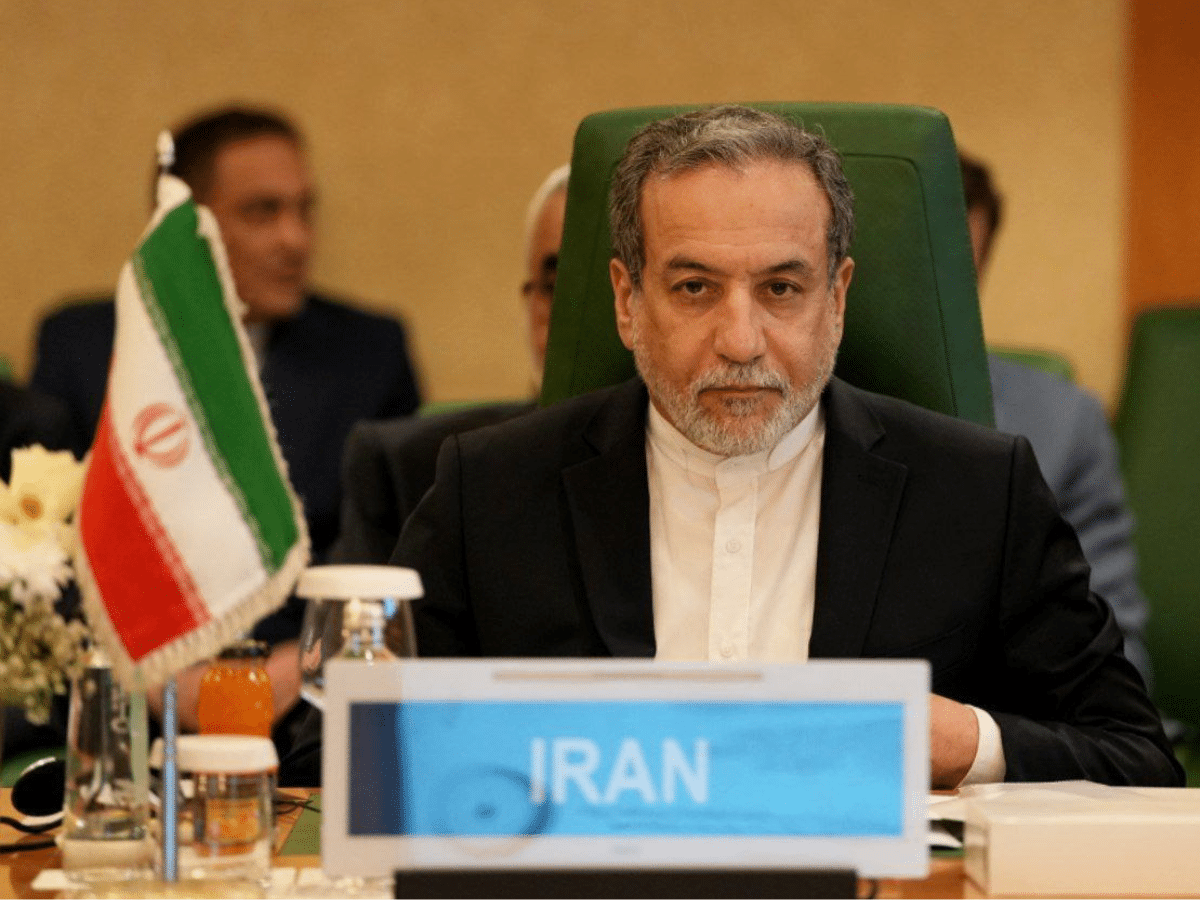
Iran’s foreign minister, Seyed Abbas Araghchi, slammed Netanyahu’s blasphemous dismissal of Jesus as having “no advantage over [conqueror and mass murderer] Genghis Khan”.
Israel’s PM, Benjamin Netanyahu, gave away his complete ignorance of actual Christianity. Jesus said his kingdom is not of this world; Khan, like Netanyahu, is all about stealing physical territory and wealth from the people in his way.
Iran’s Araghchi calls Netanyahu ‘wanted war criminal’
But Araghchi zeroed in on Netanyahu’s show of contempt for the deluded US ‘Christian’ nationalists whose support is vital to Netanyahu’s crimes and impunity:
For a man so reliant on goodwill of Christians in the United States, Netanyahu’s open disdain for Jesus Christ (PBUH) is remarkable.
His unbridled praise for Djingis Khan, the worst slaughterer our region has ever seen, also fits with his current status as a wanted war criminal. pic.twitter.com/xIoTiuO1vZ
— Seyed Abbas Araghchi (@araghchi) March 20, 2026
The video also exposed, again, Netanyahu’s fascism and genocide. He uses ‘democracy’ as an excuse for brutality, claiming that violence — ‘strength’ — is essential to ‘defend’ it. He deliberately ignores that it is no ‘democracy’ that needs to be defended with war crimes and genocide.
The video has also been dismissed as AI. It certainly looks weird and off. Netanyahu has not been credibly seen in public for almost three weeks since Iran said it had struck his office. Likewise with his security minister, Itamar Ben-Gvir.
Israel and its lobby groups try to claim that anti-Zionism is antisemitism. In fact, about 90% of Zionists are ‘Christian’ — more precisely, racist US and other ‘Christian nationalists‘ whose beliefs have little to do with the teachings of Jesus.
Featured image via Iran Ministry of Foreign Affairs

Israeli analyst Orit Perlov has called for the deliberate murder of the children of Israel’s opponents. Perlov, who works for the Israeli Institute of National Security Studies at Tel Aviv University, posted the comment on her X feed on Sunday 22 March 2026. She has previously called ISIS-linked, Israeli-funded Palestinian terrorist Yasser Abu Shabab “the man of the hour”.

Translated, her post – apparently since deleted – demands a “cruel religious approach” of “eliminating” the children of Iranian leaders. And she appears to bemoan the fact that Israel didn’t do it immediately in Gaza or Lebanon:
Please replace the state approach with a cruel religious approach. Instead of a power plant strike, a plague of the firstborn – tomorrow evening, eliminate the children of Vahidi, Araghchi, and Ghalibaf.
If we can’t get to the parents, harm their children (it took us two years to do it in Gaza. We haven’t done it in Lebanon yet)… Instead of a “mad landlord” approach, we need a cruel landlord. Trump can’t promise hell – that’s exactly what they want.
Hitting power plants would be counterproductive If they drag us into a boxing match and ping-pong games – We lose.
On the same day, she also had the nerve to decry Iran’s threat to retaliate for US-Israeli attacks on its energy resources by striking Israeli power plants as a “war crime”, despite Israel’s repeated attacks on Iran’s.
The INSS plays a role in Israel’s attempts to fight ‘delegitimisation’ of its apartheid colony, for example by condemning left-wing allies of the Palestinian people who see the Palestinian struggle as an anti-colonial one (I know, right) and claiming it drives ‘antisemitism’.
Prior to joining the INSS, Orit Perlov worked for the Israeli government.
Imagine the mass political and media outcry if an Iranian government-linked think-tanker called for the targeting of the children of Israeli political figures, even though Israel routinely murders the families of Palestinian journalists and medical workers.
Featured image via the Canary

The long-running spycops inquiry has revealed what one expert calls “the secret history of Britain“. Officially known as the Undercover Policing Inquiry (UCPI), the inquiry, led by Sir John Mitting, has been looking into misconduct by uncover officers who infiltrated leftwing movements, stole the identities of deceased children, and entered into undisclosed, unlawful romances.
Published exchanges show how absurdly incompetent some agents were, and confirm, yet again, the state’s commitment to sabotaging left-wing movements.
Undercover officers unjustifiably targeted hundreds of left-wing groups for decades. As expert Tom Fowler told the Canary previously, this campaign “fundamentally changed Britain.”
The recent focus on one incompetent officer in particular, exposes how this infiltration of progressive movements wasn’t always smooth sailing.
When a spycop messed up
The agent, who went by the false name of ‘Simon Wellings’, made a costly blunder. Wellings, as the Guardian reported:
jeopardised his own covert deployment by mistakenly recording himself discussing individual campaigners with other special branch officers.
In a ludicrous turn of events, Wellings was at a spycop meeting when he looked up an activist’s phone number and dialled it by accident. The call went to voicemail, which recorded his ongoing conversation with other officers. This silly mistake blew his cover.
Between 2001 and 2007, Wellings infiltrated numerous campaigns and sent thousands of surveillance reports back to his superiors.
These, as the Guardian found:
included details of campaigners’ bank accounts, housing, personal relationships and finances.
They also noted that:
Campaigners said Wellings routinely made up and over-inflated his surveillance reports about them, exaggerating, for example, the level of violence in protests.
Their reporting highlighted that:
Internal police documents show that, after he was exposed, the police considered whether to leave the anti-capitalist group he had infiltrated “intact” or whether to “mount a destructive operation”.
‘Destructive’ police operations against the left
Activist Chris Nineham, whom the state is still targeting today, was a member of the groups that Wellings targeted. And after Nineham’s appearance at the spycops inquiry, Fowler hailed him for hammering home that:
this was not just about spying. This was about disruption. This was about sabotage.
As Fowler insisted, the undercover cops and the network of repression around them were “doing so much to destroy movements.”
He added that the evidence shows:
the police did destroy – do destroy – movements, as we have long said. But more than that, they talk about doing it and they put it in their files.
Guy Taylor, who was in the same left-wing groups as Nineham, summarised that Wellings’s appearance at the inquiry proved the agent:
was a fantasist and a liar and inflated everything
And even though the proceedings didn’t use the court’s time in a very efficient way, Taylor stressed that between the witness testimonies and Wellings’s own words, the former agent had totally “crumbled and died” under scrutiny. Indeed, as Fowler asserted, the chair himself even asserted that:
he believed… the evidence from other people… and gave [Wellings] the opportunity to change his position
Fowler concluded:
that just doesn’t happen and I think that spoke volumes
The spycops inquiry itself may not bring about real justice or change. But every new revelation helps to piece together the British state’s historic repression of the left. The inquiry is an important step towards exposing and resisting state repression, and minimising the harms of future uncover missions targeting our communities.
Featured image via the Canary

The sea remains blue(ish), the sky remains grey, and Palantir is embroiled in yet another nascent big-data privacy scandal. We’re beginning to wonder if the tech firm that chose to name itself after the dark wizard Saruman’s seeing-stone might not be entirely on the level, you know.
The Guardian have uncovered the Financial Conduct Authority’s (FCA) plans to hand Palantir access to financial regulation figures. The US defense contractor recently won the FCA contract, beating one unnamed competitor and gaining still-greater access to highly sensitive UK data.
Palantir: serious security concerns
The FCA ostensibly regulates the UK’s financial services firms. However, it will now pay over £30,000 a week for Palantir to route through its data on UK firms. The Miami-based tech giant will be looking for evidence of irregularities like money laundering, insider trading, and fraud.
If the FCA is pleased with Palantir’s work, the company may be tasked with producing an AI system for the financial watchdog.
The Guardian explained that:
Palantir is expected to apply its AI system, known as Foundry, to huge quantities of information held by the watchdog, including case intelligence files marked highly sensitive; information on so-called problem firms; reports from lenders about proven and suspected frauds; and data about the public, including consumer complaints to the financial ombudsman.
The data includes recordings of phone calls, emails and trawls of social media posts, the Guardian understands. The FCA is one of several UK agencies which aim to stop financial crimes that underpin harms such as the drug trade and human trafficking.
The article also reported concerns from within the FCA itself. One anonymous staff member at the watchdog asked:
Once Palantir understands how we detect money-laundering threats, how do we know that they are ethically reliable enough not to go to share that information?
‘Vast quantities of data’
Likewise, financial-crime specialist Christopher Houssemayne du Boulay, a partner at Hickman & Rose law firm, also raised serious security worries. He explained that:
When the FCA carries out an enforcement investigation, it has powers to compel firms to hand over vast quantities of data. We could be talking about hundreds of whole email accounts and full financial records. Many innocent people will be caught up in that and the data may contain bank account details, email addresses, telephone numbers and other personal information.
If you ingest that data and use it to train an AI system, there are very significant privacy concerns. There should be serious confidentiality requirements regarding what Palantir does with the data.
However, the FCA have insisted that it hasn’t given Palantir permission to copy the data it examines. Which is all fine then, because surely the data company wouldn’t do anything it isn’t allowed to do.
The watchdog insists that Palantir would be a “data processor” rather than a “data controller”. This means that the FCA would retain sole access to the encryption keys for sensitive files. Likewise, the data would only ever be stored in the UK.
However, the FCA reportedly stopped short of scrambling company and individual names, or using dummy data as a test. That’s in spite of the fact that it’s own guidance suggests using synthetic data in pilot runs.
Palantir: Somehow worse than it sounds
Palantir was co-founded by billionaire Peter Thiel, a major donor for Donald Trump and the 2022 Republican election campaign – to the tune of over $32m. Unsurprisingly, Thiel was also a friend of Jeffrey Epstein. The tech magnate once famously claimed that:
I no longer believe that freedom and democracy are compatible.
Given his openly authoritarian views, it’s both utterly outrageous and depressingly predictable that the UK government simply won’t stop handing his company public deals. To date, Palantir has raked in over £670m of UK public funds. These include contracts with the military, police, and even the NHS.
Amnesty International’s AI and human rights researcher Matt Mahmoudi said the firm:
has a track record of flagrantly disregarding international law and standards, both in violations of the human rights of migrants in the United States, which it risks contributing to, and its ongoing supply of artificial intelligence products and services to the Israeli military and intelligence services.
Anybody with an even-passing interest in data security, privacy and basic human freedoms might recognise that Palantir shouldn’t be allowed within 50 metres of a fucking Excel account, never mind the FCA’s database.
However, it’s glaringly clear that the heads of our public institutions no longer share these concerns.
Featured image via the Canary

Football is more than just a game; it’s a universal language that unites people behind a single ball, but it’s also a mirror reflecting the values and principles of societies.
In every match, the spectre of racism sometimes rears its head, reminding us that there’s a segment of the audience that hasn’t yet grasped that a player’s worth is measured by their effort and performance on the pitch, not by their skin color or origin.
With the rise in racist abuse in both European and Arab stadiums, it’s clear that the responsibility lies with everyone involved in the game: the fans are the ones who determine the nature of the event, whether for or against it.
Football has a herd mentality problem
Stands are more than just seats; they’re a breeding ground for what experts call “herd mentality.”
As a dynamic force, fans have the power to change the atmosphere of matches. When fans reject racist chants and silence them immediately, the racist becomes a social outcast before facing legal penalties, creating a sense of self-regulation within the stands.
Conversely, a player remains vulnerable to psychological attacks if there is no public awareness, which can leave lasting psychological scars on their career and life off the field.
The psychological effects extend beyond the individual, impacting the reputation of clubs and countries themselves. In the age of live broadcasts and social media, every racist chant, transmitted live to the world, becomes a stain on the club and the country, affecting sports investments and the image of the society in the eyes of the world.
Explosive impact
A clear example of this is what happened in several recent European matches, where racist chants became negative media content that swept across global networks, leaving a significant mark on the image of the team and the organizers.
The reality is that resorting to racism when losing or provoking the opponent is a sign of intellectual and sporting bankruptcy. A person who finds no other way to express their anger than by belittling others because of their skin color or background lacks even the most basic sporting awareness. Football is built on diversity. From Pelé to Zidane, from Messi to Ronaldo, they all represent different backgrounds and ethnicities, and without this diversity, the game would not have reached its current status. As Nelson Mandela said, “People learn to hate, and if they can learn to hate, they can be taught to love.”
Today’s sports arena is more than just a platform for cheering; it is a space for sporting and human values. It is the fans who decide whether these values will remain present or be lost amidst the clamor of toxic chants, and it is they who can transform matches from mere sporting events into moral messages that reflect the true spirit of football.
Featured image via the Canary

Since the formation of Your Party’s central executive committee, there has been growing frustration from members across the country.
Despite the desperate need for unity, solidarity and compassion in British society, the reported behaviour of the CEC has been to silence or intimidate socialist voices into compliance.
Members are feeling increasingly concerned that Your Party will not work to empower them or listen to their communities. Instead, branches are left ignored without access to resources or guidance which has seen local members abandon the party all together in disappointment.
Several groups have come together to pressure the executive committee to change course, organising to strengthen and assert the socialist voice within the fledgling party.
Your Party’s Muslim members speak out
One group to emerge is the Muslim Socialists of Your Party. They formed in response to growing concern that some were using social conservatism as a cover to sideline the trans community. The group has powerfully called out how some use the Muslim community as a shield to justify holding back progressive LGBTQIA+ policies.
This dynamic has cast a particularly ugly shadow over the run-up to Your Party’s conference, with figures aligned with Corbyn and the many making apparent transphobic remarks. A party built on community and solidarity must stand firmly against the oppression of every group, including our trans brothers and sisters. We cannot leave anyone out in the cold.
The Green Party’s recent success reinforces this point, showing that pro-trans policies resonate with Muslim voters and don’t pose the barrier some claim.
When campaigns focus on people’s real concerns and lead with fairness and solidarity, communities respond. It’s a reminder that inclusive, hopeful organising can build trust and support without division.@jeremycorbyn @zarahsultana @ZackPolanski pic.twitter.com/DJGMj999jd
— Muslim Socialists of Your Party (@MusSocialistsYP) February 27, 2026
Intersectional Feminists for Your Party
The Intersectional Feminists (IFEM) of Your Party has also contacted the CEC to request an explanation for its choice to remove the following from its membership officer role description:
diverse communities, including BAME groups and underrepresented members, to ensure inclusive participation activities.
The group sent an email on 18 March, the evening before a scheduled CEC meeting, expressing its concerns. However, the CEC hasn’t yet responded.
In a later post on X, IFEM asked for Your Party members’ support in ensuring it’s an inclusive party, truly built in the spirit of inclusion and solidarity.
We believe that intersectionality includes working on including underrepresented communities including global majority – not ‘BAME’.
Agree with us? Email the letter below to [email protected] & [email protected]https://t.co/8fTQiJWaha pic.twitter.com/UgtH8Du2A4
— I.FEM.YOUR.PARTY (@I_FEM_YP) March 19, 2026
Young people are disappointed and ashamed
Younger members have also come together in Cambridge, forming an alliance to ensure young people are represented in Your Party. In an open letter, Your Party Youth Cambridge (YPYC) said the committee’s response “will determine whether we remain committed to Your Party”.
As experienced organisers, we will continue the struggle regardless, the only question is whether it’s under this Party’s banner or that of the Greens.
Speaking of their own graft at grassroots level to lay the groundwork for a new Socialist party of the people, the statement explained how YPYC began organising in November 2025. Its goal was to “support their local communities and combat the rise of the far-right”.
Since then, we’ve run a weekly food drive, now in its 16th iteration, ran an independent candidate for the CEC, supported strike action, and hosted numerous vibrant politicised cultural and educational events.
Over these past five months, our membership and impact in our community has greatly enriched our lives; we’ve become a steadfast and regular presence in our local streets. We were eagerly anticipating the formation of the CEC as a chance to concretise the promise of the Party and formally establish the structures we’d built.
However, the group claimed it’s “running out of steam” as it described the deep disappointment felt within communities who had jumped into action at the announcement of a new socialist party. The statement called out a “lack of progress towards branch formation” and how the group feels “increasingly ashamed to bear the Party’s name”.
We’ve felt incredibly disappointed with the lack of action, communication, and comradeship from the CEC. When we read out the CEC reports in our weekly meetings, we find them increasingly uninspiring, a dead weight hanging in the air.
The pre-conference divisiveness has only worsened with the elections; we’ve seen no attempts to resolve this and move forward productively…
We tell our peers that things will get better but, as each month passes, feel increasingly ashamed to bear the Party’s name.
The request to the executive committee is pretty simple really: “clarity, productivity, and confidence in our leadership”.
Will Labour 3.0 crash and burn?
Groups sprang up across the country after Zarah Sultana and Jeremy Corbyn’s announcement last July. Since then energy and engagement on the ground are fading fast, as people fear that those in charge care far less about solidarity than the activists working tirelessly to unite communities on the ground.
Going further, it seems like Jeremy Corbyn and his allies are leaning toward comfortable positions to seemingly appear relevant to the wider electorate. Their comments on the trans community make this clear, and many have widely condemned them as transphobic. However, this undermines everyone who believed we were building the country’s first socialist party — one that serves all people and leads by example rather than continually giving way to right wing, privileged views.
Frustrated by leadership’s refusal to listen, members are redirecting their energy and resources into empowering their communities and peers. Nevertheless, this growing grassroots effort exposes a real and palpable fear: the party appears to sideline socialists, reducing them to little more than subscription payers, and lets unelected officials like Karie Murphy make all the rules.
That hardly reflects the collective leadership model approved at the November conference. So, we have to ask: now that Corbyn’s team holds full control, are they selling us out? If this party becomes no different from its predecessors, it will lose all relevance and will crash and burn.
If that’s the case, more and more socialist groups across the country must stand ready to step in and fill the void, and rebuild this movement from the bottom-up.
Featured image via the Canary
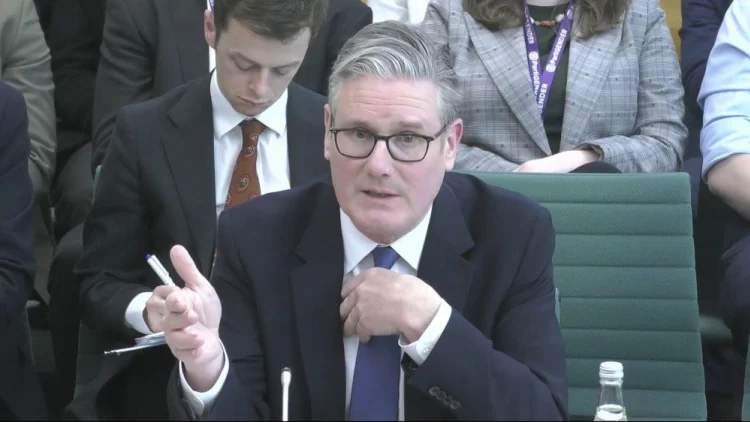

(Alamy)
3 min read
Keir Starmer has told MPs that the country must not fall into “false comfort” thinking that there will be “a quick and early end” to the Iran conflict and that he is planning on the basis that “it could go on for some time”.
The Prime Minister also stressed that he was “acutely aware” of how much the previous Conservative government spent on protecting households from soaring energy bills after Russia invaded Ukraine in 2022, indicating that he prefers a targeted intervention to universal support in response to the current energy crisis.
Speaking to the House of Commons Liaison Committee on Monday afternoon, Starmer said: “Since the conflict started, I’ve been really clear with the team that we mustn’t fall into the sort of false comfort of thinking that there will necessarily be a quick and early end to this.”
He added: “We have to plan on the basis that there may not be.”
The PM will chair a Cobra meeting later on Monday to discuss the economic fallout of the ongoing conflict in Iran, where the Governor of the Bank of England, Andrew Bailey, will be an attendee.
While the Labour government has already announced support for households reliant on heating oil, Starmer confirmed that he is looking at further steps to protect people from a spike in energy bills caused by the war in Iran.
The conflict between the US and Israel on one side and Iran on the other has led to severe disruption to the Strait of Hormuz, with Iran threatening to attack ships trying to pass through what is one of the world’s most important trade routes.
This, in turn, has resulted in soaring gas and oil prices, triggering warnings of an economic shock affecting countries across the world.
There are warnings that household energy bills in the UK will rise significantly when the current cap set by regulator Ofgem expires in July.
Starmer indicated today that he would prefer a targeted intervention to protect households that need it most, referring to how expensive it was when the Liz Truss Conservative government funded universal support. Leading economist Paul Johnson recently described that intervention as “staggeringly expensive”.
“I’m acutely aware of how much it cost last time round,” Starmer said, referring to the package of support announced in 2022.
“I’m acutely aware of the state of the public finances,” Starmer continued, adding, “but we will look this afternoon at what the appropriate approach is.”
“There are difficulties in that we don’t yet know the extent of the challenge we’re facing because we don’t know when this conflict is going to come to an end. But we’re actively looking at what measures we can put in place.”
On Monday, US President Donald Trump delayed his planned strikes on Iran’s power plants, after what he called “very good and productive conversations” with Tehran.
The US threat and Iran’s subsequent threat to retaliate by targeting key energy sites in the Gulf had prompted concern that the war was heading for a major escalation.
Starmer told MPs that the UK was “aware that that was happening” and “the immediate priority has to be a swift resolution of the conflict and delivering a negotiated agreement which puts tough conditions on Iran, particularly in relation to nuclear weapons”.
But he reiterated that the Iran conflict is “not our war and we are not getting dragged into this war”.
Iran has since denied Trump’s claims of an agreement having taken place.

The American aircraft carrier USS Gerald Ford could be out of action for over a year. The nuclear-powered vessel has been at sea for nine months. A major fire and the wear and tear of continuous operations might have taken her out of service long term.
The Ford was sent to Crete after being damaged in a fire, as the Canary reported:
Some open source accounts and legacy media claim the fire took 30 hours to control and affected hundreds of sailors.
Defence analyst Jack Buckby wrote in 1945 magazine:
Between fire damage and deferred maintenance, on top of the long deployment, there is a real risk that the carrier could be out of action for an extended period of time – potentially as long as 12 to 14 months.
Adding:
At a time when U.S. carrier availability is already under pressure, the potential loss of the Navy’s most advanced platform could prove to be a significant problem.
The Ford played a key role in the 3 January attack on Venezuela. She was then sent back to the Gulf without a break. Trump’s decision to do so has led to serious morale and technical issues.
The US and Israel attacked Iran first on 28 February without provocation. Iran was offering unprecedented concessions in negotiations at the time. The Pentagon has since stated there was no imminent threat from Iran. And the UN’s atomic watchdog, the IAEA, has said there is no evidence Iran was developing a nuclear weapon.
USS Gerald Ford and the limits of empire
The US appears to be losing in the war with Iran. The Ford’s withdrawal encapsulates some of those issues.
Buckby wrote:
The ship has been required to sustain high sortie generation and integrate with other U.S. air assets, and there has been continuous operational pressure placed on the platform in a clearly high-threat environment. The deployment has also been extended multiple times, pushing the ship toward what may become one of the longest deployments in modern Navy history.
A corrosive mix of wear and fatigue now appears to be heavily impacting the US attack on Iran:
That has all taken a measurable toll on the vessel, with persistent issues with onboard systems like its plumbing, along with broader concerns about crew fatigue and equipment wear after months without full maintenance. Put simply, the Ford has been operating at a level that accelerates degradation across its mechanical systems, but also human performance.
Maintenance on supercarriers like the Ford can be a matter of months. But it has been known to take much longer:
Under normal conditions, post-deployment maintenance for a nuclear-powered aircraft carrier can take several months, even without major damage. Historical examples show that complex overhauls or major repair periods can extend well beyond a year, depending on scope and system upgrades.
The Trump administration seems to be running out of road. The US has no discernible plan. A majority of Americans oppose the war. The Iranian government remains defiant, while the likes of China have watched as the US bogs itself down in another runaway war.
US imperial decline has been a topic in International Relations courses for decades. Broadly speaking, the theory went that while the US economy declines, it remains militarily preeminent and more inclined to use violence to achieve its aims – but will fail. With the flagship US carrier out of the fight, it looks like we have ringside seats for the crumbling of US empire.
Featured image via the Canary

AI could be the opposite of social media

Major European train station evacuated after suspicious bags found

Snap-on Incorporated (SNA) Presents at The 38th Annual Roth Conference Transcript


-
 Crypto World3 days ago
NIO (NIO) Stock Plunges 6.5% as Shelf Registration Sparks Dilution Worries
-

 Fashion3 days ago
Weekend Open Thread: Adidas – Corporette.com
-

 Politics3 days ago
Jenni Murray, Long-Serving Woman’s Hour Presenter, Dies Aged 75
-
 Tech6 days ago
Are Split Spacebars the Next Big Gaming Keyboard Trend?
-
 Business7 days ago
How the UK and China Trade Agreement Could Shape UK Businesses in 2026
-

 Crypto World2 days ago
Best Crypto to Buy Now: Strategy Just Spent $1.57 Billion on Bitcoin During Fear While Early Investors Quietly Enter Pepeto for 150x Potential
-

 News Videos5 days ago
RBA board divided on rate cut, unusually buoyant share market | Finance Report | ABC NEWS
-

 Crypto World2 days ago
Bitcoin Price News: Bhutan Sells $72 Million in BTC Under Fiscal Pressure, but the Smart Money Entering Pepeto Sees What the Market Does Not
-

 Politics5 days ago
The House | The new register to protect children from their abusers shows Parliament at its best
-

 Tech4 days ago
inKONBINI Lets You Spend Summer Days Behind the Register
-
 Politics6 days ago
Real-time pollution monitoring calls after boy nearly dies
-

 Crypto World5 days ago
Canada’s FINTRAC revokes registrations of 23 crypto MSBs in AML crackdown
-

 Sports7 hours ago
Remo Stars and Kano Pillars Strengthen Survival Hopes in NPFL
-

 News Videos5 days ago
PARLIAMENT OF MALAWI – PAC MEETING WITH REGISTRAR OF FINANCIAL ON AMARYLLIS HOTEL – INQUIRY LIVE
-
 NewsBeat5 days ago
Residents in North Lanarkshire reminded to register to vote in Scottish Parliament Election
-

 Politics4 days ago
Gender equality discussions at UN face pushbacks and US resistance
-

 Business1 day ago
No Winner in March 21 Drawing as Prize Rolls to $133 Million for Next
-

 Business5 days ago
Who Was Alex Pretti? 5 Key Facts About the ICU Nurse Killed by Federal Agents in Minneapolis
-

 Tech22 hours ago
Give Your Phone a Huge (and Free) Upgrade by Switching to Another Keyboard
-

 Sports6 hours ago
Gary Kirsten Accuses Pakistan Cricket Board Of ‘Interference’, Mohsin Naqvi Responds
You must be logged in to post a comment Login