
Politics
John Cooper: Why Britain must resist a new blasphemy law

John Cooper is the Conservative Member of Parliament for Dumfries and Galloway.
‘And now back to Venice, and those effing gondolas…’
The screen at Newton Stewart cinema was filled with amazing images of the Grand Canal and the Rialto Bridge but the commentator – Michael Palin – had given the lie to the idea that this was a travel documentary.
It was actually a spoof short from the Monty Python team ahead of the main feature, The Life of Brian.
It was 1979 and my father, who I had persuaded to slip me in – far too young – was outraged at the language, and prepared to leave.
‘But Dad,’ I protested ,‘we haven’t even seen Christianity being traduced yet!’ for the newspapers were full of faux outrage that the film was an attack on the country’s dominant religion.
It was, on reflection, a moment that taught me about free speech. My father didn’t care for the swearing, but a bit of gentle mockery of the most ardent adherents of religion? Bit of a hoot.
What drew me to Conservative values at an early age was that it was rooted in the idea of treating people as you find them, and not prejudging them.
Ethiopia’s Emperor Haile Selaisse encapsulated it brilliantly in a speech to the UN when he said: ‘The colour of a man’s skin should be of no more significance than the colour of his eye.’
And, oh, that we could live in times where Shawnee chief Tecumseh’s mantra: ‘Trouble no man about their religion; respect others in their view, and demand they respect yours’ holds sway.
But ours is an imperfect world, and so we have laws as guardrails.
Burning a Koran or a Bible is nasty, a calculated insult, and there may well be circumstances where it goes beyond protest into plain illegality.
Scots Law has a fabulous thing called Breach of the Peace, its central premise being that accused ‘placed the lieges in a state of fear or alarm’.
The lieges are the people, and the remit is so wide, the police can use it to cover everything from obstreperous drunks to book-burners.
Such a catch-all is a handy tool for policing the streets, and an accused can always argue in court that ‘the lieges’ were unperturbed.
What we do not need is a blasphemy law.
Pricking pomposity is a British national sport. We know instinctively the higher the horse, the harder the fall.
So we cannot have a pecking order for religions; cannot have them set above criticism, because freedom to criticise ideas is true freedom of speech.
Incredibly, Labour’s ludicrously named Social Cohesion Action Plan is flirting with a blasphemy law with its imprecise ‘anti-Muslim hate’ clause.
My MP colleague Paul Holmes said in Parliament: ‘The definition risks undermining free speech within the law, it risks hindering legitimate criticism of Islamism, and it risks creating a back-door blasphemy law.’
When I said: ‘Why are we, in this place, the cockpit of democracy, discussing a blasphemy law by the back door?’ the Labour benches fairly seethed.
One of their atavistic ‘orcs and goons’ – as our Leader of the Opposition called them – opined at volume that this ‘was beneath me’.
Scratch the surface of tolerant, modern, Labour and too often there is the tribal hard Left, red in political posture as well as in tooth and claw.
And how ironic that in Parliament, in a debate billed ‘Protecting what matters’, Labour should seek to belittle and drown out legitimately held opposing views: ‘You’re either for us; or against us.’
Well, I’m against. I’m against intolerance. I’m against scrambling to appease sectarian sections of the voting public. I’m against politicians too weak to take a stand against narrow pressure groups.
And I’m against blasphemy laws, for in a democracy, no one has the right to not be insulted or offended.


The Guardian took a whimsical tone in its coverage of plane-spotting families at RAF Fairford on 6 April. The base is being used as a hub for the US heavy bombers raining death on Iran. Declassified UK co-director Mark Curtis was among the first to highlight the Guardian‘s strange approach:
This is how the Guardian reported US warplanes mass bombing Iran from a UK base. pic.twitter.com/nBt6EBQYYW
— Mark Curtis (@markcurtis30) April 8, 2026
The article described how one family got up at 4.40am to watch bombers at the base, one of a network of US military colonies in the UK — in this case, disguised as a Royal Air Force (RAF) base in Gloucestershire:
They packed their car with gear you might take on a trip to the seaside – folding chairs, blankets, a picnic. But instead of heading to the coast, they drove 80 miles from their home in Hampshire to Gloucestershire and set up camp close to the perimeter fence of RAF Fairford to watch American warplanes take off and land.
The father, Jonathan Wilkinson, told the paper:
It’s definitely cheaper than a trip to a theme park. The sights and sounds are impressive. But it’s a bittersweet thing. These planes are only here because of war. We have to keep that in mind.
The Guardian reported that the “biggest fan in the family was the oldest boy, Josh”
who wore a Red Arrows cap and said he liked planes because his grandad was in the RAF. “I love the noise of them. They are so cool.” Katie Wilkinson [Mum to Josh] was enjoying the community spirit. “Everyone is friendly and welcoming,” she said.
Rubbernecking a war crime
Estimates of those killed and injured in the unprovoked US/Israel attack on Iran vary. Reuters reported on 3 March:
U.S.-based rights group HRANA said 3,636 people have been killed since the war erupted. It said 1,701 of those were civilians, including at least 254 children.
Reuters carried other figures too:
The International Federation of Red Cross and Red Crescent Societies said that at least 1,900 people have been killed and 20,000 injured in Iran in the U.S.-Israeli strikes so far.
Adding:
It was not clear if those figures included at least 104 people who the Iranian military said were killed in a U.S. attack on an Iranian warship off Sri Lanka on March 4.
Over 100 legal experts warned the US attack on Iran was illegal on 2 April.
RAF Fairford — Family day out with a slice of cake
The Guardian described the scene around Fairford in jolly terms:
A bank holiday jaunt in the Cotswolds is probably most closely associated with a visit to a picture postcard village and, perhaps, a cup of tea and slice of cake.
But hundreds, perhaps thousands, of people on Monday opted instead for the fringes of the RAF base, where American planes are flying missions to Iran.
One passage describes how, just after three warplanes took off heading south, a man:
who had brought his seven-year-old daughter along, and made sure she kept her ear protectors on as the planes flew away, told her they could now go to the park.
And a woman described as “Sally, 59, from Hampshire” told the paper:
I can’t help but be drawn to them, especially the B-1s and B-52s, which for me are cold war big beasts.
Adding:
But the thought of what they are doing gives me the ick, as the kids might say. We must never forget that.
Normal Island (aka Britain) produces all manner of bizarre spectacles. In this case, an apparent mix of ambient imperial and WW2 nostalgia, deep-seated racism and weekend boredom had families queueing up to watch high-tech warplanes set off to bomb Iran. The Guardian — true to form as the left-wing of the British establishment — leaned into the story, producing one of the strangest and most reality-detached pieces of journalism you’ll see — for a little while at least….
Featured image via Twitter
Donald Trump’s claimed ‘ceasefire’ with Iran has collapsed after less than a day, because Israel still regards ceasefires as ‘you cease, we fire’.
Iran has re-closed the vital Hormuz Strait to oil tankers connected in any way to its aggressors and has again hit US facilities in the Gulf. Iran continues to allow vessels belonging to peaceful nations continue to pass.
The move comes in retaliation for Israel’s more than 100 attacks on Lebanon today, 8 April 2026 — the most extreme aggression against the country since the Israeli invasion of 1982. An end to its aggression on Lebanon was a key condition of Iran’s acceptance of Trump’s proposed two-week truce. The onslaught killed at least 250 Lebanese civilians and wounded hundreds more.
As Iranian foreign affairs spokesman Esmaeil Baqaei has pointed out this evening, an end to attacks on Lebanon was central to the agreement, but the US is now reneging on its agreement to try to cover for Israel’s unrestrained murder:
The Iran–U.S. Ceasefire terms are clear and explicit: the U.S. must choose—ceasefire or continued war via Israel. It cannot have both.
The world sees the massacres in Lebanon. The ball is in the U.S. court, and the world is watching whether it will act on its commitments. pic.twitter.com/2bzVlHFKgi
— Seyed Abbas Araghchi (@araghchi) April 8, 2026
If this isn’t yet another case of the U.S. early reneging, then what is it?!#Lebanon pic.twitter.com/UVgZKFBdqj
— Esmaeil Baqaei (@IRIMFA_SPOX) April 8, 2026
The Trump administration insists that Iran is being “dumb” to let the ‘ceasefire’ “fall apart” because it expects that the ceasefire terms be honoured:
Vance: If Iran wants let this negotiation fall apart over Lebanon, which has nothing to do with them, that’s their choice.
We think that would be dumb, but it’s their choice. pic.twitter.com/zZVFSFD1It
— OSINTtechnical (@Osinttechnical) April 8, 2026
Trump told reporters that Lebanon was “not included in the deal”, despite its brokers Pakistan making clear in advance that it was always included:
A few minutes after the Pentagon briefing wrapped I spoke with President Trump briefly to ask about the latest with Iran: pic.twitter.com/tW0nYD1Vcs
— Liz Landers (@ElizLanders) April 8, 2026
Even Trump propagandists Fox News had confirmed the inclusion of an end to Israel’s aggression in Lebanon when it announced the ‘deal’ this morning:
Israel’s war-criminal PM was typically and arrogantly brazen that he intends to keep attacking — if nothing else because it helps keep him out of jail:
Benjamin Netanyahu rejects President Trump’s ceasefire and says the war will continue against Iran at any time he chooses.
Netanyahu says he will achieve his objectives through further military action under his command.
“We are ready to resume the fighting at any moment.”
“Our… pic.twitter.com/lsYoXVO4gb
— Shadow of Ezra (@ShadowofEzra) April 8, 2026
Trump lies met with Iranian resolve
The Iranian embassy in South Africa described Israel as a “rabid dog” and offered to get Trump a leash for it:
Hey Trump, if you don’t have a leash for the rabid dog, Israel, should we get one for you?
— Iran Embassy SA (@IraninSA) April 8, 2026
The speaker of Iran’s parliament noted that the US and Israel have already violated at least three points in the agreement, not just the end of aggression against Lebanon:
— محمدباقر قالیباف | MB Ghalibaf (@mb_ghalibaf) April 8, 2026
And Iran’s foreign minister said Trump must choose between peace and continuing to allow Israel to commit atrocities:
The Iran–U.S. Ceasefire terms are clear and explicit: the U.S. must choose—ceasefire or continued war via Israel. It cannot have both.
The world sees the massacres in Lebanon. The ball is in the U.S. court, and the world is watching whether it will act on its commitments. pic.twitter.com/2bzVlHFKgi
— Seyed Abbas Araghchi (@araghchi) April 8, 2026
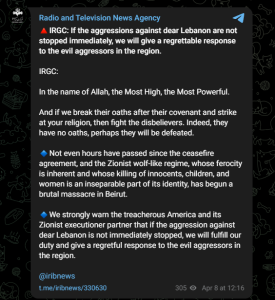
The IRGC has said it will also attack Israel and further US assets in the region directly if the attacks on Lebanon do not halt immediately:

Skwawkbox warned last night that the ‘ceasefire’ was likely to be meaningless because of the fundamental untrustworthiness and records of both Israel and the US. There is no pleasure in being right, but neither is there any surprise.
Featured image via the Canary
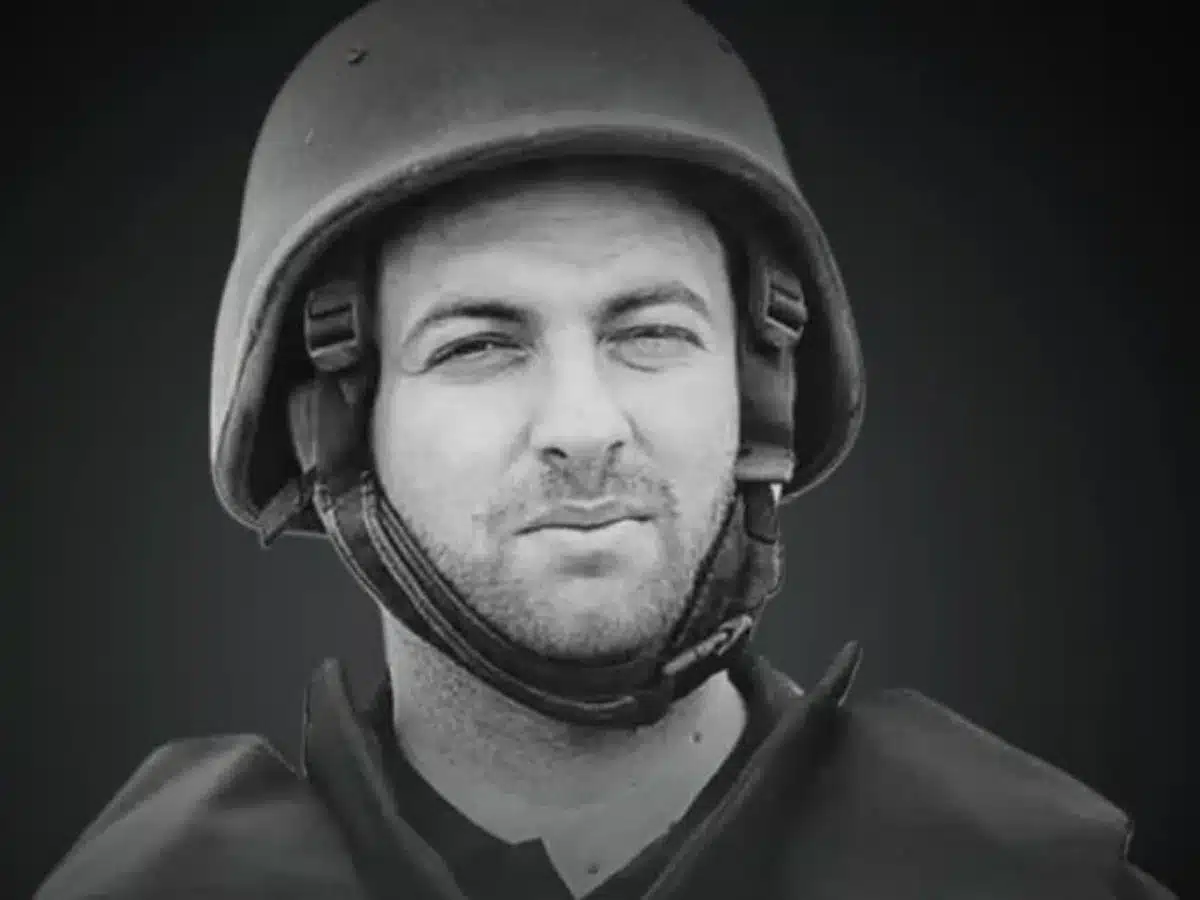
The occupation has today, 8 April 2026, murdered Al Jazeera Mubasher journalist Mohammed Wishah in Gaza. An Israeli millitary drone bombed Wishah’s car as he travelled near the coast west of Gaza city:
Wishah is the latest of hundreds of journalists deliberately murdered by the ethno-supremacist colony, many of them along with more than 700 of their family members.
Israel is a terror state.
Featured image via Aljazeera
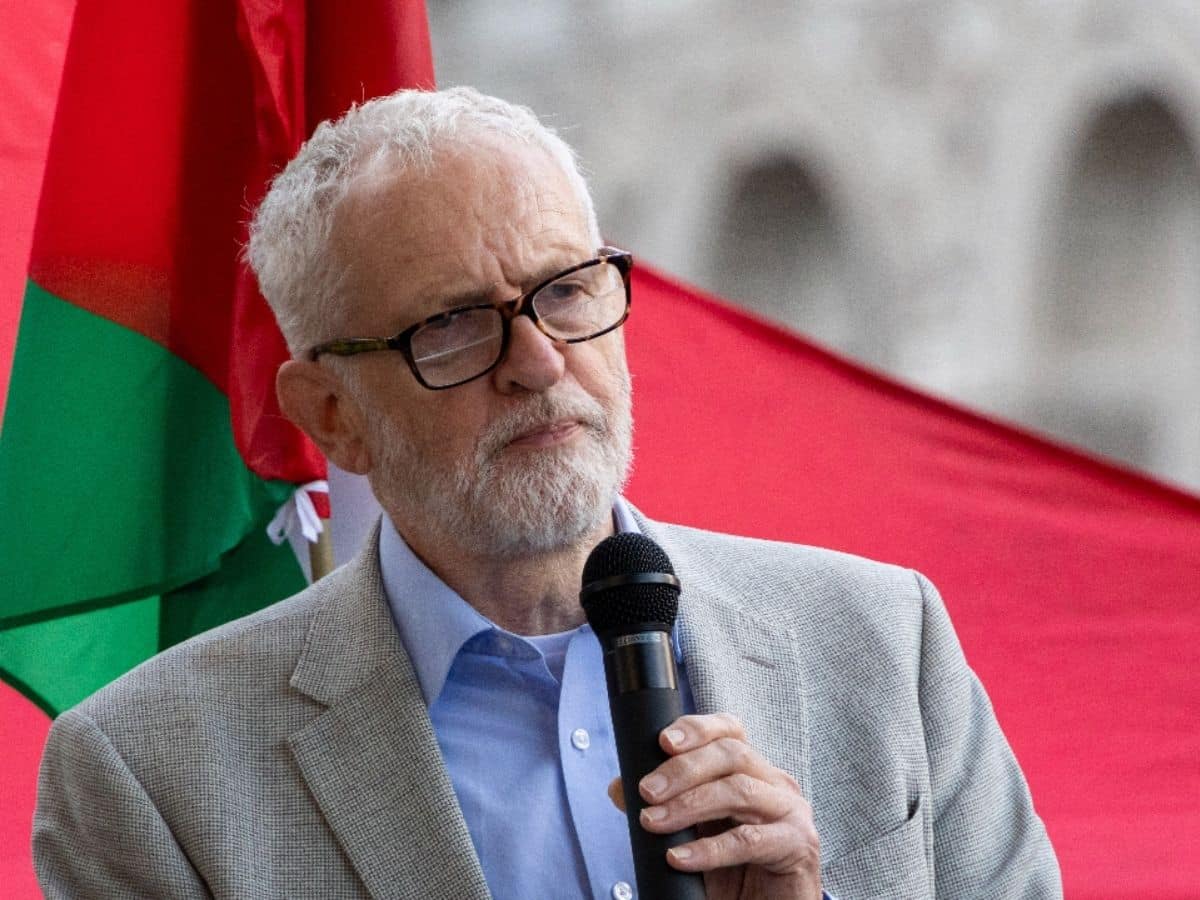
Corbyn — Two and a half years of Israel’s genocide in Gaza have shown the thinking, honest world what Israel and its lobby are. Which is lying, racist and murderous.
Not the BBC’s feeble ‘Have I got news for you’, though.
No. Skwawkbox, the Canary and millions of others always knew that the ‘Labour antisemitism’ moral panic cooked up by the Israel lobby to topple Jeremy Corbyn as Labour leader was a scam. A huge, stinking, transparent scam. And almost all the rest of the country knows it now — Israel’s genocide and war crimes, and the lies it told about them, have made sure of that.
But ‘HIGNFY’, as it styles itself, is still flogging the carcass of that dead, leprous horse — and is lame enough to think it was being clever when it ‘joked‘ comparing Corbyn with racist rapper ‘Ye’, formerly Kanye West. But Corbyn might just have learned from Green party leader Zack Polanski’s head-on approach to tackling the Israel lobby’s tired old smears.
Corbyn promptly slapped down the ‘disgraceful, baseless and irresponsible’ smear and demanded “delete this immediately”:
This is disgraceful, baseless and irresponsible. You should delete this immediately.
— Jeremy Corbyn (@jeremycorbyn) April 8, 2026
Corbyn isn’t joking when he called the lie irresponsible. At the height of the antisemitism scam, he was physically attacked in Finsbury Park as the media and rival politicians incited violence against him.
But so far the libel has not been deleted. If he’s really learned, he must sue.
Featured image via the Canary
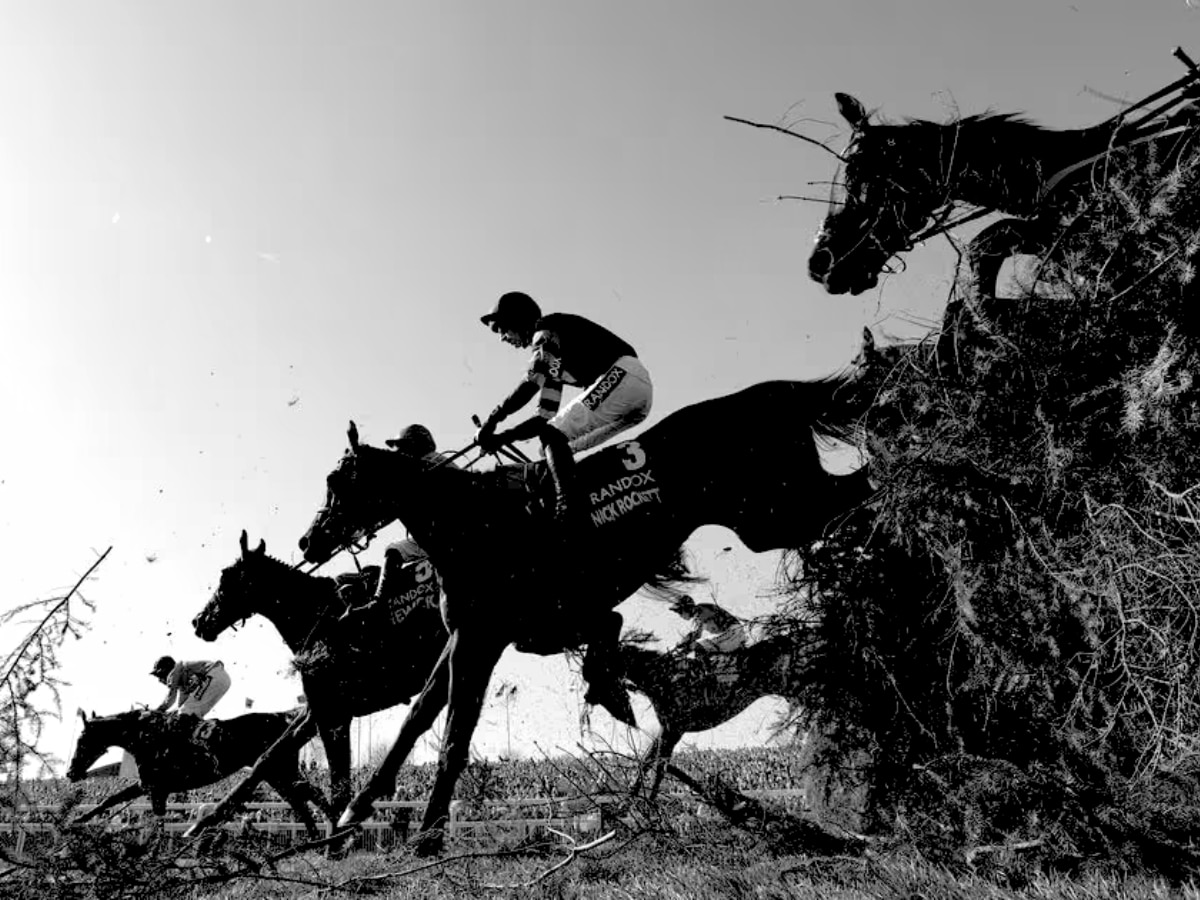
National animal welfare charity the League Against Cruel Sports is calling for a boycott of the Aintree Festival and Grand National race. And it wants to see government intervention to tackle the terrible death toll of horses.
Animal Aid has compiled figures showing that 67 horses have died racing at the festival since the year 2000. 17 horses died after racing in centrepiece race the Grand National.
The League has criticised the British Horseracing Authority and Jockey Club for prioritising gambling profits over the lives of horses.
Emma Slawinski, League Against Cruel Sports chief executive, said:
We are calling on the public and businesses to boycott the Aintree Festival and Grand National, to avoid betting on the races and to switch off the ITV Coverage and advertising which glosses over the cruelty.
The government needs to step in and ensure the welfare of the horses is put before the profits of gambling companies and the horse racing industry.
The British Horseracing Authority is failing the horses used in racing and the death toll keeps on rising every year – I would be delighted but very surprised if we won’t be reporting on more deaths over the next three days of the festival.
Horses will be sacrificed for people’s entertainment, something that should repel a nation of animal lovers.
At 2025’s Aintree Festival, Willy De Houelle died on the first day of racing. Celebre D’Allen died two days after competing in the Grand National.
The League is also calling for a ban on the use of the whip in horse racing. Sweden implemented such a ban in 2022 over concerns for horse welfare.
Slawinski added:
There needs to be a ban on the whip which is being cruelly used to inflict pain and push horses beyond their capabilities.
Horses are being raced to their deaths. The government needs to step in and ensure that the welfare of horses becomes the number one priority and end the sickening death toll which grows ever higher each year the Aintree Festival is held.
Action needs to be taken to stop the British Horseracing Authority and the festival organisers from putting gambling profits before the welfare of the horses.
Featured image via the Canary

Israel has stepped up its illegal attacks on civilian infrastructure in Lebanon, despite a ceasefire agreement which mediators from Pakistan say includes Lebanon.
Beirut is under attack. Bombs going off all around us, multiple strikes across many parts of the city. Can’t post footage now for obvious reasons but people are desperately trying to find a place of safety.
100 strikes in 10 minutes across Lebanon. This is a clear message that…
— Steve Sweeney (@SweeneySteve) April 8, 2026
Reports indicate that 50 Israeli fighter jets dropped 160 bombs on various parts of Lebanon, all within one minute.
🚨Jerusalem Post: 50 Israeli fighterjets dropped 160 bombs on various parts of Lebanon in one minute
— IRIB (Islamic Republic of Iran Broadcasting) (@iribnews_irib) April 8, 2026
Israel has not hit Lebanon this hard since 1982.
Israel also targeted an ambulance in Qlaileh, southern Lebanon. The attack killed four paramedics.
An ambulance was just targeted in Qlaileh, Lebanon.
Netanyahu’s office:
“The United States has told Israel that it is committed to achieving these goals, shared by the US, Israel and Israel’s regional allies, in the upcoming negotiations.”
“The two-weeks ceasefire does not… pic.twitter.com/isOaKlO62u
— courtneybonneauimages (@cbonneauimages) April 8, 2026
In Beirut alone, the death toll today has already risen to 500 after only half a day of the Zionists carpet-bombing the city.
Breaking: Initial reports say the death toll in Beirut has risen to 500 following Israeli airstrikes. 🚨 pic.twitter.com/6KKFZBuBSl
— TIMES OF GAZA (@Timesofgaza) April 8, 2026
The terrorist state even bombed a funeral. No amount of dead brown people will ever be enough for Israel.
they bombed a funeral in lebanon at a cemetery and everyone is now dead. a fucking funeral at a cemetery. pic.twitter.com/9iMz4DdFdC
— lea (@taylenarare) April 8, 2026
Israel is murdering Lebanese people while they mourn.
False pretences
As usual, Israel’s standard excuse for bombing brown people is ‘defeating terrorists’. In this case, in Lebanon, it’s ‘defeating Hezbollah’. Of course, everyone with even half a working brain can see that’s bullshit.
Remember that Hezbollah, just like Hamas, would not exist if it weren’t for Israel’s illegal invasions.
Meanwhile, Israel bombs hospitals, ambulances, and other civilian infrastructure, in clear contravention of international law, and gets away with it.
And guess what. The IOF is lying. I was caught in the middle of it, and not for the first time. One man I was just with pulled a three-year-old girl from a building judt before it collaped. Hundreds are feared desd, hospitals struggling to cope. Tbid is terrorism.
— Steve Sweeney (@SweeneySteve) April 8, 2026
Hezbollah was formed in 1982 after Israel illegally invaded Lebanon. Its main foundational goal was to fight the Israeli occupation of southern Lebanon. The group’s resistance to Israeli occupation was instrumental in the IOF leaving Lebanon in 2000, after 18 years.
Armed resistance is not illegal under international law. A United Nations General Assembly resolution states:
The General Assembly,
Reaffirms the legitimacy of the struggle of peoples for independence, territorial integrity, national unity and liberation from colonial domination, apartheid and foreign occupation by all available means, including armed struggle;
Israel and the West have labelled both Hezbollah and Hamas as ‘terrorist groups’ and called for their disarmament – when they’re only defending the land they are native to.
Hezbollah abided by the ceasefire agreement, whilst the Zionist entity did not.
Israel is the only true terrorist state – it combines the barbarity of no holds barred terror tactics and civilian targeting while relying on the modern state’s monopoly on violence and the modern state’s weapons. https://t.co/pEqQHOJLf9
— Sarayu Pani (@sarayupani) April 8, 2026
Senior Iranian officials have told Al Jazeera that it will ‘punish’ Israel for ‘crimes’ it has committed in Lebanon.
The Zionist entity is committing constant atrocities with zero consequences. As usual, the goal is to destroy any chances of a lasting ceasefire. Because that way, Israel’s ‘greater Israel‘ project becomes all the more realistic.
‘God’s chosen people’ are sure causing a lot of death and destruction, which seems a little bit like the opposite of what a loving god would want for its people. Either Israelis have a very weird definition of god, or they’re simply using their religion as an excuse to bomb the shit out of brown people.
Featured image via CNN-News18/YouTube
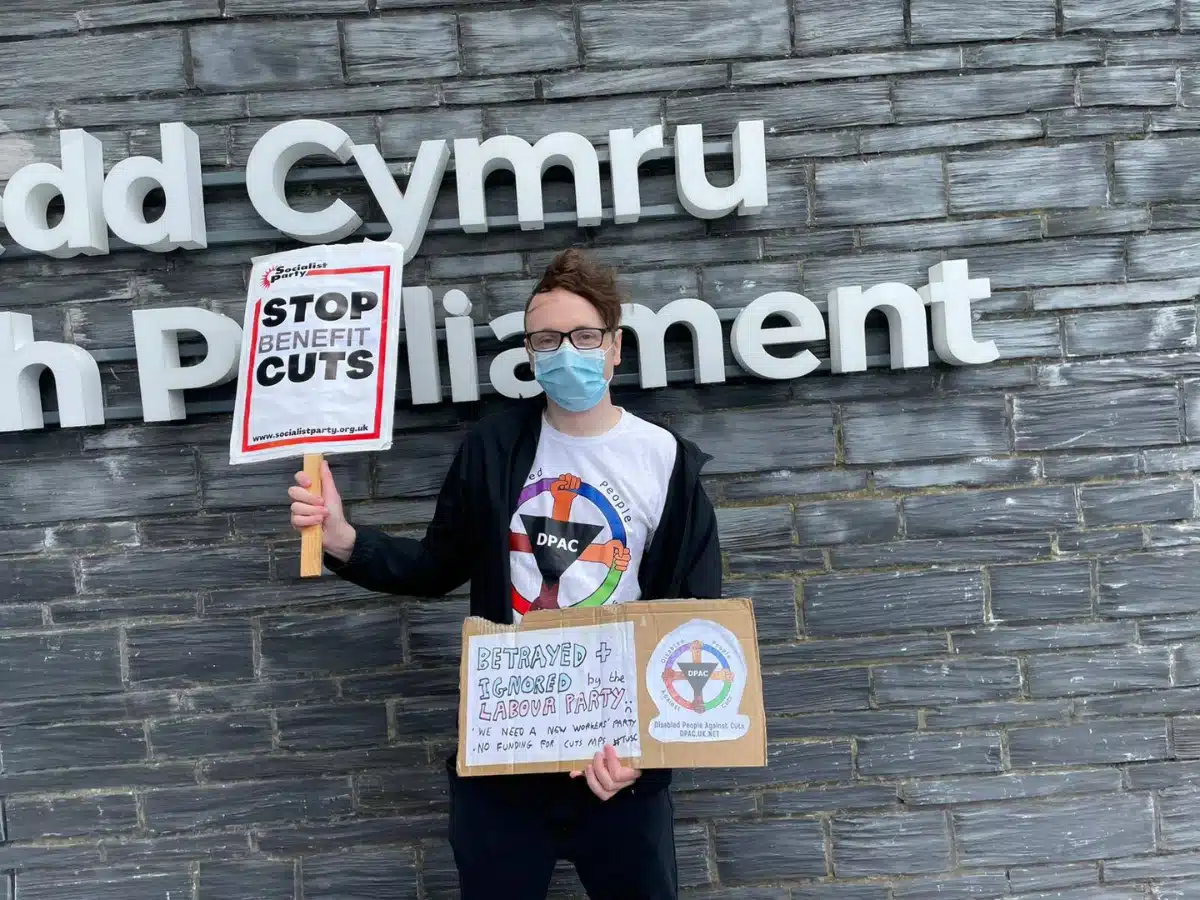
Plans to cut £200 a month from new Universal Credit claims for those unable to work came into force the start of April. This has sparked a fierce challenge from a Gŵyr Abertawe (Swansea West & Gower) Senedd candidate.
Ben Golightly, the lead candidate for the Welsh Trade Unionist and Socialist Coalition (TUSC) and a disability activist, claims the outgoing Welsh government has allowed Westminster to “turn the clock back” on disability rights by failing to stand up for disabled people:
These cuts are biting now, and they were voted for by 25 out of 26 Welsh Labour MPs. It was not good enough for the first minister, as leader of the Welsh Labour party, to say ‘it’s up to them’. The next Welsh government must do better.
That inability to stand up to Keir Starmer undermines the outgoing Welsh government’s ambitions and achievements – some of it world-leading in fact, like the Disability Rights Taskforce – and turns the clock backwards on disabled people’s quality of life.
The TUSC candidate also exposed a “black hole” in local planning, citing documents presented to Swansea Council’s budget meeting last month. These reveal the authority had made “no provision” for:
any increased costs or reductions in income arising from changes to welfare reform.
Golightly explained that welfare cuts would lead to increasing demand for services, while simultaneously reducing the council’s ability to charge for them, as residents’ incomes tumble.
He concluded:
I challenged the councillors on this at public questions. Some of those councillors – who either voted in favour of the budget or merely abstained – are now Senedd candidates: Labour, Green and Lib-Dem. I am standing to hold their feet to the fire and keep the fight for disabled people’s rights firmly on the agenda as a socialist voice for the Senedd.
Featured image via Disabled People Against Cuts Cymru

 Relations between the two men are at an all-time low.
Keir Starmer has taken a thinly-veiled swipe at Donald Trump – but insisted the pair’s relationship is not “in tatters”.
The prime minister refused to directly respond to the US president after he compared him to Adolf Hitler appeaser Neville Chamberlain.
That came after Trump said Starmer was “not Winston Churchill” over his decision not to initially let US jets mount launch bombing raids on Iran from RAF bases.
The PM has also rejected the president’s calls for the UK to send warships to the Gulf to help re-open the Strait of Hormuz.
Starmer flew to Saudi Arabia in the immediate aftermath of a two-week ceasefire being agreed between Iran, America and Israel.
He is due to have talks with leaders in the region on re-opening the strait.
Asked by reporters if his relationship with Trump was now “in tatters”, the PM said it wasn’t.
But he insisted he was right to act “in the British national interest” by refusing to join a war that he believes breaks international law.
He said: “I’ve acted as you would expect of a British prime minister, which is by being absolutely focused on what is our national interest, and that’s why I’ve applied my principles and my values throughout.
“And my principles and values made sure that our decisions were that we wouldn’t get involved in the action without a lawful basis, without a viable, thought-through plan.
“That was the right position for the United Kingdom, and of course, that has included us taking action, collective self-defence.”
He added: “I’m the British prime minister. I act in the British national interest, but nothing, but nothing, is going to deflect me from that.”
Subscribe to Commons People, the podcast that makes politics easy. Every week, Kevin Schofield and Kate Nicholson unpack the week’s biggest stories to keep you informed. Join us for straightforward analysis of what’s going on at Westminster.
Related…


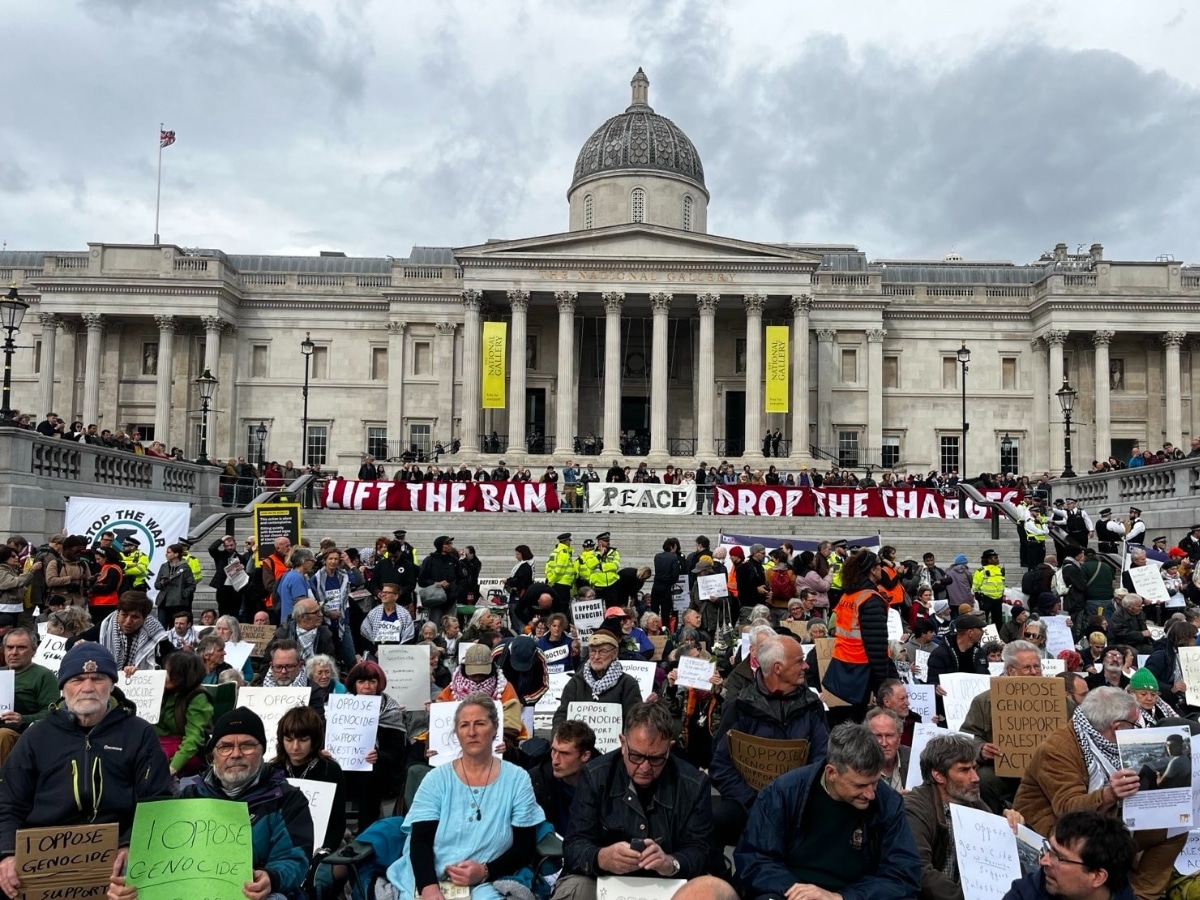
On Saturday 11 April 2026, thousands of ordinary, peace-loving people will gather in Trafalgar Square, London. They’ll be there in open defiance of the UK government’s misguided crackdown on peaceful protest. This peaceful vigil, called ‘Everyone Day’, will demonstrate the unwaning resistance to the ban on Palestine Action. The UK government unlawfully proscribed this direct action movement as a ‘terrorist group’, paving the way for numerous arrests.
The action will be a peaceful vigil, with people sitting down holding their handwritten paper signs. The signs will carry the by now world-famous words:
I oppose genocide. I support Palestine Action
Since July 2025, nearly 2,800 people have been arrested under terrorism legislation for holding these signs during peaceful vigils, as part of what was described as the “most widespread mass civil disobedience in modern UK history”.
In February, the High Court ruled that the government’s proscription of Palestine Action was unlawful and disproportionate. The effect of this judgment has been stayed to allow for the government to appeal.
The Met flip-flopping over arrests
Shortly after the ruling, the Metropolitan police issued a clear public statement that they would not arrest people for publicly displaying support for Palestine Action. Instead, the Met said that ‘gathering intelligence’ was the most proportionate action it could take. Only a few weeks later, the Met contradicted this public position by arresting a woman on a peaceful march.
In the weeks that followed, the Met issued a further statement marking a complete U-turn, saying that it would be arresting people after all. It is unclear what prompted this reassessment of proportionality other than correspondence from Defend Our Juries and the organisation of Everyone Day.
The Met’s U-Turn has come under fire, with leading law firm Hodge Jones & Allen arguing that any arrests would be unlawful. Nonetheless, a further 19 people have been arrested for showing support for Palestine Action since the policy change, with further arrests expected during Saturday’s action.
A spokesperson from Defend Our Juries said:
The protest against the proscription of Palestine Action has grown beyond a question of the right to protest. The actions of the UK government and police following the High Court’s ruling expose what many have long known: democracy in the UK is on its knees.
The government’s refusal to accept the judgment of the country’s highest court, coupled with inconsistent and opaque policing decisions, signals a troubling disregard for the rule of law. These are not the actions of institutions committed to protecting citizens, but of a state prioritising its own authority.
This campaign now extends far beyond Palestine Action, beyond Gaza, and beyond the principles of protest and free speech. It speaks to a fundamental erosion of the right to dissent and to hold power to account. This is no longer a marginal issue – it concerns everyone who values democratic freedoms.
Defend Our Juries reminds those planning to attend Everyone Day to read the Action Briefing in full before attending, which includes important legal information. It reminds participants to not have on their person any incriminating bits of paper, sharp items, valuables, drugs (except labelled prescription), phones with sensitive information, or items used to ‘lock on’.
Defend Our Juries gently reminds all attendees, whether sitting vigil participants or spectators, that this is a peaceful vigil and asks everyone to respect this.
Featured image via Defend Our Juries
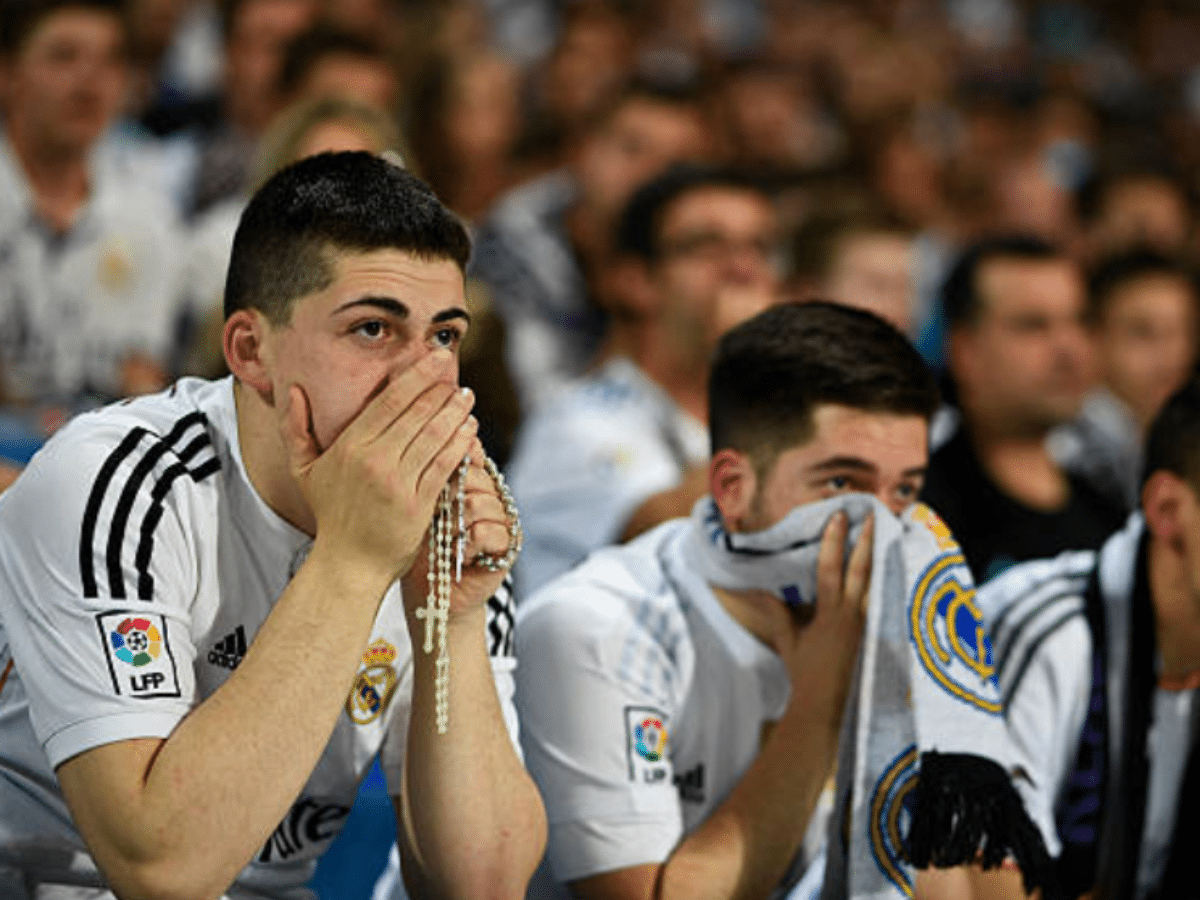
Real Madrid is facing an unprecedented storm of controversy after a disastrous European night, both on and off the pitch, following their 2-1 defeat to Bayern Munich in the first leg of the 2025-2026 Champions League quarter-finals. The match not only complicated their continental campaign but also ignited a major crisis off the field.
On the pitch, the Royal Club appeared unable to keep up with Bayern’s pace, suffering a loss that foreshadows a disastrous end to the season and significantly diminishes their chances of competing for titles. This has led to harsh criticism directed at the players and coaching staff, making it one of the most frustrating nights for their fans.
But, their football is the least of their problems.
Real Madrid have an Islamophobia problem
But what happened in the stands was far more serious than the result itself, after videos surfaced showing shocking racist chants by some Real Madrid fans, directly targeting Muslims with the phrase: “Anyone who doesn’t jump is a Muslim.” This incident has brought back to the forefront one of the most sensitive issues in European football.
Cánticos racistas junto al Bernabéu antes del partido de Champions entre el Real Madrid y el Bayern de Munich.
“Musulmán el que no bote”.
El Madrid tiene millones de seguidores musulmanes.
Lamentable. pic.twitter.com/pcjshvqRa5— Julián Macías Tovar (@JulianMaciasT) April 7, 2026
The same chant had previously caused a stir during a friendly match between Spain and Egypt, revealing a worrying pattern of recurring behavior, not just an isolated incident.
Spanish football under scrutiny
These developments come at a highly sensitive time, especially with FIFA’s move to open an official investigation into the previous incident during the friendly match against Egypt. This puts the reputation of Spanish football at stake and threatens repercussions that could extend beyond traditional sanctions, potentially impacting Spain’s hosting of the 2030 World Cup.
This latest incident is just the latest in a long series of racist abuse incidents within Spanish stadiums, the most prominent victims of which have been Brazilian star Vinicius Junior, along with other prominent names like Lamine Yamal, Kylian Mbappé, and Ansu Fati. This situation reflects a crisis that runs deeper than mere individual transgressions.
Amid this storm, Real Madrid finds itself compelled to act swiftly, cooperating with Spanish authorities to identify and hold accountable those involved, in an attempt to contain the fallout from the scandal. This is particularly important given that similar incidents in 2024 resulted in the arrest of several fans inside the Santiago Bernabéu stadium.
Between a loss that threatens its season and a scandal that tarnishes its global image, Real Madrid faces a true test, not only to salvage its European campaign but also to protect its reputation from further damage in a battle that now transcends the boundaries of football.
Featured image via the Canary

No, the Viral iPhone Fold Video Isn’t Real. How We Know It’s Fake

Rex Heuermann pleads guilty in the Gilgo Beach killings

Oil prices rise as investors eye fragile US-Iran ceasefire


-

 NewsBeat6 days ago
Steven Gerrard disagrees with Gary Neville over ‘shock’ Chelsea and Arsenal claim | Football
-

 Business6 days ago
No Jackpot Winner and $194 Million Prize Rolls Over
-

 Fashion5 days ago
Weekend Open Thread: Spanx – Corporette.com
-

 Business5 days ago
Expert Picks for Every Need
-

 Business3 days ago
Three Gulf funds agree to back Paramount’s $81 billion takeover of Warner, WSJ reports
-

 Sports4 days ago
India men’s 4x400m and mixed 4x100m relay teams register big progress | Other Sports News
-

 Business7 days ago
Login and Checkout Issues Spark Merchant Frustration
-

 Tech1 day ago
How Long Can You Drive With Expired Registration? What Florida Law Says
-
Business4 days ago
No Jackpot Winner, Prize to Climb to $231 Million
-

 Tech6 days ago
Commonwealth Fusion Systems leans on magnets for near-term revenue
-

 Fashion3 days ago
Massimo Dutti Offers Inspiration for Your Summer Mood Board
-
Politics6 days ago
Wings Over Scotland | The quality of mercy
-

 Fashion1 day ago
Let’s Discuss: DEI in 2026
-

 Business4 days ago
Akebia Therapeutics, Inc. (AKBA) Discusses Pipeline Progress and Strategic Focus on Kidney Disease Treatments at R&D Day – Slideshow
-

 Fashion6 days ago
Statement Sunglasses: The Accessory Shaping Modern Fashion
-

 Business7 days ago
Investor reactions to Trump’s speech on Iran war
-

 Tech7 days ago
Daily Deal: The Modern No-Code Development Bundle
-
Sports7 days ago
Justin Jefferson’s Situation Remains Unchanged after JSN’s Deal
-

 Business7 days ago
Discipline Matters When Markets Are Uncertain
-
 Tech7 days ago
Every 3D Printable Film Camera, In One Place
You must be logged in to post a comment Login