Connect with us
DAPA Banner

Politics

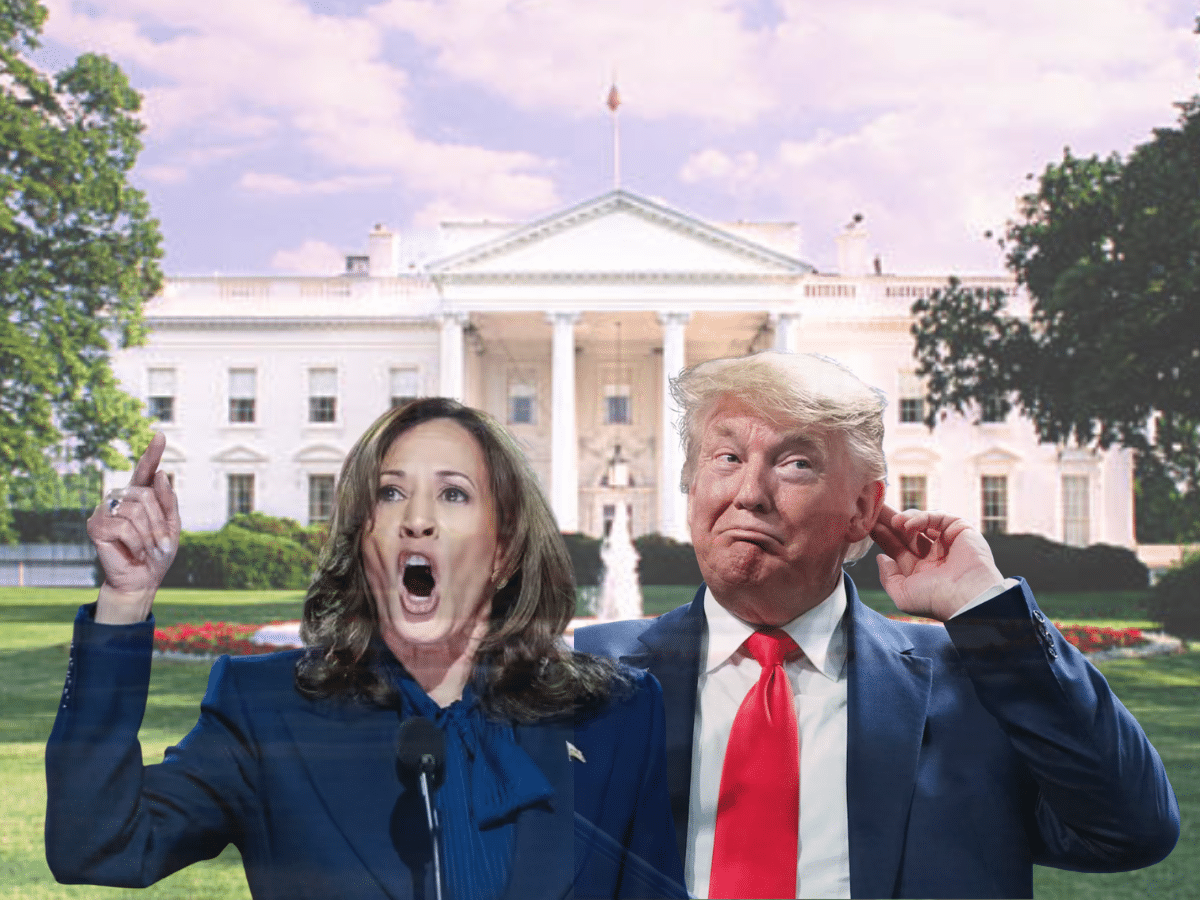
Kamala’s muted stance on Gaza genocide gave Trump leg-up

Published

on

Kamala’s muted stance on Gaza genocide gave Trump leg-up

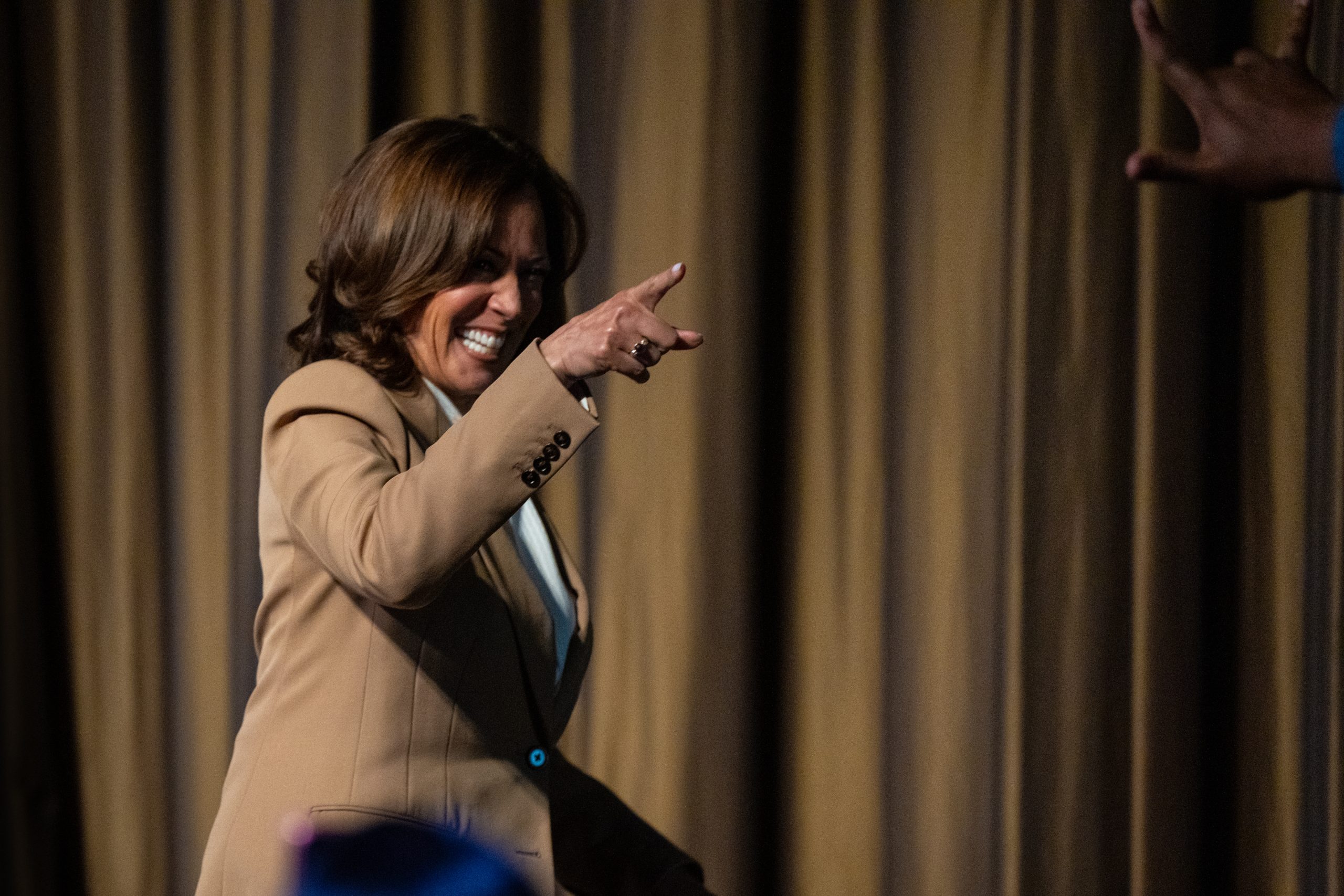
Presidential election failure Kamala Harris was trounced by Donald Trump in 2024. Barring a handful of deluded centrist melts, most of us could see it coming. Her insipid campaign inspired few and delivered even less.

Many suspected her silence on Israel’s genocide of the Palestinians was also a factor in the loss. Now there seems to be solid evidence that this was indeed the case. The DNC has refused to release the report, bizarrely arguing that publishing an analysis of why it lost an election would distract it from the business of winning elections.

But parts of the Democratic National Committee’s (DNC) secret 2024 election autopsy report have leaked. These sections say the Biden administration’s position on Israel-Palestine did real damage – culminating in a Trump win.

US news site Axios got the scoop:

Advertisement

Top Democratic officials who worked on the party’s still-secret autopsy of the 2024 election concluded that Kamala Harris lost significant support because of the Biden administration’s approach to the war in Gaza.

The report found a split between the left and right of the party (progressive vs moderate in the clunky US terminology):

Progressive and moderate Democrats are particularly divided over Israel, with the left more critical of that nation’s actions against Palestinians in Gaza and many questioning the U.S.’s unwavering support for Israel.

Go figure…

The report claims – rather weakly to be frank – that Harris “sought to strike a balance”

showing strong support for Israel while calling for a ceasefire and expressing sympathy for Palestinians under attack in Gaza as well as the hostages being held by Hamas.

If that sounds anything like a ‘balance’ then American ‘moderates’ need remedial English lessons – but that’s hardly new. Pfft.

Advertisement

A net negative

The IMEU Policy Project gave particularly damning feedback to DNC staffers compiling the report:

The IMEU:

works to educate elected officials, policy-makers, and voters and advocate in Congress and the Executive Branch for US policies that advance Palestinian rights and freedom.

Axios reported:

Activists from the IMEU Policy Project told the DNC that the Biden-Harris administration’s support for Israel was a factor in the party’s losses because it drained support from some young people and progressives.

And Hamid Bendaas, a spokesperson for the IMEU Policy Project, said:

Advertisement

that during the meeting “the DNC shared with us that their own data also found that policy was, in their words, a ‘net-negative’ in the 2024 election.” Two other senior aides at the pro-Palestinian organization also said the DNC had drawn that conclusion.

They also underlined that:

Axios independently verified that Democratic officials conducting the autopsy believed the issue harmed the party’s standing with some voters.

Something of a ‘no shit, Sherlock’ moment then…

The full DNC report remains secret. The IMEU has claimed this is because of these findings:

The IMEU Policy Project is now accusing the DNC of withholding its report in part because of its findings on Israel.

The DNC has denied this. One Harris aide said the failed candidate has admitted the Democrats should have been better on Palestine:

Advertisement

Harris wrote that she privately “pleaded” with Biden to show more empathy for civilians in Gaza. But during her campaign, she declined to publicly break with him over Israel.

That may be the case. Or it may not. But the fact is that Harris didn’t break with Biden over Israel. Trump is now a year into his second term. And what a bloody year it has been.

The truth is if Harris was elected her government would still have been composed of pro-Israel imperialists. And they still would have groveled at the shrine of empire and private capital. The fact remains that but for an ounce of moral courage among a handful of comfortable, elite US liberals, the world could look quite different today.

Featured image via the Canary

Advertisement

Source link

Continue Reading
Click to comment

You must be logged in to post a comment Login

Leave a Reply

Politics

Politics Home | Racist Debates Happening Now Weren’t Taking Place A Decade Ago, Warns Sajid Javid

Published

on

Racist Debates Happening Now Weren't Taking Place A Decade Ago, Warns Sajid Javid

The former Chancellor Sajid Javid said progress on social cohesion in the UK could be lost (Alamy)


4 min read

Former cabinet minister Sajid Javid has said that division is on the rise in the UK.

Advertisement

Javid, a former Conservative MP of 14 years who served in six secretary of state roles, told PoliticsHome that debates about whether non-white politicians like him and former prime minister Rishi Sunak are British were not taking place a decade ago.

Last month, Sunak described himself as “British, English and British Asian” after right-wing podcaster Konstantin Kisin said last year that the senior Conservative MP was not English because he is a “brown-skinned Hindu”.

Sunak, who was the country’s first British Asian prime minister, warned that the UK was at risk of “slipping back” to a time of more undisguised racism.

Advertisement

Speaking on this week’s episode of The Rundown podcast from PoliticsHome, Javid said the fact that this sort of talking point was going viral online in the present day demonstrated how the UK was at risk of going backwards when it comes to social cohesion.

Asked whether he was surprised by it, the former chancellor said: “In a way, yes, because no one was asking questions like that, even a decade ago…

“Take Rishi as a great example. He became prime minister of our country, and someone dares question whether he’s British or not?”

Advertisement

“Obviously, it’s complete nonsense,” Javid added, “and I think questions like that often come from a divisive place, and that’s just the kind of division I think the vast majority of British people don’t have time for. 

“But one of the challenges that we’re having in today’s world, and especially how people consume or get their news is that, if you’re only getting news from your echo chambers on your social media channels, and those channels are inevitably pushing out divisive content because that’s what gets the clicks, then that is one of the features of today’s society.”

In his new memoir, The Colour of Home, Javid explains how his parents came to the UK from Pakistan with little money and “became proudly British”.

Speaking on the podcast, the former Tory MP reiterated his belief that “Britain is the most successful multiracial democracy in the world”, but called on ministers to do more to protect the progress made since the racism he faced in his own childhood in 1970s Bristol.

Advertisement

One of the roles he has taken on since leaving Parliament in 2024 is heading up The Independent Commission on Community & Cohesion, along with Jon Cruddas, the former Labour MP for Dagenham.

“A good friend, but someone on a different side politically, but I think what we definitely agree on is the division, sadly, in the UK, broadly put, has been on the rise, as it has been in many countries,” he told PoliticsHome.

He said it will be looking at “what more can we do to bring people together to have less segregation, more integration”, but admits he could have done more during his time in office.

As communities secretary in 2016, Javid commissioned a report from Dame Louise Casey, which said there were “worrying levels of segregation” in the UK, leading him to publish a government green paper and integration strategy. 

Advertisement

“I was just sort of getting going with it, and then Brexit happened”, Javid told PoliticsHome, bemoaning the fact that many priorities were jettisoned in the wake of Britain’s vote to leave the European Union, adding: “We basically lost focus on many things.”

Earlier this month, the Secretary of State for Housing, Communities and Local Government, Steve Reed, announced a new social cohesion strategy, which included a new anti-Muslim hostility definition designed to help tackle rising abuse towards Muslims, as well as new government powers to close extremist charities and an additional £5m for the Common Ground Resilience Fund.

“Cohesion underpins our economic strength, our democratic freedom and our national security. It is a fundamental part of the Britain we love. We have made our choice in place of division, we choose unity, and we know the people of Britain have made the same choice,” Reed said.


The Rundown is presented by Alain Tolhurst, and is produced by Nick Hilton and edited by Ewan Cameron for Podot

Advertisement
  • Click here to listen to the latest episode of The Rundown, or search for ‘PoliticsHome’ wherever you get your podcasts.


Source link

Advertisement
Continue Reading

Politics

ADHD Is Not Being Over-Diagnosed In The UK, Say Experts

Published

on

ADHD Is Not Being Over-Diagnosed In The UK, Say Experts

In 2025, Health Secretary Wes Streeting said he’d launch an independent review into increased demand for autism, mental health, and ADHD services.

Per the BBC, this will involve looking for “evidence of over-diagnosis” – a concern others have raised in previous headlines.

But ADHD UK estimates that about two million cases of ADHD are undiagnosed. “Just one in nine people with ADHD in the UK actually have a diagnosis,” their site reads.

And a new paper, authored by dozens of academics, carers, clinicians, and people with lived experience with ADHD, has said that “There is no evidence that ADHD is over-diagnosed in the UK”.

Advertisement

Instead, they argue that “available data point to under-diagnosis,” and that the narrative suggesting ADHD is over-diagnosed could further block those with the condition from much-needed diagnosis and care.

What does the data actually say?

It’s common to hear ”‘Nowadays everyone has ADHD,’” the paper, published in the British Journal of Psychology, said.

But the authors think it’s important to focus on the empirical data here.

Advertisement

They noted that ADHD rates are generally consistent across the globe, with the most recent research from 204 countries suggesting ADHD prevalence is about 5.4% among under-18s.

A meta-analysis found the rates are roughly 3.3% for adults.

Demand for ADHD diagnoses and care has indeed risen in the UK in recent years. But in 2018 in the UK, “administrative prevalence was 2.5% in boys and 0.7% in girls, and 0.7% in men and 0.2% in women” – far under expected rates.

The authors note this data hasn’t been available since the pandemic.

Advertisement

But “pre-pandemic data suggest that it has remained substantially below the ADHD population prevalence in the UK, providing no evidence at present that ADHD is over-diagnosed at a population level.”

It would take an enormous increase in diagnoses and treatment to, eg, get that 0.2% figure in adult women to its potential 3.3% rate (the number of adult women who meet the diagnostic criteria for ADHD is far closer to men’s than girls have historically been to boys).

Meanwhile, in 2023 (post-pandemic), 24% of those surveyed who were waiting for an NHS ADHD assessment had been doing so for one to two years. 10% had been waiting for two to three years.

The NHS has recently made cuts to ADHD assessments.

Advertisement

Misdiagnosis can occur, but experts don’t think that’s the main issue here

The study’s lead author, Professor Samuele Cortese, told Cambridge University: “While misdiagnosis and inappropriate diagnosis do occur, the available evidence indicates that underdiagnosis and under-treatment remain the predominant challenges”.

And senior co-author of the study, Professor Tamsin Ford, added, “While many more people with ADHD are being recognised and treated, we are failing to support many more.

“Overdiagnosis is not a problem, but misdiagnosis may be as people are driven into the private sector by long waits; and sadly, missed diagnoses remain common.”

Advertisement

Professor Cortese also pointed out the potential economic and personal costs associated with these undiagnosed rates.

“They include increased risk of academic failure, suicidal behaviour, substance abuse, criminality, injury and death,” he said.

“The failure to provide treatments which have been shown to reduce these risks represents a major ethical issue that needs to be urgently addressed.”

Advertisement

Source link

Continue Reading

Politics

Pete Buttigieg’s 2026 project

Published

on

Pete Buttigieg’s 2026 project

MIDLAND, Michigan — Pete Buttigieg is known for going everywhere to get his message out in the media. In 2026, he’s taking that strategy offline, too, traveling virtually everywhere.

A source close to Buttigieg tells Playbook he’s spent half of 2026 on the road, hitting 10 states so far — including battleground states Georgia, Nevada, Pennsylvania, Wisconsin and his adopted home state Michigan, plus a multiday swing across for-now-first-in-the-nation New Hampshire. And he’s not yet hawking books like some of his would-be 2028 rivals. He’s stumping for candidates up and down the ballot.

While potential 2028ers like Illinois Gov. JB Pritzker and Pennsylvania Gov. Josh Shapiro focus on flexing midterm-year dominance in their own backyards, Buttigieg is embarking on a more national project to position himself as a super surrogate not confined to specific geography or demographics. It’s a strategy that could help him counter the base of power that comes from holding elected office.

Buttigieg laid out his midterm strategy to Playbook in an exclusive interview after gripping and grinning and taking selfies along a ropeline: “The basic idea is to make myself useful to candidates and causes that I care about and that we all need to succeed,” he said at Mi Element Grains & Grounds, a combination microbrewery, bakery and coffeehouse, after launching a canvassing effort backing Chedrick Greene in a special election to determine control of the Michigan state Senate.

Advertisement

“Every kind of state, red, blue and purple, there are races going on and fights going on that I want to make sure I’m part of,” Buttigieg told Playbook. “And they are all often very different from each other, but what they have in common is leaders who are very rooted in a sense of place. They’re very much of where they’re from, and I think represent a big part of what the future for Democrats is going to look like.”

Buttigieg has increased his engagement with Black candidates like Greene and the community more broadly, addressing a perceived weakness. In Alabama, Buttigieg joined civil rights leaders and community members in Selma for the Bridge Crossing Jubilee and Anniversary of Bloody Sunday, and made remarks at a unity breakfast and Tabernacle Baptist Church. In Birmingham, he joined a roundtable with business owners from the Historic 4th Avenue Business District.

A source familiar with Buttigieg’s past outreach to the Black community described his efforts a “natural extension” of his work on his 2020 presidential campaign and in the Biden administration.

“It’s a recognition that engagement in those spaces and showing up in 2026 is going to be a huge indicator of who’s going to be the leader of this party,” this person, granted anonymity to candidly appraise Buttigieg’s approach, told POLITICO. “I think it’s really smart to think along those lines, and to show, right? Not just talk about it, but to actually show and demonstrate it.”

Advertisement

He also campaigned for Shawn Harris in former Rep. Marjorie Taylor Greene’s deep-red Georgia congressional district, and gave an interview to Black creator Hood Anchor Ye alongside Rep. Nikema Williams. He also attended Sen. Raphael Warnock’s Ebenezer Baptist Church, where he received a very warm welcome.

“I’m very focused on coalition right now, and that includes pillars of our Democratic coalition, like the building trades workers I was with in Toledo or in Nevada, and certainly Black voters who were so vital to the past, present and future of the party,” Buttigieg said.

A February Emerson poll found Buttigieg had about 6 percent support among Black voters; California Gov. Gavin Newsom had 17 percent and former VP Kamala Harris had 36 percent.

“He had a remarkable run in 2020 and ultimately, one of the, perhaps the greatest obstacle, is that he didn’t have much of a relationship with African American voters,” David Axelrod, the former strategist for former President Barack Obama and longtime Buttigieg ally, told Playbook. “And the fact that he’s spending a lot of time communing with Black voters across the country even if in the service of the midterm elections, is a reflection that he’s not headed for early retirement.”

Advertisement

There is also, of course, the fact that Buttigieg has a newly crafted stump speech that walks an average voter through their day and overlays his policy hopes for them, something reminiscent of James Joyce’s “Ulysses”. “I don’t want to overdo that, but yes, as you know, my whole thing is the politics of everyday life. And one way to get that across is to just literally walk through everyday life and all of the hundreds of moments in that day that are shaped by political choices.”

Asked about whether he thought the narrative of his struggles with Black voters matched the

reality of what he was seeing on the ground, Buttigieg redirected. “This year is very much not about me,” he said. “What it’s really all part of for me is where are there leaders that I can help and where it’s going to make a difference to engage.”

Beyond that, Buttigieg’s travels and how he’s talking is revealing about his potential trajectory: For starters, he’s laser-focused on building a majority Democratic governing coalition. He used the word no fewer than 10 times.

Advertisement

Buttigieg insisted that Democrats “should be able to build a supermajority coalition” based on the party’s platform. He has noted in the past most Americans support paid family leave, raising the federal minimum wage, raising taxes on the wealthy, universal background checks, and a public health insurance option. “If we can’t get those two-thirds supported positions over 50 percent that means we’re missing something in terms of the coalition we built.”

But as potential candidates like Newsom seek to emulate Trump’s smashmouth social media style, Buttigieg is more focused on creating a Democratic version of MAGA’s sweeping coalition. That means Buttigieg’s 2026 project is to build a big tent in nature — not a matter of pure ideology. In Pennsylvania, for example, Buttigieg held a well-attended event with Bob Brooks, the bellwether Lehigh Valley Democratic congressional candidate running to flip Pennsylvania’s 7th Congressional District. Brooks, a Pennsylvania firefighter, supports Medicare for All, which Buttigieg opposed in his presidential run.

“It is really important that we understand what it means that this president stitched together this very unlikely crew that includes traditional Republicans, Libertarians, authoritarians and white nationalists,” Buttigieg said. “We have to have a bigger, better, different coalition.”

In the next few weeks, Buttigieg is expected to cross another battleground off his list, with a stop in North Carolina where he’ll campaign for Democrats, as well as two redder states: a town hall in Oklahoma and a stop in Montana, where he is planning to boost “The Montana Plan,” a ballot initiative to curtail corporations from spending money on political candidates or ballot issues.

Advertisement

“We’re trying to get everywhere we can,” Buttigieg said. “Including places in the same way that — you know, I think Fox News is this kind of place — places where people don’t hear enough from us, because I think there are potential members of our coalition to be found.”

Like this content? Consider signing up for POLITICO’s Playbook newsletter.

Source link

Advertisement
Continue Reading

Politics

The House Article | “No one had as many friends”: Lord Mann pays tribute to Phil Woolas

Published

on

'No one had as many friends': Lord Mann pays tribute to Phil Woolas

Phil Woolas: 11 December 1959 – 14 March 2026 | Image by: PA Images / Alamy


4 min read

A good minister and brilliant MP, Phil Woolas was also one of the great political campaigners. A wise man, and an extraordinary raconteur, he always sought to empower others

Advertisement

Phil Woolas, who battled stoically for a year with brain cancer never stopped talking politics and political philosophy.

Having cut his teeth at Nelson and Colne Further Education College, he emerged as one of the great political campaigners.

His political heroes were the gasworkers union leader JR Clynes and John Smith, both Labour leaders and, like Phil, people whose sense of purpose and everyday reality made the GMB union their natural home. This was where Phil enjoyed his working life the most.

Advertisement

Phil was the one politician of his generation who preferred the company of journalists to his political peers. With a television background, he commanded respect among the media – but no one else built as many friendships, as opposed to contacts, as Phil. He understood what a good story was and he had a knack for how to deliver the pictures that made a journalist’s life so much easier. Phil was a teller, not a spinner, of stories.

Phil was also an exceptional raconteur. Once, he recalled, he was to be interviewed by a local Co-op Party while seeking their approval as a parliamentary nominee. He travelled back to his home region for the selection meeting.

The six candidates were sent up a wooden ladder into the attic of the Co-op secretary’s home, a terraced house. As the meeting started, the elderly Co-op host appeared at the top of the ladder with six mugs of hot drinks. “I’ve brought you a drink,” he chimed, “five teas and a coffee for the southerner.”

Advertisement

Phil would roar with laughter at the brutality of his initiation into parliamentary politics. He had already emerged as a Labour student leader, but the many current Labour MPs who have followed in his path know nothing about how much they owe him.

He fought to the very end because he had more to give

Phil understood that the mass of students in his era studied at FE, in technical colleges and in English polytechnics, and ran an entire campaign going out into uncharted territory to bring people in. It worked brilliantly and his strategising, with a tiny group of others, established the Labour Party hegemony in the student movement that was to last nearly three decades.

Advertisement

When I was elected as an MP after Phil, he came up to me in the Commons with one piece of wisdom. “Never forget that they treat people like you and me as the oiks in here.” And it wasn’t the mandarins or Commons staff he was talking about.

Phil was a good minister, and a brilliant MP. He saw his job as to empower those who needed someone to be on their side. He relished winning justice where it was being denied. While some scorn the minutiae of politics, he saw it as fundamental that he was there for his constituents and that he won for them. For Phil, it was the definition of leadership.

And he was at his happiest and most brilliant when given the freedom to campaign for the GMB union. Which other politician would have dared to entrust ex-coalminers from Worksop and Bolsover to march around London with Cedric the Pig to expose corporate guilt?

Clynes used to quote Shakespeare and Milton. Phil graduated in philosophy and had that rarity of a photographic memory. He painted pictures through his words, using philosophy as his guide. He didn’t see himself or anyone else as special or gifted. His essence was to reach out and draw in. For Phil, there were no ordinary people, no common people. Just a mass of extraordinary human beings, none more worthy than others. Like the rest of us, he had plenty of faults, but his Parliament and his party need his philosophy more than ever.

Advertisement

He fought to the very end because he had more to give. But he leaves us with his wisdom. More will miss you, my friend, than you could have ever dared imagine. 

Lord Mann is a Labour peer

Source link

Continue Reading

Politics

Sarah Michelle Gellar Urges Fans Not To Read Leaked Script After Reboot’s Cancellation

Published

on

Sarah Michelle Gellar in the original Buffy The Vampire Slayer

Sarah Michelle Gellar has encouraged Buffy The Vampire Slayer fans to stay well away from any leaks that come out of the cancelled reboot.

Oscar-winning director Chloé Zhao had been behind the planned revival of the cult show, which originally ran for seven series between 1997 and 2001.

However, Sarah Michelle bluntly revealed earlier this week that the project had been staked by the streaming platform Hulu, and would no longer be hitting our screens.

Appearing on SiriusXM’s Page Six Radio, the Cruel Intentions star – who played the original TV show’s lead – urged fans not to watch the pilot should it ever leak, with the same being said for a version of the script that’s doing the rounds.

Advertisement

“I actually hope it doesn’t [leak] because then everyone’s going to have an opinion on this and that, and pilots are not finished,” she explained. “It wasn’t done. It’s not like we did a season, and finished it, and then they shelved it. It’s not like when they made Batgirl the movie and then didn’t show it – that movie was finished.”

Sarah Michelle explained that pilots usually serve as more of a “learning tool” for TV shows, with the episodes rarely airing in their entirety, adding that “there’s things you learn from it, and there’s things you fix”.

“The original Buffy pilot was nothing to do with the show on the first time,” she pointed out. “It was a different Willow. I mean it’s a very different show, but those are learning tools and that’s what a pilot is.”

Sarah Michelle Gellar in the original Buffy The Vampire Slayer

Getty Images via Getty Images

In the pilot episode of the Buffy reboot, a new character and vampire slayer was to be introduced, played by newcomer Ryan Kiera Armstrong, while Sarah Michelle’s Buffy was also to return.

Advertisement

The Emmy winner was equally keen for fans to avoid a version of the script that was doing the rounds, explaining: “It’s not actually correct.”

She added: “That stuff is really unfortunate and I ask fans if you see scripts, if you see it leaked, don’t watch it because you’re not getting our visions and all of that.”

Earlier this week, the Buffy OG gave her take on why the reboot wasn’t picked up, blaming one executive who made it crystal clear he wasn’t a fan of the show and hadn’t seen the entire original series.

In a candid Instagram post she also showed love to new “superstar” slayer Ryan, as well as director Chloé, thanking the filmmaker for reminding her “how much I love [Buffy] and how much she means not only to me, but to all of you”.

Advertisement

Sarah Michelle encouraged fans to show their support not by reading leaked scripts and pilots, but by watching the original show – which you can currently do on both ITVX and Disney+ in the UK.

Source link

Advertisement
Continue Reading

Politics

Graham Norton Defends Claudia Winkleman After Talk Show’s Mixed Reviews

Published

on

Graham Norton

As is often the case with a brand new TV format, there were a couple of bumps in the road when The Claudia Winkleman Show launched last week.

Claudia’s BBC talk show premiered on Friday 13 March, and was quickly met with somewhat mixed reviews from critics.

The Guardian gave it just two stars, branding the debut episode a “mess”, although it fared slightly better in The Telegraph, where it received three stars even if it was described as a “bit of a bore”.

In The Independent’s three-star review, the outlet’s critic compared her interviewing style unfavourably to Graham Norton, claiming that the format “might need a few tweaks” to achieve its “brilliant potential”.

Advertisement

Radio Times questioned whether the show was “too reliant on its audiences participation”, lamenting there aren’t more of the “off-script moments” Claudia has excelled at in her past, although The Times called it a “respectable first shift” and The Sun gave it a glowing five stars, calling it “awkward, endearing, and full of fun banter”.

Graham Norton – whose production company helped create The Claudia Winkleman Show – has now weighed in on the Traitors host’s first outing, praising the presenter for doing things her own way.

Graham Norton
Graham Norton

BBC/So Television/PA Media/Matt Crossick

“What Claudia did was The Claudia Winkleman Show, and that’s what she’s supposed to be doing,” he told the Daily Mail.

“She shouldn’t be trying to be me. She should be trying to be Claudia, and she nailed that.”

Advertisement

The second instalment in The Claudia Winkleman Show’s initial seven-episode run will air on Friday night on BBC One.

Her guests this week include pop singer Niall Horan, musical theatre legend Rachel Zegler, actor Guz Khan and comedian Joanne McNally.

When her new show was confirmed in December, the former Strictly Come Dancing presenter said in a statement: “I can’t quite believe it and I’m incredibly grateful to the BBC for this amazing opportunity.

“I’m obviously going to be awful, that goes without saying, but I’m over the moon they’re letting me try.”

Advertisement

Source link

Continue Reading

Politics

Reform UK Policy Chief Confronted Over NHS Plans

Published

on

Reform UK Policy Chief Confronted Over NHS Plans

Reform UK’s policy chief was left squirming as he was confronted on BBC Question Time over his party’s plans for the NHS.

James Orr repeatedly refused to rule out introducing an insurance-based funding model if Nigel Farage becomes prime minister at the next general election.

The Reform leader has previously called for a “fundamental rethink” of the way the NHS is run.

When Question Time presenter Fiona Bruce asked what that meant, Orr said: “What he’s talking about is the model, which I think everyone can see is simply not working.”

Advertisement

Health secretary Wes Streeting, who was also on the panel, said: “Farage has said he wants an insurance-style system and he’s said he’s up for anything. I’m sure he is. And I’m sure he can afford it … but most people can’t.”

Asked by Bruce what options for NHS reform his party was considering, Orr said: “There will be a long process of policy ideation. We’ll be talking to experts.”

Pressed by the presenter again, Orr said: “What [Farage] is saying and what I think everybody recognises is that more money, more investment, is not delivering gains in the quality of the system.”

Bruce then asked again: “What other options are Reform UK considering in terms of the NHS?”

Advertisement

Orr replied: “We are preparing for government, we are looking for ways to maintain the basic principle that the NHS will always be free at the point of delivery.

“But there are all sorts of ways in which we could rethink management structures, think about the ways that the funding is allocated more efficiently, working out why mental health is getting worse despite increased funding.”

Bruce then asked him: “Just to be clear, are you categorically ruling out that part of the mix for funding the NHS would not be a social insurance policy under a Reform UK government?”

Orr said: “It would always be free at the point of delivery.”

Advertisement

Streeting told the audience: “He’s not ruling it out, that’s exactly what they’re going to do. They’re just not willing to say it because they know it’s unpopular and people would never vote for it.

“You would dismantle the NHS given the chance, you just don’t have the guts to say it.”

But Orr said: “Read our manifesto Wes, that is not on the table.”

Advertisement

Source link

Continue Reading

Politics

Darren Millar: Wales has had enough of Labour – but there is a pathway to real change

Published

on

Darren Millar: Wales has had enough of Labour - but there is a pathway to real change

Darren Millar MS is the leader of the Conservative Party in Wales.

It has been less than two years since Keir Starmer became Prime Minister and voters elected a UK Labour Government, yet his personal ratings are already at record lows and it’s clear that people are fed up.

Just imagine being lumbered with a Labour Government for more than quarter of a century. Because that is precisely the situation for us here in Wales, where we have endured 27 years of Welsh Labour, propped up by Plaid Cymru and the Liberal Democrats.

The impact has been devastating.

Advertisement

Amongst other things, the Welsh Government is entirely responsible for running and funding the NHS, education, transport, economic development and local government.

Welsh Labour like to portray themselves as the architects of the National Health Service, although this is not entirely accurate (the NHS developed from the Emergency Medical Service established under Winston Churchill’s wartime government). But what matters is the situation today. And I am afraid that it is a sad fact that patients in Wales currently wait longer in emergency departments, longer for ambulances, and longer for tests and treatment than patients elsewhere in the UK. With patients here being hundreds of times more likely to be waiting two years plus for treatment than over the border in England.

And Labour’s record on education in Wales is equally woeful.

Wales’ most famous political figure, David Lloyd George, apparently described our nation as a land of “teachers and preachers.” But no matter how hard individual teachers work, our educational standards have plummeted. In the 1990s, GCSE pass rates suggested that education standards in Wales were broadly in line with the rest of the UK. Twenty-seven years later, the independent PISA tests show that Wales’ standards are the worst in the UK and ranking below former Soviet bloc countries.

Advertisement

The failure to get to grips with health and education standards are mirrored by Labour’s stewardship of the Welsh economy.

Wales has the lowest employment rate in the UK and the lowest pay packets in Great Britain. Small businesses such as pubs and post office pay higher business rates than in England. Tourists are threatened with an overnight tax, and major investors are put off by the slow planning system, Labour’s failure to invest in building new roads, and an unnecessary default 20mph speed limit that has slowed our motorists and economy down.

The results of Labour’s mismanagement of our economy and public services are plain to see. Just last week an IFS report found Wales has been receiving around 15 per cent more funding per head for public services than England, yet has delivered far worse outcomes.

But there is hope. Because on 7th May, the people of Wales will go to the polls.

Advertisement

The Welsh Conservatives have produced a manifesto with a clear plan to fix Wales and get Wales working.

On day one of a Welsh Conservative Government, we would declare a health emergency to  get every part of government focused on addressing the crisis in our NHS by surging bed numbers to end corridor care and free up ambulances stuck outside our hospitals.

We will restore discipline in schools, ban mobile phones, and back teachers by automatically expelling pupils who bring knives into schools; something which, amazingly, Labour has refused to do.

We have set out a range of measures to kick-start the Welsh economy. With an income tax cut of 1p in the pound to put £450 back into the pockets of the average hardworking family in Wales. And by scrapping Welsh Stamp Duty (known as Land Transaction Tax) on people’s main homes, to help people realise their dream of home ownership, move up and down the housing ladder, and support the many small businesses that depend on the housing market – plumbers, electricians, decorators and many others.

Advertisement

But how would this be paid for?” cry the interviewers.

It is a pleasure to answer.

We would start by cutting back on the mountains of Labour waste.

For example, we would reverse the outrageous decision to spend £120 million increasing the number of Senedd Members from 60 to 96. We would make real efficiency savings in civil service costs which have increased by more than £150 million over the past few years.

Advertisement

We’d also scrap spending on matters for which the Welsh Government is not responsible, such as aviation, immigration, international development and foreign affairs.

The Welsh Labour is spending £200m on grants for the nationalised Cardiff Airport, millions on a ‘Nation of Sanctuary Plan’, a small fortune on tree planting in Africa and solar panelled canoes in the Amazon, and millions more of taxpayers’ money on overseas ‘embassies’ in a range of exotic cities. All this will face the axe.

Closer to home, Wales is dotted with empty Welsh Government offices, set up for civil servants who now largely work from home. We would end this waste.

We will also scrap business rates for small businesses such as pubs, cafes and post offices and axe Labour and Plaid’s toxic tourism tax.

Advertisement

We will expand free access to free childcare, which is vital for enabling new parents to return to work. Mums and dads here have been denied the 30 hours of free childcare available for parents in England, even though the funding has been made available to Wales as a result of the extension of childcare by the previous UK Conservative Government.

We will make sure this cash is spent to support families in Wales, so that working parents here have the same rights as those in England, and we will also pioneer a policy allowing new parents to choose to nominate a grandparent to care for their children instead of using a traditional childcare placement.

Under our proposals, a grandparent could receive a payment of up to £4,800, to recognise their role in supporting their families. Our plans would cost less than formal childcare provision and enable families to choose what works best for them.

Where Labour cancelled new road building because of their anti-motorist agenda, we are committed to investing in our economic arteries, including delivering an M4 relief road, upgrading the A55 and dualling the A40 to Fishguard in west Wales.

Advertisement

We will stand up for the rights and safety of women and girls, by respecting the ruling of the Supreme Court on women-only spaces, and commissioning a Wales-wide grooming gangs inquiry.

We will fight for our farmers and rural Wales, by boosting the farming budget, ditching unnecessary regulations, and promoting Welsh produce and honest labelling.

We will also honour our heroes. We are committed to establishing a National Military Museum for Wales to celebrate the enormous contribution Wales has made to the armed forces of the United Kingdom. And we will back our military veterans by increasing funding for Veterans NHS Wales, and extending free bus travel to all who have served in our armed forces.

Finally, we will stop the obsession with trying to grab more powers for the Senedd. Defence, immigration and policing are reserved matters, and rightly so. Only the Conservatives will respect the devolution settlement and promote the benefits of being part of the UK to the people of Wales.

Advertisement

This is a fully costed and authentically conservative manifesto.

After 27 years of falling standards and economic decline under Labour, this is an offer of a better future: lower taxes, better public services, and a growing economy.

After nearly three decades of Labour rule, we are offering real and credible change.

Advertisement

Source link

Continue Reading

Politics

The Lesser-Known Women Authors Austen Loved

Published

on

The Lesser-Known Women Authors Austen Loved

Additional comment provided by Rebecca Romney, a rare books specialist and co-founder of Type Punch Matrix and author of Jane Austen’s Bookshelf.

We’ve written before at HuffPost UK about why Jane Austen (and Brontë) fans should give Elizabeth Gaskell a read.

But Gaskell was seven when the Pride and Prejudice writer died. What about the authors Austen herself grew up reading?

We know that she enjoyed William Shakespeare, John Milton, and Samuel Richardson.

Advertisement

However, Rebecca Romney, author of Jane Austen’s Bookshelf, said that women authors – some of whom aren’t as well-known as the likes of the Bard – made a significant impression on the author, and are still worth reading today.

Which women authors did Austen love?

Romney told us that her favourite women authors were likely Frances Burney and Maria Edgeworth.

“We can say this with some degree of confidence because of the famous passage in Northanger Abbey in which Austen defends reading novels,” she told HuffPost UK.

Advertisement

“In that passage, she specifically names Burney’s novels Cecilia and Camilla, as well as Edgeworth’s novel Belinda, as works in which ‘the greatest powers of the mind are displayed.’”

As for the lesser-known writers she liked are novelist and playwright Elizabeth Inchbald, “whose comedy Lovers’ Vows becomes a major plot point in Mansfield Park,” and Charlotte Smith, “one of the most popular novelists of the 1790s, about whom Austen’s characters speak effusively in her teenage novella Catharine, or the Bower”.

Did they affect Jane Austen’s writing?

Romney said that once you’ve read these authors, “you begin to see the similarities everywhere!”

Advertisement

For instance, “Frances Burney’s first novel Evelina features tropes and scenes that Austen turned to her own purposes in Pride and Prejudice.

“In Persuasion, Austen elaborates upon themes from the Charlotte Smith novels she read as a teenager, in which not simply true love but the timing of formalising that love plays a critical role in achieving a happy ending.”

And Emma, the “false suitor” sub-plot reminded Romney of Maria Edgeworth’s novel Patronage, which was published the year before, in 1814.

“Austen also learned from their style, including the comic vignettes of Burney, the weighted gestures of Inchbald, and the skilful free indirect discourse of Edgeworth.”

Advertisement

Which lesser-known authors should I read next if I loved Jane Austen?

Romney’s personal favourite is Maria Edgeworth.

“Outside of Pride and Prejudice (which is essentially a perfect book), I would place many of Edgeworth’s novels peer-to-peer with Austen’s: Belinda, Ennui, Harrington, and Helen all hold up and are fantastic reads today,” she told us.

But she also loved said that Ann Radcliffe’s gothic novel The Mysteries of Udolpho, which Catherine Moreland loved in Northanger Abbey, “was one of the most thrilling reading experiences I’ve had in the past decade”.

Advertisement

Lastly, “Elizabeth Inchbald’s comedic timing in the dialogue of her novel A Simple Story (1791) had me laughing out loud. I had to resist the impulse to live-post her mic-drop lines of repartee on social media while reading it.”

Source link

Advertisement
Continue Reading

Politics

Sarah Ingham: The lessons of Suez paint an unexpected political picture

Published

on

Sarah Ingham: The lessons of Suez paint an unexpected political picture

Dr Sarah Ingham is the author of The Military Covenant: its impact on civil-military relations in Britain.

A narrow waterway in the Middle East. Vital for global trade, especially for transporting oil, it is threatened with closure.  A global power needs to take military action to reassert control, with Israel playing a key role … Not Iran 2026, but Suez 1956.

The Suez Crisis of 70 years ago humiliated Britain.

The post-Second World War comfort blanket of great power status was ripped away. The recent global hegemon with the largest Empire in history, the country finally realised it had been usurped by the United States.

Advertisement

Linking the Red Sea and the Mediterranean, the Suez Canal cuts through Egypt. Like the Strait of Hormuz, it is a major strategic artery. Until July 1956, the Suez Canal Company, backed by the French and British governments, ran the waterway. Then Gamal Abdel Nasser, Egypt’s charismatic leader, nationalised it and took control of the Canal.

Denouncing Nasser as a “Muslim Mussolini”, Prime Minister Anthony Eden was determined to take it back and overthrow the Egyptian leader. British tonnage accounted for 28 per cent of the traffic using the waterway: two-thirds of oils imports came via it. He declared: “The industrial life of Western Europe literally depends upon the continuing free navigation of the Canal.

While military plans were drawn up in mid-August, nothing was done until early November. Newsreels of British warships sailing for the eastern Mediterranean and the call-up of 20,000 reservists escalated the sense of crisis. Weeks, then months, passed. The military plan to re-take the Canal was constantly revised and public backing waned.  In contrast, across the Arab world, there was huge support for Nasser.

Meanwhile, it was business-as-usual for the Canal under new Egyptian management.  An enterprising MP Frank Bowles visited twice, stating in October he  found “no difficulty at all about transit north or south.

Advertisement

The British case for taking military action against Egypt became increasingly flimsy.

It would be neither legal nor legitimate. It went ahead anyway, but only after a pretext for intervention was secretly cooked up between the governments of Britain, France and Israel. This involved Israeli forces invading Egypt on 29 October, with the other two nations stepping in to “separate the belligerents”. Even 70 years on, the chicanery defies belief.

Operation Musketeer can be judged a military success. It was also, however, a political disaster.

Fearing the intervention would lead to closer alignment between Egypt and other Arab nations with Moscow, the Eisenhower administration in Washington led international condemnation. In the UN General Assembly, nation after nation demanded a ceasefire.

Advertisement

The US used Britain’s financial weakness as leverage.  The British asked for a loan – or rather, yet another post-1945 bail-out – which Washington refused until a ceasefire was agreed. The US also threatened to sell its sterling reserves, offering the unpalatable prospect of the pound devaluing and possible bankruptcy.

Operation Musketeer had provoked what it had intended to avert: the closure of the Canal. Soldiers returned home to a country polarised by Suez, with petrol rationing and, in January 1957, PM Eden’s resignation.

Britain’s prestige was irrevocably harmed. Suez 1956 highlighted that the country was a second rank power and that any future British military operation would need US support. Iran 2026 reflects Britain’s strategic incoherence and weakness in defence capability.

One lesson was learned by Musketeer’s commander, General Sir Charles Keightley: “World public opinion is a most important weapon of war.” It is doubtful that the Trump administration considered this ahead of Operation Epic Fury.

Advertisement

If Labour believes that opposing controversial military action brings political success at home, Suez is a warning. By rights, the Conservatives should have been punished for the botched misadventure, but in the 1959 General Election, Eden’s successor Harold Macmillan won with a landslide majority.

Is the Starmer government betting that American forces get bested by Iran, ensuring the Trump administration is forced into a Suez-like humiliating retreat? It is the only explanation for its strategic shortsightedness in jeopardising Britain’s “Rolls Royce of allies” status.

The UK is arguably more dependent on Washington today than it was 70 years ago. Back then, Britain’s defence sector was credible: Armed Forces’ strength was 804,000 personnel in 1955. Since then, like NATO’s other European members, we have mostly outsourced defence to the Pentagon.

The US was Britain’s largest export market in 2024, accounting for £210 billion, or 22 per cent of exports. American LNG (Liquid Natural Gas) was perhaps 15 per cent of this country’s total gas supply last year. Opponents of Epic Fury could always boycott US firms, such as Google and Meta.

Advertisement

Despite the PM’s overwrought claims, the US did not expect the UK to “join the war”, merely give permission to use two air bases. Washington had leverage in 1956, it has leverage today.

While Britain has let down allies across the Gulf who have been loyal customers of UK defence companies, France has sent its Forces to the region, as President Macron showcases French defence capability on X.

Just like Suez, seven decades later Iran is revealing the reality of Britain’s place in the world.

Advertisement

Source link

Continue Reading

Trending

Copyright © 2025