
Politics
Kim Novak Slams Reports Sydney Sweeney Would Play Her In New Biopic


Veteran star of the silver screen Kim Novak is evidently not a fan of the decision to have Sydney Sweeney play her in a new movie.
Last year, it was announced that a biopic about Kim’s romance with Sammy Davis Jr was in the works, with the White Lotus actor and David Jonsson in the lead roles, while fellow Euphoria alum Colman Domingo was attached to direct.
During a new interview with The Times, the Vertigo star made it clear that she’d “never” have approved the decision for Sydney to play her on screen.
“[She] sticks out so much above the waist,” Kim suggested, before voicing her concern that the film would focus too much on sex rather than the fact she and Sammy Davis Jr had “so much in common”, which was the basis of their relationship.
“There’s no way it wouldn’t be a sexual relationship because Sydney Sweeney looks sexy all the time,” she added. “She was totally wrong to play me.”

In The Times’ piece, it was suggested that progress on the movie had “stalled” in recent history.
Back in October, Sydney told People magazine: “I’m incredibly honored to be bringing Kim to life. I mean, she is such an amazing actress.
“I think her story is still very relevant today in that she dealt with Hollywood and scrutiny with her relationships and her own private life and the control of her image. And I think that for me, I relate to it in a lot of different ways.”
Around this time, Sydney was gearing up for the release of another biopic, Christy, in which the two-time Emmy nominee played boxing legend Christy Martin.
The film bombed at the box office, with its release coming after a string of controversies involving its lead actor, most notably reports that she had registered as a Republican in the lead-up to the 2024 presidential election and an ill-fated jeans ad for the US fashion brand American Eagle.

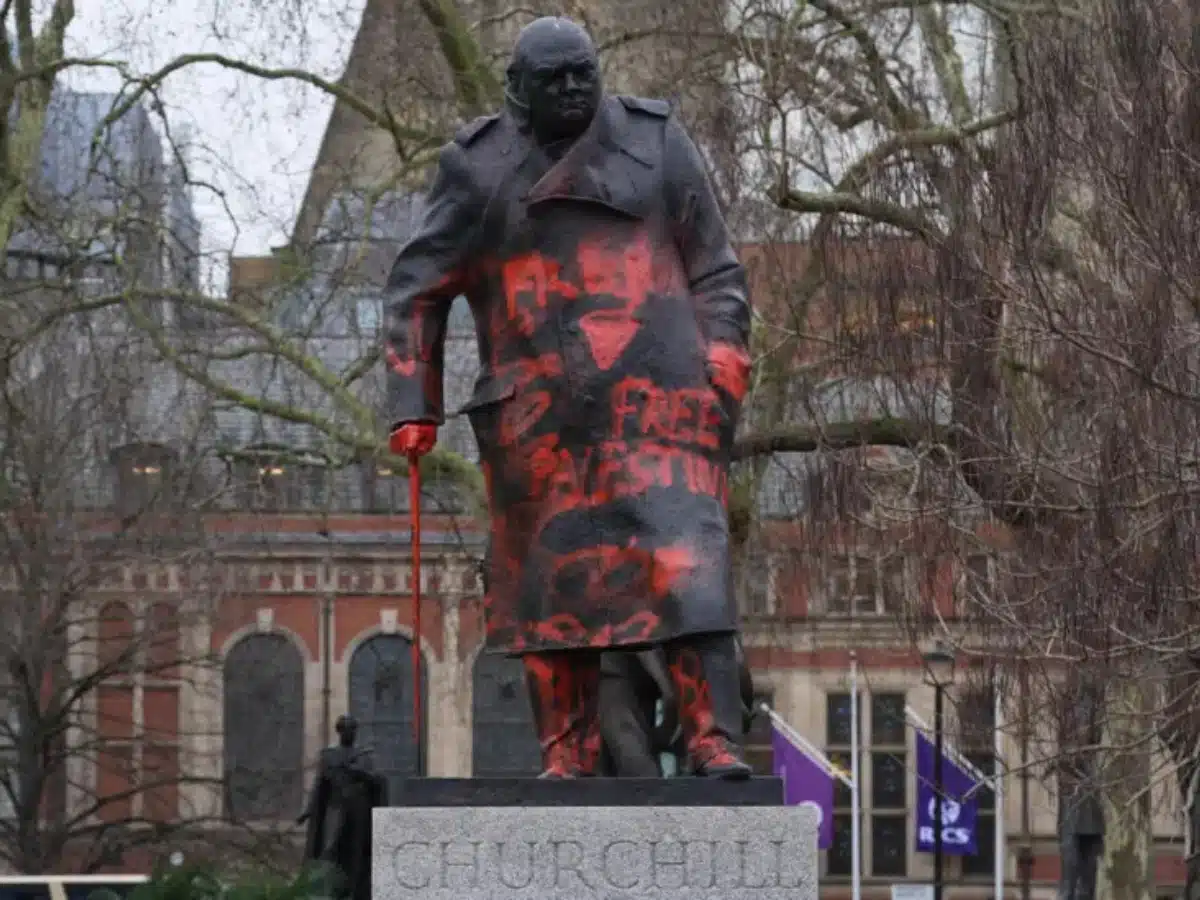
Dutch national Olax Outis from campaign group Free The Filton 24 Netherlands (NL) will appear at Southwark Crown Court on Monday 30 March after a month in prison without trial.
Olax Outis in court
Olax has been held in a UK prison for a month for allegedly defacing the Winston Churchill statue in Parliament Square with finger paint – a crime which in his home country would be considered a misdemeanor at most.
He has denied criminal damage, while the prosecution claimed that the finger paint caused £11,970 in damage to the statue.
Olax painted messages such as “NEVER AGAIN IS NOW”, “STOP THE GENICIDE”, “FREE PALESTINE”, “ZIONIST WAR CRIMINAL” and “GLOBALISE THE INTIFADA!” in the bronze Churchill statue on February 27, was arrested and has remained in custody since.
The conditions of the UK prisons have been described by Olax as “grim”. He reported that some days he receives insufficient food, there are cockroaches in the cells and he is regularly moved around, making it incredibly difficult to keep in touch with his family abroad.
Silence
Today Olax will appear before Southwark Crown Court for his plea hearing where he will find out whether he will be released on bail, granted permanent release, or remain in custody for his peaceful resistance against complicity in the extermination of the Palestinian people.
His solitary action was the first by Free the Filton 24 NL outside the Netherlands. Since its inception, the group has stood in solidarity with the British resistance against the genocide in Palestine. The governments of both the Netherlands and the UK refuse to condemn the Palestinian genocide and are complicit through passive and active support for Israel.
The governments of the UK and the Netherlands remain silent regarding the arrest and disproportionate incarceration of Olax. Aside from automated email replies, there has been no response following emails and letters to the relevant ministries on Olax’ behalf.
Featured image via the Canary
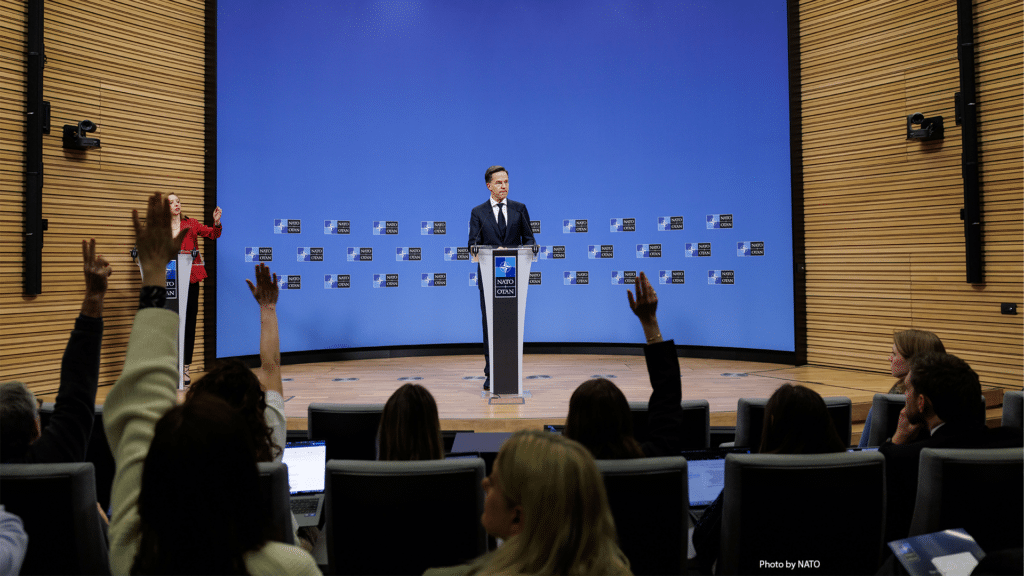
Mark Webber explores the impact of the Iran crisis on NATO, highlighting the trend towards an increasingly Europeanised alliance built on deeper ties and increased spending which he suggests will continue regardless of the outcome of the conflict.
For NATO, these are hard times for optimism. Still, NATO’s upbeat Secretary General, Mark Rutte is not to be deflected. In mid-February, on the back of a seeming resolution of the Greenland crisis, Rutte claimed the alliance was ‘the strongest it has been since the fall of the Berlin Wall.’ In the midst of the US-Israel war with Iran, Rutte has managed both to commend the campaign and to suggest the allies will come out of it more united, not less.
Can one square this Panglossian position with the reality of the latest transatlantic trauma? President Trump, who never needs an excuse to belittle NATO, has suggested the alliance ‘faces a very bad future’ if its members do not help the US reopen the Straits of Hormuz, shuttered by Iran. A week ago, the UK along with nineteen NATO allies plus Australia, Japan, New Zealand and South Korea expressed their ‘readiness to contribute to appropriate efforts to ensure safe passage through the Strait.’ No discernible movement has, however, occurred since. At NATO HQ in Brussels, there has been no discussion of a coordinated maritime effort.
The war has impacted the alliance directly. Iranian missiles have been intercepted by NATO-supplied air defences in Turkey, the NATO training mission in Iraq has been withdrawn and US F35s have been transferred from the Cold Response exercise in Norway to the Gulf. Individual allies have been unwilling to join the US-Israeli campaign, but bases in several countries, including the UK, France, Germany, Greece, Italy and Portugal have been used to facilitate ‘one of the most logistically complex operations the US military has been involved in for decades.’ Only Spain has refused the US access to its bases.
Practical support has thus not been inconsequential. But politically, the United States has acted in isolation. NATO’s major allies – Germany, the UK and France – have kept their distance. Trump’s current European bête noire, Spanish prime minister, Pedro Sánchez has publicly condemned the ‘illegal’ war. Even Trump’s supporters – the leaders of Italy, Hungary and Slovakia – have questioned the wisdom of the American campaign.
On Iran, just as with Greenland, NATO is divided between the United States and the rest. This could well feed an ongoing animus in the Trump administration. Trump (or, for that matter, his fellow NATO sceptics, Vice-President J.D. Vance and Secretary of War Pete Hegseth) could turn against the alliance at any moment. None of this bodes well for NATO’s next summit (scheduled for July in Ankara). By that point, the war will either be over on terms declared by the Trump administration or will have entrapped the American military in an unwinnable conflict. Either outcome is perilous for transatlantic unity. A self-defined victory would propel Trump toward further destructive acts of adventure. Failure, meanwhile, could have very similar results, as Trump chooses new targets to compensate for the Iranian misadventure and criticises allies to deflect blame for his own strategic ineptitude. Whether propelled by ambition or ire, action against Cuba seems increasingly likely. This would be a marginal issue for NATO. But a reprise of Trump’s hankering after Greenland would return the alliance to crisis mode.
The NATO allies have dealt with the demands of the two Trump administrations through a mixture of deference (agreeing to ambitious defence spending targets), detachment (as currently over Iran) and political resolve (as with the Greenland crisis earlier this year). In parallel, they have taken serious steps to reduce their military dependency on the United States. Some of this is out of urgent necessity. The Trump administration’s severance of military aid to Ukraine means the Europeans now fund the lion’s share of arms transfers to that embattled country. In addition, Europeans have deepened defence cooperation within the EU. They have also cooperated through overlapping minilateral and bilateral defence initiatives. This ‘clustering’ of defence is not new. The British-led Joint Expeditionary Force has been operational since 2015; the European Air Transport Command was established in 2010. Yet such initiatives have accelerated in recent years. Between 2022 and 2025, European states signed among themselves 135 bilateral defence partnerships.
NATO itself is quietly becoming Europeanised. And this, tellingly, has America’s support. In recent months, the Pentagon has helped execute a reform of the NATO command structure that will see Americans relinquishing oversight of NATO Joint Force Commands (JFC) Norfolk and Naples (where a Brit and Italian will take up command). German officers already command NATO’s two other JFCs at Brunssum and Ulm. US commanders will retain NATO’s tactical land and air commands and will acquire from the British oversight of NATO maritime command. The US is not, therefore, rushing for the exit. This is a gradual shift, but it is a planned one aimed at greater European responsibility. The US also wants greater European effort – the ability to field, according to Under Secretary of War, Elbridge Colby, a ‘preponderance of the forces required to deter and, if necessary, defeat conventional aggression in Europe.’ Here too there is marked progress. Defence budget increases alongside Finland and Sweden’s accession to NATO have boosted Europe’s military standing. In a conventional war with Russia, NATO would still struggle if the United States was not fully committed. However, the steps needed to correct this deficiency are, according to a recent Atlantic Council report ‘well within the capabilities of [the] NATO allies.’
Three long-term trends now seem evident irrespective of the Iran war or, indeed, Trump’s disparagement of NATO. First, a security architecture is developing in Europe – involving the EU, a Europeanised NATO, clustered defence, and a de facto wartime alliance with Ukraine – which is not reliant on American design. The Trump administration is through the alliance engaged with but not seeking oversight of this network. Second, Europe’s centre of strategic gravity is now in the east and north. NATO ally Turkey has been exposed by the Iran war, but there are no moves afoot to galvanise NATO’s ‘southern’ agenda. NATO’s frontline is adjacent to Russia and here leadership on defence spending and military mobilisation is being demonstrated by Germany, Poland, the Baltics and the Nordic states, not by NATO’s traditional European big hitters France, Italy and the UK. Third, these developments, require strategic deftness. Clinging to the hope that America will rediscover its transatlantic vocation amounts to strategic paralysis. If, to return to Rutte, NATO is to be strong it will be so on the back of its European component.
By Mark Webber, Professor of International Politics, University of Birmingham
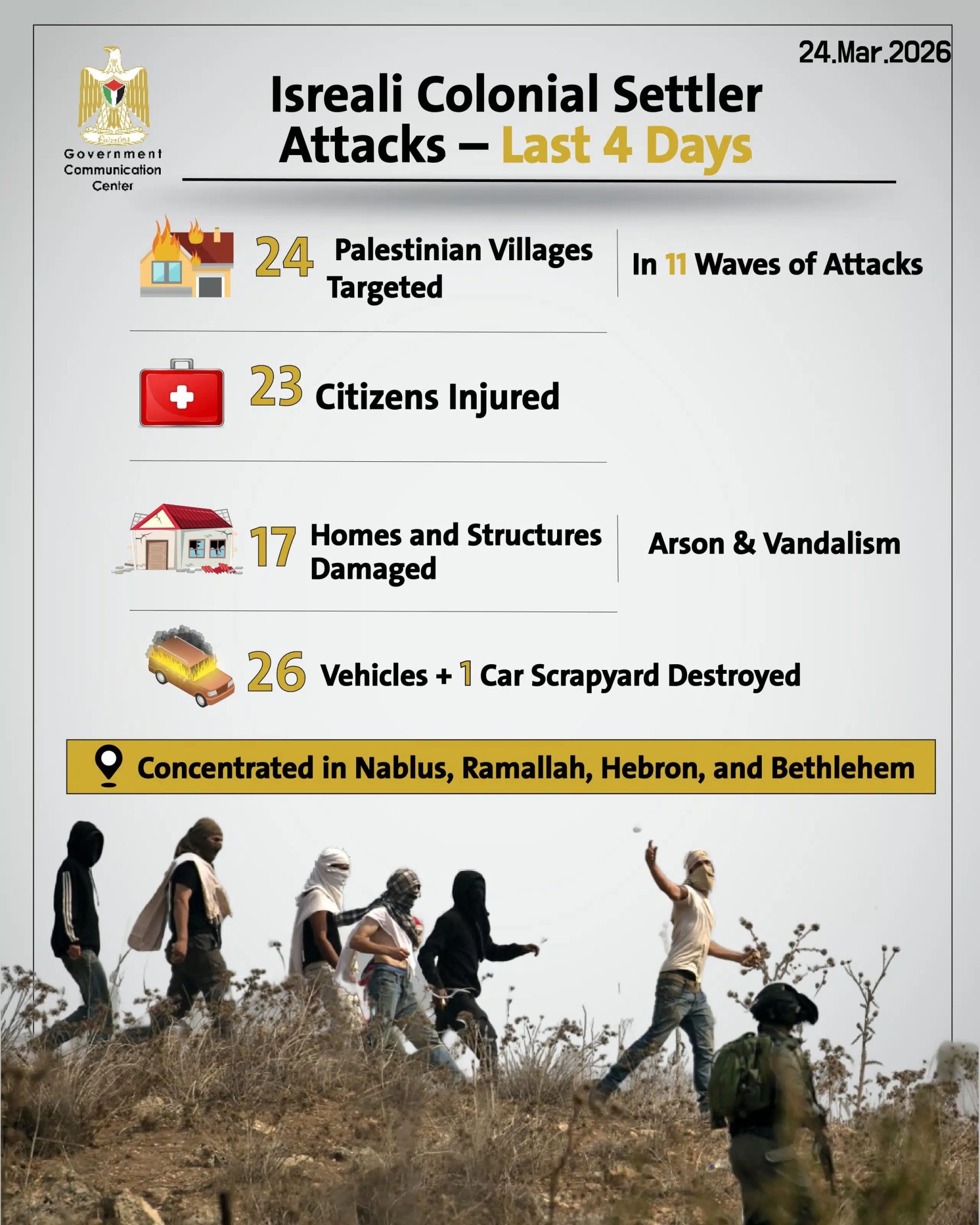
While all eyes are focused on the bigger regional issues, there has been an unprecedented increase in settler violence across the occupied West Bank.
Attacks on Palestinians by illegal “Israeli” colonists are no longer isolated acts of violence but a state policy of deliberate and organised terrorism.
At a recent press briefing, Palestine’s minister of foreign affairs and expatriates, Varsen Shahin, pointed to a sharp increase in the frequency and severity of settler attacks. She explained that such violence includes murder, physical assaults, the burning of homes and agricultural lands, destruction of infrastructure, theft and incitement practices, such as targeting places of worship.
The objective of these actions, she said, is to intimidate Palestinians and force them off of their land.
Shahin stressed that the situation in the occupied West Bank can no longer be viewed as isolated “acts of violence”, but as terrorism. She described this settler terrorism as “a deliberate and organised system of provocation” and a “state policy” designed to terrorise, displace and inflame.
Its purpose is to uproot us and provoke reactions that can be exploited for escalation against us. It is a calculated strategy to justify continuation and expansion of genocidal violence against the Palestinians, carried out by settler militias and armed gangs, who are illegally residing in occupied territory and supported by “very influential people in the government.
Israeli settlers armed by government, protected by IOF
These colonial Jewish settlers operate under the protection of the Israeli Occupation Forces (IOF). They are armed and funded by the “Israeli” government, and constitute a direct extension of policies of annexation and settlement expansion. Shahin noted that the impunity and lack of international accountability, which has been ongoing for decades, has allowed Israel to do whatever it wants, including getting away with genocide.
She said:
Settler terrorism complements the accelerating settlement expansion that is occurring, through approval of new settlement units, new settlements, new planning measures and new legislation. All this entrenches the settlement enterprise and fulfills Israel’s expansions and colonialist policies, and ethnic cleansing of the Palestinian people.
She added:
These acts are illegal under international law and aim to normalise permanent control of the occupied state of Palestine, undermine the Palestinian right to self-determination, and try to force us to leave. When we are forced to leave, they will then call that voluntary.
More than 20 Palestinians have been injured in the latest reported settler attacks.

In the Khalla Amira and Rujoum Ali areas of Masafer Yatta, in the South Hebron Hills, settlers released their livestock near people’s homes on 25 March. They assaulted Palestinians in the area, injuring and hospitalising several. The IOF then arrived, firing tear gas and sound grenades at residents. Seven Palestinians were abducted and several people were detained.
Tragedy: One man, 31, dead, and others injured
In another incident in the evening of the same day, vehicles carrying Palestinian workers on the Umm al-Khair to Fateh Sidreh road, in the Masafer Yatta area, were chased by settlers accompanied by the IOF. They opened fire on the vehicles which led to one overturning and catching fire.
Yusri Majed Abu Qabita, 31, was killed and three other Palestinian men were injured.
No Palestinian is spared from this settler terrorism. An elderly man was injured in an attack in the Tubas governorate, in the Northern occupied West Bank.

East of Tulkarm, in the town of Ramin, settlers stole sheep and injured two Palestinian men.


About 750,000 Zionist settlers live illegally in settlements across the occupied West Bank, including east Jerusalem. They carry out crimes against Palestinians all day every day, but harsh words and meaningless sanctions from the international community do absolutely nothing to stop them. As yet, they have faced no accountability for any of their vicious crimes.

Fourteen Palestinians were killed by settler terrorism in 2025 while 11 people have been murdered in the first three months of 2026, according to figures from the Colonisation and Wall Resistance Commission (CWRC).
In 2024, the International Court of Justice (ICJ) ruled “Israel’s” occupation of Palestine is illegal, and called for all settlements in the West Bank and east Jerusalem to be evacuated.
Shahin summed up the situation and said:
Not only are our lives, our dignity and our rights threatened, but humanity, morality and justice under international law, and its applicability to all similarly. This is a real test. If the test fails in Palestine it will fail elsewhere, and the suffering will mount elsewhere.
Featured image via the Canary
Where can violent men meet like-minded lonely hearts? For Aurin Makepeace, it wasn’t through a dating app or the local pub – he met his ex-boyfriend, Steven Rothwell, in prison. Rothwell was serving time for murder; Makepeace for stabbing a stranger and leaving him with life-threatening injuries. When they were released, the convict couple stayed together.
But the lag love story didn’t last. The pair split in 2023, though they stayed in contact. Then, on 19 August 2025, Makepeace stabbed Rothwell in the chest and left him to die. He had assaulted Rothwell’s girlfriend earlier on the same day. He then tried to spin an implausible story to cover his tracks.
None of this is especially remarkable. Violent men commit violent acts. What is remarkable is that it was reported as a killing by a woman. After leaving prison in 2011, Makepeace began identifying as transgender, and so apparently otherwise sane professionals obligingly described him as female.
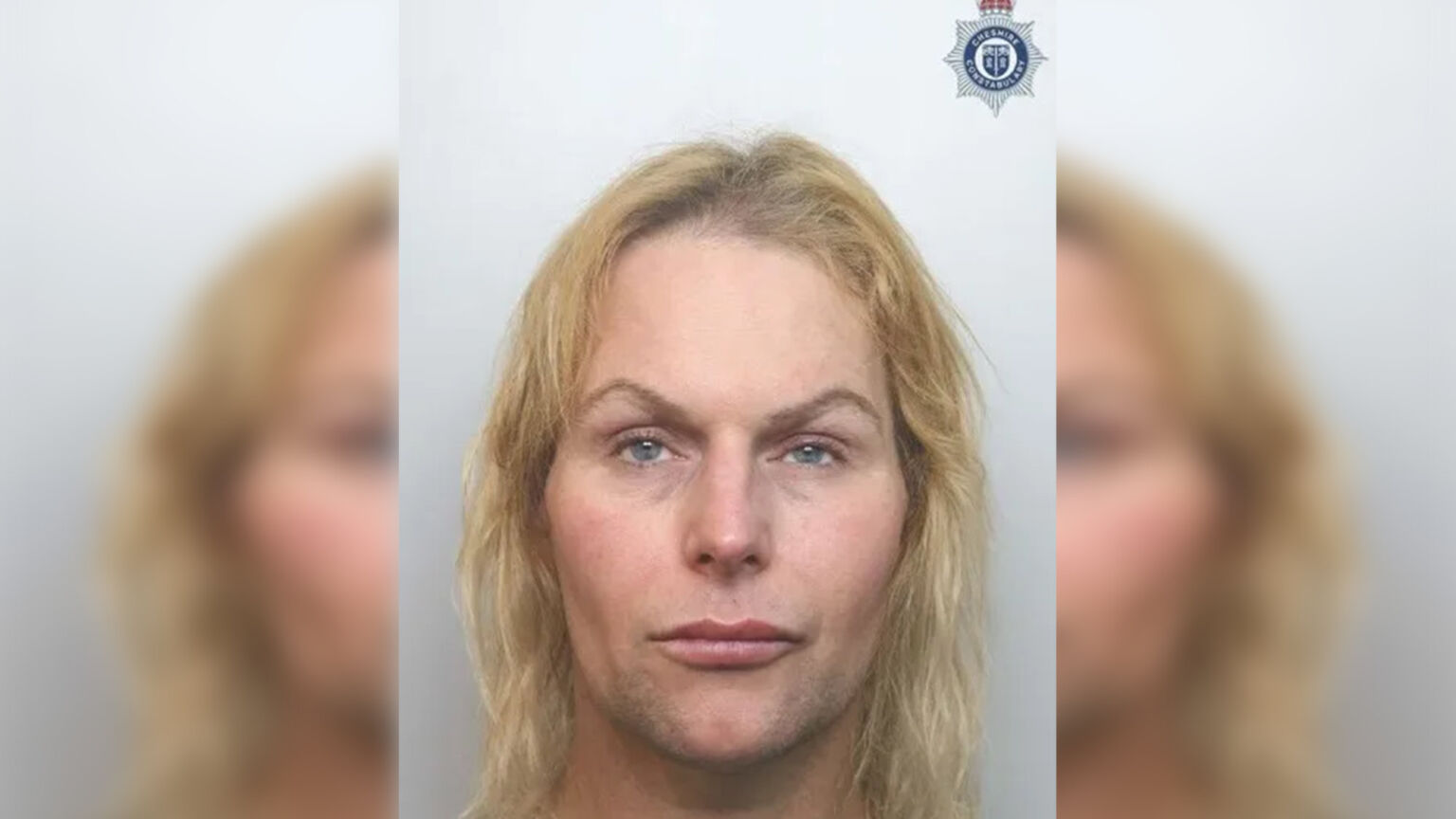
Official and media reports were illustrated with a photograph of the convict sporting straggly blonde hair and a five o’clock shadow, set on a jawline hewn out of granite and testosterone. Yet Cheshire Live and North Wales Live inaccurately reported that Makepeace is a ‘woman’, without even referencing his trans identity. Readers could be forgiven for wondering whether the picture editor was having an episode. The BBC didn’t cover the trial, though it did publish a report following Makepeace’s arrest, which simply referred to a ‘woman’ who had been charged. Meanwhile, the Daily Mail and the Sun both referred in their headlines to Makepeace as a ‘transwoman’ and used female pronouns.
The journalists were doubtless taking their lead from prosecutors. In a tone-deaf statement peppered with ‘she’ and ‘her’, Rachel Worthington of CPS Mersey-Cheshire proudly said that: ‘The jury [has] seen through Makepeace’s layers of lies.’ Worthington has some cast-iron gall complaining about lying in a statement that refers to a male murderer as if he were female.
Telling the truth about the sex of offenders matters because patterns of violence are not evenly distributed between the sexes. Pretending otherwise does not make anyone safer. According to Ministry of Justice figures, around 24,000 men are in prison for violence against the person, roughly 27 per cent of the male estate. For women, the figure is closer to 3,500. The gap widens further with sexual crime: 18 to 20 per cent of male pisoners are sex offenders, compared with just two to three per cent of female inmates. Among the 245 male prisoners who identify as transwomen or nonbinary, 151 are convicted sex offenders, which is around 62 per cent.
We are now nearly a year on from the UK Supreme Court confirming that sex in law refers to biological reality. Many hoped this would mark a return to plain speaking. And there have been innumerable employment tribunals in which claimants have won the right not to be discriminated against for knowing what every dog knows – that there are only two sexes. There has, in effect, been a grassroots uprising against trans tyranny. YouGov polls show a drop in support for legal sex change. Today 55 per cent of Britons say they believe that allowing men to use spaces reserved for women, such as women’s toilets or changing rooms, ‘presents a genuine risk of harm to women’.
Yet the mainstream press and taxpayer-funded institutions still contort themselves to avoid stating the obvious. At a time when trust in legacy media and statutory bodies is dropping, they are at risk of seeming dangerously out of touch and losing public confidence. Why should anyone pay their BBC licence fee or buy a newspaper when journalists and editors are misleading them? Why should anyone respect police officers and court officials who coddle the feelings of dangerous criminals?
To describe a violent man as a woman is not a harmless courtesy, it is an abdication of responsibility. It distorts crime statistics, misleads the public and erodes trust. Crucially, it demands that everyone else participate in a lie. To indulge this pretence is to adopt the worldview of dangerous thugs like Makepeace. It prioritises his feelings over reality, professionalism and public safety.
A society that cannot name what it is looking at cannot hope to confront it. And one that will not speak plainly about male violence will find itself increasingly unable to stop it.
Jo Bartosch is co-author of Pornocracy. Order it here.

Ryan Gosling has admitted there were certain sacrifices he was unwilling to make for his part as a living Ken doll.
Last week, the Canadian star was asked about his role in the 2023 movie Barbie during an interview with Radio 1, where he said that he “didn’t even shave my legs” to help him get into character as Ken.
“There was a shave room on Barbie that I never went in,” he claimed, noting that while co-stars Simu Liu and Ncuti Gatwa were among its patrons, he never partook himself.
Ryan recalled: “Oh my god, you could hear the screaming down the hall. It was like a torture chamber. It was just like… howling!”
“I went the other way,” he continued. “I just never went in the shave room. What a name! And the sounds that came out of it I’ll never unhear.”
Despite his reluctance to suffer for his art, Ryan won widespread acclaim for his performance as Ken in Greta Gerwig’s movie.
He racked up nominations at the Golden Globes, Critics’ Choice Awards, Baftas and Screen Actors Guild Awards (as they were then still known) before being shortlisted in the Best Supporting Actor category at the Oscars, one of eight nods for the movie which notably didn’t include Best Actress recognition for its lead, Margot Robbie.
As well as his acting work in the film, Ryan also led Barbie’s grand musical number I’m Just Ken, which earned a Best Original Song nod at the Oscars that year, with the La La Land star also performing the track live at that year’s Academy Awards ceremony.
Ryan can currently be seen as the lead in the new sci-fi adventure Project Hail Mary, which has so far proved to be a glowing hit with both viewers and critics.

This article contains spoilers for the latest season of The Comeback.
It turns out Lisa Kudrow found inspiration in some unlikely places while putting together the third and final season of her Emmy-nominated comedy The Comeback.
While promoting the latest iteration of The Comeback, Lisa previously disclosed that one episode would see her character taking part in a fictitious series of The Traitors US, alongside RuPaul’s Drag Race alum Trixie Mattel.
During the latest episode, this scene finally aired, with Valerie struggling every bit as much to hide the fact she was a Traitor as you might expect.
However, during an interview on Traitors UK host Claudia Winkleman’s talk show before this episode aired, Lisa disclosed that watching Linda on the infamous third season of the British reality show had given her the idea for how Valerie’s stint in the castle would pan out.
“Linda was the person who, when I said, ‘Traitors you’ll meet each other later’, looked at me and nodded,” Claudia reminded viewers, before asking Lisa: “There was a bit of Linda in [your performance], wasn’t there?”
“A bit?!” the Friends alum responded. “Oh my god! Yeah, we had Valerie going, ‘oh I can tell you 100% he’s a Faithful’, ‘how do you know?’, ‘just… I have a feeling’.”
Claudia then surprised Lisa with a visit from the woman herself, with Linda admitting it was “absolutely crazy” to have inspired a scene in The Comeback.

“On our show, she was voted out that night,” Lisa pointed out. “What was wrong with your group?! They took a very long time!”
Watch the moment for yourself in the video below:
The third season of The Comeback comes more than a decade after the second instalment.
In the years since, viewers have so far seen Valerie trying her hand at playing Roxie Hart on Broadway and half-heartedly taking part in the 2023 Hollywood strikes, while future episodes will see her grappling with the surge of AI in the entertainment industry and promoting a project on Hot Ones.

We hope you love the products we recommend! All of them were independently selected by our editors. Just so you know, HuffPost UK may collect a share of sales or other compensation from the links on this page if you decide to shop from them. Oh, and FYI — prices are accurate and items in stock as of time of publication.
If you have a period, you’ll know the struggle. You wait all year for summer, craving that first refreshing dip. And then the dreaded thing happens: that time of the month rolls around. End scene on all hopes of being cute and care-free by the pool.
As someone who seems to somehow always have her period on holiday, I’ve shouldered the hard truth that I’ll have to spend the rest of my menstruating life thinking about being near a toilet and asking for hourly tampon string checks when I should be relaxing.
Add to that the fact that all my pedantically-picked bikinis end up blood-stained, and it’s no wonder I’ve developed an avoidance of being near a body of water.
I’m not the only one plagued by this predicament: a survey by WUKA found that 71% of women have taken a contraceptive pill before jumping on a plane in efforts to avoid having their period on holiday.
I’m not stranger to these kinds of attempts myself. Many an evening has seen me thinking there must be a way around the holiday period blues, and attempting to restrict or put off my flow (read: gulping down as much water as humanly possible).
So, naturally, when I heard about WUKA’s period swimwear line, a ray of hope shone over my conscience. Formed of an aquaphobic outer layer and an absorbent inner gusset, the collection is designed to keep water out and your flow in. Need we mention they’re made from recycled nylon so they’re eco-friendly, and UV50+ resistant, too?
While splashing out on period-specific swimwear might seem like a lot, the peace of mind is, in my opinion, priceless. With 20% off all swimwear until 13 April (repeat: this is not a drill) and 20% off select pieces from 14 April, it’s time to be out with the old, in with the new: goodbye tampon strings, hello contained flow.

As Keir Starmer takes the Labour Party further and further right, a group of councillors in the London borough of Hackney finally left in May 2024. They became Hackney Independent Socialists. And almost two years later, they’re actively collaborating with the local Green Party to defeat Labour and the far right in May’s local elections.
The Canary spoke to Heather Mendick and Claudia Turbet-Delof from the Hackney Independent Socialist Collective (HISC) to find out more about their campaign alongside the Greens, which Mendick said:
should be a model for red-green collaboration all across the country
Excitement in Hackney as “people power” grows outside Labour
Hackney councillor Turbet-Delof said that seeing an increase in “anti-migrant rhetoric” from Starmer’s Labour meant she had “one foot out” of the party already. It felt like an “irreversible” shift. And then, Labour’s position on Israel’s genocide in Gaza “really clarified things”, as the party suspended her and others for backing ceasefire calls.
For Turbet-Delof, leaving Labour was about staying true to her principles. And HISC is unapologetic about where it stands. Mendick added that there’s a lot in common between HISC and the Greens, but the differences are still important:
The possibility of having a different agenda that’s explicitly socialist, and that comes from a small group that’s very locally based, I think is really powerful.
HISC is very much about “people power”, Mendick stressed, with huge turnouts among the membership for meetings. There’s a lot of interest and “nearly everyone is doing something”.
The fact that HISC councillors have scrutinised the council effectively and “brought things to light”, Turbet-Delof said, has helped to make “headline news”. And this in turn got residents’ attention and support, because:
they now finally feel that there is an alternative
“Making history” with a Green–Independent alliance
HISC members’ positive relationships with Greens on the council and in local campaigns have helped to foster organic collaboration. Turbet-Delof says they were “really keen to work together” in the local election campaign as a result:
it is something that benefits both, and it’s something that residents also like to hear, that it’s a collaboration.
And as Mendick insisted, this isn’t just about a “non-aggression pact”, but an “active collaboration” with “joint canvassing”. She explained that:
We have leaflets, posters, calling cards, all with two logos on…
We’re doing something new… and people are super enthusiastic. When you say to people, look, we’re making history in Hackney, here are two logos on the same piece of literature, people are like ‘wow’…
I don’t think anywhere in the country is doing what we’re doing.
At its heart, Mendick said, HISC wants to help:
to get the left working constructively together as far as that is possible
Turbet-Delof agreed, adding:
We have to stand and speak and respect one another.
Thanks to everyone who’s put up our ❤️💚 posters in Homerton #localelections pic.twitter.com/zLRfsvcG9y
— Hackney Independent Socialist Collective (@HackneyIndSG) March 22, 2026
Your Party has also reached out to HISC with an invitation to collaborate. HISC members will make a “collective decision” about that.
Green-HISC councillors will try to ‘shift the power relationship’
Turbet-Delof believes “a lot of councillors” in Hackney are currently “quite detached” from community work. And on some big local estates, she said, some people have told her:
no one has ever knocked on my door. It’s the first time I’ve seen a councillor.
Mendick added:
The question I ask on doorsteps is… what do you want to change in Hackney? …
We’ve learned from knocking on doors and talking to people, and our positions have changed in response to that.
And this is a key way HISC wants the council to change. As Mendick explained:
We want to shift that power relationship between residents and the council. And we’ve got a very explicit commitment that, if we are in power with the Greens, you can’t simply do a consultation and then just be like, ‘tick the box, then we’ll go on and do what we were planning to do anyway’. If you have an engagement process, whatever comes out of it, you have to commit to implementing it.
This is important, she stressed, because:
If you really want to build a movement, you have to start with that stuff. You have to make a difference in people’s lives. You have to show that the damp on their wall can get sorted, that their light can work again, that their lift can work again.
As HISC’s manifesto says, it is already:
collaborating with residents and campaign groups, by:
Holding regular People’s Forums where we can learn from residents about the issues that matter to them.
And both Turbet-Delof and Mendick asserted that this connection with the community will continue after the election.
HISC candidates in Hackney’s local election
Alongside all the Green candidates in Hackney, the HISC candidates in the joint campaign will be:
- Fliss Premru (standing for re-election in Clissold Ward).
- Claudia Turbet-Delof and Penny Wrout (both standing for re-election in Victoria Ward).
- Alana Heaney and Heather Mendick (standing for the first time in Homerton).
- Sarah Byrne (standing for the first time in London Fields).
You can see HISC’s campaign videos here and manifesto here. The nine areas of focus in the manifesto are:
- Democracy and Workers’ Rights
- Community Wealth Building
- Human Rights and International Solidarity
- A Cultural and Creative Hackney
- Young People’s Mental Health and Wellbeing
- Transport
- Low-cost Safe Secure Housing for All
- Migrants’ Rights and Anti-racism
- Ageing and Living Well
New candidate photo for @HackneyIndSG and @hackneygreens in Homerton ward. pic.twitter.com/FWWFy8nz9L
— Heather Mendick (@helensclegel) March 15, 2026
All six of our council candidates have signed the pledge for Palestine 🇵🇸 pic.twitter.com/XVEE8FLUYO
— Hackney Independent Socialist Collective (@HackneyIndSG) March 19, 2026
Some photos from our three canvassing sessions yesterday ❤️💚
🙏🙏🏾 to everyone who took the time for a chat when we knocked on your door pic.twitter.com/8XNidaezPF— Hackney Independent Socialist Collective (@HackneyIndSG) February 23, 2026
Featured image via the Canary

Natalie Brooks is the founder of Dyslexia in Adults, and author of Dyslexia Unlocked (available 23 April 2026).
After making the same mistake twice in relatively quick succession at my former workplace, a manager said to me “are you lazy, or are you stupid?”. The mistake itself was small. I had sent a quote in pounds instead of dollars. But it happened twice, and what my manager saw as carelessness, was actually my dyslexia.
I didn’t admit this to my manager, because like many adults with dyslexia, I had learned to cope with it – and hide it. Until situations like this continued to crop up, which triggered a spiral of fear that people would notice how much by dyslexia impacted me.
For years, I had also been told that dyslexia is a superpower. It’s a phrase that appears with neurodivergence narratives a lot – in workplaces, motivational talks, even on LinkedIn posts. I understand the intention is positive, to empower people with dyslexia. But it never matched my reality, and I suspect I’m not alone. If dyslexia is a superpower, why does it so often feel like we’re working twice as hard just to keep up?
What tends to get lost in these superpower narratives is the effort involved. While I do not doubt that my dyslexia brings me an amazing set of strengths, skills and ways of thinking, the day-to-day lived experience of dyslexia is often far less glamorous.
What’s more, these supposed strengths or ‘superpowers’ can feel vague and hard to recognise in real life. Terms like ‘big-picture thinking’ and ‘creativity’ sound impressive, but are difficult to translate into everyday situations. The list of struggles can feel far longer than the moments where the supposed ‘gift’ shows up. Too often we often gloss over the reality of how little support people are given to access strengths or support challenges. I remember calling my partner after a tough conversation with my manager about a small error. Trying to comfort me, he said “But it really is a gift”. I snapped back: “how the hell is big-picture thinking helping me with my emails?!”
One of the most common challenges for dyslexic adults is working memory, which is the ability to hold and manipulate information in your mind. Imagine trying to follow instructions while holding several pieces of information at once – for some people this might be an okay thing to do, but for me it feels like trying to juggle too many balls in the air at once, and to make it worse, knowing that if one drops, people may think you’re not paying attention, or worse, can’t do your job.
I often describe dyslexia as carrying a backpack full of bricks. Everyone else may be walking the same path, but you’re carrying extra weight – working memory challenges, organisation difficulties, constant misunderstandings and, over time, a loss of confidence. The journey might look the same from the outside, but the load is very different.
It’s not just a few of us with this heavy load, dyslexia is common. Around 1 in 5 people (20%) are dyslexic, making it the largest neurodiversity group globally, and approximately 25-40 per cent of individuals with dyslexia also meet diagnostic criteria for ADHD. Many of the adults I work with are professionals, managers, business owners and parents. The common thread isn’t a lack of ability, it’s frustration. They know they are capable, but they lack the tools or understanding that would help them work with their brains rather than against them.
One client once told me that when she decided to break up with her boyfriend, she was so worried she wouldn’t be able to articulate her thoughts clearly that she wrote everything out first, filmed herself saying it, and watched it back repeatedly to make sure it made sense.
This is the kind of invisible effort that many dyslexic and neurodivergent adults put in everyday, not because they lack intelligence, but because we care about getting it right.
I learned those lessons early. The only way to cope was to work harder, constantly, and often without support.
When I was choosing my school subjects, every teacher told me the same thing: “Natalie, you’re smart, but this subject isn’t for you.” History involved too much reading. Science meant spelling complicated words. Maths was difficult because of my dyscalculia. Room after room, teacher after teacher, I heard the same message. Eventually I realised it wasn’t the subjects that were the problem, it was that no one wanted the dyslexic kid in their classroom.
The truth is, this stayed with me for years. It taught me that my dyslexia was something to hide, something people tolerated rather than supported.
The emotional toll of dyslexia is rarely talked about, while most think about it affecting reading and writing, but it can also shape how you see yourself. When mistakes are misunderstood as lazy or a lack of ability, these messages or judgement can internalise and ruminate. There have been periods where I’ve felt disorganised, careless or simply not good enough, and it’s awful.
I’ve worked with adults who have avoided promotions because they were afraid, they wouldn’t be able to keep up with the demands of the role. Others have stayed silent in meetings despite having brilliant ideas, because they worry they won’t be able to explain them clearly enough. Many, including myself, spent years feeling like they are constantly failing at things that seem to be easy for everyone else.
Dyslexia doesn’t need to be romanticised to be understood. What it needs is practical support.
Dyslexia doesn’t disappear when you leave school. But support often does. Many adults are left navigating their careers believing their struggles are personal failures, rather than the result of systems that were never designed with neurodivergent minds in mind.
We don’t need more inspirational posts telling us dyslexia is a superpower. What we need is understanding, practical tools and workplaces that recognise how differently our brains work.
Because when the weight of those “bricks” is lifted, something remarkable happens. The energy that once went into simply keeping up can finally be used to move forward.
Hello and welcome back to Canary Catch Up, your one-stop shop for must-watch TV. That’s along with a healthy dose of hate watching and my favourite thing – gossip about people I don’t actually care about.
I’m fully refreshed after a weekend in the Scottish Highlands, where I watched zero tv. But I have been getting stuck into the Fourth Wing book series. I tore through the first book, and I’m fully immersed in Iron Flame now. If you’re looking for a book series with incredible disability representation, this is the one for you.
Anyway, on to the telly!
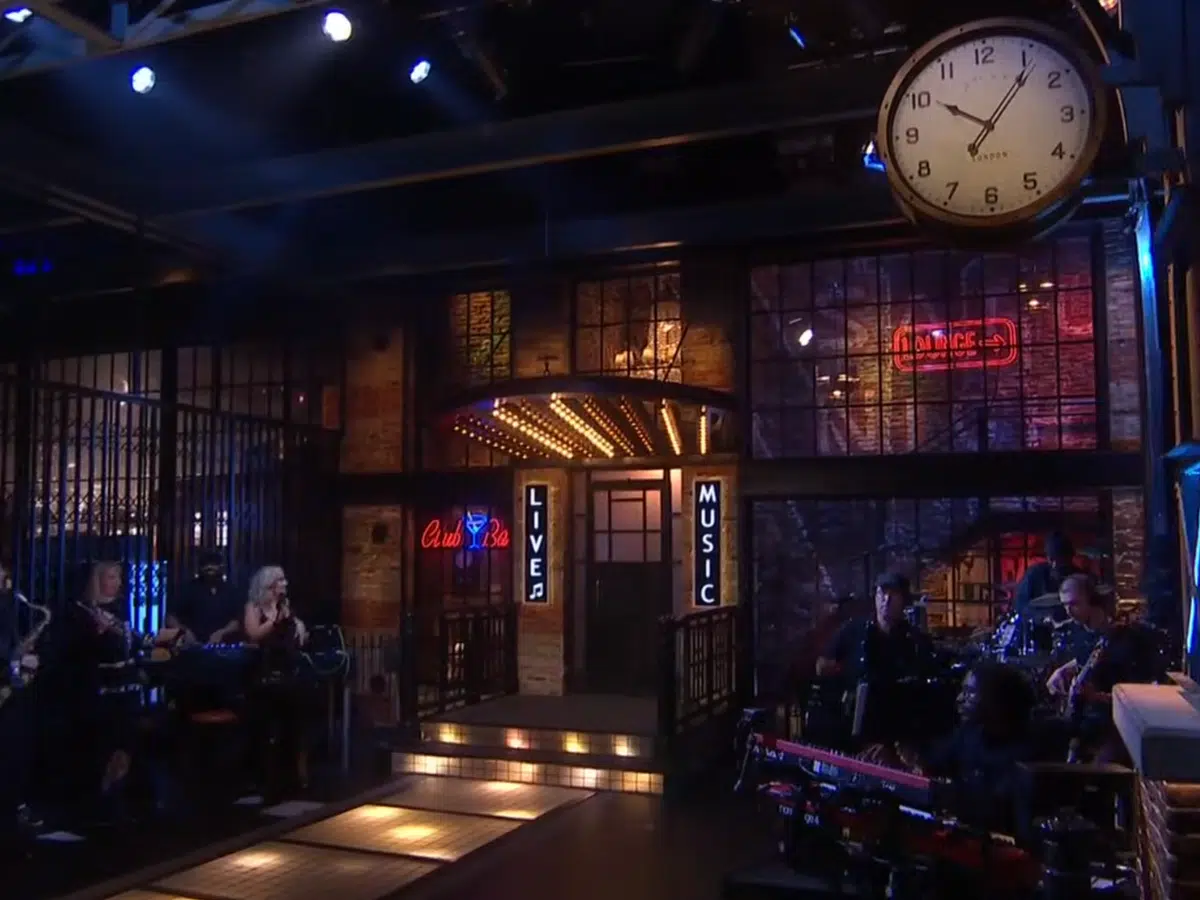
SNL UK is actually good
When SNL UK was announced, there was a collective, country-wide eye roll. ‘We don’t need that American excuse for comedy over here’, we all cried. But boy, were we fucking wrong. SNL UK is sharp, witty and most importantly, silly. We’ve only had two episodes so far, but we’ve already seen sketches that will be quoted and sung for years. Jack Shep’s Diana impression will be one for the ages, along with George Fouracres’ What Kind of Irish is Your Grandad? song.
It turns out, when you give comedians who haven’t been plastered all over panel shows free rein with good writing and let them play, it’s actually funny. Who knew?!
MomTok might not actually survive this
The wheels have fallen off The Secret Lives of Mormon Wives. In the last couple of weeks, Momtok and Dadtok have been embroiled in many a scandal. Now I’m not going to get into the abuse allegations and Taylor and Dakota. But one thing I will say is that the incident is literally in the first series of the show. It’s only after it’s all come out in the press that producers cancelled filming, ABC have axed her series of The Bachelorette, sponsors have pulled out, and her co-stars are denouncing her.
This really says a lot about how much those involved in reality TV are willing to ignore, as long as it makes them money.
Not wanting to miss out on the limelight, Jessi’s cunt of a husband, Jordan, publicly filed for divorce. Sick of the little controlling weasel blaming their marriage troubles on her, Jessi went on the podcast Call Her Daddy and fully exposed him. THEN when we thought that was enough Momtok drama, it turns out Jessi went and snogged Miranda’s ex Chase, who’s also been with Taylor and Layla. And I might be too obsessed with these people’s lives to be honest.
A charming slice of Regency escapism
One thing you need to know about me is that I am a slag for a Pride and Prejudice reimagining. The same story but told via a YouTube series, yes! With zombies? Gobbling that up. And now there’s another brilliant adaptation to add to the fold. The Other Bennet Sister tells the story from the often-forgotten Mary’s POV.
Mary is the ‘bookish’ sister who doesn’t give a shit about marriage, who has always been portrayed as boring, but she’s so much more, as the series shows. This absolutely charming 10-part piece of Regency escapism is just what we need at the minute.
Strictly pro dancers are dropping like flies
This time of year, there are usually a few rumours around who will stay on and who will leave Strictly Come Dancing. But this year, it seemed every single fucking pro has been rumoured to be leaving. But there’s something to be said for leaving a sinking ship, as apparently a lot of them were right. So far Karen, who’s been with the show the longest, Luba and Nadiya have all been confirmed by the BBC.
Last year, Karen was paired with Harry and his incredible dancing pecs. My favourite moment of Nadiya’s last year was when she said pro men usually can’t lift her, dead in the face of her ex Kai.
However, one of the newer pros, Michelle, has been speaking out to the press about being axed. In fairness, Michelle isn’t exactly memorable and has only had one celeb partner in four years on the show. But if my show was facing brand new hosts and a raft of pros leaving, I’d be clinging onto any dancers I could keep.
Now, if you don’t mind, the second half of The Other Bennet Sister has just dropped on iPlayer!
Featured image via YouTube/SNL UK

Bearish Trend Entry Short Strategies #forex #shorts #crypto #trading

Police officer injured in crash near bus station

How ImpactFi Is Reshaping Decentralized Finance

Smart energy pays enters the US market, targeting scalable financial infrastructure

Why Israel is blocking foreign journalists from entering

Bitcoin: We’re Entering The Most Dangerous Phase
Bearish Trend Entry Short Strategies #forex #shorts #crypto #trading

Be INSANELY RICH Early! Top 3 Unlimited Money Farming Methods in Crimson Desert – Best Gold Bar Farm

Bitcoin freedom for Afghan women? A story you need to hear.
-
 NewsBeat5 days ago
Manchester United reach agreement with Casemiro over contract clause amid transfer speculation
-

 News Videos4 days ago
Parliament publishes latest register of MPs’ financial interests
-

 Sports7 days ago
Gary Kirsten Accuses Pakistan Cricket Board Of ‘Interference’, Mohsin Naqvi Responds
-

 NewsBeat3 days ago
The Story hosts event on Durham’s historic registers
-

 Business4 days ago
Instagram, YouTube Found Responsible for Teen’s Mental Health Struggle in Historic Ruling
-

 News Videos7 days ago
Ch 9 Financial Management Part 1 | Detailed One Shot | Class 12 Business Studies Boards 2026
-
 NewsBeat5 days ago
Tesco is selling new Cadbury Dairy Milk bar and people can’t wait to try it
-
 Entertainment7 days ago
Cynthia Bailey Dishes on ‘RHOA’ Season 17, Discusses Kandi
-

 Tech7 days ago
Samsung will soon let you control smart home devices from your car’s dashboard
-
 Entertainment2 days ago
Lana Del Rey Celebrates Her Husband’s 51st Birthday In New Post
-

 Fashion6 days ago
Does It Matter What You Wear When You’re Laid Off and Looking?
-
 NewsBeat7 days ago
Colombian military plane with 110 soldiers onboard crashes following takeoff
-

 Business6 days ago
More women enter wealth management, but few in advisory roles: study
-

 Fashion7 days ago
Fringe Bags for the Season
-
 NewsBeat6 days ago
Entrepreneurs Forum survey reveals optimism in North East
-

 Politics7 days ago
How Media Platforms Balance Performance and Accessibility in Image Delivery
-
 NewsBeat6 days ago
NASA Artemis II Astronauts enter 14-Day quarantine as moon rocket reaches launchpad
-
 Business6 days ago
Late-paying firms face multimillion-pound fines under new crackdown
-

 Crypto World6 days ago
BTC gives up $70,000 level as markets mull higher interest rates
-

 Sports5 days ago
Fantasy Baseball Week 1 Preview: Top sleeper hitters for both five- and 12-day period led by Munetaka Murakami
You must be logged in to post a comment Login