
Politics
Lord Mandelson Urged To Assist Epstein Investigation


Lord Mandelson has a “moral obligation” to help any investigation into the late paedophile financier Jeffrey Epstein, a cabinet minister has said.
Housing secretary Steve Reed’s comments pile fresh pressure on the former Labour peer, who was sacked as the UK’s ambassador to Washington last September over his links to Epstein.
The intervention came after newly-released documents revealed Epstein wired thousands of pounds after Lord Mandelson’s husband asked him to pay for his osteopathy course fees.
Keir Starmer has already called on Andrew Mountbatten-Windsor “should be prepared” to testify before the US Congress about his links to Jeffrey Epstein.
Appearing on Sky News on Sunday, Reed said: “Foremost in all of our thoughts should be the victims of these horrific crimes.
“If anybody has information or evidence that they can share that might help to understand what’s gone on and bring justice to those victims, then they should share it.
“Whether that is Andrew Mountbatten-Windsor, whether it’s Lord Mandelson or whether it’s anybody else, they have a moral obligation to share what they knew so that the victims can help find the justice that they have been denied for so long.”
Phillips then asked him: “So if evidence from Lord Mandelson could help to illuminate what has happened for the sake of the victims, you would say that is something that he should morally be required to do?”
The minister replied: “Well absolutely. The victims of any crime, leave alone crimes as horrendous as these, should do whatever they can to help the victims.”
Elsewhere in the newly-released Epstein documents, undated photographs of Lord Mandelson show him in a T-shirt and his pants, standing in what appears to be a hotel room.
Bank statements included in the release also show that he received $50,000 from Epstein in two separate $25,000 payments on June 24 and June 30, 2004.
Mandelson finally apologised to Epstein’s victims in January, having initially failed to do so.
In a statement issued on Friday, he said: “I was wrong to believe Epstein following his conviction and to continue my association with him afterwards. I apologise unequivocally for doing so to the women and girls who suffered.
“I was never culpable or complicit in his crimes. Like everyone else I learned the actual truth about him after his death.
“But his victims did know what he was doing, their voices were not heard and I am sorry I was amongst those who believed him over them.”


After less than a year in power, a Reform council has cancelled democracy. For the first time anyone can remember, Durham County Council has just decided to cancel a full council meeting, “due to a lack of business.”
Council meetings are the forum where the public – you, know, the ones who pay the council tax – get to ask questions and see decisions made. Where other elected representatives get to challenge decisions. Residents will be asking if the councillors will hand back their allowances since they’re not bothering to hold the meetings they’re paid to attend. This contempt for democracy is a warning for what would happen if they won national power.
Cuts, cuts, cuts
It’s less than a year since Reform won Durham County Council with a landslide: 65 out of 98 seats. As predicted, they would struggle when it came to actually running a local authority.
Reform Durham were elected on a pledge to cut waste. But after fifteen years of austerity, services were already cut to the bone. Instead, they cut funding to town and parish councils, forcing a 6.92% increase in council tax precepts to make up the difference. Leisure centres and kids playgrounds are on the chopping block. A school free transport scheme has been cut with 143 kids now paying for passes.
They’ve abolished the council tax reduction scheme. Thousands of people in poverty are now liable for council tax. Report after report shows that this just racks up debts onto the most vulnerable. Many of those affected experience mental ill-health or physical disabilities. People just end up in a debt spiral with court orders against them. Councils rarely get their money back. It’s counterproductive – the extra despair increases pressure on local services.
The Money and Mental Health Policy Institute charity, chaired by money saving expert Martin Lewis, described councils’ polices of sending in bailiffs as “worse than loansharks.” There’s a total of £6 billion in council tax arrears across the country, and it’s rising year on year. You can’t get blood out of a stone.
The fact that Reform Durham have ran out of policies to implement makes a mockery of their claim to take back control. They still collect their £13,300-a-year salaries though, and that’s without any extras for being on committees.
So here’s the question: does the evidence show that Reform are on the side of ordinary people?
Discrimination and bullying
In a move that surprised literally no one, we did see a lot of performative actions around flags. Notably, they removed the Pride Flag just before the Durham Pride event. So apparently they support ordinary people, but not if they’re queer. And their deputy leader in Durham, Darren “Crafty” Grimes, posted on social media that he refused to attend Diversity, Equality and Inclusion training. Except there wasn’t any – he made it up for attention.
Like all parties, Reform’s voter base is a coalition of different views and values.
There’s always been a nasty, xenophobic streak to Farage personally. 34 independent witnesses cite extreme racist comments and bullying. But he’s not racist enough for the ethno-nationalist culture warriors who are splintering off into Advance UK and Restore UK.
The shine is coming off Reform. They lost the Caerphilly by-election in November. Farage had been hanging round the count looking to do some media gloating, but high-tailed it out of Wales once they could see the piles of votes. He’s not even in the corner of his own candidates.
Losing ground
Reform lost in Denton and Gorton. And were sore losers. In Durham they lost the Murton ward by-election earlier this month, with an 11.2% swing against them. After less than a year in charge, Reform Durham are down to 60 councillors.
Many Reform voters were drawn to Reform on a “we don’t trust politicians” and “no one is on our side” line. Most of us would agree with that. A lot of people believed that same line when Boris Johnson used it, despite being an Eton-educated Bullingdon Boy.
They can see their high streets declining. They can feel the cost of living crisis. Once you get past the tribal hard-liners, many Reform voters don’t really think Reform have any answers, they just want to send a message. They want to be heard. Instead, they are seeing neoliberalism being imposed on the Reform Party from the top. They’re wondering why loads of ex-Tories with serious corruption records are taking senior positions in their party.
Corruption
So Reform Durham have snubbed families with kids, people who live in towns, LGBT+ people, those with disabilities, those with mental health problems, and of course, anyone who doesn’t fit their definition of British. But who have they supported?
Welsh Reform leader Nathan Gill is serving a ten and a half year jail sentence for accepting Russian bribes. What a patriot. Although whether he supported Putin or just his own bank account is hard to tell.
Farage certainly supported Trump’s idiotic attacks on Iran, which are wrecking the finances of millions of Britons. Then changed his mind when he realised he was out of touch with the public.
Reform are keen supporters of tax dodging, too. Earlier this month, Richard Tice MP, Reform’s deputy leader, was rumbled as having dodged £600,000 in tax through a rare legal loophole. He then doubled down saying he was all in favour of tax avoidance.
Farage himself is never seen in his constituency. He’s too busy earning more from side-hustles than any other MP in Parliament – over £1.1 million. A true man of the people. Remember that next time you’re wondering if you can afford a holiday.
Here’s another question. What prompts a man who is already a multi-millionaire to spend his time saying whatever he’s told to say for £70 a pop on Cameo? Including pushing dodgy crypto currency investments. Is that the behaviour of someone who is serious about fixing Britain? Is he really on your side, or is he for sale to the highest bidder?
Reform have cancelled democracy, and are having an auction instead.

As volatile energy prices continue to spike, driven in part by geopolitical instability and gas market shocks, governments face an urgent challenge. How can they bring down household energy bills immediately and protect citizens from fossil-flation making everything more expensive?
The good news is that short-term relief and long-term transition are not mutually exclusive. Here are three measures that countries could implement almost overnight.
1. Tax windfall profits of fossil fuel companies and use them to support households
Fossil fuel companies cashing in obscene profits during high fossil fuel prices should contribute to shielding consumers. Fossil fuel companies profit from this crisis. They should pay for the solution.
A windfall tax can capture excess profits and redistribute them directly to consumers through measures such as targeted bill support, direct cash transfers to most affected sectors, an expansion of existing free or heavily subsidised (“lifeline”) electricity tariffs to vulnerable households, and free public transportation.
Recycling windfall revenues into consumer protection helps avoid that outcome while keeping incentives for clean investment intact. The UK’s windfall tax on oil and gas producers raised around £12bn in 2024. This helped fund its Energy Price Guarantee, limiting average household bills during the crisis.
Anne Jellema, chief executive of 350.org, says:
This is about fairness and maintaining public trust. Right now, fossil fuel companies are making obscene profits while households struggle to pay their bills , and people can see that.. Taxing these windfall profits and redirecting them to support households is essential to protect people and livelihoods.
2. Decouple electricity prices from gas
Many markets, such as the UK, Germany, Italy and Netherlands still tie electricity prices to the cost of gas. This is even the case when much of the power comes from cheaper renewable sources like wind and solar. As a result, when gas prices spike, electricity bills rise unnecessarily.
In Spain, however, the reduced influence of expensive fossil gas and coal power on the electricity market, driven by surging wind and solar, has turned the country into one of the cheapest power markets in Europe.
Governments can intervene through market reforms such as contracts for difference, regulated tariffs, or temporary price-setting mechanisms to ensure consumers benefit from lower-cost renewable energy. Jellema comments:
Decoupling electricity from gas prices is one of the most effective ways to stabilize bills. It protects households from global fossil fuel shocks and reflects the true, lower cost of renewable energy.
3. Decentralised renewable energy
Governments should fast-track the just deployment of renewable energy in affected regions using emergency energy response funds, bilateral finance, and development support. Priority must go to distributed renewable energy solutions which are quick and easy to deploy.
These can include off-grid solar and mini-grids for communities and essential infrastructure such as hospitals and schools, rooftop and balcony solar for households, and clean cooking solutions for smallholders.
Emergency renewable funding must be redirected from fossil fuel emergency response budgets and existing bilateral aid, not by creating new debt instruments that will burden already-stressed countries.
Equity, accessibility, and long-term sustainability must be ensured in decentralised renewable energy deployment. This can ultimately guarantee that these systems are owned and managed by communities.
Jellema points out:
Relief today means transition tomorrow. These measures are not a substitute for a green energy transition; they are a bridge. In the longer term, the only durable solution to energy price volatility is to accelerate the transition to homegrown, renewable energy.
Investing in wind, solar, storage, and energy efficiency reduces dependence on imported fossil fuels and insulates economies from geopolitical shocks. It also addresses the root cause of the climate and biodiversity crisis.
But the transition must be managed carefully. Without immediate relief, households and businesses will struggle, and support for change may erode as calls for reopening ‘national’ fossil fuel sources increase.
By redistributing windfalls and cutting energy bills, and decoupling energy prices from gas, governments can ease the pressure now while building a cleaner, more stable energy system for the future.
The choice is not between affordability and sustainability. With the right strategy, we can, and must, deliver both.
Featured image via the Canary

Signs directing locals to a nearby ‘US war crimes base‘ have appeared in Fairford, Gloucestershire.
In March 2026, Declassified UK reported that B-52H and B-1B warplanes were seen flying from RAF Fairford to bomb Iran. Keir Starmer had initially refused use of the base in February, except for “defensive” purposes. But as with the Gaza genocide, the word “defensive” has been stretched beyond all meaning.
With the UK government continuing to exploit every possible loophole to excuse its complicity in war crimes, guerrilla campaigners have chosen to cut through the noise. The signs appeared along access roads on 26 March.
Protests at RAF Fairford
It’s not the first time RAF Fairford has been subject to protests by anti-war campaigners. The base was at the centre of a high-profile direct action trial in 2003. Five protestors were charged with criminal damage for breaking instrument panels on tankers and cutting the brakes on trailers used to carry bombs.
Keir Starmer was, at that time, a part of the protestors’ defense council. Now he’s enabling use of the same site for another illegal war. At the same time, he’s cracking down on those who take similar action to prevent war crimes.
Featured image via Facebook
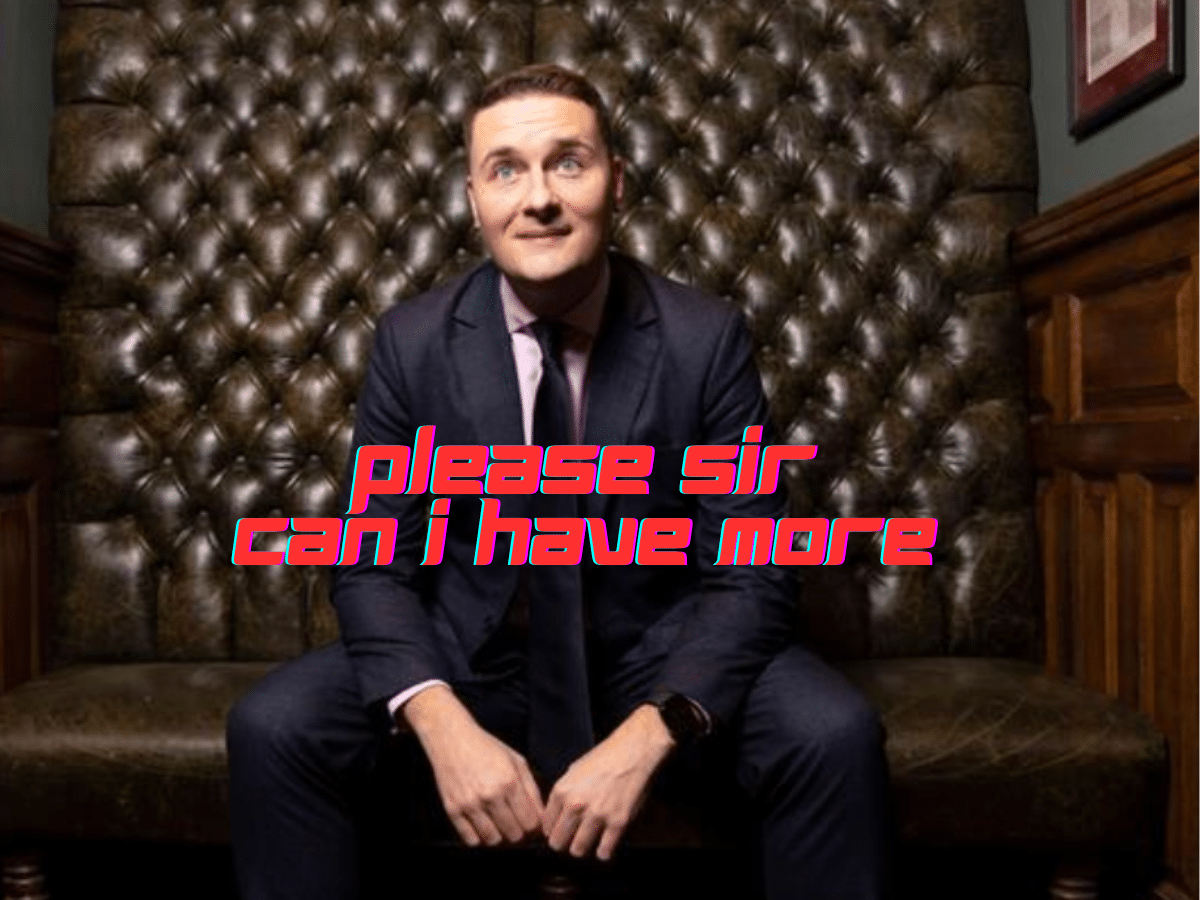
Labour health secretary Wes Streeting has taken another £55,000 from the ODP Group Ltd—which provides headhunting services to the NHS and private healthcare providers.
The firm’s owner, Peter Hearn, has longstanding links to private healthcare.
The donation
Millionaire recruitment mogul Hearn is the ultimate controller of the ODP Group. In addition to overseeing senior NHS recruitment, Hearn also works on recruitment for private healthcare providers. This dual role is particularly interesting, as the NHS and private providers are in competition for staff.
Lobbyists and firms with private healthcare connections have brought in over half a million pounds to Labour’s cabinet since 2023.
That’s on top of a £4m donation to the party from Quadrature Capital, which has significant investments in private healthcare. More broadly, MPs have accepted £2.7m in donations from private healthcare linked companies or individuals since 2023.
This is not the first donation Streeting has accepted from a Hearn-linked company. In 2023, he took £48, 000 from the OPD Group, according to the National (Scotland). in donations from another company Hearn controls. And the Financial Times has reported that, through seemingly shell companies, Hearn previously donated over £1m to Labour and prominent individual MPs like Streeting from between 2014 and 2023.
Labour is a “party for the rich”
Scottish Greens co-leader Gillian Mackay said that Labour is a party for the “rich,” betraying its working class origin story.
Once again, the Labour Party are showing the public that they are the party for the rich, leaving working people and families in the lurch. While Labour takes donations from those that profit from sickness and bad health, the Scottish Greens will continue to stand up for an NHS that is fit for purpose, that everyone can use and is free at the point of use Voters across Scotland have a chance on May 7 to finally end the status-quo, and vote for a party that will make change happen. A political system that finally works for people, not for profit.
SNP MSP Clare Haughey added:
It is high time the Labour Party came on clean on whether its health policy is being shaped by patient needs or lining shareholder pockets
It’s no wonder private healthcare-linked firms are donating to Streeting. The Labour prime minister said in January 2025 that the government will increase private provison of NHS services by 20%. But in some areas it has already increased by significantly more than that.
Featured image via the Canary

Your Party (YP) has once again dragged its feet in establishing processes and structures since its inaugural conference in November. As a result, membership have grown frustrated at being unable to stand Your Party candidates in the upcoming local elections.
4,850 councillor seats will be up for grabs on May 7, with projections suggesting Reform will be a significant threat at the ballot box. The Green Party look set to be the real competition to the far-right, as YP appears set to miss the starting pistol.
However, socialists across the country are wary of the Green Party’s broad-church approach. After all, they justifiably fear it could follow a similar path to Labour – ultimately capitulating and abandoning its left-wing socialist base once in power.
As a result, Your Party members have refused to allow a failure of leadership to prevent socialist candidates getting elected. Forming their own independent groups and standing without the party machine behind them, they intend to fight the far-right in their communities themselves.
From the north of England to the south, socialism intends to be firmly on the ballot across the country.
Your Party in the South
Groups have formed in North Somerset, North Devon and Torridge, East Herts, and West Essex, indicating a growing wave of socialist energy at the grassroots level across the South. These areas have typically alternated between the Liberal Democrats, Conservatives, Greens and Labour, but socialist candidates now intend to give the established parties a serious challenge.
Championing socialism under a Trade Unionist and Socialist Coalition (USC) banner, Paul Lenihan will be standing in Harlow in Essex.
The fact people who could have stood as Your Party candidates are standing under other organisations tells us something important. It underscores an inescapable reality: where there is the political will, there is always a way. The leadership of Your Party must take heed.
We also see a dogged perseverance in the London region, where we find the Camden People’s Alliance and Haringey Socialist Alliance. Both have told the Canary that they are coordinating with other progressives and setting up non-compete agreements to prevent the left vote from splitting unnecessarily.
Andrew Feinstein co-founded Camden People’s Alliance (CPA) alongside local activists and will be supporting six local candidates in the election. Working with other progressives to stop pointless infighting and push the left forward in unity, CPA are hoping to keep the far right out of Camden.
Having previously helped found MOU Ltd as a director, they have grown disillusioned with YP due to petty factionalism. No surprise, really – as Feinstein explained below, the crucial goal must be to kick Labour off our councils:
Hi For what it’s worth, I am not a member of YP. Even though I was very involved in the initial discussions I eventually never actually joined as a consequence of the factionalism & a number of other issues. I am working locally in Camden with the Camden Peoples Alliance. We have… https://t.co/z5Nu2pn9Hm
— Andrew Feinstein (@andrewfeinstein) March 15, 2026
YP endorsement for Haringey Socialist Alliance
We have also learned that there is an endorsed group in London that will have official Your Party councillors standing for election: the Haringey Socialist Alliance (HSA). HSA have six councillors up for election across three wards. In Bruce Castle, the candidates are Amelie Cooper and Paul Burnham; in Northumberland Park, Alison Davy and Gary McFarlane; and in West Green, Meryem Ulger and John Sinha.
Crucially, HSA told the Canary that they maintain a functioning working arrangement with their local Greens, ensuring socialists do not compete against one another. This display of respect and shared purpose will work to genuinely unite people over and above party-political interests – a lesson YP would do well to take on board.
London has been a particular hub of activity for socialist organising, with other groups also contesting the elections in their areas as independents.
The Enfield Community Independents, led by Khalid Sadur, will be hot on the doorsteps, engaging with their local community ahead of the ballot. In addition, the Southwark Independent Socialists are fielding candidates as well as East London’s Waltham Forest.
There is also an impressive assembly of socialists participating in the All-London Delegate Assembly (ALDA).
“People are angry”
Jacob Garnham-Warnock of Southwark Independent Socialists proudly stated that their YP branch is “strong and successful,” built last year by three DIY groups of YP supporters. Showing ingenuity, the group collected their own database of members and have focused their energy on a high-need ward in Old Kent Road.
Highlighting that the area has the “highest concentration of social housing” within a local authority with the “highest proportion” of social housing outside of Birmingham, Garnham-Warnock told the Canary:
We have registered a political party with the electoral commission, because we realised that the Your Party headquarters might fail to put an appropriate system in place, either on purpose or through a kind of malign neglect. We were right.
We have been out campaigning every weekend for the last month and are getting a noticeably enthusiastic response. People are angry. They are angry that rent is going up. They are angry that housing repairs are not being actioned. They are angry at the lack of facilities in the area. And they are angry that developers are building expensive flats that they know are not for them.
It is undeniable; Your Party members show they will not accept any excuses for not being ready. In Your Party’s absence, socialist candidates are set to be strongly represented in the upcoming local elections. Thankfully, this signals a coordinated and organised effort ready to mount a significant challenge to Reform UK.
Heading up north
Independent socialists are also fighting the far-right in our northern communities. Mike Forster of PACE in Huddersfield is sick to the back teeth of their local Labour council. Having been unable to secure official YP endorsement as previously hoped, Forster has been working hard in his community to put forward genuine socialist candidates for election.
Speaking to what can be achieved by principled, community-focused activism, Forster said:
I am a long-standing community campaigner and socialist in Huddersfield, best known as Chair of the Hands Off HRI campaign, which successfully pushed back management plans to close the hospital and A&E. The campaign was launched in 2016, continuing until 2020 when it was wound up during lockdown.
During that time, we raised enough money to bring a successful legal challenge and had numerous lobbies, demonstrations and public fundraising gigs. Our success was down to the huge public support we attracted. The outcome was to not only save our hospital, but also to secure a brand new A&E!
Finishing:
We cannot go on like this and need elected councillors who will stand up and fight for local communities and services.
In the midlands, Harris Khaliq is standing in Ward End fighting Labour in Birmingham. Not too far away, David Hitchmough is representing Knowsley Independents with Steve Guy putting his arguments to voters in their community in Kirkby.
Furthermore, a socialist group in Warrington has completely run out of patience and are now looking to formalise as the Warrington Socialist Alliance in the coming weeks. Little is known for candidates in Wales and Scotland, who have largely been abandoned by YP altogether.
YP springing into action, apparently
Nevertheless, whilst writing this article, we have become aware of groups receiving emails from Your Party awarding their endorsement in line with certain conditions. YP state that they cannot endorse individual candidates until they have seen due diligence checks. With time marching on, it is hard to imagine many will manage to tick all the bureaucratic boxes to get full approval from up high.
Needless to say, our criticism of Your Party has clearly lit a fire under them. That said, if only a few candidates secure endorsement, it is unlikely to make a significant impact in time for the elections.
For instance, one group who have achieved endorsement are good friends of Corbyn; Sam Gorst and Alan Gibbons of Liverpool Community Independents. Coincidentally, they don’t actually have an election to contest until 2027.
Of further concern, their email touts “campaign coordination with Jeremy Corbyn” – but makes no mention of Zarah Sultana, fellow co-founder and MP. Staying true to form, it reads like yet another slap in the face to Sultana and grassroots socialist members.
Your Party—which once promised hope—is now a wrecking ball, destroying any chance of a united front against billionaire-funded racist right-wing parties.@MaddisonW92 reports.https://t.co/46Fmhx9zC0
— Canary (@TheCanaryUK) March 24, 2026
Factionalism can only be defeated by true unity
Therefore, it is clear that factionalism remains alive and well in YP, with Corbyn and his allies firmly positioned to secure endorsements for their own factions.
But refusing to be sidelined, a determined cohort of socialists has dug in, standing their ground and refusing to go quietly. Undeterred by YP’s bureaucratic obstacles, they are stepping up to defend their communities against far-right division and hostility.
This marks a powerful display of solidarity and genuine courage – exactly the kind of grassroots spirit the Canary proudly supports.
Keep pushing forward, comrades. The fight for our communities has only just begun.
Featured image via the Canary

Israel’s opposition leader, Yair Lapid, is trending online for clapping back at Netanyahu. He accuses Israel’s prime minister of fighting multifront wars with “no strategy” that will “collapse” the army.
Israeli opposition leader Yair Lapid has criticised Netanyahu’s government for fighting multi-front wars ‘without a strategy’, and says Israel’s military forces are ‘in collapse’ as they continue attacks in Iran, invade southern Lebanon and occupy Gaza and the West Bank. pic.twitter.com/DtTvSK9vBG
— Al Jazeera English (@AJEnglish) March 27, 2026
Yair Lapid shared a post—viewed by 1 million users— warning that Israel is facing a security disaster and that the military is “on the verge of collapse.”
He cited Chief of Staff, Lt. Gen. Eyal Zamir, who sounded the same alarm to political-security cabinet. In a veiled message to Netanyahu, he Lapid said:
Anyone who heard him yesterday will not be able to say, “I didn’t know.”
‼️ Former Israeli PM Yair Lapid says Chief of Staff Eyal Zamir warned the cabinet the IDF is “on the verge of collapse,” citing exhausted reserves & overstretched forces.
Lapid said, Zamir told the cabinet:
•“I’m raising 10 red flags.”
•“The IDF is on the verge of collapse.”… https://t.co/7IWIuP17oc pic.twitter.com/jQhldC3AIj— Hala Jaber (@HalaJaber) March 27, 2026
According to Lapid, Zamir raised multiple red flags, citing a reserve system under strain, soldiers stretched beyond their limits, and exhausted reservists on their sixth and seventh rotations. Zamir reportedly warned that troops are also being diverted to the West Bank to address settler violence.
Haaretz reported that Israel was losing its sway over Trump, according to the IDF chief.
Israel losing sway over Trump on Iran war course as IDF chief raises ’10 red flags’https://t.co/e1ZJOuBHWr
— Haaretz.com (@haaretzcom) March 26, 2026
The IDF could soon collapse if there is no solution to the shortage of manpower, IDF Chief of Staff Lt.-Gen. Eyal Zamir warned in remarks during a security cabinet meeting held on Wednesday.
Reporting by: @keshet_neev @Jeremybob1 https://t.co/DZ4TN6nDzv— The Jerusalem Post (@Jerusalem_Post) March 26, 2026
Manpower shortages have also been emphasised by Israeli media outlets and social media users alike.
IDF Chief of Staff Lt. Gen. Eyal Zamir warned during a security cabinet meeting that the military will “collapse in on itself,” as it faces mounting operational demands and a growing manpower shortage.https://t.co/nIrsgIZcQ2 pic.twitter.com/EfHkrwzYYh
— Glenn Diesen (@Glenn_Diesen) March 26, 2026
However, some were doubtful that Lapid would have behaved differently from Netanyahu if he were in power.
Journalist Chris Fitzgerald argued that Yair Lapid’s criticism is hypocritical because Lapid would pursue the same approach as Netanyahu if he were in power. He added that support for the empire and colonization is not limited to one side of Israeli politics.
What’s so idiotic is Lapid as leader would do the exact same thing as Netanyahu.
Empire and colonisation are bipartisan in Israel. https://t.co/HR270lRNSR
— Chris Fitzgerald (@ChrisFitzMelb) March 27, 2026
Featured image via the Canary

Poverty levels have increased slightly during the first year of a Labour government, new data from Households Below Average Income (HBAI) shows.
Half a million more in poverty
Comparisons between data gathered between 2023/24 and 2024/25 show that half a million more people are living in poverty. This amounts to around one in five people (20%), or 13.4 million.
The data further reveals there are 5.5 million families living in poverty where one person has a disability, or 4 in 10 of all people in poverty. 4 million children are also living in poverty.
Pensioner poverty has also increased. This follows one of the most controversial policies announced by Labour when it entered office in 2024: its cuts to Winter Fuel Payments. In 2025, the government u-turned on the decision. Nevertheless, there been an increase of 200,000 pensioners living in poverty.
London and Wales worst affected
Poverty is highest in London and lowest in the North of Ireland.
Both London and Wales have seen increases in overall poverty and child poverty. Meanwhile, the West Midlands and South West have seen reductions.
The number of people with very low food security has also fallen overall, but 3.1 million people still went hungry because of a lack of money. This figure remains over 40% higher than it was in 2021/22.
Household incomes have risen on average over the last year, both before and after housing costs. However, they have fallen further for those on incomes already in the bottom 10%, remaining below 2021/22 levels.
Peter Matejic, chief analyst at the Joseph Rowntree Foundation, said:
The latest statistics show overall poverty rose slightly and there was little change in child poverty in the first year of the Labour government.
We expect to see the number of children growing up in poverty fall as a result of the government’s decision to remove the two-child limit from April 2026. That will mark a much-needed improvement, but our projections show progress flatlines after that and more will be needed to make sure child poverty continues to reduce.
The bottom line is that far too many families are still in poverty.
A change in method
The HBAI has changed its method for gathering data from survey responses to administrative data. This is deemed to be more accurate and represents the most significant change in method for a generation.
Better measurements may help quantify the scale of the issue, but they do nothing to improve anyone’s situation.
People living on a low income in the UK continue to struggle to afford the essentials. The Canary recently reported on new research by the Social Workers Union, which revealed many social workers are paying for basic essentials out of their own pockets to help their service users.
Food bank use also remains close to record levels, with many continuing to experience the stigma and trauma of living in poverty.
Featured image via the Canary

London-based law firm Hodge Jones & Allen LLP has written to the Metropolitan police challenging its revised policy on Palestine Action support. The firm has warned that any arrests the Met makes under the policy are likely to be unlawful.
The letter, written on behalf of campaign group Defend Our Juries, comes after a shock U-turn from the Met. Late on 25 March, the force announced that it will resume arrests under Terrorism legislation for people holding signs referencing support for protest group Palestine Action. This is despite the High Court ruling in February that the proscription of the group was unlawful.
This is a complete departure from the Met’s previous position. In an initial response to the ruling, the Met announced in February that it would stop making arrests of people showing support for the group. It said it would focus on collecting evidence instead.
While the Court stayed the effect of its judgment pending a government appeal, Hodge Jones & Allen argues that any arrests in the interim would be unlawful. This places significant pressure on the Met to justify its new position.
The letter states:
The Metropolitan police’s position is based on a misunderstanding of the legal position and will produce profoundly unfair results and unlawful arrests.
The decision of the High Court to ‘stay’ the effect of their ruling is not determinative of the legal position.
The Metropolitan police should have due regard, when assessing whether to conduct an action such arrest, to the fact that the High Court has unanimously found the legal position to be unlawful. Pending any successful appeal, that is an authoritative statement of the legal framework at present.
The letter highlights that courts have already adjourned all trials connected to the Defend Our Juries “Lift the Ban” campaign. Prosecutors themselves have indicated that proceedings should not continue until the legal framework is clarified. This would make any arrests futile as well as unlawful, since prosecutors can’t charge or conclude cases.
The letter continues:
In view of the difficulties in any case being charged or being concluded with a trial, we can see no merit in any arrest. We submit as follows:
Firstly, we fail to see how any arrest allows an officer to have reasonable suspicion that an offence has been committed nor that the “necessity” condition under s24 PACE 1984 is fulfilled. If an officer considers that there may be an offence, then the previous policy of monitoring and collecting evidence is sufficient.
Secondly, those seeking to take part in the “Lift the Ban Campaign” are exercising their rights under Article 10 of the European Convention on Human Rights.
It is clear that this is a campaign aimed at de-proscription. Any arrest is an interference with that right, and in these circumstances cannot be considered proportionate.
Therefore, we regard any arrest as unlawful.
Why is expressing support for Palestine Action suddenly arrestable again?
The Met’s previous position was that a “focus on gathering evidence”, rather than arrests, would be “the most proportionate approach”. It is unclear what has prompted the force to change their assessment of proportionality, other than recent correspondence with Defend Our Juries.
On 19 March, Defend Our Juries wrote to the Met commissioner, Mark Rowley, to raise the case of a woman arrested on 15 March. Police arrested her for holding a sign expressing support for Palestine Action, in breach of the Met’s policy at the time. The group was not consulted prior to the policy change announced on 25 March, and further mass arrests under Terrorism legislation are now expected in Trafalgar Square on 11 April, when Defend Our Juries’ next silent vigil is planned.
As the letter highlights, the only basis for these arrests is a law which the High Court has ruled to be unlawful. Hodge, Jones & Allen is seeking urgent assurances from the Met that participants in the “Lift the Ban” campaign will not be arrested while the legal position remains unresolved.
A spokesperson for Defend Our Juries said:
The Met has lost the plot. The ‘Lift the Ban’ campaign against the unlawful proscription of Palestine Action was vindicated by the High Court, and yet they’re still going to arrest us on terrorism charges for peaceful protest even now.
Rather than admit that the arrest of a woman under the Terrorism Act on 15 March breached their own policy, they have now changed the policy to try to make it fit retrospectively. That’s just embarrassing.
The Met will now waste even more public resources on arresting hundreds more people for terrorism charges on the basis of a proscription order which the High Court has already ruled unlawful.
How can they believe that’s proportionate or in the public interest? Nothing has changed since they said on 13 February that stopping arrests was “the most proportionate approach we can take.
The deputy assistant commissioner stated that they needed to give ‘clear guidance’ to their officers. Nothing says ‘clear guidance’ like regularly changing your mind over the unlawful arrests of thousands of peaceful protesters holding paper signs.
Featured image via M Lyman / Defend Our Juries

The British military trained nearly 2000 overseas troops in its defence academies between 2017 and 2025. That figure includes personnel from 108 countries. Shockingly, fourteen of those countries are on the UK’s own human rights watchlist.
The British-based Action on Armed Violence (AOAV) reported on 24 March 2026 that the UK considers those states to have:
significant issues relating to democracy, governance or civil liberties.
Yet the UK still trained them anyway…
The so-called International Defence Training (IDT) programme is meant to:
promote professionalism and improve standards among partner forces.
AOAV said they fear the courses risk:
strengthening security forces accused of abuses.
British military teaching dictatorships
The countries include Democratic Republic of Congo, Somalia, and Uzbekistan. AOAV also said there were obvious gaps in the figures. For example:
Israel does not appear in the dataset, despite the MoD previously confirming that a “limited number” of Israeli personnel have been trained in the UK. No explanation is given for the omission.
AOAV said the IDT permits:
foreign military personnel to attend courses at UK institutions including the Royal Military Academy Sandhurst and the Defence Academy in Shrivenham.
Training ranges from basic officer instruction to specialist and postgraduate courses. The government says the programme helps build long-term relationships and encourages adherence to international norms.
Adding:
An MoD spokesperson has previously said that all training is “carefully assessed” and aligned with UK values.
Real risk of violations
Dr Iain Overton, Executive Director of AOAV, said:
There is a real risk that UK training may end up enhancing the capabilities of forces that go on to commit violations.
In September 2025 Declassified UK revealed the UK was still training Israeli soldiers at the Royal College of Defence Studies (RCDS) two years into the genocide:
The soldiers trained at RCDS include Colonel Yaniv Asor, the current chief of the Israel Defence Forces (IDF) Southern Command who oversees military operations in Gaza.
Asor was recently accused by the head of the Israeli air force of responsibility for mass civilian casualties in Gaza.
Charlie Herbert, a retired British army general, told Declassified at the time:
That it has taken so long to bar IDF officers from the prestigious Royal College of Defence Studies is a disgrace.
Even now, it is not sufficient to ban them from 2026. Instead all IDF personnel currently studying or training at UK military establishments should be expelled immediately.
The British government is speaking out of both sides of its mouth again. Its proclaimed commitment to human rights and a mythical ‘rules-based international order’ have been sorely exposed by support for Israeli genocide in Gaza and an illegal US attack on Iran. The fact the UK is still training authoritarian regimes alongside all this should shock precisely nobody.
Featured image via the Canary

Staff and fans of Ipswich Town football club have complained bitterly at an unannounced stunt to promote racist far-right Trump fan Nigel Farage. Farage published a promotional video for his politics filmed as he stood on the Portman Road pitch. The club then had insisted it is “apolitical” and denied “formally” inviting Farage to visit the club, but details that have emerged since refute the denial, showing that:
👉An associate of CEO Mark Ashton sent an invite to Nigel Farage
👉Farage was met by Marcus Nash, director of media and communications
👉Ashton and COO Luke Werhun had lunch with Farage
👉The club gifted Farage SIX ‘Farage 10’ shirts
👉 Employees outside a select few were unaware of the stunt
👉Members of staff have made complaintsThis is despite the club claiming they were ‘apolitical’ in a statement made on Wednesday.
Farage’s lunch was provided free – the latest in a long line of freebies provided to the racist bigot by wealthy and often foreign donors. He also failed to declare more than £380,000 in outside earnings within the legally-required timeframe.
Nigel Farage’s visit to Ipswich Town’s Portman Road stadium has prompted a significant social media backlash.
Ipswich insist Reform UK and Farage were not formally invited by the club … but The Athletic has been told a slightly different story.
Free to read… pic.twitter.com/ojBbQQRmH4
— The Athletic | Football (@TheAthleticFC) March 24, 2026
Club staff have complained and fans groups have expressed their outrage on social media. Supporters’ group Blue Action accused bosses of letting the club they love be:
egregiously exploited by a political figure for personal gain and those in charge seemingly allowing and even welcoming it … risk[ing] alienating large numbers of the fanbase and fomenting division.
Featured image via the Canary

Mexico’s iconic Azteca is set to reopen. That’s good news for sleep-deprived stadium director
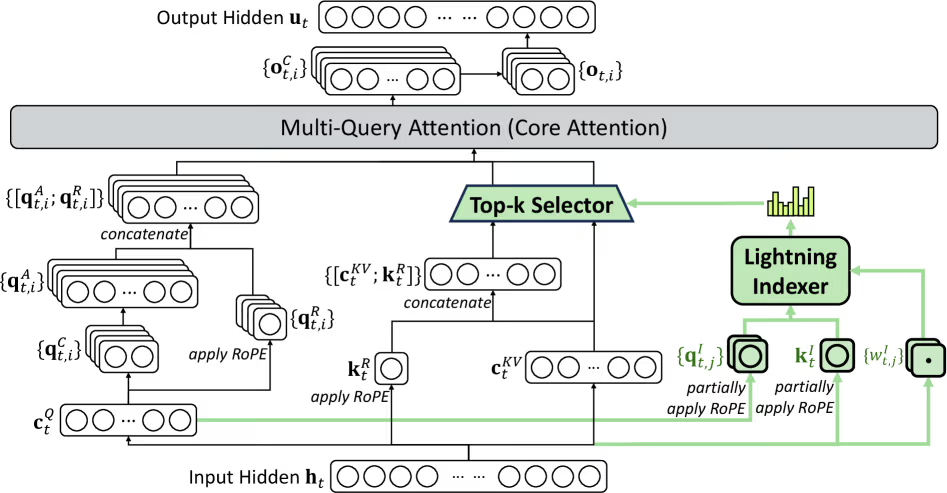
IndexCache, a new sparse attention optimizer, delivers 1.82x faster inference on long-context AI models
Tom Felton has reached out to “Harry Potter ”TV“ ”series' Draco Malfoy actor — but doesn't want to give him advice


-
 Crypto World7 days ago
NIO (NIO) Stock Plunges 6.5% as Shelf Registration Sparks Dilution Worries
-
 NewsBeat2 days ago
Manchester United reach agreement with Casemiro over contract clause amid transfer speculation
-

 Crypto World6 days ago
Best Crypto to Buy Now: Strategy Just Spent $1.57 Billion on Bitcoin During Fear While Early Investors Quietly Enter Pepeto for 150x Potential
-

 Crypto World6 days ago
Bitcoin Price News: Bhutan Sells $72 Million in BTC Under Fiscal Pressure, but the Smart Money Entering Pepeto Sees What the Market Does Not
-

 News Videos2 days ago
Parliament publishes latest register of MPs’ financial interests
-

 Sports4 days ago
Remo Stars and Kano Pillars Strengthen Survival Hopes in NPFL
-

 Sports4 days ago
Gary Kirsten Accuses Pakistan Cricket Board Of ‘Interference’, Mohsin Naqvi Responds
-

 Business5 days ago
No Winner in March 21 Drawing as Prize Rolls to $133 Million for Next
-

 Tech5 days ago
Give Your Phone a Huge (and Free) Upgrade by Switching to Another Keyboard
-

 Tech5 days ago
AI enters the chat: New Seattle dating app relies on tech to facilitate meaningful human connections
-

 News Videos4 days ago
Ch 9 Financial Management Part 1 | Detailed One Shot | Class 12 Business Studies Boards 2026
-
Business7 days ago
Columbia Sportswear enters $500 million credit agreement with JPMorgan Chase
-

 Tech6 days ago
Today’s NYT Connections Hints, Answers for March 22 #1015
-

 Business1 day ago
Instagram, YouTube Found Responsible for Teen’s Mental Health Struggle in Historic Ruling
-

 Business5 days ago
Will Duke Basketball Win It All? Duke Basketball Enters Second Round as Third Favorite to Claim NCAA Title
-

 Sports5 days ago
2026 Kentucky Derby horses, odds, futures, preview, date: Expert who hit 12 Derby-Oaks Doubles enters picks
-
 NewsBeat5 days ago
Update on Wisbech river crash as search for teenage boy enters fifth day
-
 Entertainment4 days ago
Cynthia Bailey Dishes on ‘RHOA’ Season 17, Discusses Kandi
-
 NewsBeat2 days ago
Tesco is selling new Cadbury Dairy Milk bar and people can’t wait to try it
-

 Tech4 days ago
Samsung will soon let you control smart home devices from your car’s dashboard
You must be logged in to post a comment Login