
Politics
Majority Of Voters Want Starmer To Resign Over Mandelson Scandal

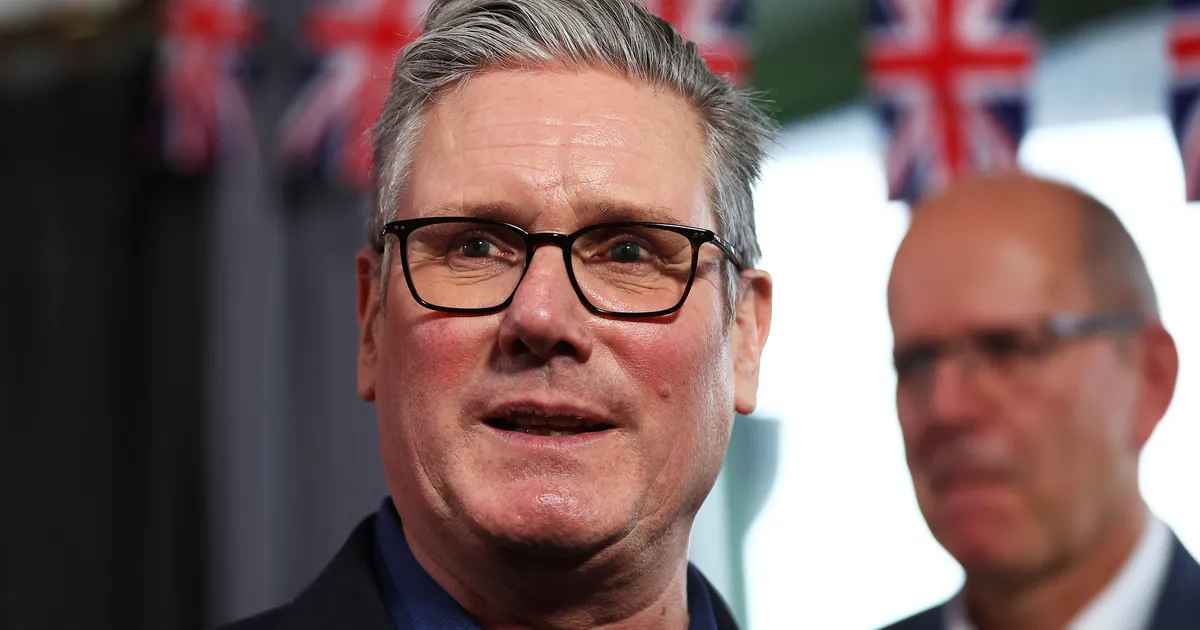
More than half of voters believe Keir Starmer should resign as prime minister, a new poll has revealed.
The damning findings pile fresh pressure on the PM amid the ongoing scandal over his decision to appoint disgraced Peter Mandelson as the UK’s ambassador to Washington.
The former Labour peer faces a criminal investigation into allegations he passed market-sensitive information to the convicted paedophile Jeffrey Epstein when he was business secretary between 2008 and 2010.
Starmer has accused Mandelson of “betraying” Britain and lying to him when he was being considered for the ambassador’s job.
According to the Opinium survey, 55% of British adults think Starmer should stand down, compared to just 23% who think he should stay in post.
Some 56% believe Starmer should have anticipated the controversy surrounding Mandelson and not made ambassador, with just 15% thinking the decision was reasonable based on what was known at the time.
More than one-third (37%) of people who voted Labour at the 2024 general election believe he needs to go, with 48% want him to stay in post.
Starmer’s overall approval rating has also plunged to an all-time low of minus 44, the poll found.
Opinium’s James Crouch said: The deepening fallout from the Mandelson appointment has pushed Starmer’s rating even lower, with most voters now questioning his judgement on the appointment and placing equal blame on the prime minister and his advisers.”
The findings are even worse for the PM than a separate poll by YouGov, which found that 50% of the public want him to resign.
One senior Labour source told HuffPost UK that he believed Starmer would quit if the release of government documents into Mandelson’s appointment show he ignored warnings about his suitability for the role.
The source said: “If the report shows he ignored advice, I’m sure he’ll resign. That’s the honourable way and he still has that notion within him.”


The American aircraft carrier USS Gerald Ford could be out of action for over a year. The nuclear-powered vessel has been at sea for nine months. A major fire and the wear and tear of continuous operations might have taken her out of service long term.
The Ford was sent to Crete after being damaged in a fire, as the Canary reported:
Some open source accounts and legacy media claim the fire took 30 hours to control and affected hundreds of sailors.
Defence analyst Jack Buckby wrote in 1945 magazine:
Between fire damage and deferred maintenance, on top of the long deployment, there is a real risk that the carrier could be out of action for an extended period of time – potentially as long as 12 to 14 months.
Adding:
At a time when U.S. carrier availability is already under pressure, the potential loss of the Navy’s most advanced platform could prove to be a significant problem.
The Ford played a key role in the 3 January attack on Venezuela. She was then sent back to the Gulf without a break. Trump’s decision to do so has led to serious morale and technical issues.
The US and Israel attacked Iran first on 28 February without provocation. Iran was offering unprecedented concessions in negotiations at the time. The Pentagon has since stated there was no imminent threat from Iran. And the UN’s atomic watchdog, the IAEA, has said there is no evidence Iran was developing a nuclear weapon.
USS Gerald Ford and the limits of empire
The US appears to be losing in the war with Iran. The Ford’s withdrawal encapsulates some of those issues.
Buckby wrote:
The ship has been required to sustain high sortie generation and integrate with other U.S. air assets, and there has been continuous operational pressure placed on the platform in a clearly high-threat environment. The deployment has also been extended multiple times, pushing the ship toward what may become one of the longest deployments in modern Navy history.
A corrosive mix of wear and fatigue now appears to be heavily impacting the US attack on Iran:
That has all taken a measurable toll on the vessel, with persistent issues with onboard systems like its plumbing, along with broader concerns about crew fatigue and equipment wear after months without full maintenance. Put simply, the Ford has been operating at a level that accelerates degradation across its mechanical systems, but also human performance.
Maintenance on supercarriers like the Ford can be a matter of months. But it has been known to take much longer:
Under normal conditions, post-deployment maintenance for a nuclear-powered aircraft carrier can take several months, even without major damage. Historical examples show that complex overhauls or major repair periods can extend well beyond a year, depending on scope and system upgrades.
The Trump administration seems to be running out of road. The US has no discernible plan. A majority of Americans oppose the war. The Iranian government remains defiant, while the likes of China have watched as the US bogs itself down in another runaway war.
US imperial decline has been a topic in International Relations courses for decades. Broadly speaking, the theory went that while the US economy declines, it remains militarily preeminent and more inclined to use violence to achieve its aims – but will fail. With the flagship US carrier out of the fight, it looks like we have ringside seats for the crumbling of US empire.
Featured image via the Canary
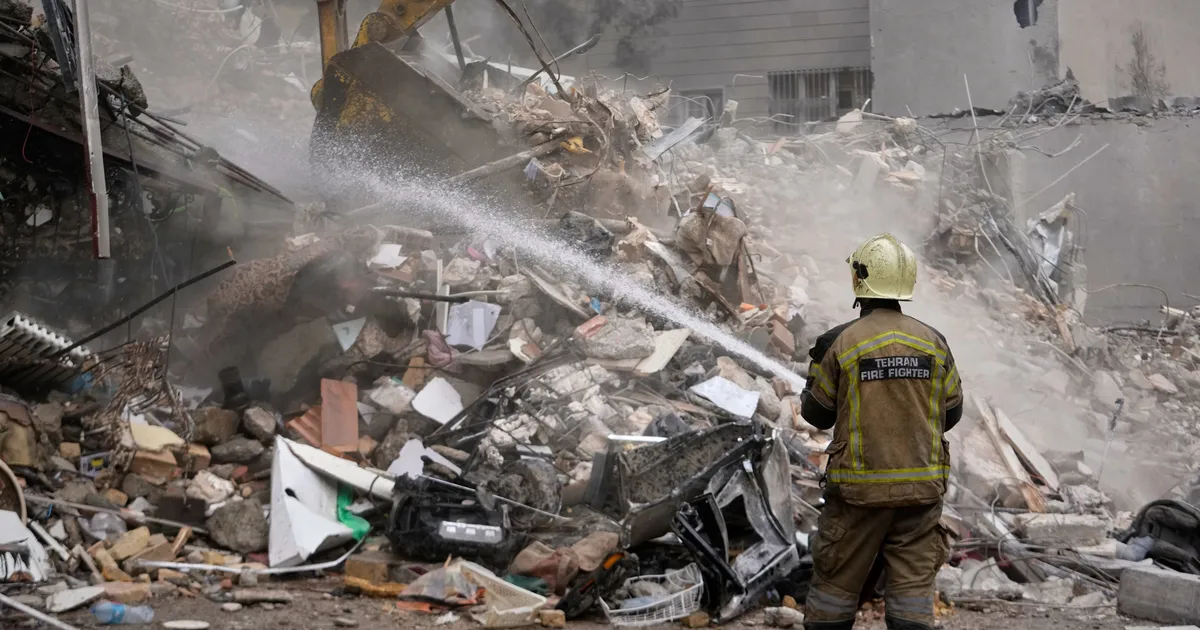
Keir Starmer has said America and Israel’s bombing of Iran is “not our war” as he defending his approach to the conflict.
In comments which risk further angering Donald Trump, the prime minister said the UK is “not getting dragged into” the war, despite giving US jets permission to fly their missions from RAF bases.
He also repeated his claim that there is no “lawful basis” for Trump’s war or “a viable and thought-through plan” for what comes next.
His comments, while giving evidence to a committee of senior MPs, came after Trump backed down over his threat to “obliterate” Iran’s power plants unless they re-open the Strait of Hormuz.
The US president said his decision followed “very good and productive conversations” with Tehran over the weekend.
Starmer said: “On Iran, the principles I’ve applied throughout is that for any UK action, there must be a lawful basis, and a viable and thought-through plan. That is why we didn’t join the original offensive strikes.
“It is why we did take defensive action, collective self-defensive action on our own behalf, when it came to the work that we are doing with our allies in the region, taking missiles out that are coming from Iran. It is also why we allowed our bases to be used for the purposes of collective self-defence.
“But that’s an important divide. So collective self-defence, yes, we’ve taken appropriate action. But this is not our war, and we are not getting dragged into this war.”
Trump has made a number of outspoken attacks on Starmer since the war began more than three weeks ago.
And on Sunday, he posted on Truth Social a Saturday Night Live UK sketch which portrayed the PM as weak, indecisive and afraid of the president.
Asked how he is personally facing the challenges posed by the unpredictable president, Starmer said: “I will remain laser-focused on what is in the British national interest.
“A lot of what is said and done is undoubtedly said and done to put pressure on me, I have no doubt about that, I understand exactly what is going on.
“But I’m not going to be wavering on this. I’m the British prime minister and my job is to be absolutely focused on what is in the British national interest.
“That has served me well in recent weeks and that is the principle that I’ll continue to adhere to going forward, taking difficult decisions, notwithstanding the pressure than comes from a number of different places.”
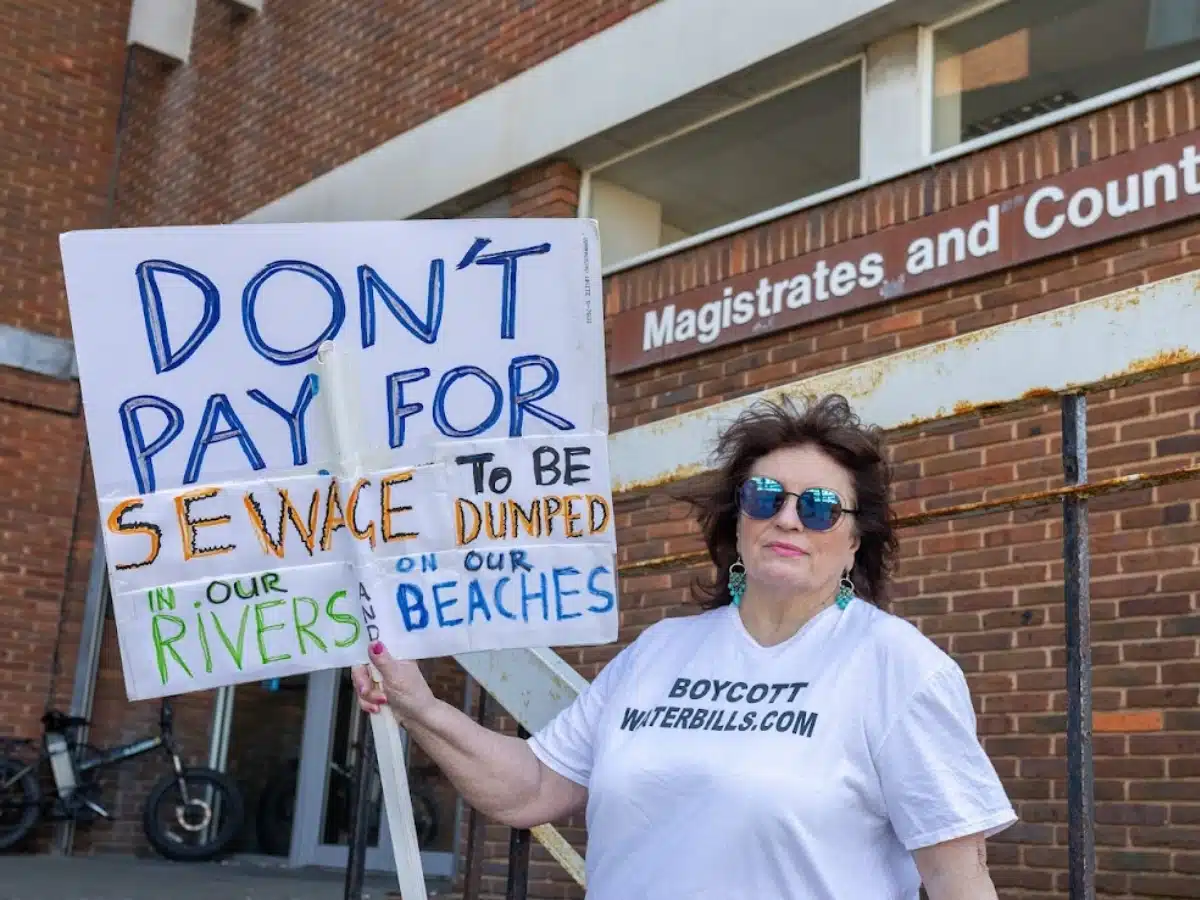
Campaigners for the boycott of water bills gathered in Margate on Thursday 19 March. They were protesting ahead of longtime boycotter Julie Wassmer’s court showdown against Southern Water.
Supporters came from all part of Kent including Whitstable, Broadstairs, Deal, Folkestone as well as from Sussex, London and Oxford. They were united in their condemnation at the dire state of the water industry.
Crime writer and environmental campaigner Wassmer has withheld payment for the wastewater part of her bill for over four years. She gave an impassioned speech arguing that the state of water is both a national and an international disgrace.
She said she intends to argue in court on 26 March that regulation has failed. She’ll claim there’s no accountability for poor service and this, in principle, contravenes Article 6 of the Human Rights Act:
It cannot be right that in a modern civic society consumers are forced to pay for services which are not being provided at all, or which seriously pollute our seas and waterways and damage our precious environment – while denying us a means of challenging this effectively through the legal system.
I’d like to see the back of every water company CEO in this country for whom, by the way, the average pay is £1.7m a year – while OUR bills have gone up 40% in real terms since privatisation and are set to increase far more.
The broken water industry
Johnbosco Nwogbo is lead campaigner at We Own It, an organisation that campaigns for public ownership of public services. He queried what it was that Southern Water wanted Julie to pay for:
Southern Water dumped sewage for about 304,000 hours in our rivers and seas in 2024. Is that what they’re asking Julie to pay for, so they can continue to dump sewage in our rivers and seas? They paid out £2.3 billion in dividends to their shareholders since the water company was privatized – it that what they’re asking Julie to pay for?
Nwogbo pointed out that when Southern Water went private in 1989 it had no debt, but it has since taken on £5.7bn of debt. This money clearly hasn’t been invested in infrastructure, but rather paid out in dividends to shareholders. He said:
Instead of people like Julie finding themselves in court defending themselves, Southern Water should find itself in court!
And he added that there is currently a proposal in front of the environment secretary to try to ‘save’ failing Thames Water from bankruptcy. This deal would allow the company to pollute illegally until 2040. He insisted the government should reject the deal and take Thames back into public ownership. Otherwise fellow water companies will simply follow suit in a race to the bottom:
Or rather, a race to the sewer!
Two Green Party councillors from Kent spoke at the event, Rob Yates and Andy Harvey.
Margate councillor Yates said he had personally investigated Southern Water by submitting Freedom of Information requests. These revealed the number of times the company had breached its permits by pouring untreated sewage into the seas. And the results formed part of a criminal case against Southern Water.
He added:
Privatisation without competition is exploitation. England and Wales are the only country in the world with a fully privatised water industry – now is the time to reverse Thatcherism.
Surge in boycott support
Katy Colley co-founded boycottwaterbills.com with Wassmer. She said that since the screening of Dirty Business, the Channel 4 three-part drama about the sewage scandal, the website had seen a surge in new signups.
She quoted submissions from a host of new boycotters from all over the country whose water companies included United Utilities, Southwest Water, Severn Trent, Thames Water and Southern Water.
These were people, she said, who had had enough of:
spiralling bills while water companies pour increasing amounts of sewage into our seas and waterways with impunity.
She insisted that for many, this was not a first step but a final resort:
because we see no other way to make a difference.
Like her, many had complained to their water company, to the Consumer Council for Water, to the Water Redress Scheme, Environment Agency and OFWAT.
At every stage we are told no, you cannot hold your company accountable for their failures. But if we’re consumers and we’re unhappy with a service we should be able to go elsewhere. We can’t because water is a natural monopoly.
We protested, we wrote letters, signed petitions. The government changed. But with water, nothing changed.
That’s why so many of us decided, that despite the potential risks, the difficulties, we’re going to use the power we have in our pockets. We’re going to withhold payment for the wastewater service part of our bill.
She says the boycott movement is now spreading rapidly with thousands accessing the site every week. Many are now cancelling their direct debits as a ‘first rung on the boycott ladder’.
She said:
Nobody is obliged to pay by direct debit, only on receipt of a bill twice a year, and direct debit is how water companies hold money on account, treating us like cash cows.
Olivia Cavanagh is from Hastings Boycotts Southern Water. She expressed her disgust at the recent bio bead spill from an Eastbourne sewage treatment plant across the Kent and Sussex coast. Ten tonnes of toxic beads were released into the sea, causing catastrophic damage to the coastline and environment. She asked:
Did Southern Water come out and say we’re sorry this has happened, we’re going to clean it up? No, volunteers and voluntary organisations came out. As usual it was left to the community and the people that care about the environment.
It’s clear that Southern Water, like all the water companies, don’t give a damn about the environment, the wildlife and the plant system.
The large and noisy protest drew dozens of encouraging honks from passing cars and trucks. Attendees said the energy and passion of the speakers was inspiring. One passerby said:
It’s encouraging to see ordinary people doing something and not just accepting this situation. With the sewage and the price increases here, you get the feeling that we are just being taken for mugs. I don’t think I would want to go to court myself, but I think I might cancel my direct debit. It’s better than nothing.
Wassmer’s case has its hearing at Canterbury County Court on Thursday 26 March at 10am.
Featured image via Andrew Hastings / Boycottwaterbills.com

The X social media platform has refused to remove a paid – indeed ‘paid partnership’ – ad by an Israel lobby group trying to crowdfund for the abduction of well-known US-Iranian academic Syed Mohammad Marandi.
The Tehran-based Marandi is well known as a commentator on Israel’s genocide in Gaza, the political landscape in West Asia and now the US-Israel illegal war on Iran. He is also well known among anti-imperialists for adroitly dismantling Western pro-imperial journalists and their tactics. As a thorn in Israel’s side, he has already been the subject of death threats from its supporters.
Now, the so-called “Terror Alarm” Israel pressure group has posted its ‘appeal’ on X – one that would rightly be the subject of criminal action if the boot were on the other foot:
This is a reprehensible post for X to allow, targeting @s_m_marandi and putting a bounty on him. It is also a “Paid partnership.” Imagine the outcry if a pro-Palestinian or pro-Iranian group did this with Israelis or Americans. Criminal charges would be filed. pic.twitter.com/CilM8a2eWN
— jeremy scahill (@jeremyscahill) March 21, 2026
The group appears to be based in Israel – and has advertised ‘work from home’ jobs for “residents of Israel and the European Union”:
WHO IS BEHIND @Terror_Alarm?
They posted a $1M bounty on X which is against TOS but @Safety hasn’t banned the acct. Why?
Terror Alarm is based in Israel with ties to Ukraine. Until recently, their profile showed:
– Israel location
– Israel phone #972
– Job openings for Israelis https://t.co/8uiYD67veG pic.twitter.com/TeB55tCIaF— GenXGirl (@GenXGirl1994) March 21, 2026
Despite Marandi holding US citizenship as well as Iranian, the US-based X platform has refused to remove the Zionist terror account:
So Terror Alarm puts the bounty on Dr. Marandi, KNOWING he is an American and @Safety hasn’t banned them? https://t.co/6ZUWovnkdB pic.twitter.com/UYUBOnPh92
— GenXGirl (@GenXGirl1994) March 21, 2026
And, as far as an Israeli account is concerned, it goes without saying that Israel is always the victim:
Hamas destroyed beautiful Gaza. IRGC is destroying beautiful Tehran. pic.twitter.com/Tgo3J0I26a
— Terror Alarm (@Terror_Alarm) March 22, 2026
Marandi posted his own response to the refusal, commenting that the people behind X are supporters of genocide and imperialism:
So, @X and @elonmusk refuse to remove this. Notice the ‘paid partnership.’ Elon Musk and his employees support terrorism, but no one should be surprised. After all, they support the slaughter of women and children across West Asia. pic.twitter.com/9EhPPm4PPk
— Seyed Mohammad Marandi (@s_m_marandi) March 21, 2026
Featured image via YouTube screenshot

!function(n){if(!window.cnx){window.cnx={},window.cnx.cmd=[];var t=n.createElement(‘iframe’);t.display=’none’,t.onload=function(){var n=t.contentWindow.document,c=n.createElement(‘script’);c.src=”//cd.connatix.com/connatix.player.js”,c.setAttribute(‘async’,’1′),c.setAttribute(‘type’,’text/javascript’),n.body.appendChild(c)},n.head.appendChild(t)}}(document);(new Image()).src=”https://capi.connatix.com/tr/si?token=19654b65-409c-4b38-90db-80cbdea02cf4″;cnx.cmd.push(function(){cnx({“playerId”:”19654b65-409c-4b38-90db-80cbdea02cf4″,”mediaId”:”066adc90-6693-43f1-8941-b98972e79ab5″}).render(“69c14b02e4b04b9b3f18f50c”);});
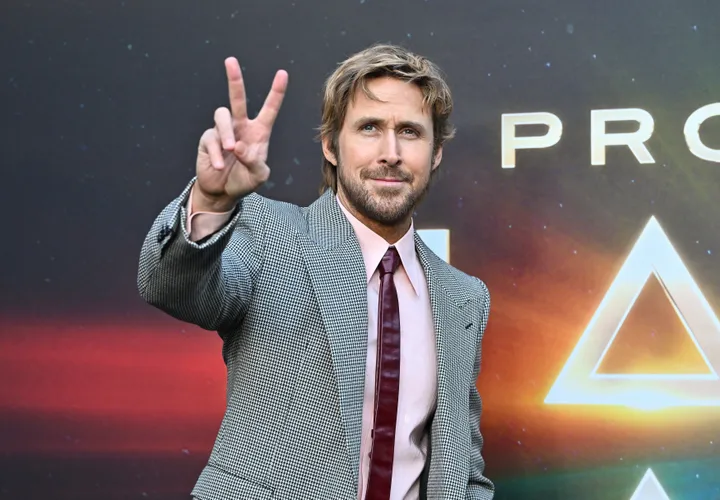
Ryan Gosling has opened up about whether he’s opting to stay in the loop as far as Gen Alpha slang’s concerned – and it’s a (polite and respectful) ‘no’ from him.
The Project Hail Mary star and Eva Mendes share two children together, Esmeralda, who is 11, and Amada, who is nine. So, it’s highly likely he’s come across ‘six-seven’, ‘chat’ and so on, in his time as a parent.
Talking to Parents about communicating with his tweens, and their use of today’s slang (which, for lots of kids, seems to change on a weekly basis), the actor revealed: “I don’t try to keep up with the slang. I think that’s their thing.
“I don’t think they want me to understand and I don’t need to. I let them have their thing. We wanted our ‘thing’ [when we were younger].”

In Project Hail Mary, science teacher Ryland Grace (played by Ryan), wakes up on a spaceship with no recollection of who he is or how he got there.
As his memory returns, he realises he needs to solve the riddle of what is causing the sun to die out and, per Sony Pictures, “an unexpected friendship means he may not have to do it alone”.
While Ryan and Eva tend to keep their children’s lives out of the spotlight, speaking about the new movie, Ryan said from a parenting perspective he is “grateful” to be able to make a story that’s not all doom and gloom.
“Being a dad, having two young kids, and I feel like everything is designed to scare them,” he said on the New Heights podcast.
“I was so grateful just as a father to get to make a story for my kids – maybe, not to be too lofty – for their generation, that reminds you of what we’re capable of as human beings.”
He added: “It doesn’t pretend that there’s not gonna be problems, but that we can solve them.”
Gen Alpha slang 101
While Ryan won’t be brushing up on tween slang anytime soon (he seems pretty busy right now anyway), if you do want to stay up-to-date with what your teens are talking about, and the online trends they’re following, here’s a quick rundown of some of the terms they’re using and what on earth they mean…
Mid
When Gen Alpha uses it, “mid” means mediocre or of disappointing quality. According to Merriam-Webster, “mid” serves to express that something falls short of expectations, or isn’t impressive.
City boy
“City boy, city boy” is the call of Gen Alpha currently, with TikTok creator and teacher Philip Lindsay noting kids in his class have been saying it. The teacher suggested the phrase doesn’t really mean anything and kids are just shouting it out at all opportunities – a bit like six-seven.
Unc
This is short for “uncle” – and, per Merriam-Webster, it’s “often used humorously to indicate old age” and may imply “someone is old, getting old, or acting older than their age”.
Lowkenuinely
A combination of ‘lowkey’ and ‘genuinely’, which describes expressing something sincere in a casual, laid-back way, according to experts at language platform Preply.
Chopped
In Gen Z and Gen Alpha speak, it means ugly.
Choppelganger
Choppelganger is a portmanteau of ‘chopped’ (aka ugly), and ‘doppelganger’, which is a person who resembles someone else. So basically, it’s calling someone a less-attractive lookalike of someone else.
Chat
According to Gabb’s guide to teen slang, chat is quite simply used “to refer to a group of people, like friends or people in their class”.
For more teen terms, check out our ultimate guide to Gen Alpha slang.
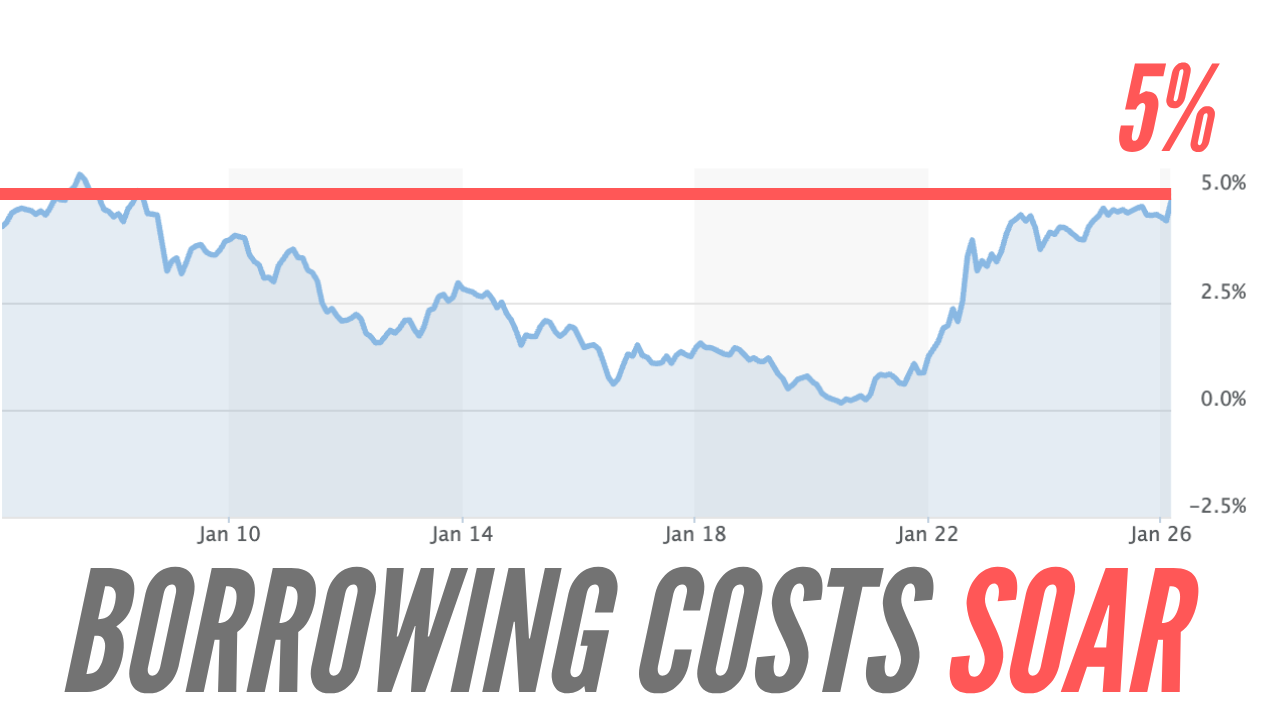
At the time of going to pixel, 10 year-gilts are at 5.069% – and rising. Now hitting 2008 financial crisis levels… and comfortably higher than the 4.42% peak after Liz Truss’s mini-Budget…
Politics
Mike Newton: A primer for navigating recent chaos in the Gilt markets and a Conservative response
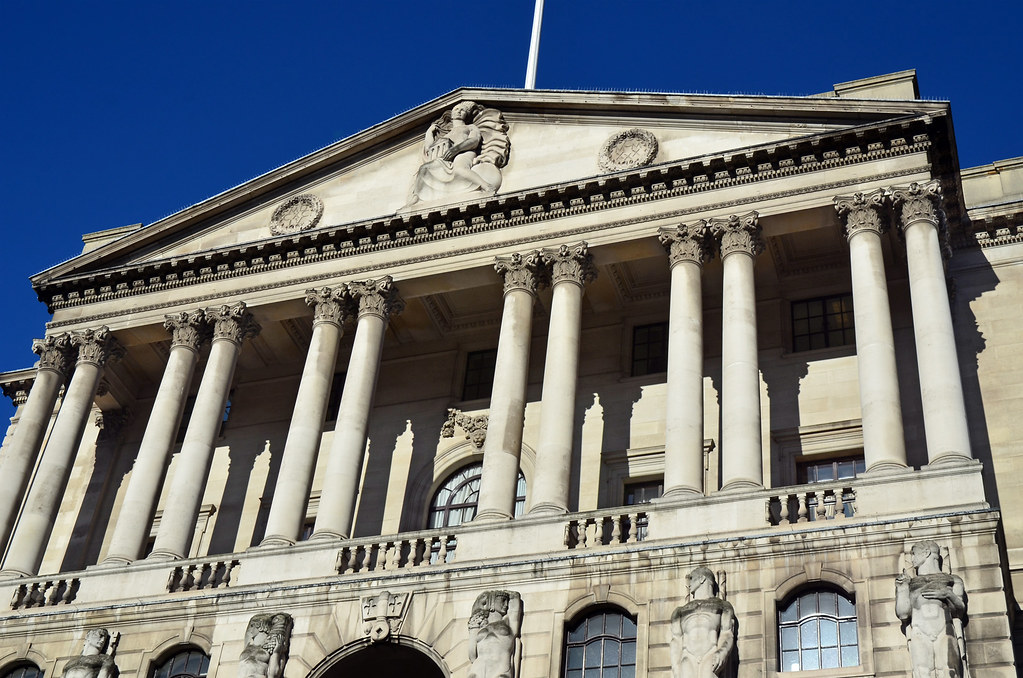
Mike Newton was Conservative parliamentary candidate for Wolverhampton West, and worked for the Bank of England during his career in the financial markets.
This past week has seen the greatest level of financial market chaos in this country since the Great Financial Crisis of 2008. This is partly the fault of the Iran war, but more broadly represents a massive political and economic policy failure on behalf of those who we trust to run the economy.
As a former Bank of England staffer, who was there at time of Eddie George and Mervyn King, I am mortified by the lack of a policy response.
The danger we face is serious and affects the stability of everyone’s finances: from you and me to the small businesses we use every day, and to the government. Anyone who borrows or wants to borrow is about to get much poorer. And lenders will worry if their loans are still ‘money good’.
This attitude leads to a credit crunch. Mortgages are being pulled by the bucketload. Private credit, where borrowers and lenders face each other directly to finance things like infrastructure and property, is in a huge mess. No one quite knows how much the banks are exposed to these risks. How long before there is a wider banking system problem?
Short-term interest rates have gone through the roof with Bank Rate hikes now being priced for the Bank of England this year and next with a 60 per cent chance of a 25bp (quarter of a percent) hike next month. 88bp (nearly a full percent) of hiking in Bank Rate is now priced for the full year.
The benchmark ten-year gilt, the price at which the Government borrows, has shot up to levels not seen since the height of the 2008 panic. It closed up nearly 20bp on Friday: a huge one day move.
While the Iran War has been the catalyst, the outcome has been significantly worse for Britain than in the US, Germany, Japan or even Italy and Spain, due to combination of short-term policy mistakes and the UK’s particularly weak fiscal foundations.
The main culprits here are the Chancellor, the Secretary of State for Energy and the Bank of England. But also guilty are the enablers, the Labour backbenchers, willingly blind to the laws of economics in pursuit of open-ended public spending on their client vote. And Reform has gone along with this fashionable fiscal incontinence with its calls for unfunded tax cuts, welfare largesse and strategic stakes in industry.
So, what exactly has happened? I will keep it as readable as possible.
When the US and Israel attacked Iran, the price of oil and gas rose very rapidly. The UK is particularly dependent on energy imports, largely due to poor policy decisions which have been exacerbated by Ed Miliband’s political choices.
This has led to expectations that inflation would rise sharply, which caused what is known as ‘repricing’ in interest rate markets. Interest rates are usually thought of as a ‘curve’ with a different rate of interest for each time point being joined together to form on a graph what looks like a curve.
The ‘short end’ of the interest rate curve, which is the cost of borrowing for two years or less and is heavily affected by expectations of Bank of England policy, blew up as traders abandoned views that the Bank would cut and moved to price hikes for 2026 and 2027. This is a huge reversal and appears to have been also driven by a technical issue of traders being ‘caught short’ in the options market (more on this later as it is important).
The ‘long end’, which is the benchmark n-year gilt, hit levels on Friday not seen since 2008 at just shy of 5.00 per cent. This is very important as much corporate credit, home mortgages and of course government borrowing take the lead from this part of the curve.
So far, readers might wonder why I am blaming the Chancellor and the Bank of England for this? Isn’t it the fault of Mr Trump, Mr Netanyahu and the now departed Ayatollah?
Not really. That is just the catalyst. The Chancellor’s destruction of growth and wasteful spending has left the public finances on a weak footing. The OBR commented on this in its Spring Statement analysis noting the ‘structural vulnerabilities’ from the excessive tax and spend mix in the public finances.
I doubt whether the OBR thought these would be revealed quite so quickly. The Government has done nothing but tax and spend, and over-regulate, since it was elected and it is no surprise that the country is now skint and unable to cope with events several thousand miles away.
The Debt Management Office (DMO) is responsible for arranging the funding of UK government debt and in recent months decided to be ‘cute’ with the markets by moving more funding to the ‘short end’ where it was notionally cheaper to borrow. This looked like a clever wheeze at the time, designed to buy Reeves fiscal headroom.
However, this strategy was more dangerous than the DMO let on given that short-term debt by definition has to be rolled over sooner, and if interest rates are then higher, the taxpayer is on the hook to pay more, and more quickly. It was also reliant on the Bank of England cutting interest further: but the fact that the Bank is now priced for hikes means this particular stout party has collapsed. The Chancellor should never have agreed to such an ill-judged high-risk strategy, nor should officials have suggested it.
On Friday it was reported in The Times that Cabinet had discussed loosening the fiscal rules to allow it to spend more. This was a pointless thing to do anyway, going against a basic law of economics at a time when it was least appropriate to do so with gilts under huge pressure. It would be rather like turning on the taps when your house is flooding.
But the leaking of this discussion by a Cabinet member was irresponsibility of the highest order and almost treasonous for the impact it has had on the country’s ability to borrow money cheaply. It has cost taxpayers a huge amount of money because it pushed interest rates on gilts higher.
Furthermore, where has the economic leadership been during this? Has the Chancellor done anything to try and reassure the markets and public? If so, I must have missed it. Where is she when markets need her most? Why is the Energy Secretary not looking at temporary measures to boost the supply of ‘dirty energy’ from the North Sea? His views are one thing, and we must respect them as political opponents, but his inaction is unforgivable.
The Bank of England held its regular Monetary Policy Committee meeting last Thursday. It meets every six weeks to set interest rates and offer guidance to the market.
The meeting on Thursday was a disastrous failure of communication that frightened already scared markets further. Rather than take a very cautious approach to future decisions, the markets perceived the Governor and Committee to have done a full 180 degree turn from the previous meeting and started pushing interest rates higher, increasing market volatility.
It has also been suggested been suggested by some market participants that the Bank may have failed to appreciate the depth of the exposure of investors to the short-selling options strategy outlined above, which would be a major failure of supervision and surveillance if true.
Indeed, the Bank has form for missing these important technical details with the Liability Driven Investments (LDI) affair.
Last Saturday I was listening to Andrew Griffith MP talk to Nick Robinson on his Political Thinking podcast (outstanding advocacy for Thatcherite values by the way). The Shadow Secretary of State, speaking about his time as City Minister, made it clear that the Bank was not fully cognisant of the risks from LDIs, and needed private sector help before it got up to speed on this existential issue.
I remember similar being said after the collapse of Barings when I worked at the Bank. It will never learn unless it meets more regularly with practitioners and hires more people who understand the details of markets.
So, what is the Conservative response to all this?
Politically, we need to ensure that the guilty parties are held to account for the errors made so far, and in doing that be mindful of the fact that Labour cut us absolutely no slack whatsoever for the economic impact of the COVID and Ukraine shocks.
They have sown the wind and now must reap the whirlwind. Their failure to prepare and manage will likely lead to recession, and soon. And with gilt yields now way higher than when Liz Truss was PM, we have an opportunity to nail that tired piece of ‘whataboutery’ for ever. We should play the hardest of hardball politics with them.
Strategically, the case for fiscal consolidation and pro-growth deregulation is now stronger than ever. A higher bar for welfare, including a review of all expenditure including the Triple Lock, and repeal of anti-business measures such as the Employment Rights Bill must feature prominently. The public finances must be strengthened and hard decisions on priorities taken.
Policy coordination needs to be improved. The Bank of England must be more accountable and aligned with broader macroeconomic objectives. It needs to do its job better.
There is no alternative to the above measures. Under Kemi, the party has shown it is willing to go to the root of a problem and find solutions. These desperate economic circumstances require hard-edged small state policies. We can no longer afford to be stranded on the economic middle ground.

US president Donald Trump has begun deploying Immigration and Customs Enforcement (ICE) agents to US airports to assist with security checks.
The news comes after a partial government shutdown caused major funding issues for the Department of Homeland Security (DHS). In turn, this has led to increasing waiting times at airport security checkpoints.
Tom Homan, Trump’s border tsar, told CNN that ICE is “helping TSA [Transportation Security Administration] do their mission and get the American public through that airport as quick as they can while adhering to all the security guidelines and the protocols”.
Homan claimed ICE agents won’t be directly involved in passenger screenings.
Meanwhile, the TSA agent’s union hit back with a statement that staff:
deserve to be paid, not replaced by untrained, armed agents.
ICE: untrained, armed and dangerous
Showing his characteristic degree of professionalism, Trump first threatened to deploy ICE on Truth Social. On 21 March, he posted:
I will move our brilliant and patriotic ICE Agents to the Airports where they will do Security like no one has ever seen before.
The partial shutdown has dragged on because Trump has tied re-opening the DHS to the condition that Democrats sign off on his ludicrously-named ‘SAVE America Act’. Again on Truth Social, he wrote:
I don’t think we should make any deal with the Crazy, Country Destroying, Radical Left Democrats unless, and until, they Vote with Republicans to pass ‘THE SAVE AMERICA ACT.
It is far more important than anything else we are doing in the Senate, and that includes giving these same terrible people, the Dems (who are to blame for this mess!), a Five Billion Dollar cut in ICE funding, a deal which, even when disguised as something else, is unacceptable to me and the American people – UNLESS it includes their approval of Voter I.D., (with picture!), Citizenship to Vote, No Mail-In Voting (with exceptions), All Paper Ballots, No Men In Women’s Sports, and No Transgender MUTILIZATION [sic] of our precious children … In other words, lump everything together as one, and VOTE!!!
Because shutting down government departments to force the opposition party to pass a bill removing voting rights and trans rights definitely isn’t a clear sign of fascism.
Vote rigging
This move is a transparent attempt at vote rigging, as Trump himself has admitted. At a press conference on 9 March, he boasted:
They know if we get this, they probably won’t win an election for 50 years, maybe longer.
As such, it’s unsurprising that CNN has called the chance of the act passing “near-impossible”. Meanwhile, the DHS has received no funding since mid-February, resulting in the current TSA shortage.
Everett Kelley, president of the American Federation of Government Employees (AFGE), which represents TSA workers, said:
Our members at TSA have been showing up every day, without a paycheck, because they believe in the mission of keeping the flying public safe.
They deserve to be paid, not replaced by untrained, armed agents who have shown how dangerous they can be.
Here, Everett was presumably referring to the multiple high-profile murders carried out by ICE thugs. Likewise, whilst some TSA members are currently working for free, more than 400 have quit their jobs since the shutdown began.
‘The last thing that the American people need’
Homan is in talks with the DHS to determine ICE agents’ role in airport security. Reportedly, the current plan revolves around having ICE cover entry and exit points, freeing up TSA officers to conduct screenings.
Hakeem Jeffries, minority leader of the US House of representatives, also criticised the use of Trump’s armed militiamen as airport bouncers. He told CNN:
The last thing that the American people need are for untrained ICE agents to be deployed at airports all across the country, potentially to brutalise or in some instances, kill them. We’ve already seen how ICE conducts itself.
These are untrained individuals when it comes to doing the current job that they have, for the most part, let alone deploying them in close exposure in highly sensitive situations at airports across the country.
The US House of Representatives will break for Easter on 30 March, if all goes according to schedule. With no resolution in sight for Trump’s SAVE America Act, and ICE agents already deployed in US airports, the stalemate is set to get worse before it is brought to a close.
Featured image via The Guardian/ David Grunfeld/ AP
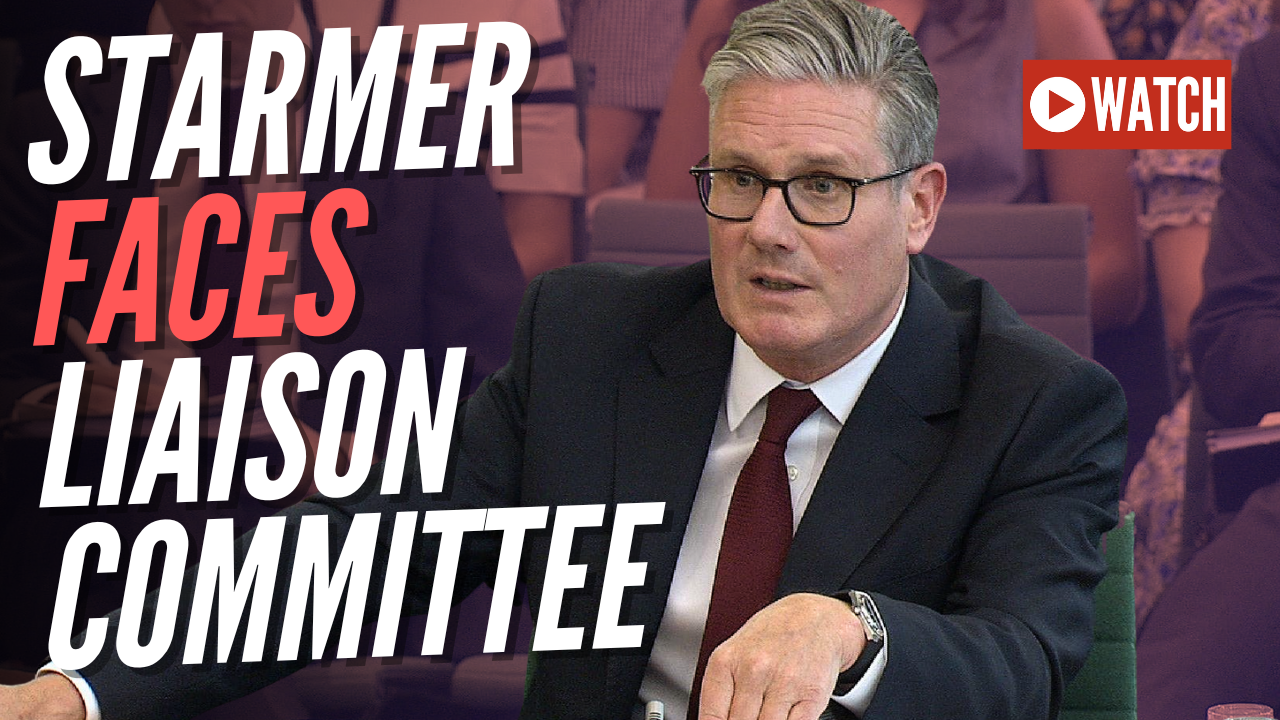
Keir Starmer is up in front of the Liaison Committee for the next hour. Expect plenty on Iran and the economy…
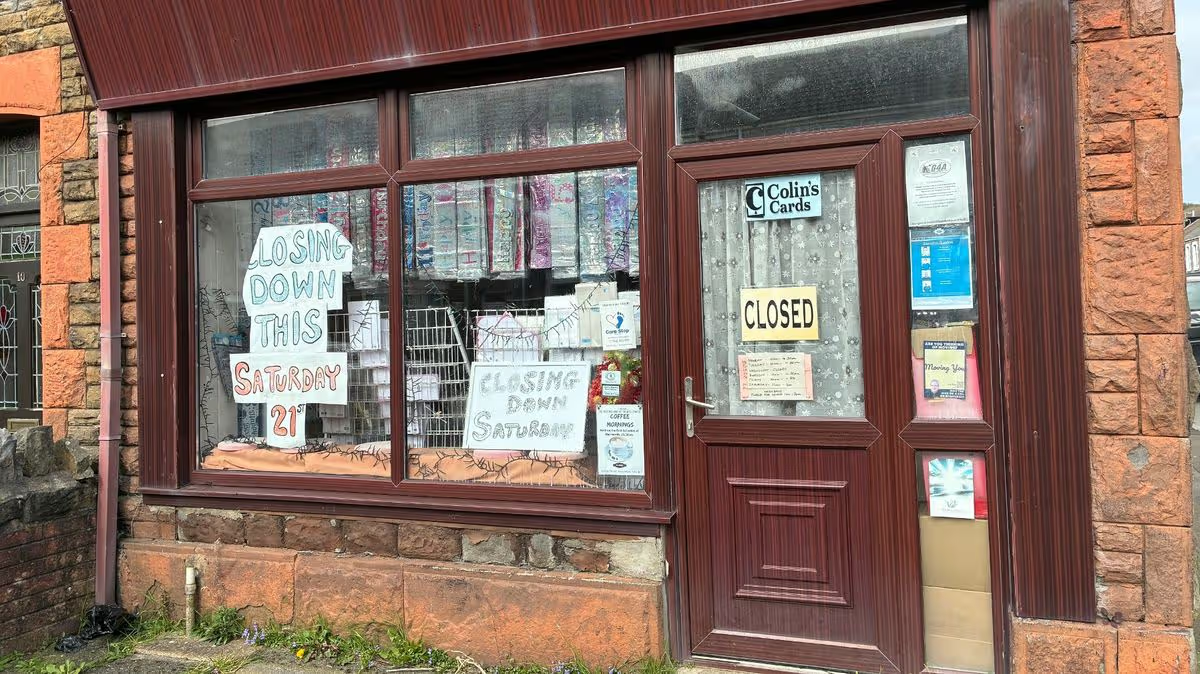
Old-school Swansea shop where everyone was made to feel at home closes

Fastly (FSLY) Stock Surges to 4-Year High Near $28 Amid AI Momentum and Strong Q4 Results

Fed’s Goolsbee says he’s worried about inflation in ‘fraught but intense’ climate


-

 Fashion3 days ago
Weekend Open Thread: Adidas – Corporette.com
-
 Crypto World3 days ago
NIO (NIO) Stock Plunges 6.5% as Shelf Registration Sparks Dilution Worries
-

 Politics3 days ago
Jenni Murray, Long-Serving Woman’s Hour Presenter, Dies Aged 75
-
 Tech6 days ago
Are Split Spacebars the Next Big Gaming Keyboard Trend?
-
 Business7 days ago
How the UK and China Trade Agreement Could Shape UK Businesses in 2026
-

 Crypto World2 days ago
Best Crypto to Buy Now: Strategy Just Spent $1.57 Billion on Bitcoin During Fear While Early Investors Quietly Enter Pepeto for 150x Potential
-

 News Videos5 days ago
RBA board divided on rate cut, unusually buoyant share market | Finance Report | ABC NEWS
-

 Crypto World2 days ago
Bitcoin Price News: Bhutan Sells $72 Million in BTC Under Fiscal Pressure, but the Smart Money Entering Pepeto Sees What the Market Does Not
-

 Politics5 days ago
The House | The new register to protect children from their abusers shows Parliament at its best
-

 Tech3 days ago
inKONBINI Lets You Spend Summer Days Behind the Register
-
 Politics6 days ago
Real-time pollution monitoring calls after boy nearly dies
-

 Crypto World5 days ago
Canada’s FINTRAC revokes registrations of 23 crypto MSBs in AML crackdown
-

 Sports5 hours ago
Remo Stars and Kano Pillars Strengthen Survival Hopes in NPFL
-
 NewsBeat5 days ago
Residents in North Lanarkshire reminded to register to vote in Scottish Parliament Election
-

 News Videos5 days ago
PARLIAMENT OF MALAWI – PAC MEETING WITH REGISTRAR OF FINANCIAL ON AMARYLLIS HOTEL – INQUIRY LIVE
-

 Politics4 days ago
Gender equality discussions at UN face pushbacks and US resistance
-

 Business1 day ago
No Winner in March 21 Drawing as Prize Rolls to $133 Million for Next
-

 Business5 days ago
Who Was Alex Pretti? 5 Key Facts About the ICU Nurse Killed by Federal Agents in Minneapolis
-

 Tech20 hours ago
Give Your Phone a Huge (and Free) Upgrade by Switching to Another Keyboard
-

 Sports4 hours ago
Gary Kirsten Accuses Pakistan Cricket Board Of ‘Interference’, Mohsin Naqvi Responds
You must be logged in to post a comment Login