Connect with us
DAPA Banner

Politics

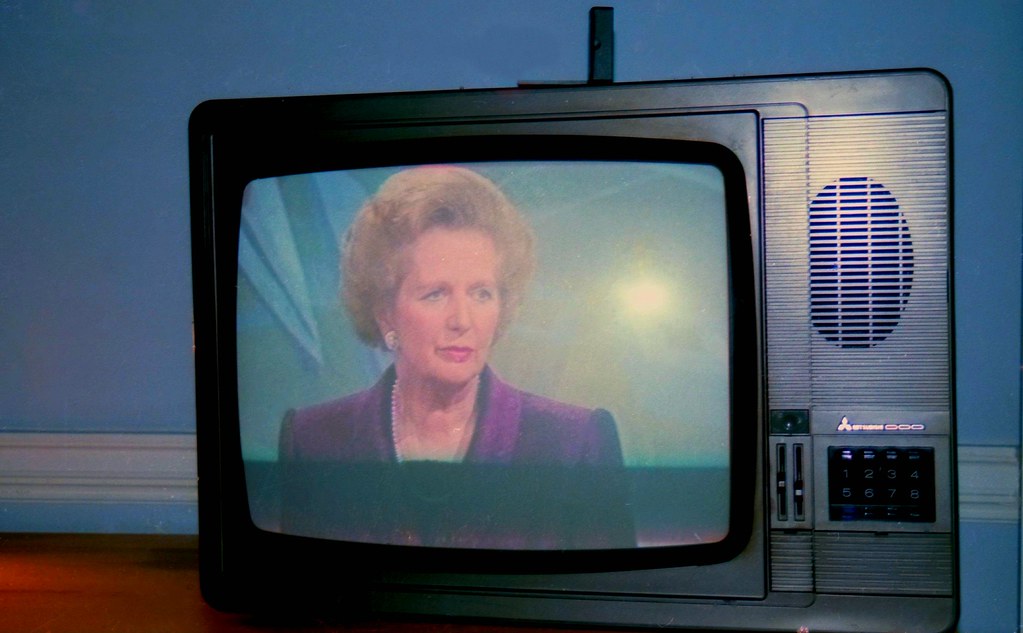
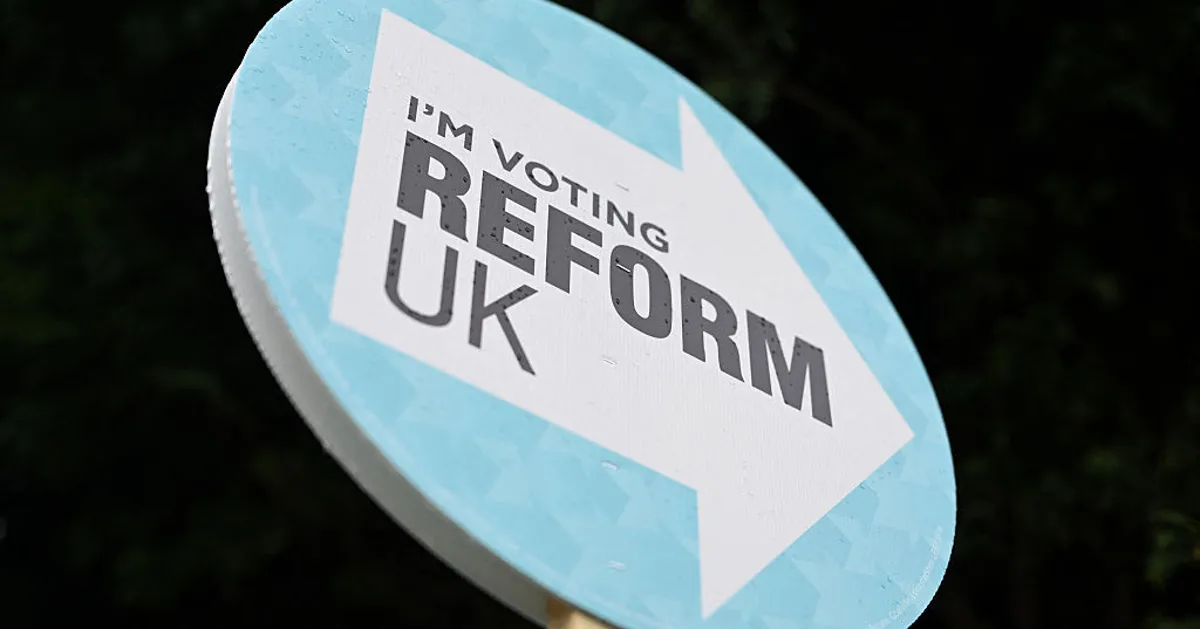
Matthew Jeffery: Margaret Thatcher would never have joined Reform UK

Published

on

Matthew Jeffery: Margaret Thatcher would never have joined Reform UK

Matthew Jeffery is one of Britain’s most experienced global talent and recruitment leaders, with more than 25 years advising boards and C-suite executives on workforce strategy, skills, and productivity.

Margaret Thatcher’s legacy is now claimed by almost every strand of British politics.

Conservatives invoke her as a model for renewal after defeat, Labour selectively borrows her language of growth and national confidence, and Reform UK increasingly argues that Thatcherism survives outside the modern Conservative Party altogether. At a moment when many centre-right voters feel politically displaced, the question has become unavoidable: would Margaret Thatcher, confronted with Britain’s political and economic circumstances today, have joined Reform UK?

The conditions behind Reform’s rise are real. Britain faces sluggish growth, historically high taxation, regulatory expansion and declining confidence in governing institutions despite more than a decade of Conservative-led government. Voters shaped by Thatcher’s emphasis on enterprise, ownership and limited government increasingly see a political system that appears managerial rather than reforming. Reform presents itself not simply as protest but as correction, claiming to complete an economic project left unfinished.

Advertisement

The question, however, is not whether Reform borrows Thatcherite policies, but whether it reflects Thatcher’s understanding of how political change is achieved. This article argues that it does not. Thatcherism was never merely a policy programme. It was a philosophy of how political authority should be exercised.

For many, Margaret Thatcher remains Britain’s greatest post-war Prime Minister. Bold in conviction and decisive in execution, she reshaped the economic and political landscape of the United Kingdom at a moment of profound national decline. She confronted inflation, restored fiscal discipline, curbed union dominance and re-established Britain as a serious economic power. Privatisation broadened share ownership, revitalised stagnant industries and encouraged individual aspiration. Britain moved from being labelled the “sick man of Europe” to one of the most dynamic economies in the Western world.

As Thatcher herself understood, ideas mattered only insofar as they could be translated into governing authority. Winning arguments was inseparable from winning power.

Understanding why Thatcher would not have joined Reform requires recognising what Thatcherism actually prioritised in practice. Britain again faces conditions that make many Thatcherite principles newly relevant. Lower personal and corporate taxation to stimulate enterprise, deregulation to unlock investment, and a reduced role for the state remain powerful tools for economic renewal. Expanding privatisation, cutting bureaucratic barriers and restoring competitiveness would help stem the accelerating flow of talent and capital to lower-tax economies abroad. Strong law and order, an economically grounded immigration system and sustained investment in defence would reinforce national confidence and security. These ideas are not relics of the 1980s but responses to enduring economic realities.

Advertisement

Thatcher would likely have viewed Brexit sympathetically in principle, grounded in her belief in sovereignty and democratic self-government. Yet she was never an isolationist. A committed advocate of free trade and global markets, she would have regarded Brexit primarily as an opportunity to expand international economic relationships. She may well have been critical of its implementation, particularly the slow pace of securing new trade opportunities and the failure to communicate clear economic benefits to the public. The concept aligned with her philosophy; the execution has struggled to demonstrate its promise.

The Covid pandemic profoundly altered Britain’s fiscal landscape. Extraordinary borrowing stabilised the economy but left a legacy of debt that constrained subsequent governments. Political leadership became increasingly cautious, prioritising fiscal management over structural reform. In doing so, successive administrations drifted away from a central Thatcherite insight: economic growth, not sustained tax burden, ultimately restores public finances. The absence of growth-driven reform prolonged stagnation and contributed to today’s political frustration.

Yet the debate about Reform UK cannot be resolved through policy comparison alone. Thatcherism was defined less by policy detail than by governing instinct.

Reform’s claim to Thatcherite heritage is not purely rhetorical. Its economic positioning has evolved through 2025 and into early 2026, with greater emphasis on fiscal restraint, deregulation and supply-side reform. Senior figures such as Richard Tice increasingly reference the financial liberalisation of the 1980s, while Nigel Farage has shifted messaging toward credibility, investment confidence and state reduction.

Advertisement

Recent Conservative defections have reinforced Reform’s attempt to project governing seriousness. Commitments to respect Bank of England independence, consult investors on fiscal rules and delay tax cuts until borrowing falls reflect an effort to appear economically responsible. Yet these developments also expose a paradox. As Reform absorbs figures associated with recent Conservative governments, it risks becoming less an insurgent alternative and more a reconfiguration of the political establishment it criticises.

The deeper distinction lies elsewhere. Thatcherism sought to transform an existing governing party rather than replace it. When Thatcher became Conservative leader in 1975, she inherited a divided and intellectually exhausted party widely viewed as unelectable. She did not abandon it in favour of ideological purity. She captured it, reshaped it and used it as a vehicle for durable reform.

Her conviction was clear. Political change required institutions capable of governing, and governing required broad electoral coalitions. External insurgencies, however energetic, risked dividing supporters of reform and unintentionally strengthening political opponents.

The early 1980s provide an instructive parallel. The Social Democratic Party’s breakaway from Labour generated enormous excitement and polling momentum. Many predicted a permanent realignment of British politics. Thatcher remained focused on party unity while managing internal ideological divisions. The SDP ultimately fragmented opposition support, contributing to her 1983 landslide victory. Thatcher understood electoral arithmetic as clearly as economic theory. Dividing the centre-right rarely produces reforming government.

Advertisement

Reform’s rise risks recreating a similar dynamic. Strong polling built largely on attracting Conservative voters may weaken the broader centre-right without replacing it as a durable governing coalition. Tactical voting behaviour among Labour, Liberal Democrat and Green voters further complicates Reform’s path to parliamentary power despite headline support.

Understanding this divergence requires recognising that Reform belongs to a slightly different political tradition. What might be termed Faragism places greater emphasis on democratic sovereignty and political realignment than on classical economic liberalism. Where Thatcherism sought primarily to free markets from state direction, Faragism seeks to restore political control to voters who feel existing institutions no longer represent them adequately. The overlap in rhetoric masks a difference in diagnosis.

Another distinction is less visible but equally important. Thatcherism did not emerge suddenly in response to political frustration. It stood within a long intellectual tradition that shaped both Conservative and liberal economic thought in Britain.

Thatcher’s ideas were grounded in a lineage stretching back well before the crises of the 1970s. Conservative philosophy from Edmund Burke emphasised institutional continuity and gradual reform, while Victorian liberal thinkers such as Samuel Smiles championed self-reliance, responsibility and social mobility through individual effort. Twentieth-century figures including Winston Churchill combined national confidence with openness to markets and international engagement.

Advertisement

Economically, Thatcher drew directly from modern liberal scholarship. She maintained personal correspondence with Friedrich Hayek and Milton Friedman, whose work on monetary discipline, market competition and the limits of state planning helped shape the intellectual foundations of her programme. These ideas did not provide slogans but a coherent framework explaining why certain policies worked and others failed.

Because Thatcherism rested on an established body of thought, it possessed an internal coherence that extended beyond immediate political pressures. Policy decisions were anchored in a broader philosophy about markets, institutions and human behaviour.

Reform UK, by contrast, does not yet rest on a comparable intellectual inheritance. Its programme draws energy from political dissatisfaction rather than from a settled philosophical tradition. Without a clear intellectual lodestar, positions can appear reactive or internally inconsistent, visible in tensions between commitments to economic liberalisation and proposals that imply greater state direction or intervention.

This difference helps explain why Thatcherism prioritised predictable rules and institutional stability. It was guided by a theory of government as much as by electoral strategy. Movements built primarily around political realignment often struggle to achieve that same coherence because political energy alone cannot substitute for an underlying philosophy of government.

Advertisement

For Thatcher, ideas were valuable precisely because they enabled durable government rather than perpetual opposition. This principle shaped her reforms in practice. Privatisation dispersed ownership, monetary discipline constrained political spending, and deregulation removed barriers to competition. The financial reforms of the City of London were designed to free markets from political management rather than redirect them toward national objectives.

Reform’s programme, by contrast, combines liberalising economics with a stronger language of national economic direction. Proposals to reshape institutional mandates or prioritise domestic sectors introduce an element of political guidance that Thatcher would likely have viewed cautiously. Her nationalism rested on confidence that Britain could succeed through open competition in global markets, welcoming foreign investment and international integration. Reform’s rhetoric reflects a more defensive instinct centred on sovereignty and control.

The contrast can be summarised clearly:

Thatcherism vs Reform UK (2026)

Advertisement
Aspect Thatcherism Reform UK
Vehicle for change Transform existing party Insurgent realignment
Institutions Stabilise predictable rules Retain but reshape mandates
Economic direction Disperse power from the state Liberalisation with national objectives
National outlook Open-market confidence Sovereignty and control emphasis
Electoral strategy Broad governing coalition Risk of vote fragmentation
Political appeal Aspiration and ownership Dissatisfaction and correction


Perhaps the most overlooked difference lies in political psychology. Thatcherism appealed primarily to aspiration. Council house sales expanded ownership, privatisation created individual investment in capitalism and tax reform aligned personal ambition with national success. Voters were encouraged to see themselves as participants in renewal rather than opponents of a failing system.

Reform articulates dissatisfaction effectively, but Thatcher’s achievement was to replace one economic settlement with another capable of commanding sustained governing authority. Thatcher entered politics to exercise power responsibly, not to express discontent more forcefully.

For that reason, Margaret Thatcher would not have joined Reform UK. Nor are voters who genuinely think in Thatcherite terms likely to find their long-term political home there. Thatcherism was never defined by rhetoric alone. It rested on trust in markets over governments, stability over impulse and governing authority over permanent insurgency.

Advertisement

Thatcher did not change Britain by standing outside power demanding ideological purity. She changed it by winning authority, building institutions capable of reform and persuading a sceptical nation to accept change. Thatcherism was never the politics of protest. It was the politics of government, grounded in ideas strong enough not only to win power, but to sustain it once won.

Source link

Advertisement
Continue Reading
Click to comment

You must be logged in to post a comment Login

Leave a Reply

Politics

Francesca Albanese report finds torture is standard Israeli policy

Published

on

Francesca Albanese report finds torture is standard Israeli policy

Israeli torture of Palestinians is a core state policy, a new United Nations (UN) report led by Francesca Albanese warns. The UN Special Rapporteur on Palestine found that various forms of torture have become tools of the genocide. And she warned that the practice extends far beyond prison walls:

Albanese said:

Since the onset of the genocide, the Israeli prison system has degenerated into a laboratory of calculated cruelty.

What once operated in the shadows is now practiced openly: a regime of organised humiliation, pain and degradation, sanctioned at the highest political levels.

Advertisement

Albanese named Israel’s far-right security minister Itamar Ben-Gvir, among others, as having:

institutionalised torture, collective punishment and manifestly dehumanising conditions of detention.

Those responsible, she said:

 must face investigation and justice, including before the International Criminal Court.

The report said that in the aftermath of 7 October, torture became an “integral” component of:

the domination of and punishment inflicted on men, women and children, both through custodial abuse and through a relentless campaign of forced displacement, mass killings, deprivation and destruction of all means of life to inflict long-term collective pain and suffering.

Francesca Albanese centres settler colonialism

Settler-colonialism is central to Albanese’s analysis. And torture is a core tactic in the Israeli process of land theft and violent displacement. She accused Israel of carrying out:

Advertisement

A continuous, territorially pervasive regime of psychological terror…designed to break bodies, deprive a people of their dignity and force them from their land.

And Albanese said there was nothing random about Israel’s use of torture:

This is not incidental violence. It is the architecture of settler-colonialism, built on a foundation of dehumanization and maintained by a policy of cruelty and collective torture.

The Canary has reported on Israeli torture of Palestinian detainees, doctors, activists and children. One far-right pundit even called for the torture of climate and Palestine solidarity activist Greta Thunberg. You can read our reporting on the issue here.

A group of Israeli soldiers raped a Palestinian prisoner in one of the most high-profile recent cases. Footage of the rape was leaked, leading to a trial. Shockingly – and despite video evidence – all of the accused were acquitted on 12 March:

Israel enjoys impunity in its violence, whether in the jails or abroad in military assaults on Iran and Lebanon. At the heart is Zionist ideology is a chilling indifference to the pain of the occupied and any who oppose Israel’s expansionist plans. And Israel’s allies, the UK included, are clearly content to support Israel despite its use of torture as a state policy.

Featured image via the Canary

Advertisement

Source link

Advertisement
Continue Reading

Politics

Has Britain already fallen?, with Melanie Phillips

Published

on

Has Britain already fallen?, with Melanie Phillips

The post Has Britain already fallen?, with Melanie Phillips appeared first on spiked.

Source link

Continue Reading

Politics

People With Poor Mental Health Are Five Times Lonelier

Published

on

People With Poor Mental Health Are Five Times Lonelier

According to the World Health Organisation, about 16% of people worldwide are facing social isolation and loneliness. In 2024, 22% of UK adults said they felt lonely at least some of the time.

But that loneliness is not shared equally. Younger generations seem to be lonelier than older ones, while almost half of people in poverty say they feel lonely compared to 15% of high earners.

And new data from the Belonging Forum’s 2026 Belonging Barometer has found that “people reporting poor mental health are five times more likely to feel lonely” than those with good mental health.

Advertisement

What did the research find?

The survey, conducted with Opinium, involved 10,000 UK adults.

It’s part of the Belonging Barometer, which the Belonging Forum says is designed to look at “how connected people feel to others, their communities, and their sense of purpose”.

  • Roughly one in five people with poor mental (21%) or physical health (20%) say they have no close friends,
  • Only 27% of those with poor mental health say the things they do in life are worthwhile, compared to 85% in good mental health,
  • Only 33% of people with poor mental health said they feel a strong sense of belonging to their neighbourhood, compared to 65% in good mental health,
  • Nearly two-thirds (64%) of people with poor mental health reported high anxiety yesterday, vs 29% of those in good mental health,
  • Though 76% of those with good mental health say they are satisfied with their friendships, this falls to 52% among those reporting poor mental health,
  • Two in five people with poor mental health report feeling lonely often or always, compared to 3% of people in good mental health.

That means about 2.9 million people in the UK with poor mental health say they feel lonely often or always – “roughly the population of Greater Manchester”.

“Health and belonging are closely connected”

Advertisement

Kim Samuel, founder and chief architect of the Belonging Forum, said: “Health and belonging are closely connected. When people struggle with their physical or mental health, they are much more likely to experience loneliness, weaker friendships, and higher levels of anxiety.”

He added, “These findings show that belonging is not only about community or identity. It is also about wellbeing. When people are unwell or facing barriers in their daily lives, it becomes harder to build and maintain the relationships that help us be connected and supported.

“A society where people cannot participate fully in social life is a society where belonging becomes harder to sustain.”

Advertisement

Source link

Continue Reading

Politics

Martin Lewis Reacts To Alan Carr’s Last One Laughing Joke About Him

Published

on

Martin Lewis Reacts To Alan Carr's Last One Laughing Joke About Him

Martin Lewis has managed to one-up Alan Carr, following the former Chatty Man host’s joke about him on the comedy series Last One Laughing.

The money-saving expert recently became a surprising subject of conversation on the star-studded reality show, in which a line-up of comics must try and outlast their competitors by not laughing for as long as possible.

One challenge saw the group being tasked with sharing their “best life advice”, with Alan offering up: “It’s not who you know, it’s who you blow.”

“Do you know who told me that?” the Celebrity Traitors winner then quipped to his castmates. “Martin Lewis. The money-saving person.”

Advertisement

“That’s a hell of a money-saving tip, isn’t it?” Romesh Rangathan responded, to which Alan joked: “I know! I only popped in for a mortgage!”

Posting on social media on Monday, Martin confirmed that he had seen Alan’s joke, before issuing a cheeky reply of his own.

“Many people asking me did I see what Alan Carr said about me on Last One Laughing. I have indeed, I love the show. And I did indeed tell him that,” he joked. “It’s what made me the man I am today!”

He added: “For those who don’t know what this is about. Don’t worry. It’s an inside joke (quite literally in some respects) for those who watch it.”

Advertisement

Many people asking me did I see what Alan Carr said about me on Last One Laughing. I have indeed, I love the show. And I did indeed tell him that, its what made me the man I am today!

— Martin Lewis (@MartinSLewis) March 23, 2026

For those who don’t know what this is about. Don’t worry. Its an inside joke (quite literally in some respects) for those who watch it.

— Martin Lewis (@MartinSLewis) March 23, 2026

LOL: Last One Laughing UK is now onto its second season on Amazon Prime Video, with Jimmy Carr and Roisin Conaty back on hosting duties in the new batch of episodes.

The current line-up also includes Diane Morgan, Maisie Adams, Mel Giedroyc and, for the second time, Bob Mortimer, who is currently up for two TV Baftas off the back of his work on the first run.

Advertisement

Completing the cast this time around are David Mitchell, Amy Gledhill, Gbemisola Ikumelo and Sam Campbell.

Source link

Advertisement
Continue Reading

Politics

UK To Review Free Childcare: A Quick Rundown For Parents

Published

on

UK To Review Free Childcare: A Quick Rundown For Parents

Education secretary Bridget Phillipson has revealed she’s reviewing the free childcare eligibility thresholds impacting parents in England.

Under the current system, working parents are entitled to 30 hours of free childcare a week (for 38 weeks a year) after their child turns nine months old, up until they start school.

However if both parents earn less than £195 per week, or one parent earns more than £100,000 per year, this support isn’t available.

Phillipson told The Times: “We are going to continue to look at eligibility through the childcare review that we’re undertaking, and it does need to be simpler for parents.”

Advertisement

How does the current threshold work?

There is a lower and higher threshold, which means thousands of parents aren’t able to access support.

People who are aged 21 or over need to be earning more than £195.36 per week to be eligible for the free childcare offering. This drops to £160 per week for 18-20 year-olds and £120.80 per week for under-18s or apprentices.

Coram Family and Childcare’s latest annual Childcare Survey found families who are not eligible for the free hours – because they are not in work, do not earn enough or do not meet other criteria – have to pay an average of £189 per week for a part-time nursery place for a child under two.

Advertisement

It warned there is a risk that disadvantaged children are being priced out of accessing the same early years education as those in working families.

Lydia Hodges, from Coram, said the government’s childcare expansion is a “welcome support” for working families, but added there’s a “stark divide” between those eligible for support, and those who are not.

She said: “The focus on children being ‘school ready’ is gathering pace, but we have to ask a question about how much more difficult this will be to achieve for disadvantaged children in England, when they will now get only a third of the government-funded early education that children with working parents get, by the time they start school.”

There is also a higher threshold where one parent earning over £100,000 means couples aren’t able to access 30 free hours to pay for childcare either.

Advertisement

This means two parents could hypothetically earn £99,999 and receive 30 hours of free childcare a week; while another couple could have one person earning £101,000 and the other earning £5,000, and they would lose out.

As a result, parents have refused pay rises and bonuses, The Times reported, as the free childcare offering is better value.

All parents are able to access 15 free hours of childcare when their child turns three years old, regardless of income.

When will the changes be made?

Advertisement

We know both the lower and higher thresholds are under review between now and the next general election, which will be August 2029 at the latest.

Any changes that will be made are not imminent and form part of the government’s early years strategy.

Ultimately, Phillipson is keen to make the free childcare offering “more straightforward” for parents and the childcare sector, while also “getting the best possible outcomes from the money that’s being invested”.

HuffPost UK has contacted the government about when the outcome of the review is likely to be shared and will update the piece when we hear back.

Advertisement

Source link

Continue Reading

Politics

Sprinting vs. Relaxation: New 2026 Study Reveals Best Exercise For Panic Attack Prevention

Published

on

Sprinting vs. Relaxation: New 2026 Study Reveals Best Exercise For Panic Attack Prevention

Multiple studies have found that exercise may help to alleviate symptoms of anxiety.

And a new paper, published in Frontiers in Psychiatry, found that a 12-week brief intermittent exercise (BIE) program “was feasible and more effective” than relaxation training in reducing panic symptom severity and panic attack frequency, with effects sustained for at least 24 weeks among participants.

In this research, sprinting (the BIE in question) was used as a kind of exposure therapy known as interoceptive exposure.

What is interoceptive exposure?

Advertisement

Exposure therapy involves confronting people with things they’re worried about in a controlled, professional-guided session.

Interoceptive exposure, originally used as a treatment for panic disorder in cognitive-behavioural treatment (CBT), involves repeated exposure to uncomfortable physical sensations in a safe environment “for the purposes of reducing negative emotion (typically anxiety) associated with the sensations”.

It can involve holding your breath, spinning in a chair while shaking your head, or running on the spot. This study used sprinting intervals.

Why did sprinting seem to help with anxiety and panic attacks in this study?

Advertisement

The research involved 72 adults with panic disorders. They were split into two groups and given either relaxation training, which involved progressive muscular relaxation, or BIE for 12 weeks.

In this case, BIE took the form of walking interspersed with 30-second sprints.

Researchers looked at the Panic Agoraphobia Scale (PAS) of participants at six, 12, and 24 weeks during and after the program. They also took into account how many panic attacks the people in the study had experienced in those periods.

Though both the relaxation and BIE groups improved over time, the BIE group saw lower scores on average by the end of the tracking period.

Advertisement

They had fewer panic attacks and lower PAS scores. This stayed true even at the 24-week mark, 12 weeks after the programs ended, when both scores for each group had begun to pick up again.

That’s not to say that sprinting should be used during a panic attack; interoceptive exposure, which is supervised by a professional, is designed to slowly build a tolerance to uncomfortable sensations people may feel during periods of anxiety over time.

As study author Richard William Muotri explained: “I think the main lesson is that you don’t have to be afraid of your own body.

“Many people try to just relax when they feel panic, but this study shows that facing the physical feelings through exercise is actually a more powerful way to feel better.”

Advertisement

Source link

Continue Reading

Politics

Oliver Dean: Releasing LEO data would stop the rise of ‘Mickey-Mouse’ degrees

Published

on

Oliver Dean: Releasing LEO data would stop the rise of ‘Mickey-Mouse’ degrees

Oliver Dean is a political commentator with Young Voices UK. He studies History and Politics at the London School of Economics and Political Science (LSE) where he is the President of the LSE Hayek Society

There was once a time wherein a university education was the best investment a young person could make. That time has since passed. Tuition fees have soared, graduate debt has ballooned to an average of £53,000, and courses that offer neither serious career prospects nor meaningful wage returns continue to attract thousands of applicants annually. This could be fixed if the government released the necessary data to transform higher education – yet it refuses to do it.

University used to be a rite of passage.

One would leave home, perhaps freckle-faced and optimistic about their life chances, and have their ideas and opinions challenged by world-renowned professors. They would emerge from university, equipped with the skills and ideas needed for a career. Yet this is no longer the case. Graduates now become ensnared in a student debt trap, trying to put a dent in the balance which just keeps rising. Indeed, higher education has stopped being about intellectual transformation and started being about financial survival.

Advertisement

Such a shift is worrying for the state of tertiary education in Britain, yet there is a way in which the government can begin fixing such an issue. However, since 2015, they have refused to do it.

The government holds a centralised database of Longitudinal Education Outcome (LEO) data. Simply put, it is a breakdown of what graduates actually earn, by university, by course and by year, grounded in tax receipt data. It is exactly the information a would-be student needs before committing to a £50,000 decision. And yet it remains locked away, accessible only to a handful of approved researchers. Everyone else is left to piece together a picture from a patchwork of university brochures and a select through higher education-focused websites.

The consequences of keeping such information under lock and key are predictable. Without reliable data, students make choices based on university marketing and vibes rather than market reality. The explosion of so-called “Mickey Mouse degrees,” courses that leave graduates worse off financially than had they never enrolled, is not an accident. More than 27,000 young people have been funnelled into qualifications that don’t deliver since 2022. And in return, they have been gifted a lifetime of debt and little in the way of career prospects.

Some will argue that the data is already available and, technically, this is true. But scattering figures across dozens of competing websites, presented in incompatible formats, is not the same as making information available. It is bureaucratic cover for the status quo. If the government genuinely believed in informed choice, it would provide a single, accessible platform where students, parents and teachers could compare outcomes clearly and honestly. In the current system, the only groups that benefit are the universities that are pulling the wool over students’ eyes.

Advertisement

By publishing the data, universities that do not offer value for money would face accountability. Students would punish them by going elsewhere, or opting not to go to university whatsoever – instead focusing on building real-world skills in an apprenticeship or full-time employment. The degrees and institutions which provide real value would be allowed to thrive, and those that don’t would be phased out. This would not only ease the strain on British universities, but it would prevent the rise of credential inflation and save thousands of young people from becoming entangled in a lifetime of debt.

The government spends billions subsidising student loans it knows will never be repaid. The least it can do is give students the information to make better decisions in the first place. Releasing the LEO data won’t solve the higher education crisis overnight. But it would be the first honest thing done about it in years, and could be the first major step to fixing the higher education crisis.

Source link

Advertisement
Continue Reading

Politics

Vets trips to have lower prices and fewer nasty surprises

Published

on

Vets trips to have lower prices and fewer nasty surprises

Trips to vets in the UK could soon become less expensive. And crucially, there should be fewer nasty surprises when the bill comes. Vet practices will have to publish standard price lists. Any treatment costing over £500 (except emergencies) will require a detailed written estimate. And prescriptions will have a price cap of £21.

The Competition and Markets Authority (CMA) has concluded its investigation into vet services for household pets in the UK. This comes after an independent inquiry group found that the current system is leaving pet owners in the dark. A lack of information that helps people make informed decisions is leading to weak competition and high prices.

An unprecedented response from both the public and the sector has helped to shape the CMA’s final report. 56,000 people took part in the consultation, including 11,000 working in the vet industry.

The report green lights a package of measures to make the market more competitive, easier to navigate and more responsive to pet owners’ needs. The investigation has intensified public scrutiny of the veterinary services industry. However, the professionalism, compassion, and commitment to animal welfare shown by veterinary professionals remains unquestioned.

Advertisement

Martin Coleman, chair of the independent inquiry group, said:

This is the most extensive review of veterinary services in a generation, and today’s reforms will make a real difference to the millions of pet owners who want the best for their pets but struggle to find the practice, treatment and price that meets their needs.

Too often, people are left in the dark about who owns their practice, treatment options and prices – even when facing bills running into thousands of pounds. Our measures mean it will be made clear to pet owners which practices are part of large groups, which are charging higher prices, and for the first time, vet businesses will be held to account by an independent regulator.

Our changes put pet owners at the centre but also help vets by enhancing trust in the profession and protecting clinical judgement from undue commercial pressure – and that is important to ensure our pets continue to get the best care.

What’s changing at the vets?

A raft of changes will come in over the next 18 months. Small independent vets will have longer to introduce the new measures. Large companies, such as chain groups, will have to meet the demands sooner, including making clear their company ownership. All the changes that affect customers should come in by September 2027.

Advertisement

One of the first measures is that practices will have to publish a comprehensive price list for standard services. This will include consultations, common procedures, diagnostics, written prescriptions and cremation options. Currently, fewer than 40% of practices do this.

Vets will have to tell pet owners they can have a written prescription. Using a written prescription to buy medication elsewhere, instead of at the vet practice itself, could save £200 a year. At the moment, over 70% of customers get their long-term medication from the practice.

Written prescription fees will have a cap of £21 for the first medicine and £12.50 for any additional medicines. Currently, fees often top £30.

By September 2027, the Royal College of Veterinary Surgeons will have an online ‘Find a Vet’ service. This will enable pet owners to find price and ownership information from their local providers. And the service will share the data with third-party comparison sites. Right now there’s no easy way to compare prices.

Advertisement

Featured image via the Canary

Source link

Advertisement
Continue Reading

Politics

Reform UK Drops Mayoral Candidate Who Compared Jewish Group To ‘Islamists On Horseback’

Published

on

Reform UK Drops Mayoral Candidate Who Compared Jewish Group To 'Islamists On Horseback'

Reform UK has reportedly dropped a mayoral candidate after he compared a Jewish community group to “Islamists on horseback”.

Chris Parry was standing to be the mayor of Hampshire until he made the shocking remarks about members of Jewish neighbourhood safeguarding group called Shomrim.

His remarks came hours after an arson attack on ambulances run by a Jewish charity, Hatzola, in North London, which works alongside Shomrim.

A Reform UK spokesperson told the Hampshire Chronicle: “He has been suspended pending an investigation and is no longer our mayoral candidate.”

Advertisement

Parry, a retired Royal Navy rear admiral, shared a post on X which asked: “Can Christian’s [sic] in Britain set up their own police and patrol certain neighbourhoods?”

Parry added: “Remember that these cosplayers have no more jurisdiction or legal authority than ordinary citizens.”

After another user questioned the mayoral candidate over the depiction of Shomrim, he wrote: “They are a community organisation, not a legal entity. It’s the same with Islamists on horseback. But if it offends you, I’ll remove it.”

He later told the Guardian: “Most people on X commenting seem to be confusing various community action groups with the real police. Keen that people understand that.”

Advertisement

Parry, who was set to stand in the Hampshire and the Solent mayoral election in 2028, had previously faced calls for his sacking after he called for deputy prime minister David Lammy to “go home” to the Caribbean last December.

He retained Reform’s support at the time with party leader Nigel Farage refused to condemn the comments.

Labour and the Lib Dems called for Farage sack Parry on Tuesday morning, claiming Parry “is not fit to be a candidate for public office”.

Labour MP for Leyton and Wanstead, Calvin Bailey, responded to reports of Parry’s departure on X, writing: “In December, I wrote to Nigel Farage about his candidate’s many vile racist and misogynist comments, asking if he would take action. Months later – and only after further offensive remarks – Reform have finally suspended Chris Parry.

Advertisement

“It should not take repeated incidents for basic standards of decency to be upheld.”

Reform UK have been contacted for comment.

Source link

Advertisement
Continue Reading

Politics

Charlotte Riley Fell For Husband Tom Hardy On Wuthering Heights Set

Published

on

Charlotte Riley and Tom Hardy as Cathy and Heathcliff in the 2009 adaptation of Wuthering Heights

Actor Charlotte Riley has opened up about falling for her now-husband Tom Hardy on set while they were working on an adaptation of Wuthering Heights.

Back in 2009, Charlotte starred as Catherine Earnshaw to Tom’s Heathcliff in an ITV drama inspired by the iconic Emily Brontë novel.

During an interview with The Times published over the weekend, she was asked for her first impression of the man she’d go on to marry, recalling: “He made me a really decent cup of tea. Strong.

“There’s not much point if the spoon doesn’t stand up. And he told me that his mother was northern. So I thought, ‘all right then’.”

Advertisement
Charlotte Riley and Tom Hardy as Cathy and Heathcliff in the 2009 adaptation of Wuthering Heights

Another memory that has stuck with Charlotte was one that led to her and Tom bonding over a very rude slip of the tongue.

“We were talking about it the other day,” she explained. “There’s that famous line – ‘Whatever our souls are made of, yours and mine are the same’. We shot it in a tiny church on the moors and it was beautiful.

“We were sitting in a pew and I had to turn to Tom and say my line. And he absolutely died laughing. Because when you say it with my northern accent, it sounds like, ‘Whatever arseholes are made of…’ And that was it, we were gone for the rest of the day.”

Charlotte also insisted that the Oscar nominee didn’t charm her by staying in character as Heathcliff between takes.

She claimed: “There’s this myth that Tom’s some sort of Method actor, which he really isn’t. He was just his cheeky-chappy self.”

Advertisement
Tom Hardy and his future wife Charlotte Riley met when they were cast in an ITV adaptation of Wuthering Heights in the late 2000s

After meeting in the late 2000s, Charlotte and Tom tied the knot in 2014, and have since welcomed a son and daughter, born in October 2015 and December 2018 respectively.

Tom also has a 17-year-old son, Louis, from a previous relationship with casting director Rachael Speed.

Source link

Advertisement
Continue Reading

Trending

Copyright © 2025