
Politics
Pakistan declares ‘open war’ as fighting with Afghanistan rages

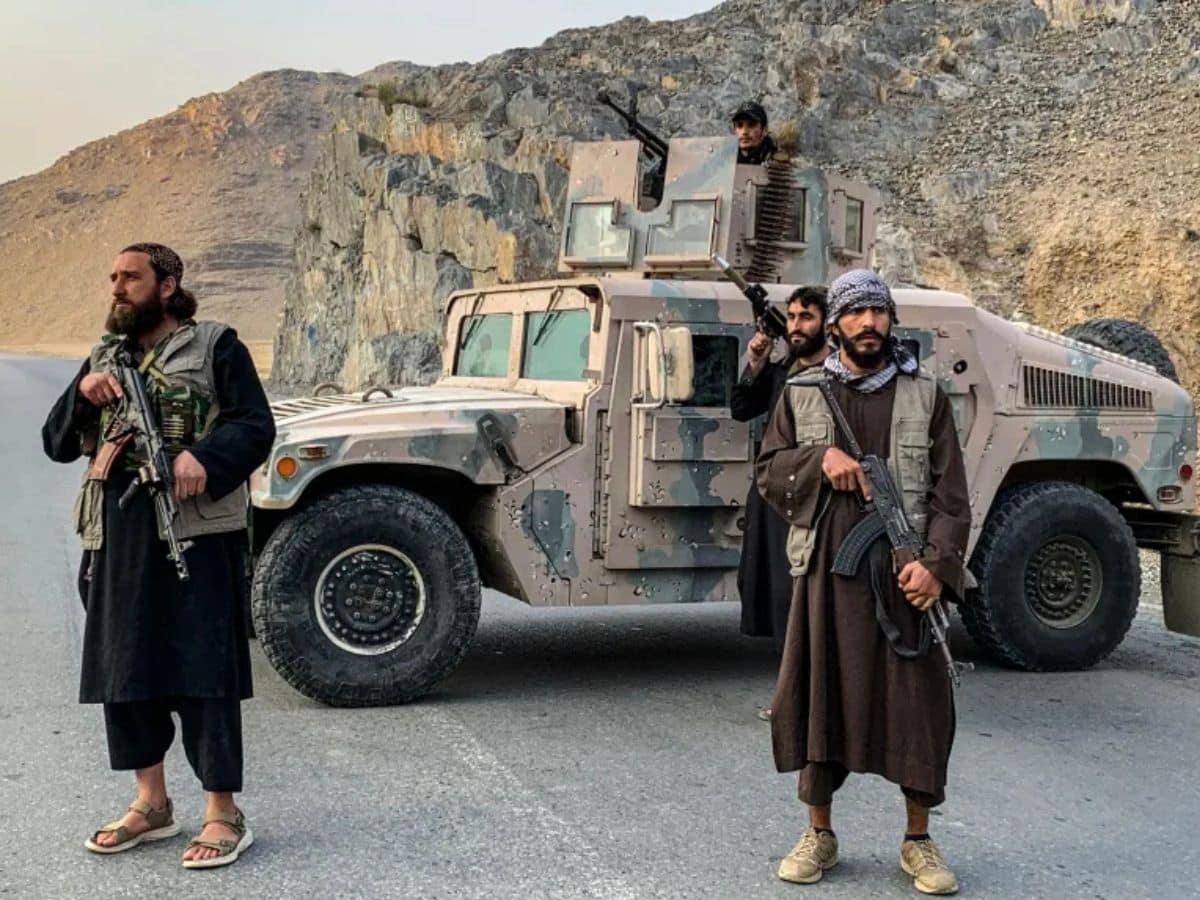
Fighting on the Afghanistan-Pakistan border has intensified. One Pakistani minister has described it as a state of “open war”. And Pakistan has hit the Afghan capital Kabul with airstrikes.
Afghan forces launched attacks across the British-created Durand line on 26 February. And Pakistan has called the Taliban regime — which replaced the US-led occupation in 2021 — illegitimate and accused it of harbouring militants.
Information Minister Attaullah Tarar said on 27 February:
Afghan soil is not being used; but, the Afghan Taliban regime is fully aligned with these terrorists and is completely backing these terrorists.
Al Jazeera reported on 27 February:
Pakistan launched air strikes on Afghanistan’s capital, Kabul, as well as on Kandahar and Paktia, early on Friday. The attacks targeted Taliban military installations as Islamabad declared “open war” on the group’s government, in the most serious military confrontation between the two neighbours in years.
One Kabul resident described her terror:
Then we heard gunfire. When we looked out of our apartment window, we saw bullet-like flames going up in the sky.
Al Jazeera said the airstrikes:
came hours after Afghan forces launched coordinated cross-border attacks on Pakistani military positions in six border provinces late on Thursday. Kabul claimed 55 Pakistani soldiers were killed and 19 outposts captured.
Border war
Border fighting broke out in October 2025. A subsequent Turkey and Qatar-brokered ceasefire has now broken down.
The origins of the fighting are complicated. Ahram Online reported:
Islamabad argues that the authorities in Kabul, led by the Taliban, have failed to curb the activities of Tehrik-i-Taliban Pakistan, a separate but ideologically aligned group that has intensified attacks inside Pakistan since 2021.
The Taliban deny this is the case. Kabul-based political analyst Obaidullah Baheer said:
Pakistan claimed that it was doing that in response to TTP attacks based on the bogus claim that the Taliban are supporting the TTP, an insurgent group operating within Pakistan.
Drop Site News posted a timeline of the breakdown in diplomatic relations since January 2026:
Lead-up: January – Mid-February 2026
▪️Early January: Pakistan warns that Afghanistan is becoming a hub for foreign militants.
▪️February 6: A suicide bombing at a Shia mosque in Islamabad kills 31–36 worshippers. The attack is claimed by ISKP, but Pakistan blames the Afghan…
— Drop Site (@DropSiteNews) February 27, 2026
The Pakistan has also banned personal drones after Afghan forces used unmanned aerial vehicles (UAVs) in their attack:
The ban is effective nationwide immediately and will remain in place until further directives are issued. All provincial governments and chief secretaries have been asked to ensure strict enforcement of the directive.
Vast US arsenal
A vast arsenal of US military equipment and weaponry was left behind in 2021. Those weapons are now fuelling the war. As the Canary reported on 4 February:
those weapons have flooded neighbouring Pakistan
The Foundation for Economic Education broke down some of the numbers involved. They said the giant arsenal included:
includes up to 22,174 Humvee vehicles, nearly 1,000 armored vehicles, 64,363 machine guns, and 42,000 pick-up trucks and SUVs.
There were mind-boggling amounts of small arms — and even artillery:
the list of allegedly abandoned weaponry includes up to 358,530 assault rifles, 126,295 pistols, and nearly 200 artillery units.
CNN reported that the border region holds vast quantities of copper and other minerals and metals which the US craves:
Pakistan says there is much more wealth beneath its soil –– an estimated $8 trillion in copper, lithium, cobalt, gold, antimony and other critical minerals.
This reality has:
oiled an unlikely friendship with US President Donald Trump, who has put mineral acquisition at the heart of US foreign policy
Pakistan and Afghanistan’s colonial underpinnings
The colonial nature of the conflict zone can’t be ignored either. National Geographic describes the Durand Line as:
part of a long history of colonizing countries establishing borders that serve their own political purposes while ignoring the cultures and ethnicities of the people living there.
As Ahram Online explained:
The roots of the crisis trace back to 1893, when British diplomat Sir Mortimer Durand signed an agreement with Afghan ruler Abdur Rahman Khan to demarcate a frontier between British India and Afghanistan. That line split Pashtun tribal lands between two political entities.
After independence in 1947, Pakistan:
inherited the Durand Line as an international boundary under the principle of state succession. Successive Afghan governments, however, avoided formally recognizing it as a permanent border. The dispute has simmered for decades, occasionally flaring but rarely disappearing.
The neighbours view the border very differently:
Pakistan views the border as legally settled and central to its territorial integrity. Afghanistan’s position has historically been more ambiguous, shaped by ethnic ties, nationalist sentiment, and resistance to what many Afghans see as a colonial imposition.
This explosive combination of competing territorial visions and competition for vast mineral resources is compounded by colonial history and the presence on both sides of the border of vast arsenals of lost American weapons. And ordinary people of the region aren’t without agency, yet to some degree they remain hostage to imperialisms both old and new.
Featured image via the Canary



After the Democratic National Committee punted on two resolutions in August that highlighted the party’s deep divide on Israel, DNC Chair Ken Martin convened a task force “to have the conversation” and “bring solutions back to our party.”
Seven months later, the Middle East working group — meeting today in-person for the second time — still has work to do.
The group, composed of eight DNC members with backgrounds in Jewish and Palestinian advocacy, has struggled to meet consistently or coalesce around shared objectives. Part of that is due to the difficulties of coordinating across schedules and time zones, with at least one member actively running for office. But atop those hurdles come the challenges of productive discourse about one of the party’s most contentious debates among a cohort with sharp ideological divides.
“People aren’t comfortable with being uncomfortable,” Steph Newton, a DNC member from Oregon who’s part of the working group, told POLITICO. “These uncomfortable discussions are how we’re going to be able to move the party forward and find a solution.”
The working group met for the first time in December at the DNC’s winter meeting in Los Angeles, and convened virtually two more times, on March 1 and March 18. Those meetings mostly centered on figuring out what the group should be working on in the first place. “Most of the time, what we’ve talked about is, ‘What are we supposed to be doing?’” said James Zogby, another member from D.C.
The working group comes as divides over support for Israel remain a persistent liability for Democrats, and as AIPAC’s involvement in midterm primaries presents a new purity test for candidates. “No one gets anywhere by trying to shout the other side of the room — as a matter of fact, I think that would be harmful politics,” Andrew Lachman, another working group member from California, said.
A DNC spokesperson emphasized the group’s goal is to figure out how to talk to voters about the Middle East in a way that ultimately helps the party build coalitions and win elections.
The group’s inaction so far came into sharper focus yesterday at the DNC’s spring meeting in New Orleans, when the party’s resolutions committee considered one brought by Joe Salas, another member of the working group from California, to recognize Palestinian statehood.
“It is necessary for the Democratic National Committee to address the ongoing heinous and illegal acts against the Palestinian people. Some here may say that there is a working group. To that, I say that we are in a midterm year and they are yet to produce any results in a moment where anger has only grown amongst the American people,” said Cameron Landon, VP of the College Democrats of America, who spoke on behalf of Salas.
Salas, who wasn’t at the meeting, submitted the resolution without discussing it with the other members of the Middle East working group, according to Zogby and Newton, who said she was “surprised” to see it in the resolutions packet.
“I would assume that if we’re on a work group together discussing these issues, you say, ‘Hey, work group members, teammates, I want to submit a resolution on X, Y and Z. I know we’re working toward something like this together. Is this something that we can discuss?’” Newton said.
Deborah Cunningham-Skurnik, another member of the group from California, told the resolutions panel yesterday that there were “some parts of it I would like to go bit by bit over with” Salas.
Salas said in an interview ahead of the vote he wouldn’t attend the New Orleans meeting because “I’m just gonna let them have those words and reject them, accept them, modify them, whatever they want to do.” He didn’t respond to further requests for comment about why he didn’t tell the working group he submitted the resolution.
The panel ultimately referred those resolutions back to the working group — with a warning. “As a body, we recommend this going back to the task force,” said Ron Harris, the resolutions committee co-chair. “But then we can put some — I don’t want to say ‘constraints,’ but expectations that we hear back.”
John Verdejo, a DNC member from North Carolina, was more direct. “It can’t just be we have a task force and then the next time we have a DNC meeting, it just comes up again. No, we want to see your progress. You want to have a task force? You want to make the hard changes, have the hard discussions? Then do it,” he said.
Allison Minnerly, another working group member from Florida, said after the snafu that “so long as the party does not prioritize this conversation, you will see what happened today, which is that DNC resolutions committee members have many questions on the inaction and the results of the working group. It’s really clear that this issue will keep coming up at every subsequent DNC meeting until there’s a clear direction, solution, talking points.”
Now that the party has referred the resolutions to the working group, it finally has a clear, near-term objective for its meeting today.
“I actually am pleased that we will now have a very specific charge that we must accomplish in a defined period of time,” Zogby said. “We have not had a defined agenda, and it’s been difficult to get people together. Now we have to get this done, and there’s just no way we can duck it at this point.”
Like this content? Consider signing up for POLITICO’s Playbook PM newsletter.
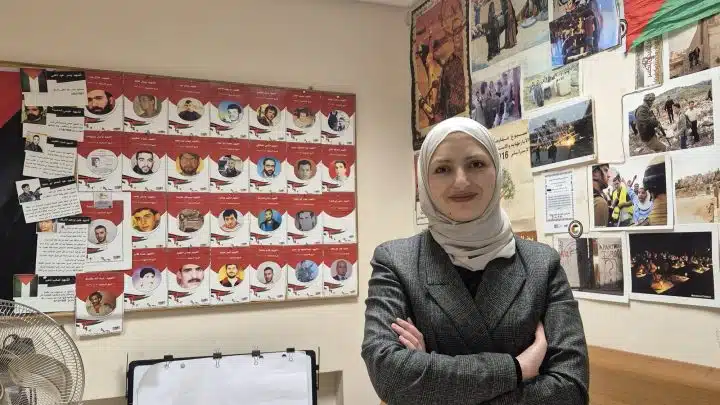
“In Palestine, as a student, you don’t live a normal life,” Sundos Hammad, coordinator of the Right to Education (R2E) campaign at Birzeit University in the occupied West Bank, told the Canary.
You go to university not knowing if there will be a raid of your campus, if you will be arrested or harassed at the checkpoint leading to your university, if one of your loved ones or friends will be imprisoned or killed.
The Israeli occupation has been systematically targeting education since the Nakba of 1948 because it plays an important role in helping Palestinians build their community and preserve their collective identity. This also means a strong student movement inside campuses, which helps resist the occupation.
Between 1972, when it was founded, and 1988, Birzeit University was closed 15 times by military orders. Many students and faculty members were imprisoned by the Israeli occupation during this time.
Birzeit University’s founder and first president, Dr Hanna Nasir, was expelled to Lebanon by the Israeli occupation in 1974, and then to Jordan with no charges. He was not permitted to return to Palestine until after the Oslo Agreement.
But Hammad stresses that, despite all the odds, Palestinians continue their education because it is their “tool of existence”, their way out of occupation and towards liberation.

Education in Palestine is fraught with risks
In the first uprising in 1988, all schools, universities and even nurseries were closed by military orders, and education was illegal for Palestinians.
When they went to school holding a book or backpack, they were threatened with being investigated or put in an Israeli occupation prison. But students and academics of Palestinian universities did not stop. Instead, they held an underground system of education, where they held classes in student houses, rented apartments, churches and mosques. There were even instances of lectures being held in cars.
During this time, Birzeit University campus was closed for 51 consecutive months.
During the Second Intifada, there was a checkpoint on the Birzeit Ramallah road, which meant students had to walk 14km to reach Birzeit campus. They endured the walk so they could continue their education.
‘What if one of our students got killed…?’
The R2E campaign emerged in 1988. Its main aim back then was to break the isolation of higher education institutions, and document and monitor violations against students, staff and faculty members of Birzeit University.
Crimes against students are rampant and Hammad is fearful for their safety.
Israel is an occupying force. They carried out a genocide in Gaza and no one stopped them. Even the International Court of Justice said it is a genocide in Gaza and they must stop, but they haven’t. No one is holding them accountable so they can come to our campus and invade it anytime.
It is the students’ right to be educated in safety and it makes me really sad to see that the students have to live with this fear of being on campus. I sometimes think, ‘What if one of our students got killed in an invasion by live ammunition?’ Things would then go really terrible.
It’s really dangerous. It’s only a matter of time.
Birzeit University became a ‘war zone’ in January 2026
Two people were seriously injured in the last raid on 6 January this year when more than 200 soldiers fired live ammunition at terrified students.
The Israeli occupation shot at students, threw stun grenades and sound bombs. About 8,000 students were on campus at the time — 40 were injured and 11 were hospitalised. Nine of them were shot with live ammunition.
Hammad said the university had been turned into a “war zone”.
Some of the soldiers stayed at the door of the university’s health clinic, so the medical team couldn’t come out and help the injured students. They also didn’t let ambulances come in for half an hour.
There were terrible injuries in the bodies of the students. One student had a bullet come out from his abdomen. He has had four surgeries so far. The other bullet exploded in his elbow and he had to have metal in his arm, so he could move it. He was about to graduate but has had to stop his studies until he recovers and is able to return.
Birzeit University campus has been raided 26 times since 2002 and five times since October 2023. These raids often happen in the middle of the night and involve the invasion of the buildings of the student council.
January’s raid was similar to the one in March 2018, in that it took place in the middle of the day when students were on campus. In 2018, special forces of the Israeli occupation infiltrated campuses disguised as student journalists.
They made their way to the student council room and kidnapped its president, who was then imprisoned for four-and-a-half years.
Aysar Safi: Shot in his neck then stood on until he died
There have been 40 martyrs from Birzeit University. The first was assassinated by an Israeli soldier in the old campus during a 1984 demonstration because he was holding a Palestinian flag.
In May 2024, during a demonstration on Nakba day, an occupation soldier shot 19-year-old student, Aysar Safi, in the neck. When his colleagues tried to take him to an ambulance, a soldier callously stood on his body until he died.
Remembering Safi, Hammad said:
He was always smiling and full of life, it was so sad for the university students. Aysar was also helping his mother as his father and brother, who was also a student, were both in prison. His mother was dreaming of his graduation.

Nearly 160 students from Birzeit University are currently being held in Israeli occupation prisons. More than 75 of those, including two female students and two academics, are being held under administrative detention, with no charge or trial — some for three or four years.
Before 7 October 2023, the average annual number of arrests would be about 55 or 60, but numbers have escalated considerably.
Just since yesterday until today we have had six students from Birzeit University imprisoned — four yesterday and two today — so far.
The R2E campaign documents student detention and imprisonment and provides students who have been arrested with a free lawyer.
Before the Gaza genocide began, Hammad said that when students were released from prison, they were very open to speaking out. The campaign documented the violations they experienced during their imprisonment and wrote reports that went to the UN Human Rights Council.
But now, most students refuse to speak about what happened to them. Not only do they not want to remember their time in prison, they are also afraid of speaking out and being re-arrested. They are traumatised from the abuse and neglect in the Israeli occupation’s prisons.
Unfortunately, this silence is what the occupation wants.
Students face threats of rearrest if they return to education
When these students leave prison, through the R2E campaign, the university helps them continue their education. They are able to return to their studies at the point they left off and sit any incomplete exams.
Although, since October 2023, there have been four instances of students who have wanted to continue their education but faced threats of being rearrested if they do. Afraid, those students are now trying to receive online teaching instead.
Hammad explained that everything is censored by the Israeli occupation.
Our phones, our social media, everything. There’s even an Israeli Army captain who monitors Birzeit university. Students get threatening messages from him, saying to stay away from any activism inside campus.
When the university campus is invaded, multiple times we have found [his] card stuck in the walls or the places that were invaded. It’s really terrible because we live under military rule. Every university has someone like [him].
Students affiliated to political parties inside campus are the most targeted by the occupation. This is because the Israeli occupation considers Palestinian student political parties to be illegal, terrorist groups.
Believe me, sometimes students do not know about their history because the school textbooks are really monitored. But we believe it’s our job to raise awareness about this, and the role of students in changing the status quo regarding the right to education, and what it means to have your full rights and access to education.
The R2E campaign empowers its student volunteers by providing them with training and workshops, and engaging them in many events, locally and internationally. This knowledge helps raise their awareness and empowers them to speak out about what is happening in Palestine and their own experiences living under occupation and settler colonialism.
They also speak about scholasticide, described by the UN as the “systemic obliteration of education through the arrest, detention or killing of teachers, students and staff, and the destruction of educational infrastructure”.
Activists globally give hope to students in Palestine
During the Campus Voices for Palestine events in both 2024 and 2025, organised by University and College Workers for Palestine (UCW4P) and the British Committee for the Universities of Palestine (BRICUP), Birzeit University’s Right to Education campaign delivered talks across the UK. These were a call to action for all British students and educators in solidarity with Palestine, to end the complicity of their universities in the oppression of Palestinians.
As a grassroots campaign, Hammad told us R2E believes change comes from the bottom up, so they work with the people to change the status quo. Although its work is driven by students, the impact is huge because the students believe in what they are doing.
Explaining the importance of the campaign and Palestinian education in general, she said:
“It’s so much easier to control ignorant people so education has become a tool for resisting the status quo, of resisting the occupation of our knowledge. It’s what keeps us on the land and enables us to persist on our right to exist, to return, to be liberated, and all human rights.
It is also the main tool to preserve our Palestinian identity and a form of resistance, to say to our occupier that we exist and we are not going anywhere. We will not be ignorant about our own history or our land. It is part of our resilience and existence as Palestinians, and it is also about self-determination.
How are we going to have our own sovereignty if we aren’t educated? For all these reasons, the occupation will not succeed in demolishing our education system, although they are really trying to. Education will continue against all the odds!
Featured image via Global Campus of Human Rights
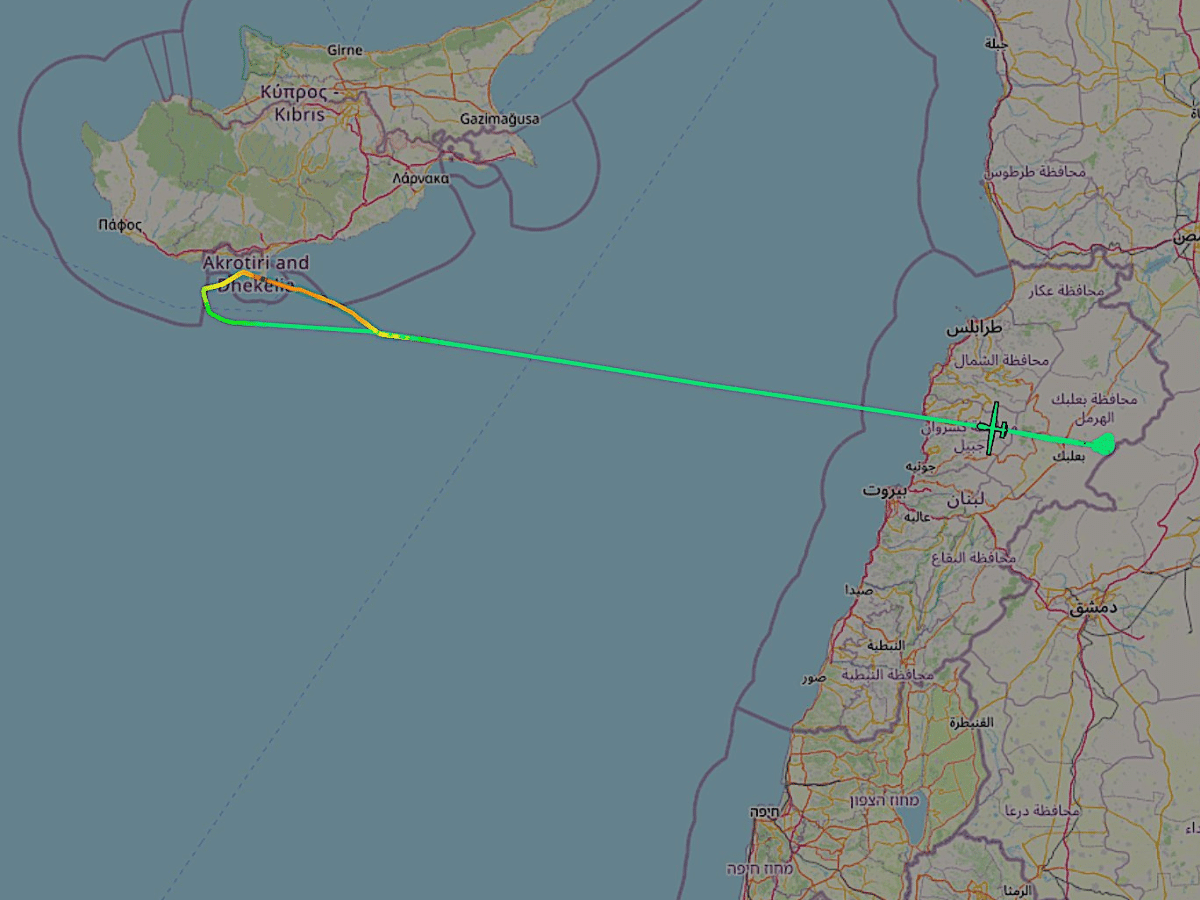
The UK military has told the Canary that British war drone circled Lebanon for 13 hours on 8 April 2026 was not there. This is despite is being visible on an aircraft tracking platform. The Cyprus-launched aircraft circled a key battlefield in Israel’s current air and ground assault on Lebanon. It was there despite the UK calling for a ceasefire.
Journalist Matt Kennard, who originally spotted the aircraft, reported that 18 people had been killed in Baalbek, in Lebanon’s east, at time of the flight:
🚨Keir Starmer sent a MQ-9 Reaper drone over Lebanon for 13 hours yesterday
Departing from RAF Akrotiri, it flew in circles near Baalbek. At same time, Israeli strikes killed 18 people in area
Starmer flew intel flights over Gaza for Israel. Is this part of same arrangement? pic.twitter.com/WShUvyvQ62
— Matt Kennard (@kennardmatt) April 9, 2026
The Canary understands the aircraft may be Protector drone, which was meant to supersede the Royal Air Force’s Reaper drones. However UK NGO Drone Wars said in 2025 that Reaper’s lifespan had been extended.
The Reaper drone and Protector drone can carry lethal munitions. RAF Akrotiri is one of two UK colonial bases in Cyprus. The Canary recently reported on efforts by local anti-genocide activists to reclaim Cypriot sovereignty.
🚨Video of British MQ-9 Reaper drone flying over east Lebanon yesterday as Israeli strikes hit the area
The Reaper drone is weaponised and can drop Paveway II 500-pound bombs pic.twitter.com/Mmsv1NH38w
— Matt Kennard (@kennardmatt) April 9, 2026
And a British Reaper or Protector also overflew Lebanon on 9 April:
The same British Reaper drone flew over same area of Lebanon for 10 hours today (April 9) pic.twitter.com/XMDzDJptze
— Matt Kennard (@kennardmatt) April 9, 2026
The Canary asked the UK Ministry of Defence (MOD) for more details about why a British military aircraft was over Lebanon during the Israeli assault.
MOD communications officer Luc Wilson told us:
The aircraft in question was not conducting operations over Lebanon.
‘Operations’? It was a military drone out on annual leave, was it?
Israel is currently attempting to cut off southern Lebanon by force. Israel’s intention has long been to colonise the region entirely.
The UK flew crewed spy flights over Gaza throughout the first years of the genocide. These also originated in Cyprus. After those spy flights ended, it emerged that the UK government had decided to replace them with drone flights.
Still hitting Lebanon
The Canary reported on 22 November 2025:
The Genocide-Free Cyprus (CFG) group has uncovered details of an extensive new mission involving the use of Reaper long-endurance drones – designated Protector RG1 for the RAF – that are already preparing for what is evidently a new surveillance mission over Gaza, with the drones already operating close to the Gaza coast.
Israeli is still hitting the region despite claiming to be on-board with ceasefire plans:
💢 Israeli warplanes and drones carried out a wave of strikes across southern Lebanon on Friday evening, hitting multiple towns and civilian areas, according to Lebanon’s state news agency and reporting from L’Orient Today.
➤ Airstrikes hit Kfar Dounin (Nabatieh), a home in… https://t.co/M09nl1dlvE
— Drop Site (@DropSiteNews) April 10, 2026
In theory, Hezbollah breached a US-brokered ‘ceasefire’ with Israel in early March which had held up since their last war in 2024. In practice, the US gave Israel carte blanche to strike Lebanon, which it has done constantly since the deal was struck. During the intervening period, Israel attacked southern Lebanon about 15,400 times.
Far-right minister Bezalel Smotrich said on 23 March that the current war:
needs to end with a different reality entirely, both with the Hezbollah decision but also with the change of Israel’s borders.
I say here definitively…in every room and in every discussion, too: the new Israeli border must be the Litani.

The post Reform, the Greens and the death of the uniparty appeared first on spiked.
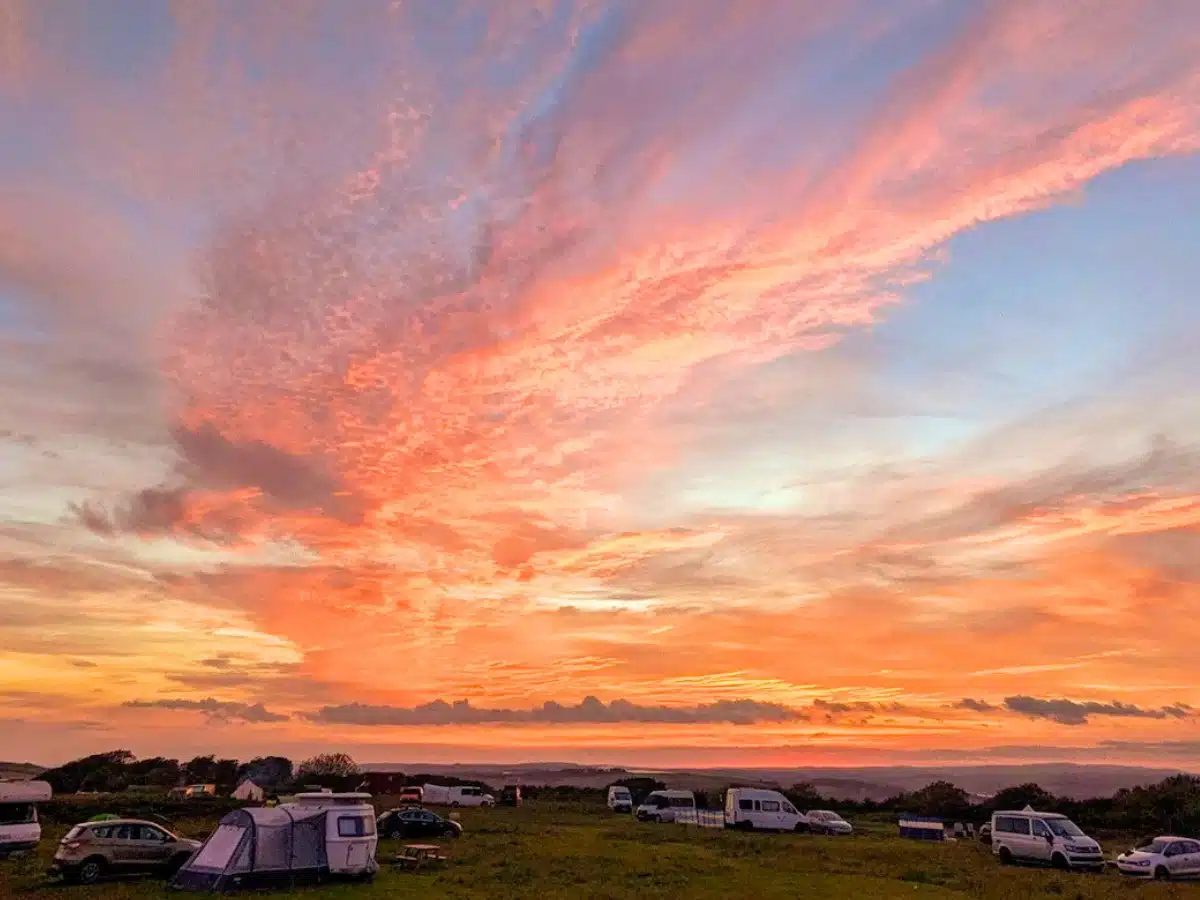
Trade unionists, families, and campaigners will gather on the Cornwall coast this June for Unite on the Hill. It’s a new festival that aims to combine culture, community, and class politics. Branch SW008 of the Unite union is organising the event.
It’ll take place from 19–21 June 2026 at Maker Heights (PL10 1LA) and bring together live music, food, and family activities. There’ll be a programme of political discussion addressing issues facing working people in Devon and Cornwall.
The festival comes at a time when the region is facing rising levels of insecure, low-paid work and some of the highest rates of child poverty in the UK. Alongside this, anger continues to grow over water privatisation and environmental damage affecting local communities.
Talks across the weekend will include:
- Workplace organising.
- The campaign to bring South West Water into public ownership.
- Tackling child poverty.
- Confronting the power of big tech monopolies.
John Whitcher, Chair of Unite SW008, said:
Our members are often isolated – both geographically and because they work in workplaces too small to have their own branch.
But the need for collective action has never been greater. This event is about bringing people together — replacing despair with hope, and showing what’s possible when we unite.
SW008 is one of the largest Unite branches in the South West. It represents workers in small and fragmented workplaces, many without formal union structures. The festival is part of a broader effort to rebuild grassroots trade unionism in areas often overlooked by national organising.
Building working class culture in Cornwall
At the same time, Unite on the Hill continues a growing tradition of socialist festivals in the region, following earlier events such as Kernow Transformed and Devon Transformed. Organisers hope it will help establish Devon and Cornwall as a key centre for working-class culture and political organisation.
Tickets are available now, with free entry for Unite members and their families (first come, first served), alongside a limited number of tickets for non-members:
🎟️ Free tickets for Unite members & their families (first come, first served)
🎟️ Guest tickets (for non-members)
In addition to political discussions, the festival will feature live bands and DJs, local food and drink, children’s activities, and opportunities to explore the surrounding coastline.
Organisers say the aim is simple: to create a space where working people can come together, share experiences, and build the confidence and organisation needed to challenge inequality – in Cornwall and beyond.
Featured image via Maker Heights
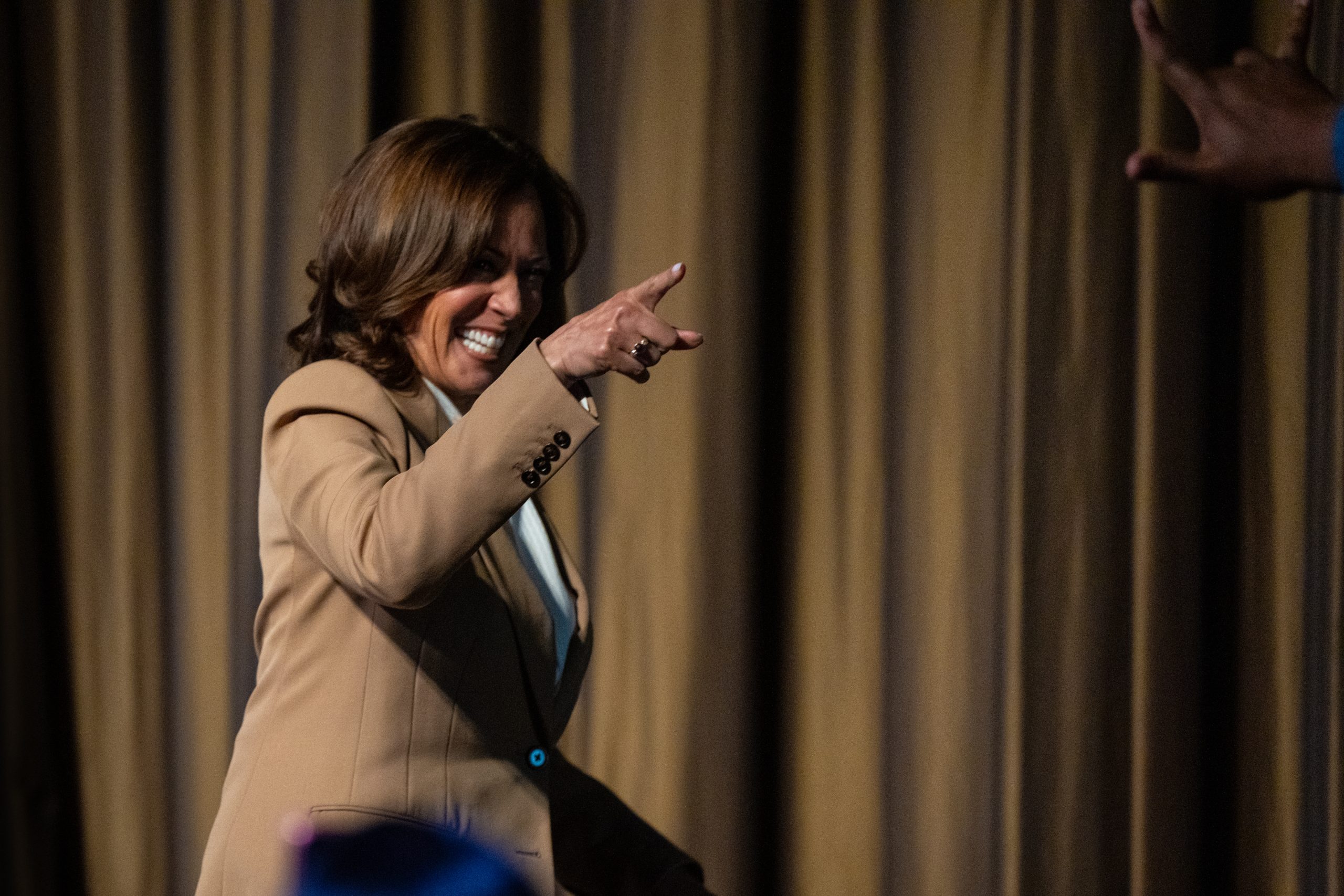

NEW YORK — Kamala Harris just gave the Democratic Party the most explicit sign yet she’ll run for president in 2028.
“Listen, I might, I might. I’m thinking about it,” Harris told the Rev. Al Sharpton at the National Action Network convention on Friday, when he asked her whether she will run again in 2028. “I’ll keep you posted,” she said as she walked off the stage, concluding a roughly 40-minute appearance that was peppered with cheers and a standing ovation from attendees.
The former vice president has toyed with the idea before, but her comments Friday took on a new meaning in front of an audience full of Black lawmakers, influential power brokers and voters at what amounted to the first major cattle-call for the potential 2028 Democratic field.
“I know what the job is and what it requires,” she told Sharpton on stage.
Harris was the sixth possible 2028 contender to take the stage at the conference for a fireside chat with Sharpton, a tacit acknowledgement that whether the hopefuls ultimately decide to run or not, they know they can’t skip this room. But Harris was received with the most enthusiasm from the audience compared to any of the Democrats who spoke earlier this week, including Pennsylvania Gov. Josh Shapiro, Illinois Gov. JB Pritzker and Rep. Ro Khanna (D-Calif.).
The crowd in the packed ballroom chanted, “Run again! Run again!”
At one point, the cheers for Harris grew to such a tenor, Sharpton jokingly admonished the crowd: “This is a convention, not a revival.”

!function(n){if(!window.cnx){window.cnx={},window.cnx.cmd=[];var t=n.createElement(‘iframe’);t.display=’none’,t.onload=function(){var n=t.contentWindow.document,c=n.createElement(‘script’);c.src=”//cd.connatix.com/connatix.player.js”,c.setAttribute(‘async’,’1′),c.setAttribute(‘type’,’text/javascript’),n.body.appendChild(c)},n.head.appendChild(t)}}(document);(new Image()).src=”https://capi.connatix.com/tr/si?token=19654b65-409c-4b38-90db-80cbdea02cf4″;cnx.cmd.push(function(){cnx({“playerId”:”19654b65-409c-4b38-90db-80cbdea02cf4″,”mediaId”:”26e0ae83-b283-4d9f-a6f7-fe67cdb6d0c3″}).render(“69d90605e4b00247ba9aeadd”);});
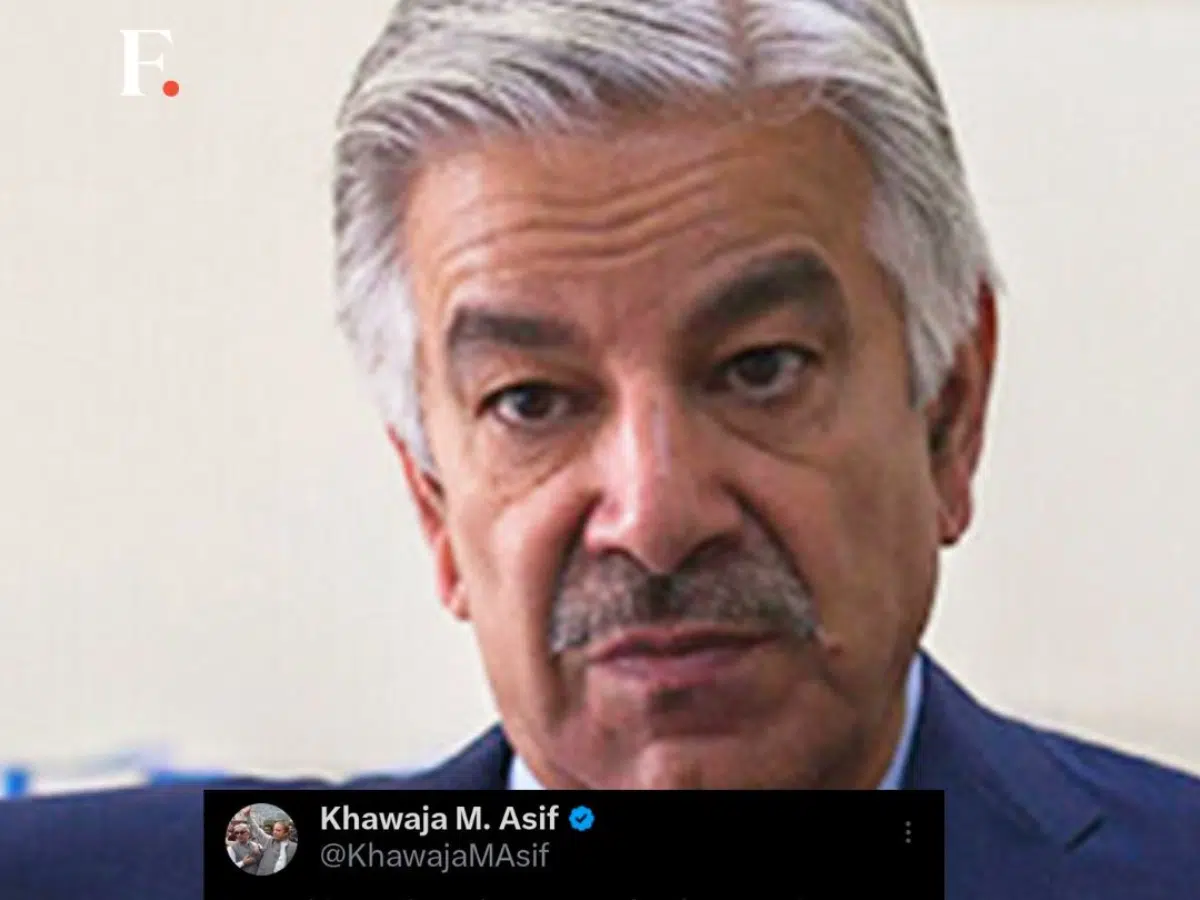
A social media post from Pakistan’s defence minister criticising Israel’s genocidal violence on Lebanon amid ceasefire negotiations has been removed following pressure from Zionists.
Khawaja Asif called Israel a “curse for humanity” for killing innocent civilians in Gaza, Iran and Lebanon. He also implied Israel was sabotaging the “peace talks”.
Pakistani Minister Quietly Scrubs Post Swiping At Israel
DM Asif branded the country a “curse for humanity” in a post that has now disappeared from social media after sparking a backlash.
“First Gaza, then Iran and now Lebanon – bloodletting continues unabated,” the message… pic.twitter.com/unAJtz5m1H
— RT_India (@RT_India_news) April 10, 2026
Rather than addressing or taking accountability for the deadly strikes on Lebanon that killed more than 300 people and wounded nearly 1,200, Israel’s prime minister, Benjamin Netanyahu, claimed Lebanon was not part of the ceasefire agreement. He also hit back at Asif, calling his comments “outrageous”.
Prime Minister Benjamin Netanyahu:
“Dear residents of the North, I am proud of you. You continue to stand firm.
I wish to inform you: There is no ceasefire in Lebanon. We are continuing to strike Hezbollah with full force, and we will not stop until we restore your security. pic.twitter.com/k2JeKXEMBQ
— Prime Minister of Israel (@IsraeliPM) April 9, 2026
Pakistan should remain a ‘neutral arbiter for peace’ apparently
The Prime Minister’s Office:
Pakistan Defence Minister’s call for Israel’s annihilation is outrageous. This is not a statement that can be tolerated from any government, especially not from one that claims to be a neutral arbiter for peace.
— Prime Minister of Israel (@IsraeliPM) April 9, 2026
Asif’s tweet was also attacked by Israel’s foreign minister, Gideon Sa’ar.
Israel views very gravely these blatant antisemitic blood libels from a government claiming to “mediate peace”.
Calling the Jewish state “cancerous” is effectively calling for its annihilation.
Israel will defend itself against terrorists who vow its destruction. https://t.co/CCMveNi9Qu— Gideon Sa’ar | גדעון סער (@gidonsaar) April 9, 2026
The deletion of one Pakistani minister’s tweet did not erase the 300 Lebanese dead, or the growing recognition across the Global South of Israel’s role as the wielder of western-backed violence in West Asia.
Featured image via Firstpost
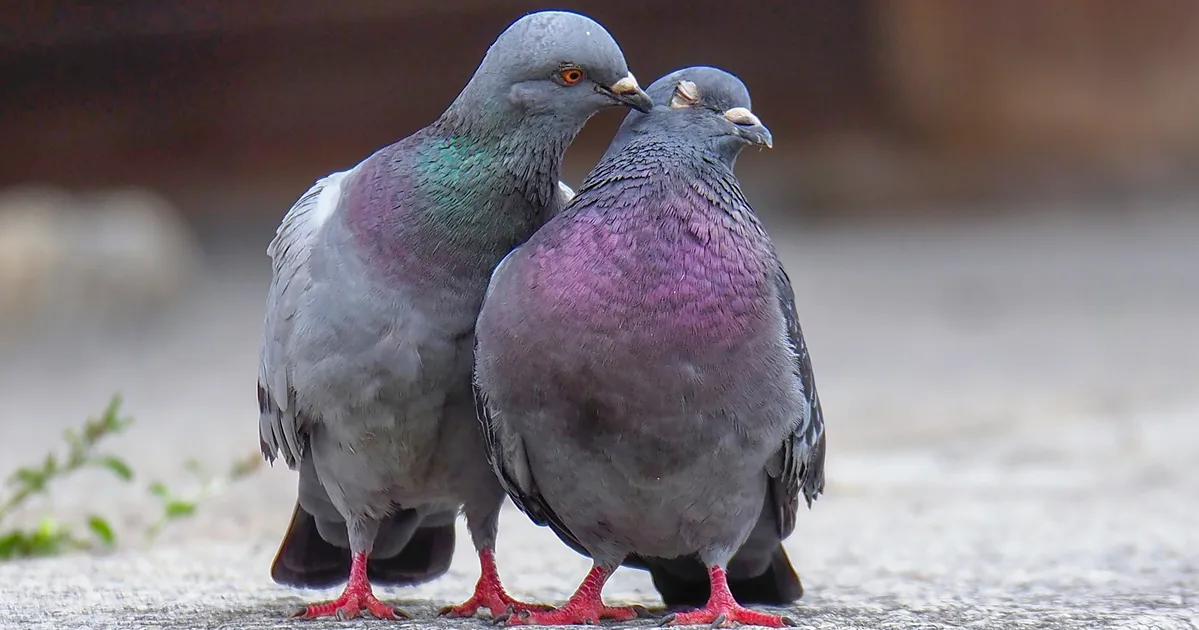
David Attenborough’s new Secret Garden documentaries, which focus on the wildlife in our very own backyard, show just how important unremarkable-seeming species like damselflies and urban foxes are to the natural world.
Speaking to HuffPost UK, an ecologist at ecological consultancy firm Arbtech said that it’s time to rethink the role of much-maligned feral pigeons, too.
“Feral pigeons have filled an ecological hole caused by the decline and absence of many other species that cannot survive in an urban environment,” they said.
Given our history of domesticating, then abandoning, the birds, the ecologist added, we owe them more than our current disdain.
We relied on pigeons for thousands of years
Pigeons “have been among the oldest domesticated species by humans, dating back thousands of years,” the spokesperson told us.
Feral species are descendants of the rock dove. That shows in their nesting habits: their wilder relatives “are cliff nesters, nesting in crevices, with poor nest construction, and the feral pigeon likes cities as the ledges and hiding places mimic those cliff top habitats their ancestors used”.
Historically, the ecologist continued, we’ve used pigeons for loads of tasks, including (famously) sending messages.
“Even the ancient Egyptians and Romans used pigeons for this, and we did use them in WW1 and WW2. This ended with 32 pigeons receiving the Dickin medal (like a Victorian cross for animals) for their efforts.
“I even knew a friend’s grandfather who worked at the hospital and sent blood
samples to the lab via pigeon in the 60s and 70s, as it was still faster than getting there in a car.”
But with email, text, and better tech, that demand dramatically decreased.
So, the spokesperson said, “While some still keep pigeons as pets, or more so now for pigeon racing, the majority were just abandoned and left to fend for themselves.
“Being a species domesticated by us for thousands of years, naturally, they still choose to be around humans, showing little fear of us.”
Now, they’re a key part of our urban ecosystem
Though they’re “not a favourite,” pigeons are uniquely adapted to urban environments. Because of their years of contact with us, humans don’t really bother them.
They “can assist partially as a clean-up crew, cleaning up our crumbs and mess in the cities that we leave behind,” the ecologist said.
“They also fit into the ecosystem as food sources, with the return of peregrine falcons, a bird of prey almost made extinct in the UK. Cities are a favourite site for this bird.
“One reason is the abundance of feral pigeons. They can also be a food source for hawks and even foxes, who are able to sneak up on them.”
That’s not to say they pose no risk to humans: think of “dropping build-up and
nesting material build-up carrying disease,” said the expert.
But the city isn’t always kind to its winged residents, either.
Problems “such as entanglement in nets, thin pieces wrapping around their legs,
eventually causing them to lose toes or feet,” which “can even be caused by something as thin as human hair,” are common.
“They can also receive infections due to the harsh urban environment, getting tiny scratches, which can lead to swollen or necrotic feet.”
How can I help pigeons?
The ecologist said the following steps can help:
- Remove all hazards that could entangle or cut pigeons. “Don’t put out human hair thinking it is a good nesting material; it’s a risk to all birds with
entanglement.” - Capture distressed pigeons with gloved hands, put them in a dark box, and bring them to a vet or wildlife centre. “If the bird has been caught by a cat, even if there are no physical injuries, you must still get it to a rescue, as cat saliva is very dangerous, with the bacteria it contains and can often lead to the bird’s death from just being in contact with a cat’s mouth.”
- Don’t put out too much food. This “will just encourage more pigeons to gather in one location, leading to more dropping and build up, which can lead to complaints and methods to remove or disperse birds”.
- Provide a clean water source. “A shallow dish of water can be a lifeline in a concrete city and can help the birds keep clean.”
- Keep cats indoors, especially during nesting season. “Cats are a non-native introduced predator that has a large impact on bird species. Recently fledged pigeons often don’t fly to begin with, and on the ground, they are very vulnerable.”

Humane World for Animals UK will take its campaign to ban farrowing crates across Scotland from 11-14 April. The charity will bring a life-size animatronic pig named Penny to towns and cities to highlight the harsh reality faced by tens of thousands of mother pigs on farms.
Penny will appear inside a metal crate like those which confine sows while they give birth and nurse their piglets. The striking installation aims to show the severe restriction which mother pigs endure in these systems.
The tour will visit Aberdeenshire, Perthshire, Glasgow and Edinburgh. Campaigners will meet members of the public and raise awareness about pig welfare. The event will culminate at the Edinburgh City Chambers. Humane World for Animals experts will meet with politicians to urge stronger action to end the caging of mother pigs.
As of 2025, Scotland was home to 25,600 sows. About half of these live in indoor pig farms that routinely keep sows in farrowing crates. Under current laws, they can be confined for up to five weeks in the narrow metal cages every time they give birth, typically two or three times a year.
The cages are so restrictive that the animals are unable to turn around. They have little opportunity to engage in natural behaviour such as nest-building or moving freely with their piglets. This badly compromises their physical and mental health.
Farrowing crates typically measure around 200cm in length and 45-65cm in width. Pigs have been selectively bred to be larger than ever, meaning that the relative space available to a sow is even more restricted than when crates were first introduced.
Scottish public rejects pig cages
Polling by the organisation revealed that 84% of the Scottish public rejects the use of farrowing crates for mother pigs. Over half of respondents (54%) stated they would be willing to pay more for meat produced from pigs kept in crate-free systems. This shows that farmers could benefit financially by embracing the highest welfare standards.
The UK government has indicated an intention to phase out conventional farrowing crates. But Humane World for Animals warns that some parts of the industry are shifting towards so-called “flexible” farrowing crates. The organisation says these systems still rely on confining mother pigs in cages and are the same kind of prison under another name.
Claire Bass, senior director of campaigns and public affairs at Humane World for Animals UK, says:
Many people are shocked that such extreme, prolonged confinement is still legal in Scotland. Farmers must end cruel caging, not replace old cages with new ones that would condemn millions more pregnant and lactating pigs to future decades of misery.
A cage is a cage, and the public is clear: mother pigs don’t belong behind bars.
With the Scottish election fast approaching, our tour is turning public compassion into political pressure. Voters across Scotland are demanding change and joining our call for the next Scottish Government to support farmers as part of the effort to put an end to pregnancy cage cruelty.
By touring Scotland with Penny the pig, campaigners hope to spark conversations about the lives of farmed animals. And they’ll encourage parliamentary candidates to support farming systems that allow pigs the space and freedom to express natural behaviour.
Featured image via Marcus Emmerson / Humane World for Animals UK
Who was the real Ferris Bueller? New book sets the record straight

Pedestrians hit by vehicle mounting pavement in Peterborough
Amdocs stock hits 52-week low at 63.32 USD


-

 Business5 days ago
Three Gulf funds agree to back Paramount’s $81 billion takeover of Warner, WSJ reports
-

 Fashion7 days ago
Weekend Open Thread: Spanx – Corporette.com
-

 Sports6 days ago
India men’s 4x400m and mixed 4x100m relay teams register big progress | Other Sports News
-

 Business6 days ago
Expert Picks for Every Need
-

 Tech3 days ago
How Long Can You Drive With Expired Registration? What Florida Law Says
-

 Business5 days ago
No Jackpot Winner, Prize to Climb to $231 Million
-

 Fashion4 days ago
Massimo Dutti Offers Inspiration for Your Summer Mood Board
-

 Fashion3 days ago
Let’s Discuss: DEI in 2026
-

 Crypto World2 days ago
Bitcoin recovers as US and Iran Agree a Ceasefire Deal
-

 Business6 days ago
Akebia Therapeutics, Inc. (AKBA) Discusses Pipeline Progress and Strategic Focus on Kidney Disease Treatments at R&D Day – Slideshow
-

 Crypto World1 day ago
Canary Capital Files SEC Registration for PEPE ETF
-

 Politics7 days ago
The UK should not pay a penny in slavery reparations
-

 NewsBeat7 days ago
Kemi Badenoch talks ‘spring cleaning’ Reform defections
-

 Tech4 days ago
Samsung just gave up on its own Messages app
-

 Tech4 days ago
Haier is betting big that your next TV purchase will be one of these
-

 Business6 hours ago
OpenAI Halts Stargate UK Data Centre Project Over Energy Costs and Copyright Row
-
Sports7 days ago
A Kevin O’Connell Theory Can Now Be Retired
-

 Tech4 days ago
Gamer Restores the Original PlayStation Portal From Two Decades Ago
-
 Sports48 minutes ago
Man United discover Nico Schlotterbeck transfer fee as defender reaches Dortmund agreement
-

 Tech4 days ago
The Xiaomi 17 Ultra has some impressive add-ons that make snapping photos really fun
You must be logged in to post a comment Login