
Politics
Plan To Recreate Val Kilmer With Generative AI In New Film Sparks Backlash

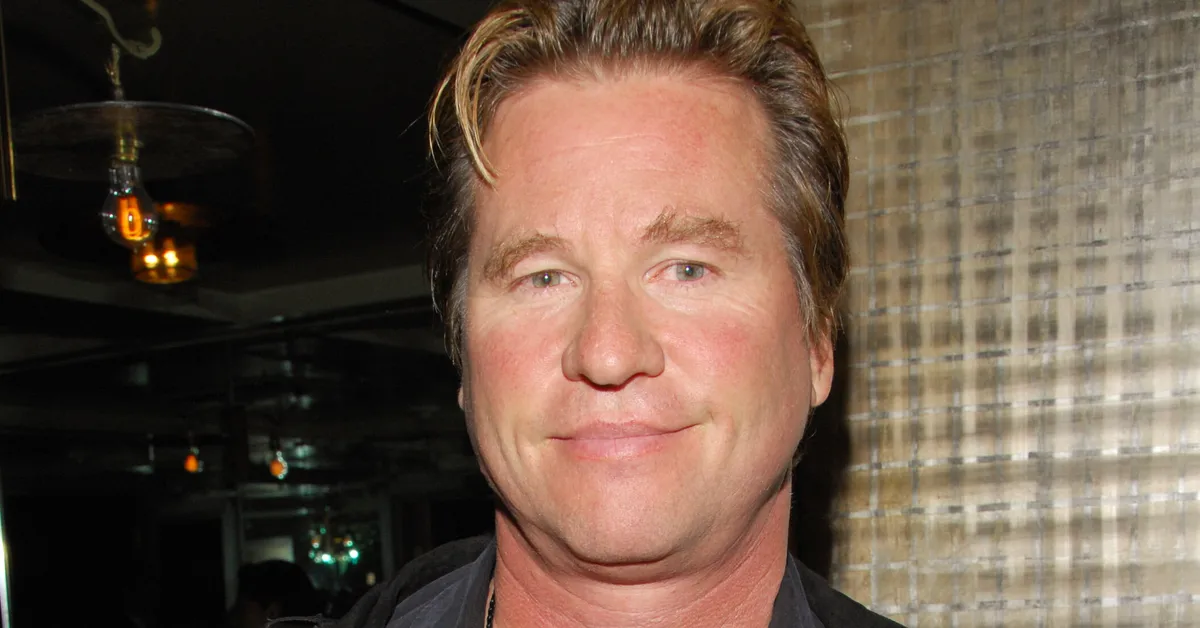
A new film featuring an AI-generated likeness of Val Kilmer as its lead “actor” is already facing a wave of backlash.
The Batman star died in April 2025 at the age of 65, 10 years after first being diagnosed with throat cancer.
Prior to his death, Kilmer had been set to star in the drama As Deep As The Grave, directed by Coerte Voorhees, as a Native American spiritualist and Catholic priest, Father Fintan.
It’s now been confirmed that Voorhees will move forward with the project with an AI likeness of Kilmer used to portray Father Fintan, with the approval of the actor’s estate and his daughter, Mercedes.
The filmmaker told Variety: “His family kept saying how important they thought the movie was and that Val really wanted to be a part of this. He really thought it was important story that he wanted his name on.
“It was that support that gave me the confidence to say, okay let’s do this. Despite the fact some people might call it controversial, this is what Val wanted.”
As was anticipated by Voorhees, the announcement has been met with criticism by many, even if the decision has been approved by the late performer’s family…
Many online critics have already pointed out that the rise of generative artificial intelligence has become a contentious issue in the movie industry over the last few years, with the threats being posed by AI forming a major part of what led to the Hollywood strikes of 2023.
After the SAG-AFTRA strike, actors gained some legal protections against their likenesses being recreated with AI following their deaths, but the issue has continued to come up.
Back in 2024, the film Alien: Romulus featured a digital version of the late actor Ian Holm, which was met with some controversy, while plans to recreate the voice of French actor Alain Dorval in the dub of a recent Sylvester Stallone movie were dropped when his daughter panned them as “unacceptable”.


Europe risks missing the “geothermal revolution” unless policymakers act decisively to unlock next-generation deep geothermal energy. This is according to an open letter to EU leaders.
The coalition consists of nearly 70 businesses, investors, think tanks, and civil society organisations. It calls for concrete measures to scale geothermal energy for both electricity and heat. And it highlights this technology’s potential to generate up to 301 terrawatt-hours annually in the EU. This is equivalent to around 42% of its coal- and gas-fired generation. Meanwhile the letter points to a much larger potential estimated at nearly 40 terrawatts, or roughly 35 times Europe’s current installed electricity capacity.
Next-generation geothermal technologies enabled by deeper drilling could provide a domestic source of reliable, 24/7 clean energy across many member states. These technologies allow access to heat resources several kilometres underground, significantly expanding geothermal’s potential beyond traditional volcanic regions.
The letter warns that the European Commission’s forthcoming Geothermal Action Plan, due in May, risks underestimating the technology’s strategic opportunity if it is treated primarily as part of heating and cooling policy rather than as a broader source of firm electricity, industrial heat, and critical raw materials such as lithium.
Dr. Marlène Siméon, director of policy at Future Cleantech Architects, said:
With next-generation geothermal energy, Europe has abundant, clean, and firm energy at its feet. By embracing this technology, it can strengthen energy security, towards reliable and dispatchable energy, better compete with Chinese and US geothermal projects, and reduce dependence on oil and gas – the Achilles heel of the EU’s energy system.
The letter, addressed to European Commission president Ursula von der Leyen and key commissioners, is led by Cleantech for Europe, Future Cleantech Architects, and the European Geothermal Energy Council. Nearly 70 signatories support it, including cleantech companies, innovators and investors, NGOs, and research groups.
Factors limiting geothermal growth
While Europe has strong technological leadership in advanced geothermal systems, the coalition argues that insufficient political prioritisation has slowed deployment compared to other clean technologies.
The letter identifies three key barriers limiting investment:
- High upfront costs and risk associated with exploration and deep drilling.
- Lack of long-term revenue certainty.
- Complex permitting and grid connection procedures.
To address these challenges, the coalition calls for:
- A dedicated EU geothermal de-risking facility.
- Bankable market frameworks supporting investment.
- Faster permitting procedures and improved access to data.
- Stronger political prioritisation of geothermal in the EU energy strategy.
With global competition in next-generation technologies accelerating, the signatories emphasise that the upcoming Geothermal Action Plan represents a critical opportunity to position geothermal as a pillar of Europe’s clean industrial strategy.
Sanjeev Kumar, policy director at the European Geothermal Energy Council, said:
The Geothermal Action Plan must outline effective measures to overcome investment barriers and rapidly deploy geothermal so that everyone benefits from cheap, stable and homegrown energy.
Director of Cleantech for Europe Victor van Hoorn added:
Europe can ill afford another energy crisis like 2022. Scaling firm 24/7 domestic energy is now a competitiveness and security imperative. Geothermal – the heat below our feet – has the potential to play a system-level role – but only if we unlock investment and deployment at scale.
GA Drilling founder Igor Kocis said:
Europe has the technology and resources to unlock geothermal at scale, the missing piece is faster execution and targeted investment. If we are serious about energy security and reducing dependency on imported fuels, we need to invest in stable, local baseload energy, and geothermal is the most effective solution to deliver that over time.
And Baseload Capital CEO Alexander Helling commented:
Europe must break free from its fossil fuel addiction, and the answer lies beneath our feet: by rapidly scaling geothermal energy, we can unlock clean, always-on power, heating, and cooling for a competitive, affordable and sustainable future.
Feature image via the Canary

Our sports editor Faisal Ali was on the ground in Portugal to watch Porto face Nottingham Forest in the UEFA Europa League
Porto came out on the front foot and tested Nottingham Forest from the first whistle. Moffi forced Stefan Ortega into the first of several sharp saves, a moment that set the tone as Porto looked to control territory and tempo.
Porto struck first with a composed, incisive move. In the 11th minute, Gabriel Veiga’s disguised, angled pass split the Forest defence, allowing William Gomes to meet the ball at the far post and thunder it high into the net — a textbook Porto finish.
Just two minutes later, the match turned. Under no pressure, the young full back rolled a routine back pass toward Diogo Costa — only to watch it skip past the goalkeeper’s foot and trundle into the net, handing Forest an unexpected equaliser and quieting the Dragão.
Ortega maintains Forest’s hopes
Following their concession, Porto intensified their efforts, and Ortega emerged as Forest’s most active player. His remarkable reaction save against Moffi’s glancing header just before the break proved pivotal; Ortega “leapt to his right to expertly claw the ball away,” safeguarding the 1–1 score line as the teams headed into half-time.
After the interval, Porto persisted in their search for opportunities, crafting numerous chances and challenging Ortega time and again. One particularly noteworthy save, made with his left hand in response to a curling shot, was described as “the kind of save that keeps a European tie alive”, a fitting testament to Ortega’s performance as Forest maintained their compactness and discipline throughout.
VAR drama and near misses from Porto
Porto’s substitutions upped the intensity, and Froholdt’s low drive came agonizingly close to settling the contest. Igor Jesus seemed to have handed Forest a shock lead, only for VAR to chalk it off for a high boot after review, a decision that briefly unsettled the rhythm.
In the final moments, Porto launched a concerted offensive. During stoppage time, Thiago Silva ascended to meet the ball, but Ortega was once more equal to the task, expertly palming it away with both hands.
This remarkable save epitomised Forest’s resilience, ensuring the tie remained alive as they headed into the second leg.
Managers, players, and perspectives
Porto boss Francesco Farioli was candid after the match:
We created enough to win two matches… We left the door open.
Forest’s head coach praised his players’ spirit:
We had to suffer — and we did… Ortega was outstanding, the defenders were brave” (BBC Sport). Ortega himself stayed matter of fact: “My job is to keep the ball out. Tonight it was busy, but that’s football. We’re still in the tie.
Porto thoroughly controlled possession and created a multitude of opportunities; however, Forest’s steadfast organization, bolstered by a stroke of luck, resulted in a 1–1 away draw that maintains the suspense of the Europa League quarter-final.
The tie now transitions to Nottingham, where the second leg will determine which side advances.
Featured image via the Canary

FIFA has announced the list of referees who will officiate at the 2026 FIFA World Cup, following a meticulous, comprehensive selection process spanning three years.
The official refereeing team, ‘Team One’, comprises 52 referees, 88 assistant referees, and 30 video assistant referees, representing the six continental confederations and covering 50 national associations, forming the largest refereeing team in the tournament’s history.
The referees were selected based on the principle of “quality first”, taking into account consistency of performance in domestic and international matches, whether in FIFA tournaments or other official competitions, with candidates undergoing rigorous assessment over the past three years, alongside participation in training seminars and workshops.
According to a FIFA statement, a copy of which was received by the Canary, Pierluigi Collina, FIFA’s Chief Refereeing Officer and Chairman of the Referees’ Committee, said:
The referees selected are the best in the world. They have received comprehensive support from fitness and medical teams, including physiotherapists and mental health support, to ensure they arrive in Miami on 31 May in peak physical and mental condition.
Largest number of referees in World Cup history
Colina added:
The 2026 edition will feature 48 teams and 104 matches across the widest geographical scope in the tournament’s history. ‘Team One’ is larger than any previous squad, with 41 additional referees compared to the 2022 World Cup in Qatar, whilst the representation of women continues to be strengthened through the appointment of six female referees.
The referees are undergoing daily training sessions involving local players, and are receiving detailed briefings from FIFA analysts to ensure they are fully prepared for every match. Technology will support refereeing decisions through goal-line technology, semi-automated offside technology and connected ball technology, whilst fans will, for the first time, be able to follow the action from the referee’s perspective on the pitch.
A structured development programme
Massimo Busacca, FIFA’s Head of Refereeing, explained: “We began preparations for the 2026 World Cup immediately after Qatar 2022, through a structured programme of seminars, workshops and close monitoring, to ensure referees meet the highest possible standards during the tournament.”
Miami will serve as the base for the refereeing team, where a ten-day preparatory seminar will begin, with the video referees subsequently moving to Dallas to complete their work at the International Broadcast Centre, whilst the match officials, assistants and support staff remain in Miami.
New measures aimed at improving the flow of matches and reducing time-wasting will also be implemented during the tournament, in line with the latest IFAB amendments, alongside three updated changes to the VAR protocol, with the use of AI-powered software to improve the quality of real-time footage, giving fans a clearer view from the referee’s perspective.
Controversial refereeing decision in the Champions League
The Champions League quarter-final match between Barcelona and Atlético Madrid at Camp Nou, which ended in a 2-0 win for Atlético, sparked widespread controversy over European refereeing, due to decisions made by Romanian referee Ștefan Covaci at crucial moments.
The most controversial incident occurred in the 54th minute, when an Atlético player handled the ball inside the penalty area, but the referee did not award a penalty to the Catalan side, nor did German VAR official Christian Dingert intervene. This incident angered refereeing experts, who considered it warranted a penalty, and perhaps a yellow card for the goalkeeper.
One rule, different rulings
The controversy intensifies when comparing this situation to a similar incident in last season’s Champions League, during the Club Brugge v Aston Villa match, where VAR intervened and the referee awarded a penalty following a handball by an Aston Villa player. A similar incident also occurred in Argentina three years ago.
This inconsistency raises a fundamental question: are the rules clear enough? Whilst football regulations stipulate that deliberate handballs inside the penalty area warrant a penalty, it appears that practical application varies between referees, depending on their assessment of intent and the angle from which they viewed the incident, which sometimes leads to differing outcomes in similar situations.
The variation in decisions highlights that whilst the laws are the same and the game is similar, application differs from referee to referee, despite the presence of video assistant technology designed to minimise errors. More importantly, such refereeing decisions can have a direct impact on the match result and a team’s progress in the tournament, which increases the pressure on referees and raises questions about the consistency of rule application at the highest European levels.
Expected sanctions – but not for the World Cup
In light of these events, the Union of European Football Associations (UEFA) is considering imposing a sanction on referee Kovač, and possibly excluding him from officiating this season’s Champions League semi-finals, despite the fact that he refereed last season’s final between Paris Saint-Germain and Inter Milan at the Allianz Arena.
Controversy remains over the ability of refereeing to deliver complete justice at decisive moments, despite the use of video technology, highlighting the variation in the interpretation of the rules among referees even at the highest European levels.
Featured image via the Canary

The Champions League football quarter-final between Barcelona and Atlético Madrid at the Camp Nou, which ended in a 2-0 victory for Atlético, sparked widespread controversy over European refereeing, due to decisions made by Romanian referee Ștefan Covaci at crucial moments.
The most controversial incident occurred in the 54th minute, when an Atlético player handled the ball inside the penalty area, but the referee did not award a penalty to the Catalan side, nor did the German Christian Dingert, in charge of the Video Assistant Referee (VAR), intervene. This incident angered refereeing experts, who considered it warranted a penalty, and perhaps a yellow card for the goalkeeper.
One rule, different rulings in the Champions League
The controversy intensifies when comparing this situation to a similar incident in last season’s Champions League, during the Club Brugge v Aston Villa match, where VAR intervened, and the referee awarded a penalty following a handball by an Aston Villa player. A similar incident also occurred in Argentina three years ago.
This inconsistency raises a fundamental question: are the rules clear enough? Whilst football regulations stipulate that deliberate handballs inside the penalty area warrant a penalty, the practical application varies between referees, depending on their assessment of intent and the angle from which they view the incident, which sometimes leads to differing outcomes in similar situations.
The variation in decisions highlights that whilst the laws are the same and the game is similar, the application differs from referee to referee, despite the presence of video assistant technology designed to minimise errors. More importantly, such refereeing decisions can directly affect the match result and a team’s progress in the tournament, increasing pressure on referees and raising questions about the consistency of rule application at the highest European levels.
Expected sanctions
In light of these events, the Union of European Football Associations (UEFA) is considering imposing a sanction on referee Kovač, and possibly barring him from officiating this season’s Champions League semi-finals, despite the fact that he refereed last season’s final between Paris Saint-Germain and Inter Milan at the Allianz Arena.
Controversy remains over the ability of refereeing to deliver complete justice at decisive moments, despite the use of video technology, which highlights the disparity in the interpretation of the rules among referees even at the highest European levels.
Featured image via the Canary
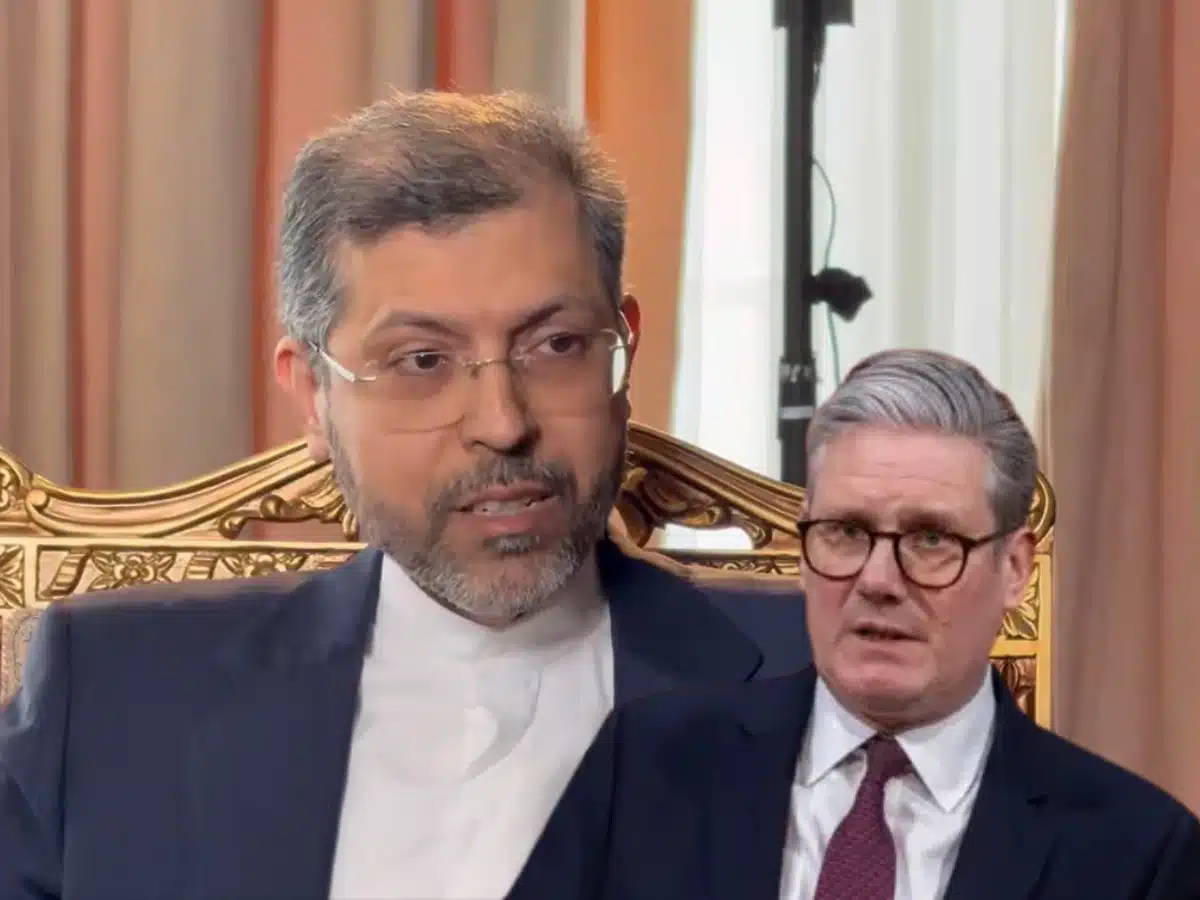
A senior Iranian official has said the Keir Starmer’s claim that the UK only has a ‘defensive role’ in the US-Israeli attack on the country is “nonsense”. Iran’s deputy foreign minister Saeed Khatibzadeh called out the UK, saying US bombers flown from British bases had killed civilians and damaged civilian infrastructure.
ITV international editor Emma Murphy shared Khatibzadeh’s statement on 9 April:
Iran certainly doesn’t agree with the British government’s position that UK bases were only used by the US for defensive rather than offensive missions. Iran’s deputy foreign minister @SKhatibzadeh says some of the bombers which left from UK bases were on missions which led to… pic.twitter.com/paychYXf80
— Emma Murphy (@emmamurphyitv) April 9, 2026
He said:
The UK provided bases for B2 bomber to be used to kill Iranians, to kill kids, thousand of Iranian civilians and also civilian infrastructure.
It is nonsense that in a war the country says I am not part of this but I provide infrastructure to start offensive operations against another country. Then you are providing bases for that.
Adding:
And you know that B2 bomber [were] used to bomb hospitals, used to bomb schools, used to bomb, you know, the civilian infrastructure. It’s not some sort of propaganda from Iran, you can go and see one of the B2 bomber demolished four residential buildings.
Ten point plan and Iran
Iran also made clear that the original ten-point peace plans was the one they viewed as legitimate, despite US protests that it this was not the case.
Importantly, Iranian officials said an end to Israeli attacks in Lebanon were a non-negotiable part of the deal. Foreign ministry spokesperson Esmaeil Baghaei said on 9 April:
⚡️”Talks to end the war are conditional on U.S. adherence to ceasefire commitments across all fronts, especially in Lebanon,” spokesperson for the Iran’s Ministry of Foreign Affairs told reporters today.
▫️ Esmaeil Baghaei, the Foreign Ministry spokesperson, praised the “heroic… pic.twitter.com/ZdhfK0xZtc
— Drop Site (@DropSiteNews) April 9, 2026
And Iran’s president Masoud Pezeshkian said on X:
The repeated aggression by the Zionist entity against Lebanon is a flagrant violation of the initial ceasefire agreement and a dangerous indicator of deceit and lack of commitment to potential accords. The continuation of these aggressions will render negotiations meaningless; our hands will remain on the trigger, and Iran will never abandon its Lebanese brothers and sisters.
إنّ اعتداء الكيان الصهيوني المتكرر على لبنان هو انتهاك صارخ لاتفاق وقف إطلاق النار الأولي ومؤشر خطير على الخداع وعدم الالتزام بالاتفاقات المحتملة. مواصلة هذه الاعتداءات سيجعل التفاوض بلا معنى؛ أيدينا ستبقى على الزناد، ولن تتخلّى إيران عن إخوتها وأخواتها اللبنانيين قطّ.
— Masoud Pezeshkian (@drpezeshkian) April 9, 2026
US-Israel attacked Iran first on 28 February without provocation. Iran was offering unprecedented concessions in negotiations at the time. The Pentagon has since stated there was no imminent threat from Iran. And the UN’s atomic watchdog, the IAEA, has said there is no evidence Iran was developing a nuclear weapon.
The US has achieved none of its original war aims. Iran predictably closed the Strait of Hormuz, a vital oil channel, once attacked – creating a global energy crisis. Far from being defeated, Iran has said the war will continue until “the enemy’s inevitable and permanent humiliation, disgrace, regret, and surrender”. Trump came to power on an anti-war ‘America First’ ticket. He now faces worldwide humiliation.
Israel – and by extension the US – are already undermining the hard-won pause brokered by China and Pakistan. The US killed Iranians from UK bases. Starmer won’t own up, but the truth of the matter is evident to many.
Featured image via the Canary
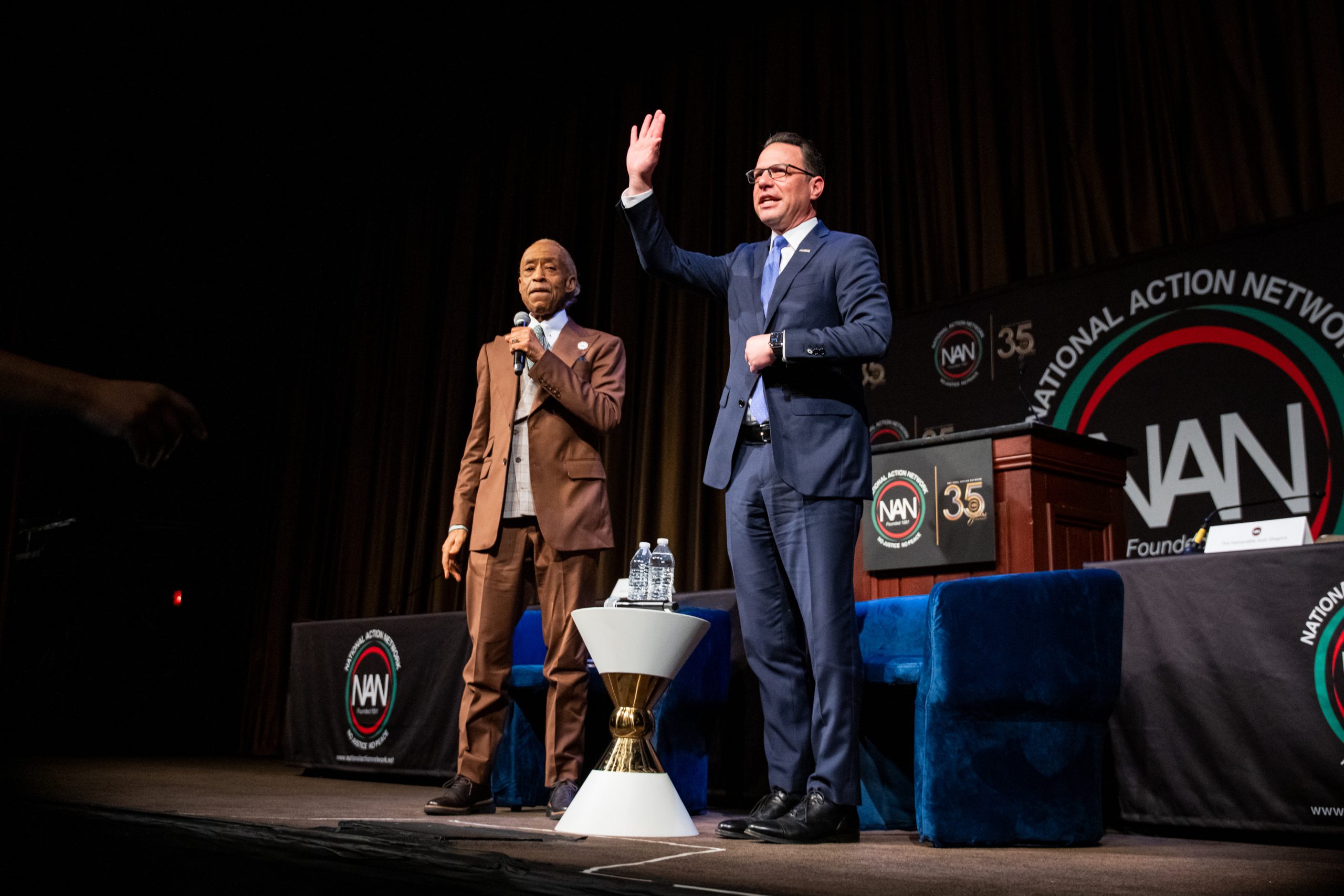

PILGRIMAGE: The biggest names in politics are flying in from around the country to meet the Rev. Al Sharpton.
Governors Wes Moore from Maryland and JB Pritzker from Illinois and Sen. Ruben Gallego (D-Ariz.) spoke with him today. Yesterday was Pennsylvania’s Gov. Josh Shapiro. Still up is former Vice President Kamala Harris, Kentucky Gov. Andy Beshear and Sen. Cory Booker (D-N.J.).
These potential 2028 presidential hopefuls — in town for the 35th convention of Sharpton’s National Action Network — know that one thing that’s true in New York extends to the whole country.
“If you want to go somewhere in the City of New York, in anything, whatever your profession is, you’ve got to come to the Dr. Rev. Al Sharpton,” Harlem Assemblymember Jordan Wright said.
Sharpton is spending the week basking in that clout. Of course, it wasn’t always this way. Former mayors Ed Koch and Rudy Giuliani viewed him as a chaos agent and enemy. Now, the who’s-who of national and local politics are elbowing their way to see and be seen at his four-day convention.
“They’re showing up because he deserves the respect of everyone in this country,” Gov. Kathy Hochul told Playbook. “He’s been a close adviser a long time. I call him up. And in fact, I spoke to him the day I found out I was going to be governor, watching it on television. I called him up, and he said, ‘I’ll pray for you.’ I got down on my knees, and I prayed myself for wisdom and for justice.”
Sharpton’s influence, for instance, was on full display in New York last year when the field of mayoral candidates trekked to his House of Justice in Harlem — which will soon be relocated — to show deference as they aimed for City Hall. There, Sharpton spoke positively about Andrew Cuomo during the primary and even chided then-mayoral-candidate Zohran Mamdani for not endorsing former Council Speaker Adrienne Adams, a Black woman, in a high enough spot on his ranked-choice ballot.
“Somehow that politics ain’t progressive to me,” Sharpton said nine days before the primary.
Still, Mamdani chose to visit Sharpton at the House of Justice in his first public appearance after his win. That morning, Sharpton took Mamdani’s hand and raised it into the air, as if declaring him the winner by knockout in a boxing match.
Last week, Sharpton raised eyebrows when he told our colleagues in Washington he thinks Harris deserves a second look as a presidential candidate, attempting to thread the needle for Harris the same way he had for Adrienne Adams.
He clarified — and defended — those comments while speaking with us Wednesday night.
“I don’t know if she’s gonna run, but I see her [facing] a lot of sexism and racism,” Sharpton said. “Don’t dismiss her. Let her decide what she’s going to do. She got more votes than any presidential candidate in history, other than Donald Trump. She ought to be acknowledged for that.” — Jason Beeferman
From the Capitol

NOTHING IS OVER: State workers earned $1.6 billion in overtime in 2025, a 22.7 percent increase from the prior year, according to a report released Thursday morning by Comptroller Tom DiNapoli’s office.
The findings come as unions are pressing to expand retirement benefits in the Tier 6 pension category — changes that would cost state and local governments up to $1.5 billion a year.
“State agencies need to carefully monitor overtime to ensure that its use is justified and that state services are provided safely and effectively,” the overtime report found. “The use of overtime can have a substantial impact on long-term pension costs.”
Read more from POLITICO Pro’s Nick Reisman.
PARTY RAIDS: Progressives in the Hudson Valley seem to have avoided the party raiding that’s been the norm in that corner of the state — but one candidate in Saratoga County is raising eyebrows.
It’s become increasingly common for allies of major party candidates to manipulate minor party nominations. Most prominently, a former Republican won the 2024 Working Families Party’s primary in Rep. Mike Lawler’s district after being supported by people who joined the WFP days before the deadline. That ensured the left would split its vote.
A comparable situation in area congressional or state legislative districts doesn’t appear to exist this year. The only candidate who submitted petitions to challenge Lawler on a minor line was the WFP-backed Democrat Effie Phillips-Staley.
Still, there was a curious registration in the Saratoga-area district held by Democratic Assemblymember Carrie Woerner.
The only candidate who submitted for the WFP line in that district was a Thomas Kenny. Attempts to figure out just who he is weren’t immediately successful — as of January, nobody with that name was registered to vote in that corner of the state. Woerner’s campaign believes he might have been a Conservative until recently, possibly living elsewhere.
There have been some electoral oddities in the county in the past. Dozens of individuals connected to the Saratoga Springs Police Department switched their registration from the Republican or Conservative Parties to the WFP in 2021, forcing a primary against the Democratic supervisor.
Saratoga GOP Chair Joe Suhrada said he didn’t know anything about the Kenny candidacy.
“I don’t know him and I’m not sure who he is,” Suhrada said. He theorized the candidate — unknown to Democrats and the WFP alike — might be a leftist. “There are so many people who decry the Democrats as supposedly not standing up to Trump enough … That could be the case here.” — Bill Mahoney
FROM THE CAMPAIGN TRAIL

CALLING IT QUITS: Just hours before tonight’s Democratic debate to take on Lawler in NY-17, tech executive and local government official Peter Chatzky ended his bid. Chatzky, who loaned himself a whopping $5 million, was set to take the stage with Army veteran Cait Conley, Rockland County Legislator Beth Davidson and Phillips-Staley.
In a statement, Chatzky criticized the “machinery of the Democratic party” and said that if he continued his campaign, “the party establishment and my competitors would need to spend significant effort and money to defeat me, resources that would be better used to defeat Mike Lawler.”
Chatzky had been vying to claim the progressive lane, which Working Families Party-backed Phillips-Staley is also pushing for. Last month, Phillips-Staley was the only candidate to call on Chatzky to drop out after reports of his bawdy online posts emerged. (Chatzky did not mention those incidents in his statement, though he has made the rounds in local media explaining his sense of humor.) Conley and Davidson are taking a more moderate approach to their candidacies.
Chatzky did not immediately endorse an opponent upon dropping out.
That leaves five candidates in the running for the Democratic nomination: Conley, Davidson and Phillips-Staley, along with former TV reporter Mike Sacks and Air Force veteran John Cappello. The latter two were not invited to participate in tonight’s debate and have largely flown under the radar. — Madison Fernandez
HOCHUL DOUBLES DOWN ON NY-21: Hochul isn’t backing down from her bet that Rep. Elise Stefanik’s deep-red seat could actually turn blue.
Speaking with reporters today at an unrelated event, Hochul said she’s spent time listening to New Yorkers of all stripes during her trips to the North Country and thinks Democrats could flip the district.
“Conservative, Republican farmers [are] telling me they are ‘had it’ with the tariffs, they are ‘had it’ with this ICE raids on their farms,” Hochul said. “I heard a lot of anger. I was reflecting on that as a place that people would not expect us to have an opportunity to win, where I believe we do. People are rejecting the policies that are driving up costs and making their lives miserable.”
Hochul told Young Democrats last month that she’s “so optimistic about our chances this year, I believe we can even take Elise Stefanik’s seat.”
Stefanik, who is not seeking reelection, won her seat in a general election by 24 points. Assemblymember Robert Smullen and Sticker Mule CEO Anthony Constantino are running as Republicans to replace her. Democrat Blake Gendebien is running for the seat. — Jason Beeferman
IN OTHER NEWS
— CHILLING EFFECT?: According to the Rent Guidelines Board, landlord costs rose by 5.3 percent over the last year, an increase that could undermine Mamdani’s efforts to freeze rents for the city’s rent-stabilized apartments. (POLITICO Pro)
— FULL-TIME TOTS: Mamdani announces full-day, year-round care for New York City’s 2-K program with the first 2,000 seats opening this fall with extended-hours. (New York Daily News)
— NOT BRAGG, BUT…: Housing groups are pushing for new tenant harassment protections in the state budget that would create criminal penalties for harassing rent-stabilized apartment dwellers. (amNY)
Missed this morning’s New York Playbook? We forgive you. Read it here.
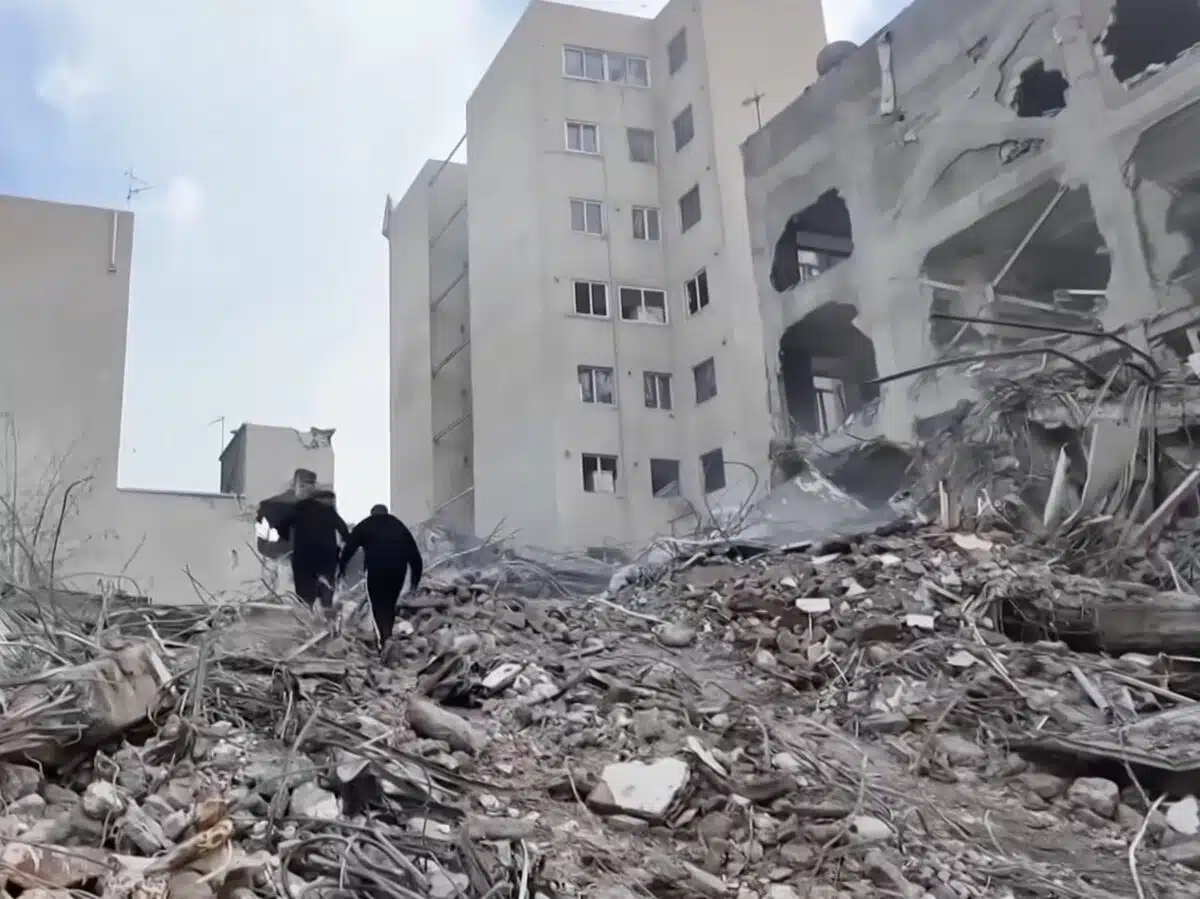
The head of Iran’s Jewish Community has said that the Israeli regime’s claims about defending Jews are a shameful lie after it bombed a synagogue in Tehran.
Head of Iranian Jewish Community on Rubbles of Israeli-Hit Synagogue:
“Shameful” “All the Israeli regime’s claims about defending Jews are nothing more than a shameful lie,” said Rabbi Younes Hamami Lalehzar, calling Israel’s attack on a synagogue in a residential area an… pic.twitter.com/vjB4q3s6nr
— Ounka (@OunkaOnX) April 8, 2026
The synagogue was one of the religious centres of Tehran’s Jews, dating back to the Pahlavi II era. Israel completely destroyed it in an airstrike.
Iran’s Students News Agency (ISNA) reported that:
the centuries-old Torahs were likely heavily damaged, and their fate is currently unknown.
Western media complicity
However, this attack has barely made the news, unlike every other attack on synagogues or jews across the world, which the mainstream media has rinsed for every second it can.
Remember the amount of coverage @LBC gave to 4 burned out ambulances? Do an hour on this @IainDale, @ShelaghFogarty, @NickFerrariLBC, get an Israeli spokesperson on and ask them tough questions on it. Why don’t you do the bare minimum & just mention it. https://t.co/BZvUvwM8Fe
— John Stealer (@JohnStealer) April 9, 2026
The IOF has claimed the synagogue was ‘collateral damage’. But can you imagine if Iran, or any resistance force, claimed the same thing?
Here is something that you WILL NOT SEE on the BBC. https://t.co/2UzG9XBQWm
— Mark Seddon (@MarkSeddon1962) April 8, 2026
Western media would have a field day.
The only Western news outlet that appears to have covered the attack is CNN. However, that coverage is minimal and comes nowhere close to even mentioning the hypocrisy of Israel bombing a synagogue.
Corporate media seems to collectively ignore the millions of jews globally who condemn Israel’s war crimes.
The British media including @BBCNews generally IGNORE the millions of Jews globally who condemn the actions of Israel
Not least @BBCr4today. Perhaps they will speak to THESE Jews in post BELOW? https://t.co/bxWJi8afYd
— Tom London (@TomLondon6) April 8, 2026
Places of worship – including Iran’s Jewish synagogues – bombed
From Mosques and churches in Gaza, to the Synagogue in Tehran – considering that Israel is supposedly ‘God’s chosen country’, it seems pretty hypocritical that it holds absolutely no regard for bombing places of worship.
Within the last 2 years, israel has destroyed mosques in Gaza, churches in Lebanon and now synagogues in Iran. https://t.co/k4XyBS7x7j
— Husam Kaid (@Husam_Khaled1) April 8, 2026
Additionally, international humanitarian law provides strong protection for places of worship.
According to Scientific Research:
The protection is included in the 1954 Hague Convention for the Protection of Cultural Property in the event of Armed Conflicts, Additional Protocol I and II to the Geneva Conventions of 1949, Statute of the International Criminal Tribunal for the Former Yugoslavia (ICTY), and the Statute of the International Criminal Court
Places of worship are recognised as protected places under the definition of “cultural properties”. This means no countries or armed groups should attack or destroy them.
This is a war crime.
Regardless of religion, bombing a civilian place of worship contravenes the Geneva Convention.
Same happening in Lebanon.
Gaza is a bomb site.
Will someone please take a stand on terrorism dressed up as “war”?
I’m done with old men ruining it for children. https://t.co/n7Pc1OG5ng— Jenn Knussen 💜 (@JKnussen) April 8, 2026
ANtiSeMiTiSM
You can imagine the antisemitism screams if resistance fighters took out a synagogue as ‘collateral damage’.
If a synagogue in Tel Aviv had been hit by an Iranian rocket it would be front page news across Western media with much wailing. Because Israeli is the perpetrator there’s 🦗🦗🦗 https://t.co/G8Ej8vcTk3
— Dr Sassenach (@Dr_Sassenach) April 8, 2026
Yet no one is condemning Israel.
Why is no one condemning Israel for this anti-Semitic attack on the Iranian Jewish community during Passover? https://t.co/5tCljndP0Y
— Wardāh Wilkinson 🇿🇦 (@WardahWilkinson) April 8, 2026
Israel is supposedly the ‘Jewish state’ – but is more than happy to bomb jews in another country.
Stop attacking other Jewish people and their synagogues. For a start. https://t.co/T9xcQRfQIB
— Barry Saturday 🇺🇸 (@Barry_Saturday) April 8, 2026
All you have to do is look at the thousands of people which police forces globally have arrested and chastised for ‘antisemitism’ – simply for standing up for Palestine.
Protesters for Palestinian lives/rights protest near a synagogue holding an event selling real estate in West Bank settlements: ANTISEMITIC ATTACK! JAIl/DEPORT THEM! BAN PROTEST!
Israel totally destroys a major synagogue in Tehran, burying the torahs in the rubble: meh. https://t.co/qVMGdX2rS5
— Lara Friedman (@LaraFriedmanDC) April 8, 2026
Meanwhile, Israel buries centuries-old Torahs with its missiles.
The reality is, Israel does not care if you are Jewish or not.
Israel does not care of you are Jewish or not. It’s really that simple. https://t.co/TYBU8doFvf
— Lee Gaze (@shinjukutheif1) April 8, 2026
Additionally, shattering historic temples and killing the inhabitants appears to be the exact opposite of ‘freeing the Iranian people’.
Iran’s Jewish community: attacked
Israel is weaponising Jewishness to hide its war crimes.
The hypocrisy is astounding. Attacking synagogues is antisemitic. Unless Israel is attacking them, and then it’s ‘collateral damage’. And the media is letting the genocidal terrorist state off the hook – unlike when the synagogues of white Jews are attacked in Europe.
Is it because Iranians are brown? Because ultimately, we know that the only lives that Israel and the majority of the West appear to care about are white people.
Feature image via Al Jazeera English/YouTube

Israeli military whistleblowers have given remarkable testimony about their work inside the settler-colonial state’s propaganda machine. Terms like Israeli ‘psy-op’ and ‘false flag’ are sorely overused, often as low-effort reflexive explanations that skip actual analysis or reporting. Working with investigative reporters from a Hebrew-language outlet named The Hottest Place in Hell, +972 Magazine has helped reveal what working inside what is more correctly called an ‘influence operation’ is actually like.
Inside an Israeli psy-op
Israeli intelligence operations are highly sophisticated and have been widely written about. Israeli media operations are less well reported in detail. Now, personnel from the Israeli military’s Spokesman’s Unit and Israeli journalists who cover the military have:
pointed to a systematic pattern: an obsessive drive to control the public discourse, preferential treatment for “convenient” journalists while sidelining and punishing critical ones, and, above all, an organizational culture of deception.
The Spokesman’s Unit is described as:
the public’s primary gateway to the military, mediated through the press. To obtain information, verify details, or interview military officials, journalists must go through the unit.
This status imbues it with:
a power that… is often abused to distort media coverage, and by extension, the Israeli public’s perception of the army.
NEW: Between October 2023 and December 2024, the Israeli army ran a covert psy-op aimed at shaping public opinion in Israel and abroad, originating from the “campaigns” division of the IDF Spokesperson’s Unit, @ha_makom recently revealed. 🧵
— +972 Magazine (@972mag) April 9, 2026
The investigators also said:
During the first 14 months of Israel’s war in Gaza, the IDF Spokesperson’s Unit also ran a covert psychological operations campaign aimed at shaping public opinion in Israel and abroad.
Adding:
In parallel to these influence efforts, the unit was tasked with processing and distributing footage from Hamas’ October 7 attack on Israeli communities near Gaza.
Weaponising a massacre
This last task – reformatting 7 October footage for propaganda – was a major operation of itself. It involved soldiers gathering:
large volumes of visual material — including footage filmed by Hamas militants — and reformatted it for rapid circulation on social media platforms.
This later became the basis for the major Israeli propaganda video titled ‘Bearing Witness to the October 7 Massacre’:
a 47-minute compilation of raw footage produced under the supervision of Major (res.) Yuval Horowitz, head of the campaigns division.
One military whistleblower said:
It was like the Wild West — there was no censorship.
The Israeli aim was to get the biggest shock value and a major propaganda win:
We were flooded with material and saw everything. I was in shock, but at the same time, there was pressure to distribute as much as possible — it was like in a social media [advertising campaign]: What works? What doesn’t? What gets attention?
Trust nobody
The same unit also worked on the current Israeli-US attack on Iran. Again their aim was to spin, deceive and lie to achieve the most powerful effect:
“The IDF Spokesperson lies,” one senior military correspondent told The Hottest Place in Hell. “Sometimes it’s about manipulating data, but ultimately the public is the one caught off guard.
A senior military correspondent-turned-whistleblower said:
At the beginning of ‘Operation Roaring Lion’ the IDF claimed it had destroyed 70 percent of Iran’s missile launchers.
Adding that the influence operation relied on public ignorance and journalistic failures as well as Israeli artifice:
We checked and quickly realized it wasn’t accurate — sometimes they hit tunnel entrances, not the launchers themselves, or the launchers kept firing despite being ‘destroyed.’ In major outlets, no one questions it. But when the war ends and rockets are still being fired, the public won’t understand how.
WhatsApp and YouTube ‘psy-ops’
In October and November 2023 – just two weeks apart – a WhatsApp group and YouTube channel both titled ‘Fact Check’ began posting. They were respectively framed as:
a non-profit organization working to provide students with information and facts regarding the ongoing war between Israel and the terrorist organization Hamas.
And a:
non-profit news organization.
In truth, the investigators claim, these accounts were all started by Israeli military propagandists. Between their launch and December 2024 the campaign:
produced and disseminated dozens of videos advancing Israeli military narratives without disclosing their origin.
Recruiting influencers
The channels were not a success. And the Israeli unit moved on to recruiting influencers with large followings:
the operation recruited dozens of Israeli and pro-Israeli international influencers to amplify messaging coordinated by the military, including Noa Tishby and Sarai Givaty, alongside other figures from Jewish communities abroad. Content was distributed across WhatsApp, YouTube, and Instagram, reaching millions of viewers.
The propaganda advanced pro-Israeli talking points:
These included claims that Jews cannot be considered colonizers in Palestine due to their historical ties to the biblical Kingdom of Judah, while “Arabs” are the true “colonizers of the land”; assertions that Israel’s actions in Gaza do not amount to genocide; and defenses against war crimes allegations against Israel at the International Court of Justice.
One soldier who worked on the influence operation said:
The channels [on YouTube, WhatsApp, and Instagram] targeted foreign audiences and presented themselves as objective and unaffiliated with Israel.
But everything was created within our unit and clearly promoted the Israeli narrative.
That whistleblower described the so-called ‘campaigns division’ as:
the most morally gray area within the IDF Spokesperson’s Unit.
Adding:
At first, it felt urgent to show the world what we had gone through. But very quickly, that shifted. Gaza was being flattened, and the narrative that may have held in the early weeks began to unravel. By the time I was discharged, I felt a deep sense of revulsion at having been part of it.
The investigators their research:
suggests that this was not an isolated initiative, but part of a broader pattern of psychological operations conducted by the IDF Spokesperson’s Unit.
Fully captured media?
The story also describes how a ‘correspondents cell’ dictates what stories get out, pitches ‘good stories’ to the press and even filters out journalists who are more critical of Israeli actions in favour of more obedient military reporters.
One Hareetz reporter named Yaniv Kubovich said:
The relationship between the IDF Spokesperson and the correspondents’ cell is absurd. The dependency is absolute.
It allows them to decide when we speak and with whom.
Kubovich said:
After October 7, with all the trauma it experienced, the IDF is doing everything it can to suppress reporting that exposes failures, ethical issues, or command shortcomings, instead of examining what actually happened.
+972 and The Hottest Place in Hell are noble exceptions. The state machine has captured the Israeli press. This is the kind of media a dictatorship would be proud to own. Now courageous whistleblowers have gone against the grain of the Israeli propaganda and psy-op machine and informed the public about the true (rather than imagined) extent of Israeli psychological operations.
Journalist and the public should heed their warnings.
Featured image via the Canary
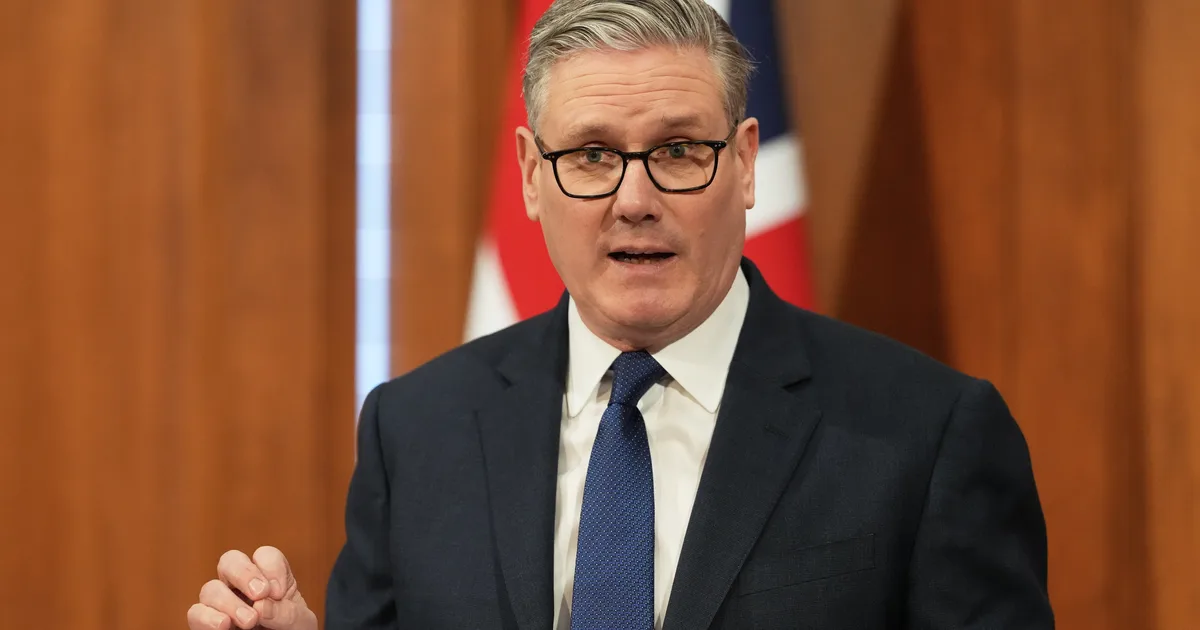
Keir Starmer has insisted the UK cannot “go back to normal” after the Iran war despite its delicate ceasefire with the US.
Speaking from the Middle East, the prime minister warned Britain is too dependent on international energy markets right now.
He told ITV’s Robert Peston: “I firmly believe that when we had the global shock of the 2008 global financial crash, when we had the shock of Covid, the response was the wrong response.
“What I mean by that is there was a rush to get back to normal, to get back to the status quo. And never to change things fundamentally.
“And the normal and the status quo weren’t working for 20 years.
“They haven’t worked – living standards haven’t improved, public services have been decimated and people have felt more distant from politics.
“We can’t aspire or want to get back to the normal. We have to change that. We need to respond with strength in a number of important fields.”
The PM added that the consequences of this war are “going to be long felt” and Brits cannot “immunise ourselves from that”, pointing to the economic consequences the UK is already feeling from Iran’s closure of the major shipping lane, the Strait of Hormuz.
He said he wants to remove barriers to growth – including being closer to the EU.
He explained: “I’m fed up with the fact that families across the country see their bills go up and down on energy, businesses’ bills go up and down on energy because of the actions of Putin or Trump across the world and saying to families across the country, saying to businesses across the country: ‘We’ve just got to be, we’ve got to put up with being on the international market’.”
The PM also said Israel’s attacks on Lebanon should not have happened.
While he stopped short of calling Israel’s attacks on Iran a “breach” of the ceasefire – claiming he does not have access to all the details of the agreement – he did call the strikes “wrong”.
Starmer said: “That shouldn’t be happening. That should stop. That’s my strong view. And therefore the question isn’t a technical one of whether it’s a breach of the agreement or not.
“This one is actually a matter of principles as far as I’m concerned.
“In a sense, my argument would be it should be included in the ceasefire, and that’s the important part, the overall approach.”
He also countered Iran’s claims that a US bomber took off from a UK base and demolished four residential buildings, killing dozens of Iranians, saying British sites are only for collective self-defence use.
Starmer said: “I’m really clear about that divide – no offensive action, not joining in the war – collective self defence only and our bases will not be, and are not being, used for wider offensive and particular for offensives on civilians.”
The prime minister reiterated that the UK would not be “dragged” into the war, either.
Starmer said: “From the get go we’ve been monitoring this situation so I’m pretty clear on my own mind about what we’ve agreed and what the use of the bases are and that is a really important point of principle because we have to learn the lessons of Iraq.
“We need to be clear where we stand as a country and I’m the British Prime Minister, I make decisions on what’s in the British national interest and that is my focus. And notwithstanding for noise and the pressure and the rhetoric, that has been my firm focus throughout this.”
The prime minister also laid into the US president for his strong language against Tehran, after Trump threatened to wipe out Iranian civilisation unless it ended the war.
Starmer said: “Let me be really clear about this – they are not words I would use, ever use, because I come at this with our British values and principles.
“They’re not language I would use.
“Use those words, a language like that myself, very important that I’m clear that for the United Kingdom, we have our principles, we have our values. We will be guided by them in everything that we do.
“That’s why I’ve said, and obviously it’s caused a degree of criticism and pressure in the last few weeks. I’ve been saying we are not going to be dragged into this war because I say there must be a lawful basis that matters if you’re going to commit our service personnel to.”
Subscribe to Commons People, the podcast that makes politics easy. Every week, Kevin Schofield and Kate Nicholson unpack the week’s biggest stories to keep you informed. Join us for straightforward analysis of what’s going on at Westminster.


Democrats are, once again, punting on what to do about Israel.
DNC members on Thursday rejected a symbolic resolution to limit the influence of the American Israel Public Affairs Committee and dark-money corporate groups in Democratic primaries — an unsurprising result that is nevertheless a blow to those within the party who have been infuriated by the pro-Israel group’s recent interventions.
They also punted on a pair of sweeping resolutions concerning conflicts in the Middle East that pushed the party to support conditioning military aid to Israel. The measures were referred to the party’s nascent Middle East Working Group, which is meeting for the fourth time this week and has been slow to coalesce around an agenda.
While the resolutions were not expected to pass, the outcomes reflect a party establishment still grappling with how to respond to the increasingly thorny politics around Israel and AIPAC — and their base’s sharp turn away from the longtime U.S. ally.
The AIPAC resolution called for the DNC to condemn “the growing influence of dark money” in Democratic elections, including from the pro-Israel group that has pumped tens of millions of dollars into recent primaries. Several members of the DNC’s resolutions committee said they voted it down because they had passed a resolution earlier in their meeting broadly condemning the influence of dark money in the midterms without calling out individual groups.
Florida Democrat Allison Minnerly, who introduced the AIPAC resolution, argued there’s “merit to calling out different PACs with intention.” She said that “Democrats overwhelmingly want a party that stands for human rights and against increased conflict in the Middle East.”

Councillor hits out after badges depicting controversial bonfire go on sale

senators flag conflict of interest
Jack Black’s Face In Photo From When He Was 23 Stuns Fans


-

 Fashion6 days ago
Weekend Open Thread: Spanx – Corporette.com
-

 Business4 days ago
Three Gulf funds agree to back Paramount’s $81 billion takeover of Warner, WSJ reports
-

 Sports5 days ago
India men’s 4x400m and mixed 4x100m relay teams register big progress | Other Sports News
-

 Business6 days ago
Expert Picks for Every Need
-

 Tech2 days ago
How Long Can You Drive With Expired Registration? What Florida Law Says
-

 Business5 days ago
No Jackpot Winner, Prize to Climb to $231 Million
-

 Fashion4 days ago
Massimo Dutti Offers Inspiration for Your Summer Mood Board
-

 Fashion2 days ago
Let’s Discuss: DEI in 2026
-
Politics7 days ago
Wings Over Scotland | The quality of mercy
-

 Crypto World2 days ago
Bitcoin recovers as US and Iran Agree a Ceasefire Deal
-

 Business5 days ago
Akebia Therapeutics, Inc. (AKBA) Discusses Pipeline Progress and Strategic Focus on Kidney Disease Treatments at R&D Day – Slideshow
-

 Politics7 days ago
Why so many children are now classified as ‘disabled’
-

 Crypto World14 hours ago
Canary Capital Files SEC Registration for PEPE ETF
-

 Politics6 days ago
The UK should not pay a penny in slavery reparations
-

 Politics7 days ago
Nuclear rockets, moon bases and NASA’s Mars plan
-

 Tech7 days ago
The Threadless Ball Screw Never Took Off, But Don’t Write It Off
-
 Business7 days ago
HPS FY 2025 slides: SaaS inflection drives 22% revenue growth
-

 Fashion7 days ago
Tory Burch’s Spring 2026 Campaign Goes on a Getaway
-

 Fashion7 days ago
Frugal Friday’s Workwear Report: Hammered Metallic Button Sweater Vest
-

 Fashion6 days ago
Weekly News Update, 4.3.26 – Corporette.com
You must be logged in to post a comment Login