
Politics
Polanski gets the Kuenssberg treatment, poor chap

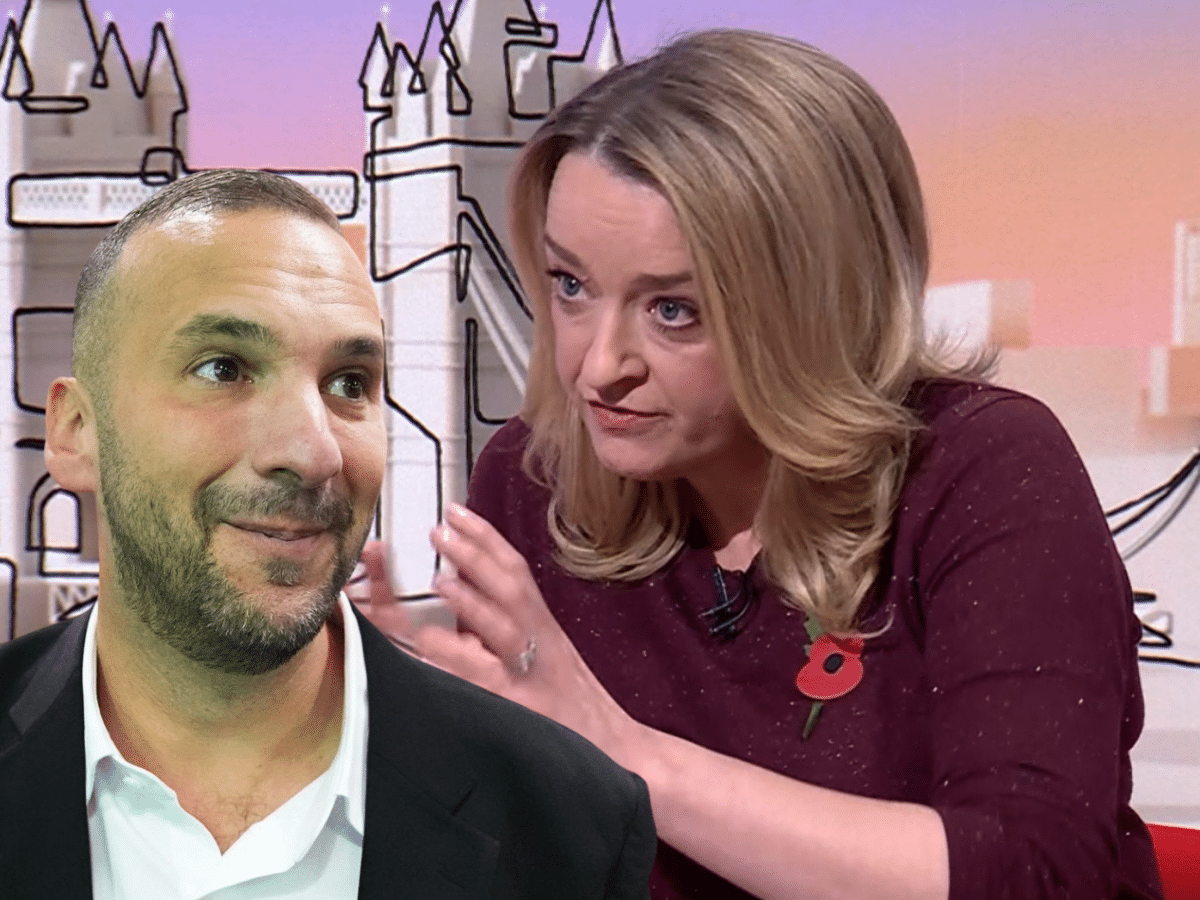
Over the weekend, on 28 February, BBC News published an article about how Zack Polanski and Nigel Farage are actually quite similar. If you think about it. Honest.
The Laura Kuenssberg-penned ‘in-depth’ article ran with the headline:
Polanski and Farage don’t agree. But they have more in common than you might think.
Any long-time readers or, indeed, casual observers will know that we at the Canary aren’t exactly massive fans of Kuenssberg. You know, what with her being a mouthpiece for lowest-common-denominator state propaganda and all. However, this article in particular really did take the absolute piss.
Let’s take a read, shall we?
Poor Polanski gets the Kuenssberg treatment
Kuenssberg starts off strong in her introduction, setting the tone for the piece:
Before you scream, burst out laughing, or think I have lost my marbles, of course, there are very big differences between them.
The Greens talk about a climate emergency. Reform UK calls the government green plans, “net stupid zero”.
Are we genuinely saying ‘a climate emergency now? I wonder which climate emergency he’s talking about? Might the overwhelming scientific consensus back him up in talking about it?
We then move on to one of the key parts of Kuenssberg’s argument:
Both parties have been growing incredibly quickly, attracting thousands upon thousands of new members.
In an era when many members of the public are sick of politicians, they are both doing something right, and pulling people in.
They’re… both successful leaders for alternative parties. My Lord, the BBC is really bringing out the big guns. This is the kind of insightful political analysis I don’t pay my TV license for.
Shock links of politics and media
We really get into the thick of it when Kuenssberg notices that politics and the media are closely related:
Having seen them both with members of the public, not just in the TV studio or in Parliament, both men appear to enjoy campaigning. […]
Conveniently for the politicians (and not true for all), they both appear to rather like the attention.
They are both nimble on social media, and their parties spend huge amounts of time and effort on making sure their feeds are pumped full of fresh content.
Sure, I suppose not all politicians enjoy the limelight. However, manipulating that media attention is what being a politician… is. They’ve also learned to do it on the computer, in a way that was only invented three decades ago. Admittedly, that’s fairly quick, in political terms.
Sordid pasts
Both politicians also have histories with other parties:
Both Farage and Polanski like to be seen as disrupters, intent on shaking things up.
But it’s worth remembering they both have histories with other political parties that go back some years.
Once upon a time, Nigel Farage was a Conservative, although he disputes whether he was offered a safe Tory seat or, as others recall, went on the hunt for one.
Zack Polanski wanted to stand as a Lib Dem MP, and was cross when he wasn’t put forward.
See now, this is an interesting point. It’s a shame it wasn’t really enough to create an article without a bunch of pointless filler.
It’s also a shame that Kuenssberg didn’t manage to examine that Farage (and most of his party) came from the same establishment party he’s now criticising. Oh, and then the ruinous UKIP after that, and then the Brexit Party (before the name-change).
Meanwhile, Polanski is at least trying to be an alternative voice – even as part of a bunch of wet Lib Dems.
The apocalypse and immigrants: basically the same
However, it’s when we get to the causes behind the Greens and Reform that Kuenssberg really hits a new low:
And while they’ve both been rapidly building new political forces, they’ve both been based on old architecture that grew out of a single cause.
Again, the Green’s ‘single cause’ is preventing global annihilation. That’s a pretty big one, if you ask me – global, even. Meanwhile, Reform’s (and UKIP’s) centerpiece policies have always revolved around immigrant-bashing.
These two things are not even in the same league.
Beyond that, Kuenssberg tries to equate Reform’s repeated racism and Islamophobia with the Greens statements of fact:
And both Reform and the Greens are willing to push the conventions of what traditional UK politicians would find acceptable – or what they believe would make them electable. […]
That might be Reform talking about wanting a return to what they describe as the UK’s “Judaeo Christian heritage”, one of their MPs Sarah Pochin complaining about TV adverts being “full of black people, full of Asian people”, or focusing on grooming gangs at the start of last year. […]
For Polanski, it’s talking about legalising and regulating hard drugs, or speaking out against Israel’s military action in Gaza, and accusing Labour of being “complicit in genocide”.
So, both parties are handling sensitive issues, are they? On the right, we have some absolute bile about there being too many brown faces on telly. Oh, and hammering the racist conflation of organised rape with migrant communities. Meanwhile, Reform’s treasurer was busy palling around with Epstein.
And on the left, we have… policies based on solid evidence that drug legalisation and regulation will save lives. Then, there’s also the simple acknowledgement that Israel is committing genocide, and Labour are complicit.
These are facts. Unfortunately, BBC News hasn’t really been bothering with facts in recent years, has it?
We sign off with a final damning indictment:
But Nigel Farage and Zack Polanski have one last thing in common: they are not out to just compete alongside their traditional rivals.
It might sound a stretch, but both say they intend to replace them for good.
Knock me down with a fucking feather, would you?
Featured image via the Canary

Politics
Politics Home | NHS bodies must stop breaking guidelines and blocking life-changing surgery

For many people living with arthritis, joint replacement surgery is not a lifestyle choice; it’s the difference between independence and daily pain. Yet across England, access to treatment is unfairly being rationed due to a patient’s BMI.
Our newly published report reveals that 1 in 5 Integrated Care Boards (ICBs) in England are ignoring both NICE guidelines and government advice by rationing joint replacement surgeries based on a person’s body mass index (BMI) alone. The guidelines state that people should not be barred from joint replacement surgery exclusively because of overweight or obesity based on body measures such as BMI.
Using BMI as a single threshold fails to reflect a patient’s overall health, circumstances or need, preventing them access to treatment altogether. Instead, decisions about surgery should be made through shared decision making.
People waiting for joint replacement surgery, often due to arthritis, have already spent many months or years with their health and mobility in decline , as joint replacement surgery is the final line of treatment. Joints in need of replacement are incredibly painful and severely impact the ability of individuals to exercise , which can lead to weight gain. It is counterproductive to deny surgery that could get people back on the road to mobility and improved health and fitness.
ICBs such as Black Country, Sussex, Herefordshire and Worcestershire, among others, have adopted rationing-based policies, often justifying them by pointing to the increased risks associated with a higher BMI. However, research surrounding this is mixed, and multiple large-scale studies shed light on the significant benefits of having the surgery, which outweigh any risks.
BMI alone should not determine who can access planned orthopaedic surgery, nor should anyone be denied its benefits. Yet inconsistent policies across the country mean patients’ access to treatment too often depends on their postcode.
For example, a patient with a BMI above 35 will be denied surgery with Lincolnshire ICB but may qualify for surgery at Leicester, Leicestershire and Rutland ICB, where their cut-off point is a BMI above 45. In practical terms, a difference of about 13kg can determine whether someone receives life-changing treatment or is left in pain.
As the NHS enters a pivotal period of reform, with ICBs clustering and merging from April, there is a rare opportunity to review and reform local policies. Newly formed systems must seize this moment to end practices that unfairly penalise patients and restrict access to surgery based on where they live.
For people with arthritis, time spent waiting is time spent in pain. Delays can result in prolonged pain and further deterioration of the joint, which could be prevented earlier through surgery. These are not neutral delays; they are periods of avoidable suffering.
Being denied [a] knee operation for being overweight only made things worse because of problems getting around, so you end up putting on even more weight
(Man, aged 55+)
The pain can affect people’s abilities to carry out daily activities. Arthritis UK’s Left Waiting, Left Behind survey found that 68 per cent of respondents said that waiting for treatment had impacted their ability to work, and 73 per cent said that it had impacted their social activities. No one with arthritis should be forced to give up the daily activities that give life meaning because of arbitrary eligibility thresholds.
Moreover, being out of work or on sick leave can cause significant emotional and financial distress, taking a toll on an individual’s mental health. 66 per cent of respondents said that waiting for treatment impacted their mental health. Therefore, this highlights how a single decision can trigger a cascade of harm.
While some patients can skip the agony of long waits through private weight loss injections or surgery, these options are only available to those with the means to pay, creating a two-tiered health system. Healthcare should not depend on wealth, and access to treatment should be equal.
I have felt a little isolated. Financial impact – not being eligible for financial support. Weight gain due to physical limitations.
(Female, aged 55+)
The most affected are people living with arthritis in deprived areas, where obesity rates are higher and the risk of knee osteoarthritis is around 50 per cent greater. Yet these communities often have limited access to the required weight management services and, as a result, are disproportionately affected, further entrenching existing health inequalities. We are deeply concerned that these policies continue to penalise those already most vulnerable.
No one should be excluded from accessing surgery that could greatly impact their lives because of an arbitrary metric. Such policies do not just delay treatment; they institutionalise injustice and widen inequalities.
As the UK’s leading arthritis charity, we are concerned that ICBs are implementing BMI policies in a bid to cut waiting lists and running costs through rationing. We want to ensure that patients come first and stand firmly against any cost-cutting policy that inappropriately rations surgery based on BMI rather than clinical need.
We are in the process of contacting all ICBs named in the report with its findings and hope to see the cessation of BMI policies to restrict access to surgery. We are also calling for the end of these practices and for ensuring fair, timely access to surgery for everyone who needs it.
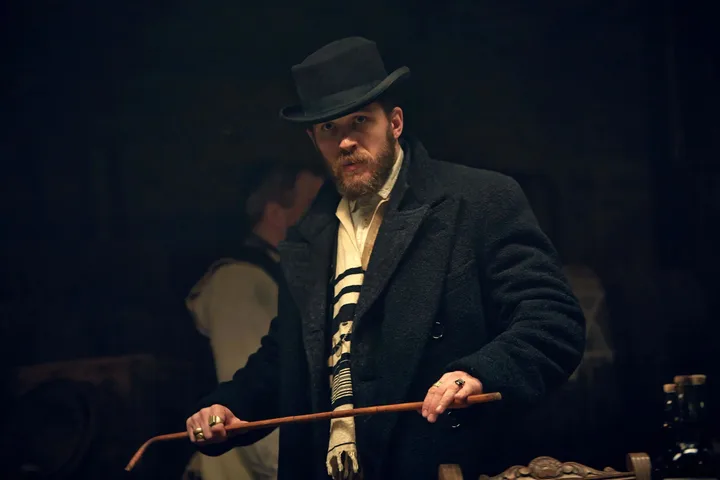
The recently-released Peaky Blinders movie mixed familiar faces with some exciting new additions – but there were also a couple of notable absentees from The Immortal Man, too.
One such missing character was Alfie Solomons, played by Tom Hardy.
Alfie was famously thought to have been killed off in the BBC drama’s fourth season, only to shock Cillian Murphy’s Tommy Shelby by returning in the fifth, with the character sticking around for the sixth and final run, too.
While Tom ultimately didn’t make an appearance in The Immortal Man, Peaky Blinders creator Steven Knight has revealed that he did consider including him in a storyline that would have really shaken things up for Tommy Shelby.
“I didn’t do it in the end, but I had an idea,” Steven told The Hollywood Reporter, before pointing out: “Ever since he was shot on the beach at Margate, you’ve only ever seen Tommy and Alfie together alone. There’s never been anyone else.”
He continued: “I thought, ‘Maybe he appears, and we realise he’s been dead all that time’. Now, I nearly did that, and I didn’t do it, but that was a thought.”

Another missing face in the film was Tommy’s brother Arthur Shelby, played by Paul Anderson, who it emerged had been killed off screen by Cillian’s character before the events of the film.
Between the end of Peaky Blinders and the production on the movie, Paul became embroiled in some personal and legal dramas that are well-documented, though Steven was adamant that this wasn’t responsible for him not being included in The Immortal Man.
During the same Hollywood Reporter interview, the screenwriter explained: “What I’ll say is that the story determines the cast, and the story was set. I knew that Tommy needed to have done something that he couldn’t forgive himself for. Therefore, that’s why the plot went in that particular direction.”
He added: “In terms of Paul, all I’ll say is that he’s a fantastic actor.”
Peaky Blinders: The Immortal Man is now streaming on Netflix.

A security guard claiming to have incited the recent drama surrounding Chappell Roan at a hotel in Brazil is now accepting “full responsibility” for the debacle.
Last week, the Brazilian footballer Jorginho shared a lengthy post on his Instagram story about a “very upsetting” incident in which he alleged that Chappell’s security guard had made his 11-year-old stepdaughter cry.
In his post, Jorginho claimed his wife’s daughter “walked past the singer’s table, looked to confirm it was her, smiled, and went back to sit with her mum”.
“What happened next was completely disproportionate,” he wrote. “A large security guard came over to their table while they were still having breakfast and began speaking in an extremely aggressive manner to both my wife and my daughter, saying that she shouldn’t allow my daughter to ‘disrespect’ or ‘harass’ other people.”
“He even said he would file a complaint against them with the hotel, while my 11-year-old daughter was sitting there in tears,” he added. “My daughter was extremely shaken and cried a lot.”

As the post became more widespread online, Chappell issued a response, insisting that she “didn’t even see” the alleged occurrence take place and that she “did not ask the security guard to go up and talk to this mother and child”.
In the early hours of Thursday morning, “protection specialist” Pascal Duvier shared his side of the story, writing on Instagram: “I do not normally address online rumours, but the accusations currently circulating are false and constitute defamation.”
He said: “I take full responsibility for the interactions on 21 March. I was at the hotel on behalf of another individual, and I was not part of the personal security team of Chappell Roan. The actions I took were not on behalf of Chappell Roan, her personal security team, her management, or any other individuals.
“I made a judgment call based on information we obtained from the hotel, events I had witnessed in the days prior and the heightened overall security risk of our location. My sole interaction with the mother was calm and with good intentions, and the outcome of the encounter is regretful.”
A spokesperson for the Pink Pony Club singer previously insisted to Page Six that she “holds her own teams to the highest standards” and has “zero tolerance for aggressive behaviour toward her or her fans”.
Throughout her time in the spotlight, Chappell has been known for making her boundaries clear, whether that’s with regard to her fans, photographers or the entertainment industry more generally.
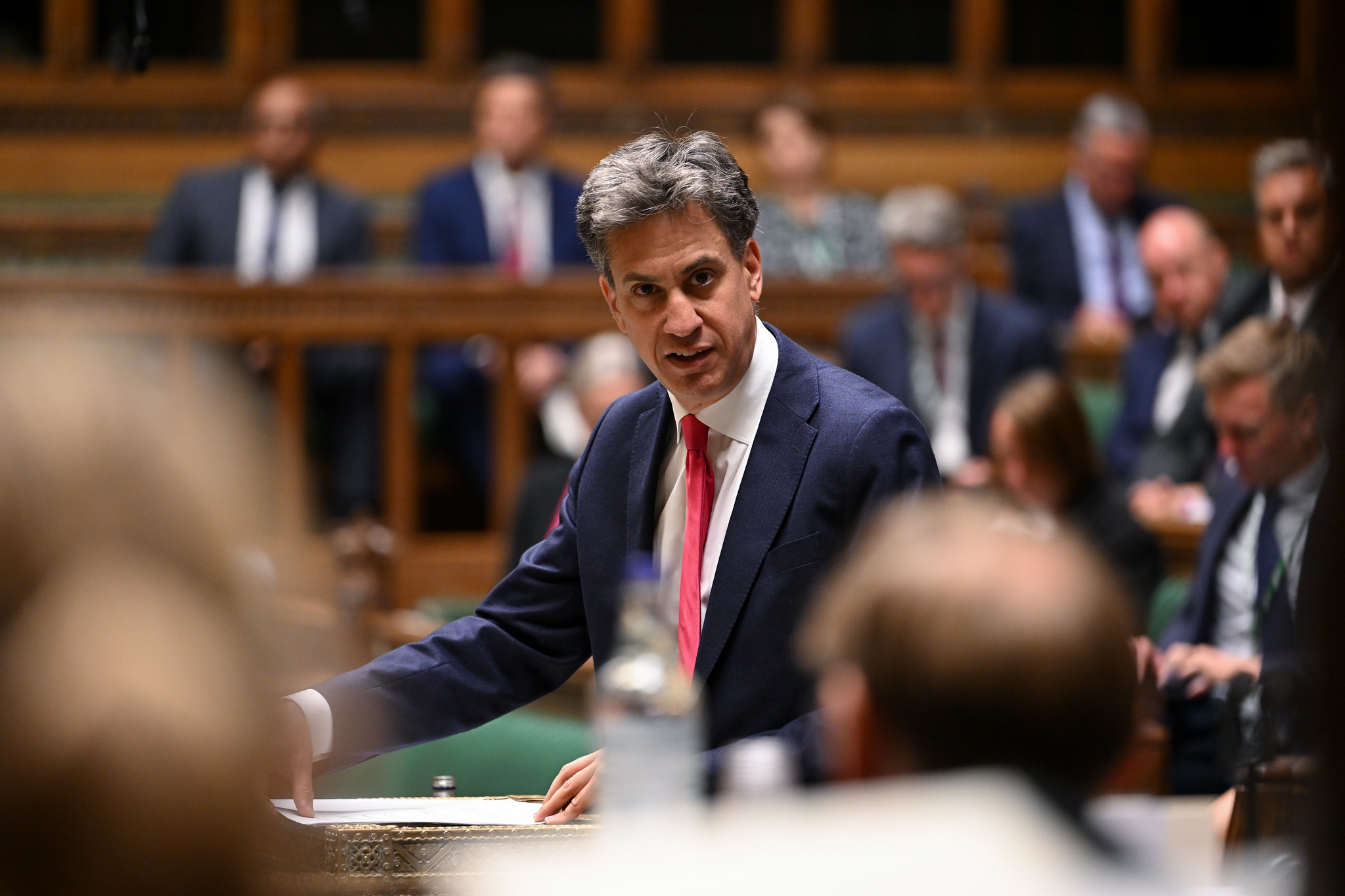
It was a Labour MP who first used the phrase to me: the Miliverse. He was worrying, before PMQs, about a world where Ed Miliband gets a promotion to Downing Street – either as Chancellor or, even, as Prime Minister.
If he was worried then, he’ll have been even more worried after PMQs. Because yesterday, in the House of Commons chamber, Sir Keir Starmer seemed not just comfortable with the idea that he is a member of Miliband’s government – he was almost eager to admit it.
Under questioning from Kemi Badenoch over the decision not to issue new licences for North Sea oil and gas drilling, Starmer slipped into full legal mode. He was at pains to clarify that the decision over the Jackdaw and Rosebank oilfields rested not with him but with the Secretary of State for Energy. Legally, it was Miliband’s call. Badenoch pounced. “He is the Prime Minister!” she told the chamber, deriding Starmer’s retreat into proceduralism.
The Prime Minister was, in effect, publicly conceding what one shadow cabinet minister put to me: that Miliband is “the real prime minister”. Another shadow cabinet minister joked: “It isn’t something we didn’t already know.”
But it is worth pausing on what that actually tells us about Starmer, because the Miliband story is, at its core, a Starmer story. Miliband’s influence over this government is not merely a function of his own ideological energy, though that is clearly considerable. It is also a function of the vacuum at the very top.
This is the context in which Miliband has thrived. When the man at the top is reluctant to own his government’s most politically contentious decisions – whether that’s the North Sea, net zero, or the broader direction of economic policy – someone else will own them instead. His Labour manifesto read: “We will not issue new licences to explore new fields because they will not take a penny off bills, cannot make us energy secure, and will only accelerate the worsening climate crisis.” That is clearly what they truly believe, so why won’t Starmer say it rather than hide behind legal process? Miliband is happily continuing the message of the manifesto, and filling the vacuum at the top while doing it.
As I have written before, Miliband’s influence on this Labour government has been perfectly clear: “The push towards ever more stringent net-zero obligations continues apace, even when the immediate effect is to increase costs for British taxpayers and businesses.” The Spectator’s Tim Shipman even reported that it was Miliband who commanded the majority around the National Security Council table on any involvement in Iran, with Starmer taking direction rather than giving it.
In a profile with the New Statesman, Miliband himself was candid about the scope of what he is trying to achieve. “We are charting a course to a different economic settlement,” he said. “I talked about it as leader and didn’t get to implement it.” He is implementing it now.
And there is the question of what comes next. Nigel Farage, of all people, has reportedly told friends he expects Miliband to be Prime Minister by 2027. That prediction may flatter his instinct for provocation, but it is not entirely absurd with Starmer’s leadership on the rocks.
Yesterday, the Prime Minister yet again tried to protect himself by hiding behind Miliband, but only revealed more about his lack of leadership in the process.
The Labour MP fretting in the corridors before PMQs, I suspect, finds that prospect deeply worrying – Ed Miliband’s world is not one he wants to inhabit. But without any voters say, the Miliverse seems to be ever expanding.

John Oxley is a consultant, writer, and broadcaster. His SubStack is Joxley Writes.
Few in the Conservative Party will be relishing the thought of the local elections. With just over a month to go, our prospects in the contests look bleak. The party has never gone into a set of locals with such a poor national polling position. The rise of Reform also means we are likely to face challenges in areas where we were previously strong. Though the electoral geography this time leaves Labour more exposed overall, few positives are likely to come from the night.
When talking about these shifts, we tend to focus on the shockwaves the results will send through Westminster. Commentators question how much jitteriness it will impart on MPs who see their local council fall away. Whether it will tempt more into defections or trigger another round of party regicide. But there is another question, less dramatic, more fundamental, that these elections ought to prompt – about what Conservatives are here to offer at the local level.
Defeat in the 2024 election required an examination of where the party stands and how it relates to the challenges and voters in the current national political landscape. Our subsequent challenges in local politics should prompt the same sort of thinking about how we wield power where it most directly touches voters. When it comes to delivering services, fostering communities, and making a difference that people see, the question is not just about how the party wins back power, but what it does with it.
Localism, after all, should be close to the heart of the Conservative Party. Our suspicion of big government ought to incline us toward placing power in the hands of those who understand their areas best, the people who actually live in them. We should celebrate a government that is local, accessible, and human in scale. And local institutions should be central to any serious conservative vision of how the country works, the little platoons of boroughs and counties, trusted to know their ground, doing what distant Whitehall cannot.
The reality of local government in 2026 makes that vision harder to sustain than it should be. The decades-long failure to address social care has left most councils unable to do much else. Local authorities are crushed under the burden of these obligations and funding shortfalls. Even the most prudently run councils are struggling, and many are close to insolvency. Everything else that councils do, the small civic institutions that give communities their texture, seems unsustainable.
This is a particular problem for the right. The traditional offering of local Conservatives has been fiscal prudence – less spending, and lower bills. That has now been pushed to the limit. Many of our councils have done well in adapting to constrained times and have found new efficiencies and savings they can pass on to the taxpayer. Now there is little fat to trim. Even Reform councils that replaced us have been forced to admit this, arriving with grand plans of cutting waste and instead colliding with fiscal reality.
The other canard of local government campaigning, opposing development, has also now come to haunt the party. The instinct and the electoral calculus behind blocking housing were understandable, but their cumulative effects have exacerbated a national crisis. The shortage of homes falls hardest on the young, and in courting the settled, propertied voter, local conservatism has too often had little to say to anyone else. There is a deeper irony too: in resisting development, councils have sometimes prevented the very renewal that would keep their communities vibrant.
These pressures have arrived alongside new political challenges rather than in spite of them. Reform has taken the most seats, but the Lib Dems and Greens have made gains too, in very different kinds of places, for very different reasons. The breadth of that squeeze suggests something more than a temporary unpopularity. The same offer, made in the same way, is unlikely to be enough, whether the goal is to win back councils or to give conservative local government a renewed sense of purpose.
The Conservatives need a proper vision of what modern local governance looks and feels like. This should go beyond simply keeping council tax rates down and NIMBYism. Fiscal prudence is part of it, as is responsible development. But it should also be about delivering effective and responsive services, facilitating cohesive communities, civic trust and stewardship. In short, pushing towards councils that are truly Tory.
This also requires a better conception of the relations between local and central government. When in power in Westminster, Tories have tended to be jealous guardians of power. We’ve favoured centralisation, lest loony Labour councils run away with it. Ultimately, we should be more comfortable with this risk, letting local voters decide who to trust. Equally, we should engage seriously with Rachel Reeves’ plans for greater fiscal devolution. Incentivising local authorities by allowing them to keep more of the proceeds of growth changes the dynamics of development, giving communities a clearer path to share in the upside as well as the costs.
The local election results will captivate Westminster for a few days, but whoever wins may wield power for years. The actual business of governing our localities is forgotten, as are its challenges and impacts. For associations facing elections, the next six weeks will be a hard slog, and many of the results will be disappointing. But they may also offer an opportunity for renewal, re-examining what the Conservatives offer, and making our case in more volatile electoral politics. The night itself matters less than what the party does with it, and whether it advances our understanding of what Conservative local governance can offer.
While this election season may be bruising, there is, nonetheless, reason for optimism. Reform’s polling is declining, and where they have won local power, they have proven unimpressive. Their gains last year have been dogged by scandal, infighting, and failure to deliver on many of their proposals. The insurgent offer is already looking tarnished, and the Conservatives can maintain their position as the serious party of the right. That creates a genuine opportunity, but only for a party that has done the harder thinking about what it believes, what it will build, and what kind of local government it wants to be trusted with.
The Conservatives have a long and proud history in local government. It should be central to what drives us: the Toryism of local communities and networks, of prudent stewardship and genuine civic belonging. That tradition is worth recovering, not merely because it wins votes, but because it reflects something true about what the party is for. It also means regaining our sense of how, at all levels, we use politics to make things better. The local elections will come and go. The question of what conservatism is for, in the places where people live, will remain. It deserves a serious answer.
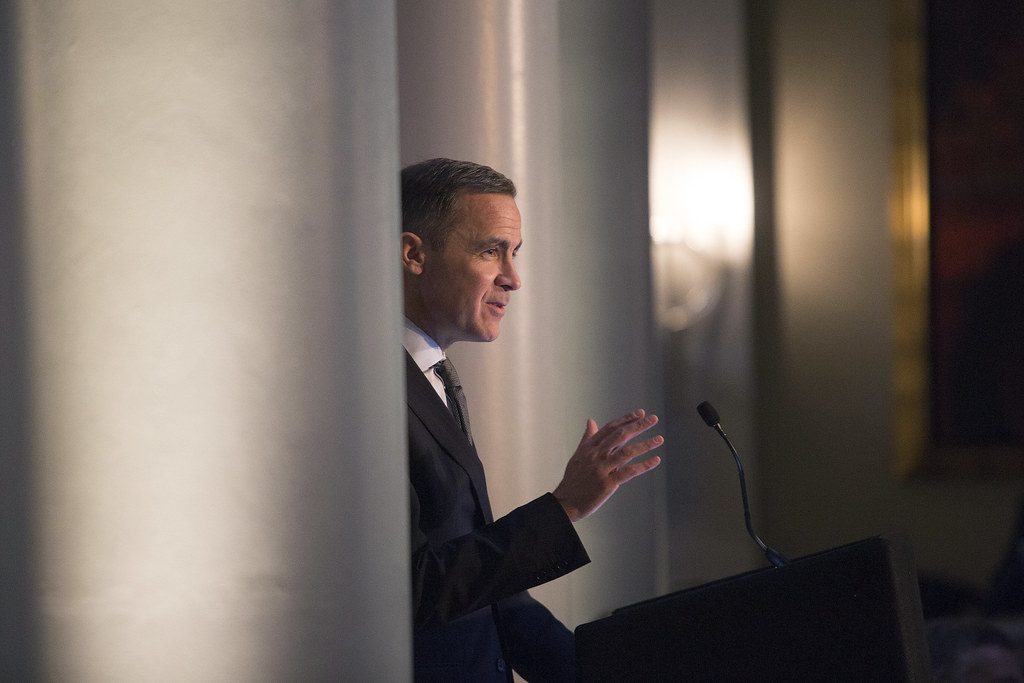
Terri Bloore is the Conservative candidate for Mayor of Newham.
When Mark Carney took to the stage at the World Economic Forum Annual Meeting 2026 in Davos less than two months ago there was deft silence followed by rapturous applaud. European’s and democrats saw his speech as somewhat anti-American. That conclusion says more about the current geopolitical mood than about what he said.
I was in attendance, wearing that odd combination of snow boots and a suit, and felt the atmosphere change, but in my view Carney’s message was not about turning away from the United States. It was about recognising that the world has changed and that countries in Europe and beyond must adapt accordingly.
With President Trump in attendance the American turnout was indeed palpable. Yes ‘America House’ and its huge eagles dominated the promenade, yes there were robots walking streets and men dressed as polar bears – larger than life and a little more brash than years before. But the atmosphere was not anti-American.
In less than two months, the world has shifted dramatically. The central theme of Carney’s speech was that a world order built on open trade, relatively stable institutions and strong American leadership is under strain and one we cannot take for granted. Since that speech, a lot has happened, not least the conflict in the Middle East. Looking back, it seems as though Carney was preparing us for this twists and turns that we are facing as soon as we turn on the news.
Economic policy, he argued, is increasingly becoming geopolitical policy. Supply chains, energy markets and trade are now instruments of power. For decades, many Western countries operated under the assumption that rules-based institutions and global economic integration would naturally reinforce stability. That assumption is now far less certain.
Carney’s argument was that countries such as Canada, the UK and many European nations can no longer simply rely on the system working as it once did. They must strengthen their resilience and work more closely with one another to protect shared values and economic stability.
None of this is particularly controversial in private discussions among policymakers. In Davos this year, it was practically the backdrop to every panel conversation. Yet the moment Carney suggested that middle powers needed to assert themselves more clearly, some observers interpreted it as a critique of the United States.
In today’s political climate, almost any conversation about strategic autonomy is quickly framed as a rejection of Washington. But that is not what Carney was arguing. Standing in Davos, the message sounded less like a rebuke and more like a pragmatic assessment of geopolitical reality. The world is becoming more fragmented. Economic competition between major powers is intensifying. Alliances must adjust.
The idea that Europe should have greater strategic confidence is not anti-American. In many ways it strengthens the Western alliance by making partners more capable and resilient. If Carney’s speech had truly been a rejection of American leadership, his subsequent positions would look very different.
Instead, when tensions escalated in the Middle East and the United States moved against Iran, Canada signalled its support for the broader security objectives shared by Western allies. That decision alone undermines the narrative that Carney was advocating a break from the United States. It demonstrated what most policymakers already understand: Western security and economic stability still depend heavily on cooperation between North America and Europe. The alliance may be evolving, but it has not disappeared.
What struck me most in Davos was not the speech itself but the reaction to it. In a world increasingly shaped by geopolitical rivalry, even moderate calls for strategic realism are quickly interpreted through a binary lens.
Pro-America or anti-America. Alignment or independence. Carney’s argument was more nuanced than that. The world is entering a period where the assumptions that once underpinned globalisation are weakening. Institutions are under pressure. Economic relationships are becoming more politicised. Strategic competition between major powers is intensifying. In that environment, middle powers cannot simply assume stability will hold. They must invest in their own economic resilience, cooperate more closely with partners and be prepared to defend the values that underpin open societies.
In many ways, the speech reflected the quiet consensus I saw across Davos this year.
The transatlantic alliance remains fundamental. But the world it operates in is becoming more volatile and more competitive. Recognising that reality is not a rejection of the United States. It is an acknowledgement that maintaining Western values in the twenty-first century will require stronger partnerships, greater resilience and a more honest understanding of power.

‘Danny Bones’ is an AI-generated rapper developed to promote the fringe right-wing party, Advance UK. Created at the behest of Advance by a collective called the Node Project, Bones appears in short-form videos, rapping about immigration, crime and national decline. His often hard-right messaging sometimes attracts large view counts on TikTok and Instagram.
Advance UK, launched in 2025 by former Reform UK deputy leader Ben Habib after he fell out with Nigel Farage, is a politically marginal groupuscule positioned to the right of Reform UK. It has no parliamentary presence, no clear membership growth and barely registers in the polls. It is precisely the kind of party likely to experiment with unconventional tactics in a bid for some sort of attention.
And attention is precisely what Britain’s political and media classes have given it, largely by taking Danny Bones far too seriously. The Bureau of Investigative Journalism has talked darkly of Advance’s online efforts heralding a future ‘AI election’. Assorted academic ‘experts’ have warned that it could mark the ‘beginning’ of a new era of AI-driven extremist propaganda. Heron Lopes, a researcher at Leiden University’s Institute of Political Science, suggested such tactics could ‘diffuse more widely’.
Politicians have gone even further. Green deputy leader Rachel Millward has labelled it ‘corrosive to democracy’, while new Green MP Hannah Spencer has warned that these sorts of AI gimmicks will ‘undermine the integrity of our democracy’.
There’s little substance to the Greens’ claims. During the Gorton and Denton by-election, Advance repurposed Danny Bones’ content to promote its candidate, Nick Buckley. And it had almost no tangible effect. There was no evidence of changed voting behaviour, increased support or even voter awareness. Advance’s vote share was so marginal, at 155 votes, it barely registered, leaving the party trailing even the Official Monster Raving Looney Party’s Sir Oink-a-lot. It seems Danny Bones is no match for a man dressed as a pig.
Much of the hysterical reaction to Advance’s experiment in AI propaganda rests on mistaking online ‘engagement’ for actual support. Some Danny Bones vids might well get ‘millions of views’, but views are cheap. On short-form platforms like TikTok, videos autoplay before distracted, scrolling users. So a post may have lots of ‘views’, but that doesn’t mean someone’s watched it properly, let alone agreed or been influenced by it.
The data bear this out. Danny Bones’ best-performing Instagram post – ‘This Is England’ – has around 48,000 likes and 2,200 comments. Another has reached roughly 16,900 likes. However, most posts struggle to break 1,000 likes, with comments often numbering between 50 and 100. This is not traction. It is sporadic, low-level interaction.
The YouTube figures are even more revealing. The Node Project’s upload of the song ‘This Is England’ has around 141,000 views. The official Danny Bones channel fares worse for the same song: roughly 35,000 views and 1,000 likes. These modest numbers indicate a failure to convert attention into an audience.
It’s a failure that should surprise no one. A brief look at the content itself shows why Danny Bones is unlikely to persuade anyone beyond an already narrow audience. Rather than offering insight or solutions, the videos lean heavily into blunt, inflammatory claims and assertions. In one post, he declares:
‘I’m watching my country’s culture, demographics rapidly change, and I’m supposed to just be cool with it? Nah, fuck that. This is England. I am England.’
In another, he warns that ‘Manchester’s anthem’s gonna be the call to prayer before we know it.’ These lines are paired with imagery depicting parts of Britain as effectively Muslim-occupied.
Of course, questions around immigration, integration and cultural change do concern the public. Polling consistently shows voters choosing immigration as the single most important issue facing the country. The problem is not the subject matter, but the approach to it. The skinheaded, bovver-booted Danny Bones looks like a pastiche of the late-1970s National Front scene. He raps in clichés and soundbites. Who exactly is that meant to appeal to?
Here we have a fringe party running a fringe campaign that appeals to very few. This is hardly a case of AI re-shaping politics. That some among our political and media elites have been portraying it as such tells us more about their fear of any challenge to the status quo than it does AI.
Stephen Sidney is a spiked intern.
Politics
Elliott Malik: Environmental regulations are failing to restore nature whilst blocking housebuilding
Elliott Malik is the Nature Programme Officer of the Conservative Environment Network and the Director of the Conservative Friends of CANZUK.
Britain is one of the most nature-depleted countries in the world. Unfortunately, regulations designed to protect the environment are not only failing to restore nature but are also suffocating developers with needlessly complex red tape. This is the worst of both worlds.
That is why the Conservative Environment Network has launched ‘In Pursuit of Harmony’, which offers bold new ideas to streamline red tape, harness private investment, and give Britain new homes and more nature.
The most important proposal in our paper is our common sense approach to Biodiversity Net Gain (BNG). For those unfamiliar with BNG, it was introduced by the last Conservative government. It requires almost all new housing projects to improve biodiversity, either within the development (known as ‘on-site’) or by participating in a natural capital market. Developers can access this market to purchase BNG credits from landowners to restore nature elsewhere (known as ‘off-site’).
This concept of BNG is important for several reasons. Off-site BNG credits could lead to a £3 billion boost for farmers and rural communities, as farmers turn poor agricultural land into havens for nature and sell this uplift to developers. It could transform soulless developments into real homes and communities, bringing pride back to communities and encouraging people to put down roots. Perhaps most importantly, it can help fulfil our conservative duty to protect our natural inheritance. This will allow us to once again take pride in the natural world which past generations have left for us, and restore it for the generations after us to enjoy.
Although the concept of BNG is sound, the system we have today has become bloated and unwieldy, with disparate requirements shoehorned into it.
Notably, on-site BNG – which can be difficult to achieve – has been prioritised at the expense of off-site. It was hoped that if housebuilders promised more local amenities, this could make planning applications more likely to succeed. The government then forced developers to create a higher BNG uplift in off-site restoration projects, effectively penalising those who want to purchase credits to improve biodiversity elsewhere.
These political choices hamstrung BNG from the outset.
By disincentivising developers from creating nature off-site, we created an inflexible system for housebuilders whilst stifling the benefits for landowners, farmers, and our economy. It has also made developing smaller plots of land considerably more complicated and expensive because developers – mainly SMEs – must either overcome the difficulty of improving biodiversity in small areas or purchase very expensive credits elsewhere. This is a tragedy, both for housebuilding and for nature restoration.
BNG has clear problems, but its potential remains compelling. The solution is just as straightforward as BNG should be, which is why CEN is proposing to make BNG fit for purpose by getting rid of the distinction between off-site and on-site BNG. This will return BNG to what it was initially intended to be: a flexible, nature restoring policy which adds to our economy. If we want to build more houses, we must not penalise developers for choosing to improve the natural environment off-site.
As more developers choose to purchase credits, the BNG natural capital market will blossom, creating an important new revenue stream for farmers and landowners who can turn unusable areas of land into new habitats.
Reforming BNG is vitally important, but we can go further. Needless red tape makes it incredibly burdensome to bring nature to new communities. We should be weaving nature into our communities to improve our environment, make our communities more beautiful, and to create pride in place. Some of these changes are simple, such as extending permitted development rights to ponds, and freeing businesses to install façade gardens.
We also recommend that our land use becomes more efficient and housing more attractive, through ‘gentle densification’. This is important because we want the homes of the future to be places people can be proud to live in, and from which new communities can form.
This paper recommends targeted and profoundly conservative reforms. If we liberate developers from unnecessary regulations, we can unleash the power of free markets: restoring nature, providing new income to farmers, and building many more houses. It is possible to achieve the twin goals of building the houses we need and restoring nature. We know what to do; now we must pursue harmony between our built and natural environments.
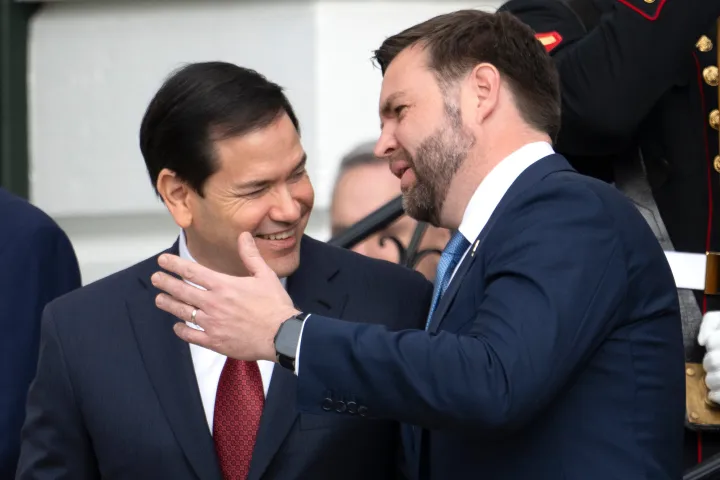
As President Donald Trump’s war against Iran approaches its four-week mark, two Republicans who could seek to succeed him in the White House have grown curiously quiet about it: Vice President JD Vance and Secretary of State Marco Rubio.
Two voices who in a normal administration would be key messengers on the president’s most consequential foreign policy decision have faded from view in recent weeks. Instead, the most frequent public advocate for the war appears to be Treasury Secretary Scott Bessent, who has made multiple appearances on television.
“Beats the hell out of me,” said David Axelrod, the Democratic consultant who helped Barack Obama win the White House twice. “Vance is easily understood. This is antithetical to his brand. Bessent is necessarily out there because while the war is a national security issue, its ramifications are very much economic. Rubio is bewildering because he was so visible at the beginning.”
Trump attempted a coup to remain in power despite losing reelection in 2020 and has hinted that he would try to stay in office past 2028 notwithstanding the two-term limit in the Constitution.
But if the 2028 elections do take place on schedule, any Republican running, and especially those serving in his administration like Vance and Rubio, may have to overcome a deeply unpopular president and be forced to explain their public support for what is already an unpopular war that is projected to increase inflation and has thus far raised gasoline prices by more than a dollar per gallon.
Further complicating Vance’s and Rubio’s public posture on the Iran war is the significant segment of Trump’s voters who cast ballots for him based on his promise of ending foreign wars who may feel betrayed by Trump’s repeated use of military force.
Rubio, meanwhile, as the son of Cuban immigrants in South Florida, has long been a proponent of US intervention in Latin America to oppose socialist rulers.

State Department spokesman Tommy Pigott, in what has become a standard Trump administration tactic, personally attacked HuffPost’s reporter and said: “A ridiculous question debunked by a basic internet search. To be clear for those in the back, let me say once again, Secretary Rubio fully supports the president’s policies, which are making the world a safer place.”
Vance has stated that whatever advice he gave Trump prior to the start of the war in a classified setting would remain between him and Trump.
“Partially because I don’t want to go to prison, and partially because I think it’s important for the president of the United States to be able to talk to those advisers without those advisers running their mouth to the American media,” he told reporters during a March 13 visit to North Carolina.
At least one hawkish Republican thinks Vance ― who in earlier iterations of his political persona was a vociferous opponent of American adventurism in the Middle East ― is unwilling to make the case for the war.
“Vance is against the policy but can’t say so,” said John Bolton, a former national security adviser to Trump in his first term and a longtime advocate of regime change in Iran. “Rubio is worried that it is distracting from Venezuela and Cuba.”
Like many Trump critics, Bolton is under investigation by Trump’s Justice Department, which Trump is openly using as a political weapon.
On top of the political considerations are the practical ones of trying to defend the policy of a president liable to change his mind about it at any time. Rubio, who is also Trump’s national security adviser, explained to reporters early on that Trump attacked when he did because Israel had told him it was going to attack, which would have led to Iranian reprisals against the US.
He backtracked on the explanation the very next day after Trump contradicted him.
Matt Wolking, a Republican political consultant and a former Rubio aide, said there is little point in Rubio or Vance in making declarations about policy when Trump is constantly making them himself.
“With Trump so accessible, it’s just not that necessary,” he said. “This is one of those areas where a Trump administration official is more at risk of getting ahead of the president than offering significant value to the public debate. I think Vance and Rubio have been doing enough.”
On that point, even Democrat Axelrod agreed. “Maybe as this gets more complicated and Trump becomes more frustrated, he is calling on the spokesperson he trusts the most: himself.”

The Canary recently reported that Israeli occupation forces (IOF) tortured a young boy in al Maghazi refugee camp, in the Deir al Balah governorate of Central Gaza. This happened in front of his father, 25 year old Osama Abu Nassar, to pressure him into making a confession.

“Israel” destroyed Abu Nassar’s livelihood causing him to suffer mental health issues
But since the incident, which happened on 19 March 2026, there has been no news of Abu Nassar’s whereabouts. Concerns are growing for his safety, and are made worse by the fact that he is suffering from mental health issues. Until quite recently, he made an income by using his horse to transport people’s belongings. But the Israeli occupation killed his horse and, for the past two years, Abu Nassar has found himself unemployed, with no means of supporting his family. This has caused him a great deal of psychological trauma, and he has become mentally unstable.
Freelance video and photojournalist, Salma Kaddoumi, visited Abu Nassar’s family. She spoke with the Canary and told us:
Abu Nassar’s home is around 300 metres from the “Yellow Line”, East of al Maghazi Refugee Camp. When he and his one and a half year old son Jawad went to buy some food, Abu Nassar soon found himself trapped by the IOF.
Israeli occupation soldiers opened fire, shooting him in the shoulder, while a quadcopter drone hovered above and ordered him via loudspeaker to place his child on the ground and keep walking towards the IOF near the yellow line.
Kaddoumi says Abu Nassar was then stripped of his clothes and the soldiers took his son and began torturing him in front of his father. The child was detained for around 10 hours, inside the yellow line. The International Committee of the Red Cross called the family to tell them they had received their son.

The baby was then taken to hospital. According to the medical reports from Dr Bissan Ahmed, of al Aqsa Hospital, in Deir al Balla, the boy had been abused, and had cigarette burns on both legs.

Concerns grow for Abu Nassar who is wounded and has been abducted by the IOF
Abu Nassar remains in detention in an unknown location. His family are extremely worried and have been searching extensively for him. Since October 7, 2023, the fate of many thousands of Palestinian political prisoners like him remain unclear. And they have no access to legal representation, or International Committee of the Red Cross visits. They are forcibly disappeared, with “Israel” Occupation forces, the police and Prison Services all refusing to disclose any information whatsoever on their whereabouts.
Under Trump’s 20 point plan for Gaza, as part of the so called Gaza “ceasefire” agreement in October 2025, the first stage of the IOF withdrawal from Gaza was beyond a boundary known as the ‘yellow line’. This ‘line’ demarcates the more than 58 percent of the Gaza Strip currently under Israeli occupation control, and recent reports suggest the Israeli occupationcontinues to move the line deeper into Gaza. Many Palestinian homes and 60 percent of Gaza’s fertile agricultural land are beyond the yellow line but, as Palestinians are prohibited from entering the area, are completely out of reach to them.
But instead of withdrawing further the Israeli occupation aims to ethnically cleanse the area and steal more land – just like in Lebanon. IOF chief Eyal Zamir recently said:
The yellow line is a new border line, serving as a forward defensive line for our communities and a line of operational activity.
Since the so called Gaza “ceasefire”, on 10 October, 2025, as of 25 March, more than 650 Palestinians have been killed by “Israel”. It is now thought that the number of Palestinians killed by “Israel” is far higher than previously thought. According to independent research in medical journals, there were more than 75,000 “violent deaths” in Gaza between 7 October 2023 and January 2025, and the death toll continues to rise.
Featured images via Salma Kadddoumi

Iran war deflects attention from Ukraine as new offensive begins
Germany’s Henkel in $1.4 billion deal to acquire hair care brand Olaplex

Binance Coin (BNB) Rallies From Key Support Level as Derivative Markets Show Strength


-
 Crypto World5 days ago
NIO (NIO) Stock Plunges 6.5% as Shelf Registration Sparks Dilution Worries
-

 Fashion6 days ago
Weekend Open Thread: Adidas – Corporette.com
-
 NewsBeat23 hours ago
Manchester United reach agreement with Casemiro over contract clause amid transfer speculation
-

 Politics6 days ago
Jenni Murray, Long-Serving Woman’s Hour Presenter, Dies Aged 75
-

 Crypto World4 days ago
Best Crypto to Buy Now: Strategy Just Spent $1.57 Billion on Bitcoin During Fear While Early Investors Quietly Enter Pepeto for 150x Potential
-

 Crypto World4 days ago
Bitcoin Price News: Bhutan Sells $72 Million in BTC Under Fiscal Pressure, but the Smart Money Entering Pepeto Sees What the Market Does Not
-

 Tech6 days ago
inKONBINI Lets You Spend Summer Days Behind the Register
-

 News Videos6 hours ago
Parliament publishes latest register of MPs’ financial interests
-

 Sports3 days ago
Remo Stars and Kano Pillars Strengthen Survival Hopes in NPFL
-

 Politics7 days ago
Gender equality discussions at UN face pushbacks and US resistance
-

 Business4 days ago
No Winner in March 21 Drawing as Prize Rolls to $133 Million for Next
-

 Sports3 days ago
Gary Kirsten Accuses Pakistan Cricket Board Of ‘Interference’, Mohsin Naqvi Responds
-

 Tech4 days ago
Give Your Phone a Huge (and Free) Upgrade by Switching to Another Keyboard
-

 Sports6 days ago
2026 Kentucky Derby horses, odds, futures, preview, date: Expert who nailed 12 Derby-Oaks Doubles enters picks
-
Sports7 days ago
Vikings Free Agency Enters Phase 2 with Key Questions
-

 Tech3 days ago
AI enters the chat: New Seattle dating app relies on tech to facilitate meaningful human connections
-
 Politics7 days ago
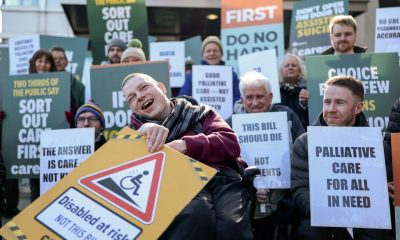
Scotland’s rejection of assisted dying is a victory for humanity
-

 Business6 days ago
DLocal: Entering 2026 At Escape Velocity
-
Business5 days ago
Columbia Sportswear enters $500 million credit agreement with JPMorgan Chase
-

 NewsBeat7 days ago
Missile lands next to presenter during live report
You must be logged in to post a comment Login