
Politics
Politics Home | Employees have more negative view of wellbeing provision than employers, new British Safety Council research reveals


New research by British Safety Council reveals some significant differences in the way employees and their employers view workplace wellbeing and what is needed to support it.
The ‘Keep Thriving’ survey, commissioned by British Safety Council with YouGov among 4017 employees and employers, shows employers consider their approach to wellbeing to be more ‘embedded’ in their own organisation than employees, and consistently report offering more wellbeing measures than employees say they can access.
While employers clearly recognised the importance of workplace wellbeing, with six in ten (60%) saying it is either ‘important’ or ‘very important’ to their organisation, they are also more likely to describe their wellbeing strategy as being ‘embedded’ (27% compared with just 20% of employees), while employees are more likely to say there is no strategy at all (21% compared with 16% of employers).
In organisations that consider wellbeing very important, nearly two-thirds (65%) also had a formal definition in place, and where wellbeing is only seen as moderately important, just 19% had a definition.
A perception gap also existed between employees and employers’ when it came to some provision of wellbeing support. For example, while 49% of employers say they offer flexible or remote working just 40% of employees say it is available to them. And on burnout prevention, while 26% of employers report providing support, just 14% of employee say they have it.
The survey also asked employees to rate their overall wellbeing both in and out of work. Close to half (47%) described their wellbeing in work as ‘moderate’, with over a third rating it high or very high (36% combined), and just one in five reported their wellbeing at work to be low or very low (18% combined). Importantly, where strategies were said by employees to be more ‘embedded’ and mature, employees reported higher wellbeing. In these cases, 8% said it was very high and 61% high.
Commenting on the ‘Keep Thriving: Future of Workplace Wellbeing’ survey findings, Mike Robinson, Chief Executive of British Safety Council said:
“We know that when done well, supporting people’s wellbeing at work not only helps them thrive and cope with change it also leads to a happier, more motivated and more productive workforce. But as we have also found, some significant differences exist between how employees and employers perceive not only what support is on offer but also the maturity of that provision.
“This matters because, as our survey shows, when wellbeing strategies are more embedded and mature, levels of wellbeing are also higher. Which makes it all the more important that we help organisations to develop effective, measurable wellbeing strategies which are fit for purpose for their workplace.”
The gap between employee and employer perceptions was greater in some regions than others.
For instance, London saw the highest proportion of employees in the net ‘high’ category for levels of workplace wellbeing (42%) and the lowest net low share (14%), and it also had the highest proportion of employers reporting mature workplace wellbeing strategies, which was also in line with employees’ views. In the North East however, while employers still mainly reported having either ‘operational’ or ‘embedded’ wellbeing strategies and also placed a high importance on wellbeing, employees rated workplace wellbeing strategies lower and reported the highest share of net low wellbeing (27%) and one of the lowest net high scores (27%).
There was more agreement between employees and employers when asked what policy changes or interventions would make the biggest difference to improving workplace wellbeing.
Legally binding obligations such as minimum leave or workload limits came top for both employers (29%) and employees (40%) and a legal duty to assess risks to wellbeing also received significant support (23% of employers, compared with 28% of employees), while voluntary certification or accreditation scored lower (15% of employers versus 12% of employees).
Some differences emerged when size of organisation is taken into account. Large ones, with 250 or more employees, were the strongest supporters of legally binding obligations (36%), while small companies, employing ten to 49 staff, placed the strongest emphasis on tax incentives or financial subsidies for wellbeing programmes (35%), as did micro-business whose highest priority was also tax incentives or subsidies (29%).
Mike Robinson added: “While this research does not identify one single way forward, it does show that both employers and employees would welcome more clarity, direction and support from policymakers and regulators, possibly even legally binding obligations or better incentives and support.
“The big message coming through these survey findings is the need for clear communication between employers and their staff, to close the gap between perceptions in the levels and types of support and ensure that wellbeing strategies work for everyone. In meeting the real wellbeing needs of our employees, we will be better able to deal with challenges we face now and in the future through wider economic and technological change.”
To view the full data tables from YouGov, click on the links below:


We hope you love the products we recommend! All of them were independently selected by our editors. Just so you know, HuffPost UK may collect a share of sales or other compensation from the links on this page if you decide to shop from them. Oh, and FYI — prices are accurate and items in stock as of time of publication.
It might be spring, but the clouds are still winning their battle with the sun for top spot in the UK. So while it’s peak gardening season, cajoling yourself to get outside is not the most appealing of tasks.
Just like any dreaded task (think: hoovering, laundry, or taking the bins out), bringing a new tool or accessory into the mix could be just what you need to have you Julie Andrews-style leaping around your garden.
Whether you’re undergoing a complete garden makeover, or simply sprucing it up with some fresh shoots, what you use (and wear) can make the difference between a hard days’ work and cosying up inside.
So if you need a little push to get outside before the weather perks up, here’s everything you need for gardening inspo this (so far un-)sunny season.

The government’s ‘Rycroft Review’ report on foreign interference in UK politics has been confirmed as a sham immediately it was published, after it failed to mention Israel a single time. And this is only what Skwawkbox and others predicted, since Starmer minister Steve Reed is a die-hard ‘friend of genocide’ who also didn’t mention Israel once when commissioning it in December 2025.
Israel: those who will not be named
Russia gets seven mentions. Israel – so far ahead of other countries in terms of interference in UK politics that it’s (literally) out of sight – none at all. And Reed is ‘under fire’ for – oops – ‘forgetting’ to disclose just how tight he is with the Israel lobby. Or mention it at all. Just like he ‘forgot’ the massive donations he’s accepted from the Israel lobby:
NEW: A Labour minister is under fire after failing to declare his relationship with the pro-Israel lobby when he unveiled a report on foreign interference in the UK
Steve Reed failed to declare his affiliation with the influential Labour Friends of Israel group pic.twitter.com/nJGIUm6sFh
— Laura Webster (@LauraEWebsterr) March 26, 2026
In fact, its very absence from the report is as clear a demonstration as could be of the extent of its influence. The National describes Reed’s omission as “incredible”, but in the literal sense it’s the absolute opposite: totally believable and unsurprising. Just appalling.
The scale of the farce becomes even clearer when China and Iran get a special mention – just as Israel is looking to drag the UK into its illegal war on Iran. A section titled “How serious is the problem?” of “long-term strategic foreign interference” quotes a government briefing naming those two countries as the crux of the problem:
The UK is a target of long-term strategic foreign interference and espionage from elements of the Russian, Chinese and Iranian states which, in different ways, seek to further their economic and strategic interests and cause harm to our democratic institutions”.
But not Israel. Noooo. No no no no no. Who even is Israel?’, the uninformed reader might ask.
Beep boop
So, a minister superglued to the Israel lobby – which terrifies British politicians and broadcasters alike and believes it is entitled to demand special consideration at every turn – commissions a report that conspicuously omits, completely, any mention of the biggest foreign interferer in UK (and US) politics.
“This is not the droid you’re looking for. Move along, move along.”
Nothing to see here. Obvs.
Featured image via the Canary

The Animal Welfare Committee, which advises the UK government, has published a damning report condemning the animal suffering involved in the fur trade.
Its report on ‘the responsible sourcing of fur’ calls out the suffering inflicted on animals who are confined in cages on fur farms or caught in brutal traps in the wild. And it indicates support for legislative action, stating:
consumer and market forces currently do not and cannot provide sufficient pressure to adequately safeguard animal welfare.
Despite banning the farming of animals for their fur more than two decades ago, the UK imports millions of pounds worth of animal fur from overseas every year. This creates a double standard, says Humane World for Animals UK (formerly called Humane Society International UK), which leads the #FurFreeBritain campaign.
The charity is calling on the UK government to act on the report’s findings and deliver on its recent Animal Welfare Strategy commitment to ‘uphold high animal welfare standards in trade’ by banning the UK’s bloody fur trade for good.
Meanwhile, DEFRA has published responses to its 2021 Call for Evidence on the UK fur trade. The results show more than 96% of the almost 30,000 respondents strongly agreed that killing animals for their fur is wrong. Respondents:
overwhelmingly did not support the import, sale or export of fur or fur products.
Claire Bass, senior director of campaigns and public affairs for Humane World for Animals UK said:
It’s clear from the Committee’s findings that trading in fur from caged, tormented, diseased and injured animals is completely at odds with the UK government’s recent Animal Welfare Strategy commitment to ‘uphold high animal welfare standards as part of our approach to trade’.
The Committee states that fur should not be sourced from animals who have not had ‘a life worth living’ or a humane death and then explains all the ways in which the global fur trade fails to meet these criteria.
The previous Labour government rightly banned fur farming 25 years ago. We must now stop outsourcing that same suffering overseas. The government now has both formal evidence and a strong public mandate to end the UK’s bloody fur trade.
Animal Welfare Committee report quotes and conclusions
The Animal Welfare Committee states that:
Within a commercial setting it is not possible and is unlikely to ever be possible to farm species such as fox and raccoon dog without having a detrimental effect on their health and welfare, or in a way which meets their welfare needs.
It adds:
There are no species being farmed for fur whose welfare needs are being adequately met by current standards and safeguards.
The report’s concerns include:
- Criticism that cage sizes within industry ‘welfare assurance’ schemes are ‘insufficient to meet physical and psychological welfare needs’, and cage design is inadequate.
- The use of inhumane killing methods, including CO2 which ‘has been shown to be a highly aversive method of killing mink [which] fails to kill rapidly’, and anal electrocution.
- Criticism of fur industry assurance schemes for both farmed and trapped fur, including outdated welfare science and lack of: consistency, training, unannounced inspections, independent auditing and traceability.
- Lack of industry consideration of the experience and welfare of individual animals on fur farms, with welfare assurance schemes such as WelFur permitting a high threshold of allowance for animals with serious welfare problems (e.g 15% of foxes may have ‘severely bent feet’).
- Challenges with traceability of the country of origin, species and method of production of fur (farmed or trapped) imported into the UK, using available data from HMRC.
- Although over a third (37%) of fur imported to the UK over the last 10 years came from China, the Committee was unable to obtain any evidence about industry application of ‘welfare certification’ schemes in the country.
- Concern that trapping standards for fur subsequently imported into the UK are ‘not sufficient to prevent unnecessary suffering, and do not adequately protect animal welfare’. The standards permit lethal head/chest crushing traps that take five minutes to kill species including beavers and otters.
- Concern that “consumers are not currently able to accurately identify whether products are fur of animal origin (wild caught or farmed) or ‘faux’ fur, or a mixture of the two”.
Public opposition to the fur trade
The evidence released today, of animal suffering and also of strong public opposition to the fur trade, now puts the need for a fur import ban beyond doubt. Therefore, Humane World for Animals UK is calling on the government to act swiftly.
More than 200 MPs support the Fur Free Britain campaign. Ruth Jones MP led a Westminster Hall debate earlier in March which saw cross-party support for the issue.
There is also strong public support for a ban on fur imports and sales. 77% of UK voters believe that when a type of farming is banned in the UK for being too cruel, we should also ban imports of products produced the same way overseas.
Last year campaigners handed in a 1.5 million signature petition to the prime minister in support of a ban. Furthermore, the vast majority (93%) of the UK public reject wearing real animal fur, while only 3% wear it. The same poll found that the words 79% of people most closely associated with a fashion brand selling fur are ‘unethical’, ‘outdated’, ‘cruel’ and ‘out of touch’.
The Animal Welfare Committee’s findings echo the damning indictment delivered by the European Food Safety Authority’s 2025 scientific opinion on the welfare of animals on fur farms. It concluded that the cage systems used on fur farms fail to meet the basic welfare needs of mink, foxes, raccoon dogs and chinchillas. And this includes the industry’s so-called “high welfare” or “certified farms”.
Featured image via Kristo Muurimaa / Oikeutta eläimille / Humane World for Animals UK

I struggle with sleep maintenance insomnia, which means that I have no problem falling asleep: it’s staying asleep that I struggle with.
But roughly 15% of adults find it hard to nod off to begin with. That can lead to chronic sleep deprivation, which is linked to worse blood pressure, an increased risk of heart attack, and even a higher chance of getting into a car crash.
Here, we’ve listed some science-backed ways to speed up your journey to the land of nod:
1) Put your phone away at least half an hour before bed
I love a late-night scroll as much as any of us, but there’s a reason the NHS says we could consider putting our screens away before bed.
Even having an unused phone near participants’ pillow seemed to increase their sleep latency, or how long it took them to doze off, in one study, while those who looked at their phone 30 minutes or less before hitting the hay also had a tougher time sleeping.
2) Will yourself awake
It sounds paradoxical, and that’s because, well, it is. A phenomenon called “paradoxical intention,” which involves willing yourself awake at night, can actually help you to fall asleep because it removes some of the pressure that can keep your mind busy.
A meta-analysis found this approach led to “great reductions in sleep-related performance anxiety”.
3) Give the “military method” a go
Designed to help soldiers fall asleep in minutes, the approach involves lying still on your back and slowly relaxing each muscle, breathing deeply as you do so.
“Move from the top of your body to the bottom when relaxing your muscles, picturing yourself sinking into your bed,” the University of Minnesota Medical School shared. Visualise something calming, if you can.
Progressive muscle relaxation was found to lead to faster sleep onset, while slow, deep breathing and “imagery distraction” (picturing nice thoughts) can also help you fall asleep sooner.
4) Check your thermostat
There is a “best temperature” for sleep; around 18-20°C will do it for most of us.
Much hotter than that, and our sleep latency, sleep satisfaction, and hours slept all shrink.
And if you feel really cold before you fall asleep, you might be more likely to get up in the night.
5) Exercise four to eight hours before bed
Exercising four to eight hours before bed can improve the amount of time it takes to fall asleep and lower our odds of waking back up in the middle of the night, too.
But, a narrative review published in Nature cautioned, that timeframe matters: “Exercising more than 8 hours before or less than 4 hours before bedtime, however, may have negative effects”.
6) Stick to a regular sleep routine
The NHS stressed the importance of sticking to a regular sleep routine if you wanted to fall asleep faster.
Some research has found that sleep consistency is a better indicator of mortality risk than sleep duration; a wind-down routine, like reading before bed, can help to improve your sleep quality.
“We have a terrible habit of wanting to go-go-go all day long then expect to fall asleep immediately when it is convenient for us – it simply doesn’t work that way,” psychologist Dr Leah Kaylor previously told HuffPost UK.
But an hour-long “wind-down” period might help.
!function(n){if(!window.cnx){window.cnx={},window.cnx.cmd=[];var t=n.createElement(‘iframe’);t.display=’none’,t.onload=function(){var n=t.contentWindow.document,c=n.createElement(‘script’);c.src=”//cd.connatix.com/connatix.player.js”,c.setAttribute(‘async’,’1′),c.setAttribute(‘type’,’text/javascript’),n.body.appendChild(c)},n.head.appendChild(t)}}(document);(new Image()).src=”https://capi.connatix.com/tr/si?token=19654b65-409c-4b38-90db-80cbdea02cf4″;cnx.cmd.push(function(){cnx({“playerId”:”19654b65-409c-4b38-90db-80cbdea02cf4″,”mediaId”:”9aaf19b3-b2c6-4d7e-b524-545d3ec8cf09″}).render(“69c6ace0e4b09f8e00516e20”);});

The Associated Press (AP) has finally used the word invasion to describe Israel’s illegal actions in Lebanon.
Of course, it could have used something far more accurate – like an “illegal invasion by a supremacist ethnostate” – but that’s probably pushing the boat out a bit too far.
Israel reported on with a crumb of accuracy
In true Western media fashion, it felt the need to publish a whole think piece on why it finally decided to tell the truth.
Such brave journalists, finally opening a dictionary.
Why are you so terrified of reporting basic facts?
— AIPAC Tracker (@TrackAIPAC) March 26, 2026
It only took two and a half years for the journalists at AP to actually do their jobs.
BREAKING: AP uses word to mean what word means https://t.co/d3rsQAS5pU
— Ali Abunimah (@AliAbunimah) March 27, 2026
And, the article should indeed have been just one sentence.
This article coulda been one sentence: “We are calling Israel’s invasion of Lebanon an invasion because that is what you call it when a country invades another country”. https://t.co/0eoZFNVNGp
— Colter Louwerse (@ColterL) March 27, 2026
But instead, AP decided to quote ‘Israeli officials’, i.e. terrorists, in detail.
AP also decided to state that:
Israel has invaded Lebanon four times in the past 50 years: 1978, 1982, 2006 and 2024.
It did this without offering any context or mentioning that all four invasions were very, very illegal.
There is literally no other circumstance where an international news outlet would feel the need to justify such a basic editorial decision. But because it’s Israel…
Imagine the kind of iron control over the media that requires a full published explanation when a word is used correctly against Israel https://t.co/kIlUzWrtIr
— Sarayu Pani (@sarayupani) March 27, 2026
Jokes aside, this is actually really telling. In no other circumstance would AP feel it has to explain/justify reporting news accurately. They only feel the need to do this because they are constantly being hounded by pro-Israel orgs like CAMERA that demand a pro-Israel bias. https://t.co/ASdwGTKf4U
— Tariq Kenney-Shawa (@tksshawa) March 27, 2026
Israel could tell the right-wing media the sky was green and they would probably publish it, because… ‘antisemitism’.
‘Israel says the sky is green. Others say it’s blue. Here’s why we’re now calling it blue.’ https://t.co/RE80ZqFQyu
— Davide Mastracci (@DavideMastracci) March 26, 2026
Still minimising the truth
Yes, a Western news outlet is finally admitting that it doesn’t usually tell the truth.
“We’ve decided to tell the truth. Here’s why we usually don’t.” https://t.co/v2YK1FuWeV
— Omar Sakr (@omarsakrpoet) March 27, 2026
However, notice how no media outlets describe Russia’s invasion as an invasion of ‘Eastern Ukraine’. It’s simply an invasion of Ukraine – a sovereign nation which has the right to self-defence under international law.
To make matters worse, it took AP only two days to correctly name Russia’s invasion.
It took @AP two days to call Russia’s invasion of Ukraine an invasion. I found the article.
It took four weeks of total destruction for them to call Israel’s actions in Lebanon an invasion, and they even felt the need to explain why.
That comparison is truly remarkable.…
— Abdullah Hassan (@8abdullahhassan) March 26, 2026
AP describing Israel’s actions as an ‘Invasion of Southern Lebanon’ is a precursor to one thing and one thing only. That is Israel annexing the south of Lebanon – and the media whitewashing it.
Only because it’s become untenable to deny manifest reality. Also though note how it’s still “southern” Lebanon and not just Lebanon. Whereas Russia of course is always referred to as invading Ukraine, not eastern Ukraine https://t.co/phkEZHTmcR
— Nate Bear (@NateB_Panic) March 27, 2026
Meanwhile, AP and the majority of other corporate media outlets still refuse to use the words genocide, ethnic cleansing, apartheid, and illegal occupation. I know that’s a lot of letters to get in the right order, but come on…
Ethnic cleansing too spicy? Land theft too onerous? Vandalism too old school? https://t.co/QAj1LFFK9v
— Robert Young Pelton (@RYP__) March 26, 2026
Allow me to congratulate myself for reluctantly telling the truth eventually.
We needed to wait until it was a full-blown ethnic cleansing and annexation to use “invasion,” which will now be used to minimize it. https://t.co/sLy9Ca5ee1
— Y Disassembler (@loomdoop) March 27, 2026
Next, they’ll tell us that naming an invasion an invasion requires a meeting at the Avengers compound with Tony Stark.
Since when does calling an invasion an invasion require analysis, deliberation, a newsroom vote, & an announcement?
— Hala Jaber (@HalaJaber) March 26, 2026
The essay is, no doubt, intended to preemptively address antisemitism claims. Because we all know that only Israel can be invaded by illegal terrorists.
The article is much like Israel’s ‘pre-emptive strikes’ – absolute bullshit.
The Associated Press has to write an essay pre-emptively defending themselves from “antisemitism!” shrieking after reaching the difficult decision to report accurately about even one thing israelis have done.
This agency controls almost half the news Western press contains! https://t.co/irGjKBPrTb
— Crixiv 2 🇵🇸 (@solzhenidiot) March 26, 2026
It’s a ten out of ten to the Associated Press for learning the correct definition of a word. Get them a Pulitzer Prize.
Maybe they’ll try genocide next? Or ethnic cleansing? We’ve linked the definitions, just in case you’re struggling, AP.
Of course, they won’t – because it’s only genocide or a war crime when it’s not Israel committing it.
This whole stunt by AP is nothing but a hilarious attempt to claw back any remaining credibility.
Featured image via Al Jazeera English/ YouTube

About 40% of Brits hadn’t finished a book in the 12 months between 2024-2025, YouGov reported.
Of those who had, 30% listened to an audiobook; 18% had ticked titles off their list through headphones, without ever picking up a physical book.
Some people think that shouldn’t “count,” though. For instance, author Nathan Bransford said in his blog, “Consuming an audiobook is a fundamentally different activity than reading. We already have a word for it: LISTENING”.
He also argued that reading from a page engages the brain differently. But not everyone agrees.
What does science say?
In 2016, Dr Beth Rogowsky, a professor specialising in language learning styles from Bloomsburg University of Pennsylvania, co-authored a study comparing comprehension rates for people listening to audiobooks to those who read from an e-reader page and another group who did both.
It tracked how much they remembered right after taking in the information and two weeks later.
Speaking to NPR, Dr Rogowsky said, “We found that there was no significant difference between reading a book using a Kindle or listening to a book or doing both – listening and reading simultaneously.”
Of course, that was only for adults who already knew how to read; the professor said physical books might be more helpful to children who can’t yet read.
But, to be fair, the “do audiobooks count?” debate does not rage among three-year-olds so much as it does those with Goodreads accounts and access to Reddit.
OK, but what about the word “reading”?
Fine, you might take in information from listening to an audiobook. But that isn’t the definition of the word reading – is it?
Well, major dictionaries don’t seem to agree about that.
Merriam-Webster defines “to read” as “to receive or take in the sense of (letters, symbols, etc.) especially [but not exclusively!] by sight or touch”.
Another definition – “to learn from what one has seen or found in writing or printing” – does not technically preclude listening.
Cambridge Dictionary, however, puts the first definition as “to look at words or symbols and understand what they mean,” and Collins Dictionary puts “look” in their main definition too.
TBH – who cares?
A very compelling article, written by visually impaired author James Tate Hill for Literary Hub, reads: “It was hard to say if the words read with my ears reached my brain differently from everything I had read with my eyes”.
For instance, he said, the narration of audiobooks placed a new layer on top of the experience – but it took “minutes” for the author’s words to override the narrator’s voice.
He identified as a “reader” thanks to his love of audiobooks, and added it “didn’t matter if I was reading or listening” to his favourite titles; “the words in my ears were the same words other people saw when they held a book in their hands.”
I have to agree. The strongest argument I can find against calling listening to audiobooks “reading” is a (disputed) semantic nuance, but I don’t find that compelling enough to stop someone calling themselves a reader if they want to (side note: self-identifying as a reader is linked to increased happiness).
It’s true that you can’t fold laundry while you’re rifling through War and Peace, and accents and pace changes are more in your control when you read from a page.
But seeing as two in five people aren’t enjoying books in any form, that information seems to land similarly whether it’s read from a page or some headphones, and that reading is good for us, whether we listen or look, I’m not particularly fussed about how it’s done.

News that Israel have tortured a Palestinian baby have gone largely under-reported by a complicit Western media. It is a horror almost beyond comprehension; recent reports describe how a Palestinian father named Abu Nassar, has a one-year-old child was tortured in front of him during a 10-hour interrogation by the Israeli military. Salma Kaddoumi, a freelance video and photojournalist who interviewed Nasser’s family, later told the Canary that Nasser has not been heard from since.
Despite photographic evidence of the baby’s injuries trending on social media, and alarming claims of forced disappearance raised by Nasser’s family, Western media outlets have broadly failed to report on the incident. Unfortunately, at this point, few would expect them to. Nasser’s story is one more crime ignored amidst the gravest crimes against humanity seen this century.
Israel’s torture of Palestinian baby met with deafening silence
When Nasser’s story first broke on 24 March 2026, it was impossible to ignore the images of his baby on social media. We are all too used to encountering images of injured Gazan children in this way, often bloodied and covered in debris. What is so disturbing about the injuries suffered by Nasser’s child, however – two burns or punctures on each leg, in roughly the same place — is how deliberate they appear to be.
This story is different, making its absence across Western media all the more stark. Bogus claims about children caught up in the ‘realities of war‘ cannot be made here. This is a story about the Israeli state abusing a baby to extract a confession from the child’s father.
Stories about children who suffer abuse at home and abroad usually occupy Western news cycles for days, weeks, even years — so long as the children are white. Almost twenty years later, the BBC continues to report on the harrowing case of ‘Baby P’. Nasser’s baby, to the contrary, is outright ignored. What is the media afraid of? Having an emotional reaction in response to the suffering of the wrong kind of child?
Institutional racism
The reasons why the media is failing to report on this story are, by now, no doubt obvious. Institutional bias in favour of the Zionist regime, if not outright capture by its representatives, has led to a culture of silence where the horrors experienced by Palestinians are persistently absent from the news cycle.
This bias is compounded by racism, which leads to more scrutiny being applied to Palestinian civilian testimony than the claims of the Zionist regime itself. Whereas the media was more than happy to report on unverified claims of ‘40 beheaded babies’ on 7 October 2023, verified reports of beheaded Palestinian children, backed up by video footage, are left to the side.
We can imagine the excuses made by editors. Is the testimony provided by Nasser’s family members deemed untrustworthy? Is it too difficult to verify their accounts to report on them? Are the reports produced by freelance journalists on the ground, who continue to risk their lives to break through Israel’s blockade, not good enough for them?
A manipulated grey area of plausible deniability quickly amounts to a new form of censorship.
Citizen journalism sidelined
What a difference fifteen years makes. In 2011, the Arab Spring heralded a new era of ‘citizen journalism’. Mainstream media outlets were quick to fill their reports with footage captured by everyday people, who uploaded their testimony to the internet via smartphones.
But even at that time, the role of Big Tech companies in manipulating stories was becoming apparent. Haythem Guesmi, writing for Al Jazeera in 2021, showed how social media has since revealed itself to be a double-edged sword:
Big Tech companies have been allowed to be the ultimate arbiters on free speech online and a haven for hate speech and disinformation. They have piggybacked on the idea that they helped trigger the Arab Spring and are therefore a force for freedom and democracy.
Social media is seen as both a threat to and the last bastion of free speech. One side-effect of this contradiction is that citizen journalism is typically now confined to social media platforms, which are deemed lawless zones of misinformation. The disinformation pumped out by governments, however, is subject to less scrutiny than ever before. With citizen journalism maligned, the mainstream media defers unquestioningly to state power.
No accountability
As a result, we live in a dissonant world where those responsible for a genocide live-streamed across our smartphones avoid scrutiny and accountability. Stories like Nasser’s, quarantined on deregulated platforms, are both inescapable and ignored.
The fact that social media platforms are drowning in disinformation is self-evident to anyone with an Internet connection. But by placing all emphasis on the responsibilities of Big Tech companies, we let our legacy media off the hook.
In the same article for Al Jazeera, Guesmi reported how international civil rights organisations were calling:
on Big Tech companies to cease their unfair discriminatory practices, to invest in regional expertise of content moderation and become more transparent about policies and procedures.
In 2026, it is long past due that our legacy media organisations did the same. Until they do, they will continue to fail those who are subject to horrifying abuse at the hands of rogue states, like Nasser and his baby.
This would require media organisations disentangle themselves from their cozy relationships with state power first. Until that happens, we can expect them to remain complicit in state violence and racism through their unwillingness to report on the stories that matter.
Featured image via the Canary
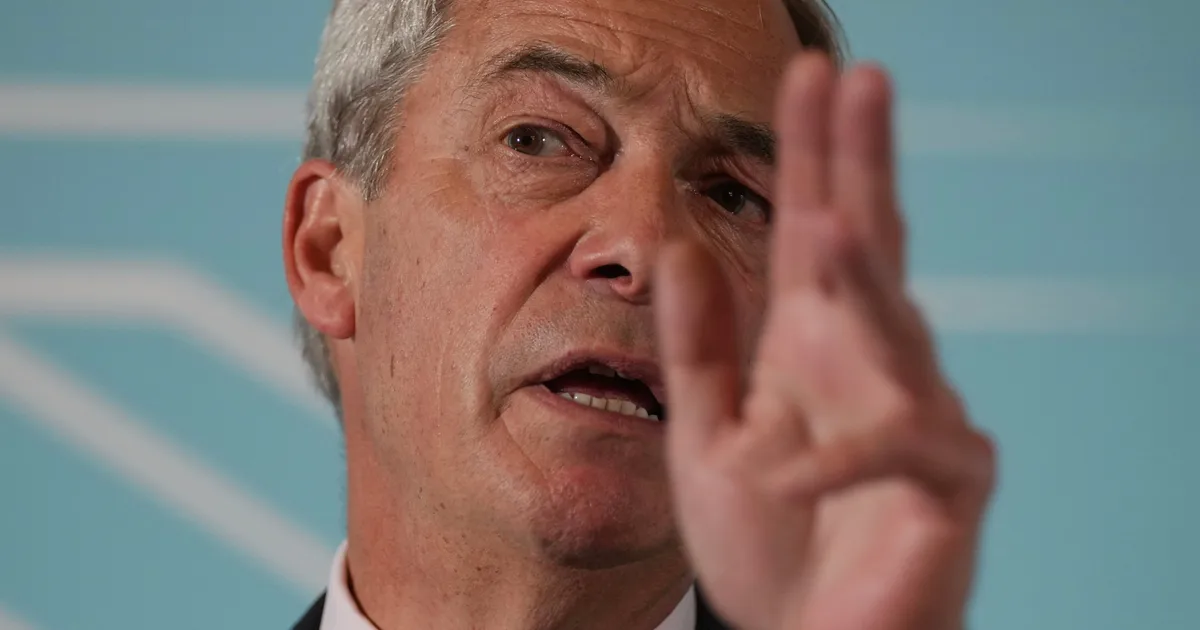
Nigel Farage dismissed a photo of a Reform UK candidate appearing to perform a Nazi salute by describing it as a “Fawlty Towers impression”.
Corey Edwards is Reform’s lead candidate for the Pen-y Bont Bro Morgannwg constituency in May’s Senedd election.
A photo of Edwards appearing to replicate the offensive salute recently resurfaced, though the date and location of the image are unknown.
While launching his party’s local election campaign, Reform Party leader told ITV News that his candidate was doing a “Fawlty Towers impression”.
He said: “The context I have been told, it was taking a Basil Fawlty sketch, and that’s why he did it. He’s a human being.”
Asked if Edwards would remain a candidate, he said: “I get the point – it looks terrible. Things in isolation often do. I wouldn’t approve of it.”
He then compared the incident to what he described “far more serious” case of a Plaid Cymru candidate withdrawing from the race over an offensive social media post from more than a decade ago.
Edwards also issued a statement saying the photo had been “misinterpreted” and that he had made “mistakes”.
“There is a clear distinction between ordinary use of the appalling gesture, compared with me imitating a Welsh footballer’s use of it, or indeed Basil Fawlty’s walk,” the Reform candidate said.
“The Nazi regime was the most barbaric ever and I’d never make light of nor dilute its seriousness.”
A Reform UK spokesperson also told ITV Wales: “We’re not willing to write people off forever because of mistakes they made when they were young.”
The incident is the latest drama threatening to overshadow Reform’s campaign in the run-up to the local elections.
Farage already had to publicly defend Reform’s Scottish leader, Malcolm Offord, after an offensive homophobic joke he made a rugby club dinner in 2018 resurfaced.
Offord later apologised and denied he was homophobic.
At his party launch in Sunderland this week, Farage said: “If we’re going to drum people out of public life for telling a joke at a boozy rugby club dinner that’s amongst friends, we’ll finish up with the dullest group of individuals, looking a bit like, sounding a bit like Keir Starmer.”
He added: “When you take something as it is, yeah, of course it looks awful.”
However Farage said Offord “probably regretted doing it” even on the night, and accused critics of adopting a “po-faced purism attitude”.
Reform also had to drop its mayoral candidate for the Hampshire and Solent 2028 election, Chris Parry, this week, after he compared a Jewish community group to “Islamists on horseback”.

At a certain age, you just have to accept you are officially too old for some things. Now firmly in my 30s, my previously cemented love of budget hostels has expired. Once upon my twenties, a broken night’s sleep thanks to an anonymous bunkmate’s snoring was simply a minor inconvenience; now it will ruin my entire next day. The gymnastics of shuffling in and out of clothes under a bunkbed’s duvet used to be a breeze; now I’d probably end up slipping a disc.
However, my budget doesn’t exactly stretch to my developed taste for ‘comfort over everything’. I’m firmly in my accommodation ‘inbetweener’ era and there aren’t a whole whack of digs that bridge the gap between boutique and budget.
This struggle becomes even more of an issue when you factor in an expensive travel destination like Iceland. A trip to ‘The Land of Fire and Ice’ notoriously comes with a serious price tag, and according to The Times, Iceland is facing a reduction in tourism as a result, with international visitors dropping by 6% last year.
So, how can I make a trip to the top destination of many a travel wishlist achievable on a budget, without compromising on comfort? Well, CityHub might just have the answer.
CityHub Reykjavik
Now, when I say ‘pod hotel,’ you need to immediately banish the thought of those tiny, coffin-sized capsules in Japan. Yes, while CityHub Reykjavik is technically a pod hotel, I can guarantee that you’ve never seen something quite like this before.
CityHub hotels (they also have locations in Amsterdam, Rotterdam and Copenhagen) blend private sleeping spaces with vibrant hangout areas and premium amenities at an affordable cost. A concept that is, quite frankly, music to my ears, back and bank account.
Their private, pod-esque if you will, sleeping areas are called Hubs and despite being small, they pack a big punch – we’re talking king-size beds, smart storage that doesn’t compromise on space, Bluetooth speakers, air con and heating. The best bit? You can enjoy this all without the fear of someone cracking the big light on at 3am.
The secret? Opting for an L-shaped pod over the stereotypical coffin. Hubs are a bit like a clever game of accommodation Tetris – one ‘up’ Hub is connected to a ‘down’ Hub, offering vertical space at the start of each that acts like a foyer.

CityHub invited me to try out their accommodation for myself and honestly, the biggest shock was the silence – I was so surprised at my inability to hear anyone in the adjoining Hub. I’m a tall gal and unlike other pod hotels I’ve been to, I could comfortably sit upright in bed without fear of a concussion. Even with a second person in the Hub with me (ooo-er), there was plenty of space for our suitcases and room to get changed in – we just had to take it in turns.
‘Shared bathrooms’ don’t exactly scream luxury (pause for flashbacks to the horrors of a hostel shower), but CityHub does things differently. You’d be forgiven for thinking that you were actually in a spa while popping to the loo – their Pinterest-worthy bathrooms boast warm terracotta walls and high pressure showers as well as complimentary towels and Rituals amenities.
As for the communal spaces, again, it’s a far cry from the hostel lounges and kitchens of yore. The Hangout (CityHub’s reception, bar and lounge area-in-one) features a self-service system in which guests can tap their own beers and refreshments using the digital wristband they’re given on checking in (which also doubles as your Hub key). Forget someone badly playing Oasis on a guitar in the corner – The Hangout is perfect for relaxing or even working in.

The real showstopper, though? CityHub Reykjavik’s rooftop hot tub. There really isn’t anything like soaking yourself in geothermally heated water while sub-zero Icelandic air whips around you – all with an incredible view of the night sky. If you’re lucky, sometimes it’s even possible to see the Northern Lights from the comfort of the tub.
Thought it couldn’t get any better? Buckle up, because the best bit of all of this? The cost. While the average hotel price in Reykjavik for April is hovering around £156 per night, you can snag a Hub for as little as £60 to £80 – and you could get this price even lower depending on what promotions and discounts are available.
CityHosts
Now, the issue with Iceland trips is that you only have to step outside your hotel and it suddenly feels like you’ve spent £20. It’s notoriously expensive and with endless guides online as to where you should and shouldn’t go, which tours you should and shouldn’t book, it can all be really overwhelming.
Enter the CityHosts – CityHub’s onsite concierge service that does a whole lot more than just check you in. As Reykjavik locals themselves, the hosts on duty will happily help you set up cost efficient tours to experience as much Icelandic culture as possible without the hefty price tag. After all, who actually knows the best spots better than people who live in Iceland all year round?
We were pointed toward a walking foodie tour that let us sample the most iconic Icelandic dishes from local businesses (although I still can’t say fermented shark is for me). And on one (utterly freezing) evening I fulfilled my dream of seeing the Northern Lights in all their glory after being sent out exploring with a pocket-friendly guide who knew the best viewing points. Another Iceland expert took us on a day trip around the country’s most famous natural landmarks and we knew we were guaranteed a brilliant meal afterwards thanks to the restaurant recommendations from the CityHosts.
So what exactly is the key to CityHub’s ability to provide accommodation that bridges the gap between budget and bougie? Well, it’s all in their very clever climate-friendly planning.
CityHub transforms empty urban buildings into hotels, avoiding new construction which as a result cuts CO₂ emissions per guest by 89% compared to the European hotel average. Their modular, recyclable rooms, in-house smart tech and harnessing of Iceland’s famous geothermal energy all add up to a model that’s efficient, scalable, and certified B Corp, a title held by just 0.1% of hotels globally.
I’m already planning a trip to Copenhagen purely based on the fact that there’s a CityHub there – because as someone’s outgrown dorms but not budget-friendly travel, I know I’m guaranteed the perfect fit.
To book a stay at CityHub visit: https://cityhub.com/reykjavik/

Citigroup (CITI) Stock: Dips to $108 as Regional Banking M&A Strategy Takes Shape

11 Gardening Tools For Spring To Shop Now

How does mentorship impact a professional’s career longevity?


-
 Crypto World7 days ago
NIO (NIO) Stock Plunges 6.5% as Shelf Registration Sparks Dilution Worries
-
 NewsBeat2 days ago
Manchester United reach agreement with Casemiro over contract clause amid transfer speculation
-

 Fashion7 days ago
Weekend Open Thread: Adidas – Corporette.com
-

 Politics7 days ago
Jenni Murray, Long-Serving Woman’s Hour Presenter, Dies Aged 75
-

 Crypto World6 days ago
Best Crypto to Buy Now: Strategy Just Spent $1.57 Billion on Bitcoin During Fear While Early Investors Quietly Enter Pepeto for 150x Potential
-

 Crypto World6 days ago
Bitcoin Price News: Bhutan Sells $72 Million in BTC Under Fiscal Pressure, but the Smart Money Entering Pepeto Sees What the Market Does Not
-

 News Videos2 days ago
Parliament publishes latest register of MPs’ financial interests
-

 Sports4 days ago
Remo Stars and Kano Pillars Strengthen Survival Hopes in NPFL
-

 Sports4 days ago
Gary Kirsten Accuses Pakistan Cricket Board Of ‘Interference’, Mohsin Naqvi Responds
-

 Business5 days ago
No Winner in March 21 Drawing as Prize Rolls to $133 Million for Next
-

 Tech5 days ago
Give Your Phone a Huge (and Free) Upgrade by Switching to Another Keyboard
-

 Tech5 days ago
AI enters the chat: New Seattle dating app relies on tech to facilitate meaningful human connections
-

 News Videos4 days ago
Ch 9 Financial Management Part 1 | Detailed One Shot | Class 12 Business Studies Boards 2026
-
Business7 days ago
Columbia Sportswear enters $500 million credit agreement with JPMorgan Chase
-

 Tech6 days ago
Today’s NYT Connections Hints, Answers for March 22 #1015
-

 Business21 hours ago
Instagram, YouTube Found Responsible for Teen’s Mental Health Struggle in Historic Ruling
-
 Crypto World7 days ago
Small-cap Russell 2000 enters correction territory
-

 Business5 days ago
Will Duke Basketball Win It All? Duke Basketball Enters Second Round as Third Favorite to Claim NCAA Title
-

 Sports5 days ago
2026 Kentucky Derby horses, odds, futures, preview, date: Expert who hit 12 Derby-Oaks Doubles enters picks
-
 Entertainment4 days ago
Cynthia Bailey Dishes on ‘RHOA’ Season 17, Discusses Kandi
You must be logged in to post a comment Login