

Politics
Reform is panicking about a party to its right in Makerfield

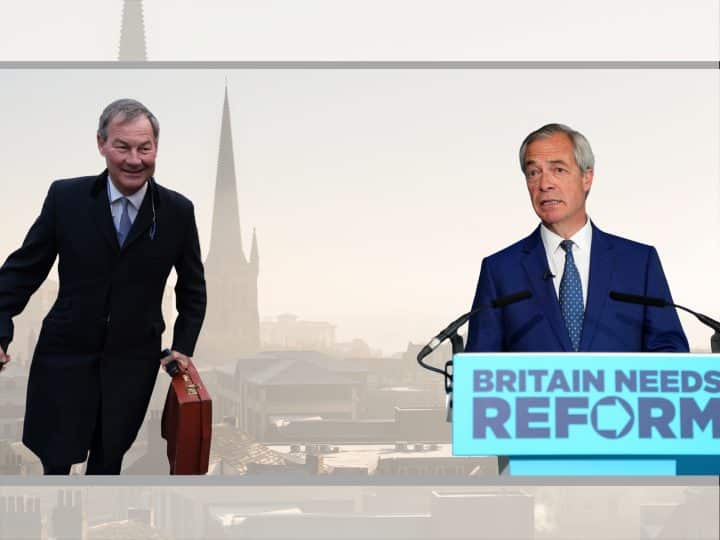

Reform UK was once an insurgent political party that aimed to steal hard-right voters from the Tory Party. At first, it seemed like Reform’s goal was to force concessions from the Tories — much like how UKIP did with the Brexit referendum. Surprising many, however, Reform actually ended up overtaking the Tories in the polls.
In response, Farage attempted to replace the Conservatives completely by softening some of the rhetoric and accepting bus-loads of Tory defectors. Predictably, this led to another insurgent political party emerging — this time seeking to steal hard-right voters from Reform UK.
The party in question is Restore Britain, and the latest polling suggests it could deny Reform a victory in the Makerfield by-election:
The Times have just released a new poll for the Makerfield by-election by Survation.
Robert Kenyon is the only candidate who can stop Andy Burnham.
This is a two horse race – nobody else comes close. pic.twitter.com/zZ75PasBdt
— Nigel Farage MP (@Nigel_Farage) May 23, 2026
Reform VS Restore
The leader of Restore is ex-Reform MP Rupert Lowe. The TLDR of Lowe leaving Reform is as follows:
- Lowe began criticising Farage (seemingly in coordination with Elon Musk).
- Farage suggested Lowe wouldn’t be anywhere near office without Nigel’s cult of personality (a.k.a. Reform).
- Reform suspended Lowe and reported him to the police for ‘verbal threats’ and “serious bullying” of female staffers.
Lowe would later form Restore in February 2026. The move came after Farage opened the floodgates to Tory defectors – a move which proved incredibly unpopular with Reform activists. Farage’s party would also hint at working with the Tories to ensure an election victory. As anyone could have predicted, this all made it harder for Reform to claim that it was an ‘alternative’ to the Tories.
By the end of April, Politico’s Poll of Polls showed that Reform’s polling had dropped from highs of 30%+ to 24%. Since the local elections and the chaos around Keir Starmer’s position as PM, the party has clawed its way back up to 26%:

Now, Reform faces two threats. The first is the bounce that Labour gets from Andy Burnham:
Striking things about this poll
Labour are ahead after tanking in Red Wall in locals (Burnham effect)
How well Restore are doing
How badly Conservatives are doing
The third party of the right https://t.co/ds74ZHstBj — Lewis Goodall (@lewis_goodall) May 23, 2026
The second is that this by-election is going to shine a light on Restore Britain. And if Lowe’s party is able to dent Reform’s polling with hardly any national recognition, imagine what they can achieve with it.
On the march
Reform has adopted a stance of viciously attacking any and all opponents. Recently, this saw the party and its social media operation turn on a Makerfield charity director who dared to criticise them turning up at an event for disabled people without an invite:
They are trying to present the woman running a cafe for people with special needs as the ‘uniparty’.
This is political cannibalism, where you demonise just about anyone if you perceive them to get in your way. Certainly curious to see if it works! https://t.co/wH2IpfdeVO
— Aaron Bastani (@AaronBastani) May 23, 2026
We’re also seeing suspicious bot activity like this:
The electoral commission has to look into this. — Dr Iain Overton (@iainoverton) May 23, 2026
It's clearly orchestrated. The question is – who is paying for it? Putin? Harborne? Farage? Some tech bro? pic.twitter.com/dgWGvxkZFq
Given all this, it’s unsurprising that Reform is gunning for Restore:
Vote Restore. Get Burnham. https://t.co/Vx0sYB9RY0
— Reform UK (@reformparty_uk) May 23, 2026
One commenter argued that Reform isn’t best-positioned to make this argument:
Reform split the vote and allowed Keir Starmer a super majority and all the Faragistas said that was fine.
But now Restore are doing it to them and the Faragistas are furious. It's almost as if they are TWO TIER! https://t.co/Ixm7fjnVZm
— Alexander Hall (@AEHALL1983) May 23, 2026
Reform’s attack on Restore will drive up the latter party’s profile. This will allow Lowe to directly speak to the public, and to potentially convince those with doubts about Farage that there’s an alternative. The timing really couldn’t be worse for Farage, either, because there are many good reasons to have doubts about him right now — key among them the £5m ‘gift’ he failed to declare:
Here are the facts as laid down by Derbyshire: Same old same old https://t.co/ViEIFZkf3A — Alonso Gurmendi (@Alonso_GD) May 6, 2026
1) Farage says he won’t run
2) crypto billionaire pays him £5mill
3) Farage U-turns and runs
4) Farage hides the donation
5) Farage announces if he wins the election he will slash capital gains tax for crypto firms
The optics say it all: Farage, a public school boy in cords and tweed, fresh from receiving £5m from another public school boy, nodding along as Kenyon argues that Britain’s real problem is teenagers who cannot be hired on the minimum wage. https://t.co/gA42bUhOKE
— Dr Iain Overton (@iainoverton) May 23, 2026
Reform was already moving further rightwards to stop the drift towards Restore. A recent example of this was the plan to punish citizens who don’t vote for Reform. As we reported:
Reform’s new policy is to build migrant ‘detention centres’ (what would more accurately be called ‘concentration camps’) in areas which don’t vote Reform. The party has denied its new policy constitutes a ‘threat’. The reason it’s being interpreted as one is because Reform argued people shouldn’t want detention centres in their area. Therefore, it’s clearly a threat by the party’s own logic.
This is a perfect illustration of the problem facing Reform. No serious practical solutions. Just political posturing. Which works fine when you’re trying to make a breakthrough. But won’t cut it when you need to move to being a serious alternative government. https://t.co/szML6sTV9g
— (((Dan Hodges))) (@DPJHodges) May 4, 2026
The problem Farage has is the problem Kemi Badenoch and the Tories have. Politicians to their right can simply say ‘well of course they’d say that now, but they won’t follow through on it‘. Eventually Rupert Lowe will let his supporters down too, and someone will emerge to his right. Oh, and we’re already seeing signs of this. As commenter Mukhtar noted:
People are resigning from Rupert Lowe’s party, including local branch chairs, after discovering that former Tory MP Scott Benton is now employed by Restore and has access to the membership database. Scott Benton resigned as a Tory MP after he was caught in an undercover sting offering lobbying access to the gambling industry.
They’ve now found a photo of him with a Hebrew tattoo and are saying this is not what Rupert Lowe promised them. The people Restore are attracting is certainly something.
The following are examples of right-wing accounts commenting on the matter:
This is new Restore communications lead Scott Benton back when he was a Tory MP explaining to an undercover journalist posing as a gambling lobbyist how he’d be willing to lobby Ministers in exchange for cash.
Restore have hired a corrupt former Tory MP. Restore is a disgrace. pic.twitter.com/lV4lNJyfrR
— Wolf
 (@WorldByWolf) May 22, 2026
This is Scott Benton.
A disgraced former Tory MP who was forced out due to his involvement with the Gambling Industry.
He now has full access to Restore's database of membership after being employed by the party.
As you can see he has a Ba'al and 'israel' tattoo.
Mossad… pic.twitter.com/1QVH6pHEIf — UNN (@UnityNewsNet) May 22, 2026
Increased attention will also mean more people learn that Lowe once had his groundskeeper execute his pet dog with a shotgun.
Reform? Restore? Reject!
Honestly, we don’t want Reform or Restore to do well. At the same time, we’d be happy for the two parties to do just well enough to cancel each other out.
Forgetting Repulse and Reject, we shouldn’t ignore the fact that Andy Burnham seems to be offering little more than reheated Starmerism. As we’ve reported:
- Burnham ‘to support’ Mahmood’s racist immigration changes.
- Burnham is silent on wealth taxes – not a promising sign from potential PM.
- Andy Burnham’s role with Iain Duncan Smith’s think tank just shows he’s more of the same.
- Burnham WON’T back proportional representation this parliament.
- Shapeshifting Burnham ditches trans rights to panic-grab Reform votes.
For too long, UK politicians have exclusively tried to appeal to frothing right wingers. We wish that Burnham was the man to pull us out of this death loop, but Burnham himself keeps telling us otherwise.
Featured image Getty Images (Sean Gallup) / Getty Images (Carl Court)
By Willem Moore

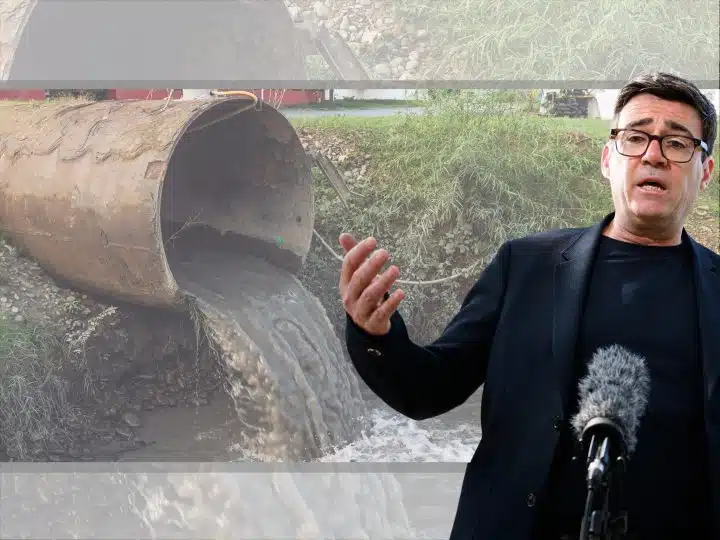

It’s been widely reported that Andy Burnham wants to ‘renationalise’ vital public industries and utilities. This sounds good, because people hate privatisation, and they want the UK to once more own its own assets. The problem, of course, is that Burnham isn’t planning to renationalise anything, as he keeps admitting:
Andy Burnham says we could have a "localised public control option" for Thames Water
What does that mean? Who is in charge? Where do the profits go?
We need nothing less than permanent PUBLIC OWNERSHIP of Thames Water with households, workers and anti sewage groups on the board pic.twitter.com/0s1OT1mMzz — Cat Hobbs (@CatHobbs) May 23, 2026
Half measures
We observed early on that political commentators and outlets like the Guardian were reporting on Burnham’s plans to ‘renationalise’ utilities. Take the following clip, for example:
Andy Burnham: “I don’t blame anyone who left our party. I don’t blame anyone who voted for other parties”.
“We need to renationalise water, energy and housing.” pic.twitter.com/lS5TXENvXG
— Tory Fibs (@ToryFibs) May 16, 2026
Despite it being presented as a quote, Burnham did not talk about ‘renationalising’ anything in the above; instead he talked about putting utilities under “stronger public control”. Now, Burnham is setting the record straight, with the Times reporting:
He has also spoken of stronger public control over utility companies. “I use that phrase advisedly. People then shorthand it as nationalisation; it’s not the same thing,” he said, pointing to Greater Manchester’s bus services, which are run by private operators.
It’s good that Burnham is using terms “advisedly”, we suppose, but we’d advise he investigates what the public actually wants. As YouGov polling has shown:

Dead-eyed Labour centrists will ask: ‘as long as these services are efficient, what does it matter?‘
It matters because these services will not remain efficient if private operators remain in the mix. If we allow them to retain a stake, they will use their foothold to push for more and more power until eventually they own the lot. We’re seeing this happening in the NHS right now. And we cannot let the fox in the henhouse simply because Andy Burnham is ‘mad for it’.
You do, though
Burnham also told the Times:
Thames Water, for instance, you don’t just say ‘nationalise water’. You could have a localised public control option there.
Sorry, Andy, but we are just saying ‘nationalise water‘, and so is the majority of the public.
We ‘ve reported on scandal, after scandal, after scandal relating to these private water companies; why would we want these proven crooks to retain any degree of control over our most vital resource?
As Hannah Sharland reported for the Canary on 19 May:
the government has so far actively refused to bring Thames Water into special administration. It has repeatedly fallen back on water industry spin to justify pursuing a ‘market-led’ – privatised – solution. Now, ministers and Ofwat are poised to sign a deal that would allow it to dodge fines for the next four years.
If working with private water companies worked, we wouldn’t have to spare them from paying fines; they would simply be able to profit from the service without incurring them.
Burnham — more of the same
Of course, it’s easy to understand why crooked Labour politicians would want private money in the mix. These people are in the same social circles as the fat cats who profit from privatisation, and ‘everyman’ Burnham is literally a graduate of Cambridge University.
We will say this for Burnham, though; he is at least making it clear what he is and isn’t offering. Hopefully people listen to him now so they’re not surprised in 12 months when Labour’s polling is back in the sewer along with Britain’s poorly treated water.
Featured image via Getty Images (Leon Neal)
By Willem Moore

As part of dodgy attempts to affect media coverage he was unhappy with, Fine Gael minister for communications Patrick O’Donovan held a call with Ireland’s media regulator “outside normal communication channels“. He then failed to disclose that the conversation took place.
The Ditch reports that on Saturday April 11 O’Donovan spoke to Coimisiún na Meán’s (The Media Commission or CnaM) Rónán Ó Domhnaill to:
…express concern regarding media coverage of the fuel protests and to ask whether there was a mechanism for the minister within the legislation to ask for an examination of the broadcast coverage of the protests.
The protests in early April were led by hauliers and farmers opposed to the rising cost of fuel. The recent spike in prices has been caused by the US-‘Israeli’-led illegal war on Iran, and the latter’s perfectly reasonable response of closing the Strait of Hormuz, a vital oil corridor. Ireland’s government carries a share of the blame in this, due to its role in weapons shipments for the aggressors, and its failure to criticise the mass murder taking place.
Ireland — Minister likely broke EU law on press interference
Rather than accept this failure, O’Donovan — likely breaching EU rules on ministers pressuring media – sought to shift the narrative in press coverage. The Ditch note that O’Donovan complained about:
…“a lack of balance” in an RTÉ radio broadcast that included three opposition spokespeople and one government representative and “Prime Time interviewing protestor James Geoghegan in a gentle way”.
An internal note from CnaM reported that O’Donovan said:
…the media only giving the side of the protestors in their news reports, and not the victims of the blockades.
O’Donovan also bemoaned:
…a journalist broadcasting from a protest from inside an unauthorised portacabin belonging to protestors.
The latter seems an entirely reasonable thing for a journalist to do as a means of conveying the reality of a protest environment. The public clearly thought RTÉ’s coverage was adequate, with the broadcaster only receiving nine complaints following the protests’ main period.
O’Donovan went on to say on Monday April 13 that he was intending to speak to Coimisiún na Meán about his dissatisfaction on fuel protest reporting. He failed to declare that he’d already been jockeying behind the scenes via that informal phone call to find a way of pressuring media organisations.
Those public comments had already generated furore, with National Union of Journalists assistant general secretary Séamus Dooley describing them as “sinister and deeply disturbing.” Dooley said:
The Media Minister is not a bystander but is in a position to influence the allocation of funds, the approval of commercial radio licenses and overall policy on broadcasting.
It is not his role to dictate to the independent regulator or to apply pressure on media organisations. RTÉ is a public service broadcaster not a State broadcaster and is independently regulated in the interests of democracy. You cannot have a ‘slightly independent’ public service broadcaster.
O’Donovan’s ‘Trumpian’ attacks on the media
Dooley continued:
There’s no place for Trumpian ad hominem attacks on journalists and the Minister’s comments have caused genuine concern.
Upon hearing of O’Donovan’s phone call, Dooley told The Ditch that the minister “crossed a line by phoning the commissioner”. He also said:
…individually and collectively commissioners should not be subject to political pressure of any type.
O’Donovan dodgy campaign wasn’t without success, however, as The Ditch report that he managed to extract “two concessions from the regulator“. The minutes from the department of culture, communications and sport, stemming from a subsequent Tuesday April 14 meeting with CnaM, reveal that the commission will:
…”examine the issue of broadcasters producing an anonymised schedule of complaints on an annual basis” and “will provide a briefing to the minister on their work on protecting democracy”
The minutes also failed to mention the minister’s Saturday phone call with commissioner Ó Domhnaill.
EU regulations stipulate that:
Member States shall respect the effective editorial freedom and independence of media service providers in the exercise of their professional activities. Member States, including their national regulatory authorities and bodies, shall not interfere in or try to influence the editorial policies and editorial decisions of media service providers.
Given ministers are high-profile figures whose words frequently receive wide circulation, any public statement commenting on press coverage would amount to a move to “interfere in” or “influence” media. Phoning up commissioners on a Saturday outside formal channels is a further step beyond that, and neglecting to report said phone call merely compounds the misconduct.
If the minister wants nice things said about him, maybe he should focus on ensuring his government change policy away from warmongering and impoverishing its own citizens, rather than complaining when the press reports on the consequences of those disastrous decisions.
Featured image via the Canary


A few days before the kickoff of the 2026 World Cup, environmental warnings are escalating around the tournament, which is supposed to be the biggest in football history, but is now poised to become the “most climate-destructive” since the tournament began.
The Guardian revealed that the edition, which will be held in the United States, Canada, and Mexico, does not appear to be just an exceptional sporting event, but a massive project that could leave an unprecedented carbon footprint. This is due to the enormous expansion in the number of teams, matches, and host cities, alongside the almost complete reliance on air travel across an entire continent.
Record emissions… A World Cup the size of a continent
According to the report, the 2026 World Cup could cause the emission of nearly 9 million tons of carbon dioxide, a figure approaching double the average emissions recorded by previous editions of the tournament.
The newspaper believes the main reason for this increase is the unprecedented geographical nature of the World Cup, as matches will be spread across dozens of cities spanning three countries. This entails thousands of air travel miles for teams, fans, media, and sponsors.
For the first time in World Cup history, the tournament will transform into something resembling a “giant air transport network,” at a time when climate issues and emissions reduction are a growing global priority.
The biggest change in the 2026 edition is the increase in the number of participating teams from 32 to 48 and the increase in the number of matches to 104, which The Guardian report considers the key turning point in the inflation of the tournament’s environmental impact.
Every extra match means more travel, more energy consumption, and more logistical pressure, while criticism of FIFA’s commercial expansion policies is mounting.
Environmental voices believe that football has entered a new phase where economic and marketing interests take precedence over climate considerations, especially with FIFA’s endeavor to turn the World Cup into the biggest event ever in terms of revenues, sponsorships, and spectators.
The issue of “sustainability” haunts FIFA
The report directed direct criticism at the “sustainability” discourse promoted by the International Federation of Association Football (FIFA), arguing that talking about an environmentally friendly tournament appears contradictory given the expected emissions figures.
It also recalled the controversy surrounding the Qatar 2022 World Cup, after FIFA faced criticism for declaring the tournament “carbon-neutral,” at a time when Swiss regulatory bodies deemed the evidence provided insufficient to prove those claims.
The intensity of the criticism grows with the continued presence of oil and energy companies among the international federation’s most prominent commercial partners, which raises questions about the seriousness of the environmental rhetoric adopted by the world’s largest football institution.
The concerns were not limited to emissions only, as the report pointed to climate warnings related to high temperatures during the tournament, especially in some US cities expected to host matches in the peak of summer.
According to studies relied upon by the newspaper, a quarter of the tournament’s matches may be played in heat conditions dangerous to players and fans. This could impose unprecedented health and sporting challenges, and perhaps lead to a reconsideration of match times or even future hosting policies.
Football vs. climate
What the latest reports reveal is that the World Cup is no longer merely a global sporting event; it has become part of the international debate on climate and sustainability.
As FIFA prepares to organize the largest edition in history, questions are mounting about the true environmental cost of this expansion, and whether football can truly reconcile commercial growth with climate preservation, or whether the 2026 World Cup will be the moment the world’s most popular game turned into one of the most environmentally controversial sporting events.
Featured image via Hector Vivas/Getty Images
By Alaa Shamali


The World Cup ball is no longer just a piece of rubber and air, as fans have known it for decades, but has transformed in the 2026 World Cup into a comprehensive technological tool containing electronic sensors and advanced tracking systems, to the extent that it requires charging before matches.
The Spanish newspaper AS revealed that the new official match ball for the 2026 World Cup, named “Trionda,” contains a smart chip embedded within its structure, which necessitates pre-charging so it can transmit data during games.
The newspaper explained in its report that the battery works for several continuous hours, while the sensor remains extremely light so players do not feel its presence during play.
What is inside the World Cup ball?
According to FIFA, the International Federation of Association Football, the ball relies on “Connected Ball Technology,” a smart system that allows real-time tracking of every movement the ball makes on the field.
The “TRIONDA” contains a high-precision motion sensor that operates at a frequency of up to 500 times per second, allowing it to monitor the ball’s speed, direction, spin, and moment of touch with extreme accuracy.
This data is sent directly to the Video Assistant Referee (VAR) system to support refereeing decisions, particularly in cases of offside, handballs, and controversial calls.
What has changed compared to the 2022 World Cup?
One of the most notable developments in the 2026 edition concerns the method of fixing the sensor inside the ball.
In the 2022 Qatar World Cup, the sensor was fixed in the centre of the ball via an internal suspension system. In the 2026 edition, it has been integrated within one of the ball’s panels itself, a geometric change that reports described as a major step toward improving balance and stability during flight.
To compensate for this change, counterweights were distributed inside the other panels to maintain the ball’s stability during play, which some reports considered a shift from a “smart ball” to a “complete data system within the ball itself.”
How does the technology work during matches?
According to what AS newspaper and accompanying technical reports indicated, the ball’s data does not work separately but is integrated with a sophisticated camera system surrounding the stadium.
The system relies on 12 tracking cameras distributed inside the stadium, monitoring the locations of players and the ball, and analyzing movement at a rate of nearly 50 times per second.
The information is then sent directly to the VAR room, where it is used to determine: the moment the ball was passed, semi-automated offside situations, goal-line crossing, and certain handballs and precise contacts.
A ball that doubles as an “extra referee”
The most prominent paradox in the 2026 World Cup is that the ball itself has become part of the refereeing system.
While technology was previously limited to cameras and screens, the ball now transmits data directly to the referees, a scene that reflects the major transformation football is undergoing toward the world of artificial intelligence and real-time data analysis.
Featured image via Florencia Tan Jun/Getty Images
By Alaa Shamali
Politics
Public inquiries into key Troubles events may be the gold standard. But are they any more likely to produce results unless the authorities come clean?

The Omagh Bomb
We have three categories of legacy case in the News apparently unable to advance, just as there hundreds of other cases not even contemplated for attention : the 26 outstanding in Kenova not linked to Stakeknife ; the Disappeared said to be outside the formal Disappeared process ; and the Springhill inquests. Although subject to different legal treatment, they have in common the welter of detail even in the absence of conclusive evidence, the demand for answers and the common failure of existing processes, even quite searching ones, to provide them.
Ironically the gold standard of legacy investigation is about to get under way at last: the public inquiry into the murder of Patrick Finucane. It is surely clear that the Finucane inquiry serves as no precedent. It was granted to fulfil a broken promise and as a token of the Labour government’s good faith.
If we needed a reminder of massive complexity, the Omagh bomb public inquiry is proceeding according the same gold standard, being just outside the GFA legacy time limitation.
There are, it seems to me, two main reasons for holding full blown public inquiries into the Troubles. One is the inquiry as a test case or like a class action for alleged gross violation of legal norms authorised by the state; the other that it will produce a definitive result, including the terms for accepting responsibility. If on the way, the state refuses to disclose by way of a public interest certificate or by other means, that action by itself will speak volumes. The inquiry the state itself has set up will have demonstrably failed.
I’d be happy to be proven wrong but I doubt if the Finucane inquiry will satisfy that legally accomplished and politically influential family, even though their counsel will at last be able to interrogate witnesses. The government of the day will at least be compelled to pass judgment on its predecessors and state clear terms for future disclosure, if “who called the shots as well as who pulled the trigger” from bottom to top is convincingly demonstrated, not just as lower level procedure which gave higher ups deniablity as the de Silva report found.
Attention to progress in both inquiries via live stream will be intense. The path is conclusion is strewn with obstacles, predictable and unexpected. Without the constraints of a trial, critics will pounce on anything they suspect is less than complete transparency. But no one seriously argues that the PI is the viable regular legacy procedure. The argument lies elsewhere, over the powers and range of the Legacy Commission recast in Labour’s NI Troubles Bill which replaced the Conservatives’ generally loathed Legacy Act. It takes on the residual role of the Investigations Unit with sweeping powers under the original Stormont House Agreement cancelled by the Conservatives along with most prosecutions. Conditional amnesty has been removed to satisfy the conceded right to a fair trial under the ECHR, despite the belief that very little evidence survives. Meanwhile the debate has swung the other way after the painful failures to secure convictions against elderly infirm and ultimately dead veterans ,with Opposition MPs demanding further protection to be written into the Bill for old soldiers.
So with due respect for legal process, is not the best recourse to submit cases in deadlock to the recast Legacy Commission under the NI Troubles Bill? Their investigative powers are claimed to be wide and their conclusions can be challenged to their faces in real time, unlike any eventual decisions of the DPP on prosecutions. If satisfaction is not the result, at least we should have a much better idea of where we are in each case, including the quality of the arguments for and against taking responsibility and whether or not to go further. This does not necessarily happen in a trial and is more appropriate when best evidence is thin to non existent. Then the state or the paramilitaries or both will have to make some sort of reply and risk enduring a public savaging.

Former BBC journalist and manager in Belfast, Manchester and London, Editor Spolight; Political Editor BBC NI; Current Affairs Commissioning editor BBC Radio 4; Editor Political and Parliamentary Programmes, BBC Westminster; former London Editor Belfast Telegraph. Hon Senior Research Fellow, The Constitution Unit, Univ Coll. London
Discover more from Slugger O’Toole
Subscribe to get the latest posts sent to your email.
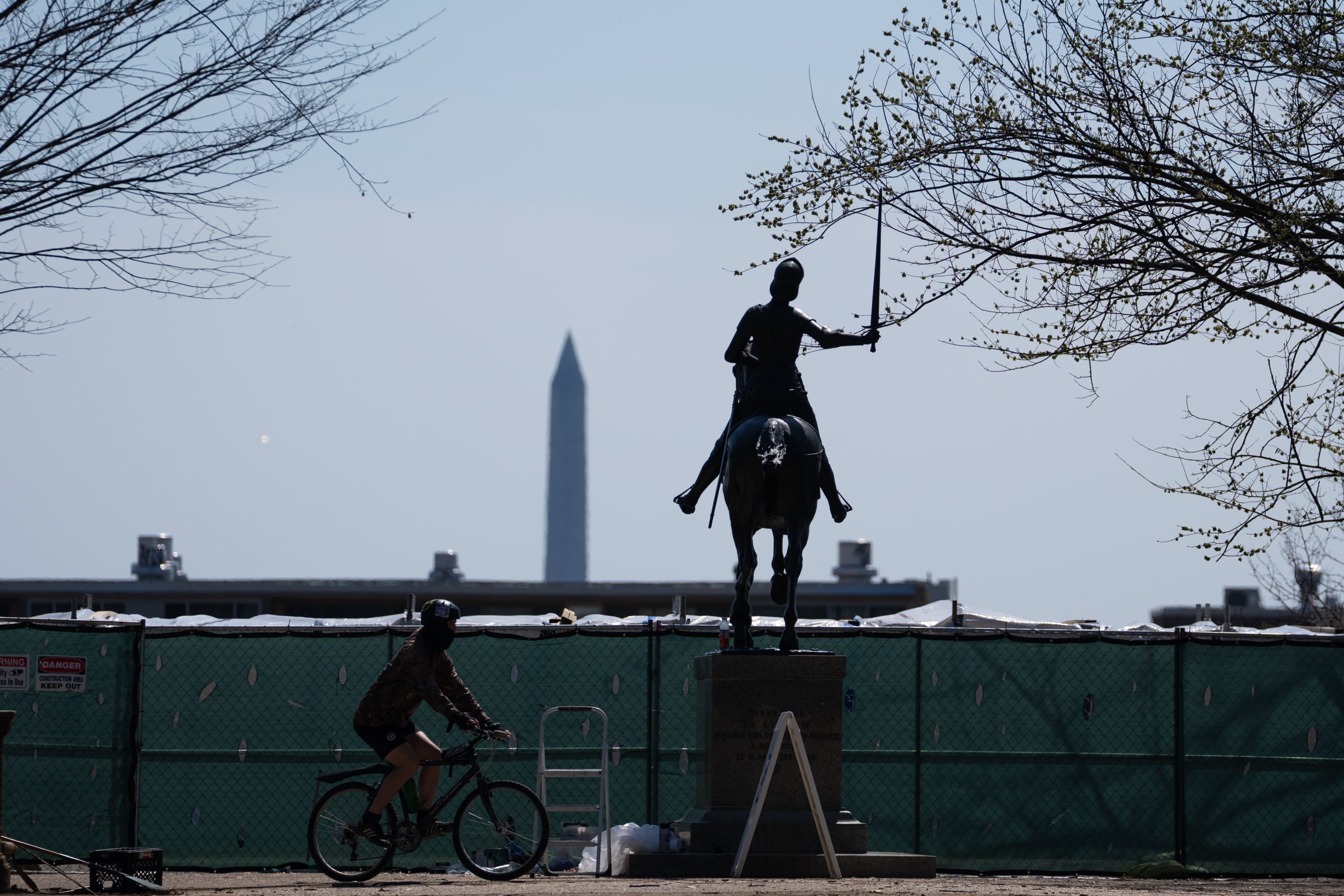

The D.C. mayor’s race is crowded. Seven Democratic candidates are dueling to succeed Muriel Bowser — a job that will mean sharing custody of the District with Donald Trump, and threading a needle between defending home rule without running afoul of the president’s popular initiatives touting safety and beautification.
The shift in management is certain to spark a flurry of new fates for the capital, spanning public parks, national monuments and the Metropolitan Police Department.
Janeese Lewis George, one of two frontrunners in the race alongside Kenyan McDuffie, said restorations like the Meridian Hill Park fountain represent “the type of investment we want to see the federal government making in our city.”
“My only issue is if this is one-time funding and not consistent funding,” Lewis George said in an interview, adding that the National Park Service, which aids beautification, has been notoriously underfunded, and many NPS employees were fired in the administration’s DOGE days. She wants to find a sustainable way to keep the projects rolling with help from the Interior Department.
Rini Sampath is a federal contractor who’s never run for public office, and the first-ever South Asian to qualify for the D.C. mayoral ballot. She’s skeptical of Trump’s efforts to make D.C. beautiful again.
“Trump is not necessarily the safest actor in all of this,” Sampath said. “He does so much of this haphazardly,” she added, pointing to other projects like the proposed 250-foot triumphal arch.
“There’s no such thing as free lunch with a relationship with the president of the United States,” Sampath said. “While you want to immediately go toward praising his accomplishments, I just don’t think it comes for free. I think there’s always some kind of a caveat.”
The fountain at Meridian Hill Park, known to locals as Malcolm X Park, shut off in 2019, just four years into Bowser’s tenure.
Vincent “VO” Orange, who’s spent nearly 15 years in D.C. politics, said “it felt like a gut punch” when the fountain was turned off. Orange, the former president of D.C.’s Chamber of Commerce and at-large council member, acknowledged the effort requires maintenance and funding to keep projects alive. But he’s “all in” for future endeavors.
Police reform has also roiled the race — particularly in light of Trump’s push to crack down on crime. There’s general consensus an MPD shakeup is coming.
Interim Chief Jeffery Carroll is likely on the way out no matter who wins the race. In a forum this month, zero of the six participating candidates raised their hand when asked if they would keep Carroll in the post.
Three of the candidates told POLITICO they’d remove Carroll, one was on the fence, and the other two said their lack of a raised hand was equivalent to declining comment.
Gary Goodweather, a business executive who’s never run for public office and is third in polling, is one of the candidates in the removal camp. Why? “Primarily, controversy,” Goodweather said. “Drama.”
Carroll is part of an ongoing lawsuit filed by several Black female MPD officers who claim he and other high-ranking officers contributed to a “toxic work environment” with continuous systemic disparate treatment and discriminatory actions toward them, according to the suit. The events occurred when Carroll was MPD assistant chief. MPD declined to comment.
The MPD put 13 officers on administrative leave earlier this month following an internal investigation into how the department records crime stats — a concern that rose all the way to Congress and U.S. Attorney for D.C. Jeanine Pirro’s office. There are also questions about the MPD’s cooperation with federal immigration enforcement.
McDuffie, a former at-large councilmember, said in a statement he’d “appoint a chief who restores accountability and transparency.” Ernest Johnson, CEO of the Frank Reeves Center nonprofit, said he wouldn’t announce his position publicly.
But not everyone agrees. Hope Solomon, a small business owner who’s never run for public office, is the only candidate who plainly told POLITICO they wouldn’t fire Carroll, who she said faces “a difficult task.”
“It’s a balancing act with the federal law enforcement and then pressure from Congress about policing in D.C.,” Solomon said, adding she aims to boost officer recruitment and address staffing shortages that have stretched the department.
That mirrors the task that whoever wins the June 16 primary will likely face come November — with two more years of the Trump presidency to go.
“It’s a delicate dance that we are playing with the federal government,” she added.
Like this content? Consider signing up for POLITICO’s Playbook newsletter.
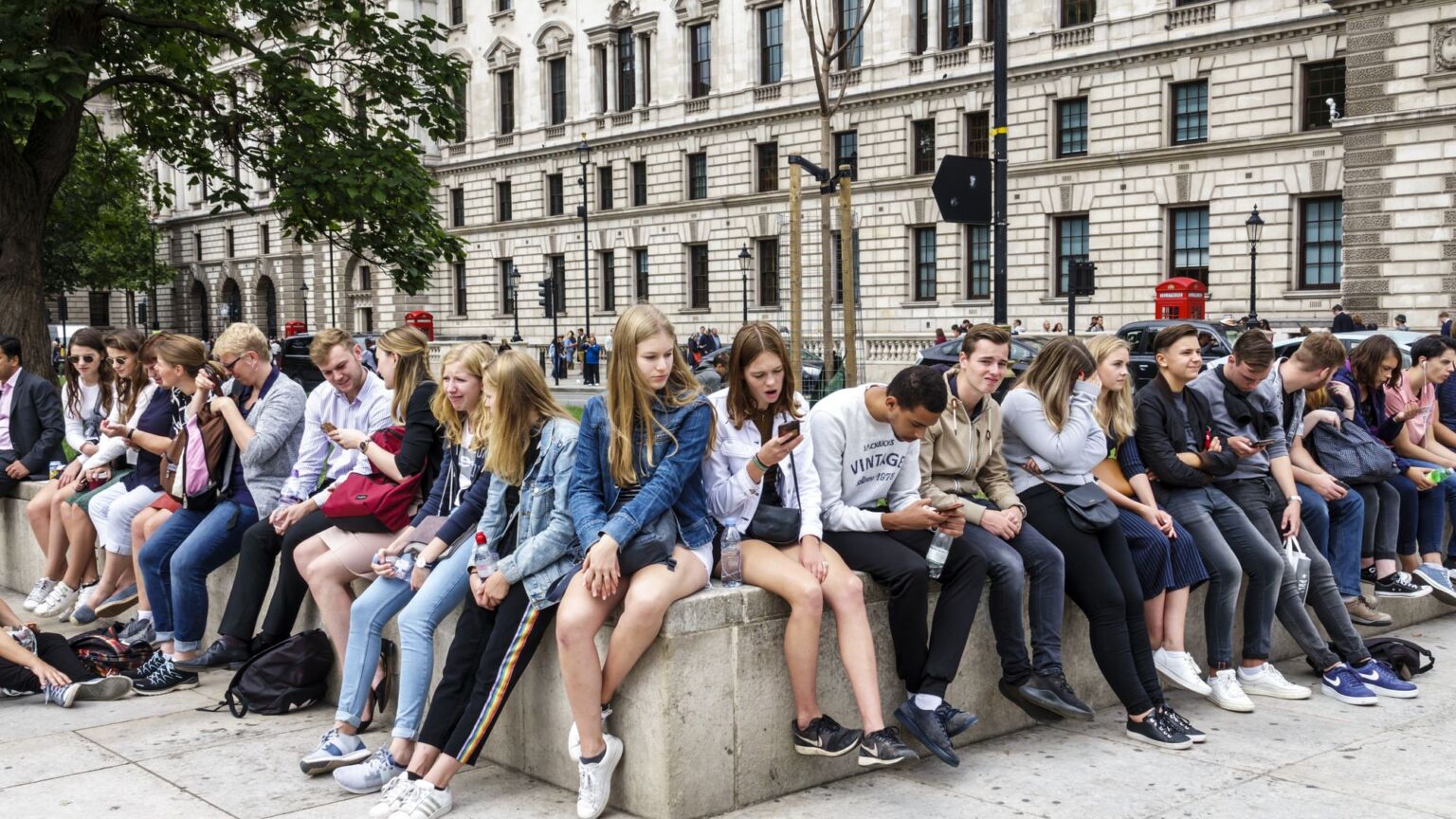
The Rest is Politics (TRIP) podcast has launched a new mini-series, called The Gen Z Story. Hosted by journalist Vicky Spratt and TRIP co-host Alastair Campbell, The Gen Z Story pitches itself as an investigation into the struggles and situation of Gen Z.
The inaugural guest was none other than potential Labour leader Angela Rayner. TRIP co-hosts Campbell and Rory Stewart claimed they launched The Gen Z Story because they didn’t want to be like the other podcasts, ‘who talk about Gen Z without actually speaking to Gen Z’. Yet, with the exception of a few cherry-picked voice notes from listeners, this is exactly what The Gen Z Story did.
Indeed, Spratt, Campbell and Rayner mounted yet another patronising appeal to the ‘lost generation’. It reinforced the paternalistic perception of a generation of young people broken by perpetual crises. ‘There are no quick fixes’, Rayner asserts; decades of underfunding our institutions cannot be amended overnight. The problem, as she put it, is that young people are too impatient for change.
What Rayner doesn’t seem to grasp is that Zoomers, and many Millennials, find themselves in dire straits. Just 30 years ago, young people could make enough money to leave home, save and eventually buy property. They weren’t drowning in student debt. Travel was cheap and the consumer market was booming. There was a mood of national optimism in the air, too, with Britpop and so-called Cool Britannia.
Reality is very different for young people today. The optimism that accompanied Gen X-ers into the workplace has been replaced by a sense of gloom and stagnation. Gen Z have come of age amid a series of never-ending crises: unemployment, a housing shortage and a struggling economy. Instability has been the defining feature of their lives. To put this into perspective, 2015 marked the first year that the oldest members of Gen Z could vote; since then, we have had five prime ministers, a pandemic, two energy crises, and two near-brushes with World War III.
Rayner’s appearance on The Gen Z Story is no doubt an attempt to claw back younger voters for Labour. Until recently, Rayner’s party was easily the favourite among those under 30. Some 41 per cent of 18- to 24-year-olds voted Labour in 2024. At the beginning of 2026, polling indicates that this has reversed dramatically. A mere 21 per cent of young people say they would vote Labour now. Thirty-seven per cent intend to vote Green.
The temptation of late is to criticise young people for their extreme politics – particularly young women drawn in by the radical left. But can we really blame them? This is a generation that feels as though it has lost everything it was promised. Gen Zers are criticised as work-shy, infantile and too obsessed with ‘progressivism’ to understand the value of tradition. ‘Why aren’t they getting married and having children?’ is the question posed over and over. Perhaps because many of them feel like they don’t have a choice. They didn’t ask to be unemployed. Many can’t even see a way to leave their parents’ home, let alone start a family of their own.
Infantilising policy decisions conjured up by governments both past and present have only exacerbated these issues. Increases in welfare, the minimum wage and renters’ rights may look like pleasant offerings, but they have increased young people’s dependency on the state. In the long run, they will only serve to disempower young people further, stripping them of what minimal agency they have left.
It should go without saying that most young people don’t want to be on unemployment benefits. They want to be able to use their degrees to get decent jobs and build a life for themselves. But the economic system lets them down time and time again. The idea that hard work provides a means to a better life no longer holds. And if working hard no longer provides a reliable path to security, it should be no surprise that young people are opting out, prioritising pleasure over independence, and accepting state handouts.
We are fed up with being told we are the future while being denied the means to shape or change our own lives – let alone change the world. And we are not placated by politicians like Rayner performatively pitying our plight. On the contrary, watching The Gen Z Story was a painful reminder of the weakness of our political leaders today. Labour in particular has an awful lot of work to do if it’s ever going to regain the trust of the young.
Emma Gilland is event coordinator for the Academy of Ideas and author of The Corona Generation: Coming of Age in a Crisis, written with Jennie Bristow and published by Zero Books.

Most people feel awkward when they realise they are somewhere they’re not wanted. But for a certain type of trans activist, the discomfort of others is the whole point.
Let’s be clear, Tiffany, the male trucker in a wig taking selfies in a ladies’ loo, is not there by accident. He is likely enjoying the provocation – willy-waving at women who are expected to shut up and take it. In some cases, these men are acting out ‘sissification’ fetishes, sexual humiliation games in which they are set tasks, sometimes by a dominatrix, such as applying lipstick or wearing sanitary towels in women’s toilets.
For over a decade, institutions abetted this behaviour. Business owners were worried about being sued or dropping down the Stonewall league table. Women brave enough to confront such men knew they might find themselves reported for a hate crime.
Most remain blissfully clueless about the fetishistic side to male trans identities. This happened in part because of 2011 guidance from the Equality and Human Rights Commission (EHRC) code, which said that in Great Britain, ‘transsexual people’ should be treated ‘according to the gender role in which they present’.
Now, there is no excuse for inaction. The EHRC’s updated code, placed before parliament this week, confirms that including men in women-only services ‘very likely’ constitutes unlawful sex discrimination. If a service is provided to both women and transwomen, it is no longer considered a single-sex service under the Equality Act 2010. The guidance also warns that including men in women’s spaces could amount to unlawful discrimination or harassment against female users. Similar principles apply to male-only services.
Naturally, trans activists are in a lather about this. But then, when aren’t they? The Good Law Project’s trans-rights lead, Jess O’Thomson, complained that the EHRC code ‘treats trans people as a third sex, suggesting they should be made to use separate spaces – entirely ignoring the harm this causes, and human rights law’.
Let’s be clear, gender self-identification has never been legal in the UK. Last year, the Supreme Court finally delivered a ruling that confirmed this. But even after that judgment, many service providers have remained paralysed with fear. Duty bearers (ie, organisations responsible for upholding equality law) have spent months pretending to be baffled by the apparently impossible task of ensuring that men use men’s facilities and women use women’s. They claimed to be waiting on the EHRC guidance, and the minister for equalities, Bridget Phillipson, appeared too frightened of upsetting the trans-activist unions to lay it before parliament.
Surely anyone who cares about women’s rights ought to be broadly pleased that the EHRC’s updated guidance has finally been put forward. Yet it is hard to feel much beyond rage at the delay and cowardice that preceded it.
Phillipson sat on the revised guidance for eight months while organisations continued operating unlawful self-identification policies. During that time, she smeared the EHRC’s former chair, Baroness Falkner, for supposedly ‘grandstanding’. Yet Phillipson said virtually nothing about the people harmed by those policies. Not a word, for example, about the mentally ill female patient placed on a male psychiatric ward at the South London and Maudsley NHS Trust because she identified as male, and was raped within an hour of arriving there. Nor did Phillipson remind organisations continuing to operate gender self-identification that they were breaking the law and had a legal, not to mention moral, duty to stop.
The EHRC can’t be accused of rushing the guidance out. It undertook two public consultations and sifted through 50,000 responses. This is because it knew that whatever it said would be picked apart by gender obsessives, within and outside government, no matter how reasonable or evidence-based it was.
Yes, the guidance is welcome. But the fact that civil society opened the door to women’s wards, changing rooms and refuges to men remains astonishing. Managers, HR departments and public bodies behaved as though women’s rights were negotiable while the feelings of entitled creeps in lipstick were sacrosanct. The EHRC has finally spelled out, in painstaking detail, how the law must be enforced. That there are two sexes in law is about as obvious as the phallus on the Cerne Abbas Giant. The test for organisations is simple: are they more frightened of the sane majority, or of Tiffany the trucker and his fellow gender zealots?
Jo Bartosch is co-author of Pornocracy. Order it here.

The post Why we must never rejoin the EU appeared first on spiked.
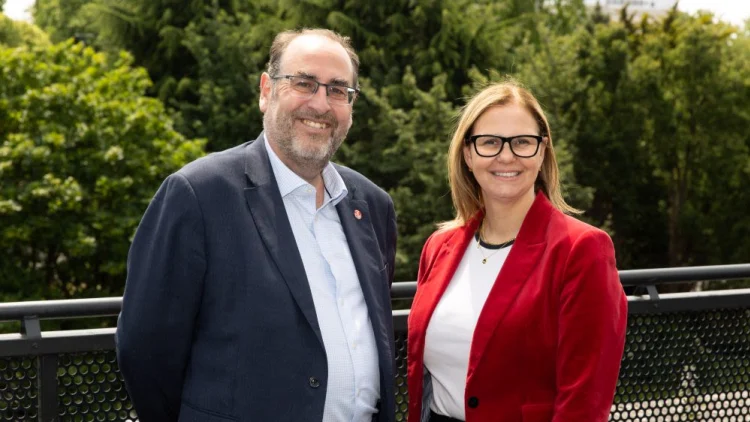
Mayor Helen Godwin has appointed Green councillor Tony Dyer as her deputy (West of England Mayoral Combined Authority/Freia Turland)
6 min read
The Green Party’s vetting system “needs improvement”, a party leader has told PoliticsHome, amid reports of anti-semitism within Zack Polanski’s ranks.
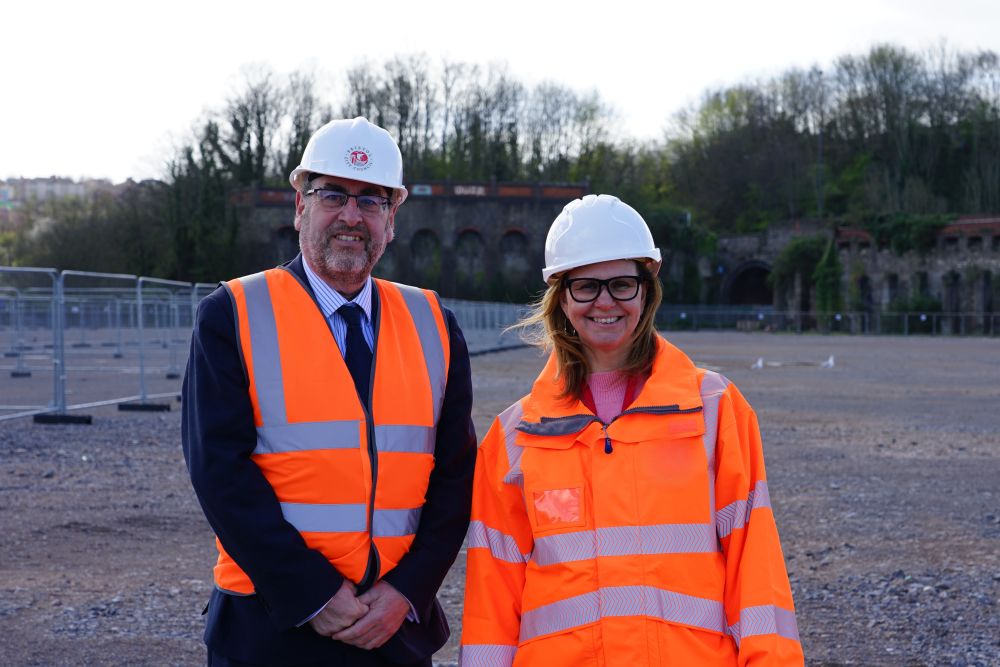
As speculation over Keir Starmer’s future raged in Westminster last week, PoliticsHome travelled to Bristol to speak with West of England Labour mayor Helen Godwin, and her newly-appointed second Tony Dyer: the first appointment of a Green Party politician as deputy mayor of any combined authority.
On Friday, the Green Party said its former Makerfield by-election candidate, who withdrew from the race hours after he had been announced, had apologised for sharing social media posts which described an attack on ambulances run by a Jewish charity as a “false flag”. Before the news broke, Dyer conceded that the party’s vetting system needed work, citing its large membership and the fact that it had fielded 4,500 candidates.
With the recent local elections reinforcing an increasingly fragmented landscape, partnerships between potential rivals such as the one between Dyer and Godwin are likely to increase. Ahead of the local elections, Labour pushed an anti-Green campaign highlighting allegations of antisemitism against councillor candidates. How do the duo still maintain a good working relationship?
Dyer explained, “both parties are as good as each other at dishing out different things” and “unfortunately, it’s just the way electoral politics works sometimes”. However, he believes that their collaboration in the West of England demonstrates “that regardless of the outcome of elections, we are able to work together for the benefit of the region, the city and our residents.”
Godwin added that on a personal level, “WhatsApp is our saviour”, explaining that if something is likely to cause friction between their parties, “we’ll try and get ahead of it by talking to each other first”. Dyer’s appointment followed Godwin appointing a Liberal Democrat deputy mayor in the previous year.
On 7 May, the Greens took control of Hackney, Hastings, Lewisham, Norwich and Waltham Forest. With the party having less experience than others in local authority administration, some have questioned whether there will be a repeat of the Bristol bin scandal, in which Green-run Bristol city council, of which Dyer is leader, proposed a once-a-month bin collection. The idea, proposed as part of a consultation, was later scrapped after intense backlash from residents and opposition parties.
Dyer reflects on this: “The main thing I’ve learned taking over as a Green leader is we were perhaps a little bit naive about some of the things we put into the public domain.”
“We maybe put things into the public domain, possibly too early in the process, before we had eliminated numerous options.”
Dyer told PoliticsHome that the same bin-scandal hit Bristol council would soon be offering training and support to new Green councils nationwide “to give them the benefit of what we’ve learned and done here in Bristol, how to work with other political parties”.
Speaking to PoliticsHome ahead of the local elections, Green leader Zack Polanski acknowledged that the Greens may face issues when it comes to vetting candidates due to the speed of the party’s growth.
Following the admittance, several cases came to light of candidates making antisemitic comments or posts on social media, with former Green leader Caroline Lucas writing on X that some of the statements were “totally unacceptable and require immediate attention”. Then came the news from Makerfield.
Speaking to PoliticsHome, Dyer said, “the vetting system needs improvement”.
“It’s worth pointing out we had 4,500 candidates, so the number of candidates [that have] actually been identified as potentially posting or being involved in antisemitism is a tiny fraction, but that’s still a fraction too much. Where that has happened, that’s then going through an investigation process by the party.”
Does the Green Party have an antisemitism problem?
Dyer said that all parties, particularly those with large memberships, are “almost certain” to have those joining with a “particular agenda”.
“What we have to be clear about is making sure that we make it clear that that is not acceptable, whether it’s antisemitism or whether it’s Islamophobia or whether it’s racism or anything along those lines, not just the Greens, but all political parties, we have to step on that and and stamp it out and make sort of people aware that’s not what we stand for as a party. We cannot accept it within those we choose to be our representatives or candidates, and we shouldn’t accept from any of our members, either.”
While the Greens had a great night on 7 May, the Labour Party suffered catastrophic losses across the country, including in the party’s heartland of London.
On almost 1,500 Labour councillors losing their seats, Godwin said it was “really really sad”, adding “there’s a message there, and that message is for government”.
In the aftermath of the results, close to 100 Labour MPs publicly said they had lost confidence in Starmer’s leadership of the party, with several ministers later resigning, followed by Health Secretary Wes Streeting.
Godwin does not blame Starmer himself for the loss of councils, but feels “this government has taken too long to get up and running”, adding, “we spent too much time diagnosing and explaining how bad things are and not actually saying here’s what we’re going to do.”
The local elections have also left a fragmented reality across most of the country, especially in cities like Birmingham. Godwin told PoliticsHome that working cross-party is something that has been the reality in her part of the world for several years, with Labour, the Liberal Democrats and the Greens all working together.
“What’s interesting for me now as a mayor is seeing for the first time, some of my colleagues up in the North are going to have different party makeup within their combined authorities.”
In the West of England combined authority, Godwin explained, there are no Labour-run councils: “So we have to do things quite differently. So we’re quite keen to demonstrate how that can be done, and share our experience with others, and it does involve putting sometimes party politics aside and just genuine placemaking.”
Dyer also believes that a multi-party political system and working cross-party will give more reassurance about long-term change and policies are less likely to just follow political cycles.

Pi Network’s First Year on Open Mainnet: What Actually Happened

RHOBH Producer Denies Dorit Kemsley Is Being Put on Pause

#Pray Against Poverty, Lack, and Loss to Receive Divine Financial Breakthrough | Joel 2:25-26

US brings back mandatory military draft registration

Steven Gerrard disagrees with Gary Neville over ‘shock’ Chelsea and Arsenal claim | Football

Register Renaming | Hackaday
#Pray Against Poverty, Lack, and Loss to Receive Divine Financial Breakthrough | Joel 2:25-26

Mark Cuban Says Bitcoin Failed as a Hedge

The financial breakthrough that you’re in need of is just a #prayer away | 2Corinthians 8:9
-

 Crypto World3 days ago
Blockchain.com files with SEC for U.S. IPO
-

 Fashion2 days ago
Holiday Weekend Open Thread – Corporette.com
-

 Business2 days ago
Dell Technologies DELL Stock Surges 15% on AI Server Momentum and Analyst Upgrades in 2026
-

 Crypto World2 days ago
Bitcoin Accumulation Weakens as BTC Realized Losses Hit $600M
-

 Crypto World2 days ago
Space X IPO Is ‘Bad News’ for Tech Stocks: But What About Bitcoin?
-

 Crypto World1 day ago
Robinhood crypto COO Tanya Denisova exits
-

 Politics2 days ago
Makerfield: a tale of two social-media histories
-

 Tech3 days ago
WhatsApp ads could make Irish debut after discussions with DPC
-

 Crypto World2 days ago
AI infrastructure race heats up as IREN pitches full-stack strategy, WhiteFiber lands $160M deal
-
 Tech2 days ago
A 0.12% parameter add-on gives AI agents the working memory RAG can’t
-

 Business2 days ago
Trump Invests $1M-$5M in Kura Sushi USA Chain With 27 California Locations
-
 Crypto World6 days ago
Revolut Launches Dogecoin Debit Card Across UK and EU
-

 Crypto World2 days ago
MicroStrategy’s Saylor Says Miners No Longer Set Bitcoin Price, Another Force Has Taken Over
-

 Tech2 days ago
You Can Now Add ChatGPT To PowerPoint
-

 Sports3 days ago
2026 CJ Cup Byron Nelson leaderboard: Brooks Koepka finds putting stroke in Round 1
-

 Crypto World2 days ago
Trump Media’s Bitcoin Stash Shrinks Again as 2,650 BTC Lands on Crypto.com
-
Business2 days ago
Goldman Sachs reinstates Ageas stock coverage with neutral rating
-
 NewsBeat3 days ago
Charity run by Reform leader Malcolm Offord accused of ‘law breaking’ over Scottish registration
-

 Crypto World6 days ago
SEC to propose tokenized stock framework as Wall Street efforts deepen: Bloomberg
-

 Politics7 days ago
SECOND secret Israeli base discovered in Iraqi desert
You must be logged in to post a comment Login