Connect with us

Politics

The Greenland connection – UK in a changing Europe

Published

on

The Greenland connection - UK in a changing Europe

Klaus Dodds explains why US foreign policy under Donald Trump is so focused on Greenland and explores some of the possible outcomes.

Since taking presidential office for the second time in January 2025, Donald Trump has been determined to re-draw the map. His State of the Union address pulled together a vision of greatness aided and abetted by territorial acquisition and place-branding. He is, according to those who have worked with him, fond of maps.

Using a smorgasbord of executive orders, social media posts and direct actions, this has resulted in the Gulf of Mexico being renamed the Gulf of America (alongside restoring Mount McKinley in Alaska), near-neighbours being threatened with annexation and direct action of one form or another against Panama and, most dramatically, Venezuela.

There has been plenty of speculation about why all of this is happening now. Western hemispheric dominance looms large within the 2025 National Security Strategy and the domination of Canada, Greenland, Panama and Venezuela is complicit with that strategic vision. The Strategy is clear that the United States will prioritise the Indo-Pacific, western hemisphere and new strategic domains such as space and critical infrastructure.

Advertisement

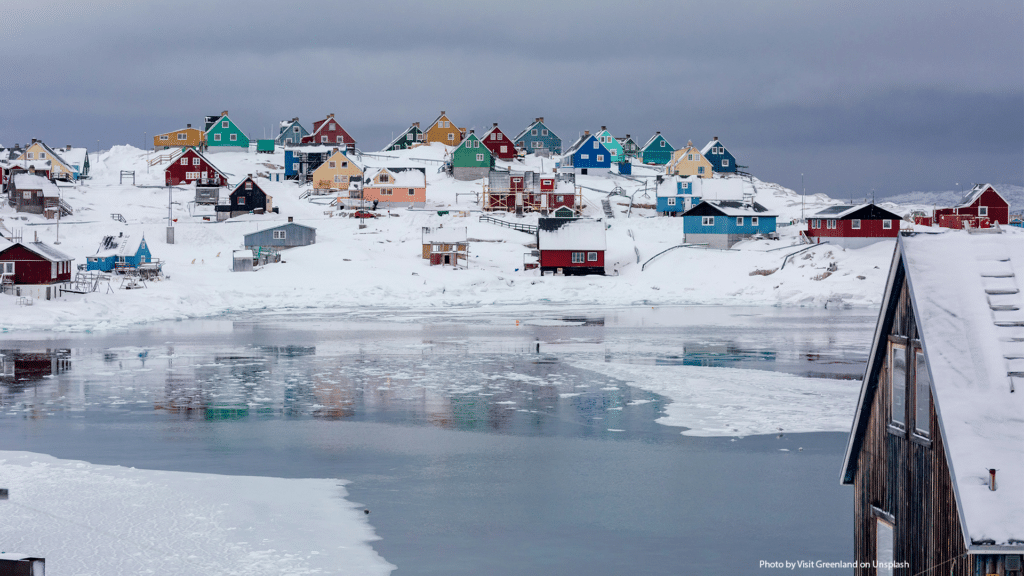
President Trump’s obsession with Greenland started in 2019 when the offer was first made to acquire the world’s largest island. At the time, it was firmly rebuffed by the Danish and Greenlandic governments. A state visit to Denmark was rescinded. During the Biden administration, there was no such talk of the US acquiring Greenland. The US facility Thule was renamed the space station Pituffik in 2023, to reflect more explicitly the Greenlandic heritage of the island. The focus remains on satellite monitoring and hemispheric missile defence. After Trump’s second presidential victory in November 2024, the question of Greenland returned with a vengeance.

Tempting though it might be to link this interest to Trump’s real-estate background, the underpinning logic regarding the acquisition of Greenland is stark but understandable. Western hemispheric dominance, as understood by the administration, means that the territorial integrity of others is not inviolate. Greenland and Canada would be safer under American sovereignty, and in part this is justifiable because both countries have been accused by Trump of failing to spend sufficiently on defence-related matters. Beyond Canada and Denmark, Trump has warmed to this theme of European security free-riding and how that must be terminated. The administration is adamant that a weak Greenland is vulnerable to third party interference, with China being perceived as the most immediate threat.

In the recent past, Chinese companies have expressed an interest in Greenlandic minerals and infrastructure. Trump has also cited a concern about Russian and Chinese activities off Greenlandic waters, while Beijing and Moscow have organised aerial and maritime patrols off the Alaskan coastline. Trump’s concern is China’s growing role as a polar power, which has been aided and abetted by Russia’s decisive turn to China and India in a post-sanctions era. It has never just been about China purchasing discounted Russian oil. China wants to exert more and extract more, including securing its rights in the international waters of the Central Arctic Ocean.

Greenland’s mineral potential continues to attract a great deal of commentary, and much of it is infected with resource boosterism. There are two mines in Greenland and progress has been slow largely due to modest infrastructure, high operating costs, political and regulatory hurdles, labour force shortages and remoteness. But in combination with the direct action against Venezuela, there is recognition that oil and minerals whether copper or cobalt are all going to be needed to empower that ambition to make the US a world leader in AI and data centres. Acquiring Greenland appears then to be a long-term investment proposition.

Advertisement

The reaction in Denmark and Greenland to Trump’s acquisition plan has been understandable. The Kingdom of Denmark faces the spectre of dismemberment. Its territorial integrity and right to self-determine its own future questioned. For a small country that answered the US’s invocation of NATO Article 5 in 2001, this looks and feels like a betrayal of the highest magnitude. It also rides rough-shod over the 1951 Defence Agreement between Denmark and the US, which gave Washington DC considerable latitude to enhance and extend its military footprint on land, sea, air and space.

But that appears to be irrelevant in a self-sustaining US narrative of Danish defensive delinquency. Nothing will be quite good enough despite the commitment to spend billions more. And it comes at a time when Greenlandic autonomy is enabling the 57,000 residents to articulate more explicitly their future options – one of which might be independence at some point. No one in Copenhagen or Nuuk underestimates the importance of the block grant of some €500m a year.

What happens next depends in very large part on the US administration. Denmark and Greenland have been clear that this Trump overture is not welcome. They are open to discussing how to respond to American concerns about national security rather than western hemispheric dominance. European allies have expressed repeatedly their solidarity with the Kingdom of Denmark, and Germany and the UK offered to develop further European NATO security commitments. If the Trump administration is seeking to use Greenland to terminate the security umbrella, then it is succeeding. NATO unity is being imperilled in real time.

The Greenland connection has four possible endings.

Advertisement

The US backs down on complete acquisition but gets a new comprehensive defence-energy agreement.  A settlement in Ukraine might provide a working model of what might be possible. Denmark is forced to ramp up its defence spending as the price paid for holding onto the formal sovereignty of the island.

Another unpalatable option is that the US forces independence for Greenland and then pushes Nuuk into a “free association” compact. There are working models elsewhere involving the US and Pacific Island states but they are ones where indigenous/local autonomy is circumscribed.  Greenlanders will be only too aware of how contemptuous Trump has been of Puerto Rico.

The EU could offer membership to both Greenland and Faroe Islands, noting respectively that one elected to leave and another never joined. Greenland is already covered by the Article 5 guarantee but the problem at the heart of all of this is that the US cannot be considered a reliable security partner.

It would be easiest if all of this could be simply forgotten and all could agree it was the by-product of a feverish episode. That option has now gone. The harsh reality is that this looks part and parcel of a new world of expansionist authoritarian-monarchism rather than one grounded in agreements, frameworks, norms, rules and treaties.

Advertisement

By Klaus Dodds, Professor of Geopolitics and Interim Faculty Dean, Middlesex University and coauthor of Unfrozen: The Fight for the Future of the Arctic (with Mia Bennett and Yale University Press 2005).

Source link

Advertisement
Continue Reading
Click to comment

Leave a Reply

Your email address will not be published. Required fields are marked *

Politics

‘Let him think he won': Inside Minnesota Dems' effort to fend off Trump's immigration surge

Published

on

Minneapolis Mayor Jacob Frey speaks during a press conference on January 22, 2026 in Minneapolis, Minnesota. Frey and other local officials have been criticized by the Trump administration during the recent surge of federal agents into the area.

Minnesota Gov. Tim Walz finally got President Donald Trump on the phone seven weeks into the administration’s crackdown on Minneapolis — and the president had a complaint.

Trump told the Democratic governor he didn’t “know what’s wrong with Minnesota,” comparing the state to cities like Louisville and New Orleans where there had been less fierce resistance to his immigration surges.

Walz was furious. “You didn’t kill anyone there,” he fired back, two days after public outrage over Alex Pretti’s death at the hands of Customs and Border Protection agents forced Trump to change his approach.

But the governor’s staffers, who were listening in, quietly urged him to “slow it down,” Walz said in an interview with POLITICO earlier this month. They feared if he let his rage take over he would antagonize the president.

Advertisement

“It’s infuriating that you got to let him think he won or whatever,” Walz recalled. “That’s not how adults usually negotiate.”

Minneapolis Mayor Jacob Frey speaks during a press conference on January 22, 2026 in Minneapolis, Minnesota. Frey and other local officials have been criticized by the Trump administration during the recent surge of federal agents into the area.

The call was one moment in an agonizing stretch for Democratic state and local officials as they sought to weather the Trump administration’s crackdown. In interviews with POLITICO, Walz, Minneapolis Mayor Jacob Frey, Attorney General Keith Ellison and more than a half-dozen state and city officials described a concerted campaign to fight Trump’s immigration enforcement in the courts and through the media while coordinating with each other to keep the city from spinning out of control under immense pressure.

The behind-the-scenes effort was the crescendo of a broader, yearslong push to prepare the city for the worst, after surviving the upheavals that followed the 2020 police murder of George Floyd, when protests spiraled into looting and violence and Minnesota Democratic leaders faced criticism from both the left and right for their response.

Before Pretti’s death, Trump White House officials were “in dialogue” with Walz, but they had not engaged in “any urgent or meaningful way,” said a Democratic state official, who was granted anonymity to describe private interactions.

Advertisement

The two-term governor and former vice presidential nominee, well aware of the president’s personal enmity for him, said he understood that Trump was only now calling because “this had become a disaster for him politically, and he needed me to help him get out of it.”

A White House official said that Trump had always wanted to work with local officials and that the recent drawdown in personnel was because they were now working with them.

For all the fury the governor hoped to channel, for himself and for his constituents, he acknowledged Trump “holds all the cards in this — a lot of them, certainly.”

Walz’s careful approach to the president on that call — and other public flashes of anger, when Frey seethed at ICE to “get the fuck out” after Renée Good was killed — represents the push-pull for Minnesota leaders, who were desperate to end the lengthy immigration showdown while not setting a precedent of submission, these Minnesota Democrats said. At least 3,000 ICE agents were deployed to Minneapolis, vastly outnumbering the city’s police force, as Trump officials said Minnesota leaders had “incited this violent insurrection.”

Advertisement

Democrats were united in their desperation to head off any scenes of destruction, which they believed would lead to Trump invoking the Insurrection Act — something the president threatened to do multiple times for Minneapolis and during other immigration crackdowns in Los Angeles, Portland and Chicago. The Pentagon ordered 1,500 active-duty soldiers to prepare for possible deployment to Minnesota.

Privately, Walz and Frey enlisted business leaders and state Republicans to urge the Trump administration to change course in Minnesota. In phone calls and text messages, Sen. Amy Klobuchar (D-Minn.) urged White House officials to deescalate after the shootings of both Good and Pretti, according to a person briefed on her conversations and granted anonymity to describe private interactions. Publicly, Walz and Frey pleaded for protests to stay peaceful, and urged Minnesotans to document on video everything they saw. “Carry your phone with you at all times,” Walz said at the time. 

“I think the feds were waiting and expecting for Minneapolis to devolve into chaos and for these protests to get out of hand,” one Democratic city official said, “and so much of what we did was just focused on preventing that from happening … even if those were sometimes hard or stressful calls to make in the moment because you don’t want to upset residents.”

Minnesota Democrats leveraged local outrage until it combusted into a national backlash after Pretti’s killing, caught on video from multiple angles, rocketed across social media and cracked the country’s consciousness. As Republicans started to call for “thorough” investigations into Pretti’s death, Trump called Walz, then Frey. The president pulled Border Patrol commander Greg Bovino from the city and dispatched his border czar Tom Homan to Minnesota. On Feb. 12, Homan announced the end of “Operation Metro Surge.”

Advertisement

It’s a playbook other Democrats from blue cities and states are eager to replicate. Officials from San Francisco and Portland have already reached out to Frey and his staff for advice, two Minneapolis city officials confirmed. New York City Mayor Zohran Mamdani and Frey met earlier this month to discuss what Minneapolis had been through, and the mayors’ respective chiefs-of-staff shared similar intel with each other over the phone.

Top: US Customs and Border Protection Commander Gregory Bovino (C) stands flanked by fellow federal agents during a protest against ICE outside the Bishop Whipple Federal Building in Minneapolis, Minnesota, on January 15, 2026. Hundreds more federal agents were heading to Minneapolis, the US homeland security chief said on January 11, brushing aside demands by the Midwestern city's Democratic leaders to leave after an immigration officer fatally shot a woman protester.

Bottom: In an aerial view, demonstrators spell out an SOS signal of distress on a frozen Lake BdeMaka Ska on January 30, 2026 in Minneapolis, Minnesota. Protesters marched through downtown to protest the deaths of Renee Good on January 7, and Alex Pretti on January 24 by federal immigration agents.

The Trump administration is also looking to copy its own playbook from Minnesota, the one implemented by Homan since he took over in early February. Last week on CNN, the border czar described “unprecedented” cooperation from Minneapolis leaders and police force since he arrived. He said “the streets of Minneapolis, the streets of Minnesota, are safer today,” adding that he isn’t surprised state and city leaders disagree with that assessment because they don’t want to give Trump “a win.” He said he expected ICE to return to its “regular footprint” within a week.

A White House official said that new cooperation allowed them to scale back personnel, adding that details of that cooperation are considered law-enforcement sensitive and declined to share specific details on it.

“Tom Homan’s critical work in Minnesota has secured new agreements to cooperate moving forward. These agreements, paired with pledges from local police to respond to our officers’ call for help, take down roadblocks, and respond to agitator unrest, represent unprecedented levels of cooperation that did not exist before,” Abigail Jackson, a White House spokesperson, said in a statement. “Democrat officials should want to work with federal law enforcement, not against them, to keep communities safe for law-abiding Americans.”

Advertisement

But Frey forcefully pushed back on the characterization that Minneapolis had changed any of its pre-existing policies. The separation ordinance, which prohibits city police officers from enforcing federal immigration law, is still in place, Frey noted.

“There were no deals cut,” Frey said in an interview with POLITICO. “There were no trade-offs of our values.”

***

Minnesota state and city officials began preparing for a federal crackdown long before ICE descended on Minneapolis last December. It started in 2020, after Floyd, a Black man, suffocated under the knee of Derek Chauvin, a Minneapolis police officer. Floyd’s death triggered a wave of protests in the city, some of which turned violent and destructive, while state and city officials struggled to respond.

“In those first few moments after Renée’s death … my first thought was George Floyd,” Walz said.

Advertisement

Ellison echoed him: “It was on everybody’s mind.” he said.

In the five years since Floyd’s death, local officials have overhauled the city’s emergency management protocols, incorporating 27 recommendations from an after-action report that was released in 2022. That included attending a four-day retreat to the Federal Emergency Management Agency headquarters in Emmitsburg, Maryland, where more than 70 city officials, including Frey, simulated realtime emergencies. They practiced how to respond to massive civil unrest that pitted residents against a military force and game-played when to ask the governor to call in the National Guard.

Walz had faced intense criticism for not activating the National Guard faster in 2020 — and he and Frey had pointed fingers at each other for the delay. “There was a real breakdown in communication at that time” between the two officials, said a Minnesota Democratic operative who was granted anonymity to describe private conversations. Walz’s role in the delay followed him into the 2024 presidential campaign, when he served as Kamala Harris’ running mate.

People hold signs and protest after a Minneapolis Police Department officer allegedly killed George Floyd, on May 26, 2020 in Minneapolis, Minnesota. - A video of a handcuffed black man dying while a Minneapolis officer knelt on his neck for more than five minutes sparked a fresh furor in the US over police treatment of African Americans Tuesday.

When the city officials returned to Minneapolis after their training, one aide wrote out a one-page checklist for requesting National Guard activation and displayed it prominently on an office wall so they could move as fast as possible should the need arise. It’s still hanging in the aide’s office now. By the time Minneapolis requested the National Guard last month, they knew what to do.

Advertisement

Minnesota Democrats redoubled those efforts after observing and talking with officials in Los Angeles and Chicago, two early targets of Trump’s crackdown. Frey’s office drew up — and signed, once ICE arrived in Minneapolis — one executive order to ban ICE from conducting operations on city-owned parking lots, after they’d seen what happened in Chicago, one city official confirmed. Ellison and his Democratic attorneys general colleagues regularly meet to discuss shared strategies for dealing with the Trump administration.

“If they tried to override the governor and try to nationalize our National Guard, we were ready,” Ellison said. “If they tried to invoke the Insurrection Act, we were ready.”

Walz also approached mobilizing the National Guard in a different way than he had following Floyd’s murder. When he did deploy the guard on Jan. 17 to support the Minnesota State Patrol, to help manage growing tensions between protesters and ICE agents near a federal building, he urged the Guard leadership to wear fluorescent orange vests and name tags. No masks. The Guard delivered donuts, hot chocolate and coffee to protesters.

“We addressed every single protester and introduced all of those protesters by name,” Walz said. “The goal was, ‘Minnesotans are all in this together.’ Police, National Guard, everybody.”

Advertisement
***

Hours after Good was shot and killed by an ICE agent on Jan. 7, Frey walked into a third-floor conference room in city hall. His senior staff was gathered to discuss what he would say at a press conference. Stephen Miller, the president’s homeland security adviser, had already cast Good’s actions as “domestic terrorism,” and Department of Homeland Security Secretary Kristi Noem called the shooting self-defense. 

Frey, who had just watched the video of Good’s death for the first time, was planning to tell ICE to “get out of here,” he told his senior staff at the time. The expletive wasn’t in his talking points, Frey recalled, but he was angry and he wanted to be honest about his feelings. He had publicly warned in December that “somebody is going to get seriously injured or killed.”

“We felt here like we were screaming from the rooftops for weeks, and they weren’t listening, and so we needed to get attention,” Frey said of his now-viral moment. “I needed to channel the very real anger of hundreds of thousands of constituents … Because, again, I wanted to encourage [a] continuation of these peaceful protests.”

Members of the Minnesota National Guard stage in the parking lot outside the Bishop Henry Whipple federal building on February 13, 2026 in Minneapolis, Minnesota.

For Frey, the next several weeks would test his ability to both channel the fury of his constituents while seeking deescalation — even as Trump’s White House continued to accuse both Frey and Walz of failing to temper their own rhetoric. Their urgency to find a way out of what Frey called an “invasion” of an “occupying force” became all the more pressing after ICE agents shot Julio Cesar Sosa-Celis, a Venezuelan immigrant, on the North Side of Minneapolis on Jan. 14.

Advertisement

That night, near midnight, inside city hall, Frey was on the phone with Klobuchar, asking for help. Frey’s chief-of-staff was on the phone with Sen. Tina Smith (D-Minn.). A chaotic scene played out on the TVs in the mayor’s office: sprays of tear gas and vandalized cars, the images of a city reaching a “boiling point,” Frey said. The mayor was growing desperate to find a backchannel to the White House, which they’d failed, so far, to establish, three city officials said.

The next day, Klobuchar talked to White House officials about connecting them with the mayor and Minneapolis’ police chief, Brian O’Hara, said a person briefed on the conversations and granted anonymity to describe private interactions. Frey’s chief-of-staff sent a cold email to White House senior staff and ramped up pressure on business leaders and state Republicans. However, the channels didn’t “actually open up” until after Pretti was killed, one of the city officials said.

They faced pressure from the left. Democratic Socialist Minneapolis City Council member Robin Wonsley criticized Frey and Walz for failing to do more to get ICE out, like declaring a “state of emergency” or eviction moratoriums. She told CNN in late January that residents were showing extraordinary bravery that’s “not being matched by the elected officials who do have the power to protect our residents.”

“I think there’s a nearly unanimous belief that the mayor balanced two interests — fighting for the city but at the same time, understanding there needed to be an end game, which is dialogue with the administration,” said Abou Amara, a civil rights lawyer and activist in Minneapolis.

Advertisement

Walz was already under pressure before ICE showed up in Minnesota, after a sweeping fraud scandal engulfed the state this fall, which drew the attention of Trump. The governor ended his own reelection bid in early January, citing the scandal as influencing his decision to pull out.

Minnesota Gov. Tim Walz speaks during a press conference at the State Capitol building on February 3, 2026 in St. Paul, Minnesota.

It’s clear that even after a decade of Trump, Democrats — and some European leaders — are still struggling with how best to approach the mercurial president. Both publicly and privately, Minnesota Democratic leaders said they mimicked how European countries responded when Trump threatened to buy Greenland: They didn’t blink. They refused to give until it was too politically untenable for Trump to keep pushing.

“Stephen Miller talks about this whole concept of ‘might makes right.’ If you have the military muscle to do something, then you can, and that’s the right thing to do,” Frey said. “And they’ve attempted to use that methodology on an international level, and clearly that is also a methodology used at the local level.”

These Minnesota leaders were also clear about why they think Trump replaced Bovino with Homan, who ultimately ended the operation by mid-February. After Pretti’s death, Trump’s poll numbers dropped. About six in 10 Americans now think Trump’s ICE deployments in cities have gone too far, according to a recent AP-NORC poll. Just 38 percent of respondents approved of Trump’s handling of immigration, down from nearly 50 percent approval a year ago, according to a recent Reuters/Ipsos poll.

Advertisement

“It became urgent for them and they knew they had to cut and run,” said a state official, granted anonymity to discuss the issue candidly. “It was clear they’d lost the messaging entirely.”

A crowd of protesters against Immigration and Customs Enforcement (ICE) march through the streets of downtown Minneapolis, Minnesota, on January 25, 2026. On January 24, federal agents shot dead US citizen Alex Pretti, a 37-year-old ICU nurse, while scuffling with him on an icy roadway, less than three weeks after an immigration officer shot and killed Renee Good, also 37, in her car.

After Pretti’s death and the phone calls with Minnesota leaders, Trump dispatched Homan, who he called “tough but fair,” in a Truth Social post. Of Bovino, Trump called him “very good, but he’s pretty out there” and rejected the suggestion that it was a “pullback.”

Still, the exit wasn’t without its possible derailments. One came after Frey’s first meeting with Homan on Jan. 27, when he reiterated the city’s separation ordinance in a post on X. The following morning, Trump lashed out at Frey, accusing the mayor of “PLAYING WITH FIRE.”

One of the city officials said they had been intentional with their wording of the post because “a bright red line for us was when something was said about city policies or directives that were patently false,” even if there were some Minnesota Democrats “who felt like we were poking the bear a little bit.”

Advertisement

Minneapolis Mayor Jacob Frey acknowledges the applause as he steps to the podium to speak at the 94th Winter Meeting of the U.S. Conference of Mayors, Thursday, Jan. 29, 2026 in Washington.

“We really want to make this end, but like to what end? Because we also don’t want to set a terrible precedent for other cities,” the official continued. “You just can’t set the standard that you can bully cities into submission.”

Minnesota Democrats continue to impart the lessons they learned with other blue cities and states. A state official said Walz was in regular touch with other governors, who are “supremely worried” about being Trump’s next target and are seeking advice, particularly over National Guard deployments.

During Frey and Mamdani’s New York City conversation last week, they compared notes on how to negotiate with the president, discussing the “nuance” required to “navigate Trump,” and “how you go about running a city through this,” according to a Minneapolis city official who attended the meeting.

“We talked about the state of play, how the federal administration conducts themselves, how decisions are made — not that either one of us knows all of it,” Frey said.

Advertisement

Frey, too, is giving advice for anyone who wants to hear it, from other mayors to CEOs, which he summed up in three points. First, “say what you believe, and you say it loudly and clearly,” and people “probably including Trump, respect that.” Second, “take the politics out” by focusing on how people are affected because “regular-ass people have a general concept of fairness.” Lastly, “keep repeating common-sense stuff,” which he said he’d raise in every public appearance, questioning the motives of ICE’s operations.

“This is in the back of everybody’s head … ‘if I just shut up and keep my head down, maybe they won’t notice.’ You won’t attract the eye of Sauron,” Frey said. “That is a wildly incorrect assumption. By bowing your head in despair, you will be the next city.”

Source link

Advertisement
Continue Reading

Politics

Is AI Making Us Want Impossibly Perfect Teeth?

Published

on

“Young women are comparing themselves not just to influencers, but to filtered images and AI-generated faces,” says dentist Pia Lieb.

Posting our every move on social media has its joys and consequences — one of which is the incessant opportunity for self-criticism. Our smiles, oddly enough, are often the target of our scrutiny. There we are, mid-scroll on TikTok, wondering if we should have worn our retainers a little more stringently in sixth grade.

But how many of us are actually taking action?

As it turns out, a growing number of young women are actively seeking out veneer consults, even when their teeth are healthy, straight and functional. Veneers — essentially a thin, custom-made porcelain shell for teeth once reserved for the Hollywood elite or midlife reinventions — have quietly become part of the modern beauty conversation, discussed in the same breath as Botox, filler and laser treatments.

What feels new isn’t the desire for nice teeth, but how commonplace the idea of altering them (often in a very costly and somewhat dramatic way) has become. In many cases, there’s nothing clinically wrong with our teeth at all — a smile may be slightly warmer in tone, a tooth a fraction shorter than its neighbour.

Advertisement

However, details that once would have gone unnoticed now seem glaring. These small variations are part of what gives faces character and humanity, but because they don’t resemble the uniform, hyper-polished smiles saturating social media, young women are increasingly growing up believing that cosmetic alteration isn’t an exception, but an expectation.

Spend time on TikTok or Instagram, and you’ll see it everywhere: “smile transformations,” “seat day” reveals, influencers documenting their temporary teeth and final results in real time. The language is casual, almost breezy, as if cosmetic dentistry is simply another stop on the self-care circuit (scheduled right after a facial or waxing appointment).

According to the American Society of Plastic Surgeons, more than 260,000 minimally invasive cosmetic procedures were performed on patients 19 and under in 2023. And while veneers aren’t tracked the same way as injectables, young adults without medical issues are increasingly seeking consults with dentists for an aesthetic upgrade.

Young girls have always been coerced into obsessing about their image — having the perfect body shape, silky hair, impossibly smooth skin — but today, it’s getting even more granular.

Advertisement

“Now more than ever, we are staring at our own faces,” says Andi-Jean Miro, a New York City-based cosmetic dentist with several celebrity patients. “Between Zoom, FaceTime, TikTok and dating apps, it can feel like living with a camera on you all the time.” In that setting, small details become magnified, and perfection begins to feel attainable and therefore expected.

“Young women are increasingly growing up believing that cosmetic alteration isn’t an exception, but an expectation.”

Social media has also changed how cosmetic work is discussed. Procedures that were once private are now documented publicly, often framed as transparency. Veneer “journeys” unfold in real time — even though some of the details are omitted in favour of a pithy, watchable video. Temporary teeth are shown, final results are revealed. The repetition has a normalising effect.

“When you see it enough,” Miro says, “veneers start to feel routine, even if your natural teeth are already beautiful.” Celebrities and influencers have played a role in this shift, offering highly visible smile transformations that circulate widely online.

But the images themselves can be misleading. Many of the smiles labeled as “veneers” are actually crowns — a far more invasive procedure that requires the significant removal of the natural tooth structure.

Advertisement

Even moments that serve as cautionary tales don’t depict the true story. Internet personality Tana Mongeau famously posted a TikTok showing her “veneers” falling out, a clip that quickly went viral. What many viewers didn’t realise — and what dentists are quick to point out — is that what fell out was likely a crown, not a veneer, a distinction that underscores how poorly understood these procedures have become online.

But that difference is critical in a clinical setting. And once you shave down those pearly whites? Well, that’s that.

“A veneer is an enhancement. A crown is reconstruction,” Miro explains. Veneers cover only the front surface of a tooth and can often be done conservatively. Crowns encase the entire tooth, requiring aggressive drilling. “For younger patients with healthy enamel, crowns are usually unnecessary. And once that enamel is gone, you can’t get it back.”

“Young women are comparing themselves not just to influencers, but to filtered images and AI-generated faces,” says dentist Pia Lieb.

Jan Nevidal via Getty Images

“Young women are comparing themselves not just to influencers, but to filtered images and AI-generated faces,” says dentist Pia Lieb.

Pia Lieb, a dentist, founder of Cosmetic Dentistry Center NYC and a former clinical assistant professor at New York University, sees the effects of this confusion regularly. She describes a generation that examines their smiles with an intensity that was previously impossible. “Patients come in with concerns about a single tooth being slightly longer or less symmetrical,” she says. “They are zooming in on their own faces in ways that weren’t available even a decade ago.”

Advertisement

Filters and editing tools further distort expectations. Teeth appear whiter, straighter and more uniform than biology actually allows. “Young women are comparing themselves not just to influencers,” Lieb says, “but to filtered images and AI-generated faces.” The result is a narrowing definition of what a “good” smile looks like, one that often excludes natural variation. And that’s dangerous.

While veneers can be appropriate in certain cases — such as physical trauma, intrinsic discolouration or developmental issues — both Lieb and Miro caution against treating them as a cosmetic shortcut. Veneers require long-term maintenance and eventual replacement. Plus, they can take a good chunk out of your wallet, running from $500 to $2,500 per tooth.

Over-preparation can lead to sensitivity, nerve damage and restorative work later in life. “This part is rarely shown online,” Miro says. “Cosmetic dentistry is a commitment, not a trend.”

What stands out most about the surge in cosmetic consults isn’t vanity so much as vulnerability. It’s the moment when a young woman pauses a video of herself and wonders why her smile doesn’t look like the ones she sees everywhere else. It’s the slow accumulation of images, comparisons and “before-and-afters” that make perfectly healthy teeth start to feel insufficient.

Advertisement

And recent, poignant findings have shown that teen girls process social media content involving body image differently than their male counterparts. Research from 2022 suggests that teen girls reported using TikTok and Instagram (where there’s an abundance of content with strong suggestions about body image and aesthetics) more often, while teenage boys use Twitch, YouTube and Reddit.

One problem with this, says Amanda Raffoul, a researcher at the Harvard T.H. Chan School of Public Health, is “a societal acceptance of body dissatisfaction in teen girls as a normal.” In a story by The 19th, she explained that this assumption “can create a dangerous environment for teens to engage in social media.”

Since young women and girls are exposed to more body criticism online, it’s worth having real conversations, offline, about what certain dental procedures entail and whether having one is truly necessary — rather than a byproduct of something we see on an AI-doctored image or in a post from an influencer.

In a culture that rewards polish and uniformity, the pressure rarely announces itself outright — it builds gradually, until opting out feels harder than opting in.

Advertisement

A smile, after all, is not just another aesthetic choice. It is functional, biological and deeply personal, shaped by genetics, age and real life experience. As cosmetic dentistry becomes increasingly normalised for younger patients, the question shifts from whether veneers are beautiful to whether young women are being given enough space — and enough honest information — to decide what they actually want.

Sometimes, enhancement is the right choice. But sometimes, the best option is realising that the smile you already have doesn’t need fixing at all.

Source link

Advertisement
Continue Reading

Politics

I Slowly And Quietly Destroyed My Marriage. Don’t Make The Same Mistake

Published

on

I Slowly And Quietly Destroyed My Marriage. Don't Make The Same Mistake

I could tell you my marriage ended. But that wouldn’t be the whole story. The truth is I slowly and quietly destroyed my marriage while convincing myself everything was fine.

I’m an average guy. I had a good job, and I showed up physically. I paid the bills. I provided. I thought that was enough. I thought love was something you earned once and then just… had.

I grew up in a small town in rural western Kentucky, raised in church by a devoted mother. Faith was familiar. Scripture was familiar. People watched me grow up and assumed I’d be fine. I assumed it, too.

My parents divorced when I was five. After that, I saw my father three times before he died. No birthdays. No calls. No effort. For years, he lived a mile from me, and I never knocked on his door. I didn’t have the courage. We joked about it when we drove by his house, but jokes are sometimes just a mask for pain.

Advertisement

I didn’t realise then how much that absence shaped me. I learned how to be likeable. How to avoid confrontation. How to be “fine” instead of honest.

When she walked into church one Sunday in a red dress back in the summer of 2014, the world stopped. I still see it clearly. Third row from the back, sliding past her family to the middle of the pew. She didn’t know what she did to me just by walking in. I remember thinking, Don’t screw this up.

She had a way of making rooms feel warmer without trying. A confidence that wasn’t loud. A softness that wasn’t weak. She laughed easily, but she also carried depth. She noticed people. She listened. She remembered things I forgot.

When I told her I loved her and she said it back, something settled deep in me. Well, after my heart exploded in my chest. It felt safe. Certain. Like I had finally landed somewhere.

Advertisement

I loved her in ways that were quiet and ordinary. I loved how she moved through the world. She loved the beach, and I loved watching her stand at the edge of the water, red swimsuit with white trim, dipping her toes in and hesitating. She was terrified of sharks and whatever else she thought might await her out there. She would cling to me as I pulled her farther out, trusting me even when she was afraid.

I loved the way she looked at night when everything was quiet. Wearing one of my T-shirts, ratty pyjama shorts, hair a mess, no makeup. No one has ever looked better with no makeup. Standing at the end of the bed rubbing lotion on her arms, talking about something small that felt important just because she was saying it. I would watch her and think, This is it.

And still, I didn’t protect it.

I loved her voice. I loved the way she sang karaoke without fear. I loved how she laughed at herself. I loved how hard she tried. How much she gave.

Advertisement

And then, years later, when she said yes to my proposal, something in me relaxed. I thought the work was done.

I didn’t stop loving her. I stopped being careful with her heart. I stopped listening the way I used to. I stopped noticing when she was tired. I stopped hearing what she was really saying. I defended myself, instead of protecting us. I crossed lines I knew better than to cross. I hid things because honesty felt inconvenient.

I didn’t lose my wife all at once. I lost her in pieces.

For 10 years, I quietly gave her hell. Through defensiveness. Through distraction. Through choosing comfort over connection. Through the nights I chose screens, hobbies or “me time” over sitting next to her. Through moments where she needed my presence.

Advertisement

She warned me. She told me she was tired. She told me she felt alone. She told me she was losing feelings. She said it more than once. More than twice. I treated those words like background noise. Something to address later. Something that could wait.

I thought love would wait.

On Christmas morning in 2025, everything looked normal. The kids were laughing. Wrapping paper everywhere. A life built together doing what it had always done. But when I looked at her, her eyes were empty. Not angry. Not sad. Just done.

When she asked me to leave, I told myself it was temporary. I said what I needed to say to get back to feeling comfortable. A week later, it wasn’t temporary anymore.

Advertisement

I moved into an apartment. Friends told me I’d be home soon. I wanted to believe them. But something inside me knew I wouldn’t be.

There is a special kind of loneliness that comes from grieving someone who is still alive. Your brain lies to you and tells you there’s hope because she’s breathing, because you can still see her. But your heart knows when something sacred has already left the room.

Finally, the lights came on.

Years ago, my mum bought me glasses to help improve my colour-blindness. When I put them on, I cried. Colours I had never seen before exploded into view. That’s what this was like – except it wasn’t colours. It was her.

Advertisement

I saw everything clearly. The love she gave. Her patience. Her effort. All the times she stayed when she shouldn’t have. And then I saw myself, from her side, without excuses. I realised that I didn’t lose her suddenly – I lost her slowly, choice by choice.

I let the pain hurt. Sleepless nights. Knots in my stomach. A heaviness that didn’t lift when the sun came up. Somewhere in that pain, I began to change.

Not to win her back. I changed because I couldn’t live as that man anymore.

I am learning not to waste time on things that just fill gaps in the day, but to focus on the things that truly make an impact in my life. I have learned to lean on God in a way that I never have in my life. I’ve learned “I’m sorry” has to be more than just words. I am learning to be a man.

Advertisement

Every day, I ask myself one question: How can I love her today – even if she never comes back? Sometimes that means prayer. Sometimes silence. Sometimes restraint. Sometimes doing the right thing knowing she’ll never see it and never know.

Our old home feels different now. I see unfinished projects. Cracks I never fixed. The effort I postponed because I thought there would always be time.

I wish I had been more present. I wish I had soaked in the moments instead of multitasking my way through them. I wish I had taken more pictures. More videos.

I still love her deeply. I probably always will. I don’t know what tomorrow will look like. I don’t know when this pain will ease or when I will no longer feel the urge to crawl back into her presence.

Advertisement

The world doesn’t stop turning, so we move forward. But we don’t have to move forward blind. I pray there will be another chance for me to find this kind of love again in the future. If I do, I will walk into it as a man with a scar – one that will instruct me on how to love for the rest of my life.

If my story keeps one man from assuming love will wait, from believing tomorrow is guaranteed, then something good came from the wreckage.

Don’t wait until it’s too late.

Logan Durall is a pseudonym for a writer who hopes other men might learn from his example before it’s too late.

Advertisement

Do you have a compelling personal story you’d like to see published on HuffPost? Find out what we’re looking for here and send us a pitch at pitch@huffpost.com.

Source link

Advertisement
Continue Reading

Politics

The insanity of vape bans

Published

on

The insanity of vape bans

The post The insanity of vape bans appeared first on spiked.

Source link

Continue Reading

Politics

The Green surge is coming for Keir Starmer

Published

on

MDU logo

The Gorton and Denton by-election is historic by any measure.

The result marks the first time that the Green Party of England and Wales, which has existed in one form or another since 1973, has won a parliamentary by-election.

In fact, the Green vote share (40.7%) was four times larger than their previous best by-election performance (Somerton and Frome in 2023). Less than one year ago in Runcorn and Helsby, the first by-election this parliament (and pre-Polanski), the party polled at 7.0%, placing fourth. 

Historically, parties returned with landslide majorities have proved resilient in the initial by-elections of a new parliament. Not so this government. And the nature of Labour’s recent routings has been remarkable. The result in Gorton and Denton means that the first two by-elections of the parliament have been won by Reform UK and the Greens – parties beyond the established mould of the British party system. There is no obvious precedent for such a pronounced anti-incumbent and anti-establishment turn in the electorate. The mould is breaking. 

Advertisement

In Gorton and Denton, the Greens (40.7%) and Reform candidate Matt Goodwin (28.7%) placed first and second – together accounting for 69.4% of the vote. The last time Labour finished third in a by-election it was defending was in Mitcham and Morden in 1982. 

It also should be noted that the Conservative candidate in Gorton and Denton won just 706 votes (1.9%); this, the party’s worst-ever performance at a parliamentary by-election, has cost Kemi Badenoch’s party its £500 deposit.  

The deeper one delves, the more history appears to have been made.

The contest represents the first by-election in Great Britain since the 1945 Combined Scottish Universities election in which neither of the two best-performing candidates came from the Conservative Party, Labour, or Liberal Democrats (excluding the Rochdale by-election in 2024, which was fought under highly unusual circumstances).

Advertisement

Hannah Spencer, new Green MP for Gorton and Denton, is the first of her party to win a seat in the North of England. Spencer’s election means that, after nearly 100 years of continuous representation, the Gorton area of Manchester will not have a Labour MP. The old constituency of Manchester Gorton was previously one of Labour’s safest seats in the country. 

Gorton and Denton, the Green Party’s fifth-ever parliamentary seat, was one of only 70 seats nationwide where Labour won more than 50% of the vote share in 2024. Its 13,413-vote majority made it Labour’s 38th safest seat. The turnout on Thursday stood at 47.5% – just 0.3% below the 47.8% recorded at the general election.

Spencer overturned the sixth-largest Labour majority to fall at a by-election since the Second World War.

The Gorton and Denton result is the first time since Rochester and Strood in 2014 (when Ukip and Mark Reckless displaced the Conservatives) that an ideological rival has taken a seat from the governing party in a by-election. That contest followed the more symbolic Clacton by-election in which Douglas Carswell triumphed at his former party’s expense. 

Advertisement

Ukip’s de facto successors, Reform UK and the Brexit Party, posed a considerable if uneven threat to the Conservatives from 2019 to 2024. But it failed to steal any seats from the Tory government during its tenure. After coming close as the Brexit Party in the 2019 Peterborough by-election, Reform did not secure over 10% of the vote again until February 2024 (Wellingborough). 

***Politics.co.uk is the UK’s leading digital-only political website. Subscribe to our daily newsletter for all the latest news and analysis.***

Hopefully that is suitable historical context to establish the significance of the Green victory in Gorton and Denton.

The result underlines that the Green threat to Labour and Keir Starmer, the subject of some speculation in recent months, has materialised. The Green Party has announced itself as a clear, present and probably existential threat to its rival on the left.

Advertisement

Sometimes by-elections really matter. Orpington. Hamilton. Eastbourne. Glasgow East. Clacton. North Shropshire. Add Gorton and Denton to that list.

For Labour, the contest is unquestionably a calamity – the worst by-election result in the party’s recent history. Labour finished third with a quarter of the vote in what it had insisted was a two-horse race between itself and Reform. The party demonstrated that it was not best positioned to defeat Reform UK in a seat it has held for decades with overwhelming majorities. On current trends, the 57% of current Green supporters who say they would hold their nose and vote tactically for Keir Starmer’s party in a fight between Labour and Reform UK will be staying put. 

There is a clear echo of the Caerphilly contest, a Senedd Cymru by-election, which took place in October 2025. In both cases, Labour landed in third place behind Reform and an ascendant progressive party. 

The signal these elections send is that Labour is a poor option for progressives concerned about the forward march of Faragism. This psychological watershed, of course, has similarly significant implications for idealistic progressives who have hitherto feared “wasting” their vote with the Greens. 

Advertisement

The simplest summary of the by-election from Starmer’s perspective is that things are bad and getting worse. The result will compound the turmoil that follows May’s elections, surely shortening the prime minister’s stay of execution. 

It is pertinent that Starmer placed himself at the centre of the by-election campaign with his decision to block Andy Burnham, Labour’s best bet, from standing. The prime minister’s blocking manoeuvre reflected a lack of guile and foresight – a level of political myopia that only the narrowest evaluation of one’s self-interest can produce. Even Spencer, the Green candidate, conceded that Burnham is “very popular here” and that “people really respect him”.

Starmer is discovering, as Rishi Sunak once did, that the arrival of rock bottom merely masks further plumbable depths. Labour’s decline, like the Green Party’s rise, is unreasonably well-advanced.

As such, if the Gorton and Denton by-election reflects the state of Labour under Starmer, it is equally a testament to the transformation of the Green Party under Zack Polanski’s leadership. 

Advertisement

***Politics.co.uk is the UK’s leading digital-only political website. Subscribe to our daily newsletter for all the latest news and analysis.***

I recognised that the 2025 Green leadership election was a “turning point” for the party. The Greens appeared on the cusp of unlocking their potential as a populist insurgent on Labour’s left flank. That potential is now being fully explored. 

Polanski has learnt from the Faragist right about how to cut through, organise a political narrative and tell stories to a disillusioned public. “Eco-populism”, simply put, has brought a strategy certainty and self-confidence to the Greens. It has also expanded the party’s appeal beyond a handful of target seats.

Gorton and Denton is, in many respects, a different kind of seat from the Green Party’s current collection. 

Advertisement

Adam Ramsay (Waveney Valley) and Ellie Chowns (North Herefordshire), who stood against Polanski in 2025 on a minimalist ticket, routed longstanding Conservative strongholds at the 2024 general election. Ramsay and Chowns owe their place in parliament to the party’s inroads in rural, Tory-facing seats. Meanwhile, Brighton Pavilion, a historic Green stronghold now held by Siân Berry, and Bristol Central (Carla Denyer) are younger, generally irreligious urban seats – natural hotbeds for progressive politics. In these constituencies, over 80% of voters supported remaining in the European Union (EU) at the 2016 Brexit referendum. 

The Green Party’s electoral strategy pre-2024 also spanned years of grassroots activism and progression at the local government level. Before Ramsay prevailed in Waveney Valley, the Greens secured the Mid Suffolk council at the 2023 local elections. The party narrowly missed out on an overall majority on Bristol City Council in the 2024 local elections. The Ramsay-Denyer strategy bore fruit, to the surprise of some commentators, at the 2024 general election. For the Green Party, winning four seats under first past the post represented a serious breakthrough and the possibility of sustained political relevance. 

But this victory in Gorton and Denton would have been unthinkable under the Denyer-Ramsay co-leadership or a hypothetical Ramsay-Chowns ticket.

Gorton and Denton is a mostly urban, ethnically diverse constituency with high levels of economic deprivation. An estimated 50% of voters in Gorton Denton supported leaving the EU in the 2016 Brexit referendum. The Greens and Spencer surged from third to first place over a relatively short campaign. In particular, the success of the Green Party in mobilising the constituency’s Muslim population should alarm Labour MPs.

Advertisement

The Greens have broken new ground with the scale, nature and symbolic meaning of their victory in Gorton and Denton. 

Polanski has succeeded, in part, by responding to his party’s obvious political incentives. The GPEW and its sister parties finished second place in 40 constituencies at the 2024 general election; in all but one of these 40 seats, the Greens finished second to Labour. The party effectively exhausted the electoral potential of its “Countryfile conservative” strategy after securing breakthroughs in Waveney Valley and North Herefordshire.

Spencer, a former plumber who joined the Greens in 2022 because she was “so angry at the gap between the super-rich and all the rest of us getting bigger”, could prove a real asset to the party and Polanski in parliament. In her victory speech, she celebrated the defeat of “the parties of billionaire donors”. This allusion to the “pure people”-“corrupt elite” binary suggests Polanski has secured a parliamentary bridgehead for his eco-populism. 

Green surges have been snuffed out before, of course: following the 1989 European Parliament elections (when the party won 14% of the vote) and ahead of the 2015 general election. But Polanski’s success in carving out a foothold for the Greens in an increasingly crowded political landscape suggests the party is not going anywhere anytime soon. Polanski will weaponise the Green victory in Gorton and Denton as proof that his party is the progressive force best equipped to thwart Farage.

Advertisement

The Green leader’s strategy has attracted sizeable media interest because it aligns with the moment: he has cast himself as an insurgent challenging establishment arguments. But social media clicks can only get a party leader so far. For insurgent parties, electoral success is the currency of credibility.

Gorton and Denton proves that the Green Party’s recent success is no mere mirage – the surge is real, and it is coming for Keir Starmer.  

Josh Self is editor of Politics.co.uk, follow him on Bluesky here and X here.

Politics.co.uk is the UK’s leading digital-only political website. Subscribe to our daily newsletter for all the latest news and analysis.

Advertisement

Source link

Advertisement
Continue Reading

Politics

The Healthiest Breads, Ranked By A Dietitian

Published

on

The Healthiest Breads, Ranked By A Dietitian

Dietary advice provided by registered dietitian Jo Travers, also known as The London Nutritionist.

Though a dietitian previously told us that wholegrain pasta is a little healthier than the “plain” kind, she doesn’t think it’s an all-or-nothing issue. “The best choice depends on individual preferences, digestive tolerance and the overall balance of the diet,” the expert said.

Sourdough may be best, but there are caveats

Speaking to HuffPost UK, registered dietitian Jo Travers said: “There are definitely healthier (and unhealthier) types of bread.

Advertisement

“The healthiest ones are high fibre sourdough breads, made with a sourdough starter and slowly fermented. This gives the microbes time to alter the flour to make it healthier.”

Fibre has been linked to decreased heart disease, cancer, and even dementia risk, though 90% of us aren’t getting the required 30g a day.

And true sourdough has a lower glycemic index than those made with commercial yeast, which may be a better choice for those with diabetes.

But, Travers said, there’s a caveat: “Beware supermarket and non-artisan sourdoughs as these aren’t usually made [the traditional] way.

Advertisement

“They may have a small amount of starter, but they generally have yeast added to speed the process up, which means you don’t get the benefits.”

Some doctors have expressed concern about “sourfauxs,” or bread which is labelled sourdough in supermarkets but which does not rely on a traditional starter to rise. Look for terms like “added yeast” on the packet to spot them.

Is wholegrain bread always better than white?

To complicate this, though, sourdough is often made with white flour. Travers said, “Fibre is really important, but wholegrain is best because the grain is left fairly intact, which isn’t the case with the 50/50 type breads or brown breads.

Advertisement

“So yes, I would say that wholegrain is probably always healthier than white (except if you are anaemic and trying to increase iron. In this case, you would want white rather than brown or wholegrain).”

But, she added, the case is “quite nuanced” as, “It’s a difficult toss-up between white sourdough and wholemeal seeded because the latter is higher in fibre, but the former might have less of an effect on blood sugar and may be beneficial to gut health, so [seeded wholemeal bread, wholemeal bread, and white sourdough] are potentially equal.”

The healthiest breads, ranked by a dietitian

Tavers ranked the healthiest breads in this order, from most to least healthy:

Advertisement
  1. Wholemeal seeded sourdough with different types of grains like spelt and rye (“lots of different fibres”),
  2. Wholemeal sourdough,
  3. Seeded wholemeal bread, wholemeal bread, and white sourdough,
  4. Supermarket seeded multigrain (“actually not usually wholegrain despite having different types [of grain]”),
  5. Brown, non-sourdough bread,
  6. 50/50 bread,
  7. White, non-sourdough bread.

Source link

Continue Reading

Politics

Morgan Freeman Rips Trump And His Immigration Policies

Published

on

Morgan Freeman Rips Trump And His Immigration Policies

Academy Award winner Morgan Freeman on Thursday unleashed on President Donald Trump during a no-holds-barred appearance on MS NOW, but only after graciously asking “Last Word” host Lawrence O’Donnell if he could “use profanity” to do so.

Freeman last appeared on the programme in 2020 following the death of civil rights activist John Lewis and read his final essay on the show. O’Donnell on Thursday noted just how different the world is now and asked Freeman if he had any thoughts on the matter.

“Can I use any profanity?” Freeman asked.

He continued, “Well, we have somebody sitting in the White House who’s leading us down a shithole. I can’t personally understand how a convicted felon, convicted, [with] 34 felon — felonious, is that the word? — counts of wrongdoing gets to be president.”

Advertisement

Freeman was referring to the 2024 hush money trial in New York that saw Trump found guilty on all 34 charges of falsifying business documents to cover up an alleged sexual encounter with porn actor Stormy Daniels before the 2016 presidential election.

“How do you do that?” Freeman asked. “When say, ‘Well, he was…,’ I don’t care. That ruling went down before he stepped into the Oval Office. So it just doesn’t make sense to me.”

Trump has denied wrongdoing, dismissing his conviction as a “rigged decision.”

Freeman was promoting “The Gray House,” a Prime Video series he helped produce that dramatises the true story of a woman-led network of Union Army spies during the Civil War. But he argued that the US s current problems reflect an even bleaker historical period.

Advertisement

“I’m constantly reminded of Germany in 1935,” he told O’Donnell. “What was happening there? The brownshirts, those people that are marching through, particularly Berlin, and rounding up people, putting them in boxcars and sending them off.”

Freeman continued: “Now this administration wants to build large detention centres.”

Trump has rapidly expanded the number of immigration detention centres over the course of his current administration. The number of detainees has increased by 50% over the past year, with innumerable reports describing inhumane conditions inside the facilities.

Advertisement

O’Donnell noted that “the condition this country’s now in” has demoralised large swathes of young people who can’t help but feel that the political landscape is “the worst” it’s ever been, asking Freeman what he would tell those youths.

The actor replied: “I don’t know what I would say to young people, other than if you are at all aware of where we’re headed, where we are right now and where we’re headed — and if you don’t agree with it — there is one sure way to change the direction of our country: Vote.”

Source link

Advertisement
Continue Reading

Politics

Gavin Newsom Predicts Trump Era Will ‘De Facto End’

Published

on

California Gov. Gavin Newsom (D) and President Donald Trump.

California Governor Gavin Newsom made a stark prediction about what he thinks the fate of Donald Trump’s presidency will be after the 2026 midterms.

Speaking with MS NOW’s “The Briefing with Jen Psaki,” Newsom laid into the president after Psaki mentioned there has recently been “a lot of outrage” among Trump’s MAGA base over his administration’s handling of the Epstein files as well as Trump “doubling down on tariffs.”

Asking Newsom if he thinks anything has “shifted” since Trump has faced criticism from his own supporters, the governor responded by declaring that Trump’s presidency will “de facto end” when the Democratic Party wins elections in November.

“Even if [Trump and his supporters] fell out, he’s the president of the United States for the next three years. Good news, he’s temporary. That’s just three years. And the presidency as we know it will de facto end this November when we get the gavel back and Speaker [Hakeem] Jeffries becomes the next speaker, as long as we remain vigilant,” the Democratic governor told Psaki.

Advertisement

Newsom went on to accuse Trump of using “suppression tactics” to try and position the midterms in his favour by “nationals[ing] federal elections,” “vandalis[ing] free and fair elections,” “going after [the] vote by mail [process],” and “sending out those masked [federal agents] all across this country.”

The governor added: “He’s a reality, and we can’t turn our back to that reality.”

California Gov. Gavin Newsom (D) and President Donald Trump.

Pivoting to discuss NPR’s Tuesday report that alleged that the Justice Department withheld and removed more than 50 Epstein files related to Trump, Newsom argued, “There’s a reason he’s single-handedly worked so hard to make sure they were never released … Period.”

After Psaki questioned what the reason was, Newsom replied that it’s “to be determined.”

Calling the NPR story “pretty damn alarming,” he continued, “Here’s what’s more alarming and this is my biggest concern — is that there’s a chance that we may not [ever] know for one reason.”

Advertisement

Telling Psaki that he can envision Trump “pardoning half the damn administration” and “things disappearing” on “[his] way out,” he stressed, “we need to be mindful of that. We need to be vigilant of that. This is the rule of Don. It’s the rule of the jungle. There’s no rule of law.”

Newsom added: “The courts are speed bumps [to Trump], they’re not stop signs. He tries to work around them. He doesn’t believe in coequal branches of government.”

Earlier in the interview, Newsom referred to Trump as a “broken man,” adding, “that’s why I think he tried to break our country.”

Watch Newsom’s interview below. Skip to the 19:15 mark to hear his comments.

Advertisement

Source link

Advertisement
Continue Reading

Politics

Brit Awards 2026: When And Where Is It, And Who Are The Performers And Nominees?

Published

on

Manchester's Co-Op Live arena is the new home of the Brit Awards

The biggest night in British music is almost upon us – and judging from this year’s guestlist, we reckon it’s going to be a pretty jam-packed one.

Between A-list nominees, incredible guest performers and the winners who’ve already been announced, it’s a fair bet that the always-chaotic Brits ceremony could deliver on one or two moments guaranteed to have us all talking the next day.

And so, with just hours to go until the fun begins, here’s your quick guide to the 2026 Brit Awards…

When and where are the 2026 Brit Awards?

Advertisement

Since 2011, London’s O2 Arena has been the home of the Brit Awards, but this time around, organisers are doing things a little differently.

For the first time in Brits history, the ceremony is moving out of the capital to Manchester, where the newly-opened Co-Op Live arena will be the home of this year’s Brits action, as part of a new two-year deal.

The ceremony is due to take place on Saturday 28 February from around 8.15pm.

Manchester's Co-Op Live arena is the new home of the Brit Awards
Manchester’s Co-Op Live arena is the new home of the Brit Awards

How can I watch the 2026 Brit Awards?

As always, the Brits will be shown on ITV1 – and the ceremony will be airing live on Saturday night, so fans can tune in to watch all the action as it happens.

Advertisement

Why are the Brit Awards in Manchester this year?

The CEO of the BPI, the organisation behind the Brit Awards, announced last year: “The Brit Awards have helped to tell the story of British music in all its brilliant diversity, capturing some of its most memorable moments, and this groundbreaking move to Manchester will only add to its rich legacy.

“This exciting new chapter celebrates not only the city’s exceptional musical heritage and its status as a powerhouse of British creativity, but the great depth of artistic energy and potential that exists all across the UK.

“I feel sure it will fire the imagination of fans, artists and the wider music community alike, and we look forward to sharing the experience with them.”

Advertisement

Who is hosting the 2026 Brit Awards?

Jack Whitehall is back on presenting duties once again.

Jack Whitehall presenting at the Brit Awards in 2019

This year’s Brits will mark Jack’s third consecutive year hosting, and sixth time overall.

During his tenure fronting the Brit Awards, the comic has become known for his irreverent style, although this hasn’t always sat well with the celebrities in attendance – or, for that matter, viewers watching from home.

While Jack will be hosting the main ceremony, Charley Marlowe and Tyler West will be presenting live red carpet coverage across the Brits’ social media channels before the event gets underway.

Advertisement

Who are the performers at the 2026 Brit Awards?

Album Of The Year nominees Olivia Dean and Wolf Alice will be performing during the ceremony, with Harry Styles and Raye also set to give fans a taste of their upcoming new albums.

Harry Styles on stage at the 2023 Brit Awards

Dave J Hogan via Dave J. Hogan/Getty Images

As for international performers, Rosalía, Alex Warren and Sombr will all be taking to the stage, with a special pre-recorded number from KPop Demon Hunters singers Ejae, Audrey Nuna and Rei Ami also forming part of the broadcast.

Meanwhile, Mark Ronson is expected to close the show after being honoured with the prestigious Outstanding Contribution To Music title.

Advertisement

According to The Sun, his performance is expected to feature guest appearances from artists he’s worked with over the years, including Lily Allen and Dua Lipa, though this remains unconfirmed for now.

Mark Ronson performing in New York last year

Who are the artists, singers and bands nominated at the 2026 Brit Awards?

Interestingly, they’re also both fresh from wins at the Grammy, where Olivia picked up Best New Artist and Lola beat some huge names to pick up the Best Pop Solo Performance prize.

Lola Young on stage at last year's VMAs
Lola Young on stage at last year’s VMAs

Besides those two, Sam Fender has four nominations to his name this year, following his victory at last year’s Mercury Prize, while Dave, Fred Again.., Lily Allen, Jim Legacy and Wolf Alice are all on three.

The top award of the night, Album Of The Year, is a five-way race between Dave, Lily Allen, Olivia Dean, Sam Fender and Wolf Alice, and this is one we could imagine going any number of ways.

Advertisement

Who are the winners at the 2026 Brit Awards?

This might seem like a strange question to be answering ahead of the ceremony, but actually, a number of winners have already been confirmed.

As well as Mark’s Outstanding Contribution title, Jacob Alon is the recipient of the Critics’ Choice Award, which recognises emerging talent, while PinkPantheress has become the first woman – and youngest person ever – to be named Producer Of The Year.

Advertisement

Source link

Advertisement
Continue Reading

Politics

8 Baby Tees Perfect For Layering This Spring

Published

on

8 Baby Tees Perfect For Layering This Spring

We hope you love the products we recommend! All of them were independently selected by our editors. Just so you know, HuffPost UK may collect a share of sales or other compensation from the links on this page if you decide to shop from them. Oh, and FYI – prices are accurate and items in stock as of time of publication.

Spring is agonisingly close to, erm, springing, which means it’s soon time for us to shed a couple of layers and maybe, just maybe, see the sun more than once or twice a month.

However, with the changing seasons comes that pesky transitional weather.

It can be so hard to dress for the UK weather appropriately, especially when we’re liable to shiver in Baltic temperatures when the sun goes down, sweat when it’s out, and cower under umbrellas during random showers in between.

Advertisement

But baby tees can be especially handy for transitional dressing, thanks to how easy they are to layer under jumpers, cardigans, and chic jackets.

They’re also pretty hard to style badly, having been in vogue pretty much non-stop since the 90s.

If you’re looking to expand your baby tee repertoire, look no further – here’s a selection of great high street options to shop now.

Advertisement

Source link

Continue Reading

Trending

Copyright © 2025