Connect with us

Sports

Bracketology: NCAA has Michigan, Houston, Florida in same region in early bracket reveal

Published

on

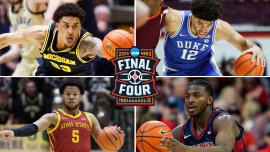
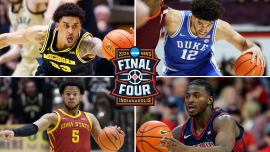
The NCAA Tournament selection committee offered an early “preview” of the top 16 seeds for the Big Dance on Saturday. Though the picture will immediately begin to change as new results roll in, the exercise provided some interesting fodder for college basketball fans to digest.

Among the biggest takeaways from the bracket preview was just how stacked the Midwest was. Again, this will all shift before Selection Sunday on March 15, but it was shocking to see a single region containing No. 1 overall seed Michigan, No. 6 overall seed Houston and No. 9 overall seed Florida.

Advertisement

The sight underscored the challenges the selection committee faces while adhering to NCAA bracketing principles in the era of conference consolidation.

All three rate as top-6 teams at KenPom, and our expert panel unanimously projected that the Cougars would be a No. 1 seed in the bracket preview. Three members of our six-person panel also had Florida as a No. 2 seed.

Not only was Houston not a No. 1 seed, it also was not the first No. 2 seed in the bracket preview. That distinction belonged to UConn. Subsequently, official bracketing principles led the committee down a path that resulted in a stacked Midwest Regional.

Official NCAA Tournament early seeds 

Check out the full field of 68 at the CBS Sports Bracketology hub.

Advertisement

Let’s dive in on how the selection committee likely arrived there as they met to rehearse the process that will eventually lead to the creation of the real 68-team bracket. Here are two major need-to-knows that will set the table: 

—The committee seeks to separate the first four teams from the same conference into different regions, which is why No. 2 seeds Purdue and Illinois weren’t placed with Michigan in the Midwest.
—Since UConn slotted as the best-ranked No. 2 seed, the Huskies would not have been permitted to play in the same region as the best-ranked No. 1 seed.

As a result, the committee likely determined — with the help of its software that flags those issues — that sending Houston to the Midwest was unavoidable.

What about Florida?

Once the committee started bracketing the No. 3 seeds, it naturally placed the best-ranked No. 3 seed (Florida) in the same region as the No. 1 overall seed (Michigan) in order to follow the established “s-curve” format.

Advertisement

No official “flags” would have appeared for that decision since Florida (SEC), Houston (Big 12) and Michigan (Big Ten) each play in different conferences. Moving on, the second No. 3 seed, Kansas (Big 12), would have slotted in to the East region below Duke (ACC) and Illinois (Big Ten) with no conference separation issues.

Fellow No. 3 seed Nebraska (Big Ten) would naturally have gone to the West. But since Purdue (Big Ten) was already there on the No. 2 seed line, it seems the Cornhuskers were deemed a better fit for the South alongside Iowa State (Big 12) and UConn (Big East).

This is likely why Gonzaga ended up in the West, despite the fact that the s-curve would have sent the Bulldogs to the South as the worst-ranked No. 3 seed.

Advertisement

Inside the committee room: What it’s like to pick, seed and build the NCAA Tournament bracket

Matt Norlander

Inside the committee room: What it's like to pick, seed and build the NCAA Tournament bracket
Advertisement

When it came to bracketing the No. 4 seeds, there was already a Big Ten team and a Big 12 team in every region, which meant there was no choice but to place Michigan State and Texas Tech in regions with conference foes.

With the Big Ten and Big 12 well-positioned to claim a hefty chunk of the best seeds in the 2026 NCAA Tournament, these are the real issues the selection committee will likely navigate. The leagues combined to produce 10 of the 16 squads in the bracket preview.

Pursuing balance

While the preview’s Midwest is obviously stacked, the potential competitive imbalance was technically slender enough that it passed NCAA protocols. Here’s what the committee’s official principles state:

Advertisement

“After the top four seed lines have been assigned, the committee will review the relative strengths of the regions by adding the “true seed” numbers in each region to determine if any severe numerical imbalance exists. Preferably, no more than six points should separate the lowest and highest total.”

If you tally the “true” seeds of the top four teams from the “toughest” region (Midwest), you get Michigan (1) + Houston (6) + Florida (9) + Virginia (16) = 32.

If you tally the “true” seeds of the top four teams from the “weakest” region (West), you get Arizona (3) + Purdue (8) + Gonzaga (12) + Michigan State (14) = 37.

That falls within a range of six points, which means it met the committee’s threshold for what is considered balance. 

Advertisement

Selection committee chair Keith Gill revealed during the bracket preview that the committee initially placed No. 14 overall seed Michigan State in the Midwest and Virginia in the West. That would have triggered a flag notifying the committee about competitive imbalance.  In that scenario, the difference between the cumulative true seed values of the top four teams in the Midwest and West was greater than six. Thus it led to a swap of Virginia and Michigan State.

Down the bracket

If you thought that was complicated, it was only the start. 

Amid conference consolidation and the proliferation of nonconference matchups between high-major schools, the committee will face additional challenges in avoiding regular season rematches as it brackets a full field in the weeks ahead.

While the committee will still be strident in avoiding first round rematches, some second round rematches may be unavoidable. That’s why the CBS Sports Bracketology model occasionally produces second round rematches between teams that have already played.

Advertisement

When multiple teams on a seed line are from the same conference, there are times when the only alternative to avoiding a potential conference rematch is to create a potential nonconference rematch.

NCAA bracketing principles permit games between conference teams in the second round, so long as the teams in question played each other just once before the NCAA Tournament. For conference teams that met twice prior to the NCAA Tournament, principles state they should not meet prior to the Sweet 16. If the teams played three times, bracketing principles state they should not play before the Elite Eight.

Advertisement

With regard to rematches of nonconference games, principles state that they should be avoided “in the First Four and first round.” The committee will also “attempt to avoid” nonconference rematches in the second round. But the committee prioritizes keeping teams on their natural seed line over changing their seed line for the sake of avoiding a rematch. 

Source link

Advertisement
Continue Reading
Click to comment

Leave a Reply

Your email address will not be published. Required fields are marked *

Sports

Six Nations 2026: Ireland show they’re far from done after record-breaking England scalp

Published

on

After being mercilessly pummelled by France a fortnight ago, Ireland arrived in south-west London and showed the rugby world they’re not quite done yet.

On Thursday, Farrell urged his players to “fire a few shots”, and they responded to end England’s nine-match winning run at home in ruthless fashion and ruin Maro Itoje’s 100th cap.

Heavily criticised for their passive, leggy display in Paris, Ireland rediscovered the defensive grit and attacking flair that propelled them to the top of the world rankings leading into the 2023 World Cup.

There were monumental performances all over the field.

Advertisement

Caelan Doris produced one of his best displays as captain, Crowley impressed at fly-half, Rob Baloucoune delivered crucial moments at both ends of the field, and Josh van der Flier responded emphatically to being dropped for last week’s win over Italy.

But no Irish player stood taller than Jamison Gibson-Park, who epitomised Ireland’s desire to best England on both sides of the ball with a virtuoso display at scrum-half.

The British and Irish Lion, who started on the bench against Italy, scored Ireland’s first try, created the second for Baloucoune, and ended his day with a much-deserved player of the match award.

“I called it after a few of his first moments that he’d get man of the match,” legendary Irish scrum-half Conor Murray said on the Ireland Rugby Social.

Advertisement

“He kept things quick, did what he does best. Tadhg Beirne was unbelievably sharp to give him the ball for that try and everything flowed after that. He was brilliant.”

Source link

Continue Reading

Sports

‘Impossible:’ Matt Fitzpatrick criticizes Riviera’s famed (and controversial) par-4

Published

on

No. 10 at Riviera has drawn its fair share of criticism (and praise) from golf’s best in recent years.

Rory McIlroy said the 315-yard par-4 “stinks.” Max Homa said it is “either the best hole in the world or the worst.” Jon Rahm said it could be his “favorite hole” on the course. Collin Morikawa called it the “hardest hole” on the famed property. Tony Finau went the other way, praising the “amazing” hole.

On Friday at the Genesis Invitational, another star added his name to one side of the debate over George C. Thomas’ famed short par-4.

After making an easy par at No. 10 during Thursday’s opening round, 2022 U.S. Open champion Matthew Fitzpatrick had a different experience on Friday.

Advertisement

The pin placement during the opening round was in the back right, which allowed Fitzpatrick to make a stress-free birdie. But on Friday, the in was in the middle and just three paces from the left edge. Fitzpatrick lost his tee shot out to the right, leaving him 47 yards to the pin. After surveying his options with his caddie, Fitzpatrick elected to play his second shot well left of the pin. The thinking was that Fitzpatrick would either give himself a long birdie putt or the ball would roll down into the collection area and he’d have a chance to get up-and-down for par. But he missed his spot and ended up dumping his second into the greenside bunker. His third shot was no easier than his second. He blasted out over the green and into the collection area. He pitched up and eventually tapped in for bogey, which was one of only two bogeys he made while firing a five-under 66.

“It was a great round. Felt like I played really solid. Just bogey on 10, the world’s most impossible golf hole. I’ll leave it there,” Fitzpatrick said after his round.

“I don’t really want to talk about it too much, I’ll just get wound up. But it’s hit and hope, let’s leave it at that.”

Fitzpatrick wasn’t the only one in his threesome to get bitten by Riviera’s short par-4. Both Aaron Rai and Garrick Higgo also made bogey.

Advertisement

“We all made bogey. I said, ‘great bogeys, guys,’” Fitzpatrick said. “I got a laugh out of everyone, which was good.”

In 2023, McIlroy said that he believes the kikuyu grass that runs up to and around the green is the issue. He suggested either re-grassing that area so the ball can run up or making the green a bit softer. As it stands right now, in McIlroy’s view, there is no skill involved in the hole.

In Fitzpatrick’s mind, No. 10 at Riviera breaks one of the most important rules for a hole.

“I just don’t think it’s a fair golf hole, so I’ll just leave it at that,” Fitzpatrick said.

Advertisement

“>

Source link

Advertisement
Continue Reading

Sports

College hoops insider shares Vanderbilt star’s availability ahead of Tennessee clash 

Published

on

Vanderbilt Commodores guard Duke Miles is expected back in action for Saturday’s game against the Tennessee Volunteers, per college basketball insider Jeff Borzello. Miles has been out for the past three weeks after undergoing “clean-up” knee surgery.

“Vanderbilt guard Duke Miles has been upgraded to probable for tomorrow’s game against Tennessee,” Borzello wrote on X

Vanderbilt guard Duke Miles has been upgraded to probable for tomorrow’s game against Tennessee, per the SEC Availability Report. Miles has missed the last six games with a knee injury. Meanwhile, Tennessee big man JP Estrella is questionable after missing Wednesday’s game.

Advertisement

Vanderbilt basketball coach Mark Byington also confirmed his availability during a press conference on Friday.

“Duke is expected to go,” he said. “He practiced yesterday. He’s had a good week. He hung back instead of going to Missouri with us so he could train here. We’re expecting him to go.

“He’s in incredible shape,” Byington added. “A lot of times it’s conditioning with players, but talking with my trainer, he said he’s doing great there. Watching him in practice, he looks really good. I think his rhythm will be good.”

Miles is averaging 16.6 points, 4.3 assists, 3.0 rebounds, and 2.8 steals per game. He last played for the Commodores on Jan. 24 in a contest against Mississippi State, scoring 17 points. He has since missed five games.

What Duke Miles’ return means for Vanderbilt

His return is great news for Byington’s team, as the Commodores look to improve on their 21-5 record. The team is fresh off a painful 81-80 defeat to Missouri and will be hoping to return to winning on Saturday. Having Miles on the lineup will improve the chances of that happening.

“He does a lot on the offensive end,” said Byington. “He gives us another ball handler, along with Tyler Tanner, who really makes plays out there. His steals are impactful. He makes an impact everywhere he goes.”

With his return, another big question is how many minutes Miles will be able to put in on Saturday.

Advertisement

“You’ve got to read the game, but we’re not going into the game thinking [about a minute restriction]. We’ll see how it goes,” Byington said. “I’m probably going to have to get him out at certain times, but as the coach, I feel better when he’s on the court, even if it’s his first game back. We’ll try to keep him out there.”

Tanner has been Vanderbilt’s most reliable ball handler since Duke Miles’ absence, although AK Okereke has also been helpful in filling in for Miles. However, Miles’ impact is difficult to replicate, especially with Frankie Collins also out.