
Sports
FIFA’s New Format Has Killed Key Part of Their Own Tournament

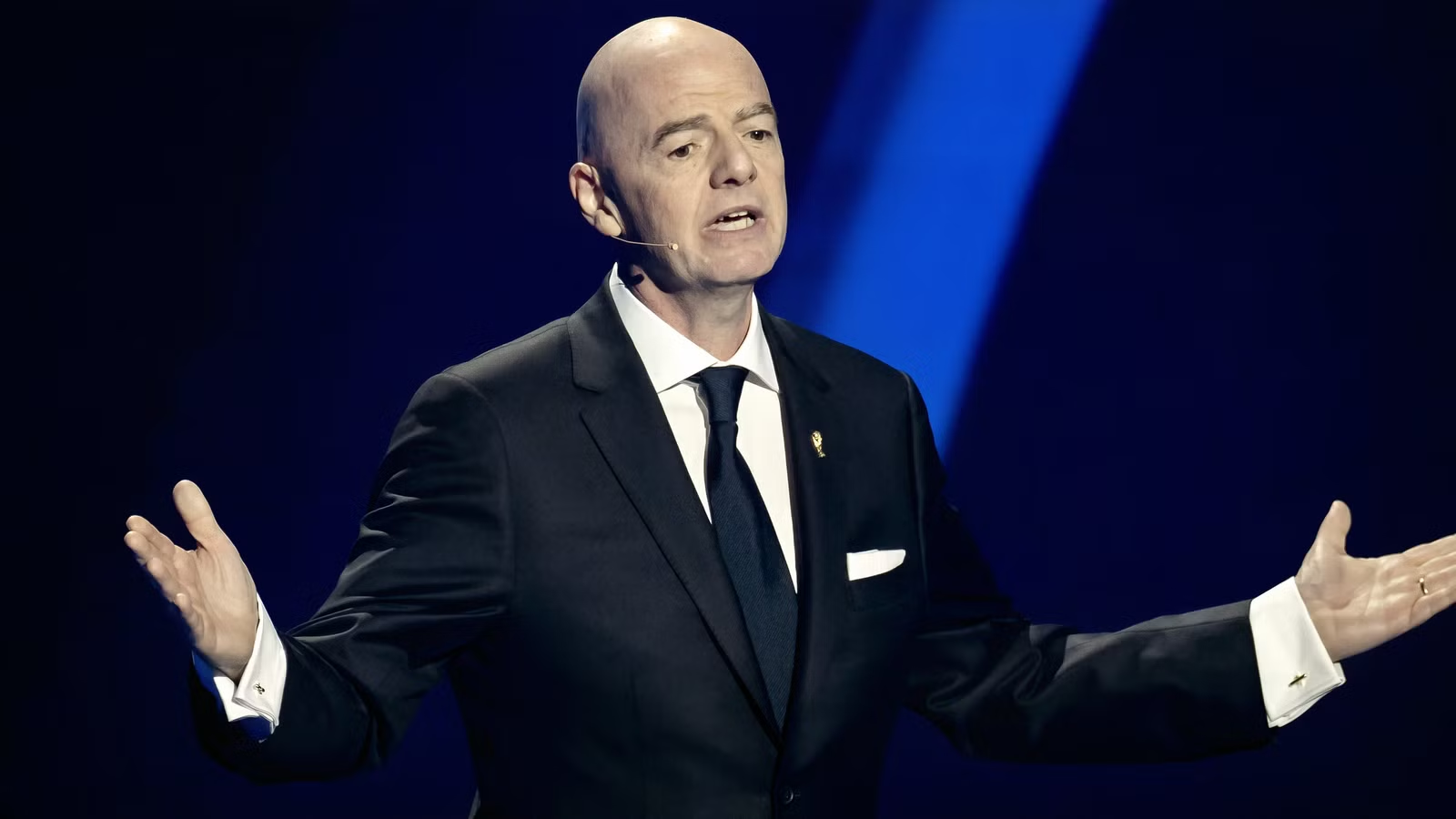
The 2026 FIFA World Cup group stage draw has finally been completed, and 42 nations have learned their fate ahead of the world’s biggest sporting event. While it has thrown together some exciting clashes, such as Spain vs Uruguay and England vs Croatia, it is clearly the least compelling set of groups in the tournament’s history.
The draw took place in Washington, D.C., on Friday (December 5th) and offered a glimpse of what fans can expect from a production perspective in the United States, Mexico, and Canada. US President Donald Trump was awarded the inaugural FIFA Peace Prize, Rio Ferdinand put his acting chops to the test, and some of America’s greatest sportsmen had a hard time pronouncing other country names.
It was an event that lasted hours, and once the draw took place, it was clear it would be a lengthy process due to the World Cup’s new format. The change from 32 teams to 48 added an extra four groups to be drawn, and the larger pool of nations to choose from meant the quality of group-stage matches had worsened.
New World Cup Format: Death of Group of Death

Fans are often eager to see which of the tournament’s favourites are drawn into the dreaded ‘Group of Death’. Think back to 1982, when reigning champions Argentina were drawn in Group C against eventual winners Italy and record-holder Brazil.
That was, of course, a rarity, but most campaigns have one or two groups that pose a real danger to those drawn from Pot A. Germany learned this when it was drawn into Group E in Qatar and crashed out in third place after meeting Spain, while Japan surprisingly finished top of that group.
Looking at the field for the 2026 World Cup, you’d be hard-pressed to identify a group in which advancing to the knockout stages seems an awkward task for the big guns. Perhaps Kylian Mbappe‘s France in Group I may have a job on their hands when clashing with Erling Haaland‘s Norway and a Senegal side who finished their qualifying campaign unbeaten.
But those three teams are then joined by either Bolivia, Suriname or Iraq, which should be the walkover come next summer. The change in format means 32 teams advance from the group stages, so that risk factor has diminished.
Big Guns Should Have No Issues

Germany might also be ones to keep an eye on as their group pits Julian Nagelsmann’s men against Cote d’Ivoire and Ecuador who tend to be tricky opposition. But then debutants Curaçao join the pack, and with eight third-place teams emerging from the groups into the knockouts, the pressure is taken off those bigger countries, especially heading into their final group match.
That was when the Germans famously faltered back in the winter of 2022, crashing out despite a 4-2 win over Costa Rica. Spain suffered a shock defeat to Japan, which sent Hansi Flick’s side packing.
That is World Cup football at its very best, the unpredictability that comes with handling a tough group and knowing there are only two places up for grabs to progress beyond the group. Brazil, the Netherlands, Belgium, Spain, France, Argentina, Portugal, and Thomas Tuchel’s England should have no trouble finishing in a qualifying position.

So many memorable moments have occurred in previous group stages, especially when international football’s heavyweights collide early doors. Cristiano Ronaldo‘s hat-trick in Portugal’s 3-3 draw against Spain at the 2018 World Cup is one example of a grandiose group-stage match that won’t be taking place under the new format.



