
Sports
Freedmans seek 2026 Oakleigh Plate Group 1 sprint success

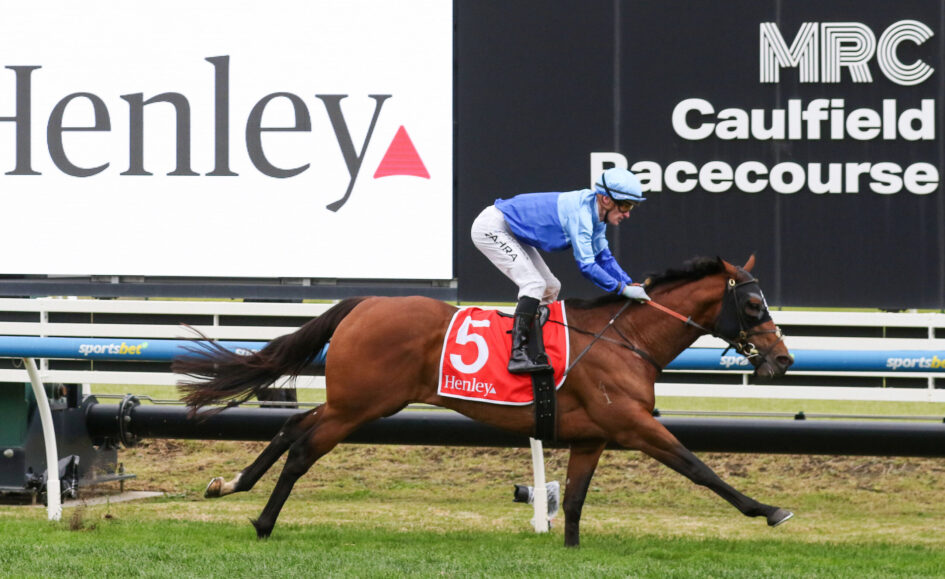
In pursuit of yet another elite-level sprint score, Anthony and Sam Freedman send Tropicus and Point Barrow into the Oakleigh Plate.
This Saturday’s 1100m feature provides the autumn benchmark test at Caulfield for the handicappers, akin to Tentyris who took out last week’s Black Caviar Lightning in similar first-up fashion, a scenario both horses replicate.
Tropicus’s most recent appearance was a sixth to Giga Kick in the Group 1 Champions Sprint (1200m) on Melbourne Cup week‘s last day, while Point Barrow emerged victorious in the Group 3 Red Roses Stakes (1200m) at Flemington come Oaks Day before her break.
Sam Freedman confirmed the sprinters’ preparations have been textbook for the return bout, differing in pattern from their fellow stable runner.
Point Barrow boasts two recent jump-outs, the freshest at Balnarring January 28 with Jamie Melham in the irons, set to retain the ride at Caulfield for her initial proper hit-out.
“She’s had a great prep so far,” Freedman said.
“She’s ready to run a really good race and just needs a bit of luck.
“She’s a bit like Tentyris, she sits back and has that powerful finish, and hopefully it’s a similar result.”
Tropicus dominated his opening trial at Mornington last month and followed with a close second on January 22, just shading Tentyris there too.
Suitable for his Caulfield record and the first-up 1100m trip, the Oakleigh Plate appeals strongly for Tropicus, Freedman believes.
He had held command until the closing stages two back in October’s Group 2 Schillaci Stakes (1100m) at Caulfield before Giga Kick prevailed.
“He’s got a great Caulfield record, and 1100 metres first-up suits him,” Freedman said.
“Tactically for him, it’s better as he’ll be on the speed, but I just don’t know what weight he’ll get.
“I thought he might get 52 (kilos) in a normal year, but it looks like he might be up around the 56 mark which will mark it a hard weight for him to carry, but he’ll take luck out of it by being up there.”
The betting markets for the race are heating up with plenty of value on offer for the Oakleigh Plate.
The post Freedmans in search of another G1 sprint first appeared on Just Horse Racing.

Sports
Tasked to work on 2036 Olympic bid, 2030 Commonwealth Games: Leander Paes | Other Sports News
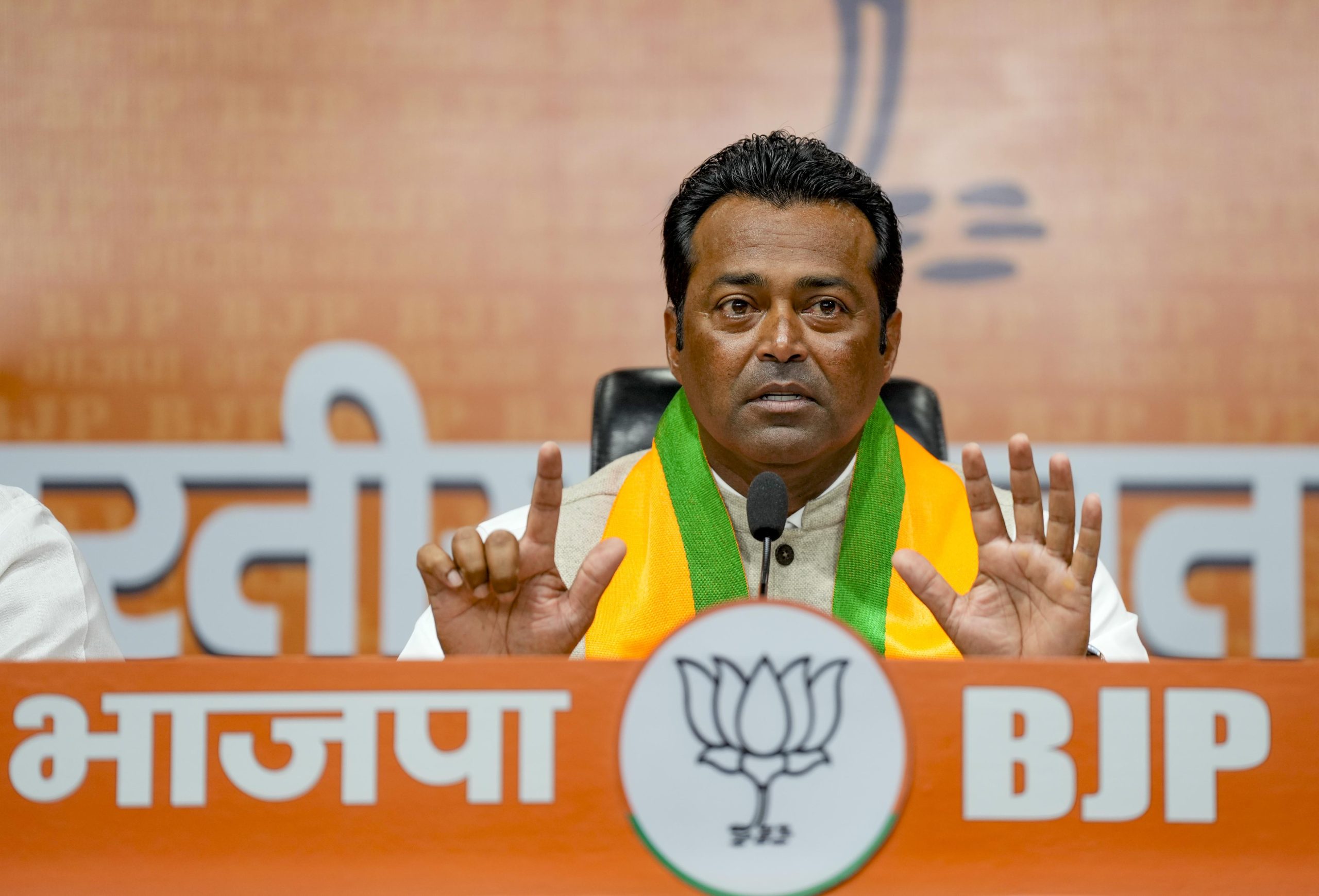
Indian tennis legend Leander Paes on Saturday said he has been entrusted with responsibilities related to India’s bid for the 2036 Olympic Games, describing it as a key to his new role in public life.
The seven-time Olympian said Prime Minister Narendra Modi had given him the task of working on youth development and sports while helping the country pursue its ambition of hosting the Olympics in 2036.
In his first media interaction in Kolkata after joining the BJP, Paes said, “Modi ji gave me a clear vision — to work for the youth and sports. He has given me the responsibility of the 2036 Olympics. I have to work hard with a team to bring the Olympics to this country.”
He also said that he would contribute towards hosting the Commonwealth Games in Gujarat.
The tennis legend said hosting the Olympics could help transform India’s sporting ecosystem and strengthen its global standing.
Drawing parallels between sporting success and economic strength, he noted that the top medal-winning nations at the 2024 Summer Olympics, including the US, China, Japan, Australia and Great Britain, are also among the world’s leading economies.
Paes said India should aim to achieve similar success by building a strong sporting culture and investing in infrastructure and grassroots talent development.
“In sports and sports education lies the ability to build a superpower,” he said, adding that developing young athletes would be key to India’s Olympic ambitions.
Paes also stressed the need to improve sports infrastructure in states such as West Bengal, noting that the state still lacks an indoor tennis stadium and often relies on temporary wooden courts for international events such as the Davis Cup.
Paes said his broader mission is to impact the lives of 250 million children over the next two decades through sports and education, adding that India’s youth would play a decisive role in the country’s Olympic aspirations and global rise.
Calling his transition from sport to public life a “new game”, Paes said he would approach the responsibility with the same passion and commitment that defined his tennis career.
Akwa Ibom State Commissioner for Sports, Elder Paul Bassey, and the Godswill Akpabio International Stadium will take centre stage as the 6th Sportsville Special Recognition Award holds in Lagos.
Elder Paul Bassey is a Nigerian sports journalist and administrator, the 2nd Vice-President of the African Club Association, and a CAF/FIFA match commissioner. He has dedicated decades to sports journalism and administration, earning him the nickname “Paul Sports Bassey.”
Bassey, who has spent just one year in office as Commissioner for Sports, has overseen a strong rise in Akwa Ibom’s performances at national sporting events. He has consistently credited these achievements to the support and vision of the state government led by Pastor Umo Eno.
The Godswill Akpabio International Stadium, Uyo will also be honoured with the Best Facilities Award in the government category. The stadium remains the top sporting venue in the country, meeting international standards set by FIFA and CAF, thanks to consistent maintenance by the Akwa Ibom state government.
The facility is the home of the Super Eagles of Nigeria and has also served as a venue for several teams in CAF club competitions.

The ceremony, scheduled to take place at the Lagos Country Club, will also recognise 20 Nigerians across seven categories.
In the Icon category, Kwame Arthur and Chuka Momah will be honoured. Itiako Ikpokpo and Wahid Oshodi will receive the Sports Personalities of the Year award.
The Chairman of the National Sports Commission, Shehu Dikko, will be decorated with the Sports Transformative Impact Award.
Other recipients include Femi Bankole Alibay and Bambo Akani in the Creative and Innovative category, while Amadin Desmond Enabulele will be recognised for Visionary Leadership.
In the Achievers category, Christian Emeruwa and Felix Akiga will be honoured.
The Special Recognition category will feature Isaac Danladi, Akin Afolarin, Fred Newton Erhunwunse, Toyin Aluko, Fausat Dehinde Yekini, and Toyosi Oyetunji.
The Sportsville Award, now in its sixth edition, continues to celebrate excellence and contributions to sports development in Nigeria.
Sports
Northern Ireland v Malta: Michael McArdle out to end NI’s goal drought – could Cora Chambers help?
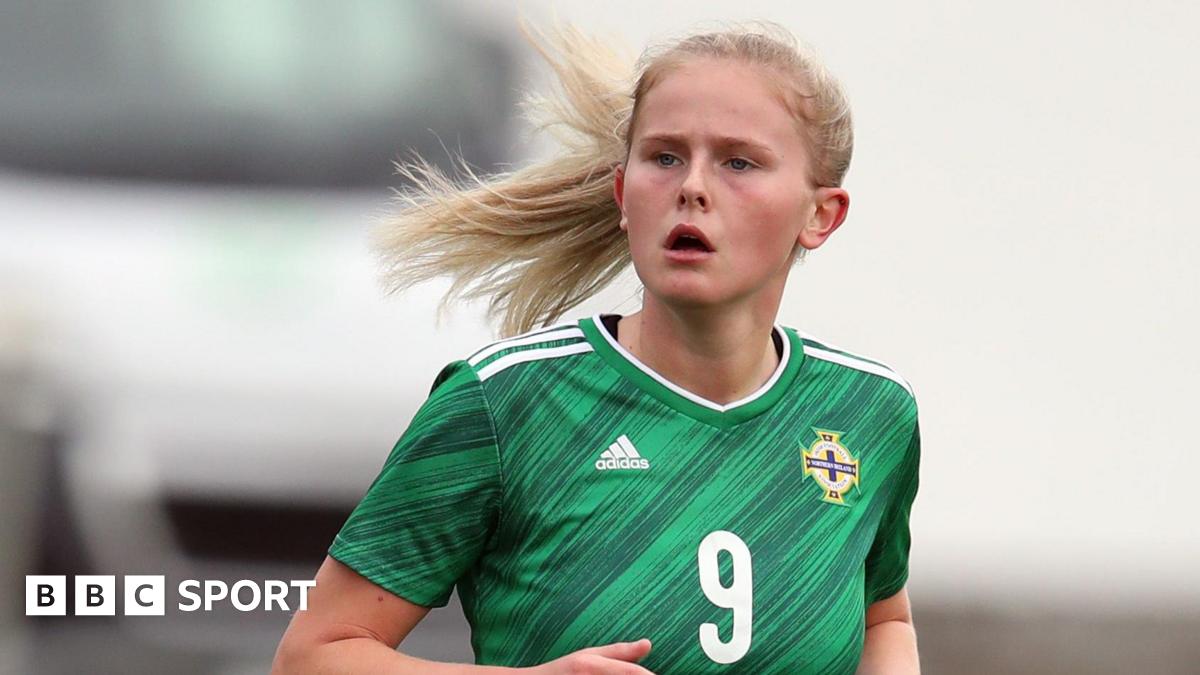
Six games without a win or clean sheet and four games without a goal, it’s been a tough time for Northern Ireland women at both ends of the pitch.
Simultaneously, there looks to be obvious fixes for new boss Michael McArdle to transform their recent fortunes and get this team in transition back on track as they look to secure a play-off for the 2027 World Cup.
They clearly have work to do, particularly when it comes to scoring goals.
Under interim boss Kris Lindsay, Northern Ireland were fairly solid in defeats against Switzerland and Turkey, with an individual error against the latter from Lauren Perry gifting the visitors a victory.
There seems to be a solid base to build on in that regard, but at the other end of the pitch it is a different story.
They had just one shot on target against the Swiss and two at home against Turkey.
With captain and star striker Simone Magill absent from this World Cup qualifying campaign as she is expecting her first child, McArdle must find others to shoulder the goalscoring burden.
In his first squad he has turned to uncapped 22-year-old striker Cora Chambers alongside Glentoran teenager Kascie Weir.
The Linfield forward formed a deadly partnership with Eve Reilly for the Blues in the Women’s Premiership last season, registering 20 goals and McArdle was keen to reward her consistent form since moving to the club in 2024 with her goal tally standing at 39 in just 47 appearances.
“Excitement, I think that’s the certainly in immediate observation [of Cora],” the new boss told BBC Sport NI.
“Looking ahead to Malta, there’s a focus on the front end of the pitch. Cora is definitely a player that over the last two years in the league has shown real strength in her outcomes and consistent performances and it’s one of those ones that it’s easy to reward that.
“Really excited by Cora and I think that the energy that she can add is slightly different to what we already have and certainly it’s a reward for her hard work over the last couple of seasons at club.”
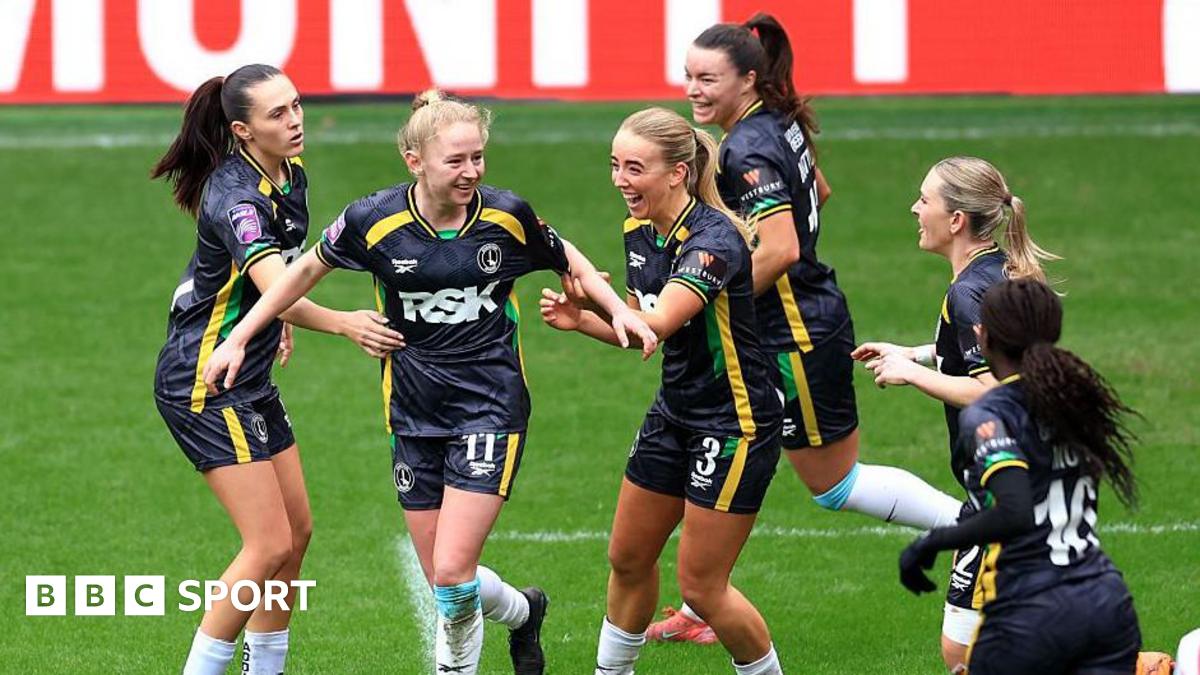
Hills has done it before when she guided Tottenham to the WSL for the first time in their history in 2019, alongside coach Juan Carlos Amoros.
Former defender Hills’ Charlton side have been built on strong foundations, consistency and a formidable defensive record.
They have conceded the league’s fewest goals (17), kept the most clean sheets (eight) and had a 27-game unbeaten run, which ended in March.
With two automatic promotion spots up for grabs, and third place banking a play-off against the WSL’s bottom club, Charlton are in a good place.
“We haven’t looked too far ahead but I’m ambitious, the players are ambitious and the club is ambitious,” said Hills.
“Outside noise talks about [promotion], family and friends talk about it, so players probably feel it. There is a lot on social media and outsiders influence that.
“All of a sudden you start believing in it. It’s about making sure that we don’t get too high or too low, and just concentrate on the next game.
“We know it’s a big challenge. The money that’s in the WSL 2 is frightening and every single team now is fully professional. For me, it’s been the best season.”
Six teams can still earn promotion to the WSL with less than a month to go before the season concludes.
Charlton once had a nine-point lead but losses last month were costly. They were overtaken at the top by Birmingham and have work to do.
“There’s always highs and lows within every season. We’ve had some unbelievable moments and going 27 games unbeaten is a milestone that any team would be happy with and proud of,” said Hills, reflecting on the campaign so far.
“We’ve now got to a point in the season where it’s the business end and every team can beat anyone on any given day. Everyone’s fighting for everything.
“We are certainly fighting as well. It’s just an incredible league, right? I think it will be very unpredictable right until the last game.”
Sports
‘When you’re not getting games … ‘: Kuldeep Yadav on staying IPL-ready despite limited chances in T20 World Cup | Cricket News


NEW DELHI: Who wants to sit on the bench and watch teammates take the field? Who doesn’t want to see his name on the team sheet? It can be frustrating for any player. But Kuldeep Yadav handled it with remarkable calm.Whether it was carrying drinks, relaying the coach’s messages, bringing out bats, or applauding teammates with a smile, Kuldeep stayed fully involved with the team despite not being in the playing XI.In the recently-concluded T20 World Cup, where India lifted the title after defeating New Zealand in the final, teams often opted for spin-heavy combinations. Kuldeep was expected to play a bigger role, but that didn’t materialise.
India played eight matches in the tournament, including the final, but Kuldeep featured in just one game — the high-profile clash against Pakistan. He bowled three overs, conceded 14 runs and picked up one wicket.After that, he did not get another opportunity in the playing XI.Ahead of the IPL 2026 clash between Delhi Capitals and Mumbai Indians, Kuldeep spoke about dealing with the challenge of being benched.“Preparation becomes crucial, especially when you’re not getting games. I made sure there was no gap in my preparation so that whenever an opportunity came, I was ready,” Kuldeep told reporters ahead of the DC vs MI clash in New Delhi.“Even if you’re not playing, being with the team, attending practice sessions, and maintaining that match-ready mindset is important. Whether you play or not, your approach should always be that you’re ready for the next game,” he added.“Confidence comes from preparation. If your training and routines are in place, you will naturally feel confident, even though a bit of nervousness is always there,” Kuldeep said.Kuldeep also highlighted the importance of planning against batters.“Planning against batters is constant; you assess where they want to score and how they might approach you. With new batters, it becomes more challenging, but overall, preparation is what builds confidence,” he added.The 31-year-old is now eager to make his mark in IPL 2026.In Delhi Capitals’ opening match against Lucknow Super Giants, Kuldeep delivered a solid performance, picking up two wickets for 31 runs in four overs. He dismissed Mitchell Marsh and Mukul Choudhary in that game.He will now be up against Mumbai Indians in the upcoming clash.Kuldeep stressed the importance of sticking to one’s strengths, especially in the T20 format.“It’s very important for spinners to hold on to their strengths. Whenever batters put you under pressure, you tend to forget your strength. You look for a safer option to get out of that situation,” Kuldeep said.“If you are an attacking spinner, don’t let that go. Because that is your identity, and if you are doing that work for the team, taking wickets, there can be nothing better than that. Your mindset should be attacking,” he added.“Young spinners think that these are high-scoring matches and runs will be hit. Yes, you will be hit for runs because this is the T20 format. But you have to plan accordingly and be ready. It is not necessary that in four overs you will concede 40-45 runs. If there is a player who dominates, then it happens, or the wicket is very good for batting,” he said.
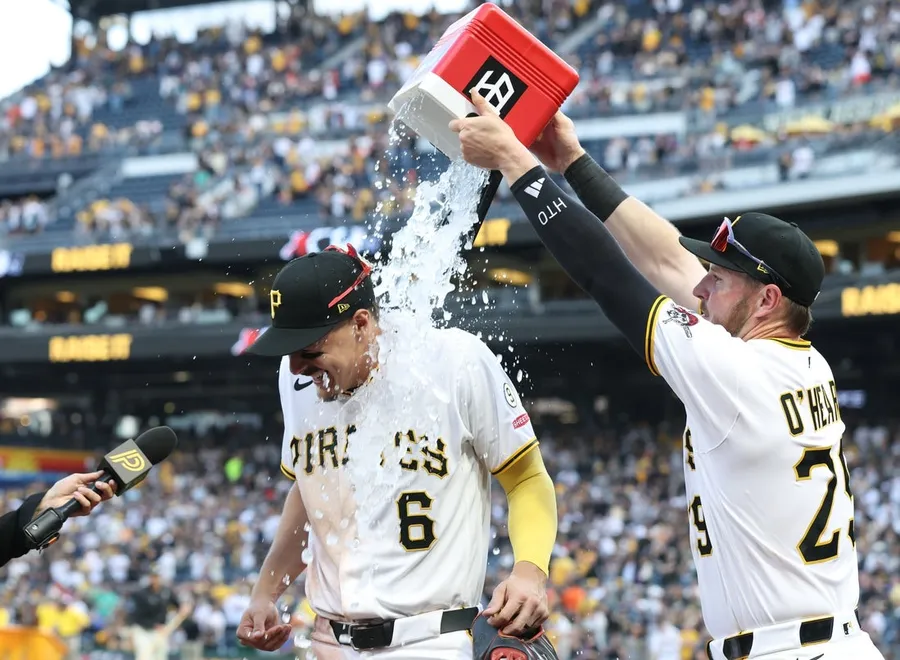
 Apr 3, 2026; Pittsburgh, Pennsylvania, USA; Pittsburgh Pirates left fielder Ryan O’Hearn (29) dumps water on Konnor Griffin (6) after Griffin made his major league debut with an RBI double against the Baltimore Orioles at PNC Park. Mandatory Credit: Charles LeClaire-Imagn Images
 Konnor Griffin, baseball’s No. 1 prospect, doubled and drove in a run in his major league debut, propelling the host Pittsburgh Pirates to a 5-4 win over the Baltimore Orioles in their home opener on Friday.
Griffin, 19, recorded his first major league hit and RBI and scored his first career run during a four-run second inning for Pittsburgh, which won its third in a row and moved above the .500 mark for the first time since Aug. 4, 2024.
Griffin roped his double into the left-center gap off Orioles starter Kyle Bradish (0-2) on his first career at-bat to drive in Ryan O’Hearn. Griffin came around to score when Jared Triolo, who led the Pirates with two hits, singled to right field. Griffin walked his second time up in the fourth and went 1-for-3 with a strikeout.
Griffin became the first teenage position player to appear in a big-league game since Juan Soto in 2018 and the first Pirate since Aramis Ramirez in 1998. Bradish gave up four runs on six hits in four innings. In six innings, Pirates starter Mitch Keller (1-0) allowed two runs on six hits.
Dodgers 13, Nationals 6
Shohei Ohtani hit his first home run after a slow start and added four RBIs as Los Angeles unleashed a stagnant offense for a victory in Washington’s home opener.
Kyle Tucker, Mookie Betts, Freddie Freeman and Andy Pages hit home runs and added two RBIs each in the Dodgers’ first road game of the season. Emmet Sheehan (1-0) went 5 2/3 innings, allowing four runs on seven hits.
Nationals right-hander Miles Mikolas (0-2) surrendered 11 runs on 11 hits across 4 1/3 innings. CJ Abrams hit a home run and drove in four runs for Washington, which dropped its third straight after a 3-1 start.
Yankees 8, Marlins 2
Aaron Judge hit a home run in his first Yankee Stadium at-bat of the season and drove in three runs as New York, in its home opener, downed Miami.
Ben Rice added a home run and a two-run double for the Yankees, who improved to 6-1. Will Warren (1-0) allowed two runs, on solo homers by Xavier Edwards and Owen Caissie, among four hits in 5 2/3 innings.
Marlins starter Eury Perez (0-1) allowed four runs on two hits in four innings, issuing a career-worst six walks. Miami had just one at-bat with a runner in scoring position.
Red Sox 5, Padres 2
Willson Contreras and Marcelo Mayer both homered in the sixth inning, propelling Boston to a home-opening win over San Diego.
Boston banged out nine hits and received a solid six-inning start from Sonny Gray (1-0) en route to breaking a five-game losing skid. Mayer highlighted his 2-for-2 day with a two-out, two-run homer to cap Boston’s three-run sixth. He also hit a leadoff double and scored the opening run in the third.
Gavin Sheets went 2-for-3 with an RBI and run for the Padres. Boston College grad Michael King (0-1) allowed four runs in a 5 2/3-inning start.
Tigers 4, Cardinals 0
Framber Valdez pitched six scoreless innings, Dillon Dingler blasted a two-run homer and Detroit blanked St. Louis in its home opener.
Valdez (1-0), one of the top free agent signings of the offseason, allowed three hits and two walks while striking out five. Riley Greene had two hits, a run and an RBI while Javier Baez added two hits and an RBI.
Michael McGreevy (0-1) gave up three runs on seven hits in 4 2/3 innings. The Cardinals, who had won four of their first six games, were held to five hits.
Mariners 3, Angels 1 (10 innings)
Cole Young broke a scoreless tie with a 10th-inning triple as Seattle spoiled Los Angeles’ home opener with a win in Anaheim, Calif.
Josh Naylor added a two-run single off Brent Suter (0-1). Four Mariners pitchers — Bryan Woo, Matt Brash, Andres Munoz and Gabe Speier — combined on a one-hitter. Munoz (1-1) struck out the side in the ninth to earn the victory. Speier worked the 10th for the save, giving up a sacrifice fly to Jorge Soler.
Woo and the Angels’ Reid Detmers were locked in a pitchers’ duel into the seventh inning. Woo went seven innings, giving up one hit with one walk and six strikeouts, while Detmers allowed three hits in 6 2/3 innings, with four walks and four strikeouts.
Braves 2, Diamondbacks 0
Ozzie Albies and Matt Olson hit back-to-back homers off Paul Sewald to break a scoreless tie in the ninth inning, and Atlanta beat Arizona in Phoenix.
Albies, leading off the inning, put the Braves ahead by depositing an 0-1 fastball from Sewald (0-1) over the right field wall. Olson followed three pitches later with a 426-foot blast to left-center. Robert Suarez (1-0) pitched a perfect eighth and Raisel Iglesias retired the D-backs in order in the ninth for his first save.
Atlanta out-hit Arizona 6-2 in a game that featured a pitchers’ duel between the Braves’ Grant Holmes and the Diamondbacks’ Eduardo Rodriguez. Holmes allowed one hit over six scoreless innings, while Rodriguez gave up four hits over seven shutout innings.
Phillies 10, Rockies 1
Brandon Marsh hit a three-run home run and Trea Turner had two hits in a seven-run first inning as Philadelphia routed Colorado in the Rockies’ home opener at Denver.
Bryce Harper homered and doubled, Kyle Schwarber also went deep and Turner finished with three hits. Aaron Nola (1-0) allowed just one run over 6 1/3 innings and struck out nine as the Phillies earned their third victory in a row.
Rockies starter Michael Lorenzen (0-1) gave up nine runs on 12 hits over three innings.
Reds 5, Rangers 3
Tyler Stephenson belted a two-run homer in the ninth inning, helping Cincinnati spoil Texas’ home opener with a victory in Arlington, Texas.
Spencer Steer launched a two-run homer in the second and had a double to lead off the ninth. Stephenson then deposited a 3-2 sinker from Chris Martin (1-1) over the wall in right-center to give the Reds a 5-3 lead. Texas’ Danny Jansen ripped a two-run double and Wyatt Langford added an RBI double.
Stephenson’s first homer of the season made a winner out of Tony Santillan (1-0), who retired the side in order in the eighth, and Emilio Pagan secured his second save. Cincinnati’s Elly De La Cruz homered to lead off the sixth.
White Sox 5, Blue Jays 4 (10 innings)
Tristan Peters knocked in the winning run with a two-out single as Chicago prevailed in its home opener, defeating Toronto.
After the Blue Jays took a lead in the top of the 10th on an error by Miguel Vargas, the White Sox won the game with two runs in the bottom of the inning in part because of an error by replacement catcher Tyler Heineman.
Sean Burke allowed one run on four hits over six innings for Chicago. Former White Sox pitcher Dylan Cease allowed three runs (two earned) on five hits over 4 1/3 innings for Toronto.
Guardians 4, Cubs 1
Rookie Chase DeLauter belted a two-run, two-out homer off Hunter Harvey in the seventh inning, three batters after Gabriel Arias hit a go-ahead solo shot, as Cleveland beat visiting Chicago.
DeLauter, who singled home Cleveland’s first run in the fifth to knot the score, tied Shea Langeliers of the Athletics for the major league lead with five home runs. He went 3-for-4 in his initial regular season home game, having made his debut in the 2025 postseason.
Connor Brogdon (2-0) earned the win with a perfect seventh, while Cade Smith worked a scoreless ninth for his second save. Pete Crow-Armstrong and Miguel Amaya had back-to-back doubles in the third, giving Chicago a 1-0 lead. Cubs starter Cade Horton was forced to leave in the second with right forearm discomfort and will go on the injured list.
Twins 10, Rays 4
Tristan Gray belted his first career grand slam and drove in five runs, and Minnesota pulled away for a win over Tampa Bay in Minneapolis.
Gray’s blast highlighted a seven-run seventh inning for the Twins, who won their home opener after playing their first six games on the road. Josh Bell and Royce Lewis drove in two runs apiece.
Nick Fortes doubled and drove in two runs to lead Tampa Bay at the plate. Junior Caminero and Ben Williamson tallied two hits apiece.
Athletics 11, Astros 4
Lawrence Butler went 3-for-5 with a homer and four RBIs and Max Muncy finished 3-for-4 with a blast and drove in three as the Athletics rolled over Houston in the home opener at West Sacramento, Calif.
Tyler Soderstrom had two hits and two RBIs and Jack Wilson also had two hits as the Athletics posted 13 hits. All 11 A’s runs scored with two outs. Jeffrey Springs (1-0) gave up one run and two hits in six innings.
Yainer Diaz and Nick Allen had two hits apiece for the Astros, who had a five-game winning streak halted. Cristian Javier (0-1) allowed six runs on six hits and five walks in 3 2/3 innings.
Mets 10, Giants 3
Francisco Alvarez belted two home runs, Marcus Semien hit the first for his new team and New York overcame the loss of Juan Soto to post a victory over host San Francisco.
Nolan McLean (1-0) combined with four relievers on a five-hitter for the Mets, who snapped a three-game losing streak. Soto left due to right calf tightness after being forced out at home plate during New York’s two-run first inning.
Bichette and Semien had RBI hits in the first off Giants starter Tyler Mahle (0-2), allowing McLean to pitch with a lead during his entire 5 1/3-inning stint. Mahle was pulled after five innings, having allowed five runs and eight hits. Luis Arraez and Willy Adames each had an RBI hit for San Francisco.
–Field Level Media
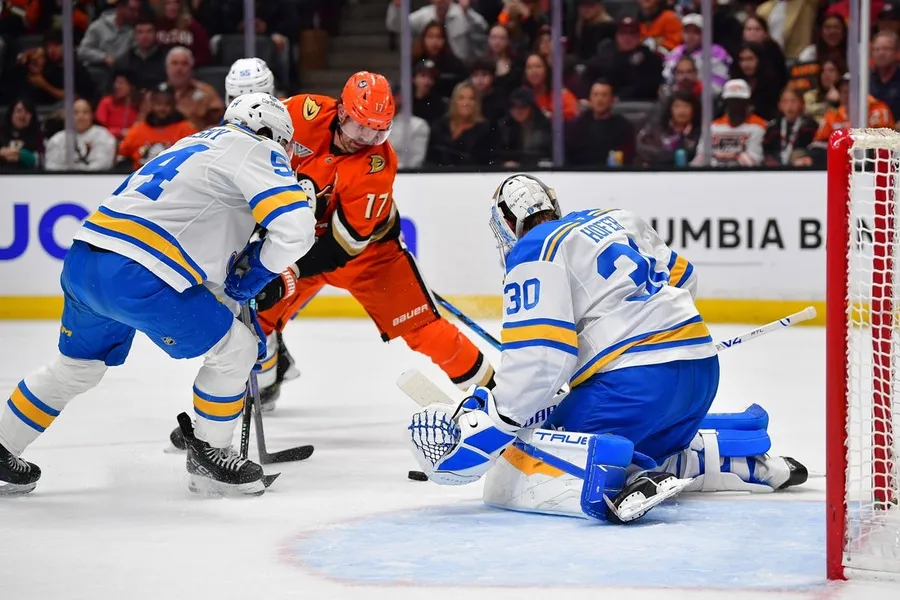
 Apr 3, 2026; Anaheim, California, USA; St. Louis Blues right wing Dalibor Dvorsky (54) helps goaltender Joel Hofer (30) defend the goal against Anaheim Ducks left wing Alex Killorn (17) during the second period at Honda Center. Mandatory Credit: Gary A. Vasquez-Imagn Images
 Robert Thomas scored once in a three-point game and Dylan Holloway tallied twice to lead visiting St. Louis to a 6-2 victory over the Anaheim Ducks on Friday, keeping the Blues’ slim playoff hopes alive.
Pius Suter and Colton Parayko both scored once and added an assist for the Blues (32-31-12, 76 points), who are three points outside of a playoff spot with seven games remaining.
St. Louis’ Jonatan Berggren also scored, Jake Neighbours and Philip Broberg both collected a pair of assists, and goaltender Joel Hofer made 25 saves.
Ryan Poehling collected one goal and one assist and Jeffrey Viel tallied once for the Ducks (41-30-5, 87 points), who lost their hold on the top spot in the Pacific Division. The Edmonton Oilers also have 87 points, but they hold the tiebreaker edge.
Goalie Lukas Dostal stopped 23 shots for Anaheim, which is winless in four games (0-3-1).
Berggren’s goal late in the first period sent the Blues off to victory. With the score tied 2-2, Berggren set up in the slot after a glaring turnover and buried the chance with 76 seconds remaining in the back-and-forth opening frame.
Suter made it a 4-2 game with a tap-in tally set up by Neighbours and Tyler Tucker at 3:08 of the second period.
Parayko extended the Blues’ lead at 16:50 of the middle frame by converting a wrist shot from the top of the right circle for his second goal of the season. Holloway added a power-play goal, ripping home a one-timer from the right circle set up by Thomas’ pass 82 seconds into the third period for his second of the game to make it a 6-2 score.
Before that, the clubs were in a see-saw affair. The Ducks received a sought-after quick start when Poehling opened the scoring at 1:51 by redirecting Mason MacTavish’s long shot.
Thomas responded to tie the clash at 5:24, chipping a shot from in tight upon being sprung on a breakaway by Broberg. With his assist, Broberg extended his point streak to a career-best seven games.
Holloway put the Blues ahead just past the midway point of the opening frame, finding the mark from the top of the right circle for the power-play goal. Then it was Anaheim’s turn to erase a deficit, tying the clash when Viel redirected Poehling’s cross-ice pass at 16:01 of the frame.
–Field Level Media
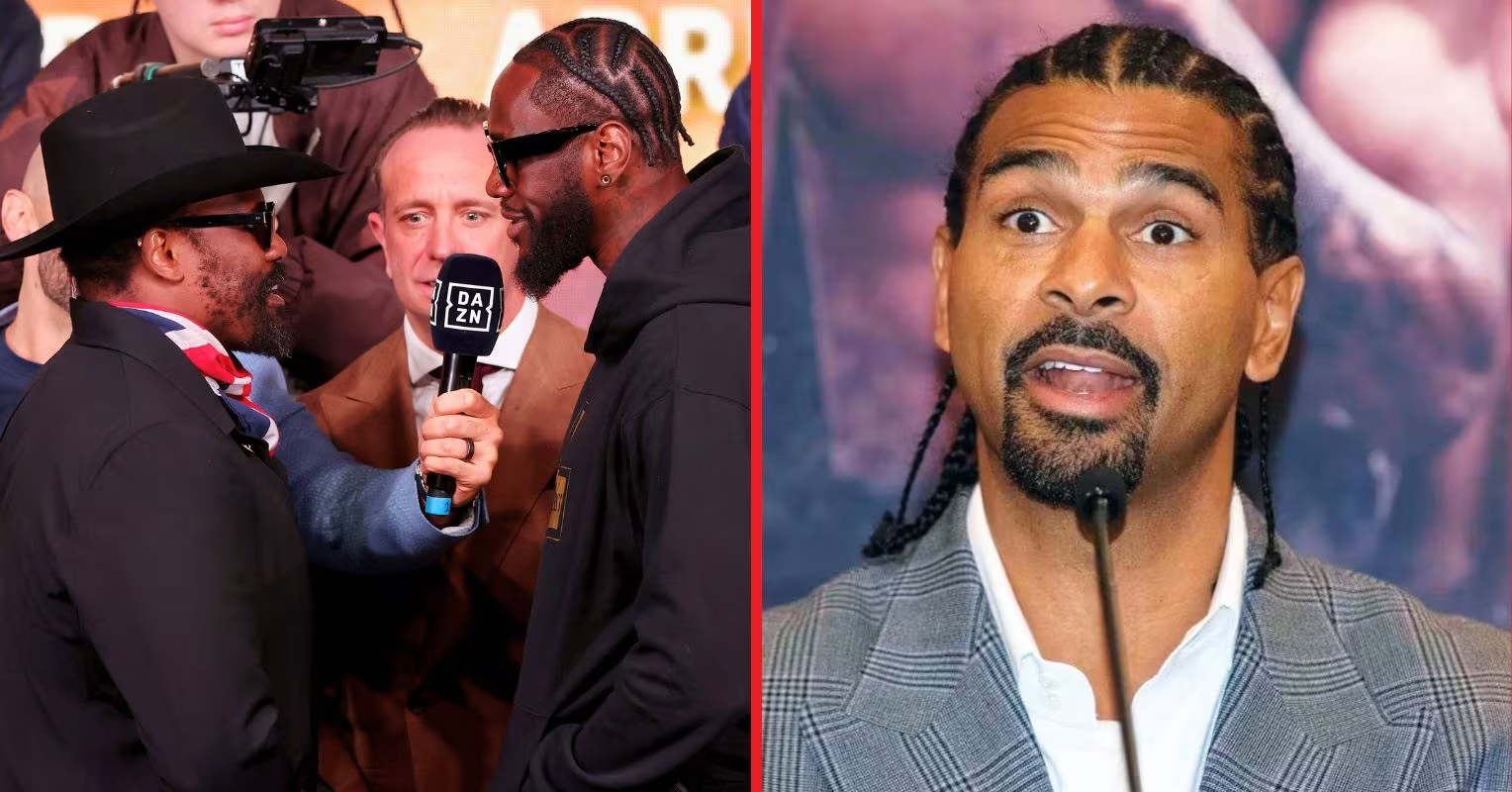

Derek Chisora takes on Deontay Wilder on Saturday, and two-division world champion and former Chisora rival David Haye has laid out his prediction for the O2 Arena scrap.
Chisora has become a fan-favourite with the British public over the years, famed for his love of violence, unique personality and determined mindset. Although, at the age of 43 years old, ‘Del Boy’ is set to call time on a long career, even if successful against Wilder.
For Wilder, the contest represents a major opportunity to announce his return to the big time, with Chisora’s favourable ranking with the sanctioning bodies offering ‘The Bronze Bomber’ a route back to the peak of the division.
However, Haye, who defeated Chisora at Upton Park back in 2012, told The Sun Sport that he believes his countryman will end his career with a victory, when sharing his forecast for the fight.
“Derek Chisora on points but also a potential late stoppage. Once Wilder runs out of steam, he sort of [flops around]. He doesn’t have very big legs, his foundations are quite slim.
“Once he loses that [foundation], like we saw against [Zhilei] Zhang, very quickly he started falling all over the place, he was spinning around and he wasn’t together like he once was.
“I think that there is an opportunity for Derek, not early, I don’t think it will happen early but I think Derek will drag him into a very uncomfortable situation where it is very close and they are pushing and pulling. That is what Derek needs, that is what Derek wants.
“In the first three rounds, Wilder is dangerous against anybody, for sure, he can nail you. But going past the midway stage, I don’t think that he is going to be able to keep Derek off of him, and if he does, he will be losing the rounds conclusively.”
Wilder-Chisora will take place on Saturday, with the likes of Viddal Riley and Denzel Bentley featuring on the undercard.

April is here, meaning it’s draft month for the Minnesota Vikings, and we’re bringing the first batch of rumors for the month.
Three new Vikings rumors spotlight Greenard, Turner, and Minnesota’s search for help at center.
Each weekend, we publish two rounds of the hottest Vikings rumors, with never a dull moment in the purple orbit.
Latest Chatter Reveals Key Questions for Minnesota’s Roster
The Purple Rumor Mill for April 4th.
Rumor: Jonathan Greenard could be shipped to the Indianapolis Colts during the draft.
Bleacher Report‘s Brent Sobleski published his five “most plausible” NFL trade ideas for the draft, and Minnesota got the call with Greenard.
He noted about the Colts as the trade partner, “The Colts already lack a first-round pick thanks to last year’s trade deadline acquisition of cornerback Sauce Gardner. However, the market for an edge-defender isn’t nearly as robust when discussing anyone other than Crosby.”
“Jonathan Greenard is the logical target. The Vikings were looking to create salary-cap space earlier this offseason and did so by restructuring running back Aaron Jones’ contract and releasing defensive linemen Jonathan Allen and Javon Hargrave. Still, the Vikings are only $5.5 million under the salary cap before signing the incoming rookie class. In order to create some more flexibility, Greenard can be moved, with the team saving $12.3 million via trade.”
Greenard has also pranced around the Philadelphia Eagles’ rumor mill.
Sobleski continued, “Even after re-signing wide receiver Alec Pierce and quarterback Daniel Jones, the Colts massaged the numbers to where they still have over $27 million in available cap space. They can easily take on Greenard’s remaining base salary and address a significant need, with an end who generated 12 or more sacks in two of the last three seasons.”
“Indianapolis may not have a first-round pick, but the Colts could easily flip a third- or fourth-round selection — the Dallas Cowboys traded a fourth for Rashan Gary — and possibly quarterback Anthony Richardson to get a deal done.”
The Colts’ main EDGE defenders are Laia Latutu and Arden Key. If Greenard is for sale, Indianapolis makes a lot of sense. That franchise is “all in” to win a Super Bowl, and most teams with that mindset stock up on pass rushers.
Rumor: The Vikings aren’t incredibly high on Dallas Turner as a starter.
Most Vikings fans have assumed Turner is possibly on track for a Pro Bowl jump in 2026 after closing 2025 strong. KSTP’s Darren Wolfson pushed back on that outlook this week.
He said on SKOR North airwaves, ‘I don’t think the Vikings are ready for Dallas Turner — even though you look at the last half of last year, I know there’s a sense that Dallas Turner is ready to ascend even more — but I’m not sure, internally, they are ready for Dallas Turner to play 55 to 62-ish snaps in a game. And who else do they have? Now, I suppose if you trade Greenard, okay, Dallas ascends up, he’ll play that much more.”
“You can go sign a street free agent — there’s still some guys available — or use a draft pick on somebody that can rush the quarterback from the edge. But I just don’t think they’re ready for Dallas to have like a significantly bigger role. I’m getting into semantics, right? Because is he going to have a bigger role in 26? Yes. I’m not suggesting otherwise, but a much bigger role? I’m not sure they’re ready for that.”
The context helps explain why Greenard remains in place; if the Vikings aren’t fully sold on Turner, moving Greenard for top value carries real risk.
Minnesota has three years left of team control with Turner; he’ll need to break out sooner rather than later, mainly because the trade to get him in 2024 was so expensive.
Rumor: Minnesota should explore free-agent center Graham Glasgow.
BR’s Gary Davenport analyzed each NFL team with free agency largely in the rearview, finding one player per squad before the draft. Glasgow was connected to Minnesota.
He explained, “There’s no shortage of drama under center in the Twin Cities this year, where the acquisition of Kyler Murray sets up a summer-long battle with J.J. McCarthy for the right to be Minnesota’s starting quarterback in 2026.”
“But after veteran Ryan Kelly retired, the spot in front of the quarterback is a question mark as well—the team’s top center as things stand now (Blake Brandel) hasn’t played 400 snaps at center over a five-year career. Graham Glasgow played almost 900 snaps at center for the Detroit Lions last year alone.”
The Vikings may also draft a center in 19 days.
Davenport added, “In a decade-long career spent in Detroit and Denver, Glasgow has played extensively at all three positions on the interior of the offensive line. At 33, Glasgow’s best football is probably behind him.”
“But he was a capable starter last year in Detroit, giving up just a single sack and committing two penalties across 873 snaps per Pro Football Focus.”
Glasgow produced a 56.2 PFF grade last year. The Vikings might be better off with Brandel and a rookie.

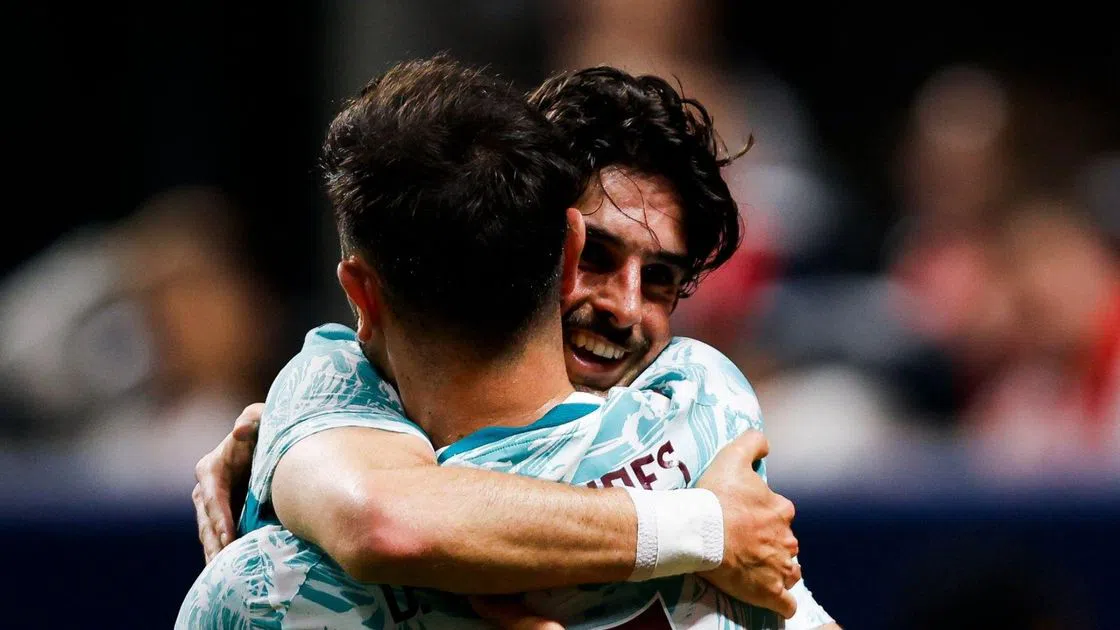
Francisco Trincao scored in the 37th minute, Joao Felix added a goal in the 59th and Portugal beat the United States 2-0 in a friendly on Tuesday night to deal the Americans their eighth consecutive defeat against European opponents.
U.S. star Christian Pulisic was moved from a wing to the top of the attack but failed to convert a pair of good scoring chances.
Pulisic, who played only the first half, is scoreless in eight national team games dating to November 2024 and in 12 games with AC Milan since Dec. 28.
Preparing to co-host the World Cup, the U.S. has been outscored 22-6 during its losing streak against Europe and is winless against the continent in 10 matches since 2021.
U.S. coach Mauricio Pochettino announces his World Cup roster on May 26, and the Americans play their last warmups against Senegal five days later and Germany on June 6. The Americans open the World Cup on June 12 against Australia, face Paraguay a week later and close the first round vs. Turkey on June 25.
Before a pro-US crowd of 72,297 at Mercedes-Benz Stadium, Portugal went ahead after American midfielder Weston McKennie knocked a hard-to-control pass from Alex Freeman to Vitinha, who played a through ball to Bruno Fernandes. As defenders Chris Richards and Auston Trusty converged on the midfielder, he dropped a backheel pass to Trincao, who took a touch and slotted it past Matt Freese and inside the far post for his third international goal.
Felix scored his 12th international goal following Fernandes’ corner kick. Left unmarked just outside the penalty area, Felix sent a half-volley in on two bounces off the far post.
Freese was back in goal after his streak of 12 straight starts ended when former No. 1 goalkeeper Matt Turner played in Saturday’s 5-2 loss to Belgium.
Preparing for a World Cup group with Congo, Uzbekistan and Colombia. Portugal was missing captain Cristiano Ronaldo (hamstring).

Polymarket Pulls Missing US Pilot Market, Faces Questions Over Rules

Tasked to work on 2036 Olympic bid, 2030 Commonwealth Games: Leander Paes | Other Sports News

Mercedes brings steer-by-wire to production cars, and it’s a big shift


-

 NewsBeat2 days ago
Steven Gerrard disagrees with Gary Neville over ‘shock’ Chelsea and Arsenal claim | Football
-

 Business1 day ago
No Jackpot Winner and $194 Million Prize Rolls Over
-
Entertainment5 days ago
Fans slam 'heartbreaking' Barbie Dream Fest convention debacle with 'cardboard cutout' experience
-

 Fashion15 hours ago
Weekend Open Thread: Spanx – Corporette.com
-

 Crypto World3 days ago
Gold Price Prediction: Worst Month in 17 Years fo Save Haven Rock
-

 Tech5 days ago
The Pixel 10a doesn’t have a camera bump, and it’s great
-
 Entertainment6 days ago
Lana Del Rey Celebrates Her Husband’s 51st Birthday In New Post
-
Crypto World4 days ago
Dems press CFTC, ethics board on prediction-market insider trades
-

 Tech5 days ago
Avatar Legends: The Fighting Game comes out in July and it looks pretty slick
-

 Sports4 days ago
Tallest college basketball player ever, standing at 7-foot-9, entering transfer portal
-

 Fashion6 days ago
Amazon Sundays: Soft Spring Layers
-

 Tech4 days ago
EE TV is using AI to help you find something to watch
-

 Business2 days ago
Login and Checkout Issues Spark Merchant Frustration
-

 Tech6 days ago
Elon Musk’s last co-founder reportedly leaves xAI
-

 Tech4 days ago
How to back up your iPhone & iPad to your Mac before something goes wrong
-

 Fashion5 days ago
The Best Spring Trends of 2026
-

 Politics5 days ago
Should Trump Be Scared Strait?
-

 Crypto World4 days ago
U.S. rule change may open trillions in 401(k) funds to crypto
-

 Tech5 days ago
Apple will hide your email address from apps and websites, but not cops
-

 Tech4 days ago
Flipsnack and the shift toward motion-first business content with living visuals
You must be logged in to post a comment Login