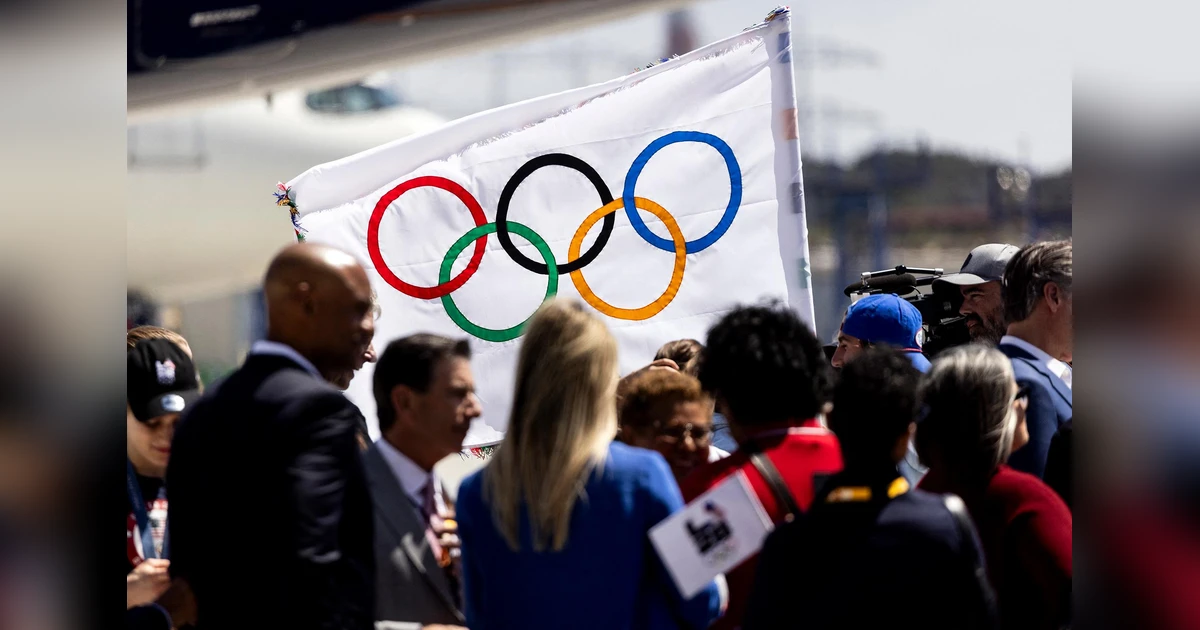
Transgender women athletes are now excluded from women’s events at the Olympics after the IOC agreed to a new eligibility policy on Thursday which aligns with US President Donald Trump’s executive order on sports ahead of the 2028 Los Angeles Games.
“Eligibility for any female category event at the Olympic Games or any other IOC event, including individual and team sports, is now limited to biological females,” the International Olympic Committee said, to be determined by a mandatory gene test once in an athlete’s career.
It is unclear how many, if any, transgender women are competing at an Olympic level. No woman who transitioned from being born male competed at the 2024 Paris Summer Games, though weightlifter Laurel Hubbard did at the Tokyo Olympics in 2021 without winning a medal.
Advertisement
The eligibility policy that will apply from the LA Olympics in July 2028 “protects fairness, safety and integrity in the female category,” the IOC said.
“It is not retroactive and does not apply to any grassroots or recreational sports programs,” said the IOC, whose Olympic Charter states that access to play sport is a human right.
After an executive board meeting, the International Olympic Committee published a 10-page policy document which also restricts female athletes such as two-time Olympic champion runner Caster Semenya with medical conditions known as differences in sex development, or DSD.
The IOC and its president, Kirsty Coventry, have wanted a clear policy instead of continuing to advise sports’ governing bodies who previously have drafted their own rules.
Advertisement
“At the Olympic Games, even the smallest margins can be the difference between victory and defeat,” Coventry, a two-time Olympic gold medalist in swimming, said in a statement. “So, it is absolutely clear that it would not be fair for biological males to compete in the female category.” She set up a review of “protecting the female category” as one of her first big decisions last June as the first woman to lead the Olympic body in its 132-year history.
Female eligibility was a strong theme in a seven-candidate IOC election last year – held after a furor around women’s boxing in Paris – when Coventry’s main rivals pledged a stronger policy to leading on the issue.
Before the 2024 Paris Olympics, three top-tier sports – track and field, swimming and cycling – excluded transgender women who had been through male puberty. Semenya, who was assigned female at birth in South Africa and has high natural testosterone levels, won a European Court of Human Rights judgment in her years-long legal challenge to track and field’s rules which did not overturn them.
The IOC document details its research that being born male gives physical advantages that a working group of experts believes are retained.
Advertisement
“Males experience three significant testosterone peaks: In utero, in mini-puberty of infancy and beginning in adolescent puberty through adulthood,” the document said.
It added this gives males “individual sex-based performance advantages in sports and events that rely on strength, power and/or endurance.” The IOC said its expert group agreed the current gene test is “the most accurate and least intrusive method currently available.” It screened for “the SRY gene, a segment of DNA typically found on the Y chromosome that initiates male sex development in utero and indicates the presence of testes/testicles.” Still, the mandatory gender screening – already conducted by the governing bodies of track and field, skiing and boxing – is likely to be criticized by human rights experts and activist groups.
One of the two women’s boxing gold medalists at the center of the gender controversy in Paris, Lin Yu-ting of Taiwan, has passed her gene test and can return to competition, the World Boxing governing body said last week.
In the U.S., President Trump signed the executive order “Keeping Men Out of Women’s Sports” in February last year, and pledged to deny visas to some athletes attempting to compete at the L.A Olympics. The order also threatened to “rescind all funds” from organizations that allowed transgender athletes to take part in women’s sports.
Advertisement
Within months the US Olympic body updated its guidance to national sports bodies citing an obligation to comply with the White House.
Gujarat Titans captain Shubman Gill did not hold back while giving his opinion on the Impact Player rule in IPL. The GT skipper said that he does not like the rule because in his view, the Impact Player takes the skill out of the game and makes it a more batter-friendly sport.
At the pre-season press conference of Gujarat Titans in Ahmedabad, Shubman Gill was asked about his thoughts on the Impact Player rule. Ahead of IPL 2026, reports surfaced claiming that a few captains were not happy with the existing Impact Player rule.
It seems like Gill was one of those few names because here’s what he had to say about the Impact Player rule:
“Personally for me, I don’t think there should be Impact Player. I think cricket in general is an 11-player game, and on wickets where we play, on the grounds that we play, adding an extra batsman is, I think, it takes the skill out of the game.”
Advertisement
Gill further commented that chasing 160 or 180 without an Impact Player on tricky pitches leads to more exciting matches than the ones where 220-240 are chased down easily on flat decks with an Impact Player. He thought the Impact Player rule made the game more one-dimensional.
“So I mean it’s going to be there till 2027, it’s something that we also spoke about in the captains’ meeting yesterday,” Gill added.
Impact Player rule was introduced in the year 2023. Since then, the run rate in IPL matches has increased significantly, with teams chasing down 200+ targets successfully without breaking much sweat.
“I don’t like it that much”- Shubman Gill gives his honest take on the Impact Player rule
At the same press conference, Shubman Gill said that although the Impact Player rule makes the game more entertaining for the spectators, he does not it like it much.
Advertisement
“I understand it makes the game bit more entertaining but let’s see, it’s there, it’s up to them what the BCCI is going to take their decision but personally I don’t like it that much,” Shubman Gill concluded.
The Impact Player rule is here to stay in IPL 2026. It will be interesting to see how captain Gill uses the Impact Player while leading the Gujarat Titans in IPL matches this year.
Adelaide Oval will play host to Sunday’s
Round 3 AFL game between Port Adelaide Power and
West Coast Eagles. The game kicks off at 12:30 pm with Port Adelaide Power heading into the game as favourites with the bookmakers. Continue reading for our in-depth preview of the Port Adelaide Power vs.
West Coast Eagles
game and give you our free tips and bets.
West Coast and Port Adelaide meet in a contest featuring two sides looking to exceed expectations. The Eagles showed promising signs in their win over North Melbourne, with emerging talents leading the way and improved midfield performance proving decisive. Port Adelaide also impressed in a dominant victory over Essendon, though the loss of Connor Rozee presents a challenge. The midfield battle shapes as crucial, with West Coast’s ability to generate forward entries a key strength. While still early in their development, the Eagles’ recent performance offered optimism, setting up a competitive encounter against an experienced Port lineup.
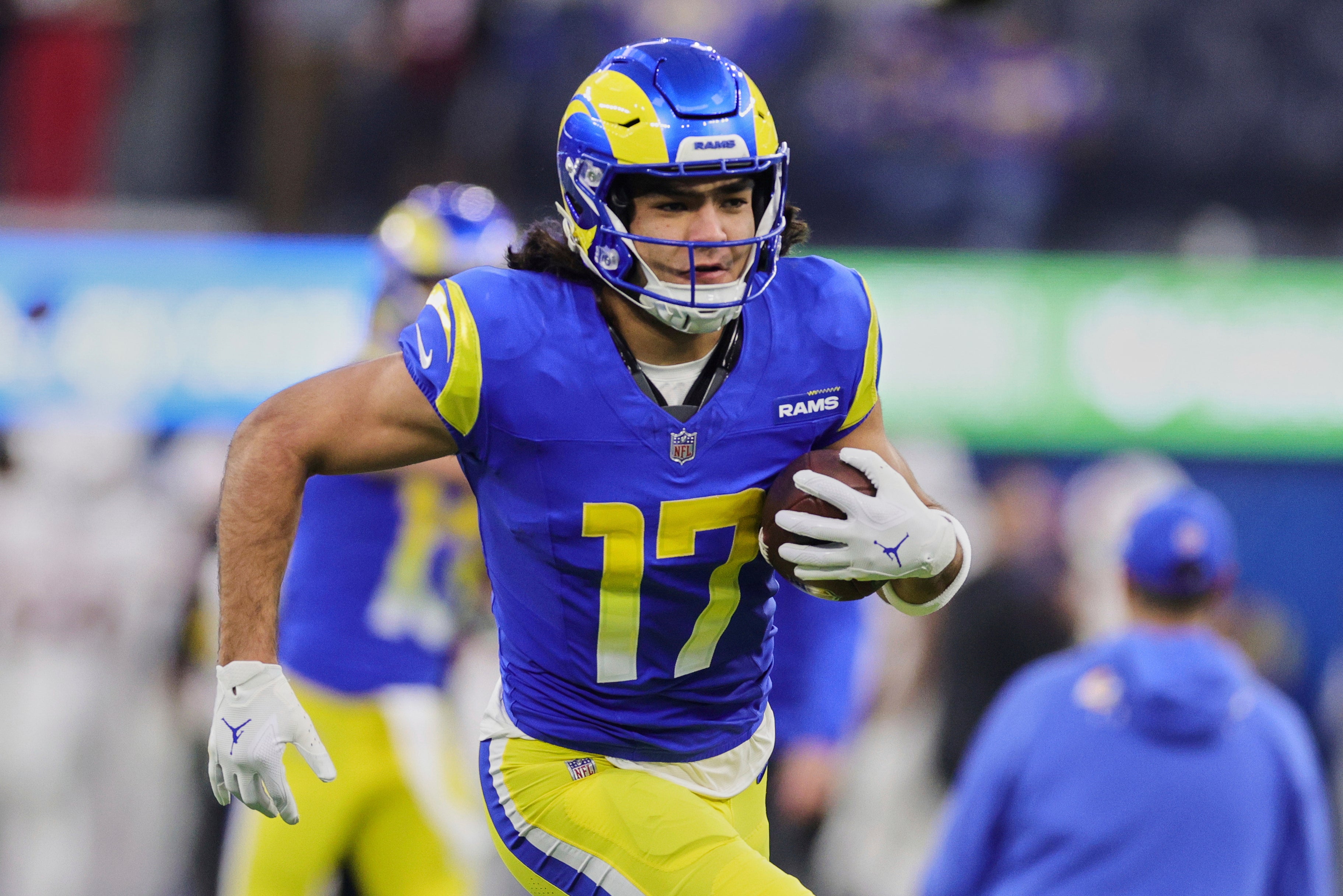
Los Angeles Rams receiver Puka Nacua has been sued for assault and battery by a woman who claims he made an antisemitic remark and bit her on the shoulder on New Year’s Eve.
According to TMZ, the civil lawsuit was filed this week in Los Angeles. The suit also cites gender violence and negligence.
Plaintiff Madison Atiabi and her attorney, Joseph Kar, claim Nacua made an antisemitic comment that emotionally distressed her when they were together in Century City.
She claims Nacua bit her and left teeth marks on her shoulder when they were in a van together later in the night, and she says Nacua also bit her friend’s thumb.
Nacua’s attorney, Levi McCathern, has already strongly denied Nacua made any antisemitic statements. He described the bites as “horseplay.”
Advertisement
Nacua is accused of biting a woman on her shoulder (AP)
Nacua had previously issued an apology last December after performing a gesture that plays upon antisemitic tropes while appearing on an internet livestream.
In his apology on Instagram, Nacua wrote: “I had no idea this act was antisemitic in nature and perpetuated harmful stereotypes against Jewish people,” he stated.
“I deeply apologize to anyone who was offended by my actions as I do not stand for any form of racism, bigotry or hate of another group of people.”
Nacua has been one of the most productive receivers in NFL history over his first three seasons with the Rams, who drafted him out of BYU in 2023 with the final pick of the fifth round.
He led the league with 129 catches last season while racking up 1,715 yards and 10 touchdowns before leading the NFL again with 24 catches for 332 yards and two TDs in the playoffs.
Advertisement
Nacua is eligible to sign a contract extension with the Rams this offseason that undoubtedly would make him one of the highest-paid receivers in NFL history, but the Rams haven’t announced any progress on a new deal.
Trimming down a big-league roster to 26 players is no simple task, particularly when dealing with a squad that advanced to the World Series the year before.
Such was the dilemma Toronto Blue Jays general manager Ross Atkins ran into when cutting down the team’s roster for Opening Day (Sportsnet, Sportsnet+, Friday, 7 p.m. ET / 4 p.m. PT), forcing him to make tough decisions such as cutting infielder Leo Jimenez and pitcher Angel Bastardo.
The decision to cut Jimenez was a particularly tough one, as, according to Atkins, it came down to a battle between Jimenez and fan favourite Davis Schneider.
“The decision to DFA Leo is a very difficult one because he’s a very good player that provided another layer for us. Not just depth, he can make an impact on a major-league team. So that’s a very difficult one for us,” Atkins said on Thursday at the Blue Jays’ media day availabilities before Opening Day.
Advertisement
“But Davis has proven that he belongs here and was integral to last year’s success. Felt like he was too important to not have in an everyday lineup at this point, or just a part of every day’s game, at this point.”
MLB on Sportsnet
Watch the Toronto Blue Jays, Blue Jays Central pre-game, marquee MLB matchups, Jays in 30, original documentaries, the wild card, divisional series, championship series and entire World Series on Sportsnet and Sportsnet+.
Jimenez, who the Blue Jays signed as a free agent back in 2017, was designated for assignment when the team released its official opening-day roster on Wednesday.
In sporadic appearances across two major-league seasons, the Panamanian middle infielder batted .207 with a .635 OPS and five home runs in 81 games.
While he continued to play solid defence for the Blue Jays at spring training, the 25-year-old batted .231 with a .541 OPS in 14 games.
Advertisement
Schneider, meanwhile, has a .217 batting average and a .736 OPS with 32 home runs over three seasons with the Blue Jays — enough for Atkins to feel he had “earned this right.”
Also factoring into the choice to keep Schneider was the team’s organizational depth in the minors in the infield, with Atkins feeling as though the team was covered enough across the positions to prioritize the outfield depth Schneider can provide.
“Fortunately, we do have some players in triple-A. Kasevich performed very well in spring training; we do have some confidence in him,” Atkins said. “We will be active in trying to acquire depth in that area as well. We also have versatility in our current roster. We feel that we’re covered, but we’re never gonna stop working and trying to have a little bit more depth there.”
Atkins also touched on the choice to roll with righty Spencer Miles — a recent Rule 5 Draft pick — calling the decision “pretty straightforward.”
Advertisement
“He earned it. We’re gonna give him some runway and see how he does,” Atkins said of the 25-year-old. “Excited about the stuff, the power, the ability to spin the ball, the ability to attack both sides of the plate. … Looking forward to seeing how that goes.”
The Blue Jays selected the reliever from the San Francisco Giants in December’s Rule 5 Draft, and he had been competing with fellow righty Chase Lee for the final bullpen spot throughout spring training. Lee was optioned to triple-A on Wednesday.
The 25-year-old Miles was sidelined in 2025 as he recovered from Tommy John surgery.
He spent the 2024 season in the Arizona Complex League, pitching to a 4.91 ERA with 10 strikeouts in 7.2 innings.
Advertisement
Through 9.2 spring-training innings with the Blue Jays, Miles has a 3.72 ERA with 11 strikeouts and five walks.
The Blue Jays kick off their season on Friday with a showdown against the Athletics.
Chicago Bears tight end Colston Loveland (84) turns upfield after securing a catch, gaining yards as Minnesota cornerback Fabian Moreau (23) closes in during first-quarter action on Nov. 16, 2025, at U.S. Bank Stadium in Minneapolis as Chicago worked through an early offensive drive. Mandatory Credit: Jeffrey Becker-Imagn Images.
One little secret about 2025 Minnesota Vikings football? Veteran cornerback Fabian Moreau held up quite nicely when Jeff Okudah sustained two concussions (and generally stunk) in the CB3 role. Now, according to Pro Football Network, Moreau might be a fit for the Dallas Cowboys in 2026.
Minnesota has a few cornerback questions left to solve, and last year’s solution could head to Dallas.
Moreau is not an overly hot NFL commodity, but when the dust settles on roster-building after the draft, PFN’s Alex Kennedy claimed the Cowboys could come calling.
Advertisement
The Cowboys Could Peek at FA CB Fabian Moreau
Moreau has a few seasons left in the tank.
Minnesota Vikings cornerback Fabian Moreau (23) lines up in coverage against the Los Angeles Rams, with the moment unfolding on Jan 13, 2025 at State Farm Stadium in Glendale during an NFC wild card matchup, as he tracks routes and reacts to passing concepts in a high-stakes playoff environment overall performance. Mandatory Credit: Mark J. Rebilas-Imagn Images.
PFN: DAL Makes Sense for Moreau
Somehow, Moreau made Kennedy’s list of the NFL’s best remaining free agents. Moreau doesn’t typically earn that kind of respect in 2026.
Kennedy explained nevertheless, “Projected Contract: 2 years, $9.4 million AAV. In his last two years as a Viking, Fabian Moreau hasn’t started a game, serving in a heavily rotational role for Minnesota’s secondary. That said, he’s provided quality depth as an outside cornerback for their defense, allowing a passer rating of just 57.6 in 2025.”
Advertisement
“Moreau’s ball production doesn’t jump off the page because of his smaller sample size compared to other cornerbacks on this list. But he’s been quite efficient on the field, adding a No. 33-ranked 79.5 CBi score in 2025. He’s a high-level depth piece who could slide into a stopgap starting role if need be. Potential Landing Spots: Vikings, Cowboys.”
To date, there have been no serious rumors or steam about Moreau returning to Minnesota after spending the 2024 and 2025 campaigns on Kevin O’Connell’s team.
The Cowboys’ CBs in Late March
Dallas added Cobie Durant as its free-agency splash this month at cornerback, but may still need oomph, including exploring another player at the position in the draft. Here’s the full CB group right now on Jerry Jones’s team:
Advertisement
Daron Bland
Cobie Durant
Shavon Revel Jr.
Caelen Carson
Trikweze Bridges
Reddy Steward
Josh Butler
Derion Kendrick
Corey Ballentine
Zion Childress
The Cowboys notably cut ties with Trevon Diggs last year, who remains a free agent, and he held down the CB room for years.
Moreau in 2025
Entering the 2025 season, Minnesota’s cornerback depth was a concern. Isaiah Rodgers, Byron Murphy Jr., and Jeff Okudah headlined the position, while Dwight McGlothern and rookie Zemaiah Vaughn were on the practice squad, their potential still largely unknown.
Moreau was also on the roster at the start of the season. When Okudah suffered a concussion, the Vikings elevated Moreau from the practice squad rather than McGlothern.
Arizona Cardinals wide receiver Marvin Harrison Jr. (18) secures a touchdown catch over Minnesota Vikings cornerback Fabian Moreau (23), with the play occurring on Dec 1, 2024 at U.S. Bank Stadium in Minneapolis during third-quarter action, as Moreau contests the pass and attempts to disrupt the scoring grab in tight coverage near the end zone. Mandatory Credit: Jeffrey Becker-Imagn Images.
Moreau then performed exceptionally well, earning a 70.9 PFF grade and allowing a mere 47.4 passer rating on 19 targets. In essence, he provided solid, dependable play at a position that appeared problematic in August. Although his playing time was limited, he consistently performed well when given the opportunity.
That performance could be valuable heading into 2026. While Moreau is 31, he remains capable of handling CB3 or CB4 duties, either in Minnesota or elsewhere.
Advertisement
Ultimately, Moreau provided the Vikings with exactly what they needed from a depth cornerback: calm, reliable coverage that provided stability amidst injuries.
The Vikings’ Plan without Moreau
Moreau could still rejoin the Vikings sometime this spring or summer, but for now, the club has given his CB3 roster spot to a new man, free-agent James Pierre from the Pittsburgh Steelers. At 6’2″ and 190 pounds, Pierre is the tallest veteran cornerback expected to get playtime for the Vikings in 2026, which is a big change from the team’s smaller cornerback lineups of the past few years.
Atlanta Falcons cornerback Fabian Moreau (22) secures a football during pregame warmups ahead of a matchup with the Miami Dolphins, with the scene taking place on Oct 24, 2021 at Hard Rock Stadium in Miami Gardens, as he prepares mentally and physically while going through routine drills before kickoff each day. Mandatory Credit: Sam Navarro-USA TODAY Sports.
Besides his size, Pierre’s got some connections, too. He’s Lamar Jackson’s cousin, and Brian Flores adjacently coached him back in 2022 when Flores was the linebackers coach in Pittsburgh. Having spent most of his career with the Steelers, Pierre brings a solid foundation of trust and familiarity.
The Vikings, too, may draft a corner early in the draft; players like Avieon Terrell (Clemson) and Jermod McCoy (Tennessee) are no strangers to the purple mock-draft process.
The Cowboys’ defense ranked 32nd in the NFL last year per EPA/Play. Dead last. Most mock drafts currently connect Dallas to LSU cornerback Mansoor Delane, the aforementioned McCoy, safety Dillon Thieneman of Oregon, and CJ Allen, a linebacker from Georgia. The Cowboys have two 1st-Rounders from the Micah Parsons trade.
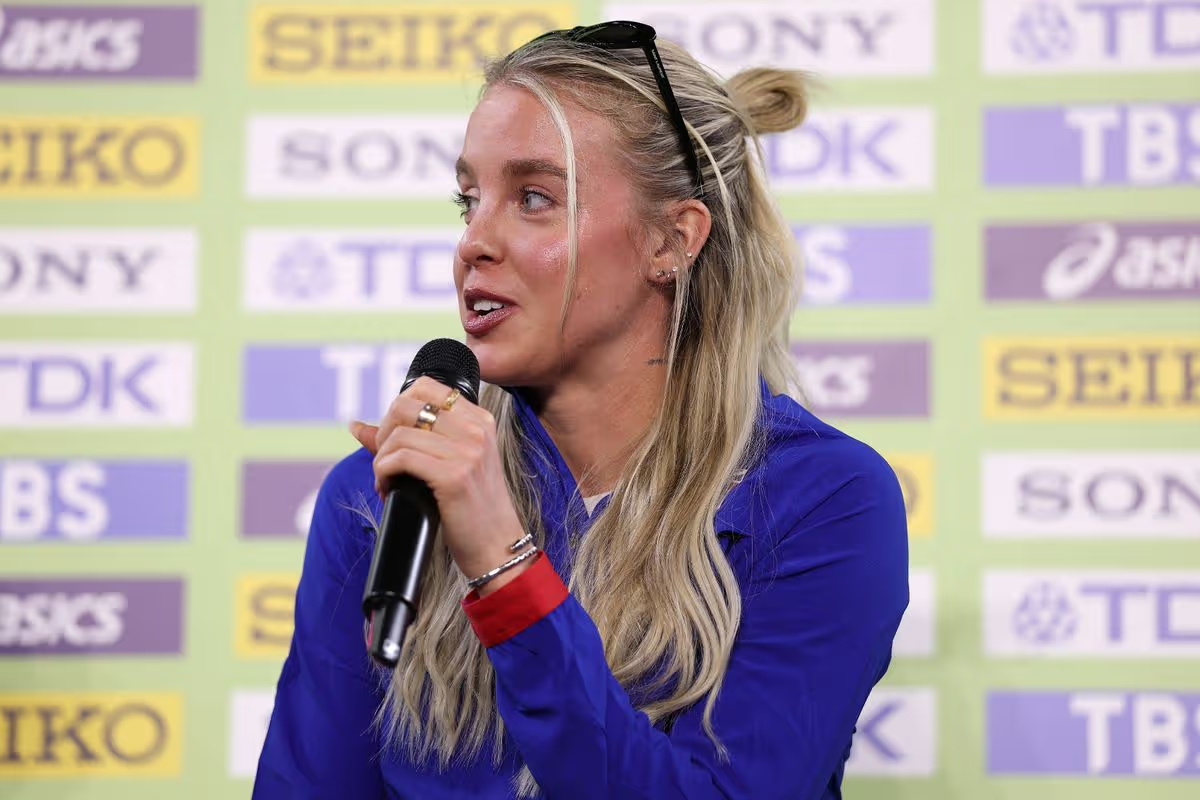
Reigning world indoor 800m champion Keely Hodgkinson is among Manchester United’s high-profile fans in other sports
Olympic champion and Manchester United supporter Keely Hodgkinson has taken a pop at West Ham United over a stadium dispute. The Hammers play at the London Stadium, site of the athletics portion of the 2012 Olympics, with their stewardship reportedly standing in the way of the UK’s hopes of hosting the World Championships.
The worlds could return to Europe in 2029 after back-to-back championships in Asia. Tokyo hosted the 2025 edition, while it will go to Beijing next year.
Advertisement
However, this could be scuppered by the Hammers’ reluctance to allow their stadium to be used for athletics during the football season. The World Championships have been held in September in recent years, potentially clashing with the London club’s league and cup commitments.
Hodgkinson, who recently won 800m gold at the World Indoor Championships in Poland, joked about the relative successes of Team GB and West Ham when commenting on the matter on social media. “The GB team will bring back more medals to that stadium than West Ham have seen in their entire history,” the 24-year-old wrote.
Hodgkinson’s response got a mixed reception, with one suggesting she was “going in Marco Boogers style” – a reference to a West Ham striker famously shown a red card against United. “As a West Ham fan I am deeply offended by the truth in your comment,” joked another.
Advertisement
Not all of the comments were positive, though. “Show some respect to West Ham which is a fine institution with the decent folk who support them. Cheap laugh and not a good look,” one football fan wrote.
“Not sure what your point is? West Ham have every right to say no,” wrote another.
West Ham moved into the London Stadium in 2016, four years after the London Olympics. The stadium hosted the World Championships in 2017, with the competition held in early August and not clashing with the football season, though IAAF president Sebastian Coe played down suggestions the World Championships could be moved to earlier in the year in 2019.
Advertisement
“I can’t speculate about that. That would then be a council judgment. We have a pretty clear, stated position that we want our world championships to finish as the conclusion of a season,” he said, per The Guardian “Why did we do that? Well, the reason is that, for a lot of our fans, it was confusing.
“They didn’t quite know why somebody would come out of a world championships or an Olympic Games and then go: ‘OK, I know they won whatever it is, in the world championships, and then four days later they’re in the Diamond League final.’ And particularly when you have a very cluttered sporting calendar across winter and summer sports, we just felt we needed to do everything just to make our sport a little more understandable.”
England’s 2026 World Cup kits
This article contains affiliate links, we will receive a commission on any sales we generate from it. Learn more
England and Nike have launched the new home, away and goalkeeper kits to be worn at this summer’s FIFA World Cup. You can get free delivery on all orders with the code: ENGFREEDEL
Prem Rugby clubs will be required to meet a minimum salary cap spend of £5.4m under new plans to expand the league’s commercial profile and competitiveness.
The English top-flight is moving away from a traditional promotion and relegation model to an expansion league, with expressions of interest and a tender process opening next season as it works towards a goal of adding two new teams by 2030.
As part of that move, the existing 10 clubs in the Prem will have to meet a “salary floor” in a drive to ensure close competition across the division while ensuring financial sustainability.
The move comes with the Prem actively seeking investment into both existing sides and possible new franchises, and follows major moves by Red Bull at Newcastle and James Dyson at Bath in recent months.
The salary cap is currently set at £6.4m, with a number of credits and exclusions meaning clubs can spend up to £7.8m plus one excluded player salary. While a number of clubs in the league spend close to the cap, some others are understood to currently fall short of the £5.4m figure.
Advertisement
While the salary floor still needs regulatory approval, it has been approved in principle by clubs following a consultation process. It will be introduced next season, although clubs will not be punished for failing to meet it until the 2029/30 season.
Any new club into the Prem shall be permitted a transition year whereby it shall be permitted to spend 25 per cent on the condition that it can present a clear plan to spend at least the full in its second Prem season.
Simon Massie-Taylor, the Prem Rugby chief executive, cautioned that the league are not necessarily looking to increase the cap in the near future.
Bath will bid to defend their Prem Rugby title this season (Getty Images)
“Our vision is to be the best league in the world,” Massie-Taylor explained.
“We are on a journey to define exactly what that means, but it doesn’t mean we are going to spend beyond everyone else and create wage inflation around the world, paying so all the Galacticos turn up. There are other aspects in terms of how we can define ourselves as the best league in the world for fans and players. Once distributions from Prem Rugby get to a certain level, then that will allow us to increase that in a sustainable way.”
Advertisement
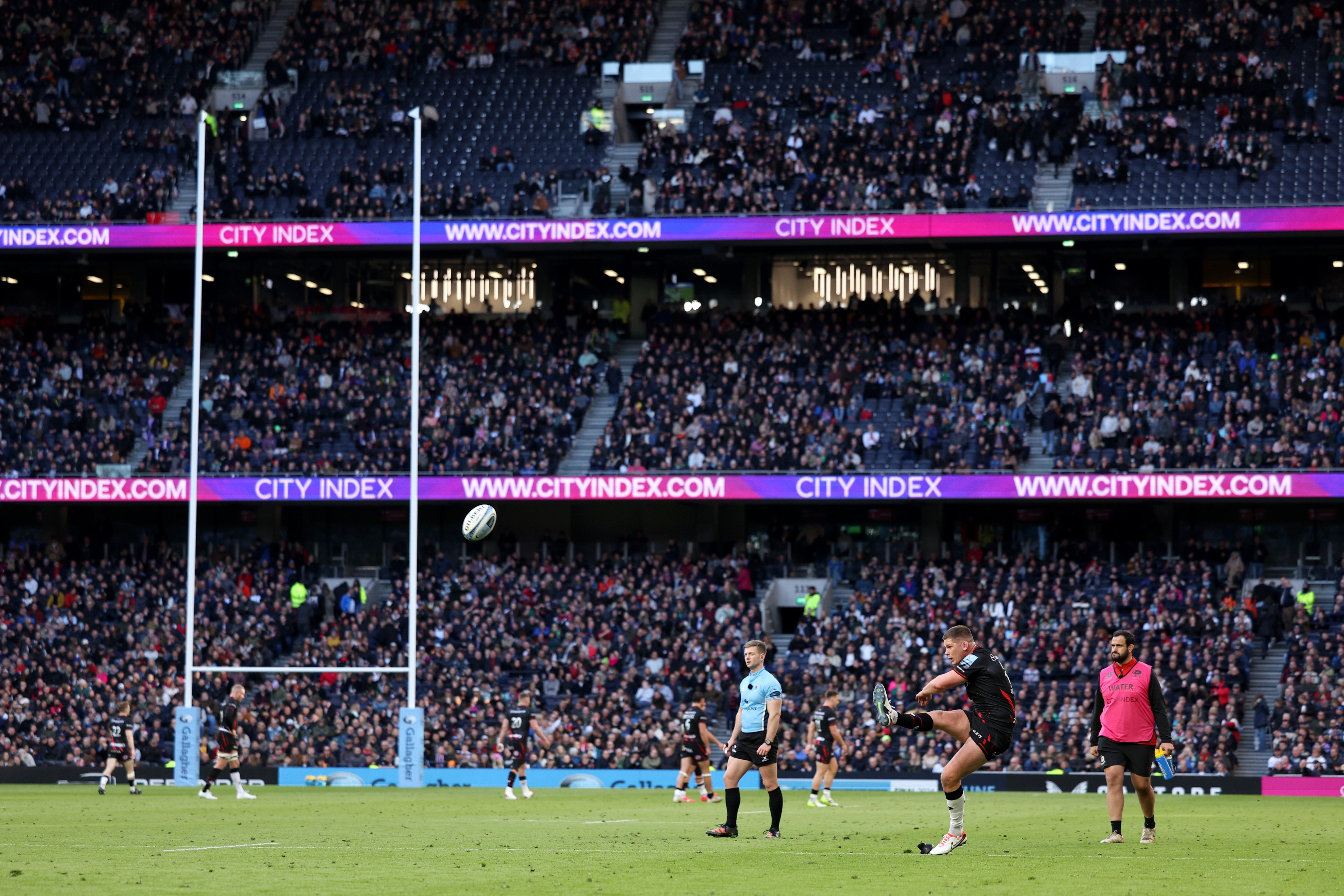
The Prem’s plans were unveiled ahead of their “Big Match Bonanza” this weekend, with games being held at the Principality Stadium, Villa Park and the Tottenham Hotspur Stadium on Saturday.
The hope is to hold up to 10 of these spread across the season in the future, with the possibility of taking the league’s semi-finals to larger, neutral venues by 2029.
Saracens will return to the Tottenham Hotspur Stadium this weekend (Getty Images)
“Big games are really important, as they make games bigger, and appeal to a wider fanbase.” Massie-Taylor added. “Our ambition is to have ten big games by 2030, and that includes the final and the potential for neutral playoffs.
“We see that adding to the narrative, and the general scale of the league. Big games are hard to do, so we as a league need to provide more support on that and to help market it to a wider audience. We need to manage the calendar of big games too.
“The reason you do it is because of scale. They are big games and you want to make them bigger. France do it. They’ve created a moment there and we want to explore it. It allows us to take the game on the road, and that’s what we’re seeing with Gloucester hosting a game in Birmingham this weekend, it’s a big undertaking but a big step in building a new market.
Advertisement
“England have a game against Fiji at the Hill Dickinson Stadium up in Liverpool, which is a great new 55,000 seater stadium, and in an area where there is clearly demand, as people are buying tickets to England-Fiji. Is that a good example of where we could host a playoff event? Maybe. There are lots of options. We’re intending to do this in 2029, deliberately because it takes time to secure venues, and find the right spot and build demand.”
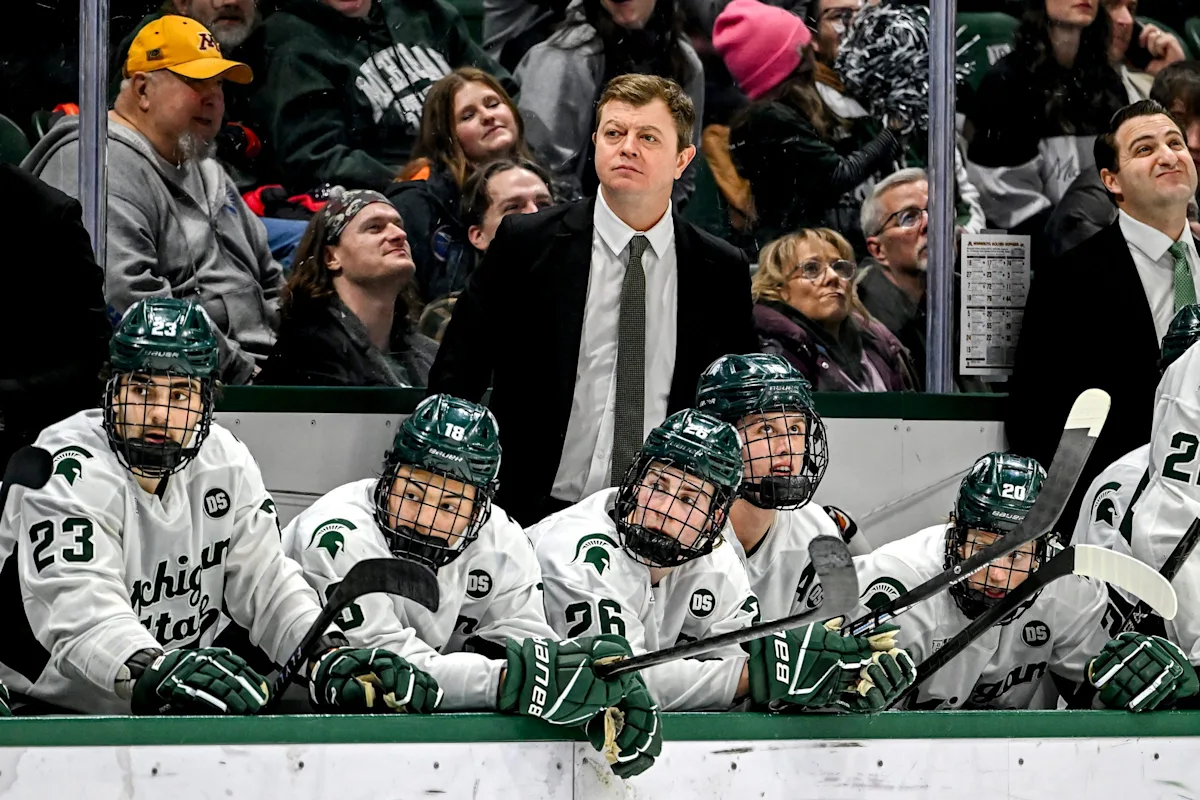
Michigan State has arrived to the NCAA Tournament in Worcester, Massachusetts as a No. 1 seed, looking to pave their way to the Frozen Four for the first time in the Adam Nightingale era in East Lansing. The road starts with the Spartans facing off with the No. 4 seeded UConn Huskies, the champions of the Hockey East Conference.
With the afternoon game opening the tournament, the Spartans will look to survive and advance. Follow along with updates between the Spartans and Huskies:
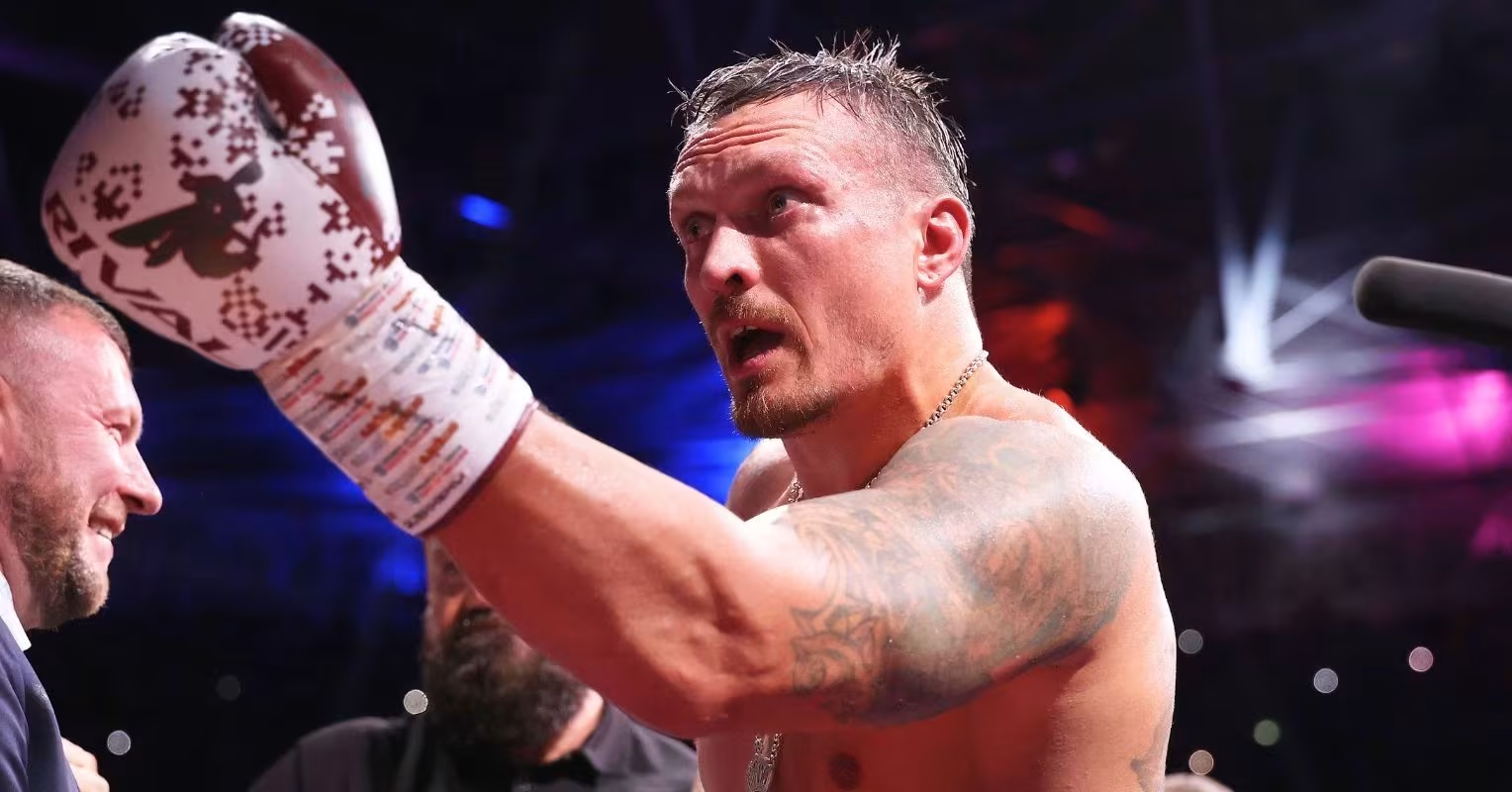
Oleksandr Usyk has stated that he has three fights remaining in the sport, with his final intended opponent being a familiar foe in Tyson Fury, who he defeated twice during 2024. Although, the unified heavyweight ruler has revealed another name whom his career could now culminate against.
Earlier this month, the undefeated Ukrainian unveiled a three-man hit list, beginning with his showdown at the Pyramids of Giza against Rico Verhoeven, then against the winner of Fabio Wardley vs Daniel Dubois and finally a trilogy contest with ‘The Gypsy King’.
In response, 39-year-old Usyk has told Daily Mail that he is open to a clash with Kabayel, with that fight potentially replacing Fury in his three-fight plan.
“I understand the Agit fans are saying you must fight him, you must fight him, but I don’t have to fight him.”
“Maybe I will fight Kabayel – maybe I don’t face Tyson Fury for a third time and I fight Kabayel instead.”
“I must live my life, I must look after my team, my children. As for fighting, I just work hard and my opponents work hard. Look, maybe it’s possible I fight Agit. All I can say is he’s a great fighter and he’s very smart.”
Advertisement
Before Usyk can look too far into the future, he must overcome Verhoeven and defend his WBC heavyweight crown on Saturday, May 23.
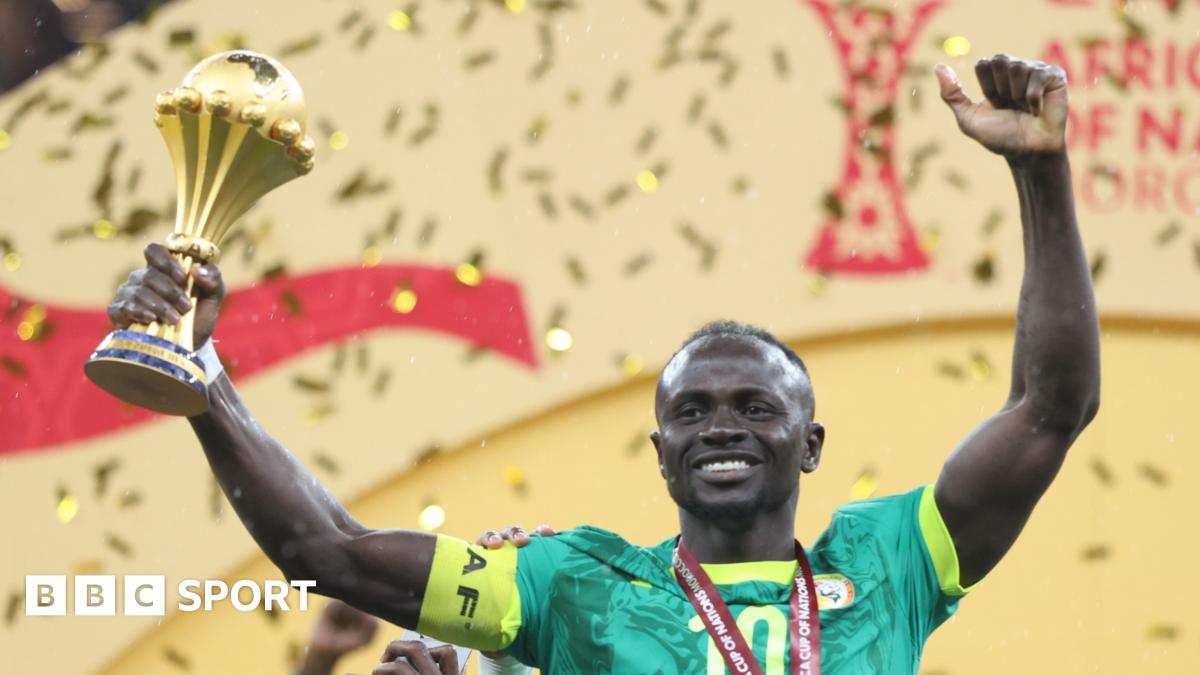
Following the controversial final in Rabat – in which Morocco and Real Madrid forward Brahim Diaz missed a Panenka penalty to win the match in the 114th minute – the Royal Moroccan Football Federation (FRMF) immediately lodged a complaint with Caf and Fifa, claiming that Senegal leaving the field of play “greatly affected the normal course of the match and the players’ morale”.
Caf’s disciplinary committee initially rejected that appeal, instead issuing sanctions against both sides, including a five-match ban for Senegal head coach Pape Thiaw, on 29 January.
The FRMF said those original penalties did not “reflect the seriousness of the incidents”, and Caf’s appeal board agreed, releasing a statement on 17 March which said Senegal had contravened articles 82 and 84 of competition regulations.
Article 82 states that if a team “leaves the ground before the regular end of the match without the authorisation of the referee”, they are eliminated.
Advertisement
Senegal’s government responded by calling for an investigation into “suspected corruption” at Caf, a claim rebuffed by the governing body’s president, Patrice Motsepe, who has been at pains to point out the appeal board’s independence.
“It is important that the decisions of our Caf disciplinary board and the Caf appeals board are viewed with respect and integrity,” he said.
The final decision on who claims the 2025 Afcon title now rests with Cas, sport’s highest judicial authority.
“To wage this moral and legal crusade, we have appointed a team of seasoned professionals with undeniable expertise,” Fall announced in Paris, flanked by members of the FSF legal team.
Advertisement
One of them, lawyer Seydou Diagne, called the decision to strip Senegal of their title “so blatant, so absurd, so irrational”.
“The decision of the appeals jury cannot even be considered a true decision of sporting justice,” he added.
“It is an unacceptable and intolerable attack on the fundamental rights of our national Football Federation.”
Fellow lawyer Juan Perez said: “A match that was over, whose result had been decided by the referee, now being re-refereed, administratively – that’s unprecedented. You haven’t seen anything like it. It could change the world of football.”
Advertisement
Caf recently updated the Afcon 2025 review on its website to list Morocco as winners, although that page now appears to have been taken down.
With Senegal refusing to relinquish the trophy, and with Saturday’s planned parade a sign of their contempt, the battle to be crowned African champions is far from over.



















































You must be logged in to post a comment Login