
Sports
Is cross-country running in a better place after Tallahassee 26?

How good was the 2026 World Cross Country Championships in Tallahassee, Florida? Opinion is divided.
Once the dust settled in the Apalachee Regional Park on Saturday (Jan 10), there were multiple talking points. One thing is certain, though. Cross-country running surely needs the Winter Olympics more than the Winter Olympics needs cross-country running.
The event in Tallahassee, Florida, did little in my view to take the sport forward. Aarhus in Denmark in 2019 offered hope with a tough and imaginative course in front of thousands of fans. But the World Cross has subsequently struggled to take advantage of that momentum.
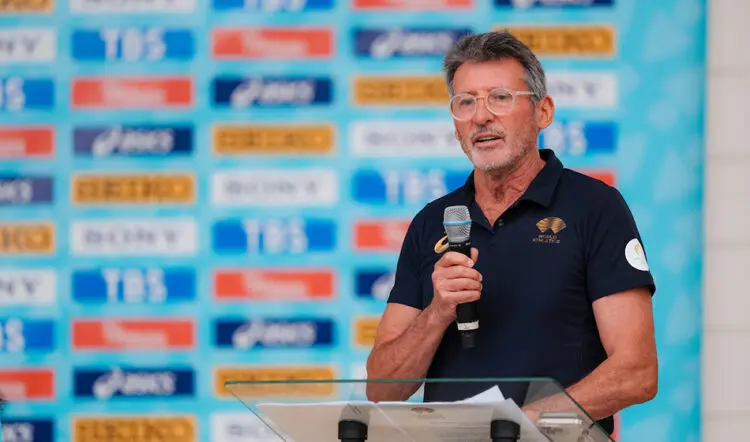
Seb Coe joked at the pre-event press conference on Friday that the World Cross was bigger than the Super Bowl. Wishful thinking perhaps. Right now it’s not even “the Super Bowl of athletics” – a position it used to hold in the 1970s and 1980s – although to be fair to Coe his tongue was firmly in his cheek.
Firstly, the new early January date doesn’t appear to have worked. Many European nations such as Germany, Italy, Norway and even recent hosts of the event like Denmark and Serbia continued their ‘quiet boycott’ their Tallahassee. Big-name individuals like Jakob Ingebrigtsen, Andreas Almgren and even Americans like Cole Hocker and Grant Fisher voted with their spikes and signed up to upcoming indoor races instead.
The following day we saw two European and a host of national records at the Valencia 10km with Almgren and Eilish McColgan standing out. It meant Valencia ended up almost out-shining the World Cross for sheer quality and entertainment value.
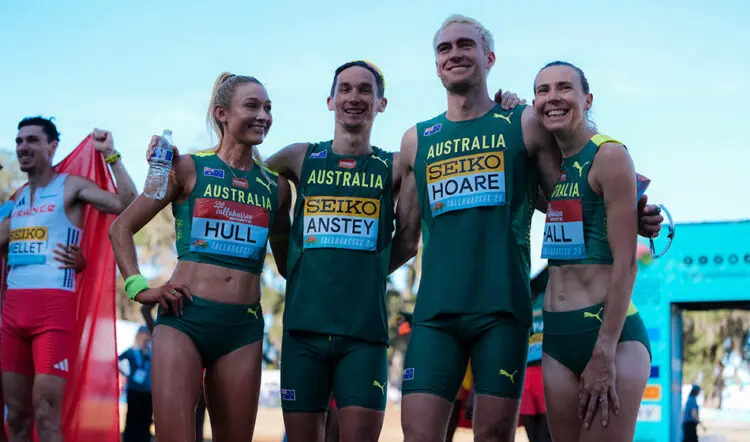
In Tallahassee it was the familiar story of east African domination as Jacob Kiplimo and Agnes Ngetich won the senior races, although there was Australian success in the mixed relay. A word of applause incidentally, to the Aussies, Britain, Canada, Japan, New Zealand and Spain – all of whom are World Cross stalwarts.
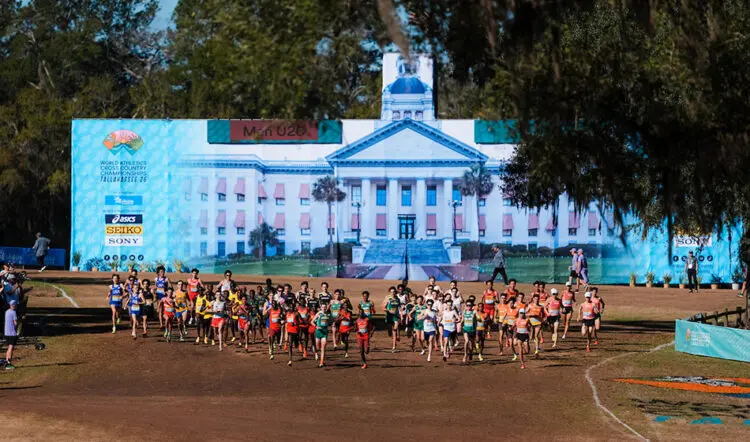
As for the course, it strikes me that the largely American audience in Tallahassee enjoyed it but European viewers from afar were, at best, non-plussed, or in some cases pretty critical.
For me, it looked like a picturesque and functional venue but was too flat to be a true challenge. The various obstacles thrown in were not particularly challenging or innovative either.
I’m sure the man-made hill in Belgrade two years ago was more or less the same as the ‘rollercoaster’ in Tallahassee. The short sections of sand and mud have been seen before and barely broke the stride of the athletes. Alligator alley was more interesting and of course appropriate given the Florida venue but, again, they hardly interrupted an athlete’s stride.
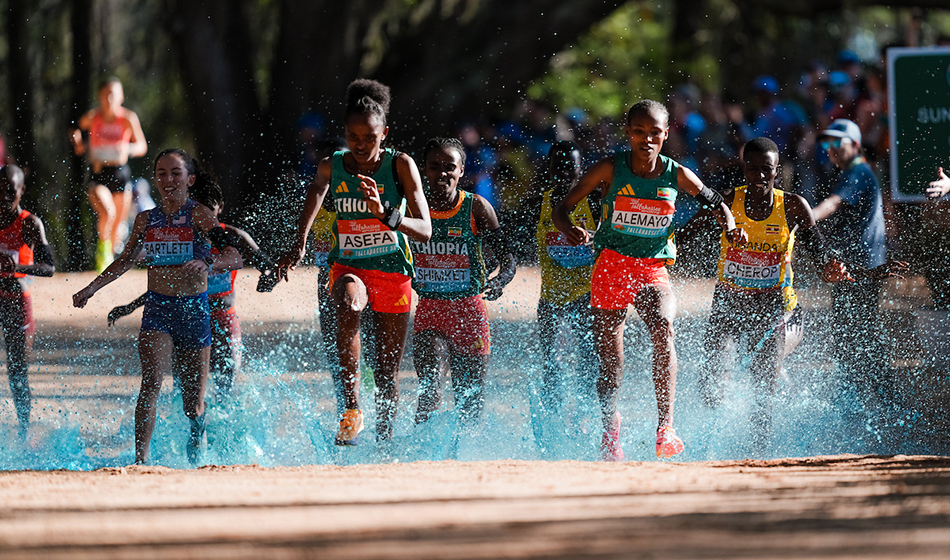
The water feature had potential but reports that it might be ‘waist deep’ didn’t turn out to be true. In the end it was barely ankle deep and only really succeeded in making the shoes of the competitors wet. Even Craig Virgin, the 1980 and 1981 world cross-country champion, described it as a ‘Disney’ course, although not in a particularly negative way.
Traditionalists made their irritation clear in the dozens of comments under AW’s posts on our social media. “Where was the mud and hills?” they cried. Certainly, it’s difficult to beat somewhere like Holyrood Park in Edinburgh or Parliament Hill in London for a ‘true cross country experience’.
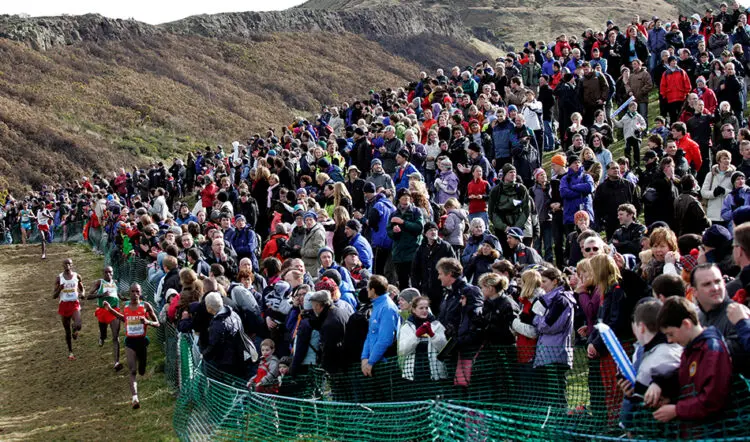
In fairness to the American hosts, their overwhelming reaction was one of excitement and the satisfaction that things had gone well. The team from letsrun.com described it as a brilliant “fun” championships that delivered in many areas. Letsrun are known for not mincing their words either and are not afraid to criticise if necessary.
Maybe the problem lay in the television and online coverage. Overhead shots using drones failed to capture the crowds (more than 10,000 apparently) and excitement, or even in some cases who was actually leading the race. It appeared from the footage that crowds had gathered mainly by features such as ‘alligator alley’ and the water splash, with other sections of the course sparsely populated by fans. But Americans who were there claim it was impressively busy with a fine atmosphere.

Given the fact the next World Cross is not due to be held until 2029, World Athletics has some time to work on improving its format. Is a resurrection possible? This area of the sport is certainly close to Coe’s heart and I’d have thought it would be one of his No.1 goals in the twilight years of his presidency.
So what can be done? The course and competitors are key.
Finding a rugged and challenging venue such as Aarhus 2019 should surely be a priority. Mud and hills are non-negotiable, otherwise the event resembles a glorified track race. If it can be staged in a major city, all the better.
Then there are the athletes. World Athletics must do something about so many European nations rudely skipping the event. Increased prize money would also go some way to enticing the world’s best.
Winter Olympics status wouldn’t hurt either.



