
Business
Expert Picks for Every Need

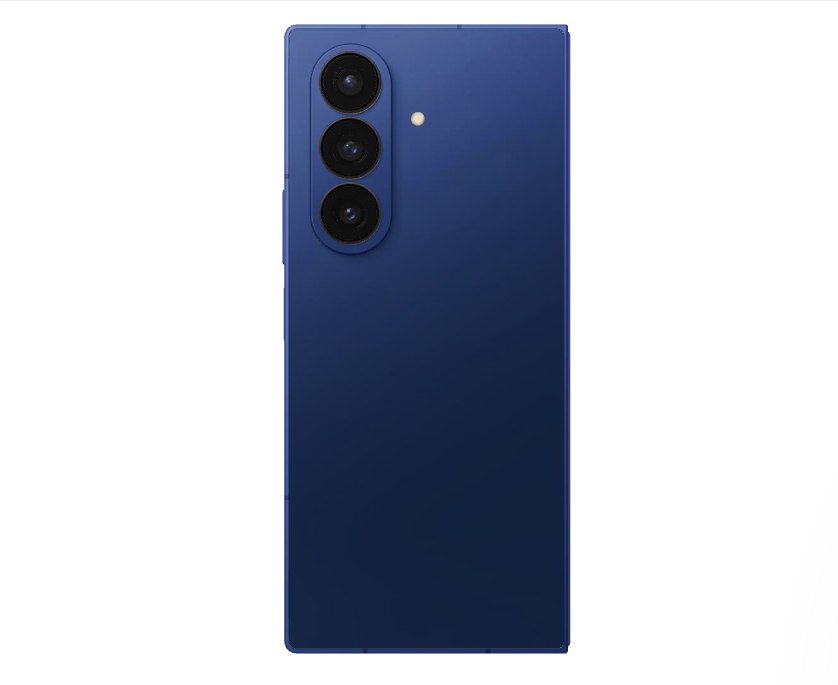
Foldable smartphones have matured dramatically by April 2026, shedding much of their early bulk and fragility to become practical daily drivers with improved durability, battery life and multitasking capabilities. Leading models from Samsung, Google, Motorola and others now compete closely with traditional flagships while offering the unique appeal of a compact device that unfolds into a mini-tablet or stylish flip form factor.
Industry analysts and reviewers from outlets including PCMag, PhoneArena, ZDNet and Wirecutter highlight a clear top tier based on hands-on testing, real-world performance and value. While availability varies by region — with some Chinese brands like Honor and Oppo offering exceptional hardware but limited U.S. support — the following five stand out as the best foldable phones currently on the market.

1. Samsung Galaxy Z Fold 7 — Best Overall Book-Style Foldable
Samsung’s Galaxy Z Fold 7 earns frequent nods as the top foldable for most users thanks to its ultra-slim profile, premium build and polished software experience. Measuring just over 8mm thick when closed and weighing around 215 grams, it feels remarkably close to a conventional flagship yet unfolds into an expansive 8-inch inner display ideal for productivity, media consumption and split-screen multitasking.
The device features a bright 6.5-inch cover screen with 120Hz refresh rate, allowing full app functionality without unfolding. Powered by the Snapdragon 8 Elite for Galaxy processor, it delivers smooth performance across demanding tasks. Cameras have seen meaningful upgrades, with a standout 200-megapixel main sensor producing sharp, vibrant photos that rival non-foldable competitors.
Reviewers praise the refined hinge, improved crease visibility and long software support extending years into the future. Drawbacks include a premium price tag often starting near $1,900 and average battery life that may require midday top-ups for heavy users. Still, its ecosystem integration with Galaxy Watch, Buds and DeX mode makes it a compelling choice for Samsung loyalists and power users alike.
2. Google Pixel 10 Pro Fold — Best for Durability and Cameras
Google’s Pixel 10 Pro Fold stands out for its rugged construction and photography prowess. It boasts a full IP68 dust and water resistance rating — a rarity among foldables — along with enhanced hinge durability and drop protection on the main display. At roughly 258 grams, it feels more substantial than Samsung’s offering but rewards owners with reliable all-day performance.
The Tensor G5 chipset powers intuitive AI features, including real-time call translation, audio magic eraser and Gemini Live integration. Cameras shine with computational photography that delivers natural colors and excellent low-light results, making it a favorite for content creators. The 6.3-inch cover screen and large inner display support seamless multitasking with clean Android 16 software.
Battery life impresses in testing, often outlasting slimmer rivals. Pricing starts around $1,800, positioning it as a strong value for those prioritizing longevity and photography over the absolute thinnest design. Limitations include slightly warmer performance under sustained loads compared to Snapdragon-equipped devices.
3. Motorola Razr Ultra (2025/60 Ultra) — Best Flip-Style Foldable
For users seeking pocketable convenience with flair, the Motorola Razr Ultra delivers one of the most stylish and functional clamshell experiences. Its vertical fold design snaps shut into a compact square, while the generous external display supports full apps, notifications and even quick camera previews.
Equipped with strong battery life that frequently tops competitor flip models, the Razr Ultra handles daily tasks efficiently on its Snapdragon processor. The inner 7-inch display offers smooth 120Hz visuals, and the overall build feels premium with thoughtful details like a titanium hinge option in select variants. Cameras perform adequately for casual use, though they trail book-style models in versatility.
Reviewers highlight its fun factor and practicality for one-handed operation. Starting prices often land in the mid-$1,000 range, making it more accessible than premium book-style foldables. Potential downsides include a smaller unfolded screen compared to tablet-style devices and occasional software quirks in the Motorola skin.
4. Samsung Galaxy Z Flip 7 — Best Compact Flip for Everyday Use
Samsung’s Galaxy Z Flip 7 refines the flip formula with a larger 4.1-inch edge-to-edge cover screen that finally enables meaningful interaction without unfolding. The 6.9-inch inner display provides ample space when needed, while the overall design remains slim and lightweight for easy pocket carry.
Battery improvements help it last through a full day for moderate users, and the Exynos 2500 or Snapdragon variant (depending on region) ensures snappy performance. New DeX support on the Flip adds desktop-like productivity when connected to external displays. Cameras remain solid for social media and quick shots, with the main 50-megapixel sensor delivering reliable results.
Priced starting around $1,100, it offers strong value within the Samsung ecosystem. Critics note it can overheat during intensive multitasking and that battery claims sometimes exceed real-world endurance. Its stylish appeal and improved cover screen functionality make it a top pick for fashion-conscious users or those transitioning from traditional bar phones.
5. Honor Magic V5 — Best Ultra-Thin Alternative for Multitasking
The Honor Magic V5 earns acclaim for its exceptionally slim design, measuring under 9mm folded and around 4.4mm unfolded in some configurations. It targets users who want a near-nonexistent crease and premium feel without Samsung’s ecosystem lock-in.
Featuring a large inner display and capable outer screen, it excels at multitasking with smooth software optimizations. The Snapdragon 8 Elite processor paired with generous RAM handles heavy workloads, while a sizable silicon-carbon battery supports fast charging and extended use. Cameras offer competitive performance, particularly in daylight scenarios.
Availability may require importing in some markets, and software updates could lag behind Google or Samsung. Still, its combination of thinness, battery capacity and vibrant displays positions it as a compelling choice for enthusiasts seeking cutting-edge hardware at potentially competitive pricing.
Buying Considerations in 2026
Foldable phones now address many early criticisms: creases are subtler, hinges more robust and repair programs more widespread. Most top models promise four to seven years of software support, reducing obsolescence concerns. Battery technology has advanced, though heavy multitasking or camera use still drains power faster than slab phones.
Prices remain elevated, with book-style models often exceeding $1,800 and flips starting above $1,000. Trade-in deals, carrier promotions and installment plans can ease the cost. Buyers should consider ecosystem preferences — Samsung for seamless integration, Google for pure Android and AI, Motorola for flip charm.
Durability has improved markedly, but users should invest in quality cases and screen protectors. Coverage for accidental damage varies by manufacturer and carrier.
Regional factors matter: U.S. buyers enjoy broad carrier support for Samsung, Google and Motorola models, while international shoppers may access superior specs from Honor, Oppo, Vivo or Huawei at lower prices, albeit with potential Google service limitations on some devices.
The Future of Foldables
As 2026 progresses, expectations include further refinements such as even lighter builds, under-display cameras that eliminate notches and possible trifold designs from Samsung and others reaching wider markets. Apple’s rumored foldable iPhone could reshape the segment later in the year or in 2027.
For now, the market offers something for nearly every preference: productivity powerhouses, stylish compacts and durable all-rounders. Early adopters who hesitated in previous years will find 2026 models far more refined and reliable.
Consumers weighing a purchase should evaluate their primary needs — screen size for work, portability for travel or camera quality for photography — and test devices in-store when possible. With rapid iteration, waiting for carrier deals or next-generation hints may also pay off.
Foldables represent more than a novelty in 2026; they deliver genuine utility that enhances how many people work, create and consume content on the go. Whether opting for the versatile Galaxy Z Fold 7, the rugged Pixel 10 Pro Fold or a fun flip like the Razr Ultra, buyers are investing in devices that continue to evolve the smartphone experience.



Oil prices rebound 7% as Strait of Hormuz is closed again
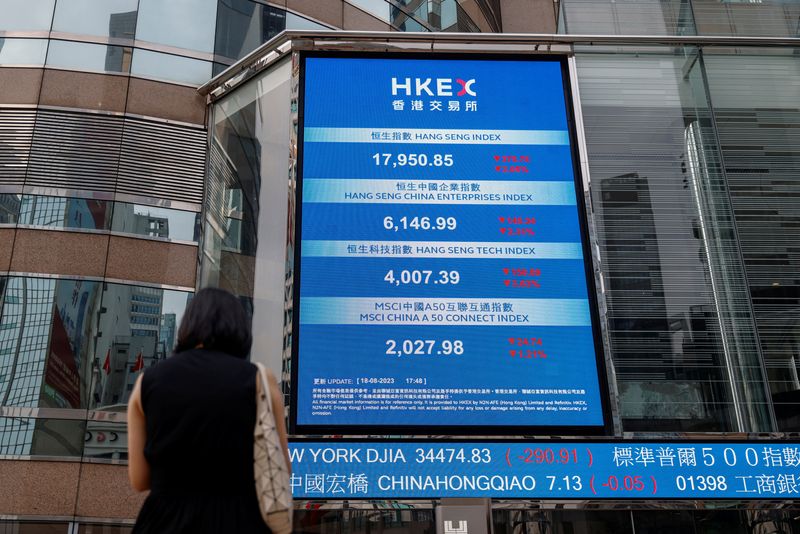

Oil jumps and stock futures slip as Iran tensions unsettle markets
President Donald Trump sits down with FOX Business’ Maria Bartiromo to discuss escalating Middle East tensions, his warning to Iran on nuclear weapons and why he believes gas prices will drop ahead of the midterms.
High gas prices continue to squeeze small businesses across the U.S., but cutting one costly habit could help owners save significantly.
New data from Ford Pro, the commercial vehicle division of Ford Motor Company, shows that unnecessary idling — leaving a car running while parked — can cost fleet operators thousands of dollars each year, cutting directly into margins at a time when fuel prices remain high.
According to the U.S. Department of Energy, the average fleet vehicle idles between one and two hours per day, burning up to two gallons of fuel daily per vehicle. With gas prices rising, those costs can add up quickly.
As of Sunday, the national average price for unleaded gas stood at $4.04, up from $3.88 just a month ago, according to AAA.
BESSENT WARNS GAS STATIONS THAT TREASURY DEPT WILL KEEP THEM ‘HONEST’ AFTER SPIKE IN PRICES
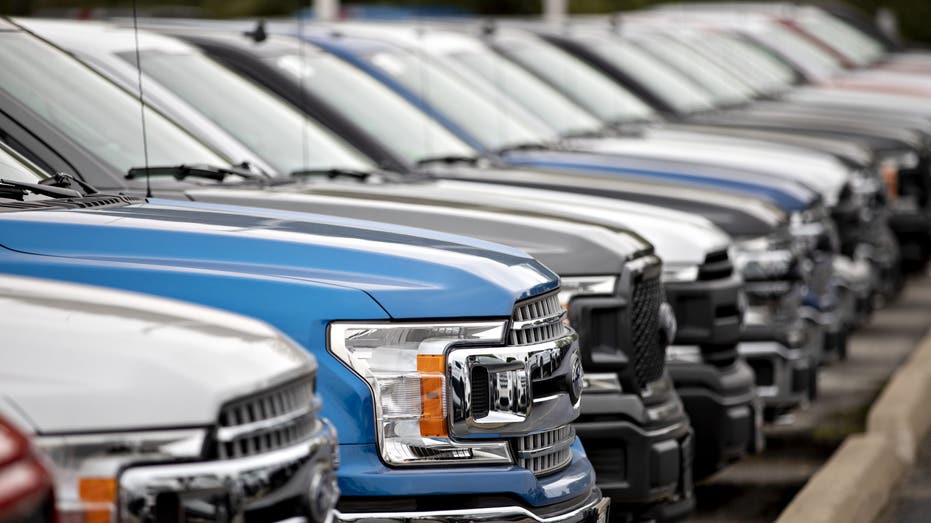
Ford Motor Co. F-150 pickup trucks are displayed at a car dealership in Orland Park, Illinois, on Sept. 27, 2019. (Daniel Acker/Bloomberg via Getty Images / Getty Images)
“You can burn up one to two gallons of gas just doing that,” Matt Krukin, who leads software and digital growth for Ford Pro, told FOX Business. “So if that happens per day… that’s $8 a day that’s idling.”
For businesses operating multiple vehicles, the impact can be substantial. A 20-vehicle fleet idling for two hours a day could waste more than $160 in fuel every day, according to Ford Pro.
Excessive idling is particularly common in North America, where about 29% of fleet vehicles idle unnecessarily, compared to just 10% in Europe, Krukin noted.
To help address the issue, Ford Pro is investing in software and data-driven tools.
FORD SEEKS TRUMP ALUMINUM TARIFF RELIEF AFTER FIRES AT MAJOR US FACTORY, REPORT SAYS
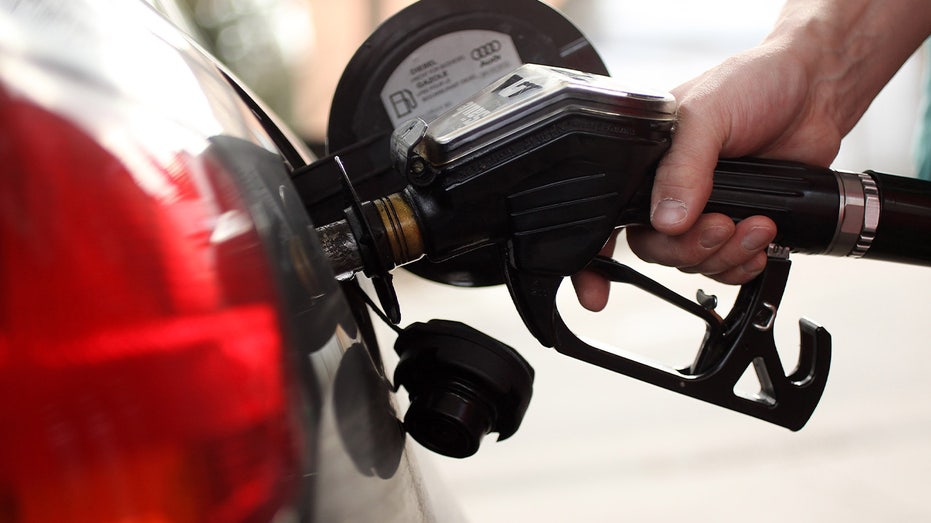
A person pumps gas into a car. (Sean Gallup/Getty Images / Getty Images)
Its newly launched artificial intelligence (AI) assistant allows fleet managers to monitor vehicle behavior in real time, identify inefficiencies and coach drivers to adopt more fuel-efficient habits.
Ford Pro says customers using these tools have seen measurable improvements, including a 52% reduction in idling.
While reducing idling is one of the simplest ways to cut costs, other driving behaviors — such as aggressive acceleration, rapid braking, and speeding — can also increase fuel consumption and wear on vehicles, according to Krukin.
The system can even limit acceleration, while in-cab alerts provide real-time feedback.
FORD BUILDS ONE-OF-A-KIND EXPLORER FOR POPE LEO XIV

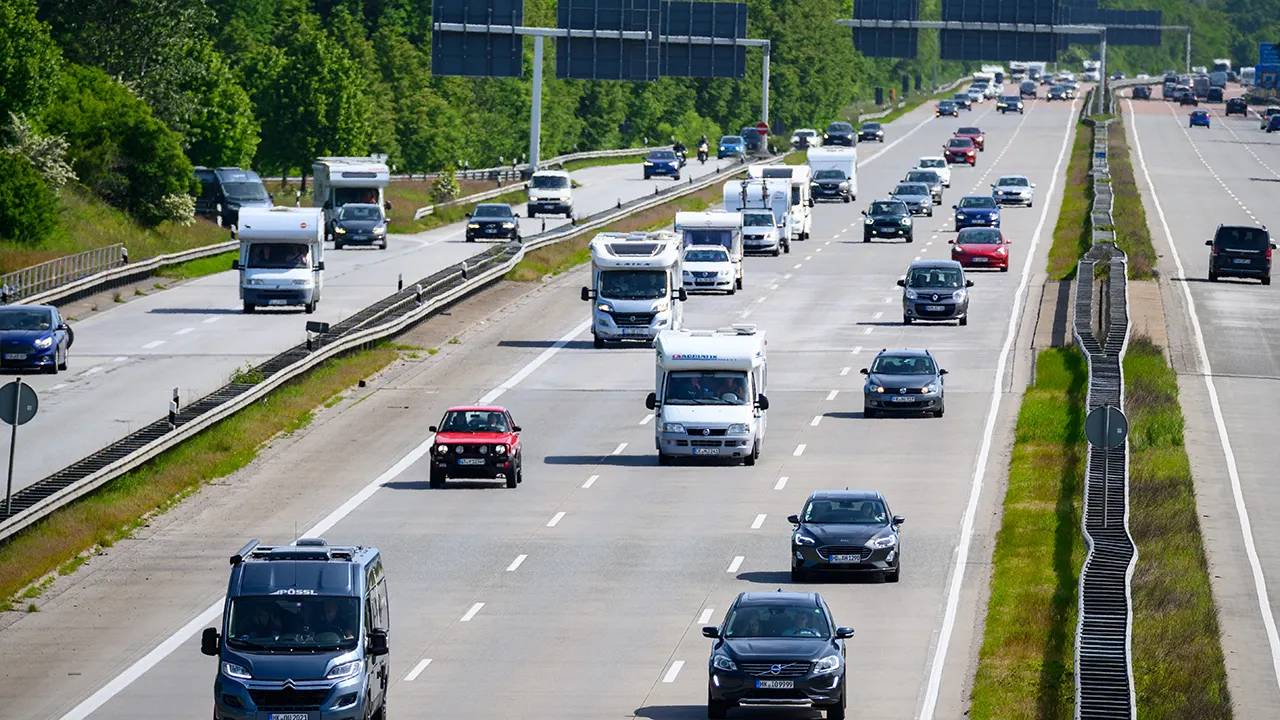
Cars are seen driving on the highway. (Jonas Walzberg/picture alliance via Getty Images / Getty Images)
“It’s like the fleet manager’s right next to them to coach them along the way,” Krukin said.
Users have also seen a 25% drop in speeding, a 16% decrease in hard braking and an 11% reduction in harsh acceleration, according to Ford Pro.
GET FOX BUSINESS ON THE GO BY CLICKING HERE
“We’re not just recommending solutions for the heck of it,” Krukin said. “… At the end of the day, it’s really about bringing it all together, so that these fleets actually get a pleasurable experience with the tools and technology coming together.”


BOJ’s hawkish hints keep rate hike on the cards


Eli Lilly in advanced talks to acquire Kelonia Therapeutics for over $2 billion, WSJ says
Business
World Bank Highlights AI Boom as a Bright Spot Amid Slowing Growth in East Asia and the Pacific

Growth across East Asia and the Pacific is losing momentum this year, weighed down by an energy shock, rising trade barriers, and persistent domestic vulnerabilities, but a surge in artificial intelligence-related trade and investment is offering a rare point of optimism, according to the World Bank’s latest regional economic report.
Key takeaways
- AI-related exports and investment surged across East Asia and the Pacific in 2025, with Malaysia, Thailand, and Viet Nam leading the way.
- Regional growth is forecast to slow to 4.2% in 2026, pressured by the Middle East energy shock, trade barriers, and weak domestic demand.
- Closing gaps in connectivity and skills is essential for the region to fully capture the productivity benefits of AI.
Regional growth is projected to slow to 4.2% in 2026, down from 5.0% in 2025, as the energy shock stemming from the Middle East conflict compounds the adverse impact of elevated trade barriers, global policy uncertainty, and domestic economic difficulties.
China, the region’s largest economy, is expected to decelerate from 5.0% growth in 2025 to 4.2% in 2026 and 4.3% in 2027, as weak domestic demand and property sector challenges persist and the global slowdown weighs on exports. The rest of the region is forecast to slow to 4.1% in 2026 before rebounding to 5.0% in 2027 as geopolitical tensions ease.
Against that difficult backdrop, the World Bank’s East Asia and Pacific Economic Update: Industrial Policy in the Digital Age identifies AI as a meaningful bright spot. The report highlights surging AI-related exports and investment in 2025, particularly in Malaysia, Thailand, and Viet Nam, as a notable positive development for the region.
Yet the Bank cautions that the full benefits of AI remain out of reach for much of the region. Adoption is constrained by gaps in connectivity and skills, with only 13 to 17% of multinational subsidiaries in China and Thailand currently using AI, roughly one third of the proportion seen in industrialised countries.
The report also examines how rising energy costs could deepen hardship for ordinary households. A sustained 50% increase in fuel prices could result in a 3 to 4% loss in income for households across the region, with the poor and small and medium enterprises identified as the most vulnerable.
On a longer-term strategy, the update argues that industrial policy, if carefully designed, can help unlock productivity gains. Targeted support for specific industries in the Republic of Korea, Malaysia, and, more recently, Viet Nam proved effective in part because those countries had strengthened their economic foundations, including infrastructure, education, and regulatory institutions, and had liberalised trade and investment. The Bank warns that similar efforts elsewhere have delivered weaker results where those foundations remain fragile.
World Bank Vice President for East Asia and the Pacific Carlos Felipe Jaramillo noted that while the region continues to outperform much of the world, sustaining growth will require confronting structural challenges and seizing the opportunities of the digital age to increase productivity and create more jobs.
World Bank Group Director of Research Aaditya Mattoo cautioned that present difficulties could increase economic distress and inhibit productivity growth, adding that measured support for people and firms could preserve jobs today while reviving stalled structural reforms could unleash growth tomorrow.
Other People are Reading
Two US officials supporting local authorities die in car accident in Mexico

Sidus Space prices $58.5 million stock offering at $4.35/share


Andrew McElroy is Chief Analyst at Matrixtrade, author of the ebook ‘Fractal Market Mastery’ and producer of the ‘Daily Edge.’ The ‘Daily Edge’ is emailed before each US session and outlines actionable ideas, directional bias, and important levels in the S&P500. It also looks at ‘What’s Hot,’ on any particular day, whether it is commodities, stocks, crypto, or forex. Andrew has developed a top-down proprietary system that starts with his weekend Seeking Alpha article focusing on the higher timeframes. Fractals, Elliott Wave, and Demark exhaustion signals are all incorporated, as are macro drivers and analysis of the market narrative. It is much more than just a few lines on a chart – it is a system developed over 15 years and proven to deliver a consistent edge. An independent trader since 2009, Andrew manages a family portfolio of stocks and ETFs with his wife and fellow Seeking Alpha contributor Macrogirl.
Analyst’s Disclosure: I/we have a beneficial long position in the shares of VOO either through stock ownership, options, or other derivatives. I wrote this article myself, and it expresses my own opinions. I am not receiving compensation for it (other than from Seeking Alpha). I have no business relationship with any company whose stock is mentioned in this article.
Seeking Alpha’s Disclosure: Past performance is no guarantee of future results. No recommendation or advice is being given as to whether any investment is suitable for a particular investor. Any views or opinions expressed above may not reflect those of Seeking Alpha as a whole. Seeking Alpha is not a licensed securities dealer, broker or US investment adviser or investment bank. Our analysts are third party authors that include both professional investors and individual investors who may not be licensed or certified by any institute or regulatory body.


I aim to provide alpha-generating investment ideas. I am an independent investor managing my family’s portfolio, primarily via a Self Managed Super Fund. My articles deliver 5-Minute Pitches focused on the core fundamental and technical drivers of the security.I have a generalist approach as I explore, analyze and invest in any sector so long there is perceived alpha potential vs the S&P500. The typical holding period ranges between a few months to multiple years.I am very much focused on adding value via alpha generation. I always start with a Performance Assessment section for each follow-up article. I publish unusually detailed analytics on my long-only, zero-leverage global equity portfolio performance on my Hunting Alphas website every month. At Hunting Alphas, you can also access the models to all the tickers I publish on.A bit about how I approach research and coverage of a stock:I build and maintain spreadsheets showing historical data on the financials, key metric disclosures, data on the guidance and surprise trends vs consensus estimates, time-series values of the valuations vs peers, data on key coincident or leading indicators of performance and other monitorables. In addition to the company’s filings, I also keep tabs on relevant industry news and reports plus other people’s coverage of the stock. In some cases, such as during times of a CEO change, I will do a deep dive on a key leader’s background and his/her past performance record.I very rarely build DCFs and project financials many years out into the future as I don’t think it adds much value. Instead, I find it more useful to assess how a company has delivered and the broad outlook on the 5 key drivers of a DCF valuation: revenues, costs and margins, cash flow conversion, capex and investments and the interest rates (which affect the discount rate/opportunity cost of capital). In some cases, especially for companies trading at very high multiples on a TTM or 1-yr fwd basis, I do a reverse DCF to make sense of the implied growth CAGR implications.Note: Hunting Alphas is related to VishValue Research on Seeking Alpha.
Analyst’s Disclosure: I/we have no stock, option or similar derivative position in any of the companies mentioned, and no plans to initiate any such positions within the next 72 hours. I wrote this article myself, and it expresses my own opinions. I am not receiving compensation for it (other than from Seeking Alpha). I have no business relationship with any company whose stock is mentioned in this article.
Seeking Alpha’s Disclosure: Past performance is no guarantee of future results. No recommendation or advice is being given as to whether any investment is suitable for a particular investor. Any views or opinions expressed above may not reflect those of Seeking Alpha as a whole. Seeking Alpha is not a licensed securities dealer, broker or US investment adviser or investment bank. Our analysts are third party authors that include both professional investors and individual investors who may not be licensed or certified by any institute or regulatory body.

2026 Green Powered Challenge: The Eternal Headphones

Why are Tube strikes happening and how much disruption will there be?

Oil prices rebound 7% as Strait of Hormuz is closed again


-
 NewsBeat7 days ago
Pep Guardiola and Gary Neville agree over Arsenal title problem that benefits Man City
-

 Crypto World6 days ago
The SEC Conditionalises DeFi Platforms to Be Avoided for Broker Registration
-

 Fashion2 days ago
Weekend Open Thread: Theodora Dress
-

 Crypto World6 days ago
SEC Signals Exemption for Crypto Interfaces From Broker Registration
-

 News Videos5 days ago
Secure crypto trading starts with an FIU-registered
-

 Sports3 days ago
NWFL Suspends Two Players Over Post-Match Clash in Ado-Ekiti
-

 Crypto World6 days ago
SEC Proposes Certain Crypto Interfaces Don’t Need to Register as Brokers
-

 NewsBeat6 days ago
Trump and Pope Leo: Behind their disagreement over Iran war
-

 Business8 hours ago
Powerball Result April 18, 2026: No Jackpot Winner in Powerball Draw: $75 Million Rolls Over
-

 Politics2 days ago
Palestine barred from entering Canada for FIFA Congress
-

 Crypto World2 days ago
Russia Pushes Bill to Criminalize Unregistered Crypto Services
-

 Sports7 days ago
NWFL opens Pathway for new Clubs ahead of 2026 Season
-
 Business3 days ago
Creo Medical agree sale of its manufacturing operation
-
 Entertainment6 days ago
Brand New Day’ Footage Reveals the Devastating Impact of ‘Now Way Home’
-

 Politics13 hours ago
Zack Polanski demands ‘council homes not luxury flats for foreign investors’
-

 Crypto World7 days ago
Trump whales load up ahead of Mar-a-Lago luncheon.
-
Business7 days ago
Kering slides after Morgan Stanley downgrade, Gucci woes loom
-

 Tech7 days ago
Google adds E2E encryption to Gmail for iOS and Android enterprise users
-

 Tech7 days ago
Apple glasses won’t go brand shopping like Meta did with Ray-Ban and Oakley
-
Entertainment7 days ago
How Euphoria Season 3 Premiere Paid Tribute to Eric Dane After Death
You must be logged in to post a comment Login