Sports
Liverpool’s Reality Check at Bournemouth: Slot’s Struggles and a Transfer Market That Slipped Away

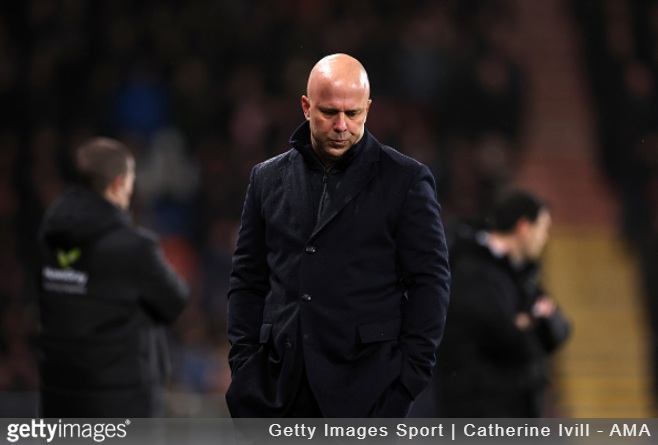
Virgil van Dijk screaming and Arne Slot berating the referee just as baselessly, Mohamed Salah gazing skyward as rain lashed down—the closing moments at the Vitality Stadium on Saturday told its own story.
Bournemouth had struck at the death, and Liverpool’s season lurched back down the hill. A game that began with hope ended in chaos, and the symbolism was hard to ignore: a team once defined by certainty now looks brittle, predictable, and short of answers.
The Game That Exposed Liverpool’s Fault Lines
This was no ordinary defeat. It was Liverpool’s first in 11 league matches, in 14 in all competitions, but the manner of it—the defensive frailty, the lack of attacking imagination, the exhaustion—felt like a warning siren. For all the optimism generated by a polished Champions League win in Marseille days earlier, this was a sobering reminder that there is plenty wrong at Arne Slot’s Liverpool. And the problems run deeper than one bad afternoon.
Bournemouth were everything Liverpool were not: energetic, inventive, and fearless. Andoni Iraola’s side absorbed early pressure, then sliced through Liverpool with long passes that exposed a fragile left flank. Milos Kerkez looked lost, Van Dijk looked leggy, and Joe Gomez—making his first league start at centre-back since December 2024—was undone by misfortune and hesitation.
Evanilson’s opener came after Van Dijk’s lazy leg failed to cut out a lofted ball. Álex Jiménez doubled the lead during a chaotic spell when Liverpool played seven minutes with ten men because Gomez, injured in a collision with Alisson, couldn’t be substituted quickly enough, and that was strange in itself as Slot screamed for his unhearing players to kick the ball out of play.
Van Dijk’s header before half-time offered hope, and Salah’s clever backheel to Dominik Szoboszlai for a stunning free-kick equalizer in the 80th minute seemed to flip the script. At 2-2, the Liverpool of old would have surged to victory. Instead, they wilted.
The winner, deep into stoppage time, was a calamity of errors: a long throw, a scramble, a rebound off the post, and Amine Adli squeezing the ball home. Liverpool’s defending was feeble, their resistance symbolic of a team running on fumes. It was the fifth goal they’ve conceded from a throw-in this season—the worst record in the league. For a side that once prided itself on intensity and structure, that statistic is damning.
The Transfer Market Missteps: Guehi and Semenyo Slip Away
If the Bournemouth defeat exposed Liverpool’s fragility, the January transfer window compounded it. Defensive reinforcements were a priority after Conor Bradley’s injury and Giovanni Leoni’s season-ending ACL blow. On top of that, Ibrahima Konate, unavailable for this game through personal reasons, is running towards the end of his contract, Joe Gomez just cannot catch a break with injuries, and it seems Andy Robertson is close to completing a transfer to Tottenham Hotspur.
Marc Guehi was the ideal target: young, Premier League-proven, and tactically suited to Slot’s system. Liverpool pushed, but hesitated—and Manchester City pounced. Guehi is now wearing sky blue, strengthening a rival already blessed with depth.
The same story unfolded in attack. Antoine Semenyo, Bournemouth’s own dynamo, was on Liverpool’s radar as a versatile forward option. His pace, power, and adaptability made him a perfect fit for Slot’s fluid front line. But again, Liverpool dithered. City didn’t.
These failures sting not just because of who Liverpool missed, but because of what they represent: a club caught between ambition and caution. In a market where rivals move ruthlessly, hesitation is fatal.
Van Dijk’s Visible Frustration and Slot’s Tactical Puzzle
Van Dijk’s reaction at full-time—arms flailing, voice raised—was telling. The captain knows the standards Liverpool once set, and he knows they’re slipping. His own form oscillates between commanding and careless, but the burden he carries is immense. With Gomez injury-prone, Konaté absent, and Bradley sidelined, Liverpool’s back line is patched together with midfielders and aging legs. No wonder the captain looks exasperated.
Slot, meanwhile, cuts a contrasting figure: calm, analytical, arms crossed as chaos unfolds. His 4-2-2-2 system worked in Marseille, but against Bournemouth it looked brittle. The double pivot of Gravenberch and Mac Allister lacked bite, and the wide rotations left Kerkez exposed. Slot’s substitutions—Robertson for Kerkez, Ekitike for Mac Allister for an extra attacker—failed to inspire.
By Slot’s own admission, fatigue played a role. But is that an excuse for a team with serious ambitions? In a word, no.
The Bigger Picture: A Team in Transition – at What Cost?
Liverpool’s identity is changing, and change is rarely seamless. The high-octane, Salah-centric machine of Klopp’s era is gone. Slot’s vision—positional fluidity, shared responsibility, tactical control—is still taking shape. There are a few positives, but there are still too many gaps.
Reports suggest the club hierarchy are on the same page with Slot over 2025-26 being a season of transition after a title winning one, but at this stage, Champions League qualification for next season is in serious doubt. They must not fail to grasp the possible consequences of not booking a place among the European elite, both financial, and reputational.
The Bournemouth defeat and the missed transfers underline a truth Liverpool can’t ignore: evolution requires investment. Without Guehi, the defense remains vulnerable. Without Semenyo, the attack lacks a direct, physical option. And without clarity on Salah’s role, the team risks drifting between eras without mastering either.
Conclusion: Urgency, Not Excuses
Liverpool’s season isn’t doomed. They remain in the Champions League, they haven’t lost hope for a top-four finish, and they have talent to burn. But the warning signs are flashing. A brittle defense, a misfiring attack, and a transfer strategy that doesn’t even feel reactive, let alone proactive—these are not foundations for a bright future.
Even Salah’s return from AFCON, following an angry public outburst, feels like a minor subplot in a larger drama: a club wrestling with transition, a manager searching for balance, and a captain raging against decline. The rain-soaked scenes at the Vitality were more than a snapshot of one bad day—they were a mirror held up to Liverpool’s reality.
If Liverpool want to reclaim their place among Europe’s elite, they can’t afford another window like this. They can’t afford to watch rivals strengthen while they stand still. And they certainly can’t afford to keep hoping that old magic will solve new problems.
The time for hesitation has passed. For Arne Slot and Liverpool, the choice is stark: act boldly, or risk being left behind.