
Sports
Riccardo Calafiori striking the balance between chaos and stability

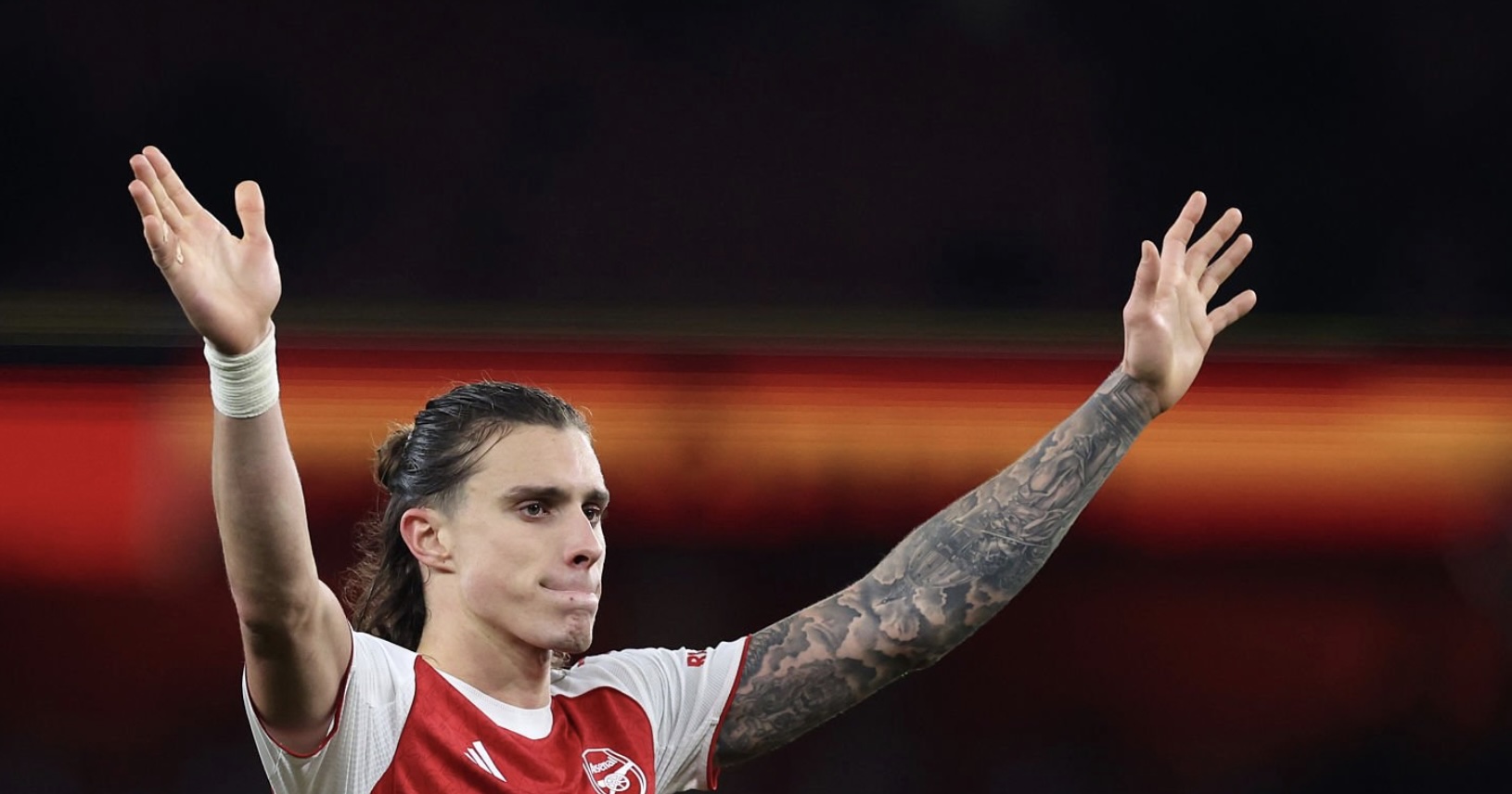
In the Premier League this season, Riccardo Calafiori has averaged 1.83 shots per 90. That is more than Mikel Merino, Noni Madueke, Martin Odegaard and just shy of Gabriel Martinelli’s 1.89 per 90. The average distance of the Italian’s shots is 14 yards, so these are not speculative efforts.
According to fotmob, 10 of his 22 Premier League shots have been with his right foot and five have been with his head, so there is plenty of variety in how he looks to find the target. Around one third of his attempts have been on his left foot, it is highly unusual for a defender to take so many shots at goal and even more unusual for around two thirds of a left-footed player’s attempts to not be taken with their south paw.
There is a lot about Calafiori’s game that is highly unusual but also highly effective. When Thomas Vermaelen played for Arsenal around 15 years ago I recall thinking that he was a really good footballer but I couldn’t think of an optimum position for him. I didn’t think he was quite defensively reliable enough to be a centre-half, not quite mobile enough to be a midfielder or full-back.
In this day and age, I think Vermaelen would probably fit the current trend for a left-back a little more comfortably. Calafiori very often ‘invades the space’ in the left eight position, occasionally Declan Rice will drift right over to the left touchline to make a space in the inside left channel for Calafiori to buffet into like a half-back.
Since his appointment nearly six years ago, Mikel Arteta has favoured left-backs that are left-field in every sense of the word. Bukayo Saka played at left-back for Arteta’s first game in charge, Ainsley Maitland-Niles had a spell at left wing-back thereafter, unorthodox left-backs such as Zinchenko, Tomiyasu, Lewis-Skelly had spells there.
Initially, I recall thinking that Nuno Tavares, the kingmaker of slightly zany, off-road left-backs must have been an Edu signing given Arteta’s insistence on defensive rigour but as time has drawn on, I have come to realise that Tavares has a lot of the qualities Arteta really likes in that position. The only left-back that he really didn’t seem to take an enormous shine to was Kieran Tierney, surely the most short back and sides, custom designed overlapping left-back in the sport.
The desire for the avant-garde at left-back has led to a lot of turnover in the position. Zinchenko briefly shone as an inverting left-back before his star fizzled out as quickly as it ascended and his defensive weaknesses became too much to tolerate. Ainsley Maitland-Niles didn’t seem to especially relish the position, Kieran Tierney and Takehiro Tomiyasu were not physically robust enough (in the case of Tierney, I suspect he might well have ended up in the Ramsdale / Smith Rowe bucket regardless of his health).
Clearly Lewis-Skelly is currently developing in the position but, and whisper it quietly, in Calafiori it seems like Arteta might just have finessed the very delicate and volatile formula to its optimum form. Calafiori is currently treading that very fine line between being an agent of chaos in attack, a solid defender who can recover into space and offer aerial prowess at both ends of the pitch into the bargain.
Earlier in the piece, I remarked that five of Calafiori’s 22 Premier League shots have been headers, including Arsenal’s first goal of the season which was enough to take the three points at Old Trafford. He complements Arsenal’s significant setpiece threat. Fotmob has Calafiori in the 97th percentile for aerial duels won compared to other full-backs in the league.
The Italian’s debut season was blighted by injuries. The most significant threat to Calafiori’s continued ability to excel as a Mikel Arteta left-back is his knees. So far this season, he has been able to build rhythm by (just about) avoiding injuries and we should be thankful to the Italian National Team for their sensible management of him during the November international fixtures.
Zubimendi, Rice and Timber are the only outfield players to clock up more Premier League minutes than Calafiori so far this season. From his interrupted appearances last season, we could already see his abilities as a ‘joker in the pack’ from an attacking sense, especially when it comes to invading that left half-space from deep.
His first goal for the club at Manchester City perfectly illustrated this, as did his winning goal at Wolves in February. He has a penchant for getting to the edge of the penalty area just left of centre, chopping the ball back onto his right foot and shooting. Here we see him hitting the post away at Nottingham Forest in January. His run in the left channel keeps Forest players away from Trossard on the left touchline, before he continues his invading run into a dangerous area.
And here we see him do something similar from the edge of the penalty area against Brentford on Wednesday night, forcing a save from Kelleher with a chop back onto his right foot and shot. Then a few minutes later, he picks the ball up in central midfield, runs to the edge of the box, chops back inside on his right and forces Kelleher into another save with a right-footed shot.
The pleasant surprise this season has not only been Calafiori’s fitness record (for now…) but the sense of defensive security he has given Arsenal. His 3.11 tackles and interceptions per 90 is only marginally behind Jurrien Timber’s 3.81 and Timber is, rightly, considered a world class one-on-one defender who isn’t tasked with leaving his post as often as Calafiori.
He has won 60% of his aerial duels this season, marginally less than Timber’s 61.8% (Gabriel is on 65% with Zubimendi on 70%). His 4.55 ball recoveries per 90 is only bettered by Lewis-Skelly (4.67) from Arsenal’s defenders. Defensive data only gives you a snapshot of course because it is biased towards events, your eyes tell you that the Italian is solid, imposing and when the opponent switches the ball to his side, you rarely see him floundering out of position.
Arteta’s demands of his left-backs are unconventional and exacting. It shouldn’t be a surprise that there has been some trial and error to this point, I also think it makes a lot of sense to try to mould a young player like Lewis-Skelly into the role gradually. For the time being, it looks as though Calafiori has struck that difficult balance between being a chaotic attacking presence and a solid defender.



