
Sports
The A to Z of how to escape a running rut?


In an excerpt from his book “The Run of Life”, Steve Till offers advice on rediscovering your training mojo.
“Not this hill again.”
“I’m so bored with this route.”
“During Covid, when we couldn’t go out, I was desperate to. Now I can’t be bothered.”
During the Covid pandemic, lots of people took up running. Well, with gyms closed and most organised sport simply not happening, it was one of the few things you were actually allowed to do to be active and keep fit.
But the restrictions meant that we found ourselves with limited running options. We were told, for instance, not to venture far from home, not to drive to exercise further afield, and not to meet others to do so either.
We don’t have those restrictions anymore, but sometimes we all get stuck in a running rut – locked in lockdown lockstep, if you will.
So here are a few ideas on how to mix things up…
A to B: if your running route is boring, try going A to B. Get a bus or a train, or some kind soul, to drop you a few miles from home, and run back – it’s far easier and more motivating to run in one direction than do a loop. It seems “right” in the same way that it seemed right to our ancestors to migrate along the primeval pathways.
Buddy up: now that we can exercise with others, find a friend, colleague or online contact whose pace, personality and patter are congenial enough for you to run alongside for half an hour or so. You’re far more likely to keep that date with your running schedule, if you’re also keeping it with a fellow runner.
Club night: at its most formal, running with others can mean finding and perhaps joining a club. There are likely to be many in your local area, most catering for all abilities, with a variety of organised sessions to motivate you and introduce you to like-minded souls. Have a look online.
Dog days: if you have one, or have access to one, then running with a dog is great fun. Make sure they are fit enough to do the distance you have in mind. And be sure to keep them under control – especially around livestock. You’ll find they’re far more intelligent and reliable than any human running companion!
Early doors: many of you may run first thing in the morning, but for those of you who don’t, try it! It can take a little getting used to (after all, your body is not quite as awake as it is later), but if you do venture out before it’s quite light, you’ll find a different world, one that’s all your own. That time is your time: no one can take it away. And I promise you that you’ll feel great all day!
Fartlek: yes, again, stop giggling in the back row. Fartlek is a Swedish word meaning ‘speed play.’ It came to prominence with the exploits of world-record-breaking Swedish milers, Gunder Haegg and Arne Andersson, in the 40s, who would go out into the woods and perform unstructured speedwork – jog a mile, sprint to that tree, jog a bit, sprint up that hill, do a fast half-mile… It’s having fun while working hard. It avoids the dread associated with a more formal interval session, where you know you’ve got five more of these blooming efforts to go.

Goals: this is something I bang on about a lot. If your motivation is lacking, set yourself a goal – not too ambitious and not too distant, but a personal best, a running streak, a race or an accomplishment that you know is going to make it more likely you’ll get out of that door to run.
Holiday: if running is important to you, consider a running holiday. You’ll get most benefit if you go with an organised group – with runs of various distances and speeds laid on for you every day, plus talks and discussions on aspects of running. You’ll find you’ll do a bit more than normal – and you’ll come back motivated to keep the improvement going.
Intervals: if you feel that your running is stagnating, then intervals may be the answer. Unlike fartlek, intervals are structured speedwork, and they can be as simple as doing 30 seconds hard, 30 seconds jog, 6 times – or 4 all-out 60-metre hills (strict jog back down) – in the middle of a run. Most runners are guilty of too many easy to moderate miles – intervals break that cycle.
Just jog 10: if you really don’t want to run, then I have a rule, just go out and jog for 10 minutes, and if you really don’t want to do any more after that, fine, you can walk back home. But you’ll almost always find yourself doing a decent run.

Kit yourself: looking good is feeling good, so treat yourself to some new kit from time to time. The right kit will not only make running that little bit easier, but also lift your sartorial spirits.
Look out: I know some runners, who, when they lack motivation, set themselves a list of items to look out for on their runs (there are apps with suggestions) – a deer, a celebrity, a body of water, a llama, money on the ground, even a good deed to be done.
Music: if you always run with music, maybe unplug for a more mindful running experience; if you don’t, consider tuning in for the motivation it provides – Born to Run, When the Going Gets Tough, Something Inside So Strong – I know, I know, I’m showing my age through my musical tastes…
New location: if running from A to B presents too many logistical problems, then simply get yourself to a new location and run there. Take the opportunity to run in the woods, along the beach, round a lake, or simply somewhere a little removed from your usual stomping, stamping ground.
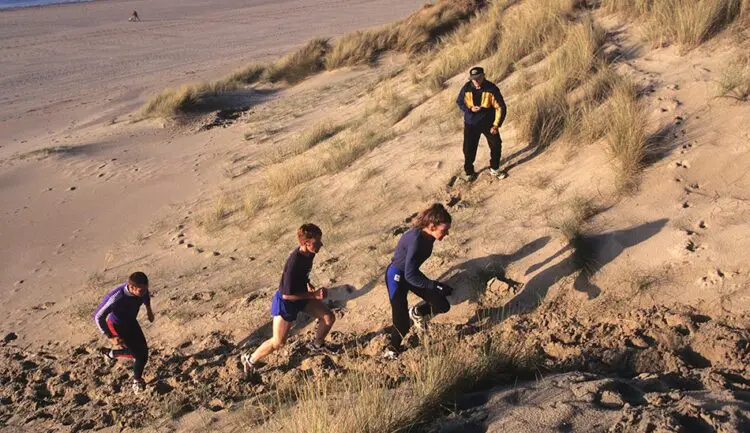
Opposite attraction: simply run your regular routes in the opposite direction – you’ll see things differently, you won’t get intimidated by that hill at two miles, and you’ll have a brand new route without having to devise one. Warning: even though you are by definition in familiar territory, it is surprisingly easy to miss a turn when you are going the other way!
Plan to nail it: setting yourself a goal (above) implies giving yourself a plan. “If I’m going to do that 10km in eight weeks, then I better run more than 3 miles this Sunday.”
Quote me: famous sayings about running, as well as books, films, songs, videos and poetry can all motivate you, because the will to win is nothing without the will to prepare, and if you can fill the unforgiving minute with sixty seconds’ worth of distance run, baby, you were born to run.
Race ace: again, I’ve said this before, but entering a race will really help your day-to-day running motivation.
Strava striver: this app of course opens up a whole new way of recording your running performances and route segments, and sharing and comparing them with your peers, lending your running its own cheerleading support community.
Track hack: there’s no denying that a 400-metre running track is an intimidating environment, but there’s also nothing like it for getting the best out of yourself. Have a go – warmup and set yourself a simple session to complete – something like, run 400 at a brisk pace, jog 200, sprint 200, walk 400 – and repeat. There’s no hiding place – but there’s also no comparison with the satisfaction you’ll get from committing yourself to it.

U-turn: sometimes when I know I should be trying to run hard, and I just don’t want to, I run as far as I can bear in one direction, trying to go fast. I note the time, turn round, and try and get back faster.
Vested interest: wearing a vest – male or female cut – rather than a t-shirt can seem a little hardcore, especially in winter, but you’ll be surprised how quickly you warm-up, and on how few days you actually need more covering anyway. Your vest also proclaims that you’re a runner – and you’ll unconsciously run faster as a consequence.
Watch out: if you run with a watch or Garmin, consider ditching it on at least some runs – it is quite liberating – and if you never run with one, how about wearing one and noting your splits to see how your pace varies across the run?
Xanadu: sometimes when you are running, you get – usually unexpectedly – in the zone, in flow, you hit nirvana, Xanadu, a purple patch, a Zen-like state, where you feel you could run forever. Doesn’t happen very often, I grant you, but when it does, relish it, hold onto it for as long as you can, log it and remember it.
You-time: sometimes, it’s important to reconnect with why you run. Unless you’re a pro like Mo, it’s probably a personal thing, an experiment of one, a very individual journey, you-time.
Zombies, Run!: this app takes your run to a new level of immersion, excitement and enjoyment, as you run and automatically collect supplies to help your town survive a zombie apocalypse!
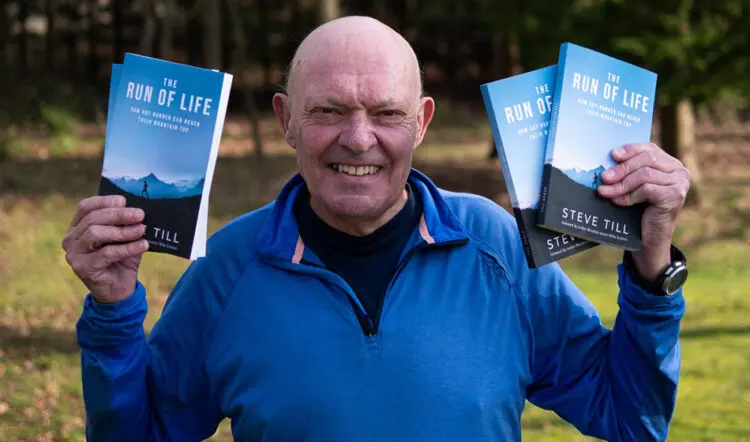
The above is an extract from The Run of Life – how any runner can reach their mountain top by Steve Till, with a foreword by 1983 London Marathon winner Mike Gratton, and published by Still Running.
Till is a former race walker and ultra-distance runner. From finishing last in his school sports day 1500m in 1972, he went on to represent Britain. In race walking he is a ‘Centurion’, after having walked 100 miles in 24 hours, while in ultra running he’s won national medals and raced in international events. The Run of Life offers great advice and anecdotes for runners of all levels which have been garnered from a lifetime of experience in the sport.



