Sports
The extraordinary rise of Gout Gout

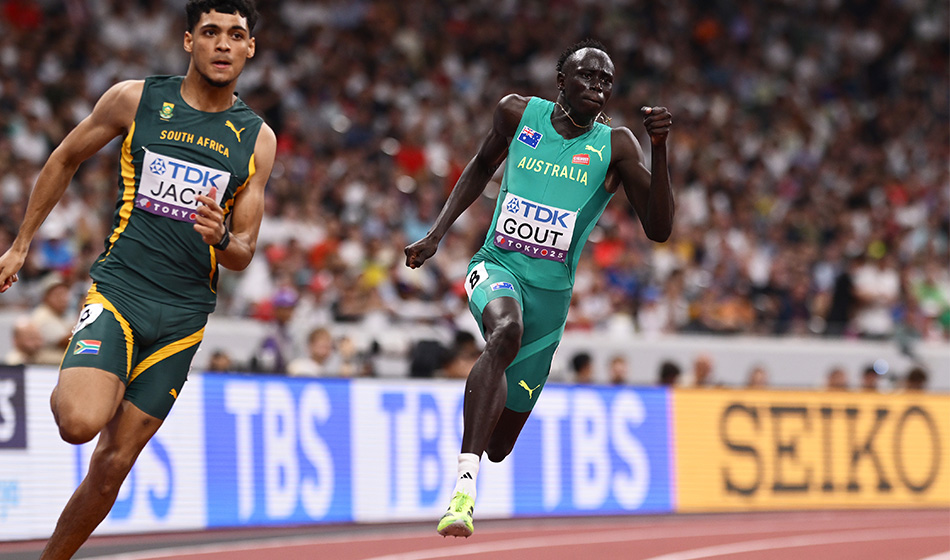
With his school days now over, the young Australian is starting to focus fully on making more progress as an elite international sprinter, writes Nicole Jeffery.
School’s out for Gout Gout. The 17-year-old Australian sprinter graduated from historic Ipswich Grammar School, just 40km south-west of 2032 Olympic Games host city Brisbane, late last month, marking the end of his time as a schoolboy phenomenon.
And what a phenomenon. A silver medallist at the World U20 Championships in Lima last year, aged just 16, he officially became the fastest 200m runner Australia and Oceania has ever produced earlier this year. His outstanding performances mean he has finished 2025 by being voted AW’s International Male U20 Athlete of the year.
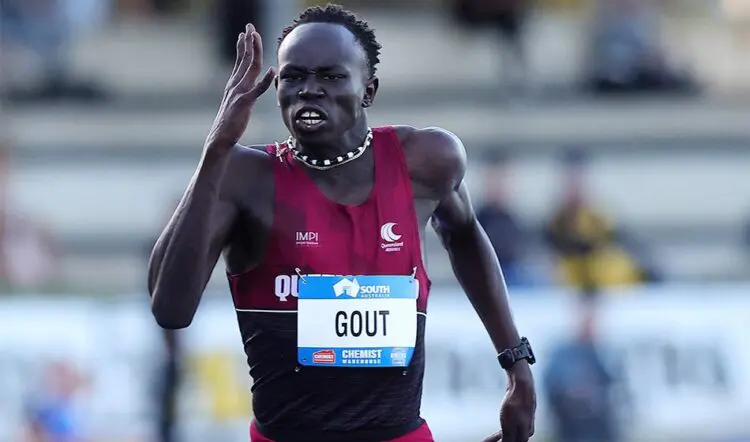
Gout’s domestic season took off when he ran 20.05 in the heats at the Queensland Championships in March, which bettered 1968 Olympic silver medallist Peter Norman’s 57-year-old Australian benchmark and area record (20.06), and the qualifying standard for the World Athletics Championships in Tokyo in September. He followed that up the same day with his first sub-20-second clocking (19.98, albeit with a 3.6m/sec tailwind) in the state final.
Gout improved to 19.84 to win the Australian senior title in Perth in April. Again there was an illegal tailwind but only just (2.2). On the same weekend, he also recorded his first two sub-10-second 100m races (both 9.99, both windy) to win the national under 20 title.
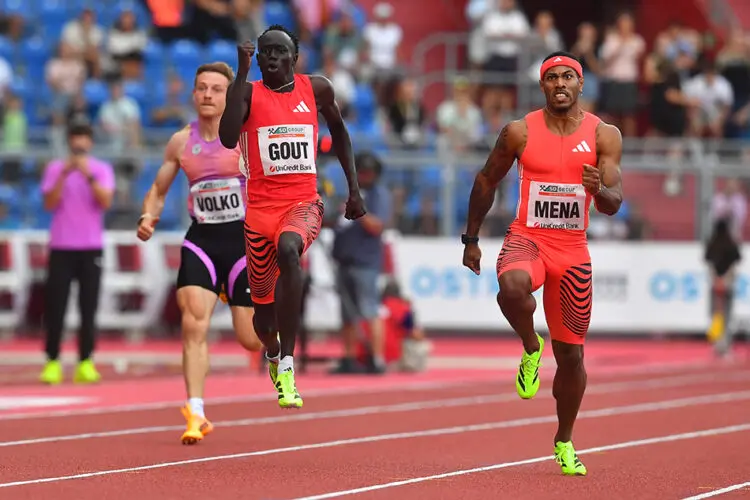
The demands of his final year of school kept him largely off the international circuit in 2025, apart from a quick school holiday excursion to Europe in June and July, where he improved his national 200m record to 20.02 to win at the Golden Spike meet in Ostrava, and won the under 23 200m at the Diamond League meeting in Monaco, running 20.10 into a stiff headwind of -1.9m.
He was not sighted again internationally until his arrival in Tokyo in September, to the type of fanfare that is seldom accorded to a teenager ranked outside the top ten in the world. His shoe sponsor, Adidas, organised a pre-event media conference for him, which was well-attended not only by Australian media but international reporters who are also tracking his stunning progress.
Gout’s primary ambition, he told those in attendance, was to get a legal sub-20 clocking under his belt. Unfortunately, the Tokyo weather did not oblige. He did reach the semi-finals with a 20.23 effort for third in his heat, but that left him in a highly-competitive semi-final where his fourth-place finish (20.36) was not enough to advance to the final.

The result was pretty much as expected by experienced judges of athletics who had not been swayed by the hype surrounding the long-striding teenager, and figured his inexperience would become a factor at the big show. However, there was no denying his appeal to the Australian public. The television ratings showed that more than three million of his compatriots tuned in to watch him run both his heat and his semi-final.
There has not been as much fascination for a young athlete in Australia since a 15-year-old Ian Thorpe won the 400m freestyle title at the 1998 World Swimming Championships in Perth, on the way to becoming a triple Olympic gold medallist in Sydney in 2000.
Gout is already one of Australia’s most recognisable athletes and the fortunate timing that will deliver him to a home Olympic Games aged 24, and in his sprinting prime, has only heightened the anticipation for what he might achieve down the track.
But he and everyone around him have been careful not to get too far ahead of his current stage of development. Born in Brisbane as the third of seven children of South Sudanese immigrants Monica and Bona Gout, he is kept grounded by his family, his coach Di Sheppard and experienced athletics manager James Templeton, who also guided the career of world 800m record-holder David Rudisha.

Sheppard, the long-standing coach at Ipswich Grammar School, first spied Gout as a 13-year-old, tagging along with one of his mates to try out for the school athletics team.
“I saw him running on the oval and there was just something about him and the way he moved,’’ she recalls. “I couldn’t pinpoint it, but gut instinct just screamed at me: Who’s that kid?’’
The no-nonsense veteran and the easygoing kid have since formed a powerful bond. They brought in Templeton when Gout’s profile exploded off the back of grainy YouTube videos of him destroying his rivals in inter-school competition, his gait eerily reminiscent of that of the young Usain Bolt.
Templeton’s primary responsibility has been to keep the world at bay and allow coach and athlete the space to work on his development. That means “saying no to 95 per cent of everything that’s asked of him”. One of the few exceptions was signing a long-term contract with Adidas last year, which may well continue right through until the Brisbane Olympics.
Gout said goodbye to school athletics in October – winning the 400m in a meeting record of 46.14, and helping Ipswich Grammar to win the 4x100m relay, at the Greater Public Schools Championships in Queensland – then dialled back his training to sit his final exams.

Now the big wide world awaits, and the task of moving up the senior ranks to become one of the world’s best sprinters (he’s currently ranked No.17 in the world).
He’s had a taste of what’s in front of him, with his debut in Tokyo, but there is much more to savour, and much more to learn in the years ahead.
Templeton marks Gout’s athletics report card this year as an “eight out of ten” – a ten would have required a top four finish in Tokyo – but the manager remains confident that they are on the right trajectory to join the world elite.
Without the distraction of school, Gout’s training load and competition exposure will increase next year, but steadily. Templeton believes “having patience’’ is key.
They are likely to announce a couple of new commercial partners by the end of the year to help offset the costs of an international career, but these will be selected strategically.
Templeton is conscious of “not overloading him” on or off the track. Gout will continue to race sparingly next year. The competitions earmarked in his schedule so far include the Maurie Plant Meet in Melbourne (March 28) and the Australian Championships from April 9-12 in Sydney (the qualifying competition for the Glasgow Commonwealth Games and the World U20 Championships in Eugene); the adidas City Games in the US in May, the Golden Spike in Ostrava, and perhaps a couple of other one-day meetings.
He is unlikely to take on a full schedule at the Commonwealth Games (July 27-August 2), because of the proximity of the World Under-20 Championships in Eugene (August 5-9), where he wants to win the gold medal that eluded him in Lima, but the approach to that double has yet to be determined.
If he continues to develop at the same express pace, Gout won’t be short on opportunities. The trick now is deciding on the right ones.