
Sports
The moment trainer Angelo Dundee knew Muhammad Ali was destined for greatness

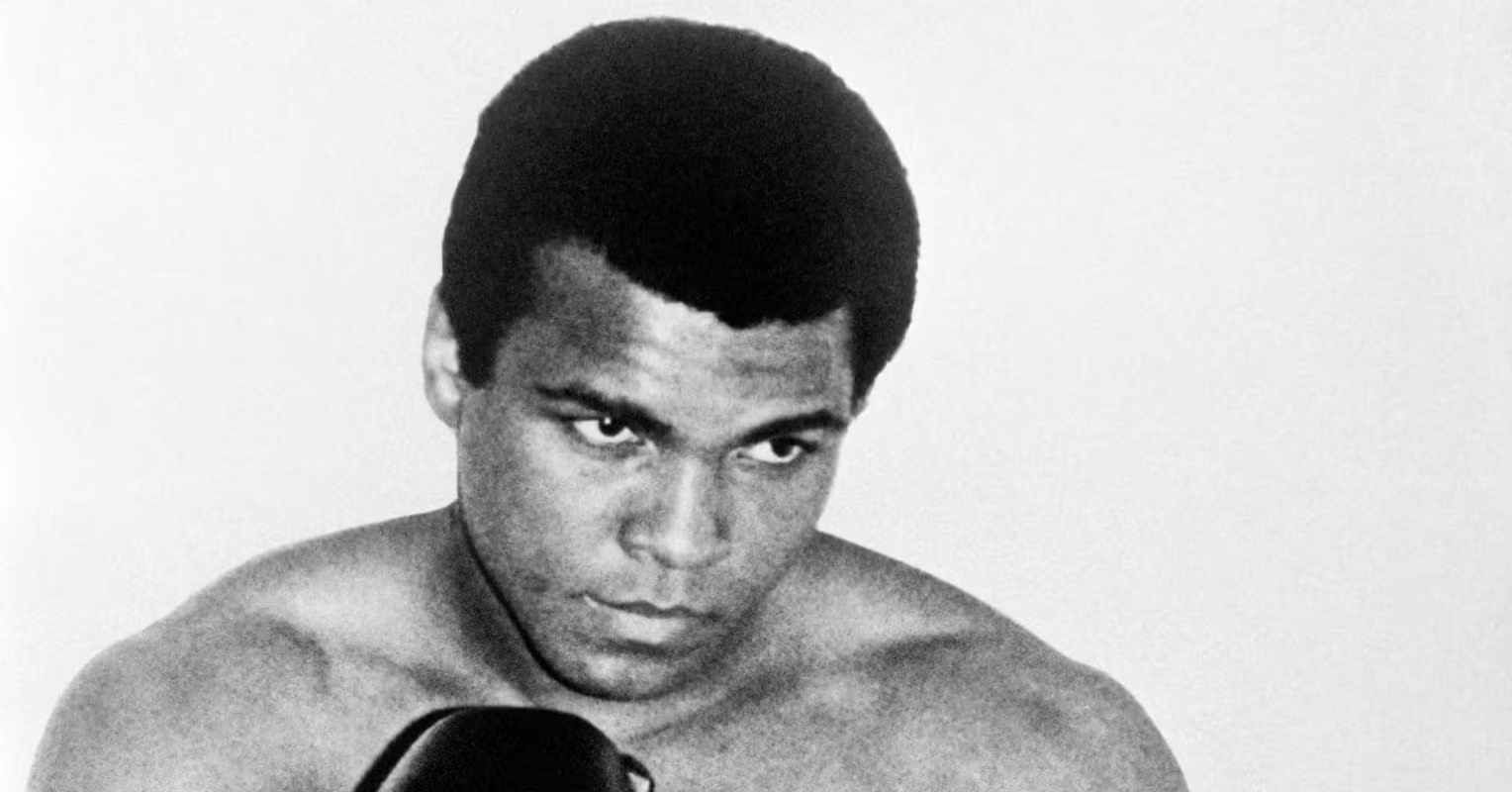

It is only fitting that Angelo Dundee, who guided Muhammed Ali through his astonishing 61-fight career, recognised the exact moment that he had a truly exceptional talent on his hands.
Ali and Dundee ignited a flourishing fighter-trainer relationship shortly after Cassius Clay, as he was then known, claimed gold at the Rome Olympics in 1960.
From there, Clay would go on to become arguably the greatest heavyweight of all time, but it was in his 11th professional contest when Dundee knew, for certain, that he was capable of assuming such a prestigious title.
Along with his flashy footwork and blistering hand speed, Ali was known for possessing one of the only things that cannot be taught: an almost indestructible chin.
This is largely how he got the better of tremendous punchers such as Joe Frazier, George Foreman and Earnie Shavers, as it was an innate ability to dig deep, it seemed, that contributed to much of his success.
Against Foreman, in particular, Ali showed terrific bravery to keep plugging away, even when it seemed like he was playing with fire, before eventually stopping his man in round eight.
But it was long before that – over a decade, in fact – when Clay displayed his extraordinary mettle, climbing off the canvas to ultimately stop the hard-hitting Sonny Banks in 1962.
Speaking with Ring Magazine prior to his passing in 2012, Dundee insisted that it was the Banks fight which, quite simply, allowed him to see exactly what his fighter was made of.
“Muhammad took a great shot. Part of his ability to take a shot was his heart. I knew he had that when he got caught against Sonny Banks early in his career.
“Sonny hit him with a left hook in the first round that was so hard and on the money that Muhammad was out cold on his way down.
“He woke up when he hit the canvas and got up to drop Sonny in the next round and then stop him a few rounds later. That’s when I knew I had a great fighter.”
Sure enough, Dundee was not mistaken in his assessment of Ali, whose career is largely testament to the boundaries he was prepared to push.



