
Have Formula 1’s new rules this year damaged its status as the ultimate challenge for a racing driver?
Listen to the sport’s top drivers, and it would be easy to get that impression.
“Not Formula 1,” says Max Verstappen of the need to manage energy in the new cars. “Ridiculously complex,” says Lewis Hamilton. “The chef could drive the car at that speed,” says Fernando Alonso. “Not the purest form of driving,” says Lando Norris.
Advertisement
Advertisement
When the sport’s four active world champions make comments like that, it would be foolish not to listen.
But before jumping to a conclusion that F1 has been ruined by what amounts to the biggest rule change in the sport’s history, it’s important to establish a frame of reference.
What, in essence, is the job of a racing driver? It is to get a car around a race track in the shortest possible time.
In its purest form, this means braking as late as possible for a corner, driving around it at the highest achievable speed, exiting it as fast as one can and reaching the highest speed on the straight before doing the same again, lap after lap.
Advertisement
Advertisement
But that’s not what a racing driver does all the time. It can’t be. The way they drive on a qualifying lap, for example, is not the same as over a 200-mile grand prix distance.
Tyres and fuel need to be managed, there might be problems with the car to take into account, and so on. That’s still getting the car around the track as fast as possible, but it’s doing so within the constraints presented at the time. Flat out in motorsport is only sometimes.
So when Verstappen, Alonso and co talk about the degree of energy management required with this year’s new hybrid engines, are they saying that they are no longer ever driving on the limit of grip in the corners?
Advertisement
At last week’s pre-season test in Bahrain, I asked that question to all of the above drivers, as well as Mercedes’ George Russell and Kimi Antonelli, and Haas’ Oliver Bearman. They all said they were still on the limit of the grip the vast majority of the time, that skill still mattered, that a faster driver would still beat a slower one.
Advertisement
The new cars have less downforce than last year, so they have less grip, but the drivers are still on the limit of that grip in the corners.
Bearman said: “Some corners on this track, which were last year limitations or places that you have to be aware of, are not really corners any more, they’re more power-limited. Like Turn 12 and Turn Seven.
Advertisement
“So you do change the way that you approach those corners. And where last year Turn 12 you were 40km/h faster this year, it’s not really a corner any more. And that is a bit strange.
“But for the rest, you’re still pushing to the limit even if the limit is a bit lower at the moment. But it’s not feeling out of this world. Once we get used to the differences in some corners, you just adapt your driving style. And then it feels like normal.”
Advertisement
The balance of going flat-out and ‘harvesting’
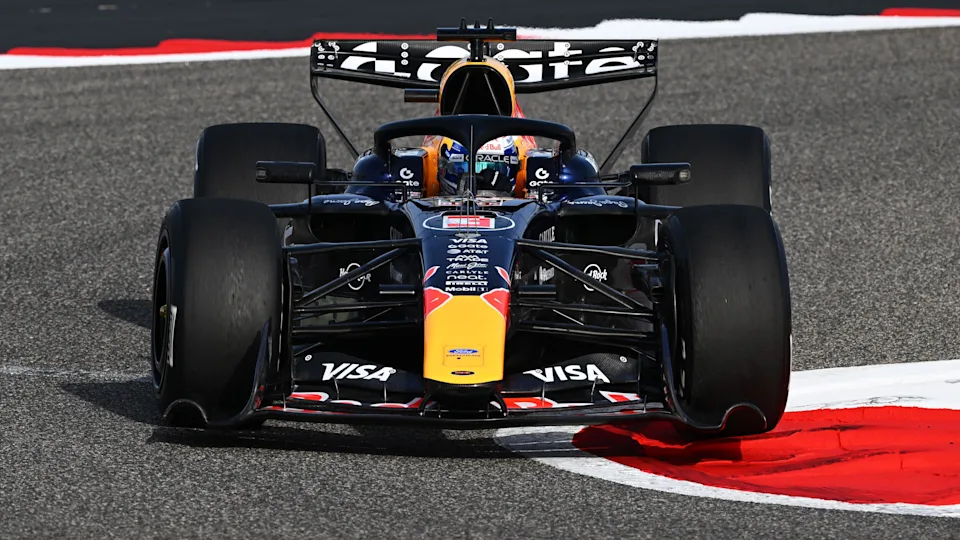
Max Verstappen in his Red Bull during pre-season testing in Bahrain, where the slower corners allow drivers to recover energy more easily than faster circuits [Getty Images]
McLaren team principal Andrea Stella has an intimate knowledge of what it takes to be a top driver, having worked as a race engineer with Michael Schumacher, Kimi Raikkonen and Alonso. He is also interested in this topic for the good of the sport.
Advertisement
He says: “What we’ve seen in Bahrain definitely confirms that it’s the ultimate challenge.
“Probably this is because Bahrain is a harvest-rich circuit, so you drive in a very normal way. And if anything with these regulations the cars slide quite a lot more and the role of the driver if anything is even more involved in extracting the most out of the car.
Advertisement
“Barcelona was a slightly different situation because, being a relatively harvest-poor circuit, there were some special manoeuvres that needed to be made, like not being flat-out in high-speed (corners) in order to balance the level of harvesting and produce the fastest lap time. That meant that in Barcelona not necessarily you could be at the fastest speed in high-speed corners.”
Advertisement
Stella’s remarks refer to the drivers’ need to perform what McLaren’s Oscar Piastri has described as “counter-intuitive” driving techniques.
The combination of a near 50-50 split between the internal combustion engine (ICE) and electrical components, three times the amount of electrical power compared with last year’s engines and a battery about the same size means the new engines are energy starved.
With the battery emptying itself within about 11 seconds of full power, it is emptying and being recharged constantly around a lap. The engineers have to work out how best to deploy whatever energy they can recover through a lap for the optimum performance.
Advertisement
Advertisement
This has led to unnatural techniques, such as not accelerating at full speed out of a corner before starting a qualifying lap until some way down the straight, choosing not to deploy energy for maximum speed in some high-speed corners, even not deploying on the straight at the end of a qualifying lap because the energy was better used exiting a corner elsewhere on the lap.
Other energy-recovery tasks include:
Lift and coast, a feature for many years, where drivers lift off for a short time before applying the brakes for a corner
Using a lower gear than would be optimum for performance in corners so the turbo can be kept spooling fast to recharge the battery
‘Super clip’, where the electric motor is run against the engine at full speed on the straights to recovery energy
But how much of a difference is this really making?
BBC Sport has seen a telemetry data overlay of a quick lap from Bahrain with last year’s cars compared with one from this year.
Advertisement
There are differences. The slow corners are now taken slightly faster, the quick ones slightly slower. Acceleration is initially much faster, but so is the rate at which it tails off later on the straights. The lap time is a couple of seconds slower overall – as is always intended in the case of an F1 rules reset. But fundamentally, the traces look very similar.
Advertisement
And on track? Well, they still look like F1 cars, is the bottom line. It takes a very well trained eye to notice the differences.
Why overtaking is expected to be difficult
Melbourne’s Albert Park, which stages the season-opening Australian Grand Prix from 6-8 March, is an energy-starved circuit because of its long straights and fewer braking zones [EPA]
Nevertheless, there is an ongoing debate in F1 as to whether the new cars have moved the sport too far away from the purity of the driving challenge, and some think changes could be made to reduce the levels of energy management.
Advertisement
At the moment, the rate of energy recovery with the ‘super clip’ – frankly, jargon that would be better kept away from public consumption because of the potential for confusion – can be a maximum of 250kw.
Advertisement
But the engines are capable of recovering energy at 350kw, and do so when a driver has lifted off the throttle. So why not let them do that when flat out?
Another proposal is to reduce the output of the electrical part of the engine, currently limited to 350kw (470bhp), to about 300kw (402bhp) or even 250kw (335bhp). The idea being to cut overall power but allow it to be applied for longer, to make driving feel more natural.
Advertisement
Going even further, some would wish to increase the amount of fuel the engine is allowed to use, and rebalance the ratio between the ICE and electrical, perhaps to 65:35 or 70:30.
The opposing view is that these last two would require wholesale changes to the engine design and other aspects of the car such as gear ratios. Opponents also argue it would not have the effect required.
Advertisement
A related problem is the new ‘overtake’ button. This replaces the drag reduction system (DRS) overtaking aid, which no longer exists because both front and rear wings open on the straights, part of a series of tweaks made as a consequence of the new engine formula.
Advertisement
‘Overtake’ mode provides the drivers with electrical energy for longer. It does not create more power or, as DRS used to, more speed. As a result, overtaking is expected to be difficult.
Herein lies another argument for reducing the electrical output to 300kw – then, the remaining 50kw could be used for overtake mode.
An added complication is that the circuits all require different levels of energy management.
Advertisement
Advertisement
In Bahrain, the above techniques were not really needed because there are a lot of braking phases into slow corners to recover energy in the standard way.
But Albert Park, which hosts the season-opening Australian Grand Prix on 8 March, is an energy-starved circuit, and lift and coast and super clip are expected to be needed extensively, even in qualifying.
Melbourne joins Saudi Arabia, Austria, Silverstone, Monza, Azerbaijan and Las Vegas among the worst circuits for energy – tracks with long straights but not much facility to recover in braking zones.
The teams are in ongoing discussions about whether to take action, and if so, what form it should take, with governing body the FIA and F1.
Advertisement
Advertisement
Stella says: “Definitely there could still be cases in which the driver needs to approach driving in what is not a common way – (where) we just drive as flat as possible, brake as late as possible, go as fast as possible in every corner.
“When it comes to improving the balance between the regulations in their current format, and some other driving challenges, there is time to fix this.
“For instance, there is a way of changing the way in which we deploy the electrical engine such that this requirement to do these special manoeuvres is reduced.
Advertisement
“So there are things that can be done in the future, but I think we should monitor a little bit more in some other circuits (before deciding what to do).”
Boxer Tyson Fury and his father do not appear to have a close — or even friendly — relationship, at least according to the elder Fury’s latest public comments.
“My relationship with Tyson is destroyed,” John said during an appearance on Playbook Boxing. The claim marks a stark contrast to the time when John served as a mentor to his son.
John said the rift between father and son stems from Tyson’s decision to fight Oleksandr Usyk twice. He also cited Tyson’s setback against Deontay Wilder after urging him to decline those bouts.
John Fury and Tyson Fury react during a news conference ahead of the Tyson Fury-Francis Ngannou boxing match at Boulevard Hall Oct. 26, 2023, in Riyadh, Saudi Arabia. (Justin Setterfield/Getty Images)
“I begged and prayed with him before the first fight,” John said. “He’d already been through a full training camp, and then he got cut in the last week. He was worn out from that camp. You can’t just have three weeks rest and then go straight into another seven weeks. That’s what happened.”
“The Gypsy King” lost back-to-back bouts to Usyk. He lost via split decision in the first meeting and via unanimous decision in the rematch.
“Hi everybody, I’m going to make this short and sweet. I’d like to announce my retirement from boxing,” Fury said at the time. “It’s been a blast, I’ve loved every single minute of it, and I’m going to end with this: Dick Turpin wore a mask. God bless everybody, see you on the other side.”
In January, Fury announced plans to come out of retirement and return to boxing in 2026, but his father believes his best days are behind him.
John Fury, father of Tyson Fury, before the Tyson Fury-Arslanbek Makhmudov news conference at Tottenham Hotspur Stadium Feb. 16, 2026, in London.(Harry Murphy/Getty Images)
“I think he’s past his best,” John said. “I’m a no-filter kind of guy — I say it how I see it. I love him, but there are too many people patting him on the back and telling him things that aren’t true, building him up like he’s invincible. He’s not, and he hasn’t been for a while.
Advertisement
Tyson Fury in the stands at the O2 arena in London Oct. 25, 2025.(Steven Paston/PA Images via Getty Images)
“I felt like strangling Sugar afterwards,” John said in reference to the meetings with Usyk. “He’s no Emanuel Steward — he’s nothing like him. He’s just a gym sweeper. That’s all he ever was.”
The Carabao Cup final will see Arsenal and Man City go head-to-head tomorrow
Jake Hackney and Kieran Isgin Tech & gaming affiliate writer
07:36, 21 Mar 2026
This article contains affiliate links, we will receive a commission on any sales we generate from it. Learn more
Advertisement
Manchester City supporters still have the opportunity to grab last-minute tickets for the Carabao Cup final at Wembley. On Sunday (March 22), the Blues will take on their Premier League opponents in their opening chance at silverware this campaign, with seats still available for purchase today.
Whilst Pep Guardiola’s squad may be sitting behind Arsenal in the league standings, they have the potential to dash the Gunners’ dreams of a historic quadruple with victory at Wembley. The sides battled to a 1-1 stalemate when they previously clashed in September, though much has changed since, with City bolstering their roster through fresh acquisitions including Antoine Semenyo and Marc Guéhi.
Man City celebrated a remarkable streak of four consecutive League Cup triumphs between 2018 and 2021, and could claim the silverware for a ninth occasion should they overcome Arsenal on Sunday. Whilst the club’s designated ticket allocation has been exhausted, numerous seats remain obtainable through alternative official sources such as Seat Unique, where supporters can reserve various premium Carabao Cup Final VIP and hospitality options.
These packages aren’t inexpensive, with costs beginning at £1,399 per person for a Taphouse Social – Manchester City ticket, though this promises ‘the ultimate luxury matchday experience’. Within the cost is premium seating on Level Two, Wembley’s central tier featuring cushioned seats delivering exceptional sightlines of the playing surface. Supporters will gain entry to the venue 2.5 hours prior to kick-off, allowing them to experience the Taphouse Social, Wembley’s latest premium space featuring exclusive food and beverage options.
This encompasses a bar serving 48 taps dispensing beers, wine, cocktails, spirits and soft drinks, alongside pies and pastries from Taphouse Bites. Supporters can enter Taphouse Social from two locations around the stadium – West and East – though only passes for the designated Man City section are currently on offer.
Advertisement
It’s worth noting the venue will shut one hour after the final whistle. Seat Unique’s alternative VIP option is the premium Bobby Moore Lounge priced at £3,499 per person.
This features exceptional premium seating positioned on the halfway line, delivering ‘the very best views of the match’ near the dugout and trophy route. The exclusive Bobby Moore lounge is described as among Wembley’s ‘finest hospitality lounges’.
A pass provides seating at a communal table for up to three hours before kick-off and an hour following the match. Within this space, visitors can sample canapés upon arrival and unlimited Laurent Perrier Champagne both before and after the fixture.
Advertisement
Perhaps more significantly, a pass encompasses a complimentary bar of beers, fine wines, spirits and soft drinks. Alongside a four-course meal and cheeseboard served following the game. Comparable packages may be obtainable directly from Wembley Stadium.
With fans able to enquire via this online form. For viewers tuning in from home, the Carabao Cup final will be broadcast live on both ITV and Sky Sports. The match kicks off at 4.30pm on Sunday, March 22.
Indian wrestler Radhika (68kg) has been provisionally suspended by the National Anti-Doping Agency (NADA) following a ruling by the Court of Arbitration for Sport (CAS) in favour of the World Anti-Doping Agency (WADA). The decision overturns her earlier clearance and mandates a fresh investigation into her doping case.
Positive test and Initial clearance
Advertisement
Radhika had tested positive for the banned substance clenbuterol in November 2022. In her defence, she argued that the substance had entered her system through contaminated meat. Accepting this explanation, NADA’s adjudicating panel cleared her in May 2024 after subsequent tests returned negative results.
WADA challenges the verdict
Advertisement
WADA contested the ruling, stating that the investigation lacked sufficient depth and failed to properly evaluate the contamination claim. The global anti-doping body highlighted that key aspects—such as Radhika’s biological passport, dietary sources, and supporting evidence, were not thoroughly examined. It also raised concerns about delays in the handling of the case.
CAS orders reinvestigation
Advertisement
After reviewing WADA’s appeal, CAS set aside the earlier decision and directed NADA to carry out a comprehensive reinvestigation. As a result, Radhika has now been provisionally suspended until the case is reassessed and a final verdict is reached. The outcome of this fresh probe will determine her eligibility to compete in the future.
Broader mplications for Indian sport
Advertisement
The case underlines the complexities surrounding doping violations linked to food contamination—a defence that has surfaced in multiple international cases. It also brings attention to the need for more rigorous anti-doping procedures in India, ensuring investigations align with global standards and leave no room for ambiguity.
Separate Doping Case
Advertisement
In a separate development, Indian middle-distance runner Sneha Kolleri has been handed a three-year suspension after testing positive for a banned substance. Authorities rejected her defence that the violation was caused by contaminated supplements, reinforcing a strict stance on doping violations.
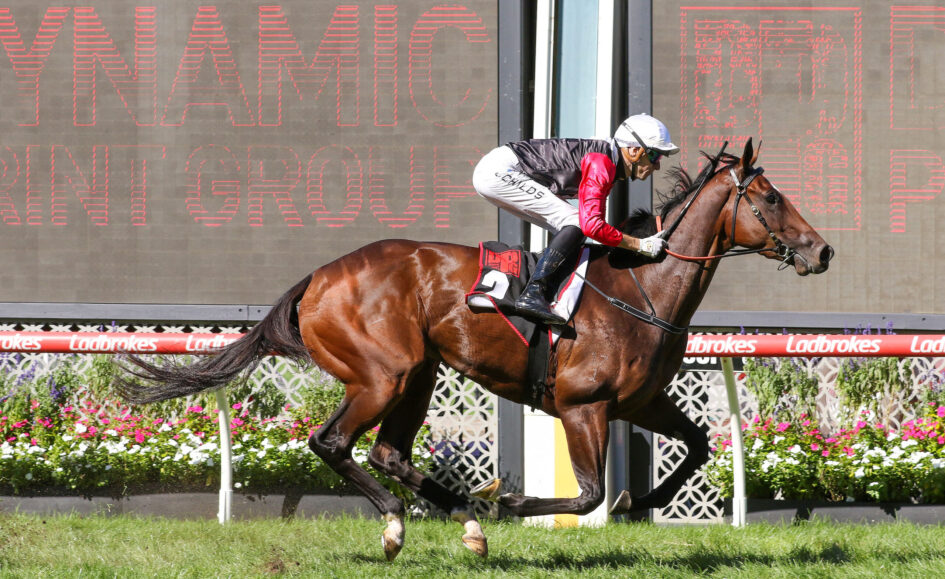
This was the immediate reply from co-trainer Mick Price upon being queried if he welcomed the news of Observer missing from Planet Red’s lineup in the Group 2 Alister Clark Stakes (2000m) at Caulfield on Saturday.
Prepared by Mick Price alongside Michael Kent Jnr, Planet Red targets Caulfield, but Observer turns attention northward to Sydney for Group 1 riches in the Rosehill Guineas (2000m).
“With all due respect to that very good horse Observer, he was unlucky in the Caulfield Guineas, but we ran second and Planet Red’s two runs this time in have been dictated to by bad barriers,” Price said.
“First-up he was ridden cold and whooshed home very well and then in the Australian Guineas, it was the same thing.
“I couldn’t work out how to ride him and watching the race unfold, I think it was the right thing to do.
“It’s a different race on Saturday, different tempo, different barrier, and I think it will be change of tactics.
Advertisement
“In a 2000-metre race when they sit up there will be no need for him to be too far away.”
Planet Red’s preparation could end after the weekend, Price noted, since he hopes to see the gelding gain some physical condition.
He is not entirely sold on Planet Red as a long-distance specialist, but anticipates no trouble with Saturday’s 2000m.
“He’s a strong horse, with a good brain, but while he’s a good size, he just doesn’t have the muscle on him that I would like to see,” Price said.
Advertisement
“He’s done the work to run 2000 metres, He’s fit, very sound and it’s a nice race for him, but I don’t think I will persevere too long this preparation because he’s a growing horse on a good frame.
“I don’t know if he’s a true staying horse, but he’s a nice miler, 2000-metre horse and I think he will come back as a nice four-year-old if we look after him.
Giorgio Visioli looks to carve out a major opportunity for himself, but must first defend his English lightweight title against Levi Giles this Saturday.
The unbeaten southpaw will feature on the undercard of George Liddard vs Tyler Denny, having headlined his own show against Joe Howarth in December.
Over there, he sparred a selection of talented prospects and crafty veterans, while even sharing a few rounds with former two-time world champion Regis Prograis.
Speaking with Boxing News, Visioli said he knew nothing of Prograis’ showdown with Conor Benn on April 11, but ultimately came away from their sparring session with plenty of confidence.
“I didn’t know he was fighting Conor Benn at the time. He was sparring southpaws, so I was thinking he must have a southpaw [opponent] lined up.
“I didn’t even really need to spar him, because he’s a southpaw [and Giles is orthodox], but I couldn’t turn down the opportunity.
“I don’t want to speak bad on his name but I was a bit too sharp for him – I had youth on my side.
Advertisement
“He couldn’t really react to my counters but he was strong, knows all the tricky moves and it was great work.”
While training at the Vegas gym, Visioli was suddenly confronted by a familiar face.
It was, of course, Curmel Moton, a 19-year-old prospect whose young career is being guided by none other than Floyd Mayweather.
Visioli and Moton had previously exchanged barbs via social media, giving contrasting accounts of a prior sparring session, but now, the pair finally had the chance to settle their differences in the gym, albeit with their mouths rather than fists.

Advertisement
Recalling their war of words, Visioli proposed that a slot on the undercard of Mayweather’s rematch with Manny Pacquiao, which takes place on September 19, could offer the best solution, with Moton reportedly fighting on that card either way.
“They definitely found out I was training [at the Top Rank Gym], but he just said a few words and did some sparring.
“When he got out the ring, he was very pumped and just stuck it on me, giving it all this and that. I just kept my cool, giving it back to him, and I loved every moment of it.
“I’ve had the chats with my manager – Eddie Hearn [Visioli’s promoter] wants the fight; [Matchroom CEO] Frank Smith wants the fight – so it’s just on their side, really, if they want to do it on that Manny Pacquiao undercard.
“I think it would build our profiles massively. All the eyes would be on it, especially on a card like that, and I think it’s big enough to be on [the Mayweather-Pacquiao undercard].”
Advertisement
Regarding Moton’s skills in the ring, it is fair to say that Visioli was not exactly blown away.
“I think it’s way too much hype, because he hasn’t really proven himself in the ring yet.
“He’s just stuck some footage up online of him beating up novices, and that’s how he’s built his name – through viral videos like that.
“That’s why I don’t care if I leak [their sparring] footage, because he’s been doing it for years.
“He’s a good fighter, but there’s levels.”
Advertisement
While a clash with Moton makes plenty of sense, and may develop into a compelling rivalry, Visioli could equally see himself challenging for British honours later this year.
The Lonsdale Belt at 135lbs is currently held by Louie O’Doherty, another unbeaten operator, and regardless of whether the title remains in his possession or becomes vacant, Visioli believes this to be a natural next step.
“That’s the plan, definitely. I’ve had that chat with my team and we want the British title at the end of the year. That could be against Louie, or he might decide to vacate and push on.”
Clearly, Visioli is not short of options as he continues to progress in the professional game, with many already tipping the promising stylist for world title success.
Arsenal manager Mikel Arteta has hinted that Martin Odegaard and Jurrien Timber could both be available for selection in Sunday’s EFL Cup final against Manchester City at Wembley Stadium.
Odegaard, 27, has endured a difficult 2025-26 season, missing 21 matches across all competitions due to a number of injuries. He is currently recovering from a knee injury, with his last appearance coming as a substitute in a 4-1 Premier League win at Tottenham Hotspur last month.
Thanks for the submission!
Advertisement
Timber, on the other hand, has been one of Arsenal’s most important players in the ongoing campaign, registering 11 goal involvements in 43 total outings. After being forced off with an ankle issue in a 2-0 win over Everton, he missed his side’s UEFA Champions League clash against Bayer Leverkusen earlier this Tuesday.
Advertisement
During a pre-match press conference, Arteta was asked to shed light on Odegaard and Timber’s injuries and whether the pair will be fit to feature against Manchester City. He replied (h/t GOAL):
“We have another training session (on Saturday), so the ones that are in contention hopefully can give us good news. We have another session, so let’s see if they can make it.”
Opining on his selection headache, the Spaniard added:
“Everybody has been involved in the competition, and on the last day when you have the option to be at Wembley, not to give the opportunity for someone to be there, it’s difficult. So, yes, it’s something to think about.”
Arsenal, who have a nine-point lead over City in the Premier League table, boast a fine head-to-head record against Pep Guardiola’s outfit. They are unbeaten in their last six meetings across all competitions against the Cityzens, winning three.
Arsenal told to keep Martin Odegaard
During a chat with FruityKing, ex-Arsenal midfielder Anders Limpar suggested that his former team should not cash in on Martin Odegaard in the near future. He said (h/t Metro):
Advertisement
“It would be dangerous for Arsenal to sell Martin Odegaard. The other players rely on him so much. The way he shows for the ball and dictates games, who is he taking the pressure off? Declan Rice and that lets Declan Rice do his stuff. He takes the pressure off Martin Zubimendi too.”
Odegaard, whose Gunners contract will run out in June 2028, has scored 42 goals and provided 45 assists in 225 overall outings for the north London outfit so far. He has captained his side to three straight second-place Premier League finishes and one FA Community Shield win.
Kelly Somers: Well, James… good to see you. I always start these interviews by going back to the very beginning. What would a young James Milner have made of what you have achieved – becoming the Premier League all-time record appearance holder?
James Milner: Yeah, I think it’s hard to say. I suppose when you’re that age, you’re just trying to get in the first team, first and foremost… get in and around there and stay in there, and then: ‘What’s the next thing?’ It’s always ‘what’s the next achievement?’ and ‘never rest on your laurels’ sort of thing really. So, yeah, I definitely wouldn’t be thinking too far ahead – never mind 20-odd years ahead and thinking I’d still be playing.
Kelly: Has it all been quite surreal because there’s been so much understandable hype around it… you getting to the record… when you were going to break it and the fact that you have. Has it been quite weird?
Milner: For me, yeah, I’ve obviously been asked about it a lot…
Advertisement
Kelly: Sorry to add to that list of people asking…
James: No, no… it is obviously a nice thing in terms of people acknowledging that it’s a big number. It’s a lot of games, but I’ve just been concentrating on doing my job for Brighton really, and if I hit the number then great. It wasn’t something that I’m like: ‘Ah, I need to do this’. Everyone else asked lots of questions about it and I think the narrative around it then is like, that’s the only reason why I’m still playing, sort of thing. If you spoke to me, or anyone who knows me, I just want to contribute to my team and keep pushing and helping the club here.
There’s been some really nice tributes and stuff like that. Messages I’ve had obviously, which is… I don’t want to downplay those and sort of seem like it doesn’t matter or anything because obviously it’s so nice and some of the things people have said is fantastic… but, for me, individual stuff is something maybe you look at when you’ve finished. For me, it’s always about the team and just doing your job, and hopefully I can keep doing that.
Kelly: What is your first football memory then?
Advertisement
James: First football memory would be Leeds United winning the First Division title [in 1991-92] and my dad picking me up in the lounge and throwing me round and saying: ‘Enjoy it – it might never happen again in your lifetime.’ I would have been five at that point.
Kelly: Oh really? So, at that point you knew it was Leeds for life?
James: Yeah, that was the first memory and then we started going to games and stuff after that. I had a season ticket and, yeah, it went from there.
Kelly: What about kicking a ball? Were you kicking it then? Were you showing an interest?
Advertisement
James: Yeah, I mean maybe. I can’t remember much of it. I remember playing my first ever game for the local team. It was Westbrook Juniors and we lost 16-2 and it was like full-size pitch, full-size goals. You’ve got to bounce back from that score!
Kelly: I love that that’s stuck with you – the actual scoreline… exactly how many you conceded.
James: Yeah, it has. I played a season there and then that team stopped and then the next team I played for was under-12s – I think I was nine. And then I got scouted for Leeds.
Kelly: Which I imagine was the dream, wasn’t it… from your dad lifting you up?
Advertisement
James: Yeah, it was weird really because until that point as a kid, I’d never really thought about being a footballer. Obviously, you love football and I was playing football, but it never crossed my mind that I could actually do it myself. Yeah, for whatever reason… I mean, you’re nine years old and you’re just being a kid really. So, that was the first time and then going and putting the Leeds training kit on and having a trial and… obviously that was special as a Leeds fan and that was the dream then.
Kelly: Can you remember your first training session at Leeds?
James: I remember my first training session with the reserves. David Batty was one side of me and someone else was on the other and I was like, ‘Oh my God’… like, it’s Batts… legend! And getting over that and then pretty quick, I got sent over to the first team.
I don’t know if someone got sent in or if they needed a number and it was like: ‘Go try him with the first team.’ You don’t have time to think about it when you get involved. I just remember the speed of it. It was like, ‘wow, this is ridiculous’.
Advertisement
I remember, like, ‘welcome to the first team, kid’ sort of thing. You get tested, you get shouted at if you give the ball away. I remember breaking my nose actually in training. I got a pretty strong tackle from one of the younger players in the first team. I was 16, he was maybe 20. I got kicked in the face on the floor and broke my nose and… that was one of the early days.
You’ve got to toughen up and get on with it, but you know, the senior boys were great… [Danny] Mills and Gary Kelly and Mark Viduka. Alan Smith was, you know, the one I looked up to. He was the guy who’d come through the academy and scored with his first touch at Anfield and done what we all wanted to do.
Leeds‘ academy had been so great over the years, you know… Harry Kewell and [Jonathan] Woodgate, Paul Robinson, Alan Smith… the list goes on.
Looking back now, at 16, having just done my GCSEs and being with the first team, it’s like, ‘phew’ but at the time, you’re just focused and trying to prove that you belong there.
Advertisement
Kelly: 2002 was quite a big year for you wasn’t it really, with everything? Was it first Premier League goal, Premier League appearance… and you were so young.
James: Yeah, I look back now and you think how young you were. Three, four months before, I’d been doing my GCSEs and my mates were still in sixth form and coming to watch at Elland Road.
Kelly: Can you remember your first goal?
James: Yeah. I think I’d come on early for Harry Kewell maybe. Jason Wilcox whipped it over and I got it at the front post. And then we played two days later at Elland Road – 26th, 28th we played – and, you know, came on early again – someone else got injured – and was lucky enough to score again.
Former India player Aakash Chopra has opined that the SunRisers Hyderabad (SRH) have been hurt the most by injury issues heading into IPL 2026. He highlighted that three of their overseas players are unlikely to be available at the start of the tournament.
Jack Edwards, one of SRH’s overseas signings, has reportedly been ruled out of IPL 2026. Pat Cummins and Eshan Malinga, who missed the T20 World Cup 2026 due to injuries, haven’t yet been cleared by their respective boards.
In a video shared on his YouTube channel, ‘Aakash Chopra,’ the former India batter reckoned that SRH is the franchise most adversely impacted due to injuries heading into IPL 2026.
“At this moment, it seems like a team that will be troubled a lot are the SunRisers Hyderabad. We came to know about the captain. Apart from him, there was hope that Jack Edwards is part of the team, and that he could be used, but you won’t be able to use him as well. He is not there. He has also left,” Chopra said.
Advertisement
“So Jack Edwards has left and Pat Cummins isn’t available at the moment. Brydon Carse is there, but we don’t know about Eshan Malinga. So three of their overseas players aren’t available at the moment, and that is a big problem. So the SunRisers Hyderabad are at the greatest loss at the moment,” he added.
Aakash Chopra highlighted that the SunRisers Hyderabad would have to field Travis Head, Heinrich Klaasen, Brydon Carse, and either Kamindu Mendis or Liam Livingstone as the four overseas players in their playing combination at the start of IPL 2026. He added that the Hyderabad-based side’s problems are compounded by the fact that they are playing only one of their first four games at home.
“It’s a slight issue for them” – Aakash Chopra on KKR’s injury concerns heading into IPL 2026
2025 IPL – Kolkata Knight Riders v Chennai Super Kings – Source: Getty
In the same video, Aakash Chopra noted that the Kolkata Knight Riders (KKR) is another franchise with injury-related issues heading into IPL 2026.
“Another team that was slightly troubled from earlier, and has become even more troubled are KKR because Harshit Rana is not there, Matheesha Pathirana’s status is not known, and Mustafizur Rahman is also not there. So it’s a slight issue for them,” he said.
The cricketer-turned-commentator opined that the Rajasthan Royals (RR) would be hit hard due to Sam Curran‘s potential absence.
“I am slightly worried about Sam Curran. Suddenly, they don’t have an all-rounder. I feel Sam Curran was very important in two aspects. One is that he bowls at the death, and when they would have gone to the Sawai Mansingh Stadium, he would have been a force to reckon with. The side boundaries are long and he would have done the job with his slower ones, but he is not there now,” Chopra elaborated.
Chopra added that RR would once again lack batting depth and might be forced to play either Nandre Burger or Kwena Maphaka.
Advertisement
“Who will bat at No. 8? Suddenly, their batting will stop at No. 7 one more time. They might try to use Shubham Dubey, but you have Ravindra Jadeja at No. 7. You would have had an option had Sam Curran been there, but now you might have to play one of Nandre Burger and Kwena Maphaka,” he observed.
Aakash Chopra highlighted that the Rajasthan Royals (RR) would not be able to play Lhuan-dre Pretorius as they don’t have any vacancies in the top order. He added that the franchise would have to play two overseas batters in Donovan Ferreira and Shimron Hetmyer and a second specialist overseas seamer alongside Jofra Archer.
You must be logged in to post a comment Login