Connect with us
DAPA Banner

Tech

A ‘pound of flesh’ from data centers: one senator’s answer to AI job losses

Published

on

The signs that AI could lead to mass job displacement are already piling up: entry-level job postings in the U.S. have sunk 35% since 2023, mass layoffs have swept across Big Tech, and even AI leaders themselves are warning about what’s coming. 

Backstage at the Axios AI Summit in Washington on Wednesday, Sen. Mark Warner (D-VA) said a venture capitalist recently told him he’s writing software investments down to zero in large part due to the strides of Anthropic’s Claude, and a major law firm told him it’s not hiring first-year associates because AI can now handle much of the work once assigned to junior lawyers.

Warner says the fear of AI-related job loss is “palpable,” even as data from one AI company suggests AI hasn’t yet started taking jobs. As those fears grow, they’re bleeding over into a different fight, which is who should foot the bill.

Warner has a proposal: tax the data centers powering the AI boom and use that revenue to help workers through the transition. He hasn’t introduced legislation yet, but the idea is gaining urgency as public anger toward AI and data centers grows.

Advertisement

Across the U.S., there’s been pushback on data centers, including a bill on Wednesday introduced by Sen. Bernie Sanders (D-VT) and Rep. Alexandria Ocasio-Cortez (D-NY), calling for a data center moratorium. The loudest concerns are about noise, pollution, and rising electricity costs. But there’s a bubbling resentment underneath those concerns, a resistance to suffering the potential ill effects of having a data center in your backyard that powers the technology some fear will replace workers. 

Warner doesn’t plan to support his colleagues’ bill. On stage at the event, he said: “A data center moratorium simply means China is gonna move quicker, and this is one where we can’t lose.”

There’s no stuffing the genie back into the bottle when it comes to AI and data centers, he added. And while Warner believes in strict requirements that ensure data centers don’t pass their water and power costs to residents, he told TechCrunch he thinks there’s another way for communities to extract their “pound of flesh” in a way that addresses the underlying job loss fears. 

Techcrunch event

Advertisement

San Francisco, CA
|
October 13-15, 2026

“I’ve thought for a long time there’s an obligation from the industry to help figure this out and help pay for it, but one of the questions I was asking was, Who should pay?” Warner told TechCrunch. “Should it be the chip makers, Jensen [Huang, Nvidia’s CEO]? Should it be the large language model companies? Should it be the Goldman Sachs of the world who are using these tools to cut back on a number of first-year associates?”

Advertisement

Ultimately, he said, he thinks the “easiest place to extract the pound of flesh is probably going to be from the data centers.”

That could look like putting data center tax revenue toward training for new nurses or funding AI upskilling programs — so long as there’s a “tangible benefit to communities” as they navigate this economic transition AI companies have foisted on them. 

Warner sees it as a way to balance the need to build data centers with some obligation to the communities bearing their costs

The idea is not without precedent. Warner pointed to Henrico County, Virginia which used the tax revenue from a local data center to kickstart a new affordable housing project.  

Advertisement

Finding a way to connect data centers to a tangible benefit to the community will be essential, he says, because otherwise, “the pitchforks are coming out.”

The public mood suggests he could be on to something. According to a recent NBC News poll, AI has a lower public approval rating than Immigration and Customs Enforcement (ICE), with 46% of registered voters viewing AI negatively compared to only 26% viewing it positively. In Virginia, that is playing out in a proposal to repeal the state’s tax breaks for data center buildouts, which cost the state and localities nearly $2 billion a year in lost tax revenue in one of the world’s largest data center markets. Warner says other states might follow suit. 

AI and data centers, he said, are “easy to demonize.”

Source link

Advertisement
Continue Reading
Click to comment

You must be logged in to post a comment Login

Leave a Reply

Tech

Sony has shut down Dark Outlaw Games one year after its founding and while it was reportedly ‘still in the early stages’ of developing its project

Published

on


  • Sony has shut down Dark Outlaw Games one year after its founding
  • The studio was reportedly in the early stages of developing its project
  • Sony is making additional cuts elsewhere, including in mobile development, and “around 50 people” have been laid off

Sony has shut down Dark Outlaw Games one year after its founding, and is also making cuts across mobile game development.

As spotted by Eurogamer, ResetEra user J-Soul first broke the news that a new project was “still in the early stages” of development when Sony pulled funding from the “incubation studio” founded last year under Call of Duty Zombies veteran Jason Blundell.

Source link

Advertisement
Continue Reading

Tech

Beyond the chatbot: At GeekWire summit, AI leaders say the era of autonomous agents is already here

Published

on

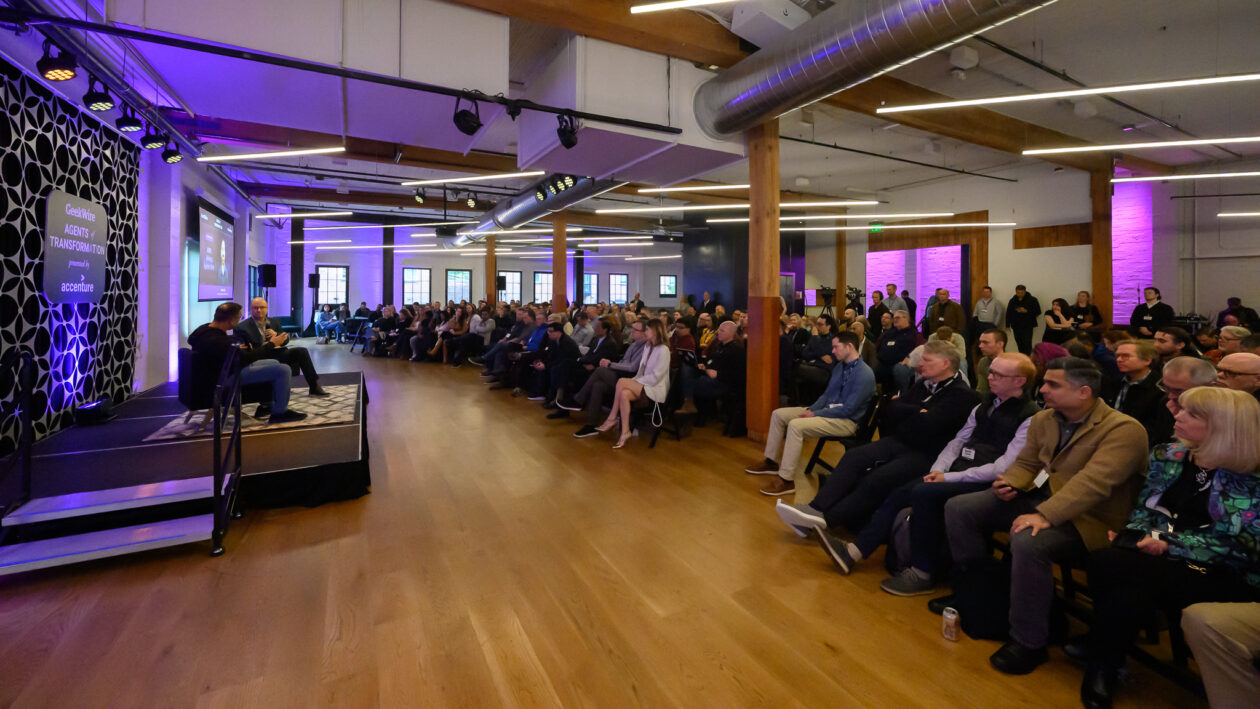
GeekWire’s Agents of Transformation AI summit drew a full house to Block 41 in Seattle on Tuesday. (GeekWire Photo / Kevin Lisota)

The debate over whether AI will transform industries is over.

At GeekWire’s Agents of Transformation summit in Seattle on Tuesday, the founders, executives and engineers in attendance had moved on to harder questions — what’s working, what isn’t, and how fast everything is moving. The through-line across nearly every conversation was a shift from AI as a chat tool to AI as an autonomous actor — software that doesn’t just answer questions but acts on its own, improving as it goes.

Speakers from Microsoft, Amazon Web Services, OpenAI and elsewhere described a world where the constraints that defined their work for decades are dissolving, and where the biggest obstacle to capturing that value isn’t the technology — it’s figuring out how to redesign work processes and organizations that weren’t built with any of this in mind.

Agents of Transformation was presented by Accenture, and builds on an ongoing GeekWire editorial series, also underwritten by Accenture, spotlighting how startups, developers and tech giants are using intelligent agents to innovate.

Keep reading for quick recaps and key takeaways — with the help of AI, of course — from each fireside chat and panel discussion.

Advertisement
Charles Lamanna, Microsoft’s executive vice president of Business Applications & Agents, during GeekWire’s Agents of Transformation event in Seattle. (GeekWire Photo / Kevin Lisota)

Charles Lamanna, Microsoft’s executive vice president of Business Applications & Agents, opened with a moment that caught everyone’s attention: an AI agent declined 17 meetings on his behalf. Not summarized them, not flagged them — declined them.

For Lamanna, that was the moment AI crossed from information retrieval into genuine action. The era of AI as chat assistant, he argued bluntly, is behind us. “The sun has set.”

Three key highlights:

  • Don’t invent new metrics for AI. The biggest trap Lamanna sees companies fall into is building elaborate AI systems disconnected from business outcomes. His rule: use the metrics you already have — revenue, retention, customer satisfaction, cost to serve. “No one’s business metric should be 15 agents deployed,” he said. If the AI isn’t moving a number the CEO already cares about, it’s a hobby.
  • Give everyone great AI, focus on a few big bets. Successful AI transformations share two traits: broad access to tools across the entire workforce, and a small handful of high-priority projects tracked from the top down. Companies with 250 “Gen AI projects” are a red flag, not a success story.
  • Token budget is the new headcount. Lamanna’s teams are already measuring AI spend per engineer as a hiring factor — and candidates are negotiating for it. One engineer told him he’d only take the job if his team had sufficient daily token allocation. “If you hire an engineer that has lived this way of agentic code and you told them your token budget per day is $1,” he said, “they’ll be like, ‘see ya.’” (Read more about that point here.)
Andy Tay, left, global lead – Accenture Cloud First, interviews Julia White, CMO and VP of Worldwide Marketing at Amazon Web Services, during GeekWire’s Agents of Transformation event in Seattle. (GeekWire Photo / Kevin Lisota)

Julia White, CMO of AWS, has spent nearly three decades in marketing — and says her biggest challenge right now is unlearning much of it. Goals she gave up on years ago, like truly personalized one-to-one marketing at scale, are suddenly back on the table.

“I’m daily having to stop and unlearn things that I thought were just true,” she told moderator Andy Tay, global lead – Accenture Cloud First. The constraints that made those dreams impractical simply don’t exist anymore.

Three key highlights:

Advertisement
  • Let it rip — selectively. White’s team sends thousands of emails a month, and for years every one required a human sign-off before it went out. They’ve since built a monitored process that gradually earned enough trust to remove that step entirely. Meanwhile, an experiment using AI for high-production TV ads taught them just as much by failing — they took what worked and applied it to digital display ads, going from roughly 100 variations to vastly more, almost effortlessly.
  • Start with what people hate doing. The fastest path to team buy-in isn’t a big transformation project — it’s eliminating the annoying small stuff. White demoed a new content workflow at an all-hands that cut a three-hour publishing process to 30 minutes. The room broke into spontaneous applause. “That is a new high bar” for rolling out technology, Tay added.
  • Hire people who don’t know the rules. White said she’s deliberately hiring more new graduates than ever — people with no assumptions about how marketing has always worked. Her logic: fresh eyes don’t have to unlearn anything.
Deepak Singh, vice president of Kiro at AWS, during GeekWire’s Agents of Transformation event in Seattle. (GeekWire Photo / Kevin Lisota)

Deepak Singh has spent nearly 20 years at Amazon Web Services building tools for software developers, and his four-word summary of his daily routine says everything about where things stand: “I live with agents.”

The VP behind Kiro, Amazon’s AI-powered developer environment, runs four custom agents every day — one for research, one that writes in his personal style, one that processes email, and one that drafts internal documents. Not a demo. How he actually works.

Three key highlights:

  • How you adopt matters more than whether you adopt. An Amazon internal study of 40-50 engineering teams found a stark divide: teams that bolted AI agents onto existing workflows got 20-40% faster. Teams that restructured their entire environment around agents — cleaner repositories of coding changes, better documentation, clear instructions — got 3 to 10 times faster. The difference wasn’t the tools. It was the setup.
  • Your guardrails were built for humans. Singh’s sharpest point on agent safety: every policy and permission in your organization was designed for human speed. Agents don’t get tired, don’t give up, and don’t stop to ask for help — they just keep going, which means they can repeat the same mistake a hundred times before anyone notices. Permissions designed for people need to be rethought entirely for systems that never sleep.
  • Use them at home, not just at work. Singh’s closing advice went a step further than most: don’t just deploy agents professionally, live with them personally. The more fluent you become, the more you’ll get out of them when it matters.
From left: Liat Ben-Zur of LBZ Advisory, Jeremy Tryba Ai2, Angela Garinger of Outreach, and Emily Parkhurst of Formidable Media during GeekWire’s Agents of Transformation event in Seattle. (GeekWire Photo / Kevin Lisota)

Three practitioners who spend their days in the messy middle of AI deployment — not selling it, actually doing it — kept returning to the same uncomfortable theme: the technology is the easy part.

Angela Garinger of Outreach, Jeremy Tryba of AI research nonprofit Ai2, and Liat Ben-Zur of LBZ Advisory have each watched promising AI rollouts stall not because the tools failed, but because the humans around them did. The panel was moderated by Emily Parkhurst of Formidable Media.

Key highlights:

Advertisement
  • Narrow beats broad, every time. The panel agreed that companies announcing sweeping AI transformation across entire organizations are the ones most likely to fail. The winners are being surgical — picking one particularly tedious task, inserting an agent, measuring the outcome, then scaling. “The ones that are really successful are being very discerning about which high-friction workflow they want to take on first,” Garinger said.
  • Fear is the real adoption blocker. Ben-Zur described a pattern she sees constantly: a pilot works beautifully, early adopters love it, and then rollout just … stops. When teams dig in, the reason is almost always fear — fear of replacement, fear of being judged when the tool makes a mistake.
  • Clarity unlocks everything. Tryba described watching even technically sophisticated researchers hesitate to use AI tools because they weren’t sure what they were allowed to do with them. The fix was simple: a clear matrix of approved uses, posted in Slack. The next day, everyone had signed up. Permission, it turns out, is a forcing function.
  • Track meaningful metrics. Leaders like to tout the hours saved and what percent of employees are using AI, but Ben-Zur said they need to look at the metrics they’ve always valued — has revenue improved, is retention higher, is a feature better performing. “I wouldn’t measure how many hours people save — like, ‘Joey saved five hours.’ I don’t care. What does that translate to for the business?”
Vijaye Raji, left, CTO of apps and head of engineering at OpenAI, talks with GeekWire co-founder Todd Bishop during GeekWire’s Agents of Transformation event in Seattle. (GeekWire Photo / Kevin Lisota)

Vijaye Raji, CTO of apps and head of engineering at OpenAI’s new Bellevue office, has a signature move: propping his laptop open in meetings so Codex — the company’s AI coding tool — can keep building while he’s away from his desk. It’s a fitting metaphor for how he thinks about AI right now — always running, always compounding. The Meta veteran and founder of A/B testing company Statsig spoke about what it actually looks like to live at the frontier.

Three key highlights:

  • Everyone’s a builder now. Raji built himself a personal Slack and email summarizer — running locally, no cloud, no security overhead — in an afternoon using Codex. His point: the barrier to making custom software for yourself has essentially collapsed. “Everyone is going to be a builder,” he said.
  • Capability overhang is the real problem. Models have sprinted ahead of how most people use them. Raji calls this the “capability overhang” — and the people closing that gap, he said, are already many times more productive than those who haven’t noticed it’s there.
  • Engineers are becoming agent managers. The next wave isn’t just AI-assisted coding — it’s a bottleneck shift. Productivity gains from AI are now so fast that the new constraint is humans reviewing all the code coming in. The job title of the future, he suggested, is essentially “manager of agents.”

Thanks against to presenting sponsor Accenture; gold sponsors Nebius and AWS Marketplace; and silver sponsors Prime Team PartnersAstound Business SolutionsOneByZero, Autessa, Pay-i, GemaTEG, Cascade, and WTIA for helping to make the event possible.

Source link

Continue Reading

Tech

WhatsApp rolls out updates including multiple accounts for iOS

Published

on

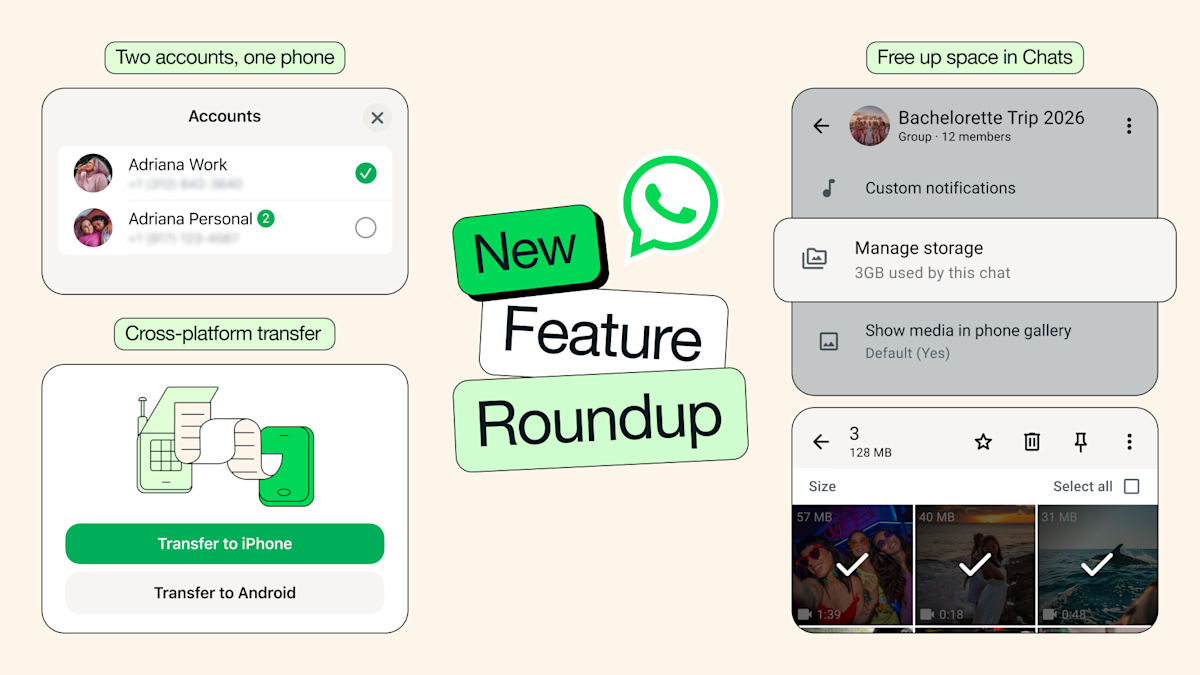
WhatsApp shared multiple quality of life updates coming to its messaging platform starting today. The first is a long awaited option to have two accounts on a single iOS device. The option has been available for years on Android, and iPhone users can now be logged into two separate accounts at once. The profile photo for the account will be visible in the bottom tab to double-check which persona you’re messaging as.

The other new features allow for easier movement of chat histories, both between platforms and devices in the same ecosystem. This chat transfer should make it easier to retain messages when upgrading to a new phone, especially if you’re switching between iOS and Android. There’s also a new option to delete large files directly from a WhatsApp chat to avoid storage clutter. It’s available under the Manage Storage option when you tap a chat’s name. It includes an option to delete just media files from a conversation.

And of course it wouldn’t be a tech news announcement without at least some AI features present. WhatsApp now supports using Meta AI for light photo editing, including removing backgrounds, changing aesthetic styles and deleting elements from the composition. There’s also a Writing Help prompt that uses AI to help draft a message, although Meta’s blog post states that using this still keeps chats private. The above features should be arriving to all WhatsApp users “soon,” according to the company.

Source link

Advertisement
Continue Reading

Tech

Are interdisciplinary teams reshaping work in the engineering space?

Published

on

We spoke with Sarthak Kumar Barik and Stephen Conneely about the engineering sector and how team dynamics are evolving with the times.

Blue and white engineering focus banner with font displayed

As technologies advance, siloed working environments have the potential to become a thing of the past, particularly as we find more convenient and effective ways to stay in contact with globally dispersed peers. 

The engineering space is no different and for Stephen Conneely, the director of QA engineering at Fidelity Investments Ireland, interdisciplinary engineering has reshaped how teams deliver results, especially in an environment where AI-assisted development has become more commonplace.  

Conneely told SiliconRepublic.com, “Teams bring together software engineers, quality engineers, analysts and platform specialists to jointly own problems end‑to‑end, with AI tools supporting activities such as test design, code review, and documentation.

Advertisement

“This shared ownership reduces hand‑offs and allows risks to surface earlier, while maintaining strong governance and accountability. Quality is designed in from the start, with disciplines collaborating to decide where AI accelerates delivery and where human validation remains critical.”

He explained, this is all happening in an atmosphere where engineers are expected to understand how their work impacts adjacent systems, data integrity and the client experience. “The result is teams that move faster with confidence, using AI as an enabler rather than a shortcut and delivering more predictable outcomes in complex environments.”

This is echoed by Workhuman’s Sarthak Kumar Barik, a principal engineer who stated, “As a platform team, our work does not exist in isolation. Product teams across the organisation own use cases built on the same legacy foundation and they face the same migration challenges, often without the same depth of context.” 

It is the responsibility of engineers and other employees, he finds, to close that gap in knowledge. He explained this can be achieved by translating the migration experience into reusable patterns, clear guidance and well-defined integration points that other teams can adopt without starting from scratch. 

Advertisement

He said, “We work alongside product teams as active partners, helping them map their existing behaviour to the new platform, identifying where the gaps are, and making sure each migration they undertake is faster and less risky than the one before. The goal is that knowledge compounds across the organisation rather than staying locked within a single team.”

A more tangible example of this reshaping, he explained, is in how the organisation uses artificial intelligence in the engineering workflow. Workhuman ran an AI-assisted workshop where developers provided context about the system, its architecture, data flows and constraints and used this as the foundation for AI-generated code. 

He said, “The difference compared to generic prompting was striking. When AI is given the real context of your system it becomes a genuine accelerator, producing code that is relevant, grounded and faster to review and adapt. This has changed how both our team and the product teams we support think about velocity.”

Adding, “Interdisciplinary engineering, for us, is less about organisational charts and more about shared context. When platform and product teams work from the same understanding of the system, the target and the tools available, progress accelerates across the board.”

Advertisement

With that in mind, what skills and processes do engineers need to be on top of to ensure they are keeping pace with change across the sector?

Fundamentals and the future

For Conneely, the most in demand skills, in today’s engineering landscape, are a combination of the fundamentals alongside the adoption of emerging technologies. He said, “We continue to prioritise deep capability in software engineering, quality engineering, cloud platforms and data, but increasingly value engineers who can use AI‑assisted tooling responsibly to improve productivity, quality and decision making.”

Engineers should also prioritise the ability to critically evaluate AI‑generated output, apply sound engineering judgement and  develop the ability to understand where human oversight is essential. As well as adopt a systems thinking, automation-first approach and risk-based decision making, which he said are as important as framework or language expertise. 

Advertisement

“Just as critical are communication skills, particularly in regulated environments where engineers must explain technical decisions, including AI usage, in clear business terms. As technology evolves, learning mindset and adaptability are now core competencies rather than nice‑to‑haves.”

Similarly, for Barik, the challenge is often in matching critical but older systems, with newer, more advanced models and processes. He explained, the challenge is not just technical, but more intuitive, as you have to figure out whether you are actually making progress when the system is deeply coupled and cannot be taken offline.

He said, “We defined the target architecture upfront, not as an aspiration but as a concrete end state against which every decision is measured. From there, we decomposed the system into smaller subsystems with a roadmap of agreed milestones. Each milestone represents a discrete, verifiable unit of progress, a subsystem dialed down in the legacy platform and enabled in the new one. 

“Every pragmatic shortcut taken along the way is recorded as technical debt, so the team always knows exactly what remains rather than discovering it later. The most powerful measure of progress has been observability. By instrumenting both old and new systems, we track in real time what percentage of load is flowing through the new platform versus the legacy one. 

Advertisement

“A subsystem is not truly migrated until the traffic data confirms it. Progress is not a milestone ticked off, it is a measurable, visible shift in where the load is flowing.”

Don’t miss out on the knowledge you need to succeed. Sign up for the Daily Brief, Silicon Republic’s digest of need-to-know sci-tech news.

Source link

Advertisement
Continue Reading

Tech

Legal-tech start-up Harvey valued at $11bn after new raise of $200m

Published

on

Harvey’s platform uses AI agents to reduce manual effort for lawyers by running complete workflows for high-volume and increasingly complex tasks.

AI legal-tech start-up Harvey has raised $200m at a valuation of $11bn.

The new funds will be used to further develop the company’s AI agents for legal firms and in-house legal departments, and grow the engineering teams that support them.

The funding round was co-led by returning investors GIC and Sequoia, with participation from existing investors Andreessen Horowitz, Coatue, Conviction Partners, Elad Gil, Evantic and Kleiner Perkins.

Advertisement

Harvey’s platform uses AI agents to reduce manual effort for lawyers by running complete workflows for high-volume and increasingly complex tasks, according to the company, which has now raised more than $1bn to date.

“AI isn’t just assisting lawyers. It’s becoming the system through which legal work gets done,” said Winston Weinberg, CEO and co-founder of Harvey.

“The law firms and in-house teams leading the way are building agents that execute complex workflows so lawyers can focus on judgement, strategy and outcomes.”

The company said it runs more than 25,000 custom agents executing work in fields such as contracts, compliance, litigation, due diligence, and mergers and acquisitions.

Advertisement

“Harvey has become the platform on which legal work runs,” said Pat Grady, partner at Sequoia.

“More than 100,000 lawyers around the world run their most critical work on Harvey, and we believe it’s positioned to become one of the most important companies of the next decade.”

Harvey was founded in 2022 and is based in San Francisco. It claims more than 1,300 customers – including “global law firms and Fortune 500 enterprises” – in more than 60 countries around the world.

In January, Harvey began hiring for roles at a new Dublin office. At the end of last year, the company was valued at $8bn.

Advertisement

The legal-tech start-up sector is a lively one at the moment.

Two weeks ago, Swedish player Legora announced a Series D raise of $550m, bringing the company’s valuation to $5.55bn.

Last November, Canadian company Clio closed a $500m Series G funding round, taking it to a $5bn valuation, and also unveiled its plans for an office in Dublin.

Norwegian software company Newcode will also open a Dublin office after raising more than $6.5m this week, adding to its existing locations in the US and Europe.

Advertisement

And last November, Ireland and UK-based company TrialView secured $4.1m in a growth funding round led by Elkstone Ventures.

Don’t miss out on the knowledge you need to succeed. Sign up for the Daily Brief, Silicon Republic’s digest of need-to-know sci-tech news.

Source link

Advertisement
Continue Reading

Tech

Supreme Court rules ISPs aren't liable for user piracy without intent

Published

on


In a unanimous judgment for Cox Communications, the Court ruled that an ISP is contributorily liable for user infringement “only if it intended that the provided service be used for infringement,” and that intent can be shown “only if the party induced the infringement or the provided service is tailored…
Read Entire Article
Source link

Continue Reading

Tech

Reddit Takes On Bots With ‘Human Verification’ Requirements

Published

on

Reddit is rolling out human-verification checks for accounts that show signs of bot-like behavior, while also labeling approved automated accounts that provide useful services. The social media company stressed that these checks will only happen if something appears “fishy,” and that it is “not conducting sitewide human verification.” TechCrunch reports: To identify potential bots, Reddit is using specialized tooling that looks at account-level signals and other factors — like how quickly the account is attempting to write or post content. Using AI to write posts or comments, however, is not against its policies (though community moderators may set their own rules).

To verify an account is human, Reddit will leverage third-party tools like passkeys from Apple, Google, YubiKey, and other third-party biometric services, like Face ID or even Sam Altman’s World ID — or, in some countries, the use of government IDs. Reddit notes this last category may be required in some countries like the U.K. and Australia and some U.S. states, because of local regulations on age verification, but it’s not the company’s preferred method. “If we need to verify an account is human, we’ll do it in a privacy-first way,” Reddit co-founder and CEO Steve Huffman wrote in the announcement Wednesday. “Our aim is to confirm there is a person behind the account, not who that person is. The goal is to increase transparency of what is what on Reddit while preserving the anonymity that makes Reddit unique. You shouldn’t have to sacrifice one for the other.”

Source link

Continue Reading

Tech

15 jobs to go in Meta’s Irish operations as global cuts announced

Published

on

Just this week, Meta was found to be enabling social media addiction, and endangering children on its platforms.

Meta has begun laying off several hundred employees globally, as the company continues to redirect priorities towards AI.

Some news publications have placed the total number of layoffs globally at 700. According to reports, affected departments include Reality Labs, Facebook, global operations, recruiting and sales.

The tech giant employs nearly 79,000 globally, with around 1,800 in Ireland spread across 80 teams. SiliconRepublic.com understands that around 15 jobs were impacted in Ireland, with no roles in Reality Labs affected – which, The Information reports, is expected to be hit hard globally.

Advertisement

“Teams across Meta regularly restructure or implement changes to ensure they’re in the best position to achieve their goals,” a Meta spokesperson told SiliconRepublic.com. “Where possible, we are finding other opportunities for employees whose positions may be impacted.”

Meanwhile, as the company lays off hundreds, a stock option for its key leaders announced on 24 March could see some of them increase their compensation by more than $900m over the next five years.

Earlier this month, Reuters reported that Meta was planning to cut 20pc or more of the company’s global workforce. Meta called this a “speculative report about theoretical approaches.” It is understood that the latest organisational changes are unrelated to Reuters’ story.

Reports from January 2026 suggested that Meta could cut 10pc of its Reality Labs division, which employs roughly 15,000. In December, it was speculated that the company would be reducing the budget and cutting staff in its ‘metaverse’ sections.

Advertisement

The layoffs highlight a strong shift in how Big Tech companies are approaching work and productivity. In January, Meta CEO Mark Zuckerberg said that 2026 might be the year “AI starts to dramatically change the way that we work.

“We’re starting to see projects that used to require big teams now be accomplished by a single very talented person,” he said.

Meta’s not alone in this – Atlassian, Amazon and Block have all laid off thousands in recent months as slimmer teams and AI tools take the industry by storm. Oracle could also cut thousands of jobs to funnel funds into its AI data centre expansion efforts.

The Instagram, WhatsApp and Facebook parent lost two landmark lawsuits this past week, with critics hailing this as Big Tech’s ‘Big Tobacco moment’.

Advertisement

Earlier this week, a New Mexico jury found that Meta endangered children by misleading users about the safety of its platforms, while yesterday, a Los Angeles jury found that Instagram and YouTube design their platforms to addict young users.

However, the $1.5trn company is only facing penalties of less than $380m for both the lawsuits combined.

Don’t miss out on the knowledge you need to succeed. Sign up for the Daily Brief, Silicon Republic’s digest of need-to-know sci-tech news.

Advertisement

Source link

Continue Reading

Tech

Sony won’t bring back the Vita, but Anbernic did

Published

on

Sony seems to have moved on from the PlayStation Vita, but its influence clearly hasn’t gone anywhere.

Anbernic has just unveiled the new RG Vita and RG Vite Pro, which are two handheld gaming consoles that feature a design inspired by the PS Vita. From the wide layout to the button placement and overall aesthetic, these pay homage to Sony’s last true portable console.

But these aren’t a one-on-one copy, and rather serve as a modern take on the Vita idea.

Everything you need to know about the Vitas

The lineup consists of two variants, namely the RG Vita and RG Vita Pro.

The standard Vita is a more affordable option that featurse a 5.46-inch IPS display with 720p resolution, powered by a Unisoc T618 chipset, paired with 3GB of RAM and 64GB of storage. On the other hand, the RG Vita Pro steps things with a slightly taller 1080p IPS display, a more capable Rockchip RK3576 processor, 4GB RAM, and the same expandable storage support via microSD.

Advertisement

Both models are powered by a 5,000mAh batteries that promise to offer several hours of gameplay.

Built for retro, but doesn’t stick to the past

Anbernic’s new RG Vita series is a throwback to a great age in game, but it isn’t just about nostalgia.

The consoles supports Android (and Linux on the Pro), which allows it to run Android games and the emulators for consoles like PS2, PSP, GameCube, and more. So it is a lot more versatile than its original inspiration. Anbernic is even adding modern touches like WiFi, Bluetooth, USB-C output, and even AI-based features like real-time translate and in-game assistance tools.

That said, this isn’t aiming to be a true successor to the PS Vita. Performane is aimed more at emulation and casual Android gaming rather than running modern AAA titles.

Anbernic has yet to confirm the official pricing, but the devices are expected to land in the budget to mid-range handheld category.

Advertisement

Source link

Continue Reading

Tech

Sony wants to mount your phone on a DualSense controller, and it could change how you game

Published

on

Sony wants to use your phone as a secondary input for a PlayStation controller, and it might actually change how we play games. 

Gaming controllers have come a long way, but let’s be honest, they haven’t changed that much at all. Sure, we got haptic feedback, adaptive triggers, and TMR sensors, but the core design and gameplay have remained the same for decades. Sony might be about to change that, and the solution is your phone.

As reported by CheatHappens, a newly discovered Sony patent describes a hybrid input system that attaches your smartphone to a PlayStation controller using a magnetic attachment unit. 

The phone essentially becomes a second controller, giving developers access to its cameras, gyroscope, touchscreen, and other sensors to create entirely new gameplay experiences.

What’s the need for this patent?

The patent makes an interesting argument. Traditional controllers are excellent for certain game genres, such as racing titles, where physical buttons and triggers shine, but they’re not ideal for first-person shooters.

Advertisement

By mounting a phone onto the controller, developers get access to a much wider variety of inputs, making the hybrid system more versatile across all game genres.

The possibilities are exciting. Developers could use the phone’s camera for in-game avatar customization, leverage motion sensors for spatial awareness, or display extra gameplay data directly on the phone.

Is this just a concept or could it become a reality?

That’s the big question. Sony has filed several unconventional patents in recent years, and most of them haven’t seen the next stage. It’s not just Sony; on average, only 2–5% of patents that are filed actually materialize into a real product, so the probabilities are not in favor. 

However, this patent has several advantages that could help it reach the market. It doesn’t require new hardware, the attachment mechanism should be straightforward, and the potential benefits for gamers are real. 

If Sony can make this work, it could genuinely add more depth to console gaming without asking players to buy an extra accessory.

Advertisement

Source link

Continue Reading

Trending

Copyright © 2025