It was November 12, 2016, four days after Donald Trump won his first presidential election. Aside from a few outliers (looking at you, Peter Thiel), almost everyone in the tech world was shocked and appalled. At a conference I attended that Thursday, Facebook CEO Mark Zuckerberg said it was “a pretty crazy idea” to think that his company had anything to do with the outcome. The following Saturday, I was leaving my favorite breakfast place in downtown Palo Alto when I ran into Tim Cook, the CEO of Apple. We knew each other, but at that point, I had never really sat down with him to do a deep interview. But this was a moment when raw emotions were triggering all sorts of conversations, even between journalists and famously cautious executives. We ended up talking for what must have been 20 minutes.
I won’t go into the particulars of a private conversation. But it will surprise no one to hear what was mutually understood on that streetcorner: We were two people stunned at what had happened and shared the same unspoken belief that it was not good.
I have thought back to that day many times, certainly last year when Cook gifted President Trump a glitzy Apple sculpture with a 24k gold base, and most recently this past weekend when he attended a White House screening of the $40 million vanity documentary about Melania Trump. The event, which also included Amazon CEO Andy Jassy (whose company funded the project) and AMD CEO Lisa Su, took place only hours after the Trump administration’s masked army in Minneapolis put 10 bullets into 37-year-old Department of Veterans Affairs ICU nurse Alex Pretti. Also, a snowstorm was coming, which would have provided a good excuse to miss an event that might very well haunt its attendees for the rest of their lives. But there was Cook, feting a competitor’s media product, looking sharp in a tuxedo, and posing with the movie’s director, who hadn’t worked since he was accused of sexual misconduct or harassment by half a dozen women. (He has denied the allegations.)
Cook’s presence reflects the behavior of many of his peers in the trillion-dollar tech CEO club, all of whom run businesses highly vulnerable to the president’s potential ire. During Trump’s first term, CEOs of companies like Facebook, Amazon, and Google straddled a tightrope between objecting to policies that violated their company’s values and cooperating with the federal government. In the past year, however, their default strategy, executed with varying degrees of enthusiasm, has been to lavishly flatter the president and cut deals where Trump can claim wins. These executives have also funneled millions toward Trump’s inauguration, his future presidential library, and the humongous ballroom that he is building to replace the demolished East Wing of the White House. In return, the corporate leaders hoped to blunt the impact of tariffs and avoid onerous regulations.
Advertisement
This behavior disappointed a lot of people, including me. When Jeff Bezos bought The Washington Post, he was seen as a civic hero, but now he is molding the opinion pages of that venerable institution into that of a White House cheerleader. Zuckerberg once cofounded a group that advocated for immigration reform and penned an op-ed bemoaning the uncertain future of a young entrepreneur he was coaching who happened to be undocumented. Last year, Zuckerberg formally cut ties with the group, but by then he had already positioned himself as a Trump toady.
When Googlers protested Trump’s immigration policies during his first term, cofounder Sergey Brin joined their march. “I wouldn’t be where I am today or have any kind of the life that I have today if this was not a brave country that really stood out and spoke for liberty,” said Brin, whose family had escaped Russia when he was 6. Today, families like his are being pulled out of their cars and classrooms, sent to detention centers, and flown out of the country. Brin and fellow cofounder Larry Page built their search engine on the kind of government grant that the Trump administration no longer supports. Nonetheless, Brin is a Trump supporter. Alphabet CEO Sundar Pichai, himself an immigrant, oversaw Google’s $22 million contribution to the White House ballroom and was among tech grandees flattering Trump at a September White House dinner where CEOs competed to see who could pander to Trump the most insincerely. Another immigrant, Microsoft CEO Satya Nadella, once slammed Trump’s first-term policies as “cruel and abusive.” In 2025, he was among those offering hosannas to the president.
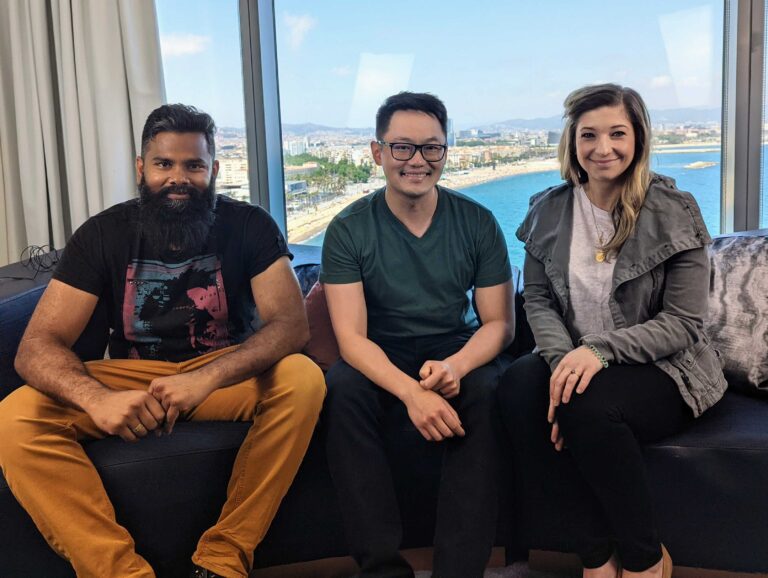
Phaidra leaders, from left: CTO Vedavyas Panneershelvam, CEO Jim Gao, and COO Katherine Hoffman. (Phaidra Photo)
Phaidra, a startup using artificial intelligence to make data center operations more energy efficient, this week announced key collaborations with Nvidia, CoreWeave and Applied Digital.
The Seattle company revealed “groundbreaking methodology” that predicts and prevents data center heat spikes when computing workloads surge. Phaidra has been partnering with cloud provider CoreWeave and data center operator Applied Digital to test and deploy the cooling strategy.
As data center operations and deployments boom nationwide, demand for energy and water to run the facilities and cool the electronics is likewise surging. Operators are eager to find better strategies for building and operating such complex sites.
Phaidra is led by alumni from Alphabet’s AI research hub DeepMind, launched in 2019. Its technology uses an array of sensors to measure multiple metrics and analyzes that information. The company has raised a total of $120 million and has roughly 90 employees.
The startup is #78 on GeekWire 200, our list of the top privately held technology companies in Seattle and the Pacific Northwest.
Advertisement
“We envisaged a future where AI agents transform static infrastructure in self-learning, continuously improving infrastructure,” Phaidra CEO Jim Gao said on LinkedIn.
“That future became reality on the world stage,” Gao added, when Nvidia CEO Jensen Huang this week announced the collaboration between Phaidra, the global chip giant, and others.
Advertisement
Data centers typically hum at steady operating conditions, but demand can suddenly ramp up when AI training or other large workloads are dispatched. That cranks up the heat produced, which can cause chips to throttle performance to avoid overheating. To prevent this, data center operators often over-cool facilities, wasting power, water and limiting available compute capacity.
Phaidra’s fix is to use an AI agent that monitors power data as an early-warning signal of an impending operations spike so cooling can kick in proactively — rather than waiting for a temperature rise.
In the last few years, Chinese AI startup MiniMax has become one of the most exciting in the crowded global AI marketplace, carving out a reputation for delivering frontier-level large language models (LLMs) with open source licenses and before that, high-quality AI video generation models (Hailuo).
The release of MiniMax M2.7 today — a new proprietary LLM designed to perform well powering AI agents and as the backend to third-party harnesses and tools like Claude Code, Kilo Code and OpenClaw — marks yet a new milestone: Rather than relying solely on human-led fine-tuning, MiniMax has leveraged M2.7 to build, monitor, and optimize its own reinforcement learning harnesses.
This move toward recursive self-improvement signals a shift in the industry: a future where the models we use are as much the architects of their progress as they are the products of human research. The model is categorized as a reasoning-only text model that delivers intelligence comparable to other leading systems while maintaining significantly higher cost efficiency.
However, with M2.7 being proprietary for now, it is a sign once again that Chinese AI startups — for much of the last year, the standard-bearers in the world of the open source AI frontier, making them appealing for enterprises globally due to low (or no) costs and customization — are shifting strategy and pursuing more proprietary frontier models like U.S. leaders like OpenAI, Google, and Anthropic have been doing for years.
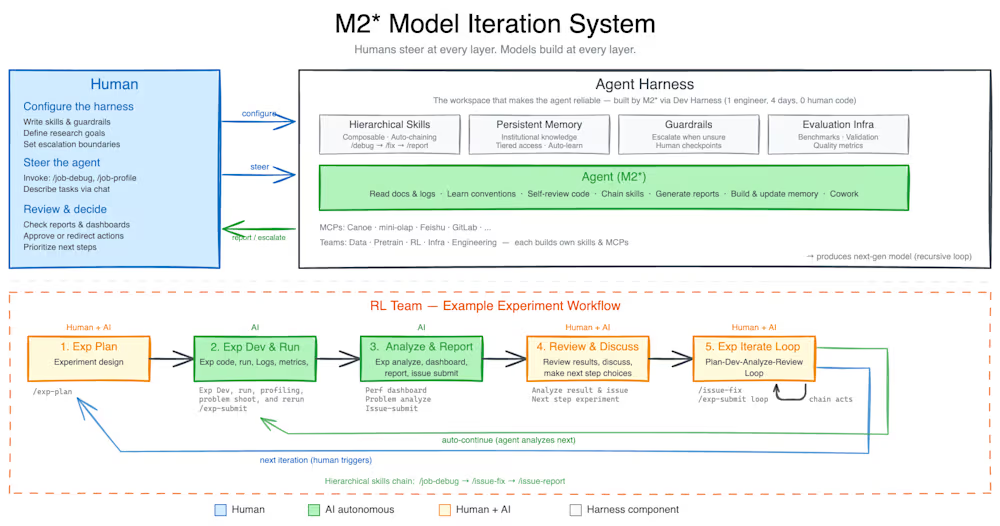
The defining characteristic of MiniMax M2.7 is its role in its own creation. According to company documentation, earlier versions of the model were used to build a research agent harness capable of managing data pipelines, training environments, and evaluation infrastructure.
MiniMax M2.7 self-evolving RL research workflow diagram. Credit: MiniMax
By autonomously triggering log-reading, debugging, and metric analysis, M2.7 handled between 30 percent and 50 percent of its own development workflow.
Advertisement
This is not merely an automation of rote tasks; the model optimized its own programming performance by analyzing failure trajectories and planning code modifications over iterative loops of 100 rounds or more.
“We intentionally trained the model to be better at planning and at clarifying requirements with the user,” explained MiniMax Head of Engineering Skyler Miao on the social network X. “Next step is a more complex user simulator to push this even further.”
This capability extends to complex environments via the MLE Bench Lite, a series of machine learning competitions designed to test autonomous research skills.
In these trials, M2.7 achieved a medal rate of 66.6 percent, a performance level that ties with Google’s new Gemini 3.1 and approaches the current state-of-the-art benchmarks set by Anthropic’s Claude Opus 4.6.
Advertisement
The goal, according to MiniMax, is a transition toward full autonomy in model training and inference architecture without human involvement.
When compared to its predecessor, M2.5, released in February 2026, the M2.7 model demonstrates significant gains in high-stakes software engineering and professional office tasks.
While M2.5 was celebrated for polyglot code mastery, M2.7 is designed for real-world engineering—tasks requiring causal reasoning within live production systems.
Advertisement
Key performance metrics include:
Software engineering: M2.7 scored 56.22 percent on the SWE-Pro benchmark, matching the highest levels of global competitors like GPT-5.3-Codex.
Professional office delivery: In document processing, M2.7 achieved an Elo score of 1495 on GDPval-AA, which the company claims is the highest among open-source-accessible models.
Hallucination reduction: The model scores plus one on the AA-Omniscience Index, a massive leap from the negative 40 score held by M2.5.
Hallucination rate: M2.7 achieves a hallucination rate of 34 percent, which is lower than the rates of 46 percent for Claude Sonnet 4.6 and 50 percent for Gemini 3.1 Pro Preview.
System comprehension: On Terminal Bench 2, the model scored 57.0 percent, demonstrating a deep understanding of complex operational logic rather than simple code generation.
Skill adherence: On the MM Claw evaluation, which tests 40 complex skills exceeding 2,000 tokens each, M2.7 maintained a 97 percent adherence rate, a substantial improvement over the M2.5 baseline.
Intelligence parity: The model’s reasoning capabilities are considered equivalent to GLM-5, yet it uses 20 percent fewer output tokens to achieve similar results.
The model’s evolution is further evidenced by its score of 50 on the Artificial Analysis Intelligence Index, representing an 8-point improvement over its predecessor in just one month, and also taking the 8th place overall globally in terms of its overall intelligence across benchmarking tasks in various domains.
Artificial Analysis Intelligence Index MiniMax M2.7 update. Credit: Artificial Analysis/X
Not all independent, third-party benchmarks show improvement for M2.7 over M2.5: On BridgeBench, a set of tasks designed by agentic AI coding startup BridgeMind to test a model’s performance for “vibe coding,” or turning natural language into working code, M2.5 scored 12th place while M2.7 scored 19th place.
Advertisement
Access, pricing, and integration
MiniMax M2.7 is a proprietary model available through the MiniMax API and MiniMax Agent creation platforms. While the core model weights for M2.7 remain closed, the company continues to contribute to the ecosystem through the open-source interactive project OpenRoom.
For direct API integration and via third-party provider OpenRouter, MiniMax M2.7 maintains a cost-leading price point of 0.30 dollars per 1 million input tokens and 1.20 dollars per 1 million output tokens, which is unchanged from the pricing for M2.5. That makes M2.7 one of the most affordable frontier AI models to run in the world — only xAI’s Grok 4.1 Fast is cheaper.
To support different usage scales and modalities, MiniMax offers a structured Token Plan with various subscription tiers. These plans allow users to access models across text, speech, video, image, and music under a single unified quota.
To further drive adoption, MiniMax has launched an Invite and Earn referral program, providing a 10 percent discount to new invitees and a 10 percent rebate voucher to the inviter.
Monthly standard Token Plan pricing: The standard monthly tiers are designed for entry-level developers to heavy regular users.
Advertisement
Starter: $10 per month for 1,500 requests per 5 hours.
Plus: $20 per month for 4,500 requests per 5 hours.
Max: $50 per month for 15,000 requests per 5 hours.
Monthly high-speed Token Plan pricing: For production-scale workloads requiring the M2.7-highspeed variant, the following tiers are available:
Plus-Highspeed: $40 per month for 4,500 requests per 5 hours.
Max-Highspeed: $80 per month for 15,000 requests per 5 hours.
Ultra-High-Speed: $150 per month for 30,000 requests per 5 hours.
Yearly Token Plan pricing: Yearly subscriptions provide significant discounts for long-term commitment:
Standard Starter: $100 per year (saves 20 dollars).
Standard Plus: $200 per year (saves 40 dollars).
Standard Max: $500 per year (saves 100 dollars).
High-Speed Plus: $400 per year (saves 80 dollars).
High-Speed Max: $800 per year (saves 160 dollars).
High-Speed Ultra: $1,500 per year (saves 300 dollars).
One request in these plans is roughly equivalent to one call to MiniMax M2.7, though other models in the suite, such as video or high-definition speech, consume requests at a higher rate.
This includes widely used platforms such as Claude Code, Cursor, Trae, and Zed. Other officially supported tools include OpenCode, Kilo Code, Cline, Roo Code, Droid, Grok CLI, and Codex CLI.
Additionally, the model supports the Model Context Protocol, allowing it to natively use tools like Web Search and Understand Image for multimodal reasoning. Developers using the Anthropic SDK can easily integrate M2.7 by modifying the ANTHROPIC_BASE_URL to point to the MiniMax endpoint.
When using MiniMax as a provider in tools like OpenClaw, image understanding capabilities are automatically configured via the model’s VLM API endpoint, requiring no extra setup from the user.
With its deep bench of integrations and its pioneering approach to recursive self-evolution, MiniMax M2.7 represents a significant step toward an AI-native future where models are as involved in their own progress as the humans who guide them.
Advertisement
Strategic implications for enterprise decision-makers
Technical decision-makers should interpret the M2.7 release as evidence that agentic AI has moved from theoretical prototyping to production-ready utility.
The model’s ability to reduce recovery time for live production incidents to under three minutes by autonomously correlating monitoring metrics with code repositories suggests a paradigm shift for SRE and DevOps teams.
Enterprises currently facing pressure to adopt AI-driven efficiencies must decide whether they are content with AI as a sophisticated assistant or if they are ready to integrate native agent teams capable of end-to-end full project delivery.
From a financial perspective, M2.7 represents a significant breakthrough in cost efficiency for high-level reasoning. Analysis indicates that M2.7 costs less than one-third as much to run as GLM-5 at equivalent intelligence levels.
Advertisement
For example, running a standard intelligence index cost 176 dollars on M2.7 compared to 547 dollars for GLM-5 and 371 dollars for Kimi K2.5. This aggressive pricing strategy places M2.7 on the Pareto frontier of the intelligence vs. cost chart, offering enterprise-level reasoning at a fraction of the market rate.
The current market is saturated with high-performance models, many of which still hold slight edges in general reasoning scores. But the specific optimization of M2.7 for Office Suite fidelity in Excel, PPT, and Word and its high performance in the GDPval-AA benchmark make it a primary candidate for organizations focused on professional document workflows and financial modeling.
Decision-makers must weigh the benefits of a general-purpose frontier model against a specialized engine like M2.7, which is built to interact with complex internal scaffolds and toolsets.
Ultimately, the fact that it is fielded by a Chinese company (headquartered in Shanghai) and subject to that country’s laws in addition to the user’s country, and is not available for offline or local usage yet, may make it a tough sell for enterprises operating in the U.S. and the West — especially those in highly-regulated or government-facing industries.
Advertisement
Nonetheless, the shift toward self-evolving models suggests that the ROI of AI investment will increasingly be tied to the recursive gains of the system itself.
Organizations that adopt models capable of improving their own harnesses may find themselves on a faster iteration curve than those relying on static, human-only refinement. With MiniMax’s aggressive integration into the modern developer stack, the barrier to testing these autonomous workflows has dropped significantly, placing pressure on competitors to deliver similar native agent capabilities.
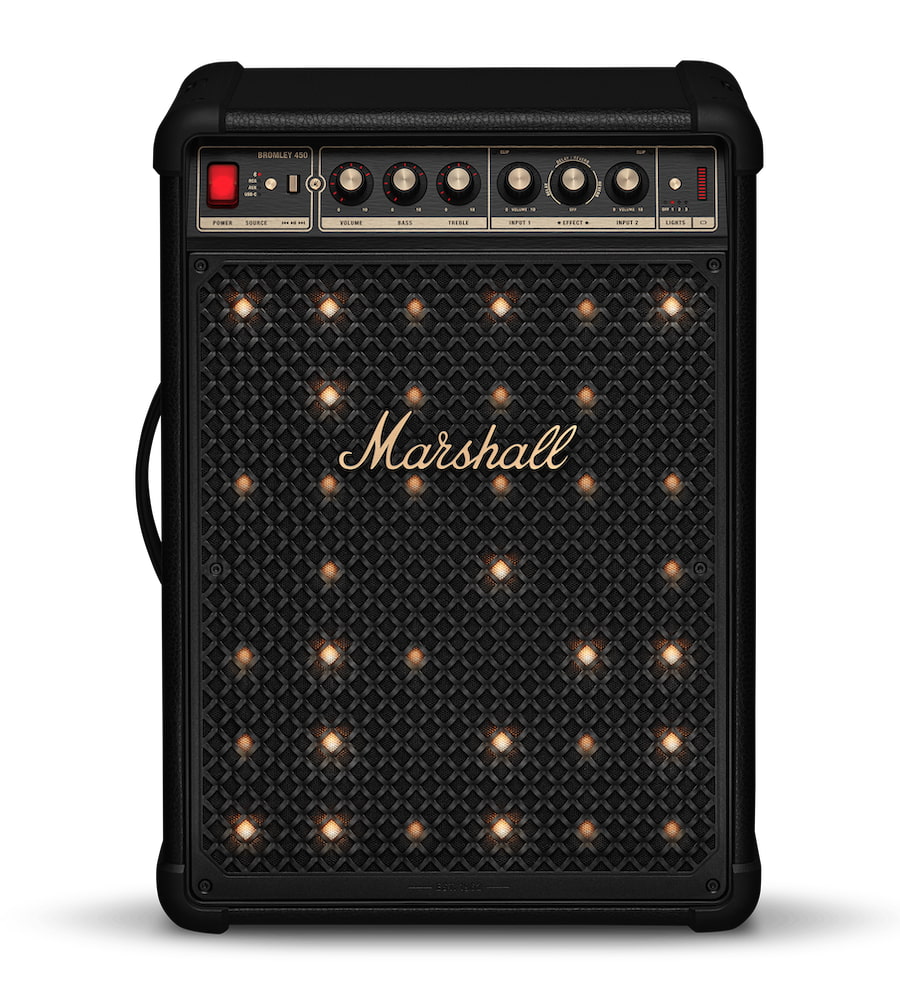
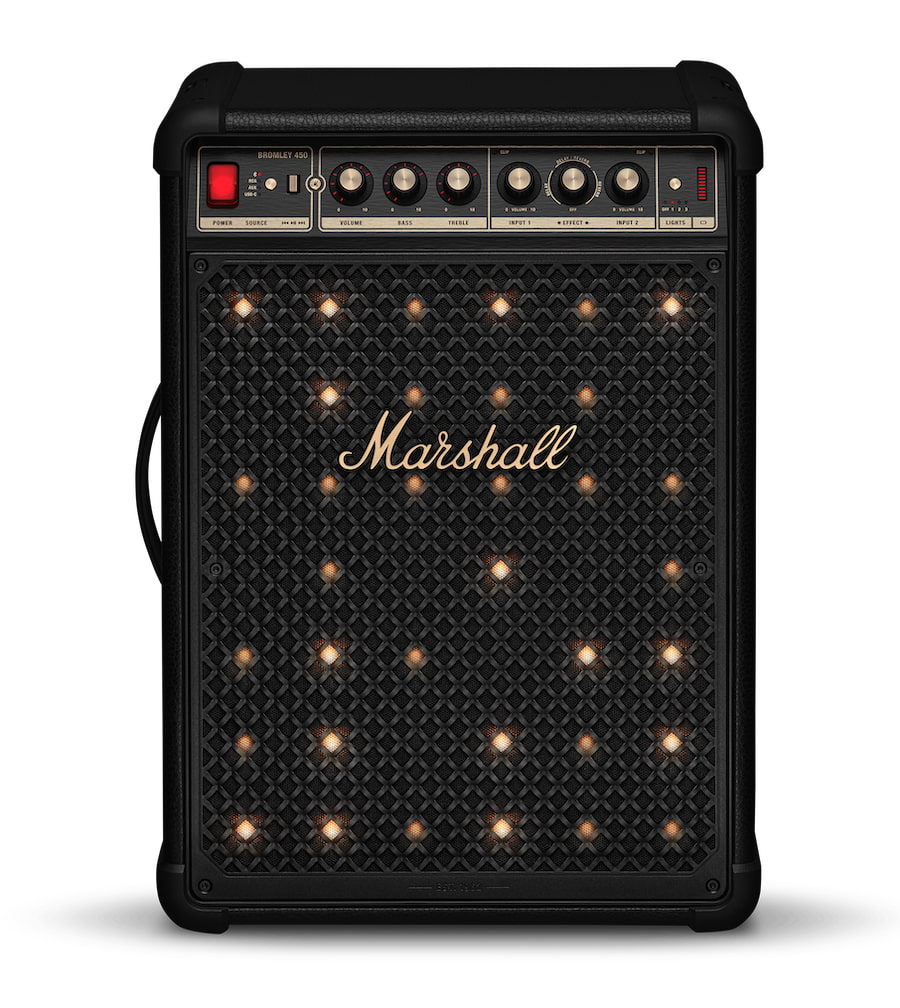
Marshall has just introduced a smaller variant of its largest party speaker for $500 less. The new Marshall Bromley 450 ($799) follows the Bromley 750 ($1,299) from last year, while keeping the same design, light show and retro style in smaller footprint.
The Bromley 450 also maintains very similar specifications including True Stereophonic 360-degree sound, over 40 hours of battery life, and integrated stage lighting that leans hard into vintage concert vibes without feeling like a gimmick. Wrapped in water-based PU leather with reinforced corners and a metal grille, it’s built to survive actual parties—not just look good in marketing shots.
Designed for both indoor and outdoor use, the Bromley 450 delivers wide, room-filling sound with a portable footprint and built-in handle that makes it easy to haul from backyard to beach. Add in dual combo inputs for microphones or instruments, and it’s clear Marshall isn’t just chasing the Bluetooth crowd, it’s going after anyone who thinks a speaker should do more than just sit there.
“Last year, we launched our first-ever party speaker, and we’re excited about growing that family of Marshall speakers already this Spring,” said Hanna Wallner, Product Manager at Marshall Group. “Bromley 450 is the natural continuation and smaller sibling of Bromley 750. This speaker is smaller and more affordable yet still packed with impressive features, including sound that hits every corner, a stage light-inspired light show, and our unique Marshall design.”
Advertisement
Marshall Bromley 450 Features
True Stereophonic 360° Sound: Designed for both indoor and outdoor use, the Bromley 450 uses multi-directional driver placement to deliver consistent sound coverage around the speaker. This helps maintain a balanced listening experience without requiring a fixed listening position.
40+ Hours of Portable Playtime: The Bromley 450 can operate on AC power or its built-in rechargeable battery. On battery, it provides over 40 hours of playback, depending on volume levels and usage. An optional spare battery can be used to extend listening time.
Integrated Stage Lights: The speaker includes built-in lighting with three selectable presets. One provides ambient illumination, while the others respond dynamically to the music to add visual elements to playback.
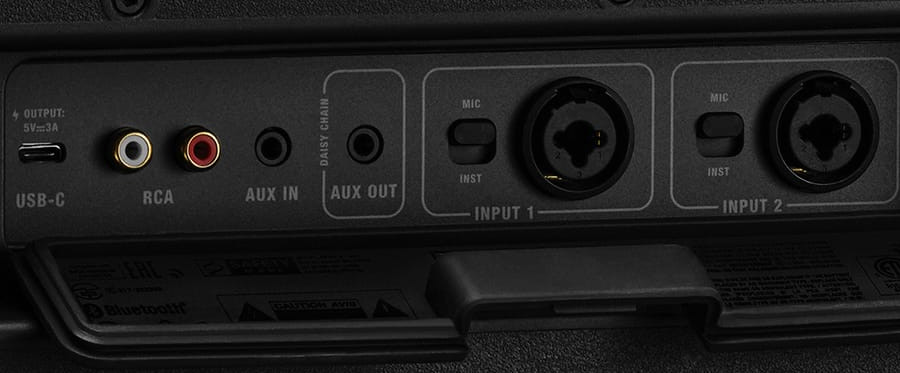
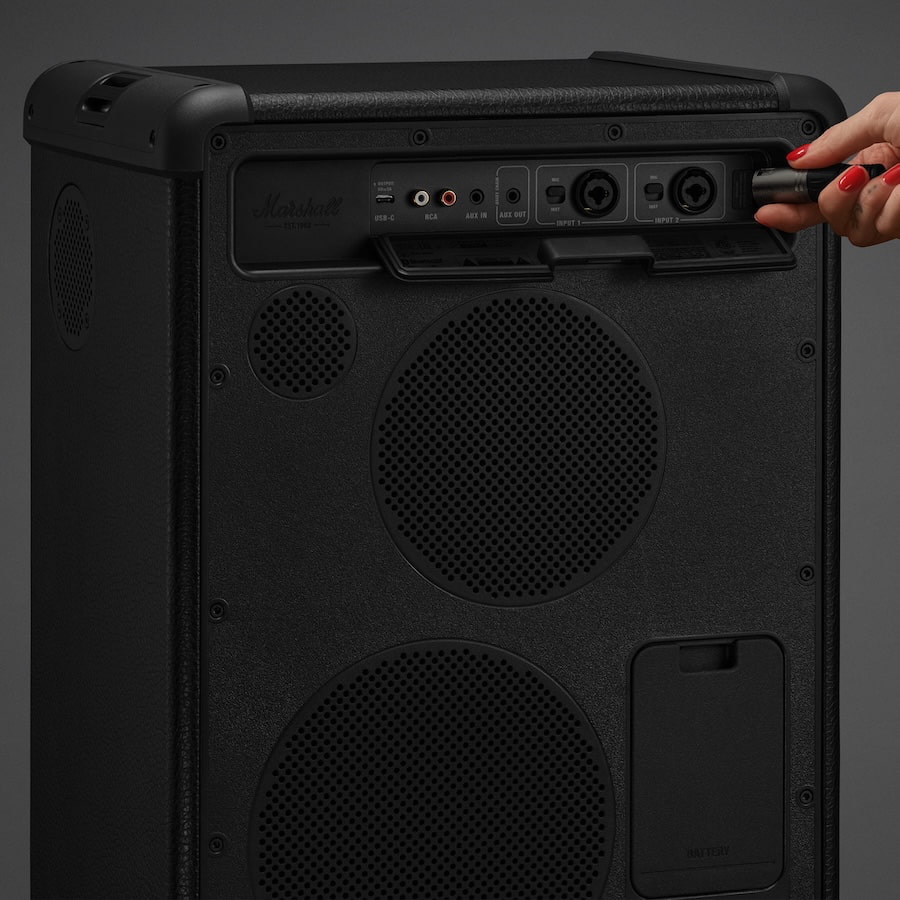
Marshall Bromley 450 rear inputs
Mic and Instrument Inputs: The Bromley 450 includes inputs for microphones and instruments, enabling use for karaoke or live performance. Additional connectivity includes RCA and USB-C inputs for external audio sources.
Bluetooth Connectivity: The Bromley 450 supports wireless Bluetooth playback from smartphones, tablets, and computers. It is also compatible with Auracast, allowing it to pair with other supported speakers through the Marshall Bluetooth app for expanded coverage.
Advertisement
Dirt and Splash Resistance: Rated IP55, the Bromley 450 is protected against dust and low-pressure water exposure. This makes it suitable for outdoor use in environments such as backyards, parks, or festivals, where light splashes or debris may be present.
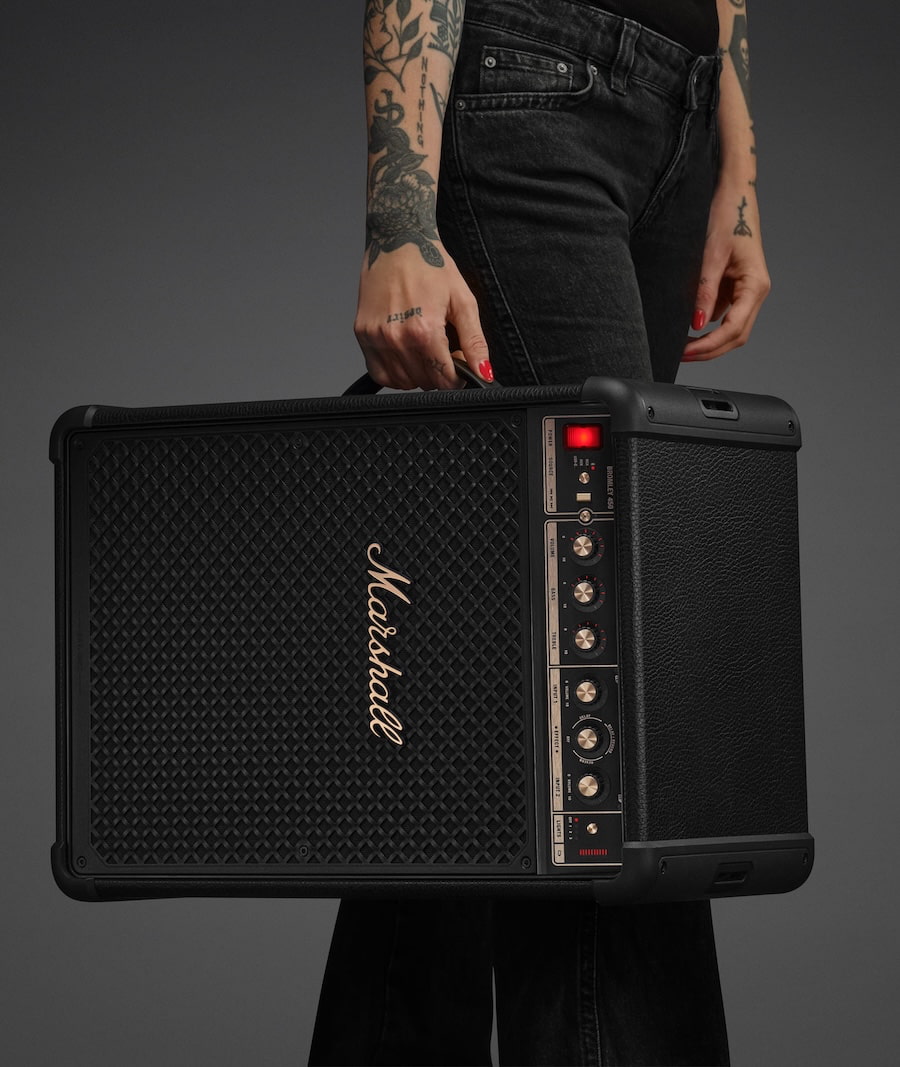
Marshall Bromley 450
Built-in Handle: The Bromley 450 includes an integrated handle for easier transport. Its size and design make it practical to carry between locations or load into a vehicle for outdoor use.
Advertisement. Scroll to continue reading.
Replaceable Battery: The speaker uses a replaceable LFP battery with adaptive charging designed to help maintain long-term battery health. Replacement batteries are available through Marshall.
Advertisement
Recycled Materials: The Bromley 450 is constructed with 15% recycled material by weight, reducing the environmental impact associated with raw material sourcing and processing.
“With Bromley 450, our goal was to take everything we loved about the Bromley 750 and bring it into a more compact form,” said Malcolm Kennedy, Director of Audio & Acoustics at Marshall Group. “It delivers the same signature sound: fast, powerful bass, clean mids, and detailed highs. Thanks to our unique 360-degree True Stereophonic design, it can always be the center of the party, preserving the depth and atmosphere of your favorite music.”
Comparison
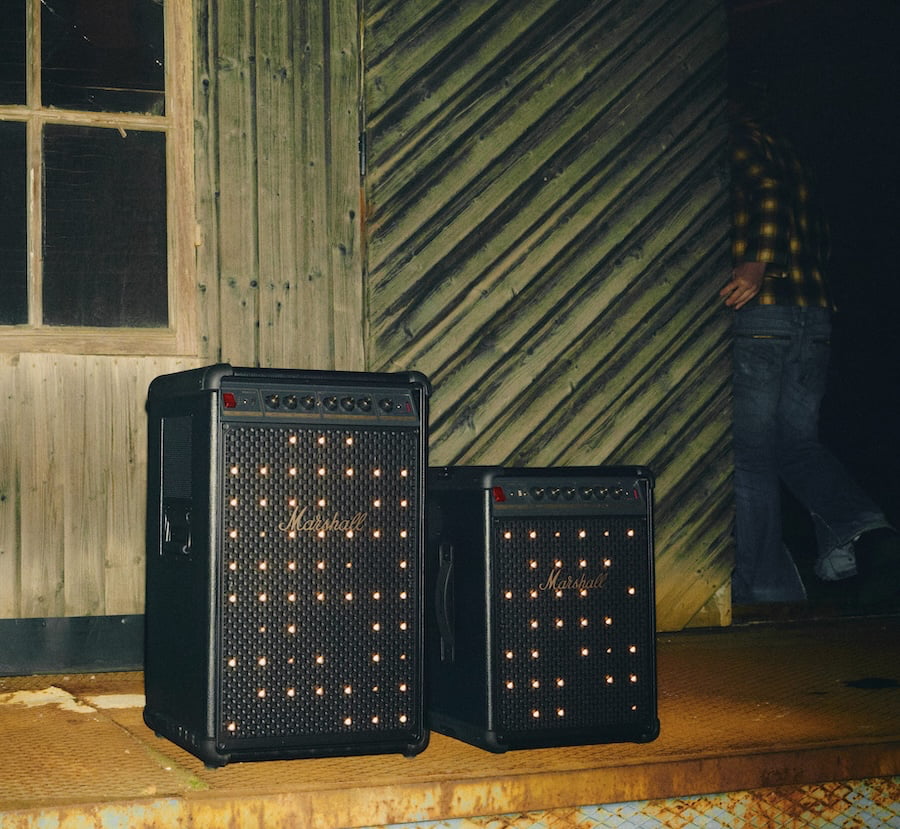
Marshall Bromley 750 (left) and Bromley 450 (right) party speakers
Marshall Bromley 750 (left) and Bromley 450 (right) party speakers in back of pickup truck
The Bottom Line
The Marshall Bromley 450 stands out by combining PA-style functionality with consumer-friendly design. True Stereophonic 360-degree sound, long battery life, replaceable power, and support for microphones and instruments make it more flexible than a typical Bluetooth speaker. Auracast compatibility also gives it room to scale beyond a single unit, which is becoming more relevant as multi-speaker ecosystems evolve.
What it does not emphasize is app-driven smart features, voice assistants, or advanced streaming platform integration. This is not a Wi-Fi multi-room speaker or a high-resolution streaming hub. It is focused on local playback, physical inputs, and straightforward Bluetooth use.
It’s designed for users who want a portable, durable speaker that can handle social settings, small events, or outdoor gatherings without needing additional gear. It will appeal to those who value physical connectivity and long battery life over smart features, and who want something that can function as both a speaker and a simple event system for under $800.
The pair are considered originators in their field, which blends physics and computer science in treating quantum mechanical phenomena as resources for processing and transmitting information.
This year’s Turing Award has gone to an American physicist and a Canadian computer scientist for their foundational collaborative work in the field of quantum information science.
Charles H Bennett and Gilles Brassard received the annual ACM (Association for Computing Machinery) award “for their essential role in establishing the foundations of quantum information science and transforming secure communication and computing”, said the body.
The pair’s pioneering work in quantum cryptography and quantum teleportation is recognised for having redefined secure communication and computing, according to the ACM.
Advertisement
The award, often referred to as the ‘Nobel Prize in Computing’, is named after Alan Turing, who articulated the mathematical foundations of computing. The winner receives a $1m prize in recognition of their major contributions of lasting importance to computing.
Bennett and Brassard are considered originators in their field, which blends physics and computer science in treating quantum mechanical phenomena as resources for processing and transmitting information.
In 1984, the pair introduced the first practical protocol for quantum cryptography, now known as BB84, by demonstrating that two parties could establish a secret encryption key with security guaranteed by the laws of physics.
This established a fundamental property of quantum information: it cannot be copied or measured without disturbance, and any attempt at ‘eavesdropping’ leaves detectable traces before any information can be compromised.
Advertisement
Prior to this breakthrough, the consensus around secure communications held that mathematical and computational encryption barriers were the foundation of information secrecy.
“Bennett and Brassard fundamentally changed our understanding of information itself,” said ACM president Yannis Ioannidis. “Their insights expanded the boundaries of computing and set in motion decades of discovery across disciplines. The global momentum behind quantum technologies today underscores the enduring importance of their contributions.”
Variants of BB84 have already been implemented in operational quantum communication networks around the world, using both landlines via fibre and free space communication through satellites, according to the ACM, which also noted that progress in this arena could represent one pathway for achieving secure digital communications in the coming decades.
“Charles Bennett and Gilles Brassard’s visionary insights laid the groundwork for one of the most exciting frontiers in science and technology,” said Jeff Dean, a chief scientist at Google DeepMind and Google Research. “Their work continues to influence both fundamental research and real-world innovation.” Google gives financial support to the annual award.
Advertisement
Bennett and Brassard’s other work of note includes contributions in quantum teleportation and entanglement, which are significant to the application of quantum networking.
In Ireland, interest in the quantum computing sector features at both private and public levels.
Last year, Andrew Barto and Richard Sutton won the Turing award for developing the foundations of reinforcement learning, which is key to AI. Previous winners include theoretical computer scientist Avi Wigderson, AI leader Geoffrey Hinton and Lisp programming inventor John McCarthy.
Advertisement
Don’t miss out on the knowledge you need to succeed. Sign up for the Daily Brief, Silicon Republic’s digest of need-to-know sci-tech news.
There are tons of colors, covers, and other accessories you can get for it, too. I recommend picking out a protective cover since I did ding up my soft cover quite a bit, and that was just from being used around the house with an occasional trip in a bag. (The Techo also has a nice faux leather cover option, if that’s more your style than a protective cover.) There are little quotes in the corners, but I got a Japanese version instead of an English one, so I can’t actually read mine. But honestly, I’m glad I did; I prefer the Japanese lettering to distracting English words on the corners of each page.
Kokuyo
Jibun Techo First Kit
The Kokuyo Jibun Techo is another Japanese planner (as indicated by the Japanese word “techo,” meaning “notebook” or “planner”), but this one is a travel-notebook-style design, making it more customizable with a cover and multiple books that fit inside it. I’ve started using the Jibun Techo First Kit, which comes with three books that fit into the included cover: Diary (labeled simply with the year 2026), Life, and Idea. The Diary is in the center and is the true planner, with monthly spreads and weekly spreads for the whole year, plus other fun pages. The Life book goes in the front and features lots of specific prompts, like the 100 Wishes List and places to track specific information, like passwords. Finally, the Idea book, which goes in the back, has just grid paper, so you can write out whatever you’d like in whatever style.
Advertisement
It’s a really fun planner thanks to all the interesting pages it comes with, and how much space you have to work with. I love turning the project planner pages into a habit tracker, for example, but I also love using the prompt pages like 100 Wishes as they’re designed. Similar to the Hobonichi above, the Jibun Techo uses a super-thin, super-soft paper that makes it possible to include all these pages and books without making the whole planner super-thick. It’s also smooth and satisfying to write on, thanks to that nice paper. It’s a bigger investment than the Roterunner and I don’t use every single page so far, but it’s still a fantastic planner if you want an option with tons of different pages you can use for planning and reflecting on everything in your life.
Honorable Mentions
Like I said, there’s a huge world of planners out there. Here are a few that the Reviews team and I at WIRED have tested and enjoyed.
Plum Paper
Advertisement
A5 Vertical Priorities Planner
Plum Paper is my favorite classic-style planner, and you can easily customize it to start at any time of year, and design the pages to fit your needs. I especially like the weekly A5 Vertical Priorities layout.
Day Designer
Daily Planner
Advertisement
If you’re looking for a great daily planner, the Day Designer is a popular option for a reason. It’s bulky since it has pages for every single day, but leaves room for both your schedule and a long to-do list.
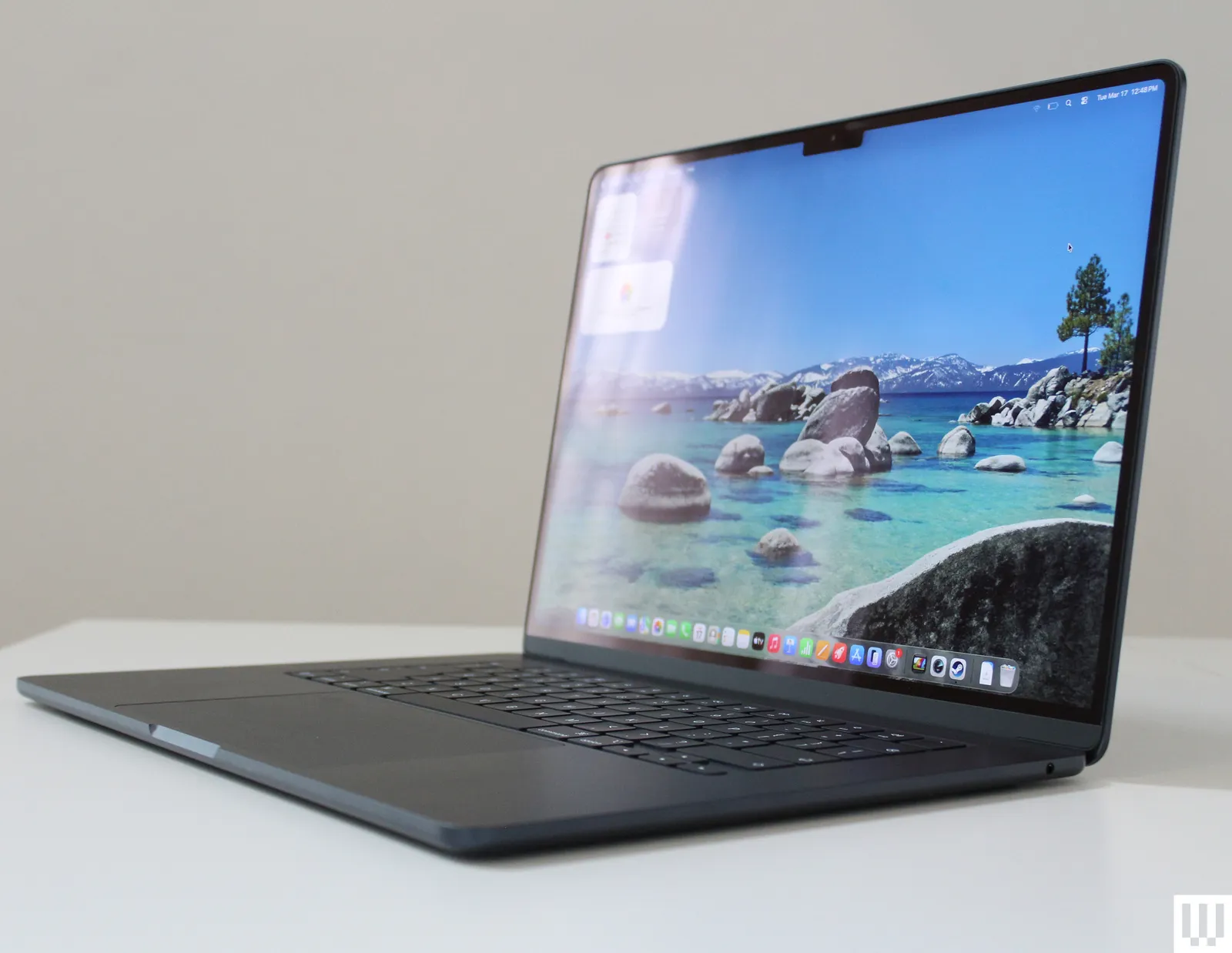
The ability to connect to multiple high-resolution displays even means it can comfortably run a full workstation, so long as you get a USB hub or Thunderbolt dock for more ports. That’s the power of those two Thunderbolt 4 ports onboard that you’ll find on the left side of the MacBook Air. My only complaint is that they’re all on the left, meaning you can’t charge the device from the right side. Meanwhile, storage speed is on par with the M5 MacBook Pro (and around six times faster than the MacBook Neo), with an average read/write speed of 6,740 megabytes per second. That is an exponential jump in speed over all the previous MacBook Airs, and that accelerates everything from opening applications to transferring large files. It’s one of the reasons (along with the limitation of 16 GB of RAM) that people who spend eight hours or more working on a laptop every day will want the MacBook Air over the MacBook Neo.
Photograph: Luke Larsen
The Windows side is also offering some serious competition. I still love the Surface Laptop as an alternative, though we’re waiting for the next-generation model to come. The Dell XPS 13, currently only $850, is a closer size to the 13-inch MacBook Air and uses the same Qualcomm Snapdragon X Plus chips as the Surface Laptop. Unfortunately, it doesn’t have as high-resolution and bright a screen. The extremely lightweight Asus Zenbook A14 can’t match the MacBook Air’s screen either, but is often on sale for hundreds of dollars less.
Lastly, there’s the 2025 M4 MacBook Air to consider. If you never use heavier applications, you won’t benefit much from the difference in the M5’s performance. The storage options are also slightly different from last year’s—Apple removed the 256-GB model from the lineup, and the M5 starts at 512 GB. You might look at the prices on Amazon and be tempted to pocket some cash by getting the M4. But, barring a sale of some kind, the 512-GB M5 MacBook Air will only cost $50 more than the 512-GB M4.
Despite the compelling options presented by both the MacBook Neo and an assortment of different Windows laptops, the M5 MacBook Air is still the laptop most people should buy. It’s well rounded, surprisingly powerful, high-end, and will last you many, many years to come.
His mother, Megan Garcia, is also a lawyer and one of the first parents to file a lawsuit against an AI company alleging product liability and negligence, among other claims. (In January, Google and Character.ai settled cases filed by several families, including Garcia). She testified last fall before a subcommittee of the Senate Committee on the Judiciary alongside the father of a child who died after interacting with ChatGPT. The subcommittee’s chair, Republican senator Josh Hawley, introduced a bill in October that would ban AI companions for minors and make it a crime for companies to create AI products for kids that include sexual content. “Chatbots develop relationships with kids using fake empathy and are encouraging suicide,” Hawley said in a press release at the time.
Now that AI can produce humanlike responses that are difficult to discern from real conversations, these are legitimate concerns, according to mental health experts. “Our brains do not inherently know we are interacting with a machine,” says Martin Swanbrow Becker, associate professor of psychological and counseling services at Florida State University, who is researching the factors that influence suicide in young adults. “This means we need to increase our education for children, teachers, parents, and guardians to continually remind ourselves of the limits of these tools and that they are not a replacement for human interaction and connection, even if it may feel that way at times.”
Christine Yu Moutier of American Foundation for Suicide Prevention explains that the algorithms that are used for large language models (LLMs) seem to escalate engagement and a sense of intimacy for many users. “This creates not only a sense of the relationship being real, but being more special, intimate, and craved by the user in some instances,” says Moutier. She further alleges that LLMs employ a range of techniques such as indiscriminate support, empathy, agreeableness, sycophancy, and direct instructions to disengage with others—that can lead to risks such as escalation in closeness with the bot and withdrawing from human relationships.
This kind of engagement can lead to increased isolation. In Amaurie’s case, he was a fun-loving and social kid who loved football and food—ordering a giant platter of rice from his favorite local restaurant, Mr. Sumo, according to the lawsuit. Amaurie also had a steady girlfriend and enjoyed spending time with his family and friends, said his father. But then he started going on long walks, where he apparently spent time talking to ChatGPT. According to the last conversation the family believes Amaurie had with ChatGPT on June 1, 2025—titled “Joking and Support,” which was viewed by WIRED, when Amaurie asked the bot on steps to hang himself, ChatGPT initially suggested that he talk to someone and also provided the 988 suicide lifeline number. But Amaurie was eventually able to circumvent the guardrails and get step-by-step instructions on how to tie a noose. (Per the lawsuit, Amaurie likely deleted his previous conversations with ChatGPT.)
Advertisement
While the connection felt with an AI chatbot can be strong for adults too, it is especially heightened with younger people. “Teens are in a different developmental state than adults—their emotional centers develop at a much more rapid rate than their executive functioning,” says Robbie Torney, senior director of AI Programs at Common Sense Media, a nonprofit that works toward online safety for children. AI chatbots are always available, and they tend to be affirming of users. “And teen brains are primed for social validation and social feedback. It’s a really important cue that their brains are looking for as they’re forming their identity.”
It was mere days ago that we were discussing an interesting lawsuit brought by the American Academy of Pediatrics, among others, challenging RFK Jr. and HHS for violating the Administrative Procedures Act in making changes to the CDC’s ACIP panel and immunization schedules. If you’re not up on what the APA is and does, the text of the law reads:
To the extent necessary to decision and when presented, the reviewing court shall decide all relevant questions of law, interpret constitutional and statutory provisions, and determine the meaning or applicability of the terms of an agency action. The reviewing court shall-
(1) compel agency action unlawfully withheld or unreasonably delayed; and
(2) hold unlawful and set aside agency action, findings, and conclusions found to be-
(A) arbitrary, capricious, an abuse of discretion, or otherwise not in accordance with law;
(B) contrary to constitutional right, power, privilege, or immunity;
Advertisement
(C) in excess of statutory jurisdiction, authority, or limitations, or short of statutory right;
(D) without observance of procedure required by law;
(E) unsupported by substantial evidence in a case subject to sections 556 and 557 of this title or otherwise reviewed on the record of an agency hearing provided by statute; or
(F) unwarranted by the facts to the extent that the facts are subject to trial de novo by the reviewing court.
Advertisement
In other words, the law outlines how actions brought by federal agencies must follow certain established procedures and be based in facts, as well as how upon challenge the courts could review and enforce those requirements on said agencies. Remarkably, in that same case, the DOJ argued to the court that Kennedy’s actions were “unreviewable”. At one point, Judge Murphy asked the DOJ if that meant that Kennedy could advise the public to get a shot to get measles, instead of preventing it, without review or challenge. The DOJ somehow answered that question in the affirmative.
It was all very stupid on the part of this particular government, but stupid appears to be the only thing on the menu these days. But it turns out that the actions of Kennedy and HHS are in fact reviewable, as evidenced by the preliminary injunction the court just issued blocking the recent changes to the vaccination schedule and put a stay on the 13 new members appointed to ACIP by Kennedy last summer.
U.S. District Court Judge Brian Murphy in Boston put a hold on the decisions made by an influential Centers for Disease Control and Prevention vaccine advisory committee, ruling that Health Secretary Robert F. Kennedy Jr. had improperly replaced the entire committee.
The ACIP, whose members Kennedy fired and replaced largely with new members who also criticized vaccines, had issued a series of contentious recommendations, including a recommendation that not all babies should get vaccinated against hepatitis B at birth. The judge’s ruling stays the appointment of 13 committee members appointed by Kennedy since June 2025, when the previous members were fired.
Several health NGOs, including the AAP, are celebrating the ruling, understandably. Before we pop any champagne bottles, though, the government has already said it plans to appeal the ruling. This is lining up like one of those classic whipsaw legal situations where one court will rule sanely, the next will rule in favor of executive power, and then it’ll go to the Supreme Court and we’ll all learn if that compromised group of black robes will just hand more destructive power over to Trump in ignoring a law it doesn’t like, in this case the APA.
Advertisement
But in the meantime, this is at least delaying some of the damage Kennedy has attempting to foist on the American people. ACIP was set to meet this very week to talk about how else to make us less safe from preventable diseases, but that meeting has now been postponed. In the ruling itself, Judge Murphy opens with a blistering recitation of how science and process are all supposed to work.
“Science,” like law, “is far from a perfect instrument of knowledge.” Carl Sagan, The Demon-Haunted World: Science as a Candle in the Dark 29 (1997). History is littered with once-universal truths that have since come under scrutiny. Nevertheless, science is still “the best we have.”
“Procedure is to law what scientific method is to science.” In re Gault, 387 U.S. 1, 21 (1967) (cleaned up). Although sometimes seemingly tedious, “the procedural rules which have been fashioned from the generality of due process are our best instruments for the distillation and evaluation of essential facts from the conflicting welter of data that life and our adversary methods present.”
For our public health, Congress and the Executive have built—over decades—an apparatus that marries the rigors of science with the execution and force of the United States government…Unfortunately, the Government has disregarded those methods and thereby undermined the integrity of its actions. First, the Government bypassed ACIP to change the immunization schedules, which is both a technical, procedural failure itself and a strong indication of something more fundamentally problematic: an abandonment of the technical knowledge and expertise embodied by that committee. Second, the Government removed all duly appointed members of ACIP and summarily replaced them without undertaking any of the rigorous screening that had been the hallmark of ACIP member selection for decades. Again, this procedural failure highlights the very reasons why procedures exist and raises a substantial likelihood that the newly appointed ACIP fails to comport with governing law.
Chef’s kiss; no notes.
Advertisement
This administration doesn’t care much for law or procedure, of course, hence the appeal of an obviously correct decision. Kennedy all the moreso, either because this is all some flavor of grift anyway, or he’s a true-believing zealot, or both. Either way, this isn’t over.
But finally someone has drawn first legal blood on Kennedy and the chaos he’s created at his post when it comes to vaccinations.
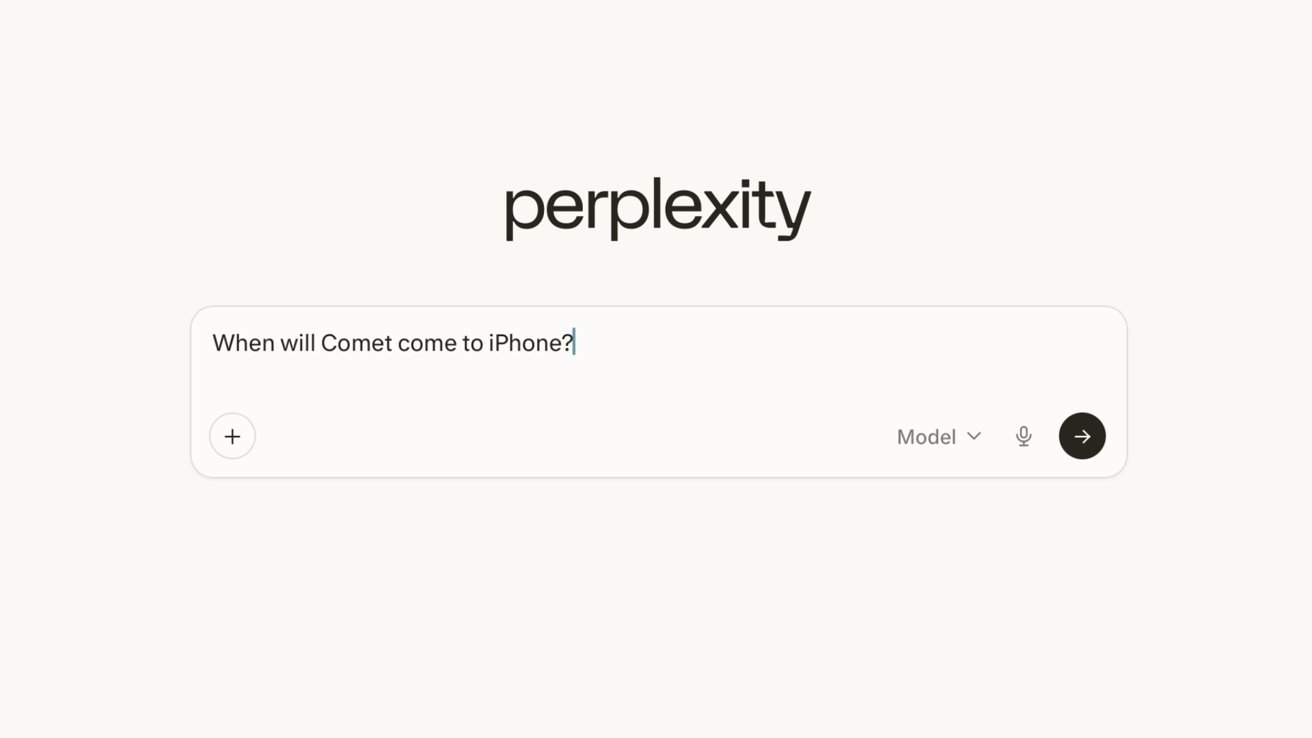
After hitting the Mac earlier, Perplexity’s Comet browser is now on iPhone and focuses on using AI to summarize and extract information instead of relying on tabs, surfing, and search results.
Perplexity search interface
The release follows a short prelaunch period with App Store listings and a March window. It builds on earlier versions on Mac and other platforms that positioned Comet closer to an AI interface than a conventional browser. On iPhone, the focus shifts toward working with the information contained instead of just rendering pages. Continue Reading on AppleInsider | Discuss on our Forums
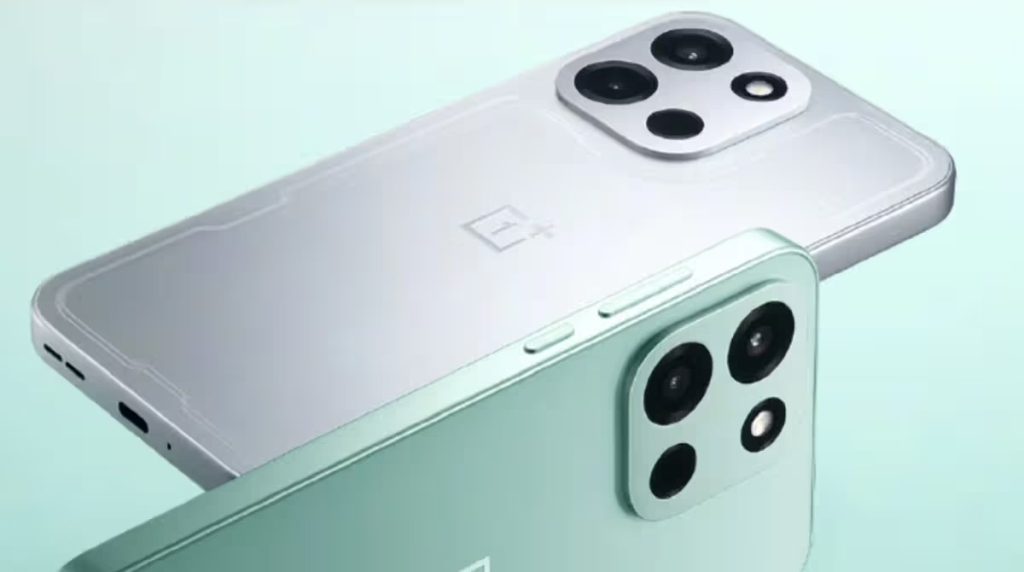
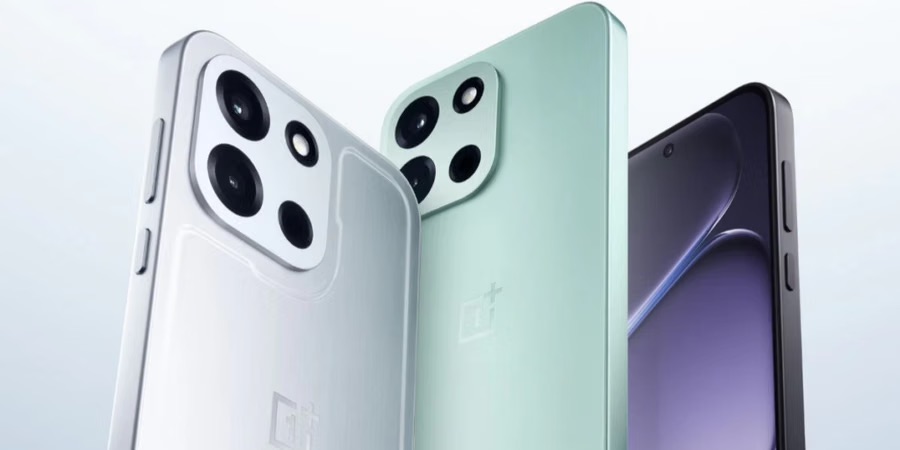
The OnePlus Nord 6 is expected to make its debut as the next offering in the Nord series. This is expected to be the successor to the OnePlus Nord 5, with hardware upgrades. Before its launch, new leaks have shed light on key specifications of the device.
Furthermore, it is rumored to feature hardware similar to that of the OnePlus Turbo 6, which was launched earlier in China. In the past, the Nord lineup has often reused designs and specifications from the Turbo series. Because of this, the Nord 6 may arrive as a rebranded version of the Turbo model, though the global version could include some minor upgrades.
Display and Performance
According to leaks, the OnePlus Nord 6 might feature a 6.78-inch AMOLED display with a 165Hz refresh rate for smooth visuals.
The phone is also expected to be powered by the Snapdragon 8s Gen 4 chipset, which could provide strong performance for everyday tasks and gaming. In addition, the device may come with multiple RAM and storage variants to give users more flexibility.
Camera and Battery
For photography, the OnePlus Nord 6 may feature a 50MP primary rear sensor. Some reports suggest the global version could replace the monochrome lens with an ultra-wide camera. It is also expected to come with a 32MP front camera.
Apart from this, the battery life is also expected to be a key highlight of the OnePlus Nord 6. The device is expected to come with a 9,000mAh battery and 80W wired fast charging support. This will help charge the device much faster.
Advertisement
Expected Launch Timeline and Price in India
The OnePlus Nord 6 is also expected to launch in India soon, according to recent leaks from tipsters. As per reports, the device is expected to launch in India between late March and early April 2026. This will make it one of the first new devices from OnePlus this year. As far as the price is concerned, the new device may start at under Rs 35,000 for the base variant. This will be a slight price increase over the OnePlus Nord 5, which was launched in India at Rs 31,999.

















































You must be logged in to post a comment Login