In an omnichannel landscape, a brand kit is an efficiency engine. While you can operate without one, the friction of manually styling every asset eventually becomes a bottleneck that stifles growth. Having a brand kit allows you to do more in less time—infusing designs with your signature elements and boosting brand recognition across the internet.
The best part? Designing a brand kit has never been easier! With an abundance of tools available to create and store visual styles, there’s little reason to hold back. Ready to stand out with a strong visual brand identity? Read on to learn how to do it successfully.
Decoding visual brand identity
Visual brand image is the holistic collection of sensory elements that represent your brand’s internal character. Going beyond a logo, it functions as a visual language—one designed to communicate values without speaking a word. The logotype, along with color and typography, forms the essential tangibles. There are also intangibles: the emotional responses visuals trigger when paired with your on-brand elements.
Think of your identity as a thread of continuity. Whether a customer encounters a printed banner or uses a mobile app, the visual image ensures they never lose sight of your company. Brand identity is the soul, while a brand kit is the toolbox that houses it. Once your kit is defined, the goal becomes seamless execution. To keep this process lean, businesses often rely on automation tools such as the VistaCreate API. By integrating a brand kit directly into your workflow app, you remove guesswork and maintain a professional standard—ensuring every asset stays on-brand and is ready for immediate use.
FAQ: What is the main component of a brand kit?
If forced to name a single primary component, typography and color often outweigh the logo. The reason is simple: even without a visible logotype, consistent color grading and font choices can still signal exactly which brand is speaking. Consistency is paramount, acting as the conductor of the brand kit symphony.
Advertisement
How to create a brand kit in 6 manageable steps
#1. Focus on foundational strategy
Purpose is the first thing to define if you want to build an exemplary, comprehensive brand kit. Design should be a direct byproduct of your “why.” Begin by identifying three common visual tropes in your industry and intentionally avoiding them (for example, a corporate blue palette and generic isometric illustrations in tech and SaaS). This creates competitive differentiation. Modern consumers increasingly gravitate toward brands that project authenticity and a distinct personality rather than defaulting to industry clichés.
Next, factor in the human element. If you encountered your brand on the street, what would it look like? How would it dress? Would it wear a tailored suit with casual sneakers, lean sporty, or take an entirely different approach?
#2. Build an elastic design system
Omnichannel success requires assets that can stretch from a 16px favicon to a 16-foot banner. To achieve this level of flexibility, focus on three pillars:
Responsive logos: Include stacked, horizontal, and logo-mark (symbol only) versions for tight spaces.
The 60-30-10 color rule: Define a primary (60%), secondary (30%), and accent (10%) color to help non-designers balance palettes.
Type hierarchy: Assign clear roles to fonts. Use a display font for personality and a UI font for legibility in body text.
#3. Focus on a multi-dimensional world
Iconography, texture, depth, and photography POV all play a role in a complete brand kit. These elements give you an edge when core components start to feel familiar to users looking for something more distinctive.
Iconography style: Commit to one style—line-art for a modern, lightweight feel or solid icons for a bold, authoritative tone.
Texture and depth: Define whether your brand uses flat vectors, 3D gradients, brushstrokes, or organic paper textures.
Photo POV: Establish clear photo pillars to give visuals a recognizable style, such as natural lighting, indirect eye contact, or urban settings.
#4. Tune the brand voice
Clear voice and verbiage can set you apart in a crowded social media landscape. While your brand voice will evolve over time, consistency matters most. A distinct personality helps audiences stay engaged across platforms. To sharpen your voice:
Use a slider to define your tone spectrum (e.g., 70% professional, 30% playful).
Create a list of 10-15 “green light” words that reflect your mission (a power glossary).
Define grammar preferences, including Oxford commas, emoji usage, or selective slang.
#5. Operationalize your designs
Make adoption easy by creating a library of ready-made layouts—social media posts, banners, posters, flyers, business cards, and other templates—designed for quick content input and publishing. “Safe zone” templates for Instagram Reels, Facebook posts, and TikTok ensure UI elements don’t obscure key messaging and are ready for immediate release.
With online graphic design editors like VistaCreate, you can create cohesive branding at scale. Applying brand kit templates turns any layout into a compelling asset in one click, ensuring speed-to-market never compromises quality. Internal slide decks and invoices can follow the same system, extending the brand experience 360 degrees.
#6. Update your brand kit as needed
Evolution is natural, and your brand style is no exception. Use your brand kit actively, but regularly reassess where your company is headed and how market changes may require adjustments. For example, ask your social media manager which elements are hardest to use and address that friction quickly.
Advertisement
Finally, update your kit whenever your business changes—whether that’s introducing a new color palette for a product launch, adding a typeface for blog content, or expanding into new platforms. After updating, don’t forget to register your brand kit in the online design tool you use (e.g., “brand kit v2.1 – 2026”) to prevent outdated assets from being reused.
Bottom line
Crafting a brand kit doesn’t have to be complicated. Think of it not as a static document, but as a living ecosystem that reflects your visual brand identity. The initial time investment pays off across every post, ad, and email you publish. Whether you build a full system from the start or begin with core elements only, remember that a brand kit is dynamic—and should evolve as your company scales.
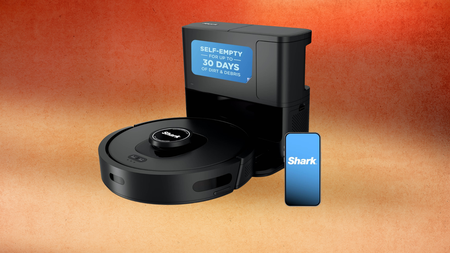
If keeping your floors clean without lifting a finger sounds appealing, a robot vacuum with a self-emptying base that goes a full month between empties makes that promise far more convincing than most.
The headline feature is Matrix Clean Navigation, which maps your home using 360-degree LiDAR and then cleans in a precise grid pattern, taking multiple passes over the same area to ensure dirt and debris are not simply nudged aside rather than picked up.
Advertisement
That methodical approach matters most in homes with pets, where hair, dander, and fine dust tend to settle into carpets and along skirting boards in ways that a single-pass robot would routinely miss on a standard cleaning run.
The self-cleaning brushroll addresses the specific frustration of hair wrapping around the roller, which tends to be the maintenance task that makes robot vacuum ownership feel like more effort than it is worth over time.
Once the robot returns to its base, the collected debris is automatically transferred into the bagless 30-day capacity unit, which uses true HEPA filtration to trap 99.97% of dust and allergens down to 0.3 microns, keeping the air cleaner as well as the floor.
Advertisement
Battery life runs to up to 120 minutes per charge, and the Recharge and Resume function means the robot will return to its dock mid-clean if needed and pick up from where it stopped rather than starting the whole floor plan over again.
Scheduling and on-demand cleaning can both be handled through voice commands via Amazon Alexa or Google Assistant, which adds a layer of convenience for anyone who already runs a smart home setup.
At just over half its original price, the Shark AV2501S AI Ultra Robot Vacuum is a strong option for pet owners or anyone in a larger home who wants genuine whole-floor coverage without the ongoing cost of replacement bags.
We have tested several Shark’s vacuum cleaners across different price points, and our Shark vacuum cleaner reviews are a useful starting point if you want to compare models before buying.
Dutch healthcare software vendor ChipSoft has been impacted by a ransomware attack that forced the company to take offline its website and digital services for patients and healthcare providers.
ChipSoft is a large provider of Electronic Health Record (EHR) systems in the Netherlands. Its flagship platform, HiX, is used by many Dutch hospitals.
Earlier this week, users on Reddit reported that the digital solutions developer for the healthcare sector was affected by a cybersecurity incident.
Local media confirmed that the company was hit by a cyberattack, based on an internal memo ChipSoft circulated to healthcare institutions, alerting them of “possible unauthorized access.”
The IT services provider reportedly assured healthcare center operators that it was taking all measures to “limit the adverse consequences as much as possible,” while advising them to disconnect from its systems until the cleanup is completed.
The agency stated that it is working with the firm and healthcare institutions to identify the impact and help them recover.
As a precaution, ChipSoft disabled all connections to its Zorgportaal, HiX Mobile, and Zorgplatform digital health services.
While some media outlets in the Netherlands said that most patient-facing systems are working normally, there have also been multiple reports that the same systems are unavailable at various hospitals.
Advertisement
Confirmed reports about system outages concern Sint Jans Gasthuis in Weert, the Laurentius in Roermond, the VieCuri hospital in Venlo, and the Flevo Hospital in Almere.
BleepingComputer has contacted ChipSoft to ask for more information about the incident, but we have not received a response by publication time.
Cyberattacks on healthcare IT system providers can be very damaging and lucrative for threat actors, as these companies operate information hubs for multiple healthcare centers, managing troves of sensitive data.
Last month, healthcare IT firm CareCloud disclosed a data breach incident that exposed sensitive data and caused a multi-hour service disruption.
Advertisement
Earlier in March 2026, Cognizant’s healthcare IT company, TriZetto Provider Solutions, suffered a data breach that exposed the sensitive information of over 3.4 million people.
Automated pentesting proves the path exists. BAS proves whether your controls stop it. Most teams run one without the other.
This whitepaper maps six validation surfaces, shows where coverage ends, and provides practitioners with three diagnostic questions for any tool evaluation.
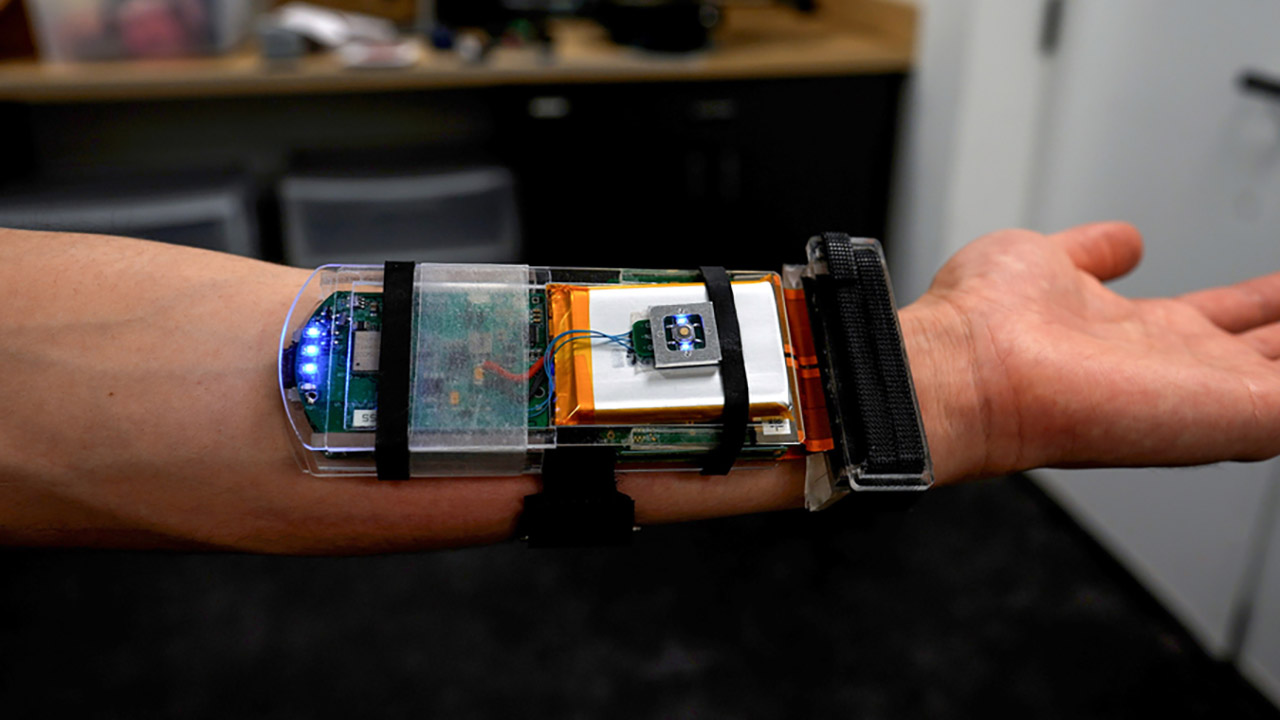
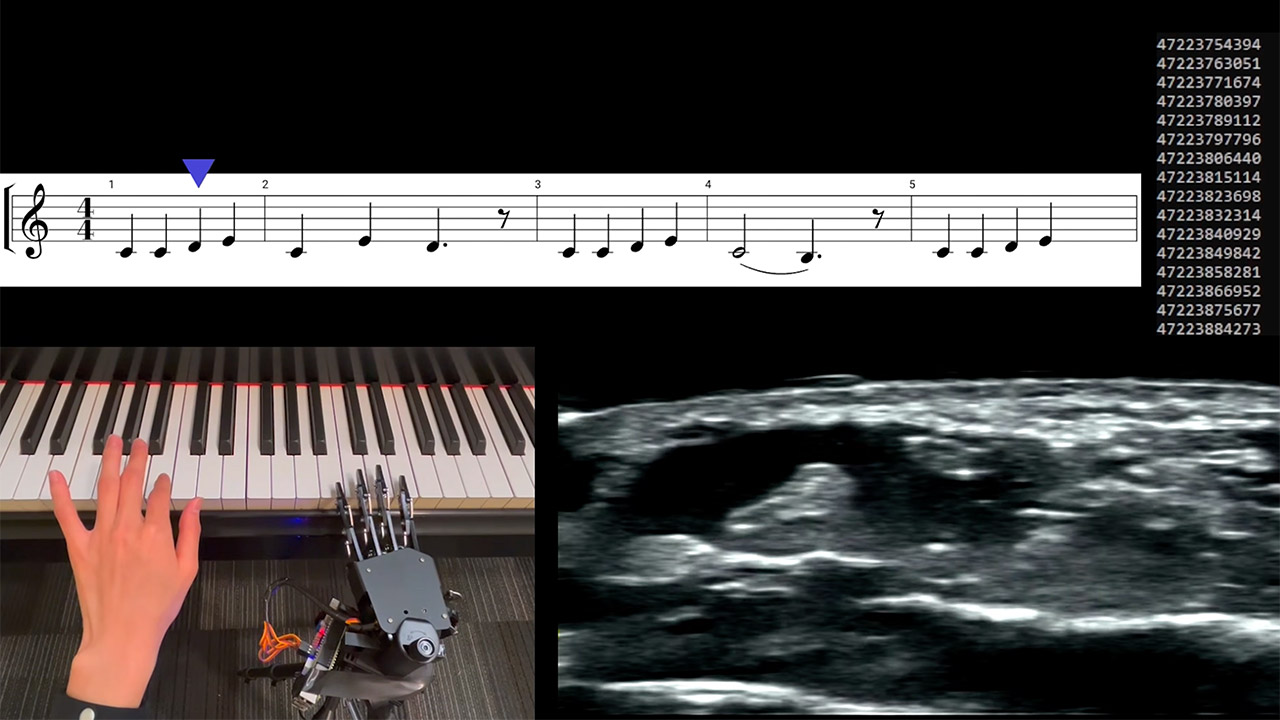
MIT engineers have created an innovative wearable wristband that can measure hand movements with super-high accuracy, even minor shifts in between. Dian Li, a graduate student, demonstrated the technology by moving her hands around as if she were in real life, and a robot hand on the opposite side of the room could duplicate every finger bend and palm tilt.
This little band employs tiny ultrasonic stickers that sit flat against the skin, just like a watch, and compact electronics around the size of a phone manage the processing, all of which sits snugly on the band itself. Sound waves enter the wrist and bounce off the muscles, tendons, and ligaments, creating a vivid black and white image of what is going on inside your wrist. And those images demonstrate how much the tissues stretch and glide as you curl or extend a finger.
LEGO SET FOR ADULTS – The WALL-E and EVE (43279) building set offers adults 18 years old and up an immersive construction challenge featuring…
4 DISNEY PIXAR CHARACTERS – Builders can create iconic robots WALL-E, EVE, M-O and Hal from the hit movie—each with authentic functionality like…
MINDFUL BUILDING EXPERIENCE – This detailed construction set lets builders practice advanced construction techniques for an immersive and relaxing…
The team has compared tendons to puppet strings, and one of their team members, Gengxi Lu, stated that being able to take a snapshot of those strings at any one time provides a very precise picture of where your hand is positioned. Your fingers can move in a variety of ways, from basic bends to many various angles, and ultrasound images reveal every single one of these changes in crystal clear clarity. An AI algorithm then takes this information and explores all of the patterns in the photographs, learning how to match them up with the real motions, all with the help of some training from volunteers who have provided the program with a plethora of labeled samples.
So, during these recording sessions, volunteers sat down with cameras tracking their hand movements as the band collected ultrasound data. The AI then went through and studied the matched pairs until it was able to figure out the movements for itself using only a fresh image. Then, when they tried it on eight people with various hand and wrist shapes, they discovered that it recognized every single move, whether it was spelling out the 26 letters of American Sign Language, picking up a tennis ball, a plastic bottle, a pair of scissors, or even a pencil. And the forecasts came in quickly enough for them to apply it in real time without any issues.
It’s fair to say that other approaches are rather constrained in their own ways, yet this band manages to overcome all of them. Cameras tend to lose track if there is an obstruction in the path or if the lighting changes even slightly. Sensory gloves tend to get in the way and reduce touch sensitivity. Sensors that detect electrical impulses from the forearm may receive a lot of background noise and miss the subtle distinction between open and closed postures. The ultrasonic approach from the wrist avoids all of this by simply looking at the movement source directly, eliminating the need for any specific views or covers. [Source]
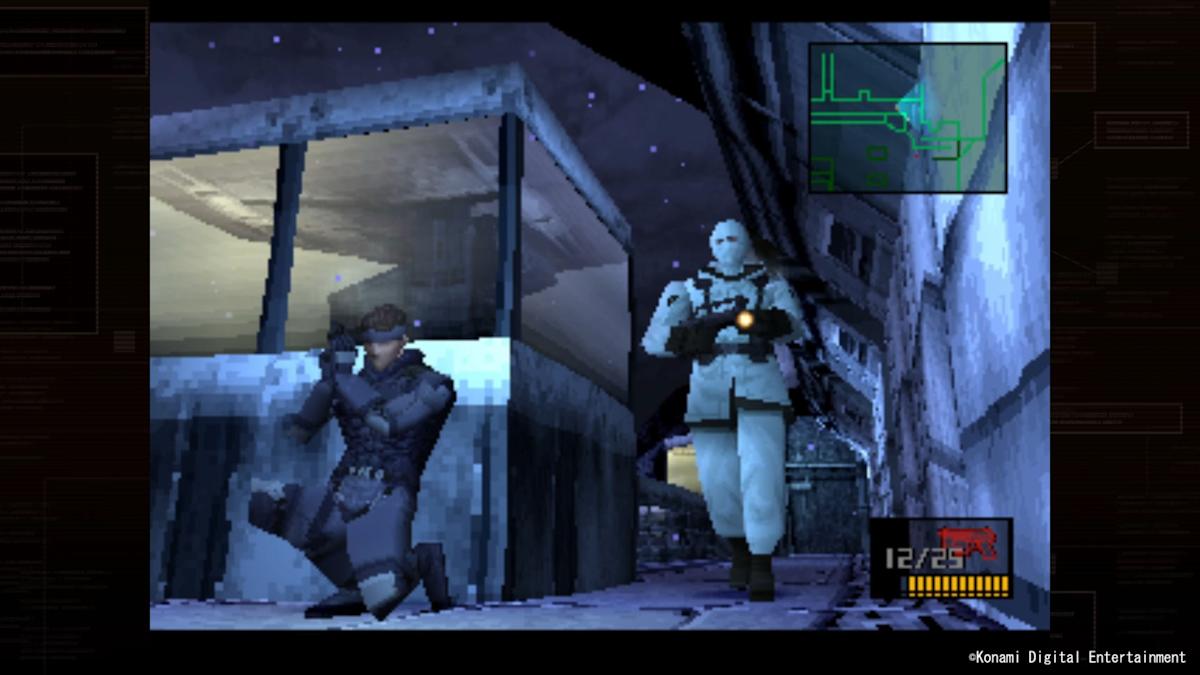
A film adaptation of Metal Gear Solid is in the works again, this time from filmmakers Zach Lipovsky and Adam B. Stein, the directors of Final Destination: Bloodlines, according to The Hollywood Reporter. The duo are reviving the project at Columbia Pictures as part of a new first-look deal with Sony, the latest attempt in what’s been multiple decades of work to turn the blockbuster stealth game into a blockbuster film.
“Metal Gear Solid was nothing short of a groundbreaking cinematic masterpiece that forever revolutionized video games,” Lipovsky and Stein said in a statement. “We are thrilled and honored to bring Hideo Kojima’s iconic characters and unforgettable world to life.”
Lipovsky and Stein’s horror bona fides helped make Bloodlinesa critical and commercial hit when it came out in 2025, and the directors have a variety of other IP-focused genre films in the works, including a sequel to Gremlins for Warner Bros. and an animated Venom movie for Sony. It remains to be seen how exactly the duo will translate Metal Gear Solid‘s unique quirks to film, though.
Metal Gear Solid is heavily indebted to director Hideo Kojima’s own taste in action and spy cinema, while also being in conversation with video games themselves in a way that wouldn’t naturally translate to film. And even if you removed those metatextual rough edges, can it really be Metal Gear Solid without Kojima’s equal parts charming and awkward writing?
Advertisement
Attempts to create a film version of the game date back to 2006, when Kojima first shared that an adaptation was in the works. Columbia Pictures announced a new version of the film in 2012, with Avi Arad, former head of Marvel Studios, producing. In 2014, Jordan Vogt-Roberts, the director of Kong: Skull Island, was attached to direct that adaptation. And six years after that, Oscar Isaac was reportedly cast as Solid Snake. Arad and his son Ari Arad are still producing this latest take on the game, but with Lipovsky and Stein in charge, that older version of Metal Gear Solid is likely dead. Still, hope springs eternal that we’ll get to see a man hide in a cardboard box on the big screen someday.
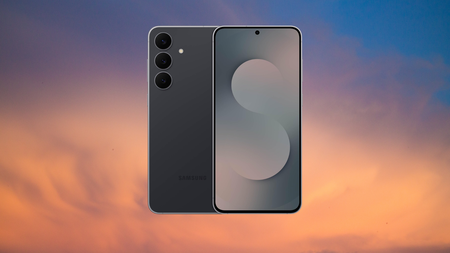
Samsung’s Fan Edition phones have always existed to make the flagship experience accessible without the flagship price, and the S25 FE makes that case more convincingly than most, given where it now sits in the market.
The 256GB Galaxy S25 FE is now so cheap it’s barely more expensive than the base model
Samsung’s Fan Edition phones have always existed to make the flagship experience accessible without the flagship price, and this S25 FE deal makes that case more convincing.
The display is where daily use begins and ends for most people, and the S25 FE‘s 6.7-inch FHD+ panel running at up to 120Hz gives scrolling and streaming a fluidity that screens locked to 60Hz simply cannot match in side-by-side use.
Advertisement
Camera hardware is a triple rear setup led by a 50MP main sensor, supported by a 12MP ultra-wide and an 8MP 3x optical zoom telephoto, with ProVisual Engine processing working across all three lenses to boost colour, sharpness, and contrast in real time.
That processing matters more than the raw megapixel count, because it is what determines whether a shot taken in mixed lighting or against a bright background comes out usable or flat, and Samsung’s Generative Edit tools let you move, resize, or remove elements from a photo after the fact without needing a separate editing app.
Power comes from the Exynos 2400 S5E9945 chipset paired with 8GB of RAM and 256GB of storage, which is enough headroom to handle multitasking and gaming without the thermal throttling that tends to surface on lesser mid-range processors under sustained load.
Advertisement
The 4,900mAh battery is rated for up to 28 hours of video playback, and Super Fast Charging 2.0 support means top-ups are quick when you do need them, though the 45W charger is sold separately rather than included in the box.
Construction uses Armor Aluminium framing and Gorilla Glass Victus Plus, which gives the S25 FE a durability story that most phones at this corrected price point cannot match without asking you to compromise on something else.
This is the right phone for someone who wants Samsung’s software experience, a large display, and a dependable camera system without paying for the Ultra tier, and at $Y it is genuinely difficult to fault the value on offer.
A little over a year ago, we wrote about a fairly silly lawsuit filed against Netflix (and Warner Bros.) by Pepperdine University in California for trademark infringement. At issue is the Netflix show Running Point, which is a fictionalized story of a female executive thrust into ownership of a professional basketball team, inspired by the Lakers’ Jeannie Buss, who is also an Executive Producer on the show. The show’s fictional team, which is supposed to be a reference to the NBA’s Los Angeles Lakers, is called “The Waves”. Pepperdine’s sports teams are also called “The Waves”, which the school claimed made all of this trademark infringement.
They were wrong about that, as we said in the previous post. Creative works are given wide latitude in trademark law, specifically in that the Rogers test typically applies. Even in the aftermath of the Supreme Court’s terrible ruling on parody in the case of the Bad Spaniels and Jack Daniels lawsuit, this was always a situation in which the Rogers test would definitely apply. Specifically, SCOTUS’ decision that Rogers doesn’t apply when the offending trademark is used as a source identifier, because we’re talking about a fictional team used in a wider work of fiction, meaning the use isn’t an identifier or any source.
Netflix and Warner petitioned for dismissal for those very reasons and the now the court has agreed and the suit has been dismissed.
U.S. District Judge Cynthia Valenzuela said on Tuesday , opens new tab that the fictional Los Angeles Waves basketball team in “Running Point” did not violate the Malibu, California, school’s rights because the show did not use the “Waves” name and logo as trademarks.
The ruling goes into much more detail, of course. It very specifically examines whether the Rogers test applies, deciding it does based on the usage. For example:
Advertisement
Here, Plaintiff fails to allege that the Waves mark was used by Defendants to exploit the success of Plaintiff’s sports teams or to create an association between the Running Point series and Pepperdine’s teams. Rather, at most, the FAC shows that the Waves mark is “immediately recognized” to identify the Running Point series, and that its use is synonymous with the series. These allegations, which Plaintiff concludes show that the Waves mark is used to “identify the show” are still not sufficient to show that the Waves mark was used as a designation of source for the series. Plaintiff’s repeated use of the words “identify” and “source-identification” do not actually show how the Waves mark was used to identify the source of the series. Rather, here, Defendants clearly claim to be the source of the series.
Finally, the Court is not persuaded by Plaintiff’s arguments regarding the marketing of the show or Defendants’ behavior in similar uses. Although Plaintiff alleges that Defendants’ used the Waves mark in marketing the Running Point series, this does not alter the Court’s above analysis that the Waves mark is not used to identify the source of the series. And the fact that Defendants have obtained trademarks in fictional businesses central to their shows in the past again does not show that Defendants have used the Waves mark to identify the source of Running Point here.
The ruling goes on to note that if Rogers applies, the Lanham Act does not. With source identifying out of the equation, the only remaining question is if the use in this case is artistically relevant. As the fictional team the main character owns, the name of that team is obviously artistically relevant.
Pepperdine has been given leave to amend its complaint into something that is actually legally sound, but I’m struggling to understand what that would even be. In lieu of an amended complaint, it seems that some creative works are still protected some of the time from nonsense trademark infringement claims, even in a post Bad Spaniels world.
Not long after the thin and light iPhone Air was launched in September, we crowned it the Phone of the Year for 2025 — not because it was the best phone ever, but because it was the most talked about handset at the time (and, arguably, I think it’s still the case today).
True enough, we’ve run a slew of stories on the iPhone Air that either heaped praise or criticised the phone to varying degrees — our full iPhone Air review called it “a new kind of Pro” handset, another of my colleagues called it “baffling”, while a third said they were conflicted about it (after using it for six months).
One major sticking point of the iPhone Air across our coverage was its steep AU$1,799 RRP relative to the specs, as it’s meant to replace the previous iPhone Plus models. My colleagues’ concerns were centred around the single camera lens and small 3,149 mAh battery.
But at a discounted price, especially if it’s as low as this deal I’ve spotted on Amazon Australia for AU$1,297 or 28% off, a current-generation iPhone that looks this good while also packing a powerful A19 Pro chipset would be a hard one to pass up if you’re on the market for a new Apple handset. At this discounted price, the 256GB iPhone Air is cheaper than the equivalent iPhone 17 that currently isn’t seeing any price drops when purchased outright.
Advertisement
How thin and light is the iPhone Air exactly? It measures just 5.64mm, which is a far cry from the iPhone 17’s 8mm thickness and the 17 Pro’s 8.8mm. Even the budget iPhone 17e is still much thicker at a substantial 7.88mm. It also weighs 165g, much lighter than the iPhone 17’s 177g and the Pro’s 206g.
Does its size affect its performance is the real question here.
As mentioned earlier, the iPhone Air is powered by the Apple A19 Pro chipset that’s similar to the processors of the iPhone 17 Pro and Pro Max, with benchmarks scoring better than the base iPhone 17. And given it’s now cheaper than the latter, surely that’s a no-brainer.
Advertisement
My favourite iPhone Air spec is its titanium chassis, similar to my iPhone 16 Pro Max, which can be an attractive option if you’re not a fan of the iPhone 17 Pro and Pro Max reverting back to aluminium.
Like my colleagues, I have reservations about the iPhone Air’s single camera setup, as I do like having the flexibility of having at least a second ultrawide lens (and a telephoto is always handy). If you’re not too fussed about cameras, the iPhone Air still has a solid enough 48MP shooter to take the odd photo here and there.
If you’ve been itching to get your hands on the thin and light iPhone Air but have been put off by the steep RRP, then don’t let this opportunity pass you by.
Governments around the world have been struggling to address the rise of industrial-scale scamming operations based in countries like Laos, Myanmar, and Cambodia that have cost victims billions of dollars over the past few years. The operations often have ties to Chinese organized crime, use forced labor to carry out the actual scamming, and rely on vast money laundering networks to collect a profit. They have become so widespread and ingrained in the region that even major international law enforcement collaborationstargeting individual scam centers or kingpins haven’t been able to stem the tide.
The FBI said this week that “cyber-enabled” scam complaints from Americans totaled more than $17.7 billion in reported losses last year—likely a major undercount of the real total, given that many victims don’t report their experiences. Some US officials say that a major barrier to comprehensively addressing the issue is the lack of collaboration with Chinese authorities. China’s efforts to address industrial scamming, they argue, appear aimed at reducing the number of Chinese citizens being impacted rather than comprehensively stopping the activity to protect all victims around the world.
“To its credit, China has cracked down on these operations, but it has done so selectively, largely turning a blind eye to scam centers victimizing foreigners,” Reva Price, a member of the US-China Economic and Security Review Commission said at a Senate hearing last month. “As a result, the Chinese criminal syndicates have been incentivized to shift toward targeting Americans.”
According to research the commission published in March, Beijing’s selective strategy has helped embolden some Chinese scammers, even those working within China, to continue operating so long as they exclusively target foreigners.
Advertisement
Other US-based researchers have come to similar conclusions. From 2023 to 2024, China reported a 30 percent decrease in the amount of money its citizens lost to scams, while the US suffered a more than 40 percent increase, according to congressional testimony last year by Jason Tower, who was then the Myanmar country director for the US Institute of Peace’s Program on Transnational Crime and Security in Southeast Asia. In response to Beijing’s enforcement dynamics, Tower said at the time, “the scam syndicates are increasingly pivoting to target the rest of the world, and especially Americans.”
The United Nations Office on Drugs and Crime noted last year that scam centers have been diversifying their worker pools, shifting from predominantly trafficking Chinese nationals and other Chinese speakers to entrapping people from a broader array of countries and backgrounds who speak various languages. UN researchers attributed this change in part to attackers broadening their targets to include different populations around the world. But they added that the dynamic also seemed to be a reaction to Chinese enforcement and Beijing’s efforts to protect Chinese citizens.
“China is doing more to fight fraud—like orders of magnitude more—than any other country,” says Gary Warner, a longtime digital scams researcher and director of intelligence at the cybersecurity firm DarkTower. “But I would agree that the crackdown by China on people scamming China has squeezed the balloon so to speak and led to more international and American targeting.”
The Chinese government has spent years investing in national safety campaigns warning citizens about the threat of scams and how to avoid falling victim to them. Some of the public discourse attempts to appeal to a sense of national solidarity. There’s a common meme in China, 中国人不骗中国人, literally, “Chinese people don’t deceive Chinese people” that is used to signal trust when swapping restaurant recommendations or job leads. In the context of digital scams, a variant has emerged: “Chinese don’t scam Chinese.”
Marvel Television just dropped the first trailer for The Punisher: One Last Kill, and it is exactly as intense as you would expect from a character who has never been particularly interested in playing it safe.
Jon Bernthal returns as Frank Castle this month on Disney+, and based on what the trailer shows, he is carrying a lot of weight going into this one.
The official synopsis describes Frank as someone who “searches for meaning beyond revenge, when an unexpected force pulls him back into the fight.” That is about as much as Marvel is giving away for now.
Punisher: One Last Kill trailer breakdown hints at major villain reveal
Advertisement
The trailer opens with Frank in a raw, vulnerable state, and clearly wrestling with his past. His old friend Curtis Hoyle appears and tries to get Frank to open up about what is going on in his life.
The way Curtis flashes in and out of the scene leaves his exact status a little ambiguous, though he survived the events of the Netflix Punisher series and is presumed to still be alive.
Frank is shown isolated, sitting in what looks like a lockdown situation surrounded by guards, suggesting he may be in custody or under surveillance at some point in the story.
Marvel / Disney+
The trailer then cuts through a series of intense moments. Flashback scenes show Frank’s young daughter in their family home, revisiting the tragedy that led to his transformation into the Punisher in the first place.
There is also a shot of Frank leaving a red flower at a grave marked for Lisa Barbara, his daughter, with a watch resting on the stone beside it. These are the first looks at Frank’s family in years within this version of the character’s story. Curtis’s voiceover cuts through all of this with a blunt warning, telling Frank he has no chance at what lies ahead.
Advertisement
Marvel / Disney+
From there, the trailer shifts into full Punisher mode. Frank tears through enemies using high-powered weapons and sheer physical force, jumping from buildings and shooting his way through anyone in his path.
The trailer’s final image is the one fans have been waiting for. Frank stands in his full Punisher gear and skull vest, outside a location called Gnucci’s Restaurant. This little detail is not an accident because the villain in Punisher: One Last Kill is most likely Ma Gnucci.
Who is Ma Gnucci in the Punisher comics?
Marvel Comics
For those who are not into Punisher comics, Ma Gnucci is one of Frank Castle’s most memorable adversaries. In the comics, she is the ruthless head of the Gnucci crime family, a powerful organized crime figure who operates out of New York City.
After Frank kills her sons, she declares all-out war on him, and what follows is one of the most chaotic and violent storylines in Punisher history. She is also notable for being depicted in a wheelchair, which makes her physically vulnerable but in no way diminishes how dangerous she is.
Her willingness to throw the full weight of her criminal empire at Frank makes her a credible and personal threat. No actor has been assigned the role as of writing, but the Gnucci’s Restaurant sign in the trailer’s final shot makes her involvement feel like a near certainty.
Who is in the cast of Punisher: One Last Kill?
Marvel / Disney+
Jon Bernthal leads the special as Frank Castle, a role he first took on in the Netflix Daredevil series before getting his own two-season Punisher show. Returning alongside him is Jason R. Moore as Curtis Hoyle, Frank’s closest friend and a former US Navy personnel.
Curtis appeared in both seasons of the original Netflix Punisher series, and his return here adds important emotional continuity to the story. The special is directed by Reinaldo Marcus Green, who co-wrote the script with Bernthal himself. Jon Bernthal also serves as an executive producer on the project.
Advertisement
When does Punisher: One Last Kill release on Disney+?
The Punisher: One Last Kill will debut on Disney+ on May 12, 2026, at 6 p.m. PT and 9 p.m. ET. The special presentation lands one week after the finale of Daredevil: Born Again Season 2.
Marvel / Disney+
This is not the last you will see of Frank Castle this year. The Punisher is set to appear in Spider-Man: Brand New Day, the Marvel Studios and Sony Pictures collaboration arriving on July 31, 2026.
Whether Frank plays a major role or shows up as a supporting presence in Spider-Man BND is still unknown. But the idea of the Punisher and Spider-Man occupying the same story is genuinely exciting, and after seeing what One Last Kill appears to be setting up, I am very much looking forward to finding out.
Amid customer dissatisfaction around Broadcom’s VMware takeover, rivals have been trying to lure customers from the leading virtualization firm. One of VMware’s biggest competitors, Nutanix, claims to have swiped tens of thousands of VMware customers.
Speaking at a press briefing at Nutanix’s .NEXT conference in Chicago this week, Nutanix CEO Rajiv Ramaswami said that “about 30,000 customers” have migrated from VMware to the rival platform, pointing to customer disapproval over Broadcom’s VMware strategy, SDxCentral, a London-based IT publication, reported today.
“I think there’s no doubt that the customer sentiment continues to be negative about Broadcom,” Ramaswami said, per SDxCentral.
Broadcom’s strategy has made VMware unaffordable or impractical for most small- to medium-size businesses (SMBs) and narrowed VMware’s focus to enterprise-size customers.
Nutanix hasn’t specified how many of the customers that it got from VMware are SMBs or enterprise-sized; although, adoption is said to be strongest among mid-market customers as Nutanix also tries wooing larger customers, often by starting with partial deployments.
During this week’s press briefing, Ramaswami reportedly said that some of the customers that moved from VMware to Nutanix during the latter’s most recent fiscal quarter represented Nutanix’s “strongest quarterly new logo additions in eight years.”
“Most of the logos came from our typical VMware migrations on to the [hyperconverged infrastructure] platform,” he said.
Advertisement
During the Nutanix conference, Brandon Shaw, Nutanix VP and head of technology services, said that Western Union has been migrating from VMware to Nutanix for six months, The Register reported. The financial services company is moving 900 to 1,200 applications across 3,900 cores.
Shaw said that Western Union has been exploring new IT suppliers to help it become more customer-focused. Despite Broadcom’s history of “decent lines of communication” with Western Union, Shaw said that Western Union had “challenges partnering with them.”
































































You must be logged in to post a comment Login