
TL;DR
Tesla confirmed FSD availability in China after years of delays. Chinese rivals already hold Level 3 certifications and run robotaxis.





The Canadian Radio-television and Telecommunications Commission recently introduced a significant update to the Online Streaming Act. The legislation, enacted in 2023, requires major streaming platforms such as Netflix to contribute funding toward Canadian content. The CRTC now says that these financial obligations are being further expanded for companies generating significant…
Read Entire Article
Source link

Garlic has been considered a natural mosquito repellent for centuries. In popular culture, it is believed that its pungent smell repels these insects, which, in addition to causing sleepless nights, transmit diseases such as dengue fever or malaria. Now, this belief has a scientific explanation.
A group of scientists from Yale University conducted a phytochemical analysis of 43 fruits and vegetables to identify natural compounds capable of interfering with the reproductive behavior of flying pest insects. To do so, the team used fruit flies, a species that often mates on food, as a model organism.
Based on this behavior, the researchers hypothesized that some fruits and vegetables might contain substances capable of altering the reproductive processes of these insects. After exposing different specimens to the mashed food included in the experiment, they observed that none of the products had a significant aphrodisiac effect. However, they found that garlic completely blocked mating and egg laying.
After this initial finding, the researchers sought to determine the source of the effect and focused their attention on the influence of garlic on the flies’ senses of taste and smell. To this end, they conducted two experiments. In the first, they placed the garlic puree in such a way that the insects could only smell it; in the second, they allowed them to taste it as well. The results showed that the taste was the factor that actually inhibited reproductive behaviors.
The team then conducted a chemical analysis of the garlic to identify the compound responsible for the effect. They determined that diallyl disulfide was the element that caused the inhibition. In practice, this substance acts on a sensory receptor present in the fly’s taste organs, known as TrpA1.
The TrpA1 receptor functions as a sensor that triggers immediate rejection responses when it detects potentially noxious tastes. According to an article published in the journal Cell, garlic specifically activates a group of bitter taste-sensitive neurons containing this receptor. This activation not only provokes a physical avoidance reaction but also changes at the molecular level by modifying the expression of various genes.
Among the alterations identified, that of a gene closely related to the sensation of satiety stands out, suggesting that contact with garlic compounds directly interferes with the biological processes that regulate appetite and feeding in these insects. The authors posit that increased satiety appears to drive behaviors that limit mating and reproduction, primarily in females.
In addition to fruit flies, the experiments were replicated in other flying insects, including two species of mosquitoes that transmit diseases such as yellow fever, dengue, and Zika virus, as well as tsetse flies. In all cases, the tests showed that garlic can act as an effective remedy to discourage reproduction.
The researchers’ findings suggest that this plant, Allium sativum, could be used as a tool to control various insect pests harmful to both human health and agriculture.
“It’s inexpensive and grown all over the world,” said John Carlson, a Yale professor and coauthor of the study. “The idea of using it to ward off hematophagous creatures was proposed in 1897 by Bram Stoker in his novel Dracula, and perhaps he was right.”
This story originally appeared on WIRED en Español and has been translated from Spanish.
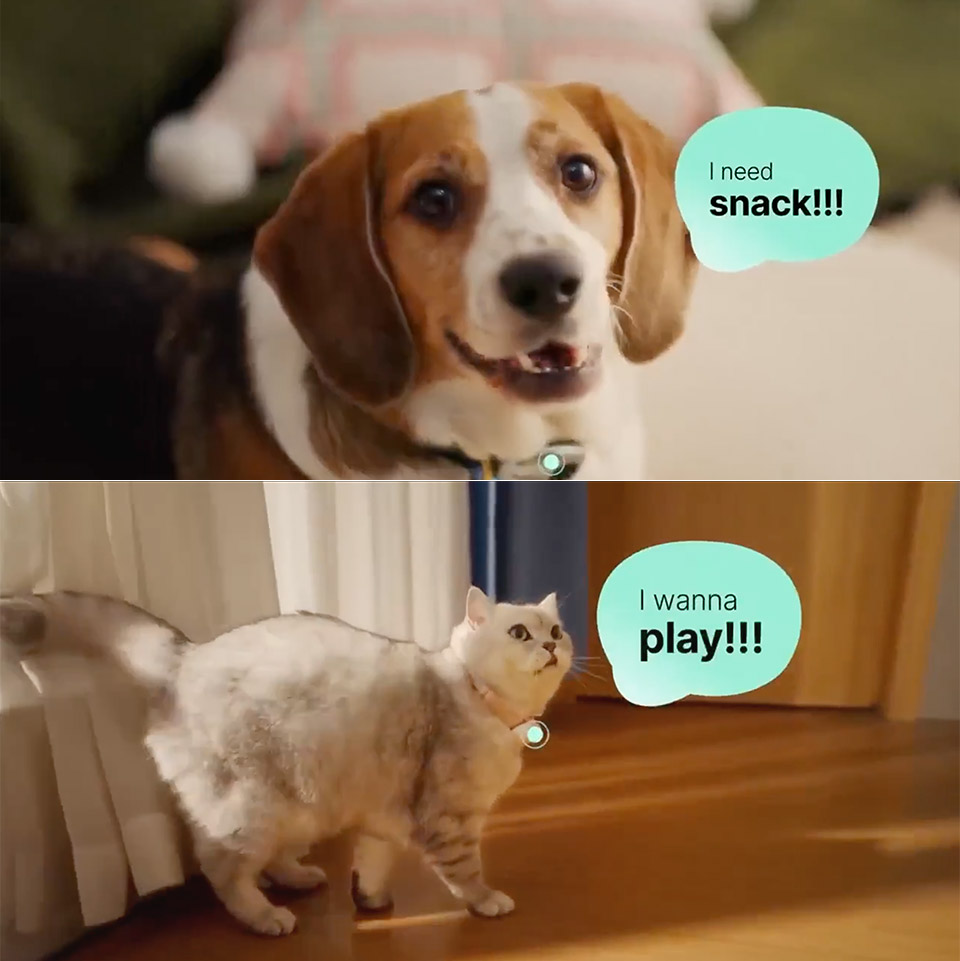
A startup in Hangzhou just released a lightweight collar that listens to dogs and cats and turns their sounds into short sentences on your phone. Named Pettichat, the device weighs only 27 grams and sits comfortably around a pet’s neck. It picks up vocalizations through built-in microphones while motion sensors track posture, movements, and other physical cues at the same time.
chinese startup built an AI collar that translates barks and meows into full sentences.
95% accuracy. cost $118.
10k people have already pre-ordered it.
It uses mics, motion sensors, and AI to read body language and vocalizations. https://t.co/Y2CNjIAnp8 pic.twitter.com/fFmwdC2QNB
— shirish (@shiri_shh) May 24, 2026
Developers created the system using Alibaba Cloud’s Qwen model, giving it millions upon millions of speech samples from pets collected over several years in the aim of determining what those barks and meows are all attempting to communicate. They matched each of those vocalizations to patterns of conduct and the environment in which they occur. The app then sends out a basic message, such as “I’m hungry” or “I want to play.” Not only that, but early demos showed the collar operating in reverse: when owners speak into the app, it turns their words into noises that their pet can respond to.

Meng Xiaoyi, the company behind the collar, claims that their AI model can detect more than twenty different emotions with a staggering 94.6 percent accuracy, but it’s worth noting that this is just the company’s own testing, and no outside lab has come forward to confirm it, and certainly no peer-reviewed studies have been published yet. Meanwhile, animal behavior researchers point out that pets derive a great deal of their meaning from body language, context, and their surroundings, rather than just the sounds they make. Real-world sounds, other animals, or visitors can quickly throw this system out of balance.
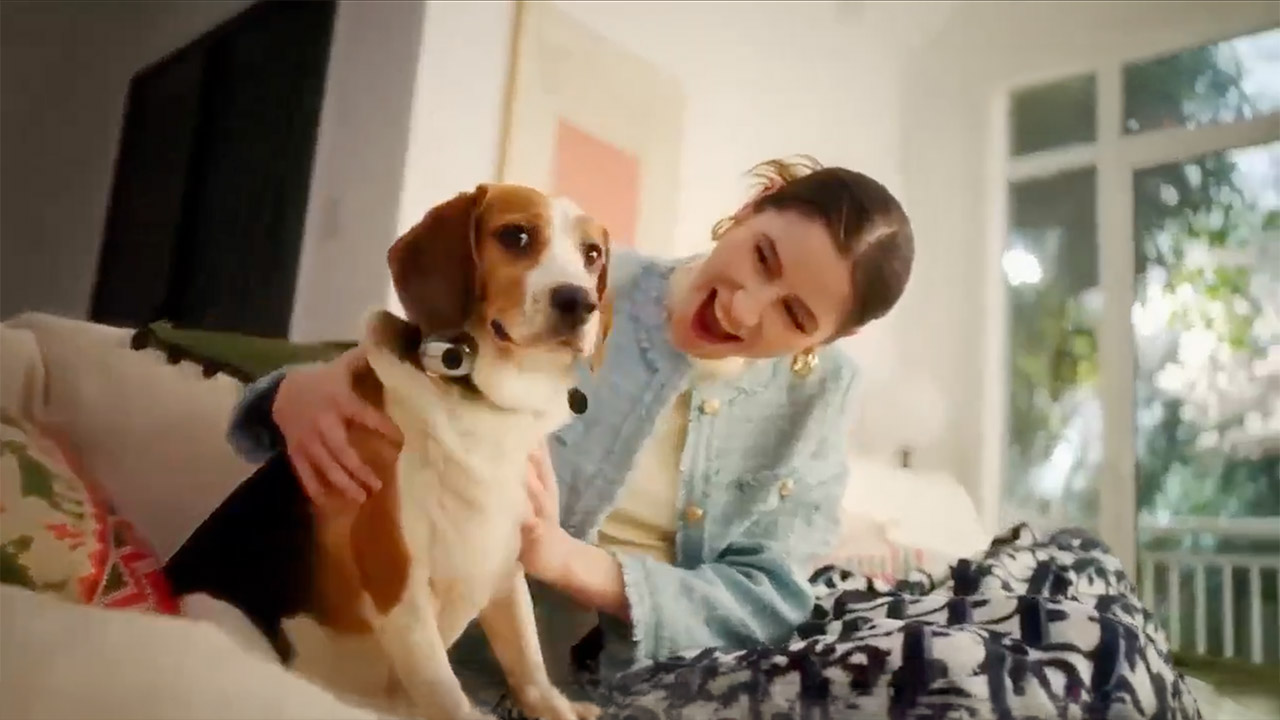
In China, however, the response was immediate, with pre-orders for the collar opening in mid-May and then quickly taking off, with over ten thousand people picking them up in no time. It costs just about $120, or 799 yuan if you convert. Deliveries have already begun in China, with a wider rollout scheduled for May 30th. People from all over the world are placing orders after seeing recordings of a cat’s meow suddenly converting into “I wanna play” and a dog’s yelp reading “I’m hungry.”
There are already over 126 million cats and dogs living in Chinese cities, and the number is rapidly increasing. This collar serves as a meeting point for wearable technology, cloud computing, and the simple desire to get to know your furry friend a little better. But will it deliver correct translations, or is it just a nice parlor trick until more owners put it to the test in their own homes? For the time being, thousands of individuals are prepared to bet that the next time their dog barks, they will receive a clear response.
[Source]

Tesla confirmed FSD availability in China after years of delays. Chinese rivals already hold Level 3 certifications and run robotaxis.
Tesla announced on Thursday that its Full Self-Driving (Supervised) system is now available in China, listing the country among 10 markets where the technology can be accessed. The announcement on X was short on details and marks the first time Tesla has confirmed FSD availability in the world’s largest EV market. It comes a week after Elon Musk joined a US business delegation for President Trump’s summit with Chinese leader Xi Jinping in Beijing.
The timing raises questions the announcement does not answer. It is unclear whether mainstream Chinese consumers can already activate FSD or whether the post signals regulatory approval that has not yet been publicly confirmed. Tesla’s China website lists “intelligent assisted driving” for the Model 3 at a one-time fee of 64,000 yuan (approximately $9,400), with a Mandarin disclaimer noting that features would be updated “shortly.” China’s embassy did not respond to requests for comment on whether regulatory approval had been granted.
Despite its name, Tesla’s FSD (Supervised) still requires active driver supervision and is classified as a Level 2 system, meaning the driver must remain in control at all times. A fully autonomous, unsupervised version is being trialled only on a fleet of Tesla vehicles operating as part of the company’s robotaxi service in Austin, Texas. The gap between the marketing name and the technology’s actual capability has been a persistent source of regulatory and consumer confusion.

The 💜 of EU tech
The latest rumblings from the EU tech scene, a story from our wise ol’ founder Boris, and some questionable AI art. It’s free, every week, in your inbox. Sign up now!
The delay has been considerable. Musk first touted plans to bring FSD to China in 2024. In July of that year, he said he expected regulatory approval before the end of 2024. In September 2024, he cited “pending regulatory approval.” As recently as April 2026, Tesla’s CFO Vaibhav Taneja said in the Q1 earnings call that the company was still awaiting approval. Bloomberg reported on Wednesday that Tesla had launched a concerted hiring effort for autonomous driving roles in China, including autopilot test engineers, suggesting the regulatory path had finally cleared.
While Tesla waited, Chinese competitors moved. China’s Ministry of Industry and Information Technology issued its first Level 3 autonomous driving certifications in December 2025, approving passenger cars from Changan Auto and BAIC Motor. Level 3 allows hands-off driving under defined conditions, a capability Tesla’s FSD (Supervised) does not offer. Xiaomi delivered more than 410,000 vehicles in 2025 with its own advanced driver-assistance systems. Xpeng has been selling vehicles with highway and urban autonomous navigation in China since 2023. Huawei’s ADS 3.0 system, licensed to multiple Chinese automakers, operates without high-definition maps in more than 400 cities.
Chinese robotaxi companies are even further ahead. Pony.ai and Baidu’s Apollo Go are operating commercial, fully driverless ride-hailing services in multiple Chinese cities. Apollo Go caused a mass outage in Wuhan in April when more than a hundred robotaxis stopped mid-traffic, but the incident underscored the scale of deployment rather than the absence of it. Tesla’s robotaxi service, by comparison, is limited to a geofenced area of Austin.
Tesla’s competitive position in China has been under sustained pressure. In April, Tesla China sold the fourth-highest number of EVs in the country, behind BYD, Geely, and Chery, according to China Passenger Car Association data. Xiaomi launched a $34,300 YU7 Standard Edition this week that undercuts the Model Y by $4,350 with 50 kilometres more range. The FSD launch is positioned to restore a competitive advantage, but the technology Tesla is now offering in China is two levels below what Chinese regulators have already certified for domestic manufacturers.
The strategic question is whether FSD (Supervised), a Level 2 system that requires constant driver attention, is a meaningful differentiator in a market where competitors already offer Level 3 autonomy, proprietary mapping systems, and LiDAR-equipped vehicles at lower price points. Tesla’s camera-only approach, which Musk has argued is superior because it mirrors how humans drive, has not yet achieved the regulatory recognition in China that competitors using sensor fusion have obtained.
Chinese automakers are now entering Canada and expanding across Europe, the Middle East, and Southeast Asia with autonomous driving capabilities that were developed during the years Tesla spent waiting for Chinese regulators. The FSD launch, whenever it fully materialises for mainstream Chinese consumers, arrives in a market that has moved on. Tesla’s self-driving story in China is no longer about being first. It is about whether being late still matters.

Offbeat
Spanish shipbuilder’s 75-meter drone vessel comes with sensors, modular payloads, and no room for sailors
Shipbuilder Navantia has put forward a design for an uncrewed
warship intended to complement existing naval vessels in what has been dubbed a
“hybrid navy,” although it may not be an exact fit for any current requirements.
Developed by the UK arm of the Spanish firm, the Large
Autonomous Surface Vessel, or LASV75, is basically a large seagoing drone that
is armed like a conventional warship.

As its name suggests, the LASV75 is 75 meters long, making it
about half as long as one of the Royal Navy’s Type 45 destroyers and closer in size to one of the River-class patrol vessels, with a displacement of about 1,000
tonnes.
It is designed to be entirely uncrewed, with no bridge or
crew spaces, and adaptable for different missions via a modular design. Promotional
images also show the vessel carrying several shipping containers, which
have become a common way for navies to quickly add extra capabilities to a
vessel.
According to Navantia, the design allows for construction of
the drone at pace and scale, and it is expected to cost significantly less than
crewed warships, although the company did not specify exactly how quickly or cheaply it could be built.
The modularity extends to both mission payloads and
engineering systems, Navantia told us, allowing the LASV75 to be tailored to
the roles required, from installed power to weapons and sensor capability.
A prominent feature is a mast designed to host a number of
sensor configurations, but we were puzzled by the apparent lack of funnels for
engine exhaust. The ship is equipped with Integrated Full Electric Power and
Propulsion (IFEP), Navantia said, meaning it uses diesel generators to drive
electric motors and power everything else aboard. It has waterline
exhausts.
The LASV75 was designed to meet the Royal Navy’s concept of
a hybrid navy, but also to serve wider demand for autonomous vessels. Its size will
enable it to have the range and endurance for task group operations in the open
ocean, the company claims, so it can undertake escort duties or support the Royal
Navy’s Atlantic
Bastion strategy to protect undersea infrastructure around the UK, such as cables and pipelines, and to track Russian submarines.
The vessel could potentially meet the requirement for a Type 92 sloop that the Royal Navy outlined for Atlantic Bastion, effectively an uncrewed ship that can patrol the North Atlantic looking out for submarines.
This role is currently filled by the Type 23 frigate, and will be taken by the Type 26 when that comes into service, but the expectation
is that a flotilla of uncrewed Type 92 vessels would allow for greater uninterrupted coverage of the ocean.
“Autonomous vessels are fundamental to the future of
sovereign defence capabilities. Naval capabilities of the future will comprise
a hybrid mixture of crewed warships with uncrewed escorts and ancillary ships,”
said Derek Jones, Navantia UK chief commercial and business development officer.
“At Navantia UK, we’re investing heavily
in our four shipyards to turn them into ideal partners to
deliver this vision of the future.”
The company is currently building the Fleet Solid Support
(FSS) vessels for the Royal Fleet Auxiliary, which will provide supplies to
Royal Navy ships at sea. ®

Two years ago, IBM realized there was one glaring omission in its roster of sports partnerships: Formula One.
Formula One has become one of the world’s most popular sports, especially in the U.S., where Netflix’s “Drive to Survive” documented the working lives of F1 drivers and turned them into mainstream celebrities. The tech-centric sport has also become a hot ticket for tech companies like AWS, Oracle, and Anthropic, which partner with teams for sponsorship visibility and to provide data analytics and AI tools that can deliver a competitive edge.
So when IBM went looking for its next major sports partnership, it’s no wonder the company picked F1 and one of its most iconic teams, Scuderia Ferrari HP.
“They’re the winningest team in history,” Kameryn Stanhouse, IBM’s Vice President of Sports and Entertainment Partnerships, told TechCrunch.
At the heart of this partnership, however, is what has led other teams to start working with tech giants: access to more sophisticated tech solutions that can help them make the most of, especially, artificial intelligence. In fact, one of the best parts of sports, Stanhouse said, is how much data is available and can be used to help people get comfortable with AI.
“They actually see how it serves them,” she said of how AI is used in sports storytelling.
The IBM-Ferrari partnership centers on that idea of storytelling, enhancing fan engagement by overhauling the technology powering the Ferrari fan app. To help with this, Ferrari hired Stefano Pallard in the newly titled role “head of fan development,” who said the challenge the team wanted to tackle was not just reaching fans, but “making each of them feel like we know them.”
“That starts with taking the data we get from the track and turning it into content that is easy to follow and engaging,” he told TechCrunch.
Teams process millions of data points per second during each race, capturing every movement of the driver and the car. Turning this into content that fans can engage with is just one way that advanced enterprise AI can help businesses better interact with their consumers.
Among the 11 teams, Ferrari is one of the few (alongside the likes of McLaren and Williams) to have a standalone fan app strategy rather than lean on social media or the official F1 platforms instead, showing how the sport is slowly starting to capitalize on its growing global fandom.

Some of the changes to the Ferrari app were simple, like offering it in Italian. Even though Ferrari is an Italian company and many of its fans are Italian, their fan app was not available in Italian until the IBM partnership.
Stanhouse said the old Ferrari fan app was a place where people went to find race details and then leave. This new app has games where fans can play with others in the app, new AI-written race summaries, more behind-the-scenes stories about the team and the drivers, a place to make predictions, and an AI companion for fans to ask questions.
“There are two drivers, but did you know it takes 24 people working simultaneously in two seconds to change a tire?” Stanhouse said, adding that storytelling helps fans feel closer to the team.
Unlike other sports apps IBM has built, Stanhouse said the Ferrari app’s main focus is storytelling because it wants fans to stay engaged with it all year long, rather than for a few weeks a year, as with tournaments like the Masters. Engagement data for the app has been trending upward since IBM came into the scene, Stanhouse said, citing a 62% increase in engagement over race weekends as an example.
Pallard said the team then uses AI to analyze engagement signals in the app, such as which content people like to read and the sentiment of the messages fans send.
“That helps us understand what resonates most with the Tifosi [the fan nickname for Ferrari] and it directly informs how we shape our storytelling and how we deliver content,” he said.
The team hopes to dive deeper into personalization and create more immersive fan experiences.
The app developers also took into account Ferrari’s fanbase, which is much more diverse than it was even five years ago. F1 released stats last year showing that 75% of new fans were women, many of whom were Gen Z. A particular draw for women is the F1 Academy, an all-female racing series that aims to develop the next generation of women drivers. But these new fans, much like the old, are after one thing — more.
“They are asking for more data, more insight, more features, and we have to be able to deliver that,” Pallard said. “With IBM, the vision for the next five years is to make every fan feel like the experience was built for them, whether they have been with us for 30 years or 30 days. That is how you build loyalty that lasts.”
When you purchase through links in our articles, we may earn a small commission. This doesn’t affect our editorial independence.

An international team of astrophysicists has found evidence that the universe recycles black holes, merging them to form even larger ones. Gravitational waves recorded in recent years show that some of the heaviest black holes within star clusters exhibit clear signs of being “second-generation” black holes—products of past collisions—and therefore could not have originated from the collapse of a massive star.
The evolutionary theory of stars explains that, at the end of the lives of the most massive stars, their cores compress until they form a point so dense that it curves space-time to infinity. This is the classic black hole, with masses 10 to 40 times that of the sun. There are also supermassive black holes, in the center of galaxies, with millions or billions of solar masses, whose origin is related to processes that occurred in the earliest moments of the universe.
Between these two extremes lies a contested category: black holes with masses between 40 and 100 solar masses. They are too heavy to be born after the death of a star, but they do not reach the necessary dimensions to emerge from the collapse of a gigantic cloud of matter. Conventional stellar physics considers them “impossible,” yet they appear frequently in detections.

Astrophysicists propose that these massive black holes could form by the merging of two or more smaller, ultradense objects. The idea was plausible, but it needed evidence. Until relatively recently, there was no way to obtain it.
Then gravitational wave detectors came on the scene. These instruments use lasers to measure the micro-distortion of space-time generated by the collision of extremely dense objects. The first detection, in 2015, confirmed a merger between black holes. Since then, each new signal has allowed for a better characterization of these structures and revealed that these collisions occur much more frequently than previously imagined.
The study, published this month in Nature Astronomy, analyzed a transient catalog of gravitational waves generated by the world’s three leading observatories. The database included 153 reliable detections of black hole mergers. Among them, 34 corresponded to particularly heavy objects.
By comparing all the signals, the team identified two distinct populations. The lighter black holes, up to about 40 solar masses, showed small, aligned spins, as expected for objects born from the collapse of a star. But from a certain point, around 45 solar masses, a completely different population appeared: heavier black holes, spinning rapidly and in chaotic directions—a statistical signature that can arise only when the object has already participated in a previous merger.
“This is the exact signature you would expect if black holes repeatedly merged into dense stellar clusters,” said Isobel M. Romero-Shaw, coauthor of the research, in a statement from Cardiff University.
So far researchers have not directly observed any of these “impossible” black holes. They do not appear in x-rays or in the visible spectrum, unlike supermassive ones. However, their collisions vibrate space-time, and that vibration reveals masses that stellar physics cannot explain.
This study shows that the heaviest black holes are built rather than born. They arise from previous generations of collisions, assembled in the densest environments in the cosmos.
This story originally appeared in WIRED en Español and has been translated from Spanish.
Personal Tech
Switch to premium devices pays off as PC giant post record record, just don’t ask about cheap laptops
PC buyers may be wincing at memory price hikes, but Lenovo isn’t. The China-based tech biz says it sidestepped much of the industry pain by switching to premium devices and the numbers back it up.
For Q4 of its fiscal 2026 ended March 31, Lenovo’s Intelligent Devices Group posted revenue of $14.6 billion, up from $11.9 billion a year earlier. It reported operating profit – net profit was not disclosed – of just over $1 billion, up 20.7 percent. PC and smart devices revenues, specifically, grew 26 percent.
“Last quarter, despite the supply shortages and rising
component costs, we committed to sustaining growth and improving profitability,
leveraging our operational excellence,” CEO Yang Yuanqing said on an earnings call.
“We promised to maintain our PC revenue momentum despite a
slowdown in PC shipments due to rising costs. We delivered. We shifted our mix
towards premium to improve average unit revenue, and our PC shipment growth
continued to outperform the market,” he stated.
PCs accounted for half of Lenovo’s overall group turnover, shipments were up 20 percent year-on-year and the corporation accounted for 24.4 percent global market share. Servers and services comprised the rest of Lenovo’s revenues.
The memory crunch has been brutal. Some DRAM and NAND flash prices doubled or quadrupled by early this year, as chipmakers chased higher margins on AI server memory and starved the consumer market of supply.
The Register has previously reported how the price hikes led to a spike
in PC sales, as corporate buyers brought forward purchases before memory costs
climbed any further.
Asked whether this had any effect on Lenovo’s numbers, EVP
for Intelligent Devices Luca Rossi downplayed it. “So in calendar Q1, our last fiscal Q4, we definitely
observed strong demand, which might partially be linked to some pull in, but I
don’t think that it will be a substantial number,” he stated.
“Definitely, we are seeing some tight supply in certain
components, particularly – as you probably know – in the semiconductor area.
However, we feel confident about our ability to procure the parts we need and
we did not adjust our full year target based on supply constraints. Rather, we
will align the shipment target based on the real market and demand in order to
maintain a healthy channel inventory and with the goal of maintaining a solid
premium to market,” Rossi said.
Lenovo expects unit shipments
to decline year-on-year for its fiscal 2027. “But at the same time,
we expect to maintain or very likely grow our revenue linked to the significant
growth of the AUR (average unit revenue),” he added.
Squeezing more profit from fewer system sales means availability of cheaper PCs will take a hit as Lenovo shifts production to premium boxes.
This isn’t the only impact AI is having on the PC market. CEO Yang pledged to embed the technology across Lenovo’s entire product line, including forthcoming “personal AI super agents” Tianxi and QIRA, plus next-generation AI-native PCs, smartphones, wearables, and “personal computing hubs.” Whether customers want all of that remains, as ever, an open question.
Lenovo AI Now or Tianxi is a personal and private AI
assistant to help with writing, summarizing, and quick settings
for your computer, says Lenovo. QIRA is “your personal
intelligence that’s by your
side across Lenovo and Motorola devices. It moves with you, learns from you,
and helps you get things done.”
For those interested in the total financial figures, Lenovo claimed a fourth quarter revenue record of $21.6 billion, up 27 percent
year-on-year. It recorded revenue of $83.1 billion and net profit of $1.91 billion for the whole of its fiscal ’26. ®


The usual next step following an aircraft mishap is to pull that unit aside for inspection. Very rarely does it result in the entire fleet getting grounded. That only happens when the Air Force suspects a problem on one airframe might be present on every other one.
However, that’s exactly what’s happened with the T-38 Talon, the USAF’s primary trainer aircraft for fighter and bomber pilots. On May 12, one of these jets went down during a routine training mission in rural Alabama. Specifically, it was assigned to the 14th Flying Training Wing at Columbus Air Force Base in Mississippi. Both pilots ejected and survived, though one of them, a Japanese aviator trainee with the Japan Air Self-Defense Force, suffered a broken leg.
Weirdly, around the same time as this incident, a second T-38C was reportedly broadcasting 7700 on its transponder – the code pilots use to signal a general in-flight emergency. While the Air Force hasn’t confirmed whether the two aircraft were flying together, two separate incidents on the same day raise eyebrows.
As a result, a week later on May 19, the Air Force put the brakes on every single T-38 Talon in its fleet with a fleetwide operational pause. An Air Force press release noted that the pause “allows an ongoing Safety Board to locate and assess evidence” from the wreckage. As of writing, nobody knows how long the grounding will last. But as these aircraft clear inspections, they should individually trickle back into service. In the meantime, crews will have to stick with simulators to keep their hours up.
The T-38 Talon has been giving student pilots their first taste of supersonic flight since 1961, meaning it’s actually older than most of the people flying it. Northrop built more than 1,100 of them , and over 450 are still serving the USAF today. Even though it’s not designed to engage with enemies, it’s still crucial to the service since it’s the only advanced jet trainer in the Air Force’s inventory. Anyone destined for an F-22 Raptor, one of the most expensive jets ever built, or even the B-2 Spirit flies one of these first.
The latest variant of the jet is from 2001 and is called the T-38C. Even though it has a glass cockpit and updated engine components to increase available takeoff thrust, the underlying airframe is the same as the original. Inside, two General Electric J85 turbojets push the plane past Mach 1. The jet can also climb above 55,000 feet, so student aviators can learn the ropes.
Despite its workhorse status, this is still a pretty old jet. The Air Force is obviously aware of that and is already working on replacing it. The earliest retirements are set to kick off in 2027, with a full fleet phase-out targeted for the 2030s. As a replacement, the Boeing and Saab T-7A Red Hawk is supposed to take over by 2028 even though production of those jets only recently got greenlit in April 2026.
It’s fair to say, the T-38 is being used to its limits, and that’s exactly why the jet keeps showing up in incident reports like these. Its J85 engine alone is a huge headache to maintain. By 2020, the Air Force’s internal depot system was struggling so badly with overhaul backlogs that pilot training output was actually at risk. At the time, Lt. Gen. Brian Robinson, Air Education and Training Command boss told the Air Force Times, “It’s an old engine…There’s a lot of moving parts” The Air Force then awarded a $237 million contract to a company called StandardAero to fix things. Today, until the T-7A Red Hawk arrives in numbers, the Talon is stuck doing the heavy lifting.


Earlier this week, European authorities carried out a continent-wide operation targeting a crime-focused VPN service known as “First VPN.” Europol said the illicit service had been promoted for years on Russian-language underground forums, where it was marketed as a “trusted” platform for cybercriminals seeking a safehaven for their malicious online…
Read Entire Article
Source link

Watch French Open 2026 live streams, as tennis’ second grand slam of the season returns to the clay courts at Roland-Garros in Paris. With defending men’s champion Carlos Alcaraz absent through injury, Jannik Sinner will be seeking a first title in the French capital, while a wide open women’s event features Coco Gauff defending her crown.
Sinner doesn’t exactly have history on his side. Given 14-time champion Rafael Nadal’s domination at Roland-Garros, followed by Alcaraz’s three victories, there have only been five non-Spanish tournament winners since 2004. But the Italian world number one has five wins on tour this year, including the recent Italian Open to complete a career Golden Masters of all nine 1000 events.
Novak Djokovic has won here three times (Swiss duo Roger Federer and Stan Wawrinka are the only other non-Spaniard champions in the past 22 years) but the 24-time grand slam winner has struggled with injury since losing the Australian Open final to Alcaraz earlier this year.
He also has a tough draw, beginning against big-serving Giovanni Mpetshi Perricard, with Joao Fonseca and Casper Ruud also in his section. Ruud and Daniil Medvedev, both major finalists, have found some form recently while the 2024 runner-up Alexander Zverev will hope to go deep again.
The women’s event is wide open. Top seed Aryna Sabalenka has won three WTA tournaments in 2026, including the Sunshine Double at Indian Wells and Miami Open, but has lost two of her past three matches on clay to bring doubt to her chances.
Elena Rybakina, Sabalenka’s conqueror in the Australian Open final earlier this year, has had her own struggles on the dirt in recent weeks but has the big-hitting pedigree to challenge. You can’t count out four-time champion Iga Świątek, either, the Pole having found some form to be seeded third, ahead of defending champion Gauff.
Keep an eye out, too, for Marta Kostyuk and resurgent Elina Svitolina, who have won WTA 1000 clay-court events in Madrid and Rome, respectively.
Here’s how to watch the French Open 2026 tennis from anywhere, including worldwide TV channels, broadcasters and any free live streams below.
Roland-Garros 2026 will be streamed live and for free in many countries around the world, with the best English-language coverage available in Australia on 9Now.
🇦🇺 Australia: 9Now
🇫🇷 France: France TV
🇨🇭 Switzerland: RSI / SRF
🇦🇹 Austria: ServusTV
🇧🇪 Belgium: RTBF
In the United States, the Bleacher Report’s YouTube channel will be showing two hours of play for FREE in The Mac Zone with John and Patrick McEnroe. That’s from 9am to 11am ET (May 24-29 only).
The majority of the French Open 2026 TV coverage in the US is on TNT and truTV, which can be accessed directly or via ‘over the top’ streaming providers that offer free trials, our favorites are:
Traveling outside your home country for the tournament? Use NordVPN to get past geo-blockers and tune in to your regular tennis live streams.
Away from home at the moment and blocked from watching the French Open 2026 on your usual subscription?
You can still watch Roland-Garros 2026 live thanks to the wonders of a VPN (Virtual Private Network). The software allows your devices to appear to be back in your home country, regardless of where in the world you are, making it ideal for viewers away on vacation or on business.
Our favorite is NordVPN. It’s the best on the market:
It’s really straightforward to use a VPN to watch the French Open 2026.
1. Install the VPN of your choice. As we’ve said, NordVPN is one of our favorites.
2. Choose the location you wish to connect to in the VPN app. For example, if you want to watch the 9Now stream, select ‘Australia’ from the listed countries.
3. Sit back and enjoy the action. Head to 9Now’s website and tune into Roland-Garros 2026.

In the US, the French Open 2026 is being shown on TNT and truTV.
These channels are available via many cable package but what if you’re looking for an an OTT cable alternative that carries hundreds of other channels?
TNT and truTV are also available on YouTube TV, Sling TV (via its Blue package) and DirecTV. As we’ve mentioned above, both YouTube TV and DirecTV come with free-trial options.
HBO Max, meanwhile, is the dedicated streaming home of the entire tournament in the US. Prices for a Basic with ads plan start from $10.99, while you can bundle with Disney+, and Hulu for $19.99.
Outside the US for this tournament? Use NordVPN to unlock your stream of Roland-Garros 2026.

Tennis fans in the UK can watch the French Open 2026 on TNT Sports.
To access this you’ll either need to add it to your TV package, or you can take out a standalone subscription via HBO Max that includes TNT Sports. The best value streaming package is £25.99 a month for a 12-month term.
You will also have access to the Premier League, Champions League and Europa League football plus Tour de France cycling, rugby, wrestling, UFC, and MotoGP.
If you’re traveling overseas, don’t worry, as you can use NordVPN to watch your usual Roland-Garros 2026 service from abroad.

In Australia, the French Open 2026 coverage is split between 9Now and Stan Sport.
As we’ve mentioned above, 9Now is a free streaming option if you’re an Australian citizen.
There’s also exhaustive coverage of every court via Stan Sport. You’ll need a Stan Sport add-on for AU$20 in addition to a Basic subscription that costs AU$12.
Not in Australia right now? You can simply use a VPN like NordVPN to watch all the action as if you were back home.

Tennis fans in Canada can live stream the French Open 2026 on the TSN network of channels.
If you don’t have cable, the TSN Plus streaming service costs CA$8 a month or $80 each year.
Outside Canada while Roland-Garros 2026 is on? Simply use a VPN to watch from abroad.

Sky Sport NZ is the French Open 2026 TV rights holder in New Zealand.
You can access Sky Sport through satellite TV or get a live stream with the Sky Sport Now subscription service starting at $29.99 per day or $54.99 per month.
Missing a game due to work commitments abroad? NordVPN will give you access to your home streaming service.
In the North Africa and the Middle East, beIN Sports has the tennis live streams. In Sub-Saharan Africa Canal+ and SuperSport are the places to go, depending on your country.
In India and the subcontinent, it’s Sony Pictures Networks, while CMG and Tencent in China and WOWOW in Japan are the most prominent broadcasters in Asia.
In France, France TV is the home to the vast majority of coverage, though Prime Video in country has exclusive coverage of the featured match in the 11 evening sessions, including two quarter-finals.
A handy list of broadcasters from all around the world is provided by tournament organizers here.
Away from home at the moment? Don’t forget NordVPN will give you access to your regular streaming service.
French Open 2026 seeds
Men
1. Jannik Sinner Women
1. Aryna Sabalenka
2. Alexander Zverev
3. Novak Djokovic
4. Félix Auger-Aliassime
5. Ben Shelton
6. Daniil Medvedev
7. Taylor Fritz
8. Alex de Minaur
9. Alexander Bublik
10. Flavio Cobolli
11. Andrey Rublev
12. Jiří Lehečka
13. Karen Khachanov
14. Luciano Darderi
15. Casper Ruud
16. Valentin Vacherot
17. Arthur Fils
18. Learner Tien
19. Frances Tiafoe
20. Cameron Norrie
21. Alejandro Davidovich Fokina
22. Arthur Rinderknech
23. Tomás Martín Etcheverry
24. Tommy Paul
25. Francisco Cerúndolo
26. Jakub Menšík
27. Rafael Jódar
28. João Fonseca
29. Tallon Griekspoor
30. Corentin Moutet
31. Brandon Nakashima
32. Ugo Humbert
2. Elena Rybakina
3. Iga Świątek
4. Coco Gauff
5. Jessica Pegula
6. Amanda Anisimova
7. Elina Svitolina
8. Mirra Andreeva
9. Victoria Mboko
10. Karolina Muchová
11. Belinda Bencic
12. Linda Nosková
13. Jasmine Paolini
14. Ekaterina Alexandrova
15. Marta Kostyuk
16. Naomi Osaka
17. Iva Jovic
18. Sorana Cîrstea
19. Madison Keys
20. Liudmila Samsonova
21. Clara Tauson
22. Anna Kalinskaya
23. Elise Mertens
24. Leylah Fernandez
25. Diana Shnaider
26. Hailey Baptiste
27. Marie Bouzková
28. Anastasia Potapova
29. Jeļena Ostapenko
30. Ann Li
31. Cristina Bucșa
32. Wang Xinyu
Recent French Open champions
Men’s champions 2025: Carlos Alcaraz Women’s champions
2025: Coco Gauff
2024: Carlos Alcaraz
2023: Novak Djokovic
2022: Rafael Nadal
2021: Novak Djokovic
2020: Rafael Nadal
2019: Rafael Nadal
2018: Rafael Nadal
2017: Rafael Nadal
2016: Novak Djokovic
2024: Iga Swiatek
2023: Iga Swiatek
2022: Iga Swiatek
2021: Barbara Krejcikova
2020: Iga Swiatek
2019: Ashleigh Barty
2018: Simona Halep
2017: Jelena Ostapenko
2016: Garbine Muguruza
Schedule
Sunday, May 24 to Tuesday, May 26
Men’s & Women’s first rounds
Wednesday, May 27 to Thursday, May 28
Men’s & Women’s second rounds
Friday, May 29 to Saturday, May 30
Men’s & Women’s third rounds
Sunday, May 31 to Monday, June 1
Men’s & Women’s fourth rounds
Tuesday, June 2 to Wednesday, June 3
Men’s & Women’s quarterfinals
Thursday, June 4
Women’s semifinals
Friday, June 5
Men’s semifinals
Saturday, June 6
Women’s final
Sunday, June 7
Men’s final
Day Session:
5am ET / 2am PT / 10am BST / 7pm AEST
Evening Session:
2.15pm ET / 11.15am PT / 7.15pm BST / 4.15am AEST (+1day)
We test and review VPN services in the context of legal recreational uses. For example: 1. Accessing a service from another country (subject to the terms and conditions of that service). 2. Protecting your online security and strengthening your online privacy when abroad. We do not support or condone the illegal or malicious use of VPN services. Consuming pirated content that is paid-for is neither endorsed nor approved by Future Publishing.




Blockchain.com files with SEC for U.S. IPO


Holiday Weekend Open Thread – Corporette.com


Intesa Sanpaolo’s crypto holdings jump to $235M as XRP enters


Dell Technologies DELL Stock Surges 15% on AI Server Momentum and Analyst Upgrades in 2026


Space X IPO Is ‘Bad News’ for Tech Stocks: But What About Bitcoin?


Makerfield: a tale of two social-media histories


Robinhood crypto COO Tanya Denisova exits


AI infrastructure race heats up as IREN pitches full-stack strategy, WhiteFiber lands $160M deal


WhatsApp ads could make Irish debut after discussions with DPC

A 0.12% parameter add-on gives AI agents the working memory RAG can’t


Bitcoin Accumulation Weakens as BTC Realized Losses Hit $600M

Revolut Launches Dogecoin Debit Card Across UK and EU


You Can Now Add ChatGPT To PowerPoint


2026 CJ Cup Byron Nelson leaderboard: Brooks Koepka finds putting stroke in Round 1

Charity run by Reform leader Malcolm Offord accused of ‘law breaking’ over Scottish registration


Trump Media’s Bitcoin Stash Shrinks Again as 2,650 BTC Lands on Crypto.com


Trump Invests $1M-$5M in Kura Sushi USA Chain With 27 California Locations
Goldman Sachs reinstates Ageas stock coverage with neutral rating


SEC to propose tokenized stock framework as Wall Street efforts deepen: Bloomberg


SECOND secret Israeli base discovered in Iraqi desert



You must be logged in to post a comment Login