


Tech
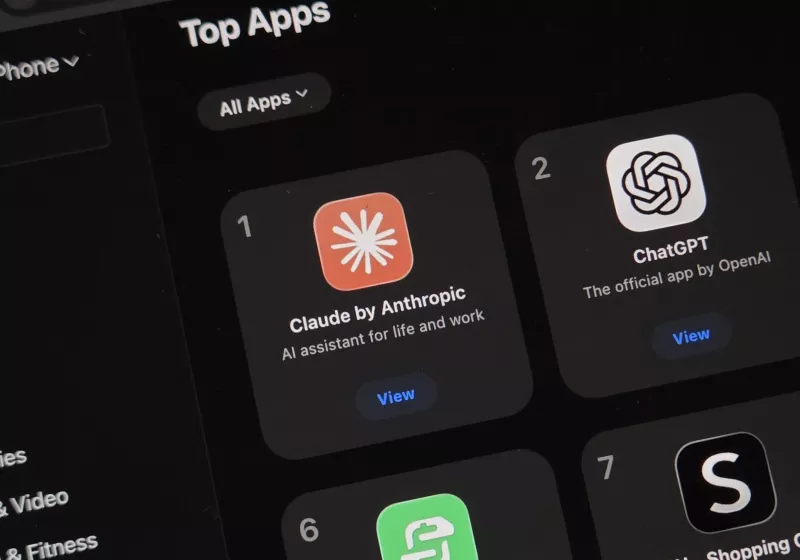
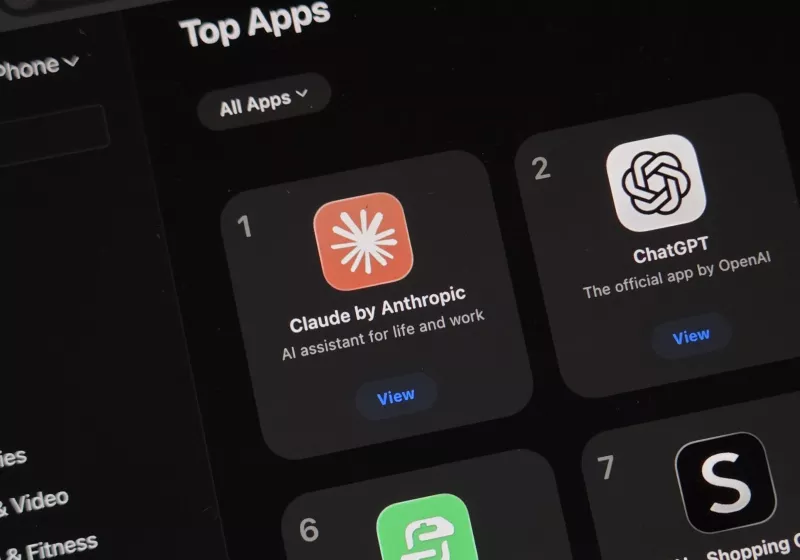
Claude is the top free app on iPhone right now, and the Pentagon drama is basically why
![]()
That happened late on Saturday, February 28, and as of this writing, Claude is still holding the top spot. ChatGPT has slipped to second place, with Google’s Gemini trailing in third. It’s a remarkable rise for an app that wasn’t even in the top 100 back in January.
Read Entire Article
Source link
Tech
Bay Area-based Aetherflux to join Seattle space race with new hub for satellite development

Aetherflux, a Bay Area-based space startup, is expanding to Seattle to open what it calls a “core center for satellite development.”
In a post on LinkedIn last week, Aetherflux said its team is growing and the company is currently hiring across all disciplines, from engineering to operations.
Founded in 2024 by CEO Baiju Bhatt, the billionaire co-founder of the trading platform Robinhood, Aetherflux is currently focused on creating an orbital data center satellite. The company says the goal is for its constellation of satellites — which it calls “Galactic Brain” — to leverage solar power in space to address the massive energy needs on Earth for artificial intelligence. The first data center node for commercial use is targeted for launch in 2027.
The startup will join a robust aerospace community of companies big and small in the Seattle area and beyond. They include Blue Origin, Stoke Space, Aerojet Rocketdyne, Starfish Space, Starcloud, Xplore and many more.
SpaceX, which produces satellites for its Starlink broadband constellation from its Redmond, Wash., facility, is seeking approval from the Federal Communications Commission for its plan to put up to a million satellites in orbit to process data for artificial intelligence applications.
Amazon produces satellites for its Amazon Leo broadband satellite network in Kirkland, Wash.
AI companies have been considering the idea of using solar-powered data center satellites to get around the limiting factors for ground-based facilities, such as rapidly growing requirements for electrical power as well as the availability of water for cooling systems.
“The race for artificial general intelligence is fundamentally a race for compute capacity, and by extension, energy. The elephant in the room is that our current energy plans simply won’t get us there fast enough,” Bhatt said in December. “Galactic Brain puts the sunlight next to the silicon and skips the power grid entirely.”
Aetherflux raised $50 million in a Series A funding in April 2025. The round was led by Index Ventures and Interlagos, with participation from Bill Gates’ Breakthrough Energy Ventures, Andreessen Horowitz, and NEA, according to TechCrunch. Total funding to date is $60 million.
Based in San Carlos, Calif., and Washington, D.C., Aetherflux’s team includes people who’ve worked at Robinhood, SpaceX, NASA’s Jet Propulsion Laboratory, Anduril and the U.S. Navy.
Aetherflux has attracted to attention from the U.S. military. The company was awarded funding from the Department of Defense’s Operational Energy Capability Improvement Fund (OECIF) to develop space solar power for the military.
The Seattle-area company that comes closest to Aetherflux’s target market is Redmond-based Starcloud, which is working to put a network of data center satellites in orbit. In a LinkedIn post, Starcloud CEO Philip Johnston hailed Aetherflux’s Seattle plans as a positive sign for the region’s space industry. “Welcome to the neighbourhood, Aetherflux! … Did we kick off a new trend for space startups?” Johnston wrote.
GeekWire reached out to Aetherflux to learn where its Seattle hub will be located and how many people it hopes to employ. We’ll update when we hear back.
Tech
CyberStrikeAI tool adopted by hackers for AI-powered attacks
Researchers warn that a newly identified open-source AI security testing platform called CyberStrikeAI was used by the same threat actor behind a recent campaign that breached hundreds of Fortinet FortiGate firewalls.
Last month, BleepingComputer reported on an AI-assisted hacking operation that compromised more than 500 FortiGate devices in five weeks. The threat actor behind this campaign used multiple servers, including a web server at 212.11.64[.]250.
In a new report, Senior Threat Intel Advisor for Team Cymru, Will Thomas (aka BushidoToken), says that the same IP address was observed running the relatively new CyberStrikeAI AI-powered security testing platform.
Analyzing NetFlow data, Team Cymru identified a “CyberStrikeAI” service banner running on port 8080 on 212.11.64[.]250 and saw network communications between that IP and Fortinet FortiGate devices the threat actor targeted. The FortiGate campaign infrastructure was last seen running CyberStrikeAI on January 30, 2026.
CyberStrikeAI’s GitHub repository describes itself as an “AI-native security testing platform built in Go” that integrates over 100 security tools, an intelligent orchestration engine, predefined security roles, and a skills system.
“Through native MCP protocol and AI agents, it enables end-to-end automation from conversational commands to vulnerability discovery, attack-chain analysis, knowledge retrieval, and result visualization—delivering an auditable, traceable, and collaborative testing environment for security teams,” reads the project description. The tool includes an AI decision engine compatible with models such as GPT, Claude, and DeepSeek, a password-protected web UI with audit logging and SQLite persistence, and a dashboard for vulnerability management, task orchestration, and attack-chain visualization.
Its tooling allows it to conduct a full attack chain, including network scanning (nmap, masscan), web and application testing (sqlmap, nikto, gobuster), exploitation frameworks (metasploit, pwntools), password cracking tools (hashcat, john), and post-exploitation frameworks (mimikatz, bloodhound, impacket).
By combining these tools with AI agents and an orchestrator, CyberStrikeAI enables operators, even low-skilled ones, to automate attacks against targets. Team Cymru warns that AI-native orchestration engines like this could accelerate automated targeting of exposed edge devices, including firewalls and VPN appliances.
The researchers say they observed 21 unique IP addresses running CyberStrikeAI between January 20 and February 26, 2026, with servers primarily hosted in China, Singapore, and Hong Kong. Additional infrastructure was spotted in the United States, Japan, and Europe.
“As adversaries increasingly embrace AI-native orchestration engines, we expect to see a rise in automated, AI-driven targeting of vulnerable edge devices, similar to the observed reconnaissance and targeting of Fortinet FortiGate appliances,” explains Thomas.
“In the near future, defenders must be prepared for an environment where tools like CyberStrikeAI, alongside the developer’s other AI-assisted privilege escalation projects like PrivHunterAI and InfiltrateX, significantly lower the barrier to entry for complex network exploitation.”
The researchers also examined the profile of the CyberStrikeAI developer, who goes by the alias “Ed1s0nZ.”
Based on public repositories linked to the account, the developer has worked on additional AI-assisted security tools, including PrivHunterAI, which uses AI models to detect privilege escalation vulnerabilities, and InfiltrateX, a privilege escalation scanning tool.
According to Team Cymru, the developer’s GitHub activity shows interactions with organizations previously linked to Chinese government–affiliated cyber operations.
In December 2025, the developer shared CyberStrikeAI with Knownsec 404’s “Starlink Project.” Knownsec is a Chinese cybersecurity firm with alleged links to the Chinese government.
On January 5, 2026, the developer mentioned receiving a “CNNVD 2024 Vulnerability Reward Program – Level 2 Contribution Award” on their GitHub profile.
The China National Vulnerability Database (CNNVD) is believed to be operated by China’s intelligence community, which allegedly uses it to identify vulnerabilities for its operations. Team Cymru says the reference to CNNVD was later removed from the developer’s profile.
The developer’s GitHub repositories are primarily written in Chinese, suggesting they are a Chinese-speaking developer, and interaction with domestic cybersecurity organizations would not necessarily be unusual.
These new AI-powered cybersecurity tools continue to demonstrate how commercial AI services are increasingly used by threat actors to automate their attacks while, at the same time, lowering the barrier to entry.
Last month, Google also reported that threat actors are abusing Gemini AI across all stages of cyberattacks, empowering the abilities of threat actors of all skill levels.
Tech
Tech Moves: HP director departs; AWS leader leaves; Truveta adds new leaders

— Elizabeth Scallon, a longtime leader in Seattle’s startup ecosystem, has left HP after serving for nearly four years as director of technical and business incubation and strategy.
“At HP, I had the privilege of diving deep into technologies ranging from microfluidics and chip cooling to edge systems, security silicon, collaboration platforms, biometrics, authentication, and computer vision. I loved supporting and building new ventures from idea to prototype to customer hands,” Scallon said on LinkedIn.
Scallon is also an affiliate instructor at the University of Washington and has held leadership roles at Amazon and WeWork. She was director of the UW’s CoMotion Labs for five years and co-founded Find Ventures, an investment firm that emphasized equitable access to capital. Scallon did not say what she’s doing next.

— Chris Blandy retired from his role at Amazon Web Services where he was global leader of strategy and business development for media and entertainment.
Blandy’s position was based in Santa Monica, Calif. Past roles include executive leadership at Walt Disney, Fox and Hulu.
“After a bit more than 4 years at AWS and 35 years in the workforce, I’ve decided to take a step back from full-time employment. I’ll be focused on investments and some advisory work, but most importantly getting more involved in parenting!” Blandy said on LinkedIn.

— Milkana Brace joined SageOx as co-founder and chief product officer. The early stage Seattle startup is building tools for AI-native teams where humans and coding agents work side-by-side.
In April 2025, Brace left Remitly as executive vice president of consumer product to take a sabbatical. She had previously founded and led Jargon and held leadership roles at Expedia and Groupon.
Braced said on LinkedIn that “out of nowhere” Ajit Banerjee reached out and “asked me to build something with him. I cut my sabbatical short. On my first day back, we pivoted the entire company. Thirty days later, we shipped.”

— Edo co-founder and former director of strategy Courtney Blodgett has left the Seattle-based energy software company.
“I’ve had the privilege of helping grow an idea into a company delivering demand flexibility and customer support to utilities and 7,000+ buildings across the country,” Blodgett said on LinkedIn.
The startup launched six years ago to allow commercial buildings to contribute energy to the grid during times of high demand. Blodgett is working as principal and founder of Cordelette Consulting while she explores “the next chapter of building climate solutions that work.”
— Seattle-area health data company Truveta hired a slate of new employees, including multiple senior leadership positions:
- John Seeger, senior vice president of evidence services
- Kia Edwards, senior product marketing manger
- Stef’n Ellis, senior product designer
- Alayna Myrick, senior clinical data scientist
- Upendra Chennadi, senior security engineer
The company in January named Dr. Johnathan Lancaster as it president and chief scientific officer.

— Sustainable tech startup Bayou Energy named Yoon Loon Wong (Andrew) as chief of staff. The Seattle-based business offers technology that pulls customer data from U.S. utilities to provide real-time information on energy use as well as consumption over time.
“Andrew brings a blend of strategy, operations, and startup experience. He was an early employee at a clean energy startup, where he built the sales strategy and operations function from the ground up and helped launch an $8M EPC [engineering, procurement and construction] marketplace,” Bayou leaders said on LinkedIn.
Wong’s past employers include Lumen Energy and Google, where he was a strategy and operations manager for go-to-market.
— Brian Hansford is senior vice president of marketing at the National Cybersecurity Alliance, a Seattle-based nonprofit supporting cybersecurity education and safety for individuals and businesses. He joins from Pontara, a generative engine optimization platform for marketers, where he was founder and chief growth officer. Other past roles include leadership at LiveRamp, Icertis, MediaPRO and others.
— Seattle-based Scott Schliebner is chief operating officer at P1 Trials, a startup that describes itself as “a network of world-class, community-based oncology investigative sites capable of performing complex Phase 1 clinical trials.”
Schliebner has held multiple advisory and consulting roles in recent years, and was senior vice president of scientific affairs and therapeutic expertise for PRA Health Sciences for a decade ending in 2022. He also held leadership roles at Cancer Research and Biostatistics, MedSource and Seattle Genetics.
— After more than four years, Rob Moore left his role as vice president of order-to-cash transformation at Seattle payment tech company Remitly. He is now a financial professional at None, a California-based wellness and fitness services company. Moore’s past employers include Nordstrom and Deloitte.
“What an adventure, and on to the next. It was my honor to fight alongside the ‘good guys’ at Remitly day in and day out, on behalf of our resilient and inspiring customers,” Moore said on LinkedIn.
Remitly co-founder Matt Oppenheimer last month announced that he is stepping down as CEO after nearly 15 years.
— Manisha Arora was promoted to vice president of the California-based cloud company ServiceNow. Arora, who works in the company’s Kirkland, Wash. offices, has been with ServiceNow for nearly 10 years. She was previously at Microsoft for more than a decade in program management roles.
— Monod Bio, a Seattle biotech company performing computational protein design, named Robert Bujarski to its board of directors. Bujarski previously served as EVP and chief operating officer at QuidelOrtho Corporation for 20 years.
— Fred Hutch Cancer Center announced 12 recipients of the Harold M. Weintraub Graduate Student Award, named after the molecular biologist who helped establish Fred Hutch’s Basic Sciences Division and died of brain cancer in 1995. They are:
- Keene Abbott, a biology PhD student at Massachusetts Institute of Technology
- Gabriella Chua, who is enrolled in a tri-institutional PhD program in chemical biology at Rockefeller University
- Lifei Jiang, a molecular biology PhD student at Princeton University
- Won Jun Kim, a PhD and MD student in the Memorial Sloan Kettering Cancer Center
Weill Cornell/Rockefeller/Sloan Kettering tri-institutional program - Ruchita Kothari, a PhD student in the Biochemistry, Cellular and Molecular Biology (BCMB) graduate program at Johns Hopkins University School of Medicine
- Ayush Midha, a PhD student at the UCSF Tetrad Graduate Program at University of California, San Francisco
- Rohith Rajasekaran, a PhD student in the integrated program in Biochemistry at University of Wisconsin-Madison
- Yusha Sun, a PhD student in the Neuroscience Graduate Group / Medical Scientist Training program at the University of Pennsylvania
- Andrea Terceros, a PhD student in the David Rockefeller Graduate Program at Rockefeller University
- Wendy Valencia Montoya, a PhD student in Organismic and Evolutionary Biology at Harvard University
- Zachary Walsh, a PhD student in the Integrated Program in Cellular, Molecular and Biomedical Studies at Columbia University Vagelos College of Physicians and Surgeons
- Peter Yoon, a PhD student in molecular and cell biology at the University of California, Berkeley
Tech
Call of Duty will add Black Ops Royale, a new free game mode coming March 13
Call of Duty is getting a new battle royale mode later this month. The popular first-person shooter will introduce Black Ops Royale as a free game mode on March 13.
Black Ops Royale pays homage to Blackout, the series’ first foray into a battle royale game mode back in CoD: Black Ops 4. Matches will have 100 players dropping in as four-person teams. The mode takes place on the massive Avalon map, but there will be no familiar Warzone features like loadouts, the gulag, or buy stations. Instead, it’s all about the scavenging the weapons from the recent Black Ops 7 game and upgrading them.
According to the team’s announcement, there will be other familiar features from the Blackout days such as the weapon handling and bullet drop that have been reimagined for modern-day Warzone players. You’ll also be able to further customize your play style with an open-ended perks system, another nod to the original Call of Duty BR perk mechanic.
Tech
AI apps without age checks may soon be removed from the App Store in Australia
Australia could soon force the Apple App Store to remove AI apps that let users access adult or violent content without age verification.

Australia might soon ask Apple to remove AI apps without age checks.
Though Apple has already complied with Australia’s social media ban for teens by updating the App Store’s age-assurance tools, the iPhone maker might soon need to take further action.
To be more specific, app marketplaces will likely be required to block AI apps that have not implemented age-checking measures. Regulators in Australia are targeting artificial intelligence apps that let users under 18 access adult content, extreme violence, self-harm, and eating disorder content.
Continue Reading on AppleInsider | Discuss on our Forums
Tech
Opinion: The narratives and realities of an income tax in Washington
Editor’s note: GeekWire publishes guest opinions to foster informed discussion and highlight a diversity of perspectives on issues shaping the tech and startup community. If you’re interested in submitting a guest column, email us at tips@geekwire.com. Submissions are reviewed by our editorial team for relevance and editorial standards.

The power of narratives is compelling. Humans trust story tellers and respond to stories more than facts. But, narratives can manipulate the public into supporting misguided policies with dire consequences. In Washington state, such narratives often go unchallenged. Let’s unpack the proposed income tax.
The term “millionaire’s tax” itself. This new tax is an income tax. No income tax in history has ever stopped at just high earners. The legislature is trying to convince you otherwise, but they’ve raised gas taxes, payroll taxes, revenue (B&O) taxes and capital gains taxes. In Olympia, it’s never enough! They are trying to claim that an income tax won’t broadly expand in a future “emergency.”
“Emergency” income tax bill. This is another narrative favorite. Last year the state increased spending $9 billion and is increasing spending $2 billion MORE this year to over $80 billion. The solution to balancing the budget is to modestly reduce spending, not increase it further. But, that reduces dollars flowing to labor unions and non-profits who benefit most from state spending. So, the income tax is labeled an “emergency” to avoid an initiative challenge. How can you trust legislators who play such games?
“Lowering” the highest estate tax. Washington already had the highest state estate tax in the country at 20%. Last year it increased to 35%. So, more people moved away. Now the legislature is trying to “sell” the new income tax by “reducing” the estate tax back to 20% — STILL the highest in the country. It is just a narrative to justify creating an income tax. The combination of 20% estate taxes, 10% capital gains tax and an additional 10% income tax will drive people out of Washington faster and keep others from ever coming.
People don’t leave because of taxes. This narrative is simply false. Of course, people leave — I already returned to Georgia! Law firms and tax advisors have created practices to serve the massive increase in clients re-domiciling out of Washington. Financial advisory groups are publishing tax analysis that is motivating others to move. Club member requests for non-resident status are surging. Non-profits are hearing from longtime donors that their giving is focused on causes in their new home state. Every day I hear about someone else leaving Washington for Nevada, Texas, Idaho or elsewhere. Countless others who still have children in schools are making their plans to leave as soon as they can. Even the legislature knows this — that is why they are posturing to reduce the estate tax. Washington’s reputation as a pro-business and pro-innovation state has plummeted (dropping from top 5 to bottom 5 in five years). Many future founders and job creators will not be coming to the state. A critical source of competitive advantage for attracting bright and ambitious people to Washington state is going away.
By now you have probably created a narrative about me — perhaps as a venture capitalist looking out for himself and the founders he has backed. But, my inspiration for working so hard to create opportunities for others derives from my life experiences. My mom never went to college, and my dad was the first in his family to attend college. They met in the U.S. Army, and both worked incredibly hard to provide an opportunity for our family. After graduating from a large public high school in Miami, I attended Dartmouth College and that experience changed the trajectory of my life. Twenty-six years ago, I took the greatest risk of my life to move our young family from Georgia to Seattle to join a fledgling investment firm backing founders right as the dot-com bubble burst! Our firm, Madrona, helped founders prioritize, cut costs and survive a true economic crisis exacerbated by 9/11. Founder resilience produced amazing success stories that contributed back to Washington state in countless ways. Now, most of those entrepreneurs have left the state for pro-business communities.
Everyone deserves an opportunity to realize their full potential in life and earn the benefits from their hard work and risk-taking. Most who succeed choose to be very generous with their time, talents and resources in the communities where they live. State political leaders, focused on dividing the pie rather than expanding the pie, are substantially driving innovators away from Washington! Sadly, that is not a narrative, but a reality the state will have to live with forever if they create an income tax today.
Tech
Australia will consider requiring app stores to block AI services without age verification
Australia’s government may take a strict stance on ensuring younger users cannot access AI chatbots. Reuters reports that Australian regulators may require app storefronts to block AI services that do not implement age verification for restricting mature content by March 9.
“eSafety will use the full range of our powers where there is non-compliance,” a representative for the commissioner said in a statement to the publication. Those paths could include “action in respect of gatekeeper services such as search engines and app stores that provide key points of access to particular services.”
A review by Reuters found that of 50 leading text-based AI chat services in the region, only nine had introduced or shared plans for age assurance. Eleven services reportedly “had blanket content filters or planned to block all Australians from using their service,” according to the report, leaving a large number that had not taken public action a week ahead of the country’s deadline. Failure to comply could see AI companies face fines of up to A$49.5 million ($35 million).
The question of which parties are responsible for keeping children from accessing potentially harmful content is being debated around the world. In the US, for instance, Apple and Google have been lobbying to have the task delegated to platforms rather than app store operators. The language from the Australian regulators about all stores is hardly definitive at this stage, but given the breadth of its sweeping ban on the use of social media and some highly social digital platforms for citizens under age 16 enacted last year, an aggressive stance seems to align with leaders’ priorities.
Tech
Google’s TV Streamer 4K drops 20%, making it viable Fire TV Stick alternative
Take your streaming goodness to the next level with this phenomenal Google TV Streamer (4K) deal.
Head on over to the Google Store and you’ll see that the Google TV Streamer (4K) is down to just £79, marking one of the lowest prices yet for the device. Given that it normally costs £99 at retail, that’s quite a decent £20 saving to be had.
The Google TV Streamer 4K is now 20% off, making it one of the easiest ways to upgrade your setup without overspending.


Google TV Streamer 4K drops 20%, where affordable 4K streaming starts now
For those who don’t know, the Google TV Streamer (4K) provides Google’s most robust streaming solution that you can buy for watching movies and shows in beautiful 4K HDR. It’s also great for watching live TV, Netflix and more.
If you want a device that more than expertly handles paid and free streaming services, this is the device to get. You can check out our versus of the device, compared to Apple TV 4K and the Chromecast, too.
The reason why the Google TV Streamer (4K) is such a treat to use compared to the competition is down to its unrivalled interface, performance and much more.


Get Updates Straight to Your WhatsApp
No matter what app you’re manoeuvring through, be it Prime Video, YouTube or Netflix, the transitions between each will occur smoothly as you scroll through menus, so you never feel held up.
It also helps that the included remote makes it incredibly easy to search for the shows and actors you like, simply by using voice search and speaking into the connected remote.
Just as a quick side note, the 32GB of storage on board the device gives the Google TV Streamer (4K) a leg-up on the competition, as you can use the space to download and store apps. That’s not standard on most streaming sticks.
For what it can do, I still think it’s well worth the price it goes for full price, but when there’s a slick £20 off, it becomes a true bargain.
SQUIRREL_PLAYLIST_10148964
Tech
Apple Updated the Wrong iPad
I was all ready to write a story this week on the entry-level iPad finally getting support for Apple Intelligence. That story never happened because that iPad never happened. The iPad I tend to recommend for people, the one that’s the best purchase for families and kids, the one that’s actually called “iPad,” remains un-updated. Instead, in the past six months, Apple’s been upgrading its already more powerful and more expensive iPads.
The iPad Pro M5, released last fall, took an already fast and expensive iPad and made it even faster. To whose benefit, though? I do very much appreciate the iPad Pro’s wonderful OLED display and its thinner size in a keyboard case, but with a starting price of $999, it’ll cost you as much as or more than a MacBook Air for the privilege.
The new iPad Air, Apple’s Goldilocks-in-the-middle iPad of sorts, just got a new M4 chip and faster wireless internals. It’s a $599 and up proposition, which isn’t awful for its capabilities, but depending on how much storage and how many accessories you get, it’s more like a mitigated-cost pro iPad with a few extras cut out. No OLED screen, for instance.
But what about the basic iPad?
The regular iPad is the iPad that most needs an upgrade. The existing model, which costs $349, only has an A16 chip inside. That’s the same chip Apple debuted in the iPhone 14 Pro in 2022, three and a half years ago.
That A16 chip is the only one in Apple’s current product lineup that can’t do Apple Intelligence. The iPad is cut off from Apple’s own heavily touted and heavily disappointing AI.
I’d say you won’t miss Apple Intelligence, but that’s right now. Things should change soon. Apple’s new deal with Google is going to knit Gemini into Siri, in ways that haven’t been explained but that should result in better AI on Apple products at last. And, again, as far as history suggests, this entry iPad won’t be able to access it.
The A16 chip is also another year older and comparatively slower. It’s still fine for everyday movie watching and games and basic things, but as an investment, it’s a dicier proposition. The base 128GB of storage is adequate, but Apple’s not doing any favors with storage space there.
Is this a stealth price bump in disguise?
The message seems clear: Apple wants you to spend up for a fancier iPad. And in this economy, that’s tougher than ever. It also makes me angrier that Apple still hasn’t found a way to truly turn iPads into Mac-compatible alternatives, even though iPadOS has gotten better at doing more things, and Apple is about to likely release an even more affordable MacBook. But it’s always made me feel that spending less on an iPad makes more sense, since it’s not a Mac replacement.
So I’m waiting. So are others, I bet. The iPad Air is fine, but it’s not a new everyday iPad. And for those of you who were hoping for a good family deal, I’m sorry: I guess Apple considers the Air the new basic iPad now. With better Pro and Air models, that basic iPad is looking, sadly, worse than ever.
Tech
Apple Might Use Google Servers To Store Data For Its Upgraded AI Siri
Apple has reportedly asked Google to look into “seting up servers” for a Gemini-powered upgrade to Siri that meets Apple’s privacy standards. The Verge reports: Apple had already announced in January that Google’s Gemini AI models would help power the upgraded version of Siri it delayed last year, but The Information’s report indicates Apple might lean even more on Google so it can catch up in AI.
The original partnership announcement said that “the next generation of Apple Foundation Models will be based on Google’s Gemini models and cloud technology,” and that the models would “help power future Apple Intelligence features,” including “a more personalized Siri.” While the announcement noted that Apple Intelligence would “continue to run on Apple devices and Private Cloud Compute,” it didn’t specify if the new Siri would run on Google’s cloud. Apple’s Private Cloud Compute is not only underpowered but it’s also underutilized in its current state, notes 9to5Mac, “with the company only using about 10% of its capacity on average, leading to some already-manufactured Apple servers to be sitting dormant on warehouse shelves.”
-
Fashion3 days agoWeekend Open Thread: Iris Top
-
Politics4 days agoITV enters Gaza with IDF amid ongoing genocide
-
Business6 days agoTrue Citrus debuts functional drink mix collection
-
Tech2 days agoUnihertz’s Titan 2 Elite Arrives Just as Physical Keyboards Refuse to Fade Away
-
Sports3 days ago
The Vikings Need a Duck
-
Crypto World7 days agoXRP price enters “dead zone” as Binance leverage hits lows
-
NewsBeat2 days agoDubai flights cancelled as Brit told airspace closed ’10 minutes after boarding’
-
NewsBeat5 days agoCuba says its forces have killed four on US-registered speedboat | World News
-
Tech6 days agoUnsurprisingly, Apple's board gets what it wants in 2026 shareholder meeting
-
NewsBeat3 days agoThe empty pub on busy Cambridge road that has been boarded up for years
-
NewsBeat5 days agoManchester Central Mosque issues statement as it imposes new measures ‘with immediate effect’ after armed men enter
-
NewsBeat1 day ago‘Significant’ damage to boarded-up Horden house after fire
-
NewsBeat2 days agoAbusive parents will now be treated like sex offenders and placed on a ‘child cruelty register’ | News UK
-
NewsBeat6 days agoPolice latest as search for missing woman enters day nine
-
Entertainment18 hours agoBaby Gear Guide: Strollers, Car Seats
-
Business5 days agoDiscord Pushes Implementation of Global Age Checks to Second Half of 2026

-
Business4 days agoOnly 4% of women globally reside in countries that offer almost complete legal equality
-
Tech4 days agoNASA Reveals Identity of Astronaut Who Suffered Medical Incident Aboard ISS
-
Crypto World6 days agoEntering new markets without increasing payment costs

-
Politics2 days ago
FIFA hypocrisy after Israel murder over 400 Palestinian footballers