Connect with us
DAPA Banner

Tech

Elon Musk Announces $20B ‘Terafab’ Chip Plant in Texas To Supply His Companies

Published

on

“Billionaire Elon Musk has announced plans to build a $20 billion chip plant in Austin, Texas” reports a local news station:

Musk announced on Saturday night during a livestream on his social media platform X that the plant, called “Terafab,” will be built near Tesla’s campus and gigafactory in eastern Travis County. The long-anticipated project is a joint venture between Musk-owned properties Tesla, SpaceX and xAI… The Terafab plant is expected to begin production in 2027.

Musk “has said the semiconductor industry is moving too slow to keep up with the supply of chips he expects to need,” writes Bloomberg — quoting Musk as saying “We either build the Terafab or we don’t have the chips, and we need the chips, so we build the Terafab.”

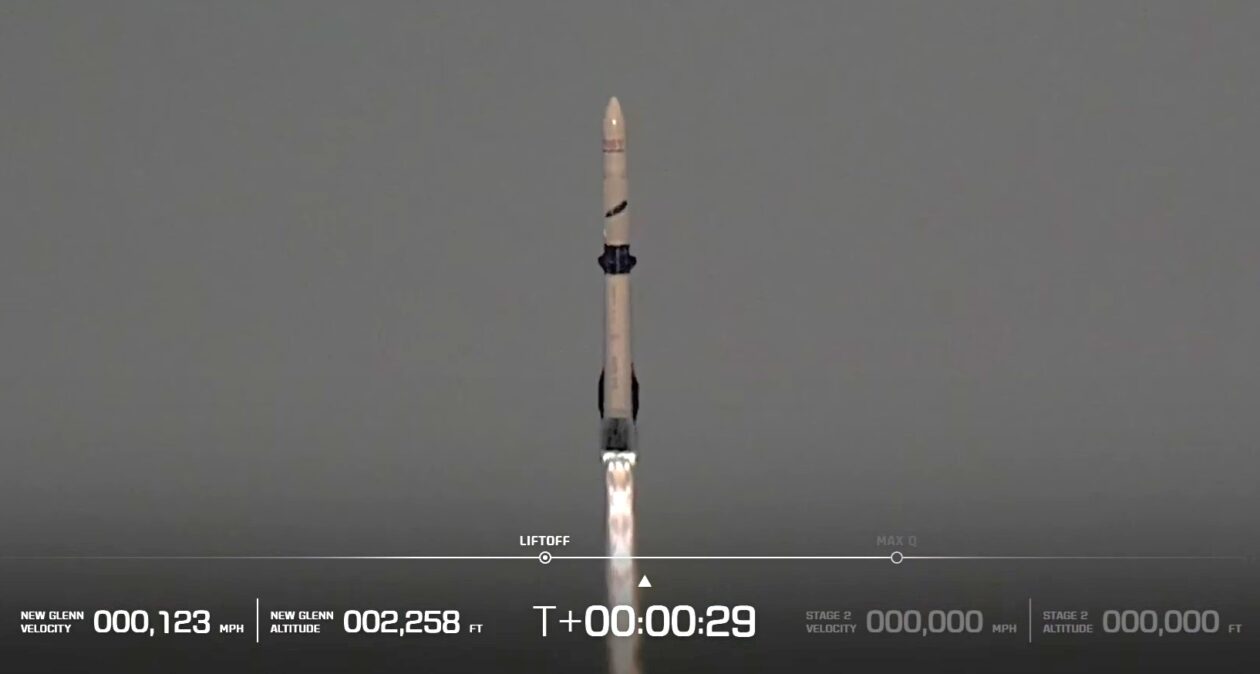
Musk detailed some specific plans, including producing chips that can support 100 to 200 gigawatts a year of computing power on Earth, and chips that can support a terawatt in space, but gave no timelines for the facility or its output… The facility is expected to make two types of chips, one of which will be optimized for edge and inference, primarily for his vehicle, robotaxi and Optimus humanoid robots. The other will be a high-power chip, designed for space that could be used by SpaceX and xAI… Musk said he expects xAI to use the vast majority of the chips.

Advertisement

During the presentation, Musk also unveiled a speculative rendering of a future “mini” AI data center satellite, one piece of a much larger satellite system that he wants SpaceX to build to do complex computing in space. In January, SpaceX requested a license from the Federal Communications Commission to launch one million data center satellites into orbit around Earth. Musk said that the mini satellite he revealed would have the capacity for 100 kilowatts of power. “We expect future satellites to probably go to the megawatt range,” Musk said.

Raising money to build and launch AI data centers in space is one of the driving forces behind SpaceX’s planned IPO later this year. SpaceX is expected to raise as much as $50 billion in a record-setting IPO this summer which could value it at more than $1.75 trillion, Bloomberg News reported earlier.

Source link

Advertisement
Continue Reading
Click to comment

You must be logged in to post a comment Login

Leave a Reply

Tech

Why Is It So Hard to Fix an Electric Bike? (2026)

Published

on

If you Ask any bike shop owner or manager if they fix electric bikes, you get an interesting array of stories.

“I know a guy who has lost a finger working on ebikes,” says MacKenzie Hardt, owner of Hardt Family Cyclery in Aurora, Colorado, and the former executive director of the nonprofit bike shop and community hub Bikes Together. Hardt has torn tendons in his own hand after accidentally triggering a cadence sensor that caused the wheel to spin out of control on the stand, even when the motor and battery were disconnected.

He now has a message on the company voicemail that informs customers the shop will not repair any ebike without third-party UL 2849 certification, the gold standard that certifies that an ebike’s entire package, from electrical drive train to battery to charger system, has been thoroughly tested. (Check out our guide to How to Buy an Electric Bike for more info.)

The Wild, Wild West

A lot of the problem in fixing ebikes is related to the fact that a surprising number of electric vehicles that are sold as ebikes are not, in fact, ebikes. According to PeopleForBikes, the third-party advocacy group, an ebike is a low-speed electric vehicle that “closely resembles traditional bicycles in their equipment, handling characteristic, size, and speed.”

Advertisement
Image may contain Machine Spoke Wheel Adult Person Accessories Bag Handbag and Tire

A mechanic works on a bicycle.Photograph: Dikushin/Getty Images

In 46 states, all ebikes fall under a Class 1, 2, or 3 distinction. The distinction depends on the bike’s maximum motor-assisted speed and how it’s powered. However, many ebikes sold online are way more powerful than the maximum 28 mph speed allowed on a Class 3 ebike, and they operate more like a moped or even a motorcycle.

“That’s really the heart and soul of the service problem,” says Cory Oseland, manager of the Ski Hut, a high-end bike shop in Duluth, Minnesota. “Once you slide out of the three classes, you run into a lot of parts and equipment that aren’t part of the bike industry.”

Repairing an ebike can also land the shop in a quagmire of liability issues. As bike shops are part of the product liability chain, they can be held responsible if they so much as inflate a tire on an electric vehicle and the rider later injures themselves or another person. Ebike-related injuries have jumped more than 1,020 percent nationwide from 2020 to 2024, according to hospital data, so this is not an unforeseen occurrence. “I have known people who have lost their shirt,” says Hardt.

In most states, if the bike doesn’t fit the Class 1-3 classification system, the shop’s insurance will likely be null and void. The problem, says Hardt, is that “we don’t regulate nationally what an ebike is. What is legal here may not be legal somewhere else.” Working on an unregulated bike, he adds, “is like if somebody brought in a Tesla to fix.”

Advertisement

Source link

Continue Reading

Tech

Apple reportedly testing four designs for upcoming smart glasses

Published

on

Apple plans to sell its first smart glasses in 2027, with a possible unveiling at the end of this year, according to Bloomberg’s Mark Gurman.

Gurman has been reporting steadily on the evolution of the company’s smart glasses strategy, but now he has more details about how they’ll look — he said Apple is testing four designs, and could ultimately launch with some or all of them.

Those designs reportedly include a large rectangular frame, a slimmer rectangular frame (similar to the glasses worn by CEO Tim Cook), a larger oval or circular frame, and a smaller oval or circular frame. Apple is also considering different colors including black, ocean blue, and light brown.

In some ways, these glasses are a step back from an ambitious plan that once called for Apple to launch a variety of mixed and augmented reality devices — a plan that already stumbled with product delays and the lackluster reception of the Vision Pro.

Advertisement

These glasses, meanwhile, sound closer to the Meta’s Ray-Ban glasses. They won’t have any displays, but will allow users to take photos and videos (Apple is reportedly oval camera lenses), answer phone calls, play music, and interact with the long-promised Siri upgrade.

Source link

Continue Reading

Tech

Hackaday Links: April 12, 2026

Published

on

At this point, we’ll assume you already know that four humans took a sightseeing trip around the Moon and made their triumphant return to Earth on Friday. Even if you somehow avoided hearing about it through mainstream channels, we kept a running account of the mission’s highlights stuck to the front page of the site for the ten days that the crew was in space.

On the assumption that you might be a bit burned out with space news at this point, we won’t bring up it up in this post… other than to point out that excitement for the lunar flyby has driven the number of simultaneous players of Kerbal Space Program to its highest count ever — nearly 20,000 armchair astronauts spent this weekend trying to cobble together their own rocket in honor of the Artemis II mission.

With so many folks focused on the Moon it would be the perfect time for a company to sneak out some bad news, which is perhaps why Amazon picked this week to announce they would be dropping support for Kindles released before 2012. Presumably there aren’t too many first and second generation Kindles still out there in the wild, but the 2012 cutoff does mean the first iteration of the Paperwhite will be one of the devices being put out to pasture come May 20th.

Amazon says the pre-2012 Kindles that are currently in user’s hands will still function, but they’ll no longer be able to purchase or download new books. The bigger issue is that you won’t be able to register these older devices after May. So if you have to factory reset your own Kindle, or want to buy one on the second hand market that’s already been wiped, you won’t be able to link it to your account to download books you’ve purchased.

Advertisement

Frankly, the idea that Amazon will no longer have their nose in these devices doesn’t bother us one bit. In fact, it sounds like an improvement over the status quo. If you own one of the device’s in question, now would be a fantastic time to download Calibre and start managing your own offline ebook library. In fact, even if your Kindle is new enough to not be affected by this change, you should still download it. Seriously, just use Calibre.

On the subject of software, an entry for XChat has recently popped up on Apple’s App Store. No, not that XChat. Instead of connecting to your favorite IRC server, the new mobile app will let you send messages to… whoever it is still actively using Twitter X. Confusingly, there’s also an XChat on the Google Play Store, but that appears to be a totally different thing altogether.

Finally, we’ve been seeing a lot of chatter online this weekend about France ditching Windows and switching over to Linux. While we applaud any mainstream push towards open source software, it’s worth digging into the details for this one. The directive says that the Interministerial Digital Directorate (DINUM) will be switching its desktop machines over to Linux, but that only represents a few hundred machines.

The experience gained during this roll-out will help shape a larger scale migration in the future, with the rest of the government asked to come up with a migration plan before the end of the year. When those other agencies, and the thousands of machines they use, will actually be penguin-powered is not clear. It’s possible they could come back and say a full migration would take a decade to complete.

Advertisement

So it’s certainly a step in the right direction, but it will likely be quite some time before any significant part of France’s infrastructure is divorced from the Redmond giant.


See something interesting that you think would be a good fit for our weekly Links column? Drop us a line, we’d love to hear about it.

Source link

Advertisement
Continue Reading

Tech

Tesla is working on a smaller, cheaper electric SUV

Published

on


Three of the sources said the new model would be produced in China, while one added that Tesla also aims to expand production to the United States and Europe. Two sources said the vehicle would measure about 4.28 meters (14.0 feet) in length, making it significantly shorter than the Model…
Read Entire Article
Source link

Continue Reading

Tech

Eight years later, Apple quietly shuts the door on AI chief John Giannandrea

Published

on

Since his retirement was announced in 2025, Apple Intelligence head John Giannandrea has been reduced to the role of an advisor, but is now expected to exit Apple Park shortly.

Middleaged man with short gray hair, glasses, and goatee speaking onstage, wearing a dark jacket and headset microphone, with blurred conference text SF 2017 in the background
John Giannandrea – image credit: Apple

If you spend your notice period at home, you’re on gardening leave. If you spend it at work and you’re waiting for when your contracted stock bonuses realize, it’s called “rest and vest”.
It appears that the stock options agreed for John Giannandrea’s contract when Apple hired him in 2018, are due on April 15. According to Bloomberg’s “Power On” newsletter, Giannandrea is consequently going to leave around then.
Continue Reading on AppleInsider | Discuss on our Forums

Source link

Continue Reading

Tech

Who Had “New OS For The Z80” On Their 2026 Bingo Card?

Published

on

Some might say the venerable Z80 doesn’t need another operating system, but [Scott Baker] obviously disagrees. He has come up with a brand new, from scratch OS called NostOS for the Z80-based RC2014 homebrew retrocomputer. [Scott] describes it as CP/M-like, but it’s not CP/M– in fact, it’s totally incompatible with CP/M–and has a few tricks of its own up its sleeve.

As you might expect of an operating system for this vintage of hardware, it is “rommable” — that is, designed to run from read-only-memory, and fit inside 64kB. It of course supports banking memory to go higher than that 16 bit limit, and natively supports common serial devices, along with the good old WD37C65 floppy controller to get some spinning rust into the game. Of course if you don’t have floppies you can plug in a compact flash card– try that with CP/M– or, interestingly Intel Bubble Memory. [Scott] has a soft-spot for bubble memory, which at one point seemed poised to replace both hard drives and RAM at the same time. We also appreciate that he included drivers for vacuum fluorescent displays, another forgotten but very cool technology. Back in the day, this operating system would have enabled a very cool little computer, especially when you take his implementation of text-to-speech with the SP0256A-AL2 chip. Fancy a game of talking Zork? Yes, he ported Zork, and yes, it talks.

The whole thing is, of course, open-source, and available on [Scott]’s GitHub. Unlike too many open-source projects, the documentation is top-notch, to the point that we could picture getting it in a three-ring binder with a 5 1/4 floppy on the inside cover. If you like video, we’ve embedded [Scott]’s walkthrough but his blog and the docs on GitHub have everything there and more if you’re not into rapidly-flickering-pixels as an information exchange medium.

[Scott] isn’t wedded to Zilog, for the record; this OS should run on an Intel 8080, perhaps like the one in the Prompt 80 he restored last year. 

Advertisement

Thanks to [Scott Baker] for the tip!

Source link

Advertisement
Continue Reading

Tech

Trump officials may be encouraging banks to test Anthropic’s Mythos model

Published

on

Treasury Secretary Scott Bessent and Federal Reserve Chair Jerome Powell summoned bank executives for a meeting this week where they encouraged the executives to use Anthropic’s new Mythos model to detect vulnerabilities, according to Bloomberg

Indeed, while JPMorgan Chase was the only bank listed as one of the initial partner organizations with access to the model, Goldman Sachs, Citigroup, Bank of America, and Morgan Stanley are reportedly testing Mythos as well.

Anthropic announced the model this week but said it would be limiting access for now, in part because Mythos — despite not being trained specifically for cybersecurity — is too good at finding security vulnerabilities. (Others suggested this was hype or simply a smart enterprise sales strategy.)

The report is particularly surprising since Anthropic is currently battling the Trump administration in court over the Department of Defense’s designation of Anthropic as a supply-chain risk; that designation came after negotiations fell apart over the company’s efforts to limit how its AI models can be used by the government.

Advertisement

Meanwhile, the Financial Times reports that U.K. financial regulators are also discussing the risk posed by Mythos.

Source link

Continue Reading

Tech

OpenAI’s new $100 ChatGPT Pro plan targets Claude Max with five times the Codex access

Published

on

In short: OpenAI launched a new $100 per month Pro plan for ChatGPT on 9 April 2026, inserting a new tier between the existing $20 Plus plan and the $200 Pro plan and directly targeting Anthropic’s Claude Max, which is also priced at $100 per month. The new plan offers five times more Codex usage than Plus, access to the same model suite as the $200 tier, and a launch promotion that temporarily doubles that advantage: through 31 May 2026, subscribers get ten times the Codex usage of Plus. The move follows Codex crossing three million weekly users on 8 April, a growth rate the company describes as a 5x increase in three months.

What the $100 plan includes, and where it sits in ChatGPT’s pricing structure

The new plan is the sixth pricing tier in ChatGPT’s current structure, which now runs from a free account with advertising, through a $8 per month Go plan, the $20 per month Plus plan, to two versions of Pro at $100 and $200 per month, a $25 per user per month Business plan, and custom-priced Enterprise contracts. The $100 Pro plan sits directly between Plus and the existing $200 Pro tier, offering five times the Codex usage of Plus and targeting what OpenAI describes as “longer, high-effort Codex sessions” that Plus subscribers hit the ceiling on. The $200 Pro plan, by comparison, provides 20 times the Codex usage of Plus, making it four times more Codex-intensive than the new $100 tier.

Despite the difference in usage limits, both Pro tiers give access to the same model suite: the exclusive GPT-5.4 Pro model, unlimited use of GPT-5.4 Instant and GPT-5.4 Thinking, and all other features available on the $200 plan. The differentiation between the two tiers is usage volume, not capability. As a launch promotion, subscribers to the new $100 plan will receive ten times the Codex usage of Plus through 31 May 2026; after that date, the standard five times limit applies. OpenAI also announced a rebalancing of the Plus plan’s Codex allocation alongside the new tier, shifting Plus towards steadier day-to-day usage rather than allowing the longer burst sessions that the $100 plan is intended to serve.

Codex demand: the numbers that prompted the new tier

On 8 April 2026, the day before the $100 plan was announced, Sam Altman posted on X that OpenAI was resetting Codex’s usage limits across all plans “to celebrate 3M weekly codex users,” and committed to repeating the reset for every additional million users until Codex reaches ten million weekly users. Thibault Sottiaux, who leads the Codex product, stated: “Three million people are now using Codex weekly, up from two million a little under a month ago.” OpenAI described the growth trajectory as a 5x increase in the preceding three months, with 70% month-over-month user growth.

Advertisement

The 💜 of EU tech

The latest rumblings from the EU tech scene, a story from our wise ol’ founder Boris, and some questionable AI art. It’s free, every week, in your inbox. Sign up now!

The scale of that growth reflects a shift in how developers are using AI coding tools. OpenAI rolled out a dedicated Codex app for macOS in February 2026, designed to move beyond line-by-line code generation into what the company called agentic, multi-task coding workflows: orchestrating multiple agents in parallel, running background jobs, and handling instructions that span hours rather than seconds. That architecture, with its longer-running sessions and heavier compute demands, is precisely the usage pattern that the $100 plan is priced to capture. A Plus subscriber who uses Codex for extended autonomous engineering tasks hits usage limits well before their billing cycle ends; the $100 plan is designed to be the next logical tier rather than a jump to $200.

The Claude Max comparison

OpenAI made no attempt to obscure the competitive framing. The new plan is priced identically to Anthropic’s Claude Max 5x tier, which also costs $100 per month and includes elevated limits for Claude Code, Anthropic’s terminal-based agentic coding product. Claude Code has become the fastest-growing part of Anthropic’s commercial portfolio, with an estimated $2.5 billion in annualised revenue by early 2026, and Anthropic has been constructing a developer ecosystem around it: Anthropic launched a marketplace for Claude-powered enterprise software in March 2026, with launch partners including Snowflake, Harvey, and Replit, connecting enterprise buyers with third-party applications built on Claude.

Advertisement

The competitive dynamic sharpened further in the week before OpenAI’s announcement. On 4 April 2026, Anthropic banned third-party agents from Claude Pro and Max subscriptions, preventing subscribers from routing their plan’s usage limits through external frameworks such as OpenClaw; users wanting to continue using those tools must now pay separately under a new per-session “extra usage” system. OpenAI’s announcement went in the opposite direction, increasing Codex availability at the $100 price point and doubling it temporarily to mark the launch. The contrast, at the identical price, was visible enough that most coverage described the new plan as a direct response to Anthropic’s developer subscriber base.

What OpenAI’s pricing move signals

The new tier arrives during a period of accelerating commercial momentum for OpenAI. OpenAI’s $122 billion raise at an $852 billion valuation, completed in March 2026, was led by SoftBank, NVIDIA, and Amazon, and included $3 billion from individual retail investors, a structure that many analysts read as groundwork for an IPO expected as early as the fourth quarter of 2026. The company is generating $2 billion in revenue per month and has more than 50 million paid subscribers across its plans. The $100 plan is part of a deliberate effort to fill the pricing gap between $20 and $200 that had, until now, left a large segment of heavy but not enterprise-grade users without a compelling upgrade path.

The model powering the Pro tiers, GPT-5.4, which launched in March 2026 and introduced native computer use directly into Codex and the API, is the clearest statement of where OpenAI sees the next phase of developer adoption going: not prompting, but autonomous agents operating software, navigating file systems, and running multi-step workflows across applications for hours at a time. The $100 plan is the pricing expression of that bet. Whether it moves enough developers at the $100 Claude Max price point to make a measurable difference in Anthropic’s subscriber base will be visible in both companies’ next quarterly metrics.

Advertisement

Source link

Continue Reading

Tech

‘Marshals’ Release Schedule: When Episode 7 Hits Paramount Plus

Published

on

Marshals, a new Yellowstone spinoff starring Luke Grimes as Kayce Dutton, is airing on CBS right now. You can also tune in with Paramount Plus. The Yellowstone sequel series sees Grimes’ former Navy SEAL join an elite unit of US Marshals to bring range justice to Montana, according to a synopsis from CBS.

The show includes Yellowstone actors Gil Birmingham as Thomas Rainwater, Mo Brings Plenty as Mo and Brecken Merrill as Tate. Spencer Hudnut is the showrunner of Marshals — formerly known as Y: Marshals — and Taylor Sheridan is an executive producer.

Advertisement

When to watch new Marshals episodes on Paramount Plus

Episode 7 of Marshals airs on CBS on Sunday, April 12. Viewing options for Paramount Plus customers vary by subscription tier. You can watch the episode live if you have Paramount Plus Premium, which includes your local CBS station. If you subscribe to Paramount Plus Essential, you can watch the installment on demand the following Monday, but not live on Sunday.

Here’s a release schedule for the next two episodes of Marshals.

  • Episode 7, Family Business: Premieres on CBS/Paramount Plus Premium on April 12 at 8 p.m. ET/8 p.m. PT/7 p.m. CT. Streams on Paramount Plus Essential on April 13.
  • Episode 8, Blowback: Premieres on CBS/Paramount Plus Premium on April 19 at 8 p.m. ET/8 p.m. PT/7 p.m. CT. Streams on Paramount Plus Essential on April 20.

You can also watch CBS and the seventh episode of Marshals without cable with a live TV streaming service such as YouTube TV, Hulu Plus Live TV or the DirecTV MyNews skinny bundle. In addition to offering a lower-cost option, Paramount Plus lets you watch the other two Yellowstone spinoffs: the prequels 1883 and 1923.

Advertisement

James Martin/CNET

After a price increase in early 2026, the ad-supported Essential version runs $9 per month or $90 per year. The ad-free Premium version runs $14 per month or $140 per year. Paying more for Premium gives you downloads, the ability to watch more Showtime programming than Essential and access to your live, local CBS station.

Source link

Advertisement
Continue Reading

Tech

Sunday Reboot: MacBook Neo upgrades, masses of Mac minis, and iPhone re-entry

Published

on

In this week’s “Sunday Reboot,” a storage upgrade for the MacBook Neo, an excuse to buy many Mac minis, and the iPhones come back to Earth with a late congratulatory message.

Silhouetted person in shadow peers through a narrow opening toward a brightly lit wall of stacked silver computer mini desktops with ports and indicator lights
Image credits: NASA/Overcast

Sunday Reboot is a weekly column covering some of the lighter stories within the Apple reality distortion field from the past seven days. All to get the next week underway with a good first step.
This week, researchers managed to get around Apple Intelligence security measures using prompt injection techniques, a repairability report panned Apple’s hardware again, and Apple’s lawsuit with Epic Games over the App Store continued to roll on. There was also a bug found to break Mac networking every 49 days, 17 hours, two minutes, and 47 seconds.
Continue Reading on AppleInsider | Discuss on our Forums

Source link

Continue Reading

Trending

Copyright © 2025