TL;DR
Moment raised $78M led by Index Ventures to build AI agent infrastructure for wealth management. Edward Jones and LPL are clients.



Moment raised $78M led by Index Ventures to build AI agent infrastructure for wealth management. Edward Jones and LPL are clients.
Moment, the fintech company founded by a cohort of former Citadel Securities quantitative traders and researchers, has raised $78 million. The round was led by Index Ventures with participation from existing investors Andreessen Horowitz and Avra. The company last raised $36 million in July 2025.
Moment builds infrastructure that allows wealth management firms to deploy AI agents for fixed-income and equities trading. In the past year, it signed Edward Jones, LPL Financial, and Hightower Advisors as partners. These are not small accounts: Edward Jones manages $2.1 trillion in client assets, LPL oversees approximately $1.7 trillion, and Hightower manages more than $175 billion.
“The largest financial institutions know they need to deploy agents, but the infrastructure to deploy them safely and effectively hasn’t existed,” CEO and co-founder Dylan Parker said. “We built that operating system from the ground up, with a unified data model and regulatory-grade controls so AI can finally do real work in investment management.”
The pitch is infrastructure, not intelligence. Moment is not building its own large language model. It is building the compliance, data, and execution layer that sits between frontier AI models and the regulated environment in which wealth managers operate. The distinction matters because financial services firms cannot simply plug ChatGPT or Claude into their trading systems without audit trails, regulatory controls, and integration with existing market data infrastructure.
Anthropic has been pitching financial services firms directly, unveiling specialised AI agents designed for tasks like trade compliance, portfolio analysis, and client reporting. The competitive dynamic is layered: Anthropic provides the reasoning model, but firms like Moment provide the regulated infrastructure that makes those models deployable in production.
Russ Tipper, principal and head of products and solutions at Edward Jones, framed the opportunity clearly. “AI is going to be a defining capability for the next era of wealth management,” he said. “The firms that get it right will be the ones that pair it with the right infrastructure.”
OpenAI launched its own personal finance tools this month, connecting ChatGPT to bank accounts via Plaid for consumer-facing financial advice. Moment operates at the institutional end of the same spectrum. The consumer and institutional approaches will likely converge, but for now they represent different bets on where AI-powered finance creates the most value.
The former Citadel pedigree is a deliberate signal. Citadel Securities is one of the most technically sophisticated trading operations in the world. Building a startup with alumni from that environment tells prospective clients that the team understands both the technology and the regulatory constraints that make financial services AI harder than general-purpose AI.
Anthropic recently finalised a $1.5 billion joint venture with Blackstone, Hellman & Friedman, and Goldman Sachs to embed Claude inside portfolio companies of the world’s largest private equity firms. That deal and Moment’s raise point in the same direction: the financial services industry is moving from evaluating AI to deploying it, and the companies that control the infrastructure layer between the model and the trade will capture a disproportionate share of the value.
A new Gen AI subdomain has been found for Apple’s website, with the domain’s appearance solidifying AI as one of the major topics at WWDC in June.
Apple’s annual WWDC event is set to start on June 8, with its keynote setting the tone for the rest of the year. While Apple is secretive as usual about what will be mentioned, one web-based change has practically confirmed one of the most likely topics.
A new subdomain for genai.apple.com has been found, reports MacRumors. Attempts to load the subdomain comes up with connection time-out messages, indicating that it has been registered but not configured for its final server destination.
It is a different kind of error versus typing a wrong URL or subdomain. It means there is something Apple intends to do with the subdomain.
The domain change solidifies artificial intelligence as one of the major topics of conversation for WWDC 2026. Previous rumors and speculation, as well as events over the last two years and the prominence of AI in the tech industry in general, meant Apple had to bring it up at some point during the keynote.
The elephant in the room will be Siri, Apple’s digital assistant that has been waiting on its delayed overhaul for two years. With substantial support from Google Gemini, 2026 should be the year that Apple’s promised revamp will actually work.
Rumors have and indicated there will be other AI-related changes on the way, including bringing an easier way to access Visual Intelligence in the Camera app. Photos will also gain more AI editing options.
There’s also the prospect of wider AI changes, including allowing users to select which third-party AI service providers they want to answer prompts and to handle tasks normally dealt with by Apple Intelligence.


Ubiquiti has released security updates to patch three maximum severity vulnerabilities in UniFi OS that can be exploited by remote attackers without privileges.
UniFi OS is a unified operating system that powers UniFi Consoles and helps manage IT infrastructure, including networking, security, and other services, as well as UniFi applications such as UniFi Network, UniFi Protect, UniFi Access, UniFi Talk, and UniFi Connect.
The first flaw (CVE-2026-34908) enables attackers to make unauthorized changes to targeted systems by exploiting an Improper Access Control weakness in UniFi OS, while the second (CVE-2026-34909) allows them to access files on the underlying system by abusing a Path Traversal vulnerability, which could be manipulated to access an underlying account.
A third maximum severity security issue (CVE-2026-34910) makes it possible for malicious actors to launch a command injection attack after gaining network access by exploiting an Improper Input Validation vulnerability.
On Thursday, Ubiquiti also patched a second critical command injection flaw (CVE-2026-33000) and a high-severity information disclosure (CVE-2026-34911), both affecting Unifi OS devices.
Ubiquiti has yet to disclose whether any of the five vulnerabilities were exploited in the wild before disclosure, but shared that they can be exploited in low-complexity attacks and were reported through its HackerOne bug bounty program.
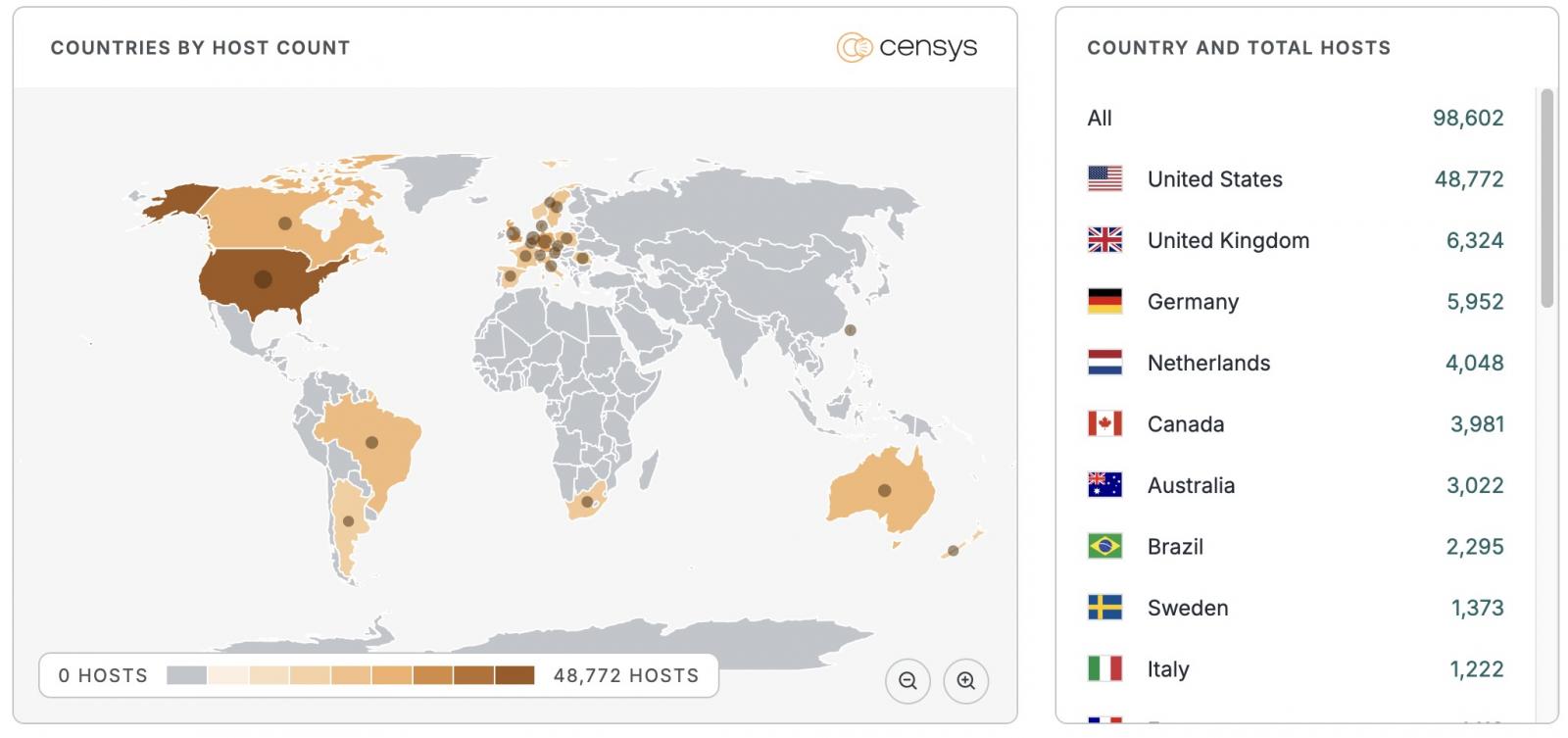
At the moment, threat intelligence company Censys is tracking nearly 100,000 Internet-exposed UniFi OS endpoints, most of them (nearly 50,000 IP addresses) found in the United States.
However, there is currently no information on how many have been secured against potential attacks targeting the vulnerabilities Ubiquiti patched this week.
In March, Ubiquiti patched another maximum-severity flaw (CVE-2026-22557) in the UniFi Network Application that may allow attackers to take over user accounts, as well as a vulnerability (CVE-2026-22558) that can be exploited to escalate privileges.
Ubiquiti products have been targeted by both state-backed hacking groups and cybercriminals in recent years, in campaigns that hijacked them to build botnets that concealed the threat actors’ malicious activity.
For instance, in February 2024, the FBI took down Moobot, a botnet of hacked Ubiquiti Edge OS routers used by Russia’s Main Intelligence Directorate of the General Staff (GRU) to proxy malicious traffic in cyberespionage attacks targeting the United States and its allies.
Four years ago, in April 2022, the U.S. Cybersecurity and Infrastructure Security Agency (CISA) also added a critical command injection flaw (CVE-2010-5330) in Ubiquiti AirOS to its catalog of actively exploited vulnerabilities and ordered federal agencies to secure their devices within three weeks.

Automated pentesting tools deliver real value, but they were built to answer one question: can an attacker move through the network? They were not built to test whether your controls block threats, your detection rules fire, or your cloud configs hold.
This guide covers the 6 surfaces you actually need to validate.

Trinnov Audio, dCS, and Perlisten Audio are planning one of the most ambitious immersive audio demonstrations for HIGH END Vienna 2026, and with the show moving to a new city and a new facility, this could be one of the rooms people talk about long after the schnitzel has gone cold and the espresso has started judging everyone.

Trinnov has already proven at recent CEDIA Expos that it knows how to create a convincing immersive space, not just stack channels like expensive firewood and hope the ceiling speakers behave. For Vienna, the company is teaming with dCS and Perlisten Audio on a large-scale 15.8.8 channel immersive audio system designed to show what happens when processing, digital conversion, loudspeaker engineering, room acoustics, and spatial rendering are treated as one complete system.
The demonstration will be installed in a precisely proportioned room treated by Vicoustic, including a fully treated ceiling intended to create a stable and coherent soundfield across the listening area. The goal is immersive music reproduction with exceptional stability, coherence, and realism, not just “look how many speakers we brought” theater.
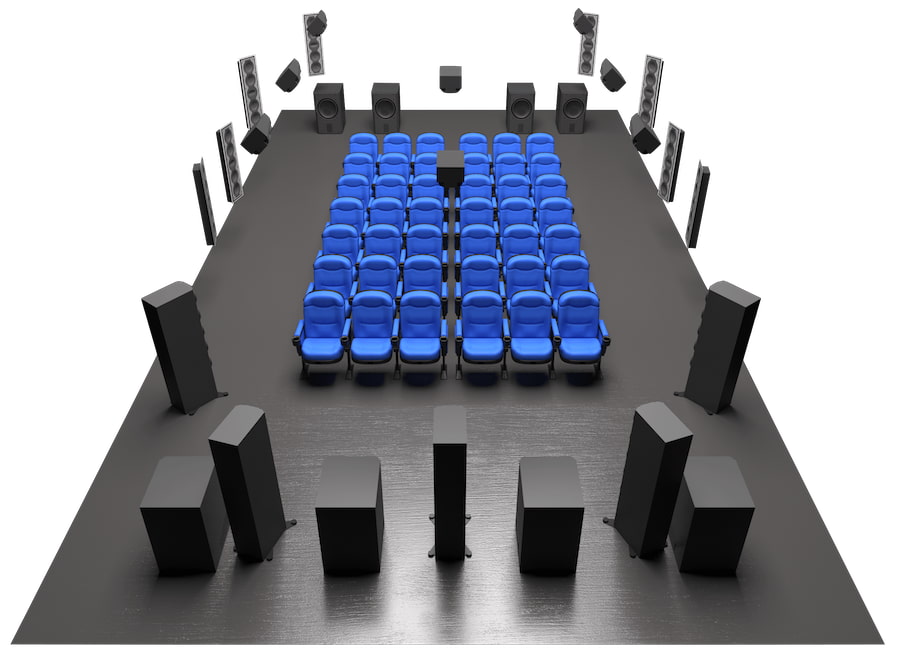
Trinnov is employing its new AltitudeCI platform, a native AoIP processor engineered for high-channel-count systems where routing, calibration, and spatial rendering must remain fully deterministic. Every channel in the system is measured, aligned, and controlled, eliminating variability that typically compromises immersive playback.
Signal conversion is handled by the latest dCS DAC platform via the MCD 16, which is designed to maintain timing integrity and resolution across all channels simultaneously.
Perlisten Audio is providing the loudspeaker system, including 8 surround channels, 8 overhead channels, and 8 subwoofers, creating a fully resolved three-dimensional soundstage optimized specifically for music rather than spectacle.
Let’s dig a little deeper into each part of the system, because with a 15.8.8-channel setup, this is not exactly a soundbar with delusions of grandeur.

The loudspeaker system, provided by Perlisten Audio, uses S7t speakers for the left, center, right, and wide channels, creating a coherent, high-dynamic-range front array. Perlisten S7i in-wall speakers handle the surround channels, while Perlisten S4s speakers are used for the height channels.
The configuration includes 8 surround channels and 8 overhead channels, designed to create a fully resolved three-dimensional soundstage optimized specifically for music.

For the low-frequency foundation, Perlisten is bringing 8 D215s THX Dominus certified powered subwoofers, with 4 positioned along the front wall and 4 along the rear wall. Each D215s uses dual 15-inch drivers in a push-pull configuration, along with Perlisten’s proprietary technologies, to deliver high output with very low distortion and strong bass definition.
Trinnov WaveForming will be used to optimize subwoofer performance within the demonstration room, improving bass consistency, timing, and control across the listening area. With eight serious subwoofers in play, this is less “room correction” and more “low-frequency zoning board approval.”
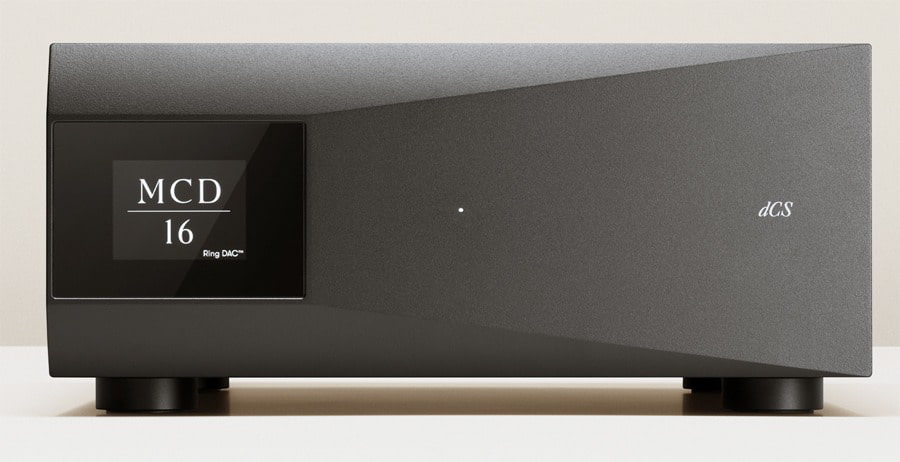
With digital sources now central to high-end playback, precise digital-to-analog conversion is essential. For this system, dCS is contributing its latest 16-channel DAC platform, the MCD 16.
The MCD 16 is designed to maintain timing integrity and resolution across multiple channels at the same time, which is especially important for immersive music reproduction. In a system like this, channel consistency, phase relationships, and level accuracy all contribute to the stability and precision of the soundfield.
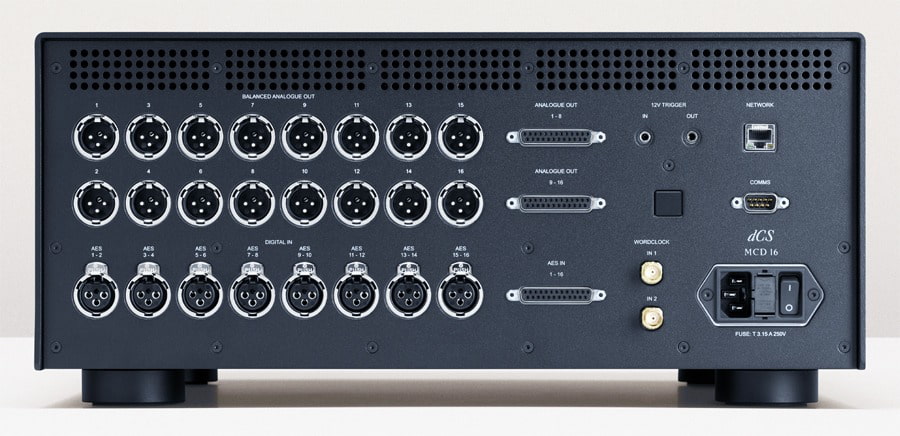
The MCD 16 features 16 channels of high-performance Digital-to-Analog conversion using eight individual Ring DAC circuits. The Ring DAC is the foundation of every dCS product.
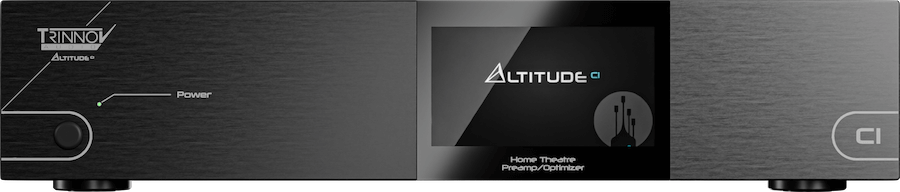
Trinnov’s AltitudeCI platform (introduced in 2025), is an advanced native digital processor engineered for high-channel-count systems where routing, calibration, and spatial rendering have to be extremely precise.
With the Altitude CI, every channel is sent digitally before it’s measured, aligned, and controlled, eliminating variability that typically compromises immersive playback.
The AltitudeCI will be running the signal processing digitally, via AES/EBU, while using the full set of Trinnov’s audio processing and routing technologies.
Pro Tip: Final amplification will be handled by Trinnov amplifiers, but the exact model or models had not been disclosed as of this article’s publication date.
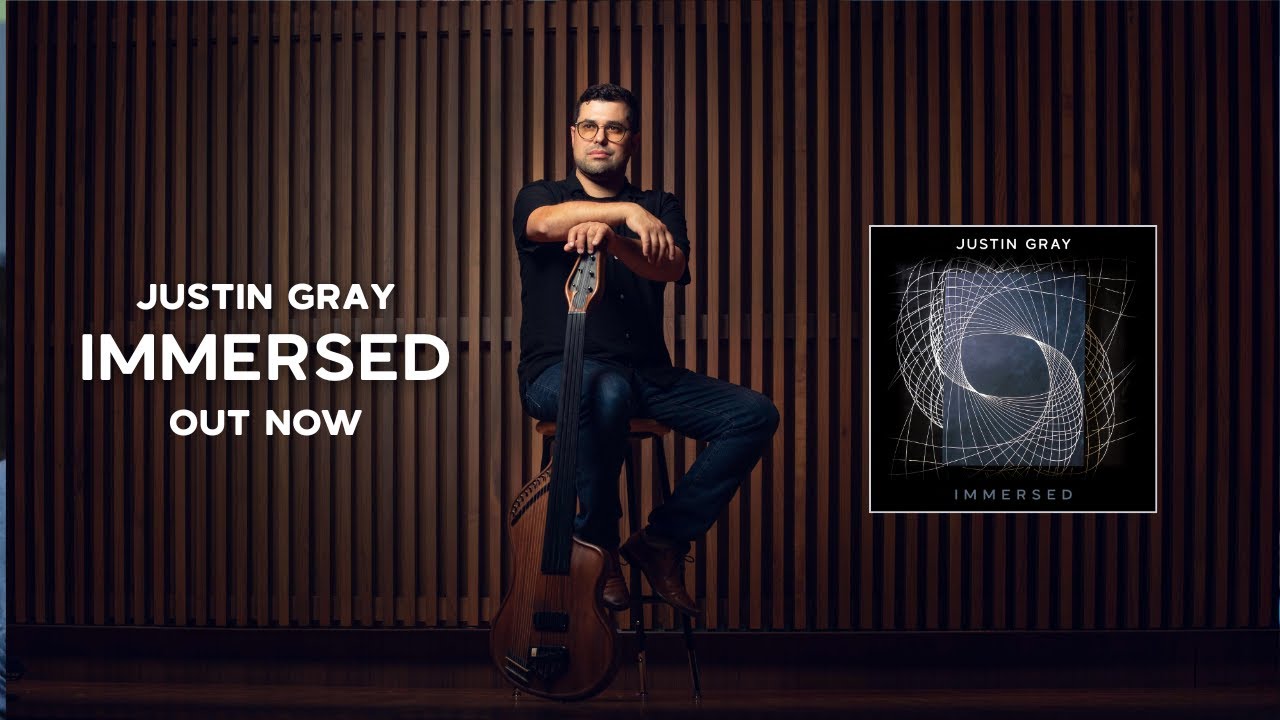
The content highlight of the demonstration will be provided by Grammy Award winner Justin Gray, who will present his 2026 Grammy Award-winning album, Immersed using the original high-resolution files directly from the mixing sessions. That should give listeners a rare opportunity to hear the album in a highly controlled immersive playback environment, using source material as close to the production process as possible.
Justin Gray’s Immersed was composed, recorded, and produced from the ground up for immersive audio. Featuring 38 artists from around the world, the project places the listener at the center of a 360-degree orchestral experience, with performances positioned around the listening space rather than confined to a traditional stereo soundstage.
Trinnov has built a strong reputation not just for making serious high-end audio components, but for assembling demonstration systems that show what is possible when processing, conversion, loudspeakers, amplification, room acoustics, and setup are treated as one complete ecosystem.
That is what makes this 15.8.8-channel High End Vienna 2026 demo unique. It is not simply a very expensive pile of hardware arranged in a room with optimistic cabling. The system combines Trinnov processing and WaveForming bass optimization, dCS multichannel digital-to-analog conversion, Perlisten loudspeakers and subwoofers, and Vicoustic room treatment into a controlled immersive music environment. The goal is not just scale, but stability, coherence, bass control, and spatial accuracy.
This demonstration is clearly aimed at serious immersive audio listeners, custom installation professionals, high-end home theater owners, recording and mastering engineers, and anyone trying to understand where multichannel music reproduction is headed. Long-time Trinnov, dCS, and Perlisten owners may also want to hear how far these brands can push things when the room, system design, and source material are all working together.
No, this is not a system most ordinary mortals are going to order on a Tuesday afternoon between coffee and regret. But that is part of the point. Some show demos exist to sell boxes. This one appears designed to show what is technically possible when the ceiling, the walls, the bass, and the signal chain all stop fighting each other for once.

As we get out of the house, the gear-obsessed WIRED Reviews team is writing about our favorite bags and EDCs. Today, reviewer Martin Cizmar raves about his Topo Designs backpack. You can also check out other Bag Check stories where WIRED writers share their carryall of choice.
Topo Designs may just make the best bags in the world. The Denver-based gorpcore brand sells gear that looks cool, lasts forever, and has every feature a sensible person desires in a bag without making the product feel overbuilt. If I ever win the lottery, I won’t tell anyone, but there will be signs—like me hauling groceries from Trader Joe’s in two Mountain Gear bags. (I currently use blue polypropylene Ikea bags and shop at Aldi.)
In March, I took a spring break trip to Ireland and Scotland with a carry-on-sized roller bag and the Topo Designs Rover Trail pack as my personal item. I am frequently testing new bags, and I didn’t think much about the decision to commit to the Rover for a week. I quickly learned that you get to know a bag pretty well when you take it on seven flights and stay at eight different hotels in 10 days. By the time I landed back home, I was fully convinced the Rover is the best backpack I have ever used.

Photograph: Martin Cizmar
Topo Designs
Like the six or seven other models of Topo Designs bags I’ve tested—and maybe more extensively than any of the others—the Rover manages to artfully incorporate all the thoughtful little features I appreciated in other backpacks without even a hint of showiness.
At the top of the bag, there’s a zipped compartment that flips open to reveal the rucksack-style opening, which closes with a drawstring. This is where I like to put my keys, any important paperwork I may have on me, and sometimes my wallet. Typically, I find myself double- and triple-checking the zipper to make sure nothing is falling out. No need with the Rover, because inside that zipped compartment, there’s also a clip for keys and an additional zipped mesh sleeve. This feature lets you double-bag anything you don’t want to risk falling out—in my case, passports for myself and my daughter. When I got through the TSA line at the airport, I clipped in my car keys for the week, zipped the passports into the mesh sleeve, and never worried about losing either.
Photograph: Martin Cizmar


If you’re expecting Gilead to have a full-blown revolution by the end of The Testaments, I’d guess that you’re out of luck.
Following the original book by Margaret Atwood, we’re not even part way through adapting the source material, so we can keep our fingers crossed for a second season to be green lit sooner rather than later.
In the meantime, there’s a season finale to watch. But when does The Testaments episode 10 arrive on Hulu and Disney+?

The Testaments episode 10 drops on May 27 on Hulu (for US viewers) and Disney+ (for international viewers).
We can expect the following timed releases:

After The Testaments‘ three-episode premiere, the following seven episodes will air on a weekly basis.
This gives us the following timeline:

Follow TechRadar on Google News and add us as a preferred source to get our expert news, reviews, and opinion in your feeds.
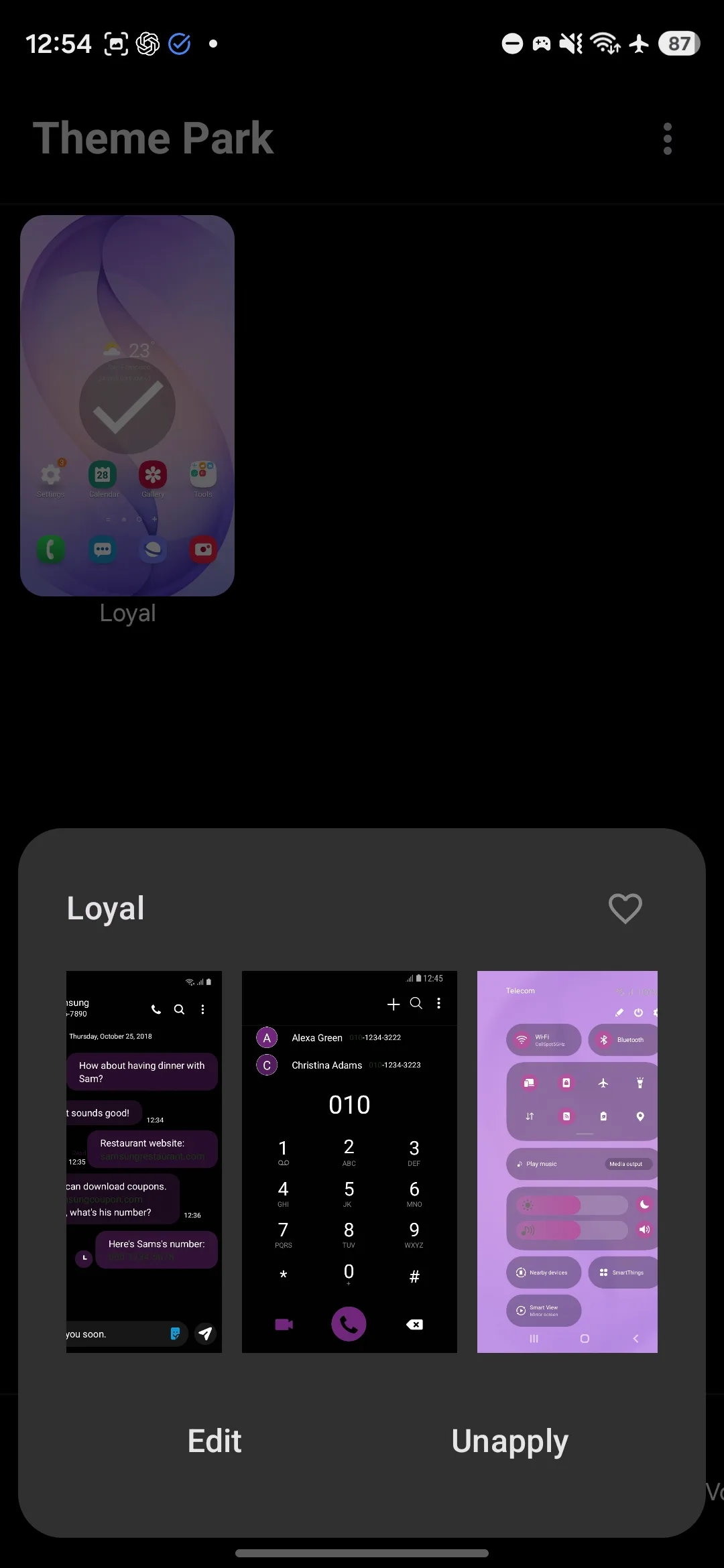
In my Galaxy S26 review, I briefly mentioned that Good Lock is a pilgrimage every Samsung user should undertake. One UI is jam-packed with features, which don’t always feel coherent, but the software design seems deliberate. Samsung’s custom skin has been among my favorites due to its strong identity, and one of its best hidden tricks is Good Lock.
Good Lock is one of those Samsung features that can be weirdly easy to ignore. There’s no shiny demo at the start of the setup process, sitting as a separate app that you’ll have to download. But oddly enough, it is exactly what gives One UI the edge over many other Android skins.
Samsung describes Good Lock as a suite of customization apps for Galaxy devices, letting users personalize the interface, improve productivity, and install only the tools they actually need. This doesn’t sound too interesting till you actually give it a shot.
The module that instantly explains the appeal is Theme Park. I used it to push my Galaxy S26 into deep purple tones across the interface, including the Quick Settings panel. This isn’t your typical wallpaper-matching trick, as you can get in-depth options. With QuickStar, you can redesign parts of the Quick Panel, while LockStar makes the lock screen and Always On Display become more flexible. I even added stickers to the AOD, including goody little line faces, because why not?


It is absolutely not for everyone. But the fact that Samsung even let me make these changes is the point.
Most phones let you choose a wallpaper, pick a color palette, and maybe change icons if the launcher supports it. Good Lock goes several layers deeper. It makes the Galaxy S26 feel less like Samsung’s phone and more like mine.
The most fun I had was with Edge Lighting+. I set up a flower effect that pops up when a notification comes in. Again, this isn’t essential at all and frankly kind of ridiculous. It makes notifications even more distracting, yet my phone felt more alive in some weird manner. You do have more practical lighting effects to choose from, and they won’t make your phone feel spring. But it is really fun to mess around with.


Chinese smartphones are known for going all-in on customizations, and it’s great to see that Samsung doesn’t fall behind either. The Galaxy S26 hardware does appear safe in places. Good Lock helps push back against that by having the software be more unique.
Good Lock is not only about making your phone look different. You get access to plenty of modules that are quietly useful. I already called NotiStar my favorite in the Galaxy S26 review, and I still think it is one of the best Good Lock tools because notification management is one of those things Android can never make too good. Sound Assistant is a close second for me because it gives you more granular control over audio behavior than the regular settings menu.
Then there is Nice Catch, which helps track unexplained actions like vibrations, sounds, ringer mode changes, call mode changes, and toast notifications. If you’ve ever been bothered or curious about why your phone is buzzing for no apparent reason, this makes sure no software gets away with it.


Camera Assistant is another module worth calling out. Samsung’s own Good Lock listing includes camera customization among its plugin tools, and the module adds the sort of camera behavior tweaks that power users usually wish were built directly into the default camera app.
The beauty of Good Lock is that you do not need to use all of this. Samsung has built a modular app that lets you choose how deep you want to go. So you can simply skip any of the ones that don’t interest you.
Good Lock isn’t entirely unknown. At this point, it’s more of an open secret. However, it can be a bit confusing for those getting into it for the first time. A casual user could open it, stare at the list, and leave immediately. But if you give it a shot, you’ll see why the flexibility in Android is the reason why many people never move over to Apple’s polished but locked ecosystem. After using it properly on the Galaxy S26, going back to a cleaner Android phone seems strangely limiting.
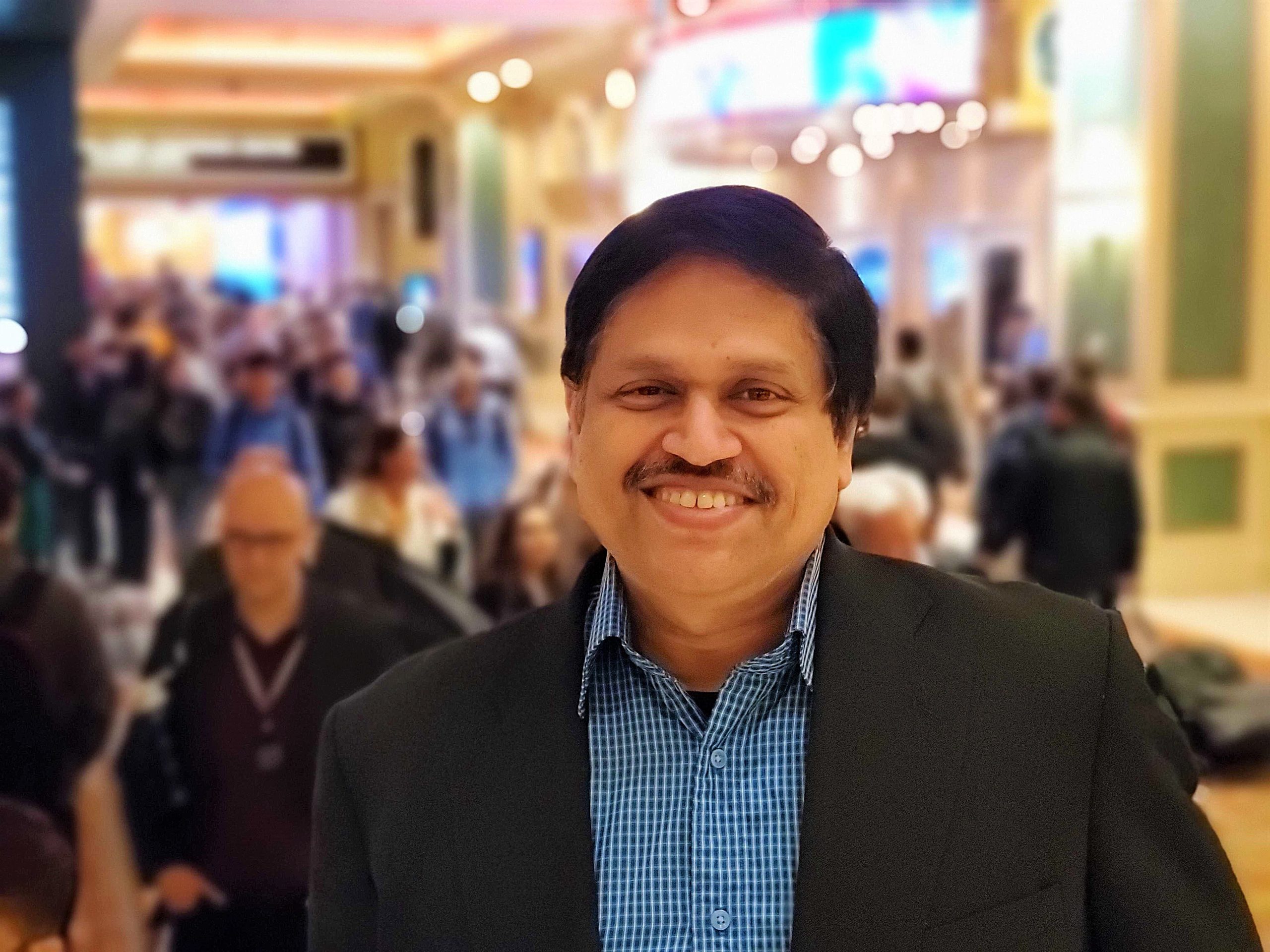

The tributes came quickly for S. “Soma” Somasegar, and they came from seemingly everywhere and everyone he touched across the technology and business community.
A consistent picture emerged: Somasegar was kind, generous with his time, humble, and a steadying presence. To many, those qualities mattered even more than the investments and decisions he made.
A key figure in Seattle tech, Somasegar died this week at age 59. His passing sent a wave of shock and grief across Microsoft, where he spent 27 years, Madrona, the VC firm where he worked the past 11 years, the many startups he invested in and guided, and the countless people he befriended and mentored.
Keep reading for remembrances we rounded up from LinkedIn and elsewhere:
Steven Sinofsky, the former Microsoft Windows and Office leader, called Somasegar “a champion of developers and startups” as he reacted to the news about his friend and colleague.
“We started at Microsoft months apart, both grad school dropouts,” Sinofsky wrote on LinkedIn. “Our work paths intertwined for more than two decades on everything from the first NT through dev tools with a good deal of college recruiting all along.”
Sinofsky said Somasegar’s contributions to Microsoft and culture “were as legendary as was the admiration and respect he earned from generations of the Softies he guided and led.”
Brad Anderson, a former Microsoft and Qualtrics executive, said Somasegar was “one of one,” and “the model of being a servant leader” when they were peers reporting to Bob Muglia and Satya Nadella. “Love that man,” Anderson wrote of Somasegar.

Anoop Gupta, co-founder and executive chairman at SeekOut, called Somasegar “endlessly curious” and said that every conversation with him “left you thinking differently” because of a rare combination of intellectual depth, optimism, humility, and genuine kindness.
Over the years, Somasegar became more than an investor to SeekOut.
“He was a trusted friend; someone whose perspective I valued immensely,” Gupta wrote — and someone who wouldn’t hesitate to make time at 10 p.m. on a Saturday to talk through a problem.
Vijaye Raji, CTO of Applications at OpenAI, first got to know Somasegar nearly 20 years ago at Microsoft, and counted him as a good friend, teacher, and important part of his personal and professional life. Somasegar later led Madrona’s investment in Raji’s startup Statsig, which OpenAI acquired last year for $1.1 billion in one of the largest Seattle-area tech exits of 2025.
“Soma was one of the kindest people I have known,” Raji wrote. “He helped everyone around him, gave generously of his time and wisdom, and made people better simply by being in their corner.”
Raji said he learned a lot from Somasegar, and “his impact on Microsoft, the developer ecosystem, Seattle, the startup community, and so many individual lives will endure.”

Vetri Vellore, a Microsoft veteran and startup leader, first met Somasegar in 1991, when Vellore interviewed for a job at Microsoft — the start of a 35-year friendship.
“He was a friend first, but also a mentor through every inflection point,” Vellore wrote, adding that Somasegar invested in his second startup, Ally.io, and led the seed round and joined the board for his third, Rhythms.
“We had just wrapped a board meeting a few days ago. It was energizing, full of ideas, and we somehow ended up bantering about which Indian restaurants we should use for catering,” Vellore said. “That was him: serious about the work, warm about the people, always game for the small joys in between.”
Joe Duffy, founder and CEO of Pulumi, also met Somasegar decades ago at Microsoft. When Somasegar told Duffy he was leaving for Madrona, Duffy confided that he was planning to leave Microsoft, too, and start a company. Somasegar asked to hear the pitch first — and then led Pulumi’s first investment and joined its board.
“Soma was the first person I would call anytime I faced a tough situation,” Duffy wrote. “His calmness and ability to see right through to clarity instantly centered me and revealed the path ahead as though it were sitting there the whole time without me realizing it.
“He was always there, no matter what time, where we were, or what we had going on. That he could do this while also playing that role for countless others is remarkable.”

Nikesh Parekh, a Seattle tech veteran who served with Somasegar on the board of his company Suplari, remembered him as “a true friend and mentor.”
“If you spent any time in Seattle tech over the last 30 years, you knew Soma,” Parekh wrote.
He described Somasegar’s advisory style as almost Socratic.
“Like Yoda or Bodhidharma, he would give you the advice you actually needed, usually framed as a puzzle or question you had to answer yourself: ‘You tried it. What did you learn? Pick yourself up. Try the next thing. Keep moving.’”
For five years, the two co-hosted sessions at Madrona where Microsoft employees donated to the GIVE campaign for time with Soma, discussing careers and entrepreneurship. His advice was characteristically concrete, Parekh said: spend 80% of your time doing your core job exceptionally, 20% on things that help the broader team. His example: standing up Microsoft’s India Development Center in Hyderabad as a side project. It became one of the company’s most important engineering hubs.
Manuela Papadopol, executive director of the Microsoft Alumni Network, told GeekWire that Somasegar “embodied the very best of Microsoft.”
“He was a world-class technologist and investor, but what set him apart was his generosity with his time, wisdom, and encouragement,” Papadopol said. “He was my mentor, advisor, and most of all, a steadfast supporter of the Microsoft Alumni Network, always looking for ways to help others succeed. His impact will live on through the countless founders, developers, leaders, and alumni whose lives he touched.”

Dayakar Puskoor, an entrepreneur and investor who knew Somasegar first as a colleague at Microsoft and later reconnected through the venture ecosystem, called him “a dear friend, a mentor, and one of the finest people I have had the privilege of knowing.”
The two shared many conversations over the years about startups, leadership, and venture capital, and Somasegar was a supporter of Puskoor’s firm, Dallas Venture Capital.
“Whether speaking with first-time founders, engineers, investors, or friends navigating difficult moments, Soma always made people feel supported and encouraged,” Puskoor wrote.
Daniel Dines, founder and CEO of UiPath, called the passing of Somasegar “one of the saddest days” he could remember.
Somasegar “was the most genuine and kind human being I have ever met, and his loss is incalculable,” Dines wrote. “A mind of unparalleled clarity. A sterling reputation. A life that inspired all of us lucky enough to be near him.”
Recalling board meetings and their time together during UiPath’s IPO, Dines said Somasegar was an honest and steady presence.
“He never raised his voice. He never reached for the easy answer. He just thought carefully and told you the truth,” Dines said. “I lost a friend. A mentor. An inspiration. A model for how to live a life. A board member I trusted completely. A human being I trusted completely.”
Jill Ratkevic, a longtime developer tools marketing leader and founder of Silicon Valley strategy firm Black Swans, called Somasegar “one of a kind.”
“I know I’m not alone in my stories of being young [and] gently schooled,” Ratkevic wrote. “His generosity in helping me solve the insolvable. RIP. Love to all.”

Stefan Weitz, a Microsoft vet who is currently co-founder and CEO of HumanX, called Somasegar one of his “favorite managers and human beings on the planet.”
“I am so sad tonight that one of the smartest, hardest working, kindest, and highest integrity people in tech and venture has left us,” Weitz wrote. “Soma was proof positive you didn’t have to be an asshole to be brilliant, nor a braggart to be an inspiring leader. He will be and deserves to be missed by those who will come after him in our increasingly inward looking industry.”
Preeti Suri, founder and CEO of AdventureTripr, said that when she moved from London to Seattle to start her company, she didn’t know anyone. Somasegar was one of the first people she spoke to.
He connected her to people with backgrounds in travel investing and startups, she wrote, and whenever she “needed guidance, felt disillusioned during fundraising or faced predatory terms, he was there — always available, even at short notice, to give wise, honest counsel.”
Somasegar showed her again and again “how someone can rise above selfish motives and genuinely help others,” Suri said. “He restored my faith in humanity when I needed it most.”
Vamshi Reddy, CEO of Bellevue-based Quadrant Technologies, called Somasegar “not only a great technology leader, but also a very humble human being,” crediting him for guiding entrepreneurs, startup founders, developers, and community members.
“Soma always made time to mentor people, encourage founders, and support the community with kindness and simplicity,” Reddy wrote. “So many people grew because of his guidance, advice, and belief in them and his support from Madrona. His impact went far beyond business and technology.”

Sharath Katipally, head of enterprise AI at Cornerstone, knew Somasegar through both the Seattle tech and cricket communities, and remembered him as “a foundation and guiding presence.”
The two first met through a JPMorgan client event, but the relationship deepened over time into genuine mentorship. Katipally recalled a conversation during a period when he was navigating the transition from large leadership roles back to an individual contributor path. Somasegar opened up about going through a similar adjustment after leaving Microsoft.
“It was a simple conversation, but it stayed with me because it came from a place of honesty, humility, and lived experience,” Katipally wrote. “He never made conversations transactional. Be it career, cricket, sponsorships, or simply showing up when someone needed support, he always made time for people.”
Pritam Parvatkar, a tech veteran who is chief alliance officer at AlonOS, said that Somasegar “changed the lives of many” as a brilliant leader, role model, mentor and passionate cricket fan.
“You will be missed but will continue to inspire every young entrepreneur dreaming of future success — whether in AI, cloud, or even the challenging field of cricket,” Parvatkar wrote. “You demonstrated how to turn passion into a successful career and create a bright future.”
At Madrona, where Somasegar joined as venture partner in 2015 and was named managing director in 2017, he was remembered as a brilliant and generous spirit.
“He was unique at every level and raised the bar on what we expected of ourselves professionally and, more importantly, personally,” the firm wrote in a tribute post. “We all loved Soma, as everyone who knew him did.”
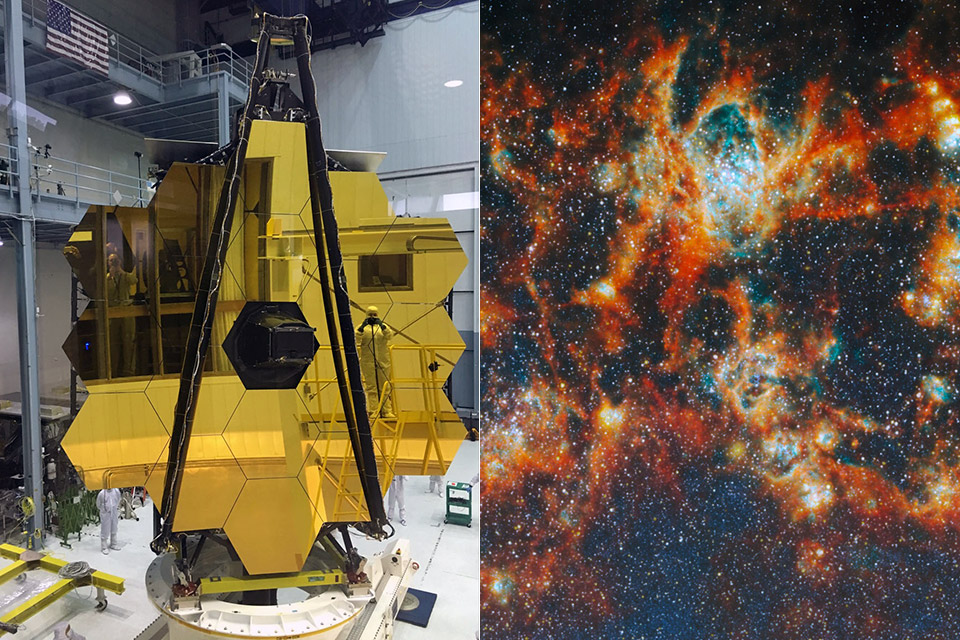
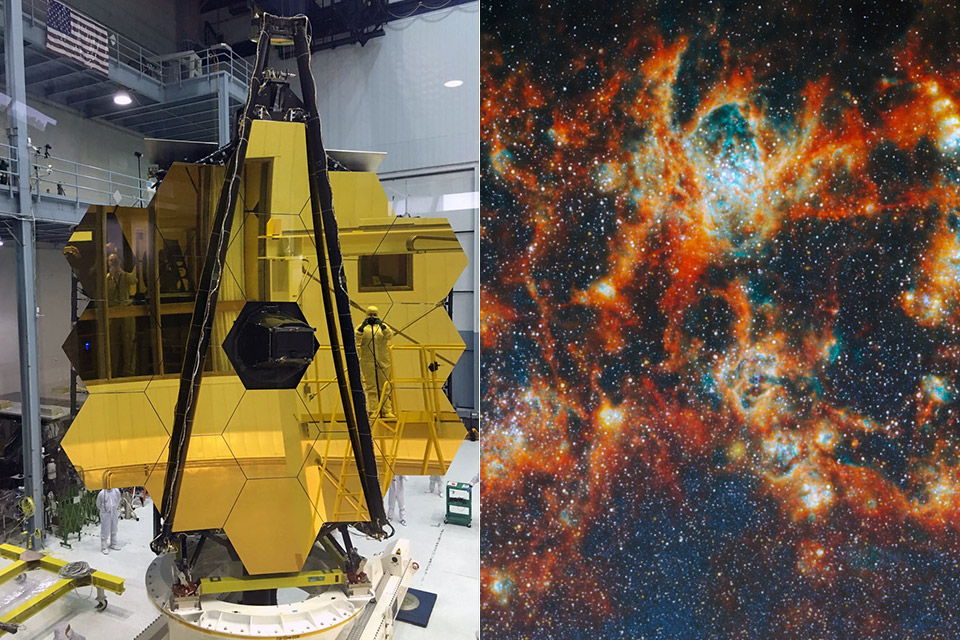
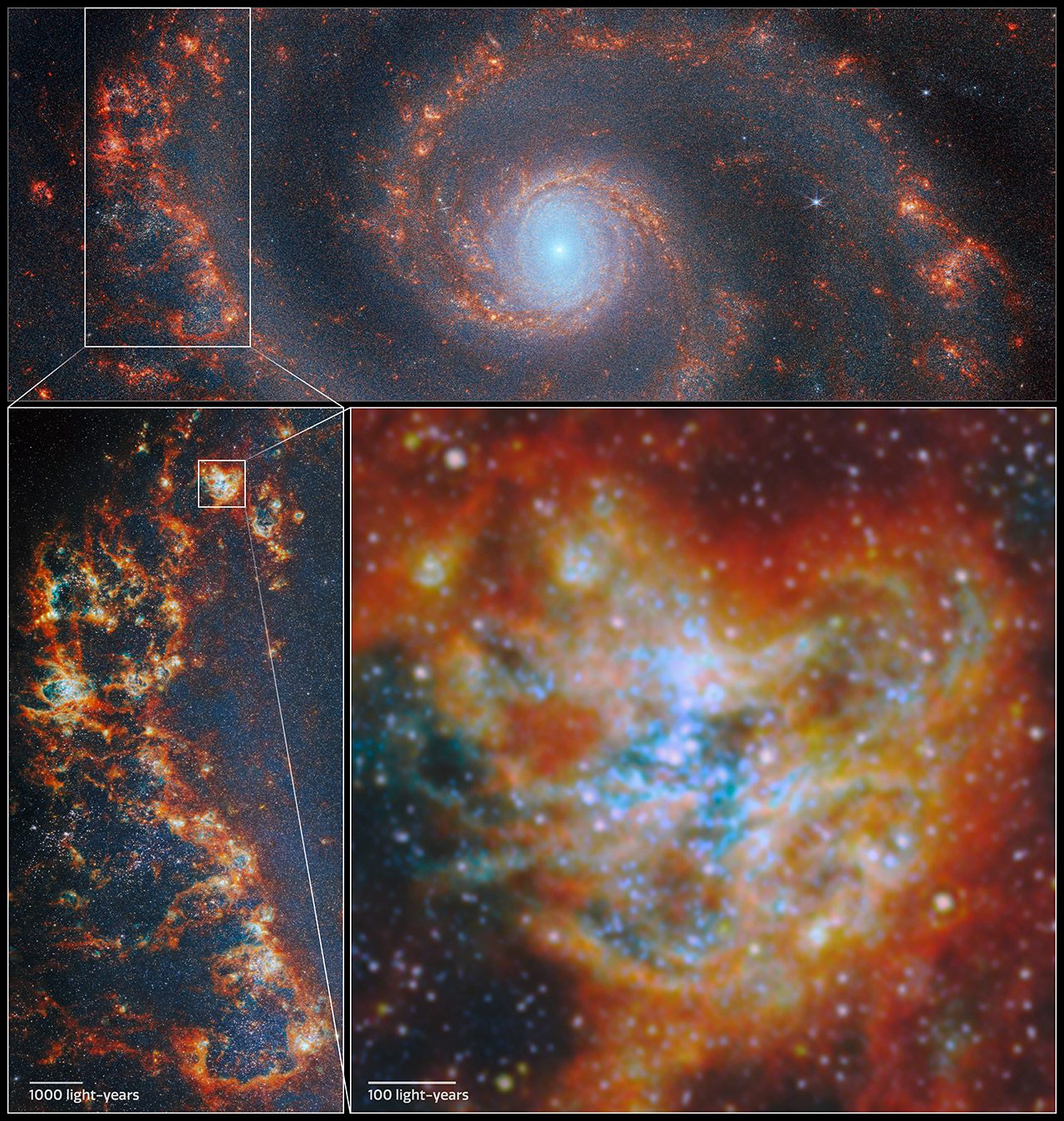
Messier 51 (M51) is located around 31 million light-years away in the constellation Canes Venatici. Astronomers call it the Whirlpool Galaxy because of the elegant way its spiral arms extend outward from the center. NGC 5195, a smaller companion galaxy, interacts with it, helping to sculpt its sweeping characteristics. Recent observations have focused on one stretch of a spiral arm where stars develop in huge groupings. Infrared photos from the James Webb Space Telescope now reveal details hidden inside dense clouds of gas and dust.
Thick material illuminates in warm, blazing red and orange throughout the image. Those hues reveal the basic elements of star formation, such as dust grains and complicated chemicals. Cyan flecks appear out in those clouds, where young, huge stars have already begun to push material around them. White dots represent the densest clusters that are gradually making their way out into the clearer space ahead. A faint blue glow hangs out around sections of the arm against the background; it’s quite weak, so you have to look closely.
Sale

Zoom in and you can see the same pattern in ultra high definition over nearly 800 light years. The bright blue-white patches within the red-orange clouds are young star clusters that are still rather deep. The cyan glow is caused by the radiation that bright stars emit, which ionizes the atmosphere surrounding them. If you look closely, you can see individual stars scattered all over the place because infrared light passes right through the dust that blocks visible light, revealing them in all their glory.

The new data was gathered using the Near-Infrared Camera on the Webb telescope, which used a variety of filters to tune into the infrared wavelengths in different ways. One set is useful for detecting ionized gas, while another highlights specific chemicals found in the birth clouds. The Webb telescope can work alongside older Hubble photos of the same clusters after they have been cleansed of dust and pollution. When all of this is taken into account, researchers may see clusters forming throughout their early lives.
This is all part of the FEAST initiative, which is looking very closely at thousands of newborn star clusters in four neighboring galaxies, including Messier 51. Scientists cataloged nearly 9,000 clusters in all, then estimated their mass and age using infrared signals. The data tell a pretty clear story: big clusters clear out their own gas after roughly 5 million years, whereas smaller ones require 7 or 8 million years.

Massive clusters have a much higher concentration of hot stars from the start. Those stars emit massive amounts of energy and tremendous winds. And finally, they explode as supernovae, sending the gas traveling faster. This entire process, stellar feedback, has a significant impact on how much material is available for new stars to form inside the galaxy, as well as on the environment surrounding those newborn stars.

Developers for several top videogames have joined unions under the Communication Workers of America — including Call of Duty, Fallout, Overwatch, Diablo and World of Warcraft. Last month workers on the online game Magic: The Gathering Arena team announced their own CWA union.
The gaming news site Aftermath shares some interesting details:
Owner Hasbro and Wizards of the Coast could have voluntarily agreed to the union, but instead the issue is going to an official vote with the National Labor Relations Board in June… [O]ne Arena developer shared on Bluesky that one of the reasons they were inspired to organize was because Wizards changed its remote work policy, requiring them to move across the country or to a more expensive state to remain employed. (Changes to remote work have been one of the big drivers of unionization and union action among video game developers.) If the union is successful, the company wouldn’t be able to unilaterally change working conditions like remote work; it would have to negotiate with the union over the decision. There’s no guarantee unionized employees would get what they want, but they’d have more of a say, and the opportunity to directly influence their work situation, than they would without a union.
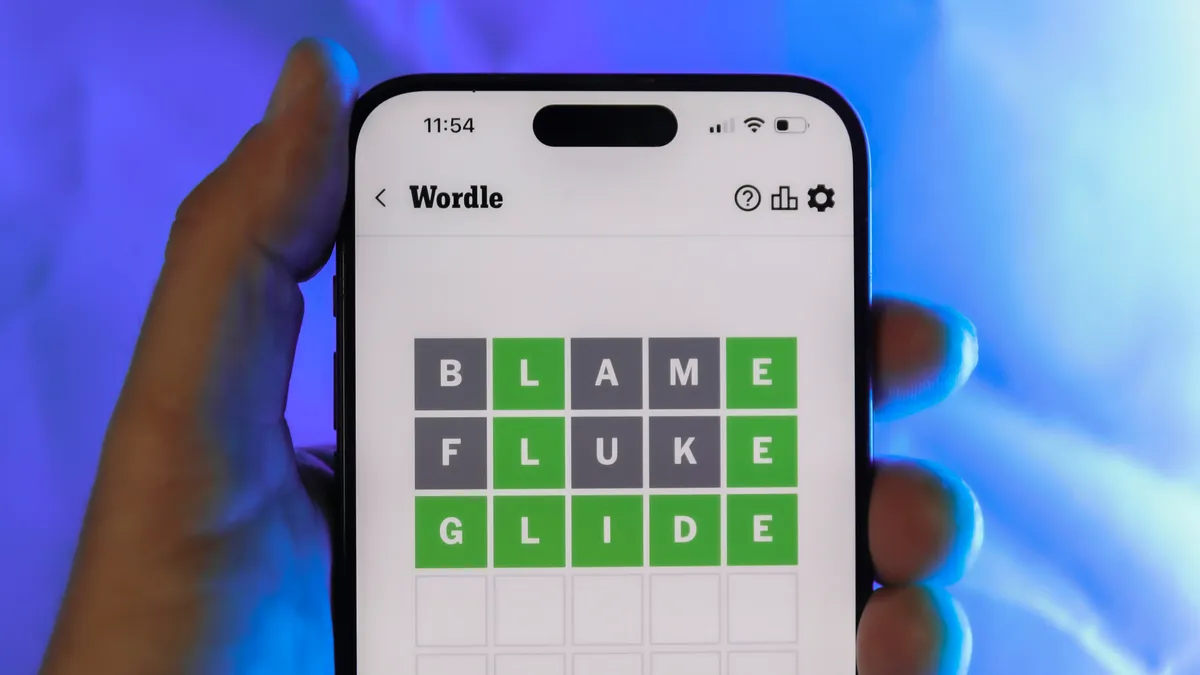
Looking for the most recent Wordle answer? Click here for today’s Wordle hints, as well as our daily answers and hints for The New York Times Mini Crossword, Connections, Connections: Sports Edition and Strands puzzles.
Today’s Wordle puzzle is a bit tricky. If you need a new starter word, check out our list of which letters show up the most in English words. If you need hints and the answer, read on.
Read more: New Study Reveals Wordle’s Top 10 Toughest Words of 2025
Before we show you today’s Wordle answer, we’ll give you some hints. If you don’t want a spoiler, look away now.
Today’s Wordle answer has one repeated letter.
Today’s Wordle answer has two vowels, but one of them is the repeated letter, so you’ll see that one twice.
Today’s Wordle answer begins with N.
Today’s Wordle answer ends with E.
Today’s Wordle answer can refer to the female child of one’s sibling.
Today’s Wordle answer is NIECE.
Yesterday’s Wordle answer, May 23, No. 1799, was CHUCK.
May 19, No. 1795: DUSTY
May 20, No. 1796: WRECK
May 21, No. 1797: AGREE
May 22, No. 1798: VOCAL





Blockchain.com files with SEC for U.S. IPO


Holiday Weekend Open Thread – Corporette.com


Dell Technologies DELL Stock Surges 15% on AI Server Momentum and Analyst Upgrades in 2026


Bitcoin Accumulation Weakens as BTC Realized Losses Hit $600M


Space X IPO Is ‘Bad News’ for Tech Stocks: But What About Bitcoin?


Robinhood crypto COO Tanya Denisova exits


Makerfield: a tale of two social-media histories


WhatsApp ads could make Irish debut after discussions with DPC


AI infrastructure race heats up as IREN pitches full-stack strategy, WhiteFiber lands $160M deal

A 0.12% parameter add-on gives AI agents the working memory RAG can’t


Trump Invests $1M-$5M in Kura Sushi USA Chain With 27 California Locations

Revolut Launches Dogecoin Debit Card Across UK and EU


You Can Now Add ChatGPT To PowerPoint


2026 CJ Cup Byron Nelson leaderboard: Brooks Koepka finds putting stroke in Round 1


MicroStrategy’s Saylor Says Miners No Longer Set Bitcoin Price, Another Force Has Taken Over


Trump Media’s Bitcoin Stash Shrinks Again as 2,650 BTC Lands on Crypto.com
Goldman Sachs reinstates Ageas stock coverage with neutral rating

Charity run by Reform leader Malcolm Offord accused of ‘law breaking’ over Scottish registration


SEC to propose tokenized stock framework as Wall Street efforts deepen: Bloomberg


SECOND secret Israeli base discovered in Iraqi desert




You must be logged in to post a comment Login