
Connect with us

Tech

Fresh iPhone 17e & iPad leak points to incremental upgrades

Published

on

New chips, not new designs, will define Apple’s next entry-level iPad and iPhone 17e as the company advances its entry-level lineup incrementally.

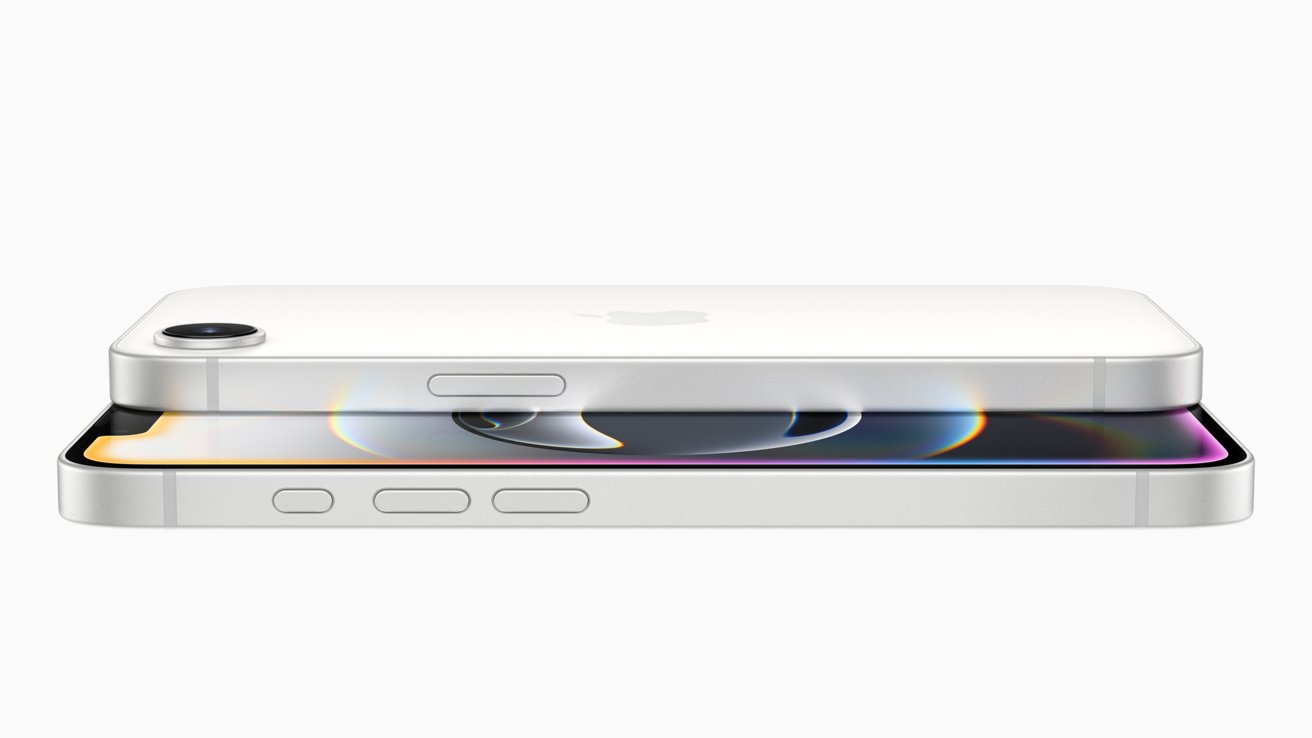
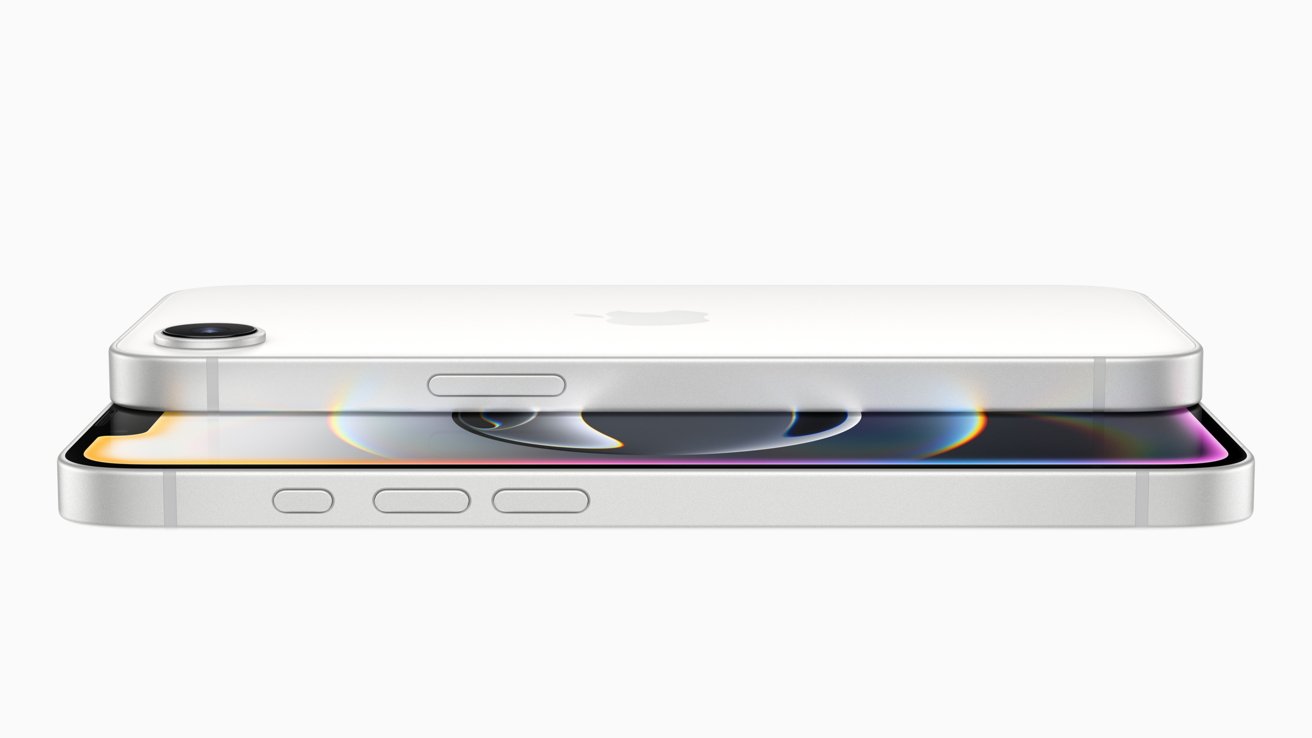
Two stacked white smartphones shown from the side, highlighting slim flat edges, buttons, a single rear camera, and a colorful glowing screen on the lower phoneThe iPhone 17e may well look exactly like its predecessor

A report from MacOtakara published on February 6 says Apple plans to keep the current designs for both devices while upgrading their processors. The report reinforces a familiar pattern in Apple’s lineup, where entry-level models advance through internal improvements rather than visible redesigns.

MacOtakara is a long-running Apple rumor site with solid supply-chain access and a track record that, while mixed, is generally reliable.
Rumor Score: 🤔 Possible
Continue Reading on AppleInsider | Discuss on our Forums

Source link

Continue Reading
Click to comment

Leave a Reply

Your email address will not be published. Required fields are marked *

Tech

Why Apple’s AirPods 4 with Noise Cancellation Deserves Your Ears

Published

on

Apple AirPods 4 with ANC 2026
In terms of fit and feel, Apple’s earbuds have always been a source of contention. Some swear by the sealed tips on the Pro models for keeping everything out, while others prefer the normal versions to prevent the uncomfortable plugged-up feeling. Then Apple debuted the AirPods 4 with active noise cancellation, and for $119 (was $179), they manage to make a huge difference in terms of quietness without requiring you to insert a seal into your ear canal.


Apple’s designers spent some time adjusting the contour of these earphones to ensure they fit more firmly in your ear than their predecessors. Simply screw them in gently and they will stick firmly, even during a bumpy subway journey or a fast stroll. They’re also far more comfortable, because to the curved shape, which prevents pressure points from forming over time. To top it off, they’re dust and water resistant to a considerable degree.

Sale


Apple AirPods 4 Wireless Earbuds, Bluetooth Headphones, with Active Noise Cancellation, Adaptive…
  • REBUILT FOR COMFORT — AirPods 4 have been redesigned for exceptional all-day comfort and greater stability. With a refined contour, shorter stem…
  • ACTIVE NOISE CANCELLATION — AirPods 4 with Active Noise Cancellation help reduce outside noise before it reaches your ears, so you can immerse…
  • HEAR THE WORLD AROUND YOU — The powerful H2 chip comes to AirPods 4. Adaptive Audio seamlessly blends ANC and Transparency mode — which lets you…

The case design has also been improved, as it is now somewhat smaller and allows wireless charging and USB-C for rapid top-ups, while the sound on these earbuds is excellent. The bass comes through clearly and does not overpower the mids, allowing you to easily identify different instruments in a song. The treble is also sparkling and detailed, so it doesn’t get too jumbled like it used to.

Advertisement


Adaptive EQ works by fine-tuning the sound to your ear shape on the fly, resulting in a pleasant, consistent sound over a wide range of music. It also works the same for calls, as Voice Isolation removes background noise, allowing you to be heard clearly on the other end. Active noise cancellation in an open ear setup may seem improbable at first, but it is really quite effective in real-world conditions. So you won’t be able to hear low rumbles from airplanes, buses, or office air conditioning systems, which helps to quiet things down. When you have music playing at an appropriate volume, it makes everything more enjoyable. You can enable Transparency mode if you need to have a quick chat or whatever.

Apple AirPods 4 with ANC 2026
The battery life is also fairly decent, with 4 hours of listening with noise cancellation and 20 hours with the case. Without ANC, it is 5 and 30 hours, respectively. Fast charging allows you to just place them in the case for a short period of time and have enough juice to last for an extended period. Oh, and the case has a little built-in speaker that you can use with Find My if you misplace it.

Source link

Advertisement
Continue Reading

Tech

X adds ‘Paid Partnership’ labels so users can more easily identify ads

Published

on

X is rolling out a built-in “Paid Partnership” label that creators can apply to sponsored posts, replacing the hashtag workarounds they’ve had to rely on until now. The feature, by the platform’s head of product Nikita Bier, adds a toggle that places a disclosure label directly below a post’s content. It can also be applied retroactively.

The label is meant to help creators comply with years-old requiring clear disclosure of sponsored content. The agency reminding influencers about this requirement in 2017, and a disclosure feature that same year. Without a native tool, X creators had been left to use hashtags like #ad and #paidpartnership.

X has been trying to court creators for some time with tools like and creator , but the platform still struggles with major image issues following a string of scandals like . The Elon Musk-owned platform is under investigation both and for the AI agent’s behavior.

Source link

Advertisement
Continue Reading

Tech

In new letter to governor, Seattle tech leaders say income tax proposal will hurt region’s AI innovation

Published

on

The Seattle skyline. (GeekWire File Photo / Kurt Schlosser)

Seattle tech leaders are warning that a new income tax proposal could stall the region’s momentum in artificial intelligence.

In a letter sent Monday to Gov. Bob Ferguson, a group of AI researchers, founders, and investors argue that higher taxes on high earners and investment gains would push top talent and future startups elsewhere.

They urge state leaders to “pause” work on the so‑called “millionaires tax” — a state income tax that would impose a 9.9% levy on personal income above $1 million — as well as an increase to Washington’s capital gains tax.

“These policies would materially undermine Washington’s ability to keep growing the tech sector, which is a core driver of our economy, and would slow the AI innovation and investment momentum that we should be accelerating, not discouraging,” the letter reads.

The group frames the issue as an AI competitiveness problem, writing that Washington is “competing for the talent required to build and scale AI products, companies, and jobs” but is “starting to lose momentum” compared to rival hubs.

Advertisement

“AI is at a critical moment, and a hasty decision now would do serious damage to the future of Washington’s innovation economy,” they wrote.

Citing Silicon Valley Bank’s recent State of the Markets report, they say Seattle has seen a “significant” downturn in startup formation over the past three years, while San Francisco benefits from a deeper AI ecosystem and Texas is attracting companies with what they describe as a more favorable tax climate.

The report shows that VC-backed company formation in Seattle has fallen 30% since 2022. San Francisco is the only tech hub to see growth in company formation, according to the report, driven by the AI boom.

Signatories of the letter include Pedro Domingos, professor emeritus of computer science and engineering at the University of Washington; Brian Hall, a former executive at Microsoft, Amazon Web Services, and Google; Oren Etzioni, former CEO of the Allen Institute for Artificial Intelligence; Read AI co‑founder and CEO David Shim; CloudMoyo CEO Manish Kedia; Founders’ Co‑op general partner Aviel Ginzburg; AZX CEO Aaron Goldfeder; LaunchDarkly CTO Cameron Etezadi; Salesforce engineering leader Paul Brown; AJW Services managing director Adam Wray; and longtime software engineer and author Vijay Boyapati.

Advertisement

The Wall Street Journal’s editorial board cited the letter, writing that “Democrats are putting their economy and jobs at risk if they follow the California ratchet of tax, spend, and tax some more.”

GeekWire reached out to Gov. Ferguson’s office for comment.

The proposed income tax, Senate Bill 6346, was approved by Washington’s Senate earlier this month and is being debated by House lawmakers. Gov. Ferguson has criticized the proposal for doing too little for small businesses and lower-income residents in the state. Democrats have made subsequent changes but the governor told the Washington State Standard on Friday that the bill “still has a long way to go.”

The tax would take effect in 2030 and is expected to generate an estimated $3.7 billion annually.

Advertisement

An analysis from the Tax Foundation concluded that the tax “would make the state increasingly undesirable for high earners, particularly in the state’s crucial tech sector.”

Another proposal in Washington, SB 6229, would apply the capital gains tax to profits from the sale of qualified small business stock, or QSBS, even when gains are fully exempt under federal law. It’s not clear if that bill will advance in this year’s legislative session.

Others in Seattle’s tech ecosystem have pushed back on the idea that higher taxes on top earners would trigger an existential threat to the startup economy.

Washington state has the second-most regressive state and local tax system in the country, according to the Institute on Taxation and Economic Policy.

Advertisement

The debate over taxes on high earners comes as the state is struggling to plug a budget deficit above $2 billion with spending cuts and a slate of potential tax changes. Meanwhile, many large tech employers are cutting thousands of jobs.

The legislative session is scheduled to end on March 12. Read the letter in full below.

Source link

Advertisement
Continue Reading

Tech

Donut Lab Just Turned Up the Heat on Solid-State Battery Expectations, and the Results are Surprising

Published

on

Donut Lab Solid-State Battery Heat Test Technology
Donut Lab, a Finnish company, recently released some impressive test data demonstrating how their solid-state battery handles extreme temperatures that conventional lithium-ion cells would struggle to deal with. The test results come from a series of measurements conducted by the VTT Technical Research Centre of Finland, a respected, government-backed research organization. They needed to figure out precisely how high the heat could reach before this Donut Lab cell, rated at 3.6 volts and 26 amp-hours, blew up in smoke (or some other way), so they decided to put it through its paces.


The engineers first established a baseline at a comfortable 20°C, at which point the cell delivered 24.9 amp-hours of capacity during a standard 1C discharge (or, to put it another way, the cell was chucking out a whopping 24 amps in one hour), but then they ramped up the temperature to 80°C, or ‘high heat’ to you and me, and discharged the cell again at the same rate. To their surprise, the cell managed to muster 27.5 amp-hours, which is around 110.5% of what it could manage at ambient temperature, and then outperformed that at 100°C (though at a lower 0.5C rate of 12 amps to keep things stable). There, the cell produced 27.6 amp-hours, or 107.1% of the beginning amount.

Sale


VOLPAM Electric Scooter, 350W/500W Powerful Motor, 8.5″/10″ Solid Tires, 19/21Mph, 28/23/21/16 Miles Max…
  • ✔EXCELLENT PERFORMANCE: The adult electric scooter is powered by a 350W brushless motor, reaching speeds of 19 mph in S gear. Impressive…
  • ✔KEEP YOU SAFE: Bright headlights keep you visible at night. Warning taillights flash when braking to protect you from collisions. Dual braking…
  • ✔ENJOY SMART RIDING: You can check the current speed, speed mode, and battery life on the high-definition full-color LCD display. There are 4 riding…

The clear upshot of all of this is that when the temperature increased, the internal resistance in the solid electrolyte decreased, allowing the ions to move about more freely, which increased the battery’s useful energy output significantly. After both high discharges, they returned the cell to ambient temperature and recharged it normally; fortunately, no permanent damage was discovered from the electrical angle. Not so good news: at 100°C, the pouch cell lost its vacuum seal, most likely owing to gas buildup or material weakening, although it still functioned properly.

Advertisement


Conventional lithium-ion batteries use liquid electrolytes that become wobbly when temperatures rise above 60-70°C, causing a variety of problems such as vaporisation, swelling, rapid degradation, and, in the worst-case scenario, the dreaded thermal runaway, in which the cell becomes so hot that it is essentially a fire waiting to happen. Solid-state designs replace the liquid with a non-flammable solid, which, for obvious reasons, eliminates the source of all the problems. Donut Lab’s version appears to be capitalising on this advantage, transforming what would be a major issue for other batteries into a little but significant benefit.


This test adds to the evidence Donut Lab is using to support the claim that their battery technology is suitable for use in the real world. Donut Lab unveiled their Donut Battery as the first all-solid-state battery pack ready for cars at CES 2026, and it wasn’t just a pipe dream, as they claimed some pretty impressive numbers, including 400 watt-hours per kilogram energy density, full charges in 5 minutes, and a mind-boggling 100,000 cycles with almost no fade. The cells are really powering various Verge Motorcycles models that will hit the road this quarter, with the boast that they can hold more than 99% of capacity from -30°C to 100°C.

Source link

Advertisement
Continue Reading

Tech

Apple finally fixed the budget iPhone’s vibe, and the Pixel 10a can’t keep up

Published

on

For the last couple of years, the mid-range smartphone pitch has been simple: offer a rounded package without making the obvious compromises. A good screen, solid battery life, and decent performance go a long way. That’s why the iPhone 17e vs Pixel 10a matchup is a bit spicy.

Google’s Pixel 10a still seems like a sensible pick; familiar, practical, and easy to recommend. But Apple’s iPhone 17e is doing something disruptive, which is making the “budget iPhone” feel like the real deal.

And that’s what makes the Pixel 10a look worse.

The 128GB era isn’t dead, but Apple just made it embarrassing

Apple has effectively killed the 128GB baseline. The iPhone 17e starts at $599 for 256GB, with no 128GB version at all. Google’s Pixel 10a, on the other hand, starts at $499 for 128GB and costs $599 for 256GB. If you come down to a direct, same-price comparison, storage isn’t the dunk it looks like at first. But Apple’s move still matters because it upgrades the default. On the 17e, 256GB is the baseline reality. On the Pixel 10a, it’s the version you have to consciously choose.

Advertisement

It also makes the iPhone 17e feel like a more meaningful upgrade over last year’s iPhone 16e, which launched at the same $599, but with 128GB. That’s a real bump in everyday value.

PixelSnap snubbed the 10a, while Apple brought in the whole ecosystem

The Pixel 10a feels oddly incomplete because Google seemingly decided to skip the Qi2 magnetic charging support on the budget phone. PixelSnap was a big update to the Pixel experience, and this makes the 10a feel like the one phone in the Pixel 10 lineup that can’t really tap into that new accessory push.

Apple did the opposite. The iPhone 17e gains MagSafe support (and Qi2) that was originally missing on its predecessor. This brings Apple’s magnetic charging-and-accessory ecosystem to the “e” tier. This is one of those features that doesn’t look like a headline spec until you live with it. Magnetic chargers, stands, wallets, and car mounts — it’s convenience you stop thinking about because it just works.

Apple making MagSafe standard here gives the 17e something the Pixel 10a doesn’t have: a budget phone that still feels like it belongs to a larger ecosystem.

The real $100 trade-off isn’t specs, it’s how complete the phone feels

Yes, the Pixel 10a is $100 cheaper at the entry point. But Apple is betting that $100 buys you more than storage. It buys you fewer compromises:

Advertisement
  • The base configuration that doesn’t feel like a trap
  • MagSafe as a real daily-life bonus
  • A more polished “it just fits” story. It’s not just accessories, but how the 17e slots into Apple’s broader ecosystem (Macs, iPads, Watch) in ways that feel less optional and more baked in

This is where the iPhone 17e starts pulling ahead. It’s not just good for the money; it feels like Apple has decided that the ‘e’ model shouldn’t come with an asterisk.

The Pixel 10a does have two big wins, though

To be fair, the Pixel 10a isn’t showing up completely empty-handed.

First, the display. All of the performance gains of the iPhone 17e’s A19 feel a bit wasted on a phone still locked to a 60Hz display. It’s like a lion caged in a tiny box. Google’s aging Tensor G4 might not win benchmark wars, but the 120Hz screen will make the phone feel instantly snappier in scrolling, animations, and everyday use.

Second, software. Where the Pixel 10a really separates itself is software, especially with Google’s AI-driven features that actually feel practical. Real-time scam detection is working quietly in the background. Call Assist can screen unknown numbers and filter spam without you having to deal with the annoyance first.

Features like Call Notes can transcribe and summarize calls, while on-call translation is arguably the most nifty feature of them all. And yet, these are just the tip of the iceberg. The Pixel-only software perks are the kind of thing that becomes sticky once you’re used to them.

The “more compelling upgrade” bottom line

The Pixel 10a’s problem isn’t that it’s bad. It’s that it’s safe.

Advertisement

A safe Pixel a-series release is still a good phone. But the iPhone 17e feels like a more meaningful statement: Apple kept the same $599 starting price while upgrading the things budget iPhones typically cheap out on. That makes the 17e feel like a better upgrade this year, even before you get into the typical talking points of cameras, processors, or benchmarks.

If you’re purely maximizing dollars, the Pixel 10a at $499 will still tempt a lot of people.

But the better choice is the one that feels like fewer compromises. Apple didn’t just tweak the ‘e’ series; it made it more complete. And in the mid-range market, where good enough is everywhere, complete is a pretty nice flex.

Advertisement

Source link

Continue Reading

Tech

Bay Area-based Aetherflux to join Seattle space race with new hub for satellite development

Published

on

Baiju Bhatt, founder and CEO of Aetherflux. (LinkedIn Photo)

Aetherflux, a Bay Area-based space startup, is expanding to Seattle to open what it calls a “core center for satellite development.”

In a post on LinkedIn last week, Aetherflux said its team is growing and the company is currently hiring across all disciplines, from engineering to operations.

Founded in 2024 by CEO Baiju Bhatt, the billionaire co-founder of the trading platform Robinhood, Aetherflux is currently focused on creating an orbital data center satellite. The company says the goal is for its constellation of satellites — which it calls “Galactic Brain” — to leverage solar power in space to address the massive energy needs on Earth for artificial intelligence. The first data center node for commercial use is targeted for launch in 2027.

The startup will join a robust aerospace community of companies big and small in the Seattle area and beyond. They include Blue Origin, Stoke Space, Aerojet Rocketdyne, Starfish Space, Starcloud, Xplore and many more.

SpaceX, which produces satellites for its Starlink broadband constellation from its Redmond, Wash., facility, is seeking approval from the Federal Communications Commission for its plan to put up to a million satellites in orbit to process data for artificial intelligence applications.

Advertisement

Amazon produces satellites for its Amazon Leo broadband satellite network in Kirkland, Wash.

AI companies have been considering the idea of using solar-powered data center satellites to get around the limiting factors for ground-based facilities, such as rapidly growing requirements for electrical power as well as the availability of water for cooling systems.

“The race for artificial general intelligence is fundamentally a race for compute capacity, and by extension, energy. The elephant in the room is that our current energy plans simply won’t get us there fast enough,” Bhatt said in December. “Galactic Brain puts the sunlight next to the silicon and skips the power grid entirely.”

Aetherflux raised $50 million in a Series A funding in April 2025. The round was led by Index Ventures and Interlagos, with participation from Bill Gates’ Breakthrough Energy Ventures, Andreessen Horowitz, and NEA, according to TechCrunch. Total funding to date is $60 million.

Advertisement

Based in San Carlos, Calif., and Washington, D.C., Aetherflux’s team includes people who’ve worked at Robinhood, SpaceX, NASA’s Jet Propulsion Laboratory, Anduril and the U.S. Navy.

Aetherflux has attracted to attention from the U.S. military. The company was awarded funding from the Department of Defense’s Operational Energy Capability Improvement Fund (OECIF) to develop space solar power for the military.

The Seattle-area company that comes closest to Aetherflux’s target market is Redmond-based Starcloud, which is working to put a network of data center satellites in orbit. In a LinkedIn post, Starcloud CEO Philip Johnston hailed Aetherflux’s Seattle plans as a positive sign for the region’s space industry. “Welcome to the neighbourhood, Aetherflux! … Did we kick off a new trend for space startups?” Johnston wrote.

GeekWire reached out to Aetherflux to learn where its Seattle hub will be located and how many people it hopes to employ. We’ll update when we hear back.

Advertisement

Source link

Continue Reading

Tech

CyberStrikeAI tool adopted by hackers for AI-powered attacks

Published

on

Artificial intelligence

Researchers warn that a newly identified open-source AI security testing platform called CyberStrikeAI was used by the same threat actor behind a recent campaign that breached hundreds of Fortinet FortiGate firewalls.

Last month, BleepingComputer reported on an AI-assisted hacking operation that compromised more than 500 FortiGate devices in five weeks. The threat actor behind this campaign used multiple servers, including a web server at 212.11.64[.]250.

In a new report, Senior Threat Intel Advisor for Team Cymru, Will Thomas (aka BushidoToken), says that the same IP address was observed running the relatively new CyberStrikeAI AI-powered security testing platform.

Analyzing NetFlow data, Team Cymru identified a “CyberStrikeAI” service banner running on port 8080 on 212.11.64[.]250 and saw network communications between that IP and Fortinet FortiGate devices the threat actor targeted. The FortiGate campaign infrastructure was last seen running CyberStrikeAI on January 30, 2026.

Advertisement

CyberStrikeAI’s GitHub repository describes itself as an “AI-native security testing platform built in Go” that integrates over 100 security tools, an intelligent orchestration engine, predefined security roles, and a skills system.

“Through native MCP protocol and AI agents, it enables end-to-end automation from conversational commands to vulnerability discovery, attack-chain analysis, knowledge retrieval, and result visualization—delivering an auditable, traceable, and collaborative testing environment for security teams,” reads the project description. The tool includes an AI decision engine compatible with models such as GPT, Claude, and DeepSeek, a password-protected web UI with audit logging and SQLite persistence, and a dashboard for vulnerability management, task orchestration, and attack-chain visualization.

Its tooling allows it to conduct a full attack chain, including network scanning (nmap, masscan), web and application testing (sqlmap, nikto, gobuster), exploitation frameworks (metasploit, pwntools), password cracking tools (hashcat, john), and post-exploitation frameworks (mimikatz, bloodhound, impacket).

By combining these tools with AI agents and an orchestrator, CyberStrikeAI enables operators, even low-skilled ones, to automate attacks against targets. Team Cymru warns that AI-native orchestration engines like this could accelerate automated targeting of exposed edge devices, including firewalls and VPN appliances.

Advertisement

The researchers say they observed 21 unique IP addresses running CyberStrikeAI between January 20 and February 26, 2026, with servers primarily hosted in China, Singapore, and Hong Kong. Additional infrastructure was spotted in the United States, Japan, and Europe. 

“As adversaries increasingly embrace AI-native orchestration engines, we expect to see a rise in automated, AI-driven targeting of vulnerable edge devices, similar to the observed reconnaissance and targeting of Fortinet FortiGate appliances,” explains Thomas.

“In the near future, defenders must be prepared for an environment where tools like CyberStrikeAI, alongside the developer’s other AI-assisted privilege escalation projects like PrivHunterAI and InfiltrateX, significantly lower the barrier to entry for complex network exploitation.”

The researchers also examined the profile of the CyberStrikeAI developer, who goes by the alias “Ed1s0nZ.”

Advertisement

Based on public repositories linked to the account, the developer has worked on additional AI-assisted security tools, including PrivHunterAI, which uses AI models to detect privilege escalation vulnerabilities, and InfiltrateX, a privilege escalation scanning tool.

According to Team Cymru, the developer’s GitHub activity shows interactions with organizations previously linked to Chinese government–affiliated cyber operations.

In December 2025, the developer shared CyberStrikeAI with Knownsec 404’s “Starlink Project.” Knownsec is a Chinese cybersecurity firm with alleged links to the Chinese government.

On January 5, 2026, the developer mentioned receiving a “CNNVD 2024 Vulnerability Reward Program – Level 2 Contribution Award” on their GitHub profile.

Advertisement

The China National Vulnerability Database (CNNVD) is believed to be operated by China’s intelligence community, which allegedly uses it to identify vulnerabilities for its operations. Team Cymru says the reference to CNNVD was later removed from the developer’s profile.

The developer’s GitHub repositories are primarily written in Chinese, suggesting they are a Chinese-speaking developer, and interaction with domestic cybersecurity organizations would not necessarily be unusual.

These new AI-powered cybersecurity tools continue to demonstrate how commercial AI services are increasingly used by threat actors to automate their attacks while, at the same time, lowering the barrier to entry.

Last month, Google also reported that threat actors are abusing Gemini AI across all stages of cyberattacks, empowering the abilities of threat actors of all skill levels.

Advertisement

Malware is getting smarter. The Red Report 2026 reveals how new threats use math to detect sandboxes and hide in plain sight.

Download our analysis of 1.1 million malicious samples to uncover the top 10 techniques and see if your security stack is blinded.

Source link

Continue Reading

Tech

Tech Moves: HP director departs; AWS leader leaves; Truveta adds new leaders

Published

on

Elizabeth Scallon. (LinkedIn Photo)

Elizabeth Scallon, a longtime leader in Seattle’s startup ecosystem, has left HP after serving for nearly four years as director of technical and business incubation and strategy.

“At HP, I had the privilege of diving deep into technologies ranging from microfluidics and chip cooling to edge systems, security silicon, collaboration platforms, biometrics, authentication, and computer vision. I loved supporting and building new ventures from idea to prototype to customer hands,” Scallon said on LinkedIn.

Scallon is also an affiliate instructor at the University of Washington and has held leadership roles at Amazon and WeWork. She was director of the UW’s CoMotion Labs for five years and co-founded Find Ventures, an investment firm that emphasized equitable access to capital. Scallon did not say what she’s doing next.

Chris Blandy. (LinkedIn Photo)

Chris Blandy retired from his role at Amazon Web Services where he was global leader of strategy and business development for media and entertainment.

Blandy’s position was based in Santa Monica, Calif. Past roles include executive leadership at Walt Disney, Fox and Hulu.

“After a bit more than 4 years at AWS and 35 years in the workforce, I’ve decided to take a step back from full-time employment. I’ll be focused on investments and some advisory work, but most importantly getting more involved in parenting!” Blandy said on LinkedIn.

Advertisement
Milkana Brace. (LinkedIn Photo)

Milkana Brace joined SageOx as co-founder and chief product officer. The early stage Seattle startup is building tools for AI-native teams where humans and coding agents work side-by-side.

In April 2025, Brace left Remitly as executive vice president of consumer product to take a sabbatical. She had previously founded and led Jargon and held leadership roles at Expedia and Groupon.

Braced said on LinkedIn that “out of nowhere” Ajit Banerjee reached out and “asked me to build something with him. I cut my sabbatical short. On my first day back, we pivoted the entire company. Thirty days later, we shipped.”

Courtney Blodgett. (LinkedIn)

Edo co-founder and former director of strategy Courtney Blodgett has left the Seattle-based energy software company.

“I’ve had the privilege of helping grow an idea into a company delivering demand flexibility and customer support to utilities and 7,000+ buildings across the country,” Blodgett said on LinkedIn.

The startup launched six years ago to allow commercial buildings to contribute energy to the grid during times of high demand. Blodgett is working as principal and founder of Cordelette Consulting while she explores “the next chapter of building climate solutions that work.”

Advertisement

— Seattle-area health data company Truveta hired a slate of new employees, including multiple senior leadership positions:

  • John Seeger, senior vice president of evidence services
  • Kia Edwards, senior product marketing manger
  • Stef’n Ellis, senior product designer
  • Alayna Myrick, senior clinical data scientist
  • Upendra Chennadi, senior security engineer

The company in January named Dr. Johnathan Lancaster as it president and chief scientific officer.

Yoon Loong Wong. (LinkedIn Photo)

— Sustainable tech startup Bayou Energy named Yoon Loon Wong (Andrew) as chief of staff. The Seattle-based business offers technology that pulls customer data from U.S. utilities to provide real-time information on energy use as well as consumption over time.

“Andrew brings a blend of strategy, operations, and startup experience. He was an early employee at a clean energy startup, where he built the sales strategy and operations function from the ground up and helped launch an $8M EPC [engineering, procurement and construction] marketplace,” Bayou leaders said on LinkedIn.

Wong’s past employers include Lumen Energy and Google, where he was a strategy and operations manager for go-to-market.

Brian Hansford is senior vice president of marketing at the National Cybersecurity Alliance, a Seattle-based nonprofit supporting cybersecurity education and safety for individuals and businesses. He joins from Pontara, a generative engine optimization platform for marketers, where he was founder and chief growth officer. Other past roles include leadership at LiveRamp, Icertis, MediaPRO and others.

Advertisement

— Seattle-based Scott Schliebner is chief operating officer at P1 Trials, a startup that describes itself as “a network of world-class, community-based oncology investigative sites capable of performing complex Phase 1 clinical trials.”

Schliebner has held multiple advisory and consulting roles in recent years, and was senior vice president of scientific affairs and therapeutic expertise for PRA Health Sciences for a decade ending in 2022. He also held leadership roles at Cancer Research and Biostatistics, MedSource and Seattle Genetics.

— After more than four years, Rob Moore left his role as vice president of order-to-cash transformation at Seattle payment tech company Remitly. He is now a financial professional at None, a California-based wellness and fitness services company. Moore’s past employers include Nordstrom and Deloitte.

“What an adventure, and on to the next. It was my honor to fight alongside the ‘good guys’ at Remitly day in and day out, on behalf of our resilient and inspiring customers,” Moore said on LinkedIn.

Advertisement

Remitly co-founder Matt Oppenheimer last month announced that he is stepping down as CEO after nearly 15 years.

Manisha Arora was promoted to vice president of the California-based cloud company ServiceNow. Arora, who works in the company’s Kirkland, Wash. offices, has been with ServiceNow for nearly 10 years. She was previously at Microsoft for more than a decade in program management roles.

Monod Bio, a Seattle biotech company performing computational protein design, named Robert Bujarski to its board of directors. Bujarski previously served as EVP and chief operating officer at QuidelOrtho Corporation for 20 years.

Fred Hutch Cancer Center announced 12 recipients of the Harold M. Weintraub Graduate Student Award, named after the molecular biologist who helped establish Fred Hutch’s Basic Sciences Division and died of brain cancer in 1995. They are:

Advertisement
  • Keene Abbott, a biology PhD student at Massachusetts Institute of Technology
  • Gabriella Chua, who is enrolled in a tri-institutional PhD program in chemical biology at Rockefeller University
  • Lifei Jiang, a molecular biology PhD student at Princeton University
  • Won Jun Kim, a PhD and MD student in the Memorial Sloan Kettering Cancer Center
    Weill Cornell/Rockefeller/Sloan Kettering tri-institutional program
  • Ruchita Kothari, a PhD student in the Biochemistry, Cellular and Molecular Biology (BCMB) graduate program at Johns Hopkins University School of Medicine
  • Ayush Midha, a PhD student at the UCSF Tetrad Graduate Program at University of California, San Francisco
  • Rohith Rajasekaran, a PhD student in the integrated program in Biochemistry at University of Wisconsin-Madison
  • Yusha Sun, a PhD student in the Neuroscience Graduate Group / Medical Scientist Training program at the University of Pennsylvania
  • Andrea Terceros, a PhD student in the David Rockefeller Graduate Program at Rockefeller University
  • Wendy Valencia Montoya, a PhD student in Organismic and Evolutionary Biology at Harvard University
  • Zachary Walsh, a PhD student in the Integrated Program in Cellular, Molecular and Biomedical Studies at Columbia University Vagelos College of Physicians and Surgeons
  • Peter Yoon, a PhD student in molecular and cell biology at the University of California, Berkeley

Source link

Continue Reading

Tech

Call of Duty will add Black Ops Royale, a new free game mode coming March 13

Published

on

Call of Duty is getting a new battle royale mode later this month. The popular first-person shooter will introduce Black Ops Royale as a free game mode on March 13.

Black Ops Royale pays homage to Blackout, the series’ first foray into a battle royale game mode back in CoD: Black Ops 4. Matches will have 100 players dropping in as four-person teams. The mode takes place on the massive Avalon map, but there will be no familiar Warzone features like loadouts, the gulag, or buy stations. Instead, it’s all about the scavenging the weapons from the recent Black Ops 7 game and upgrading them.

According to the team’s announcement, there will be other familiar features from the Blackout days such as the weapon handling and bullet drop that have been reimagined for modern-day Warzone players. You’ll also be able to further customize your play style with an open-ended perks system, another nod to the original Call of Duty BR perk mechanic.

Source link

Advertisement
Continue Reading

Tech

AI apps without age checks may soon be removed from the App Store in Australia

Published

on

Australia could soon force the Apple App Store to remove AI apps that let users access adult or violent content without age verification.

Australia might soon ask Apple to remove AI apps without age checks.

Though Apple has already complied with Australia’s social media ban for teens by updating the App Store’s age-assurance tools, the iPhone maker might soon need to take further action.
To be more specific, app marketplaces will likely be required to block AI apps that have not implemented age-checking measures. Regulators in Australia are targeting artificial intelligence apps that let users under 18 access adult content, extreme violence, self-harm, and eating disorder content.
Continue Reading on AppleInsider | Discuss on our Forums

Source link

Continue Reading

Trending

Copyright © 2025