In my Galaxy S26 review, I briefly mentioned that Good Lock is a pilgrimage every Samsung user should undertake. One UI is jam-packed with features, which don’t always feel coherent, but the software design seems deliberate. Samsung’s custom skin has been among my favorites due to its strong identity, and one of its best hidden tricks is Good Lock.
Good Lock is one of those Samsung features that can be weirdly easy to ignore. There’s no shiny demo at the start of the setup process, sitting as a separate app that you’ll have to download. But oddly enough, it is exactly what gives One UI the edge over many other Android skins.
Samsung describes Good Lock as a suite of customization apps for Galaxy devices, letting users personalize the interface, improve productivity, and install only the tools they actually need. This doesn’t sound too interesting till you actually give it a shot.
Good Lock makes your phone feel distinct
The module that instantly explains the appeal is Theme Park. I used it to push my Galaxy S26 into deep purple tones across the interface, including the Quick Settings panel. This isn’t your typical wallpaper-matching trick, as you can get in-depth options. With QuickStar, you can redesign parts of the Quick Panel, while LockStar makes the lock screen and Always On Display become more flexible. I even added stickers to the AOD, including goody little line faces, because why not?
Advertisement
Vikhyaat Vivek / Digital TrendsVikhyaat Vivek / Digital TrendsVikhyaat Vivek / Digital Trends
It is absolutely not for everyone. But the fact that Samsung even let me make these changes is the point.
Most phones let you choose a wallpaper, pick a color palette, and maybe change icons if the launcher supports it. Good Lock goes several layers deeper. It makes the Galaxy S26 feel less like Samsung’s phone and more like mine.
There’s a lot of silly stuff
The most fun I had was with Edge Lighting+. I set up a flower effect that pops up when a notification comes in. Again, this isn’t essential at all and frankly kind of ridiculous. It makes notifications even more distracting, yet my phone felt more alive in some weird manner. You do have more practical lighting effects to choose from, and they won’t make your phone feel spring. But it is really fun to mess around with.
Vikhyaat Vivek / Digital TrendsVikhyaat Vivek / Digital TrendsVikhyaat Vivek / Digital Trends
Chinese smartphones are known for going all-in on customizations, and it’s great to see that Samsung doesn’t fall behind either. The Galaxy S26 hardware does appear safe in places. Good Lock helps push back against that by having the software be more unique.
Utility is solid too
Good Lock is not only about making your phone look different. You get access to plenty of modules that are quietly useful. I already called NotiStar my favorite in the Galaxy S26 review, and I still think it is one of the best Good Lock tools because notification management is one of those things Android can never make too good. Sound Assistant is a close second for me because it gives you more granular control over audio behavior than the regular settings menu.
Then there is Nice Catch, which helps track unexplained actions like vibrations, sounds, ringer mode changes, call mode changes, and toast notifications. If you’ve ever been bothered or curious about why your phone is buzzing for no apparent reason, this makes sure no software gets away with it.
Advertisement
Vikhyaat Vivek / Digital TrendsVikhyaat Vivek / Digital TrendsVikhyaat Vivek / Digital Trends
Camera Assistant is another module worth calling out. Samsung’s own Good Lock listing includes camera customization among its plugin tools, and the module adds the sort of camera behavior tweaks that power users usually wish were built directly into the default camera app.
The beauty of Good Lock is that you do not need to use all of this. Samsung has built a modular app that lets you choose how deep you want to go. So you can simply skip any of the ones that don’t interest you.
Samsung can brag about this more
Good Lock isn’t entirely unknown. At this point, it’s more of an open secret. However, it can be a bit confusing for those getting into it for the first time. A casual user could open it, stare at the list, and leave immediately. But if you give it a shot, you’ll see why the flexibility in Android is the reason why many people never move over to Apple’s polished but locked ecosystem. After using it properly on the Galaxy S26, going back to a cleaner Android phone seems strangely limiting.
Psyche did a Martian flyby to get gravity assist from the red planet.
NASA/JPL-Caltech/ASU
NASA has released the images Psyche took when it did a Mars flyby to get a gravity assist from the red planet on its way to the metallic asteroid 16 Psyche. One of the photos, which you can see above, shows the Huygens double-ring crater. Psyche took an image of the crater, measuring 290 miles in diameter, shortly after its closest approach with the planet. The various colors in the image are a result of the differences in the composition of dust, sand and bedrock, though NASA enhanced the colors to make them more pronounced.
Psyche was also able to take a high-resolution photo of the southern pole of Mars after its closest approach. The Martian south pole has vast fields of water ice that remain in that state all year round, and they show up as a bright spot in the image.
NASA/JPL-Caltech/ASU
Before Psyche took those images, however, the spacecraft took a photo showing a crescent Mars. It was the view the spacecraft saw as it approached Mars from high up, as the planet’s surface reflected sunlight. NASA says the crescent appeared brighter and extended farther than the Martian surface because sunlight was also reflected by the planet’s dusty atmosphere.
NASA/JPL-Caltech/ASU
After getting gravity assist from Mars, Psyche will resume using its solar-electric propulsion system to continue its journey. The spacecraft started its six-year trip to its namesake asteroid back in October 2023. During the flyby, it got closer to Mars than the planet’s own moons and passed within 2,800 miles of its surface at its closest approach. The spacecraft is expected to reach its destination in 2029, after which it will spend two years orbiting and observing the asteroid. 16 Psyche is the largest known metallic asteroid in our solar system, and scientists believe data from observing it could give us insight about the formation of our own planet’s core.
Notable rounds this past quarter include Neurent Medical, Aerska, Evervault, Circuit and XFuel.
VC funding into Irish SMEs fell 58pc to €221.7m in first quarter of this year, finds Irish Venture Capital Association’s (IVCA) quarterly Venture Pulse survey.
Life sciences SMEs led funding rounds this quarter, accounting for 54pc of the total investment – or €119.5m, followed by fintech at 13pc (€28m), software at 12pc (€26.9m), cybersecurity at 9pc and environmental tech at 8pc.
Advertisement
The true impact of funding into AI companies, meanwhile, is difficult to estimate, noted IVCA, which classifies companies by their core industry, even if AI is embedded in their products and services.
According to the report, AI represents just 2pc of the total funding raised in Ireland this quarter. Meanwhile, globally, AI accounted for around 80pc of the record $300bn invested in start-ups in Q1 2026.
IVCA’s report found that funding declined across all deal-sizes except for investments less than €1m. Though this range already suffered a 42pc decline in the same quarter last year.
Advertisement
Meanwhile funding in the €3m to €5m range fell 77pc to €7.9m from €35m a year earlier, and deals worth €5m and €10m dropped 62pc to €16.5m from €43.8m.
85pc of the total capital raised during this quarter came from international investors. “This is glass half full territory,” noted Caroline Gaynor, IVCA’s chairperson, “as it once again highlights our exposure to overseas investment, but also emphasises the appetite for quality Irish tech firms, despite unprecedented spending on AI in the US.”
Given Ireland’s high exposure to international investments, geopolitical tensions, including the ongoing Iran war, could impact investor confidence, IVCA said, adding that it is hard to predict its impact on SME funding in the next quarter.
“Ireland is a small market subject to global geopolitical headwinds. But local policy initiatives may mitigate against this to the benefit of early stage Irish start-ups looking to raise funding this year.
Advertisement
“For example, Enterprise Ireland has raised its direct investment limit from €250,000, and we should see the benefits of the Government’s €250m Seed and Venture Capital Scheme 2025-2029 start to feed through this year.”
Don’t miss out on the knowledge you need to succeed. Sign up for the Daily Brief, Silicon Republic’s digest of need-to-know sci-tech news.
Stellantis CEO says the company sees “space” for Chinese Leapmotor EVs in Canada and Mexico but “no space” in the US right now.
Stellantis CEO Antonio Filosa said on Thursday that the company sees opportunity to produce and sell Chinese-branded vehicles in Mexico and potentially Canada. In the United States, the answer is different. “Now there is no space in the United States. We don’t see that,” Filosa said at a news conference following the company’s investor day near Detroit.
The statement is remarkable for what it concedes. Stellantis, the parent of Jeep, Ram, Dodge, and Chrysler, is openly discussing using its own plants to produce vehicles designed by a Chinese competitor. The partner is Zhejiang Leapmotor Technology, in which Stellantis holds a 21% stake.
Stellantis also owns 51% of a joint venture with Leapmotor. The JV gives Stellantis exclusive rights to sell and manufacture Leapmotor products outside greater China. That structure makes Stellantis both a legacy Detroit automaker and a licensed distributor of Chinese EVs.
Advertisement
The 💜 of EU tech
The latest rumblings from the EU tech scene, a story from our wise ol’ founder Boris, and some questionable AI art. It’s free, every week, in your inbox. Sign up now!
The most obvious candidate for production is Stellantis’ assembly plant in Brampton, Ontario. The facility, a suburb of Toronto, has not produced a vehicle since the Dodge Charger and Challenger ended production in December 2023. Bloomberg reported in April that Stellantis was in discussions with Leapmotor about building EVs at the idled plant.
Canada’s trade deal with China allows 49,000 Chinese-made EVs to be imported annually at a 6.1% tariff. Building Leapmotor vehicles in Brampton would circumvent even that modest tariff. The cars would be Canadian-manufactured.
Advertisement
Filosa framed the partnership as a way for Stellantis to grow sales, learn from its Chinese counterpart, and share capital expenses. The learning dimension is as significant as the commercial one. Leapmotor’s engineering speed, cost structure, and software-defined vehicle architecture represent capabilities Stellantis has struggled to develop internally.
Leapmotor’s T03, a compact electric hatchback, has been selling through Stellantis dealerships across 13 European markets since September 2024. Prices start from approximately €18,900. The B10, an electric compact SUV from approximately €36,400, followed in early 2026.
Earlier this week, Stellantis expanded the partnership further. It also announced a European joint venture with a second Chinese automaker, Dongfeng. The Dongfeng deal covers shared sales, distribution, manufacturing, purchasing, and engineering.
Filosa’s distinction, “space” in Canada and Mexico, “no space” in the US, is a reading of political reality. It is not a reading of market demand. American consumers are paying $49,000 on average for a new car while Chinese models start below $15,000.
The company also announced a partnership exploration with Jaguar Land Rover for US product development. “JLR is a partnership that can work very well for both parties,” Filosa said. The JLR collaboration is designed for the US market where Chinese brands cannot go.
The Leapmotor and Dongfeng partnerships are designed for everywhere else. The strategy is clear: Chinese engineering for markets where politics permit, legacy brands for markets where they do not. Stellantis is playing both sides of the trade wall.
Chinese automakers produce vehicles that legacy manufacturers cannot match on price or technology. Stellantis’ response is not to compete head-on but to partner. Use Chinese engineering to fill its own plants and reach consumers who want affordable EVs.
Stellantis unveiled a $70 billion turnaround plan at investor day. It targets a 35% increase in North American sales led by Ram Trucks and a Chrysler revival. Positive cash flow is projected by 2027.
The Leapmotor and Dongfeng partnerships are a parallel strategy. While Stellantis invests in reviving legacy brands for the US, it is building a Chinese-powered vehicle pipeline for every other market. The Brampton plant, idle for two and a half years, may be where those two strategies meet.
Memory makers redirected wafers from phones to AI chips. LPDDR prices surged 250%. India’s sub-$100 phone market collapsed 59%.
In 1985, the best computer a reasonably affluent American could buy was the IBM PC AT, which cost $19,400 in today’s money. Today, a Tecno Spark Go costs $30 in a Nairobi market stall and runs a processor billions of times faster. No other good in history has experienced a cost decline on that scale.
The crash is concentrated at the cheapest end of the market. IDC calls it “a structural reset of the entire market.” A huge share of the world’s population is getting priced out of smartphone ownership.
Advertisement
The reason is memory. Smartphones, like all computers, use DRAM. The global supply of DRAM is remarkably inelastic because memory is extraordinarily difficult and expensive to produce.
The 💜 of EU tech
The latest rumblings from the EU tech scene, a story from our wise ol’ founder Boris, and some questionable AI art. It’s free, every week, in your inbox. Sign up now!
For decades, most DRAM went to smartphones and laptops. In the last three years, AI emerged as an enormous and hugely profitable consumer of memory. The result is a massive reallocation of DRAM production away from consumer electronics and toward AI data centres.
Advertisement
Three companies, Samsung, SK Hynix, and Micron, produce more than 90% of the world’s DRAM. Building a single state-of-the-art memory fabrication facility costs $15 to $20 billion. It takes years of producing defective chips before yields become competitive.
These memory makers learned a brutal lesson from decades of boom-and-bust cycles: always leave demand unmet. Intel, Texas Instruments, IBM, Germany’s Qimonda, and Japan’s Elpida all exited or collapsed. The survivors’ strategy is capital discipline above all else.
AI changed the calculus. Training and running AI models requires high-bandwidth memory, or HBM, which stacks multiple DRAM dies vertically and connects them with thousands of tiny channels. A single gigabyte of HBM consumes more than three times the wafer capacity of a gigabyte of standard DRAM.
In 2023, HBM accounted for 2% of memory makers’ wafers. By end of 2026, it is expected to reach 20%. HBM margins run at 70% or higher. Commodity DRAM margins sit between 20% and 30%.
Advertisement
The memory makers did not expand total production to meet HBM demand. They reallocated existing capacity. Every wafer pushed into HBM removes capacity from the memory that goes into phones and laptops. By end of 2025, SK Hynix was directing 30% of its wafers to HBM.
Micron went further. In December 2025, it discontinued its consumer-oriented Crucial brand entirely. It ceased all consumer shipments and redirected everything to AI and enterprise. One of three global DRAM producers simply left the consumer market.
The result: between Q1 2025 and Q1 2026, LPDDR4 prices increased 250%. LPDDR5 prices rose 220%. DDR5 prices in Germany surged 414%. Memory’s share of the bill of materials on a budget Android phone went from around 15% to as much as 50%.
For budget smartphone makers like Transsion, Oppo, Vivo, and Lava, the model is broken. These companies bought last-generation components on the spot market and assembled phones at extremely thin margins. Transsion shipped 105 million phones in 2024 and held 48% of the African smartphone market.
Advertisement
But the sub-$100 smartphone is becoming, as one analyst put it, “permanently uneconomical.” Phones that sold for $50 now sell for $120 or more. Transsion’s net profit fell 54% in 2025. It cut its shipment target by 40%.
Oppo slashed shipments by more than 20%. Vivo cut by nearly 15%. Xiaomi’s annual shipments fell 19% year on year in Q1 2026.
In India, the sub-$100 smartphone market collapsed 59% year on year in Q1 2026. In Africa, where 81% of smartphone shipments were in the sub-$200 category in 2025, many consumers will simply be priced out of phone ownership entirely. The technology that connected hundreds of millions of the world’s poorest people to the internet is becoming unaffordable.
The crisis is not staying in the poor world. Samsung’s consumer division could not secure a long-term LPDDR agreement with Samsung’s own memory division. The Galaxy S26 shipped with less memory than expected at higher prices. Samsung executives warned the company would record its first-ever annual net loss on smartphones.
Dell hiked laptop prices 15% to 20% in December 2025. Apple, which traditionally negotiated multi-year memory agreements to smooth costs, saw its latest contract expire in January 2026. The memory makers refused anything longer than quarterly pricing.
In February, Apple agreed to pay Samsung a 100% premium on the LPDDR5X memory for the iPhone. Over the course of 2025, the 12GB chips powering the iPhone 17 Pro increased in price by 230%. Apple has delayed the iPhone 18 standard model to spring 2027 and pushed back the new Mac Studio from summer to autumn.
The outlook is worsening. Nvidia’s Vera Rubin platform, launching in late 2026, will pair Rubin GPUs with Vera CPUs that are enormously hungry for LPDDR. By 2027, Vera Rubin is projected to consume more LPDDR than Apple and Samsung’s consumer divisions combined.
Advertisement
JPMorgan projects memory could account for 45% of the iPhone’s component cost by 2027, up from roughly 10% today. Apple will face a choice: cut into its margins or dramatically increase prices. Neither option is attractive for a company that sells 230 million phones a year.
The only near-term supply relief is coming from China. ChangXin Memory Technologies already commands more than 30% of China’s LPDDR market and its DRAM has been spotted inside Corsair’s retail DDR5 kits. But even CXMT is planning to convert about 20% of its capacity to HBM, because the margins are irresistible.
Hyperscalers are willing to outbid budget phone manufacturers for access to DRAM. Microsoft and Google executives reportedly spent the end of 2025 “practically taking up permanent residence in Korea” lobbying Samsung and SK Hynix for allocation. More than 30% of hyperscaler capital expenditure now goes to DRAM alone.
South Korea’s deputy prime minister said this week that “the benefits of AI must also go to the public.” The memory crisis is the starkest illustration of why that statement matters. The wealth created by AI is accruing to three memory makers and the hyperscalers they supply. The cost is being paid by the world’s poorest phone buyers.
Advertisement
The last few decades democratised computing. Cheap smartphones connected hundreds of millions of people to the internet. That trend has reversed. The long arc of consumer electronics getting faster, cheaper, and more powerful every year is over. The people who will feel it first and worst are the world’s poor. The rest of us are next.
The Konkr Pocket Block will be smaller than the company’s previous vertical handhelds.
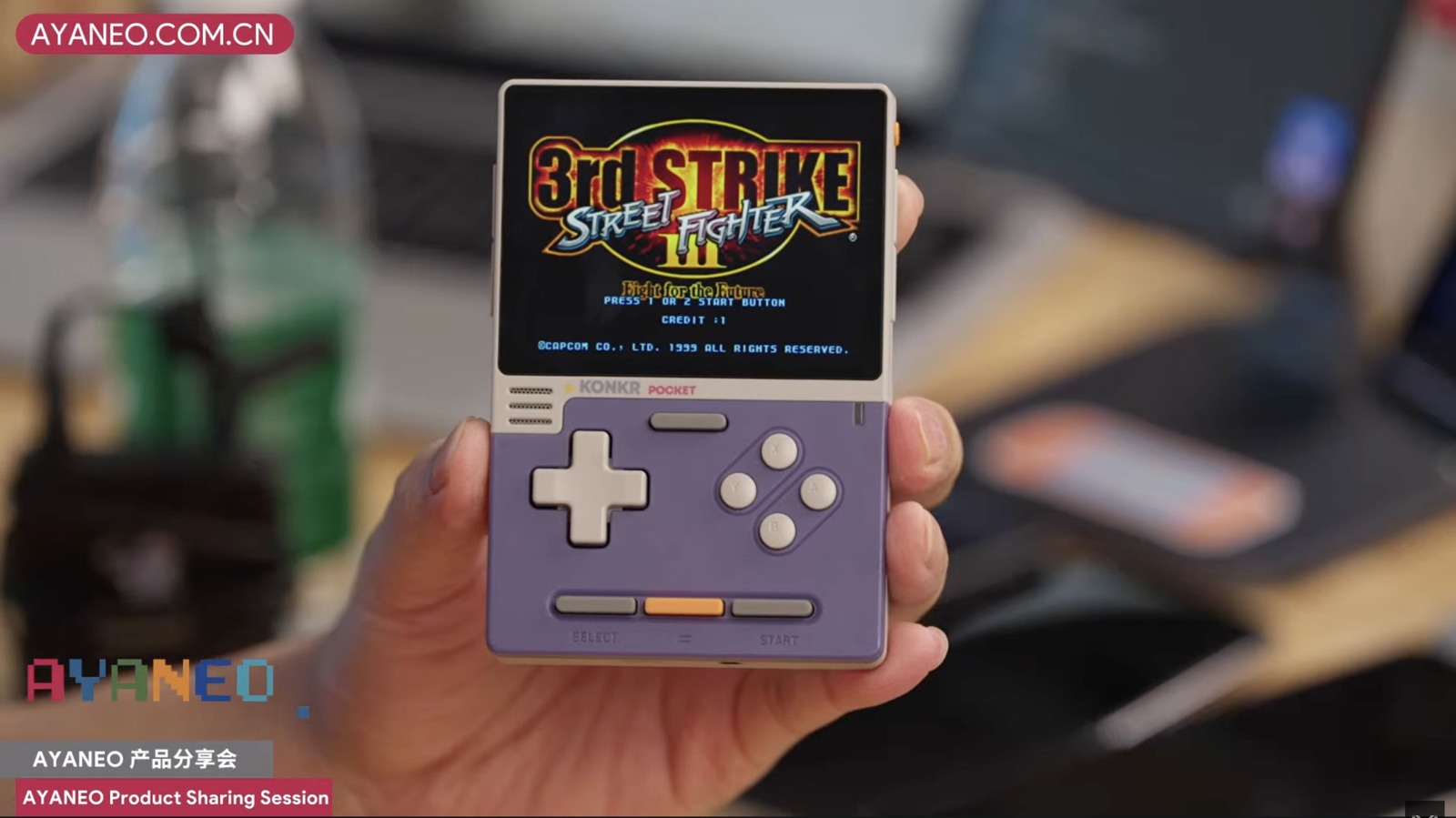
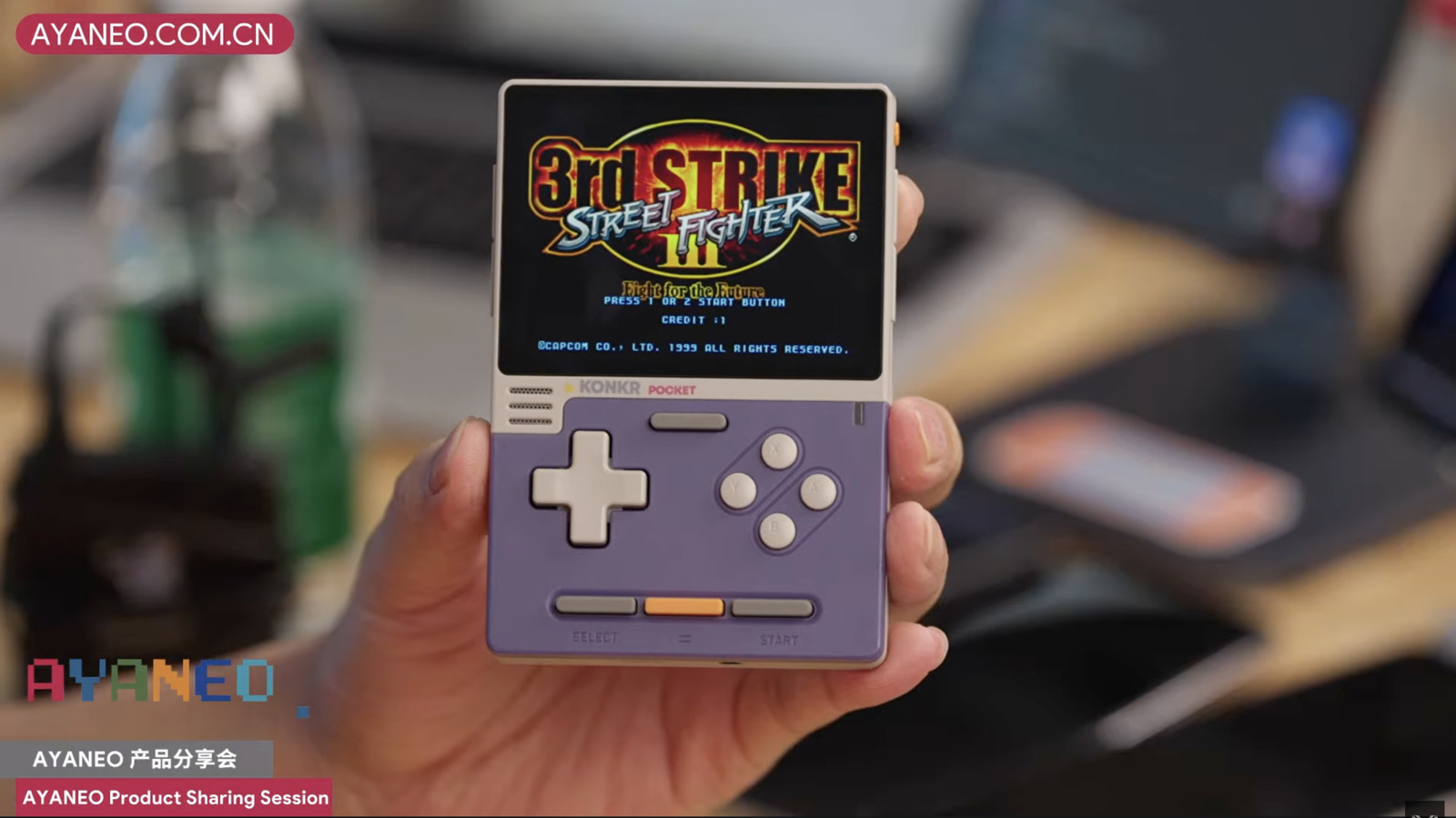
Ayaneo’s next retro gaming handheld is revisiting the iconic Game Boy design once again. The handheld maker announced the Konkr Pocket Block, an “extremely compact” device that will also pack in AI features. Ayaneo didn’t detail what these AI features are, nor what makes the Konkr Pocket Block “the world’s first AI handheld,” but we’re expecting it to be much cheaper than the company’s premium handhelds that can start at more than $1,000.
Ayaneo debuted the Konkr Pocket Block during one of its streaming sessions, where the company’s CEO, Arthur Zhang, did side-by-side comparisons with the handheld and Ayaneo’s previous devices, like the Pocket Vert and Pocket DMG. However, instead the sleek and minimalist look of its other vertical handhelds, Ayaneo went with “retro aesthetics” and a pocketable form factor for the Konkr Pocket Block.
Advertisement
As usual, Ayaneo only showed off what the Konkr Pocket Block looks like and said it will reveal more details about the handheld in the future. The biggest question surrounding the upcoming handheld is its price, but it should be more affordable than Ayaneo’s Pocket Vert that starts at $269, since the Konkr Pocket Block will be released under the company’s budget sub-brand.
If you’ve spent any time perusing the shelves of your local Harbor Freight Tools store in the past few years, you’ve no doubt noticed the hardware retailer is prone to carrying tools and devices from a handful of notable brand names. That is largely because the company now claims ownership of many of those brands, and opts to sell them exclusively in its brick-and-mortar and online outlets.
Yes, that list does indeed include that of Quinn Tools, which focuses largely on the manufacture of non-powered hand tools and accessories. Harbor Freight has positioned the line as one of its more budget friendly in-house offerings, with the family-owned retail tool chain selling only a few of its Quinn branded tools for more than $100.
Advertisement
In fact, many of the brand’s wares can currently be purchased for far less than that. And if you are searching for hand tools and accessories that you can add to your own tool kit on a budget, you’ll be happy to know there are plenty of Quinn products available for under $50 these days, though that list of gear is actually pretty extensive. If you’re curious about which of those items have earned the respect of actual Harbor Freight shoppers, you can gauge customer satisfaction directly by checking user reviews on their individual product pages. Here are a few Quinn tools we think could be quite handy for users, and have been well-rated customers.
Advertisement
Contour Scraper with 6 Blades – $8.99
Hammers, nails, drivers and fasteners are keystone fixtures in any sort of construction project. When it comes to finishing touches, however, paints and finishes are what truly make those projects shine. Of course, sometimes those paints and finishes need to be fully removed before you can really set about beautifying them.
While a good sander is beyond useful for such projects, that tool may not do much good getting into corners and navigating curved surfaces. To manage those surfaces, a handheld scraper will come in handy, and if you’re in need of one of those, Harbor Freight is selling the Quinn Contour Scraper kit for under $10 these days. The kit, which includes an ergonomically designed soft grip handle with built-in sharpening file and six replaceable scraper blades in various shapes and sizes is also backed by a lifetime warranty.
According to many Harbor Freight customers, the scraper is a steal at under $9, with 195 reviewers rating it at a solid 4.6-stars out of 5. Per Harbor Freight, 95% of those customers would recommend the scraper to others. Several of the tool’s 5-star reviews claim they felt the scraper was higher quality than they’d anticipated at the price point, and that the blades and tool functioned well right out of the box. One reviewer even noted the handle was comfortable enough to use despite their arthritis. Others did, however, note some potential design flaws, and that the blades were quick to dull during use.
Advertisement
15-Piece Premium Screwdriver Set – $27.99
We’ve probably said it a million times before, but screwdrivers are about as essential a tool as anyone can have in their home tool kit. There are, of course, varying degrees of quality in the budget driver sector, if only because the indispensable devices come in various shapes and sizes designed for use in any number of work site situations.
To that end, having just one Phillips head and one flat head screwdriver in your tool box will likely not be enough to cover the full breadth of jobs they are required for, making full sets not just desirable for DIYers, but a legitimate necessity. Quinn actually features several sets of screwdrivers in its lineup, but we’re featuring this 15-piece set of flat and Phillips head drivers because it’s one of the most comprehensive you can find through Harbor Freight Tools. It’ll also cost you just $27.99 and is backed with a lifetime warranty.
Advertisement
It’s also incredibly well rated, with more than 950 Harbor Freight shoppers bestowing on the set a rating of 4.8-stars. Variety and price-point are two of the more common points of praise for the set, with many also pointing out that their chrome vanadium build makes them more durable, and that their comfort-grip handles are easy to hold. Of the few negative reviews, some made claims that the drivers in their set bent or broke on first use, or that their tips were not properly magnetized as advertised.
Advertisement
3-Piece High-Voltage Electricians Pliers – $29.99
While its electrically-inclined offerings are a bit limited, Quinn does make a few notable tools that can help pros and DIYers alike with wire work and some other electrical jobs. Perhaps more surprising than that is that some of them are indeed priced well under $50, including this 3-Piece Set of High-Voltage Electrician’s Pliers.
As with many of the tools on this list, the set is backed by Quinn’s lifetime warranty, but according to its 4.7-star user rating, you probably won’t need to use it. As for what’s included in the set, you get one 8-inch long nose plier, one 7 1/2-inch diagonal plier, and one 8-inch linesman’s plier. Those tools are all fitted with insulated grips that are VDE rated to 1000V, constructed from high-quality steel, are made with hot-riveted joints to reduce wobble, and are designed to limit the potential for accidental contact with conductive materials.
Those safety features are a regular presence in the 4 and 5-star reviews lodged by Harbor Freight customers, with many also noting they are comfortable to use, “feel solid in your hand,” and provide crisp, clean cutting. However, a couple of unsatisfied customers questioned both their durability and their cutting ability, while one also claimed they were too big to use in tighter spaces.
Advertisement
87-Piece Electronics Repair Kit – $39.99
On the subject of Quinn Tools designed for use with electrical work, the brand’s offerings do not stop at those high-voltage pliers. Case in point, this comprehensive, 87-piece Electronics Repair Kit, which is currently selling for $39.99 and should come in more than handy for any DIYer who enjoys tinkering with small electrical devices.
According to the kit’s product page, it provides tools for repairing mobile phones, laptops, gaming consoles, and tablets. Some of those tools can even be used to work on non-electrical items like glasses and non-digital watches. The bulk of the 87-pieces is the 64 included bits, each of which is designed for use with any number of devices. Along with those bits, you also get a flex extension, six opening picks, three opening tools, an oval drive and drive adapter, a suction handle, three tweezers, three spudger tools, a pry tool, a magnetic pad, and an anti-static wrist wrap. You even get a handy storage roll to keep all of those parts together.
Advertisement
If you’re curious about customer satisfaction, the kit boasts a 4.8-star rating based on 183 user reviews. Several of those satisfied customers specifically note that the kit is high-quality and provides as much, if not more, versatility than kits from higher profile brands like Ifixit. Perhaps more importantly, they claim it does so at half the price. Even still, one user did note issues with the magnetized screwdriver, and another claimed their tweezers broke during usage.
Advertisement
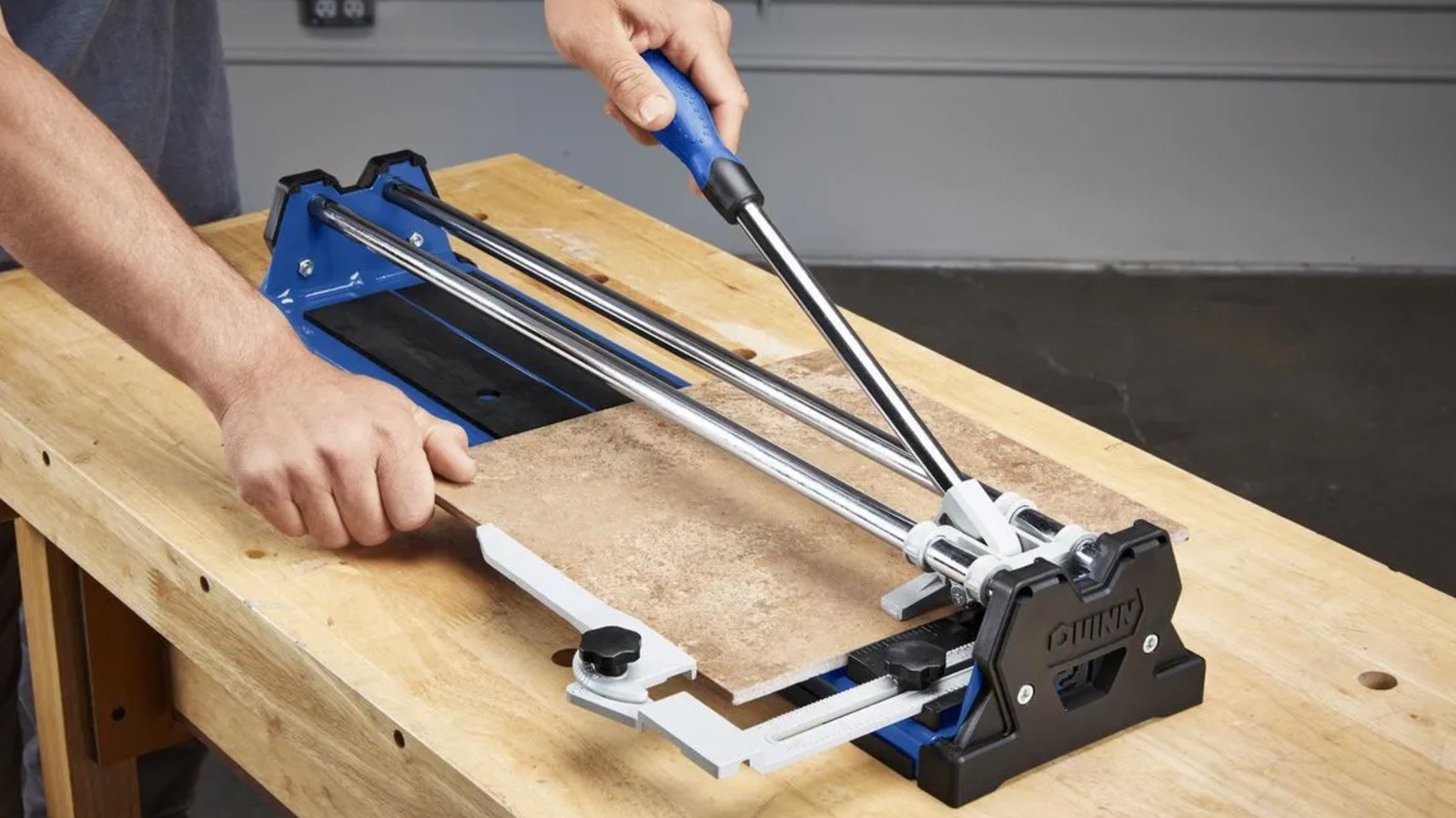
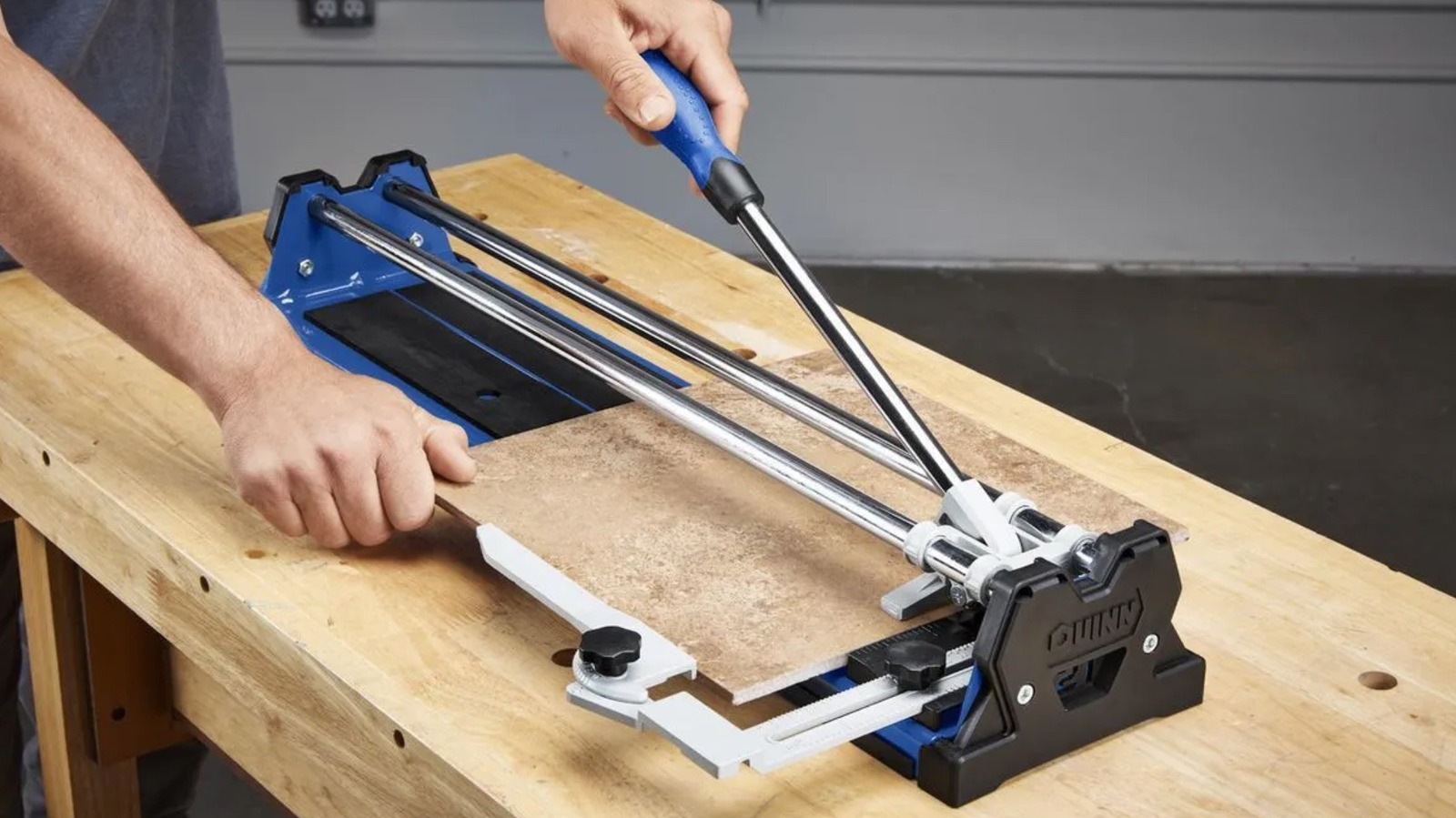
21 in. Heavy Duty Carbide Tile Cutter – $42.99
Here’s a handy tool for DIYers looking to tackle jobs that involve measuring and cutting flooring, tile, or wall coverings. Said device is Quinn’s 21-inch Heavy Duty Carbide Tile Cutter, which Harbor Freight is selling for $42.99. Before we get into the details here, we’ll note this is the only tool on this list not backed by a lifetime warranty, with Quinn Tools capping the coverage at just 90-days. It is also the lowest-rated tool listed.
Still, the tile cutter’s 4.5-star-rating is respectable enough, particularly as it’s based on reviews from 212 customers. As for those who would not recommend the Quinn tile cutter, several questioned its “heavy duty” claims, stating it didn’t cut tile cleanly, and often broke the tile instead. Some also claimed it worked great for a brief period before it began to cut sloppily or outright broke. Those satisfied with the tool essentially claimed the exact opposite experience, however, noting they used it to replace everything from bathroom tile to living room flooring.
Just FYI — one even noted that the cost of purchasing this tile cutter new was less than the quoted cost to rent one for two days, so make of that what you will. If you’re still curious, Quinn claims the tool is designed to cut mosaic, porcelain, and ceramic tile, along with other materials. It also boasts a cast aluminum alloy head, a carbide scoring wheel, and reinforced powder-coated steel base, meaning it should be built to last.
British officials announced an order for 72 units of the RCH 155 howitzer mounted on Boxer armored vehicles. The deal carries a value near one billion pounds and marks a major step in restoring the army’s long-range fire support after earlier systems went to Ukraine. Deliveries start in 2028 with full operations expected around 2030.
Engineers installed a fully automatic 155-millimeter gun module on an eight-wheeled Boxer chassis. That means the two crew members may stay in their shielded cab the entire time, out of harm’s way, while controlling everything from a safe distance. They never have to expose themselves when firing because the entire process takes place within the cab. They’re using tried-and-true technology from earlier tracked howitzers, but this time they have the added benefit of being mobile. The gun is completely automated; a robotic arm handles the shells and propellant charges while the crew sits back and loads the fuses from the comfort of their cab. They can fire up to eight shots per minute, and the technology even allows them to drop numerous rounds at once, sending projectiles along different courses so that they all land in the same place at the same time.
With the appropriate guided shells, the cannon can fire at a range of 70 kilometers, and this will only improve as they complete testing of rocket aided and ramjet options. The elevation ranges from nearly level to a whopping 65 degrees, and the turret can turn a complete 360. It means that the crew can aim, load, and shoot while the vehicle is still moving. This continual motion makes the howitzer far more difficult to strike, as enemy fire cannot identify it. The Boxer design also allows it to travel like a sports car, with a top speed of 100 kph on the highway and a range of more than 700 kilometers on a single tank. There is no need for huge trucks or rail carriages to move it throughout Europe. Anyone who has had to handle maintenance on a military vehicle will appreciate the modular design; the drive section simply takes off the mission module, making repairs much faster in the field.
It’s also rather well armored, as the hull and floor satisfy all military specifications, and the overpressure mechanism keeps chemical or biological threats at bay. The crew compartment is separate from the gun, which is a useful safety precaution when the thing starts firing off a number of shots. The prior tracked howitzers were difficult to put up and not particularly adaptable. The RCH 155 changes all of that because it provides immense firepower while also allowing you to drive in, drop a few rounds, and roll before the opposition even notices you’re there. It has enough ammunition on board to continue battling without needing to restock. [Source]
A new Gen AI subdomain has been found for Apple’s website, with the domain’s appearance solidifying AI as one of the major topics at WWDC in June.
Apple’s annual WWDC event is set to start on June 8, with its keynote setting the tone for the rest of the year. While Apple is secretive as usual about what will be mentioned, one web-based change has practically confirmed one of the most likely topics.
A new subdomain for genai.apple.com has been found, reportsMacRumors. Attempts to load the subdomain comes up with connection time-out messages, indicating that it has been registered but not configured for its final server destination.
It is a different kind of error versus typing a wrong URL or subdomain. It means there is something Apple intends to do with the subdomain.
Advertisement
Confirming expectations
The domain change solidifies artificial intelligence as one of the major topics of conversation for WWDC 2026. Previous rumors and speculation, as well as events over the last two years and the prominence of AI in the tech industry in general, meant Apple had to bring it up at some point during the keynote.
The elephant in the room will be Siri, Apple’s digital assistant that has been waiting on its delayed overhaul for two years. With substantial support from Google Gemini, 2026 should be the year that Apple’s promised revamp will actually work.
Rumors have and indicated there will be other AI-related changes on the way, including bringing an easier way to access Visual Intelligence in the Camera app. Photos will also gain more AI editing options.
There’s also the prospect of wider AI changes, including allowing users to select which third-party AI service providers they want to answer prompts and to handle tasks normally dealt with by Apple Intelligence.
Ubiquiti has released security updates to patch three maximum severity vulnerabilities in UniFi OS that can be exploited by remote attackers without privileges.
UniFi OS is a unified operating system that powers UniFi Consoles and helps manage IT infrastructure, including networking, security, and other services, as well as UniFi applications such as UniFi Network, UniFi Protect, UniFi Access, UniFi Talk, and UniFi Connect.
The first flaw (CVE-2026-34908) enables attackers to make unauthorized changes to targeted systems by exploiting an Improper Access Control weakness in UniFi OS, while the second (CVE-2026-34909) allows them to access files on the underlying system by abusing a Path Traversal vulnerability, which could be manipulated to access an underlying account.
A third maximum severity security issue (CVE-2026-34910) makes it possible for malicious actors to launch a command injection attack after gaining network access by exploiting an Improper Input Validation vulnerability.
Advertisement
On Thursday, Ubiquiti also patched a second critical command injection flaw (CVE-2026-33000) and a high-severity information disclosure (CVE-2026-34911), both affecting Unifi OS devices.
Ubiquiti has yet to disclose whether any of the five vulnerabilities were exploited in the wild before disclosure, but shared that they can be exploited in low-complexity attacks and were reported through its HackerOne bug bounty program.
However, there is currently no information on how many have been secured against potential attacks targeting the vulnerabilities Ubiquiti patched this week.
Advertisement
UniFi OS endpoints exposed online (Censys)
In March, Ubiquiti patched another maximum-severity flaw (CVE-2026-22557) in the UniFi Network Application that may allow attackers to take over user accounts, as well as a vulnerability (CVE-2026-22558) that can be exploited to escalate privileges.
Ubiquiti products have been targeted by both state-backed hacking groups and cybercriminals in recent years, in campaigns that hijacked them to build botnets that concealed the threat actors’ malicious activity.
For instance, in February 2024, the FBI took down Moobot, a botnet of hacked Ubiquiti Edge OS routers used by Russia’s Main Intelligence Directorate of the General Staff (GRU) to proxy malicious traffic in cyberespionage attacks targeting the United States and its allies.
Four years ago, in April 2022, the U.S. Cybersecurity and Infrastructure Security Agency (CISA) also added a critical command injection flaw (CVE-2010-5330) in Ubiquiti AirOS to its catalog of actively exploited vulnerabilities and ordered federal agencies to secure their devices within three weeks.
Automated pentesting tools deliver real value, but they were built to answer one question: can an attacker move through the network? They were not built to test whether your controls block threats, your detection rules fire, or your cloud configs hold.
This guide covers the 6 surfaces you actually need to validate.
Trinnov Audio, dCS, and Perlisten Audio are planning one of the most ambitious immersive audio demonstrations for HIGH END Vienna 2026, and with the show moving to a new city and a new facility, this could be one of the rooms people talk about long after the schnitzel has gone cold and the espresso has started judging everyone.
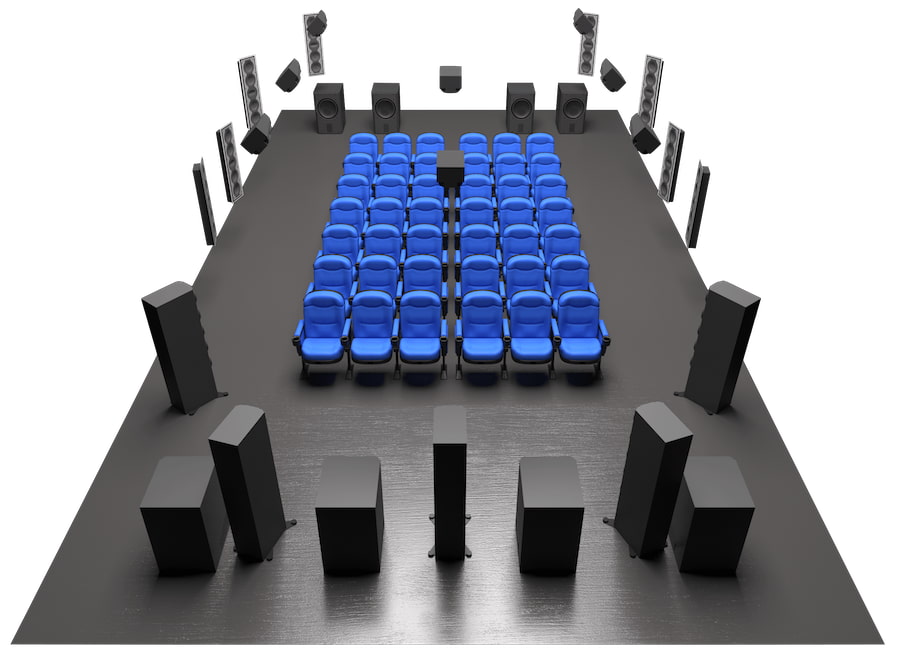
Trinnov has already proven at recent CEDIA Expos that it knows how to create a convincing immersive space, not just stack channels like expensive firewood and hope the ceiling speakers behave. For Vienna, the company is teaming with dCS and Perlisten Audio on a large-scale 15.8.8 channel immersive audio system designed to show what happens when processing, digital conversion, loudspeaker engineering, room acoustics, and spatial rendering are treated as one complete system.
The demonstration will be installed in a precisely proportioned room treated by Vicoustic, including a fully treated ceiling intended to create a stable and coherent soundfield across the listening area. The goal is immersive music reproduction with exceptional stability, coherence, and realism, not just “look how many speakers we brought” theater.
15.8.8 Immersive Audio System
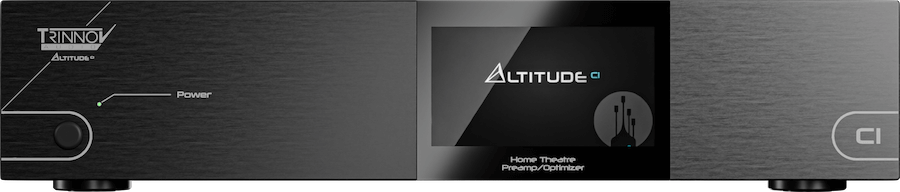
Trinnov is employing its new AltitudeCI platform, a native AoIP processor engineered for high-channel-count systems where routing, calibration, and spatial rendering must remain fully deterministic. Every channel in the system is measured, aligned, and controlled, eliminating variability that typically compromises immersive playback.
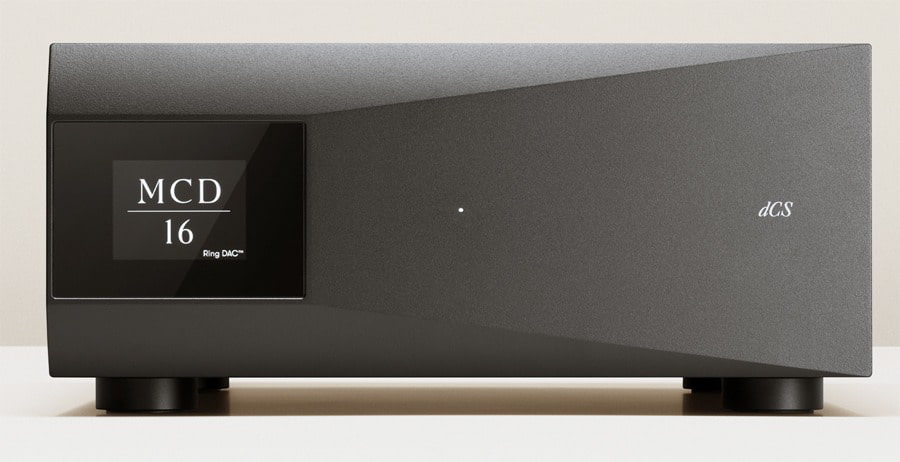
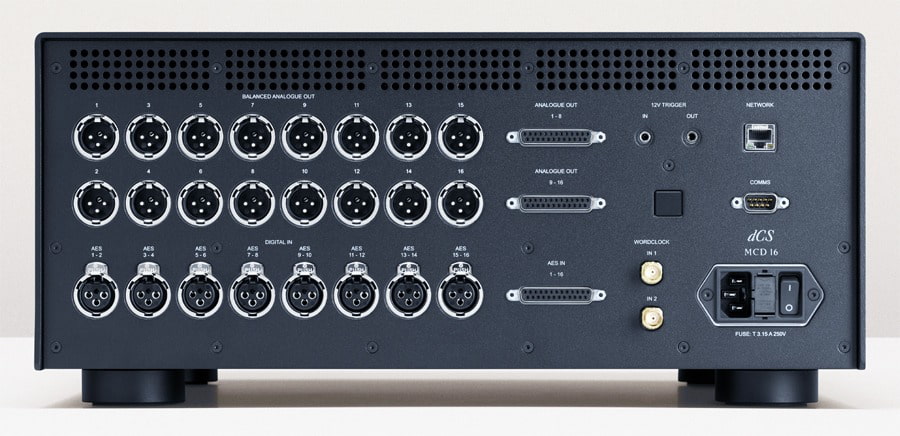
Signal conversion is handled by the latest dCS DAC platform via the MCD 16, which is designed to maintain timing integrity and resolution across all channels simultaneously.
Perlisten Audio is providing the loudspeaker system, including 8 surround channels, 8 overhead channels, and 8 subwoofers, creating a fully resolved three-dimensional soundstage optimized specifically for music rather than spectacle.
Advertisement
Let’s dig a little deeper into each part of the system, because with a 15.8.8-channel setup, this is not exactly a soundbar with delusions of grandeur.
Loudspeakers
Perlisten S7t Limited Edition Loudspeakers
The loudspeaker system, provided by Perlisten Audio, uses S7t speakers for the left, center, right, and wide channels, creating a coherent, high-dynamic-range front array. Perlisten S7i in-wall speakers handle the surround channels, while Perlisten S4s speakers are used for the height channels.
The configuration includes 8 surround channels and 8 overhead channels, designed to create a fully resolved three-dimensional soundstage optimized specifically for music.
Speaker Configuration:
3x LCR: Perlisten S7t
2x Wides: Perlisten S7t
8x Tops: Perlisten S4s
8x Surrounds: Perlisten S7i
Subwoofers
Perlisten D215s Subwoofer
For the low-frequency foundation, Perlisten is bringing 8 D215s THX Dominus certified powered subwoofers, with 4 positioned along the front wall and 4 along the rear wall. Each D215s uses dual 15-inch drivers in a push-pull configuration, along with Perlisten’s proprietary technologies, to deliver high output with very low distortion and strong bass definition.
Trinnov WaveForming will be used to optimize subwoofer performance within the demonstration room, improving bass consistency, timing, and control across the listening area. With eight serious subwoofers in play, this is less “room correction” and more “low-frequency zoning board approval.”
Advertisement. Scroll to continue reading.
Advertisement
Signal Conversion
With digital sources now central to high-end playback, precise digital-to-analog conversion is essential. For this system, dCS is contributing its latest 16-channel DAC platform, the MCD 16.
The MCD 16 is designed to maintain timing integrity and resolution across multiple channels at the same time, which is especially important for immersive music reproduction. In a system like this, channel consistency, phase relationships, and level accuracy all contribute to the stability and precision of the soundfield.
The MCD 16 features 16 channels of high-performance Digital-to-Analog conversion using eight individual Ring DAC circuits. The Ring DAC is the foundation of every dCS product.
Network AV Processing
Trinnov’s AltitudeCI platform (introduced in 2025), is an advanced native digital processor engineered for high-channel-count systems where routing, calibration, and spatial rendering have to be extremely precise.
With the Altitude CI, every channel is sent digitally before it’s measured, aligned, and controlled, eliminating variability that typically compromises immersive playback.
The AltitudeCI will be running the signal processing digitally, via AES/EBU, while using the full set of Trinnov’s audio processing and routing technologies.
Pro Tip: Final amplification will be handled by Trinnov amplifiers, but the exact model or models had not been disclosed as of this article’s publication date.
Advertisement
Justin Gray Immersed
The content highlight of the demonstration will be provided by Grammy Award winner Justin Gray, who will present his 2026 Grammy Award-winning album,Immersed using the original high-resolution files directly from the mixing sessions. That should give listeners a rare opportunity to hear the album in a highly controlled immersive playback environment, using source material as close to the production process as possible.
Justin Gray’s Immersed was composed, recorded, and produced from the ground up for immersive audio. Featuring 38 artists from around the world, the project places the listener at the center of a 360-degree orchestral experience, with performances positioned around the listening space rather than confined to a traditional stereo soundstage.
The Bottom Line
Trinnov has built a strong reputation not just for making serious high-end audio components, but for assembling demonstration systems that show what is possible when processing, conversion, loudspeakers, amplification, room acoustics, and setup are treated as one complete ecosystem.
That is what makes this 15.8.8-channel High End Vienna 2026 demo unique. It is not simply a very expensive pile of hardware arranged in a room with optimistic cabling. The system combines Trinnov processing and WaveForming bass optimization, dCS multichannel digital-to-analog conversion, Perlisten loudspeakers and subwoofers, and Vicoustic room treatment into a controlled immersive music environment. The goal is not just scale, but stability, coherence, bass control, and spatial accuracy.
This demonstration is clearly aimed at serious immersive audio listeners, custom installation professionals, high-end home theater owners, recording and mastering engineers, and anyone trying to understand where multichannel music reproduction is headed. Long-time Trinnov, dCS, and Perlisten owners may also want to hear how far these brands can push things when the room, system design, and source material are all working together.
Advertisement
Advertisement. Scroll to continue reading.
No, this is not a system most ordinary mortals are going to order on a Tuesday afternoon between coffee and regret. But that is part of the point. Some show demos exist to sell boxes. This one appears designed to show what is technically possible when the ceiling, the walls, the bass, and the signal chain all stop fighting each other for once.



































































You must be logged in to post a comment Login