Connect with us
DAPA Banner

Tech

How recruitment fraud turned cloud IAM into a $2 billion attack surface

Published

on

A developer gets a LinkedIn message from a recruiter. The role looks legitimate. The coding assessment requires installing a package. That package exfiltrates all cloud credentials from the developer’s machine — GitHub personal access tokens, AWS API keys, Azure service principals and more — are exfiltrated, and the adversary is inside the cloud environment within minutes.

Your email security never saw it. Your dependency scanner might have flagged the package. Nobody was watching what happened next.

The attack chain is quickly becoming known as the identity and access management (IAM) pivot, and it represents a fundamental gap in how enterprises monitor identity-based attacks. CrowdStrike Intelligence research published on January 29 documents how adversary groups operationalized this attack chain at an industrial scale. Threat actors are cloaking the delivery of trojanized Python and npm packages through recruitment fraud, then pivoting from stolen developer credentials to full cloud IAM compromise.

In one late-2024 case, attackers delivered malicious Python packages to a European FinTech company through recruitment-themed lures, pivoted to cloud IAM configurations and diverted cryptocurrency to adversary-controlled wallets.

Advertisement

Entry to exit never touched the corporate email gateway, and there is no digital evidence to go on.

On a recent episode of CrowdStrike’s Adversary Universe podcast, Adam Meyers, the company’s SVP of intelligence and head of counter adversary operations, described the scale: More than $2 billion associated with cryptocurrency operations run by one adversary unit. Decentralized currency, Meyers explained, is ideal because it allows attackers to avoid sanctions and detection simultaneously. CrowdStrike’s field CTO of the Americas, Cristian Rodriguez, explained that revenue success has driven organizational specialization. What was once a single threat group has split into three distinct units targeting cryptocurrency, fintech and espionage objectives.

That case wasn’t isolated. The Cybersecurity and Infrastructure Security Agency (CISA) and security company JFrog have tracked overlapping campaigns across the npm ecosystem, with JFrog identifying 796 compromised packages in a self-replicating worm that spread through infected dependencies. The research further documents WhatsApp messaging as a primary initial compromise vector, with adversaries delivering malicious ZIP files containing trojanized applications through the platform. Corporate email security never intercepts this channel.

Most security stacks are optimized for an entry point that these attackers abandoned entirely.

Advertisement

When dependency scanning isn’t enough

Adversaries are shifting entry vectors in real-time. Trojanized packages aren’t arriving through typosquatting as in the past — they’re hand-delivered via personal messaging channels and social platforms that corporate email gateways don’t touch. CrowdStrike documented adversaries tailoring employment-themed lures to specific industries and roles, and observed deployments of specialized malware at FinTech firms as recently as June 2025.

CISA documented this at scale in September, issuing an advisory on a widespread npm supply chain compromise targeting GitHub personal access tokens and AWS, GCP and Azure API keys. Malicious code was scanned for credentials during package installation and exfiltrated to external domains.

Dependency scanning catches the package. That’s the first control, and most organizations have it. Almost none have the second, which is runtime behavioral monitoring that detects credential exfiltration during the install process itself.

“When you strip this attack down to its essentials, what stands out isn’t a breakthrough technique,” Shane Barney, CISO at Keeper Security, said in an analysis of a recent cloud attack chain. “It’s how little resistance the environment offered once the attacker obtained legitimate access.”

Advertisement

Adversaries are getting better at creating lethal, unmonitored pivots

Google Cloud’s Threat Horizons Report found that weak or absent credentials accounted for 47.1% of cloud incidents in the first half of 2025, with misconfigurations adding another 29.4%. Those numbers have held steady across consecutive reporting periods. This is a chronic condition, not an emerging threat. Attackers with valid credentials don’t need to exploit anything. They log in.

Research published earlier this month demonstrated exactly how fast this pivot executes. Sysdig documented an attack chain where compromised credentials reached cloud administrator privileges in eight minutes, traversing 19 IAM roles before enumerating Amazon Bedrock AI models and disabling model invocation logging.

Eight minutes. No malware. No exploit. Just a valid credential and the absence of IAM behavioral baselines.

Ram Varadarajan, CEO at Acalvio, put it bluntly: Breach speed has shifted from days to minutes, and defending against this class of attack demands technology that can reason and respond at the same speed as automated attackers.

Advertisement

Identity threat detection and response (ITDR) addresses this gap by monitoring how identities behave inside cloud environments, not just whether they authenticate successfully. KuppingerCole’s 2025 Leadership Compass on ITDR found that the majority of identity breaches now originate from compromised non-human identities, yet enterprise ITDR adoption remains uneven.

Morgan Adamski, PwC’s deputy leader for cyber, data and tech risk, put the stakes in operational terms. Getting identity right, including AI agents, means controlling who can do what at machine speed. Firefighting alerts from everywhere won’t keep up with multicloud sprawl and identity-centric attacks.

Why AI gateways don’t stop this

AI gateways excel at validating authentication. They check whether the identity requesting access to a model endpoint or training pipeline holds the right token and has privileges for the timeframe defined by administrators and governance policies. They don’t check whether that identity is behaving consistently with its historical pattern or is randomly probing across infrastructure.

Consider a developer who normally queries a code-completion model twice a day, suddenly enumerating every Bedrock model in the account, disabling logging first. An AI gateway sees a valid token. ITDR sees an anomaly.

Advertisement

A blog post from CrowdStrike underscores why this matters now. The adversary groups it tracks have evolved from opportunistic credential theft into cloud-conscious intrusion operators. They are pivoting from compromised developer workstations directly into cloud IAM configurations, the same configurations that govern AI infrastructure access. The shared tooling across distinct units and specialized malware for cloud environments indicate this isn’t experimental. It’s industrialized.

Google Cloud’s office of the CISO addressed this directly in their December 2025 cybersecurity forecast, noting that boards now ask about business resilience against machine-speed attacks. Managing both human and non-human identities is essential to mitigating risks from non-deterministic systems.

No air gap separates compute IAM from AI infrastructure. When a developer’s cloud identity is hijacked, the attacker can reach model weights, training data, inference endpoints and whatever tools those models connect to through protocols like model context protocol (MCP).

That MCP connection is no longer theoretical. OpenClaw, an open-source autonomous AI agent that crossed 180,000 GitHub stars in a single week, connects to email, messaging platforms, calendars and code execution environments through MCP and direct integrations. Developers are installing it on corporate machines without a security review.

Advertisement

Cisco’s AI security research team called the tool “groundbreaking” from a capability standpoint and “an absolute nightmare” from a security one, reflecting exactly the kind of agentic infrastructure a hijacked cloud identity could reach.

The IAM implications are direct. In an analysis published February 4, CrowdStrike CTO Elia Zaitsev warned that “a successful prompt injection against an AI agent isn’t just a data leak vector. It’s a potential foothold for automated lateral movement, where the compromised agent continues executing attacker objectives across infrastructure.”

The agent’s legitimate access to APIs, databases and business systems becomes the adversary’s access. This attack chain doesn’t end at the model endpoint. If an agentic tool sits behind it, the blast radius extends to everything the agent can reach.

Where the control gaps are

This attack chain maps to three stages, each with a distinct control gap and a specific action.

Advertisement

Entry: Trojanized packages delivered through WhatsApp, LinkedIn and other non-email channels bypass email security entirely. CrowdStrike documented employment-themed lures tailored to specific industries, with WhatsApp as a primary delivery mechanism. The gap: Dependency scanning catches the package, but not the runtime credential exfiltration. Suggested action: Deploy runtime behavioral monitoring on developer workstations that flags credential access patterns during package installation.

Pivot: Stolen credentials enable IAM role assumption invisible to perimeter-based security. In CrowdStrike’s documented European FinTech case, attackers moved from a compromised developer environment directly to cloud IAM configurations and associated resources. The gap: No behavioral baselines exist for cloud identity usage. Suggested action: Deploy ITDR that monitors identity behavior across cloud environments, flagging lateral movement patterns like the 19-role traversal documented in the Sysdig research.

Objective: AI infrastructure trusts the authenticated identity without evaluating behavioral consistency. The gap: AI gateways validate tokens but not usage patterns. Suggested action: Implement AI-specific access controls that correlate model access requests with identity behavioral profiles, and enforce logging that the accessing identity cannot disable.

Jason Soroko, senior fellow at Sectigo, identified the root cause: Look past the novelty of AI assistance, and the mundane error is what enabled it. Valid credentials are exposed in public S3 buckets. A stubborn refusal to master security fundamentals.

Advertisement

What to validate in the next 30 days

Audit your IAM monitoring stack against this three-stage chain. If you have dependency scanning but no runtime behavioral monitoring, you can catch the malicious package but miss the credential theft. If you authenticate cloud identities but don’t baseline their behavior, you won’t see the lateral movement. If your AI gateway checks tokens but not usage patterns, a hijacked credential walks straight to your models.

The perimeter isn’t where this fight happens anymore. Identity is.

Source link

Advertisement
Continue Reading
Click to comment

You must be logged in to post a comment Login

Leave a Reply

Tech

Sony’s Best Soundbars Just Got a Bass Boost (And Two Little Brothers)

Published

on

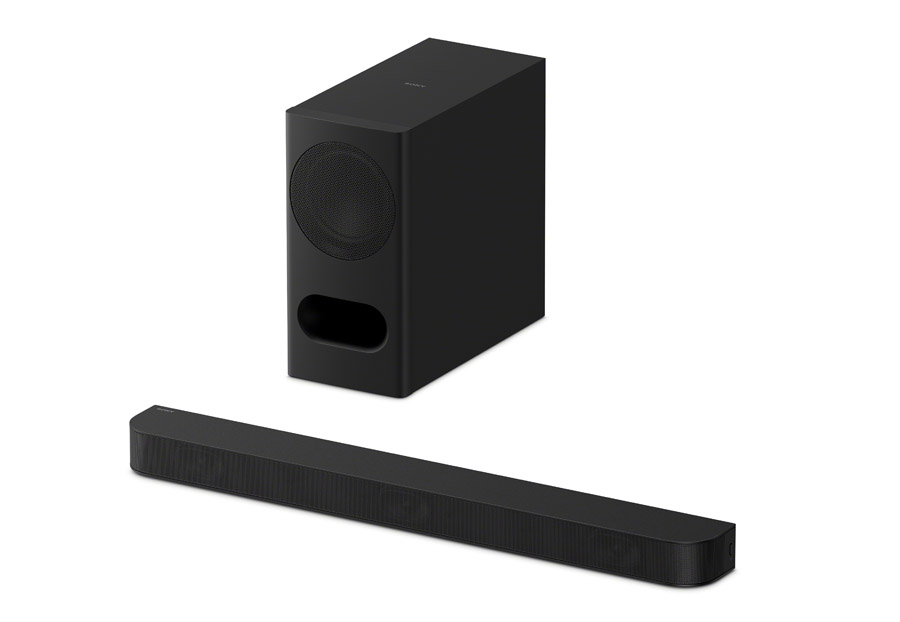
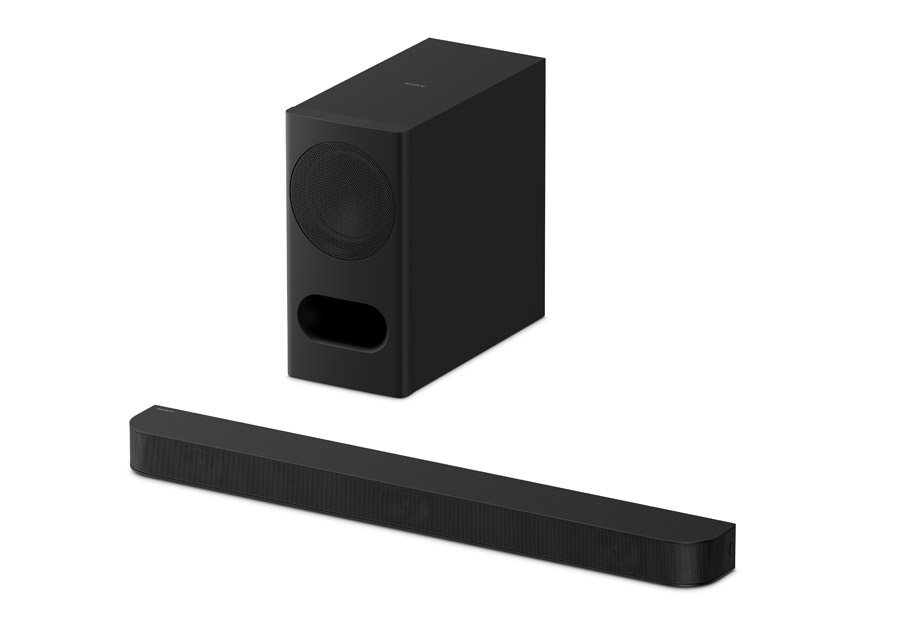
Today Sony unveiled two new soundbars in their BRAVIA Theater line, the BRAVIA Theater Bar 5 (HTB-500) and BRAVIA Theater Bar 7 (HTA-7100). The Bar 5 is a simple two-piece 3.1-channel system that comes with the bar itself plus a powered subwoofer and can handle Dolby Atmos or DTS:X surround via virtualized surround sound. The Bar 7 is a step-up model that can be used on its own, or enhanced with rear speakers and a powered subwoofer (or two!). 

The company also announced a new pair of wireless surround speakers (BRAVIA Theater Rear 9), which are compatible with the new BAR 7 and the existing BAR 8 and BAR 9 as well as Sony’s latest generation of AVRs (audio/video receivers). Sony also announced three new subwoofers (BRAVIA Theater Sub 7, Sub 8 and Sub 9) that will be compatible with the new and existing soundbar-based systems and receivers.

01-Bar5_sub-900px
The BRAVIA Theater Bar 5 soundbar comes with a wireless subwoofer.

But I’ve saved the best news for last. Lovers of deep powerful cinematic bass will be happy to hear that Sony now supports the use of two subwoofers with the new BRAVIA Theater Bar 7 and the existing BAR 8 and BAR 9 soundbars. By using two subwoofers, you can get a more uniform, more extended bass response, even in larger rooms with open floor plans. This dual-sub functionality will come with the BRAVIA Theater Bar 7 right out of the box and will be added to the BAR 8 and BAR 9 via a free over the air software update.

exp_sys_Bar9_Sub8_Rear9-900px
Sony’s BRAVIA Theater Bar 9 shown here with the Sub 8 subwoofer and Rear 9 speakers.

In our review of the BRAVIA Theater Bar 9 system, our main gripe was that the bass response wasn’t as extended or powerful as we would have liked, even using their best (at the time) powered subwoofer. With the new larger Sub 9 subwoofer and the ability to add dual subs, it appears this criticism has been addressed. And, based on a quick audition of a system that used two Sub 9 subwoofers, we believe it will be more than up to the task of providing deep, precise bass even in large rooms.

The BRAVIA Theater Bar 7 supports Dolby Atmos, DTS:X, and Sony 360 Reality Audio, either on its own or with the addition of a pair of rear speakers and one or two powered subwoofers. With the addition of a subwoofer and rear speakers, the Bar 7 becomes IMAX Enhanced Certified, and can reproduce the IMAX Enhanced DTS:X soundtracks currently available on Disney+ and Sony Pictures Core streaming services, as well as select Blu-ray Discs. The Theater Bar 7 is compatible with Sony’s current Rear 8 speakers and the new Rear 9 speakers. For subs, the BRAVIA Theater Bar 7 can works with one or two of the new Sub 7, Sub 8 or Sub 9 subwoofers.

A Sony rep told us the company’s current BRAVIA Theater Quad system runs on a different chip-set than the BRAVIA soundbars so it will not be getting the dual-sub upgrade (at least not yet).  

Advertisement

BRAVIA Theater Bar 7 – A Great Choice for Medium Sized Screens

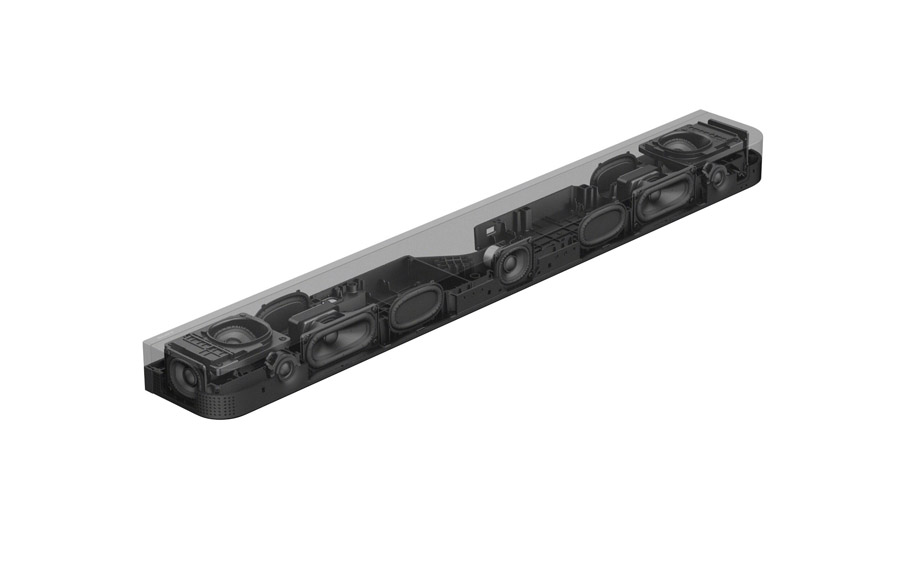
Smaller than the BRAVIA Theater Bar 8 ($999.99) and Bar 9 ($1,499.99), the Theater Bar 7 ($869.99) still packs a punch. It features a total of nine drivers including front-firing, up-firing and side-firing drivers to create a 5.1.2-channel system on its own, expandable to 7.2.4 with the addition of two subwoofers and a pair of the Rear 9 speakers. You can also use the more affordable Rear 8 speakers, but those lack up-firing drivers so you won’t get as pronounced a height effect as you will with the Rear 9s. Like the Bar 8 and Bar 9, the Bar 7 includes Sony’s 360 Spatial Sound Mapping (360 SSM) to create an immersive and enveloping soundstage, no matter where you place your speakers.

05-Bar7Skeleton-900px
A peek inside the Sony BRAVIA Theater Bar 7 soundbar.

Like the Bar 8 and Bar 9, the Bar 7 can be controlled with the BRAVIA Connect mobile app, and can be fully integrated into the TV’s settings menu when used with a compatible Sony BRAVIA TV. It also supports Sony’s AI-based Voice Zoom 3 feature for intelligent enhanced dialogue reproduction that raises voices with minimal impact to the rest of the soundtrack (also requires a compatible Sony TV).

Holding Down the Rear

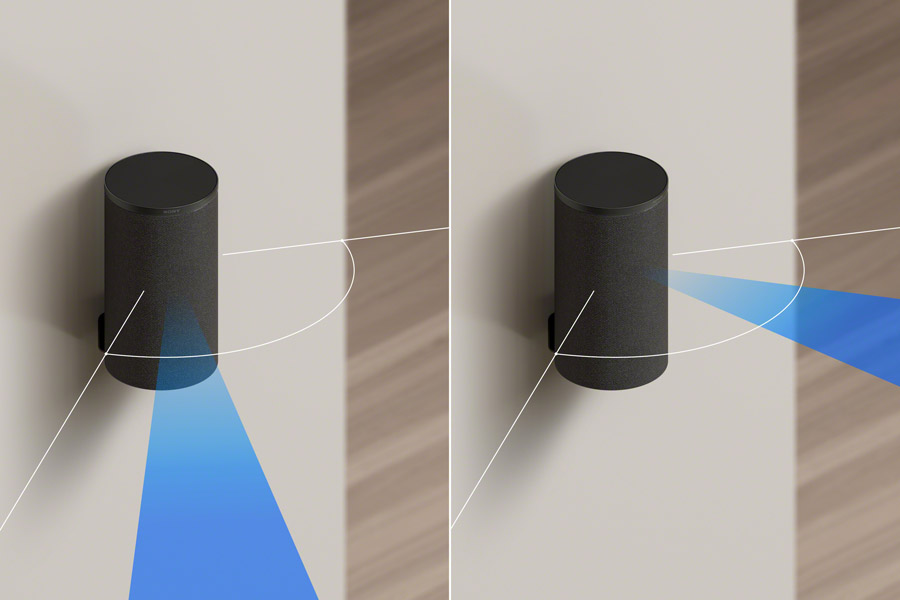
Sony’s new BRAVIA Theater Rear 9 speakers ($749.99/pair) are replacing the current SA-RS5 in the line-up. The cylinder-shaped Rear 9s appear similar in cosmetic design to their predecessors, but the new ones come with an integrated swivel stand which can help direct the rear channel sounds to the listening area better. This is particularly useful when your seating area or room layout is not ideal, like when your couch is right up against a rear wall. Directing the sound will help Sony’s 360 Spatial Sound Mapping work even better to create an immersive dome of sound, even with non-ideal speaker layouts.

04-Rear9_swivel_wm-900px
The BRAVIA Theater Rear 9 speakers feature a swivel mount that allows you to point the drivers at your listening position for optimum immersion.

Bringing Up the Bass

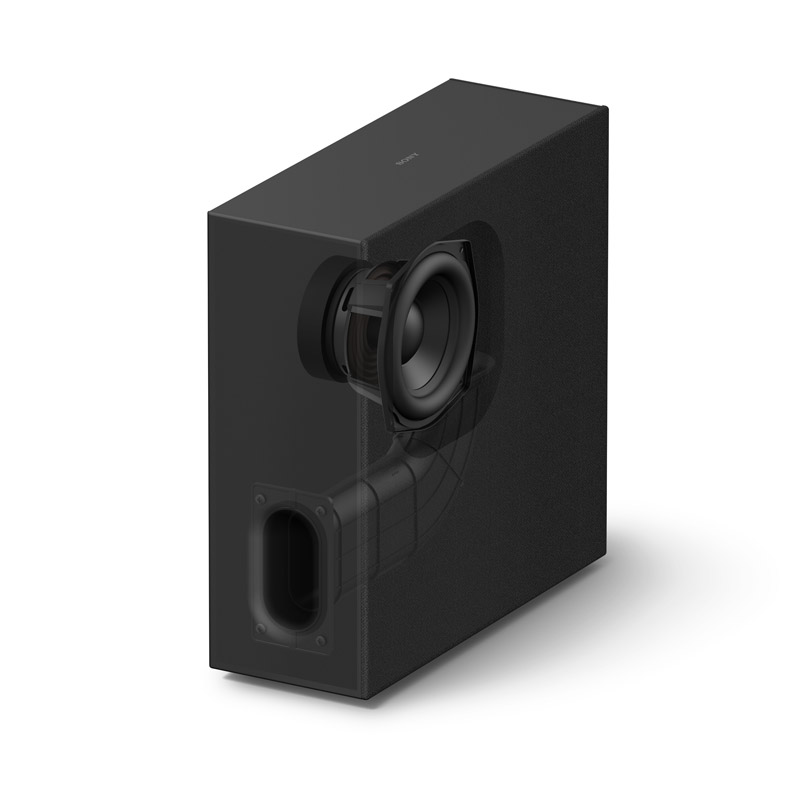
Sony’s new BRAVIA Theater Sub 7 ($329), Sub 8 ($499) and Sub 9 ($899) offer customers three options based on budget and size preferences. As the size goes up, so does the price as well as the bass extension and output.

SW7_Main2_Skeleton-800px
The BRAVIA Theater Sub 7 features a single 130mm bass driver in a slim cabinet.

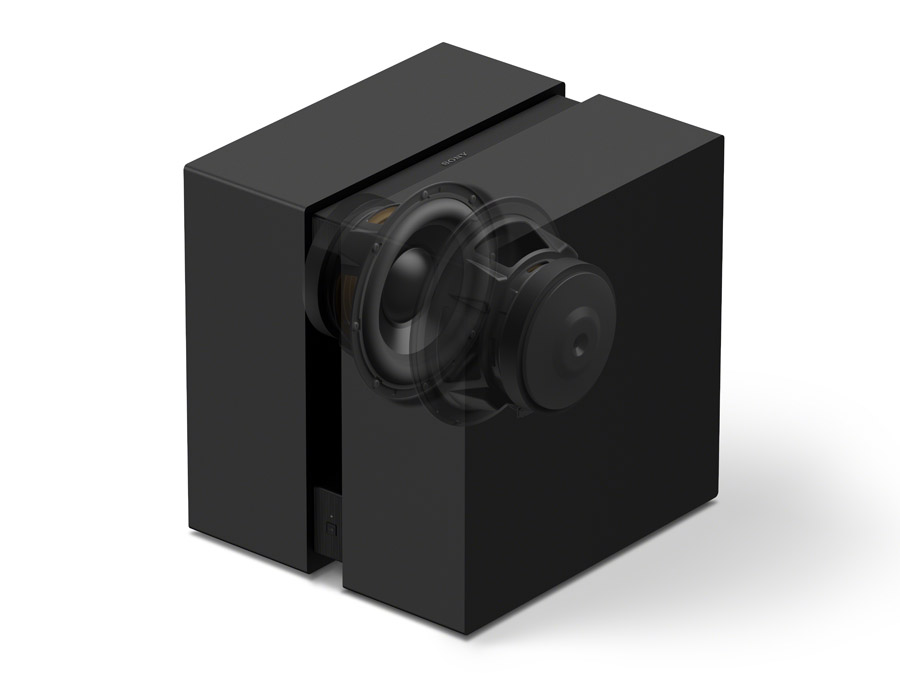
As for driver sizes and configuration, the Sub 7 features a 130mm (5.1-inch) bass driver, the Sub 8 has a single 200mm (7.9-inch) bass driver and the Sub 9 includes dual 200mm (7.9-inch) drivers in a vibration-cancelling dual-opposing driver configuration for deep bass extension and low distortion. With dual subwoofers now an option, you can always start with one sub and add a second later one if you feel like you need more bass.

Advertisement. Scroll to continue reading.
Sub9_Main2_Skeleton-900px
A peek inside the new Sony BRAVIA Theater Sub 9 subwoofer reveals its dual 200mm woofers.

The Bottom Line

We’re surprised (and pleased) to see Sony addressing the one main area of weakness of their soundbar-based systems: low bass reproduction. While we don’t have full specifications of the new woofers, we have heard a pair of Sub 9s in action and were quite impressed with what we heard. Of course, with this new functionality and performance, up goes the price. A fully spec’ed out system with the BRAVIA Theater Bar 9, Rear 9 speakers and pair of Sub 9 subwoofers will set you back around $4,000 (MSRP) and that’s quite a price tag for a soundbar-based system. But for those who want a simple, elegant, high performance and cosmetically pleasing solution, particularly for use with a large screen Sony BRAVIA TV or Projector, it may actually be worth the investment.

Pricing & Availability

All of these speakers are available now to pre-order at the following prices:

Advertisement
  • Sony BRAVIA Theater Bar 5 (HTB-500) – $329.99
  • Sony BRAVIA Theater Bar 7 (HTA-7100) – $869.00
  • Sony BRAVIA Theater Rear 9 (SA-RS9) – $749.99
  • Sony BRAVIA Theater Sub 7 (SA-SW7) – $329.99
  • Sony BRAVIA Theater Sub 8 (SA-SW8) – $499.99
  • Sony BRAVIA Theater Sub 9 (SA-SW9) – $899.99

Source link

Continue Reading

Tech

OpenAI Gives Users a Long-Term Storage Option With ChatGPT Library

Published

on

ChatGPT users can now store, browse and retrieve the files they upload and create with the AI tool, OpenAI announced this week. 

All of the documents you upload inside the normal chat window are automatically saved to the library, as long as you’re logged into your account. Now you can search for and pull up documents in one central place. 

The feature is limited to Plus, Pro and Business users, so you have to pay at least $20 per month to store files using ChatGPT Library. You also have to be online to access your files. 

Advertisement
AI Atlas

(Disclosure: Ziff Davis, CNET’s parent company, in 2025 filed a lawsuit against OpenAI, alleging it infringed Ziff Davis copyrights in training and operating its AI systems.)

If you turn on ChatGPT’s Memory feature, the chatbot can also reference the files you’ve saved to bring up in future chats. 

OpenAI mentions documents, spreadsheets, presentations and images as supported file types. However, the images you generate using ChatGPT will remain in the Images tab.

Read more: OpenAI’s Slop Machine Sora Is Dead. We’re All Better Off Without It

Advertisement

Save your files in the chatbot

To use the Library feature, sign in to your account and click the plus sign on the left side of the window where you type commands. Select the “Add from Library” option to choose the file you want to bring up. 

The library is visible in a left-hand sidebar that’s searchable. You can filter results by file type and whether you uploaded or created the file. 

There are some restrictions on file size. The maximum file size is 512MB, and all documents and chat conversations are limited to 2 million tokens (characters). Spreadsheets and CSV files must be 50MB or smaller, and images must be 20MB or smaller.

Deleting files is a little tricky. You can select a file in the library window and click “delete” or use the trash icon beside the file name. Then OpenAI will delete the file within 30 days, unless the company needs it for security or legal obligations, or if “the chat has already been de-identified and disassociated from you.”

Advertisement

OpenAI’s big recent changes 

Lately, OpenAI has been refining its models and expanding services for coders and developers, with faster models that are suited for debugging code. OpenAI announced these improved models as the company is competing with rivals that offer coding-specific tools, like Anthropic’s Claude Code

OpenAI executives have also been talking about building a “superapp” desktop interface that consolidates its AI tools in one place. The three tools included in the app would be ChatGPT, the coding platform Codex and the internet browser Atlas, which uses AI as an assistant. 

The company also announced this week it would shut down its AI video app Sora as it pivots away from video generation into more coding and productivity tools, like Codex. 

Advertisement

Source link

Continue Reading

Tech

Epic Games to lay off 1,000 employees as Fortnite engagement drops

Published

on

The organisation explained that a number of internal and external factors have impacted working life and profits at Epic.

US games and software developer Epic Games has announced plans to lay off more than 1,000 people amid a drop in the popularity of its online gaming platform Fortnite over the last 12 months. 

In a memo issued to Epic’s workforce, CEO Tim Sweeney said he was sorry that the organisation is once again in this position, having previously cut 16pc of its workforce in 2023. He explained that the downturn in Fortnite engagement, which began in 2025, has resulted in the organisation spending more money than it is currently making. 

“This layoff, together with over $500m of identified cost savings in contracting, marketing and closing some open roles puts us in a more stable place,” said Sweeney. 

Advertisement

He added: “Some of the challenges we’re facing are industry-wide challenges, slower growth, weaker spending and tougher cost economics, current consoles selling less than last generation’s and games competing for time against other increasingly-engaging forms of entertainment.”

However, he explained that some of the issues are unique to Epic. For example, last week, Epic raised the prices of Fortnite’s in-game currency, saying that “the cost of running Fortnite has gone up a lot and we’re raising prices to help pay the bills”. 

Sweeney also noted that despite its prevalence in the industry and wider workplace conversation, the layoffs have not been prompted by AI. “To the extent it improves productivity, we want to have as many awesome developers developing great content and tech as we can.” 

Impacted employees will receive a severance package that includes at least four months of base pay, extended Epic-paid healthcare coverage, an acceleration of stock options vesting through January 2027 and extended equity exercise options for up to two years. There is to be a meeting on Thursday (26 March) to discuss the matter further. 

Advertisement

In November of last year, Google and Epic Games reached a settlement over an antitrust lawsuit that was filed in 2020 by Epic, in which the search engine giant was found to hold a Play Store monopoly. 

The more than five-year conflict began when Fortnite was removed from the Apple App Store and Google Play Store for violating their policies with its in-game payment system that would allow users to pay directly for in-app purchases. At the time, Epic said the process where organisations took a 30pc cut from every transaction made through apps on their platforms was unfair.

Don’t miss out on the knowledge you need to succeed. Sign up for the Daily Brief, Silicon Republic’s digest of need-to-know sci-tech news.

Advertisement

Source link

Continue Reading

Tech

Everyone is a builder: Microsoft and OpenAI execs on the new era of AI-powered personal software

Published

on

Vijaye Raji, OpenAI’s CTO of applications and former CEO at Statsig, speaks at GeekWire’s Agents of Transformation event in Seattle on March 24. (GeekWire Photos / Kevin Lisota)

Vijaye Raji wanted to figure out how to keep up with the firehose of Slack messages. After a couple prompts, he had a solution.

Raji, OpenAI’s CTO of applications, vibe-coded his own personal tool using Codex, OpenAI’s coding agent. It runs on his laptop and summarizes his messages, emails, and notifications every 15 minutes.

His story reflects how software in the age of AI agents is becoming something anyone can create on the fly — which could have major implications in the way “applications” are designed, built, and used.

“Everyone is going to be a builder,” said Raji, speaking at GeekWire’s Agents of Transformation event in Seattle on Tuesday. “You’re going to lower the threshold of what building is.”

GeekWire co-founder Todd Bishop interviews Vijaye Raji.

Raji said that when he has a new idea now, his first instinct isn’t to pitch it to a team and ask someone to code it up. Instead, he starts prototyping it himself using Codex.

That habit has become the norm across OpenAI, he said.

Advertisement

“People come to meetings, right before they start the meeting they send a prompt out, keep the laptop slightly open, and when the meeting ends you go back and see what it’s built,” Raji said.

During an earlier fireside chat, Charles Lamanna, Microsoft’s executive vice president of Business Applications & Agents, said he’s starting to see agents change the way his teams share information internally — shifting from static documents to lightweight, bespoke “mini web apps.”

In one recent example, a discussion about investment changes and team structure would have traditionally produced a spreadsheet and a PowerPoint deck. Instead, his group spun up an interactive web app that pulled live data from Microsoft’s employee directory and funding systems, letting leaders click through different scenarios in real time.

Charles Lamanna, Microsoft’s executive vice president of Business Applications & Agents.

He described a similar shift in customer meeting prep, where a set of internal agents automatically assembles product telemetry, CRM data, and account notes — work that used to take hours of manual effort.

The broader potential impact goes beyond any single tool. And the underlying technology continues to improve at a rapid pace. Raji described the current era as “capability overhang” — the idea that models can do far more than people are asking of them.

Advertisement

“People need to start adapting and learning,” he said. “What more could they do with these models? What more could they do with these agents? The people that are able to do that and go to that level are many, many times more productive and many more times able to accomplish larger tasks than those that haven’t.”

Source link

Continue Reading

Tech

The AI skills gap is here, says AI company, and power users are pulling ahead

Published

on

Anthropic’s latest research suggests that while AI is rapidly changing the way work gets done, it hasn’t meaningfully eliminated jobs. At least, not yet. But beneath what Anthropic’s head of economics, Peter McCrory, says is a “still healthy” labor market, early signs are pointing to uneven impacts, especially for younger workers just entering the workforce. 

In an interview on the sidelines of the Axios AI Summit in Washington, D.C., McCrory said the company’s newest economic impact report finds little evidence of widespread job displacement so far. 

“There’s no material difference in unemployment rates” between workers who use Claude for the “most central task of their job in automated ways” — like technical writers, data entry clerks, and software engineers — and workers in jobs less exposed to AI that require “physical interaction and dexterity with the real world.” 

But with AI adoption spreading across industries, that could shift — fast. If Anthropic CEO Dario Amodei is to be believed, AI could wipe out half of all entry-level white-collar jobs and push unemployment as high as 20% within the next five years.

Advertisement

“Displacement effects could materialize very quickly, so you want to establish a monitoring framework to understand that before it materializes so that we can catch it as it’s happening and ideally identify the appropriate policy response,” McCrory told TechCrunch.

Advertisement

Staying ahead of those trends is why tracking AI growth, adoption, and diffusion is so important, he said.

In theory, McCrory said, AI models like Claude can do almost anything a computer can do. In practice, most users are only scratching the surface of those capabilities.

Techcrunch event

San Francisco, CA
|
October 13-15, 2026

Advertisement

He said Anthropic looked at which roles involve tasks that AI is particularly good at, that are already being automated, and that are tied to real workplace use cases — the areas most likely to signal where displacement could emerge. 

Anthropic’s fifth economic impact report, released Tuesday, also found that even where there hasn’t been much displacement yet, there’s a growing skills gap between earlier Claude adopters and newcomers.

Advertisement

Earlier adopters are more likely to get significantly more value from the model, using it for work-related tasks rather than casual or one-off purposes and in more sophisticated ways, like as a “thought partner” for iteration and feedback. 

McCrory said the findings suggest AI is becoming a technology that rewards those who already know how to use it — and that workers who can effectively incorporate it into their work will increasingly have an edge.

That advantage isn’t evenly distributed geographically, either. The report also found that “Claude is used more intensely in high-income countries, within the U.S. in places with more knowledge workers, and for a relatively small set of specialized tasks and occupations.”

In other words, despite promises of AI as an equalizer, adoption may already be tilting toward the wealthy and could amplify those advantages as power users pull further ahead.

Advertisement

Source link

Continue Reading

Tech

Bring back the joy of buying new tech and toys

Published

on

Imagine the perfect online shop. It’d offer great deals on the biggest tech, gaming and entertainment brands. It’d give you same-day delivery without charging extra. It’d have real humans answering the phone and 24/7 customer service. And it would stock everything from AirPods and action cameras to air fryers and large appliances.

We’ve just described Joybuy, a fantastic new place to shop for almost anything – and to celebrate its UK launch it’s offering amazing launch deals including up to 50% off selected items from big brands, a “spend £99 and save £10” on selected products offer and a “spend £200 and save £100” deal on selected home appliances. And while we’re interested in the amazing tech deals you’ll also be able to get some deep discounts on appliances, beauty, groceries and more.

An image showing the Joybuy home page

(Image credit: Joybuy)

Source link

Continue Reading

Tech

Google’s new TurboQuant algorithm speeds up AI memory 8x, cutting costs by 50% or more

Published

on

As Large Language Models (LLMs) expand their context windows to process massive documents and intricate conversations, they encounter a brutal hardware reality known as the “Key-Value (KV) cache bottleneck.”

Every word a model processes must be stored as a high-dimensional vector in high-speed memory. For long-form tasks, this “digital cheat sheet” swells rapidly, devouring the graphics processing unit (GPU) video random access memory (VRAM) system used during inference, and slowing the model performance down rapidly over time.

But have no fear, Google Research is here: yesterday, the unit within the search giant released its TurboQuant algorithm suite — a software-only breakthrough that provides the mathematical blueprint for extreme KV cache compression, enabling a 6x reduction on average in the amount of KV memory a given model uses, and 8x performance increase in computing attention logits, which could reduce costs for enterprises that implement it on their models by more than 50%.

The theoretically grounded algorithms and associated research papers are available now publicly for free, including for enterprise usage, offering a training-free solution to reduce model size without sacrificing intelligence.

Advertisement

The arrival of TurboQuant is the culmination of a multi-year research arc that began in 2024. While the underlying mathematical frameworks—including PolarQuant and Quantized Johnson-Lindenstrauss (QJL)—were documented in early 2025, their formal unveiling today marks a transition from academic theory to large-scale production reality.

The timing is strategic, coinciding with the upcoming presentations of these findings at the upcoming conferences International Conference on Learning Representations (ICLR 2026) in Rio de Janeiro, Brazil, and Annual Conference on Artificial Intelligence and Statistics (AISTATS 2026) in Tangier, Morocco.

By releasing these methodologies under an open research framework, Google is providing the essential “plumbing” for the burgeoning “Agentic AI” era: the need for massive, efficient, and searchable vectorized memory that can finally run on the hardware users already own. Already, it is believed to have an effect on the stock market, lowering the price of memory providers as traders look to the release as a sign that less memory will be needed (perhaps incorrect, given Jevons’ Paradox).

The Architecture of Memory: Solving the Efficiency Tax

To understand why TurboQuant matters, one must first understand the “memory tax” of modern AI. Traditional vector quantization has historically been a “leaky” process.

Advertisement

When high-precision decimals are compressed into simple integers, the resulting “quantization error” accumulates, eventually causing models to hallucinate or lose semantic coherence.

Furthermore, most existing methods require “quantization constants”—meta-data stored alongside the compressed bits to tell the model how to decompress them. In many cases, these constants add so much overhead—sometimes 1 to 2 bits per number—that they negate the gains of compression entirely.

TurboQuant resolves this paradox through a two-stage mathematical shield. The first stage utilizes PolarQuant, which reimagines how we map high-dimensional space.

Rather than using standard Cartesian coordinates (X, Y, Z), PolarQuant converts vectors into polar coordinates consisting of a radius and a set of angles.

Advertisement

The breakthrough lies in the geometry: after a random rotation, the distribution of these angles becomes highly predictable and concentrated. Because the “shape” of the data is now known, the system no longer needs to store expensive normalization constants for every data block. It simply maps the data onto a fixed, circular grid, eliminating the overhead that traditional methods must carry.

The second stage acts as a mathematical error-checker. Even with the efficiency of PolarQuant, a residual amount of error remains. TurboQuant applies a 1-bit Quantized Johnson-Lindenstrauss (QJL) transform to this leftover data. By reducing each error number to a simple sign bit (+1 or -1), QJL serves as a zero-bias estimator. This ensures that when the model calculates an “attention score”—the vital process of deciding which words in a prompt are most relevant—the compressed version remains statistically identical to the high-precision original.

Performance benchmarks and real-world reliability

The true test of any compression algorithm is the “Needle-in-a-Haystack” benchmark, which evaluates whether an AI can find a single specific sentence hidden within 100,000 words.

In testing across open-source models like Llama-3.1-8B and Mistral-7B, TurboQuant achieved perfect recall scores, mirroring the performance of uncompressed models while reducing the KV cache memory footprint by a factor of at least 6x.

Advertisement

This “quality neutrality” is rare in the world of extreme quantization, where 3-bit systems usually suffer from significant logic degradation.

Beyond chatbots, TurboQuant is transformative for high-dimensional search. Modern search engines increasingly rely on “semantic search,” comparing the meanings of billions of vectors rather than just matching keywords. TurboQuant consistently achieves superior recall ratios compared to existing state-of-the-art methods like RabbiQ and Product Quantization (PQ), all while requiring virtually zero indexing time.

This makes it an ideal candidate for real-time applications where data is constantly being added to a database and must be searchable immediately. Furthermore, on hardware like NVIDIA H100 accelerators, TurboQuant’s 4-bit implementation achieved an 8x performance boost in computing attention logs, a critical speedup for real-world deployments.

Rapt community reaction

The reaction on X, obtained via a Grok search, included a mixture of technical awe and immediate practical experimentation.

Advertisement

The original announcement from @GoogleResearch generated massive engagement, with over 7.7 million views, signaling that the industry was hungry for a solution to the memory crisis.

Within 24 hours of the release, community members began porting the algorithm to popular local AI libraries like MLX for Apple Silicon and llama.cpp.

Technical analyst @Prince_Canuma shared one of the most compelling early benchmarks, implementing TurboQuant in MLX to test the Qwen3.5-35B model.

Across context lengths ranging from 8.5K to 64K tokens, he reported a 100% exact match at every quantization level, noting that 2.5-bit TurboQuant reduced the KV cache by nearly 5x with zero accuracy loss. This real-world validation echoed Google’s internal research, proving that the algorithm’s benefits translate seamlessly to third-party models.

Advertisement

Other users focused on the democratization of high-performance AI. @NoahEpstein_ provided a plain-English breakdown, arguing that TurboQuant significantly narrows the gap between free local AI and expensive cloud subscriptions.

He noted that models running locally on consumer hardware like a Mac Mini “just got dramatically better,” enabling 100,000-token conversations without the typical quality degradation.

Similarly, @PrajwalTomar_ highlighted the security and speed benefits of running “insane AI models locally for free,” expressing “huge respect” for Google’s decision to share the research rather than keeping it proprietary.

Market impact and the future of hardware

The release of TurboQuant has already begun to ripple through the broader tech economy. Following the announcement on Tuesday, analysts observed a downward trend in the stock prices of major memory suppliers, including Micron and Western Digital.

Advertisement

The market’s reaction reflects a realization that if AI giants can compress their memory requirements by a factor of six through software alone, the insatiable demand for High Bandwidth Memory (HBM) may be tempered by algorithmic efficiency.

As we move deeper into 2026, the arrival of TurboQuant suggests that the next era of AI progress will be defined as much by mathematical elegance as by brute force. By redefining efficiency through extreme compression, Google is enabling “smarter memory movement” for multi-step agents and dense retrieval pipelines. The industry is shifting from a focus on “bigger models” to “better memory,” a change that could lower AI serving costs globally.

Strategic considerations for enterprise decision-makers

For enterprises currently using or fine-tuning their own AI models, the release of TurboQuant offers a rare opportunity for immediate operational improvement.

Unlike many AI breakthroughs that require costly retraining or specialized datasets, TurboQuant is training-free and data-oblivious.

Advertisement

This means organizations can apply these quantization techniques to their existing fine-tuned models—whether they are based on Llama, Mistral, or Google’s own Gemma—to realize immediate memory savings and speedups without risking the specialized performance they have worked to build.

From a practical standpoint, enterprise IT and DevOps teams should consider the following steps to integrate this research into their operations:

Optimize Inference Pipelines: Integrating TurboQuant into production inference servers can reduce the number of GPUs required to serve long-context applications, potentially slashing cloud compute costs by 50% or more.

Expand Context Capabilities: Enterprises working with massive internal documentation can now offer much longer context windows for retrieval-augmented generation (RAG) tasks without the massive VRAM overhead that previously made such features cost-prohibitive.

Advertisement

Enhance Local Deployments: For organizations with strict data privacy requirements, TurboQuant makes it feasible to run highly capable, large-scale models on on-premise hardware or edge devices that were previously insufficient for 32-bit or even 8-bit model weights.

Re-evaluate Hardware Procurement: Before investing in massive HBM-heavy GPU clusters, operations leaders should assess how much of their bottleneck can be resolved through these software-driven efficiency gains.

Ultimately, TurboQuant proves that the limit of AI isn’t just how many transistors we can cram onto a chip, but how elegantly we can translate the infinite complexity of information into the finite space of a digital bit. For the enterprise, this is more than just a research paper; it is a tactical unlock that turns existing hardware into a significantly more powerful asset.

Source link

Advertisement
Continue Reading

Tech

Baseball’s new robot umpires look like a compromise. They’re not.

Published

on

For a sport that’s more than 150 years old, the opening of the 2026 Major League Baseball season is set to feature an unusual number of firsts. The official Opening Day on March 26 is the earliest in baseball history. The first official game of the season tonight between the Giants and the Yankees — which is Opening Night, not Opening Day, totally different — will be the first-ever game streamed on Netflix.

And chances are that some time during that game, a player will tap his helmet or hat after a pitch is thrown, challenging the umpire’s call and triggering baseball’s first-ever Automated Ball-Strike (ABS) system review. The robot umpires are here.

The system is remarkably straightforward. Each team gets two challenges per game, retaining them if successful, losing them if wrong. Only the pitcher, catcher, or batter can challenge, only over balls and strikes calls, and only within two seconds of the pitch.

Once a challenge is made, a network of 12 high-speed cameras installed around the stadium tracks the pitch’s exact location, and then software creates a 3D model of the pitch’s trajectory — on the Jumbotron for everyone to see — against the batter’s individualized strike zone. The verdict is made instantly. The umpire doesn’t go to a monitor and reconsider for minutes, like in NFL or NBA replay. He is merely the conduit to announce what the machine has decided.

Advertisement

This change should in theory make everyone better off. Teams have an appeal in the event of a potential blown call at a crucial moment (such as the brutal game-ending strike call for the Dominican Republic in this month’s World Baseball Classic). Challenges are limited and rapidly decided, so the game doesn’t slow down. The automated system is accurate to within 0.25 inches — roughly the width of a pencil — and quick enough to catch an Aroldis Chapman 103-mph fastball. Human umpires are still largely in charge of the game.

All in all, the ABS system appears to be an ideal compromise — preserving human judgement while allowing machines to correct the worst mistakes. While the system isn’t AI-powered, it seems like an example of how humans and AI could fruitfully work together in the future, with humans firmly in the loop but aided by the machines.

Except there’s a problem with splitting the difference between human and machine. Once you’ve conceded that the machine is the final authority on whether a call is right — which is exactly what baseball has done here — you’ve quietly eliminated the case for having the human there at all. What might seem like a stable equilibrium isn’t stable at all.

Calling balls and strikes

Advertisement

You can see this breakdown already underway in the minor leagues, which has been experimenting with the ABS system for years. Baseball reporter Jayson Stark has written about umpires in the AAA minors who, having grown tired of being overturned for all to see by the machine, began to change the way they handled the game, “calling balls and strikes the way they think the robot would call them.”

Because the league has given the machine final say, the human behind the mask doesn’t stay independent — he starts mimicking the machine. The umpire — once the lord of the diamond, whose word was law — becomes in effect the rough draft for the AI. Human knowledge and expertise becomes degraded.

To which a baseball fan might respond, perhaps with more colorful language, “they’re all bums anyway.” Which wouldn’t be quite fair to our carbon-based umpires, not that fairness to umps has ever been a concern for baseball fans. MLB estimates that umpires call 94 percent of pitches correctly, which on one hand is good — I’m not sure I’m 94 percent accurate on anything — but on the other hand, means they’re still making mistakes on around 17 or 18 pitches a game on average.

And even though the data suggests umpires have actually been getting better, we’re now able to see replays and precise pitch-tracking data that make it crystal clear just when a call has been blown. A guy named Ethan Singer even created an independent project called Umpire Scorecards, which uses publicly available Statcast/pitch tracking data to score every umpire, every game. The new ABS system just ratifies what previous technology made obvious years ago.

Advertisement

So the technological assault on the umpire’s authority has been underway for some time, and while even the ABS system has its margin of error, the end result of introducing machines will be a more accurately called game. But real human skills will be lost along the way. The best catchers are experts at framing pitches to make them look like strikes, even if they aren’t. Good batters learn an umpire’s individual strike zone and adjust game to game. (The Red Sox great Ted Williams used to say there were three strike zones: his own, the pitcher’s, and the umpire’s.) All of these skills were built on human imperfection, and all of them will become less valuable even as machines make the game “fairer.”

The one-way street of automation

To get a glimpse of baseball’s possible future, just look at tennis.

In 2006, pro tennis introduced the Hawk-Eye challenges, which allowed players to appeal a limited number of line calls to an automated camera system. The players were, initially, not fans. (As Marat Safin put it: “Who was the genius who came up with this stupid idea?”)

Advertisement

But the logic, especially as the sport got faster and faster, was undeniable. By 2020, the US Open had eliminated human line judging altogether, and Wimbledon followed suit in 2025. Human umpires are still employed, but mostly for the purposes of match management; i.e., shushing the crowd. The challenge system turned out to be just a stop on the path to near full-scale automation. And now baseball is stepping onto the same road.

The ABS system is what you get when an institution knows that the machine is better at the job but isn’t ready to say so. That’s exactly the position that a lot of organizations find themselves in right now, as AI grows ever more capable. The result, for the moment, tends to be a hybrid approach that leaves too many workers feeling stressed and disempowered, while failing to capture the benefits of more complete automation.

But over time, automation tends to prove to be a one-way street. The question isn’t whether machines will eventually call balls and strikes. It’s how much longer the halfway point can hold — for those umpires we love to hate, and for the rest of us.

A version of this story originally appeared in the Future Perfect newsletter. Sign up here!

Advertisement

Source link

Advertisement
Continue Reading

Tech

PolyShell attacks target 56% of all vulnerable Magento stores

Published

on

PolyShell attacks target 56% of all vulnerable Magento stores

Attacks leveraging the ‘PolyShell’ vulnerability in version 2 of Magento Open Source and Adobe Commerce installations are underway, targeting more than half of all vulnerable stores.

According to eCommerce security company Sansec, hackers started exploiting the critical PolyShell issue en masse last week, just two days after public disclosure.

“Mass exploitation of PolyShell started on March 19th, and Sansec has now found PolyShell attacks on 56.7% of all vulnerable stores,” Sansec says.

The researchers previously reported that the problem lies in Magento’s REST API, which accepts file uploads as part of the custom options for the cart item, allowing polyglot files to achieve remote code execution or account takeover via stored cross-site scripting (XSS), if the web server configuration allows it.

Advertisement

Adobe released a fix in version 2.4.9-beta1 on March 10, 2026, but it has not yet reached the stable branch. BleepingComputer previously contacted Adobe to ask about when a security update addressing PolyShell will become available for production versions, but we have not received a response.

Meanwhile, Sansec has published a list of IP addresses that target scanning for web stores vulnerable to PolyShell.

WebRTC skimmer

Sansec reports that in some of the attacks suspected to exploit PolyShell, the threat actor delivers a novel payment card skimmer that uses Web Real-Time Communication (WebRTC) to exfiltrates data.

WebRTC uses DTLS-encrypted UDP rather than HTTP, so it is more likely to evade security controls even on sites with strict Content Security Policy (CSP) controls like “connect-src.”

Advertisement

The skimmer is a lightweight JavaScript loader that connects to a hardcoded command-and-control (C2) server via WebRTC, bypassing normal signaling by embedding a forged SDP exchange.

It receives a second-stage payload over the encrypted channel, then executes it while bypassing CSP, primarily by reusing an existing script nonce, or falling back to unsafe-eval or direct script injection. Execution is delayed using ‘requestIdleCallback’ to reduce detection.

Sansec noted that this skimmer was detected on the e-commerce website of a car maker valued at over $100 billion, which did not respond to their notifications.

The researchers provide a set of indicators of compromise that can help defenders protect against these attacks.

Advertisement

Malware is getting smarter. The Red Report 2026 reveals how new threats use math to detect sandboxes and hide in plain sight.

Download our analysis of 1.1 million malicious samples to uncover the top 10 techniques and see if your security stack is blinded.

Source link

Continue Reading

Tech

Supreme Court Sides With Internet Provider In Copyright Fight Over Pirated Music

Published

on

Longtime Slashdot reader JackSpratts writes: The Supreme Court unanimously said on Wednesday that a major internet provider could not be held liable for the piracy of thousands of songs online in a closely watched copyright clash. Music labels and publishers sued Cox Communications in 2018, saying the company had failed to cut off the internet connections of subscribers who had been repeatedly flagged for illegally downloading and distributing copyrighted music. At issue for the justices was whether providers like Cox could be held legally responsible and required to pay steep damages — a billion dollars or more in Cox’s case — if they knew that customers were pirating music but did not take sufficient steps to terminate their internet access.

In its opinion released (PDF) on Wednesday, the court said a company was not liable for “merely providing a service to the general public with knowledge that it will be used by some to infringe copyrights.” Writing for the court, Justice Clarence Thomas said a provider like Cox was liable “only if it intended that the provided service be used for infringement” and if it, for instance, “actively encourages infringement.” Justice Sonia Sotomayor, joined by Justice Ketanji Brown Jackson, wrote separately to say that she agreed with the outcome but for different reasons. […] Cox called the court’s unanimous decision a “decisive victory” for the industry and for Americans who “depend on reliable internet service.”

“This opinion affirms that internet service providers are not copyright police and should not be held liable for the actions of their customers,” the company said.

Source link

Advertisement
Continue Reading

Trending

Copyright © 2025