

A lot of humans are feeling very down on humanity these days. Maybe you’ve met them. Or maybe you’re one of them.
Tech
How to fall in love with humanity in the age of AI


I’m talking about those who look around and say: Humans are destroying the planet — causing climate change, making other species go extinct. Soon enough we’ll be mucking up the cosmos, too — polluting it with still more space junk, colonizing the moon, even exporting data centers into the heavens. The world would be better off if we ourselves just go extinct!
One reader recently exemplified this rising anti-humanism by writing in to my philosophical advice column, Your Mileage May Vary, and telling me bluntly: “I’m disgusted to be a human.” I responded by reminding them that hating on humanity is neither a new nor an enlightened position. It lets us off the hook too easily, because it expects nothing of us.
But I’m also aware that this distaste for humanity isn’t only motivating old-school misanthropy these days.
It’s also motivating transhumanism, the movement that says we should use tech to proactively evolve our species into Homo sapiens 2.0. Transhumanists — who span the gamut from Silicon Valley tech bros to academic philosophers — do want to keep some version of humanity going, but definitely not running on the current hardware. They imagine us with chips in our brains, or with AI telling us how to make moral decisions more objectively, or with digitally uploaded minds that live forever in the cloud. All of this will someday, they assert, usher us into a utopian future where we transcend suffering and become as perfect and immortal as gods.
To better understand why a distaste for humanity is driving some people into the arms of transhumanism these days, I reached out to Shannon Vallor, a philosopher of technology at the University of Edinburgh and author of The AI Mirror. Vallor is a devoted humanist — but not a naive one. To her, being pro-human doesn’t mean being anti-technology. We talked about how classical humanism has failed to offer a compelling vision for the 21st century and beyond — and how we can still do better. Our conversation, edited for length and clarity, is below.
What’s driving transhumanism to become more popular these days?
We’re living in a world that digital technologies and social media have made more fragmented and alienating. We are busier, more tired, more lonely, more uncertain than ever about the future and what it holds. So we’re at a low point in our ability to place faith in our fellow humans. And instead of looking at the deeper causes of that — the breakdown of the social fabric and of institutions and of local networks of care — there is an attempt to normalize and naturalize anti-humanism.
It’s an attempt to treat it not as a symptom of some disease or malaise in society — which is how I see it — but rather to treat it as a new, more enlightened frame of mind. To say: If you’re a humanist, you’re somehow stuck in the past, you have this overly romantic attachment to humans, you’re committing a fallacy of exceptionalism.
And there is a history of humanism being inappropriately exceptionalist — for example, imagining that other living things can’t have feelings or intelligence or moral standing. So as we’ve surpassed those errors, it’s very easy to think: Oh, you just go one step further and decide that humans don’t really need to be part of the story, or they don’t need to be writing the story. And if you quiver or flinch at the notion of machines writing the story of the future, that’s just your parochial attachment.
Right, this is the accusation of “speciesism” that we hear a lot these days.
Exactly. At a very superficial intellectual level, this is all very plausible and appealing and seems very enlightened, right? But it’s rooted in a deep misconception of what it is to be human.
The reason why it’s mistaken for humans to place themselves at the center of all value and to see other living beings as mere tools has nothing to do with humans somehow being unimportant, or humans somehow being insignificant in the broad story. It’s rather a failure to understand that to be human is to be dependent upon this much bigger living system, and our value is inseparable and intertwined with the value of other living things. It’s not that humans are something to be cast aside.
Have a question you want me to answer in the next Your Mileage May Vary advice column?
Do you think the classical humanism that we’ve inherited from the Renaissance and the Enlightenment era is enough to meet the current moment? Or do we need a new humanism?
No. I do think we need a new humanism. And one of the reasons, of course, is because classical humanism, in addition to suffering from the flaws of speciesism, had a vision of the human that was itself heavily gendered and racialized. It was very much an ideal that is both unattainable and undesirable in its naive form: the idea of the individual, rational agent that is entirely self-determining and surpassing the more basic networks of care and concern that hold communities together. This Enlightenment version of humanism, which carried with it many of the flaws of European Enlightenment thinking more broadly — that’s not the kind of humanism that’s going to carry us into a sustainable future.
The most common pro-human response to AI that I see nowadays is this style of humanism that tries to say there are certain fixed traits that make humans unique, and that tries to locate value only in humans as they currently exist. It says: Let’s use tech to alleviate problems like disease but not try to augment the species.
To me, that feels insufficient as a guide. Because we’re all already transhuman in some sense, right? “Human” has never been a static category. Homo sapiens has always been evolving and augmenting itself, with everything from meditation and fasting to eyeglasses and antidepressants. A humanism that refuses to recognize that feels like it doesn’t offer a compelling vision for the future.
That’s the naive version of humanism. It’s the idea that there’s this blueprint for what a human is and that somehow technology, or any things that change us, take us away from that blueprint, when in fact we’ve been changing ourselves with language, with tools, with architecture, with culture, from the moment we climbed down from the trees.
“We need to ground ourselves in an ethos of sustainability, of care, of solidarity and mutual aid and repair of the systems that we need in order to have a future. That can be its own philosophy.”
I wrote about this in The AI Mirror, where I talked about the existentialist Jose Ortega y Gasset’s notion of “autofabrication” [literally, self-making]. From the beginning, humans have had to invent and reinvent themselves anew again and again. If there is anything unique about the human, it’s that as far as we know there’s no other creature that has to get up in the morning and decide if it’s going to live differently than it did the day before, or if it’s going to maintain the commitments and promises it’s made to itself or others.
This kind of identity construction is something that our cognitive makeup has given us, both as a blessing and a bit of a curse. It’s the responsibility to choose — and to not fall back on this idea that there’s a blueprint for what a human is supposed to be and that we’re just supposed to follow that blueprint.
I think people really crave a positive vision for the future that they can get behind. To you, what is the positive, humanist-but-not-naive-humanist vision?
Sometimes I think about this demand for a positive vision and I think about how unfair and unreasonable that demand is when the mere homeostasis of life on this planet, and of human life, is fragile. For a being whose future is threatened, survival is a positive future! Maintaining the strength and resilience of our form of life is a victory. And in a way, I think there’s a danger in the desire to immediately leap past that.
We have to look at the fundamental structural causes of the scarcity we face, and see the positive, exciting, mobilizing, motivating work as addressing those deficiencies. We should be able to be excited about doing that work.
I have two simultaneous reactions to this. The first is: Yes, we should be able to get excited about that. And I think if we had a cultural narrative that taught us that just the dynamism of being alive is itself the gift, we’d be better placed to think of sustainability as the thing to treasure.
My second reaction is: But people have this persistent hunger for a story about how we can overcome suffering and make things better than ever before — a transcendence narrative!
And that’s okay. What I want to say is, if you meet people’s basic needs, both as individuals and in community, they will naturally generate the instruments of transcendence.
When you give people the ability to be free from fear and free from imminent threat, and you get them out of this feeling that they’re in a lifeboat situation — that’s when people’s creative energy really kicks in.
I’m someone who loves animals — I’m a big birder, I’m obsessed with snorkeling, I just love exploring different kinds of minds. So I could feel excited about a future where we have a multitude of diverse intelligences — animals, conscious AIs, augmented humans, etc. Do you think part of a positive vision for the future could be an expanded space of different kinds of minds? Does that excite you at all?
Yeah! Look, I’m a giant sci-fi nerd. I spent my whole childhood living in imaginary worlds with other kinds of minds: talking animals, various hybrid human-animal creations, robots, artificial intelligences. There is nothing about my humanism that blocks a future where humans share the planet with many more kinds of minds than we have today.
What I resent is the exploitation of that excitement by tech companies to sell and impose harmful, unsafe technologies that pretend to be minds, that are disguised as minds. Claude is not [a mind]. Claude is a language model built to roleplay that.
I have no assurance that it’s possible to create a machine mind. But I also have no principled reason to think it’s impossible. And the vision that you described sounds wonderful. The problem is that it’s very easy for the AI industry to say: Ah, but that’s what we’re already giving you!
You said in a talk last year that you think maybe we should take a break from a certain kind of philosophizing about humanity’s future. But looking around at the political landscape, that feels like a luxury we can’t afford. The tech broligarchs have links to the authoritarian right. Some of them want to escape the control of democratic governments, so they’re trying to create their own sovereign colonies — whether that’s space colonies or “network states.” Given their influence, taking a break from trying to steer the future feels like capitulation at a time when capitulation is very dangerous.
I hear you. It does seem very dangerous to say that there shouldn’t be some kind of counter-philosophical-movement opposing that. But when I was saying that maybe we need to pause, what I was speaking of is the kinds of philosophical preoccupations that jump ahead of the obvious needs of the moment and serve as a perpetual distraction from those needs.
There is a certain kind of philosophy that I think we need to perhaps put on hold: It’s the philosophy of forget the present, forget the problems of the moment, think bigger, think about the universal point of view.
What I’m suggesting is that we need to ground ourselves in an ethos of sustainability, of care, of solidarity and mutual aid and repair of the systems that we need in order to have a future. That can be its own philosophy.
But it’s not a utopian kind of move. Utopia is very often used as an instrument of authoritarianism and it’s used as a way to rip people away from their present commitments and needs, and to distract them with a dream that relieves the pressure to address our current circumstances. I think that’s the opposite of what we need right now.
Yeah, this is the classic point made about Christendom — how it tells us: Just focus on getting to a good afterlife, don’t expect anything good from your life on Earth. Malcolm X called it “pie in the sky and heaven in the hereafter.” It’s one of the ways I often feel like transhumanism is weirdly doing Christendom’s bidding.
Oh absolutely, 100 percent. It’s strangely regressive, right? It’s bringing us back precisely to that worldview: Don’t worry about the feudal circumstances that you are presently in, because that’s going to be a distant memory soon, when the world of infinite abundance is delivered unto you. That story was effective for millennia. But it was one that we ultimately managed to break ourselves free from.
Right, and that was one of the genuinely great innovations of humanism: Let’s not just put all our faith in the beautiful hereafter, but let’s actually care about human lives here on Earth, now.

Continue Reading

Apple is finally giving AirPods users something they’ve been demanding for years: proper control over sound.
With iOS 27, Apple is adding a custom equaliser to its AirPods lineup. For the first time, users can manually tweak how their headphones sound.
The new EQ option allows listeners to adjust key parts of the audio profile, including boosting bass, lifting treble, or shaping the overall sound signature to taste. It’s a straightforward addition. However, it is meaningful for anyone who has ever felt locked into Apple’s default tuning.
Until now, AirPods have largely relied on automated audio features rather than manual control. Tools like Adaptive Audio and Conversational Awareness already adjust sound in real time depending on what you’re doing or where you are. However, they don’t let users directly fine-tune the listening experience.
It also opens the door to a wider audience. Not everyone has been fully sold on Apple’s default tuning. Some users find AirPods a little too bass-heavy out of the box. A custom EQ could help bridge that gap without requiring Apple to ship multiple hardware variations.
Apple announced the feature during its WWDC 2027 keynote and will include it in the broader 2027 software updates. This will be alongside iOS 27, macOS 27 “Golden Gate,” and Apple’s other platform releases.
There is one catch, though: you won’t get access to it immediately. As with many of Apple’s upcoming software features, the custom EQ won’t be available until the full public rollout later this year.
Still, for AirPods users who’ve wanted more control without leaving Apple’s ecosystem, this is one of the more practical upgrades in a while.


This article is crossposted from IEEE Spectrum’s careers newsletter. Sign up now to get insider tips, expert advice, and practical strategies, written in partnership with tech career development company Parsity and delivered to your inbox for free!
Early in my career, I walked into a shared office space on my first day as a full stack software developer and sat down between the CTO and the CEO to get onboarded. There were four of us in total. Before the day was over, I received my first assignment.
This was one of the most formative—and most stressful—experiences of my professional life. In the decade since, I have worked at half a dozen companies including Fortune 100 firms, mid-size startups, and companies you’ve probably never heard of. I have also spoken with roughly a thousand developers at various stages of their careers.
Most engineers entering the field are obsessed with landing at Google, Meta, or Amazon. But those roles represent approximately 0.6 percent of software engineering positions. For most of us, the real choice is between a small startup, a mid-size company, and a large enterprise. Each comes with tradeoffs, and your experience will differ from mine. What follows is an honest account of what you might reasonably expect.
The Small Startup
Pros
Your work actually matters. A feature you build might determine whether the company closes its next funding round. You gain exposure to the full spectrum of the business, from deployment pipelines to sales and operations and everything in between. You wear many hats out of necessity. For engineers who want to grow quickly and understand how a product is built end to end, few environments move faster.
Cons
Everything is on fire, always. Work-life balance is difficult to maintain when every release feels critical. Priorities shift without warning and culture tends to reflect the personality of whoever has the most influence in a small room. Startups optimize for speed over craft which means engineers learn to move fast but don’t always learn to build well, and that gap can follow you into your next role.
The Mid-Size Company
Pros
“So this is how a real business works.” There is process, documentation, a quality assurance function, and some form of career structure. The team is large enough to offer a diversity of experience and perspective. Stability is a myth, especially nowadays, but it is considerably more predictable than an early-stage startup.
Cons
“So this is how a real business works?” Processes that enable quality also produce friction. Access controls, approval workflows, and cross-team dependencies slow things down. The career ladder exists but it might stop at senior engineer. Without significant organizational growth, your salary and title can plateau early.
The Large Enterprise
Pros
That badge on your LinkedIn profile just bought you credibility for the next five years. Compensation at this level can be meaningfully higher, particularly when equity is included. The career ladder is long and clearly defined. Engineering practices at mature organizations tend to be more rigorous, and a well-known employer carries market value in future job searches.
Cons
It’s slow. Technology stacks often lag industry trends by several years. Political dynamics shape advancement as much as technical ability does. Skill atrophy is a risk when you spend years on a narrow slice of a legacy system. You are now a small fish in a big pond and it will be harder to get noticed.
The Roadmap I Would Take If I Could Start Over
According to a recent Stack Overflow survey, 47 percent of professional developers work at companies with fewer than 100 employees. This may surprise you because social media is dominated by engineers who work at the most well known companies on the planet.
The path most engineers imagine for themselves and the path most engineers actually walk are two very different things.
If I could do it again, here’s the path I’d take: Start at a small company to build breadth and learn how a business works across functions. This also provides some room to experiment within different roles. Next, move to a mid-size organization with a clear goal of reaching a senior or leadership role. Making a lateral move is easier than trying to get up-leveled at the next company. Finally, target a more mature company where a leadership position opens the door to meaningful equity and long-term growth (aka stocks and bonuses).
Each stop builds something the others cannot. The startup gives you range. The mid-size company gives you a taste of how larger orgs operate. The enterprise gives you leverage, credibility and maybe even some stability.
Your path will not look like mine. At a five person startup, I had no idea what I was in for. Looking back, I would not trade it. Just know what you are signing up for before you sign.
—Brian
“Social engineering” is a concept that has become associated with phishing, in which scammers manipulate people into disclosing personal information. But shaping human behavior in this way doesn’t have to have such negative effects. Systems engineer Guru Madhavan argues that we need to reclaim the term and govern the practice to defend ourselves from bad actors and benefit from social engineering’s good side.
Smartphone apps are increasingly used to help manage medical conditions, but many of these have not been verified by any regulatory agencies. To help ensure these apps are credible, the IEEE Standards Association recently launched a directory listing apps that have been vetted by experts for technical soundness, ethical design, data security and privacy, and clinical efficacy. The registry will be publically available at no cost, and developers can now apply for approval.
A veteran chip designer reflects on what he learned when moving from academia to industry, where the goal changes from proof of concept to ensuring a design works reliably at scale. Differences in risk tolerance, he discovered, lead to varying approaches in the rapidly growing semiconductor industry.
From Your Site Articles
Related Articles Around the Web

from the abusive-spying-is-abusive dept
President Trump’s highly politicized appointment of an entirely unqualified acting Director of National Intelligence (DNI) underscores why the government’s warrantless mass spying power must be reformed.
Congress now faces a deadline of Friday, June 12 to reauthorize Section 702 of the Foreign Intelligence Surveillance Act, an unconstitutional program rife with problems, loopholes, and compliance issues. Section 702 allows the National Security Agency to collect communications from targets overseas – including communications with Americans in the U.S. – and stores them in massive databases. The NSA then allows other agencies, including the Federal Bureau of Investigation, to access untold amounts of that information.
Under current practice, the FBI can query and even read the U.S. side of that communication without a warrant. What’s more, victims won’t even know and have very few ways of finding out that their communications have been surveilled. EFF and other civil liberties advocates have been trying for years to know how data collected through Section 702 is used in domestic investigations and prosecutions.
Our advocacy to reform Section 702 has been consistent across administrations, including when the federal Intelligence Community was run by people with experience in the relevant agencies. In fact, the 2004 law creating the position of DNI – which coordinates America’s 18 spy agencies – requires those who hold it to have “extensive national security expertise.”
Enter Bill Pulte.
Trump on Tuesday named Pulte – currently director of the Federal Housing Finance Agency (FHFA) and chairman of Fannie Mae and Freddie Mac – to replace current DNI Tulsi Gabbard, who announced her resignation last month. Pulte lacks any intelligence, military, or congressional experience.
“William has deep experience managing the most sensitive matters in America, the safety and soundness of the Markets, and over 10 Trillion Dollars at Fannie Mae/Freddie Mac, a substantial increase from where it was just 12 months ago,” Trump wrote on his Truth Social platform.
Because Trump named him acting DNI, Pulte isn’t subject to Senate confirmation. And under the Vacancies Act, Pulte could remain in the role for about seven months.
This is particularly concerning because of Pulte’s history of using private information held by the government as a political weapon. In his FHFA role, he has accused several of the President’s political foes and targets – including New York State Attorney General Letitia James, U.S. Sen. Adam Schiff, D-Calif., and Federal Reserve governor Lisa Cook – of mortgage fraud based on private data held by his agency.
All these targets and others have denied wrongdoing. A federal criminal complaint filed against James in Virginia imploded after a judge found prosecutor Lindsey Halligan had been unlawfully appointed, and prosecutors twice failed to convince a grand jury to indict James. Pulte’s accusations against Schiff, Cook, and others have not led to criminal charges.
Pulte also used his FHFA pulpit to attack then-Federal Reserve Chair Jerome Powell and dismantle internal oversight.
Pulte isn’t a qualified intelligence administrator. He does, however, seem to be unquestioningly loyal to President Trump and willing to use his position to attack and smear the President’s political foes. As acting DNI, Pulte would have access to every scrap of classified information the Intelligence Community holds, and under Section 702, that includes massive amounts of information about Americans.
Even lawmakers who are typically friendly to the intelligence community acknowledge that this is a disaster in the making. U.S. Sen. Mark Warner, D-Va., who is the Senate Intelligence Committee’s ranking Democrat, told NPR that Pulte has “no experience in the military, no experience in Congress, no experience in the intel community or law enforcement” and was chosen because he is “100% loyal to doing anything and everything President Trump demands.”
And Senate Majority Leader John Thune, R-S.D., told reporters “we don’t need a weaponized” national intelligence director. Asked about fears that Pulte might pursue Trump’s political opponents, Thune said: “We need professionals there.”
Congress already has had trouble reauthorizing Section 702 as Freedom Caucus Republicans and many Democrats joined forces to demand reforms including the common-sense requirement that federal agencies get a probable cause warrant from a judge before searching any data involving Americans. Pulte’s appointment exemplifies why no administration should have the power granted by Section 702 without the independent judicial review required in seeking a warrant.
Republished from EFF’s Deeplinks blog.
Filed Under: 702 reform, bill pulte, fisa, odni, section 702, surveillance
Tech
Ukraine claims it could build more military drones yearly than China and Russia combined, with massive NATO funding

- Ukraine wants to flood future battlefields with millions of combat drones annually
- Kyiv says its drone factories could dwarf Russian and Chinese military production
- Ukrainian drones are now reaching military and energy targets deep inside Russia
Ukraine’s defense ministry has laid out a startling industrial vision which could reshape global military manufacturing.
Deputy Defense Minister Mstislav Banik recently told NATO lawmakers that his country could produce 20 million military drones each year if allied nations commit sufficient resources to Ukrainian production lines.
This figure already exceeds the current combined output from China and Russia, yet Kyiv’s ambitions stretch even further.
Latest Videos From

Kyiv seeks massive expansion of military drone production
Some Ukrainian officials have hinted that annual manufacturing could surpass 30 million units within just a few years, a scale that would outpace every other nation on earth.
Independent military analysts estimate that Ukraine built roughly 4 million unmanned aircraft and naval drones during 2025.
The industry appears on track to expand that number to 5 or 6 million units in 2026, representing a 50% year-over-year growth rate.
For comparison, Chinese drone output is typically estimated at around 2 million annually, though the vast majority of those are civilian beginner drones rather than military systems.
Russian industry, now locked into a war that has lasted 12 years, likely produces between 1.2 and 1.8 million drones per year according to Ukrainian intelligence assessments.
Banik argued before the NATO Parliamentary Assembly that Ukraine’s drone fleet has proven decisive to battlefield success against Russian forces.
He called on international partners to strengthen support for Ukrainian manufacturing and to assist with acquiring other weapons listed on the Prioritized Ukraine Requirements List.
According to the deputy minister, Ukraine has already achieved a technological advantage over Russia in drone systems and several other critical sectors.
To maintain this edge, Kyiv is requesting military support and direct investment totalling $60 billion in 2026.
Practical returns for partner nations
Ukraine claims to offer a tangible return for allied investment rather than simply requesting charitable assistance.
The country pledges to test new weapons in real combat conditions and share all technological advances and operational data with partner states.
More than 50 nations currently support Ukraine bilaterally, with Germany leading contributions at an estimated $5.8 billion in 2026, followed by Norway at roughly $2.8 billion and the UK at about $1.9 billion.
The European Union has also approved a support scheme providing up to $104 billion in loans to Ukraine.
Since early 2026, Ukraine has stepped up a strike campaign using long-range drones primarily targeting Russian energy infrastructure.
These attacks also aim at advanced weapons supply chain nodes and logistic routes connecting occupied Crimea to Russian territory.
Ukrainian drones have struck targets more than 2,000 km inside Russia, including an oil terminal fire in St. Petersburg and a guided missile frigate in drydock at the nearby Kronshtadt naval base.
Additional strike packages reportedly hit an arms manufacturing facility in the central city of Tambov and a Russian-operated military air base in occupied Crimea.
Despite these strikes, the gap between Ukraine’s stated ambitions and current verified production remains substantial.
No country has ever sustained drone manufacturing at the scale Kyiv now proposes, and supply chains for components like guidance chips and optical sensors could become severe bottlenecks.
Whether allied nations will be willing to supply $60 billion in 2026 is far from certain, and the strike successes against Russia may not be enough to convince allied nations.
Via Kyiv Post

Follow TechRadar on Google News and add us as a preferred source to get our expert news, reviews, and opinion in your feeds.


A security researcher has released a new Microsoft Defender zero-day exploit named “RoguePlanet” just hours after Microsoft fixed two previously disclosed flaws during June 2026 Patch Tuesday.
The researcher, known as Nightmare Eclipse, says the new vulnerability affects fully patched Windows 10 and Windows 11 devices, allowing attackers to spawn a command prompt with SYSTEM privileges via a Microsoft Defender race condition vulnerability.
The researcher shared a proof-of-concept exploit on Tuesday afternoon in a self-hosted Git repository after saying that GitHub and GitLab repositories hosting their exploits had previously been removed by Microsoft.

“The exploit is a race condition, so it’s a hit or miss. I have managed to get a 100% success rate on some machines while it struggled to work on others,” Nightmare Eclipse wrote in the repository.
The flaw was reportedly tested against Windows 11 Official and Canary builds, as well as Windows 10 systems with the June 2026 security updates installed.
When successful, a Windows command prompt will be spawned with SYSTEM privileges.
Cybersecurity firm ThreatLocker told BleepingComputer that they successfully reproduced the flaw in their testing and confirmed the exploit worked against fully patched Windows 11 systems with KB5094126 installed, and shared a video demonstrating it.
“Our initial analysis confirms that the RoguePlanet exploit is viable and performs as described. Organizations using application allowlisting can prevent the exploit from executing, providing an effective layer of protection against this attack,” Danny Jenkins, CEO of ThreatLocker, told BleepingComputer.
According to Nightmare Eclipse, RoguePlanet was originally developed as a remote code execution vulnerability that exploited Microsoft Defender’s handling of files hosted on remote SMB shares.
“In initial development, it was confirmed that this vulnerability was a remote code execution,” the researcher explained in a blog post.
“It required an attacker to coerce a victim to open a .vhd(x) in a remote SMB server, succesful exploitation resulted in defender overwriting its own files and obviously the end outcome was an RCE.”
The researcher says another attack scenario could lead to remote code execution simply by coercing a victim into opening an SMB share if symlink evaluation settings were enabled.
However, the researcher claims Microsoft silently hardened Defender in mid-May by patching “mpengine!SysIO*” API, which blocked junction attacks.
“Rewriting RoguePlanet to make it functional again drained my soul and I couldn’t complete the other scenarios and for now it remains unclear if RoguePlanet is limited to LPE or there is some sort of way to turn it into an RCE,” the researcher wrote.
The release is part of an ongoing dispute between Nightmare Eclipse and Microsoft over the company’s vulnerability disclosure and bug bounty practices.
Over the past several months, the researcher has publicly released multiple Windows zero-days, including the BlueHammer, RedSun, GreenPlasma, and YellowKey flaws. Some of the zero-days targeted Microsoft Defender, while others targeted BitLocker and Windows components.
Microsoft fixed the GreenPlasma and YellowKey flaws today as part of the June 2026 Patch Tuesday updates.
Microsoft previously reacted to the disclosures with warnings that it would work with law enforcement when people engage in “malicious activity causing real harm to our customers,” leading many in the cybersecurity community to think Microsoft was threatening the researcher.
Nightmare Eclipse claims Microsoft repeatedly targeted and removed previous repositories hosted on GitHub and GitLab, prompting the creation of a self-hosted code platform at projectnightcrawler.dev.
BleepingComputer has contacted Microsoft about the new zero-day and will update the story if we receive a statement.

Security teams log 54% of successful attacks and alert on just 14%. The rest move through your environment unseen.
The Picus whitepaper shows how breach and attack simulation tests your SIEM and EDR rules so threats stop slipping by detection.

This story is part of a series commemorating the five-year anniversary of the Voices of Change fellowship. Jennifer Yoo-Brannon, a Voices of Change fellow in 2021-22, is an instructional coach and professional learning leader in El Monte, California.
In 2021, I was a demoralized educator: not burnt out, but demoralized. As I shared in my first article for EdSurge, demoralization occurs when teachers “encounter consistent and pervasive challenges to enacting the values that motivate their work.”
That year, the pervasive challenges seemed obvious and communal. We were all navigating online platforms, figuring out how to replicate student services virtually and struggling to make up for lost time in instruction, social-skill development and relationship-building for when students returned to in-person schooling.
When I think about what feels most pressing now, it seems those challenges persist but are perhaps less obvious to society at large. As the authors of “Going the Distance: The Teaching Profession in a Post-COVID World (2024)” wrote:
A crisis is not merely an event: it’s the context in which an event takes place and the response to that event.” The global pandemic has ended, but how much has the context changed and did the response meet the needs?
Right now, I believe teaching is the most important thing we can do. When the world is on fire, what feels most pressing is teaching students to claim their humanity and helping educators understand how much the communal learning experience matters. Five years later, I have come full circle.
This time, I return to that same claim with a broader and deeper understanding of what makes a school. We use that old adage, “It takes a village…” More and more, I see that we, as school communities, are the village and the villagers that we need right now. What really makes a school more human is not just the principals and teachers, but the child welfare staff, paraeducators, campus supervisors, guidance counselors, cafeteria workers, coaches, librarians, custodians and secretaries. The list is long, but it feels necessary to name the people on campus who make students feel like they belong, support them and have their backs when students need it. These are the colleagues who have shown me what it is like to truly model humanity to our students.
The truth is that the onus is on all of us to create an environment in which mutual respect and empathy are the baseline expectations. So, as an instructional coach, as a leader and as a voice of change in this context, what can I do? How do I communicate to teachers that, while they have been beaten down and blamed for society’s ills, they also have the herculean task of helping students learn how to be human together?
In 2021, I said that I was demoralized. In 2026, I am revitalized and committed to my role as an educator, instructional coach and teacher advocate.
Since participating in the inaugural cohort of the Voices of Change fellowship, I have contributed essays to The California Educator, Edutopia and EdSurge. I have joined podcast panels to talk about social-emotional learning, culturally responsive teaching and civil discourse in the classroom.
This fellowship showed me the power of personal writing for representation and advocacy. I have started to write children’s books about my own neurodivergent children. I have presented at local and state conferences and will continue to use my voice and my words to advocate for students, for educators, for quality professional development and schools that model the best of humanity. Writing for the Voices of Change fellowship has helped me claim my voice, my humanity and my power.
This story is part of an EdSurge series chronicling diverse educator experiences. These stories are made publicly available with support from the Chan Zuckerberg Initiative. EdSurge maintains editorial control over all content. (Read our ethics statement here.) This work is licensed under a CC BY-NC-ND 4.0.

At long last, a corporate training you might actually enjoy.

Cybersecurity AI company Adaptive Security has partnered with famed comedian Conan O’Brien for a 15-part educational video series. These training videos will help Adaptive’s clients and their employees to navigate threats such as phishing and deepfakes.
Considering how often corporate trainings are a total snoozefest, getting a genuinely funny and smart person to present this critical information seems like a smart, if expensive, move. The clip currently promoting the partnership on Adaptive’s website even kicks off with a joke about O’Brien only doing the gig for the money.
More broadly, it’s great to see a business investing in this type of education to ensure that people really do follow best practices for online safety. The FTC said social media scams cost Americans at least $2.1 billion last year. Companies that might have access to even bigger bank accounts, not to mention sensitive information, make for even juicier targets. And AI tools can make cons awfully convincing and easier to pull off.
Luckily, there are plenty of common sense rules you can follow to keep the troublemakers at bay. We aren’t lucky enough to have Conan narrating them, but just queue up the monorail episode of The Simpsons to play in the background while you read some of Engadget’s top cybersecurity tips for a near-identical experience.

ServiceNow is warning about a security incident after attackers exploited an unauthenticated access flaw through a vulnerable API endpoint, allowing them to query data from customer instances.
The company quietly warned impacted customers through a support bulletin and direct support cases after detecting “anomalous activity” related to the issue.
The bulletin, which is hidden behind ServiceNow’s customer support login portal, states that the company applied a security update to hosted customer instances on June 5, 2026.

“On June 5, 2026, ServiceNow applied a security update to hosted customer instances,” reads the support bulletin.
“The update concerned a security issue that could allow an unauthenticated user, in certain circumstances, to gain greater access to ServiceNow instances than intended.”
The company says this security update changes the API endpoint configuration to limit access to authenticated users only.
ServiceNow also confirmed that attackers exploited this flaw to successfully query the customer instance tables.
While ServiceNow did not disclose which data was accessed during the attacks, instances commonly store sensitive enterprise information, including IT support tickets, employee records, internal documentation, asset inventories, security incident reports, workflow data, and configuration details for corporate systems and services.
Support case information has become an increasingly popular target for threat actors, as tickets can contain credentials, API tokens, internal documentation, and authentication secrets shared during troubleshooting.
According to the advisory, ServiceNow has now opened support cases with affected customers. If a customer has not received one, they are not believed to be affected by the incident.
While ServiceNow has not publicly disclosed technical details about the flaw, administrators discussing the incident on Reddit say the issue appears to be tied to a REST endpoint at ‘/api/now/related_list_edit/create‘.
One commenter claimed the endpoint was configured with ‘requires_authentication=false‘, potentially allowing unauthenticated requests to access instance data. The security update released on Friday was allegedly used to set requires_authentication to true.
Numerous admins shared indicators of compromise, including API requests from the IP address ‘51.159.98.241,’ advising other administrators to review logs for requests to the vulnerable endpoint.
The bulletin states the issue primarily impacts customers running the Australia platform release or customers on older releases who made certain configuration changes.
“The security issue pertains to customers who are on the Australia platform release or made certain configuration changes to instances on releases prior to Australia,” ServiceNow warned.
BleepingComputer contacted ServiceNow earlier today after a reader alerted us to the incident, asking how long the activity had been ongoing, what caused the issue, and whether customer data had been stolen. We did not receive a response before publication.
ServiceNow says it is still evaluating whether it will publish a CVE for the issue.
Administrators are advised to review ServiceNow logs for requests to /api/now/related_list_edit, particularly from the IP address 51.159.98.241.
Impacted organizations should review exposed tickets and records for sensitive information, rotate credentials or tokens shared through support workflows, and ensure API logging is enabled.
Security teams log 54% of successful attacks and alert on just 14%. The rest move through your environment unseen.
The Picus whitepaper shows how breach and attack simulation tests your SIEM and EDR rules so threats stop slipping by detection.


When a verdict map is deleted from memory, catchall elements are deactivated and a chain’s reference counter is decremented. When errors occur the deletion can be reversed and the counter incremented. CVE-2026-53111 allows for that process to be altered. As a result, the exploit can decrement the variable an arbitrary number of times and then delete and free the chain when some objects still point to it.
“In this blog post, we have seen how one incorrect exclamation mark introduced a use-after-free vulnerability which can be exploited by an unprivileged user on Debian and Ubuntu to escalate privileges to root,” researchers from security firm Exodus Intelligence wrote Monday. “Although the exploit triggers the use-after-free vulnerability multiple times to leak the kernel base address, leak heap addresses, and hijack the control flow, the stability tests resulted in a stability of >99% on an idle system.”
The vulnerability was fixed in the kernel in February and subsequently back ported to major Linux distributions. Security firm FuzzingLabs demonstrated a proof of concept exploit in April. Exodus Intelligence, which discovered the bug, included its own PoC exploit in Monday’s post. It worked on Debian and Ubuntu.
CVE-2026-53111 is one of at least three potent elevation-of-privilege vulnerabilities to hit Linux in recent weeks. The vulnerabilities are serious, because, when chained to a separate exploit, they can be used to evade security defenses baked into the OS.
Here’s what Shopee collection point hosts really deal with
Shopee’s neighbourhood collection point network has quietly become part of Singapore’s daily landscape since 2023.
The e-commerce firm has established over 2,800 collection points across Singapore as of today, including residential addresses, convenience stores, and lockers—placing most homes within 250m of their nearest pickup option.
This kills two birds with one stone.
For customers, it offers a more affordable and convenient delivery option, with savings of up to S$1.99 in delivery fees per item. For ordinary Singaporeans, it creates an opportunity to earn passive income by turning their homes or businesses into micro logistics hubs.
But what does running a Shopee collection point actually look like behind the scenes?
Easy passive income?

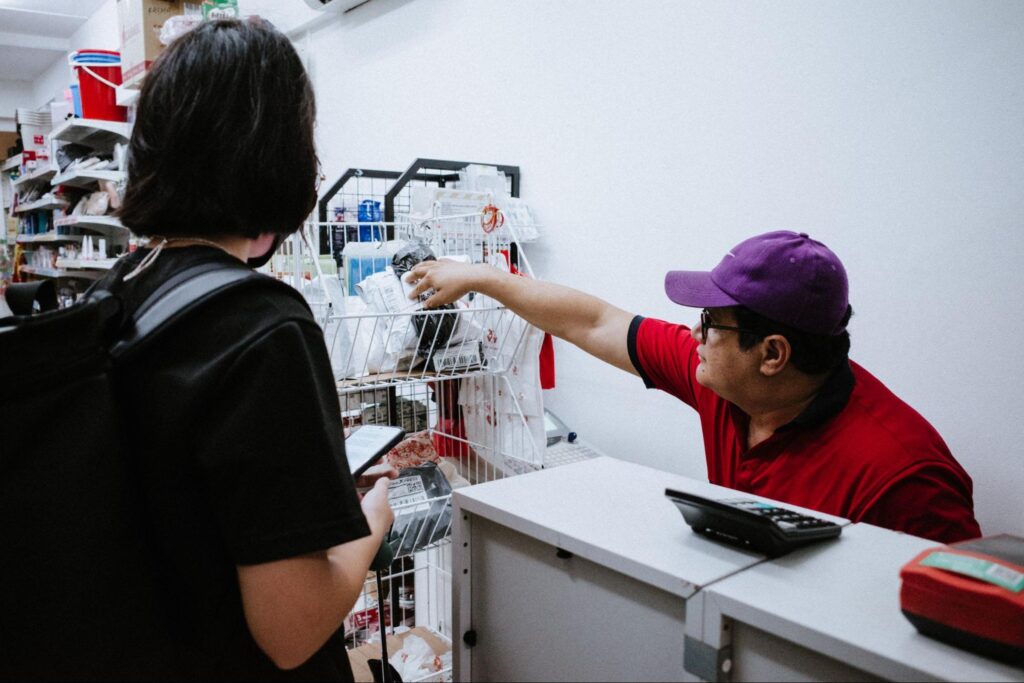
Shopee’s logistics arm, SPX Express, delivers parcels in bulk to registered collection points. For locker locations, customers can collect their orders independently.
At manned collection points—typically neighbourhood shops or residential addresses—the host stores the parcels, verifies customers’ identities using the Shopee app when they arrive, and hands over the items.
In return, hosts earn a fee for each parcel distributed. The role requires seemingly little: just sufficient storage space, an internet-connected device, and a commitment to the collection point’s operating hours.
Hosts generally earn between S$0.20 and S$0.30 per parcel. Channel News Asia also previously reported in 2024 that hosts earn at least S$90 per month.
At the higher end, promotional information on Shopee’s app states that collection points that distribute up to 900 parcels a day can earn up to S$5,400 monthly, while 60 parcels daily can bring S$360 monthly.
Sounds like easy passive income, right? Wrong.
The fine print
The commitment to turning your house into a Shopee collection point is far from passive.
Hosts must be open at least six days a week, for a minimum of 36 hours. On top of that, they must be present during operating hours to receive and hand over parcels, effectively tying the role to someone being at home consistently.

At first glance, the economics can look appealing. But at S$0.30 per parcel, the numbers only start to make sense at scale.
For example, handling 30 parcels a day translates to just S$9 in daily earnings. That’s already 30 separate customer handovers—yet it remains a modest payout for the time and space involved. Scaling up is where the workload intensifies significantly, with hundreds of daily parcels required to generate meaningful income.
Space is another major constraint. Many HDB flats have limited storage capacity, which can quickly become a bottleneck during peak delivery periods.
There is also little flexibility in scheduling. If hosts miss their operating hours, Shopee can impose penalties for non-compliance. At S$0.30 per parcel, even a S$50 fine effectively wipes out the earnings from more than 160 parcels.
Workload, risks & disruptions

Running a Shopee collection point means juggling the expectations of multiple parties: Shopee, customers, and even neighbours.
Complaints from hosts extend well beyond financial concerns.
Parcels arrive daily and are often left at the doorstep, making the host responsible for their safekeeping. Despite a stated weight limit of 6kg, some hosts have reportedly received bulkier items such as dumbbells, adding to storage and handling strain.
Some customers also arrive outside operating hours—occasionally as late as after 10PM—expecting collections regardless of the stated timing. Others treat the collection point like an extension of Shopee’s customer service, seeking assistance with orders, returns, and complaints that have nothing to do with the host.
“Operating a collection point is hard work and not a passive job like many think,” wrote the child of elderly parents who previously hosted a Shopee collection point at their home in a Reddit post.
Beyond the operational burden, some neighbours of residential collection points have also raised concerns about increased foot traffic outside their homes, citing potential security risks and a loss of privacy. The host is therefore not only managing their own household space, but also the flow of people in shared residential corridors.
“My post is just to let people know the realities of operating a collection point and not to trust the rosy picture that Shopee painted,” the same Reddit user added.
Who it actually makes sense for & why Shopee wins either way

It is important to note, however, that not everyone has the same negative experience.
Generally, running a Shopee collection point would make more sense for shop owners. Two store owners whose shops became Shopee collection points in 2023 reported more customers than before.
At one store, many parcel collectors became regulars, while the other attracted new customers beyond its usual base. With the hours and foot traffic already there, the parcels become a free customer acquisition channel for their products on top of the per-parcel income.
For homemakers and retirees who are home throughout the day, the income genuinely adds up, especially if volume is high and the neighbourhood is a good fit.
But for someone already working or with young children at home, the intrusions can outweigh the returns quickly.
From Shopee’s perspective, the firm wins either way: collection points are an efficient logistics solution.
The company can expand its last-mile network without building warehouses or employing delivery staff as hosts absorb that cost in time and space, in exchange for a small per-parcel fee.
For customers, collection points offer free shipping with no minimum spend, along with the convenience of a nearby pickup point—often just a short walk away.
While the model works for both Shopee and its customers, the question remains whether it works as well for those turning their homes or shops into collection points.
- Read other articles we’ve written on Singaporean businesses here.
Featured Image Credit: Shopee/ Andrew Koay

Entertainment37 seconds ago
Landon Donovan Shares Realistic Expectations For World Cup

NewsBeat4 minutes ago
Steve Hilton advances with Xavier Becerra to set up two-horse general election race for California governor

Business5 minutes ago
Gilead Sciences, Inc. (GILD) Presents at Goldman Sachs 47th Annual Global Healthcare Conference 2026 Transcript



-

 Fashion4 days ago
Weekend Open Thread: Evereve – Corporette.com
-
 Crypto World4 days ago
Jensen Huang Approves Samsung, SK Hynix, and Micron for NVIDIA (NVDA) HBM4 Memory Supply
-

 Crypto World2 days ago
Anatomy of the June crypto crash: Fed, Iran, Saylor
-

 Business7 days ago
Trump Taps Housing Chief Bill Pulte as Acting Intelligence Director After Gabbard Exit
-
 Crypto World3 days ago
Senator Cynthia Lummis Calls CLARITY Act the Most Consequential Financial Legislation of This Generation
-

 NewsBeat2 days ago
Alexander Zverev wins the French Open to finally earn a 1st Grand Slam title
-
 Entertainment3 days ago
The Best Mystery Series of All Time Is Surging on Streaming 30 Years After It Ended
-
 Business3 days ago
The Pain Points Taking a Fragile Tech Rally Down a Notch
-

 Tech5 days ago
Microsoft launches MXC, an OS-level sandbox for AI agents, with OpenAI and Nvidia already on board
-

 Tech3 days ago
Microsoft unveils seven homegrown AI models in new bid for ‘long term self-sufficiency’
-
Crypto World5 days ago
LBank Surpasses 25 Million Users Worldwide as AFA Partnership Continues to Drive Global Growth
-

 Tech4 days ago
Suspicious Polyfill login prompts pop up on Toshiba, Muji websites
-

 Crypto World2 days ago
Trump’s AI Ownership Plan Could Benefit Anthropic at OpenAI’s Expense
-
 Sports8 hours ago
Bangladesh beat Australia after 20 years in ODIs, register only their second win over six-time world champions | Cricket News
-

 Business5 days ago
(VIDEO) Justin Bieber Delivers Surprise Happy Birthday Serenade to Diners at Los Angeles Mexican Restaurant
-

 Tech5 days ago
RCS Messages Between iPhone and Android Get End-to-End Encryption With iOS 26.5
-

 Tech4 days ago
Meta steals a tactic from Tesla and builds data centers in tents
-
 Crypto World2 days ago
Eli Lilly (LLY) Stock Surges 4% Following Breakthrough Sleep Apnea Trial Results
-

 Tech4 days ago
Hackers now exploit SolarWinds Serv-U flaw to crash servers
-
Business7 days ago
Asia stocks rise past US-Iran jitters; Nikkei hits record high on stimulus cheer
You must be logged in to post a comment Login