
Connect with us

Tech

How to Survive Daylight Saving Time: Start Early (2026)

Published

on

Daylight saving time is coming, and it’s my least favorite version of the dreaded time change.

Losing an hour ruins the sleep of everyone in my household. It was one thing when it was just a pair of irritated adults, but now we have a 3-year-old who doesn’t understand what daylight saving is or why he should go to bed earlier than he did the night before. Sure, we’re all going to love the brighter evenings, but why did they have to go away in the first place?

The best method to survive this madness is to start early. Scientists and brands I spoke to all gave me the same advice: Start a few days early by setting your alarm 15 to 20 minutes earlier to make the time change a transition rather than a harsh loss of an hour come Sunday morning.

For both my child and me, it’s not just the audible alarm I’ll be changing but also our bedside sunrise alarm clocks. Light is one of the biggest things that can impact your circadian rhythm, and a noisy alarm has never cut it for me anyways. Here’s how a little extra light in the morning can hopefully make the entire transition easier for my family.

Advertisement

Starting Early

Waiting to deal with the time change is a recipe for serious discomfort. “Our bodies can’t shift a full hour in one day,” says Salk Institute scientist Emily Manoogian. “So if you can break it up over two to three days, it makes it a lot easier. This looks like shifting your food, light, and sleep times by a 20 to 30 minute advance for a couple of days before the DST shift.”

Manoogian says that both light and food synchronize your body clock, so these are good cues to change to help your body naturally adjust to the oncoming time change. She says that animal studies show that changing the time you eat breakfast and dinner in sync with the time change can help you to adjust much faster and return to normal life.

It will take a little more lifting to adjust your alarm each morning, but it’s better to do a little more work now than feel groggy and disoriented next week. Manoogian says that acute circadian disruptions like daylight savings shifts can result in several health issues, including insulin resistance, gut issues, anxiety, depression, and increased risky behaviors.

Just Add Light

Manoogian isn’t the only one who suggests starting earlier. Both Hatch and Lumie, makers of sunrise alarm clocks, gave me the same advice: Change your alarms a little earlier over a few days. They both also recommend using light to your advantage.

Advertisement

“Light is one of the most powerful signals for resetting your internal clock, which is why morning light exposure is especially helpful after the daylight saving transition,” says a Hatch representative.

While Lumie and Hatch both make great sunrise alarm clocks, they work differently. Hatch’s Restore 3 ($170) connects to Wi-Fi, so it can automatically update the time without you needing to change anything once daylight savings hits. You’ll also be able to easily adjust the time of your alarm in the Hatch app, letting you make quick adjustments as long as you’re within Bluetooth range of your Restore. The brand also introduced a Daylight Saving Assistant to use with kid devices like the Hatch Baby ($100), which can automatically shift a child’s schedule in small increments over several days.

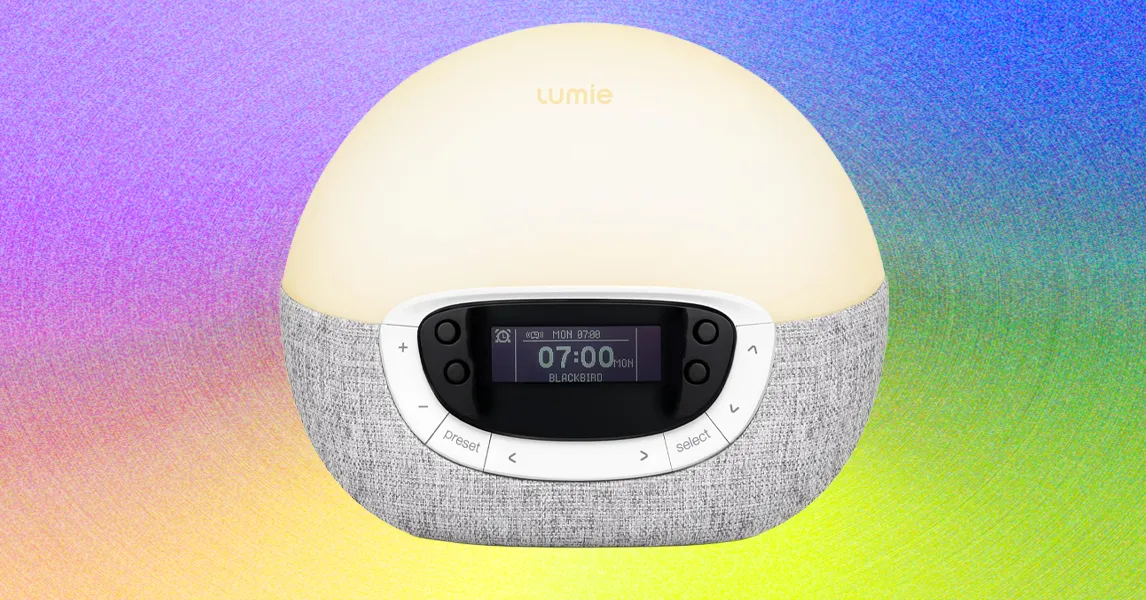
Lumie, on the other hand, doesn’t connect to Wi-Fi or an app, so you need to manually change your alarms and the time on the clock. You’ll need to switch that each night yourself leading up to the time change, plus fully switching the time over Saturday night and bringing your alarm back to its original time. While it’s more work, Lumie’s alarm clocks like the Bodyclock Luxe 700FM ($259) and the Bodyclock Shine 300 ($169) are brighter than the Hatch, so it’s still a good investment.

The Models Worth Snagging

Looking for a new sunrise alarm ahead of Sunday? Here are the ones to get.

Advertisement

Lumie

Bodyclock Luxe 700FM

Source link

Advertisement
Continue Reading
Click to comment

Leave a Reply

Your email address will not be published. Required fields are marked *

Tech

Apple Music can now flag AI content, but only if distributors elect to label it

Published

on

While music streaming apps like Bandcamp, Spotify and Deezer have taken steps to inform users about AI-generated content, we haven’t heard much out of Apple Music in that regard. However, Apple Music has now introduced “Transparency Tags” designed to show listeners if any elements were generated in whole or part by AI. The catch is that Apple is leaving it up to labels and distributors to create those tags, according to an Apple newsletter to industry partners seen by Music Business Worldwide..

“Proper tagging of content is the first step in giving the music industry the data and tools needed to develop thoughtful policies around AI, and we believe labels and distributors must take an active role in reporting when the content they deliver is created using AI,” Apple wrote, calling it a concrete first step toward transparency around artificial intelligence.

Streaming platforms already use metadata tags for things like song and album titles, genre and the name of the artist. The new tags will now identify any artwork, tracks, compositions and music videos created in whole or in part by AI.

However, Apple’s new system requires labels and distributors to opt in and manually flag their use of AI, a system that’s similar to what Spotify is doing. On top of that, Apple has no apparent enforcement mechanism for AI content.

Advertisement

By contrast, other music platforms including Deezer and Bandcamp are using in-house AI-detection tools to flag content whether the distributor opts in or not. Deezer disclosed in January 2026 that it receives over 60,000 fully AI-generated tracks every day, double the number it saw in September 2025. Synthetic content, also called “AI slop,” has accounted for 13.4 million tracks on its platform, Deezer added.

Source link

Continue Reading

Tech

Could the Trump administration rerun the TikTok playbook on Fortnite?

Published

on


A source familiar with the matter recently informed the Financial Times that top White House officials are discussing whether to force Tencent to divest its ownership stakes in American and Finnish game companies. Internal negotiations between Tencent and multiple US agencies date back to the first Trump administration, when the…
Read Entire Article
Source link

Continue Reading

Tech

Humble Games’ Former Bosses Buy the Studio’s Back Catalog

Published

on

Former Humble Games executives have reacquired the publisher’s catalog of more than 50 indie titles from Ziff Davis and relaunched their company as Balor Games. “For the developers we have worked with over the years, this moment is a reunion,” Balor Games CEO Alan Patmore wrote in a statement. “[It has] the same leadership and the same commitment to thoughtful publishing remain in place. What changes is our scale and our focus. Balor Games is built for inventors and backed by believers. To that end, it exists to be a seal of quality for independent games.” Engadget reports: The Humble Games lineup includes (among others) Slay the Spire, A Hat in Time, SIGNALIS, Forager, Coral Island, Monaco and Wizard of Legend. Separate from the Humble transaction, Balor also bought the complete catalog of Firestoke Games (which shut down last August) and publishing rights to Fights in Tight Spaces. In total, the young studio now owns the publishing rights to over 60 indie titles. Humble Games is separate from the Humble Bundle storefront. The latter is still owned by Ziff Davis.

The pair view the newly anointed Balor as a developer-friendly publishing house. As for its name, Balor is a supernatural being in Irish mythology. It’s sometimes depicted as having three eyes. Triple-eye, triple-I… Clever devils! The triple-I moniker is a more recent addition to the gaming lexicon. It typically means something defined by indie creativity and passion — with a budget far less than AAA but more than a tiny two-person passion project. (Balor says it’s about “high-quality, impactful games.”) You wouldn’t be blamed for wondering how that’s different from AA. But the slant here is to define the genre less by budget and more by “indie” intangibles. You can learn more about the company’s vision in an interview with GamesIndustry.biz.

Source link

Continue Reading

Tech

Google settles with Epic Games, drops its Play Store commissions to 20%

Published

on

Google is moving forward with a series of Play Store changes after settling a years-long legal battle with Fortnite maker Epic Games over anticompetitive concerns. The tech giant on Wednesday said it will drop its Play Store commissions to 20% on in-app purchases, with another 5% tacked on if app developers choose to use Google’s billing system. It’s also making it easier for users to install alternative app stores through a new optional program called the Registered App Stores program.

“With these updates, we have also resolved our disputes worldwide with Epic Games,” Google said in a company blog post.

The changes are part of a new settlement between the two tech rivals that will allow Epic Games to bring Fortnite back to the Google Play Store globally, while also investing in its own alternative app store, the Epic Games Store for Android.

As part of the agreement, Google’s Registered App Stores program will offer a more streamlined installation flow for users who want to install apps from outside of Google Play. One of Epic’s concerns was that the process for sideloading apps involved scary warnings to users about the danger of non-Play Store apps. Of course, users should be wary — sideloaded apps are a well-known security risk. But some third parties, like Epic Games, wanted to run their own legitimate (and secure) app stores without the scare tactics.

Advertisement

That program will allow this, as approved stores will need to meet certain quality and safety requirements, Google notes. The program is coming to markets beyond the U.S. first. Once the settlement is approved by the court, it will launch stateside as well.

Another notable change is the adjustment to the Play Store commission structure. Like Apple, Google’s default commission has been 30%, with a reduced fee of 15% for recurring subscriptions. Now, it will go even lower: the new “service fee” will be 20% for in-app purchases on new installs and 10% for recurring subscriptions.

However, this fee does not include the use of Google’s own billing system — that’s another 5%. (This rate applies in the U.S., European Economic Area [EEA], and the U.K. Other countries will have their own market-specific rates.)

There will also be new programs for developers, including an Apps Experience Program and a revamped Google Play Games Level Up program, both of which incentivize developers to build quality experiences on Android. Developers who opt to participate in these programs will pay the 20% commission on transactions taking place in their existing app installs, but will pay only a 15% commission on transactions from new app installs.

Advertisement

These new fees will go live by June 30, 2026, in the EEA, U.K., and U.S. The new developer programs will also launch at that time.

Australia will gain access to the new fee structure on September 30, followed by Korea and Japan by December 31. The new fees will expand to the global market by September 30, 2027.

“We believe these changes will make for a stronger Android ecosystem with even more successful developers and higher-quality apps and games available across more form factors for everyone. We look forward to our continued work with the developer community to build the next generation of digital experiences,” Google’s post said.

Epic Games praised the settlement and the resulting changes in its own statement, noting that “These changes will evolve Android into a true open platform with competition among stores.” On X, Epic Games CEO Tim Sweeney said “THANKS GOOGLE!” calling the move a “better deal for all developers.”

Advertisement

Epic Games has long been involved in a similar lawsuit with Apple over its App Store commissions. Apple was forced to change its policy to give developers the ability to link to outside payment options. That case is under appeal, with Apple most recently winning a partial reversal of the court’s order.

Source link

Advertisement
Continue Reading

Tech

Apple Music to add Transparency Tags to distinguish AI music, says report

Published

on

Apple Music is changing the way that record labels and distributors can flag AI-generated or AI-assisted content when they upload it to the platform.

According to Music Business Worldwide, Apple sent a newsletter to industry partners on Wednesday to explain how it will roll out a new set of metadata to promote transparency around how and when AI is used in music.

Metadata typically refers to fields like the song title, album title, genre, artist name, and other information that helps keep files organized. Now Apple Music will add the option to include metadata tags that distributors can use to flag when AI-generated content is involved in certain aspects of a song. These tags allow distributors to distinguish between a song’s artwork, track (music), composition (lyrics), or music video.

This seems like something that Apple Music users are interested in — a Reddit user posted a mock-up of a similar feature concept just days ago. But the problem with this sort of opt-in tagging is that it’s on the label or distributor to manually choose to flag their use of AI. Spotify is taking a similar path.

Advertisement

Other music-streaming platforms like Deezer are trying to flag content with in-house AI-detection tools, but it remains challenging to create these sorts of systems that are maximally accurate.

TechCrunch has reached out to Apple for more information.

Source link

Advertisement
Continue Reading

Tech

MacBook Neo name chosen to reflect its 'fun, friendly, and fresh' look

Published

on

An interview reveals Apple’s approach with MacBook Neo was a complete rethink of a budget-friendly laptop, not simply rehashing old tech at a lower price.

Open yellow Apple laptop on a light desk, viewed from behind, with white keyboard, slim ports on the side, and people standing in the dim background
The MacBook Neo is a new budget-friendly product

The MacBook Neo is a brand new category in the lineup that has a new-to-Apple moniker to go with it. It’s not just a new laptop, but a new market for the premium product seller.
According to an interview with Director of Mac Product Marketing, Colleen Novielli conducted by Techradar, the MacBook Neo is meant to be competitive in the $599 price range. It brings Apple’s attention to detail and premium materials to a product nearly half the price of the MacBook Air.
Continue Reading on AppleInsider | Discuss on our Forums

Source link

Continue Reading

Tech

How to watch India vs England: Free Streams, TV Channels

Published

on

England and India meet in the semi-final of a T20 World Cup for the third time in a row. On the previous two occasions, the winner has gone on to lift the trophy. Neither side has looked like the complete package so far, although England have exceeded pre-tournament expectations.

Source link

Advertisement
Continue Reading

Tech

Microsoft, Europol take down global phishing as a service network which was able to bypass 2FA with ease

Published

on


  • Europol leads multinational operation against Tycoon 2FA
  • Platform enabled large-scale phishing with MFA bypass
  • Authorities dismantled core infrastructure and seized domains

Tycoon 2FA, one of the largest phishing-as-a-service (PhaaS) platforms in the world, has been taken down after a global coordinated law enforcement operation.

The operation was led by Europol, and included police forces from Latvia, Lithuania, Portugal, Poland, Spain, and the United Kingdom.

Source link

Continue Reading

Tech

BenQ ScreenBar Halo 2 review: ideal desk lighting for nearly any situation

Published

on

BenQ is back with the ScreenBar Halo 2 to light up your workspace with not just one but two highly customizable light sources.

Cozy dimly lit wooden desk with computer displaying misty forest, slim light bar above monitor, compact keyboard, white mouse, headphones, coffee mug, and small accessories nearby
BenQ ScreenBar Halo 2

I got my first BenQ ScreenBar all the way back in February of 2020. While I thought it was somewhat novel, I told myself, “Surely this isn’t going to be something I use regularly.”
I didn’t like the utilitarian aesthetic, and I’d spent years illuminated only by my monitor. Was there ever going to be a real reason that I’d need to have a light attached directly to my monitor?
Continue Reading on AppleInsider | Discuss on our Forums

Source link

Continue Reading

Tech

Anthropic CEO Dario Amodei calls OpenAI’s messaging around military deal ‘straight up lies,’ report says

Published

on

Anthropic co-founder and CEO Dario Amodei is not happy — perhaps predictably so — with OpenAI chief Sam Altman. In a memo to staff, reported by The Information, Amodei referred to OpenAI’s dealings with the Department of Defense as “safety theater.”

“The main reason [OpenAI] accepted [the DoD’s deal] and we did not is that they cared about placating employees, and we actually cared about preventing abuses,” Amodei wrote.

Last week, Anthropic and the U.S. Department of Defense (DoD) failed to come to an agreement over the military’s request for unrestricted access to the AI company’s technology. Anthropic, which already had a $200 million contract with the military, insisted the DoD affirm that it would not use the company’s AI to enable domestic mass surveillance or autonomous weaponry.

Instead, the DoD — known under the Trump administration as the Department of War — struck a deal with OpenAI. Altman stated that his company’s new defense contract would include protections against the same red lines that Anthropic had asserted.

Advertisement

In a letter to staff, Amodei refers to OpenAI’s messaging as “straight up lies,” stating that Altman is falsely “presenting himself as a peacemaker and dealmaker.”

Amodei might not be speaking solely from a position of bitterness, here. Anthropic specifically took issue with the DoD’s insistence on the company’s AI being available for “any lawful use.” OpenAI said in a blog post that its contract allows use of its AI systems for “all lawful purposes.”

“It was clear in our interaction that the DoW considers mass domestic surveillance illegal and was not planning to use it for this purpose,” OpenAI’s blog post stated. “We ensured that the fact that it is not covered under lawful use was made explicit in our contract.”

Techcrunch event

Advertisement

San Francisco, CA
|
October 13-15, 2026

Critics have pointed out that the law is subject to change, and what is considered illegal now might end up being allowed in the future.

Advertisement

And the public seems to be siding with Anthropic. ChatGPT uninstalls jumped 295% after OpenAI made its deal with the DoD.

“I think this attempted spin/gaslighting is not working very well on the general public or the media, where people mostly see OpenAI’s deal with the DoW as sketchy or suspicious, and see us as the heroes (we’re #2 in the App Store now!),” Amodei wrote to his staff. “It is working on some Twitter morons, which doesn’t matter, but my main worry is how to make sure it doesn’t work on OpenAI employees.”

Source link

Advertisement
Continue Reading

Trending

Copyright © 2025